The Colby Review, AUKUS and Lopsided Commitments
9 December 2025 Dr Binoy Kampmark, https://theaimn.net/the-colby-review-aukus-and-lopsided-commitments/
In one of his many cutting observations about the fallibility of politicians, H. L. Mencken had this to say about the practical sort: “It is his business to convince the mob (a) that it is confronted by some grave danger, some dreadful menace to its peace and security, and (b) that he can save it.” Regarding Australia’s often provincial politicians, that grave danger remains the Yellow Peril, albeit it one garbed in communist party colours, while the quackery they continue to practise involves the notion the United States will act as shield bearer and saviour in any future conflict.
The AUKUS trilateral security pact between Australia, the United Kingdom and the United States has turned the first of these countries into an expectant vassal state, mindful of security guarantees it does not need from a power that can, and would at a moment’s notice, abandon it. But more dangerously, the expectation here is that Canberra, awaiting Virginia Class (SSN-774) nuclear-powered submarines from the US, will offer unconditional succour, resources and promises to the projection of Washington’s power in the Indo-Pacific. Without any guarantee of such submarines, Australian money is underwriting US submarine production, which remains consistently tardy. (Currently, 1.3 boats are being produced annually, when 2.3 are needed.)
The 2023 National Defense Authorization Act makes it irrefutably clear that Congress shall be notified that any transfer of boats “will not degrade the United States underseas capabilities.” Pursuing AUKUS still entailed “sufficient submarine production and maintenance investments” on the part of the US to meet undersea capabilities, with Australia advancing “appropriate funds and support for the additional capacity required to meet the requirements” along with Canberra’s “capability to host and fully operate the vessels authorized to be transferred.”
This true steal for US diplomacy, and sad tribute to Homo boobiens on the part of the Australians, has continued with the review of AUKUS conducted by Undersecretary of Defense Policy Eldridge Colby. The review is not available for public eyes, but Colby had previously released smoke signals that the AUKUS pact would only “lead to more submarines collectively in 10, 15, 20 years, which is way beyond the window of maximum danger, which is really this decade.”

The Australian Defence Minister Richard Marles told reporters on December 4 that the review had been received. “We’re working through the AUKUS review, and we very much thank the United States for providing it to us.” (Surely that’s the least they could have done.) He had identified unwavering support for the pact. Pentagon spokesman Sean Parnell also released a statement to the media expressing enthusiasm. “Consistent with President Trump’s guidance that AUKUS should move ‘full steam ahead,’ the review identified opportunities to put AUKUS on the strongest possible footing.” No doubt opportunities have been identified, but these are likely to be consistent with the lopsided arrangements Australia has had with the US to date.
Australia has so far provided A$1.6 billion in funding to the US submarine base, with the promise of more. What remains unclear is how much of this is also going into training Australian personnel to operate and maintain the vessels. “There’s a schedule of payments to be made,” explained Australian Prime Minister Anthony Albanese in July. “We have an agreement with the United States as well as with the United Kingdom. It is about increasing their capacity, their industrial capacity.” As part of such arrangements, “we have Australians on the ground, learning those skills.”
The joint fact sheet on the 2025 Australia-US Ministerial Consultations (AUSMIN), held between US Secretary of State Marco Rubio, US Secretary of War Pete Hegseth and their Australian counterparts Penny Wong and Marles in Washington, makes one reference to AUKUS and nothing in terms of substance to Colby’s recommendations. There is, however, this bit of unpardonable gibberish: “In line with President Trump and Prime Minister Albanese’s direction to move ‘full steam ahead’ on AUKUS, the [ministers] recognised the work underway to deliver priority infrastructure works and workforce uplift plan in support of an enhanced trilateral submarine industrial base.”
Given such statements, it is hard to see what opportunities identified in the Colby report could possibly be advantageous to Australia, a mere annexure of the US imperium. There is bound to be continued pressure on Australia to increase its defence spending. There are also unaddressed concerns about how sovereign the SSNs in Australian hands are going to be when and if they ever make it across the Pacific. In a conflict involving the United States, notably in the Indo-Pacific, Canberra will be expected to rush in with that mindless enthusiasm that has seen Australian soldiers die in theatres they would struggle to name for causes they could barely articulate.
Even the confident opinion of Joe Courtney, a Democrat member of the House Armed Services Committee and representative of Groton, Connecticut (the “Submarine Capital of the World”), should be viewed warily. “The statutory authority enacted by Congress in 2023 will remain intact, including the sale of three Virginia-class submarines starting in 2032,”comes his beaming assessment. The Colby review “correctly determined that there are critical deadlines that all three countries have to meet. Therefore, maintaining disciplined adherence to schedule is paramount.” That degree of discipline and adherence to schedules is unlikely to be an equal one. It is bound to favour, first and foremost, Washington’s own single perspective.
The architecture of a vassal: how US bases in Australia project power, not protection.
2 December 2025 Andrew Klein, https://theaimn.net/the-architecture-of-a-vassal-how-us-bases-in-australia-project-power-not-protection/
The strategic placement of key US and joint military facilities across Australia reveals a pattern not of national defence, but of integration into a global, offensively-oriented network for force projection and intelligence gathering. An analysis of their locations and functions demonstrates that these bases are designed to serve the strategic interests of a superpower, often at the expense of Australian sovereignty and security.
The Official Rationale: A Volatile Region and the Strategy of Denial
According to official Australian government assessments, the strategic environment is increasingly volatile, characterised by falling international cooperation, rising competition, and uncertainty about US reliability. In response, Australia’s National Defence Strategy: 2024 has adopted a “strategy of denial,” emphasising deterrence as its primary objective. This policy shift is used to justify initiatives such as:
- Acquiring nuclear-powered submarines through AUKUS.
- Upgrading and expanding northern military bases.
- Acquiring new long-range strike capabilities.
The public-facing logic is that longer-range weapons have overturned Australia’s geographic advantage, making the “sea-air gap” to the north a vulnerability. However, a closer examination of the specific facilities tells a different story.
Pine Gap: The Beating Heart of Global Surveillance
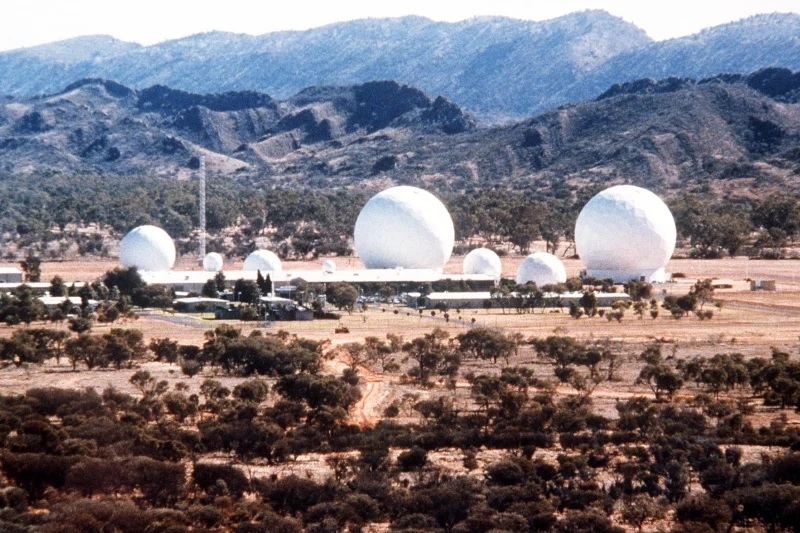
The Joint Defence Facility Pine Gap, near Alice Springs, is the most prominent example. Ostensibly a joint facility, it is a critical node in US global intelligence. Its functions extend far beyond any defensive mandate for Australia.
- Global Signals Intelligence: Pine Gap acts as a ground control and processing station for US geosynchronous signals intelligence (SIGINT) satellites. These satellites monitor a vast swath of the Eastern Hemisphere, collecting data including missile telemetry, anti-aircraft radar signals, and communications from mobile phones and microwave transmissions.
- Warfighting and Targeted Killing: Information from Pine Gap is not merely for analysis. It is used to geolocate targets for military action. The base has played a direct role in US drone strikes and has provided intelligence in conflicts from Vietnam and the Gulf War to the ongoing wars in Gaza. Experts testify that data downlinked at Pine Gap is passed to the US National Security Agency and then to allies like the Israel Defense Forces, potentially implicating Australia in international conflicts without public knowledge or parliamentary oversight.
- A History of Secrecy and Sovereignty Betrayed: The base’s history is marked by breaches of Australian sovereignty. During the 1973 Yom Kippur War, the US government placed Pine Gap on nuclear alert (DEFCON 3) without informing Australian Prime Minister Gough Whitlam. Whitlam’s subsequent consideration of closing the base was followed by his dramatic dismissal in 1975, an event that former CIA officers have linked to US fears over losing access to the facility.
Northern Bases: Launchpads for Power Projection
The network of bases across Australia’s north forms an arc designed for forward operations, not homeland defence.
- RAAF Base Tindal: This base in the Northern Territory is undergoing upgrades to host US B-52 strategic bombers. This transformation turns Australian territory into a forward operating location for long-range strike missions deep into Asia, fundamentally changing the nation’s role from a sovereign state to a launching pad for another power’s offensive operations.
- Marine Rotational Force – Darwin: The stationing of up to 2,500 US Marines in Darwin functions as a persistent force projection and logistics hub, enhancing the US ability to rapidly deploy forces into the Southeast Asian region.
- NW Cape (Harold E. Holt): The facility in Exmouth, Western Australia, hosts advanced space radar and telescopes for “space situational awareness.” This contributes to US space warfare and communications capabilities, a global mission with little direct relation to the defence of Australia’s population centres.
The True Cost: Compromised Sovereignty and Incurred Risk
This integration into a superpower’s military apparatus comes with severe, often unacknowledged, costs.
- The Loss of Sovereign Control: The operational control of these critical facilities is often ceded to the United States. At Pine Gap, the chief of the facility is a senior CIA officer, and certain sections, such as the NSA’s cryptology room, are off-limits to Australian personnel. This creates a situation where activities conducted on Australian soil are not fully known or controlled by the Australian government.
- Becoming a Nuclear Target: The critical importance of bases like Pine Gap to US global military dominance makes them high-priority targets in the event of a major conflict. By hosting these facilities, Australia voluntarily assumes the risk of being drawn into a nuclear exchange, a strategic decision made without public debate.
- Complicity in International Conflicts: As the protests and legal actions surrounding Pine Gap’s role in Gaza highlight, Australia faces legal and moral accusations of complicity in actions that may constitute war crimes or genocide. This places the nation in direct opposition to international law and global public opinion, all for the sake of an alliance that often prioritises US interests.
Conclusion: From Independent Ally to Integrated Base
The evidence is clear: the strategic network of US-linked bases in Australia is not primarily for the nation’s defence. It is the architecture of a vassal state, designed to service the global force projection and intelligence-gathering needs of a superpower. From the satellite surveillance of Pine Gap to the bomber forward deployment at Tindal, these facilities entangle Australia in conflicts far beyond its shores, compromise its sovereignty, and incur immense strategic risks. Until this fundamental reality is confronted, Australian defence policy will continue to serve an empire’s interests, not its own.
References…………………
Coalition of the unlikely: How Australia and China could save the planet.
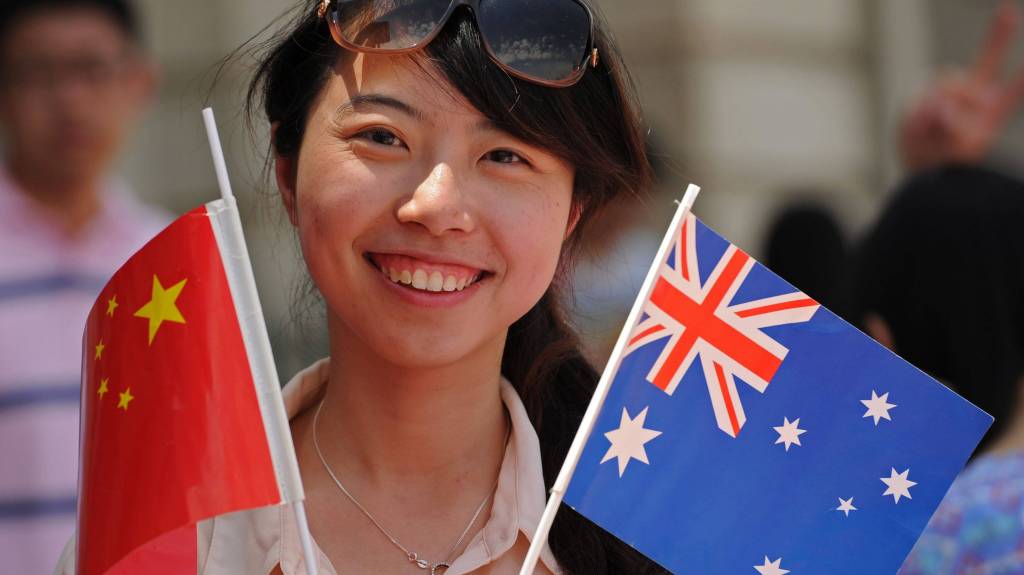
Cooperation between Australia and China could send a useful message to the Trump regime and other countries around the world about both the possibility of developing alternatives to failing American leadership and the institutional order it did so much to create.
By Mark Beeson | 17 November 2025, https://independentaustralia.net/politics/politics-display/coalition-of-the-unlikely-how-australia-and-china-could-save-the-planet,20387
If we are to survive, unprecedented levels of cooperation are needed, no matter how unlikely. Mark Beeson writes.
GLOBAL GOVERNANCE is failing. Nothing highlights this reality more dramatically than our collective inability to address the degradation of the natural environment adequately. Addressing an unprecedented problem of this magnitude and complexity would be difficult at the best of times. Plainly, these are not the best of times.
Even if climate change could be dealt with in isolation, it would still present a formidable challenge. But when it is part of a polycrisis of intersecting issues with the capacity to reinforce other more immediate, politically sensitive economic, social and strategic problems, then the prospects for effective cooperative action become more remote.
Indeed, the polycrisis makes it increasingly difficult to know quite which of the many threats to international order and individual well-being we ought to focus on. The “we” in this case is usually taken to be the “international community”, which has always been difficult to define, generally more of an aspiration than a reality, frequently more noteworthy for its absence than its effectiveness.
Nation-states, by contrast, can still act, even if we don’t always like what they do. The quintessential case in point now, of course, is the administration of U.S. President Donald Trump. Because it is by any measure still the most powerful country in the world, what America does necessarily affects everyone. This is why its actions on climate change – withdrawing from the Paris Agreement, gutting the Environmental Protection Authority, encouraging fossil fuel companies – matter so much.
But nation-states can also be forces for good and not just for those people who live within the borders of countries in the affluent global North. On the contrary, states that oversee a reduction in CO2 emissions are not only helping themselves, but they are also helping their neighbours and setting a useful example of “good international citizenship”.
When global governance is failing and being actively undermined by the Trump regime, it is even more important that other countries try to fill the void, even if this means cooperating with the unlikeliest of partners. Australia and China really could offer a different approach to climate change mitigation while simultaneously defusing tensions in the Indo-Pacific and demonstrating that resistance to the Trump agenda really is possible.
Friends with benefits
In the long term, if there still is one, environmental breakdown remains the most unambiguous threat to our collective future, especially in Australia, the world’s driest continent. And yet Australia’s strategic and political elites remain consumed by the military threat China supposedly poses, rather than the immediate, life-threatening impact of simultaneous droughts, fires and floods.
One of the only positives of the climate crisis is that it presents a common threat that really ought to generate a common cause. Some countries are no doubt more responsible for the problem and more capable of responding effectively, so they really ought to overcome the logic of first-mover disadvantage. No doubt, some other country will take over Australian coal markets, but someone has to demonstrate that change is possible.
China is possibly at even greater risk from the impact of climate catastrophes because of water shortages and, paradoxically enough, rising sea levels that will eventually threaten massive urban centres like Guangzhou and Shanghai. While there is much to admire about the decrease in poverty in the People’s Republic, it has come at an appalling cost to the natural environment. China also has powerful reasons to change its ways.
Unfortunately, Chinese policymakers, like Australia’s and their counterparts everywhere else, are consumed with more traditional threats to national strategic and economic security. This may be understandable enough in a world turned upside down by an unpredictable administration bent on creating a new international order that puts America first and trashes the environment in the process.
But in the absence of accustomed forms of leadership from the U.S. and the international community, for that matter, states must look to do what they can where they can, even if this means thinking the unthinkable and working with notional foes. China and Australia really do have a common cause when it comes to the environment and they could and should act on it.
Yes, this does all sound a bit unlikely. But if we are to survive in anything like a civilised state, unprecedented levels of cooperation would seem to be an inescapable part of limiting the damage our current policies have inflicted on the environment. In this context, Australia and China really could lead the way by simply agreeing to implement coordinated domestic actions designed to set a good example and address a critical global problem.
Leading by example
As two of the biggest consumers and producers of coal, Australia and China could make an outsize contribution to a global problem that would almost certainly win near universal praise, not to say disbelief. In short, China could agree not to build any more coal-fired power stations and Australia could commit to not opening any more new mines and rapidly moving to close down existing ones.
This would be a challenge for both countries, no doubt, but if we are ever going to address the climate challenge seriously, this is the sort of action that will be needed. There are no easy or painless solutions. But voluntarily abandoning the use of one of the most polluting fossil fuels is a potentially feasible and effective gesture that would make a difference. After all, China is a world leader in the development and use of green energy already, so the transition would be difficult but doable.
Australia has a shameful record of exporting carbon emissions and could live without the coal industry, which produces most of them, altogether. Coal extraction doesn’t employ many people and Australia is a rich enough country to compensate those affected by the loss of what are awful jobs in a dirty industry. If Australia can find $368 billion for submarines that will likely never arrive, to counter an entirely notional threat from China, it ought to be able to find a couple of billion to deal with a real one.
No doubt there would be significant pushback from coal industry lobbyists and politicians who think their future depends on being “realistic”, even if it means wrecking the planet. And yet it is possible, even likely, that such actions on the part of Australia and China would be very well received by regional neighbours, who would directly benefit from their actions and who might also be encouraged to consider meaningful cooperative actions themselves.
Given the failure of regional organisations like ASEAN to tackle these issues, normative pressure could be useful.
China might even get a significant boost to its soft power and regional reputation. President Xi Jinping frequently talks about the need to develop an “ecological civilisation”. Moving away from coal and collaborating with an unlikely partner for the collective good would be an opportunity to demonstrate China’s commitment to this idea, and to offer some badly needed environmental leadership.
If that’s not an example of what Xi calls win-win diplomacy, it’s hard to know what is.
A sustainable world order?
In the absence of what U.S. Senator Bernie Sanders calls a “revolution” in American foreign policy, multilateralism may well be in terminal decline. Indeed, it is an open question whether interstate cooperation will survive another four years of Trumpism, especially when the United Nations faces a funding crisis and politics in the European Union is moving in a similarly populist and authoritarian direction.
Cooperation between Australia and China could send a useful message to the Trump regime and other countries around the world about both the possibility of developing alternatives to failing American leadership and the institutional order it did so much to create. American hegemony was frequently self-serving, violent and seemingly indifferent to its impact on the global South, but we may miss it when it’s gone.
If multilateralism is likely to be less effective for the foreseeable future, perhaps minilateralism or even bilateralism can provide an alternative pathway to cooperation. Narrowly conceived notional strategic threats could be usefully “decoupled” from the economic and environmental varieties. In such circumstances, geography may be a better guide to prospective partners than sacrosanct notions about supposed friends and enemies.
Someone somewhere has to show leadership on climate change and restore hope that at least one problem, arguably the biggest one we collectively face, is being taken seriously. There really isn’t any choice other than to contemplate unprecedented actions for an unprecedented problem. Australia and China may not save the world, but they could make things a bit less awful and inject some much-needed creativity and hope into international politics.
Mark Beeson is an adjunct professor at the University of Technology Sydney and Griffith University. He was previously Professor of International Politics at the University of Western Australia.
Gareth Evans says Australia should lead nuclear arms control talks
Thu 13 Nov 2025 David Marr, https://www.abc.net.au/listen/programs/latenightlive/gareth-evans-nuclear-arms-control/106005940
As Russia and the US both threaten to resume nuclear testing and China has tripled its stock of nuclear arms, former foreign minister Gareth Evans has written an essay for Australian Foreign Affairs Magazine arguing that Australia should lead a new arms control push. He says “nuclear arms control has never been more necessary, and never more difficult to achieve. The important arms control agreements of the past are dead, dying or on life support. And the recent behaviour of the actors that matter most – the United States, Russia and China – has fed concerns that things can only get worse.”
- Guest: Gareth Evans, Distinguished Honorary Professor, Australian National University, former Australian Foreign Affairs Minister, author of “Doomsday diplomacy: Australia can lead a new arms control push”, for Australian Foreign Affairs
We should never have agreed to AUKUS
Albanese may come to regret his meeting with Trump, the deal and the endorsement by Trump. He may have underestimated the risk in kissing the ring of the Confidence Man.
but now he was a man of compromise, the politician who has exchanged principles for politics.
Australia should have put AUKUS on hold to let the people decide whether it should proceed. After all, we will pay for AUKUS, and we pay the salaries of the representatives of the people
By Kim Sawyer | 27 October 2025, https://independentaustralia.net/politics/politics-display/we-should-never-have-agreed-to-aukus,20307
Australia is paying for America’s submarines, striking a deal with a President we still have to fact-check. Dr Kim Sawyer reports.
HE IS THE MASTER showman. He knows where to position the actors, where to position the cameras, where to position the lights. He knows how to spray on his make-up and the make-up of others. Every press conference, every Cabinet meeting is the reality show of the showman.
U.S. President Donald Trump is the puppet master pulling the strings of the apprentices. He knows how to play them. Maggie Haberman’s The Confidence Man: The Making of Donald Trump and The Breaking of America tells of the actor who conned the world.
“Young Donald Trump had been an athlete as a teenager, and he aspired to a career in Hollywood. He ultimately fulfilled his father’s desire for a successor in the family business in real estate. But what the son really always wanted was to be a star.”
The reality show The Apprentice made him a star. The Apprentice was his apprenticeship. Trump knows who is willing to be conned; he knows their price or how to determine their price. He thinks he knows the price of everything and everyone, but really knows the value of nothing. He is the confidence man.
Trump is the confidence man of fiction best understood by reading Ibsen’s Master Builder or by viewing the 1958 episode ‘The End of the World’ of the CBS series Trackdown that featured a character who wanted to build a wall, and who had all the confidence of the confidence man. Sound familiar? The fictitious character was called Trump. He was finally exposed as a fraud. The fictitious Trump was finally arrested.
The meeting of Trump and Albanese was his latest reality show, the Master and the Apprentice. The Master got what we wanted. He got the deference he craved. He got the deal he wanted. The Apprentice got what he wanted. He got the endorsement of power of the Confidence Man.
The art of the deal.
Perforce, the deal is a con. Turnbull and Keating understand. Morrison and Albanese do not. We should never have agreed to AUKUS. It’s not just the cost of $368 billion over 30 years that includes $123bn as a contingency for the risk of a cost blowout. The risks are everywhere.
We have already paid more than $3 billion, the premium for a very uncertain insurance policy. As Turnbull has noted, the submarines are currently being produced at a rate of 1.1 per year.
“They need to get to two by 2028 to be able to meet their own requirements, and to 2.33 to meet their own, plus Australia’s. And they have not been able to lift production rates despite expenditure of over $10 billion over the last six or seven years. So, they’ve got a real problem.”
We’ve got a bigger problem.
Governments are like portfolio managers. The government needs to understand diversification, that you do not put all your eggs in a basket of submarines. The defence budget is so tied up in submarines, we don’t have room to invest in emerging defence technologies, in patrol boats, frigates or the amphibious landing craft we need for immediate problems like evacuations. The budget is being skewed towards submarines that will not be supplied until the early 2030s, away from writing off the $70 billion of student debt that three million young Australians face. The cost of the deal.
We have become so inured to the lies of the conman, we have to fact-check everything he says. When Trump said he had been to Australia, I thought it was another porky, but no, he had visited Australia, not as the President but as a spruiker to the National Achievement Congress in 2011. The conman spruiked the message of the grifter as to how to get everyone else to pay his debts. It wasn’t Trump’s first visit to the antipodes. In August 1993, Trump visited Auckland as part of a consortium bidding for a casino operator’s licence. At the time, Trump was mired in debt. The bid was unsuccessful.
Truth and falsity are transactional for Trump. He has always used the mantra. “If you say something often enough, it becomes true.” Interviewed by the Sydney Morning Herald in 2011, Trump criticised Obama’s job plan as doomed and unlikely to have any impact. At the time, the unemployment rate was nine per cent, at the end of Obama’s term, unemployment was 4.9 per cent. Trump was always anti-Obama. Trump was always false.
The other leading actor in the show that we watched last Monday was our own Prime Minister. Albanese had a lot to thank Trump for; perhaps that’s why he had wanted so much to meet him. The polls in February 2025 had the coalition leading 51–49, and then the Trump-Dutton factor came into play. Dutton was Albo’s trump card. No wonder he wanted the selfie with Trump. He invited Trump to visit, perhaps to spruik why Australia is paying for America’s submarines.
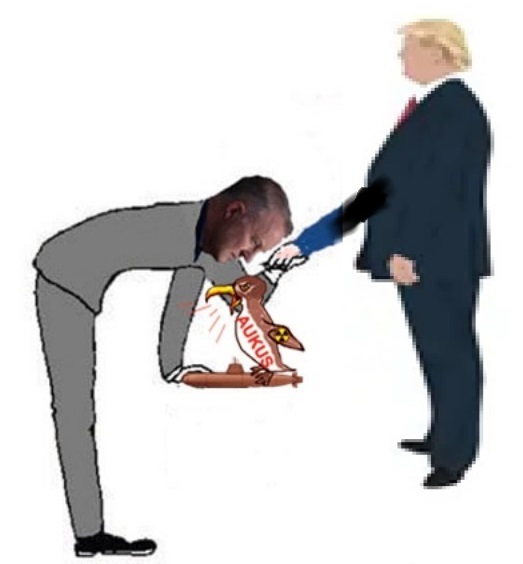
Albanese wore a lot of make-up to the meeting. The real Albo shared his confidences in private, perhaps with the other actor who sat opposite Trump, the Ambassador who Trump did not like. Albanese may come to regret his meeting with Trump, the deal and the endorsement by Trump. He may have underestimated the risk in kissing the ring of the Confidence Man.
The risk was everywhere to be seen. Two days before, 7 million joined the No Kings’ protests. Thirty years ago, when Albo was a man of principle, he may have joined those same protests, but now he was a man of compromise, the politician who has exchanged principles for politics.
On the day that Albo met Trump in the Whitehouse, the East Room was being demolished. In 1984, on a tour of the Whitehouse, we were asked to stand still, as the President appeared. Reagan had just left the East Room, where he had given a speech, where Carter, Obama, and FDR gave speeches. The East Room was built by President Theodore Roosevelt in 1902.
Apparently, there was no heritage overlay, at least for Trump. Betty Ford reflected on its significance. “If the West Wing is the mind of the nation, then the East Wing is the heart.” Confirmation that Trump is heartless.
Australia should have put AUKUS on hold to let the people decide whether it should proceed. After all, we will pay for AUKUS, and we pay the salaries of the representatives of the people. However, most will never get to see the submarines, not like the HECS debt on their tax bill. Australia has been too subservient, too sycophantic, too risk-averse in our dealings with Trump. There is a cost to being risk-averse just as there is a cost to being a risk-taker.
The Democrats paid the price for not dealing with Trump as they should have dealt with him. Dealing with Trump is like dealing with the devil; you must deal on your terms, not his terms. He is a convicted felon, a fraudster, a showman, the confidence man who became President.
The No Kings protests showed the divergence between the people and the institutions, between those who will not defer to Trump and those who will defer to him; between right and wrong. History may rewrite some of the story, but not the story of the Master and the Apprentice.
AUKUS. Deal of the century! … For the Americans
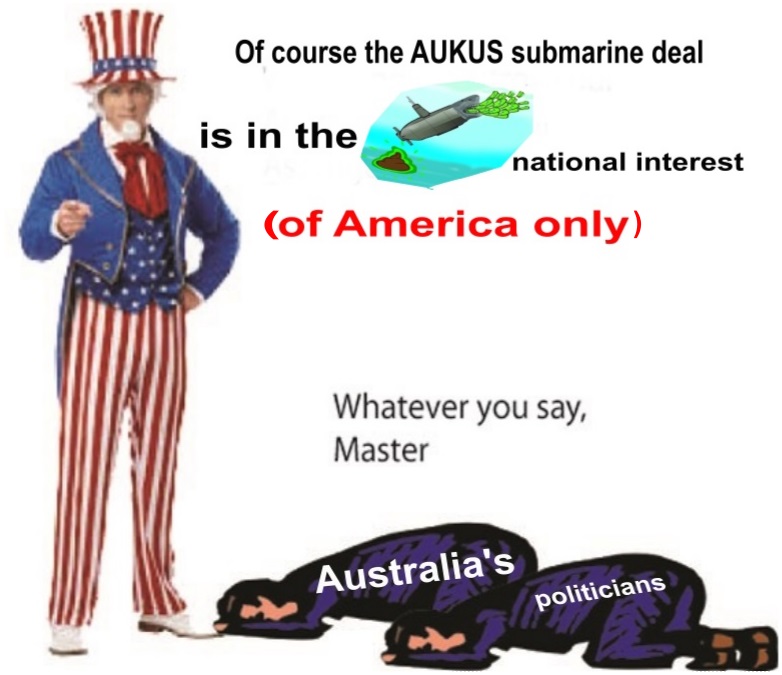
by Rex Patrick | Oct 23, 2025, https://michaelwest.com.au/aukus-deal-of-the-century-at-least-for-the-americans/
“Submarines in our time!” He didn’t say it, but Anthony Albanese might as well have, as he returned triumphantly from his meeting with Donald Trump this week.
AUKUS is indeed a fantastic deal. For the Americans, at least.
“Trump is not going to cancel AUKUS”, a well-connected industry source told MWM two weeks ago.
“AUKUS is so good for US industry – Australia is spending billions on their shipyards, and then there’s the purchase of the submarines themselves. General Dynamics Electric Boat and Huntington Ingalls Industries will see tens of billions of Australian dollars flow their way, as will Lockheed Martin and Raytheon”, said the source.
“And assuming things go well, the shipyard mess in the UK will see us going from three US Virginia-class subs to five, and then likely eight. Australia will abandon the UK AUKUS-designed subs, and even more Australian money will flow into the bank accounts of US companies.”
‘They’ll be lobbying the White House to ensure this cash keeps on flowing.’
And clearly, the lobbying has worked so far. Trump has endorsed AUKUS. It’s the sort of deal he likes.
As former Prime Minister Malcolm Turnbull stated in the lead-up to the meeting, it wasn’t going to be in Trump’s interest to withdraw, “The AUKUS deal is a fantastic deal for the Americans, a terrible deal for Australia, so there is no way Donald Trump will walk away from it because what does he get?” he said.
Turnbull was right. He was also right in his analysis after the meeting, “warm words don’t build submarines”.
Submarine woes
The United States is not building enough Virginia-class subs. They’re not building enough for their own Navy, let alone ours. That is the determining fact sitting in the middle of the AUKUS slipway.
For more than a decade, the US Government has been trying to build two Virginia subs per year. But they haven’t been able to move the shipbuilding dial. They’re currently struggling along at 1.1 submarines per annum, not enough to meet their own demand, let alone the 2.3 boats per annum they need to hit to be able to spare a submarine or three for Australia.
The spin from US and Australian politicians is turning in the opposite direction to the analysis of the United States Congressional Research Service, the US Government Audit Office and the US Chief of Naval Operations. No matter the spin from politicians, they can’t cause a change in the engineering and construction taking place at Groton, Connecticut and Newport News, Virginia.
Trump needn’t be worried though; he won’t be the President in the early 2030s when the first Virginia Class sub can’t be delivered because doing so,
will have a detrimental effect on the US Navy’s undersea warfare capability.
The US Congress has enshrined that “America First” requirement in their AUKUS legislation, and the crunch point is already less than a decade away – too little time for the US submarine industrial base to make the enormous strides that are so easily spruiked but so difficult, if not impossible, to achieve.
Eroding our sovereignty
Meanwhile, MWM’s industry source has foreshadowed the closing down of some Australian Defence companies struggling to make ends meet after Defence has cancelled a range of local programs, and is not initiating replacement work, so that they can meet the almost $10B in payments to both the US and UK governments to invest in their industry.
‘AUKUS is sending Australia into a sovereignty-eroding spiral.’
We are already tightly integrated into the US military with common hardware, common ordinance and common tactics. As the US turns its eye towards its superpower competitor, China (incidentally, our biggest trading partner), we are also seeing an expanding US military footprint on Australian soil, including:
and logistics storage in both Victoria and Queensland.
the long-standing Pine Gap joint communications and intelligence facility at Alice Springs,
the critical submarine very low frequency communications station at WA’s North West Cape,
a new mission briefing/intelligence centre and aircraft parking aprons at RAAF Darwin,
fuel storage at Darwin Port, infrastructure at RAAF Tindal near Katherine,
And there’ll be a forward staging base for US Navy Virginia-class subs out of HMAS Stirling near Perth from 2027.
US nuclear-powered, and by the early 2030s likely nuclear-armed, submarines will be using Western Australia as a strategic base for operations extending from the Gulf of Aden and Arabian Sea, the Bay of Bengal, to the South China Sea and the East China Sea and beyond.
‘All th’is is about strategic competition with China.‘
The Australian Defence Force, as it diverts money to AUKUS, will suffer in terms of independent capability. Industry will suffer. The taxpayer will suffer.
Best deal in history
Trump must be rubbing his hands together. This will play out well for the US.
Billions of Australian dollars will flow into the continental US to contribute to its submarine industry – this is a certainty. In contrast, the US will almost certainly not deliver. There is no clawback of expended money for non-delivery.
Australia’s Collins Class submarine capability will atrophy further, as will the general capabilities of the Australian Defence Force, starved of funds. More reliance on the US will see the US Navy station more subs in WA, the US Air Force stationing and staging additional air capabilities in our north, and an increase in the number of US Marines rotating through Darwin.
More than ever, Australia will be reduced to being “a suitable piece of real estate” in US war planning (to adopt the words of one of Australia’s most insightful strategic critics, the late Professor Des Ball).
Australia will have little choice but to let the US do this … and we might be pressured into much more.
‘There will be no choice but to follow the US into conflict with China.‘
We will have limited capabilities and will be left totally reliant on red, white and blue military capabilities. When Richard Marles talks of sovereign capabilities and decision-making, it’s just a political con job.
Trump will, in retirement, post on Truth Social his genius and how he suckered retired Prime Minister Albanese into what Paul Keating would call, in the view from the White House and Pentagon, the best deal in all of history.
Rex Patrick is a former Senator for South Australia and, earlier, a submariner in the armed forces. Best known as an anti-corruption and transparency crusader, Rex is also known as the “Transparency Warrior.”
Australia to make next billion-dollar AUKUS payment ‘shortly’, says minister
By Reuters, October 14, 20252 –
Australia will make a second billion-dollar payment to boost U.S. nuclear submarine shipyards soon, Defence Industry Minister Pat Conroy said in Washington on Tuesday, ahead of an official visit by Prime Minister Anthony Albanese next week.
The AUKUS agreement to transfer nuclear-powered submarines to Australia is being reviewed by the Pentagon, although Australia has expressed confidence the deal, which also includes Britain, will proceed.
In its first phase, Australia has pledged 3 billion U.S. dollars to boost U.S. submarine production rates, to later allow the sale of three Virginia submarines to Canberra, with a 2025 deadline for the first $2 billion.
Defence Minister Richard Marles told reporters in Canberra on Tuesday that Australia was contributing to a Pentagon review of AUKUS and had “a sense of when this will conclude”, without disclosing the timing. https://www.reuters.com/business/aerospace-defense/australia-make-next-billion-dollar-aukus-payment-shortly-says-minister-2025-10-14/
AUKUS proves why Australia is no longer a middle power with sovereignty and autonomy
If AUKUS is such a good deal for the Americans, why did Albanese fall over himself to talk it up in DC? It points towards a crisis of control.
Wanning Sun, Oct 24, 2025, https://www.crikey.com.au/2025/10/24/aukus-deal-united-states-america-australia-anthony-albanese-defence/?utm_campaign=daily&utm_medium=email&utm_source=newsletter
Australian media coverage of Prime Minister Anthony Albanese’s meeting with US President Donald Trump was teetering on the brink of euphoria.
Emerging from the cabinet room where the meeting took place, the ABC’s reporter Jane Norman appeared breathless in her account of the big moment. Even Sally Sara, host of Radio National’s Breakfast, who is usually calm and is known to ask probing questions, seemed to have abandoned her cool. She pronounced: “Well, the bonds between the United States and Australia appear tighter than ever today.’
But our prime minister didn’t rest on his laurels, even after securing various assurances from Trump. Albanese seemed to feel he needed to further convince the Americans of our nation’s commitment to their nation. As he told a roomful of US Congress members: “We’ve already contributed a billion dollars to your industrial base; there’ll be a billion dollars on its way before Christmas.”
He went on to say there would be “a further billion dollars next year because … we want to uplift your industrial capacity. … We’ll be providing a capacity for maintenance of your subs from 2027 on top of the facilities that we have already in the West.” And just to ensure his audience understood his message, he added, “It will increase your capacity to forward project.”
In other words, he wanted to drive home that AU
When asked by Sara what securing a commitment from Trump meant, the ABC’s John Lyons said: “From America’s point of view, why wouldn’t you? When a country comes along and says we will pay you $380 billion to boost your manufacturing industry in America for submarines you may one day see, of course! America loves the deal.”
But Lyons didn’t mention that while the AUKUS contract commits the US to deliver eight nuclear-powered submarines to Australia by 2032, there’s a condition: under the US legislation, the president of the day can stop the transfer if the American government believes the sale could affect its undersea capabilities, thereby undermining the national interest. To put it plainly: Australia has no way of recovering its money, even if we end up with no submarines.
If AUKUS is such a good deal for the Americans, why does our prime minister feel the need to keep talking up AUKUS to them? KUS is really in America’s national interest.
Could the Albanese government be so desperate to secure a continuous commitment because it needs to convince Australian voters it is doing its utmost to persuade America to stay the course, so that their taxpayer money won’t go down the drain? Perhaps the government believes it can’t afford to let up on the PR surrounding AUKUS in both the US and Australia, even though it isn’t certain the submarines will eventually turn up, nor that they will deter Australia’s enemies?
Australia’s news media are prone to switch from pursuing a “public interest” mandate to a “national interest” mandate when covering foreign policy. For this reason, despite Trump’s assurances this week, they will doubtlessly continue to focus on the trope of “Is AUKUS on track or is it in trouble?” They are likely to keep ignoring or downplaying critical questions such as “What does Australia get out of the AUKUS deal?” and “Will the US submarines keep us safe?”
Both past and present Labor prime ministers, as well as foreign policymakers, like to describe Australia as a middle power. This self-description is consistent with our leaders’ rhetoric of what Australia does: that it is a good global citizen, that it seeks to maintain “the existing global rules-based order”, and that it believes in multilateralism.
Although middle powers have less global influence, they nevertheless exercise agency strategically in the emerging multipolar world as great powers contest the rules of order. They gain influence by mediating between great powers through what international relations theorists call “hedging”.
Such scholars believe that hedging enables middle powers to engage with competing great powers, while avoiding alignment that limits their autonomy. Through hedging, less powerful states preserve sovereignty in a context of uncertainty by balancing engagement and resistance. Our Asian neighbours, such as India, Indonesia and Singapore, do precisely that.
Despite our leaders’ rhetoric, signing up to AUKUS seems to signal that Australia has somewhat voluntarily relinquished its capacity as a middle power to practise effective hedging.
For instance, Sydney University’s James Curran believes AUKUS could mean the US would expect Australia to join them in a potential war with China over Taiwan:
Similarly, the Lowy Institute’s Sam Roggeveen argues that Australia’s deeper alignment with the US and the hosting of US bomber capabilities at Tindal and future nuclear-submarine infrastructure raises the likelihood of Australia becoming “an important target” in a conflict with China.
Neither of the major parties has ruled in or out the possibility that Australia would join the US in a potential war. But despite Defence Minister Richard Marles’ rebuttal of criticism from AUKUS critics over the issue of sovereignty, one thing is clear: unlike many Western European and Scandinavian middle powers, Australia’s constitution implies that decisions to engage in armed conflict are made by the executive government under prerogative powers, not by parliament as a whole.
In other words, the Parliament of Australia apparently has no power to stop Australia from going to war, even though it could be consulted.
It is for these reasons that Clinton Fernandes, in the Future Operations Research Group at UNSW Canberra, believes that “rules-based international order” is a “euphemism” for the US-led imperial order, and that Australia is really a “subimperial power upholding a US-led imperial order”.
Without giving a full account of the myriad concerns raised by critics of AUKUS, let’s just say here that with AUKUS, Australia’s capacity to function as a true middle power — one that is confident of its sovereignty, autonomy and capacity to exercise agency to influence superpowers — seems gravely in doubt. And signing up to AUKUS may be another case study that supports Fendandes’s argument.
Wanning Sun, Contributor
Wanning Sun is a professor of media and cultural studies at the University of Technology, Sydney. She also serves as the deputy director of the UTS Australia-China Relations Institute. She is a fellow of the Australian Academy of the Humanities and a member of the Australian Research Council’s College of Experts (2020-23). She is best known in the field of China studies for her ethnography of rural-to-urban migration and social inequality in contemporary China. She writes about Chinese diaspora, diasporic Chinese media, and Australia-China relations.
Trump’s Gaza peace move raises questions over AUKUS priorities

More to the point for an Australian audience, the nearly AU$80 billion price tag is less than a quarter of what our Government, with the enthusiastic support of the Opposition, is planning to spend on submarines that will likely never arrive, won’t work as advertised if they do and will cost much more than we were led to believe.
So, what we could do is to scrap AUKUS because it is increasingly seen as a pointless, unrealisable, ineffective waste of money
Independent Australia, By Mark Beeson | 16 October 2025
Trump’s unexpected diplomatic win has reignited debate over Australia’s defence spending and foreign policy priorities, writes Mark Beeson.
GOOD FOR U.S. President Donald Trump!
These are words I never thought I’d utter, but when good news is in short supply, take what you can get. Stopping the genocidal slaughter in Gaza is unambiguously a good outcome, no matter who managed to engineer it.
True, it does suggest that this outcome might have been achieved months ago – even by former President Joe Biden – and thousands of lives might have been saved, but who’s counting? The big question now, of course, is whether the peace will prove durable and, even more challengingly, who will pay for the reconstruction of Gaza?
There is some comparatively good news on this front, too. Remarkably enough, it may “only” take an estimated US$50billion (about AU$77billion) to lift Gaza from the rubble. Yes, that is a lot of money, but not compared to what the $US997 billion (AU$1.5 trillion) America spent on the military in 2024.
More to the point for an Australian audience, the nearly AU$80 billion price tag is less than a quarter of what our Government, with the enthusiastic support of the Opposition, is planning to spend on submarines that will likely never arrive, won’t work as advertised if they do and will cost much more than we were led to believe.
You may be able to guess where I’m going with this and your eyes are already rolling. But before I voluntarily shred what little credibility I may have as a “serious” analyst of security policy, let me remind you that President Trump isn’t exactly famous for his grasp of strategic (or economic) reality and look what he managed to do.
At least I don’t have an ulterior motive, unless trying to avoid watching Palestinians being blown to pieces on the news every night counts.
So, what we could do is to scrap AUKUS because it is increasingly seen as a pointless, unrealisable, ineffective waste of money – not just by ageing peaceniks, either – and put the money to an unambiguously more productive purpose: rebuilding Gaza. Not only would the Palestinians be delighted (and disbelieving, no doubt), but it would do wonders for Australia’s somewhat tarnished international reputation…………………………………………………………………………………………………………………….. https://independentaustralia.net/politics/politics-display/trumps-gaza-peace-move-raises-questions-over-aukus-priorities,20272
AUKUS Anxiety
“after wasting billions of dollars, Canberra could end up with shattered hopes of a defense industrial boom from production of a new class of submarines and no domestic submarine capability at all. Australia’s existing fleet of submarines is aging and requires costly, time-consuming refits to extend its service; only one of six vessels is currently operational. Replacing them will be no easier.”…………………… [Subscribers only] https://www.foreignaffairs.com/australia/aukus-anxiety
Unmet Expectations Could Fracture the U.S.-Australian Alliance
James Curran, Foreign Affairs, October 8, 2025
Australia, like many U.S. allies, is struggling to deal with President Donald Trump. At issue is the country’s national security. Although China is by far Australia’s most important trade partner, it is also the country that Australia’s national security establishment perceives as its greatest threat. Australia’s fear of China is more than a century old and runs deep through every defense strategy that Australia has developed since the signing of the Australia, New Zealand, United States Security Treaty (ANZUS) in 1951 and the resolution of its postwar relationship with Japan later that decade. The same fear ……………………………………………………………………………………………………………. [Subscribers only] https://www.foreignaffairs.com/australia/aukus-anxiety
Australian Politicians Ignore Israel’s Brutality Against Our Citizens
by Paul Gregoire, 10 Oct 2025, https://www.sydneycriminallawyers.com.au/blog/australian-politicians-ignore-israels-brutality-against-our-citizens/?fbclid=IwY2xjawNYYbpleHRuA2FlbQIxMQBicmlkETFvZW56NldIYVltV0JSQ1pBAR7k_Ehv4MPM4mBZcl8Ys4k5ckUYvmGHNzne6Ki56oAJjwRA-5TC1-qnzNMnJw_aem_5XDTJx0Kt9Abixs7ELefHA
The morning of Friday, 10 October 2025 saw the Australian Global Sumud Flotilla participants arrive back in our nation, after attempting to breach the Gaza blockade and then being illegally apprehended by Israel. A sizable crowd gathered on Gadigal land at Sydney Airport to welcome them back. However, another Australian flotilla participant has been in Israeli custody and again Australia’s top ministers are silent.
The Global Sumud Flotilla was part an ongoing campaign to breach the 18-year-long goods blockade on Gaza. Six Australians were taken into custody by Israel in international waters last week, amongst over 400 foreign nations, and they were then brutalised and mistreated in prison, while Australian woman Madeline Habib, a participant in a second flotilla, is likely in the hands of Tel Aviv now.
The participants themselves, as well as publics across the planet, have been shocked by the brutalisation and intimidation Israeli forces have subjected the more than 400 illegally detained foreign nationals to. And what’s resulted in equal dismay is the fact that our PM and foreign minister have failed to raise issue over the kidnapping of their fellow citizens, including the plight of Habib.
After focusing on the six Australians in Israeli custody that federal Labor publicly ignored, while the Department of Foreign Affairs and Trade sought to provide them with consular assistance, the mainstream media has failed to raise the alarm over Habib’s detention, even though the testimonies arising from the Sumud Flotilla mean she’s likely being abused by an allied nation as well.
And as Israel has been dealing with a further 145 foreign nationals it intercepted in international waters on Wednesday 8 September 2025, as part of another Freedom Flotilla Coalition (FFC) mission, what has been revealed to Australians is not only will our politicians look the other way on a genocide, but they’ll do the same if Israel gets the chance to brutalise any of our constiuency.
Shameful lack of support
“The Australian government is absolutely shameful in our extraction,” said Australian Global Sumud Flotilla participant Julie Lamont, speaking to the ABC from Jordan on Wednesday, after being released from Israel’s notorious Ktzi’ot prison. “It did not really support us at all. We were the last people out of 50 nationalities. We were left their probably because it was October 7.”
In response to an ABC question as to whether our government arranged the flight out of Israel to the Jordanian capital of Amman, Lamont said, “No. We were facilitated by other governments not the Australian government. And now we are here trying to find a way to come back to Australia, and we really are upset that the Australian government have been so shameful in support of their citizens.”
Lamont said Italy had risen to support flotilla participants, whereas her government hadn’t. The documentary filmmaker added that she’d thought they might be detained for months, while fellow local participant Surya McEwen was reportedly singled out for extra rough treatment by the Israeli military, which included beatings, dislocating his arm and slamming his head into a concrete floor.
Lamont and the other Australians were released by Israel on Wednesday. They were part of the final one-third of participants still detained in Ktzi’ot prison. The fact that the Australian government was less responsive to its own nationals would have compounded the hard time they were receiving at the hands of a rogue nation that’s developed diplomatic tensions with ours over recent months.
A spokesperson for foreign minister Penny Wong released a statement on Wednesday that suggested DFAT officials were working hard to assist detained Australians. The spokesperson for the minister said officials conducted welfare checks at the prison and liaised with Israeli officials to obtain their release. However, the statement failed to explain why Israel was illegally detaining these people.
Israeli immunity
The disturbing fact that Australia’s top ministers don’t appear to consider there is any reason to waste their breath while citizens who’d risked their lives to feed a group of people being purposefully starved to death are being illegally imprisoned and subjected to harsh conditions has been coupled by the reacquaintance with the realisation that Israel can harm foreign nationals with impunity.
The flotilla apprehended this week with Habib was the fourth such attempt to breach the Gaza blockade since June. Participants are aware they are risking their lives, because the six boats making up a 2010 FFC flotilla were boarded by Israeli soldiers in international waters, and then nine foreign nationals were shot dead on sight, with a tenth dying later in a coma.
Irish comedian Tadhg Hickey was also part of last week’s Global Sumud Flotilla. Following his release, Hickey told a reporter that he had considered that if he ended up in an Israeli prison, he wouldn’t be subjected to the levels of brutality and deprivation that he was subjected to at the hands of the Israeli Defence Forces, due to the fact that he is a westerner and a white person.
To face the level of sadism and inhumanity that they displayed was really quite shocking,” Hickey explained. “I mean in the five to six days that we were incarcerated, no access to doctors, no access to medicine, no contact with the outside world” and “no lawyers”. He then explained that one of his fellow participants, a 75-year-old, was deprived of his insulin, which could have killed him.
“In my opinion, they were very happy to let him die,” continued Hickey. “It’s not even a patch of what Palestinians are going through. That was on my mind the whole time. I was thinking, ‘If they’re treating me like this, with the passport I have and the privilege I have, imagine what they are doing to Palestinians in prison, many of whom are children.”
A dereliction of duty
The Gaza Freedom Flotilla Instagram page reported on Friday that the participants in the latest flotilla have begun appearing before an Israeli court. Several participants had already been deported. The detainees were also reporting that they had too been subjected to punishing treatment at the hands of the Israeli military, although there was no specific word on Australian citizen Habib.
A large sector of the Australian public that had been aware that foreign nationals would be subjected to human rights violations at the hands of the Israeli state have been given a quick starter course on how there is one nation on the planet that is provided such impunity that it can violate and breach international laws and standards in a completely unbridled manner.
The other lesson Australia learnt is that while Israel might illegally detain and brutalise Australians, this won’t be an issue officially addressed because it is permissible. And this week was really a confirmation after Israel killed Australian aid worker Zomi Frankcom and six others last year and all the foreign minister could do to respond was produce a declaration on the protection of aid workers.
View from The Hill: Two years of a distant war have brought much damage to Australian society
The Conversation, October 7, 2025, Michelle Grattan, Professorial Fellow, University of Canberra
Two years ago, who would have imagined the police and the Palestine Action Group (PAG) would be fighting in court over whether demonstrators should be allowed to rally outside the Sydney Opera House?
Indeed, 24 months ago, who would have thought we’d have (or need) designated “envoys” to combat antisemitism and Islamophobia in Australia?
On Tuesday’s second anniversary of the Hamas atrocities in Israel, it is sobering to reflect how much damage this horrific Middle East conflict, which has cost tens of thousands of lives, most of them Palestinian, has done to Australia’s own society.
In Fitzroy in Melbourne, pro-Palestinian graffiti appeared to mark the anniversary: “Glory to Hamas”, “Oct 7, do it again”, “Glory to the martyrs”.
Prime Minister Anthony Albanese described this as “terrorist propaganda” that was “abhorrent,” saying those responsible “must face the full force of the law”.
On Wednesday, the issue of Sunday’s proposed protest outside the Opera House will be back in court. The police don’t want the protesters’ march to be allowed to end in the tight space at the Opera House, citing dangers to safety.
The lawyer for the PAG said on Tuesday: “If the police application is conceded to, the ramifications for the right to protest in Australia will not be confined to the Opera House, but for a wide variety of protest activities”. The group argues the issue is a constitutional one.
In the past two years, this faraway conflict has done substantial harm to Australia’s social cohesion, raised questions about the future of multiculturalism, and produced serious divisions about where lines should be drawn on limiting free speech and the right to protest. The response of institutions, universities in particular, has been tested and in some cases found wanting.
NSW Labor Premier Chris Minns gave a flavour of the cross pressures when speaking on Sydney radio on Tuesday.
“We’ve moved significant changes to hate speech laws in New South Wales and we’ve done it because we recognise we live in a multicultural community and yes, you’ve got a right to freedom of speech but someone else has a right not to be vilified or hated on the basis of their race or religion. All of those laws are currently being challenged in the High Court because of the implied freedom of political communication.”…………………………
The conflict has fractured the Australia-Israel relationship, with the Albanese government increasingly critical of Israel’s unrelenting prosecution of the war, and the Netanyahu government turning on Australia.
This culminated with Australia’s recognition of a Palestinian state at the United Nations during the prime minister’s recent trip. The recognition was the end of Labor’s internal journey, which commenced many years before this war began.
The Greens Party has been at the left edge of the political spectrum.
The Australian community was divided about Palestinian recognition: an Essential poll published in late September showed 34% in favour, and 30% against.
The conflict has shattered what used to be a bipartisan Middle East policy, when both main parties strongly supported Israel and also backed a two-state solution for a long-term Middle East settlement.
Over the past two years, the Coalition has been strongly pro-Israel, accusing the Labor government of deserting an ally and failing to deal robustly with antisemitism in this country.
Opposition leader Sussan Ley used her parliamentary speech on Tuesday’s anniversary to home in on the government’s policy towards Israel.
“To our great shame, under the leadership of the Albanese Labor government, Australia has not stood with the people of Israel, nor with the United States, as they have sought to dismantle Hamas and establish the conditions for peace”.
The local rifts that have come to the surface in Australia were there well before October 7 2023. The war caused them to widen dramatically and explode.
Even if, and when, this conflict subsides, it will leave fractures, anger, bitterness and fear within sections of the Australian community.
Whatever healing takes place almost certainly won’t be complete. For governments, federal and state, intractable policy challenges will remain. https://theconversation.com/view-from-the-hill-two-years-of-a-distant-war-have-brought-much-damage-to-australian-society-265858?utm_medium=email&utm_campaign=Latest%20from%20The%20Conversation%20for%20October%208%202025%20-%203541836106&utm_content=Latest%20from%20The%20Conversation%20for%20October%208%202025%20-%203541836106+CID_fb6124771c1b55570097f86c7e58b5ee&utm_source=campaign_monitor&utm_term=View%20from%20The%20Hill%20Two%20years%20of%20a%20distant%20war%20have%20brought%20much%20damage%20to%20Australian%20society
Two leaders, two realities: Trump vs Albanese at the UN.


26 September 2025 Roswell , https://theaimn.net/two-leaders-two-realities-trump-vs-albanese-at-the-un/
President Trump has spoken at the United Nations, and now Prime Minister Anthony Albanese has too.
The contrast could not have been starker. Trump rambled like a man who’d just been handed the microphone at a small-town karaoke night – except the song was foreign policy and he didn’t know the words. He wandered through half-baked grievances, boasted about imaginary achievements, and at one point seemed to forget which country he was president of.
Albanese, meanwhile, spoke like an actual world leader – calm, confident, and passionate. He talked about climate action, regional security, and cooperation with the kind of clarity that makes you think, “Ah yes, this person knows what he’s talking about.”
And yet, if you relied on Australia’s right-wing media, you’d think you’d just watched two completely different events. To them, Trump was basically Moses parting the Red Sea with one hand while balancing the U.S. economy on the other. Albanese, apparently “reckless,” was a bumbling tourist who accidentally stumbled into the General Assembly and asked for directions to Times Square.
One commentator even claimed Trump was “extraordinary” – which is technically true if you count all the diplomats burying their heads in their hands. Meanwhile, Albanese’s calm and measured speech was branded “utterly humiliating” and dismissed as nothing but “symbolic gestures,” because apparently international diplomacy should be performed like a WWE entrance.
This is the theatre we live with now: policy and substance don’t make headlines, but a man ranting about wind turbines does. If Trump had started selling selfies from the UN podium, they’d have called it “bold economic diplomacy.”
The world saw two very different leaders this week – one looking like he could chair a serious discussion about global challenges, the other looking like he should be gently escorted back to his seat before he accidentally sanctioned Canada.
US Threat to World Peace, AUKUS, and Dollar Sovereignty
US threat to world peace, why AUKUS spending risks Australia, and how dollar sovereignty offers a safer path.
Social Justice Australia, by Denis Hay, 17/09/2025
The US threat to world peace sits at the centre of a heated claim that the United States underpins peace in our region. Is that really true, or just easy politics? The facts tell a different story. Australia has pledged hundreds of billions for the AUKUS defence deal, with an additional $12 billion for the Henderson Defence Precinct, enabling the servicing of US and future Australian nuclear submarines in WA.
Australia now targets more than 2.3% of GDP for defence by 2033 to 2034, while NATO’s counting methods inflate figures by adding items like pensions and infrastructure.
Stat box, big picture:
- AUKUS cost envelope, 268 to 368 billion dollars.
- Defence to rise beyond two-point three per cent of GDP by 2033 to 2034.
- Australians’ trust in the US has fallen to record lows in two decades of polling.
Why accept the line that Washington guarantees peace when ordinary Australians see mounting risks, higher costs, and shrinking control?
The Problem: Why Australians Feel Stuck
Root cause, alliance pressure and spending metrics
Pressure to lift spending, often framed in GDP targets, now runs alongside discussion of higher NATO style thresholds and even a five per cent security envelope in Atlantic debates.
The government dismisses a fixation on GDP, yet the headline numbers continue to climb, and new shipyard commitments lock in path dependency.
Reflective question: Are we buying safety or buying into someone else’s strategy?
Power question: Who benefits when accounting rules redefine defence to push the headline number up?
Consequences for citizens
Australians worry the alliance could drag us into conflict in Asia, even as trust in US leadership falls. The truth is that fear and doubt grow when commitments rise faster than accountability. Who carries the risk if a submarine schedule slips or a crisis erupts in the Taiwan Strait?
The Impact: What Australians Are Experiencing
Everyday effects
AUKUS locks in decades of spending, crowding out housing, health, and climate resilience. The WA maintenance push at Henderson aims to support docking and servicing, including for US boats, tying local industry to the US force structure.
Reflective question: Will your family be safer because a US submarine gets serviced in WA next year, or because your town is flood-ready?
Power question: Why should budget rules expand for weapons while social services are told to tighten their belts?
Who benefits
Prime contractors and allied militaries gain capacity and access. Communities near critical bases, such as Pine Gap, a joint US-Australia intelligence hub central to US operations, often become a focus of protests.
The Hidden Cost for Every Australian
The AUKUS defence deal is not just an abstract number. It means about $368 billion spread across a population of roughly 26.5 million Australians, which equals $13,900 for every man, woman, and child.
Imagine if every Australian family received the value of this public investment in tangible safety and wellbeing:
- Housing security: Build more than one million new social and affordable homes to end the housing crisis.
- Health and aged care: Expand Medicare to include dental and mental health, and properly staff aged care.
- Education and skills: Abolish student debt, guarantee free TAFE and university, and fund lifelong learning.
- Climate and disaster resilience: Construct nationwide flood defences, bushfire readiness systems, and renewable energy infrastructure.
- Jobs guarantee: Use dollar sovereignty to ensure meaningful work for every Australian, focused on local and sustainable projects.
Reflective question: Which makes your community safer, a nuclear submarine or a flood levy that holds?
Power question: Why does Canberra accept scarcity for health and housing, but never for warships?
Rally line: We can do better. We must do better.
The Solution: What Must Be Done
Australia dollar sovereignty and reform
Australia issues its own currency. That means we can always purchase what is available in our currency, including public purpose jobs and resilience, without needing foreign approval.
Real constraints are inflation, resources, skills, and the exchange rate, not a household budget analogy. So, the choice to pour hundreds of billions into AUKUS defence deal is political.
Use that fiscal capacity for civil security first, such as climate adaptation, cyber defence, and regional diplomacy.
Reflective question: If we can fund subs, why not fund safety at home?
Power question: Who says the only credible path is more weapons?
Doug Cameron’s Warning on Militarism and Sovereignty
Cameron argues AUKUS erodes sovereignty, risks entrapment, and diverts billions from real security.
- Entrapment risk, US access: AUKUS ties Australia to US operations, including US submarine use of Henderson, WA, raising escalation and targeting risks. Reuters
- Mega-cost, weak timelines: The AUKUS envelope, up to $368b over decades, risks obsolescence as detection tech advances. Who benefits if subs are outdated by delivery? ABC+1
- Bases and nuclear exposure: Pine Gap’s role and HMAS Stirling’s US maintenance periods deepen Australia’s role in US war-fighting networks. Is this the path to peace or a bullseye on home soil? Wikipedia+2Defence+2
- Accountability gap: Parliamentary intelligence oversight remains constrained, though reforms are proposed. Why spend the most on a kit without thorough scrutiny? Parliament of Australia+1
- Opportunity cost: The $12b Henderson spends and broader AUKUS outlays crowd out housing, health, climate resilience, and jobs. Real security starts with people. SBS
Rally line: Prepare for peace, not war. Ordinary Australians deserve safety, not pre-commitments to foreign conflicts.
Source: Australian Sovereignty and the Path to Peace – Doug Cameron | 2025 Laurie Carmichael Lecture
Policy solutions and demands
-
-
- Publish complete life cycle AUKUS costs, schedule risks, and opportunity costs in one transparent report each year.
- Cap major platform shares of the defence budget and shift funds to cyber, disaster response, and diplomacy.
- Require independent reviews of US base roles and accident liability at HMAS Stirling and Pine Gap.
- Adopt a regional peace plan with ASEAN and the Pacific that prioritises de-escalation and climate security.
- Use dollar sovereignty to guarantee jobs in housing retrofit, flood levees, and bushfire readiness, with measurable outcomes.
-
Rally line: We can do better. We must do better…………………………………………. https://socialjusticeaustralia.com.au/us-threat-to-world-peace-sovereignty/
Think Tanker Demands for AUKUS: What Australia Should do with US Submarines.
“AUKUS is only going to lead to more submarines collectively in 10, 15, 20 years, which is way beyond the window of maximum danger, which is really this decade.”
26 August 2025 Dr Binoy Kampmark, https://theaimn.net/think-tanker-demands-for-aukus-what-australia-should-do-with-us-submarines/
The moment the security pact known as AUKUS came into being, it was clear what its true intention was. Announced in September 2021, ruinous to Franco-Australian relations, and Anglospheric in inclination, the agreement between Washington, London and Canberra would project US power in the Indo-Pacific with one purpose in mind: deterring China. The fool in this whole endeavour was Australia, with a security establishment so Freudian in its anxiety it seeks an Imperial Daddy at every turn.
To avoid the pains of mature sovereignty, the successive Australian governments of Scott Morrison and Anthony Albanese have fallen for the bribe of the nuclear-powered Virginia Class SSN-774 and the promise of a bespoke AUKUS-designed nuclear–powered counterpart. These submarines may never make their way to the Royal Australian Navy. Australia is infamously bad when it comes to constructing submarines, and the US is under no obligation to furnish Canberra with the boats.
The latter point is made clear in the 2023 National Defense Authorization Act, which directs the US President to certify to the relevant congressional committees and leadership no later than 270 days prior to the transfer of vessels that this “will not degrade the United States underseas capabilities”; is consistent with the country’s foreign policy and national security interests and furthers the AUKUS partnership. Furthering the partnership would involve“sufficient submarine production and maintenance investments” to meet undersea capabilities; the provision by Australia of “appropriate funds and support for the additional capacity required to meet the requirements”; and Canberra’s “capability to host and fully operate the vessels authorized to be transferred.”
In his March confirmation hearing as Undersecretary of Defense Policy, Eldridge Colby, President Donald Trump’s chief appointee for reviewing the AUKUS pact, candidly opined that a poor production rate of submarines would place “our servicemen and women […] in a weaker position.” He had also warned that, “AUKUS is only going to lead to more submarines collectively in 10, 15, 20 years, which is way beyond the window of maximum danger, which is really this decade.”
The SSN program, as such unrealised and a pure chimera, is working wonders in distorting Australia’s defence budget. The decade to 2033-4 features a total projected budget of A$330 billion. The SSN budget of A$53-63 billion puts nuclear powered submarines at 16.1% to 19.1% more than relevant land and air domains. A report by the Strategic Analysis Australia think tank did not shy away from these implications: “It’s hard to grasp how unusual this situation is. Moreover, it’s one that will endure for decades, since the key elements of the maritime domain (SSNs and the two frigate programs) will still be in acquisition well into the 2040s. It’s quite possible that Defence itself doesn’t grasp the situation that it’s gotten into.”
Despite this fantastic asymmetry of objectives, Australia is still being asked to do more. An ongoing suspicion on the part of defence wonks in the White House, Pentagon and Congress is what Australia would do with the precious naval hardware once its navy gets them. Could Australia be relied upon to deploy them in a US-led war against China? Should the boats be placed under US naval command, reducing Australia to suitable vassal status?
Now, yet another think tanking outfit, the Washington-based Center for Strategic and International Studies (CSIS), is urging Australia to make its position clear on how it would deploy the Virginia boats. A report, authored by a former senior AUKUS advisor during the Biden administration Abraham Denmark and Charles Edel, senior advisor and CSIS Australia chair, airily proposes that Australia offers “a more concrete commitment” to the US while also being sensitive to its own sovereignty. This rather hopeless aim can be achieved through “a robust contingency planning process that incorporates Australian SSNs.” This would involve US and Australian military strategists planning to “undergo a comprehensive process of strategizing and organizing military operations to achieve specific objectives.” Such a process would provide “concrete reassurances that submarines sold to Australia would not disappear if and when needed.” It might also preserve Australian sovereignty in both developing the plan and determining its implementation during a crisis.
In addition to that gobbet of hopeless contradiction, the authors offer some further advice: that the second pillar of the AUKUS agreement, involving the development of advanced capabilities, the sharing of technology and increasing the interoperability between the armed forces of the three countries, be more sharply defined. “AUKUS nations should consider focusing on three capability areas: autonomy, long-range strike, and integrated air defense.” This great militarist splash would supposedly “increase deterrence in both Europe and the Indo-Pacific.”
In terms of examples, President Trump’s wonky Golden Dome anti-missile shield is touted as an “opportunity for Pillar II in integrated air defense.” (It would be better described as sheer science fiction, underwritten by space capitalism.) Australia was already at work with their US counterparts in developing missile defence systems that could complement the initiative. Developing improved and integrated anti-missile defences was even more urgent given the “greatly expanding rotational presence of US military forces in Australia.”
This waffling nonsense has all the finery of delusion. When it comes to sovereignty, there is nothing to speak of and Australia’s security cadres, along with most parliamentarians in the major parties, see no troubles with deferring responsibility to the US imperium. In most respects, this has already taken place. The use of such coddling terms as “joint planning” and “joint venture” only serves to conceal the dominant, rough role played by Washington, always playing the imperial paterfamilias even as it secures its own interests against other adversaries.
1 This month

of the week – Australians for War Powers Reform (AWPR)
To see nuclear-related stories in greater depth and intensity
 Antinuclear