Red Cross celebrates Nuclear Ban Treaty- an incremental process towards elimination of nuclear weapons
 Crucial to sign up for a nuclear-free celebration. https://www.theage.com.au/national/crucial-to-sign-up-for-a-nuclear-free-celebration-20210121-p56vtl.htmly Kym Pfitzner Crucial to sign up for a nuclear-free celebration. https://www.theage.com.au/national/crucial-to-sign-up-for-a-nuclear-free-celebration-20210121-p56vtl.htmly Kym Pfitzner
January 22, 2021 — It’s taken 75 years since the bombing of Hiroshima and Nagasaki to reach the historic day when we finally have a ban on nuclear weapons enshrined in international law.
Today is a day for celebration. From January 22, all nations that ratified the Treaty on the Prohibition of Nuclear Weapons are banned from possessing, developing or having any direct dealings with these weapons of mass destruction. This development heralds progress towards a safer and more humane world. The Red Cross and Red Crescent Movement across the globe has been striving towards this moment for three-quarters of a century. How timely it is to achieve this milestone after a year of uncertainty and difficulties. I commend the 86 countries which have already signed this important treaty – from Austria to Zimbabwe – and particularly the 51 nations that have ratified it. They’ve put the interests of humanity and the environment above other considerations. I’d like to remind all other nations of our organisation’s inability to provide any remotely adequate medical or humanitarian response to a nuclear crisis and call on all countries which are yet to sign – including Australia, the nuclear-armed nations, and some of their allies – to do so now. But today should still be celebrated. It’s the dawn of new era in which the last weapon of mass destruction to be regulated by international law will finally begin to be controlled. Other weapons that cause unacceptable harm – contrary to the laws of war – have already been banned, such as cluster munitions, anti-personnel landmine and chemical weapons. Nuclear weapons are incompatible with the rules of international humanitarian law. The laws of war are unambiguous: weapons must be able to distinguish between civilians and combatants, as only combatants can be legally attacked. Weapons must not cause superfluous injury or unnecessary suffering. Their effects must be proportionate to their military objective. And weapons cannot be used if they cause widespread, long-term and severe damage to the environment. Rather than leaving the fate of these weapons to the handful of countries that legally own them, and which were not fulfilling their obligation to work towards their elimination, the public debate has been reframed from being defined as a matter of defence policy, to being about the unacceptable humanitarian consequences of use of nuclear weapons. We know all about those consequences. Members of the Red Cross and Red Crescent Movement were there when the bombs fell on Hiroshima and Nagasaki. There was little they could do to deal with the immediate needs of those needing help, or to alleviate the long-term suffering of the people on the ground. The impacts lasted decades and, devastatingly, even affected the children of those who survived those bombs. Research is still being conducted to determine whether the illnesses being experienced by descendants – two generations later – can be explained by mutations in their DNA that was caused by radiation. With the coming into force of this treaty, let’s hope we’re getting closer to the time that we’re never that helpless again. We want Australians to know that nuclear weapons are not an acceptable defence policy option. They are barbaric tools that cause hellish devastation and untold suffering to civilians. Some critics argue the treaty is toothless because the nuclear-armed nations and their allies have not yet signed it. This ignores the reality of International law-making, which is that creating new norms is an incremental process. It takes patience and persistence. No weapon has ever been eliminated without first being studied, stigmatised and prohibited. With the advent of a vaccine for COVID-19, we can be cautiously hopeful that the end of the current global pandemic is in sight. Unfortunately, though, we can’t rely on medical science to save us from the impacts of a nuclear attack. There can be no vaccine for the health effects of a nuclear weapon. Elimination is the only option. This is why we believe in a future without nuclear weapons. Kym Pfitzner is the CEO of Australian Red Cross. |
|
|
Australia could sign the Nuclear Ban Treaty and still keep its military co=operation with America
 The nuclear weapons ban treaty is groundbreaking, even if the nuclear powers haven’t signed The Conversation 22, 2021 Tilman Ruff– Honorary Principal Fellow, School of Population anobal Health, University of Melbourne,
The UN Treaty on the Prohibition of Nuclear Weapons (TPNW) was adopted at the United Nations in 2017 and finally reached the milestone of 50 ratifications in October. The countries that have signed and ratified include Austria, Ireland, Mexico, New Zealand, South Africa, Nigeria and Thailand.
The treaty completes the suite of international bans on all major weapons considered unacceptable because of their indiscriminate and inhumane effects, including anti-personnel landmines, cluster munitions, biological and chemical weapons………
The TPNW strengthens the current nuclear safeguards found in the 1970 Treaty on the Non-Proliferation of Nuclear Weapons by requiring all states that join to have comprehensive provisions in place and not allowing states to weaken their existing safeguards.
The treaty provides the first legally binding multilateral framework for a process by which all nations can work toward eliminating nuclear weapons………
Further, the TPNW is the first treaty to commit member nations to provide long-neglected assistance for the victims of atomic bombs and weapon testing. It also calls for nations to clean up environments contaminated by nuclear weapons use and testing, where feasible.
Nuclear-armed states have been put on notice
Currently, 86 nations have signed the TPNW, and 51 have ratified it (meaning they are bound by its provisions). The treaty now becomes part of international law, and the number of signatories and ratifications will continue to grow……..
While any treaty is technically only binding on the states that join it, the TPNW establishes a new international legal standard against which all nuclear policies will now be judged.
The treaty, in short, is a game-changer, and the nuclear-armed and dependent countries have been put on notice. They know the treaty jeopardises their claimed right to continue to threaten the planet with their weapons, as well as their plans to modernise and maintain their nuclear arsenals indefinitely…………
The strength of the opposition is a measure of the treaty’s importance. It will have implications for everything from defence policies and military plans to weapons manufacturing to financial investments in the companies that profit from making now illegal nuclear weapons………….
A ‘dangerous’ belief nuclear weapons enhance securityWould joining the treaty mean nations like Australia, Japan, South Korea and NATO members would have to end their military cooperation with nuclear-armed states like the US? No. There is nothing in the TPNW that prevents military cooperation with a nuclear-armed state, provided nuclear weapons activities are excluded. Countries like New Zealand and Kazakhstan have already demonstrated that joining the treaty is fully compatible with ongoing military cooperation with, respectively, the US and Russia. In a recent letter urging their governments to join the treaty, 56 former presidents, prime ministers and defence and foreign ministers from these nations said: By claiming protection from nuclear weapons, we are promoting the dangerous and misguided belief that nuclear weapons enhance security. As states parties, we could remain in alliances with nuclear-armed states, as nothing in the treaty itself nor in our respective defence pacts precludes that. But we would be legally bound never under any circumstances to assist or encourage our allies to use,
The signatories include two former NATO secretaries-general, Willy Claes and Javier Solana. Ban treaties have been proven to work with other outlawed weapons — landmines, cluster munitions and biological and chemical weapons. They have provided the basis and motivation for progressive efforts to control and eliminate these weapons. They are now significantly less produced, deployed and used, even by states that haven’t joined the treaties. We can achieve the same result with nuclear weapons. As Hiroshima survivor Setsuko Thurlow said at the UN after the treaty was adopted, This is the beginning of the end of nuclear weapons. https://theconversation.com/the-nuclear-weapons-ban-treaty-is-groundbreaking-even-if-the-nuclear-powers-havent-signed-153197 |
|
|
Morrison government gets in early to disparage nuclear ban treaty, but Labor supports it
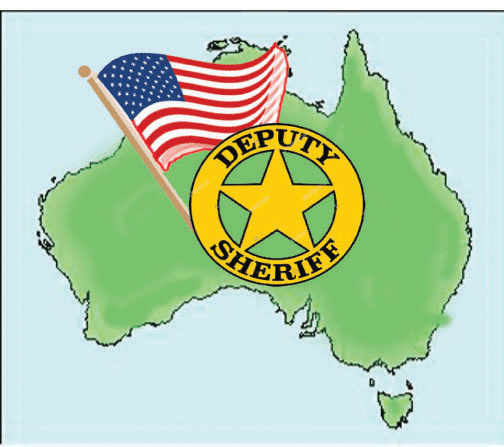 New nuclear treaty will be ‘ineffective’: DFAT, SMH, Anthony Galloway, January 21, 2021, Australia says a new United Nations nuclear treaty signed by more than 80 countries will be ineffective in eliminating nuclear weapons from the world.The Morrison government has not signed the Treaty on the Prohibition of Nuclear Weapons, which comes into effect on Friday.
The treaty, signed by 86 countries, bans signatories from testing, developing, producing, stockpiling or threatening to use nuclear weapons.
The Australian government decided not to sign the treaty on the basis that it failed to recognise the realities of the current international security environment.
Government sources confirmed there was concern about how the treaty would affect Australia’s dealings with the United States, including intelligence sharing through the Pine Gap satellite surveillance base near Alice Springs, because it banned signatories from doing anything to assist a nuclear weapon state in its nuclear plans.
New Zealand, which is part of the Five Eyes intelligence-sharing agreement with the US, Australia, Canada and Britain, has signed the treaty…….
Opposition foreign affairs spokeswoman Penny Wong said Labor welcomed the treaty.
“After taking into account the need to ensure an effective verification and enforcement architecture, the interaction of the treaty with the Nuclear Non-Proliferation Treaty, and achieve universal support, a Labor government would sign and ratify the treaty,” she said.
“Australia can and should lead international efforts to rid the world of nuclear weapons. A Labor government would work with our allies and partners to this end and would always act consistently with the US alliance.”
Helen Durham, director for international law and policy at the International Committee of the Red Cross, said all countries should sign the treaty as it was the “most explicit and clearest expression that the horrific weapons need to be banned”.
“It deals not only with their use but also with their threat of use, with their stockpiling, with their production, with their development and their testing,” she said.
“This treaty is a great opportunity to move a very stagnated, to date, agenda forward and we would encourage every state to take up this opportunity.”
Dave Sweeney, co-founder of the International Campaign to Abolish Nuclear Weapons, said the treaty was a “sign of hope for our planet”.
“The changed status of nuclear weapons means Australia faces a clear choice,” he said. “We either choose to be a responsible and lawful member of the global community or we remain silent and complicit in plans to fight illegal wars https://www.smh.com.au/politics/federal/new-nuclear-treaty-will-be-ineffective-dfat-20210121-p56vst.html
Australian government complicit in nuclear weapons, silent on Nuclear Weapons Ban Treaty
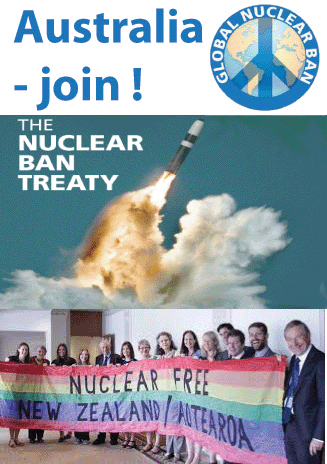 Nuclear weapons illegal from 22 January https://www.miragenews.com/nuclear-weapons-illegal-from-22-january/ 21 Jan 21, As President Joe Biden takes charge in the United States – and is expected to immediately move to rejoin the Paris climate agreement – this week also sees a very significant shift in the global status of nuclear weapons. Nuclear weapons illegal from 22 January https://www.miragenews.com/nuclear-weapons-illegal-from-22-january/ 21 Jan 21, As President Joe Biden takes charge in the United States – and is expected to immediately move to rejoin the Paris climate agreement – this week also sees a very significant shift in the global status of nuclear weapons.On Friday 22 January the UN Treaty on the Prohibition of Nuclear Weapons takes effect, making nuclear weapons finally and formally illegal under international law. “This is a sign of hope for our planet,” said Dave Sweeney, ACF nuclear free campaigner and co-founder of ICAN, the International Campaign to Abolish Nuclear Weapons. “Nuclear weapons pose an existential threat. They are weapons of mass and indiscriminate murder. From this week, they are illegal under international law.” The treaty prohibits signatories from testing, developing, producing, stockpiling or threatening to use nuclear weapons. It also obliges parties to support the widespread adoption of the treaty and address the human and environmental impacts of nuclear testing. While the treaty cannot force non-signatories – including the USA, China and Russia – to disarm, it will increase the political, legal and economic pressure on these nations and their allies. The Morrison government has opposed the progress of the treaty and refuses to support or sign the initiative. Labor has committed to sign and ratify the treaty when it is next in government. The Greens and some cross benchers also support the treaty. “The changed status of nuclear weapons means Australia faces a clear choice,” Dave Sweeney said. “We either choose to be a responsible and lawful member of the global community or we remain silent and complicit in plans to fight illegal wars. “It’s time for Australia to be on the right side of law and history – this treaty is the best way to finally get rid of the world’s worst weapons. We should celebrate it and support it.” The ban follows years of advocacy led by ICAN, the International Campaign to Abolish Nuclear Weapons, which started in Melbourne in 2007 and was awarded the Nobel Peace Prize in 2017 for drawing attention to the catastrophic humanitarian consequences of any use of nuclear weapons and for its efforts to achieve a treaty-based prohibition of such weapons. ICAN briefing paper on the Treaty on the Prohibition of Nuclear Weapons and Australia /Public Release. The material in this public release comes from the originating organization and may be of a point-in-time nature, edited for clarity, style and length. View in full here. |
|
|
How will Entry Into Force of the Nuclear Weapons Ban Treaty impact non weapons states parties, including Australia?
 How will EIF impact non states parties, including Australia? https://icanw.org.au/wp-content/uploads/Australia-EIF-of-the-TPNW.pdf How will EIF impact non states parties, including Australia? https://icanw.org.au/wp-content/uploads/Australia-EIF-of-the-TPNW.pdf16 Jan 21, While non states parties are not legally bound to the terms of the treaty, the norms set out and strengthened by the treaty can shape their behaviour and build pressure for them to join. The entry into force of the treaty puts Australia out of step with international law. While Australia has joined every other treaty that prohibits indiscriminate or inhumane weapons, the Nuclear Non-Proliferation Treaty and the South Pacific Nuclear Free Zone Treaty, it has not yet signed or ratified the ban on nuclear weapons. This position is contested by a growing nationwide movement and at all levels of government. The treaty reveals Australia’s complicity in the problem by including nuclear weapons in its defence posture.
****
As a country with a devastating history of nuclear testing, Australia will be obliged to take action as a state party to assist survivors of nuclear testing and take steps towards remediating contaminated environments. These obligations should be informed by and developed in collaboration with impacted First Nations people, nuclear test veterans, civil society, public health and other experts.
****
Entry into force of previous ban treaties has led to a substantial decrease in the production and deployment of prohibited weapons such as cluster munitions and landmines, both by states parties and non states parties. EIF will also impact the flow of funds to nuclear arms producing companies. Financial institutions often choose not to invest in “controversial weapons,” which are typically weapons prohibited by international law. The entry into force of the TPNW clearly puts nuclear weapons in this category and will likely trigger additional divestment, including by Australian banks and superannuation funds.
****
EIF of the treaty will further stigmatise nuclear weapons, including in Australia, by: Prompting further debate: more than 250 federal, state and territory parliamentarians have declared their support for the treaty and the federal Opposition, the Australian Labor Party, has committed to sign and ratify the treaty in government. Decision-makers will continue to be asked to engage with this new piece of international law.
****
Institutionalisation: entry into force will entrench the treaty’s place in the international legal architecture for nuclear weapons. It is already referenced in international fora as signatories and states parties proudly declare their commitment to nuclear disarmament.
****
Impacting alliances: all states parties in alliances with nuclear-armed states will be required to renounce the use of nuclear weapons on their behalf, and ensure they are not assisting with the use or threat of use of the weapons. Once a state party, Australia will need to cease any policy that countenances and supports the use of nuclear weapons. Other US allies, including New Zealand and Thailand, have already joined the treaty.
****
It will take years to build the necessary political will for some states to join the nuclear weapon ban treaty. Shifting nuclear weapons from a symbol of status to a liability of shame is slow, yet crucial, work. As the signatures and ratifications of the treaty continue beyond entry into force, non states parties will face increasing criticism from their citizens, international organisations and other states. Almost all of Australia’s neighbours in the Pacific and Southeast Asia support the treaty. It is only a matter of time before Australia joins the treaty and thereby becomes part of the solution to these abhorrent weapons.
|
|
Judge’s refusal to extradite Julian Assange is still part of cowardly process to deny freedom of information
The personal conveniently distracts from the political in the Assange story, https://www.theage.com.au/national/the-personal-conveniently-distracts-from-the-political-in-the-assange-story-20210107-p56siu.html
Elizabeth Farrelly Judge Vanessa Baraitser’s refusal to extradite Julian Assange for “mental health” reasons may look humanitarian but is in fact a deft political move. In reducing what should be an argument of law and principle to a test of personality, Baraitser managed at a blow to impugn Assange’s stability, repudiate any suggestion of innocence and open the door for America to prove the comforts of its solitary confinement and thereby win his extradition.
It’s a story of many twists and turns but underlying it throughout is a profound and widespread moral cowardice.
Baraitser’s 132-page ruling found that although the UK-US Extradition Treaty of 2003 specifically prohibits extradition for “political offence”, this provision never became law in the UK and therefore has no effect. In essence, the treaty is worthless.
The court also supported all 18 of the espionage charges against Assange, arguing that WikiLeaks’ hacking and publication “would amount to” offences in English law. Baraitser identified eight charges under the UK Official Secrets Act that would be, she said, equivalent.
Interestingly, this “would have” construction does not apply to the treaty question. Had Assange engaged in the same conduct in America, targeting British government information, he could not have been extradited because America’s “monist” system regards any treaty as law once signed. So it’s ironic that undermining this particular protection is a key US argument.
Anyone who saw the 2019 docudrama Official Secrets, chronicling the leakage by GCHQ analyst-turned-whistleblower Katharine Gun of information on US-UK dirty dealing in drumming up UN support for the Iraq war, will understand just how murky and terrifying such prosecutions can become.
This fear, and the persistent cowardice of yielding to it, is the theme of Assange’s story. I’ve written about Assange several times. I visited him in Ecuador’s embassy. Yet each time, I’ve found myself reluctant.
Seven years ago, when I met him, Assange was ebullient and hopeful, even funny. Now, as Baraitser says, he is “a depressed and sometimes despairing man who is genuinely fearful about his future”. Assange, she said, was at “high risk of serious depression leading to suicide if he were to be extradited and placed in solitary confinement for a long period”.
Baraitser noted the “bleak” conditions of Assange’s likely US confinement would include “severely restrictive detention conditions designed to remove physical contact and reduce social interaction and contact with the outside world to a bare minimum”, with family limited to one supervised 15-minute phone call a month. Detailing Assange’s mental state, she opined that his risk of suicide, in such conditions, was “very high”. This is the loophole she offers the appellant US prosecutor.
Those fears – his of 175 years in solitary (honestly, who wouldn’t top themselves?) and hers of his suicide – underpin her judgment. But there are other, more insidious fears at play here.
Such fears, I see now, feed my reluctance to revisit the Assange story: fear, in particular, of confronting the terrifying truth about our imperial system. Regardless of Assange’s innocence or guilt, the simple facts of what our controlling powers can do to you if you step out of line are terrifying.
But this small, individual fear also operates, very effectively, at nation level.
From the start, the case against Assange has contrived to turn issues of principle into questions of personality. The initial Swedish rape charges, since dropped for lack of evidence as the witness’s recollections after so long were clouded, were extremely personal, spinning off the cancellation of his credit cards upon his arrival in Stockholm, forcing him to accept hospitality; the seductions, the sex – which everyone agrees was consensual – his failure to wear a condom although asked and reluctance to take an STD test. Then the left turned against him because of the Clinton leaks – which one suspects would have been fine, had they been directed at the other side – and perceptions about Assange’s ego. He was vain, it was said, and narcissistic. As if that itself were a crime, reason enough to let him rot in solitary.
The personal and emotive nature of all this – the Swedish prosecutor’s refusal to interview him in London, Britain’s willingness to imprison him for a year on bail charges, America’s determination to prosecute him for exposing their war crimes (in the Iraq War Logs of October 2010 and the film Collateral Murder showing air crew shooting unarmed civilians from a helicopter) and the description of WikiLeaks by US Secretary of State Mike Pompeo as “a hostile non-state intelligence service” – all suggest a bigger picture, and smaller values, than mere truth or justice.
It’s often said that Assange endangered the lives of US informers but, as Baraitser notes, no causality has been shown. Even the Senate Committee on Armed Service said, “the review to date has not revealed any sensitive sources and methods compromised by disclosure”. It is said that Assange, by dumping hacked emails from Hillary Clinton’s campaign, gave us Trump. But if she was engaged in skulduggery as alleged, wasn’t it better for the world to make its own judgment?
When you look coldly at the facts it’s hard not to suspect that Sweden was coerced into the original charges and that Britain and Ecuador have been similarly pressured. Certainly Australia’s persistent refusal to intervene for Assange, an Australian citizen who has broken no Australian law, suggests a similar abject timidity in the face of US might.
That’s the fear that guys like Assange and Edward Snowden make us confront. And it’s why they deserve, at the very least, a fair and open trial.
Assange denied bail after extradition blocked, will appeal to UK High Court
 Assange denied bail after extradition blocked, will appeal to UK High Court, WSW Assange denied bail after extradition blocked, will appeal to UK High Court, WSW
Thomas Scripps, 6 January 2021 WikiLeaks founder Julian Assange has been denied bail and continues to be held on remand in Belmarsh maximum-security prison.
District Judge Vanessa Baraitser handed down the decision Wednesday in Westminster Magistrates Court, after ruling on Monday against Assange’s extradition to the United States on mental health grounds. Assange will remain in custody until the prosecution’s appeal of that ruling is heard. WikiLeaks editor-in-chief Kristinn Hrafnsson announced afterwards that Assange’s legal team would be taking the bail decision to the High Court. Baraitser’s refusal to grant bail confirms that her decision not to extradite was motivated by political considerations and not any genuine concern for Assange’s health. Assange will be kept in conditions which have had a grave impact on his mental health, during a massive escalation of the UK’s COVID-19 epidemic. Speaking to the Sydney Morning Herald Tuesday, Nick Vamos, former head of special crime and head of extradition at the Crown Prosecution Service, indicated that the appeal process would likely take two to three months. In her decision, Baraitser accepted the prosecution’s insistence that Assange’s flight into the Ecuadorian embassy in 2012—after a UK court had granted him bail in connection with Sweden’s trumped-up sexual assault investigation and extradition request—was proof of his willingness to abscond in the future. This is an absurd and vindictive position…….. Assange now has a court ruling in his favour. He is, regardless, prepared to submit to stringent bail conditions amounting to effective house arrest with a GPS tag—conditions which have allowed terror suspects to receive bail. His experience of claiming asylum in an embassy has proved it “unpleasant”, in Fitzgerald’s words, and led “to him being effectively confined for some seven years” before having his asylum revoked. “That is not something that he is ever likely to repeat.” Assange also now has a family, a partner and two children, in the UK. Besides being a reason for Assange not to abscond, Fitzgerald argued, his family provides significant human rights grounds for his release on bail. On account of COVID-19 restrictions in the prison, Assange “hasn’t seen his family in person since March 2020”. He has never been able to live with them, having spent 15 months held on remand pending his extradition hearing. Assange’s family, Fitzgerald noted, is highly relevant to the question of his mental and physical wellbeing. “The grant of bail”, he said, “would allow actual physical contact with his family, that would… alleviate mental distress”. Baraitser had acknowledged the benefit of his family’s support to Assange in her ruling on extradition, which described him as a “depressed and sometimes despairing man, who is genuinely fearful about his future.” Bail would also “considerably reduce” the risk of Assange’s exposure to COVID-19. Fitzgerald pointed to the “severe outbreak” of the virus suffered by Belmarsh Prison recently and said there had been 59 positive cases prior to Christmas. He added, “on any view, the position [the state of the UK’s epidemic] is worse now and, on any view, he would be safer isolating with his family than if he was in Belmarsh.” Baraitser dismissed these concerns, declaring “this prison is managing prisoners’ health during this pandemic in an appropriate and responsible manner.”………. https://www.wsws.org/en/articles/2021/01/07/assa-j01.html?pk_campaign=assange-newsletter&pk_kwd=wsws |
|
|
Australian govt has quiet nuclear deal with China, but condemns Victoria-China medical research
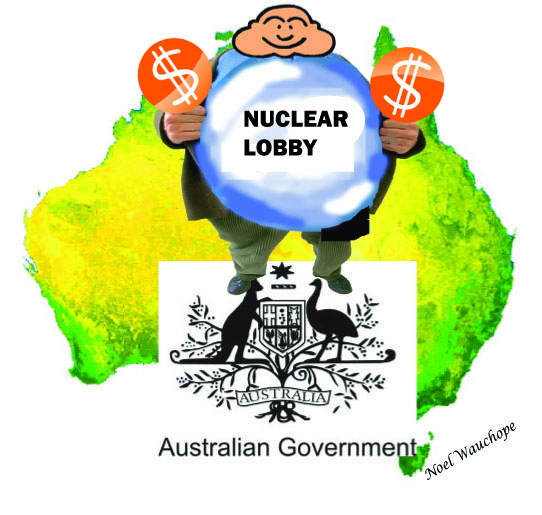
Double standards on research cooperation with China, Independent Australia 4 January 2021, The Government is hypocritical in its approval of Australia’s nuclear research body to work with China on the development of nuclear reactors, writes Noel Wauchope.
PRIME MINISTER Scott Morrison’s Liberal Coalition Government seems to remain in silent approval of the Australian Nuclear Science and Technology Organisation’s (ANSTO) partnership with a Chinese company to develop Generation IV nuclear technologies such as small nuclear reactors.
But it’s a different story when it comes to the Morrison Government’s concern to put a stop to the Victorian Labor Government’s cooperation with China in developing agricultural, communications and medical research.
We hear very little about the Australian Government’s research connections with China, managed under the Australia-China Science and Research Fund (ACSRF), which has the aim of ‘supporting strategic science, technology and innovation collaboration of mutual benefit to Australia and China’.
One remarkable collaboration between Australia and China is in the strategic partnership between ANSTO and the Shanghai Institute of Applied Physics (SINAP) to develop the Thorium Molten Salt Nuclear Reactor (TMSR) and other Generation IV nuclear reactor designs.
 In March 2019, Dr Adi Paterson, then CEO of ANSTO, welcomed renewal of this agreement and was reported as stating that it was “consistent with ANSTO and Australia’s interest in and support of Generation IV reactor systems”. This statement was made at a time when Australia’s federal and state laws clearly prohibited the development of nuclear reactors.
The Age quoted anonymous senior Federal Government sources who reveal that the Australian Government may use its powers to tear up a research agreement between the Victorian Government and China’s Jiangsu province. This agreement was signed in 2012 and renewed in 2019……….
The USA partly funds the Australian Strategic Policy Institute, which strongly advises against cooperative research with China. And, of course, Victorian Liberal Opposition leader Michael O’Brien was quick to join in the chorus, condemning the Labor Government for having the deal with China.
All this makes it all the more inexplicable as to why the Australian Government should have an agreement with China to develop nuclear reactors. Under federal law, Australia prohibits establishing nuclear installations. ……..
There has been virtually no media coverage of Dr Adi Paterson’s deal with China, which goes back to 2015. I have previously written about this and the secrecy under which it was conducted.
Indeed, ANSTO’s operations and its funding have been conducted in secrecy, under the comfortable shroud of national security.
Right now, there is a move to corporatise the nuclear medicine facility at Lucas Heights as a separate entity to ANSTO. At the same time, the Government is in an unseemly rush to set up a nuclear waste dump near Kimba in South Australia. In the midst of all this came the sudden unexplained resignation of the CEO, Dr Adi Paterson.
The silence on all this is disturbing. It must be especially so for the small rural community of Kimba and for the Indigenous Title Holders as they wait in limbo for the vexed question of the nuclear waste dump to be solved. For the rest of South Australia, that is a concern, too. Victorians may well wonder why their medical research cooperation with China is seen as so dangerous. Meanwhile, is it okay for Australia’s nuclear research body, ANSTO, to work with China on the development of small nuclear reactors? https://independentaustralia.net/politics/politics-display/double-standards-on-research-cooperation-with-china,14664
Australia joins with USA to get hypersonic missiles
|
Australia Teams Up With U.S. To Get Hypersonic Missiles For Its Super Hornets In Five Years
Plans call for the rapid prototyping of a new air-breathing long-range missile for the Royal Australian Air Force. The Drive, THOMAS NEWDICK. NOVEMBER 30, 2020 Australia is gearing up to start testing a new air-launched hypersonic missile “within months.” Details of the joint U.S.-Australian program are still emerging but point to a multi-million-dollar effort to develop an air-breathing, long-range missile that could ultimately be carried by a range of Royal Australian Air Force aircraft. The new weapon is due to be formally announced tomorrow and prototypes are being developed together with the United States under the Southern Cross Integrated Flight Research Experiment, or SCIFiRE. Hypersonic weapons are generally understood to be capable of flying at least five times the speed of sound, giving them faster response time for striking critical targets and making them much harder to defend against than their slower counterparts
The new weapon is due to be formally announced tomorrow and prototypes are being developed together with the United States under the Southern Cross Integrated Flight Research Experiment, or SCIFiRE. Hypersonic weapons are generally understood to be capable of flying at least five times the speed of sound, giving them faster response time for striking critical targets and making them much harder to defend against than their slower counterparts……
While Australia has apparently struck a new deal with the United States regarding SCIFiRE in the last few days, this program dates back as long as 15 years. It has included joint research on hypersonic scramjets, rocket motors, sensors, and advanced manufacturing materials.
In the past, The War Zone has examined previous U.S. and Australian hypersonic experiments, including the Hypersonic International Flight Research Experimentation (HiFIRE) program, which you can read more about here. A U.S. Air Force contract announcement as long ago as 2008 indicated that one of the aims of the HiFIRE program was to gather information that could be “applicable to the design of next-generation high-speed strike weapons.”……..
While the initial focus of the SCIFiRE work seems to be firmly on an air-launched missile for the RAAF, Australia is also looking to develop hypersonic weapons for launch from the ground or from warships, and it’s possible that a family of weapons may eventually be developed for different launch platform applications. …….. https://www.thedrive.com/the-war-zone/37875/australia-teams-up-with-u-s-to-get-hypersonic-missiles-for-its-super-hornets-in-five-years
|
|
The Australian government”s intimidation of whistleblowers – the torture of Julian Assange
Torture of Julian Assange by Australian governments sends powerful message to whistleblowers, Michael West Media by Lissa Johnson | Nov 26, 2020
Australia has used a range of torture techniques against Julian Assange, writes Dr Lissa Johnson. Governments have isolated and demonised him; flatly rejected evidence of ill-treatment; refused to respond to specific allegations; and divested themselves of any responsibility. Leaders can’t, or won’t, accept the difference between psychological torture and ‘a legal matter’.
Julian Assange has set a number of firsts for Australia, including:
- The first Walkley award winner whose journalism has attracted a possible 175 years in US prison.
- The first journalist to be prosecuted as a spy by the US government, under its 1917 Espionage Act.
- The first citizen of an ostensibly democratic state (Australia) whom a UN official has found to be the target of a campaign of collective persecution and mobbing by other so-called democratic states.
As the UN Rapporteur on Torture, Nils Melzer, observed:
In 20 years of work with victims of war, violence and political persecution I have never seen a group of democratic states ganging up to deliberately isolate, demonise and abuse a single individual for such a long time and with so little regard for human dignity and the rule of law.
As part of this mobbing and collective persecution, Assange is the first Australian journalist to be tortured for journalism in the UK.
On 9 May 2019, Professor Melzer visited Assange in Belmarsh prison, accompanied by two medical experts specialising in the assessment and documentation of torture. On 31 May, Melzer reported that they had found Assange to be suffering all symptoms typical of prolonged exposure to psychological torture.
On 1 November 2019, Melzer warned that, unless the UK government urgently changed course, it may soon end up costing his life.
What torture?
Julian Assange is being held in ‘Britain’s Guantanamo’, Belmarsh prison, a high-security facility designed for those charged with terrorism, murder and other violent offences. He has been held in solitary confinement for 22 to 23 hours a day.
He knows that US-aligned security contractors have written in emails that he will make a nice bride in prison, and needs his head dunked in a full toilet bowl at Gitmo. He knows he is headed for life in US supermax prisons, where prisoners are held in perpetual solitary and chains.
‘If this man gets extradited to the United States, he will be tortured until the day he dies’, Profesor Melzer has cautioned.
To heighten the torment, Assange has been prevented from preparing his defence against extradition in violation of his human rights as a defendant.
He has been granted negligible access to his lawyers and is prevented from researching his own defence. The only purpose is to render him helpless, intensifying his trauma.
A Message from the Australian Government
Assange’s experience sets an example to anyone thinking of airing the dirty secrets of those in power: the genuinely dirty secrets, such as wantonly slaughtering and torturing innocent people and covering it up.
Like all public torture, it sends a message to onlookers: this could happen to you.
And the message from the Australian government to any Australian journalists looking on? You’re on your own.
The US government is seeking to retrospectively apply its own Espionage Act to non-US citizens in foreign lands, while simultaneously withholding the free speech protections of its Constitution. The upshot would be that non-US citizens, and non-US journalists, would be vulnerable to prosecution wherever they may be, whenever the United States saw fit.
Should a host country oblige, that journalist’s only hope would be the protection of their own government. And the message from the Australian government? Not a chance.
A climate of consent
But can the government do anything to stop the torture of Assange in the UK? Or are its hands tied?
Australia ratified the Convention Against Torture in 1989. It therefore has a positive duty to take ‘effective legislative, administrative, judicial and other measures to prevent acts of torture’ of its citizens. According to the Federal Attorney-General’s website, however, that duty applies to ‘territories within Australia’s jurisdiction’.
So who is responsible for protecting Australian citizens from torture overseas?
Australian officials can raise concerns with their overseas counterparts when they are concerned about gross violations of citizens’ rights as happened in the cases of Melinda Taylor, James Ricketson, David Hicks and Peter Greste.
They could also make a submission to the Committee against Torture that a state is ‘not fulfilling its obligations under this Convention’.
n Assange’s case, however, the government has opted for ‘consent and acquiescence’ under Article 1 of the convention. Consent and acquiescence is listed alongside inflicting and instigating torture as part of the very definition of torture.
‘Standard’ fare
DFAT representatives say repeatedly that Assange’s treatment In the UK is perfectly normal. ‘Standard’. ‘No different’ from the treatment of other UK prisoners. Routine, in other words. Nothing to see here.
When reminded that Assange had been handcuffed 11 times, stripped naked twice and moved between five holding cells after the first day of his extradition hearing, a DFAT representative described this as ‘standard prison to court and court to prison procedure’.
What the official failed to explain is that treatment is only ‘standard’ and normal for prisoners charged with terrorism or other violent offences.
It is not remotely normal for journalists with no criminal history, and no history or risk of violence, to be detained under the most punitive conditions that UK law enforcement has to offer.
As an exercise in “consent and acquiescence” DFAT representatives performed their duties well.
Sanitising, normalising language minimises and trivialises abuse………….
‘Not our responsibility’ has been the Australian government’s refrain. Australian government officials ‘don’t provide running commentaries on legal matters before the courts in other parts of the world’, asserted the Foreign Minister.
Australia is ‘not a party to the legal proceedings in the United Kingdom’, stressed a DFAT official when asked why Australia had not intervened in Assange’s case during Senate Estimates. ‘We have no standing in the legal matter that is currently before the courts.’
Perhaps the Australian government doesn’t understand the seriousness of the abuses taking place in the UK. Perhaps ministers and their advisors are unaware of the difference between psychological torture and a ‘legal matter’. Psychological torture is, after all, not commonly well understood.
It is possible that the Australian government merely fails to grasp the gravity of ignoring Professor Melzer’s warnings. However, when the group Doctors for Assange wrote to the Australian government in December 2019, they detailed the medical and psychological basis of their concerns for Assange’s life and health…………..
New normal in Australia?
Assange is not the first person in Australia to be subjected to torture and other cruel, inhuman or degrading treatment. Australia’s abuse of asylum seekers and refugees has been found to violate the Convention Against Torture. Aboriginal Australians, among the most incarcerated groups on earth, have been dying in custody, buried under acquiescent consent, for decades, and historically for hundreds of years.
The Human Rights Measurement Index 2019 has given Australia a 5.5 out of 10 rating for ‘freedom from torture’, noting, ‘Torture is a serious problem in Australia … a large range of people [are] at particular risk of torture or ill-treatment, with Aboriginal people and Torres Strait Islanders at the top of the list’…….
Through sending a message to journalists worldwide by torturing Assange, the abusive licence deployed against other persecuted groups is being expanded to take in journalism. The targeting of journalists around the world matters because journalists cut across the acquiescence and consent, remove the deadbolt on the torture chamber door, turn down the music, and expose what is going on inside. Every persecuted and abused group or person needs them, to break the cycle of violence by breaking the silence.
We do torture here. It is our problem. In Julian Assange’s case, the biggest problem appears to be that torturing journalists is becoming the new normal in Australia.
This edited extract is reproduced from A Secret Australia: Revealed by the WikiLeaks Exposés, edited by Felicity Ruby and Peter Cronau, Monash University Publishing, December 2020. https://www.michaelwest.com.au/torture-of-julian-assange-by-australian-governments-sends-powerful-message-to-whistleblowers/
Julian Assange ‘targeted as a political opponent of Trump administration and threatened with the death penalty’
|
Julian Assange ‘targeted as a political opponent of Trump administration and threatened with the death penalty’ Evening Standard. By Tristan Kirk. @kirkkorner
09 September 2020, Wikileaks founder Julian Assange has been targeted as a “political opponent” of President Trump’s administration and threatened with the death penalty, the Old Bailey heard today.
Professor Paul Rogers, a lecturer in peace studies at Bradford University and specialist on the ‘War on Terror’, said Assange’s opinions put him “in the crosshairs” of Trump’s top team. Giving evidence to Assange’s extradition hearing this morning, he said he believes the prosecution case is part of a drive in the United States to target “dissenters”. “In my opinion Mr Assange’s expressed views, opinions and activities demonstrate very clearly ‘political opinions’”, he told the court. “The clash of those opinions with those of successive US administrations, but in particular the present administration which has moved to prosecute him for publications made almost a decade ago, suggest that he is regarded primarily as a political opponent who must experience the full wrath of government, even with suggestions of punishment by death made by senior officials including the current President.”………
Professor Rogers, in his witness statement, said Assange’s work involved exposing secrets that the US government wanted to keep hidden, he had been in conflict with the Obama administration, but there was “no question” that Assange had been targeted as a political opponent by Trump’s officials. “The opinions and views of Mr Assange, demonstrated in his words and actions with the organisation WikiLeaks over many years, can be seen as very clearly placing him in the crosshairs of dispute with the philosophy of the Trump administration”, he said. Assange’s legal team argue that a decision was taken under President Obama not to prosecute the Wikileaks activist, but that move was overturned under Trump. https://www.standard.co.uk/news/uk/julian-assange-donald-trump-administration-old-bailey-hearing-a4543656.html?fbclid=IwAR3Rj4n0Lzlt5GmE1lXZXoMVDsOS5BdT9sEKgj82SCmMnpNLFQ6ZfEzVUOI |
|
Jo Biden’s win leaves Scott Morrison looking pretty silly on climate policy
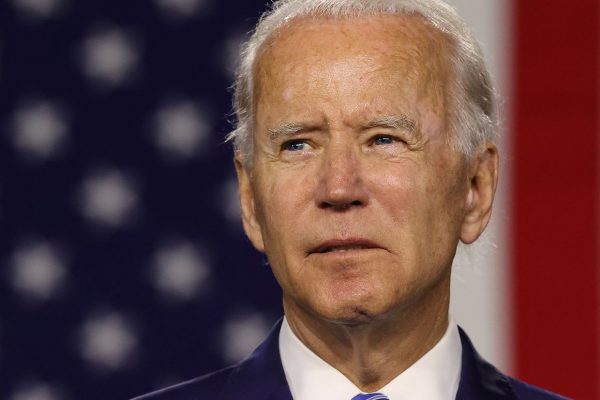
 Biden win leaves Australia ‘isolated’ and lagging on climate goals, New Daily, Josh Butler 8 Nov 20, A Biden presidency will put an increasingly “isolated” Australian government under immense pressure to adopt strong environment and emissions policies, leading climate voices say, as the United States looks to again assume a global leadership role.It comes as former prime minister Malcolm Turnbull ridicules Scott Morrison’s plans for a ‘gas-led recovery’ as “BS” and “political piffle”, in calling for his former colleagues to back more ambitious climate targets……. Biden win leaves Australia ‘isolated’ and lagging on climate goals, New Daily, Josh Butler 8 Nov 20, A Biden presidency will put an increasingly “isolated” Australian government under immense pressure to adopt strong environment and emissions policies, leading climate voices say, as the United States looks to again assume a global leadership role.It comes as former prime minister Malcolm Turnbull ridicules Scott Morrison’s plans for a ‘gas-led recovery’ as “BS” and “political piffle”, in calling for his former colleagues to back more ambitious climate targets…….
President-elect Biden spoke of “the battle to save our planet by getting the climate under control”, while vice president-elect Kamala Harris also prominently mentioned the need “to combat the climate crisis” in her speech. Ambitious climate agendaMr Biden will reinsert the US into the Paris climate agreement on his first day in office. He pledged “to get every major country to ramp up the ambition of their domestic climate targets”, and will move to get the US power grid using 100 per cent clean energy by 2035. Crucially, he will commit the US to a policy of net-zero emissions by 2050. This change, Australian experts say, will leave Mr Morrison’s federal government out in the cold as the only one of our major trading partners without a similar target. “This will have huge ramifications in increasing action around the world,” Amanda McKenzie, CEO of the Climate Council, told The New Daily. “Australia will look isolated. Most countries have a net-zero target, many are looking more ambitious than that. Australia’s ‘climate-lite’ approach, of not doing a lot but claiming we are, won’t cut it.” All of Australia’s most important partners – the United Kingdom, Japan, South Korea, China, India, Canada, and now the US – have committed to concrete net-zero targets in coming years, meaning a balance between emissions produced and emissions removed. Last month, British PM Boris Johnson told Mr Morrison of the need for “bold action to address climate change” and “the importance of setting ambitious targets to cut emissions and reach net zero”. However, Mr Morrison has only committed Australia to the goal “in the second half of this century”. The federal government has also come under fire for the controversial plan to use ‘carryover credits’ from the previous Kyoto climate agreement to count against commitments under the Paris agreement. On Sunday, Mr Morrison said he looked forward to working with Mr Biden to lower emissions worldwide……… Pushing beyond net zeroRichie Merzian, climate and energy program director at The Australia Institute, said a Biden win will further pressure the federal government. “We could always hide behind the US when they were a laggard on climate, but no more. Biden will bring that pressure to bear on Morrison,” Mr Merzian told TND……. He added that Australia should scrap its reliance on Kyoto credits and pledge stronger action. “The most important period for climate action is the next 10 years … [a Biden win] does raise this and put this back as a front and centre issue,” Mr Merzian said. Australia Institute polling from last year found 62 per cent of Australians would back a net-zero target by 2050, or even earlier……. https://thenewdaily.com.au/news/2020/11/09/joe-biden-climate-change/ |
|
Australian govt will feel the heat when a Biden administration rejoins the Paris climate agreement
 Biden says the US will rejoin the Paris climate agreement in 77 days. Then Australia will really feel the heat, The Conversation Christian Downie, Australian Research Council DECRA Fellow, Australian National University, November 6, 2020 When the US formally left
the Paris climate agreement, Joe Biden tweeted that “in exactly 77 days,  a Biden Administration will rejoin it”.
The US announced its intention to withdraw from the agreement back in 2017. But the agreement’s complex rules meant formal notification could only be sent to the United Nations last year, followed by a 12-month notice period — hence the long wait.
While diplomacy via Twitter looks here to stay, global climate politics is about to be upended — and the impacts will be felt at home in Australia if Biden delivers on his plans.
Biden’s position on climate change
Can he do it under a divided Congress?
While the votes are still being counted — as they should (can any Australian believe we actually need to say this?) — it seems likely the Democrats will control the presidency and the House, but not the Senate.
This means Biden will be able to re-join the Paris agreement, which does not require Senate ratification. But any attempt to legislate a carbon price will be blocked in the Senate, as it was when then-President Barack Obama introduced the Waxman-Markey bill in 2010.
What’s needed are ambitious targets and mandates for the power sector, transport sector and manufacturing sector, backed up with billions in government investment.
Fortunately, this is precisely what Biden is promising to do. And he can do it without the Senate by using the executive powers of the US government to implement a raft of new regulatory measures.
Take the transport sector as an example. His plan aims to set “ambitious fuel economy standards” for cars, set a goal that all American-built buses be zero emissions by 2030, and use public money to build half a million electric vehicle charging stations. Most of these actions can be put in place through regulations that don’t require congressional approval.
And with Trump out of the White House, California will be free to achieve its target that all new cars be zero emissions by 2035, which the Trump administration had impeded.
If that sounds far-fetched, given Australia is the only OECD country that still doesn’t have fuel efficiency standards for cars, keep in mind China promised to do the same thing as California last week.
What does this mean for Australia?
For the last four years, the Trump administration has been a boon for successive Australian governments as they have torn up climate policies and failed to implement new ones.
Rather than witnessing our principal ally rebuke us on home soil, as Obama did at the University of Queensland in 2014, Prime Minister Scott Morrison has instead benefited from a cosy relationship with a US president who regularly dismisses decades of climate science, as he does medical science. And people are dying as a result.
For Australia, the ambitious climate policies of a Biden administration means in every international negotiation our diplomats turn up to, climate change will not only be top of the agenda, but we will likely face constant criticism.
Indeed, fireside chats in the White House will come with new expectations that Australia significantly increases its ambitions under the Paris agreement. Committing to a net zero emissions target will be just the first.
The real kicker, however, will be Biden’s trade agenda, which supports carbon tariffs on imports that produce considerable carbon pollution. The US is still Australia’s third-largest trading partner after China and Japan — who, by the way, have just announced net zero emissions targets themselves……
With Biden now in the White House, it’s not just global climate politics that will be turned on its head. Australia’s failure to implement a serious domestic climate and energy policy could have profound costs.
Costs, mind you, that are easily avoidable if Australia acts on climate change, and does so now. https://theconversation.com/biden-says-the-us-will-rejoin-the-paris-climate-agreement-in-77-days-then-australia-will-really-feel-the-heat-149533
Biden as president would pursue climate ‘cheaters’, such as Morrison’s Australia
  Biden as president would pursue climate ‘cheaters’ – and Australia could be among them, Scott Morrison has resisted a call to action from the UK – but the US would be hard to ignore, Guardian, Richie Merzian 4 Nov 20, ”…….. If Joe Biden takes the Oval Office, on the day of his inauguration, 20 January 2021, he can formally ask to rejoin the Paris agreement. It takes one year to pull out but only 30 days to sign up. However, regaining membership to the agreement is just the beginning. The divergence on climate policy between the Democratic and Republican candidates is huge – possibly the widest divide between the two platforms – and while Trump questions global warming, Biden has the most ambitious climate policies of any presidential candidate (exceeding those of Barack Obama).First, Biden will lock the US into net zero emissions by 2050. Not an ill-defined target some time in the second half of the century, like the Australian government’s, but a 30-year target. A target that means putting coal, oil and gas on a downward trajectory, and bringing total global CO2 emissions under a net-zero target to over 60%, including major importers of Australian coal and gas – China, Japan and the Republic of Korea. Biden as president would pursue climate ‘cheaters’ – and Australia could be among them, Scott Morrison has resisted a call to action from the UK – but the US would be hard to ignore, Guardian, Richie Merzian 4 Nov 20, ”…….. If Joe Biden takes the Oval Office, on the day of his inauguration, 20 January 2021, he can formally ask to rejoin the Paris agreement. It takes one year to pull out but only 30 days to sign up. However, regaining membership to the agreement is just the beginning. The divergence on climate policy between the Democratic and Republican candidates is huge – possibly the widest divide between the two platforms – and while Trump questions global warming, Biden has the most ambitious climate policies of any presidential candidate (exceeding those of Barack Obama).First, Biden will lock the US into net zero emissions by 2050. Not an ill-defined target some time in the second half of the century, like the Australian government’s, but a 30-year target. A target that means putting coal, oil and gas on a downward trajectory, and bringing total global CO2 emissions under a net-zero target to over 60%, including major importers of Australian coal and gas – China, Japan and the Republic of Korea.
Within his first 100 days, Biden has committed to convene a climate world summit to directly engage the leaders of the major carbon-emitting nations of the world to persuade them to join the United States in making more ambitious national pledges, above and beyond the commitments they have already made. From the US, we could see a new, more ambitious emission reduction target than its underwhelming 26-28% by 2025 (if that sounds familiar, it’s because Australia has the exact same underwhelming target range but for 2030, and without the desire to improve it). Importantly, Biden will pursue countries seen as “cheating” on climate action, using “America’s economic leverage and power of example”. Given the Morrison government’s insistence on using leftover carbon credits to avoid any credible emission reductions over the next decade – dubbed by the former UN climate chief Christiana Figueres as “cheating” and by numerous Australian law professors as legally baseless – Australia may be a target of that pursuit. Australia and the US might also be at odds over financial support for climate action in developing countries. Biden’s campaign promises include meeting the US climate finance pledge, of which $2bn to the Green Climate Fund is still outstanding. Prime minister Scott Morrison pulled Australia out of the Green Climate Fund in 2018 during an interview with Alan Jones and has resisted calls since from our neighbours in the Pacific to rejoin. While presidential office is key, if Democrats take a majority of Senate seats their capabilities on climate would grow fast. The president, Senate and key states could see the US move quickly – even this year. And much like the climate leadership shown by states and territories in Australia that are all signed up to net-zero by 2050 targets, a number of US state governments have already banded together to take climate action under Trump. According to the America’s Pledge report, sub-national action makes it possible for the US to cut emissions by 37% by 2030. And despite Trump’s best efforts to revive the coal industry, more coal capacity (37GW) has been retired under his presidency than during Obama’s second term (33GW). The US consumed more energy from renewables than coal in 2019, for the first time in over a century, setting the stage for Biden’s promise of a carbon pollution-free power sector by 2035. This 12 December the Paris agreement turns five. The United Kingdom, which will host the next UN climate conference, will mark the occasion with an ambition summit. And while Scott Morrison has resisted calls from the UK to do more on climate, it may be harder to resist similar calls from the US. Morrison claims, “Our policies won’t be set in the United Kingdom, they won’t be set in Brussels, they won’t be set in any part of the world other than here.” I wouldn’t be so sure. When former president Obama pressured the Abbott government to do more on climate change in 2014, it had an impact. Let’s see what happens when Washington calls again. https://www.theguardian.com/commentisfree/2020/nov/04/biden-as-president-would-pursue-climate-cheaters-and-australia-could-be-among-them |
|
International Campaign to Abolish Nuclear Weapons (ICAN)- from a tiny group to an International Treaty
 Nuclear weapons treaty backed by 50 nations to become international law https://independentaustralia.net/politics/politics-display/nuclear-weapons-treaty-backed-by-
 50-nations-to-become-international-law,14455
2020 HAS BEEN a very tough year with fires, pestilence and massive economic and human disruption but amid the difficulties, an Australian-born initiative is steadily growing global support and offers our shared planet its best way to get rid of its worst weapons.
In October 2017, the International Campaign to Abolish Nuclear Weapons (ICAN), an initiative born in Melbourne and adopted, adapted and applied around the world, was awarded the 2017 Nobel Peace Prize.
This was in recognition of its:
“…work to draw attention to the catastrophic humanitarian consequences of any use of nuclear weapons and for its ground-breaking efforts to achieve a treaty-based prohibition of such weapons.”
Fast forward to October 2020 and the Treaty on the Prohibition on Nuclear Weapons has just cleared a big hurdle. Despite strong pressure from the nuclear weapons states, especially the U.S., 50 nations have now ratified the ban treaty. It will enter into force and become part of international humanitarian law on 22 January 2021.
At a time when the threat of nuclear war is more explicit than it has been in decades, the ICAN story is timely and shows the power of both the individual and the idea. When ICAN started in 2007, its founders could have fitted in a minibus. Ten years later, there are over 500 ICAN groups and formal partners in more than 100 nations. And a treaty. Continue reading
1 This month

of the week – Australians for War Powers Reform (AWPR)
To see nuclear-related stories in greater depth and intensity
 Antinuclear