Pacific Rim countries say no to U.S.-China war
The question that the people of the Pacific and Pacific Rim countries are asking is: Why do we have to respond to this demand by the U.S.? We are not threatened by China. Where is the dire urgency that demands such a huge distortion of our public spending on the military?
The indications are that the United States is preparing for war against China, but cannot wage such a war from the West Coast of the USA. It needs military bases, port facilities and airfields in the countries on the west side of the Pacific Rim; for example, South Korea, Japan, the Philippines, Guam, Micronesia and Australia. Without these bases, without the backing of the military forces and munitions and manufacturing capabilities of the Pacific Rim countries, the United States cannot launch and sustain a war against China.
By Bevan Ramsden | 16 June 2025, https://independentaustralia.net/politics/politics-display/pacific-rim-countries-say-no-to-us-china-war,19837
As the U.S. pushes Pacific Rim allies to ramp up military spending for a possible war with China, a new campaign asks: at what cost and for whose benefit? Bevan Ramsden writes.
THE PACIFIC and Pacific Rim countries have a geographical commonality. They are encircled by, or have a border with, the vast, blue, peaceful Pacific Ocean. They also share a political commonality. The people and countries of this region are under pressure to lift their military spending at the expense of addressing their social needs.
The pressure comes from the United States, whose Defence Secretary, Peter Hegseth, at the recent Singapore Defence Summit, declared that the U.S. expects its allies in this region to increase their defence spending to 5% of their GDP. His justification was a “possibly imminent threat” posed by China. He emphasised how the U.S. is “reorienting towards deterring aggression by China” and made it clear that the Donald Trump Administration’s defence strategy revolves around stifling the rise of China.
Responding to this expectation would involve the doubling of South Korean expenditure on military defence, from 2.6% of its GDP to 5%.
It would mean Japan’s military defence spending would have to triple from 1.8 % of its GDP to 5%.
In Australia, such an increase would represent a two-and-a-half times increase from 2% to 5% of its GDP.
These examples show that the 5% target represents a massive increase in military spending, which can only be made by reducing funding for urgent infrastructure, social needs such as health and education and loss of resources to address the real threat to their living environments, the climate crisis.
The question that the people of the Pacific and Pacific Rim countries are asking is: Why do we have to respond to this demand by the U.S.? We are not threatened by China. Where is the dire urgency that demands such a huge distortion of our public spending on the military?
Another commonality among the countries of the Pacific Rim, particularly those on the western and southern rim of the Pacific, is U.S. troops and U.S. military installations stationed on their territory. In the case of South Korea, these are substantial, close to 30,000 and put that country’s military virtually under the control of the U.S.
Japan has 57,000 U.S. troops, including 20,000 on Okinawa, where the U.S. Kadena Air Base is its largest outside of the USA. Clearly, this level of foreign military occupation exerts substantial pressure on Japan’s foreign policy.
The Philippines has four U.S. bases with troops rotating through its territory and training with its defence forces, and is setting up logistic centres for equipment and munitions.
The people of Guam, a territory under direct U.S. control, are subject to 7,000 U.S. troops, with almost a third of the land controlled by the U.S. military. The Joint Region Marianas is a U.S. military command combining the Andersen Air Force Base and the Naval Base Guam.
Andersen Air Force Base hosts B-52 bombers and fighter jets. Naval Base Guam is the home port for four nuclear-powered fast attack submarines and two submarine tenders. American military commanders have referred to the island as their “permanent aircraft carrier”.
Australian governments, in their subservience to the U.S., have signed the Force Posture Agreement, giving the U.S. military unimpeded access to Australia’s ports and airfields and enabling the establishment of a Northern Territory base for its B-52 bombers, some of which are nuclear-capable. The Agreement is giving the U.S. fuel and munitions storage areas to support war operations and an $8 billion port facility for servicing their nuclear submarines and storage of their nuclear waste.
The people of Pacific Rim countries, including Australia, need to ask: Why does the U.S. have these extensive military facilities in our countries and why are they demanding such huge military expenditures from us?
The answer, unfortunately, is not for the benefit of the people of this region but for its own foreign policy objectives, which include maintaining its dominance in the region by “containing” China and preventing the rise of its influence.
The indications are that the United States is preparing for war against China, but cannot wage such a war from the West Coast of the USA. It needs military bases, port facilities and airfields in the countries on the west side of the Pacific Rim; for example, South Korea, Japan, the Philippines, Guam, Micronesia and Australia. Without these bases, without the backing of the military forces and munitions and manufacturing capabilities of the Pacific Rim countries, the United States cannot launch and sustain a war against China.
So the United States needs us but we don’t need such a war.
It would only bring devastation to our lives and our economies, and if it turned nuclear, who would survive?
The Pacific Peace Network, with representatives from the Pacific Rim countries and together with World Beyond War, has produced a solidary campaign which is being launched on 21 June 2025.
This is a campaign in which the people of each country on the Pacific Rim, including Australia, can say no to such a war and no to an increase in military spending for it, through a common petition which is a call on their governments.
The common petition can be accessed here at the World Beyond War website.
This call on governments reads:
For sustainable peace and the survival of our peoples and environment, we ask you:
- refuse to join military preparations for a U.S.-China war;
- declare you will not fight in a U.S.-China war;
- declare neutrality should such a war break out; and
- do not allow your territory or waters to be used in such a war, including the collection and relay of military intelligence, sales of weapons and hosting combatant troops and facilities.
Later this year, the petitions will be presented to their respective governments by peace activists in each country.
US launches AUKUS review to ensure it meets Donald Trump’s ‘America First’ agenda
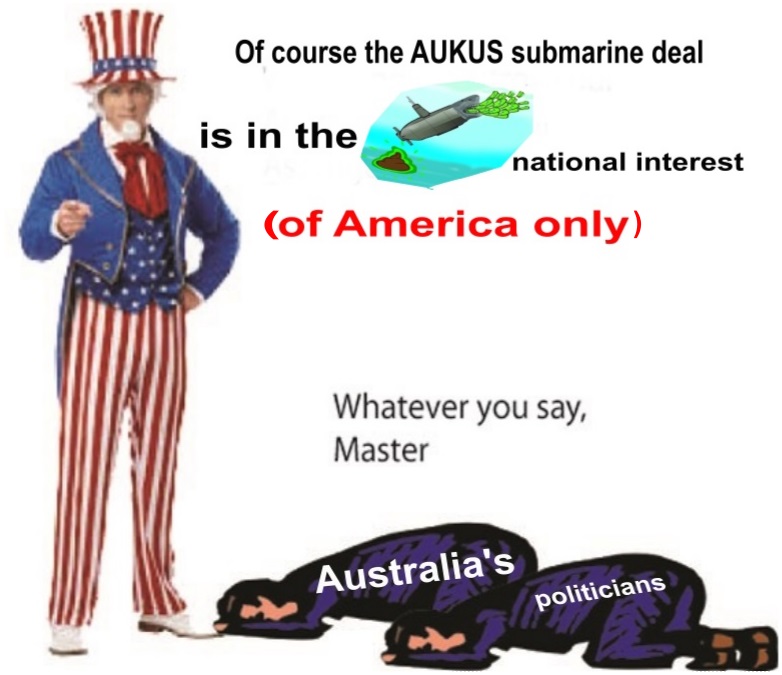
By Brad Ryan and Emilie Gramenz in Washington DC, ABC News, 11 June 25
In short:
The US is reviewing the AUKUS security pact with Australia and the UK, which Australia is depending on to acquire nuclear-powered submarines.
A US defence official said it would ensure the pact met President Donald Trump’s “America First” agenda, as the US struggles to build enough submarines for its own fleet.
But Defence Minister Richard Marles said he was “very confident this [AUKUS] is going to happen” and it was only natural for the new US administration to review it.
The Pentagon is reviewing the AUKUS security pact between Australia, the US and the UK to ensure it aligns with President Donald Trump’s “America First” agenda, a US defence official told the ABC.
But Defence Minister Richard Marles said he remained confident the pact would remain intact, and a review was a “perfectly natural” thing for a new administration to do.
The news follows US Defense Secretary Pete Hegseth’s recent request for Australia to significantly boost its defence spending “as soon as possible”.
The US defence official said the review “will ensure the initiative meets … common sense, America First criteria”.
“As Secretary Hegseth has made clear, this means ensuring the highest readiness of our service members, that allies step up fully to do their part for collective defence, and that the defence industrial base is meeting our needs,” the official said.
Under the AUKUS pact, Australia would be armed with nuclear-powered submarines at a cost of more than $350 billion.
Elbridge Colby, who is the under secretary of Defense for Policy and has voiced scepticism about AUKUS, is leading the review, according to the UK’s Financial Times.
Last August, Mr Colby tweeted he was an AUKUS “agnostic”.
“In principle it’s a great idea. But I’ve been very skeptical in practice,” he wrote, but added he’d become “more inclined based on new information I’ve gleaned”.
Mr Marles told ABC Radio Melbourne he was “very confident this [AUKUS] is going to happen”.
“The meetings that we’ve had with the United States have been very positive in respect of AUKUS,” Mr Marles said. “That dates back to my most recent meeting with Pete Hegseth in Singapore.”
……………………………………………. The Australian government paid the US almost $800 million earlier this year — the first in a series of payments to help America improve its submarine manufacturing capabilities.
………… Mr Hegseth met Defence Minister Richard Marles in Singapore, and said Australia needed to lift its defence spending.
Mr Trump himself has said little publicly about the AUKUS pact, and his criticisms of America’s traditional alliances have fuelled anxieties about its future in Canberra and London.
When a reporter asked Mr Trump about AUKUS in February, he appeared to be unfamiliar with the term, replying: “What does that mean?”…………………………..
Under “Pillar I” of the two-pillar AUKUS deal, the first submarine would arrive in Australia no sooner than 2032. It would be a second-hand US Virginia-class vessel.
The US would subsequently supply Australia with between three and five submarines, before Australia began building its own in Adelaide, modelled on British designs.
Mr Albanese was expected to meet Mr Trump on the sidelines of the G7 summit in Canada next week. But that’s now in limbo after the US condemned Australia and several other countries that placed sanctions on two far-right Israeli ministers.
…………..Critics of the deal, including former prime ministers Malcolm Turnbull and Paul Keating, have long warned it is unfair and risky. “I’ve never done a deal as bad as this,” Mr Turnbull told Radio National earlier this year.
The Greens have proposed a “plan B” defence policy that would eventually see AUKUS cancelled.
There are also longstanding concerns around the US’s consistent failure to meet its own submarine-building targets to fully stock its military fleet…………………………………………….https://www.abc.net.au/news/2025-06-12/aukus-pentagon-review-donald-trump-america-first/105406254
In Australia’s post-US future, we must find our own way with China

Hugh White, 2 June 25, https://www.theguardian.com/australia-news/2025/jun/02/australia-post-america-future-china
The Canberra establishment thinks we must depend on Washington more than ever in today’s hard new world. That misses a vital point, Hugh White writes in this Quarterly Essay extract.
Thanks to US regional strategic primacy, Australia has been virtually immune from the threat of direct military attack since the defeat of Japan in 1945. Now that is changing. In future it will no longer be militarily impossible for China to attack Australia directly. And not just China: other major regional powers, especially India and eventually perhaps Indonesia, will have the potential to launch significant attacks on Australia.
That does not mean we now face a serious threat of Chinese military attack. Today the only circumstance in which Australia could credibly find itself under attack from China would be if Australia joined the US in a war with China over Taiwan. Reports that Australia is a target of Chinese cyber and intelligence operations do not show that Beijing poses a military threat to us any more than our cyber and intelligence operations targeting China provide evidence that we pose a military threat to them.
It is harder to say whether China might become militarily aggressive towards us in future. We cannot assume that it will from its military buildup alone, because countries often expand their armed forces to defend themselves rather than to attack others.
But, equally, we cannot rule out the possibility that China might decide to use armed force against Australia in decades to come. Some aspects of China’s naval buildup, especially its sustained investment in aircraft carriers, which would have no useful role in a US-China war over Taiwan, suggest that it wants to be able to conduct long-range power-projection operations, which could encompass Australia.
Nonetheless, it does seem unlikely. For one thing, it is a little hard to imagine what China’s purpose might be in attacking Australia, given that we are not an easy country to invade. And if we get our defence policy right it should be possible for us to raise the cost to the point that it is not worth China’s while.
This all means that, while we should not ignore it, we should not allow the distant possibility of a Chinese military threat to dominate our thinking about China. There are many other dimensions to what is a very important, complex and ultimately inescapable relationship.
It is also a relationship of a completely unfamiliar kind. Other than our two great allies, Australia has never before encountered a country as large, as powerful, as influential in our region, as important to us economically, and with close heritage connections with such a large proportion of our population, as China.
Once we abandon the illusion that the US is going to manage China for us, we will realise that we have no choice but to find our own way. This will not be comfortable or easy. China is ruthless, demanding and completely transactional – though no more than other great powers. Over the past decade, in Canberra and around the country, exaggerated fears and a desire to stay in step with Washington have crowded out serious thinking about China itself and how the complex range of interests we have in our relationship with it can best be balanced. We have less deep expertise on China now than we had 30 years ago. That has to change.
Our second big task is to rethink our relationship with the US. In the decades before the mid-1990s, there was an assumption that – in a Whig-view-of-history way – Australia was gradually but ineluctably emerging from dependence to independence as we left our colonial and imperial past behind and embraced our Asian future. That died away around the time John Howard became prime minister in 1996, when it seemed to many people that the future was America’s, and that Australia’s future was to become ever more tightly entwined with it, strategically, economically and culturally.
This was the time when a US-Australia free trade agreement seemed both essential and sufficient to guarantee Australia’s economic future, and when America’s place as the world’s dominant military power seemed unchallengeable. The economic illusions of that era were soon overtaken by the hard realities of China’s rise but the strategic illusions have survived. Indeed, they were strengthened by the “war on terror” and have been intensified again by the rising fear of China. So we clung on and stopped imagining we could do anything else.
It is often said, for example, that the intelligence relationship is so close and so important to both sides as to be indissoluble. Don’t bet on that. US access to Pine Gap as a location for its satellite ground station is valuable but far from essential. Our access to US intelligence under the Five Eyes arrangements is very beneficial and, in some ways, irreplaceable, in that it provides intelligence we could not get in other ways. But that does not mean we could not get by without it. We certainly could.
As things get tough with Washington over the months and years ahead, there will be a temptation to try to placate Donald Trump and earn his favour by meeting his demands for increased defence spending, or by siding with the US in its economic war by cutting links with China.
There may be good reasons to increase defence spending but trying to buy Trump’s favour is not one of them. Likewise, that futile goal would in no way offset the many powerful arguments against joining a US-led anti-China economic coalition. There are no favours we can do Trump which will keep the US strategically engaged in Asia and committed to Australia’s defence.
We need to bear these cold realities clearly in mind as we think about our future relations with Washington. The first step is to recognise that the end of the alliance as we have known it for so long does not mean the end of the relationship. We have been close allies for so long that it is hard to imagine what other form our relationship might take.
But with careful management, a new, beneficial post-alliance relationship can evolve, just as our relations with Britain evolved after it withdrew from Asia in the late 1960s. We continued to have close and productive defence and security links, drawing some strength from our shared history together.
Singapore offers another instructive model. It is not a US ally but it has an excellent relationship with Washington, including deep defence links. We should aim for a post-alliance relationship like that with the US in the years ahead – and we should be building it now. That does not mean severing ties with Washington but it does mean changing the relationship fundamentally.
Above all, it means acknowledging that the security undertakings in Anzus can no longer be the foundation of our strategic policy, or of our relationship with the US. The Canberra establishment is shocked by any suggestion that we should walk away from the Anzus commitments. They think we can and must depend on the US more than ever in today’s hard new world.
But that misses the vital point. It is not Australia but the US that is walking away from the commitments it made in the Anzus treaty in very different circumstances 75 years ago. That was plain enough under Joe Biden. It is crystal clear today under Trump.
This is the lesson we must draw from Washington’s failure to defend Ukraine, from its crumbling position in Asia and from US voters’ decisive rejection of the old idea of US global leadership to which we still cling. Our best path now is to recognise this and start acting accordingly.
- Hugh White is emeritus professor of strategic studies at the Australian National University. This is an edited extract of Hard New World: Our Post-American Future, published in Quarterly Essay
Rudd talking the AUKUS talk in Washington, but is the US walking?
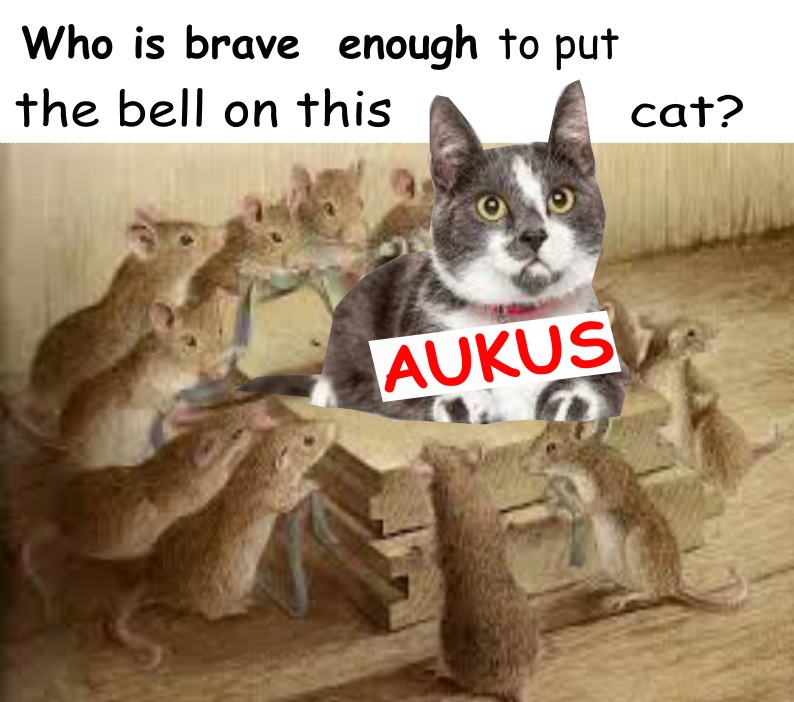
by Rex Patrick | May 23, 2025, https://michaelwest.com.au/rudd-talking-the-aukus-talk-in-washington-but-is-the-us-walking/
A new FOI reveals Kevin Rudd has been talking the AUKUS talk, with success. Yet no amount of talk will help the US walk the AUKUS walk. Rex Patrick on the project status.
A Freedom of Information request looking into what Ambassador Kevin Rudd and his Washington staffers had been doing on AUKUS since he took up his post in March 2023 shows that he was pretty busy.
When he arrived at his Embassy post, the US Congress had already passed the Australia-United States Submarine Officer Pipeline Act. That was the first US legislative action to support AUKUS, allowing Australian submarine officers to train with the US Navy, to gain expertise in nuclear-powered submarines and to set them up to serve on their subs.
But there was a lot more work to be done. The FOI shows that AUKUS was a priority that Rudd took on with his characteristic eagerness and focus. Between March and July 2023, he met with President Biden and over 40 members of Congress of both political persuasions, with a focus on those who were members of the Armed Services Committee or Foreign Relations/Affairs Committees.
In amongst tens of private or close-knit lunches, dinners and meetings, he also spoke at a House Foreign Affairs Committee roundtable on 18 April, had drinks with twelve Republican Members of Congress on 5 July and hosted an ‘AUKUS and US-AUS International Cooperation’ dinner at the Australian Embassy with seven Senators on July 11.
By then, the Embassy was declaring victory in cables back to Australia regarding AUKUS support in Congress.
Transfer legislation passes
Further Embassy work saw a swath of other laws change in support of AUKUS, including laws in the 2024 National Defense Authorization Act allowing for the conditional transfer in the 2030s of three Virginia-class submarines to the Royal Australian Navy.
The conditional elements of the law are that the transfer cannot take place if it would cause a degradation of US undersea capabilities or is inconsistent with US foreign policy and national security interests. Furthermore, the law requires the President to certify the US is making sufficient submarine production and maintenance investments to meet the combination of US and Australian requirements.
And therein lies the problem.
The US Congressional Research Service (CRS) estimates that, before a transfer of submarines can occur, the US Submarine Industrial Base needs to be producing one Columbia-class nuclear missile submarine and 2.3 Virginia-class attack submarines per annum.
Currently, the Columbia submarine program, the US Navy’s highest priority program, is running between 12 and 16 months behind schedule.
Virginia-class submarines are being built at a rate of 1.2 boats per annum, way below what’s required. At the same time, the number of commissioned US submarines either in depot maintenance or idle (awaiting depot maintenance) has increased from 11 boats (21% of the attack submarine force) to 16 boats (33% of the attack submarine force).
And that is why the Albanese Government has committed $4.7B to uplift the capabilities of the US Submarine Industrial Base. The US is also injecting billions, with a plan to get to a build rate of two Virginia-class submarines by 2028.
The big picture
The problem is that, when one stands back and looks at past US performance, even with the money being spent, hitting a build rate of 2.3 Virginia-class submarines a year is fanciful.
The Government Accountability Office (GAO) testified to the House of Representatives Armed Services Seapower and Projection Forces subcommittee on March 11 this year, stating,
The Navy has no more ships today than when it released its first 30-year shipbuilding plan in 2003.
This stagnation has occurred despite regular demands and plans for a substantial increase to the Navy’s fleet size and a near doubling of its shipbuilding budget (inflation-adjusted) over the past 2 decades.”
GAO described the situation in more detail stating that; in the 2000s attack submarines took six years to build and cost around $US3B, they now take nine years to build and cost around $US4.5B (only a third of the increase can be attributed to shipbuilding inflation); destroyers used to take five years and cost $US1.9B to build and now take nine years and cost $US2.5B (the lead ship of the new Constellation class frigate program has an estimated 3 years delay, with construction stalled; aircraft carriers used to take eight years to build and now take eleven years.
Over the period 2019 to 2040 it is estimated that the US Navy will have lost 234 ship service years due to shipbuilding delays and between 2027 and 2030 the US fleet will be smaller by 20 ships, mostly attack submarines.
Both the CRS and GAO have advised Congress that it’s not just a money problem; there are systemic issues right across the board.
The CRS testified that it has taken a long time to get into this situation and that it will take a long time to “right the ship”.
Talking cross-purposes
This brings us back to an exchange in the Australian Senate between the man in charge of AUKUS, Vice Admiral Mead, and Greens Senator David Shoebridge in June last year.
Shoebridge was asking what happens if the US can’t deliver; will we get our $4.7B back? Mead was answering that the US was fully committed. Shoebridge was in effect asking, ‘what happens if the US can’t walk the AUKUS walk’. Mead was answering, ‘they’re talking the AUKUS talk’.
Politics over engineering?
Over the years we’ve seen Australian politicians make promises about, and commit public money to, Defence projects that have subsequently gone off the rails and cost the country dearly in terms of money spent, unavailability of military capability and the undermining of national security.
It doesn’t matter what politicians in Australia or the US say; it matters what the experienced project managers and engineers say. In addition, our Defence is, at best, very short of experienced project managers; rather, they have flag-ranked officers who’ve never run projects but need somewhere to go after successfully commanding a ship or unit.
The warning signs for AUKUS are apparent right now. Australia is an island state that needs submarines and, based on the actual states of US shipyards,
“the current trajectory of AUKUS is a likely loss of our submarine force altogether.“
The Government recently announced that the Collins Life of Type Extension will be scaled back, and is refusing to develop a Plan B. Plan B is no submarines, after spending $4B not buying French submarines and pouring almost $5B into the US Submarine Industrial Base.
In any normal organisation which has accountability to shareholders, someone would have been fired by now. But no-one ever gets fired in upper echelons of the Defence force
Why US Interference in Australia Must Stop.
May 21, 2025 AIMN Editorial By Denis Hay https://theaimn.net/why-us-interference-in-australia-must-stop/
Description
US Interference. Discover how U.S. propaganda, led by the National Endowment for Democracy, manipulates global politics, including in Australia. Is our democracy truly sovereign?
Introduction: Are We the Masters of Our Destiny?
Picture this: Canberra, late 2023. A backbencher quietly raises concerns about Australia’s hawkish stance on China. He’s quickly silenced by a chorus of talking points – suspiciously uniform across think tanks, media panels, and government briefings. Behind the curtain? A well-funded global influence machine with links to Washington.
This isn’t a conspiracy, it’s a documented, multi-decade campaign spearheaded by the National Endowment for Democracy (NED), a U.S.-funded entity once described as the CIA’s “soft power arm.” As revelations surface that the NED may soon be defunded, the world, including Australia, has a rare window to reflect.
The Problem: US Interference Hidden in Plain Sight
The Rise of the National Endowment for Democracy
Created in 1983, NED appeared from a CIA-backed vision to continue covert operations under the guise of democracy promotion. Its founder, CIA director William Casey, appointed former CIA staff to lead it, turning it into a powerhouse of global opinion-shaping.
According to the NED, it funds over 2,000 organisations annually. These include media outlets, advocacy groups, and political movements – all carefully aligned with U.S. foreign policy interests. But where transparency was once claimed, secrecy now prevails.
Australia: A Silent Target?
While countries like India, Iran, and Egypt have expelled or restricted the influence of the NED, Australia has yet to take any such action, leaving us vulnerable to foreign interference.” While there’s no official list of NED-backed groups working here, patterns appear:
• Think tanks echoing U.S. security narratives.
• Media outlets pushing Sinophobic content.
• NGOs subtly shaping Australia’s international alignments.
Certain Australian non-governmental organisations (NGOs) and think tanks have been identified as aligning closely with U.S. foreign policy interests, which may influence Australia’s sovereignty.
NGOs and Think Tanks Influencing Australia’s Alignment with U.S. Interests
1. Australian Strategic Policy Institute (ASPI)
ASPI has received funding from the U.S. State Department and is known for its critical stance on China. Critics argue that ASPI’s work often reflects U.S. strategic interests, potentially impacting Australia’s independent foreign policy decisions.
2. Lowy Institute
Founded by Frank Lowy, the Lowy Institute receives funding from Australian government departments and major corporations. It advocates for a proactive Australian foreign policy, often aligning with U.S. perspectives, which may influence Australia’s international alignments.
3. Australian Council for International Development (ACFID)
ACFID coordinates the efforts of Australian NGOs involved in international development, with activities often reflecting Australia’s strategic interests in the Indo-Pacific region. Its alignment with U.S. foreign policy goals may subtly influence Australia’s international relations.
Implications for Australia’s Sovereignty
US interference with its close alignment to organisations with U.S. interests can have several implications:
- Policy Influence: Their research and advocacy may shape Australian foreign policy in ways that prioritise U.S. strategic goals over Australia’s independent interests.
- Public Perception: By framing international issues through a U.S.-aligned lens, these organisations can influence public opinion, potentially limiting diverse perspectives on foreign policy matters.
- Sovereignty Concerns: Integrating U.S. perspectives into Australian policy discussions may challenge Australia’s ability to formulate and implement policies that fully reflect its national interests and values.
Moving Forward: Away from US Interference
To safeguard Australia’s sovereignty, it is essential to:
- Promote Diverse Perspectives: Encourage a range of viewpoints in foreign policy discussions to ensure balanced decision-making.
- Enhance Transparency: Ensure that funding sources and affiliations of influential organisations are transparent to assess potential biases.
- Strengthen Independent Policy Development: Invest in independent research and policy development, prioritising Australia’s national interests.
By critically evaluating the influence of NGOs and think tanks on Australia’s foreign policy, steps can be taken to ensure that national sovereignty is upheld, and that policies reflect the diverse interests and values of the Australian people.
How Australia Is Losing Control
Normalising Hostility, Undermining Diplomacy
Since 2020, public sentiment against China has spiked. What changed? A surge in media narratives framing China as a threat, many linked to foreign-funded analysis.
Thoughts: “Why do we always follow Washington’s lead?” asked a young policy adviser who remained anonymous. “Every time we try to de-escalate, there’s pressure – think tanks, pundits, even donor influence.”
The True Cost of Obedience
This foreign narrative dominance has consequences:
• Foreign policy subservience: Lockstep alignment with U.S. wars and AUKUS.
• Economic fallout: Trade tensions with China are harming Australian exporters.
• Public trust erosion: Citizens increasingly distrust institutions that parrot foreign lines.
Reclaiming Australia’s Political Sovereignty
1. Demand Transparency and Oversight
• Create a public register of all foreign-funded organisations.
• Require disclosure of media and think tank funding sources.
2. Commission a Royal Inquiry
• Investigate the influence of U.S. foreign policy agents in Australian politics.
• Examine the links between domestic policies and foreign think tank agendas.
3. Embrace Australia’s Monetary Sovereignty
With our sovereign currency, the government can:
• Fully fund independent media.
• Support civic education that strengthens democratic resilience.
• End reliance on corporate-funded foreign narratives.
4. Shift to Peace-Based Foreign Policy
• Withdraw from U.S.-led military coalitions that don’t serve Australia’s interests.
• Build diplomatic and trade ties based on mutual respect, not rivalry.
Sovereignty Starts with Awareness
The potential defunding of the NED signals a pivotal moment. For too long, Australia has been a proxy for U.S. geopolitical ambitions. But it doesn’t have to stay that way.
Australians can reclaim policy independence by exposing foreign influence, demanding transparency, and using our monetary sovereignty.
Q&A: Common Reader Concerns
Q1: Isn’t the NED just promoting democracy?
No. Numerous academic studies and U.S. journalists have exposed NED’s role in funding regime change operations, often supporting authoritarian regimes aligned with U.S. interests.
Q2: Has Australia really been influenced by foreign propaganda?
Yes. While evidence is carefully veiled, indirect ties through foreign-funded think tanks and media campaigns are clear. Unlike India or Venezuela, Australia has not pushed back.
Q3: What can we do as citizens?
Support independent media, call for transparency, contact your MP, and educate others about Australia’s monetary power and the need for sovereign policymaking.
Call to Action: Take Back Australia’s Voice
If you found this article insightful, visit Social Justice Australia to learn more about political reform and Australia’s monetary sovereignty.
Share this article with your community to help drive the conversation toward a more just and equal society.
Click on our Reader Feedback menu. Please let us know how our content has inspired you. Submit your testimonial and help shape the conversation today!
Support Social Justice Australia – Help Keep The Platform Running.
This article was originally published on Social Justice Australia
Who’s afraid of big, bad China?
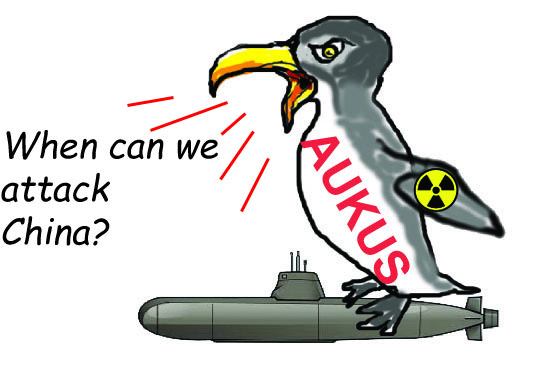
Neither side wanted to bring China into the debate, and neither side wanted to discuss AUKUS, which is based on a perceived need to take military action against that country.
In the recent Australian election, Neither side wanted to bring China into the debate, and neither side wanted to discuss AUKUS, which is based on a perceived need to take military action against that country.
Jocelyn Chey, May 7, 2025 , https://johnmenadue.com/post/2025/05/whos-afraid-of-big-bad-china/
Be afraid, be very afraid. But not of China. To the contrary, the proper management of co-operative relations with China is essential to Australia’s future.
Finally, the election process is over and done with and the results are in. We look forward to news bulletins not dominated by party spokespeople spruiking how they will deal with the cost of living. Rents, health and transport costs are all important, but the big issues that will make or break their social policies are all global, and the real question is how we can front up to them and hopefully turn them to our benefit. If the world goes into recession, which is a very real possibility, we will all be affected. The cost of living will go up. Cuts to social services will be inevitable.
Why did the candidates not admit this? Do they have contingency plans and, if so, what are they? What are they afraid of? Were they scared that if they mentioned China, the US or Russia, they would lose votes, or be backed into election promises that they could not keep? Or were there structural weaknesses in their policies that they did not wish to expose to scrutiny?
In previous election campaigns, the candidates were not so hesitant to pronounce on international affairs. The 2001 election was dominated by immigration issues and the terrorist attack on the Twin Towers in New York. It was the first “khaki election” since the Vietnam War. In the 2022 election, the Morrison Government tried to repeat their 2001 success by promoting fear of Chinese invasions, both military or cultural, but their attempt failed. This time around, both sides of politics have been careful about their choice of language and avoided difficult topics.
Insofar as national security featured at all in the elections, Labor and the Liberals competed to portray themselves as the better party to protect Australia’s international relationships, particularly in the Pacific. Penny Wong accused the Liberals of leaving a “vacuum” that China was ready to fill, but she did not directly accuse Beijing. The one attempt to whip up fear of an invasion was pinned onto Moscow, rather than Beijing, when news broke of a possible deal between Russia and Indonesia about developing a military airbase in West Papua.
Neither side wanted to bring China into the debate, and neither side wanted to discuss AUKUS, which is based on a perceived need to take military action against that country. Labor and Liberal both promised to increase defence spending, one side to 2.3% of GDP, and the other side to 3% over 10 years. Neither mentioned the reasons for such an increase, or where the money would be found. AUKUS is already absorbing all the increases announced by the last government and affecting other procurement needs. AUKUS spending over the next five years is estimated to reach $18 billion and ultimately will total $368 billion, not including the cost of new infrastructure such as a dedicated naval base at HMAS Stirling. The rationale for nuclear-powered vessels is not the defence of our coasts, but the perceived need to attack distant targets, and that target is China.
China has been progressively opening to the world since the 1980s. It is a permanent member of the UN Security Council and an active member of many multilateral organisations. With Australian encouragement, it has engaged with the multilateral trade system, joined APEC and the World Trade Organisation. The domestic economy has flourished in this open environment and in a region that has not seen armed conflict since the end of the Vietnam War. Maintaining strong growth and raising living standards have been the main pillars of Chinese domestic policies.
Economic development has not always been smooth, and recently new problems have emerged on the international front. China trusted the established international governance system to support and regulate its growth, but, as the country grew stronger, it became evident that the US did not return that trust. Its rapid rise and increasing global presence changed the regional and global balance and generated a geopolitical response that was perhaps predictable.
In 2025, the Trump administration has not yet clarified its policy for handling the relationship with China. Tariffs have been imposed, increased and decreased, and threats and hints have been made by the White House. All is chaos. The only thing that is certain is that Trump will challenge China in a more transactional and unpredictable way, will intensify trade confrontations and sanction Chinese companies in his goal to achieve greater self-sufficiency in the US.
In Beijing, Xi Jinping’s response has been measured and consistent. Official statements emphasise that China supports international rules and regulations and the multilateral system. During the National People’s Congress in March, Foreign Minister Wang Yi in a briefing to the international press presented China as a responsible and stable global power and, without explicitly saying so, drew comparisons with Trump’s America and its chaotic pronouncements.
He said: “We will provide certainty to this uncertain world. … We will be a staunch force defending our national interests. … We will be a just and righteous force for world peace and stability. … We will be a progressive force for international fairness and justice. We will be a constructive force for common development of the world.”
The contrast with Trump’s Tweets could not be more striking.
China is now truly integrated into the global economy. National policy has determined this, and, in any case, it would have been inevitable, given the development of advanced technologies and information and communication systems, all requiring international engagement. China, above all, wants stability and security in international relations to underpin its economic growth. In the future, the major challenges that the world will face are global. Climate change cannot be tackled without international co-operation. Australia needs more than ever to understand China and its domestic and foreign policies.
Co-operation with China is not easy. To borrow Trump’s words, “They hold the cards”. Australia, however, is not alone, and the best response to China is to consult and co-ordinate with neighbouring countries who also regularly interact with the rising superpower. Singapore, Thailand, Vietnam, Malaysia, all have important trade and diplomatic ties with China and have much experience to share about how to manage a relationship with China, a regional power and a global superpower. Australia should be able to manage relations with China. If we respect Beijing’s legitimate rights, Beijing will respect ours
It is possible. China has no history of annexing other countries as Russia annexed Crimea. It respects other countries’ autonomy more than Trump respects the sovereignty of Mexico, Canada or Greenland. It has claims over a large part of the South China Sea that on the surface suggest aggressive intent, but this is not a new claim. The “nine dash line” outlining its territorial claim was first proposed by the then Nationalist government in 1948, and the government of Taiwan still maintains this position. Considering that China is surrounded by a string of US bases along the “first island chain” from Japan to the Philippines, amid that Camp Humphreys, near Seoul in South Korea, the largest US overseas military base, is just 549 kms from the city of Dalian in northeast China, it is not surprising that China should wish to limit further US advances.
As for the other superpower, in the first 100 days of the Trump regime, he has attempted to use the legal system to carry out his personal vendettas. He has shut down many government departments. He has attacked scientific research and the universities and disregarded statistical evidence, particularly in medical science and climate science. He is prejudiced against immigrants. He dismisses the most basic ideas of trade and economics. He prefers to deal with other autocrats like Vladimir Putin and has turned his back on international agreements and treaties.
Be afraid, be very afraid. But not of China.
(This is a summary of a talk given at the Festival of Wild Ideas, St Paul’s Burwood, on 4 May 2025)
Why Military Neutrality is a Must for Australia
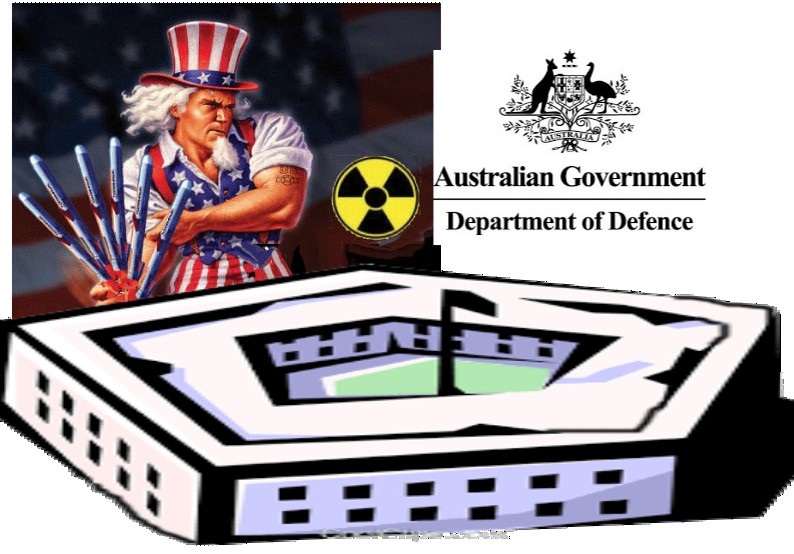
Embrace military neutrality. Australia faces a choice: join declining empires or lead in peace. Discover why neutrality is the way forward in a multipolar world.
April 30, 2025 , By Denis Hay, Australian Independent Media
Introduction: A Nation at the Crossroads
Picture this: It’s 2030. Australian submarines sail under U.S. command in the Taiwan Strait. Canberra receives intelligence briefings written in Washington. The media frames any dissent as disloyalty. Ordinary Australians ask: “How did we get dragged into another war we never voted for?”
Rewind to 2025: our foreign policy is shaped not by peace or diplomacy, but by deals like AUKUS, designed to entrench Australia within the military-industrial interests of a declining superpower. Meanwhile, the world is shifting. BRICS is rising. The U.S. is losing credibility. And Australia must decide: Will we continue to act as a pawn, or will we embrace military neutrality and sovereignty through peace?
The Global Realignment: The World Beyond the U.S.
U.S. Decline and the Rise of Multipolarity
In 2015, analysts inside global financial circles began quietly withdrawing from the U.S. The reasons were clear:
• America’s fertility rate had fallen to 1.8 (below replacement).
• Civil unrest, mass shootings, and institutional collapse painted a picture of chaos.
• Trust in government and media plummeted (Edelman Trust Barometer, 2021).
Meanwhile, the BRICS+ bloc was expanding rapidly. By 2024, Saudi Arabia, UAE, and Iran had joined, and member nations began transacting in local currencies. The world was no longer unipolar—and Australia must adapt.
The BRICS+ Bloc and the Global South
The global South is now:
• Home to the largest youth populations (India, Nigeria, Indonesia)
• Receiving billions in tech investment (e.g., Microsoft’s $1B in African AI infrastructure)
• Transitioning to local currency trade
Australia can no longer afford to cling to outdated alliances that tie us to declining powers.
Why Australia Must Reassess Its Strategic Alliances
The Cost of U.S. Dependence
Our military is deeply entwined with U.S. command structures:
• AUKUS submarine deal: $368 billion to be tied into U.S. war planning
• Hosting U.S. troops, ships, and bombers in the Northern Territory
The Failure of U.S. Militarism
• Iraq and Afghanistan: trillions spent, no peace achieved
• Ukraine: Proxy war fuelled by NATO expansion and U.S. arms interests
Quote from the video: “America is being phased out… not because they hate it, but because it’s obsolete.”
What the OCGFC Knows – And Why We Should Listen
The Owners and Controllers of Global Financial Capital (OCGFC) have already moved on from America. They’re investing in the South. Australia should follow their strategy—but for peace, not profit.
The Case for Military Neutrality
What Is Military Neutrality?
Military neutrality means:
• No participation in military blocs
• No hosting of foreign military bases
• No involvement in foreign wars
Example of military neutrality: Switzerland has remained neutral for over 200 years. Reference: https://worldpopulationreview.com/country-rankings/neutral-countries
Benefits of Military Neutrality for Australia
• Enhanced sovereignty: Canberra decides, not Washington
• Improved regional trust
• Reduced risk of becoming a target in U.S.-China conflict
Strategic Independence……………………………………………………………………………….
Australia is now home to:
The Pine Gap spy base, integral to U.S. drone warfare and nuclear targeting
Rotational deployments of U.S. marines and bombers in the Northern Territory
Massive investment under AUKUS, where Australia receives nuclear-powered submarines it will not command independently
Growing integration into U.S. war planning around China and the South China Sea
The Quiet Absorption of Sovereignty
These developments raise serious questions:
If we cannot deny access to foreign troops on our soil, are we still sovereign?
If our military relies on foreign command systems, do we retain independent defence?
This is not a conspiracy theory. This is creeping dependency. Sovereignty is rarely lost overnight. It is eroded decision by decision, treaty by treaty, base by base—until there is nothing left to reclaim.
The Choice Before Us
We must confront an uncomfortable possibility: Australia is at risk of becoming a de facto 51st state – not through constitutional change, but through military submission.
The warning signs are clear. If we continue down this path unquestionably, we may find ourselves unable to make decisions without a nod from Washington.
Neutrality offers a way out. …………………………………………………………………………………………………… https://theaimn.net/why-military-neutrality-is-a-must-for-australia/
Dotty and Cretinous: Reviewing AUKUS

April 20, 2025 Dr Binoy Kampmark, https://theaimn.net/dotty-and-cretinous-reviewing-aukus/
It was a deal for the cretinous, hammered out by the less than bright for less than honourable goals. But AUKUS, the trilateral security alliance between Australia, the United Kingdom and the United States, is now finally receiving the broader opprobrium it should have had from the outset. Importantly, criticism is coming from those who have, at points, swooned at the prospect of acquiring a nuclear-powered submarine capability assuming, erroneously, that Australia somehow needs it.
A report by the Strategic Analysis Australia think tank has found that AUKUS, despite the increasingly vain promise of supplying the Royal Australian Navy with nuclear powered submarines in 2032, has already become its own, insatiable beast. As beast it is, with the cost over the next four years for the submarine program coming in at A$17.3 billion, exceeding by some margin the capital budget of the Royal Australian Airforce (RAAF) at A$12.7 billion. One of the authors of the report, Marcus Hellyer, notes that “in terms of acquisition spending, the SSN [nuclear-powered attack submarine] enterprise has already become the ADF’s [Australian Defence Force’s] ‘fourth service’.”
The report notes some remarkable figures. Expenditure on SSNs is estimated to be somewhere between A$53 billion and A$63 billion between 2024-2034, with the next five years of the decade costing approximately A$20 billion. The amount left over for the following years comes in at $33 to $44 billion, necessitating a target of $10 billion annually by the end of the financial decade in the early 2030s. What is astounding is the amount being swallowed up by the ADF’s investment program in maritime capabilities, which will, over the coming decade, come to 38% of the total investment.
The SSN program has made its fair share in distorting the budget. The decade to 2033-4 features a total budget of A$330 billion. But the SSN budget of $53-63 billion puts nuclear powered submarines at 16.1% to 19.1% more than either the domains of land and air relevant to Australia’s defence. “It’s hard to grasp how unusual this situation is,” the report notes with gravity. “Moreover, it’s one that will endure for decades, since the key elements of the maritime domain (SSNs and the two frigate programs) will still be in acquisition well into the 2040s. It’s quite possible that Defence itself doesn’t grasp the situation that it’s gotten into.”
To add to the more specialist literature calling large parts of AUKUS expenditure into question comes the emergence of disquiet in political ranks. Despite the craven and cowardly bipartisan approval of Australia’s dottiest military venture to date, former Labor senator Doug Cameron, who fronts the Labor Against War group, is a symptom of growing dissent. “There are other more realistic and cost-effective strategies to protect our territorial integrity without subjugating ourselves to a dangerous, unpredictable and unworthy Trump administration.”
On the other side of the political aisle, former Liberal Prime Minister Malcolm Turnbull is pessimistically inclined to the view that Australia will never get those much heralded submarines. “There will be Australian sailors serving on US submarines, and we’ll provide them with a base in Western Australia.” Furthermore, Australia would have “lost both sovereignty and security and a lot of money as well.”
The spineless disposition of Australia’s political cadres may prove irrelevant to the forced obsolescence of the agreement, given the scrutiny of AUKUS in both the United States and the United Kingdom. The pugilistic nature of the tariff system imposed by the Trump administration on all countries, friendly or adversarial, has brought particular focus on the demands on naval and submarine construction. Senior Democrat on the Senate Armed Services Subcommittee, Virginia Senator Tim Kaine, told an AUKUS dinner in Washington this month that “We are already having trouble getting these ships and subs on time [and] on budget. Increase those prices – it’s going to be a problem.”
Taine’s point is logical enough, given that steel and aluminium have been targeted by particularly hefty rates. Given the array of products requiring exchange in the AUKUS arrangement, tariffs would, the senator reasons, “slow us down and make things harder.”
Another blow also looms. On April 9, the White House ordered the Department of Government Efficiency (DOGE) to comb through the procurement of US Navy vessels in order “to improve the efficiency and effectiveness of these processes” and contribute to the Trump administration’s Maritime Action Plan. Consistent with Trump’s near obsession of reviving national industry, the order seeks “to revitalize and rebuild domestic maritime industries and workforce to promote national security and economic prosperity.”
Australian taxpayers have every reason to be further worried about this, given the order’s emphasis that US departments and agencies pursue “all available incentives to help shipbuilders domiciled in allied nations partner to undertake capital investment in the US to help strengthen the shipbuilding capacity of the US.” Given that that US submarine industrial base is already promised $US3 billion from Australia’s pockets, with $500 million already transferred in February, the delicious exploitation of Canberra’s stupidity continues apace.
In the UK, the House of Commons Defence Committee this month announced a parliamentary inquiry into the defence pact, which will evaluate the agreement in light of changes that have taken place since 2021. “AUKUS has been underway for three years now,” remarked Defence Committee chairman and Labour MP, Tan Dhesi. “The inquiry will examine the progress made against each of the two pillars, and ask how any challenges could be addressed.”
The first pillar, perennially spectral, stresses the submarine component, both in terms of transferring Virginia class SSNs to Australia and the construction of a bespoke nuclear-powered AUKUS submarine; the second focuses on the technological spread of artificial intelligence, quantum capabilities, hypersonic advances and cyber warfare. While Dhesi hopes that the inquiry may throw up the possibility of expanding the second pillar, beady eyes will be keen to see the near non-existent state regarding the first. But even the second pillar lacks definition, prompting Kaine to suggest the need for “some definition and some choices”. Nebulous, amorphous and foolish, this absurd pact continues to sunder.
Dump nuclear, restore momentum – new poll shows opportunity for Coalition
Liberals Against Nuclear. 14 Apr 25
New polling shows the Liberal Party would increase its primary vote by 2.8 percentage points if it abandoned its nuclear energy policy, according to research commissioned by Liberals Against Nuclear.
Andrew Gregson, spokesperson for Liberals Against Nuclear, said the polling demonstrates that the same political flexibility recently shown by Peter Dutton on the work-from-home policy should be applied to the Coalition’s nuclear energy plan.
“Peter Dutton has shown he can make hard-headed decisions when they’re needed to win government. Our polling shows dumping nuclear would deliver an immediate 2.8% boost to the Liberal primary vote in key seats – potentially the difference between winning and losing this election,” Mr Gregson said.
The uComms survey of 5,177 voters across 12 marginal electorates, including Liberal-held seats and those targeted for recovery from Labor and independents, found that 50.6% of undecided voters are less likely to vote for the Coalition because of its nuclear policy.
“Just as Mr Dutton recognised that the work-from-home policy was hurting his standing with women voters, our polling shows that dropping nuclear would increase the Liberal vote among women by four percentage points,” Mr Gregson said.
“The Coalition’s backdown on forcing public servants back to the office full-time shows Mr Dutton can listen to voters and change direction when necessary. We’re simply asking for that same political flexibility to be applied to a fiscally irresponsible nuclear policy that’s proving even more unpopular.”
Mr Gregson noted that 48% of respondents indicated they don’t support nuclear power at all, with concerns about reducing investment in renewable energy (17.3%), nuclear waste management (14.6%), and high build costs (11.6%) topping the list of voter concerns.
“Our message to Liberal candidates is simple – even if you personally support nuclear energy, this polling shows dropping the policy gives you the best chance of winning your race. We’re running out of time, but it’s not too late to make this change and give the Coalition its best shot at forming government.”
How US Dependence is Not in Our Best Interest
Real Example: The AUKUS submarine deal, projected to cost over $368 billion, ties Australia into US military logistics for decades – yet those funds could be spent on domestic defence innovation, regional aid, or green manufacturing.
Real Example: The AUKUS submarine deal, projected to cost over $368 billion, ties Australia into US military logistics for decades – yet those funds could be spent on domestic defence innovation, regional aid, or green manufacturing.
April 9, 2025 AIMN Editorial By Denis Hay
Description
US dependence. Discover real steps Australia can take to diversify defence, diplomacy & trade while using its currency power to reclaim sovereignty.
Introduction: A Turning Point for Australia
Location: Canberra, 2024. The Defence Minister stands before cameras, repeating familiar rhetoric: “The US alliance is central to Australia’s security.” But in community halls, cafés, and public forums across the nation, a growing number of Australians are beginning to ask: What if it’s not?
Thoughts: Many Australians feel a quiet unease about our nation’s strategic direction. We’ve followed the US into war zones, hosted its military bases, and allowed our foreign policy to align too closely with American interests. Yet few alternative paths are ever seriously discussed in public debate.
Emotions: There’s frustration, even disillusionment. Australia is a sovereign nation. Why then do we act like a client state?
Dialogue: “It’s not anti-American to want independence,” says Jenny, a retired diplomat. “It’s just good strategy.”
Problem: The Australia-US alliance has become a crutch. While it served a purpose post-WWII, the world has changed. The Indo-Pacific is more multipolar than ever. To secure a peaceful, just future, Australia must explore new defence partnerships, deepen regional diplomacy, and reshape trade alliances. Critically, we must use our monetary sovereignty to do this independently, not through the profit-driven mechanisms of public-private partnerships.
The Problem: Locked into a Narrow Strategic Path
Following WWII, Australia signed onto ANZUS, believing American power would guarantee our safety. But since then, Australia has:
• Participated in every major US-led conflict since Vietnam.
• Spent billions hosting US military infrastructure (like Pine Gap).
• Aligned its foreign policy with US military objectives, often at odds with neighbours.
Meanwhile, the security landscape has shifted:
• China, India, and ASEAN nations now influence the Indo-Pacific.
• US influence is declining, with unpredictable leadership changes.
• Regional cooperation, not superpower allegiance, is the new path to peace.
Real Example: The AUKUS submarine deal, projected to cost over $368 billion, ties Australia into US military logistics for decades – yet those funds could be spent on domestic defence innovation, regional aid, or green manufacturing.
Internal Reflections: “Why are we borrowing American power when we have the capacity to build our own?”
Note on Defence Think Tanks: When assessing defence strategies, it’s important to consider the source. The Australian Strategic Policy Institute (ASPI), often referenced by the government and media, receives funding from the Australian Department of Defence, foreign governments, and major US arms manufacturers such as Lockheed Martin and Northrop Grumman.
These financial ties raise serious concerns about bias in ASPI’s advocacy for militarised solutions and deepening reliance on the US military-industrial complex.
Heightened Risk Through US Dependence: By embedding ourselves in the strategic priorities of the United States, Australia risks becoming a target in conflicts that are not of our making.
Should tensions escalate between the US and China, Australia’s hosting of American military bases, integration into US-led command systems, and participation in initiatives like AUKUS make us more – not less – vulnerable to retaliation.
Instead of ensuring protection, over reliance on US dependence could make Australia a frontline state in the event of a major geopolitical confrontation. The risk is amplified when one considers the United States’ long and well-documented history of military interventions, regime change operations, and aggressive foreign policy – often justified under the banner of “freedom” but resulting in destabilisation, displacement, and long-term suffering in regions such as Iraq, Vietnam, Libya, and Afghanistan.
The Consequences of Strategic US Dependence
Imagine you’re a young Pacific Island leader sitting across from an Australian diplomat in 2030. Rising seas threaten your nation, yet Australia prioritises nuclear submarines over climate aid. “You talk about friendship,” she says, “but you act like a US outpost.”
This isn’t just geopolitical optics:
• Australia risks alienating regional neighbours.
• We are perceived as an extension of Western military ambitions.
• The economic burden of defence decisions like AUKUS will fall on future generations.
Stat: 56% of Australians in a 2024 Lowy Institute poll said Australia should remain neutral in a US-China conflict. The people are ahead of the policymakers.
Diversifying Alliances Through Sovereign Action
Diversifying Defence Partnerships………………………………………………………………………………………………………………………………. https://theaimn.net/how-us-dependence-is-not-in-our-best-interest/
Trump tariffs spark questions over US alliance
Andrew Tillett, AFR, Foreign affairs, defence correspondent, 3 Apr 25
The alliance with the United States is facing its toughest test in decades after Donald Trump imposed a 10 per cent tariff on Australian exports as part of his escalating trade war, which has sent shockwaves around the world and heightened the risk of a global recession.
Markets plunged on news of Trump’s Liberation Day tariffs, with Australian stocks shedding more than $21 billion, while traders bet the Reserve Bank could cut interest rates up to four times this year.
Australia escaped Trump’s tariffs relatively unscathed, with just the minimum baseline of 10 per cent applied to goods exported to the US, although the President singled out the longstanding ban on American beef as a grievance.
A government source, speaking on condition of anonymity because of the sensitivities, said there had been indications from the US that it was willing to negotiate to reduce or remove tariffs on Australian exports.
However, the government remains on alert for more tariff hikes after pharmaceuticals, copper and gold were among a select few commodities exempted from Trump’s “liberation day” executive order.
Prime Minister Anthony Albanese said the tariffs were totally unwarranted and would prompt some Australians to question the relationship with the US. Former prime minister Paul Keating suggested Trump’s tariff campaign cast doubt on the value of the ANZUS alliance, the cornerstone of Australian defence policy for more than 70 years.
“The administration’s tariffs have no basis in logic and they go against the basis of our two nations’ partnership. This is not the act of a friend,” Albanese said.
The Australian people have every right to view this action by the Trump administration as undermining our free and fair trading relationship and counter to the shared values that have always been at the heart of our two nations’ long-standing friendship. This will have consequences for how Australians see this relationship.”
Keating said the announcement was effectively the death knell of the North Atlantic Treaty Organisation, the US-led military alliance with Europe, a decision which would inform other allied relationships with the US.
“Australia’s clutch of Austral-Americans, that phalanx of American acolytes,
must have choked on their breakfasts, as Donald Trump laid out his blitzkrieg on globalisation, with all its implications for the rupture of cooperation and goodwill among nations,” he said.
“If NATO, America’s principal strategic alliance, is expendable, what credible rationale could underpin US fidelity to ANZUS and with it, to Australia?”
Former foreign minister Bob Carr said the alliance with the US “counts for nothing” and was reason to axe the AUKUS pact, Australia’s agreement to acquire nuclear-powered submarines from the US and UK…………………………………………………………………………………
a mining industry source, speaking anonymously, said the government could buy up critical minerals and stockpile them to use as leverage in future trade negotiations.
Opposition Leader Peter Dutton said if he won the May 3 election he would use access to Australia’s critical minerals and deeper defence cooperation, particularly in defence industry, as bargaining chips to get tariffs lifted…………………….https://www.afr.com/politics/federal/trump-tariffs-spark-questions-over-us-alliance-20250403-p5lox9
Why The US Australia Alliance Needs a Rethink
Australian Independent Media March 29, 2025, By Denis Hay
Description
Why the US Australia alliance needs a rethink. The U.S. is no ally. Discover why Australia must distance itself to avoid war and reclaim its sovereignty.
How Australia Can Safely Distance Itself from U.S. Hegemony
Introduction – The US Australia Alliance: Myth vs Reality
Picture this: You’re sitting in a Brisbane café, sipping a flat white while reading the headlines – Australia has just signed another defence pact with the United States. More American troops, military hardware, and diplomatic praise about our “unbreakable alliance.” Yet, beneath the headlines lies a growing discomfort – are we allies, or are we just a strategic pawn in U.S. global dominance?
Joh Bjelke-Petersen once said that this is just politicians “feeding the chooks.” Empty words. The truth is, the U.S. government doesn’t respect its people, let alone Australia. It sees nations – including its own – as resources to be mined for profit. This article will explore how Australia can break free from this exploitative alliance without putting itself in harm’s way.
The U.S. Government’s Track Record: A Global Power Without Respect
Exploiting Its Own Citizens
Visit Detroit, Michigan – a city once bustling with manufacturing pride. Now, it stands as a ghost town of forgotten promises, where basic water access has become a luxury. Millions of Americans are homeless or working two jobs or more just to survive. U.S. billionaires soared in wealth, while 45 million Americans live impoverished.
Internal reflection: “If they treat their own citizens this way, what hope do allies have?”
Exploiting Other Nations
Let’s take Iraq. The 2003 invasion, sold on lies about weapons of mass destruction, cost hundreds of thousands of lives, all to secure oil. In Libya, a once-stable nation descended into chaos after U.S.-led intervention. This is not defence—it’s corporate imperialism.
When the U.S. backs coups in Latin America or imposes sanctions on countries like Venezuela or Cuba, the motive is always clear: control the global economy for U.S. corporate gain.
The U.S.–Australia Relationship: Not What It Seems
Political Rhetoric vs Reality
Australian and U.S. politicians often repeat phrases like “shared values” and “strong friendship.” But how many Australians were consulted when Pine Gap was set up or when AUKUS was signed?
Dialogue: “This isn’t a partnership. It’s a surrender of our sovereignty,” says a former Australian diplomat.
The Cost of Loyalty
Australia’s blind support for U.S. policy has real consequences:
• Trade tensions with China – our largest trading partner
• Environmental destruction from military exercises on Australian soil
• Loss of independence as U.S. bases expand here without public debate.
Why China Matters More Than Ever
60% of Australia’s exports go to Asia, with China alone accounting for over 25%. Australia’s economy is tightly linked to Chinese demand, from iron ore to wine. Trade disruptions – often driven by political antagonism encouraged by the U.S. – have already cost farmers, winemakers, and miners dearly.
The Danger of Choosing Sides
We risk becoming collateral damage in a U.S.-China conflict. Australia should not repeat its mistakes from Vietnam or Iraq – wars that had nothing to do with our national interest but cost us dearly in blood, treasure, and reputation. This has been the outcome of the US Australia alliance.
Thought: “Must we always fight other nations’ wars? When do we stand up for ourselves?”
Pathways Toward Australian Independence………………………………………..
Phasing Out US Australia Alliance and Military Influence
Start with transparency:
• Conduct a national audit of U.S. bases and agreements.
• Establish parliamentary oversight.
• Hold a public referendum on AUKUS.
Dialogue: “Our security must not come at the cost of our sovereignty,” says Senator David Shoebridge.
………………………………………….more https://theaimn.net/why-the-us-australia-alliance-needs-a-rethink/
Complicity of Labor and Liberal in Israel’s genocide of Palestinians
David Bradbury, 21 Mar 25
This clip shows the complicity of the Australian Govt – both major parties – in allowing/subsidising over 70 Australian companies to produce vital component parts for Lockheed Martin’s F35 fighter which has caused so many deaths in Gaza, the West Bank, southern Lebanon and Syria. Elsewhere in the world.
‘Vandals in the White House’ no longer reliable allies of Australia, former defence force chief says
Henry Belot and Ben Doherty, Guardian, 21 Mar 25
Chris Barrie says Donald Trump’s second term is ‘irrecoverable’, but stops short of calling for end to Aukus pact.
A former Australian defence force chief has warned “the vandals in the White House” are no longer reliable allies and urged the Australian government to reassess its strategic partnership with the United States.
Retired admiral Chris Barrie spent four decades in the Royal Australian Navy and was made a Commander of the Legion of Merit by the US government in 2002. He is now an honorary professor at the Australian National University.
“What is happening with the vandals in the White House is similar to what happened to Australia in 1942 with the fall of Singapore,” Barrie said. “I don’t consider America to be a reliable ally, as I used to.
“Frankly, I think it is time we reconsidered our priorities and think carefully about our defence needs, now that we are having a more independent posture … Our future is now in a much more precarious state than it was on 19 January.
“Trump 1.0 was bad enough. But Trump 2.0 is irrecoverable.”
Barrie said it was “too soon” to say whether Australia should end its multibillion-dollar Aukus partnership, but raised concerns about a lack of guarantee that nuclear-powered submarines would actually be delivered. He also warned about an apparent lack of a back-up option.
Pillar One of the Aukus deal – which would see the US sell Australia nuclear-powered submarines before the Aukus-class submarines were built in Australia – is coming under increasing industry scrutiny and political criticism, with growing concerns the US will not be able, or will refuse, to sell boats to Australia, and continuing cost and time overruns in the development of the Aukus submarines.
“Let’s define why we really need nuclear submarines in the first instance, given a new independent defence posture for Australia,” Barrie said. “If they still make sense in that context, fine. But they might not. There might be alternatives. There might be alternatives with conventional submarines if we didn’t want to go any further than the Malacca Straits.”
Barrie’s warning comes after former foreign affairs minister Bob Carr said Australia would face a “colossal surrender of sovereignty” if promised US nuclear-powered submarines did not arrive under Australian control.
Carr, the foreign affairs minister between 2012 and 2013, said the Aukus deal highlighted the larger issue of American unreliability in its security alliance with Australia.
“The US is utterly not a reliable ally. No one could see it in those terms,” he said. “[President] Trump is wilful and cavalier and so is his heir-apparent, JD Vance: they are laughing at alliance partners, whom they’ve almost studiously disowned.”………………………. https://www.theguardian.com/australia-news/2025/mar/21/vandals-in-the-white-house-no-longer-reliable-allies-to-australia-former-defence-force-chief-says-ntwnfb?CMP=share_btn_url
1 This month

of the week – Australians for War Powers Reform (AWPR)
To see nuclear-related stories in greater depth and intensity
 Antinuclear