South Australia faces job losses if Renewable Energy Target is cut
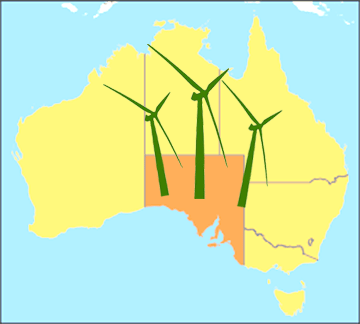
 Renewable Energy Target: Conservation Foundation warns cut would threaten potential SA jobs http://www.abc.net.au/news/2015-04-20/acf-warns-against-renewable-energy-target-cut/6405544 The Australian Conservation Foundation (ACF) says South Australia could lose up to $6 billion worth of investment, if the Renewable Energy Target (RET) is reduced.
The Federal Government wants to cut the target from 41,000 gigawatt hours to less than 32,000 gigawatt hours by 2020.
The foundation’s energy analyst, Tristan Knowles, said leaving the target as is would have huge benefits for South Australia.
“The bigger picture here if the RET isn’t weakened is that there’s 10 wind projects across South Australia that have been approved and the investment potential for those is about $6 billion and if they went ahead there’d be over 6,000 construction jobs and 31 ongoing jobs,” he said.
“So there’s a lot of potential.”
“South Australia was the only state that saw a drop between 2009 and 2014, so if these projects go ahead, they will generate jobs in construction and in ongoing maintenance and operations.”
Be aware of the Pro Nuclear Royal Commission’s publicity meetings in South Australia
 The Commissioner will be undertaking a series of community engagements during the Royal Commission.
The first of these community engagement visits are listed below.
- 20 April 2015: Mount Gambier
- 30 April 2015: Port Augusta
- 01 May 2015: Port Augusta/Port Pirie
- 05 May 2015: Berri
- 11-14 May 2015: Remote Aboriginal Communities (locations to be confirmed).
Further information will be posted on this site when available.
Guide to submissions to South Australia’s Pro Nuclear Royal Commission
 Submissions to the Royal Commission have to be in by July 24.
Well, they seem to be making this as difficult as possible for the ordinary peasant. You have to register at the website, you have to read the Issues Papers, and abide by their guidelines. (So far, only one Issues Paper is available Exploration, Extraction and Milling, with 3 more supposed to come later – Further Processing and Manufacture Electricity Generation Management, Storage and Disposal of Waste) Anything you want to say outside of their stated questions must not go into your submission, but be attached as an Appendix.
The submission must be in their stated form, as an affidavit, witnessed as a legal document.
Most of the stated questions are worded in such a way that they invite positive opinions about the industry. Having said all this – there still is scope to raise some pertinent questions to the Commission. For example – these 3 curly ones:
1.7 Is there a sound basis for concluding that there will be increased demand for uranium in the medium and long term? Would that increased demand translate to investment in expanded uranium production capacity in South Australia (bearing in mind other sources of supply and the nature of South Australia’s resources?). Figure 4: World Uranium Production and Demand 10 Figure 5: Traded price for uranium
1.10 Would a future expansion of exploration, extraction and milling activities create new environmental risks or increase existing risks? If so, are current strategies for managing those new risks sufficient? If not, in what specific respects? How would any current approach need to changed or adapted?
1.13 Would an increase in extraction activities give rise to negative impacts on other sectors of the economy? Have such impacts been demonstrated elsewhere in Australia or in other economies similar to Australia?”
Kevin Scarce kicks off the SA Nuclear Royal Commission with a warning about people being “emotional”
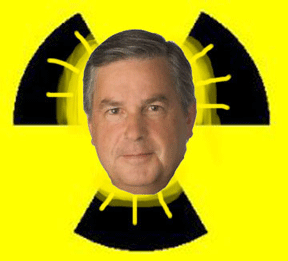 Kevin Scarce expects debate around the future of the nuclear fuel cycle in SA to be ‘emotional’ CAMERON ENGLAND THE ADVERTISER APRIL 17, 2015 “……. Commissioner Scarce said he expected there to be a lot of “emotion” associated with the debate, and he was committed to running a transparent process.
“Today really is the start of business,’’ Commissioner Scarce said. “We are issuing our first issues paper which covers the opportunity to expand mining and exploration, and also the risks and costs of doing that……..
“I think there’s going to be a lot of emotion about the nuclear industry. We can’t walk away from the fact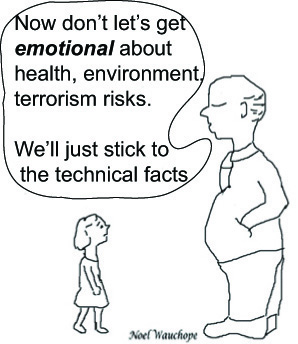 that when there are accidents they are catastrophic and I would expected there will be a lot of emotion about the risks, the impact on the environment, and I want to encourage people, again in an evidence-based way, to give us their views on that, but at the end of the day, the purpose of a Royal Commission is to inquire and to get evidence-based information back…….
The issues paper addresses issues around exploration, mining and milling uranium, and poses 13 questions for discussion around what could be done to foster more activity, whether that is economically viable, and what the environmental and social costs might be.
Three further issues papers will be released over the next two to three weeks, looking at fuel management and storage, fuel enrichment and power generation.
Commissioner Scarce said once all of the issues papers were released there would be 90 days for companies, organisations and individuals to make submissions.
“The we’ll take all of that evidence, bring it together in a report, and then we will engage the community in the outcomes of all of the reports that come to us through the issues papers.’’
Commissioner Scarce will spend the next month travelling to areas such as Aboriginal communities including the APY Lands, and Maralinga and regional areas including Port Pirie and Whyalla……http://www.theaustralian.com.au/news/kevin-scarce-expects-debate-around-the-future-of-the-nuclear-fuel-cycle-in-sa-to-be-emotional/story-e6frg6n6-1227307853022
South Australian Commission chief Kevin Scarce already aligns himself with the nuclear industry
Dennis Matthews 17 April 15 Commissioner Kevin Scarce has made an unconvincing start to his inquiry into the nuclear industry, now officially “The Nuclear Fuel Cycle” Royal Commissioner.
By accepting the nuclear industry spin that it is a nuclear fuel cycle he has immediately identified himself with the nuclear industry. Do we talk about the coal fuel cycle or the gas fuel cycle? No, like nuclear fuel these are one way processes – fuel in, heat and waste out.
It is typical of the nuclear industry that they would like to give the impression that it is otherwise – fuel in, more fuel out – a mirage fostered by its so-called fast breeder programme, itself another example of nuclear spin. The only thing fast about fast breeders is that they use fast neutrons to attempt to slowly produce nuclear fuel in a nuclear reactor. This technology has not only failed to produce significant amounts of nuclear fuel but has rapidly consumed huge amounts of tax payers money.
If Kevin Scarce and the SA Government want to retain any skerrick of credibility then they will take immediate steps to change the name to the “Nuclear Industry” commission.
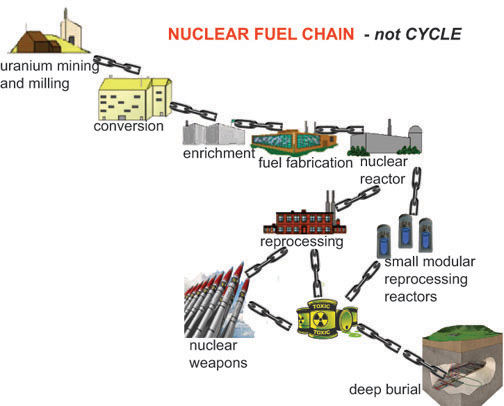
S.A. Nuclear Royal Commission to Mt Gambier: note the issues that will NOT be on the agenda
They don’t mention the health and environmental aspects of the nuclear fuel chain. They don’t mention the national laws that will have to be overturned. They don’t mention the existing problems from Australia’s history of uranium mining.
And then there’s the continuing nuclear radiation crisis at Fukushima – you can bet that will not be on the agenda. Nor will they be talking about the global nuclear decline in the nuclear industry, and the fact that the new geewhiz nuclear reprocessing reactors (a) don’t exist yet and (b) nobody wants to invest in them
17 APRIL 2015 – NUCLEAR FUEL CYCLE ROYAL COMMISSION VISITS MOUNT GAMBIER The first public forum of the Nuclear Fuel Cycle Royal Commission will be held in Mount Gambier on Monday 20 April – the formal start of a three month state-wide community engagement program.
The public meeting to be held at City Hall at midday is an opportunity for community, industry and other interested stakeholders to hear more about the Royal Commission and how they might take part in the process. It will also be the first time the Commission’s Issues Papers will be presented to the public for comment.
While in Mount Gambier, Royal Commissioner Rear Admiral the Honourable Kevin Scarce AC CSC RANR (Rtd) will also meet with city representatives and community leaders.
Key areas of discussion will include those activities relating to the potential for the expansion of exploration and extraction of minerals; the undertaking of further processing of minerals and manufacture of materials containing radioactive substances; the use of nuclear fuels for electricity generation; and the storage and disposal of radioactive and nuclear waste……http://nuclearrc.sa.gov.au/media-centre/17-april-2015-nuclear-fuel-cycle-royal-commission-visits-mount-gambier/
South Australia’s Nuclear Royal Commission appoints prominent pro nuclear advisors
South Australia’s Nuclear Royal Commission: 3 out of 5 of those named for the Expert Advisory Committee are well known pro nuclear industry advocates.
1. Professor Barry Brook purports to be a leader in climate action, but in fact is internationally known as a strident advocate for the nuclear industry
2. Dr Timothy Stone comes from the Office for Nuclear Development (OND): it “focuses on removing potential barriers to investment, and signals clearly to the industry the serious intent of the Government to push forward nuclear new build”
3. John Carlson – advocate for An Asia Pacific Nuclear Energy Community
http://nuclearrc.sa.gov.au/media-centre/17-april-2015-nuclear-fuel-cycle-royal-commission-begins-public-consultation/The Royal Commissioner the Nuclear Fuel Cycle Royal Commission, Rear Admiral the Honourable Kevin Scarce AC CSC RANR (Rtd) detailed two key milestones today with announcement of the Expert Advisory Committee and the first of the Commission’s Issues Papers.
The Expert Advisory Committee comprises eminent leaders from academia, law, industry and the community and includes:
- Visiting professor at University College London Dr Timothy Stone CBE
- Professor of Environmental Sustainability Professor Barry Brook from Tasmania
- Past president of the Australian Conservation Foundation and Emeritus Professor of Science, Technology and Society at Griffith University Ian Lowe
- South Australian’s chief scientist Dr Leanna Read, who has a medical science background, and Mr John Carlson, former director of the Australian Safeguards and Non Proliferation Office (ASNO).
However, the committee does include Ian Lowe who has a long and honourable record of pointing out the risks and the diseconomics of the nuclear industry
Commissioner Scarce said the Expert Advisory Committee had been engaged to provide high-level expert advice to him and the Commission’s staff for the duration of the Royal Commission.
“The members of this Committee have been chosen to ensure that the Commission receives a broad range of advice and reflects the diversity of views that the community holds,” he said.
“The membership of the Committee comprises both proponents and opponents of the nuclear fuel cycle, and I believe this type of diverse contribution will ultimately allow the Royal Commission to develop a comprehensive final report.”
Commissioner Scarce said that the release of the first of four Issues Papers today was a key milestone for the Royal Commission and marked the start of the formal engagement process.
“Today is also an important step in the consultation process with the release of the first Issues Paper, which will help guide the community and industry in their understanding of the nuclear fuel cycle and assist them in making their submissions,” he said.
“I want this Royal Commission to be a far reaching enquiry into the nuclear fuel cycle, investigating the associated risks and opportunities.
“I am seeking to engage in a conversation with the South Australian community, speak to people, hear their lived experience and obtain the views of those who wish to have a say on this important matter.”
The Commission also announced its first public forum will be held at Mount Gambier City Hall at noon on Monday, April 20, with future metropolitan and regional meeting dates to be confirmed.
Written submissions can be made through www.nuclearrc.sa.gov.au and must be lodged by July 24, 2015.
Abbott govt funds W.A. centre to stall action on climate change
Labor’s foreign affairs spokeswoman, Tanya Plibersek, questioned what kind of message the appointment sent to Pacific countries who are deeply concerned about the impact of climate change……
Last year Lomborg spoke at an event on “energy poverty” in the leadup to the G20 in Brisbane, sponsored by Peabody Coal……in a speech to the Grattan Institute in 2013, the then shadow environment minister, Greg Hunt, used Copenhagen Consensus Center findings to support his policy to abolish the carbon tax…..Lomborg will be the co-chair of the Australia Consensus Centre Advisory Board with Prof Johnson, the university’s vice-chancellor.
 Abbott government gives $4m to help climate contrarian set up Australian centre, Guardian, Lenore Taylor 17 Apr 15 Bjørn Lomborg has been given money from the hard-pressed federal budget to set up a ‘consensus centre’ at the University of Western Australia
A spokesman for the education minister, Christopher Pyne, said the government was contributing $4m over four years to “bring the Copenhagen Consensus Center methodology to Australia” at a new centre in the University of Western Australia’s business school.
The spokesman said the “Australia Consensus Centre” was a proposal put forward by the “university and Dr Lomborg’s organisation”.
Sources have told Guardian Australia the establishment of the centre had come as a surprise even to senior staff in the business school, who were unaware that the centre was being established until shortly before it was announced this month……..
As Lomborg explained in a Freakonomics podcast last year, his consensus centre was defunded by the centre-left Danish government in 2012 and he was searching for a long-term funding solution. Continue reading
South Australian government gives funding for mining exploration
 SA Government commits $2 million to mining exploration projects
The South Australian Government says now is the time to invest in exploration projects, after granting a range of mining companies funding for exploration drilling. …
Resources and Energy Minister Tom Koutsantonis said it would enable those companies to stimulate the next crop of greenfield discoveries.
Media player: “Space” to play, “M” to mute, “left” and “right” to seek.
“This is the way to build our extensive knowledge of what deposits we have in South Australia, we spend a lot of money on pre-competitive data, going out doing geological surveys to try and understand where the copper is, where the uranium is, where the iron-ore is,” he said. http://www.abc.net.au/news/2015-04-13/sa-government-mining-exploration-grants-drilling/6389166
Abbott govt’s Energy White Paper is highly political, as is its stand on Renewable Energy Target
Energy white paper has some huge black holes, SMH 12 Apr 15 Was it an accident or wilful blindness? The federal government’s 74-page energy white paper, released last week, contained just a single reference to climate change. Given the Abbott government’s self-imposed blindness on this issue, we have to suspect it was the latter. The omission renders the document deeply flawed.
The white paper’s approach is that of the classic free-marketeer: governments should not intervene to modify energy consumers’ behaviour (by, say, subsidising renewables or reserving gas supplies for domestic use at a lower cost to consumers). Applied to other industries that analysis may still sketch the outlines of a workable policy, but it is no longer adequate in a supposedly comprehensive review of energy production and use. The burning of fossil fuels is the world’s single most important contributor to greenhouse gases and therefore to climate change. Yet the white paper virtually ignores this link which is central to its subject…….
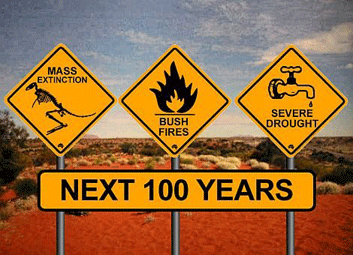 Despite its dispassionate pretence, Australia’s white paper is a highly political document. Economics rules Australia’s politics, and hence our political response to climate change has also been achingly slow. Cocooned by the country’s income from hydrocarbons in a world of comfortable fantasy, many in this country deeply still resent any disturbance from scientists or others who try to point out the stark evidence of record average temperatures, changed farming environments, warmer oceans, longer and harsher bushfire seasons……..
There is no risk now that Australia will lead the world in acting against climate change, since most developed nations are already ahead of us, and our recent steps have all been retrograde. But Australia should not be cutting off any options to act when at last it makes up its mind to do so. Unfortunately the white paper, and the row over the RET, look to have precisely that effect. http://www.smh.com.au/comment/smh-editorial/energy-white-paper-has-some-huge-black-holes-20150412-1mjflr.html
New South Wales Premier Mike Baird firmly on the side of the coal lobby
 Thom Mitchell: Backing Big Coal – Mike Baird Promises To Up The Ante For Acting On Your Conscience
Miners get rewarded for destroying our environment, while protestors cop massive fines. And it’s about to get worse. Welcome to Mike Baird’s new New South Wales……..
“So-called plans to phase out mining in NSW have no place in this parliament,” Baird announced, “and I’ll be very clear on this, no place”.
In fact, Baird said, he would halve the time it takes to get big mines approved………
New Matilda understands Baird’s Liberal government will seek to change Workplace Health and Safety laws and other relevant legislation in the new parliament to reverse the liability, but protestors are unlikely to be deterred by his promise of harsher penalties……https://newmatilda.com/2015/04/12/backing-big-coal-mike-baird-promises-ante-acting-your-conscience
Senator Sean Edwards spruiks for the South Australian nuclear lobby
Yesterday, I wrote about the media publicity given to Senator Sean Edwards, a former estate agent, who is going very public in support of South Australia getting the entire nuclear fuel chain (around its necks). Meanwhile, Dr Helen Caldicott, a world authority, was denied publicity to put the counter case.
Today, I learn that Sen Edwards has now set up a website to promote this theme. It’s a corker.
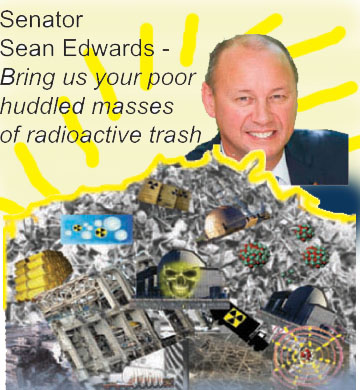
He starts with an attack on the Greens – they should be “morally and philosophically compelled to support advanced nuclear energy”
Moves quickly on to the argument for nuclear power as “free energy” and the $billions of revenue for South Australia, in importing the world’ radioactive trash.
“Polling proves South Australians want this and they want it yesterday” – says Edwards. Actually – no! Polling shows that South Australians voters reject expansion of the nuclear industry.
He asserts that “nuclear reactors produce no emissions that contribute to global warming”. (That’s untrue, but especially untrue if you ignore the entire nuclear fuel chain)
They “deliver abundant energy without any mining”. Hey – he doesn’t count the mining required for the conventional reactors to produce the wastes to put into the reprocessing reactors that he is touting! Edwards must be a bit confused. One of the main arguments for the South Australian expansion, as put by nuclear proponent Oscar Archer, is that it will give a strong boost to Australia’s uranium mining and uranium export industry.
Edwards tells us how very safe the nuclear industry – except for 3 what he calls “incidents” (Three Mile Island, Chernobyl, and Fukushima).
And without any evidence at all, he asserts that – for the new non existent untested reprocessing nuclear reactors – “The science is sound, the business case has been made and the public is behind us”
Abbott government to help South Australia remove restrictions on the nuclear industry
Federal Gov White Paper on Energy prepares way to cut red tape on nuclear industry http://www.adelaidenow.com.au/business/federal-government-white-paper-on-energy-prepares-way-to-cut-red-tape-on-nuclear-industry/story-fni6uma6-1227296081932
by: CHRISTOPHER RUSSELL BUSINESS EDITOR From: The Advertiser, 8 Apr 15
 THE Federal Government is positioning itself to cut red tape blocking development of a nuclear industry in South Australia.
The Federal Government’s White Paper on Energy, launched on Wednesday by Industry Minister Ian Macfarlane, says the Commonwealth will consider the findings of SA’s royal commission into the nuclear fuel cycle.
“The royal commission will allow for a considered and informed community discussion on nuclear industries and energy, examining the opportunities and the risks,” the White Paper says.
It adds the government wants to work with states by “responding to technical developments and the streamlining and removal of any unnecessary regulation”.
Mr Macfarlane has said the Federal Government will not lead a push for nuclear energy. His spokeswoman said yesterday this remained the case but the Federal Government wanted to ensure it had the expertise to deal with any change advocated by SA.
SA Mineral Resources and Energy Minister Tom Koutsantonis welcomed federal co-operation. “A lot of the imports and exports of this industry are regulated by the Commonwealth,” he said. “Having Canberra on side with our royal commission is a great boost.
“It’s important to understand exactly what impediments there are to the importation of spent fuel rods.
“It’s important to understand the impediments to exporting uranium through all of our ports around the country; understanding exactly what grade of uranium can be exported and imported.
“So the red tape reduction is all about making sure that whatever industry we want to build in this state can be accomplished.
Loves coal, hates solar, friendly to nuclear – Tony Abbott’s Energy White Paper
The energy white paper also continues its attack on solar…..
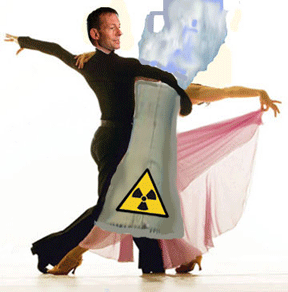 Interestingly, it says it recognises the argument that nuclear is a costly alternative to renewables, uses lots of water and has waste-disposal issues. But it also says others argue that it is “adequate” affordable and reliable, and has significant environmental benefits and public health advantages over other existing base-load technologies. It says it will consider the outcomes of the South Australian Royal Commission into the nuclear fuel cycle, including its use as an energy source.
The winners and losers of Abbott’s energy white paper (SPOILER: Tony likes coal),  Crikey, GILES PARKINSON | APR 08, 2015 In many ways, the Coalition’s energy white paper is a predictable piece of backward-looking falsehoods. But it does make some surprising concessions to a future of renewable energy. Today, the Coalition government released its energy white paper — the document that is supposed to outline the nation’s energy vision for the short and long term future. But there are no surprises for guessing that this is a document that is largely focused on the rear-view mirror.
The energy white paper begins with a false assumption: that “Australia’s large quantities of traditional energy resources provide low cost, predictable and reliable power for Australia and the world”.
They don’t. Coal might be cheap to shovel into a boiler, but it is mighty costly to transport. Grid (delivery) costs make electricity in Australia some of the most expensive in the world. Transport and shipping costs make coal and gas expensive, to the point where they are now being undermined by local, renewable alternatives — or a new focus on environmental policy — even in major markets such as India and China.
Like the Abbott government’s discussion paper on emission reduction targets released late last month, this document also works on the principle that the world will do nothing new to address climate change. The energy white paper’s assumptions are based on the International Energy Agency’s “new policies” scenario, which sets the scene for what would be a catastrophic rise in temperatures to an average 4 degrees.
No matter, the Abbott government concludes: “Ongoing access to large volumes of coal and gas will also underpin our energy generation mix for some decades.” Although it does at least acknowledge that these fuels will be “increasingly exposed to competition from renewable energy”.
Not that it intends to accelerate that transition. Quite the opposite. Continue reading
Australian Government’s Energy White Paper- mixed messages on renewables
Cost-reflective tariffs could also increase power bills for people with solar panels to make sure they’re paying their fair share of network upkeep.
Instead of being charged a flat rate for electricity, where infrastructure costs are equally shared, consumers would pay the cost of delivering the power at the time it’s used.
The proposal is outlined in the government’s energy future blueprint and would require households to install advanced metering – or smart meters – to monitor how much energy they’re using………
The paper touches on Australia’s “good potential” for a range of renewable energy sources and outlines a commitment to a sustainable clean energy sector.
But it also reaffirms a commitment to cutting the renewable energy target and plans to abolish the Clean Energy Finance Corporation and the Australian Renewable Energy Agency.
While the government doesn’t detail a promised national energy productivity plan, it does say a 40 per cent target by 2030 is achievable.
It also doesn’t rule out nuclear energy, with Canberra closely watching the outcome of South Australia’s royal commission into the possibility of a local industry.……. http://www.businessspectator.com.au/news/2015/4/8/renewable-energy/govt-releases-energy-white-paper
1 This month
Chernobyl: The Lost Tapes – A good documentary on Chernobyl on SBS available On Demand for the next 3 weeks– https://www.sbs.com.au/ondemand/tv-program/chernobyl-the-lost-tapes/2352741955560
15 April – Zoom –Nuclear Power is Not the Solution
Apr 15, 2026 01:00 AM in Canberra, Melbourne, Sydney

Join the International Physicians for the Prevention of Nuclear War (IPPNW) on Tuesday, April 14th for a timely webinar exploring the risks associated with nuclear power and challenging the myth that it offers a simple, safe, carbon-free solution to the climate crisis

21 April Webinar: No Nuclear Weapons in Australia
Start: 2026-04-21 18:00:00 UTC Canberra, Melbourne, Sydney (GMT+10:00)
End: 2026-04-21 19:30:00 UTC Canberra, Melbourne, Sydney (GMT+10:00)
Event Type: Virtual
A virtual link will be communicated before the event.
Host Contact Info: australia@icanw.org

of the week – Australians for War Powers Reform (AWPR)
To see nuclear-related stories in greater depth and intensity
 Antinuclear