Every day between now and the election’: Albanese ignites nuclear fight with Dutton
SMH, By James Massola, June 2, 2024
…………………….. the prime minister highlighted recent CSIRO research that found nuclear power is up to eight times more expensive than large-scale wind or solar power.
“They also found building a single nuclear power plant would cost at least $8.5 billion and take 15 years. At the next election, we will offer voters a choice between renewable energy and nuclear power,” he said.
“We will raise this every day between now and the election. [Dutton] needs to stop hiding his plans and release the locations of these planned nuclear reactors. We will join communities in campaigning against them.”………………………………..
The prime minister said Dutton had promised to look communities that could host nuclear power plants in the eye and engage with them but “he hasn’t been anywhere near [them]”.
“He has not been within 40 kilometres of a coal-fired power station. And he’s saying they’ll have six or more sites. He’s been nowhere near any of them in Gippsland, the Hunter, Flynn, Maranoa, O’Connor, seats like this,” Albanese said.
Back in 2007, when he was infrastructure spokesman in the Kevin Rudd-led opposition, Albanese helped lead Labor’s attack against John Howard’s plans to build nuclear power plants across the country – and he has not forgotten those lessons.
…………………Dutton had initially flagged the nuclear policy would be outlined before last month’s federal budget, but that timeline has since slipped.
This masthead then revealed the Coalition planned to unveil either six or seven sites had been selected to host nuclear power plants in the current parliamentary sitting fortnight but following that report, the opposition pressed pause on the announcement once more.
The Coalition’s policy announcement has now been pencilled in for the week after next, once parliament has risen at the end of next week, and is expected to take place outside of Canberra.
Possible sites for nuclear reactors include the Latrobe Valley in Victoria, the Hunter Valley in NSW, Collie in Western Australia, Port Augusta in South Australia, and even potentially a plant in Nationals leader David Littleproud’s electorate of Maranoa in south-west Queensland. All of these locations are on the site of, or near, current or former coal-fired power plants.
Coalition sources, who asked not to be named so they could detail internal discussions about the policy, said the six or seven MPs who would potentially host nuclear power plants in their seats had been notified.
…………………. Labor strategists believe that once the potential sites are named – all of which are expected to be in Coalition seats – that will sharpen the political debate and force voters to consider the implications of having a power plant in their own seat.
A Dutton-led government, if elected, would face a fight with state Labor premiers including Victoria’s Jacinta Allan, NSW’s Chris Minns and Western Australia’s Roger Cook, who have all hosed down suggestions their states could host nuclear power plants.
Queensland Opposition Leader David Crisafulli, who is widely expected to lead the LNP to victory in a state election in October, has indicated he would not back nuclear power unless it had bipartisan support at a federal level.
Albanese said the Labor government opposed the construction of nuclear power plants in Australia for four main reasons.
“Nuclear reactors are simply wrong for Australia, the International Energy Agency said that this week, they support nuclear reactors but for Australia, given the comparative costs and time frames, it makes no sense given that we have access to the best renewables on Earth, along with hydro, batteries and gas to firm them,” he said.
“Second is nuclear is too slow [to build] to keep the lights on, the CSIRO speak about 15 years at least for it to happen. So you’re talking about 2040 just small modular nuclear reactors and years later, if they want to go down the large-scale route and Australia doesn’t have that time.”
“Third, relates to cost, nuclear will push up power bills – independent analysis from CSIRO, AEMO [the Australian Energy Market Operator], says nuclear is the most expensive form of energy to build. And the fourth is communities don’t want nuclear. That includes state LNP leaders that have said that, local councils, state and indeed even [federal] coalition MPs like Darren Chester and Dan Tehan.”
Back in March, 12 Coalition MPs told this masthead they backed lifting the moratorium on nuclear power in Australia but would not commit to hosting a nuclear power plant in their own electorate.
And Nationals MP Darren Chester, who holds the Victorian seat of Gippsland, which is widely considered a probable pick for a nuclear site, said he would not accept a site unless his community was handed a significant economic package.
https://www.smh.com.au/politics/federal/every-day-between-now-and-the-election-albanese-ignites-nuclear-fight-with-dutton-20240601-p5jigh.html
If regional communities don’t want a windfarm, why would they accept a nuclear power station?
Guardian, Gabrielle Chan, 4 June 24
The Coalition’s energy policy is leveraged on regional discontent about renewables. But many farmers don’t want nuclear in their back yard either.
Here’s the thing about the Coalition’s latest nuclear policy. It tries to use one of the most contentious issues in rural areas, which is the rollout of renewables and the electricity transmission lines to carry energy around the country, to push an even more controversial energy transition.
Because nuclear power stations would also be built in the regions. And if you’re worried about renewables, hands up who wants a nuclear reactor next door?
My generation grew up with the US-Russian cold war and the Doomsday Clock.
While the conversation and the technology of nuclear energy has moved on, the cost, complexity and construction time has not, as the CSIRO found in a report released last month………………………
If there is one thing that I have learned from calling a country town home, it is that people are very attached to their place and how it is identified.
Not everyone opposes renewables but there is a significant portion of people who don’t want them in their own back yard. Others are quietly making their fortunes, having struck the formula for drought-proofing their businesses for decades to come. If the Big Dry strikes, you will probably find them on a beach somewhere.
That is because annual payments to host turbines start from $40,000 each though I know of agreements that are much higher, especially when communities collectively bargain. The New South Wales government pays landowners $200,000 to host transmission lines in annual instalments over 20 years, with Victoria paying the same over 25 years.
Those payments have crept up because of ongoing regional protests. That action has been amplified by poor community consultation from some energy companies highlighted in the Australian Energy Infrastructure Commissioner Andrew Dyer’s report. He found the rollout had created “material distrust” of developers in some communities.
Discontent is also being amplified for political purposes, including by David Littleproud, Barnaby Joyce and Matt Canavan, who spoke at a rally against renewables at parliament house.
The politics is clear. For starters, the long lead time kicks the nuclear energy can down the road to 2040. The Liberals cannot walk naked into the next election without at least a fig leaf for a net zero policy. The Nationals, on the other hand, don’t give a toss about net zero. They just want to extract the funding from the Liberals in compensation for hosting any technology that delivers on the net zero promise. Nuclear can be that fig leaf.
It is also true the Nats and the country Liberals will have to wear any pushback on where nuclear facilities are placed. They won’t be able to campaign against their own policy like some do on renewables.
Peter Dutton has not, as yet, specifically named any potential sites for a nuclear power station but he has pointed to current coal production facilities that are due to close. His announcement is imminent, perhaps even after the party room meeting on Tuesday.
Possible sites include the Hunter Valley in NSW; Anglesea and Latrobe Valley in Victoria; Port Augusta in South Australia; Collie in Western Australia; and perhaps Tarong in central Queensland – within Littleproud’s Maranoa electorate.
Since then the game has begun to get Coalition MPs to commit to host or rule out a reactor in their own back yard.
This is a bit silly really, because apart from the ACT, which renewable-supporting metropolitan MPs could commit to hosting a wind turbine or a solar farm in their city seats?
Littleproud and Joyce have both indicated their approval to host a reactor. But a dozen others would not commit when asked by Nine newspapers.
Keith Pitt told Nine he supported lifting the moratorium on nuclear power but, alas, there were technical restrictions, including earthquakes in his electorate. But if Pitt is worried about his area, other MPs might be scurrying to the Geoscience Australia map of faultlines for their own get-out-of-jail-free card.
Pitt’s seat of Hinkler looks like a shoo-in compared to the faultlines under Darren Chester’s Gippsland electorate, which covers the Latrobe Valley in Victoria, or the Liberal MP Rick Wilson’s seat of O’Connor, which covers Collie in WA…………………………………………..
Once you combine the feelings of the existing populations with younger populations, does that add up to support for nuclear over renewables in these changing back yards? I wouldn’t bet on it. https://www.theguardian.com/australia-news/article/2024/jun/04/liberal-coalition-nuclear-power-plant-policy-renewable-energy
Nuclear Shaping Up To Be The Big Issue Next Election
https://10play.com.au/theproject/articles/nuclear-shaping-up-to-be-the-big-issue-next-election/tpa240602vcgxm 2 June 24 We’ve just passed the two-year anniversary of Anthony Albanese being elected as the Prime Minister of Australia, and now rumours are swirling around when the PM will call the next election.
And there’s one issue that shapes up to be a cornerstone election issue when we go to the polls.
The battle lines have been drawn and nuclear power plants are at the centre of them.
The Prime Minister has set the agenda for the remainder of his term, saying the government will campaign on the issue until the day Australia heads to the polls.
It’s been almost two years since the opposition leader first flagged his nuclear policy proposal, but the devil is in the details, and that’s precisely what the PM says is missing.
It comes as rumours swirl around whether Anthony Albanese will call an early election when he still has more than a year left to do so.
And while the PM has repeatedly said he intends to serve a full term… There are a few reasons he may decide not to.
The impact of foreign forces could also play a role in his decision.
So will Albo stick to his guns and hold out until next year, and will the next campaign go totally nuclear.
“We haven’t been consulted:” Coal town on transition to renewables is not interested in nuclear
ReNewEconomy, Aaron Bunch, Jun 2, 2024
A Western Australian coal town lined up as a potential site for a nuclear power station by the federal Coalition says the plan is a distraction as it works to ditch fossil fuels and transition to renewables and storage.
The federal coalition has floated plans to add nuclear energy to the power grid should it win government by building reactors at sites currently home to either coal or gas-fired power stations.
The sites have not yet been announced but the list is widely reported to include Collie, 200km south of Perth and home to about 7500 people, where a state government-supported pivot away from the coal industry is underway. It is the site for two of the country’s biggest battery storage projects.
Shire President Ian Miffling said the state $662 million Just Transition plan had created a “buzz” in the town and the federal coalition’s nuclear power plan hadn’t received much attention.
“Collie hasn’t been consulted at all and we don’t know any of the details of the policy and what they propose, so we’ve not given it too much credence at this stage,” he told AAP…………………
Mr Miffling said locals were focused on bolstering their skills for jobs in new industries, like the recently approved green steel mill and Synergy’s $1.6 billion battery to store renewable energy once coal is retired as an energy supply in 2030.
“The potential for nuclear, which would be a long way down the track, is a bit of a distraction and it really doesn’t need us to spend too much time talking about it at this point,” he said………………..
Local state Labor MP Jodie Hanns said federal opposition leader Peter Dutton and the coalition were out of touch with what was happening on the ground in Collie and floating plans for a reactor in the town was “arrogant and disrespectful”……………………….
“No one I’ve spoken to is in support of a nuclear reactor being put in Collie … my house will be up for sale if this becomes a reality.”
AMWU state secretary Steve McCartney said Collie workers had been discussing for years what they wanted for the town after coal mining ended, “and I can guarantee you one of the things wasn’t a nuclear power station”…………… https://reneweconomy.com.au/we-havent-been-consulted-coal-town-on-transition-to-renewables-is-not-interested-in-nuclear
Do young people support nuclear power?

Jim Green 31 May 24
Earlier this year the Murdoch-Coalition echo-chamber was excited about younger poll respondents in a February Newspoll survey ‒ 65 percent support and 32 percent opposition among 18 to 34-year-olds to this survey question: ‘There is a proposal to build several small modular nuclear reactors around Australia to produce zero-emissions energy on the sites of existing coal-fired power stations once they are retired. Do you approve or disapprove of this proposal?’
However the Newspoll survey was a crude example of push-polling as discussed by polling experts Kevin Bonham and Murray Goot and by economist Professor John Quiggin. The question was loaded, the response options were mischievous (excluding a “neither approve nor disapprove” option, without which majority support (across all age groups) almost certainly would not have been achieved), and the Murdoch/Sky reporting on the poll was biased and dishonest.
Moreover, as Murray Goot notes, other polls reach different conclusions:
“But eighteen- to thirty-four-year-olds as the age group most favourably disposed to nuclear power is not what Essential shows, not what Savanta shows, and not what RedBridge shows.
“In October’s Essential poll, no more than 46 per cent of respondents aged eighteen to thirty-four supported “nuclear power plants” — the same proportion as those aged thirty-six to fifty-four but a smaller proportion than those aged fifty-five-plus (56 per cent); the proportion of “strong” supporters was actually lower among those aged eighteen to thirty-four than in either of the other age-groups.
“In the Savanta survey, those aged eighteen to thirty-four were the least likely to favour nuclear energy; only about 36 per cent were in favour, strongly or otherwise, not much more than half the number that Newspoll reported.
“And according to a report of the polling conducted in February by RedBridge, sourced to Tony Barry, a partner and former deputy state director of the Victorian Liberal Party, “[w]here there is support” for nuclear power “it is among only those who already vote Liberal or who are older than 65”.”
Inside the nuclear influence machine

Documents unearthed by The Fifth Estate lay bare how funding for the strategy, now in motion, is coordinated by a coal mining leader from Queensland, working with possibly Australia’s most influential conservative think tank, and also a key member of Australia’s unofficial nuclear club.
Is the push for nuclear power in Australia more stalking horse for coal than a genuine alternative for a clean energy future? Here’s how the nuclear cabal is working its pitch
THE FIFTH ESTATE, MURRAY HOGARTH, 29 May 24
There’s a sophisticated, well funded strategy underway to prolong coal and gas and eventually take Australia down the nuclear road.
Documents unearthed by The Fifth Estate lay bare how funding for the strategy, now in motion, is coordinated by a coal mining leader from Queensland, working with possibly Australia’s most influential conservative think tank, and also a key member of Australia’s unofficial nuclear club.
For this to work, the Liberal-National coalition needs to win back political power at the next federal election due by May next year.
- A key conservative think tank aims to keep coal until nuclear power arrives
- Its energy security argument is echoed by Peter Dutton as coalition policy
- A Queensland coal baron mustered donors to fund this influence machine
As things stand, nuclear power is currently prohibited in Australia, and the Labor government is committed to fast-tracking a renewables-led energy transition and says it has no plans to lift the ban.
Canberra retreat
The documents we’ve obtained and refer to in this article are the script and slides from a revealing energy security project update to a private strategy retreat held in Canberra last year on 12 May 2023 by the Institute of Public Affairs (IPA).
Behind the current campaign to bring nuclear energy to Australia is a deliberate agenda to prolong coal generation and disrupt the renewables rollout
The Fifth Estate contacted the speaker and two other key IPA-connected figures identified in this story for comment on Monday 27 May, inviting on-the-record interviews and providing questions. On Tuesday evening 28 May, the IPA chief executive officer Scott Hargreaves responded by email but declined to be interviewed. Full details of that response and related information are included at the end of this article.
The Melbourne based IPA is known as Australia’s leading conservative think tank, a key influencer of Coalition policies, and breeding ground for conservative politicians.

It habitually loads speaking point bullets for coalition politicians to fire. And it looked like Opposition Leader Peter Dutton did just that when he delivered his headland nuclear policy speech at an IPA public event, just two months after the Canberra retreat on 7 July last year.
In 2023, the IPA threw an arm around one of the favourite sons of the nuclear club, University of Queensland Adjunct Professor Stephen Wilson, making him a Visiting Fellow, as part of a big new donor-funded influence project, running over three years.
A key and recurring focus of this project and subsequent related policy talking points is energy security.
The internal IPA documents, authored by Wilson, lay out what many people suspect and have alleged: that behind the current campaign to bring nuclear energy to Australia is a deliberate agenda to prolong coal generation and disrupt the renewables rollout.
The final commentary and slide in Wilson’s presentation show an IPA-orchestrated master plan for Australia to defend and preserve coal and gas in the 2020s; then build “mini and small modular reactor (SMR)” nuclear plants in the 2030s under the mantle of reaping energy security, environmental and low-cost rewards in the 2040s.
It’s a parallel universe to the view a vast number of people have of Australia’s energy future. And it’s totally at odds with the clean energy transition agenda and the federal government’s targets of 43 per cent greenhouse gas emissions reductions below 2005 levels and 82 per cent renewables by 2030.
Threat to climate targets
It’s also likely to breach Australia’s staged progress, with five yearly sub targets (for example 43 per cent by 2030, with 2035 targets due to be announced early next year, with a range of 65-75 per cent being evaluated by the Climate Change Authority), towards its bipartisan commitment to 100 per cent net zero by 2050, which was made by the former Morrison coalition government ahead of the UN Climate Summit in Glasgow in the UK in 2021.
The IPA, however, is no fan of UN processes, and as Wilson made clear in his project update notes for the IPA insiders, the aim of its strategy was definitely not to prolong a Labor government……………………………..
The coal connection
Wilson also identified in the presentation who was pulling together the funding for his IPA project, with a bit of ideological explanation to set the scene:…………………………………………………………………….
Bring on Peter Dutton
The private IPA retreat in Canberra on 12 May last year was followed less than two months later by Dutton’s major speech to launch the coalition’s new energy security themed nuclear policy. This was delivered at a public IPA event in Sydney on 7 July.
Dutton’s speech mirrors the theme
Dutton’s headland nuclear speech substantially mirrored the energy security theme and language from the IPA retreat. And it also picked up on themes from earlier “nuclear club”events and activities, a number of them involving Stephen Wilson. If Australia’s nuclear club has anyone it would like to make its intellectual rock star, it’s Wilson.
Dutton’s IPA speech directly referenced Wilson, most significantly:
Professor Wilson says that we must stop procrastinating and prepare real options to deploy nuclear energy in case we need them. Countries are queuing up to put in their orders. Australia could have SMRs [small modular reactors] installed within a decade.
Wilson also confirmed his presentation to the IPA retreat in the video of another IPA event earlier this year, its 2024 Generation Liberty IPA Academy aimed at young conservatives, and relayed how Dutton had quoted him on a couple of occasions, expressing some surprise, saying, “I didn’t know he was going to do that.” (Dutton’s 7 July speech also quoted three other nuclear club regulars, as well as Wilson.)
Since then, SMRs have been a disappointment. Very inconveniently for Dutton and Wilson, the US showcase for new and thus far commercially-unproven SMR-design nuclear power stations, the NuScale project in Idaho, was cancelled in November last year due to cost overruns and lack of electricity buyer interest.
NuScale’s chief executive officer was reported as saying: “Once you’re on a dead horse, you dismount quickly. That’s where we are here.”
On message for energy security
However insecure the NuScale experience sounds, it’s worth remembering that the core theme of Wilson’s earlier 12 May IPA presentation, based on the notes and slides, was energy security. That was also a central theme of Dutton’s 7 July IPA speech:………………………………………………………………
The future of the nation and Western civilisation as we know it
On a geo-political note, national security was weighing heavily on Wilson’s mind on 12 May, as it did for Dutton on 7 July. According to Wilson’s speaking notes, at stake was nothing less than the future of the nation and Western civilisation as we know it:…………………………………………………………………..
Nuclear club bona fides
To be clear, this is the same Stephen Wilson who joined Queensland Liberal MP Ted O’Brien, Dutton’s Shadow Minister for Climate Change and Energy, and other nuclear club players, on a so-called “due diligence” study tour to the US and Canada in January-February 2023.
As Wilson’s slide deck for the IPA Canberra Retreat showed, the study tour group visited major nuclear industry companies, government representatives, lobbyists and campaign organisations. (Ted and friends’ excellent nuclear adventure in North America will feature in other upcoming articles in The Nuclear Files.)
By his own account, judging by a number of publicly available videos, Wilson imbibed deeply in the North American nuclear sector Kool-Aid, riffing off a theme he picked up on the US study tour, to proclaim that: energy security IS national security.
That became the inspiration for a key paper he published with the IPA on 1 November 2023, titled Energy security is national security. Its 1 November 2023 launch, in London on the perimeters of a global gathering of about 1500 ultra-conservatives, is another story coming soon from The Nuclear Files.
The Fifth Estate’s questions to key players in this story
The Fifth Estate provided these questions to IPA CEO Scott Hargreaves early on Monday afternoon:………………………………………………………………………………
The nuclear story, then and now, in brief
Nuclear power has been considered for Australia numerous times over the past nearly 70 years, from the 1950s, but has never happened, mainly for economic reasons. Historically because of the low cost and wide availability of coal, and now it is the low cost of renewables. This month the 2024 CSIRO GenCost report found that traditionally designed large scale nuclear power stations would cost at least 50 per cent more than solar and wind backed by batteries, and take at least 15+ years to develop, and more technically-advanced Small Modular Reactors (SMRs) could be four to six times more expensive than renewables.
On ABC Radio Sydney on Wednesday morning, 29 May, Opposition nuclear frontman Ted O’Brien was pressed on the timing for release of the coalition’s highly anticipated nuclear policy, and insisted it would be revealed “in due course”. He confirmed that the coalition wanted to replace coal-fired power stations, as they exit the electricity grid, with nuclear ones, and that gas generation would fill any gap (which could be one to two decades) between coal shutting down and nuclear starting up. https://thefifthestate.com.au/columns/columns-columns/the-nuclear-files/inside-the-nuclear-influence-machine/
Among opposition leaders, Peter Dutton is a miracle survival story. But is he about to nuke himself with women voters?
ABC, By Annabel Crabb 29 May 24
Peter Dutton is a freak of nature. Politically, that is…………………………………
Two years in, Dutton is not only still in office, but nobody inside his own party — or even in the National Party — is trying to blow him out of it. It is a truly extraordinary achievement.
His public popularity remains firmly in negative territory, according to Newspoll. So why isn’t this translating into the customary seasonal orgy of backstabbing?
Two reasons.
The first is that there really isn’t, ahem, any alternative……………………………………………………………………………….
Dutton much a much more dangerous opponent for Anthony Albanese than is commonly assumed.
But there is one risk associated with this unseasonably warm bath of internal approbation……………………..his decision to pursue nuclear energy as a principal policy decision is a high-risk call, as a new piece of research — supplied to the ABC — makes clear……………………
When it comes to nuclear, public opinion divides along gender lines
Over recent weeks, the RedBridge Group conducted a survey of around 2,000 Australian voters, seeking their views on various issues including nuclear energy. Respondents were asked whether they would support or oppose an Australian government lifting the ban on nuclear power so private investors could build nuclear power plants here.
The responses, across all voters, were kind of evenly divided. Strong supporters constituted 17 per cent, another 17 said they were supportive, 19 per cent were “neither”, 15 per cent were opposed, 20 per cent strongly opposed, and 12 per cent were unsure. This shakes out to an extremely slender net negative of-1
But the truly fascinating detail in the survey comes when you dig down into who especially loves the idea of nuclear, and who hates it.
And the biggest difference of opinion on nuclear, it turns out, breaks along gender lines……………….
Women disapproved of nuclear power strongly – just 7 per cent strongly agreed a ban should be lifted, compared with 24 per cent of male respondents. That’s a net negative of -29 for women, and net positive of 26 for men.
The only demographics showing real enthusiasm for nuclear power were Coalition voters, those aged over 65, those who earn more than $3,000 a week, and those who own their own home. In each of these instances, every other group was majority opposed.
In other words, every other party’s voters apart from the Coalition’s registered a net negative, as well as every other age bracket apart from the most elderly, and all other income brackets apart from the top one.
Renters and mortgage holders alike disapproved on the whole. Among those who described themselves as under “a great deal of financial stress”, the feeling on nuclear ran at negative 15. Among those under “no stress at all”, however, the reception was much warmer – positive 19…………………………………………………………………………….
And in the two years that have elapsed since female voters demonstrated their annoyance at being ignored and talked down to, the Liberal Party has failed to do anything about its structural under-representation of women in parliament, …………………………………………………………..
There always seems to be an abundance of reasons to get rid of women; almost as many reasons as traditionally abound for holding on to and even promoting male duds. Women do notice this stuff.
And “Never mind ladies, have a nuclear power plant” may not be a very compelling change of subject. https://www.abc.net.au/news/2024-05-29/peter-dutton-nuclear-power-policy-may-risk-alienating-women/103870338
Coalition’s brave nuke world a much harder sell after new CSIRO report
Graham Readfearn, https://www.theguardian.com/australia-news/article/2024/may/26/coalitions-brave-nuke-world-a-much-harder-sell-after-new-csiro-report?CMP=soc_568
The agency’s GenCost analysis says a first nuclear plant for Australia would deliver power ‘no sooner than 2040’ and could cost more than $17bn
The Coalition’s pitch on nuclear energy for Australia has had two recurring themes: the electricity will be cheap and it could be deployed within a decade.
CSIRO’s latest GenCost report – a document that analyses the costs of a range of electricity generation technologies – contradicts both of these points. It makes the Coalition’s job of selling nuclear power plants to Australians ever more challenging.
For the first time, the national science agency has calculated the potential costs of large-scale nuclear electricity in a country that banned the generation technology more than a quarter of a century ago.
Even using a set of generous assumptions, the CSIRO says a first nuclear plant would deliver power “no sooner than 2040” and could cost more than $17bn.
It is likely to spark an attack on the credibility of the report from nuclear advocates and those opposed to the rollout of renewable energy. Opposition leader, Peter Dutton, has already attacked the report.
In the meantime, Australia waits for the Coalition to say what kind of reactors it would deploy, where it would put them and how much it thinks they would cost.
Now that CSIRO has released its report, here’s what we know about the viability of a nuclear industry in Australia.
What’s new on nuclear costs?
CSIRO’s GenCost report says a 1,000 megawatt nuclear plant would cost about $8.6bn to build, but that comes with some large caveats. The main one is that this was the theoretical cost of a reactor in an Australia that already had an established and continuous program of building reactors.
The $8.6bn is based on costs in South Korea, which does have a continuous reactor building program and is one country the least beset by cost blowouts.
To make the cost more relevant, CSIRO compared the Australian and South Korean costs of building modern coal plants. Costs were more than double in Australia.
But CSIRO warns the first nuclear plants in Australia would be subject to a “first of a kind” premium that could easily double the $8.6bn build cost.
In the UK, a country that has been building reactors intermittently, costs for its under-construction Hinkley C reactor (more than three times the size of a theoretical 1,000MW reactor in Australia) started at $34bn and could now be as high as $89bn.
In the United States, the country’s largest nuclear plant has just turned on its final unit seven years behind schedule and at double the initial cost. There are no more nuclear plants under construction in the country.
What about the cost of the electricity?
CSIRO also offers cost estimates for the electricity produced by large-scale reactors, but those too assume a continuous nuclear building program in Australia.
Electricity from large-scale reactors would cost between $141 per megawatt hour and $233/MWh if they were running in 2030, according to GenCost.
Combining solar and wind would provide power at between $73 and $128/MWh – figures that include the costs of integrating renewables, such as building transmission lines and energy storage.
What about those small modular reactors?
The Coalition has also advocated for so-called “small modular reactors” which are not commercially available and, CSIRO says, are unlikely to be available to build in Australia until 2040.
One United States SMR project lauded by the Coalition collapsed in late 2023 because the cost of the power was too high.
That project, CSIRO says, was significant because its design had nuclear commission approval and was “the only recent estimate from a real project that was preparing to raise finance for the construction stage. As such, its costs are considered more reliable than theoretical projects.”
GenCost reports that power from a theoretical SMR in 2030 would cost between $230 and $382/MWh – much higher than solar and wind or large-scale nuclear.
How quickly could Australia build a nuclear plant?
Nuclear advocates tend to point to low nuclear power costs in countries that have long-established nuclear industries.
Australia has no expertise in building nuclear power, no infrastructure, no regulatory agency, no nuclear workforce and a public that is yet to have a serious proposition put in front of it.
Australia’s electricity grid is fast evolving from one dominated by large coal-fired power plants to one engineered for and dominated by solar, wind, batteries and pumped hydro with gas-fired power working as a rarely used backup.
This creates a major problem for the Coalition, because CSIRO estimates “if a decision to pursue nuclear in Australia were made in 2025, with political support for the required legislative changes, then the first full operation would be no sooner than 2040.”
Tony Wood, head of the Grattan Institute’s energy program, says: “By 2040, the coal-fired power stations will be in their graves. What do you do in the meantime?”
“You could keep the coal running, but that would become very expensive,” he says, pointing to the ageing coal fleet that is increasingly beset by outages.
Wood says the GenCost report is only a part of the story when it comes to understanding nuclear.
The Coalition, he says, would need to explain how much it would cost to build an electricity system to accommodate nuclear.
Could you just drop nuclear into the grid?
The biggest piece of generation kit on Australia’s electricity grid is a single 750 megawatt coal-fired unit at Kogan Creek in Queensland. Other power stations are larger but they are made up of a series of smaller units.
But the smallest of the “large-scale” nuclear reactors are about 1,000MW and most are 1,400MW.
Electricity system engineers have to build-in contingency plans if large units either trip or have to be pulled offline for maintenance. That contingency costs money.
In Australia’s current electricity system, the GenCost report says larger nuclear plants would probably “require the deployment of more generation units in reserve than the existing system consisting of units of 750MW or less.”
But by the time a theoretical nuclear plant could be deployed, most if not all the larger coal-fired units will be gone.
Who might build Australian nukes?
Some energy experts have questioned whether any company would be willing to take up a contract to build a reactor in Australia when there are existing nuclear nations looking to expand their fleets.
Right now, nuclear reactors are banned federally and in several states.
The GenCost report also points to another potential cost-raiser for nuclear – a lack of political bipartisanship.
The report says: “Without bipartisan support, given the historical context of nuclear power in Australia, investors may have to consider the risk that development expenses become stranded by future governments.”
WA Liberals reject Peter Dutton’s nuclear plan
New Daily, AAP, May 26, 2024,
The Western Australia Liberal Party has poured cold water on the federal Coalition’s plan for nuclear power in the state, while backing coal to keep the lights on.
Energy spokesman Steve Thomas says federal Opposition Leader Peter Dutton’s plan for nuclear power won’t work in WA.
“To get approvals and construction happening on a nuclear power plant, whatever the size is, is probably a 15-to-20-year timeframe,” he told reporters on Sunday.
“In the meantime, we have to keep the lights on we have to keep the air conditioners running and we have to do it at a cost that the community can afford.”
WA’s power system was small and a large cost-effective nuclear power plant wouldn’t work, Mr Thomas said.
“The size of the unit would matter significantly because as CSIRO has said, the small ones which will fit into our marketplace are more than two-to-three times as expensive per unit of electricity as the large ones,” he said.
“There might one day be room for a small one when the time is right and the business case steps up and the community accepts it.”
A CSIRO report released last week found building a large-scale nuclear power plant in Australia would take 15 years, cost at least $8.5 billion and produce electricity about twice the cost of renewables.
Any nuclear plant in WA would need significant federal government investment and Mr Thomas said he was happy to look at Mr Dutton’s business case and continue talks.
“This is a long, ongoing discussion and we the state Liberals are not afraid of nuclear energy … but it has to stack up and it has to have support,” he said………………………………… https://www.thenewdaily.com.au/news/2024/05/26/wa-liberals-reject-dutton-nuclear-plan
Dutton’s devoid-of-details nuclear plan an atomic failure
By Belinda Jones | 25 May 2024 https://independentaustralia.net/politics/politics-display/duttons-devoid-of-details-nuclear-plan-an-atomic-failure,18632
Given the absence of substance in Peter Dutton’s nuclear policy so far, his ‘lack-of-details’ cry over The Voice must surely come back to haunt him, writes Belinda Jones.
TWO YEARS AGO, Nationals Leader David Littleproud called for a national discussion on nuclear energy.
Said Littleproud:
‘Peak business groups and unions are calling for the moratorium on nuclear power to be lifted, amid a push to ensure Australia is “technology agnostic” during its transition to cut emissions. It’s time to have the discussion.’
Almost two years later, neither Littleproud nor Dutton has yet produced anything of substance on the issue for the Australian public to consider — just broken promises and delays over when details on the Coalition’s nuclear energy policy will be delivered.
Prime Minister Anthony Albanese has called on the Coalition to release details on its nuclear energy policy.
Dutton’s level of preparedness for a discussion on nuclear energy appears only to have extended to a tweet at this stage.
Since taking over the nuclear conversation, Dutton has incurred the ire of the Commonwealth Scientific and Industrial Research Organisation (CSIRO), which was forced to defend its reporting in a “rare intervention”
In March 2024, Dutton made incorrect claims about Australia’s national science agency’s costings and slammed its GenCost 2023/24 report, prompting a warning from CSIRO chief executive Douglas Hilton that public trust requires our political leaders refrain from disparaging science.
In a telling statement this week, Member for Wannon Dan Tehan pledged his support for the Coalition’s nuclear energy policy — just not in his electorate. This may be the reason for Dutton’s delay in releasing the policy details: a divided party room.
To be fair, mainstream media has attempted to elicit answers from Dutton for months now, to no avail. The public’s desire for detail on the Coalition’s nuclear policy is becoming more pressing as both the 2024 Queensland State and 2025 Federal Elections loom.
IA contacted Peter Dutton to try to get some direct answers for our readers, asking the following questions:
In terms of transmission of nuclear energy, what changes to existing power grids and transmission systems will have to be made to accommodate nuclear reactors or SMRs? What will be the cost and timeframe of those changes?
How many nuclear reactors or small nuclear reactors (SMRs) does the Liberal/National Coalition want to build?
What will be the average cost per nuclear reactor and SMR?
What is the estimated date of nuclear reactors or SMRs being operational?
Where will the proposed nuclear reactors or SMRs be located?
In proposed nuclear reactor or SMR locations, what steps has the Coalition taken to consult with the local community, environmental agencies and other levels of government about the impacts of the proposed nuclear reactor or SMR, and are any details of those consultations available to the public?
Does the Coalition plan for nuclear include significant taxpayer investment? If so, how much?
What budget measures will have to be taken to free up funding for nuclear reactors or SMRs, that is, what cuts in other areas of the budget will have to be made?
How many short-term jobs will be created during the construction phase of each proposed nuclear reactor or SMR? Will those jobs be mainly local jobs or FIFO?
Traditionally, government support of a new enterprise/industry is conditional on the creation of secure, new, ongoing jobs. Given the fact nuclear reactors and SMRs will likely be fully automated requiring very few jobs when operational, what is the quid pro quo for government funding? Will taxpayer funding secure an equity stake in nuclear businesses in return for government support in lieu of a significant number of jobs?
How will the nuclear reactors or SMRs be cooled? Do the proposed locations have enough water to support a nuclear reactor or SMR, especially during drought? Please provide evidence to support your answer.
Will the Coalition’s proposed nuclear reactors or SMRs draw water from the Great Artesian Basin at any time? If so, how much and what will be the impact?
What is the Coalition’s plan for the nuclear waste generated by nuclear reactors and SMRs and the long-term site repatriation costs and timeframe of any proposed nuclear reactor or SMR site?
What business groups, individual persons or businesses, or private investors have expressed interest to the Coalition in building nuclear reactors or SMRs? And what is the current estimate in dollar terms of that interest?
Are any of those business groups, individual persons or businesses, or private investors already invested in other industries associated with nuclear energy, such as mining and resources?
Two hours later we received a curt reply stating, ‘… we will announce further detail regarding our energy policy in due course’.
The email also suggested IA “continues its own research”.
This reply from Dutton’s office is wholly unsatisfactory, so IA will continue seeking answers from the Coalition to these important questions — answers that our readers have a right to know – until we get a more informative response. After all, it was the Coalition that called for a conversation on nuclear energy in the first place and its “plan” is to implement a nuclear policy if it wins office in less than 12 months.
Time is running out for Dutton to present his nuclear energy policy — important electoral dates approach.
But, clearly, the Coalition’s behaviour around the much-awaited policy details indicates how totally unprepared it is to hold government. It wants to lead the conversation and the country, yet it hasn’t put in the work. After almost two years of “discussion”, the Opposition still comes to the table empty-handed — no information, no plan, just a series of thought bubbles and meaningless L-NP talking points.
Dutton’s words –“When you deliberately keep the detail back, people become suspicious” – will no doubt come back to haunt him. Because when it comes to the Coalition’s nuclear energy policy — if Australians don’t know, they’ll vote no.
Powering ahead: Dutton to name nuclear sites within weeks

The Age, By James Massola, Mike Foley and Hamish Hastie, May 22, 2024
The federal opposition is set to announce the locations of up to seven proposed nuclear power sites in a matter of weeks, with two of the sites to be in Liberal-held seats and either four or five sites in Nationals-held seats.
Possible nuclear power plant sites that have been discussed within the Coalition include the Latrobe Valley and Anglesea in Victoria, the Hunter Valley in NSW, Collie in Western Australia, Port Augusta in South Australia, and even potentially a plant in Nationals leader David Littleproud’s electorate of Maranoa in south-west Queensland.
All of these sites currently host either coal or gas-fired power stations.
This masthead has been told by a coalition MP, who asked not to be named to brief on confidential deliberations, that the much-anticipated announcement of the six or seven sites – a closely guarded secret for months – has been finalised, and a policy launch has been pencilled in to take place by early June.
That MP said technical work on the Coalition’s policy was still under way, discussions had been held with nuclear construction companies who could build the plants, and that the launch, which would include detailed costings, was imminent.
The revelation that sites are all but locked in comes after a day of mixed messages from shadow ministers including Littleproud, Angus Taylor and Jane Hume over the timing and details of a policy that will be at the heart of the Coalition’s election pitch.
Opposition Leader Peter Dutton dismissed the CSIRO’s annual GenCost report, which found that the first large scale nuclear reactor in Australia would cost more than $16 billion and would not come on line before 2040, while the cost of subsequent reactors would ultimately fall to about $8 billion
Dutton questioned the credibility of the report as it was “based on the current government settings” and said it didn’t consider what he claimed was a more than trillion-dollar cost for the Albanese government’s renewables roll out.
The GenCost report factored in $40 billion worth of transmission lines as well as batteries by 2030 and still found an electricity network that was 80 per cent powered by renewables would provide cheaper power than gas, coal or nuclear power.
Asked when the Coalition would finally release its policy, Dutton said “we’ll provide that information in due course”, and added that Prime Minister Anthony Albanese had said there were 12 months until the next election.
Dutton refused to say where the sites would be: “I haven’t ruled out or in any sites. I’ve said that we’re looking at coal-fired power stations that are coming to an end of life.”
Victorian Nationals MP Darren Chester, whose seat takes in much of the Latrobe Valley, last month spoke out to caution that his constituents would need a significant economic package if they were to host a nuclear power station.
Several MPs, who asked not to be named, expressed concern that the nuclear policy had been delayed after Dutton had flagged, back in March, that it would be released before the May federal budget.
One MP said “this is a complex policy and we will have to educate 26 million people. There will be a scare campaign from Labor and they will frame the next election as a referendum on nuclear.”
In March, 12 Coalition MPs publicly backed lifting the moratorium on nuclear power in Australia but would not commit to hosting a nuclear power plant in their own electorate.
Littleproud told Sky News on Wednesday that “we’re going to announce them, we’ve been very clear, we’ve been very honest about this, that we will get to juncture in the coming weeks”.
But Taylor told the National Press Club the opposition would release its energy policy “in the coming months”, and ruled out offering subsidies to ensure the plants are commercially viable……………………………………………………. https://www.theage.com.au/politics/federal/powering-ahead-dutton-to-name-nuclear-sites-within-weeks-20240522-p5jflb.html
Australia can learn from the American experience with nuclear power

Amory B Lovins, May 21, 2024, https://reneweconomy.com.au/australia-can-learn-from-the-american-experience-with-nuclear-power/#google_vignette
During my current visit to Australia I’ve been surprised to see nuclear power promoted by the federal Coalition and by certain media.
Rather than fact-check the questionable claims of nuclear proponents, let me here outline the recent experience with nuclear power in my home country, the United States, and then discuss how that experience could inform the energy debate in Australia.
Nuclear power in the US is in decline. A dozen reactors have been shut down over the past decade — 41 in all. The decline will continue because US reactors average 42 years old, beyond their original design life. Of 259 US power reactors ordered since 1955, 94 are still in service; by 2017, only 28 remained competitive and hadn’t suffered at least one outage of at least a year. That’s an 11 percent success rate.
Only two nuclear power construction projects have commenced this century, and Australians should take careful note of those projects’ failure despite massive government support.

The V.C. Summer project in South Carolina, comprising two Westinghouse AP1000 reactors, began construction for an estimated US$11.5bn total in 2013. It was abandoned in 2017 after costs rose to US$25bn, wasting US$9bn. Westinghouse soon filed for bankruptcy protection.
In addition to a $US9 billion hole in the ground, the V.C. Summer fiasco gave rise to the ‘nukegate’ scandal, a web of corruption that has already seen some culprits jailed with others likely to follow.
The other US reactor construction project was the Vogtle project in Georgia, also comprising two AP1000 reactors. It was recently completed but many years behind schedule and at extravagant cost, echoing similar experience in Finland, France, and the UK.

Westinghouse said in 2006 that it could build an AP1000 reactor for as little as US$1.4 billion. The Vogtle project’s final cost was over 10 times greater at US$17.5 billion per reactor. That money that would have been far better spent on renewables and energy efficiency programs. Buying nuclear power instead displaced less fossil fuel per year and per dollar, worsening climate change.
Small modular reactors
The failure of large reactor construction projects has led the industry to pivot to so-called small modular reactors (SMRs). But SMRs don’t exist, unless you count two demonstration plants in Russia and China. SMRs are unlikely to improve the safety, security or waste problems of large reactors, and SMRs’ economics are even more unattractive than large reactors’.

NuScale Power, leading America’s most advanced SMR project, recently abandoned its flagship project in Idaho due to soaring costs despite about US$4bn in US government subsidies. With no other credible customers, the firm seems more likely to go bankrupt than to build any SMRs.
NuScale’s most recent cost estimate was an astronomical US$9.3 billion for a 462 megawatt (MW) plant with six 77-MW reactors. That’s US$20,100 per kilowatt (kW). Compare the actual 2023 market prices per kW found by leading US investment firm Lazard: US$700-1400 for utility scale solar PV and US$1025-1700 for onshore wind.
Nuclear’s higher capital cost per kW far outweighs its greater output per kW, leaving it several-fold out of the money before counting its substantial operating costs. And including grid integration costs would actually widen nuclear’s disadvantage because its outages tend to be bigger, longer, sharper, and less predictable than solar and wind power’s variations, requiring more and costlier backup.
Other companies hoping to develop SMRs or so-called ‘advanced’ reactors are faring no better. Indeed a pro-nuclear lobby group noted late last year that efforts to commercialize a new generation of ‘advanced’ nuclear reactors “are simply not on track” and it warned nuclear enthusiasts not to “whistle past this graveyard”.
Coal-to-nuclear
The Coalition’s energy spokesperson Ted O’Brien claims that “evidence keeps mounting that a coal-to-nuclear strategy is good for host communities, and especially workers as zero-emissions nuclear plants offer more jobs and higher paying ones.”

Mr. O’Brien has promoted Terrapower’s plan to replace coal with nuclear in Wyoming but the company is at the early stages of a licensing process and it is unclear whether finance can be secured or whether the adventurous new technology can ever get built and compete on the grid despite about US$2bn of government subsidy.
In 2009, applications for 31 new reactors were pending in the US. Nothing eventuated other than the abandoned South Carolina project and the recently completed Georgia project. No reactors — large or small — are currently under construction in the US. For the time being at least, we’re being spared the economic and climate costs of further disastrous nuclear projects.
Lessons for Australia
What lessons can Australia learn from the US experience?
Industry claims should be treated with skepticism. Early cost estimates for the Vogtle project were out by a factor of 10. Westinghouse’s claim that it could build an AP1000 reactor in “approximately 36 months” also proved to be wildly inaccurate: the Vogtle reactors took 10 and 11 years to build; closer to 20 years if you include the planning and licensing process.
Proponents claiming that Australia could have reactors operating by the mid-2030s are sadly mistaken. Most or all of Australia’s remaining coal power plants will have closed long before nuclear reactors could take their place in the energy market.
It’s vital that Australians consider the fact that you would be starting a nuclear power industry with none of the United States’ 70-plus years’ experience – despite which 42 reactor projects were abandoned, 41 built but closed, and scores now operate only thanks to government rescues. It would be folly to imagine that Australia can do better.
The point was made sharply by NSW Chief Scientist Hugh Durrant-Whyte in a 2020 report prepared for the NSW Cabinet. A former Chief Scientific Adviser at the UK Ministry of Defence, Dr Durrant-Whyte said: “The hard reality is Australia has no skills or experience in nuclear power plant building, operation or maintenance – let alone in managing the fuel cycle. Realistically, Australia will be starting from scratch in developing skills in the whole nuclear power supply chain.”
Likewise, former Australian Chief Scientist Dr Alan Finkel states: “Any call to go directly from coal to nuclear is effectively a call to delay decarbonisation of our electricity system by 20 years.”
I’m pleased to learn that the Australian government aims to double renewable supply to the National Energy Market to reach 82 percent by 2030. It’s especially impressive to witness the world-class renewable energy revolution in South Australia, where renewables provide 74 percent of electricity on average and the state government aims to reach 100 percent net renewables as soon as 2027.
Nuclear power is a minor distraction, adding each year at best only as much electricity supply as renewables add every few days. It has no business case or operational need anywhere. Especially it has no place in Australia’s energy future. No one who understands energy markets would claim otherwise.
Amory Lovins has been an energy advisor to major firms and governments in 70+ countries for 50+ years; has authored 31 books and about 900 papers; is an integrative designer of superefficient buildings, factories, and vehicles; and has won many of the world’s top energy and environmental awards. He is Adjunct Professor of Civil and Environmental Engineering at Stanford University.
Peter Dutton to reveal nuclear power locations ‘soon’ amid energy debate

MY COMMENT on Dutton’s statement – He said the report was a blueprint for investors, and the Coalition was centring its nuclear policy around what would be best for consumers.
So Dutton thinks that if nuclear power is bad for investors, it would somehow be good for the public – “consumers”
Well, I guess that means that it would have to be paid for by tax-payers?
The backyards where the Coalition plans to build nuclear power plants will be announced “soon”, as Australia’s energy debate ramps up.
Ellen Ransley, May 23, 2024
Australians “won’t have to wait long” to find out if the Coalition plans to build a nuclear reactor in their backyard, with policy and possible locations to be announced soon.
The Coalition won’t be drawn on reports it is set to announce the locations of up to seven proposed power sites within weeks, which according to Nine Newspapers, could include sites in two Liberal-held seats and four or five Nationals-held seats.
They reportedly include the Latrobe Valley and Anglesea in Victoria, the Hunter Valley in NSW, Collie in WA, Port Augusta in South Australia, and potentially a plant in the southwest Queensland electorate of Maranoa, held by Nationals leader David Littleproud.
All of those areas currently house coal or gas-fired power stations.
Coalition energy spokesman Ted O’Brien wouldn’t comment directly on whether the opposition had those sites in its sights, offering instead a promise of an announcement “in due course”………………………..
Environment Minister Tanya Plibersek said the Coalition’s plan was “still a fantasy
Why doesn’t Peter Dutton just front up and tell us. It was coming nine weeks ago!” she told Sky News.
“We need to know where they will go, how much they will cost, and when they will be released.”
Asked directly if Collie was a location, Mr Dutton said he hadn’t “ruled it out or in”.
“I’ve said that we’re looking at coal-fired power stations that are coming to an end of life,” he said.
Mr Dutton also dismissed the CSIRO’s annual GenCost report, after it found the country’s hypothetical first large-scale nuclear reactor could cost up to $17bn and take until 2040 to be built.
Moreover, the report found the cost of the electricity it would generate would be twice as much as that of renewables.
Mr Dutton said the report was “based on the current government settings, which are against the use of nuclear”, and said it didn’t consider what he claimed was a more than trillion dollar cost for the government’s renewables rollout.
Mr O’Brien said while some of the capital cost assumptions in the report were unproblematic, it was “hard to say exactly what the first plant would cost”.
He said the report was a blueprint for investors, and the Coalition was centring its nuclear policy around what would be best for consumers.
“Once you have nuclear in the mix, prices come down,” he said.
Treasurer Jim Chalmers, meanwhile, said the CSIRO report “torpedoes” Mr Dutton’s nuclear “fantasy”.
“I think the CSIRO has completely torpedoed this uncosted nuclear fantasy of Peter Dutton’s,” he said.
“The madness of this I think is laid bare in the CSIRO report for Australia we have immense opportunity in the renewable sector as the world transitions to net zero.” https://www.theguardian.com/australia-news/article/2024/may/22/australia-nuclear-power-plants-csiro-peter-dutton-liberal-coalition-plan
Anthony Albanese accuses Coalition of hiding key details on nuclear policy
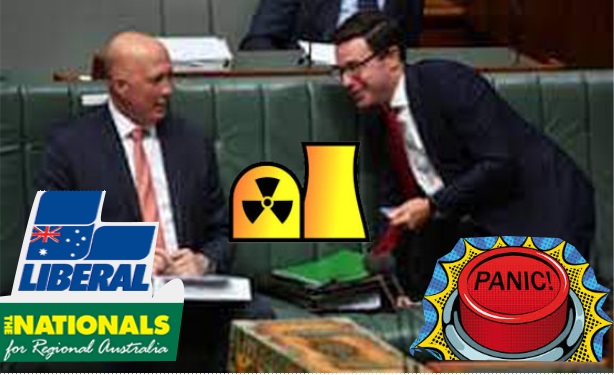
The prime minister has lashed out at the opposition for failing to reveal where nuclear power plants after ‘extensive’ polling was done in potential electorates.
Eleanor Campbell, May 19, 2024 , https://www.news.com.au/finance/business/other-industries/anthony-albanese-accuses-coalition-of-hiding-key-details-on-nuclear-policy/news-story/4869e764cab8286dc57a0883412c89c4
Anthony Albanese has attacked the coalition for failing to reveal key details of its controversial nuclear energy policy, which now looks be delayed until the end of the year.
Opposition Leader Peter Dutton’s reply to the federal budget last Thursday omitted key details of the signature energy policy, including the total costs and locations of the six nuclear power plants slated to replace a retiring fleet of coal-fired power stations.
Nationals leader David Littleproud on Sunday said it would not have been “appropriate” for Mr Dutton to outline the full costs in his budget reply speech, but confirmed the policy would “of course” be released before the end of 2024.
“We have done extensive polling of the electorates, we’ll be looking at six or seven sites … and they have been very supportive of a nuclear future,” Mr Littleproud told Sky Sunday Agenda.
Describing the opposition’s nuclear idea as “shocking policy” when asked at a press conference on the NSW Central Coast, the Prime Minister accused Mr Littleproud of intentionally hiding details from the public because the plan “didn’t stack up”.
“David Littleproud has said that they have done polling in the areas where the nuclear reactors are going to be built,” Mr Albanese said.
“So he clearly has full knowledge of where these reactors will be built, but he won’t tell Australians where it will be.
“Earlier this week, he said he’d look Australians in the eye and tell them where it would be, what it would cost, who would build them and who would finance them.
“Today, he’s saying, ‘We’ve got polling, but we’re not going to tell you’.
Going nuclear on power and wages may not be the election winner Peter Dutton thinks it is

Guardian, Paul Karp, 20 May 24
Opposition leader has laid fertile ground for progressive attack ads to grow in policy-lite budget reply
Peter Dutton’s budget reply sets the Coalition up for an election campaign focused on migration and law and order. At least, that’s the election he wants because it’s one he thinks he could win.
But Dutton’s policy-lite speech contains the seeds of campaigns that will inevitably be deployed by the progressive side of politics: on nuclear and wages.
The nuclear debate has been a train wreck in slow motion for months now.
So many front page stories in the Australian promised the policy before the budget with such juicy details as the type of technology, the number of reactors, their putative location.
Then, a deferral. All in good time.
In Thursday’s speech, Dutton made the case that nuclear is popular. Bob Hawke supported it, so does John Howard, the Australian Workers Union and “65% of Australians aged 18 to 34 years of age”.
One couldn’t help but wonder: if it’s so popular, why not make it the centrepiece of the speech and actually announce the policy?
Perhaps because it’s so expensive that it completely fails the Coalition’s new test for Future Made in Australia projects – that they must be commercially viable without taxpayer support. Perhaps because the friendlier-sounding small modular reactors are not commercially available.
Or perhaps because it is not, in fact, that popular.
Labor are increasingly cocky that the nuclear thought-bubble is an exploding cigar for the opposition. On Thursday the energy minister, Chris Bowen, gleefully cited choice anonymous quotes from Coalition backbenchers in question time that the policy is “madness on steroids” and within the ranks there is “a sudden sense of bewilderment” about the idea.
A few months ago I wrote a slightly trolling column about the possibility of a plebiscite on nuclear power to accompany the next election. Labor see Dutton doing everything in his power to turn the next election into a straw poll on his big bad idea anyway.
The attack ads write themselves. I can see the bunting wrapped around schools on election day already, with nuclear cooling towers, yellowcake, plutonium rods and Dutton’s face.
In his post budget reply press conference the education minister, Jason Clare, said simply: “If he won’t tell you where he’s going to put all the nuclear reactors, why would you vote for him?”
This is the obvious scare campaign. Let’s also look at the slower burn issue: wages.
An easy win – but not for him
In his speech Dutton promised to “remove the complexity and hostility of Labor’s industrial relations agenda, which is putting unreasonable burdens on businesses”…………………
It’s absolutely fine for Dutton to create some policy differentiation with Labor, but if he doesn’t set out chapter and verse what’s in and what’s out, the unions will paint him as against all of it………………………………………………………………
The minor themes of the speech have the greatest potential to develop into major problems for him https://www.theguardian.com/australia-news/article/2024/may/20/going-nuclear-on-power-and-wages-may-not-be-the-election-winner-peter-dutton-thinks-it-is
The president of the ACTU, Michele O’Neil, said: “Dutton committed to getting rid of the workplace laws that are finally seeing real wages grow, after 10 years of wage stagnation by the last Coalition government.”
Dutton “told workers that if he is elected, he will again commit the Coalition to running an economy based on low wages” and “turn secure jobs into casual jobs”.
1 This month

of the week – Australians for War Powers Reform (AWPR)
To see nuclear-related stories in greater depth and intensity
 Antinuclear