Gun totin’ gay-marriage opposing, sports-rorting Senator Bridget McKenzie leads the National Party’s push on behalf of the nuclear lobby.

Sky News.6 May 21, Nationals Senator Bridget McKenzie, Nationals Senators earlier this year drafted legislation which would allow the Clean Energy Finance Corporation to invest in nuclear power. Ms McKenzie told Sky News host Alan Jones “we’re still waiting” for Energy Minister Angus Taylor to put the legislation through parliament and spark debate on the issue.

Angus Taylor, Energy Minister – incompetent and ignorant – SO – VOTE HIM OUT

campaign gathers momentum
Kazzi Jai No nuclear waste dump anywhere in South Australia, 4 May 21
maybe we should start a campaign…. for the Federal Election coming ….with t-shirts which say VOTE RAMSEY OUT!Idea taken from this Bulletin article! ·
CAMPAIGN TO OUST ANGUS TAYLOR GATHERS MOMENTUM
The successful campaign to remove former Liberal prime minister Tony Abbott from his Warringah seat during the 2019 Federal Election is being replicated in other electorates.
A 30-year-old pilot from Thirlmere in the Hume electorate’s north-eastern corner – who has avoided politics until now – is behind the grassroots independent movement to oust his Liberal member and the Minister for Energy, Angus Taylor.
Alex Murphy followed the Vote Tony Out campaign and wondered why there wasn’t similar action to remove Mr Taylor.He set about canvassing local voters in 2020 through the Voices of Hume group. He found others were unhappy with the MP’s energy, climate and emissions reduction policies and involvement in the GrassGate, WaterGate and Clover Moore controversies.
Within three months, the campaign has attracted 350 subscribers and gained momentum by selling T-shirts, face masks and tote bags through social media, emails and meetings.
Its first meeting in Wollondilly on 17 April attracted between 50 and 60 people. The next Vote Angus Out meeting is scheduled for 30 May in Goulburn.
Vote Angus Out campaigners are mostly farmers and retirees who disapprove of many of the MP’s decisions, including his support for fracking on farmland and lack of support for the dairy industry, increasing the age pension and encouraging Australian-based industry.
”He’s there to represent the gas and oil industries first and foremost,” Mr Murphy said.
Mr Murphy believes there is more support for Mr Taylor’s removal, assuming retirees only represent the campaign’s demographic because they have more time on their hands.He also bases subscriber numbers on social media follows and email opens. However, if retirees are the true campaign demographic, there would be many who don’t use social media or email.
“People are getting sick of the same old things happening, and a lot of retirees see it as a way to leave something for their children and grandchildren,” Mr Murphy said.
Mr Murphy said he’s confident Mr Taylor will be gone by the next federal election and is seeking advice from Vote Tony Out campaigners.
It makes our job a lot easier to have a politician who is so easily targeted. His inaction on climate change and emissions reduction, and the fact he’s been implicated in a number of scandals, make him an easy target,” he said.
Mr Taylor was also recently voted the most incompetent cabinet member in the Morrison Government in a poll conducted by The Australian Financial Review.
On the other hand, Mr Murphy recognises that the Hume electorate is a safe Liberal seat.It will be a challenge to convince people not to vote for him, but at the same time, it’s certainly going to be a lot easier for us to convince people not to vote for Angus than not to vote for a lot of other politicians,” he said.
That’s why the Vote Angus Out campaign is also focusing its efforts on finding a strong independent candidate.“The problem is, a lot of the big parties are just as bad at taking large donations from fossil fuel companies. We really want to put forward someone who isn’t going to be beholden to those big donors,” Mr Murphy said.
Similar campaigns are also on the hunt for independents to challenge the Liberal member for North Sydney, Trent Zimmerman, and the Liberal member for Bradfield, Paul Fletcher. Both seats neighbour Tony Abbott’s former seat of Warringah. The Riot ACT / Hannah Sparks
Are The Greens taking over from Labor as Australia’s progressive party – Tasmanian election results suggest this.
Have the Greens taken over the progressive mantle from Labor? South Wind, 4 May 2021 by Peter Boyer
Peter Gutwein’s win on Saturday is only part of the story of a fascinating election. ”……….. Predictably, Peter Gutwein won the election on the back of his fine response to COVID-19, recording an exceptional personal vote. People appreciated that this leader, in response to expert scientific advice, could make tough, confronting decisions.
But as the Greens’ Cassy O’Connor pointed out on Saturday night, while the premier chose to follow the science around contagious disease, he has relegated to a secondary position the science that warns of an unfolding climate catastrophe.
In building the Greens as a political force, founding leader Bob Brown fostered the view – perhaps unintentionally – that his party was the only way to environmental salvation. In times past I’ve found myself irritated by what seemed to be the Greens’ uncompromising approach to wicked policy dilemmas. Kevin Rudd’s doomed carbon pricing scheme was one such case.
In 2010, for the first and still the only time in Australia, the Greens became an integral part of government in Tasmania. Leader Nick McKim and then Cassy O’Connor took on the climate challenge on the basis that this responsibility is shared by all jurisdictions, everywhere.
That work culminated in O’Connor’s 2013 strategic plan, which remains the standout among a plethora of such documents that have arrived with fanfare over the years before being quietly shelved. Eight years later, her election night speech showed that this was no accident.
The buzz of leadership doesn’t rest easily with complex, slow-burning issues like climate change. Perhaps taking a cue from Rudd’s unseemly demise in 2010, Australia’s major party leaders and MPs continue to avoid making climate a front-rank policy issue.
Nowhere was that better illustrated than in the last parliament, in a debate over whether Tasmania should declare itself to be in a climate emergency. The only MPs arguing cogently for this fully justified move were O’Connor and her deputy, Rosalie Woodruff, while the rest of the parliament played partisan games.
On Saturday night O’Connor spoke of the Greens’ proposal for a bill to mandate planning for sequestering carbon, adapting to climate change, and annual sectoral emission targets, contrasting that with the major parties’ failure to come up with any coherent climate policy: “a shameful indictment”.
“We hear some Liberals gloating about the state’s climate record while they accelerate native forest logging,” she said. “Tasmania’s status as a net carbon sink is the result of decades of commitment and heart from the broader conservation movement and civil society, and the Greens’ hard work to protect this island’s extraordinary carbon rich forests.”…….
It was a long speech, bringing to mind another politician inclined to go on a bit, Gough Whitlam. The point about both is that they covered a lot of ground and had things to say that mattered, about life, community and government. O’Connor is a leader of real substance……
A century ago another small progressive party was said to be a mere annoyance that would soon disappear. The Labor Party rose to power as a voice for the powerless. On Saturday night, the most effective voice for that noble cause was O’Connor’s….. https://southwind.com.au/2021/05/04/have-the-greens-taken-over-the-progressive-mantle-from-labor/
”Low Level” radioactive trash to be removed to USA from posh Sydney suburb, while govt plans to send Higher Level nuclear waste to Kimba, rural South Australia.

This is very interesting. They say it’s ”low leve” – presumably ”safe”. Yet for the residents of a posh Sydney suburb, its worth a century-long fight to get it removed – and sent to America !! Makes you see why the residents of Lucas Heights , – now called Bardon Ridge – might be keen to have their much higher-level radioactive trash foisted on distant rural Kimba, South Australia
Hunters Hill radioactive waste to be removed sent to United States https://www.abc.net.au/news/2021-04-30/hunters-hill-radioactive-waste-to-be-removed-sent-to-us/1001
By Rani Hayman 1 May 21,
Key points:
- The land was the former site of the Radium Hill refinery, which closed in 1915
- The removal will begin in the coming weeks and take 12 months
- Melinda Pavey said the issue had taken a long time to resolve because it was “complicated”
Several properties on Nelson Parade at Hunters Hill were built on land contaminated by a former uranium processing site, which closed in 1915.
The area was also occupied by a carbolic acid plant until the early 1900s and a tin smelter until the 1960s.
Residents have spent decades fighting for the state government to remove the affected soil.
Finally, their calls have been heard, with the waste due to be excavated and sent to the United States.
Philippa Clark from the Nelson Parade Action Group said she was pleased the issued had finally been resolved.
“This is the way you deal with this kind of contamination and the best way possible for us and the environment and future generations,” she said.
The NSW government said the process would begin in the next few weeks and was expected to take 12 months.
The Minister for Water, Property and Housing Melinda Pavey said the health and safety of the community would be the main priority during site remediation works and the transportation of the material.
“The Australian Nuclear Science and Technology Organisation (ANSTO) will supervise the excavation and packing of the contaminated material into sealed bags and containers prior to transport to the USA,” she said.
While there is a sense of relief within the community, the decades-long battle has put strain on the affected residents.
When asked why it has taken so long to find a solution, Ms Pavey said: “Because it was complicated.”
A parliamentary committee in 2008 called for a comprehensive remediation plan for the site and in 2014 the Environmental Protection Agency (EPA) issued a management order to Property NSW to commence the works — although it said the development consent still had not been issued.
A plan to move the contaminated material to Kemps Creek in Sydney’s west was also abandoned in 2014 following community backlash.
The Mayor of Hunters Hill, Ross Williams, said the residents were looking forward to the area being rehabilitated.
“It’s been a health issue and a legacy issue for all that time.
It’s low-level radioactive material and it came from an industry that was essential [really?] back in those days,” he said.
“In modern times the environmental consequences wouldn’t have been tolerated.
“Once it’s totally cleaned up it will be available for any use.”
Ms Clark is pleased with the outcome despite how long it has taken.
“The government has listened to what we all wanted and what the parliamentary inquiry recommendation had been,” she said.
“We overwhelmingly just want to see ordinary houses and [go] back to [living in] an ordinary street, but without the stigma and without the constant anxiety that we’ve had to live with.”
Scott Morrison’s plan for Australia to fund small nuclear reactors and other very dubious technologies that purport to combat global heating.

Australia to fund low-emissions research as world sets ambitious climate targets, The Age, By Mike Foley, April 21, 2021,
The government is offering $566 million to global experts who want to collaborate with Australia on clean energy projects, with ‘green steel’, battery storage and even research on nuclear fission reactors among the possible tech options.
Australia will help fund groundbreaking research in low-emissions technology as the Morrison government confronts increasingly ambitious climate commitments from major trading partners ahead of a global climate summit.
Prime Minister Scott Morrison will announce a $566 million investment in research partnerships with other countries for new technology like green steel, small modular nuclear reactors, and soil carbon sequestration. He said the technology from the deals would benefit Australian export industries such as agriculture, coal, aluminium and gas…….
Australia’s focus on international action contrasts with the increasingly ambitious 2030 emissions targets that developed nations are announcing in the lead-up to US President Joe Biden’s international climate summit on Thursday…….
But Energy and Emissions Reduction Minister Angus Taylor said one country alone cannot make commercially viable the low emissions solutions needed to replace polluting technologies, or roll them out at scale……..
The partnership funding is a commitment in the upcoming federal budget. The Morrison government has entered discussions with the US, UK, Japan, Korea and Germany…..
Funds will be invested in research and development partnerships in line with Australia’s technology roadmap, which has prioritised hydrogen, low-emissions steel and aluminium, battery storage, and soil carbon sequestration on farmland….”
The Morrison government will also seek to collaborate with the US and UK on small modular nuclear reactors, which are not yet commercially viable. It has no plan to remove Australia’s ban on nuclear power or fuel processing.. … https://www.theage.com.au/politics/federal/australia-to-fund-low-emissions-research-as-world-sets-ambitious-climate-targets-20210421-p57l5v.html
Australian Strategic Policy Institute sees nuclear submarines as a step towards the full nuclear chain
Nuclear submarines could lead to nuclear power for Australia, The Strategist 15 Apr 21‘‘………..Submarines could lead to a broad nuclear industry in Australia. This possibility will be the subject of a seminar to be held at ASPI on Thursday 15 July, jointly hosted by the Submarine Institute of Australia and UNSW Canberra. More information is available here….””
https://www.aspistrategist.org.au/nuclear-submarines-could-lead-to-nuclear-power-for-australia/
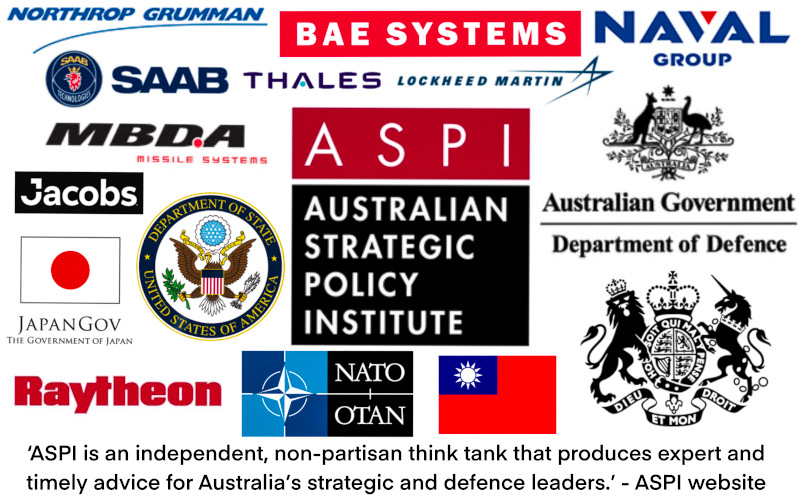
Scott Morrison’s $billion missile spend, a gift to foreign war companies and their sponsor, the Australian Strategic Policy Institute, (ASPI)
Foreign war lobby gets a $billion for missiles – media fawns
https://www.michaelwest.com.au/foreign-war-lobby-gets-a-billion-for-missiles-media-fawns/ 4 Apr 21,
Scott Morrison’s latest billion-dollar missile spend was deftly leaked to the media then talked up by ASPI whose sponsors have raked in $51 billion in Defence Department contracts while doling cash to the conflicted “think-tank”. Marcus Rubenstein investigates.
No sooner had Scott Morrison’s new cabinet been sworn in than it was back to business, feeding out distractions to the Canberra press gallery.
Nearly 14 hours before the prime minister announced to the nation that Australia was going to spend a billion dollars on building “our own missiles” Greg Sheridan from The Australian had the scoop—along with The Age/SMH, Nine Newspapers stablemate Australian Financial Review and the ABC. Along with the ranks of metropolitan mainstream media dailies who all fell in line behind the announcement.
And with military precision they all fired off their online reports at 10:30pm… or, to be more precise, 22:30 hrs.
The Age and Sydney Morning Herald both quoted ASPI (Australian Strategic Policy Institute) in their coverage as did The Conversation, along with others they listed potential weapons maker partners for this home grown missile mission.
Apart from the glaring fact that none of these companies are actually Australian, most were listed by ASPI in a report it published last year. Of the five potential partner companies being touted by mainstream media— Raytheon (USA), Lockheed Martin (USA), Kongsberg (Norway), Rafeal (Israel) and BAE Systems (UK)—all but one is a long-term financial backer of ASPI.
As is de rigueur there was no mention that ASPI’s enthusiasm for substantial new military expenditure was directed towards spending on weapons made by their sponsors.
A number of media reports included PR handout images from US missile maker Raytheon, which for years was a loyal ASPI sponsor and also the former employer of, recently demoted, Defence Minister Linda Reynolds.
The actual announcement was made by the prime minister, not at Parliament House, but at the South Australian facility of Raytheon.
Government access for weapons makers
Since ASPI’s foundation in 2001, when it was created to challenge the policy direction of Defence, it has become more and more commercialised.
This fact was highlighted by ASPI’s founding Executive Director Hugh White, who wrote on the 15th anniversary of its foundation, “The quality of defence policy slumped… [and] ASPI’s focus inevitably swung round to contributing to public debates not government policy-making.”
Under Hugh White’s leadership, ASPI preserved a great deal of independence and only took an average of $28,000 per year in commercial revenue.
In the last financial year, under the leadership of (former Howard Government adviser) Peter Jennings, ASPI raked in $6,953,000 in commercial revenue. Yet it maintains its façade of independence of outside influence.
ASPI sponsor, French-owned Naval Group was awarded the contract for Australia’s controversial $80 billion future submarine project. It has been in the headlines recently after an independent report released in March found the project was “dangerously off track”.
In 2016, when the contract was awarded Jennings, wrote a glowing opinion piece, about his sponsor, under the headline “Vive Australia’s choice of a French submarine”.
The release of the Future Submarines Report was very critical of the entire project and there were suggestions from highly credentialed defence strategists that Australia should walk away from the deal.
In response, ASPI wrote that not only should Naval Group keeps its contract but the Royal Australian Navy should commission un-maned Orca submarines whilst waiting decades for the French submarines order to be fulfilled.
And who makes the Orca? Another ASPI sponsor, Boeing Defense.
This comes after revelations in March that ASPI had been commissioned to write a report critical of the federal government’s awarding of cloud computing contracts to Australian company Canberra Data Centres (CDC).
As it transpires, ASPI had been commissioned to write the report by lobbying firm Australian Public Affairs (APA); the Commonwealth Lobbyists Register reveals APA represent CDC’s three main commercial rivals.
Last October, ASPI’s Peter Jennings told the ABC, “ASPI’s work as a think tank is genuinely independent” and suggestions it was controlled by sponsors were “frankly nonsense”.
The massive ASPI payoff
ASPI is not an independent think tank, it is in fact a Commonwealth Company which reports to the parliament through the Defence Ministry. In its latest annual report ASPI singled out the then Defence Minister for her “continuing close personal engagement and support”.
In her first speech as Defence Minister, Linda Reynolds boasted of her close friendship with ASPI’s Peter Jennings.
Clearly ASPI’s boss and his board, which is chaired by former Chief of the Army, Lt Gen (Ret’d) Kenneth Gillespie and includes former Liberal Defence Minister Brendan Nelson, has access to the highest levels of government and the Defence Department.
Since ASPI’s inception it has received sponsorship from 12 manufacturers of weapons and weapons systems. Over that period, they have been awarded 9,423 Defence Department contracts with a total value of $51.2 billion.
This does not include another 49 ASPI sponsors who do not manufacture weapons, yet Department of Finance data, reveals have benefitted from more than $30 billion in defence contracts since 2001.
ASPI’s most recent annual report revealed that in the year before the COVID-19 pandemic, it hosted 142 separate events and meetings, many of them bringing together defence policy makers and defence suppliers.
At one such event in 2019, sponsored by Thales, Northrop Grumman and Lockheed Martin, then Defence Minister Linda Reynolds was keynote speaker. Presumably executives from these foreign weapons makers had some level of access to the minister.
Department of Finance figures later revealed that ministerial and department staff were charged $30,723 by ASPI in order to attend that speech.
Labor Party’s platform on uranium/nuclear and radioactive waste issues.

Dave Sweeey, 31 Mar 21, At its National Conference federal Labor adopted the platform (below) on uranium/nuclear and radioactive waste issues.
Clearly it is not what we would write but there’s a lot that is useful and important – including options to further contest Australian uranium sales, a commitment to responsible radioactive waste management and a rejection of domestic nuclear power.
Yesterday federal Labor also clearly reaffirmed its commitment to sign and ratify the Treaty on the Prohibition of Nuclear Weapons (the ICAN Ban) in government.
Uranium
1. The production of uranium and its use in the nuclear fuel cycle present unique and unprecedented
hazards and risks, including:
Threats to human health and the local environment in the mining and milling of uranium and
management of radioactive materials, which demand the enforcement of strict safety
procedures;
The generation of products that are usable as the raw materials for nuclear weapons
manufacture, which demands the enforcement of effective controls against diversion; and
The generation of highly toxic radioactive waste by-products that demand permanently safe
disposal methods.
2 Labor accordingly will allow the mining and export of uranium only under the most stringent
conditions.
3. In relation to mining and milling, Labor will:
Ensure the safety of workers in the uranium industry is given priority. Labor has established a
compulsory register for workers in the uranium industry that includes regular health checks
and ongoing monitoring. The register is held by an independent agency and will be subject to
privacy provisions;
Ensure Australian uranium mining, milling and rehabilitation is based on world best practice
standards, extensive continuing research on environmental impacts and the health and
safety of employees and affected communities, particularly Indigenous communities;
Ensure the Australian public is informed about the quality of the environmental performance
of uranium mines through public accountability mechanisms;
Foster a constructive relationship between mining companies and Indigenous communities
affected by uranium mining; and
Prohibit the mining of uranium within national parks under International Union for
Conservation of Nature protected area category 1A, category 1B, and category 2, and listed
world heritage areas.
4. In relation to exports other than to India, Labor will allow the export of uranium only to those
countries that observe the Nuclear Non-Proliferation Treaty (NPT), are committed to nonproliferation
policies, and have ratified international and bilateral nuclear safeguards agreements.
Labor will export uranium only to countries that maintain strict safeguards and security controls
over their nuclear power industries.
5. In relation to India, an important strategic partner for Australia, commitments and responsible
actions in support of nuclear non-proliferation, consistent with international guidelines on nuclear
supply, will provide an acceptable basis for peaceful nuclear cooperation, including the export of
uranium, subject to the application of strong safeguards.
6. In addition, Labor will work towards:
Strengthening export control regimes and the rights and authority of the International
Atomic Energy Agency (IAEA);
Appropriate international responses to violations of existing safeguard commitments;
Limiting the processing of weapon usable material (separation of plutonium and high
enriched uranium in civilian programs);
Tightening controls over the export of nuclear material and technology;
Universalising of the IAEA additional protocol making it mandatory for all states and
members of the Nuclear Suppliers Group to adhere to the additional protocol as a condition
of supply to all their transfers;
Criminalising actions of individuals and companies that assist in nuclear proliferation;
The development of an international guarantee of nuclear fuel supply to states foregoing
sensitive nuclear technologies;
Revising the NPT to prevent countries from withdrawing from the NPT and passing a new
resolution in the United Nations Security Council addressing the penalties for withdrawal
from the NPT;
Encouraging all nuclear states to join the NPT;
Reserving the right to withhold supplies of uranium permanently, indefinitely or for a
specified period from any country that ceases to observe the non-proliferation safeguards
and security conditions applied to Australian uranium exports to that country, or which
adopts nuclear practices or policies that do not further advance the cause of nuclear nonproliferation;
Supporting the maintenance and enhancement of international and Australian safeguards to
ensure that uranium mined in Australia, and nuclear products derived from it, are used only
for civil purposes by approved instrumentalities in approved countries that are signatories to
the NPT (with the exception of India) and with whom Australia has safeguard arrangements;
and
Seeking adequate international resourcing of the IAEA to ensure its effectiveness in
undertaking its charter.
7. Labor will progress these commitments through diplomatic means including the re-establishment
of the Canberra Commission to re-invigorate Australia’s tradition of middle power, multilateral
diplomacy. In doing so, Labor believes that as a non-nuclear armed nation and a good international
citizen, Australia can make a significant contribution to promoting disarmament, the reduction of
nuclear stockpiles, and the responsible use of nuclear technology.
8. Labor will:
Vigorously and totally oppose the ocean dumping of radioactive waste;
Prohibit the establishment of nuclear power plants and all other stages of the nuclear fuel
cycle in Australia;
Fully meet all Australia’s obligations as a party to the NPT; and
Remain strongly opposed to the importation and storage of nuclear waste that is sourced
from overseas in Australia.
9. Labor acknowledges that radioactive waste management is a complex policy challenge that
requires the highest levels of transparency and evidence, while balancing the need of the
community to benefit from treatments for diseases like cancer. Accordingly, Labor will act in
accordance with scientific evidence, and with full transparency, broad public input and best
practice technical and consultative standards, taking into account the views of traditional owners,
to progress responsible radioactive waste management
Why Boris Johnson rejected Scott Morrison as speaker at climate summit, to Morrison’s fury
|
Boris Johnson outlines why Scott Morrison was rejected to speak at climate summit, The Age, By Rob Harris March 22, 2021 British Prime Minister Boris Johnson told Scott Morrison that Australia was denied the opportunity to speak at last year’s climate summit because he wanted to encourage nations to set more ambitious emissions reduction targets.
Mr Johnson, who is rallying the world’s leading economies towards achieving net zero emissions by 2050, explained his rationale in a letter to the Australian Prime Minister in December last year while acknowledging the domestic political challenge over climate policy. Mr Johnson had originally invited Mr Morrison to speak at the December 12 summit but later walked away from the offer amid a behind-the-scenes diplomatic tussle over whether Australia’s climate change policies were insufficient to warrant a speaking slot………. While Mr Morrison told Parliament at the time he was not bothered by the snub, the government was privately furious behind the scenes and much of its anger was directed towards the British PM, who hosted the conference in partnership with the UN and France. Mr Johnson said Mr Morrison should understand that “we have tried to set a high bar for this summit to encourage countries to come forward with ambitious commitments”………https://www.theage.com.au/politics/federal/boris-johnson-outlines-why-scott-morrison-was-rejected-to-speak-at-climate-summit-20210322-p57d2o.html |
|
Resources Minister Keith Pitt on radio today – same old same old Bluff and Bribery about Kimba nuclear dump plan
 Kazzi Jai, No nuclear waste dump anywhere in South Australia, 19n Mar 21,
Pitt having a news grab this morning Monday 15/03/2021 on ABC 639 North and West. Had nothing new to say – same old, same old – …..but it was the first interview from him for the dump for 2021!
BHP, Rio Tinto given carte blanche to export uranium to global hotspots
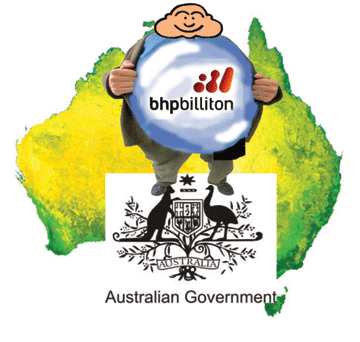 Risky Business: BHP, Rio Tinto given carte blanche to export uranium to global hotspots https://www.michaelwest.com.au/bhp-rio-tinto-given-carte-blanche-to-export-uranium-to-global-hotspots/ Risky Business: BHP, Rio Tinto given carte blanche to export uranium to global hotspots https://www.michaelwest.com.au/bhp-rio-tinto-given-carte-blanche-to-export-uranium-to-global-hotspots/by David Noonan | Mar 17, 2021 It has been 10 years since the Fukushima nuclear disaster that was fuelled by Australian uranium but neither the mining industry nor the nation’s leaders have heeded any of the lessons, instead continuing to export uranium to countries with inadequate regulation and nations beset by corruption. David Noonan and Dr Jim Green report. The Fukushima nuclear disaster, fuelled by Australian uranium mined by multinationals BHP and Rio Tinto, was entirely avoidable, as numerous reports have found. Yet neither company has taken any responsibility for the catastrophic impacts on Japanese society that resulted from the use of their uranium in a poorly regulated industry. With numerous warning signs of impending disaster at Fukushima, the mining giants and our leaders could have played an important role by making uranium exports conditional on improved management of nuclear plants and tighter regulation. Yet the uranium companies get tetchy at any suggestion of culpability, with the Australian Uranium Association describing it as “opportunism in the midst of human tragedy” and “utter nonsense”. Uranium accounts for less than 0.3 per cent of Australia’s export revenue and less than 0.1 per cent of all jobs in Australia. One wonders why an industry that delivers so little is given carte blanche by the government to do as it pleases. Australia ignored scandal after scandalWhile the mining companies won’t acknowledge that Australian uranium was used in the Fukushima reactors, the Australian Safeguards and Non-Proliferation Office confirmed Australian nuclear material was at the Fukushima Daiichi site and in at least five of the six reactors. Moreover, the mining companies can’t claim ignorance. Australia’s uranium industry did nothing as the Japanese nuclear companies lurched from scandal to scandal; accident to accident. The uranium industry did nothing in 2002 when it was revealed that TEPCO had systematically and routinely falsified safety data and breached safety regulations for 25 years or more. The uranium industry did nothing in 2007 when more than 300 incidents of ‘malpractice’ at Japan’s nuclear plants were revealed – 104 of them at nuclear power plants. It did nothing even as the ability of Japan’s nuclear plants to withstand earthquakes and tsunamis came under growing criticism from industry insiders and independent experts. And the uranium industry did nothing about the multiple conflicts of interest plaguing Japanese nuclear regulators. Exporting to countries with inadequate regulationInadequate regulation was a root cause of the Fukushima disaster yet Australia has uranium supply agreements with numerous countries with demonstrably inadequate nuclear regulation, including China, India, Russia, the United States, Japan, South Korea, and Ukraine. Likewise, Australian uranium companies and the government turn a blind eye to nuclear corruption scandals in countries with which it has agreements to supply uranium: South Korea, India, Russia and Ukraine among others. Indeed, Australia has signed up to expand its uranium trade to sell into insecure regions. In 2011 ‒ the same year as the Fukushima disaster ‒ the Australian government agreed to allow uranium exports to India. This despite inadequate nuclear regulation in India, and despite India’s ongoing expansion of its nuclear weaponry and delivery capabilities. A uranium supply agreement with the United Arab Emirates was concluded in 2013 despite the obvious risks of selling uranium into a politically and militarily volatile region where nuclear facilities have repeatedly been targeted by adversaries intent on stopping covert nuclear weapons programs. A uranium supply agreement with Ukraine was concluded in 2016 despite a host of safety and security concerns, and the inability of the International Atomic Energy Agency to carry out safeguards inspections in regions annexed by Russia. However, it is obvious that Australia will take action when it wants to. In 2014, Australia banned uranium sales to Russia, with then prime minister Tony Abbott stating: “Australia has no intention of selling uranium to a country which is so obviously in breach of international law as Russia currently is.” Australia’s uranium supply agreement with China, concluded in 2006, has not been reviewed despite abundant evidence of inadequate nuclear safety standards, inadequate regulation, lack of transparency, repression of whistleblowers, world’s worst insurance and liability arrangements, security risks, and widespread corruption. Civil society and NGO’s are campaigning to wind back Australia’s atomic exposures in the uranium trade with emphasis on uranium sales to China. China’s human rights abuses and a range of strategic insecurity issues warrant a cessation of uranium sales. China’s ongoing human rights abuses in Tibet and mass detention and forced labour against Uyghurs in Xinjiang are severe breaches of international humanitarian law and UN Treaties.` China is obviously in breach of international law on numerous counts. Uranium sales to Russia were suspended because of breaches of international law and the same standard should be applied to China. Scant regard for nuclear risksChina has exported nuclear weapons know-how to Pakistan, targets Australia in cyber-attacks, and is causing regional insecurity on the India border, in Hong Kong and Taiwan, and in the Pacific. BHP’s Olympic Dam is the only company still selling Australian uranium into China. There is a case for the ‘Big Australian’ to forego uranium sales overall and an onus to end sales to China. Australia supplies uranium with scant regard for nuclear safety risks. Likewise, proliferation risks are given short shrift. Australia has uranium export agreements with all of the ‘declared’ nuclear weapons states – the US, UK, China, France, Russia – although not one of them takes seriously its obligation under the Non-Proliferation Treaty to pursue disarmament in good faith. Australia claims to be working to discourage countries from producing fissile (explosive) material for nuclear bombs, but nonetheless exports uranium to countries blocking progress on the proposed Fissile Material Cut-Off Treaty and refusing to sign or ratify the Comprehensive Test Ban Treaty. And Australia gives Japan open-ended permission to separate and stockpile plutonium although that stockpiling fans regional proliferation risks and tensions in North-East Asia. Despite liberal export policies, Australian uranium sales are in long-term decline and now represent only 8.9 per cent of world uranium usage. With the Ranger mine shut down and no longer processing ore for uranium exports, there are only two operating uranium mines in Australia: BHP’s Olympic Dam copper-uranium mine and the smaller General Atomics’ Beverley Four Mile operation ‒ both in South Australia. |
|
New South Wales Energy Minister ”excited about the opportunities” for nuclear power
Energy minister backs nuclear option , Daily Telegraph, 14 Mar 21,
NSW’s energy minister has said the state is “excited about the opportunities” being afforded by nuclear power as he denied climate policies were leading to the closure of coal-powered plants…… (subscribers only)
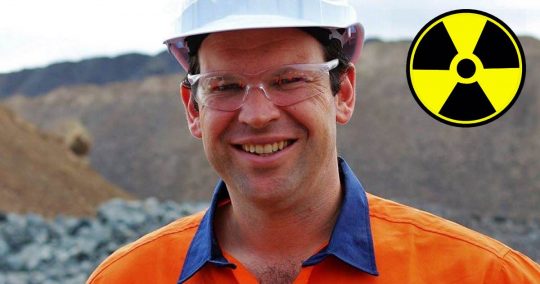
Refuting Senator Matt Canavan’s inaccurate hype about small nuclear reactors
|
Canavan Keeping The Nuclear SMR Vaporware Dream Alive , Solar Quotes ,March 12, 2021 by Michael Bloch ”…… Senator Matt Canavan: ”Keep Nuclear Energy On The Table” It’s probably been a disappointing week for pro-coal Senator Matt Canavan with the news Yallourn Power Station will retire in mid-2028 instead of 2032. But as well as a passion for coal, Senator Canavan is a nuclear power supporter.In an interview with Sky News yesterday, Senator Canavan commented:
A year ago he referred to renewables as the “dole bludgers” of energy, using the same logic. With regard to the Fukushima incident, he stated: “The latest nuclear technology is much safer; more self-contained. Small modular reactors are effectively the size of shipping containers that are much more suited to our country and size and don’t have the same safety issues.” He also managed to squeeze in a mention about instances of fatalities associated with installing solar panels on rooftops just for good measure. But back to the small modular reactors (SMRs). Where are these SMRs he speaks of? The World Nuclear Industry Status Report 2020 released in September last year states:
|
|
MP Josh Wilson’s excellent submission Senate, about nuclear wastes
|
another well written submission – presented as a speech this time in Parliament in 2020
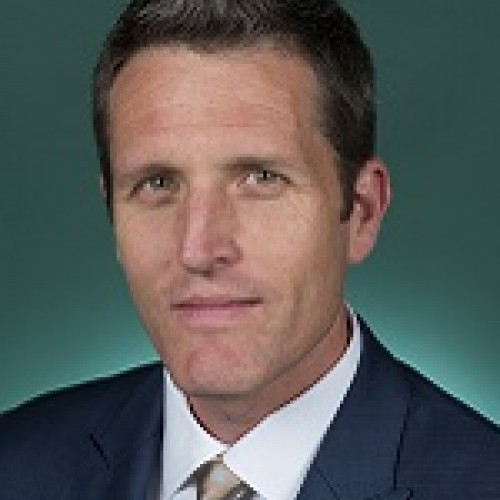 Josh Wilson MP, Federal Labor Member, Shadow Assistant Minister for Environment, June 2020 “There is no question that Australia needs to make progress when it comes to the proper long-term storage of nuclear waste. It is just that this bill doesn’t help take us towards that end. It’s taken us 40 years and it’s cost $55 million to get us to this point. There’s no question that we benefit significantly from nuclear medicine, from the use of radiopharmaceuticals, especially as a diagnostic tool. We benefit here in Australia and we provide those benefits to other parts of the world. We have the nuclear facility, the OPAL reactor, that’s operated by the Australian Nuclear Science and Technology Organisation, ANSTO, at Lucas Heights. It creates the relevant material for nuclear medicine and it creates the need to carefully and safely deal with the waste. It’s not an easy task to do that, but this bill doesn’t help. Josh Wilson MP, Federal Labor Member, Shadow Assistant Minister for Environment, June 2020 “There is no question that Australia needs to make progress when it comes to the proper long-term storage of nuclear waste. It is just that this bill doesn’t help take us towards that end. It’s taken us 40 years and it’s cost $55 million to get us to this point. There’s no question that we benefit significantly from nuclear medicine, from the use of radiopharmaceuticals, especially as a diagnostic tool. We benefit here in Australia and we provide those benefits to other parts of the world. We have the nuclear facility, the OPAL reactor, that’s operated by the Australian Nuclear Science and Technology Organisation, ANSTO, at Lucas Heights. It creates the relevant material for nuclear medicine and it creates the need to carefully and safely deal with the waste. It’s not an easy task to do that, but this bill doesn’t help.Effectively this bill seeks to rush and force the issue of community acceptance, which is a mistake. The minister has the power to make the decision in question. You can only guess that the reason for this legislation is to lock in an outcome, when the minister and the government accept that there are some concerns with the community acceptance process that has occurred so far. The bill effectively also wants to ignore, avoid and further neglect the key issue of a permanent disposal site for intermediate-level waste. There are two kinds of waste that this bill proposes to send to a site in South Australia—low-level waste and intermediate-level waste—and they are very different. A lot of what has been said, including what the minister said in introducing this bill, glides over that difference in a way that is wrong and is certainly not helpful in terms of getting to where we need to get to with a permanent disposal site for low-level waste and a permanent site for intermediate-level waste.
If we know anything about nuclear technology, we know that it relies upon toxic radioactive material and it generates toxic radioactive waste. That’s why there are serious engineering challenges in relation to waste and that’s why there are quite legitimately very serious issues in relation to social licence around nuclear technology. People are wary of it, especially of nuclear waste, and they should be. We have to get towards a long-term disposal solution, and yet this bill raises two serious questions about how the government wants to take us there. There’s concern over the site selection process, which goes to the question of consultation, engagement and community agreement, and there are concerns about the purpose and function of the facility. I want to talk mostly about the latter, but, in relation to the former, in relation to community decision-making, I support the fundamental proposition that the people of South Australia, or any state or territory where a waste disposal site is proposed, should decide, and the agreement about a site should be a meaningful agreement without the serious question marks that remain in this case. Really, for the government to take us to that end, it would do better to work on achieving that meaningful agreement rather than steamrolling over the top in the way that this bill seeks to do.
The second issue is the fact that this site is proposed to be a permanent disposal site for low-level waste and a temporary storage site for intermediate-level waste. To the extent that it proposes that it’s going to be a temporary storage site, it really stretches the ordinary concept of the word ‘temporary’. The problems with that are really quite considerable. There is a very serious risk, and no-one in this place should be ignorant of the possibility, that intermediate level waste will go to this site and it will be there forever, effectively. I’m sure that moving it from its current location will mean that the long-neglected task of preparing for a permanent disposal site will only be further delayed and ignored.
As other speakers have mentioned, low-level waste is mostly personal protective equipment and it contains limited amounts of long-lived radioactive substances. It needs to be stored for a few hundred years in what are described as near-surface facilities. At the moment, it’s stored in 200-litre drums in a big shed at Lucas Heights, and presumably it would be not dissimilarly stored at a site in South Australia if that’s where it went. Intermediate-level waste is something quite different. Intermediate-level waste comes from spent and reprocessed nuclear fuel and the residue from parts of the radioisotope production process. It does not decay in a way that makes it acceptable for near-surface-level disposal. You get a sense of the toxicity of intermediate-level waste when you consider the time frame that’s involved. The proposal here for the permanent disposal of low-level waste is for it to be stored and for the facility to be actively operated for a period of 100 years and then ‘institutionally monitored’— that is the phrase in the explanatory memorandum—for a further period of 200 years. Intermediate-level waste, by contrast, needs to be stored for thousands of years. It remains toxic for thousands and thousands of years. It needs to be buried deep in the ground.
I also make the point that there is no permanent disposal site for high-level waste anywhere in the world. At the time when members of the government are going around spruiking the take-up of nuclear power in Australia—in defiance of all logic, in defiance of the international trends away from nuclear and in defiance of the economic evidence and the energy needs of this country—let’s remember that this is a 70-year-old industry. It’s been around for 70 years, and the industry still is incapable of dealing with its most toxic waste.
In relation to this site, I want to make a few points about how we’ve got here. It has taken 40 years and, as I said, cost $55 million to get to the point of nearly selecting a site. Departmental officials came before the energy and environment committee when we were inquiring into nuclear energy, and they gave us some very rough estimates of what the construction of the site itself would cost. That will be somewhere around $340 million to $350 million. That’s for the construction of the site, and that was described to us as a conservative estimate. Bizarrely, there is no current process underway with even a single dollar of government resources going towards the issue of a permanent disposal site for intermediate-level waste. It’s quite strange. It’s almost hard to believe that, when it’s taken us 40 years to get to the brink of a permanent site for low-level waste, there is not yet any departmental group or any taskforce on this and there’s not a single dollar going to the process of site selection, engineering design or anything else around the question of a permanent disposal site. We actually have an answer on notice from the then Department of Industry, Innovation and Science on that issue:
“A government decision on the entity responsible for the waste management technical coordination function— in relation to intermediate-level waste—has yet to be determined and is required before an Intermediate Level Waste disposal project timeline and budget can be determined.”
So, while we’ve taken 40 years and $55 million to get to the brink of a permanent low-level waste disposal site, no process is advancing by a single hour, let alone a day or a year, towards what the department itself said will likely be another 30- or 40-year process.
So this bill says, ‘Let’s send intermediate-level waste to South Australia for temporary storage.’ What does ‘temporary storage’ mean to the average person? Do you think it means 30, 40, or 50 years or forever? I doubt that very much. But that is, in effect, what this bill seeks to do with intermediate-level waste, which is a whole other kettle of fish.
The government, in the material, suggests there are reasons for the waste being moved, and a lot of the members from the government have said that they’re running out of space at Lucas Heights. That might be true for low-level waste. It is not true for intermediate-level waste. Like the previous speaker, I’ve been into the enormous shed. It’s bigger than the chamber in which I stand—well, it’s about the same size as the chamber in which I stand—and there’s a canister of intermediate-level waste. There’s one of them. There’s another one due back before long. There is plenty of room in that interim storage facility, so there’s no issue with space as far as intermediate-level waste is concerned, and there’s no issue in relation to safety or health concerns either. That is really important. If anyone is suggesting that there are health and safety reasons for moving intermediate-level waste to South Australia, they should point to the evidence of that, and then they should answer the question of how it came to be there in the first place, because we started receiving intermediate-level waste, the reprocessed fuel rods, back in 2015. There was a proper process, supervised by ARPANSA, that saw that waste come and be stored at Lucas Heights, and there’s never been any suggestion whatsoever that there is a safety or health concern about the location of intermediate-level waste at that site. If the government are in possession of any evidence to that effect, they should share it with the public. The member who spoke previously said that he walked up and gave the canister a hug. I was there and I found that quite strange to observe. But where is the evidence that there is any problem with the intermediate-level waste staying where it is, as it should do, until the government of Australia identifies and resources an appropriate permanent disposal site for intermediate-level waste?
When the interim facility was set up, there was no suggestion it was only for a few years. The licence that exists for the storage of the intermediate-level waste at Lucas Heights runs to 2055. ARPANSA itself addressed this issue in the submission that it made to the Senate inquiry. I want to quote from it, because this is important:
“ARPANSA is aware that some stakeholders have interpreted ARPANSA’s decisions regarding the IWS— which is the intermediate-level storage— as a requirement for relocation of the waste stored in the IWS, even suggesting that there is an urgent need for relocation. This is not correct. ARPANSA has not raised safety concerns regarding storage of waste at the IWS. ANSTO seems to share this view. ANSTO has indicated to ARPANSA that the mandatory recertification of the TN-81 casks every 10 years can be carried out at the IWS …”
But the claims that the government and government members in this place have made that intermediate-level storage needs to go to South Australia because there’s no room for it and that there are health and safety concerns about where it is currently are rubbish. And so it should stay where it is as a spur to the government to get on with the process, which currently hasn’t even started, of finding and resourcing a permanent disposal site. That is not occurring, and that’s one of the chief flaws of this bill.
The government is going about this important task the wrong way. Labor support a permanent national radioactive waste facility. We know it needs to be created. We just think the government should do it in the right way. They shouldn’t steamroll over the issue of community acceptance and community engagement, and they don’t need to. If they do that, they are going to put social licence at risk, and that will be even worse if they move intermediate-level waste to South Australia. They need to immediately start and resource the process of a permanent disposal site for intermediate-level waste. They should commit to maintaining that waste where it is currently stored, which is another reason for an inquiry on this issue.
More broadly, the government need to recognise that the social licence for nuclear technology is fragile at best. And that’s for good reason. We have our own chequered history in this country. We allowed the British to detonate 10 nuclear bombs in this country, all of which were as big or bigger than the bombs dropped on Japan. That didn’t go through a parliamentary process. What’s worse, we allowed the British government to explode nuclear material just to see what would happen if an aeroplane carrying nuclear material was shot out of the sky. That meant that radioactive material was strewn over South Australia, the clean-up efforts for which didn’t conclude until the early part of this century, and cost millions and millions of dollars, which the British government only very reluctantly contributed to. We know there are problems with uranium mining. We’ve watched events like Chernobyl and Fukushima. Yet there are members of the government running around saying that nuclear power should be part of our energy mix in our communities across Australia. Frankly, that is not only deeply irrational but ridiculous and unhelpful in the task this bill presents to us.
This bill is not a sensible or appropriate way in which to move towards the waste storage solution. It puts the program at risk. That’s why we don’t support the bill.” –
|
|
Australia’s purchase of vastly expensive French nuclear-powered submarine design, adapted to diesel, now to be scrapped?
 These submarine designs were adapted from the French nuclear submarines. I thought, at the time, that they were chosen in preference to the more suitable, and more affordable German design, under the pressure of the nuclear lobby. Presumably, it would be practical to later adapt these submarines to be nuclear-powered.
|
Government submarine contract sunk and unlikely to resurface, Independent Australia, 1 Mar 21, The submarine deal France proudly called ‘the contract of the Century’ appears to have collapsed, reports Alan Austin.IF THERE WAS one thing which should unite all media commentators, economic and military analysts, and informed citizens in outrage against the Morrison Government, it is this. The Government has wasted billions of dollars on a deal to buy 12 new submarines which have virtually no chance of fulfilment. As this is written, the head of the French naval construction company Naval Group, Pierre Eric Pommellet, is in Australia meeting federal ministers in an attempt to rescue the contract. Tragically for Australia – and for Monsieur Pommellet – not one of those ministers has the experience or competence to wrangle a successful result. Many informed commentators in France, Australia and elsewhere now expect the much-celebrated deal to be abandoned. If that happens, replacing the current ageing submarines would be delayed many years, depending on the timing of the change of government to a capable administration. Although defence is just one example of Coalition mismanagement, this is where Australia’s losses are arguably most devastating: both in billions of dollars wasted and in the risk to national security. Responsibility for the projectMultiple failures are evident. The most basic is accountability. Since negotiations with France began, Australia has had three prime ministers, three deputy PMs, three failed treasurers, five defence ministers and four ministers for defence industry. Of the 15 individuals to have held these portfolios, seven have left the Parliament. None remaining has the competence to deliver for Australia or the mettle to take responsibility. The current Defence Minister is in hospital on leave. Political priorities paramountA major factor in dashing into the connection with France was the set of promises the Coalition hoped to make chasing votes. In the run-up to the 2019 election, then Minister for Defence Industry Christopher Pyne promised hundreds of new jobs, the “majority of which will be based in South Australia”. Cost and defence considerations were secondary. Many military observers were dismayed at Australia taking the French Shortfin Barracudas over the lower-cost and more suitable alternatives tendered by Japan and Germany. Design and cost errorsSeveral of Australia’s specifications were plain foolish, as Binoy Kampmark summarised for IA. A nuclear submarine with a diesel-electric engine is a fail. An American combat system won’t work in a French vessel because the Americans and the French do not talk. Lead-acid batteries will be obsolete well before the subs are delivered. France’s original tender documents put the cost of the project at between $20 billion and $25 billion. The cost in the initial agreement signed in late 2016 was $50 billion. By February 2020, the Parliamentary Library research service reported that the acquisition cost:
Today, estimates range up to double that quantum. Missed deadlinesDelays so far have pushed back delivery of the first Barracuda from the mid-2020s to the early 2030s and now to the 2040s. The latest missed date was finalising the critical Strategic Partnering Agreement which governs the entire project. This was due before last Christmas………… Excessive secrecy, even from the SenateCompounding all these failures is Morrison’s Cabinet refusing to be answerable to the Parliament. In an ugly confrontation in last month’s Senate Economics References Committee, Defence Department head Greg Moriarty refused point-blank to provide documents which the Committee had the constitutional right to access. Independent Senator Rex Patrick warned Moriarty:
Moriarty steadfastly refused the Committee’s requests, insisting he would do the bidding of the craven Minister and Cabinet. The remedyThus the solution is for the people of Australia to get rid of this secretive bungling regime at the earliest opportunity: to save hundreds of billions of dollars and to ensure effective military capability. https://independentaustralia.net/politics/politics-display/government-submarine-contract-sunk-and-unlikely-to-resurface,14846 |
|
1 This month

of the week – Australians for War Powers Reform (AWPR)
To see nuclear-related stories in greater depth and intensity
 Antinuclear