A flawed process- National Radioactive Waste Management- Submission from David Noonan
 The Bill entrenches proposed untenable indefinite above ground storage and unnecessary double /
dual handling of ANSTO nuclear fuel wastes and Intermediate Level Wastes (ILW).
against the express will of the Barngarla People, compromising their Indigenous rights and interests
nuclear waste storage compromises Safety & Security and Rights & Interests in SA.
Dear Committee Chairperson
failures of best practice and shortcomings of the Federal gov. process on these issues to date.
nuclear waste state and Napandee near Kimba as an above-ground interim Nuclear Waste Store.
dual handling of ANSTO nuclear fuel wastes and Intermediate Level Wastes (ILW). The nuclear
regulator ARPANSA states these wastes require radiation shielding, safe handling and security, and
require isolation from people and from the environment for over 10,000 years.
(NSC) to the regulator ARPANSA and arguably compromises safety and security in South Australia.
granted to the proposed Nuclear Store, leaving an amended Act stranded with a specified failed site.
thereby intended to be imposed onto the community of SA contrary to our Parliament’s express will.
community on core plans to ship nuclear fuel waste to a Port in SA and to transport ILW across SA.
The Bill’s proposed specification of Napandee as a Nuclear Store effectively targets the Whyalla Port.
***
named Whyalla Port to take shipments of nuclear fuel wastes, in the event Napandee is specified.
thereby intended to be imposed onto the community of SA contrary to our Parliament’s express will.
casks, within the first two years of operations of a Nuclear Waste Store at Napandee (p.152).
Some 100 x B-double 50 tonne loads of Intermediate Level Wastes (ILW) are also intended in the
first four years of Nuclear Store operations at Napandee (p.152). The Report (p.157-158) states:
“It may be possible to have these containers shipped from Port Kembla to ports such as Whyalla”
these Federal plans and now face potential serious reputational risks and material impacts.
Whyalla is targeted for nuclear waste shipments and should have a right to refuse untenable plans.
letter to APRANSA CEO Dr Carl-Magnus Larsson (Nov 2016), NSC Chair Dr Tamie Weaver stressed the
“ongoing requirement to clearly and effectively engage all stakeholders, including those along
transport routes”, with the NSC stating such engagement “is essential”.
International Best Practice” and “also has implications for security” and for safety.
against the express will of the Barngarla People, compromising their Indigenous rights and interests.
in Bill. Then Premier of SA Jay Weatherill (Oct 2017) argued for recognition of an Aboriginal People’s
‘right of veto’ over proposed nuclear waste storage and disposal on their traditional lands.
and presents a reputational and material impact risk to their livelihood and community cohesion
Co-location of an above ground Nuclear Store alongside a Low-Level Waste Disposal Facility may fail.
***
Nuclear Store and for the Low-Level Waste Disposal Facility. The Federal gov. must not pre-empt nor
take for granted the outcome of this separate ARPANSA Licensing process for a Nuclear Store in SA.
The Nuclear Store in SA is unnecessary given ANSTO capacity for Extended Storage at Lucas Heights.
based in Adelaide over 1996 to 2011, including 5 years on the prior Federal attempt to impose a nuclear waste facility in SA (over 1998 to 2004) – another flawed process that had to be abandoned.
Committee Inquiry on the Findings of the Nuclear Royal Commission, held in 2016.
Nov 2018), provided a range of Briefing materials (see Attach’s 1 & 2), and given media comments.
Please feel free to contact regarding any aspect of this public submission, by Mobile, Text or E-Mail.
Yours sincerely
Mr David J Noonan B.Sc., M.Env.St.
Independent Environment Campaigner
Conservation Council of Western Australia stresses importance of submissions to strengthen environmental protection


K-A Garlick Nuclear Free WA Campaigner, 10 Apr 20, The webinar, Yeelirrie – A Case for Environmental Law Reform was a great success, with a wealth of information from our four stellar speakers, on the urgent need for improved environmental laws using Yeelirrie as a case study for environmental law reform. We reviewed the Yelirrie uranium mine assessment process and how we can improve the agility in the Commonwealth environment department to identify and classify threatened and endangered species.
If you missed the webinar or would like to see the highlights again ~ click here for some great information to help you form your submission to the EPBC Act review.
Keynotes from the webinar, include;
- The importance of retaining the prohibition of nuclear power and the retention of uranium exploration and mining and the inclusion of nuclear actions as a matter of national environmental significance (MNES) under the EPBC Act,
- Environmental protection laws should protect against the extinction of species,
- Opportunity to introduce a merits review in a reformed EPBC Act as an independent, expert court or tribunal to ensure worlds best practice for community participation, accountability and environmental protection,
- We need an independent authority to administer the EPBC Act,
- We need increased open and transparent assessment processes, and
- We need a national EPA as there is no equivalent body at the federal level. A national EPA could undertake independent and technically expert assessments of projects, ensuring that the scientific evidence is put into focus.
The push for the nuclear industry and the Minerals Council of Australia to remove the prohibition on nuclear power and to remove the trigger for uranium mining is a serious push and real threat.
To retain these parts of the EPBC Act we encourage you to write a submission.
The new dont-nuke-the-climate website is a great tool to help you understand the nuclear issues and threat. There is a really useful nuclear ban page, to support your submission writing.
Submissions are due 17 April 2020.
Make a submission to the The Independent Review of the Environment Protection and Biodiversity Conservation Act 1999
- Via the Department: make a submission using the online form here.
- Via email: epbcreview@environment.gov.au
- Via post: EPBC Act Review Secretariat, Department of the Environment and Energy. GPO Box 787, CANBERRA ACT 2601
The committee ask that you complete and submit this cover page with any submission via e-mail or post. All submissions that include this cover sheet will be considered by the review.
Outlandish claims made by Byron Shire Councillors, (Greens!!) promoting mobile Small Nuclear Reactors

What a strange article! The claims made about these “mobile small nuclear reactors” are completely fanciful. These reactors do not exist,  are just in the planning stage for use by U.S. military. Even more fanciful , the article’s claim – “the pilot scheme, which will attract multi-million dollar grants.”. Just where are these grants to come from? The cash-strapped Australian government? The Russians? The Americans? The Chinese? This entire magical unicorn the Small Nuclear Reactor business is quite unable to attract investors. It’s only hope is to be funded by the tax-payer. I note these unnamed Green proponents talk about “spreading the risk fairly among the population” – and still think it’s just fine. So they understand that there’s a risk of dangerous radiation – a very strange attitude for a supposedly environmental group.
What could go wrong? https://www.echo.net.au/2020/04/what-could-go-wrong/ April 1, 2020 | by Echonetdaily, Mobile 100MW nuclear power plants have been proposed by the NSW National Party.
The latest miniaturisation technology that has seen electronic circuitry reduced from physical nodes to nanoscale impulses in quantum space has had astounding impacts on the relatively macroscale equipment needed to generate nuclear power. Such equipment has become so small it is now possible to build bus-sized nuclear reactors that can be deployed, as needed, to address gaps in the power grid.
Byron’s Greens councillors have indicated support for the proposal, and hope to involve the Shire in the early stages of the pilot scheme, which will attract multi-million dollar grants. A spokesperson for the local Greens said nuclear plants are not only less polluting than coal fired power stations, but being mobile means they spread the risk fairly among the population.
State and federal Greens later issued a statement disassociating themselves, ‘as always’, from Byron Shire councillors.
Big swings to the Greens in Brisbane wards elections
Cr Sri said the shutdown of ordinary life due to the coronavirus pandemic meant the Greens could no longer doorknock, their most effective campaign strategy, and had to rely on telephoning prospective voters instead. …. https://www.brisbanetimes.com.au/national/queensland/greens-celebrate-record-swings-in-brisbane-wards-20200330-p54fbb.html
With the pandemic, and the bushfires, we now must strengthen the Environment Protection and Biodiversity Conservation Act (EPBC)
in the immediate term we need to advocate for vital improvements to the EPBC. It is extraordinary that the Howard legacy of deliberately excluding a project’s climate impacts from the triggers to require assessment still hasn’t been remedied. That must now be fixed, as must the fact that there is no mechanism for assessing the cumulative ecological impacts of various proposals. After this summer’s destruction of huge areas of remaining healthy ecosystems, we need to institute, in both legislation and the practice of assessment, a presumption of protection instead of a culture of managed destruction.

|
With the climate crisis and coronavirus bearing down on us, the age of disconnection is over https://www.theguardian.com/commentisfree/2020/mar/28/with-the-climate-crisis-and-coronavirus-bearing-down-on-us-the-age-of-disconnection-is-overTim Hollo
We can no longer pretend that we’re separate from each other and from the natural world @timhollo, Sat 28 Mar 2020 Everything is connected. It’s hard to imagine right now that, just weeks ago, the truism of ecological politics was treated as hippy nonsense by mainstream politics.
Announcing the statutory review of the commonwealth’s Environment Protection and Biodiversity Conservation Act (EPBC) last October, the Morrison government pitched it as an opportunity to weaken the Howard era laws even further and make it easier still for environmentally destructive projects to be approved. And, regardless of clear statements from scientists and strong advocacy by campaign groups, it looked like it would get away with it because, back then, we were still living in the age of disconnection when the environment and the economy could be seen as separate things, in competition with each other. But then the summer arrived, delivering one after the other two massive wake-up calls. In the age of consequences, with the climate crisis and a deadly pandemic bearing down on us, it’s impossible to pretend that we are separate from each other and from the natural world. A pandemic, more than almost any other phenomenon, shows that all our lives are inextricably intertwined, for now and forever, whether we like it or not. It brings into sharp focus the impossibility of trying to keep economics, health, environment, education and social justice treated as separate questions with separate answers. It heightens awareness of our vital need, as social beings, to stay connected to each other as well as we possibly can while keeping our physical distance. It shows how the “efficient”, on-demand world that capitalism has constructed is so incredibly fragile that a series of shocks can bring it to the point of collapse. And with the rules of neoliberal economics being broken by governments the world over, it demonstrates that massive policy interventions, shifting the entire structure of the global economy, are possible. This heralded a shift in thinking that went deeper than personal impact. Perhaps due to the remarkably low loss of human life compared with the scale of the disaster, there was a tremendous focus on the more than a billion mammals, birds and reptiles killed. We mourned the thousands of koalas and the numerous species being pushed towards extinction if their habitats aren’t restored. The true legacy of this summer could be a vital turning point in recognising that “the environment” isn’t something “over there”. The environment is the air we breathe and the water we drink; it’s the soil in which we grow our food; it’s the animals we identify with and the landscapes imprinted on our souls; the environment is us, all of us, together, integrally connected with everyone and everything else on this beautiful blue marble floating in space. Damage the environment and we damage ourselves. And not just some of us – all of us together. Continue to think in our compartmentalised, linear fashion, and we’ll keep missing what’s coming, be it weeks of smoke, runs on toilet paper, or deadly pandemic What started to become clear thanks to the fires was rammed home by Covid-19. We are only as healthy as the least healthy among us. Everything we do relies on extraordinary networks of activity by people we’ve never met, crisscrossing the globe. And responding to a health crisis that was likely triggered in part by environmental destruction has world-changing impacts on the economy, on education, on social justice, on geopolitics. The age of disconnection is over. To bring us back to where we started, where does that leave the review of the EPBC Act? We have an opportunity now to not just push for a new generation of environment laws, but to re-evaluate the whole deal, to cultivate a new political settlement based on ecological principles of living well together in harmony with the natural world, understanding our place as part of it as First Peoples did for millenniums, with an economy designed to serve people and planet.
As part of this, in the immediate term we need to advocate for vital improvements to the EPBC. It is extraordinary that the Howard legacy of deliberately excluding a project’s climate impacts from the triggers to require assessment still hasn’t been remedied. That must now be fixed, as must the fact that there is no mechanism for assessing the cumulative ecological impacts of various proposals. After this summer’s destruction of huge areas of remaining healthy ecosystems, we need to institute, in both legislation and the practice of assessment, a presumption of protection instead of a culture of managed destruction. All this will, of course, be attacked as “green tape” and we have to be ready to actively defend it instead of changing the subject – and defend it on ecological grounds. Regulation is a vital part of the connective tissue which holds the body politic together. Removing it sees us fall apart. Covid-19 is, among other things, showing us the consequences of deregulating markets in health services, food supply and more. Having that conversation in this way means we won’t just be advocating for marginal improvements, but will be working to change politics. We’ll be building into the political common sense the idea that corporations absolutely should be regulated to enforce environmental and social responsibilities, and that we can no longer consider shareholder profit to be their sole focus. That helps move our politics towards altering the DNA of corporations so they operate as part of the body politic rather than as cancer cells. The flip side of this systemic shift is to institute legal rights for the natural world. If BHP has legal rights, why shouldn’t the Great Barrier Reef? Rights of nature is an increasingly mature legal field, instituted from New Zealand to Bolivia, India to parts of the US. We can and should at least insert them as a normative principle in the goals of the EPBC. While we’re thinking at that level, a new ecological political settlement will need a rethink of federalism. Our system sees national and state governments cooperating to shut out community participation and scientific advice to facilitate destructive development. An effective regime based on a presumption of protection would see federal, state, territory and local governments enabling communities to collectively develop creative ideas at their local level, within the context of expert scientific advice, and coordinating those ideas at a regional and continental level. If we shift environmental regulation from a process that is primarily responsive to demands of developers into a proactive, constructive, community-led system, we can see it morph from a defensive protection stance into one of active restoration, repair and regeneration. It can lead to the greening of cities and towns as we embrace the fact that habitats are not just “over there” but among us. It can create industrial jobs in coalmine rehabilitation. It can support regenerative agriculture, and cooperative sharing of scarce water. It can even open space for community-led conversations about relocation as the overheating world retreats from rising seas and inland desertification is inevitable. Supporting and enabling communities to make decisions is also vital for rebuilding confidence in democracy, which has collapsed in recent years. The ongoing panic-buying response to Covid-19 suggests that the abject failure of government to provide leadership through the fires worsened this further. This is now an opportunity to rethink governance, reclaim agency for communities, build practices of trust and social cohesion, embedded in respect for expert advice. Now it’s important to recognise that with this government we’re not going to get these kinds of changes. At best we might hold off the push to weaken the EPBC even further. But that shouldn’t stop us advocating for what we need. Quite the opposite. Politics, like the natural world it operates within, is a system. It works in complex ways because all it is is the collected actions of humans, influenced by each other and by external impetuses such as the weather. Or viruses. Donella Meadows, the modern mother of systems thinking, wrote that the most effective leverage point to change a system is “the mindset or paradigm out of which the system … arises”. It’s critical, then, that we confront the paradigm which sees environmental protection as of marginal importance at best, and as a barrier at worst. It’s vital that we challenge the mindsets of human disconnection from and dominance over nature. Advertisement
Over the past three months, a huge number of people made that conceptual leap. In recent weeks the crisis has become such that even mainstream politics finds it impossible to ignore. At the same time, over this period numerous people decided to just get on with it, without waiting for government. In both bushfire response and the tremendous mutual aid response to Covid-19, millions of us are setting up local projects, or joining existing ones, that make life better, generate social cohesion, reduce our footprint, and cultivate an ethic of care – for ourselves, for each other, for the natural world we are part of. If enough of us start doing this in our communities, and if enough submissions to the EPBC inquiry call for reforms that are embedded in ecological thinking, we will be putting a whole lot of small chocks under the lever. Each of those chocks is tiny. But together they can tip the balance. All of a sudden, especially at a moment like this, change will come. • Tim Hollo is executive director of the Green Institute and visiting fellow at the Australian National University’s school of regulation and global government (RegNet)
|
|
Tax-payers funded Matt Canavan’s expensive trip to attend coalmine opening
The former resources minister used the occasion to give a speech attacking ‘self-indulgent’ environmentalists, Guardian, Christopher Knaus, Wed 25 Mar 2020
The former resources minister Matt Canavan billed taxpayers for a $5,390 charter flight to travel 150km to attend the opening of a coalmine, where he gave a speech attacking “self-indulgent” environmental activists.
Canavan took the private charter flight from Mackay to Colinsville, a three-hour drive, so he could get to the opening of the $1.76bn Byerwen mine in north Queensland.
At the opening, Canavan gave a speech attacking what he described as “hypocritical, self-indulgent activists” holding back the dreamers of the mining industry…….
The most recent parliamentary expense reports, released last week, show Canavan later billed taxpayers for the $5,390 charter flight ….. The expense was listed as “unscheduled travel” by the independent parliamentary expenses authority and the finance department…….
The expense is roughly the same as that incurred by the former Liberal MP Bronwyn Bishop, who chartered a $5,227 helicopter for a return trip from Melbourne to a golf course near Geelong for a Liberal party function.
Canavan quit as minister last month to support Barnaby Joyce’s bid to return to the leadership position. He has described himself as running on an “unashamedly pro-coal” platform.
 The Guardian previously reported that Canavan had omitted two properties worth more than $1m from his current declaration of interests to parliament. He declared “nil” interests in real estate despite owning two houses in Yeppoon, Queensland and Macquarie in Canberra.
Canavan said he was not required to declare the interests to the 46th parliament because they’d been declared to the previous parliament, an argument that conflicts with official advice. https://www.theguardian.com/australia-news/2020/mar/25/matt-canavan-billed-taxpayers-5390-for-charter-flight-to-attend-coalmine-opening
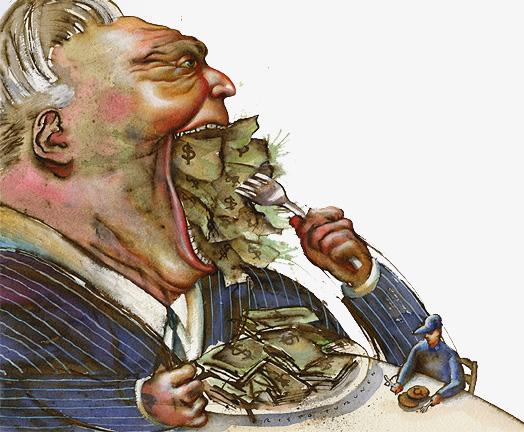
The Morrison govt’s emergency measures are a massive subsidy to Australia’s largest corporations.
|
Bankster Bailout: will the trickle-down package trickle beyond the banks and big business? Michael West Media, by Michael West | Mar 20, 2020 The Morrison Government’s emergency measures to protect the economy are another massive subsidy from embattled taxpayers to Australia’s largest corporations. They are a failure of government to govern. Michael West reports.
Question: why would a bank lend money to a business with no customers? Answer: it wouldn’t. Question: who will benefit from the Reserve Bank’s massive loan and money-printing program? Answer: banks, bond traders and corporate customers. Question: why? Answer: because the Government has delivered control of its money-printing program to the Reserve Bank and the banks. Instead of simply printing money and handing it to those who need it – indeed to those who will spend it – it is also giving the banks cash for loans (assets) which they are keen to offload. Question: if you were a banker would you lend money to a high risk small business or would you lend it to Qantas, Exxon or Energy Australia? Answer: the latter. You are more likely to get your money back from an airline which is protected by Government, an oil and gas multinational which extracts $10 billion a year from Australian seabeds and pays no tax or an oligopoly which provides essential services and also pays almost no tax. A whole generation of young people, and many not so young, are struggling to pay the rent and survive the coronavirus. But what does the Government do?
This Government really does have trouble actually governing. Lest it be accused of spending too much, its routine accusation against arch-rival Labor, and although it has already more than doubled the nation’s debt, the Government has decided to outsource its spending decisions to the banks. Ironically, the banks have today emerged to say the $90 billion loan package announced this week won’t work. Commonwealth Bank chief, Matt Cormyn, has just stated the obvious, small businesses don’t need a loan as much as direct assistance. Even if they did need a loan it would take a month to organise the $90 billion program and by then, we suspect, it might be too late anyway. Small businesses needed “direct” assistance, Cormyn told the ABC. As for the QE program, it is more nuanced than our explanation above – written to capture the essence of what is going on here (the very mention of the letters QE make the eyes glaze over and that sleepy feeling come on). Dissecting QETo the Reserve Bank’s QE program, Quantitative Easing or QE is technobabble for the RBA creating new money or, as they say, “printing money”. But there is a twist to this QE — a twist which has entirely eluded the mainstream media. Rather than the Government raising money – that is by issuing bonds – it has designed a program, a liquidity facility effectively, to be operated by the banks. In other words, the banks get money at attractive rates and they are expected to lend it to their customers. Herein lies the rub; how do the banks lend their new billions to small businesses with no customers? Anybody who has been awake over the last ten days and has engaged in the old-fashioned activity of conversation will have heard story after story about people who had a business last month but barely have one now. Their problem is not how to grow their business by borrowing money. They don’t have any customers. To be more specific, and as predicted here, the government has privatised its QE program. Instead of issuing bonds and deciding who needs it most, it has outsourced that decision-making process to the banks. How QE works, a simple explanation:………. So, the government has so far seen interest rates cut despite it being clear there will be little relief from even lower rates – and despite the banks declining to pass it all on to customers. It has buck-passed its QE program to the banks – which in reality is more of a liquidity bail-out than anything which can help small business. It has already had its $90 billion loan program queried by the banks themselves – all while ramping up its buying of assets from the banks. Over the past week the Reserve Bank’s repo holdings have soared to $20 billion which means they are using taxpayer money to cover the banks’ risk in their mortgage lending books. Most of this is RMBS, bundles of residential mortgages. Question: what will be the upshot of the coronavirus crisis? Answer: big business will grow in power and market dominance. https://www.michaelwest.com.au/bankster-bailout-will-the-trickle-down-package-trickle-beyond-the-banks-and-big-business/ |
|
After backlash from colleagues, NSW Deputy Premier John Barilaro backs down from nuclear power support
 Barilaro retreats on Nationals support for One Nation nuclear bill, https://www.smh.com.au/politics/nsw/barilaro-retreats-on-nationals-support-for-one-nation-nuclear-bill-20200317-p54avo.html, By Lisa Visentin,March 17, 2020 Deputy Premier John Barilaro has walked back his party’s support for a One Nation bill to allow nuclear power in NSW, as the issue threatened to split the Coalition.Mr Barilaro, a long-time advocate of nuclear energy, alarmed some Coalition MPs when he declared two weeks ago that the National Party would support Mark Latham’s bill to overturn a ban on uranium mining.
But the Nationals’ leader changed his tune on Tuesday, telling a budget estimates hearing the matter would first need to be considered by the party room as well as the cabinet.
Mr Barilaro made the unilateral call to back Mr Latham’s bill during an interview on Sky News on March 3 before consulting his party room, triggering concern among some National MPs and angering some of his Liberal cabinet colleagues.
“I’ve since then had to pull that back to the point where I’ll have to go through the National party room, the parliamentary team, before we get to that position,” Mr Barilaro told the hearing.
“What I’m committing to is advocating for a policy that the party stands for and let’s see what happens when we get to the floor of Parliament.”
However, Mr Barilaro reiterated his strong personal support for nuclear energy, in particular “small nuclear reactors”, which he dubbed “the iphone of reactors”.
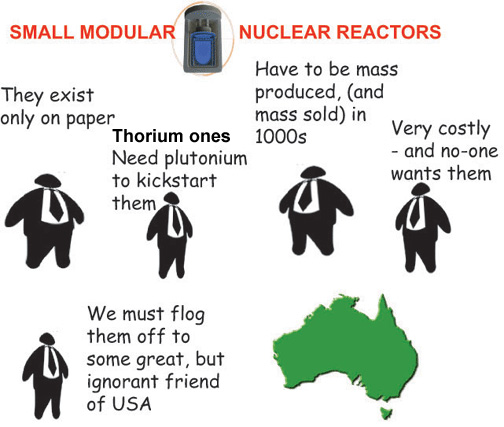
In a terse exchange, Labor MLC Adam Searle asked Mr Barilaro whether he was aware small nuclear reactors “don’t exist anywhere in the world at the moment”.
Mr Barilaro responded that he was “advocating for a technology that we know is on the horizon,” saying the Russians “would probably have small modular reactors on the market in the next two to three years.”
When quizzed about whether he’d discussed with his Coalition colleagues where in NSW the reactors could be located, Mr Barilaro floated the option of his own electorate of Monaro, on the state’s southern border.
“I haven’t even ruled it out of my own electorate. There you go. There’s your press release for today. Can’t wait to see it,” he said.
Mr Barilaro has previously grounded his support for Mr Latham’s bill as being consistent with the National Party’s policy position to “support nuclear energy in Australia as part of the energy mix for the future”, adopted at last year’s state conference.
He confronted an immediate backlash from within the cabinet, which had yet to consider the issue, with at least four senior ministers saying they would not support his push to back the bill. One minister told the Herald they were prepared to quit cabinet rather than support it.
The split followed a parliamentary inquiry into Mr Latham’s bill, chaired by Liberal MLC Taylor Martin, which concluded the government should support it.
The two Labor MPs on the inquiry – John Graham and Mick Veitch – opposed the findings in a dissenting statement which reaffirmed Labor’s “longstanding and unequivocal platform position in relation to nuclear exploration, extraction and export.”
Mr Latham was also on the inquiry, which was comprised of eight MLCS, including three Liberals, two Labor, and one member apiece from the Nationals and the Shooters, Fishers and Farmers party.
Doctors again call on Australian govt about Julian Assange’s precarious health, risk of coronavirus
 Almost 200 medical doctors say Julian Assange’s health is at increased risk from coronavirus, https://www.thecanary.co/global/world-news/2020/03/18/almost-200-medical-doctors-say-julian-assanges-health-is-at-increased-risk-from-coronavirus/
 John McEvoy 18th March 2020 On 18 March, almost 200 medical doctors wrote to Australian foreign minister Marise Payne to warn that Julian Assange’s health is at increased risk from the new coronavirus.
“Mr Assange could die in prison”
This is the latest in a number of letters sent by Doctors for Assange to express concern over the WikiLeaks publisher’s deteriorating health.
On 22 November, the group signed an open letter addressed to UK home secretary Priti Patel, saying: “we have real concerns, on the evidence currently available, that Mr Assange could die in prison”.
In a follow-up letter published on 4 December, the doctors wrote:
When the UK, as a Permanent Member of the United Nations Security Council, repeatedly ignores not only the serious warnings of the United Nations Special Rapporteur on Torture, but also its unequivocal investigative and remedial obligations under international and human rights law, the credibility of the UK’s commitment to human rights and the rule of law is fatally undermined.
Fertile breeding grounds”
The latest letter, signed by medical doctors from countries including the UK, Australia, Sweden, and the US, was written in light of the recent coronavirus pandemic.
The letter reads:
We wrote to you on December 15 2019 that Julian Assange’s life is at risk due to nearly a decade of human rights abuse including arbitrary detention, psychological torture and medical neglect. Now, with the president of the Prison Governor’s Association warning that prisons provide “fertile breeding grounds” for coronavirus, Julian Assange’s life and health are at heightened risk due to his arbitrary detention during this global pandemic. That threat will only grow as the coronavirus spreads. …
We therefore stand by our previous calls for the Australian Government to urgently intervene to protect the life, health and human rights of its citizen Julian Assange, before it is too late, whether due to coronavirus or any number of catastrophic health outcomes.
Coronavirus is the latest threat to Assange’s life, adding onto years of arbitrary punishment and psychological torture.
Time that Australia closed the door on the dangerous distraction of nuclear power
 Fukushima nine years on: Warnings for Australia https://independentaustralia.net/environment/environment-display/fukushima-nine-years-on-warnings-for-australia,13685#.Xm3ACigBj88.twitter Fukushima nine years on: Warnings for Australia https://independentaustralia.net/environment/environment-display/fukushima-nine-years-on-warnings-for-australia,13685#.Xm3ACigBj88.twitter
By Dave Sweeney | 15 March 2020 The anniversary of the Australian uranium-fuelled Fukushima nuclear disaster is no time to open the door to an expanded nuclear industry in Australia, writes Dave Sweeney.
NINE YEARS AGO this week the world learned to pronounce the word Fukushima as the March 11, 2011 Great Eastern earthquake and tsunami devastated large areas of Japans eastern seaboard. It also breached the safety and back-up systems at the Tokyo Electric Power Company’s Fukushima Daiichi nuclear complex leading to mass evacuations, hundreds of billions of dollars in economic loss and the release of large amounts of radioactive contamination. The crisis continues today with Japanese nuclear authorities confirming active intervention will be required for at least four more decades to stabilise the stricken site, contested and continuing releases of radioactive water to the Pacific and mounting waste management concerns. Fukushima means “fortunate island” but the luck largely melted down alongside the reactor and Fukushima remains a profound environmental, economic and human disaster that continues to negatively impact lives in Japan and far beyond. Against the shadow of Fukushima, the current pro-nuclear push in Australia is even more startling as it all started in the back of a big yellow truck in Australia. In October 2011, the Australian Parliament was formally advised that a load of Australian uranium was fuelling the Fukushima complex at the time of the disaster. Australian radioactive rocks are the source of Fukushima’s fallout, but sadly the miners and their political fellow travellers have been more focused on managing the political fallout. In September, 2011, the UN Secretary-General called on Australia to conduct:
This never happened. Instead of scrutiny, we have a swag of conservative state and federal politicians and commentators lining up to beat the zombie drum for this down but not dead sector. Their fanciful claims of economic benefit belie the reality of an embattled sector that has failed to deliver the dollars and has never made sense. And recently these atomic advocates have been joined by a conga line of nuke-spruikers championing domestic nuclear power and seeking public funds for a technology whose time has passed in the case of old reactors or whose time is not here, and never likely to be, in the case of so-called “next-generation” reactors. As home to around 35% of the world’s uranium reserves, Australia is a significant player in the global nuclear trade and what we do, or fail to do, matters. Since the 1980s the “modern” period of Australian uranium mining has been dominated by two major operations – Ranger in Kakadu and Olympic Dam in northern South Australia. Processing of stockpiled ore limps on at Ranger but mining has ended and parent company Rio Tinto is now focussed on rehabilitation work. The era of uranium mining in Kakadu is over – now comes the costly and complex clean-up and repair. At Olympic Dam, the world’s biggest mining company, BHP is seeking to expand operations. However, this move is being driven by the growing global demand for copper, not because of any appetite for uranium. And the big Australians plan poses a big threat to the SA environment and the local workforce. The company is persisting with a development model based on the continuation of “extreme risk” tailings dams and massive water consumption in Australia’s driest state. Meanwhile, smaller uranium operations mines like Honeymoon in SA or undeveloped projects like Cameco’s Kintyre and Yeelirrie projects in WA have been deferred or placed on extended care and maintenance due to the depressed uranium market and low commodity price. The sector’s prevailing business model is to sort the paperwork, duchess conservative politicians and commentators and hope for better times. Historically the sector has been constrained by political uncertainty, restrictions on the number of mines, a consistent lack of social license and strong Aboriginal and community resistance. Recent years have seen fewer political constraints but a dramatic decline in the price of uranium and popularity of nuclear power following Fukushima Australia’s uranium industry generates less than 0.2% of national export revenue and accounts for less than 0.02% of jobs in Australia – under one thousand people are employed in Australia’s uranium industry. The sector is an economic minnow and a waste, risk and cost whale. In an attempt to jump-start the flat-lining uranium trade successive federal governments have embraced enthusiasm rather than evidence. They have failed to scrutinise the sector, preferring to further remove already scant environmental and public health protections and fast-track increasingly irresponsible uranium sales deals including to India, Ukraine and the UAE. Australia’s uranium sector is high risk and low return. It means polluted mine sites at home and nuclear risk and insecurity abroad. And it fuelled Fukushima. This anniversary, it is time to learn one simple lesson from Fukushima. Radioactive risk is more constant than a politician’s promise or corporate assurance. For Australia, this means it is time to close the door on the dangerous distraction of domestic nuclear power and open the door to a credible and independent review of costs and consequences of the uranium sector. Dave Sweeney is the Australian Conservation Foundation’s nuclear-free campaigner and was a member of the Federal advisory panel on radioactive waste. You can follow him on Twitter @nukedavesweeney. |
|
|
New South Wales National MPs embrace nuclear industry, other MPs are shocked

One Nation’s Mark Latham brought the Uranium Mining and Nuclear Facilities (Prohibitions) Repeal Bill 2019 to parliamentary debate on June 6, 2019 and it’s now working its way towards a vote.
However, local Lismore MP Janelle Saffin has urged North Coast residents to help her kill off the Nationals’ plans to build nuclear power plants in places like Tweed Heads and Coffs Harbour with the same determination shown to defeat Coal Seam Gas (CSG) mining.
Ballina Greens MP Tamara Smith points out that ‘While Europe is rapidly phasing out nuclear energy the dinosaurs in the National Party in NSW want to lift the ban and distract us all in an anti-nuclear debate’.
‘The coal barons and their favourite political party are counting on us to repeat the same mistake we made with climate change. We battled to convince the dinosaurs of climate science that was well and truly settled and we lost the war on vested interests in fossil fuel for over a decade.’
Ms Saffin said Mr Barilaro had announced his nuclear policy support on the run on Sky News, blindsiding Premier Berejeklian, who during Question Time on Wednesday (March 4) could not state her government’s true position on nuclear power.
Ms Saffin accused Deputy Premier and Nationals leader John Barilaro of dangerous behaviour in supporting One Nation Leader Mark Latham’s bill in the Upper House lifting the ban on uranium mining and nuclear energy in New South Wales.
‘By joining forces with Mark Latham, and his former visit overseas to gather information and support for his nuclear cause, John Barilaro has well and truly opened the door to nuclear power plants in coastal communities on the North Coast.
‘The Nats are embracing nuclear power – they keep marching us backwards and have no plans for water protection, no plans for cheap energy that they bang on about, and no plans for country New South Wales,’ she said.
Local National MP responds
Member for Tweed Geoff Provest has responded to questions from Echonetdaily stating that, ‘I have previously stated I am against nuclear power in the Tweed and I have heard nothing during this most recent discussion to change my mind.’ [Ed. note – does he mean that nuclear power is OK everywhere else in Australia?]
Member for Page, Kevin Hogan (Nationals) and National Party MLC, Ben Franklin have not responded to questions regarding their support for nuclear power development.
Federal investigation
Last year the Federal government House of Reps held an inquiry into the pre-requisites for nuclear power in Australia.
‘The release of the report has clearly been done in such a way as to attract the absolute minimum of attention. Its media profile up to now has been zero. That is likely because were it better known, it would have been panned by NGOs Australia-wide,’ said long time anti-nuclear campaigner John Hallam.
‘It’s clear from the recent Federal inquiry, that there is no case whatsoever for a pronuclear about-face in favour of reactors or uranium mining in NSW,’ he said.
‘Ten years ago, the argument would have been that nuclear power was/is uneconomic and potentially dangerous, and that it is uneconomic precisely because it is potentially dangerous. The argument now would be exactly the same, with the added one that in order to be of any relevance to combatting the climate emergency, a source of power must be cheap, problem-free and quickly and easily deployable and nuclear power is the opposite of all those things.
‘Nuclear power, far from solving the climate emergency, diverts needed resources from the real solutions – the deployment of cheap and quickly deployable renewables.
‘Small modular reactors look wonderful on paper but no one has actually succeeded in building even one that works satisfactorily and can be mass-produced, let alone the hundreds that would be needed.’
Local Greens MP Tamara Smith told Echonetdaily that her party requested to be included on the committee looking into nuclear but were ignored. Committee members include two Liberal party MPs, two Labor MPs, a One Nation MP, a Shooters Fishers and Farmers MP and a Nationals MP.
Nuclear lobbyists have got into the ears of NSW’ National Party
Editorial – Nuclear afterglow https://www.echo.net.au/2020/03/nuclear-afterglow/ Nuclear waste. Hans Lovejoy, editor, 13 Mar 2020
While there will surely be an afterglow of good will towards local National Party MLC Ben Franklin for securing the Shire $25m in road and infrastructure funding, it should be pointed out where his government is taking us when it comes to the energy sector.
Mr Franklin’s leader, John Barilaro, is a complete bozo.
For many informed voters, that’s not news.
Barilaro’s been a long-time supporter of nuclear power, and last week he reportedly supported One Nation’s attempts to create that industry and lift the uranium mining ban, all without consulting his own party. Seriously.
The Echo is still waiting on a reply from Mr Franklin on his attitude to the ‘nuclear option’, and whether Barilaro did not consult his party, as reported by SMH.
When asked if he supported repealing the uranium mining ban and creating a nuclear industry, Nationals Tweed MP Geoff Provest told The Echo, ‘I have previously stated I am against nuclear power in the Tweed, and I have heard nothing during this most recent discussion to change my mind.’
Notice how Provest only said he opposes nuclear in the Tweed? The rest of the state is presumably okay.
One Nation’s Mark Latham brought the Uranium Mining and Nuclear Facilities (Prohibitions) Repeal Bill 2019 to parliamentary debate on June 6, 2019 and it’s now working its way towards a vote.
Local Greens MP Tamara Smith told The Echo that her party asked to be on the committee that is looking into this – they were denied. Instead it’s stacked with MPs sympathetic to the industry.
Latham’s parliamentary speech, in support of nuclear, admits it takes a decade to establish, but points to Finland’s nuclear industry as why it should occur here.
It’s a speech that you would expect from One Nation – there’s no economic modelling presented to support the viability of nuclear, for example.
Instead, Latham uses his time trying to paint those opposed to nuclear power in Australia as fearmongers, while disparaging renewable energy.
There’s plenty of info available as to the insanity of nuclear – www.climatecouncil.org.au says it simply: ‘Australia is one of the sunniest and windiest countries in the world, with enough renewable energy resources to power our country 500 times over. When compared with low risk, clean, reliable and affordable renewable energy and storage technology in Australia, nuclear power makes no sense.
‘Nuclear cannot compete on a cost basis with wind and solar, which are the cheapest forms of new generation’.
Clearly nuclear lobbyists are in the ear of Barilaro the Bozo.
Have they also got into the ear of the local Nationals MLC Ben Franklin? It may not matter – Franklin is obliged to vote for whatever idiotic laws his party supports.
This week’s uranium report- prices fall again, Australia’s “nuclear future” going nowhere
 Uranium Week: The Nuclear Debate https://www.fnarena.com/index.php/2020/03/11/uranium-week-the-nuclear-debate-3/ Mar 11 2020
Moves are afoot once again in Australia to lift bans on both uranium mining and nuclear power. The uranium spot price has slipped once more.
-U3O8 spot prices fall again
-Nuclear debate reopens in Australia
-History suggests it will be no easy road
By Greg Peel This week’s uranium report could simply be left as “nothing happened”. At least nothing of major uranium industry implication. The same issues remain in place, so rather than rake over old ground yet again, as to why uranium prices are in the doldrums, this week we’ll zoom in Australia’s nuclear dilemma.
For the record, industry consultant TradeTech reported ten transactions completed in the uranium spot market last week totalling 1mlbs U3O8 equivalent. As buyers were again largely MIA, prices fell gradually during the week. TradeTech’s weekly spot price indicator has fallen -US50c to US$24.40/lb.
Term price indicators remain at US$28.25/lb (mid) and US$33.00 (long).
How to React?
The nuclear power debate has heated up in Australia once more. Driving fresh debate is the pending shutdown of ageing coal-fired power stations that provide Australia’s base load electricity. The federal government wants to build new coal-fired power stations. This policy already had its critics but as a result of this season’s bushfire disaster, an electoral groundswell is calling for the government to recognise climate change and act accordingly before it’s too late.
Australians are now generally opposed to both coal-fired power and new thermal coal mines. But not all Australians. The country is the world’s largest exporter of coal. The coal mining industry employs thousands, and thousands more are supported indirectly by that industry. The surprise victory for the coal-friendly Coalition at last year’s federal election was in part due to support from Queensland-based electorates, Queensland being Australia’s premier coal producing state.
Nuclear power has long been proposed as an alternative source to meet Australia’s electricity needs, if for no other reason Australia boasts the world’s largest known reserves of uranium. But from Three Mile Island to Chernobyl and Fukushima, successive governments have considered nuclear power to be electoral suicide. The debate is now back on again nevertheless, to lift bans on uranium mining and build nuclear reactors.
Australia is a federation of six sovereign states and two federal territories. Of those six states, four have bans on uranium mining. Tasmania has no known commercial uranium deposits, leaving South Australia as the only state with operating uranium mines. Of those four operating mines, two are currently under care & maintenance pending improved uranium prices, leaving only BHP Group’s ((BHP)) Olympic Dam and the foreign-owned Beverley in operation. A fifth mine – Ranger in the Northern Territory — is currently producing uranium but only from stockpiled ore.
Over a decade ago, the then Queensland premier decided to lift the state’s ban on uranium mining. So swift and brutal was the backlash from the coal lobby, the premier very quickly changed his mind. In the interim, one Western Australia state government lifted the ban on uranium mining, only to have the next government ban it again. Two mines under construction on the basis of the prior policy were exempted.
The Australian federal government previously limited the number of allowable uranium mines, but that policy has since been abandoned. The federal government is currently content to restrict the number of countries Australia can export uranium to.
Last week the New South Wales deputy premier supported a bill in state parliament to overturn a nuclear power ban, after a parliamentary inquiry recommended that the law prohibiting uranium mining and nuclear facilities should be repealed. The bill has the support of the Minerals Council of Australia, and the Australian Workers Union, which supports uranium mining and nuclear power for the jobs both will create. But the AWU’s stance puts it at odds with the Australian Council of Trade Unions, which has long been anti-uranium for what we might call Fukushima reasons.
And support for uranium mining and nuclear power is not split down party lines at either federal or state level. The debate is splitting parties.
A lifting of state uranium mining bans would likely not achieve much in the near term. The marginal cost of new production well exceeds current uranium trading prices. To not build nuclear reactors, on the other hand, when the issue of Australia’s future base load power and electricity prices is paramount, and Australia has abundant uranium resources, is seen by supporters as pure folly.
The debate will rage on, but in the short term at least, likely go nowhere.
Labor MP Yasmin Catley stands up for New South Wales nuclear ban laws
 Nuclear power debate resurrected, https://coastcommunitynews.com.au/central-coast/news/2020/03/nuclear-power-debate-resurrected/ MARCH 13, 2020
Member for Swansea, Yasmin Catley, has vowed to fight moves to repeal legislation banning uranium mining in NSW, which she says is the first step towards nuclear power plants in the State, with three Central Coast sites likely contenders.
An Upper House inquiry into the Uranium Mining and Nuclear Facilities (Prohibitions) Repeal Bill 2019 has recommended repealing the original bill in its entirety.
Although this would make it legal to mine for uranium within NSW boundaries for the first time since 1987, the prohibition on nuclear facilities would remain in place as a result of prohibitions enacted in federal legislation.
But Catley said that Deputy Premier, John Barilaro, had made it clear that he supports the building of new nuclear power stations.
“While there is also federal legislation in this space, it is clear that the Deputy Premier sees the removal of the current ban on uranium mining and nuclear power in NSW as the first step towards that objective,” she said.
“Potential nuclear power station sites were identified at Eraring, Vales Point and Munmorah in 2018, but nuclear is not the answer to the problem of climate change.
“Nuclear is too expensive and too dangerous.
“The future lies in large scale renewable energy projects that bring together wind, solar and other renewable technologies to meet our needs.
“Wind power made reliable with storage, and peaking gas support, costs as low as $52MWh while nuclear energy in nations with established industries costs between $169MWh and $270MWh.
“New nuclear facilities will cost between $195 and $344 per MWh.
“This would see NSW households pay potentially six times as much for electricity.
“Already on the Central Coast we have Vales Point rolling out clean technology like solar.
“The government should be supporting the expansion of this sector and the jobs that come with it, rather than turning regional and coastal communities into nuclear power plant wastelands.”
But MLC Taylor Martin, who chaired the inquiry into repealing the prohibition bill, said bans on uranium mining and nuclear energy reflected the “outdated fears of the 1980s”.
“The safety of nuclear technology has advanced in leaps and bounds since the state prohibition commenced,” Martin said.
On the balance of evidence gathered for this inquiry, nuclear power in its emerging small scale applications, is a compelling technology where energy policy settings seek to decarbonise emissions while delivering secure, reliable and affordable energy to the NSW grid.
“Despite the share of wind and solar in the NSW electricity generation mix tripling in the past five years, just over seven per cent of the state’s electricity currently comes from these sources.
“It is clear that wind and solar firmed with gas, batteries and pumped hydro would not be an adequate solution to meet the state’s future needs for affordable and reliable electricity following the decommissioning of our ageing coal fired generation assets.
“There is an imperative for legislators and governments to be genuinely technology neutral and not lock out appropriate, low emission alternatives to replace these ageing assets.”
Martin said there were “no compelling justifications” from an environmental or human safety point of view which would warrant the blanket exclusion of nuclear energy from serious policy consideration in NSW.
“The outdated arguments for prohibiting nuclear on the basis of safety are increasingly difficult to defend,” he said.
Melinda Pavey National Party MP wants Small Nuclear Reactors for the Riverina
 Melinda Pavey says public perception of nuclear energy is changing https://www.nambuccaguardian.com.au/story/6677322/paving-the-way-for-nuclear-energy-production-in-oxley/ Ute Schulenberg 13 Mar 20,
Melinda Pavey says she would “love to see regional communities engaged in the discussion of all the opportunities zero emission [?] nuclear energy can offer”.
The Member for Oxley’s comments are in the context of the Upper House Parliamentary Inquiry into the mining of uranium in NSW and nuclear energy, led by Liberal MP Taylor Martin, which has recommended the law prohibiting uranium mining and nuclear facilities should be repealed.
The inquiry was established as a result of a bill put forward by One Nation MP Mark Latham.
While it is only the start of a fresh conversation about nuclear energy, Mrs Pavey said the public perception of zero emission nuclear energy was changing.
“SMRs will create new industries, more jobs and a reliable source of baseload power.”
Nationals leader and Deputy Premier John Barilaro has long-supported nuclear energy and said the Nationals would support a bill, as will the Shooters and Fishers.
The parliamentary inquiry will deliver its findings in September.
The process for nuclear energy is both a State and Federal process and both levels of government would have to overturn the various legislative bans currently in place prior to any changes being made.
* Small modular reactors (SMRs) are a type of nuclear fission reactor which are smaller than conventional reactors, and manufactured at a plant and brought to a site to be assembled. They require less on-site construction and supposedly increased containment efficiency. They do not require a coast locations as is the case with traditional nuclear energy sites.
1 This month

of the week – Australians for War Powers Reform (AWPR)
To see nuclear-related stories in greater depth and intensity
 Antinuclear