Greens leader Adam Bandt seeks new deal with “renewable mining and manufacturing” sector
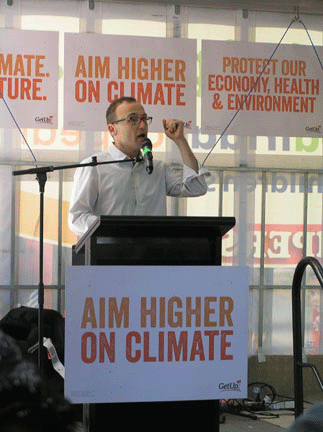 New Greens leader Adam Bandt will tour Australia’s mining regions to promote his plan to create a “renewable mining and manufacturing” sector and repair his party’s poor relations with resources industry workers. THE AUSTRALIAN , RICHARD FERGUSON FEBRUARY 16, 2020
New Greens leader Adam Bandt will tour Australia’s mining regions to promote his plan to create a “renewable mining and manufacturing” sector and repair his party’s poor relations with resources industry workers.
Mr Bandt — who started his tenure as leader saying big business was “killing people” — wants to shift the mining sector towards lithium and process materials such as iron ore in Australia to build a domestic “zero-carbon” manufacturing industry…. (subscribers only)
Australian government pushes on with nuclear dump, tramples on indigenous rights
 Kimba nuke decision dumps on Indigenous rights, https://indaily.com.au/opinion/2020/02/13/kimba-nuke-decision-dumps-on-indigenous-rights/ The federal government’s decision to place a a nuclear waste storage site at Kimba on SA’s Eyre Peninsula turned deaf ears to the opposition of the area’s native title holders, argue Jim Green and Michele Madigan. Kimba nuke decision dumps on Indigenous rights, https://indaily.com.au/opinion/2020/02/13/kimba-nuke-decision-dumps-on-indigenous-rights/ The federal government’s decision to place a a nuclear waste storage site at Kimba on SA’s Eyre Peninsula turned deaf ears to the opposition of the area’s native title holders, argue Jim Green and Michele Madigan.
The federal government recently announced that it plans to establish a national nuclear waste ‘facility’ near Kimba on South Australia’s Eyre Peninsula. It will comprise a permanent dump for low-level nuclear waste, and an ‘interim’ store for long-lived intermediate-level waste. Shamefully, the federal government has decided to move ahead despite the unanimous opposition of the Barngarla Traditional Owners, native title holders over the area. The federal government refused a request from the Barngarla Determination Aboriginal Corporation (BDAC) to include traditional owners in a community ballot held last year. So BDAC initiated a legal action protesting their exclusion. The court case is ongoing and an outcome is expected soon. BDAC also engaged the Australian Election Company to conduct a confidential postal ballot. Not a single Barngarla Traditional Owner voted in favour of the dump. BDAC wrote to the government calling for the dump proposal to be abandoned in light of their unanimous opposition, and stating that BDAC will take whatever steps are necessary to stop it being imposed on Barngarla Country against their will. The National Radioactive Waste Management Act systematically discriminates against Australia’s First Nations. For example, the nomination of a site for a nuclear dump is valid even if Aboriginal traditional owners were not consulted and did not give consent. And the Act has sections which nullify or curtail the application of laws such as the Aboriginal and Torres Strait Islander Heritage Protection Act 1984, and the Native Title Act 1993. The federal government recently announced that it plans to amend the Waste Management Act. While the Act is sorely in need of an overhaul, the planned amendments aren’t those that are needed. Clauses in the Act that dispossess and disempower traditional owners will remain untouched. The SA Labor Party argues that traditional owners ought to have a right of veto over nuclear projects given the sad and sorry history of the nuclear industry in SA, stretching back to the British atomic bomb tests. Deputy Leader of the Opposition Susan Close says that SA Labor is “utterly opposed” to the “appalling” process which led to the recent announcement regarding the Kimba site. Compare that to the federal government, whose mind-set seems not to have advanced from the ‘Aboriginal natives shall not be counted’ clause in the Constitution Act 1900. As Barngarla Traditional Owner Jeanne Miller says, Aboriginal people with no voting power are put back 50 years, “again classed as flora and fauna.” The current debate follows a history of similar proposals ‒ all of them defeated, with traditional owners repeatedly leading successful campaigns. In 2004, after a six-year battle, the Howard government abandoned plans for a national nuclear waste dump in SA. The Kupa Piti Kungka Tjuta ‒ a senior Aboriginal women’s council ‒ congratulated the government for belatedly getting their ‘ears out of their pockets’. In 2016, the plan to import high-level nuclear waste from around the world was abandoned after a Citizens’ Jury noted the lack of Aboriginal consent and concluded that “the government should accept that the Elders have said NO and stop ignoring their opinions.” And last year, the federal government abandoned plans for a national nuclear dump in the Flinders Ranges, a plan that was fiercely contested by Adnyamathanha Traditional Owners. SA Premier Steven Marshall is rightly proud of his record promoting the growth of renewable energy in SA. And he’s proud of his significant role in putting an end to the plan to import high-level nuclear waste from around the world. So where will the Premier ‒ whose portfolio includes Aboriginal Affairs and Reconciliation ‒ stand on this latest nuclear controversy? He needs, as the Kungkas put it, to get his ears out of his pockets and to respect the unanimous opposition of the Barngarla First Nation. Dr. Jim Green is the national nuclear campaigner with Friends of the Earth Australia. Michele Madigan is a Sister of St Joseph who has spent the past 40 years working with Aboriginal people across SA. |
|
Shrinking Antarctic ice shelf Pine Island Glacier sheds giant iceberg
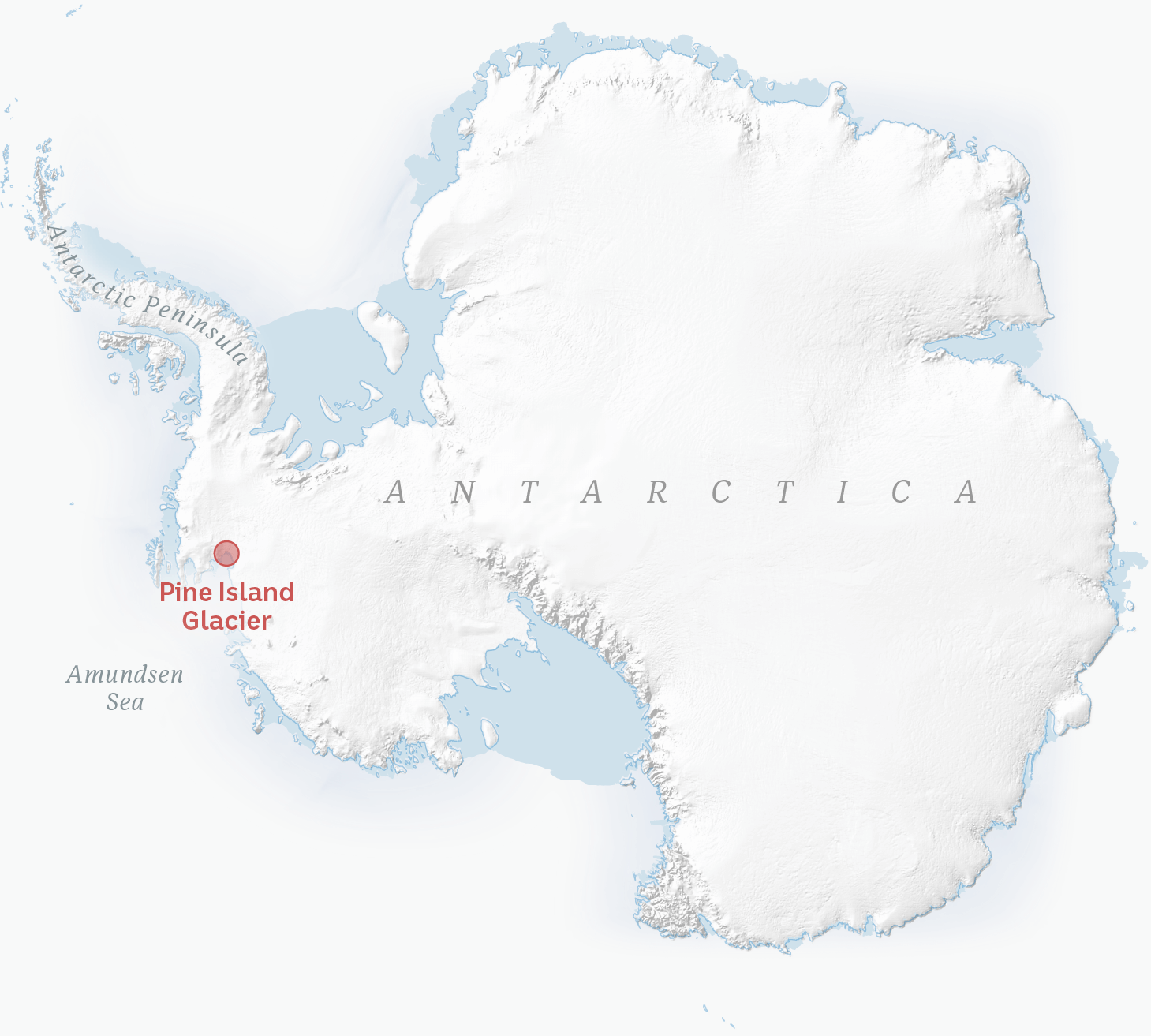 Shrinking Antarctic ice shelf Pine Island Glacier sheds giant iceberg, ABC News, Digital Story Innovation Team By Mark Doman 14 Feb 20, In one of the fastest-changing areas of the Antarctic ice sheet, satellites have captured the formation of a giant, 300-square-kilometre iceberg.
Researchers monitoring satellite imagery of the Pine Island Glacier (PIG), in west Antarctica, first noticed two large rifts forming in the shelf in 2019.
Over the next few months, as the glacier moved out towards the Amundsen Sea, the rifts expanded, eventually leading to the splitting of the iceberg from the glacier on February 9.
Within a day, the iceberg had broken up into smaller pieces.
Only one of the pieces was large enough to be named (B-49) and tracked by the United States National Ice Centre.
It comes just days after a station on the Antarctic Peninsula logged its hottest day on record, registering a temperature of 18.3 degrees Celsius.
The peninsula, which juts out to the north-east of the Pine Island Glacier, is among the fastest-warming regions on the planet. Temperatures there have increased almost 3C over the last 50 years, according to the World Meteorological Organisation.
Last month, scientists also recorded unusually warm water beneath the Thwaites Glacier, a neighbour to Pine Island.
While the calving of icebergs from shelves such as the Pine Island Glacier is a natural process in the life of a giant glacier, the rate at which this glacier and others in the region have been disintegrating is a cause of concern for scientists.
Previously the ice shelf calved once a decade. By the early 2000s, it started calving once every five years. But since 2013, the glacier has calved five times, according to Stef Lhermitte, a remote sensing scientist from the Delft University of Technology in the Netherlands……. https://www.abc.net.au/news/2020-02-13/antarctic-ice-shelf-pine-island-glacier-sheds-giant-iceberg/11957770
Risk that Environment Protection and Biodiversity Conservation (EPBC) Act could be changed to promote nuclear power
K-A Garlick at Nuclear Free WA, 12 Feb 20
The Environment Protection and Biodiversity Conservation (EPBC) Act is currently under review and will look at how the Act has been operating, and any changes needed for Australia to support ecologically sustainable development into the future.
Currently, under the EPBC Act, nuclear power is banned and the ‘nuclear action’ triggers uranium mining and milling projects to be Federally assessed. This should remain.
There is a real threat that the EPBC Act could change to remove the ban on nuclear power and the ‘nuclear actions’ trigger, so that this dirty industry can push forward. We urge you and your organisation to make a submission to keep the ban on nuclear power and the ‘nuclear action’ triggers.
Don’t nuke the climate is a great new website with a ton of information to use for your submission including last years no nuclear power statement by a broad coalition of faith, union, environmental, Aboriginal and public health groups, representing millions of Australians, that clearly outlines our energy future is renewable, not radioactive. Click here to read the statement.
Submissions are due 17 April 2020. You can send submissions via email to epbcreview@environment.gov.au Or via post to: EPBC Act Review Secretariat Department of the Environment and Energy GPO Box 787 CANBERRA ACT 2601. Please complete and submit this cover page with your submission. All submissions that include this cover sheet will be considered by the review. For more information on the EPBC Act and submissions, click here.
Whyalla is targeted for nuclear waste shipments and should have a right to refuse untenable plans.
 Whyalla is targeted for nuclear waste shipments and should have a right to refuse untenable plans.
Napandee Nuclear Store site nomination also targets Whyalla Port: Nuclear Brief (Feb 2020) by David Noonan, Independent Environment Campaigner
Amidst rising controversy, a Federal Minister has nominated Napandee near Kimba on Eyre Peninsula as a Nuclear Store to take reactor fuel wastes and long-lived wastes from Lucas Heights.
The “Site Characterisation Technical Report: Napandee” (DIIS, July 2018, Proximity to ports p.150) named Whyalla Port to take shipments of nuclear fuel wastes, in the event Napandee is named as a Nuclear Store. Two shipments of reprocessed nuclear fuel wastes, in 130 tonne TN-81 casks, are intended within the first two years of operations of a Nuclear Waste Store at Napandee (p.152).
Some 100 x B-double 50 tonne loads of Intermediate Level Wastes (ILW) are also intended in the first four years of Nuclear Store operations at Napandee (p.152). The Report (p.157-158) states:
“It may be possible to have these containers shipped from Port Kembla to ports such as Whyalla”
However, the Federal government has conspicuously failed to consult the SA community on plans to impose multiple shipments of nuclear waste across SA, including potentially through Whyalla Port.
This flawed practice is in continued breach of advice of the Nuclear Safety Committee (NSC) to the nuclear regulator ARPANSA (Nov 2016) on the NRWMF, on transparency in decisions, stating:
“The ongoing requirement to clearly and effectively engage all stakeholders, including those along transport routes.” With the NSC stating that: “Such engagement is essential…
” Eyre Peninsula, Whyalla and transport route communities have so far been denied a say on these Federal nuclear waste plans and now face potential serious reputational risks and material impacts.”
The Australian Radioactive Waste Management Framework (DIIS, April 2018, p.4) reports total Intermediate Level Wastes at 1,770 m3 – with 95% (by volume) arising as Federal government wastes.
The Federal gov. plans to more than double Intermediate Level Wastes to produce a further 1,960 m3 over next 40 years, with 1,850 m3 (95%) of that arising from ANSTO Lucas Heights operations.
All these nuclear wastes are intended to go to Napandee for up to 100 years above ground storage.
Proposed indefinite above ground storage of nuclear fuel wastes at Napandee may compromise safety and security in SA and contravenes Nuclear Safety Committee advice. The NSC has stated dual handling in transport associated with interim storage “does not represent international best practice” and raises “implications for security”. These federal nuclear plans are also illegal in SA.
The previous SA State Liberal government prohibited the import, transport, storage and disposal of nuclear fuel wastes and reprocessed wastes under the Nuclear Waste Storage (Prohibition) Act 2000.
“The Objects of this Act are to protect the health, safety and welfare of the people of South Australia and to protect the environment in which they live by prohibiting the establishment of certain nuclear waste storage facilities in this State.”
ARPANSA states these nuclear wastes require isolation from the environment for 10 000 years.
Nuclear waste can pose serious Safety, Accident and Security Risks:
“In the event of a major nuclear accident, adverse impacts on the tourism, agriculture and property sectors could potentially be profound.”
SA Nuclear Royal Commission: Tentative Findings, Risks and Challenges, Impacts on other Sectors (Feb 2016, p.28)
Key questions on safety and security in nuclear fuel waste transport and storage remain unanswered (see D Noonan submission to Minister Canavan, p.11-12). These wastes must not be allowed into SA.
The UK Nuclear Free Local Authorities “Briefing: Nuclear security concerns – how secure is the UK civil nuclear sector?”
(NFLA, May 2016) highlights key security threats including the risks from potential malicious attack on a nuclear waste transport or on a nuclear waste storage site. NFLA (p.8) cites the views of nuclear engineer Dr John Large on safety as at the heart of its concerns:
“Movement of nuclear materials is inherently risky both in terms of severe accident and terrorist attack. Not all accident scenarios and accident severities can be foreseen; it is only possible to maintain a limited security cordon around the flask and its consignment; … terrorists are able to seek out and exploit vulnerabilities in the transport arrangements and localities on the route; and emergency planning is difficult to maintain over the entire route.”
NFLA Recommendations (p.15) call for real discussion on the aftermath of a nuclear security incident given the major emergency response issues that arise. That belated debate is yet to be heard in SA.
SA is arguable unprepared for the consequences of nuclear fuel waste accidents or security events. Hundreds of Police were required for security at a 2018 nuclear waste shipment out of Port Kembla.
Whyalla is targeted for nuclear waste shipments and should have a right to refuse untenable plans.
In “Nuclear port potential” (Whyalla News, 3 rd August 2018, p.1) the Mayor said Federal gov. plans to use Whyalla’s port for nuclear waste: “would require significant community consultation”, noting:
“In the past Whyalla has opposed any nuclear or radioactive shipping in this region”.
DIIS’s Napandee Site Characterisation Report refers to potential “occurrences of complete shutdown” (p.154) in Iron Triangle Cities during nuclear waste shipments. This is unacceptable.
These are fundamentally State issues and the SA public have not given consent to proposed nuclear waste transport and storage. Under the leadership of Premier Steven Marshall the SA State Liberal government has a responsibility to protect the public interest and to uphold the law in our State.
The Marshall gov. must protect all SA regional communities and reject a Nuclear Waste Store in SA. For further Information, see: https://nuclear.foe.org.au/waste
Senate opens the door for nuclear developments
Senate opens the door for nuclear developments: From ENuFF[SA]
https://www.facebook.com/sanuclearfree/–13 Feb 20
 February 11 2020
Senator HANSON-YOUNG (South Australia) (16:12): I move:
That the Senate:
(a) affirms its commitment to a complete moratorium on nuclear energy, as expressed in the Australian Radiation Protection and Nuclear Safety Act 1998 and the Environment Protection and Biodiversity Conservation Act 1999;
(b) notes the devastating and lasting impacts of the nuclear disasters in Fukushima, Chernobyl and Three Mile Island; and
(c) call on all Ministers to commit to Australia being a nuclear-free zone.
========================
DIVISION:NOES 35 (6 majority) AYES 29 PAIRS 6
Question negatived.
========================
Rex Patrick voted No
P Wong paired
https://parlinfo.aph.gov.au/parlInfo/search/display/display.w3p;query=Id%3A“chamber%2Fhansards%2Fc220a265-e5aa-42c9-8cd9-19390fabb066%2F0127”
#ScottyFromMarketing ‘s bushfire inquiry studiously ‘ignores’ carbon emissions
 PM’s bushfire inquiry ‘ignores’ carbon emissions, Barr says, Canberra Times, Dan Jervis-Bardy 11 Feb 20, PM’s bushfire inquiry ‘ignores’ carbon emissions, Barr says, Canberra Times, Dan Jervis-Bardy 11 Feb 20,
Chief Minister Andrew Barr has criticised the scope of Scott Morrison’s proposed royal commission into the summer bushfire crisis, saying it overlooks the role that cutting carbon emissions plays in combating climate change and future fire threats.
How the Prime Minister responds to Mr Barr’s concerns will determine if the ACT supports the national inquiry. Mr Barr wrote to the Prime Minister on Tuesday with his feedback on draft terms of reference for the royal commission into the bushfire disaster.
The Chief Minister wants a national inquiry into the horror fire season, but has repeatedly said that any review would be inadequate unless it thoroughly examines the effect climate change has had on the length and ferocity of bushfire seasons…… In his letter to Mr Morrison, the ACT Chief Minister said the inquiry also needed to look at strategies to tackle climate change, such as cutting carbon emissions.
|
|
New Resources Minister Keith Pitt ignores renewables, pushes for more coal, gas and uranium exports
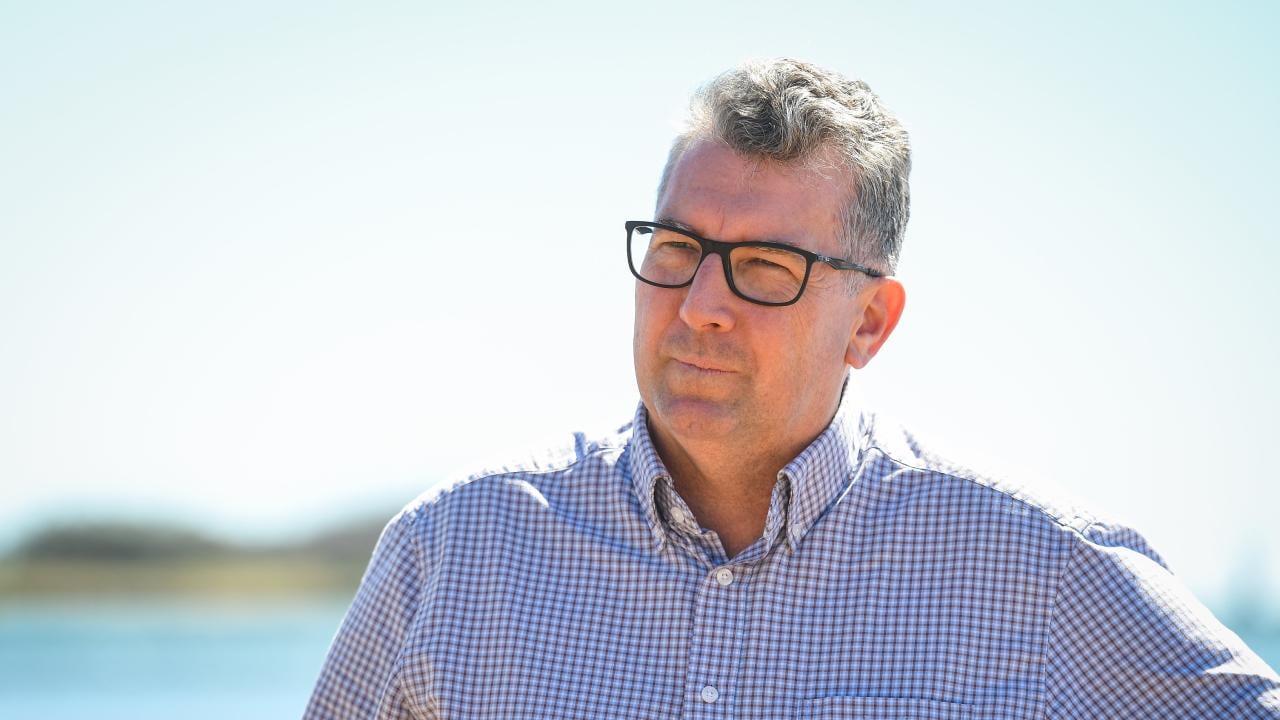 New Resources Minister calls for more coal, gas and uranium exports, Brisbane Times, By David Crowe, February 11, 2020 Australia will need more coal, gas and uranium exports to pay for essential services and lift living standards, incoming Resources Minister Keith Pitt has declared in a warning shot to activists trying to block new projects.Mr Pitt vowed to use his new job to make Australia an even bigger energy exporter and sent a message to state governments to open up new coal seam gas fields to drive down the price of energy for households…… New Resources Minister calls for more coal, gas and uranium exports, Brisbane Times, By David Crowe, February 11, 2020 Australia will need more coal, gas and uranium exports to pay for essential services and lift living standards, incoming Resources Minister Keith Pitt has declared in a warning shot to activists trying to block new projects.Mr Pitt vowed to use his new job to make Australia an even bigger energy exporter and sent a message to state governments to open up new coal seam gas fields to drive down the price of energy for households……
An advocate of nuclear power in the past, Mr Pitt said he would not be making any decisions about nuclear energy given this was the responsibility of Energy Minister Angus Taylor, but he backed more uranium exports……. https://www.brisbanetimes.com.au/politics/federal/new-resources-minister-calls-for-more-coal-gas-and-uranium-exports-20200211-p53zu5.html |
|
Zali Steggall’s climate Bill, Labor’s befuddlement on coal
|
Mike Cannon-Brookes says Zali Steggall’s bill could repair Australia’s reputation on climate
Guardian, Atlassian co-founder says the MP’s bill is the exact type of action we need and deserves bipartisan support, Katharine Murphy and Adam Morton, Tue 11 Feb 2020 Atlassian co-founder Mike Cannon-Brookes has thrown his support behind a climate action bill proposed by the independent Zali Steggall and has urged the major parties to put down the cudgels and support it.And the Australian Energy Council, representing major electricity and gas businesses, said the Steggall bill deserved to be seriously considered as it had the potential to deliver certainty and a path forward for the national economy. Cannon-Brookes said on Tuesday the Steggall proposal, unveiled this week, was “a smart bill, and the exact type of action we need to change Australia’s international reputation on climate”. The bill includes a proposal for a net zero emissions target by 2050, a carbon emissions budget, and assessments every five years of national climate change risk. The MP has called on the major parties to bring the bill to the floor and allow a conscience vote. Cannon-Brookes said the proposal contained all the elements of a viable settlement to the climate wars. “The legislated 2050 target and five-year increments are precisely what is required, and the bill deserves bipartisan support.” ……. It follows a declaration by the Business Council of Australia that Australia should work to achieve net zero emissions by 2050……. Steggall’s bill will not be brought on for debate unless either the government or Labor supports it reaching the floor of the House. The government has not yet made a decision but it is unlikely to support it. On Tuesday morning, the Labor leader Anthony Albanese said it was highly unlikely the bill would be voted on “because that’s what happens with private member’s bills in the House of Representatives, unless the government agrees to allocate time for the bill, it will not be voted on”. Albanese said the proposal was very well intentioned, and he “respected” Steggall for bringing it forward, but told the ABC “we are unlikely to have a conscience vote on climate change. What we’ll do is support action on climate change.” The Labor leader said the opposition would commit to a long-term emissions reduction target “very soon” and, referencing an internal split within the Coalition about taxpayer backing for new coal plants, said: “I don’t think there is a place for new coal-fired power plants in Australia. Full stop.” On Sunday, Labor’s deputy leader Richard Marles, in a particularly awkward interview, did not rule out the party supporting new coal developments, saying it would be a decision for the markets despite previously declaring it would be a “good thing” if the thermal coal market collapsed. https://www.theguardian.com/australia-news/2020/feb/11/mike-cannon-brookes-says-zali-steggalls-bill-could-repair-australias-reputation-on-climate |
|
#ScottyFromMarketing and his crew – blind to the economics of renewable energy
were at it again, warning that increased climate action would lead to
“higher taxes and higher electricity prices” and implying it was the
desire only of “those in the inner city”. Of course, this is nothing
more than marketing fluff. You could be forgiven for thinking that they
must have missed the memo on the record take-up of ultra-cheap solar and
wind power, now generating nearly 20 per cent of Australia’s electricity
supply, with more than 50 per cent renewables expected by 2030.
Philip White shows folly of nuclear activities for Victoria: Submission No.112
 Submission 112 Philip White to Victorian govt INQUIRY INTO NUCLEAR PROHIBITION
A very brief summary of conclusions that can be drawn from the attached submission with respect
to each of your inquiry’s terms of reference are as follows:
(1)investigate the potential for Victoria to contribute to global low carbon dioxide energy production through enabling exploration and production of uranium and thorium The notion that nuclear energy is low carbon is superficial. A deeper analysis shows that nuclear energy is an obstacle to realisation of a low carbon economy (refer “c. environmental
impacts” in the attached submission). Hence the idea that uranium and thorium exploration and production could make a useful contribution to global low carbon
dioxide energy production is mistaken.
(2) identify economic, environmental and social benefits for Victoria, including those related to medicine, scientific research, exploration and mining.
Nuclear energy related facilities tend to create host communities which are economically dependent
on these facilities and which are therefore under huge pressure to overlook the safety and environmental risks associated with these facilities (refer “b. health and safety” in the attached submission). The safest approach is not to build these facilities in the first place. (I assume the phrase “including those related to medicine, scientific research, exploration and mining” is not meant to exclude nuclear power plants and other aspects of the nuclear fuel cycle.) It is doubtful whether exploration and mining could generate significant
economic benefits given that the long‐term prospects for nuclear energy are so uncertain. Refer
The World Nuclear Industry Status Report 2019: https://www.worldnuclearreport.org/WNISR2019‐Assesses‐Climate‐Changeand‐the‐Nuclear‐Power‐Option.html
(3) identify opportunities for Victoria to participate in the nuclear fuel cycle The attached submission provides many reasons why it would be unwise for
Victoria to participate in the nuclear fuel cycle.
(4) identify any barriers to participation, including limitations caused by federal or local laws
and regulations.
There are many legitimate barriers to nuclear fuel cycle activities, including safety, environmental protection, non‐ proliferation concerns and lack of public acceptance, but ultimately the barrier that is most likely to
stick is that nuclear energy is not economically viable (refer “d. energy affordability and reliability and economic feasibility” in the attached submission- below).
Submission to the Inquiry into the Prerequisites for Nuclear Energy in Australia …….
For reasons outlined below, nuclear energy is not and will not in the foreseeable future be a desirable option to supply Australia’s energy needs. The specific terms of reference are addressed below, with particular attention to issues and perspectives that proponents of nuclear energy are inclined to neglect or downplay:
a. waste management, transport and storage ………
b. health and safety ……
c. environmental impacts …….
d. energy affordability and reliability, and e. economic feasibility …….
f. community engagement and i. national consensus ……..
g. workforce capability …….
h. security implications ……
j. any other relevant matter
Based on the above analysis, it would be unwise for Australia to embark on a nuclear energy program and it is very sensible to declare this in the clearest possible terms. In this regard, I am encouraged to see in the Terms of Reference for this inquiry the statement that “Australia’s bipartisan moratorium on nuclear energy will remain in place.” https://www.parliament.vic.gov.au/epc-lc/article/4348
Coalition compares wind and solar to “dole bludgers”, pushes for coal, nuclear
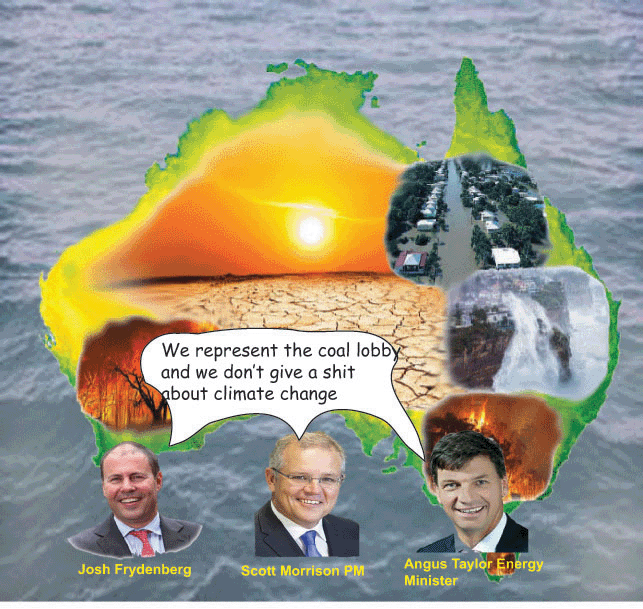
Coalition compares wind and solar to “dole bludgers”, pushes for coal, nuclear https://reneweconomy.com.au/coalition-compares-wind-and-solar-to-dole-bludgers-pushes-for-coal-nuclear-41714/ Giles Parkinson, 10 February 2020 The wind and solar industries are bracing for another verbal assault and an extended period of policy indifference from the federal government, after a senior Coalition MP likened renewable energy to “dole bludgers’, the government funnelled $4 million into a study for a new coal fired power station in Queensland, and so-called government “moderates” declared their support for nuclear.
Despite the plunging costs of solar, wind and storage, the war against renewables is accelerating dramatically as the government comes under pressure to improve its climate policies, and even consider re-instating the long term zero carbon pledge for 2050 that it scrapped, along with the carbon price, in 2014, and which all states have since adopted.
But the language against wind and solar is now being scaled up to levels not seen since the Abbott government, when the prime minister, the then Treasurer Joe Hockey and others railed against the sight of wind farms, including on their drive down to Canberra.
Barnaby Joyce, the former deputy prime minister whose electorate of new England hosts some of the state’s biggest wind and solar projects, ranted against both wind and solar last week after losing his bid to regain the leadership of the LNP.
Matt Canavan, the former resources minister who backed Joyce in that failed leadership bid, and resigned after revealing his membership of a sports club that received a $20 million loan from a government fund that Canavan had responsibility for, went one step further on Monday.
“Renewables are the dole bludgers of the energy system, they only turn up to work when they want to,” Canavan wrote in an opinion piece in the Courier Mail that also got a page one headline. The opinion piece – from the man who likes to describe himself as “Mr Coal” – argued that only coal would support Australia’s mining and manufacturing industries.
The views of the LNP and the hard right of the Liberals are well known, but even so-called “moderate” Liberals are now arguing that wind and solar cannot be relied upon to power a modern economy, and nuclear should be open as a low carbon choice.
Katie Allen,the MP for Higgins, wrote as much in Nine Media over the weekend, repeating a claim she made in her parliamentary debut. Those views are reportedly supported by other Liberals also described as moderates, including Trent Zimmerman, and Tim Wilson, whose previous job was climate policy director for the climate-denying Institute of Public Affairs.
The demonisation of wind and solar also extends to the media. The Murdoch position against wind and solar is well established, but it is infused also into the ABC, which – appallingly – ran as its headline story on radio National on Monday morning a split in the Coalition between “cheap” coal and low emissions technology, as though it was matter a fact.
This is either the result of ignorance, or stupidity. In either case, it is inexcusable, although sadly not atypical. There is no study that points to new coal generators being the cheapest option to replace Australia’s ageing coal, polluting and increasingly decrepit fleet.
AEMO, in its Integrated System Plan, also makes it clear that renewables can power Australia’s modern economy and manufacturing sector. Its 20 year blueprint assumes a 74 per cent share of renewables in Australia’s grid as a minimum by 2040, and up to 90 per cent – a level that will dramatically reduce emissions – by around 90 per cent. The lights will stay on.
The ability of wind and solar to lower prices is now being witnessed in Australia’s main grid, with AEMO citing a 39% increase in wind and solar output in the last quarter, along with a fall in coal output due to outages and coal shortages, for a significant fall in prices to their lowest level since 2016.
The claim that renewables cannot power industry also flies in the face of the experts, including chief scientist Alan Finkel, who has mapped out a hydrogen strategy that could, and should, be fuelled by wind and solar. Others point to the potential of the country going “700 per cent renewables” to give it a global advantage in clean fuel exports and “green metals”.
Those supporters include Professor Ross Garnaut, who says Australia could likely reach 100 per cent reenables by the early 2030s, thereby slashing electricity costs and creating the base for more industrial growth.
Billionaires Mike Cannon-Brookes and Andrew “Twiggy” Forrest are investing tens of millions in one of several massive projects designed to export solar, or wind, to Asia countries. Forrest’s iron ore company Fortescue is investing huge amounts adding solar and battery storage to the Pilbara grid to lower the cost of electricity for his mines and improve reliability.
But it is impossible to name a single federal Coalition MP that recognises the potential of wind and solar, even though the state Liberal government in South Australia, for instance, has a target of “net 100 per cent renewables” by around 2030, and sees its economic future built on becoming a wind and solar energy powerhouse.
UNSW scientist Matt Edwards laments the government’s insistence that lower emissions could only be accompanied by either higher taxes or higher electricity costs. In an opinion piece for the Sydney Morning Herald, he said the Coalition is being “wilfully blind” to the economics of renewables, which “wipe the floor” compared to coal, gas and nuclear.
Edwards pointed to the conclusions of the CSIRO and AEMO studies mentioned above.
“One of the greatest frustrations as a scientist is to see interpretations of data misrepresented by politicians,” he writes. “Unfortunately in Australia, much of this bluster has come from the far-right side of conservatives, part of our broad church, whose members have traditionally prided themselves on prudence and level-headedness.
“We must fight the political expediency of appealing to a voter base spooked by fossil fuel scare campaigns and the denialists in the media, while avoiding getting rolled by rogue elements within the party, those whom Malcolm Turnbull labelled “terrorists” at our Climate Conversations event on Wednesday night, “willing to blow the joint up if they don’t get their way”.
“Our conservative politicians should ideally act according to conscience, free market principles and prudence. They should also seize upon the opportunity for Australia to become a renewables export powerhouse, alleviating global emissions reduction well beyond the 1.6 per cent often quoted as our share, and providing vast economic stimulus at the same time.”
We’ve been waiting for that to happen for more than two decades. There’s still no sign of it.
Why can’t the Australian government do the right thing by the persecuted Julian Assange?
 Bravo Alison Broinowski and Independent Australia . I am utterly fed up with the Australian government, and the mainstream media’s abject failure to even consider the plight of Australian citizens speaking truth – especially re Julian Assange. I did admire Ita Buttrose’s spirited defence of the freedom of the press – UP TO A POINT. But she, and the rest of the media pack were completely hypocritical in pretending that the persecution of Julian Assange had nothing to do with them.
|
Assange, Collaery, Snowden, Smethurst: criminalising truth https://independentaustralia.net/life/life-display/assange-collaery-snowden-smethurst-criminalising-truth,13573#.XkDpbKeRTRw.twitter
By Alison Broinowski | 9 February 2020 Truth-tellers and whistleblowers need our support in Australia and across the globe, says Dr Alison Broinowski.
ENOUGH IS ENOUGH. You’ve often heard that from leaders clutching at their last straw. Australia, you would think, has had enough this year and it’s only February. Enough of a scorched, smoky summer. Enough eviscerating loss of family. Enough people fleeing for their lives from infection. Enough inaction in the face of existential threats. Enough excuses made. Enough blind eyes turned. Enough lies. But no. There’s more to come. In Australia, telling the truth is now a crime. At least four Australians who did so face secretive trials in the coming weeks, three of them in Canberra. Another is imprisoned in the ACT without you knowing what for or at whose orders. You aren’t allowed to know his name, nor the name of Witness K. You are familiar with the other two: Bernard Collaery, K’s lawyer, and Annika Smethurst, a Newscorp journalist whose home was raided by police last July. The fourth Australian is in pre-extradition detention in London’s high-security Belmarsh prison, also for telling the truth. Evidently, this is now a crime in your allies’ system as well, even though the U.S. has its First Amendment and the UK has a Bill of Rights. Revealing the embarrassing truth is what Chelsea Manning is back in a U.S. gaol for, what Edward Snowden is exiled in Russia for, and what Julian Assange did in 2010 when WikiLeaks published documents selected from more than 700,000 U.S. diplomatic cables, assessment files of Guantánamo Bay detainees, military incident logs, and videos from Iraq and Afghanistan. That’s why Assange, having been in diplomatic exile for seven years in London, faces 175 more years for espionage in a U.S. gaol. The absurdity of such a sentence, when the worst war criminals get 45 years, reflects the fury of the U.S. security state at being caught out and the subservience of its UK colleagues. Those on both sides of the Atlantic determined to get Assange are unrelenting and his extradition hearing begins on 24 February. Almost too late, the Guardian has re-discovered its editorial conscience and begun opposing extradition, not wanting justice for Assange, but press freedom. Professor Nils Melzer, the UN Special Rapporteur on Torture supports that, but has gone further, deploring Assange’s mental and physical state. He has written to the UK and U.S. governments pointing out their responsibility for his treatment. He is to raise Assange’s case this week with Sir Richard Dearlove, who was head of MI6 during the Iraq invasion. Good luck with that. Since Kevin Rudd, Australian prime ministers have been silent if not virulently negative about Assange. In recent months prominent individuals, including Bob Carr and Dick Smith, have pointed to the urgency of his case and advocated his release. In November the Greens’ Peter Whish-Wilson presented a petition with 200,000 signatures to the Senate, calling for Assange to be brought back from the UK to Australia. Late last year, Tasmanian Independent Andrew Wilkie formed the “Bring Assange Home” Friendship Group, which he co-chairs with George Christensen of the Liberal-National Party. It has no Liberal Party member. Wilkie and his supporters are seeking appointments in London this week to make the case for Assange. He says UK Prime Minister Boris Johnson, Australian Prime Minister Scott Morrison, and U.S President Donald Trump have made Assange their “political plaything”. Why can’t Morrison ask Trump, as a favour, to ‘do the right thing by this Australian’? |
|
SUBMISSIONS 122 Australians want Victoria’s Nuclear Prohibition Laws to stay
Unlawful and unpopular: Nuclear power and nuclear reactors are prohibited under existing federal, state and territory laws. The nuclear sector is highly contested and does not enjoy broad political, stakeholder or community support.
Disproportionate impacts: The nuclear industry has a history of adverse impacts on Aboriginal communities, lands and waters.
SUBMISSION TO VICTORIAN PARLIAMENT INQUIRY INTO NUCLEAR PROHIBITION
Jessica Lawson and 122 others (list is available) Dear Standing Committee on Environment and Planning,
Victoria’s Nuclear prohibition laws Inquiry – these are the Committee Members
The members of the Environment and Planning Committee are:
Cesar Melhem (Chair)
Clifford Hayes (Deputy Chair)
Bruce Atkinson
Melina Bath
Jeff Bourman
David Limbrick
Andy Meddick
Samantha Ratnam
Nina Taylor
Sonja Terpstra
The participating members of the Committee are:
David Davis
Georgie Crozier
Catherine Cumming
Tim Quilty
Bev McArthur
If you would like any further details on the Committee members or the Inquiry please see: https://www.parliament.vic.gov.au/epc-lc/inquiries/inquiry/983
1 This month

of the week – Australians for War Powers Reform (AWPR)
To see nuclear-related stories in greater depth and intensity
 Antinuclear