Dr Helen Caldicott and Independent Australia bust the media spin on ‘small nuclear reactors’
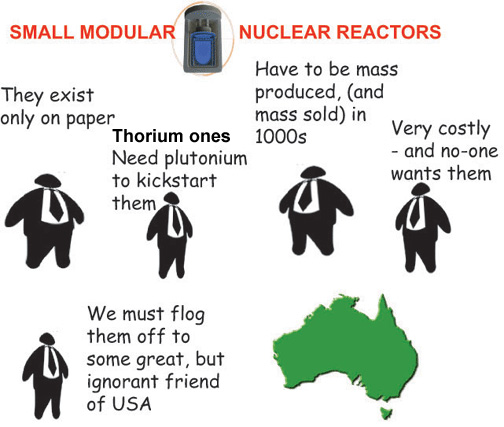
The so-called “nuclear renaissance” died following the Fukushima catastrophe when one-sixth of the world’s nuclear reactors closed. However, global nuclear corporations – Toshiba, NuScale, Babcock & Wilcox, GE Hitachi, General Atomics and the Tennessee Valley Authority – did not accept defeat.
Their new strategy has been to develop small modular nuclear reactors without the dangers inherent in large reactors — safety, cost, proliferation risks and radioactive waste. But these claims are fallacious for the reasons outlined below.
Basically, there are three types of SMRs which generate less than 300 megawatts of electricity compared with current day 1000 megawatt reactors.
Light water reactors designs
These will be smaller versions of present-day pressurized water reactors using water as the moderator and coolant, but with the same attendant problems as Fukushima and Three Mile Island. Built underground, they will be difficult to access in the event of an accident or malfunction.
Mass-produced (turnkey production) large numbers must be sold yearly to make a profit. This is an unlikely prospect because major markets – China and India – will not buy U.S. reactors when they can make their own.
If safety problems arise – as in General Motors cars – they all must be shut down which will interfere substantially with electricity supply.
SMRs will be expensive because the cost per unit capacity increases with a decrease in reactor size. Billions of dollars of government subsidies will be required because Wall Street is allergic to nuclear power. To alleviate costs, it is suggested that safety rules be relaxed, including reducing security requirements and a reduction in the 10-mile emergency planning zone to 1,000 feet.
Non-light water designs
These are high-temperature gas-cooled reactors (HTGR) or pebble bed reactors. Five billion tiny fuel kernels consisting of high-enriched uranium or plutonium will be encased in tennis-ball-sized graphite spheres which must be made without cracks or imperfections — or they could lead to an accident. A total of 450,000 such spheres will slowly and continuously be released from a fuel silo – passing through the reactor core – and then be re-circulated ten times. These reactors will be cooled by helium gas operating at very high temperatures (900 degrees Celsius).
A reactor complex consisting of four HTGR modules will be located underground, to be run by just two operators in a central control room. Claims are that HTGRs will be so safe that a containment building will be unnecessary and operators can even leave the site – “walk away safe” reactors.
However, should temperatures unexpectedly exceed 1,600 degrees Celsius, the carbon coating will release dangerous radioactive isotopes into the helium gas and at 2,000 degrees Celsius the carbon would ignite creating a fierce graphite Chernobyl-type fire.
If a crack develops in the piping or building, radioactive helium would escape and air would rush in, also igniting the graphite.
Although HTGRs produce small amounts of low-level waste they create larger volumes of high-level waste than conventional reactors.
Despite these obvious safety problems and despite the fact that South Africa has abandoned plans for HTGRs, the U.S. Department of Energy has unwisely chosen the HTGR as the “Next Generation Nuclear Plant”.
Liquid metal fast reactors (PRISM)
It is claimed by proponents that fast reactors will be safe, economically competitive, proliferation-resistant and sustainable.
They will be fueled by plutonium or highly enriched uranium and cooled by either liquid sodium or a lead-bismuth molten coolant. Liquid sodium burns or explodes when exposed to air or water and lead-bismuth is extremely corrosive producing very volatile radioactive elements when irradiated.
Should a crack occur in the reactor complex, liquid sodium would escape, burning or exploding. Without coolant, the plutonium fuel could reach critical mass, triggering a massive nuclear explosion scattering plutonium to the four winds. One-millionth of a gram of plutonium induces cancer and it lasts for 500,000 years. Extraordinarily, claims are made that fast reactors will be so safe they will require no emergency sirens and emergency planning zones can be decreased from ten miles to 1,300 feet.
There are two types of fast reactors: a simple plutonium fueled reactor and a “breeder” in which the plutonium reactor core is surrounded by a blanket of uranium 238 which captures neutrons and converts to plutonium.
The plutonium fuel, obtained from spent reactor fuel will be fissioned and converted to shorter-lived isotopes — caesium and strontium which last 600 years instead of 500,000. Called “transmutation”, the industry claims that this is an excellent way to get rid of plutonium waste. But this is fallacious because only ten per cent fissions, leaving 90 per cent of the plutonium for bomb-making etc.
Three small plutonium fast reactors will be grouped together to form a module and three of these modules will be buried underground. All nine reactors will then be connected to a fully automated central control room operated by only three operators. Potentially then, one operator could simultaneously face a catastrophic situation triggered by the loss of off-site power to one unit at full power, in another shut down for refuelling and in one in start-up mode. There are to be no emergency core cooling systems.
Fast reactors require a massive infrastructure including a reprocessing plant to dissolve radioactive waste fuel rods in nitric acid, chemically removing the plutonium and a fuel fabrication facility to create new fuel rods. A total of 10,160 kilos of plutonium is required to operate a fuel cycle at a fast reactor and just 2.5 kilos is fuel for a nuclear weapon.
Thus fast reactors and breeders will provide extraordinary long-term medical dangers and the perfect situation for nuclear weapons proliferation. Despite this, the industry is clearly trying to market them to many countries including, it seems, Australia.
You can follow Dr Caldicott on Twitter @DrHCaldicott. Click here for Dr Caldicott’s complete curriculum vitae.
Australia is to build new nuclear reactors, in partnership with China (does Parliament know?)


Republishing again, in view of Dr Adi Paterson’s departure from Ansto.
Republishing this one, in view of news from the UK, that a British-China nuclear research programme may be siphoning UK tax-payers’ funds off into China’s military projects.
Australia is back in the nuclear game, Independent Australia, By Noel Wauchope | 24 March 2019, One of Australia’s chief advocates for nuclear power Dr Adi Paterson, CEO of Australian Nuclear Science and Technology Organisation, (ANSTO), has done it again.
This time, he quietly signed Australia up to spend taxpayers’ money on developing a new nuclear gimmick — the Thorium Molten Salt Reactor (TMSR).
This new nuclear reactor does not physically exist and there is no market for it. So its development depends on government funding.
Proponents claim that this nuclear reactor would be better and cheaper than the existing (very expensive) pressurised water reactors, but this claim has been refuted. The TMSR has been described by analyst Oliver Tickell as not “green”, not “viable” and not likely. More recently, the plan has been criticised as, among other things, just too expensive — not feasible as a profitable commercial energy source.
Paterson’s signing up to this agreement received no Parliamentary discussion and no public information. The news just appeared in a relatively obscure engineering journal.
The public remains unaware of this.
In 2017, we learned through the Senate Committee process that Dr Paterson had, in June 2016, signed Australia up to the Framework Agreement for International Collaboration on Research and Development of Generation IV Nuclear Energy Systems (also accessible by Parliament Hansard Economics Legislation Committee 30/05/2017).
This was in advance of any Parliamentary discussion and despite Australia’s law prohibiting nuclear power development. Paterson’s decision was later rubber-stamped by a Senate Committee……..
Dr Paterson was then obviously supremely confident in his ability to make pro-nuclear decisions for Australia.
Nothing seems to have changed in Paterson’s confidence levels about making decisions on behalf of Australia.
Interestingly, Bill Gates has abandoned his nuclear co-operation with China. His company TerraPower was to develop Generation IV nuclear reactors. Gates decided to pull out of this because the Trump Administration, led by the Energy Department, announced in October that it was implementing measures to prevent China’s illegal diversion of U.S. civil nuclear technology for military or other unauthorised purposes.
Apparently, these considerations have not weighed heavily on the Australian Parliament.
Is this because the Parliament doesn’t know anything about Dr Paterson’s agreement for Australia to partner with the Shanghai Institute of Applied Physics (SINAP) in developing Thorium Molten Salt Reactors? https://independentaustralia.net/environment/environment-display/australia-is-back-in-the-nuclear-game,12488#.XJWdhxDqitc.twitter
Why NuScam and other ”small” nuclear proposals just don’t make any sense
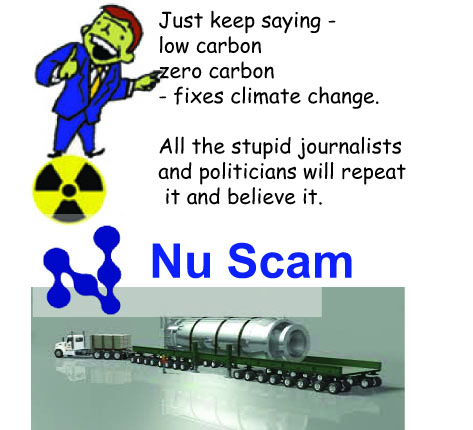 New nuclear projects, like this NuScale proposal, make no sense, Deseret, By Robert Davies, Contributor Sep 18, 2020, The debate over nuclear power has ramped up recently in Utah, with a number of the state’s municipal power agencies wrestling with continued participation in an experimental nuclear project in Idaho, the Utah Associated Municipal Power Systems/NuScale project.
Much has already been written about the project itself. Though proponents tout benefits of cost and reliability, two municipalities so far, Logan and Lehi, have recently opted out of further participation, citing mainly financial concerns over an experimental design with delays and cost overruns mounting rapidly. Still, this extremely expensive energy might be worth it ― if the environmental benefits, particularly for climate change, were significant.
Climate change is regarded within the full scientific community as a bona fide civilizational emergency ― that is, a situation requiring immediate, meaningful response to avoid catastrophic outcomes. For the climate emergency, meaningful response means cutting global carbon emissions at least in half in the next decade, and eliminating them entirely in the next two to three decades.
Electricity generation, as roughly a third of the current carbon emissions, is a large piece of the equation ― and it is on this point that nuclear power has been worth considering. Indeed, the project’s developers, having christened the endeavor the “Carbon Free Power Project,” are emphasizing the climate angle. And if the question were about building new nuclear generation versus new fossil (coal or natural gas) generation, they would have a point; the clear winner with respect to climate would be nuclear.
But this isn’t the question. In rapidly decarbonizing the electrical grid, the name of the game is replacing existing high-carbon (coal and gas) with new low-carbon, as quickly as possible.
……..proposed new nuclear makes no sense ― because it isn’t competing with fossils. Instead, new nuclear is competing with low-carbon renewables, chiefly solar and wind. And it simply can’t compete.
Investing in new nuclear projects to combat climate change is akin to the crew of the Titanic devoting time to building a whole new ocean liner instead of putting all their effort into loading the lifeboats; it steals time and resources from a much better alternative. Any money spent on new nuclear could buy us four to six times more wind and solar energy, available in months instead of a decade. And, remember, the next 10 years are critical.
Faced with this reality, UAMPS/NuScale proponents have said they want a mostly renewable grid, but supplemented by just a bit of nuclear for “baseload” ― and that this is necessary.
The refrain of 20th century-era power managers is that renewables like wind and solar aren’t reliable (“The wind doesn’t always blow, the sun doesn’t always shine … ”) and so constantly humming “baseload” is necessary for reliability. It sounds reasonable, but like most bumper-sticker wisdom, doesn’t hold up. In fact, it is objectively, demonstrably wrong.
The technologies of energy storage (utility-scale battery systems, for example) and demand management (when the energy is used) have transformed the landscape. Traditional “baseload” is no longer a necessary grid attribute. Anyone who says it is simply isn’t keeping up.
In Australia, for example, a 100-megawatt utility-scale battery system (about 1.5 times bigger than one of NuScale’s nuclear modules) is already proving more reliable and 90% cheaper than the “baseload” natural gas system it’s replacing. ………
new nuclear makes no sense whatsoever ― financially, or far more importantly, for addressing climate change.
The UAMPS/NuScale project is a poor choice for the planet, for our nation and for Utah’s independent municipal power companies. A bright future is possible if we’re smart and focused; the nuclear power trap is a distraction we can’t afford.
Robert Davies is an associate professor of professional practice in Utah State University’s department of physics. His work focuses on global change, human sustainability and critical science communication.https://www.deseret.com/opinion/2020/9/18/21400144/guest-opinion-nuscale-uamps-nuclear-project-power-utah-idaho-makes-no-sense
Antarctica – global heating and nuclear issues – theme for September 20
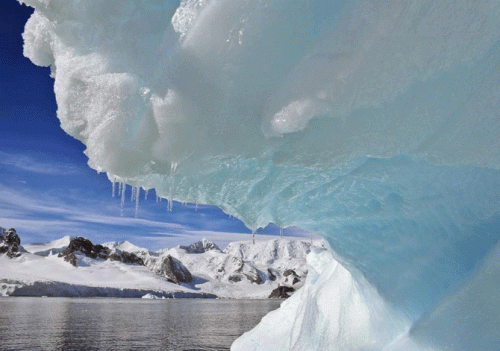
Antarctica is not in the news as much as the Arctic is, But global heating is affecting Antarctica too, and Antarctica has its nuclear issues.
Antarctica has made headlines several times this year due to extremely warmer than usual temperatures. It has been steadily heating up for decades. Antarctic ice shelves have lost nearly 4 trillion metric tons of ice since the mid-1990s, scientists say. Ocean water is melting them from the bottom up, causing them to lose mass faster than they can refreeze. As ice shelves melt, they become thinner, weaker and more likely to break. When this happens, they can unleash streams of ice from the glaciers behind them, raising global sea levels. Antarctica is also losing ice from melting ice sheets, and chunks of ice falling from glaciers.
Less studied than the Arctic region, Antarctic is now being investigated by Australian researchers, using robots to gather data from difficult to reach underwater areas. Satellite monitoring confirms the shelves’ melting trend.
Nuclear issues. From 6,000 nautical miles away, uranium mining in Australia is polluting the Antarctic. After 1945 atomic bomb testing sent radioactive pollution to the South Pole, as well as to everywhere else on the planet.
USA operated a small nuclear power plant at Antarctica’s McMurdo Sound. It was known as “nukey poo” because of its frequent radioactive leaks. It had 438 malfunctions – nearly 56 a year – in its operational lifetime, including leaking water surrounding the reactor and hairline cracks in the reactor lining. The emissions of low level waste water where in direct contravention of the Antarctic Treaty, which bans military operations as well as radioactive waste in Antarctica. After the reactor was closed down, the US shipped 7700 cubic metres of radioactive contaminated rock and dirt to California. Many USA naval workers there developed cancers.
Today, small nuclear reactors similar to this one, are being touted for remote areas in Australia and other countries. The history of this one in Antarctica, and 7 others elsewhere, was one of malfunctions, and closing down within a few years. This does not augur well for the small nuclear reactors being promoted today.
Why Kalgoorlie-Boulder wants a Malaysian rare earths plant and its radioactive waste
|
Why Kalgoorlie-Boulder wants a Malaysian rare earths plant and its radioactive waste https://www.abc.net.au/news/2020-08-10/lynas-building-rare-earth-processing-plant-kalgoorlie/12354150?fbclid=IwAR1P8stcOV05Un8BjuU2zv2fp1W1u3qnVaIvgwZSxJY3MkiIKg2eEfa_0G8
As the saying goes, “One man’s trash is another man’s treasure” — so why is a city in outback Western Australia embracing plans for a multi-million-dollar processing plant that Malaysia wants banned? Key points:
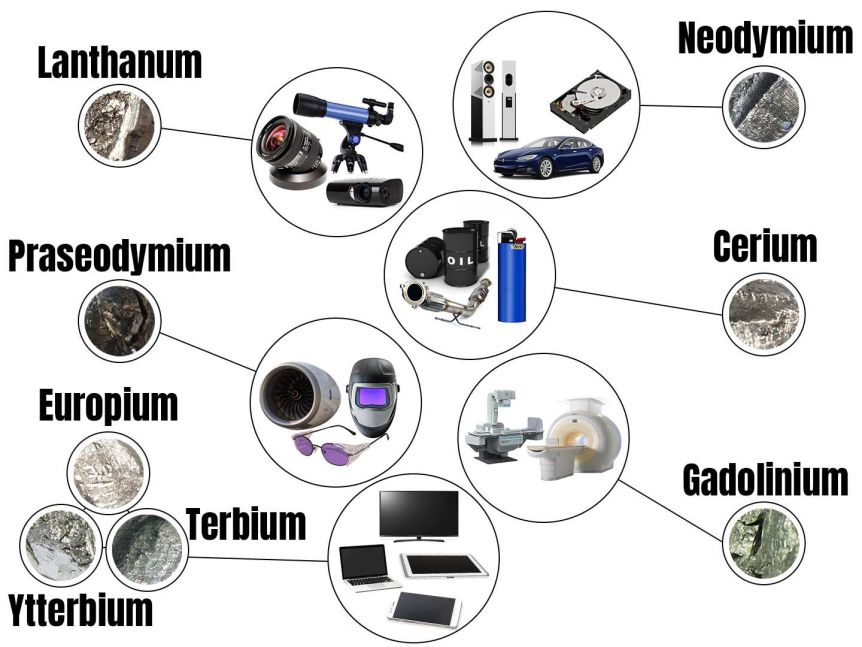
Lynas Corporation produces rare earth minerals, which are essential for technological devices such as smartphones, wind turbines and defence weapons systems. The company mines rare earths at Mount Weld in WA’s northern Goldfields and ships them to Malaysia for processing. The cracking and leaching part of the process creates low-level radioactive waste, a subject of controversy and protests in the Asian nation. In February, the Malaysian Government renewed Lynas’s operating licence with some key conditions, including that it must build a cracking and leaching plant elsewhere by mid-2023. Lynas would then be banned from importing materials containing naturally occurring radioactive material; the company still plans to use Malaysia for later stages of its processing. Race is on to build Kalgoorlie plantWhen the City of Kalgoorlie-Boulder heard Lynas was looking for a new site, it pursued the company and convinced it to move to the region. City chief executive John Walker said the plant would be a “game changer” for Kalgoorlie and help diversify the local economy, which was reliant on gold mining. Lynas has committed to using a residential workforce instead of fly-in fly-out workers, creating about 500 jobs in the construction phase and about 100 permanent roles.
|
Australian company Silex Systems involved in nuclear enrichment, in Kentucky’s radioactive disaster site Paducah
 SILEX SYSTEMS PRESSES AHEAD IN NUCLEAR ENRICHMENT, WILL AUSTRALIA FOLLOW? AU Manufacturing, by Peter Roberts 8 June 20 Technology development company Silex Systems is pressing ahead with a uranium enrichment project that has implications for any future move by Australia into nuclear industries.
The Sydney company has signed a sales agreement with the US Department of Energy (DOE) to allow it to process stockpiles of depleted nuclear fuels as part of its Paduach Project in Kentucky
Silex plans to process the fuels using its proprietary laser enrichment process being commercialised in partnership with Canada’s Cameco Corporation, with the partners producing uranium equivalent to one of the world’s top ten uranium mines.
While the commercialisation of the Silex process has been troubled in the past, the implications of an Australian company with the capabilities to enrich uranium could be a building block to a future nuclear fuels industry in Australia.
……….. nuclear power is always high on the wish-list of many on the political right.
The Silex project involves the construction by GLE, a venture owned 51 per cent by Silex and 49 per cent by Cameco, of the Paducah Laser Enrichment Facility to process depleted uranium over a period of several decades.
Production would begin in the late 2020s of around 2,000 tonnes of natural uranium hexafluoride per annum, the equivalent of a mine producing 5.2 million pounds of uranum oxide.
This already enriched uranium would immediately give GLE capabilities in uranium production, as a uranium conversion supplier and enriched uranium supplier – three of the four production steps of the nuclear fuel cycle.
Silex was formerly developing the project in association with GE and Hitachi, who exited the project allowing Cameco, one of the world’s largest listed uraniium companies, to increase its holding.
Silex is based at Lucas Heights in New South Wales, the site of Australia’s only nuclear reactor, and works closely with the Australian Nuclear Science and Technology Organisation (ANSTO)……..
It has been estimated that to move into nuclear power Australia would need a concerted national effort over seven to 10 years to train nuclear technicians, perform the necessary science and construct facilities…… https://www.aumanufacturing.com.au/silex-systems-presses-ahead-in-nuclear-enrichment-will-australia-follow
Small Modular Nuclear Reactors included in Morrison govt’s energy plan?
 New nuclear technologies to be examined in planning Australia’s energy mix, The government is looking at incorporating ‘emerging nuclear
Small modular reactors ‘have potential’, investment roadmap discussion paper says, Guardian, Katharine Murphy Political editor @murpharoo, Thu 21 May 2020
The Morrison government has flagged examining “emerging nuclear technologies” as part of Australia’s energy mix in the future in a new discussion paper kicking off the process of developing its much-vaunted technology investment roadmap.
Facing sustained pressure to adopt a 2050 target of net zero emissions, pressure it is continuing to resist, the government plans instead to develop the roadmap as the cornerstone of the Coalition’s mid-century emissions reduction strategy.
The new framework will identify the government’s investment priorities in emissions-reducing technologies for 2022, 2030 and 2050, although the paper makes clear the government will only countenance “incentivising voluntary emissions reductions on a broad scale” – not schemes that penalise polluters.
The discussion paper to be released on Thursday floats a range of potential technologies for future deployment, including small modular nuclear reactors. It says emerging nuclear technologies “have potential but require R&D and identified deployment pathways”.
While clearly flagging that prospect, the paper also notes that engineering, cost and environmental challenges, “alongside social acceptability of nuclear power in Australia, will be key determinants of any future As well as championing the prospects for hydrogen, the paper also flags the importance of negative emission technologies, including carbon capture and storage, as well as soil carbon and tree planting.
This week the government has signalled its intention to use the existing $2.5bn emissions reduction fund to support CCS projects – a move championed by Australia’s oil and gas industries. The new paper says the geo-sequestration of carbon dioxide “represents a significant opportunity for abatement in export gas” – nominating the Gorgon project as a case in point. Growth in emissions in Australia is largely driven by fugitive emissions from the booming LNG export sector.
The paper does acknowledge that solar and wind – renewable technologies – are now “projected to be cheaper than new thermal generation over all time horizons to 2050”. But it adds a caveat, contending that “the cost of firming is still a major issue, and will require much more work”……. https://www.theguardian.com/australia-news/2020/may/21/new-nuclear-technologies-to-be-examined-in-planning-australias-energy-mix
Outlandish claims made by Byron Shire Councillors, (Greens!!) promoting mobile Small Nuclear Reactors

What a strange article! The claims made about these “mobile small nuclear reactors” are completely fanciful. These reactors do not exist, are just in the planning stage for use by U.S. military. Even more fanciful , the article’s claim – “the pilot scheme, which will attract multi-million dollar grants.”. Just where are these grants to come from? The cash-strapped Australian government? The Russians? The Americans? The Chinese? This entire magical unicorn the Small Nuclear Reactor business is quite unable to attract investors. It’s only hope is to be funded by the tax-payer. I note these unnamed Green proponents talk about “spreading the risk fairly among the population” – and still think it’s just fine. So they understand that there’s a risk of dangerous radiation – a very strange attitude for a supposedly environmental group.
What could go wrong? https://www.echo.net.au/2020/04/what-could-go-wrong/ April 1, 2020 | by Echonetdaily, Mobile 100MW nuclear power plants have been proposed by the NSW National Party.
The latest miniaturisation technology that has seen electronic circuitry reduced from physical nodes to nanoscale impulses in quantum space has had astounding impacts on the relatively macroscale equipment needed to generate nuclear power. Such equipment has become so small it is now possible to build bus-sized nuclear reactors that can be deployed, as needed, to address gaps in the power grid.
Byron’s Greens councillors have indicated support for the proposal, and hope to involve the Shire in the early stages of the pilot scheme, which will attract multi-million dollar grants. A spokesperson for the local Greens said nuclear plants are not only less polluting than coal fired power stations, but being mobile means they spread the risk fairly among the population.
State and federal Greens later issued a statement disassociating themselves, ‘as always’, from Byron Shire councillors.
Small nuclear reactors, (just like large) can survive only with massive government subsidies
|
NUCLEAR PRICES ITSELF OUT OF THE FUTURE, HTTPS://WWW.AUMANUFACTURING.COM.AU/NUCLEAR-PRICES-ITSELF-OUT-OF-THE-FUTURE BY PETER ROBERTS, 9 Mar 20, I was at lunch the other day and out came the familiar theme – Australia should go nuclear to de-carbonise the economy. Well, a just-released report from the NSW Parliament’s State Development Committee should put an end to such talk – it is just too expensive and problematic. The report, detailed in Channel 9 media, found the cost of the two reactors being built in the US is now thought to be between $20.4 billion and $22.6 billion for each reactor. In the UK the cost of two reactors being build has jumped seven-fold to $25.9 billion each. And those being built in France and Finland are now costed at upwards of $17.7 billion each. Cost over-runs and delays mean that big nuclear power plants are only going to be built where there are massive government subsidies. And this is even before factoring in the cost of the odd Fukushima or Chernobyl. This morning on social media the pro-nuclear trolls were out in force – people are living happily now at Chernobyl one said. Well I visited Chernobyl 18 months ago and there is nothing normal about it. Maintaining the remains of the reactors at Chernobyl consumes 10 per cent of Ukraine’s admittedly modest GDP, and the long term effects of radiation continue to be felt. This is why nuclear proponents now talk about snazzy new small reactors which are going to be the next big thing. The same story is unfolding in small reactor construction as large – cost over-runs, very few small reactors actually under construction, and the need for massive, yes there’s that word again, government subsidies. We already know what the answer to our carbon crisis is – renewables. Wind and solar plus storage is already cheaper and getting cheaper every day. The future is not nuclear. |
|

“NuclearHistory” exposes the unpleasant facts about liquid fluoride thorium nuclear reactors

Some people believe that liquid fluoride thorium reactors, which would use a high temperature liquid fuel made of molten salt, would be significantly safer than current generation reactors. However, such reactors have major flaws. There are serious safety issues associated with the retention of fission products in the fuel, and it is not clear these problems can be effectively resolved. Such reactors also present proliferation and nuclear terrorism risks because they involve the continuous separation, or “reprocessing,” of the fuel to remove fission products and to efficiently produce U-233, which is a nuclear weapon-usable material. Moreover, disposal of theused fuel has turned out to be a major challenge. Stabilization and disposal of the
remains of the very small “Molten Salt Reactor Experiment” that operated at Oak
Ridge National Laboratory in the 1960s has turned into the most technically challenging cleanup problem that Oak Ridge has faced, and the site has still not been cleaned up. Last updated March 14, 2019″ Source: Union of Concerned Scientists, at https://www.ucsusa.org/sites/default/files/legacy/assets/documents/nuclear_power/thorium-reactors-statement.pdf I wonder who is correct, The Union of Scientists or Mr. O’Brien and ScoMo?
The Industry Push to Force Nuclear Power in Australia, Part 1 of A Study of the “Report of the inquiry into the prerequisites for nuclear energy in Australia” Australian Parliamentary Committee 2020.by nuclearhistory, February 29, 2020, “………Nuclear power enables the great powers to project power. It is a crucial geo-political influencer. If the committee has it’s way, we will be working with Russia and China and others on reactors they want to develop, that their own people have not had a say in, that are all based upon reactor designs first thought of in the 1950s, and where actual examples were built at that time, turned out to be unsafe failures which continue to present cost and risk at their sites to this day.
The committee’s first recommendation to government includes the following two sub parts:
c. procuring next-of-a-kind nuclear reactors only, not first-of-a- kind.” end quote.
“procuring next-of-a-kind nuclear reactors only, not first-of-a- kind” How refreshing that the Committee does not want the first gen iv type reactors – the Fermi 1 and Monju type for example. Those dangerous failures that sit like wounded Albatross in the US and Japan and continue to demand taxpayer funds. The failure of Monju, which has long been foreseen by many, renders the original basis for the Japanese nuclear industry subject to severe doubt. As result of vastly improved safety standards, fuel reprocessing in Japan is in doubt, its future course uncertain, and the nature of high level waste management has been an even more pressing issue.
Busting the lies of the Australian Government about “new” nuclear reactors
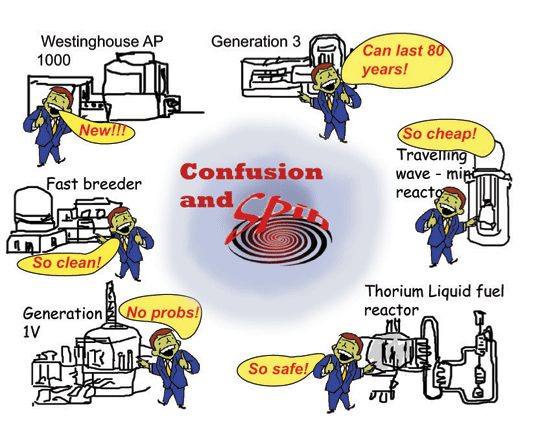
The core propositions of non-traditional reactor proponents – improved economics, proliferation resistance, safety margins, and waste management – should be reevaluated.
Before construction of non-traditional reactors begins, the economic implications of the back end of these nontraditional fuel cycles must be analyzed in detail; disposal costs may be unpalatable………. reprocessing remains a security liability of dubious economic benefit
Non-traditional” is used to encompass both small modular light water reactors (Generation III+) and Generation IV reactors (including fast reactors, thermal-spectrum molten salt reactors, and high temperature gas reactors)
|
Burning waste or playing with fire? Waste management considerations for non-traditional reactors Full Text
The Industry Push to Force Nuclear Power in Australia https://nonuclearpowerinaustralia.wordpress.com/2020/03/02/burning-waste-or-playing-with-fire-waste-management-considerations-for-non-traditional-reactors-full-text/ by nuclearhistory March 2, 2020 The following paper is copied here in order to counter the false, incorrect and erroneous propaganda published by the Australian Government and its Parliamentary Committee for lying to the Australian people about so-called new nuclear reactor designs, all of which were rejected by competent authorities in the 1950s, 1960s, and 1970s. The residues produced by these test reactors continue to cost the American taxpayer money and continue to present the American people with stored, hazardous radioactive waste which is also high chemically reactive. |
Australian public unaware of the dangers of small nuclear reactors
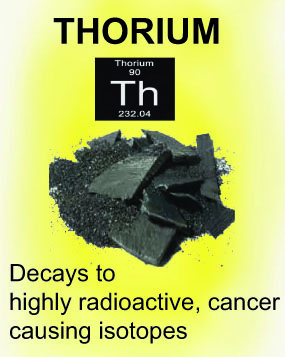 Thorium advocates say that thorium reactors produce little radioactive waste, however, they simply produce a different spectrum of waste from traditional reactors, including many dangerous isotopes with extremely long half-lives. Technetium 99 has a half-life of 300,000 years and iodine 129 a half-life of 15.7 million years.
|
HELEN CALDICOTT: The dangers of nuclear power in Australia https://independentaustralia.net/environment/environment-display/helen-caldicott-the-dangers-of-nuclear-power-in-australia,13597
By Helen Caldicott | 16 February 2020 Long-time anti-nuclear campaigner and writer Dr Helen Caldicott believes the risks of nuclear power outweigh the benefits.
AS AUSTRALIA grapples with the notion of introducing nuclear power as an energy source, it is imperative that people understand the intricacies of these new technologies including small modular reactors (SMR) and thorium reactors. There are basically three types of SMRs which generate less than 300 megawatts of electricity compared to current 1000 megawatt reactors. Light water reactors designs – smaller versions of present-day pressurised water reactors – will be built underground but with the same attendant problems as those at Fukushima and Three Mile Island. They will be mass-produced, so large numbers must be sold yearly to make a profit, and should a safety problem arise like the Boeing Dreamliner plane, they all will have to be shut down interfering substantially with electricity supply. SMRs will be expensive because the cost of unit capacity increases with decrease in the size of the reactor. To alleviate costs, it is suggested that safety rules be relaxed including reducing security requirements and a reduction in the 10-mile emergency planning zone to 1000 feet. High-temperature gas-cooled reactors (HTGR) or pebble bed reactors Continue reading |
Australia must learn to mine rare earths responsibly
we don’t seem to notice the problems with renewable energy.
We must jump on to the circular economy. If the world could RECYCLE rare earths elements – there’d be so much less need for mining and processing of rare earths, with its problematic creation of radioactive wastes.
What is needed is DESIGN – clever design of all devices that use rare earths, so that these elements can be easily retrieved, to use again in new devices.
While renewable energy technologies are used in the same old way – dig it up, throw away the wastes, we are locked in the 20th Century thinking – that also includes the aim of endless energy use, endless growth.
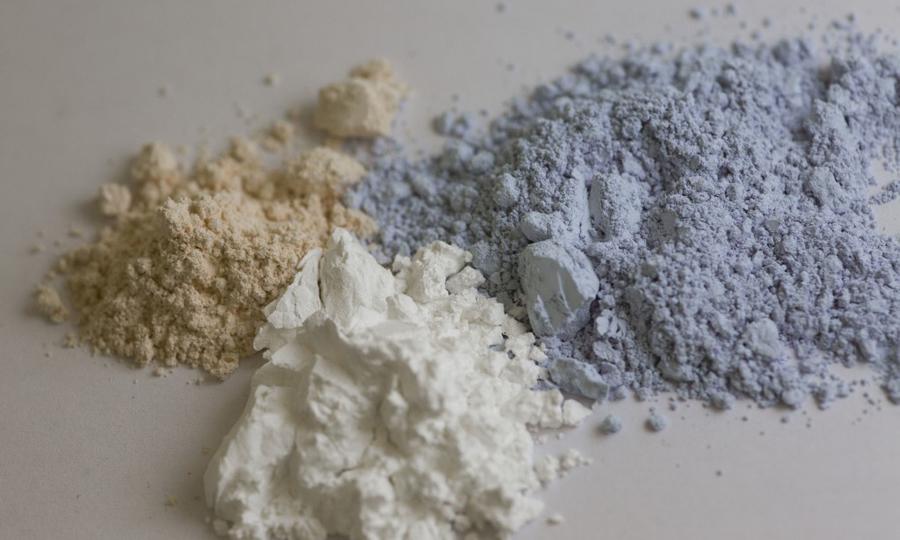 Critical minerals are vital for renewable energy. We must learn to mine them responsibly Bénédicte Cenki-Tok, Associate professor at Montpellier University, EU H2020 MSCA visiting researcher, University of Sydney
This includes common industrial metals such as steel and copper, but also less familiar minerals such as the lithium used in rechargeable batteries and the rare earth elements used in the powerful magnets required by wind turbines and electric cars. Production of many of these critical minerals has grown enormously over the past decade with no sign of slowing down.
Australia is well placed to take advantage of this growth – some claim we are on the cusp of a rare earths boom – but unless we learn how to do it in a responsible manner, we will only create a new environmental crisis.
One consequence of a massive transition to renewables will be a drastic increase not only in the consumption of raw materials (including concrete, steel, aluminium, copper and glass) but also in the diversity of materials used.
Three centuries ago, the technologies used by humanity required half a dozen metals. Today we use more than 50, spanning almost the entire periodic table. However, like fossil fuels, minerals are finite.
Can we ‘unlearn’ renewables to make them sustainable?
If we take a traditional approach to mining critical minerals, in a few decades they will run out – and we will face a new environmental crisis. At the same time, it is still unclear how we will secure supply of these minerals as demand surges.
This is further complicated by geopolitics. China is a major producer, accounting for more than 60% of rare earth elements, and significant amounts of tungsten, bismuth and germanium.
This makes other countries, including Australia, dependent on China, and also means the environmental pollution due to mining occurs in China.
The opportunity for Australia is to produce its own minerals, and to do so in a way that minimises environmental harm and is sustainable.
Where to mine?
Australia has well established resources in base metals (such as gold, iron, copper, zinc and lead) and presents an outstanding potential in critical minerals. Australia already produces almost half of lithium worldwide, for example…….
Fuelling the transition
For most western economies, rare earth elements are the most vital. These have electromagnetic properties that make them essential for permanent magnets, rechargeable batteries, catalytic converters, LCD screens and more. Australia shows a great potential in various deposit types across all states.
The Northern Territory is leading with the Nolans Bore mine already in early-stage operations. But many other minerals are vital to economies like ours.
Cobalt and lithium are essential to ion batteries. Gallium is used in photodetectors and photovoltaics systems. Indium is used for its conductive properties in screens.
Critical minerals mining is seen now as an unprecedented economic opportunity for exploration, extraction and exportation.
Recent agreements to secure supply to the US opens new avenues for the Australian mining industry.
How can we make it sustainable?
Beyond the economic opportunity, this is also an environmental one. Australia has the chance to set an example to the world of how to make the supply of critical minerals sustainable. The question is: are we willing to?
Many of the techniques for creating sustainable minerals supply still need to be invented. We must invest in geosciences, create new tools for exploration, extraction, beneficiation and recovery, treat the leftover material from mining as a resource instead of waste, develop urban mining and find substitutes and effective recycling procedures.
In short, we must develop an integrated approach to the circular economy of critical minerals. One potential example to follow here is the European EURARE project initiated a decade ago to secure a future supply of rare earth elements.
More than ever, we need to bridge the gap between disciplines and create new synergies to make a sustainable future. It is essential to act now for a better planet.
Experienced physicist doubts the value of small modular nuclear reactors for Australia
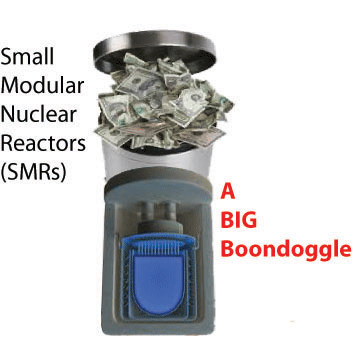 Despite a good safety record, nuclear power is not straight forward, THE AUSTRALIAN, Leslie Cook 20 Jan 2020
As a physicist with the British Atomic Energy Authority in the 1960s, I remember the scale and complexity of the task and the breadth of expertise required in science, engineering and regulation, even if an existing design is used.
This simply does not exist in Australia. Nor does the necessary construction capacity — and the thought of the CFMEU controlling concrete pours of 18,000 cubic metres is daunting. Small modular reactors exist only on paper at present and will also require infrastructure. , https://www.theaustralian.com.au/commentary/letters/despite-a-good-safety-record-nuclear-power-is-not-straight-forward/news-story/eb791793ea9751dc3a905a7869687e01
Australia as the salvation of the nuclear industry?
Australia is the great ‘white’ hope for the global nuclear industry, Independent Australia, By Noel Wauchope | 19 November 2019, The global nuclear industry is in crisis but that doesn’t stop the pro-nuclear lobby from peddling exorbitantly expensive nuclear as a “green alternative”. Noel Wauchope reports.
The global nuclear industry is in crisis. Well, in the Western world, anyway. It is hard to get a clear picture of Russia and China, who appear to be happy putting developing nations into debt, as they market their nuclear reactors overseas with very generous loans — it helps to have stte-owned companies funding this effort.
But when it comes to Western democracies, where the industry is supposed to be commercially viable, there’s trouble. The latest news from S&P Global Ratings has made it plain: nuclear power can survive only with massive tax-payer support. Existing large nuclear reactors need subsidies to continue, while the expense of building new ones has scared off investors.
So, for the nuclear lobby, ultimate survival seems to depend on developing and mass marketing “Generation IV” small and medium reactors (SMRs). …..
for the U.S. marketers, Australia, as a politically stable English-speaking ally, is a particularly desirable target. Australia’s geographic situation has advantages. One is the possibility of making Australia a hub for taking in radioactive wastes from South-East Asian countries. That’s a long-term goal of the global nuclear lobby. …..
In particular, small nuclear reactors are marketed for submarines. That’s especially important now, as a new type of non-nuclear submarine – the Air Independent Propulsion (AIP) submarine, faster and much cheaper – could be making nuclear submarines obsolete. The Australian nuclear lobby is very keen on nuclear submarines: they are now promoting SMRs with propagandists such as Heiko Timmers, from Australian National University. This is an additional reason why Australia is the great white hope.
I use the word “white” advisedly here because Australia has a remarkable history of distrust and opposition to this industry form Indigenous Australians…..
The hunt for a national waste dump site is one problematic side of the nuclear lobby’s push for Australia. While accepted international policy on nuclear waste storage is that the site should be as near as possible to the point of production, the Australian Government’s plan is to set up a temporary site for nuclear waste, some 1700 km from its production at Lucas Heights. The other equally problematic issue is how to gain political and public support for the industry, which is currently banned by both Federal and state laws. SMR companies like NuScale are loath to spend money on winning hearts and minds in Australia while nuclear prohibition laws remain.
 Ziggy Switkowski, a long-time promoter of the nuclear industry, has now renewed this campaign — although he covers himself well, in case it all goes bad, noting that nuclear energy for Australia could be a “catastrophic failure“. ……
his submission (No. 41) to the current Federal Inquiry into nuclear power sets out only one aim, that
‘… all obstacles … be removed to the consideration of nuclear power as part of the national energy strategy debate.’
So the Environmental Protection and Biodiversity Conservation Act (EPBC Act) should be changed, according to Switkowski. In an article in The Australian, NSW State Liberal MP Taylor Martin suggested that the Federal and state laws be changed to prohibit existing forms of nuclear power technology but to allow small modular reactors.
Switkowski makes it clear that the number one goal of the nuclear lobby is to remove Australia’s national and state laws that prohibit the nuclear industry. And, from reading many pro-nuclear submissions to the Federal Inquiry, this emerges as their most significant aim.
It does not appear that the Australian public is currently all agog about nuclear power. So, it does seem a great coincidence that so many of their representatives in parliaments – Federal, Victorian, New South Wales, South Australia and members of a new party in Western Australia – are now advocating nuclear inquiries, leading to the repeal of nuclear prohibition laws.
We can only conclude that this new, seemingly coincidental push to overturn Australia’s nuclear prohibition laws, is in concert with the push for a national nuclear waste dump in rural South Australia — part of the campaign by the global nuclear industry, particularly the American industry, to kickstart another “nuclear renaissance”, before it’s too late.
Despite its relatively small population, Australia does “punch above its weight” in terms of its international reputation and as a commercial market. The repeal of Australia’s laws banning the nuclear industry would be a very significant symbol for much-needed new credibility for the pro-nuclear lobby. It would open the door for a clever publicity drive, no doubt using “action on climate change” as the rationale for developing nuclear power.
In the meantime, Australia has abundant natural resources for sun, wind and wave energy, and could become a leader in the South-East Asian region for developing and exporting renewable energy — a much quicker and more credible way to combat global warming. https://independentaustralia.net/politics/politics-display/australia-is-the-great-white-hope-for-the-global-nuclear-industry,13326
1 This month

of the week – Disrupting War & Militarism in Oceania. Active solidarity. Radical practice.
 Antinuclear