Can a new mine save BHP’s loss-making Olympic Dam?
 Can a new mine save BHP’s loss-making Olympic Dam? Peter Ker,Resources reporter
Nov 18, 2020 – There’s a school of thought at BHP that the best way to fix its loss-making Olympic Dam mine is with a bulldozer.
By demolishing the old smelter, refinery, acid plant and other surface infrastructure that so often cause the inconsistency at the mine, advocates say BHP could start again by spending a few billion dollars on world-class infrastructure to allow it to capitalise on Olympic Dam’s extraordinarily large copper, gold, silver and uranium resource….(Subscribers only)…. https://www.afr.com/companies/mining/can-a-new-mine-save-bhp-s-loss-making-olympic-dam-20201026-p568sn
Australia should stop selling uranium to nuclear weapon states and not sell uranium into unstable regions.

—
BHP’s rejection of uranium is a sign of the future
 Wire 21st Oct 2020, The news this week that mining giant BHP will not continue with its long planned multi-billion dollar expansion of its Olympic Dam uranium and copper project is a sign that the market is turning against the controversial mineral.
It spells good news for the future of renewables but leaves the problem of leftover radioactive waste at Olympic Dam. There is no decision to change tack and mine the many many rare earths which also exist at the site.
http://thewire.org.au/story/bhps-rejection-of-uranium-a-sign-of-the-future/
OLympic Dam uranium mine – NOT the great white hope for South Australia
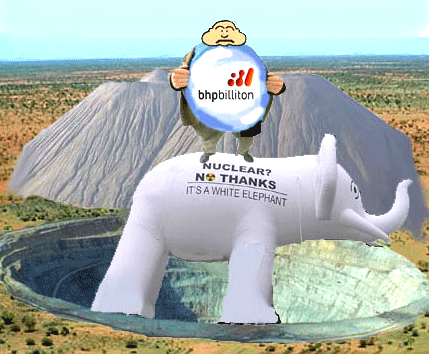 The Olympic Dam silver bullet is forever tarnished
“From the BHP side BFX is dead and buried… I suggest a new name: “OD-PERHAPS” for short.”
It’s time to stop looking to one mine in the state’s Far North for the answer to our economic problems
BHP, and our politicians, should be wary of rolling out the “expansion” tag to a state weary of spin around Olympic Dam, writes Business Editor Cameron England.
Cameron England, Business Editor, The Advertiser, October 20, 2020 ,
South Australians can take today’s announcement from BHP that its expansion plans have been shelved again as a signal that it’s time to step off the Olympic Dam silver bullet train once and for all…………
hanging our hopes on a big bang – or even a small bang – expansion of the project as a pivotal turning point for the state’s economy is a fool’s game.
The initial $30 billion open pit expansion – which was shelved in 2012 – would genuinely have been a game-changer for the state.
It included plans for an open pit bigger than the Adelaide CBD, new ports, and a surge in annual royalties for the State Government. But it was not to be.
The BFX expansion – which was shelved today – was a more modest $3.7 billion proposal, and while the spending would have been a boon to the state, it alone would have not moved the dial in a significant way for the state’s economy.
A broadbased approach, based around SA being a great place to do business – which the government is actually pursuing – stands a better chance of being the tide which lifts all boats.
Unfortunately the idea of an Olympic Dam expansion seems to be enough to make state ministers lose their equilibrium.
Back in 2011, former Infrastructure Minster Pat Conlon, with the caveat that it wasn’t his decision to make, declared the project a “goer” and said “I can tell you, having been regularly updated by my colleague Kevin Foley, Olympic Dam is a goer, it will get a sign-off.
“I’m very, very confident we’ll start up soon.’’
It didn’t of course.
And now current Mining Minister Dan van Holst Pellekaan says, similar to the results from Pantene, it won’t happen overnight, but it will happen…..
From the BHP side BFX is dead and buried, although they are committed to an incremental $500 million smelter maintenance plan and do want to gradually increase production.
But what most people would understand is an “expansion plan” is off the cards for now.
BHP needs to learn to manage expectations around this project, in a state which does have a tendency to hope for silver bullet solutions.
They’re between a rock and a hard place with their obligation to keep investors up to date, and not get people too excited with projects that invariably have billion dollar price tags attached.
I suggest a new name: the Olympic Dam Project Evaluation, Risk, Holistic Analysis and Potential Scheme – or “OD-PERHAPS” for short.
Uranium: the mineral that never made sense now doesn’t even make dollars
 Uranium: the mineral that never made sense now doesn’t even make dollars, 20 Oct 20, News that BHP, the world’s biggest mining company, will not continue with the long planned multi-billion dollar expansion of its Olympic Dam uranium and copper project shows the clock is ticking on uranium, the Australian Conservation Foundation said today.
The planned expansion of the mine in northern South Australia enjoyed strong state and federal government support and was on Prime Minister Scott Morrison’s recent list of major projects to be fast-tracked.
“This move is further evidence of the deep market malaise surrounding uranium operations,” said Australian Conservation Foundation campaigner Dave Sweeney.
“Today’s announcement shows that political access, spin and favours cannot change the realities of an ore body or the global commodity market.
“BHP has made a basic, hard-headed business decision not to proceed with this project.
“The global uranium price has been hammered since the Fukushima nuclear disaster and it is unlikely to improve. The sector has scant social license and is increasingly embattled.
“Today’s decision by BHP, coupled with Rio Tinto’s exit from operations at the Ranger mine in Kakadu, shows the clock is ticking on uranium, the asbestos of the 21st Century.
“South Australia’s energy, employment and economic options should not be tied to a continued dependence on high impact, low certainty resource projects.
“South Australia is well placed to lead the nation in renewable energy tools, technology and thinking.
“This decision may be the pivot needed to shift to a secure, sustainable contemporary economy.”
For context or comment contact Dave Sweeney on 0408 317 812
BHP dumps its plan to expand Olympic Dam uranium mine
BHP shelves $3.7bn expansion plan for Olympic Dam mine in SA for a second time
BHP has shelved a plan to spend $3.7 billion expanding the Olympic Dam copper and uranium mine – just months after the colossal project was put on a Federal Government fast-track. Cameron England, Business Editor, The Advertiser, 19 Oct 20,
BHP’s $3.7 billion expansion plans for the Olympic Dam mine have been abandoned.
The company had been looking at a Brownfields Expansion Project (BFX) which would have increased production from the current capacity of 200,000 tonnes of copper per year to as much as 300,000.
The project was one of a number of big ticket items earmarked for streamlined approval processes by the Federal Government in June in response to the COVID-19 pandemic and has major project status from the State Government……….
It is the second time BHP has scrapped plans for Olympic Dam. In August 2012, the company announced it had shelved its $30 billion expansion and would go back to the drawing board to find a cheaper alternative. Market conditions, subdued commodity prices and higher capital costs led to the decision eight years ago………
in its quarterly review released this morning, BHP said following more than 400km of underground drilling, which improved the knowledge of the ore body, it had decided to focus on incremental improvements, rather than a step change investment at the site.
“Following more than 400 km of underground drilling associated with the Brownfield Expansion (BFX) project studies, we have improved knowledge of the ore body’s variability,’’ the company said.
“This has provided challenges for the economics of the BFX project, and we have decided the optimal way forward for now is through targeted debottlenecking investments, plant upgrades and modernisation of our infrastructure.’………
BHP said Olympic Dam was performing well, and had posted its best quarterly performance in the past five years in the three months to the end of September.
“Over the next two years, our focus will remain on completing our asset integrity program to underpin more stable operations and copper production of more than 200 ktpa. We have a significant investment program in place to achieve that,’’ Mr Basto said.
“We will continue to study longer-term options for growth. Our enhanced understanding of the underground resources in the Southern Mine Area, promising results from Oak Dam and stronger foundations will help us unlock the full potential of Olympic Dam……..
In August, BHP announced Olympic Dam had made a full year loss before interest and tax of $US79 million, on revenues of $US1.463 billion. That was up from a loss the previous financial year of $US58 million on revenues of $1.351 billion.
Clean-up for Ranger uranium mine. Rum Jungle mine still a polluted mess
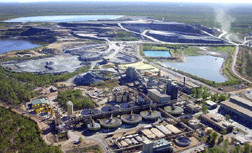 It’s costing a fortune but the Ranger uranium mine is gradually being cleaned up, Canberra Times, Chris McLennan 6 Oct 20 It’s costing a fortune but the Ranger uranium mine is gradually being cleaned up, Canberra Times, Chris McLennan 6 Oct 20
Over the years many people questioned the decision to allow uranium to be mined inside one of Australia’s most famous and largest national parks – Kakadu. But in 1980 that’s exactly what happened, an open-cut mine surrounded by a park famed for its natural beauty made even more famous by the hugely popular Paul Hogan movie, Crocodile Dundee. Now the uranium is gone, dug out and sent off to nuclear power stations around the world and Australia’s longest continually operated uranium mine is almost done.
Nuclear power is making way for renewable energy. Uranium has been mined at Ranger for more than three decades, producing in excess of 130,000 tonnes of uranium oxide. The mine is being closed, Jabiru – the town built to service to the mine workers, is in the process of being handed over to Traditional Owners and the mining company is being closely watched as it delivers on its promise to clean up the site. Cleaning up uranium mines is not something the Northern Territory does well – there is still a huge environmental mess at Rum Jungle closer to Darwin.
That uranium mine is a legacy of the Cold War. Australia’s first large scale uranium mine was dug at Rum Jungle on behalf of our “Allies” in the UK and USA to fuel their nuclear weapon programs in the 1950s. Now water fills that vast open cut, a lake as locals call it, and another attempt is going to have to be made to cap the radioactive tailings left behind, the first attempt, supposed to last a century, failed after 20 years. Energy Resources Australia, a subsidiary of Rio Tinto, says it has spent more than $642 million in the past eight years on rehabilitation of the mountains of tailings complicated by a lake created from a vast flooded pit………. This story It’s costing a fortune but the NT’s uranium mine is being cleaned up, gradually first appeared on Katherine Times. https://www.canberratimes.com.au/story/6955634/its-costing-a-fortune-but-the-nts-uranium-mine-is-being-cleaned-up-gradually/?cs=14231 |
|
Adnyamathanha Traditional Lands Association gets $millions from uranium mining: need for Royal Commission into Native Title
 South Australia’s premier will be formally asked to launch a royal commission into native title, Transcontinental, Greg Mayfield, 10 Oct 20, South Australia’s premier will be formally asked to launch a royal commission into native title, Transcontinental, Greg Mayfield, 10 Oct 20,
Indigenous leaders will make a last-ditch formal attempt to persuade the South Australian government to order a royal commission into Native Title and Aboriginal corporations. Premier Steven Marshall has agreed to see the group, led by Mark Koolmatrie, in Adelaide on Friday, October 16, to hear their case as outlined by a Senior Counsel. Sources say Mr Marshall may agree to the plea, but the verdict is unknown at this stage.
The submission comes after the Canberra-based Office of the Registrar of Indigenous Corporations put two Port Augusta-based Aboriginal corporations into special administration this year. It also follows demands by an action group for access to financial records of the Adnyamathanha Traditional Lands Association, based at Port Augusta and which is one of the groups under administration.
The association receives millions of dollars in royalties from the Beverley uranium mine in the outback. Indigenous leaders say problems with Native Title corporations exist around the nation. They have called also for a federal royal commission. …… “The message is that there are concerns at the way things are happening. “There is a better way of doing business. We want to find out about what ’empowerment’ really means. “We want to see the financial records of the Adnyamathanha association.”…….. Aboriginal Reform Group of South Australia and Adnyamathanha elder Charlie Jackson, of Port Augusta, said some members were appointed as directors of corporations without knowing their rights and responsibilities. “If you don’t know your role as a board member, that is going to cause conflict for you and for the organisation,” he said. “We want the government to instigate a royal commission into Native Title and Aboriginal corporations throughout SA. “There are major problems in these organisations.” The newspaper is seeking comment from the Premier’s office. https://www.transcontinental.com.au/story/6962338/sa-premier-to-look-at-indigenous-inquiry-plea/ |
|
BHP betrays international safety efforts
|
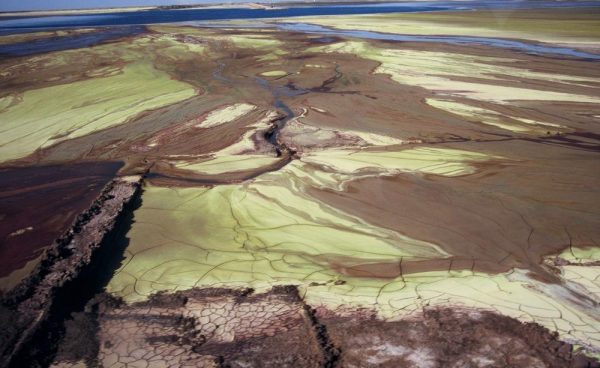
BHP betrays international safety efforts https://theecologist.org/2020/sep/15/bhp-betrays-international-safety-efforts, Dr Jim Green, David Noonan 15th September 2020, Mining giant BHP was complicit in the Samarco mining disaster in Brazil but the company has not learned from the experience. The world’s largest mining company BHP has betrayed international efforts to reform the mining sectors’ ongoing potential to cause catastrophic impacts though the failure of tailings dams. Operations at the Olympic Dam copper-uranium mine in South Australia show BHP has failed to learn key lesson’s regarding transparency, accountability and corporate responsibility following its complicity in the November 2015 disaster at the BHP and Vale joint venture Samarco iron ore mine in Brazil. Samarco was a corporate mining disaster which caused the loss of 19 lives and catastrophic environmental impacts with permanent pollution of native people’s land and rivers. Brazilian prosecutors say the company failed to take actions that could have prevented the disaster. Mine BHP now faces a $6.3 billion (US dollars) law-suit in the UK on behalf of 200,000 Brazilian people. The case alleges the Anglo-Australian mining giant BHP was “woefully negligent” in the run-up to the 2015 dam failure that led to Brazil’s worst environmental disaster. Mayors of two towns wiped out by the Samarco disaster assert that BHP has been using delaying tactics to avoid paying compensation to thousands of people affected by the flood of tailings waste. There have long been calls from environmentalists and others for Australian mining companies to be required to apply Australian standards to their overseas mining operations. The logic is sound given the often inadequate practices of Australian mining companies overseas. But the logic is also a little shaky given that mining standards in Australia leave much room for improvement. Olympic Dam is a case in point. BHP orchestrated approval in 2019 for a massive new tailings dam at Olympic Dam ‒ Tailings Storage Facility 6 (TSF6). This tailings dam is to be built in the same risky ‘upstream’ design that featured in both the Samarco disaster and the January 2019 Vale Brumadinho tailings dam disaster that killed over 250 people – mainly mine workers ‒ in Brazil. Community An internal 2016 report reveals that TSF6 has the potential to cause the death of 100 or more BHP employees and to cause “irrecoverable” environmental impacts from release of tailings waste. Yet, contrary to the recommendations of NGOs in Australia, Federal Environment Minister Sussan Ley granted approval for TSF6 without a comprehensive safety impact assessment and without setting any conditions on BHP to protect workers and the environment. TSF6 is to cover an area of nearly three sq km in tailings waste up to a height of 30 metres at the centre of the tailings pile, equivalent to the height of a nine-story building. BHP will leave this toxic mine waste there forever. Australian Prime Minister Scott Morrison has announced a “fast track” taskforce to further prioritise and accelerate approvals to BHP mining interests in a major Olympic Dam mine expansion process. BHP has clearly failed to learn the lessons of the disasters in Brazil. TSF6 represents an untenable risk to the lives of BHP employees and is unfit for community safety expectations in the 2020’s. Such approaches are clearly inconsistent with modern environmental practice and community expectations. Secret Radioactive tailings waste at Olympic Dam poses a significant long-term risk to the environment and must be isolated for over 10,000 years ‒ effectively forever. Continue reading |
Mirrar people at last have control of Jabiru, as Ranger uranium mining set to end operations

Traditional owners regain control of Jabiru as historic land rights law passes Senate Natasha Emeck, NT News, 3 Sept 20 HISTORIC land rights legislation that will allow the traditional owners of Jabiru to regain control of their township has passed through the Senate.
Amendments to Aboriginal land rights laws passed through the upper house of federal parliament pm Thursday, returning the ownership of Jabiru to the Mirarr people and allowing for a long-term township lease.
The mining town was built in 1982 to service the Ranger uranium mine, which will cease operation in January 2021, heralding a new era for the town and surrounding Kakadu National Park.
Senator Malarndirri McCarthy said today’s historic moment had been a “long time coming” for the Mirarr people, who had been campaigning for this for 20 years.
Senior Mirarr traditional owner and Kakadu resident Yvonne Margarula, pictured in Kakadu National Park.
Mirarr senior traditional owner Yvonne Margarula said her people were glad to see the legal changes finally happen.
“They are essential to ensuring the vibrant post-mining future of Jabiru and the Kakadu region that Mirarr have been planning for,” she said.
“We look forward to welcoming visitors from all around the world to our beautiful country.”
Gundjeihmi Aboriginal Corporation, who represents the Mirarr traditional owners, have crafted a masterplan to turn Jabiru into an Indigenous-led tourism and services town.
“This bipartisan change to the legislation is an essential step to correct the historical exclusion of the town of Jabiru from Aboriginal ownership and allow Mirarr to take the legal control they need to enact their vision,” chief executive Justin O’Brien said.
Uranium ban brought benefit to New South Wales
 Uranium ban brought us benefit, Newcastle Herald, Dave Sweeney, Australian Conservation Foundation 23 Aug 20,
THE state government’s proposed removal of a long-standing and popular ban on uranium mining in New South Wales flies in the face of evidence, community interest and market reality. The global uranium price remains depressed following the Fukushima nuclear disaster and is not likely to recover. The uranium market is over supplied and existing producers are shelving projects across Australia and around the world.
In November 2019 the CEO of the world’s largest uranium miner, Canadian company Cameco, stated that “not only does it not make sense to invest in future primary supply, even the lowest-cost producers are deciding to preserve long-term value by leaving uranium in the ground.”
The ban has served NSW well. It has provided policy certainty and avoided the radioactive waste and legacy mine issues affecting other places, including Kakadu, where a massive $1 billion clean-up is underway at the former Ranger mine. This poorly conceived piece of gesture politics could lead to lower tier and inexperienced mining companies cutting corners and increasing environmental and community risk and it simply makes no sense for NSW to jump aboard a sinking nuclear ship. NSW’s energy future is renewable, not radioactive.
Pointless: Removal of New South Wales Uranium mining ban, as uranium glut continues, and nuclear industry declines
Nuke South Wales?, ACF, Dave Sweeney, 20 Aug 20,
The proposed removal of a long-standing and popular ban on uranium mining in New South Wales is empty gesture politics that flies in the face of community interest and market reality, the Australian Conservation Foundation (ACF) said.
The global uranium price remains depressed following the Fukushima nuclear disaster and is not likely to recover.
“The nuclear power age is winding up, so it makes no sense for NSW to jump aboard a sinking ship,” said ACF nuclear campaigner Dave Sweeney.
“The ban is popular and has served NSW well, providing policy certainty and avoiding the radioactive waste and legacy mine issues affecting other places, including Kakadu, where a massive $1 billion clean-up is underway at the former Ranger mine.
“This is empty gesture politics that could lead to lower tier and inexperienced mining companies cutting corners and increasing environmental and community risk.
“This poorly conceived plan puts political posturing above community benefit and could lead to increased pollution and risk for NSW communities and environment for scant gain.
“NSW’s energy future is renewable, not radioactive – this tired political fix is no substitute for a credible and effective energy policy.
“Deputy Premier Barilaro might see this as in the Nationals’ interest, but it is certainly not in the national interest.”
In November 2019 the CEO of the world’s largest uranium miner, Canadian company Cameco, stated, “Not only does it not make sense to invest in future primary supply, even the lowest-cost producers are deciding to preserve long-term value by leaving uranium in the ground.”
The global market is over supplied as existing producers exit or defer projects and higher-grade uranium ore deposits remain in the ground across Australia and around the world.
For context or comment contact Dave Sweeney on 0408 317 812
Uranium mining to become legal in NSW, as govt supports OneNation in nuclear push.
Uranium Mining. NSW govt to support One Nation in Nuclear Push. Daily Telegraph, 19 Aug 20,
Uranium mining looks set to become legal in NSW after a deal was struck between Premier Gladys Berejiklian and Deputy Premier John Barilaro to get it through cabinet. … (subscribers only) NSW to start mining uranium after agreement on plan to lift ban [$]
.
BHP’s Uranium mine Olympic Dam makes a financial loss for second year running
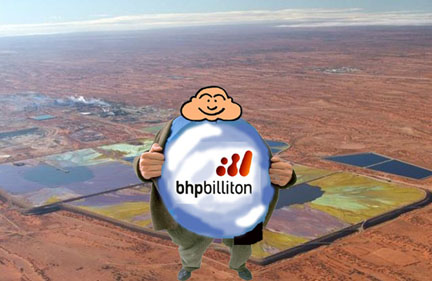 Olympic Dam records a second financial year loss, of US$79 million on revenue of US$1.46 billion in 2019-20. Giving a total three-year loss of approx. US$100 million on revenues of approx. US$4 billion, with last profit in 2017-18 fin yr of only US$39 million. Olympic Dam records a second financial year loss, of US$79 million on revenue of US$1.46 billion in 2019-20. Giving a total three-year loss of approx. US$100 million on revenues of approx. US$4 billion, with last profit in 2017-18 fin yr of only US$39 million.
Olympic Dam Mining revenues are at approx. only 2.5 per cent of total BHP corporate revenues, Not very convincing… Olympic Dam reports $US79 million loss, is on the lookout for new leader Olympic Dam’s turnaround story is not yet complete, with BHP’s mega mine posting another loss for the past financial year as it starts the hunt for a new leader. Cameron England, Business Editor, The Advertiser August 18, 2020 The Olympic Dam mine in South Australia’s Far North has increased its full year loss and is on the lookout for a new leader, global miner BHP has announced. In reporting its full year results, BHP said Olympic Dam, which produces copper, uranium, gold and silver, had made a full year loss before interest and tax of $US79 million, on revenues of $US1.463 billion. This is up from a loss the previous financial year of $US58 million on revenues of $1.351 billion. The mine last reported a profit, of $US39 million off revenues of $US1.255 billion in 2017-18, and has for many years underperformed in comparison with BHP’s high-margin assets such as Western Australian iron ore……… BHP also announced Laura Tyler – asset president Olympic Dam since 2018 – would be promoted to chief technical officer, and a new leader would be sought for the mine……. “A replacement for the Asset President Olympic Dam will be the subject a future announcement.’’In the interim, Justin Bauer, currently general manager surface development & planning, will become acting asset president…….. But the company is yet to give solid commitments around timelines, financial investments and job numbers for the expansion, as it continues work on internal feasibility studies. |
Remote community loses their court fight to get uranium-free drinking water
Key points:
- The tribunal ruled drinking water uranium levels were not the housing department’s responsibility
- The residents were seeking compensation over the contamination and also tap filters to bring their water in line with guidelines
- The tribunal has called for further submissions relating to claims about housing conditions and repairs
Data compiled by the NT’s Power and Water Corporation had shown there were 0.046 milligrams of uranium per litre (mg/L) in the town’s water supply — close to three times the level recommended in national guidelines.
According to Australia’s national guideline, published by the National Health and Medical Council, uranium levels in drinking water should not exceed 0.017 milligrams per litre.
Residents of Laramba, north-west of Alice Springs, lodged a legal case against the landlord, which in this case is the NT’s Department of Housing.
The case was submitted to the NT Civil and Administrative Tribunal (NCAT) in November last year, highlighting problems with not only residents’ drinking water but also housing repairs and conditions in the town.
Residents sought compensation over the uranium contamination and also asked for a filter system on at least one tap in their household kitchens to bring uranium levels in line within Australia’s drinking water guidelines.
But in the NTCAT’s ruling against the residents, the tribunal member Mark O’Reilly said the uranium in the water was not the responsibility of the landlord.
“In my view the landlord’s obligation for habitability is limited to the premises themselves,” the decision read…….
Appeal of NTCAT decision ‘likely’
Daniel Kelly, lawyer assisting for Australian Lawyers for Remote Aboriginal Rights said the result was disappointing and an appeal was likely.
“We’re in the process of speaking to our clients, but our view is — and the views that we’ve been able to garner from our clients are — that we should seek to have this decision reviewed,” Mr Kelly said.
“The decision leaves the question well who is responsible? Because these people have been exposed to uranium in the drinking water for over 10 years.”
“The Department of Housing is doing nothing about it, Power and Water is doing nothing about it and the Northern Territory Government is doing nothing about it.”
In a statement to the ABC, the NT Department of Housing said it would not be providing comment as proceedings were ongoing.
In relation to the rest of the Laramba case, involving housing conditions and repairs, the tribunal has called for further submissions. https://www.abc.net.au/news/2020-07-14/nt-community-laramba-lose-legal-battle-over-uranium-in-water/12454206?fbclid=IwAR2Vb6AHk4MlypQI-_s8MMuWSLFCVQOViknD4nXc52RY4-i5NyA767hOHYk
1 This month

of the week – Australians for War Powers Reform (AWPR)
To see nuclear-related stories in greater depth and intensity
 Antinuclear