Senator Rex Patrick calls on South Australian govt to come clean about nuclear waste dumping
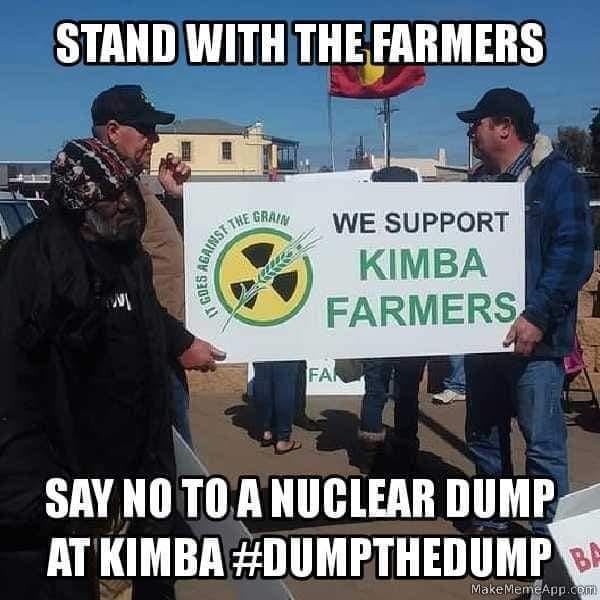 Patrick has Kimba nuclear question, https://www.whyallanewsonline.com.au/story/7058277/patrick-has-kimba-nuclear-question/?fbclid=IwAR3o2cKC_SU9yV-Q-d_xa470gmY0xG5CXkYRiA-LOJuXRDV76e8ls0v1n04, Luca Cetta, 17 Dec 20, The state government has remained silent on its stance relating to the planned Kimba nuclear waste site and South Australian Independent Senator Rex Patrick has called on the government to make known its position on the proposal.
The federal government has talked with the Kimba community about creating the site near the town with a majority of residents favouring the facility.
Senator Patrick said he had lodged a freedom-of-information (FOI) request seeking access to correspondence from the time of the last state election in 2018 to today and was “surprised” there had been only a few pieces of correspondence between Minister for Energy and Mining Dan van Holst Pellekaan and the federal government.
“I was very interested as there was a lot taking place between the federal government and the community in Kimba, and I was interested in what the state government has been doing through the process,” he said.
“The state has a role to play … and I was surprised there was only one letter to the Premier and a letter from former federal Resources Minister Matt Canavan and response. That is all we have seen. That is the only part the state government has had to play.”
While acknowledging it was a federal facility and issue, Senator Patrick said the state government should be involved by way of communication with federal leaders and community engagement.
“While I respect it is a national facility, there is no question the state government has skin in the game and I question why there is silence publicly,” he said.
“They should come out and support or oppose it so their position is known.
“They do need to be engaging the community as well to make sure all state-related issues that will flow from the facility are addressed.”
He said parts of the correspondence included redactions relating to the proposed site.
In a letter from Mr van Holst Pellekaan to Senator Patrick, which has been obtained by the Whyalla News, Mr van Holst Pellekaan said “the FOI Act provides that an agency may refuse access to a document if it is an exempt document” and that there was cause to provide “partial access” to three documents.
The letter outlines why parts should be redacted, including that a document can be exempt if “it contains information from an intergovernmental communication to the Government of South Australia”, while he also pointed to how the Act notes a document could be exempt if it “would, or could reasonably be expected to, cause damage to relations between the Commonwealth and a State”.
Senator Patrick said Mr van Holst Pellekaan made a “fundamental error” in thinking the correspondence was exempt under federal law as he was “not entitled to make that decision”.
He said he would take the matter to the South Australian Civil and Administrative Tribunal (SACAT) to “uncover what is underneath this”.
“There should be transparency about what has been communicated between the government of South Australia and the federal government,” he said.
“The Minister has made a decision. He relies on the fact he thinks it would be exempt under federal law and he is not entitled to make that decision. You can’t say ‘I think it is exempt’, you have to say ‘I think it is exempt because it would harm release in a particular way…’.”
Mr Patrick said the state FOI Act granted people and parliamentarians a positive right to documents and was only subject to restrictions consistent with the public interest and preservation of personal privacy.
He said the Act burdened the agency with establishing their case if they wanted to restrict access.
Both Commonwealth and state constitutions establish a democracy underpinned by a responsible system of government. Democracy and responsible government both require participation by people and, just because this is communication between the state and federal government, it doesn’t mean it automatically gets to be confidential. The Minister does not meet his burden by simply stating that the communications are confidential,” he said.
“This is now a fight between myself and Mr van Holst Pellekaan. This is Senator against Minister in SACAT. The Minister needs to be transparent with me, but more important with the people of SA.
“Governments work for the people, everything they do is paid for by the people. The people have a right to know what it is they are up to and how they are going about what they are up to.”
Mr van Holst Pellekaan did not respond to questions for this article.
Federal govt accepted Queensland’s “NO” to nuclear dump. Why not South Australia’s?
 Kazzi Jair No nuclear waste dump anywhere in South Australia, 19 Dec 20, https://www.facebook.com/groups/1314655315214929
Senator Rex Patrick contests Freedom of Information refusal about nuclear waste plan

Rex Patrick to ask SA Civil and Administrative Tribunal to reverse nuclear FoI refusal
An SA Senator will ask a court to decide whether his call for information on a nuclear waste facility should have been granted. Advertiser –Matt Smith, December 16, 2020 –
South Australian senator Rex Patrick will tackle State Government lawyers after a Freedom of Information request concerning a nuclear waste facility was refused.
He will fight to overturn the decision in the SA Civil and Administrative Tribunal over what he describes as “a lack of transparency”.
Senator Patrick, pictured, said his FOI request was met with a “highly unusual” reminder from the Crown Solicitor’s office that if he were to fight the decision and lose he would be liable for costs.
He had asked for correspondence between Energy and Mining Minister Dan van Holst Pellekaan and the Federal Government concerning the establishment of a National Radioactive Waste Management Facility in SA.
“FOI in SA is a farce. Late responses, cavalier exemption claims, delayed review processes and now threats if you push a request beyond the control of the very government department seeking to hide information,” he said.
A government spokesman said: “While it would not be appropriate to comment on matters currently before SACAT, it’s worth noting that the tribunal and only the tribunal makes a determination on whether costs are awarded, and can do so if satisfied that there are statutory grounds to do so.
No decision has been made in this matter and, as such, no application for costs has been, or can be, made at this time.”
It was revealed this week that reviews of FOI requests are taking more than six months to
complete. SA Senator Rex Patrick takes nuclear FOI ‘farce’ to court | The Advertiser (adelaidenow.com.au)
See Senator Rex Patrick’s Face Book page post:
https://www.facebook.com/193047494589008/posts/836162363610848/
MINISTER DAN van HOLST PELLEKAAN RESORTS TO THREATS WHEN ASKED TO BE TRANSPARENT
In response to a request for transparency, Minister Dan van Holst Pellekaan has outrageously instructed the Crown Solicitor to threaten me with costs.
Everything the SA Government does it does for public purpose and using SA taxpayer’s money. As such, South Australians are entitled to see all that the State Government does, admittedly with some exceptions.
I asked Minister van Holst Pellekaan’s office to provide me with correspondance between the State and Federal Government on the proposed National Radioactive Waste Management Facility at Kimba, using SA Freedom of information laws. At first he failed to respond to the request in the timeframe required by the law, then he made a decision that hid (presumably embarrassing) information from me.
I have asked SACAT, the State’s independent umpire, to review the Minister’s decision. Minister van Holst Pellekaan has now threatened me with “costs” if I proceed. That prompts two questions: 1) what’s he trying to hide and 2) if he’s prepared to threaten a senator seeking transparency, how would he treat a regular South Australian that reasonably requested information from him?
Ranger Danger: Rio Tinto Faces Its Nuclear Test in Kakadu Uranium
|
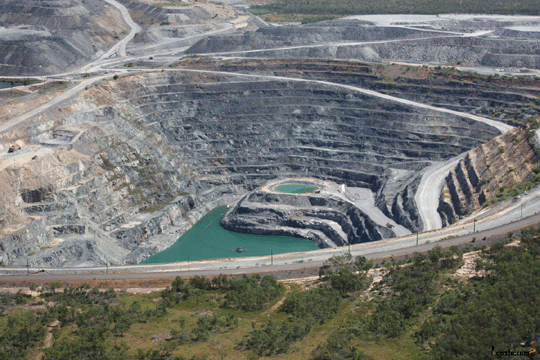
Ranger Danger: Rio Tinto Faces Its Nuclear Test in Kakadu Uranium Mine, https://sei.sydney.edu.au/opinion/ranger-danger-rio-tinto-faces-its-nuclear-test-in-kakadu-uranium-mine/ Rebecca Lawrence and Dave Sweeney report on growing concerns over the potential failures of the rehabilitation plan for the Ranger mine in Kakadu National Park. By Rebecca Lawrence, Senior Research Fellow, Sydney Environment Institute and Dave Sweeney, Australian Conservation Foundation, 16 December 2020 In the 1950’s uranium mining began in the Alligator Rivers and Kakadu regions in the Top End of the Northern Territory. Since then, the Kakadu uranium story has generated heartache and headlines but it is set to soon come to an end with the closure of the Ranger uranium mine in early January 2021. The story is now moving from one of contest over the impacts of mining to one of concern around the adequacy of rehabilitation. Australia has a notorious record when it comes to mine rehabilitation. Many mines are simply abandoned, and those that are rehabilitated often fail, which means complex and on-going monitoring and management is usually required. In many cases, mining companies and their shareholders are long-gone and it is usually Indigenous communities who are forced to live with toxic legacies and left to fight for governments to finance the clean-up with tax-payer money.
Yet, there are alarming signs we may be headed that way. Significant and crucial knowledge gaps remain around the closure and rehabilitation of the Ranger mine. Despite the looming closure date, mine operator Energy Resources Australia (ERA) is still unable to answer many key questions. For example, ERA has still not completed modelling of the pathways and volumes Another key omission in the mine closure plan is the absence of any substantive social impact research. There is no attention paid to how Aboriginal people have been impacted by uranium mining in Kakadu, or any assessment of how they may be impacted the mine closure. This omission constitutes a profound social injustice and is demonstrably inconsistent with both international best practise and contemporary community expectation. ERA is part of the global Rio Tinto group. Rio, who own 86% of ERA, has been called out for its destruction of ancient Aboriginal heritage and sites at Juukan Gorge in the Pilbara region of West Australia. As the main shareholder in ERA at Ranger, there is a real risk that Rio will also fail at Ranger if they don’t get the rehabilitation right and put in place secure financing for perpetual care and maintenance of the Ranger site post-closure. There is a requirement that the company must isolate large volumes of radioactive mining tailings for 10,000 years, but how can that be done without any funds earmarked for monitoring or post-closure management? The Commonwealth government was the key driver behind opening the Ranger Uranium mine in the early 1980s and yet as closure approaches, they are virtually absent. There is no clear regulatory process for how rehabilitation and post-closure monitoring will be financed or enforced. A successful rehabilitation is dependent upon the Commonwealth Government keeping ERA and Rio Tinto accountable and honest. Despite reassuring rhetoric no mining company will do that on their own – for too many the triple bottom line remains measured in pounds, dollars and euros. The Commonwealth Government needs to step up and ensure that the Kakadu environment and its people are protected and that a dual World heritage listed region is given the attention and focus it deserves and needs. A further key constraint on the likely success of the clean up and closure of Ranger is the unrealistic timeframe that has been mandated for rehabilitation. Ranger is the longest running uranium mine in Australia. It was imposed against the explicit opposition of the region’s Mirarr Traditional Owners and for forty years has conducted deeply contested operations in a monsoonal tropical environment. And not just any tropical environment – the mine is an industrial zone surrounded by Australia’s largest national park – Kakadu. Kakadu National Park is a dual World heritage listed area that is recognised for both its cultural and natural values and properties. The Ranger site is required to be rehabilitated to a standard where it could be incorporated into this unique environment. This is a very high bar to clear and Rio Tinto currently have a very short run-up. The rehabilitation period extends only from January 2021 to January 2026. Five years is simply not enough time to make meaningful and lasting repair to a heavily impacted landscape. As a result, the rehabilitation approach is being increasingly driven by short-cuts and bad decisions, rather than taking the time needed to get it right. The Mirarr people and an increasing number of civil society and wider stakeholders and commentators are urging both the Commonwealth and the company to extend this set period of works to better reflect the complexity of the rehabilitation challenge and to increase the likelihood of a successful result. The closure and clean up of Ranger is a critical test of the commitment, competence and credibility of Rio Tinto and the Commonwealth. Both parties have a responsibility to address decades of environmental damage and community disruption. Without more clarity, funding, time and transparency the future of Kakadu cannot be assured. And this is too high a price to pay. There are many eyes from across Australia and around the world that are focussed on the Ranger rehabilitation and near enough is not good enough. The challenge is clear and considerable – and now it needs to be met. Rebecca Lawrence and Dave Sweeney are part of an expert group who have authored the report, Closing Ranger, protecting Kakadu, released by the Sydney Environment Institute, the Australian Conservation Foundation, the Mineral Policy Institute and the Environment Centre NT. Access the report here. |
|
Unfinished Business: Rehabilitating the Ranger Uranium Mine
|
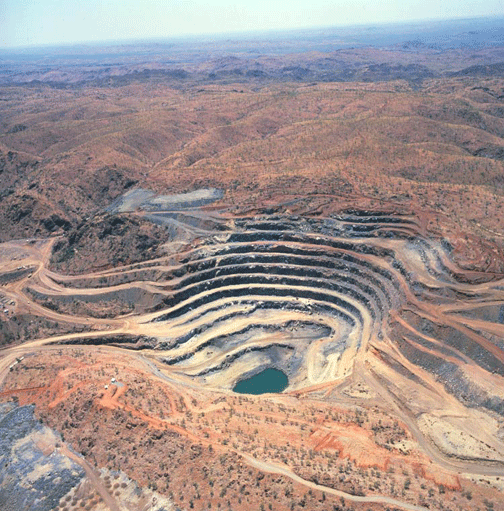
Unfinished Business: Rehabilitating the Ranger Uranium Mine https://sei.sydney.edu.au/publications/ranger-uranium-mine-report/ May 2019 Four decades of imposed uranium mining and milling by Energy Resources of Australia (ERA) and Rio Tinto is about to end at the Ranger uranium mine in Kakadu, leaving a heavily impacted site that requires extensive rehabilitation. Long contested by the area’s Traditional Aboriginal Owners, the Mirarr people, the mine site is completely surrounded by the dual World Heritage listed Kakadu National Park.This report is an independent assessment of the rehabilitation and mine closure process to date. It explores some of the concerns and constraints surrounding the rehabilitation and makes recommendations that seek to address these in order to improve the chances of the successful closure and rehabilitation of the Ranger Project Area.
The background research to this report was funded by FORMAS, the Swedish Research Council for Sustainable Development. Authors: Rebecca Lawrence and Dave Sweeney, Australian Conservation Foundation. |
|
Far from “broad community consent”- nuclear waste dump plan for Kimba South Australia.
Key points:
- A nuclear waste storage facility has been proposed for Napandee near Kimba on the Eyre Peninsula
- One Nation doesn’t think the Barngarla people were given enough of a voice in SA’s nuclear debate
- Federal Government wants to legislate the site, meaning the decision wouldn’t be subject to a judicial review
The proposed facility which would house Australia’s low and intermediate-level waste — which comes from medicine — has been earmarked for a farm near Kimba on the Eyre Peninsula.
The Government wants to legislate the farm as the site for the facility, meaning the decision would not be subject to a judicial review.
There was hope the matter would be resolved before the end of the parliamentary year, however that failed to eventuate.
Labor and One Nation oppose the legislation, saying the resources minister already has powers to select a site, adding that a judicial review had merit.
The Greens also oppose the legislation………
The debate surrounding the facility has been a hot-button topic in Kimba for the past five years, with locals saying they will experience another anxious Christmas.
Farmer Jeff Baldock owns Napandee, the 160-hectare property where the Government wants to put the facility.
He said his frustration levels were growing…….
Mr Baldock said having the facility at Kimba would provide future generations with a different industry in which to work besides agriculture. ……
He said it had been a long process but one that “needs to happen because of the nature of what’s being proposed”.
“It’s all about fairness for people, not only those opposed to it, but those that live outside of the Kimba boundary who were denied a vote,” he said.
To have senators not happy with the current legislation, I think it is a positive thing because in the end, this is forever this facility, it’s going to be 100 years.”
Mental health
Mr Woolford said the wellbeing of people impacted by the process had been forgotten.
“There’s no doubt that’s why people have left and some people are considering leaving now,” he said.
“They don’t want to live by a nuclear facility.
“The Government don’t seem to care about the mental wellbeing of people in this town.
“We’re going to keep standing our ground and oppose this because of how unfair this process has been.” https://www.abc.net.au/news/2020-12-11/one-nation-says-not-enough-consultation-kimba-nuclear-facility/12971036
Michele Madigan sets former Minister Christopher Pyne straight on nuclear waste dump plan
 Funny how after all this time – since 1998 as he acknowledges, former Minister Christopher Pyne (Advertiser 7th December) has not yet caught up with the fact that the federal nuclear waste dump is not just’ a low-level nuclear waste facility.’ Over 90% of the waste measured in radioactivity in fact is intermediate level waste which will remain radioactive for an unimaginable10,000 years. I’d say that will probably be for every generation of South Australians to come.
Australia’s Liberal and National Parties got their arithmetic wrong on nuclear waste dump opinion polls
LIBS NATS FAILED MATHS, Kim Mavromatis, 8 Dec 20, Where did these people go to school? – I expect they failed maths because they can’t do % sums.
452 in favour of the dump from 824 eligible Kimba voters = 54.85% of the Kimba community.Not 62%.And Barngarla Native Title Holders, who were deliberately left out of the Kimba ballot,had their own vote : 0 in favour of the dump from 209 eligible voters.Combined Kimba and Barngarla votes = 43.75% in favour of the dump from eligible voters, Does Not equate to Broad Community Support.No mention by Pyne that the Govt want to dump radioactive Spent Nuclear Fuel, and reprocessed SNF on SA farmland that is 10,000 x more radioactive than uranium ore.No mention by Pyne that the Dump legislation removes Judicial Review – no rights of appeal or independent scrutiny.No mention by Pyne that all SA surveys consistently overwhelmingly Do Not support the dump on SA farmland near Kimba.And Christopher, my mum died of an inoperable brain tumour 2 years ago – using nuclear medicine as an excuse to dump radioactive nuclear waste on SA farmland is BS.Why on earth would you knowingly dump radioactive nuclear waste on SA Farmland????
The Bill for the Napandee nuclear waste dump won’t be passed next year, either
National Radioactive Waste Management Amendment (Site Specification, Community Fund and Other Measures) Bill 2020

Peter Remta 7 Dec 20, It is now quite clear that the government will not bring on the bill in the Senate sitting this week as it would be defeated and will wait until next year’s resumption before deciding what to do.
Obviously Pitt believes this will give him ample time to bring the opposing Senate cross benchers to accept the legislation but this I suggest is a forlorn hope
However none of this will overcome the inherent problems with the government’s proposals for Kimba as they cannot be cured by legislative action
This will still be the same situation irrespective of reliance on the existing or the new legislation since the problems are so basic and arise under a widely and strictly adhered to international regime dealing with nuclear safety which is beyond the legislative competence of the federal parliament
It has been put to me that if this situation had arisen in Europe and even in the United States it would already be subject to heavy litigation in superior courts – perhaps we are not as strong in our democratic principles as we are lead to believe
Senate Debate on Nuclear waste dump Bill postponed till at least February 2nd 2021
 Kazzi Jai, NoNuclear Waste Dump Anywhere in South Australia, 7 Sec 20
Senate again postpones discussion on contentious nuclear waste Bill.
Discussion of the contentious Bill to impose nuclear waste dump at Napandee, South Australia, has once again been postponed in the Australian Senate.
it might re-emerge next week (last Senate sitting for the year) or next year (Senate sits early February), or perhaps the government will reassess it’s approach … which would probably mean nominating the Kimba site using existing legislation
Australian government struggles to impose nuclear waste dump in small South Australian agricultural area
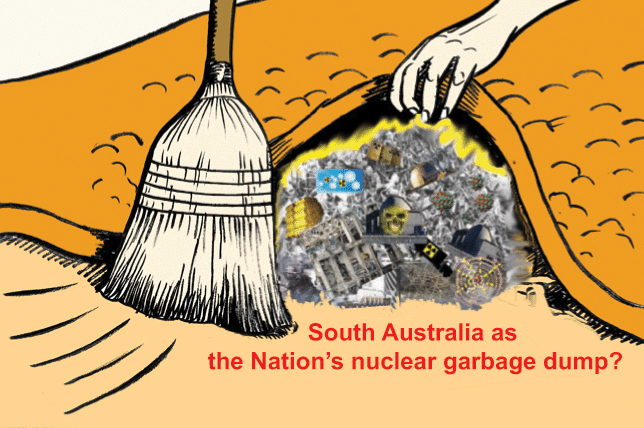 ‘Need a resolution’: Government fights opposition to toxic waste dump plans, Brisbane Times, By Rob Harris, December 1, 2020 A likely Senate roadblock to establish a radioactive waste dump in regional South Australia could be used by the Morrison government as a trigger to go to an early election as it prepares to bring the issue to a vote in the coming days.
The contentious proposal would finally establish a low- and medium-level nuclear waste facility at Napandee, a farm on South Australia’s Eyre Peninsula, after 40 years of public debate about the disposal of such materials………..
Kimba mayor Dean Johnson and community members met with Opposition Leader Anthony Albanese and Prime Minister Scott Morrison on Monday to stress the town wanted everything that came with the National Radioactive Waste Management Facility……..
The plan has been criticised by the traditional owners of the region, the Barngarla, who were not included in the vote because it was limited to those living in the Kimba Council area.
The group later challenged the ballot under the Racial Discrimination Act in the Federal Court but it was dismissed.
The Australian Conservation Foundation has also criticised the process, claiming it would lead to potentially dangerous waste management, including trucking radioactive waste from Lucas Heights in Sydney through regional communities and dumping it on South Australian farmland.
“This is actively opposed by many in the wider region, including the Barngarla Traditional Owners who have been consistently excluded from the consultation process,” veteran anti-nuclear campaigner Dave Sweeney said.
Labor will seek to amend the laws so that the minister responsible, Resources Minister Keith Pitt, can use existing powers to nominate any site under the current legislation. Labor says the changes would still give the local community access to a significant community fund on offer and would ensure the decision be subject to a judicial review………
A bill which is rejected twice by the Senate – with a period of at least three months between each attempt – hands the government the opportunity to dissolve both houses of parliament and head to an election ahead of schedule.https://www.brisbanetimes.com.au/politics/federal/need-a-resolution-government-fights-opposition-to-toxic-waste-dump-plans-20201201-p56jhs.html
“Traceability” and Nuclear waste on agricultural land?
 Kazzi Jai From Keith Pitt’s facebook page today – 28/11/2020...”With more consumers wanting to know where their produce comes from, a new Federal funding round is available to enhance traceability.
Applications are open now for Round 2 of the Traceability Grants Program and close on January 21, 2021.” more https://www.agriculture.gov.au/market-access-trade/traceability-grants-program?fbclid=IwAR2ngI3mkhJIpwfguNAM4rheSiggOmYPgn4BLE34TL76CNFgjCBuuBZErj0
Exposing the deceptions of Keith Pitt, Minister for Resources, on the failed nuclear waste dump plan
 Peter Remta, 23 Nov 20, With some reluctance and an apology I really must now enter the fray because of the misleading and disingenuous statements on behalf of the government regarding the choice of Kimba for the government’s nuclear waste facility
on Keith Pitt, Minister forResources
Pitt keeps claiming that Kimba is “marginal” and “low value” land and hence the ideal site for the nuclear waste facility yet it is regarded as one of the prime and best agricultural areas in this country with an international reputation as to the wheat crop from that region
He is arguing against strong opinion and advice from many agricultural experts and economists
His next claim is that Kimba is the ideal and most suitable location for the facility which is completely at odds from the knowledgeable opinions and advice by international experts in nuclear waste management
In justifying the storage of intermediate level waste at Kimba Pitt claims that it will take many years and huge expense to find and develop a suitable permanent disposal facility for that waste
This is completely false as the Leonora site for an underground nuclear waste repository has been described by one of the leading and largest nuclear waste engineering consultants asglobally an outstanding location for the proposed underground repository
This view is shared by many other overseas experts who cannot understand Australia’s proposals for the above program facility at Kimba
Added to this the Leonora site can be brought to operational standards in line with all international safety requirements and prescriptions for less than $50 million compared to the government estimate of up to $350 million for the inadequate facility at Kimba
This is shown by the concept planning and designs already undertaken for the repository at Leonora which are far more advanced than the government’s proposals for Kimba
Exposing the deceptions of Samantha Chard General Manager of the National Radioactive Waste Agency
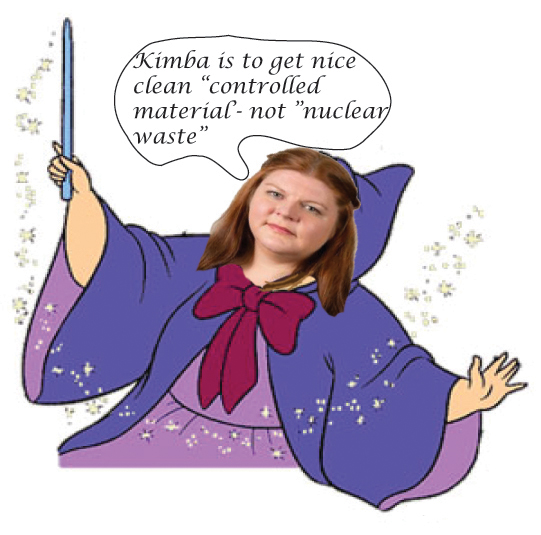 Peter Remta, 23 Nov 20, As I have mentioned previously this is not the first time that Chard has been untruthful as was established through the questioning of Senator Patrick in the recent Senate enquiry into the legislative changes for the Kimba proposal
At the estimates hearing on 22 February 2019 Chard interrupted her then responsible Minister to claim that the community development package of $30 million (her figure) including a community fund component of $20 million had always been contemplated when the initial enabling legislation was passed in 2012
However members of the committee advising the government on the implementation of the enabling legislation spanning several years in time claim that there was never any mention or even an oblique reference to anything in the way of a community fund as claimed by Chard
There was nothing in the various information released by the government including the official nomination guidelines regarding the community fund until its first mention on 12 December 2018
Moreover to have not remembered 580 documents on such an important issue of national significance as judicial review regarding this situation is completely unacceptable
If this is the best that our country can offer by way of ministerial and administrative capability on such an important issue then what hope do we have for the future
The situation was only exacerbated by the incompetent and unsatisfactory performance of the ANSTO management personnel at last month’s estimate hearing
To qualify myself I probably know more about nuclear waste in a global sense than anyone in Australia and it was through my efforts that the ANSTO personnel faced some of the uncomfortable questions at the estimates hearing last month
1 This month
15 April – Zoom –Nuclear Power is Not the Solution
Apr 15, 2026 01:00 AM in Canberra, Melbourne, Sydney

Join the International Physicians for the Prevention of Nuclear War (IPPNW) on Tuesday, April 14th for a timely webinar exploring the risks associated with nuclear power and challenging the myth that it offers a simple, safe, carbon-free solution to the climate crisis

of the week – Australians for War Powers Reform (AWPR)
To see nuclear-related stories in greater depth and intensity
 Antinuclear