 Some comments on Weatherill’s article .( Jay Weatherill: South Australia can learn valuable lessons from nuclear waste facility at Eurajoki, Finland)
Witnesses recommended for the next Citizens’ Jury on Nuclear Waste Importing, South Australia
 This is a full list of witnesses chosen by the Nuclear Citizens’ Jury on October 9th and invited to be witnesses for the next Nuclear Citizens’ Jury on 29 October.
Here I have endeavoured to shed light on the likely evidence of each, according to the following code :
GREEN = Anti-nuclear waste dumping , Yellow – doubtful on waste importing. ORANGE=Neutral – Uncertain, about waste dumping, BLACK = I don’t know, PINK = probably pro waste dumping , RED = Pro nuclear waste dumping
- I ran into a spot of bother with the many Aboriginals recommended. As far as I can tell, they are all opposed to importing nuclear waste, except Parry Agius . Some of the most prominent Aboriginal persons are: Kevin Buzzacott, Karina Lester, Rose Lester, Vivienne McKenzie, Enice Marsh.
- Some pro nuclear people might be opposed to the dump plan, so I put those in pink.
 Nuclear Citizens Jury Two: Witness work
WITNESSES CHOSEN BY JURY AND INVITED FOR THE 29th
No List Ref Name Votes Theme
1 123 Richard Dennis 96 Economics
2 121 Professor Richard Blandy 54 Economics
3 128 Professor Barbara Pocock 45 Economics
4 179 Professor Brian Cox 45 Safety
5 166 Hon Nick Xenophon 44 Trust
6 56 Paddy Crumlin 34 Safety
7 1 Timo Aikas 34 Safety
8 4 Professor Rodney Ewing 31 Safety
9 168 Dr Karl Kruszelnicki 30 Safety
10 116 Dr Simon Longstaff 29 Trust
11 5 Robert J Halstead 27 Safety
12 19 Dr Jim Green 25 Safety
13 9 Dr Carl Magnus‐Larsson 25 Safety
14 162 Ian Hore‐Lacy 22 Economics
15 49 Professor Tilman Ruff, AM 22 Safety
16 53 Frank Boulton 21 Safety
17 188 Someone from the Attorney Generals Department to provide advice on the legislation that will be required to be developed/changed. DemocracyCo seeking advice on who. Trust
18 124 Assoc. Professor Mark Diesendorf 20 Economics
19 7 Dr Andrew Herczeg 20 Safety
20 42 Dr Ian Fairlie 19 Safety
21 137 Hon Mark Parnell, MLC 18 Economics
22 39 Dr Margaret Beavis 18 Safety
23 119 Assoc. Professor Haydon Manning 17 Trust
24 122 John Carlson AM 16 Economics
25 200 Dr Benito Cao 16 Economics
26 18 Professor David Giles 16 Safety
27 115 Steven McIntosh 16 Trust
28 2 Dr Ian Chessell 14 Safety
29 34 Professor Sandy Steacy 14 Safety
30 69 Gill McFadyen 11 Consent
31 74 Dave Sweeney 10 Consent
32 104 Bob Watts 9 Consent
33 76 Ross Womersley 8 Consent
34 72 Dr Gerald Ouzounian 7 Consent
35 73 Dan Spencer 6 Consent
36 126 Tim Johnson 7 Economics Invited to provide info on the Royal Commission economic modelling after 20+ requests on Information Gap Cards Dotmocracy Results ‐ 25 plus a few extras to allow for availability Top 6 from Consent ‐ as Gill is unavailable.
Nuclear Citizens Jury Two: Witness work
ABORIGINAL WITNESSES ALREADY INVITED ON THE 29TH Continue reading
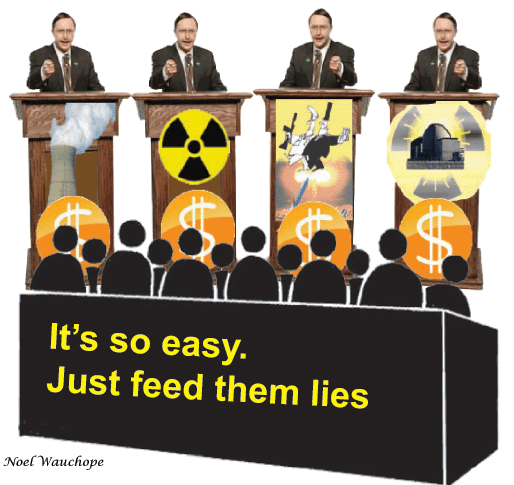
Will South Australia’s Nuclear Citizens’ jury be fed lies and half-truths?
 Nuclear waste storage plan prompts more citizens’ jury debate in South Australia, ABC 7
Oct 16, Greens leader Mark Parnell is worried members of the South Australian Government’s citizens’ jury are not getting all the facts as they consider whether the state should pursue a nuclear future.
The Government is considering a royal commission’s recommendation that SA store high-to-intermediate-grade nuclear waste, most likely in the outback.
A citizens’ jury of more than 300 people is meeting in Adelaide this weekend to hear a range of expert views, the second such process after a first jury pondered the business case at a weekend forum back in July.
Mr Parnell said he was worried the citizens were not getting the best information, especially as the Government pointed out other countries with nuclear waste storage facilities.
“The Government seems keen on promoting this idea that Finland have got all the answers,” he said. “The Finland facility isn’t finished, it’s been 30 years in the making, it’s at least six or eight years away from taking any nuclear waste.
“What’s proposed for South Australia is 20 times bigger.”……..
SA senator Nick Xenophon said citizens’ juries might have a role, but could not replace taking the nuclear issue to the wider community.
“The ultimate citizens’ jury to decide an issue so big, so momentous for SA has to be 1.2 million South Australian voters at a referendum,” he said…….
[Mark Parnell said] “I’m worried that the [current] parliamentary committee won’t have finished its work, and the most important bit of work that is needed I think is a second and third economic opinion.”………http://www.abc.net.au/news/2016-10-08/nuclear-waste-storage-south-australia-citizens-jury-debate/7915292
More safety problems in canisters for storing nuclear wastes
Premature failure of U.S. spent nuclear fuel storage canisters, San Onofre Safety.org, “……Stainless Steel Dry Canister Problems Darrell Dunn, an NRC materials engineer, stated stainless steel dry storage canisters are vulnerable to failure within about 25 – 42 years. If any of the fuel cladding in the canister fails, there is no protective barrier and we could have a serious radiation release.
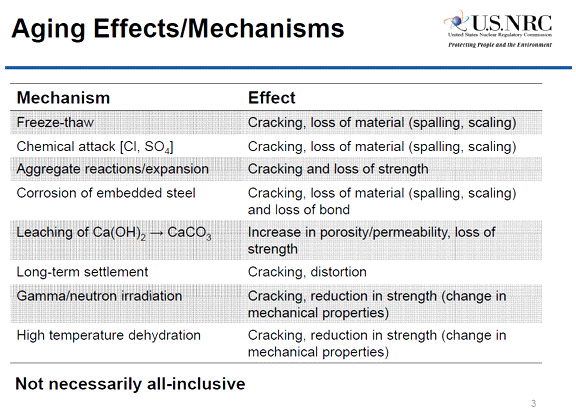
The NRC said they have no current mitigation plan for that consequence. They suggested we MIGHT be able to put the fuel back in the spent fuel pool. However, Edison plans to destroy the spent fuel and transfer pools. And there is no technology to repair the canisters. The NRC said they HOPE there will be a solution for mitigation in the future. Even an NRC May 2nd High Burnup Fuel letter admits there are mitigation problems.
No Inspections of Stainless Steel Canisters EPRI 2012 presentation To make matters worse, these stainless steel canisters are not inspected after they are loaded into the unsealed concrete overpacks (Areva NUHOMS) or concrete casks (Holtec and NAC Magnastor). The NRC proposed having each nuclear plant inspect the outside of only ONE stainless steel canister before they receive a license renewal and then do that once every 5 years. The industry balked at having to even check one canister at every plant. The problem with the stainless steel canisters is they do not protect against gamma rays; so it’s not a simple task to remove a canister from the concrete overpack/cask to examine the exterior for corrosion or other degradation. And since welded canisters do not have monitoring for helium leaks, we may not have any warning of an impending radiation release.
Concrete Overpack Corrosion Problems Darrell Dunn discussed serious corrosion problems with the concrete overpacks/casks, especially in coastal environments…….. https://sanonofresafety.org/2014/08/21/premature-failure-of-u-s-spent-nuclear-fuel-storage-canisters/

8 – 9 October – Nuclear Citizens Jury 2, Adelaide: LOOK OUT FOR THE WITNESS LIST
I say “Look out for the witness list, because for citizens’ jury 1, the big weakness was in 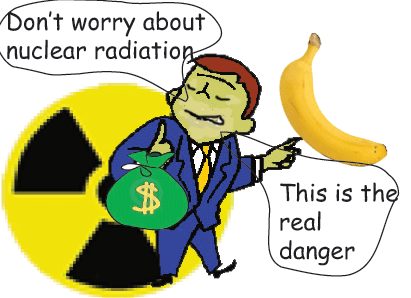 the witnesses – some of whom were clearly ignorant and biaseed. This was particularly apparent in the appalling way they covered (up) the question of ionising radiation and health.
October 8th and 9th Citizens’ Jury Two Livestreaming and Video
See the agenda here. Note these two important sections on Sunday 9th:
3.45pm Working afternoon tea – witness selection
4.15pm Defining the witness list
Citizens’ Jury Two will be held over two weekends in October and one weekend in November. The original 50 members of Citizens’ Jury One will be supplemented by an additional 300 South Australians to answer the question: Under what circumstances, if any, could South Australia pursue the opportunity to store and dispose of nuclear waste from other countries?
The Jury will deliberate on the question using both the Nuclear Fuel Cycle Royal Commission Report and first Citizens’ Jury report, with feedback from the community consultation and expert witnesses also used as important inputs.
The unedited and unchanged jury report will be presented to the Premier and tabled in the South Australian Parliament. The report will play a vital role in informing the State Government’s response to the Royal Commission’s Report later this year.
Dates for Citizens’ Jury Two are 8/9 October, 29/30 October, 5/6 November 2016.
Inconvenient truths the nuclear “citizens’ jury” needs to hear
7 Oct 16 As the South Australian Government’s second nuclear “citizens’ jury” gets underway this weekend, it’s essential that participants aren’t denied important facts about global nuclear waste, says Mark Parnell MLC, Parliamentary Leader of the SA Greens.
Here are eight inconvenient truths that the citizens’ jury needs to hear:
1. The much-heralded Finnish underground nuclear waste facility (visited by the Premier recently) does NOT yet have a licence to accept nuclear waste, will not open for at least six years and has been three decades in planning. It is also 20 times SMALLER than the facility proposed for SA by the Royal Commission.
2. The nuclear industry is without peer in terms of cost blow-outs and time over-runs. This is likely to eliminate any anticipated profit for South Australia – which is the sole rationale for the proposed SA dump.
3. According to the Royal Commission’s own consultants, it could cost South Australia more than $600 million before we even know whether the project is viable.
4. The main client countries anticipated to send nuclear waste to South Australia, including South Korea and Japan, are already exploring domestic solutions to their nuclear waste problem and are not considering overseas solutions.
5. The world’s only operating underground nuclear waste facility, in New Mexico, USA, closed in 2015 following a chemical explosion brought about by human error. It is still contaminated and yet to re-open.
6. The most advanced nuclear nation on Earth, the USA, is yet to come up with a permanent solution for waste from its nuclear power plants. The proposed underground nuclear dump in Yucca Mountain, Nevada, has been stalled by community opposition and may never go ahead.
7. Whilst it may be the best idea so far, nobody knows if deep geological disposal of nuclear waste will work in the long term, because it has never been done before.
8. South Australia is not unique in its geology and has regular earthquakes of magnitude 4 and above.
Without all the facts, the citizens’ jury can’t possibly make an informed decision.
NOTE: Mark Parnell MLC is a member of the Parliamentary Joint Select Committee that is investigating the Royal Commission’s findings. Mark and other Committee members recently returned from inspecting nuclear waste facilities under construction in Finland and France, as well as failed facilities in the United States.
“Moral” argument for nuclear waste import is rejected, economic one is dodgy, too
at a dinner hosted by the Eurajoki municipal council at its restored 16th-century Vuojoki Mansion, the South Australian delegation was told to put aside any so-called moral obligations.
Mr Jalonen joined others who have urged caution and questioned whether the economic benefits are overblown.
Unlike the potential riches being speculated about in South Australia — more than $100 billion over 120 years — Mr Jalonen said there was only a “little bit” of money on offer for his region.
 Premier Weatherill’s nuclear ‘moral’ case rejected The Australian
 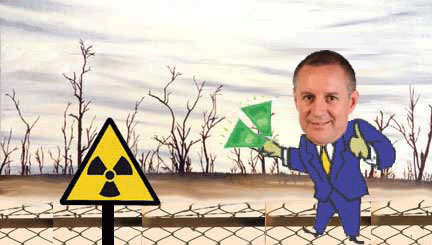 ,October 3, 2016 MICHAEL OWEN SA Bureau Chief Adelaide @mjowen
The head of a governing body in Finland where the world’s first permanent disposal facility for nuclear waste is being built has rejected Premier Jay Weatherill’s “moral” case that South Australia should consider following suit because of its uranium exports.
Mr Weatherill, who last month toured the site at Eurajoki, due to open in the early 2020s, has said South Australia is primarily considering permanent nuclear fuel disposal because of its potential long-term economic prosperity.
But during the visit, accompanied by The Australian, he also said that given South Australia accounted for 25 per cent of the world’s uranium reserves mined and exported for use in nuclear facilities internationally and creating waste, it was “sensible for us to ask ourselves ‘can we play a role in this nuclear fuel cycle?’ and ‘are we the appropriate place to store the material?’ given that this waste does exist in the world.
“Simply, does South Australia consider itself a global citizen?”, he said. Some of the 400 or so nuclear power plants around the world, including those in Finland, use Australian uranium. Continue reading
South Australia’s nuclear dump plan – fool’s gold? – senior Liberal MP
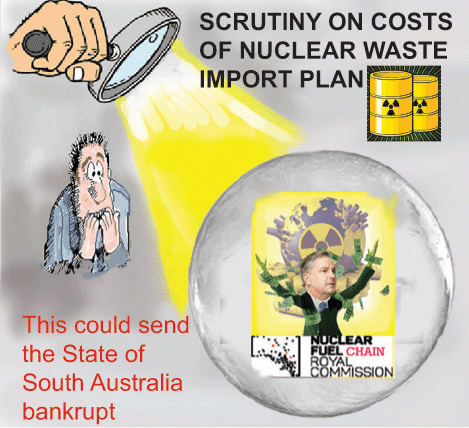 SA nuclear dump dreams just fool’s gold: senior Lib, The Australian, September 29, 2016, byMichael Owen http://www.theaustralian.com.au/national-affairs/state-politics/sa-nuclear-dump-dreams-just-fools-gold-senior-lib/news-story/a595649777c14703159a462c5d9cb34f
A senior Liberal has broken ranks in what had been a bipartisan approach to inquire into the potential for South Australia to host a repository for the world’s high-level nuclear waste, warning that taxpayers risked wasting money “on fool’s gold”.
Rob Lucas, a former state treasurer and the opposition’s Treasury spokesman, told parliament that intense political pressures would make it near impossible for there to be the required bipartisan support at both federal and state level for the necessary legislative changes to allow such a facility.
Mr Lucas, a member of parliament’s joint committee on the findings of the Nuclear Fuel Cycle Royal Commission, also cast doubt on the potential economic benefits, warning it was not possible to verify “some of the financial estimates in terms of what the state might earn from this facility”.
The Scarce royal commission’s final report, delivered in May, found that building a nuclear waste dump in South Australia could bring in an extra $100 billion over 120 years.
South Australian Premier Jay Weatherill — who faces resistance from federal Labor and his own Left faction — has said cabinet would make a decision in November as to whether to progress the proposal, after extensive community consultation. Latest opinion polls show South Australians almost equally divided on the issue.
Last night, Mr Weatherill, who returned this week from touring the world’s first permanent nuclear waste storage facility in Finland, told The Australian he understood the complexities. “I do agree that this issue poses challenges, not the least for my party, but I feel duty bound to act in South Australia’s and the national interest in progressing this debate,” he said.
Mr Lucas said it would be a “courageous Liberal candidate or member in a federal campaign who would be out there campaigning hard to support Premier Weatherill on a nuclear waste dump or facility’’ in his state.
“At an upcoming federal election … (there will be) federal Labor candidates campaigning in South Australia against a nuclear waste facility in South Australia and potentially candidates from the Greens and the Nick Xenophon Team campaigning against a nuclear waste dump or facility (there). If there is not going to be the support of the federal Labor Party, then we, the taxpayers of South Australia, will be spending tens and maybe hundreds of millions of dollars on fool’s gold — fool’s uranium, fool’s nuclear waste dumps.”
Should Australia invest in importing nuclear waste, with nuclear industry in decline?
 In summary, the branding of nuclear as ‘green’ is fallacious
To invest in an industry that is in global decline, does not appear to be as rational as investing in a growth area such as renewable energy. Renewable energy is a business space where Australia has a multitude of trained engineers, existing infrastructure, and an abundance of sunshine. Building intentional renewable overcapacity in Australia will potentially be a wise investment, as that surplus can then be used to generate hydrogen or other fuels that can be liquefied and traded on overseas markets.
Nuclear power – Game over – Derek Abbott, October 2016, “……..Renewables vs. nuclear While nuclear power plants experience economic decline, renewables are rapidly growing and penetrating the market on an exponential curve. The global annual increase in renewable generation for 2015 alone was 50 GW for solar panels, 63 GW for wind power, and 28 GW for hydropower.26
Nuclear power is large and centralised, with enormous entry and exit costs. By contrast, renewables are made up of small modular units that yield a faster return on investment. The revolution we are witnessing is akin to the extinction of big powerful dinosaurs versus resilient swarms of small ants working in cooperation.
Nuclear power is sinking under the weight of its complexity, costs, and the headache of its waste issue. On the other hand solar power is brought to us via free sunshine exposing the promises of nuclear as mere moonshine………
What really matters is rate of carbon footprint reduction Continue reading
Long delay for money in for South Australia’s Temporary Nuclear Waste Storage facility
David Salomon, Nuclear Fuel Cycle Watch South Australia, 30 Sept 16
Did you know: This calls for $2.4b up front investment for infrastructure, ie port and temporary storage facilities, electricity supply etc. Yes, the plan includes temporary storage facility with first receipts after 8 years on the “aggressive” time line, 11 years on the baseline scenario. A long time and a lot can happen.
At any election during this time approval for the project could be overturned by either state or federal governments as happened with the Yucca Mountain Repository in the USA after being approved in 2002 and funding withdrawn in 2011. Were there to be another Chernobyl or Fukushima that leads to shut down of existing nuclear power stations the demand for the waste facility would be restricted to existing not projected waste. The business plan fall apart.
The fact that the only new reactors are planned by non market economy countries. Business seems not to be interested in building new power plants without massive public subsidy. In the UK this means guaranteeing double the market price for the power supplied. You need very deep pockets to be engaged in the nuclear industry. Could it be that South Australia is in danger of exhausting itself financially and politically on going for the one big prise on the horizon that is actually a mirage when you get closer. We do have a history of doing that in the past. Would it not make better business sense to invest in renewables and ride that wave for the next 25 years or so, or is it that we can see what is right in front of us. We are already at 40% renewables, a manufacturing workforce itching for something to do and in need of greater independence in power supply.
I know that there are people who think about renewables like Bill Gates did in the early days of the internet when he said, “the internet was a novelty that would give way to something better”, though I do believe this sentiment does apply to the waste dump proposal. (BTW I don’t know if Bill likes renewables or what his attitude to Nuclear fuel is, just that people of high status can say some dumb things.)
Check out the outgoings references in this report: https://antinuclear.net/2016/05/06/major-financial-risks-for-south-australia-are-ignored-by-nuclear-fuel-cycle-royal-commission/
I think you’ll find the financial analysis in the Royal Commission somewhat lacking. https://www.facebook.com/groups/1021186047913052/
Premier Weatherill either dishonest or ignorant, about Finland’s nuclear waste dump plan
Finland’s false hope for Australia’s nuclear future Independent Australia, 26 September 2016 Premier Weatherill is using Finland’s nuclear waste dump model as a benchmark for Australia but they are not comparable, says Noel Wauchope.
SOUTH AUSTRALIAN PREMIERJay Weatherill has gone to Finland to study their nuclear waste storage project.
With the premier are three stalwarts of the mining and nuclear lobbies: marketing man Bill Muirhead, chief executive of the Nuclear Fuel Cycle Consultation and Response Agency (CARA) Advisory Board Madeleine Richardson and chair of CARA John Mansfield.
Unsurprisingly, they all seemed to have no anxieties about nuclear waste disposal.
 Premier Weatherill waxed lyrical in The Advertiser about the Finland waste disposal site, describing it in operation:
There, spent nuclear fuel is placed in eight metre long iron canisters, encased in copper tubes … Inside the underground tunnels, the canisters are placed in deep holes.
Reading this, you would think that is actually happening in Finland. But no — that’s just the plan. The facility, in fact, has no nuclear wastes yet disposed of there. In fact, no wastes will be placed there until 2020, at the earliest.
Weatherill’s comments imply that the Finland project and the South Australian plan are pretty much the same kind of thing. Well, apart from some rather obvious differences in climate, which might matter, the whole plan is different.
South Australia’s nuclear waste import plan would need a dump substiantially larger than Finland’s waste dump:……..
Just for high level nuclear waste alone, it will require a waste dump 14 to 28 times the size of Onkalo (69,000 high level nuclear waste canisters). And for decades, half of the high level nuclear waste will be stored above ground in a temporary facility.
A perhaps even bigger deception is in Weatherill’s main theme, praising Finland for its transparency and community consent, since that is a subject of considerable dispute. ……
Sweden has the Swedish NGO Office for Nuclear Waste Review. It is a coalition comprising five NGOs working with nuclear and radiation safety issues, advising the Government and informing the public. The coalition is financed by the Government’s Swedish Nuclear Waste Fund.
Finland has no such agency. That might account for the relative ease with which the Finnish nuclear industry gained public acceptance for the plan with no substantial criticism from the public. In Sweden, the nuclear waste burial project has not gone ahead, as there is much debate and opposition from some scientists and from a well-informed public.
Representatives from municipalities near the Finland repository construction site, Johanna Huhtala and Raija Lehtorinne, explained:
‘ … the locals trust the nuclear industry completely.’
I guess that the Finnish model for community consent is more to Weatherill’s liking than the Swedish one. I can’t see him setting up a South Australian NGO office for nuclear waste review. https://independentaustralia.net/politics/politics-display/finlands-false-hope-for-australias-nuclear-future,9518
Risky plan for thousands of shiploads of radioactive trash to South Australia
Derek Abbott, No High Level Nuclear Waste Dump in South Australia, 27 Sept 16, To fulfil the economic analysis of the Royal Commission report, SA’s dump will have to receive a shipload of
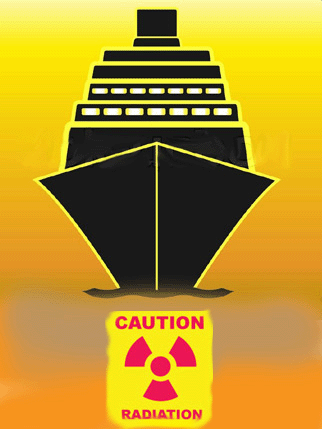 waste once every THREE weeks for the life time of the dump.
Hmmmm…..
I think the Commission hasn’t thought through how unrealistic that workflow will be to manage and how many double hulled ships will have to be purpose built for this. They haven’t thought through how many contract guarantees they are going to need to get that kind of volume. They haven’t thought through the tendency of the nuclear industry to defer costs, and possibly renege on those contracts.
When they don’t even have the sniff of even one contract yet, this is all highly risky. https://www.facebook.com/groups/1314655315214929/
Canberra travellers learn of South Australian Aboriginals’ fight against nuclear waste dumping
MAGALI MCDUFFIE http://www.magalimcduffie.com/travels/2016/9/26/south-australia-no-nuclear-dump Over two years ago, my partner Alexander Hayes met Bruce Hammond, of the Tanganekald & Western Arrente people, South Australia, who brought to his awareness the ongoing struggles and challenges that his people and other Aboriginal communities face, particularly in light of the South Australian proposal for a nuclear waste dump in the Flinders Ranges. With over three months of logistics and planning, and at Bruce’s invitation, Alex and myself will be travelling through many different communities in South Australia, listening to the voices of people on country, who have not been consulted by the government in an appropriate manner.
So on September 24th we started our journey from Canberra to South Australia.
Our road trip took us through Wagga-Wagga, the Hay Plains, Benanee Lake, Balranald, Mildura, finally arriving in Adelaide on the morning of the 26th. On 26 September, 2016 we had the pleasure of meeting  and interviewing Karina Lester, Co-Manager and Aboriginal Language Worker at Mobile-Language Team, at the University of Adelaide. Karina is the daughter of well-known Yankunytjatjara Elder and Activist Yami Lester, who was blinded by the ‘black mist’ from the first Atomic Test Bomb at Emu Junction, South Australia.
Karina told us that the idea of a nuclear waste dump in South Australia is not new – her grand-mother and her family successfully fought against it back in the 1990s. But now it is on the agenda again, and Aboriginal communities whose land the nuclear dump would be built on are not being properly consulted. Even though the South Australian government is sending representatives to a hundred different communities, under the guise of consultation (Get to Know Nuclear), they are not engaging language experts and interpreters to communicate directly and effectively with these communities. Aboriginal people are therefore not getting all the information on the nuclear waste project, thereby contravening the United Nations Declaration on the Rights of Indigenous Peoples on Free, Prior and Informed Consent. Continue reading
Adelaide Advertiser’s nauseous sycophantic account of Premier Weatherill’s nuclear jaunt to Finland
I knew that The Advertiser was the mouthpiece of the nuclear lobby, anyway, but their latest effort was really sick-making. A rave which portrays Premier Weatherill as some kind of democratic champion, and which is pushing the soft sell that the decision on nuclear waste importing will not happen soon, but be dragged on for years. (They don’t say this, but in the interim, the nuke lobby has time to get secret arrangements made – and money lent to South Australia, so that ultimately, it might all be just too committed to turn back.)A Premier with any spine might make a decision, a soon decision, and a wise one, to say no to the whole noxious scheme, – send home the business lobbyists and the propaganda spruikers like Geraldine Thomas, put the lid on the shonky Nuclear Royal Commission’s biased report, stop the silly nuke spinning Forums, and get on with running South Australia properly. Such an opportunity that State has, as a world leader in renewable energy!
Lack of trust more toxic than nuclear dump notion: Daniel Wills, The Advertiser September 23, 2016 “South Australia is still at the stage where it needs reassurance about the science, as well as the competency and motivations of a government that would oversee its administration.
No site has been selected to house the world’s high-level international waste for profit, should the state choose to build one, nor any explanation of how one would be picked. The State Government is yet to overturn laws that ban public money being spent on investigating the establishment of a nuclear dump or even to pick up the phone to ask places like Japan what they would pay…….
 The Finnish operators say they would jump at the chance to form an alliance with SA to build a dump here…..
Mr Weatherill is likely to confirm before Christmas that the Government will begin the serious work of developing a robust business case…….
Expect the Government to seek money from overseas to undertake a major geological survey that rules out places too unsafe for disposal to occur. At a cost of up to $1 billion, this is too expensive for SA to fund itself, but could have the benefit of doubling as a discovery tool for new mining deposits.
From there, it is likely the offer will be thrown open to communities to show an interest, and estimates made of what they could receive. Even on the most extremely rapid timeline, that point is unlikely to have been reached by the time voters head to the polls in March 2018.
This project is multi-generational, with a point of no return years away. But it is a doubtful and open question as to whether our politics are up to the job…….Mr Weatherill has framed this as a great test of our democracy’s ability to consider difficult questions and come to wise solutions. … http://www.adelaidenow.com.au/news/opinion/lack-of-trust-more-toxic-than-nuclear-dump-notion-daniel-wills/news-story/e927e455e6f244f35a8b6743bc791adb
We shouldn’t be the world’s nuclear dump, says Councillor Lynton Vomow
We shouldn’t be the world’s nuclear dump, Adelaide Hills Herald News. By Councillor Lynton Vomow, Lobethal 23 Sep 16, You may have recently had a say at one of the Nuclear Waste Dump forums being held around the state. My biggest concern, however, being the prevention of an accident at sea and the loss of highly radioactive nuclear waste into the ocean, was not satisfactorily explained .
Indeed the attendant basically said that we could not guarantee against such a disastrous event, it could be impossible to retrieve every container of waste and modelling is showing it wouldn’t actually be that bad! Fish and all creatures of the ocean for hundreds of miles around the lost radioactive waste material would be devastatingly affected.
Did you know that medium or high level (depending on whether it’s France or Australia describing it) nuclear rubbish was brought to Australia, in December just last year, in a rust bucket that had failed three safety inspections in five years?
Can you imagine what could happen if we were to receive dozens of shipments? Can we be guaranteed the waste will make it here safely, every single time?
Some are saying that low level waste is non hazardous, so then why not store it near its source i.e Sydney, and save the fuel costs of transporting it?
Basically a low level waste dump would be coming here to soften us up for a high level dump.
There is a need to have safe repositories for the waste, somewhere, but it will have to be near its usage location.
Countries ought to be looking at phasing out nuclear power so that there is as little waste as possible.
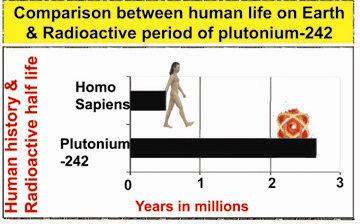
How long does nuclear waste last anyway? Can you imagine two hundred years? Ten times that then takes us back to the birth of Christ. Ten times all of that now takes us back to just before the last ice age, 20,000 years ago. Then ten times 20,000 years? 200,000 years. That’s when only about half of the atoms in high level nuclear waste will have decayed to less harmful atoms. It is going to be a long wait for this deadly waste to become harmless, to care for our generation’s nuclear waste.
Are we going to be beggars or choosers? We are not so desperate that we have to take the world’s most toxic waste and prevent it from damaging anything for hundreds of thousands of years.
South Australia continues to have huge potential for growing the renewable energy industry instead.
The risk to the world’s environment of transporting high level nuclear waste across the oceans to to the furthest point on the planet, ie, South Australia, just doesn’t make sense.
And people, (including of course the Adnyamathanha Indigenous people of the Flinders Ranges) do not want it.
Adelaide Advertiser readers not all taken in by Premier Weatherill’s dishonest spiel about nuclear waste
Some comments on Weatherill’s article .( Jay Weatherill: South Australia can learn valuable lessons from nuclear waste facility at Eurajoki, Finland)
It is not a good legacy to leave behind, Jay. 100,000 years is a long time for something to go wrong and you’ll be remembered for it, if it does.
@Michael well, actually the Fins haven’t. Not any radioactive waste at all. But they hope too! Probably some time next decade, unless things go wrong. But they are c̶e̶r̶t̶a̶i̶n̶ c̶o̶n̶f̶i̶d̶e̶n̶t̶ hopeful that it will be fine, that is why they want to sell it to us. Not for money, because it has cost them so much more than they expected and taken so much longer. No for altruistic reasons, sortof.
Finland currently have two different types of operating reactors and the different fuel rods mean canisters are different for the two types of reactors they have. It also means that they drill different depth holes.
But Australia won’t be so lucky if SA imports high level waste from different countries because there will be all sorts of different reactors with many, many different fuel rod length and array dimensions. Lucky eh?
Well, that is if we stick to Finland’s quality KBS-3V system, and not try to sacrifice safety for price by using cheap steel and concrete vessels. When has safety ever been sacrificed for cost in SA? n̶R̶A̶H̶, R̶a̶i̶l̶ ̶u̶p̶g̶r̶a̶d̶e̶, s̶o̶u̶t̶h̶ ̶r̶o̶a̶d̶ ̶s̶u̶p̶e̶r̶w̶a̶y̶, a̶m̶b̶u̶l̶a̶n̶c̶e̶ ̶r̶a̶m̶p̶i̶n̶g̶…..
Pfffft! mere details, it only has to work without failure for 100,000 years!, http://www.adelaidenow.com.au/news/opinion/jay-weatherill-south-australia-can-learn-valuable-lessons-from-nuclear-waste-facility-at-eurajoki-finland/news-story/b8e2250210f4f2a3b0c6a60d9a8037d5
1 This month

of the week – Australians for War Powers Reform (AWPR)
To see nuclear-related stories in greater depth and intensity
 Antinuclear