Practical considerations may hamper Australia’s path to nuclear submarines

Practical Considerations
Notwithstanding the sweeping nature of the AUKUS Partnership and the scope of the Security Agreement itself, a number of practical hurdles remain, including but not limited to the following:
- It is unclear how and when the parties will decide whether Australian submarines will incorporate either US or UK nuclear propulsion plants.
- The reactors in both US and UK submarines rely on fuel containing high enriched uranium (HEU); it is unclear how Australia will acquire the HEU necessary to power its fleet.
- Due to the volume of ongoing, contracted-for work, neither US nor UK shipyards are in a position to easily accommodate the construction of additional submarines in the near term.
- Balancing export requirements under the International Traffic in Arms Regulations (ITAR) and the nuclear regulations, determining how and when to license under the ITAR as opposed to the Nuclear Regulatory Commission, National Nuclear Security Administration, or other regulations is going to be a challenge.
- It would not be unusual for the nuclear submarine program to involve some form of offsets which would provide Australian industry an opportunity to contract or subcontract for the provision of various items for the submarines.
- Financing for the technology transfers and ultimate construction of the nuclear submarines remains an open question. Whether the United States will provide Foreign Military Sales (FMS) or Foreign Military Financing (FMF) may also be discussed.
- Australian shipbuilders presently have no experience constructing nuclear submarines. Therefore, it is likely that in the event the governments decide to construct Australia’s submarines in Adelaide, such construction would depend on the availability of skilled labor and necessary equipment, presumably sourced from either or both the United States or the United Kingdom. This could raise a number of immigration-related questions for the Australian government.
- No training pipeline presently exists in Australia to produce nuclear-trained submariners. Australian applicants to the submarine program may need to attend university in the United States or United Kingdom and enroll in those navies’ nuclear power training pipelines. To the extent that it is plant-specific, such training could not begin until it is determined whether the new Australian nuclear-powered submarines will incorporate either US or UK nuclear propulsion plants.
Conclusion
As a result of the AUKUS Partnership, Australia will become the seventh nation to operate nuclear-powered submarines. ………….. However, success will depend on the extent to which the three governments can and choose to identify and resolve practical considerations over several decades to establish a pathway to an Australian nuclear submarine and technology integration.
AUKUS Alliance: US and UK to Help Australia Acquire Nuclear-Powered Submarines
Morgan, Lewis & Bockius LLP 11 Feb 22,
Continue readingNuclear submarine plan does not mean more jobs for Australians. In fact it’s already caused 1,100 job losses
Now, we find out that the new $100 billion AUKUS subs deal is unlikely to have any local content mandate and may deliver absolutely nothing to the South Australian economy and workers.
more than 1,100 South Australian workers had lost their jobs because of the government’s decision to scrap the French agreement.
Doubts over local industry involvement in nuclear subs program, Joseph Brookes, Innovation Aus, Senior Reporter, 4 February 2022 Unions have called on the Prime Minister to commit to a minimum level of local industry involvement in the upcoming nuclear submarine program after a senior Defence official reportedly said there would be no mandated minimum level.
A high-ranking Defence official this week told an industry conference the department is “maturing beyond ascribing a percentage” of local industry involvement and was unlikely to set a minimum like previous major ship builds, according to The Australian.
In response to subsequent concerns from local industry, Defence minister Peter Dutton said Australia would “get the balance right” between supporting local industry and securing capabilities in response to rising foreign conflicts involving China………
The minister did not commit to a minimum level of local industry participation in submarine contracts.
In response to the earlier report that Defence’s Capability and Sustainment Group chief counsel Fran Rush had said the government was more focused more on securing capability than building local industry, unions called for Prime Minister Scott Morrison to fulfil a commitment to build at least eight nuclear powered submarines in Adelaide.
“Scott Morrison promised South Australia that it would receive billions in investment and thousands of jobs from the AUKUS submarine contract, making up for the significant losses caused by his tearing up of the French Naval Group contract, under which many South Australians were already employed,” SA Unions Secretary Dale Beasley said.
Now, we find out that the new $100 billion AUKUS subs deal is unlikely to have any local content mandate and may deliver absolutely nothing to the South Australian economy and workers.
“First Scott Morrison betrayed the French, now he’s betraying South Australians, by ripping away promised jobs and investment.”
The union said more than 1,100 South Australian workers had lost their jobs because of the government’s decision to scrap the French agreement.
Nearly 150 officials, including private contractors, are part of a government-led taskforce currently exploring options for acquiring submarines.
Do you know more? Contact James Riley via Email. https://www.innovationaus.com/doubts-over-local-industry-involvement-in-nuclear-subs-program/
The coming Khaki election: will Labor join in the belligerence against China?
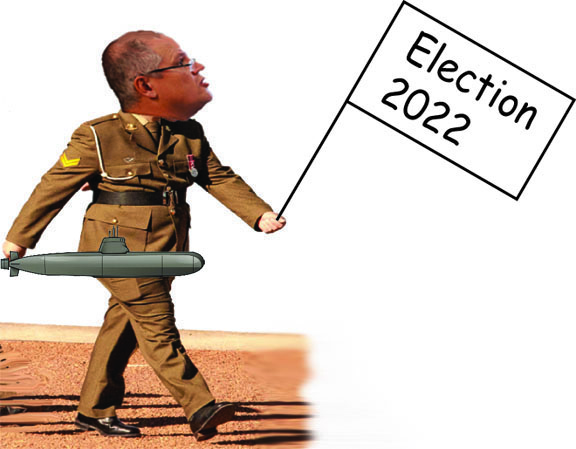
For the Australian Coalition government, with an election coming in less than four months, this is convenient.
Dutton and Prime Minister Scott Morrison are happy to harness Wu’s carefully crafted rhetoric to turn the threat from China into the national security issue of the election.
The three reasons Taiwan keeps talking up the threat of war with China, The Age, By Eryk Bagshaw, January 31, 2022 — Singapore: There was alarm last year when Defence Minister Peter Dutton warned that China’s push to take over Taiwan was gathering pace. It was time to have an honest conversation about the threat of war, he said, because once Taiwan was taken, the Japanese Senkaku islands were next – and then every major Australian city was “within range of China’s missiles”.The threat to Taiwan has not dissipated in the new year………
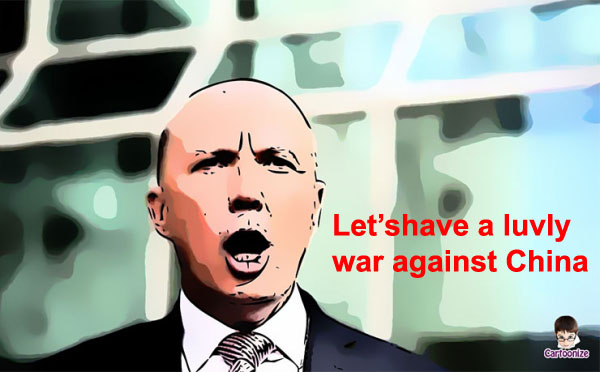
Peter Dutton also vowed to continue to speak out against China’s “belligerent approach” just hours after the new Chinese ambassador arrived in Australia with a conciliatory message about getting the troubled relationship “back to the right track”.
Taiwan’s Foreign Minister Joseph Wu is determined to keep international leaders talking about Taiwan’s situation should war come to pass.
There are three key reasons for this.
The first objective is domestic. “Taiwanese society understands that if the government is doing something right, they will continue to support the government,” Wu told me in an interview from Taipei……..
The strategy has netted Taiwan’s Democratic Progressive Party results, including a landslide presidential victory for Tsai Ing-wen in 2020.
The second objective is to maintain resolve………..
That means every rhetorical threat from Beijing is met with a response from Taipei. This cacophony can sound like warmongering but is more bombastic than about readying for boots on the ground.
The third objective is about building alliances and ensuring Taiwan becomes a global symbol of liberal democracy worth fighting for…………..
Taipei watched on with concern as the United States and its allies pulled out of Afghanistan……
This is why you will hear more like this from Wu throughout 2022…….
”Wu must frame the threat of war as omnipresent even if it is not imminent.”
For the Australian Coalition government, with an election coming in less than four months, this is convenient.
Dutton and Prime Minister Scott Morrison are happy to harness Wu’s carefully crafted rhetoric to turn the threat from China into the national security issue of the election.
Labor’s attempts to follow the international relations playbook will become more challenging as polling day draws near.
On Monday, Labor leader Anthony Albanese was asked on 3AW radio whether he would “unequivocally” support Taiwan in a military conflict and take a stand against “concentration camps” in Xinjiang.
“Where do you stand?” Neil Mitchell asked Albanese on Monday after days of government ministers accusing Albanese of softening Labor’s stance on China.
“What the international community has consistently said is that Taiwan’s position needs to be respected,” said Albanese.
Albanese let Wu do the talking. That’s admirable restraint. Let’s see how long it lasts. https://www.theage.com.au/world/asia/the-three-reasons-taiwan-keeps-talking-up-the-threat-of-war-with-china-20220131-p59skk.html
Defence Minister Peter Dutton evasive about the 137 member nuclear submarine taskforce, which does not include a South Australian govt rep.

137 OFFICIALS ON TASKFORCE EXPLORING NUCLEAR SUB OPTIONS, AuManufacturing By Joseph Brookes, 28 Jan 22

Defence Minister Peter Dutton did not directly answer some of the questions, which came from government Senator James Patterson, including what the taskforce has delivered and to who, saying only that it is “still active”.
There are nearly 150 members on the federal government’s nuclear-powered submarines taskforce, including officials from a range of federal departments and 10 contractors who the defence department has declined to name, but no state government representatives.
The taskforce was established in September last year on the day the Prime Minister Scott Morrison announced a nuclear-powered submarine program would be the first major initiative of a new AUKUS security agreement.
Answers to Senate question on notice published on Friday revealed more details on the group which is spending 18 months scoping options for at least eight new nuclear-powered submarines.
Led by Vice Admiral Jonathan Mead, the Canberra based Nuclear-Powered Submarine Task Force had 137 members as of 10 December, including secondees from several government departments and private contractors, according to the response from defence minister Peter Dutton.
Prime Minister and Cabinet, DFAT, the Attorney General’s Department, Australia’s nuclear organisations ANSTO and ARPANSA, the Department of Education, Skills and Employment, and 10 unnamed contractors are all represented on the taskforce, which reports to the Secretary of Defence.
According to the minister’s response, the taskforce’s terms of reference are to work with the US and UK to “to identify the optimal pathway to deliver” at least eight nuclear-powered submarines……
The taskforce does not appear to include representatives from the South Australian state government, where the boat building project is “intended” to be based.
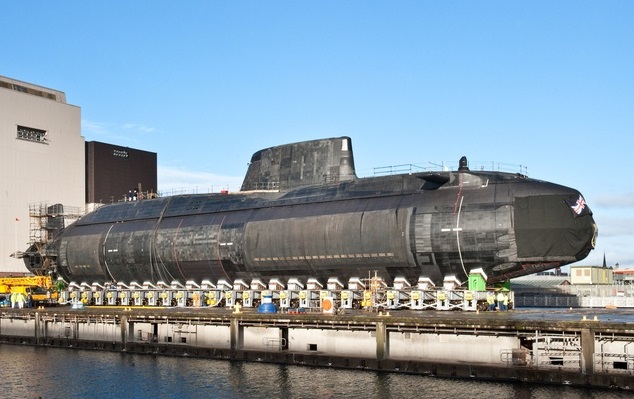
Editor’s note: work has begun on a submarine construction yard at Osborne North in Adelaide (pictured), intended for construction of conventional powered vessels.
,…………… The defence minister did not directly answer some of the questions, which came from government Senator James Patterson, including what the taskforce has delivered and to who, saying only that it is “still active”.
The response suggests a possible misunderstanding of the question which referred the minister to Senate Estimates hearings in October when defence officials spoke of an earlier inter-departmental group assessing the feasibility of switching to a nuclear submarine program……..
In May 2020 the Prime Minister instructed the Department of Defence to examine the feasibility of acquiring the nuclear-powered submarines, and received a briefing on the outcomes – including it being possible – around six months later on December 18.
But a public announcement on the plan to establish a nuclear-powered fleet and scrap an existing $90 billion diesel powered submarine program was not made until September last year.
The government’s ultimate decision to scupper an existing $90 billion submarine project in favour of a nuclear powered fleet has caused diplomatic tensions, including French president Emanuel Macron accusing Mr Morrison of lying to him about the change……. https://www.aumanufacturing.com.au/137-officials-on-taskforce-exploring-nuclear-sub-options
A mutual suicide pact: Australia’s undeclared nuclear weapons strategy
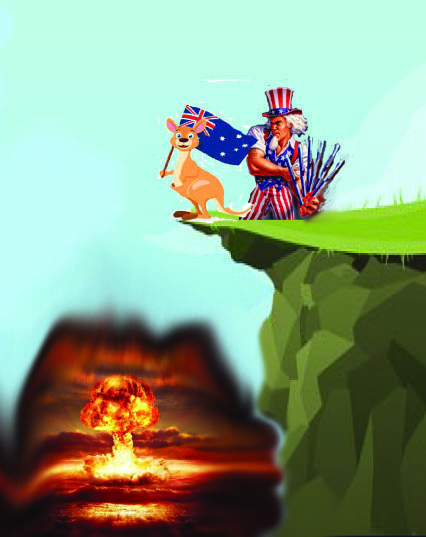
A mutual suicide pact: Australia’s undeclared nuclear weapons strategy, Pearls and Irritations, By Michael McKinleyJan 20, 2022 As the world’s nuclear arsenals build even more killing power, the need for Australia to abandon this perilous defence arrangement only increases.
The conventional wisdom has it that in the matter of nuclear weapons Australia is an exemplary international citizen. According to the Standard Version, it diligently supports the various nuclear arms control and disarmament regimes, and adheres to the position which regards nuclear weapons as instruments of nuclear deterrence and thus of the stable relations between major powers. Nuclear war-fighting is eschewed. Virtue is asserted. Res ipsa loquitor. The problem is that both claims are not only false, but embedded within what passes for defence policy with increasing willed ignorance, deceit and dishonesty.
At issue is the Australia’s unqualified general support for the various postures the US adopts and the particular role which it provides through the joint Australia-US facilities at Pine Gap and Northwest Cape. Their status as integral components in US global nuclear strategy – and thus nuclear targets in the event of major, peer-to-peer-war challenges the concept of government by consent of the governed.
The arrangements and agreements between Canberra and Washington have never been made public; indeed, successive governments have been industrious in their attempts to close off anything resembling national dialogue or debate on them.
This, of course, is a traditional and dishonourable tradition. Its origins are to be found in the official dishonesty surrounding Australia granting the British government the right to conduct a series of nuclear weapons tests at Maralinga, Emu Plains and the Montebello Islands from 1952 to 1963.
Unabated, it has coarsened the legal and ethical fabric of the nation’s security and foreign policy ever since to the point where the obvious has to be restated because, essentially, it no longer gives cause for shame, outrage, or anger.
Consider just six issues on which policymakers and mainstream national security commentators and scholars have been mute.
Diplomacy, it seems, has been substituted for by bellicose statements by high-level military and civilian personnel which exhibit, little more than its relegation to an irrelevance beyond its cosmetic utility.
Second, there is proliferation by stealth. The US initiative to modernise its nuclear arsenal by installing the burst-height compensating super-fuze has extraordinary implications. It effectively triples the killing power of its ballistic missiles and, as described by three of America’s most respected weapons analysts (Hans Kristensen, Matthew McKinzie and Theodore Postol) in the Bulletin of the Atomic Scientists the situation is one in which the US has developed “the capacity to fight and win a nuclear war by disarming enemies with a surprise first strike.”
Third, the advent of weapons with warheads described as “variable yield,” “low yield,” “clean” (sic), or “mini nukes” has encouraged declarations at the highest levels in the US that, under certain circumstances, nuclear weapons have “tactical” utility. And they are a matter of pride: as the head of US Strategic Command told a congressional committee in 2020, these innovations made him “proud to be an American.”
Fourth, this embrace of tactical nuclear weapons cannot be separated from the explicit intention to envisage nuclear weapons as inescapably enmeshed in the overarching concept of deterrence. Put another way, for Admiral Richard, and those of a like mind, there is no meaningful distinction to be made between conventional and nuclear deterrence: they comprise a single entity, the former being dependent on the latter for its intellectual and strategic credibility.
By extension the fifth comes into focus: the US to continuing to reserve to itself the right to a nuclear first strike. In 2020, in testimony before the Senate Armed Services Committee, General Tod Wolters, commander of US European Command and Supreme Allied Commander Europe, went so far as to enthuse over it with this endorsement: “I’m a fan of flexible first use policy.”
Sixth and finally, there is nuclear deterrence itself. The term is employed in polite conversation as though it was simply a technical description; in reality, however, it is an obscenity and this becomes obvious when its explicit principle is confronted.
In simple terms it is a mutual suicide pact to the preserve the status quo of the time. Richard Tanter on this site has accurately described Australia’s position within the alliance and under the nuclear umbrella as one which it expects the US to commit genocide in the name of the country’s defence.
An important point is missed here: this understanding or expectation has never been put to the Australian people. ………… …… https://johnmenadue.com/a-mutual-suicide-pact-australias-undeclared-nuclear-weapons-strategy/
Australia-UK talks – all about nuclear submarines and military co-operation against China.
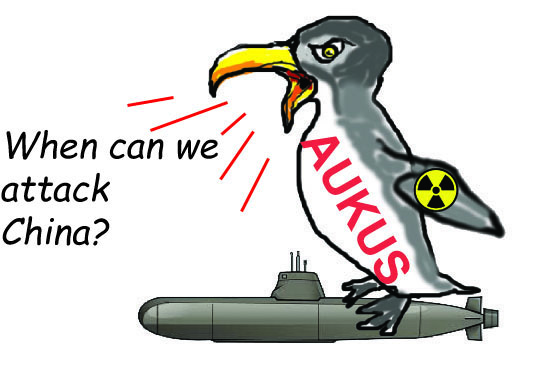
Nuclear submarines and closer interaction with British military to dominate Australian talks with UK, ABC, By defence correspondent Andrew Greene Closer military cooperation and possible basing of British defence assets in Australia will be discussed when ministers from both nations hold long-awaited face-to-face talks in Sydney this week.
Key points:
- British and Australian ministers will discuss the nuclear submarine deal and emerging security threats
- This will be the countries’ first in-person AUKMIN meeting since before the pandemic
- Scott Morrison will host the British ministers at Kirribilli House ahead of the talks
The British foreign and defence secretaries are due to arrive on Thursday ahead of their formal AUKMIN talks with their Australian counterparts on Friday.
This year’s Australia–United Kingdom Ministerial Consultations is expected to be dominated by the recent AUKUS nuclear submarine deal, as well as growing concerns over China’s power in the Indo-Pacific. ……………………….. https://www.abc.net.au/news/2022-01-19/nuclear-submarines-dominate-australia-uk-talks/100765474
AUKUS an unwelcome guest at the table of nuclear disarmament.
AUKUS is emblematic of a belligerence that is at odds with moral and ethical demands for the future. It posits a vision of military aggression and confrontation that increase the risk of war and war turning nuclear; and concedes authoritarianism and lack of debate as defining principles for the present
AUKUS an unwelcome guest at the table of nuclear disarmament, Pearls and Irritations,
By Sanjay BarboraJan 16, 2022 Despite many shortcomings, the Non-Proliferation Treaty remains a symbol of an inconsistent effort to ensure a world without threats of nuclear war.
The 2022 Review Conference (RevCon) of the Parties to the Nuclear Non-Proliferation Treaty (NPT) which was to meet from January 4 to 28 in New York has been postponed because of the resurgent virus. Consultations are under way to set a new meeting time.
………………As governments and civil society consider their priorities for the review conference, what then are we to expect? This question assumes greater significance for Australia, as the country’s leaders respond to the changing climate following the hastily announced AUKUS trilateral pact for the supply of nuclear-powered submarines to Australia in 2021.
Three closely related aspects ought to be considered by the country’s decision makers as they address the review conference. They are (a) Australia’s commitment to international obligations, (b) security implications of the proposed AUKUS submarines, and (c) reactions within civil society, either as they exist now or as may be anticipated in the future.
………………. In the past, Australia’s stated position was to aim for greater accountability from the Nuclear Weapons States (NWS), while widening the scope of non-nuclear weapons states (NNWS) to pursue the development of domestic nuclear energy. However, this position was undermined by its active opposition to and attempts to derail the Treaty on the Prohibition of Nuclear Weapons (TPNW) adopted by the UN General Assembly in 2017.
A decision to acquire nuclear-powered submarines under the AUKUS partnership would threaten this fraught history with further uncertainties. It would offer the United States an even greater say in Australian foreign policy in the Asia-Pacific-Indian Ocean region.
The specious defence that eight-nuclear propelled submarines do not constitute a breach of Australia’s commitment to nuclear disarmament and non-proliferation has two obvious problems.
Firstly, politicians and political commentators have made it clear that current tensions with China have played a substantial role in the current government’s decision to override earlier agreements for creating domestic capacities to build submarines with French support.
Secondly, this dystopian vision of a future world of nuclear showdowns could encourage governments of other NNWS in the region and elsewhere to follow a similar disingenuous narrative for nuclear militarisation.
In any case, the pathway from civil use to military weaponisation remains an issue of concern, that any sovereign country might follow. This could undo several decades of Australian diplomacy that sought to place the country as a reliable partner for securing peaceful policies and development in the Asia-Pacific-Indian Ocean region.
AUKUS is emblematic of a belligerence that is at odds with moral and ethical demands for the future. It posits a vision of military aggression and confrontation that increase the risk of war and war turning nuclear; and concedes authoritarianism and lack of debate as defining principles for the present…………..
The NPT Review Conference, therefore offers an opportunity to revive Australian civil society’s responsibility to reiterate its commitment to regional and global peace and a world free of nuclear weapons.
Professor Sanjay Barbora, Tata Institute of Social Sciences, India, is a Research Affiliate with the University of Melbourne’s Initiative for Peacebuilding. This article was stimulated by a closed-door roundtable discussion, “Would AUKUS undermine the NPT?” hosted by the Initiative for Peacebuilding on December 10. https://johnmenadue.com/aukus-an-unwelcome-guest-at-the-table-of-nuclear-disarmament/
Australia’s ambitious weapons plan -Joint Air Battle Management System (JABMS) AIR-6500
Move Over Nuclear Subs & F-35 Stealth Fighters, This Weapon System Is The ‘Most Ambitious’ Military Project In Australia, The Eurasian By Sakshi Tiwari– January 4, 2022 Australia, a key player in the Indo-Pacific region, has been making concerted efforts to increase its military capability. From hosting the first Marine Rotational force in 2011 to signing the AUKUS pact for a nuclear submarine, Australia has come a long way.
So far, the big projects the Australian Defence Force (ADF) has undertaken are for submarines, combat reconnaissance vehicles, F-35 fifth-generation stealth fighters, infantry fighting vehicles among others.
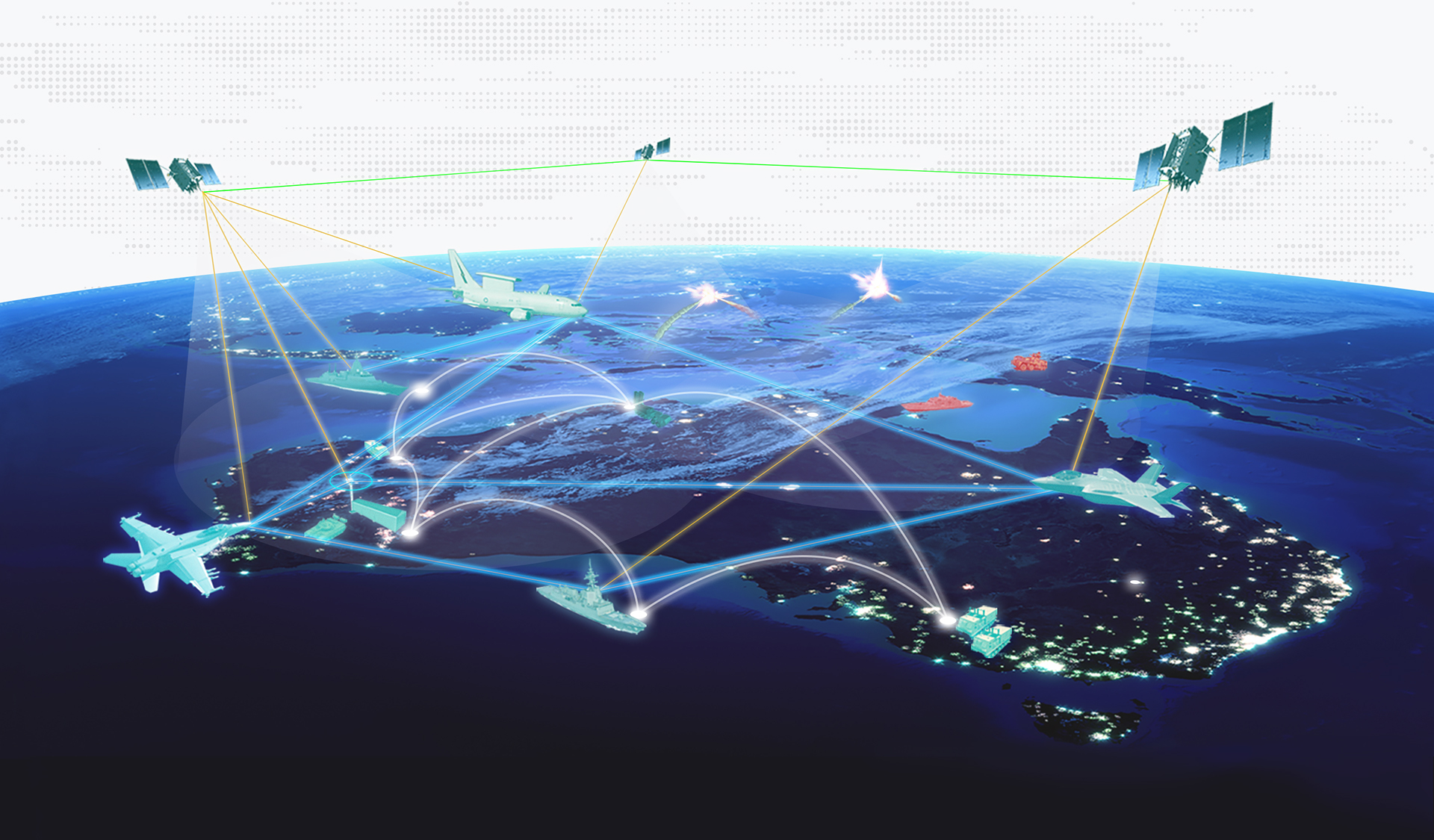
Now, the country is pursuing its most ambitious military project — the indigenous Joint Air Battle Management System (JABMS), which could be a game-changer in the near future. The JABMS, also called AIR-6500, forms the core of the future Integrated Air and Missile Defense capabilities, according to the Australian Defence Magazine.
The AIR 6500 is the cornerstone of the Royal Australian Air Force’s fifth-generation archway. Its goal is to bring all platforms and sensors from all warfighting domains together in a single interface that can track threats, organize a combined response, and guide that response toward the target. It’s emblazoned with the phrase “all sensor, best shooter.”
In August of last year, the Australian Department of Defense (DoD) chose Lockheed Martin and Northrop Grumman for the AIR6500 Phase I project, as previously reported by Airforce Technology.
(Ed. note: They have the nerve to call this ”indigenous technology)
Australia currently relies on Space-Based Infrared System (SBIRS) for surveillance, and one possibility for the next-generation OPIR satellites which are in the works would be to maintain this reliance. Both these systems are US-made………………..
The technology being provided to Australia comes from the US Army’s Integrated Air Missile Defense Battle Command System, which is at the heart of the US Army’s next-generation air and missile defense capacity, according to Zeitz. To put it another way, this model is an ‘all sensor, greatest shooter’ model.
“There are a large number of people who are actively working on AIR 6500 today and the majority of them are in Australia,” Steve Froelich, Lockheed Martin Australia (LMA) program executive for AIR 6500, said………………
The relationship between Australia and China remains strained due to the former’s participation in Quad [US, Japan, Australia and India], which China has termed as the Asian NATO. Canberra becoming a part of AUKUS for the acquisition of nuclear submarines has made matters worse.
https://eurasiantimes.com/move-over-f-35-nuclear-subs-this-weapon-most-ambitious-australia/—
Australians, like other nationalities, need to put pressure on their government to join the UN Treaty on the Prohibition of Nuclear Weapons (TPNW)
Nuclear weapons free future https://www.echo.net.au/2021/12/nuclear-weapons-free-future/ ByThe Echo Mick & Deborah Stacey, Ballina , December 26, 2021 Whilst the federal government is ‘rattling sabres’, and spending more on so-called defence, the movement to abolish nuclear weapons is gathering momentum.
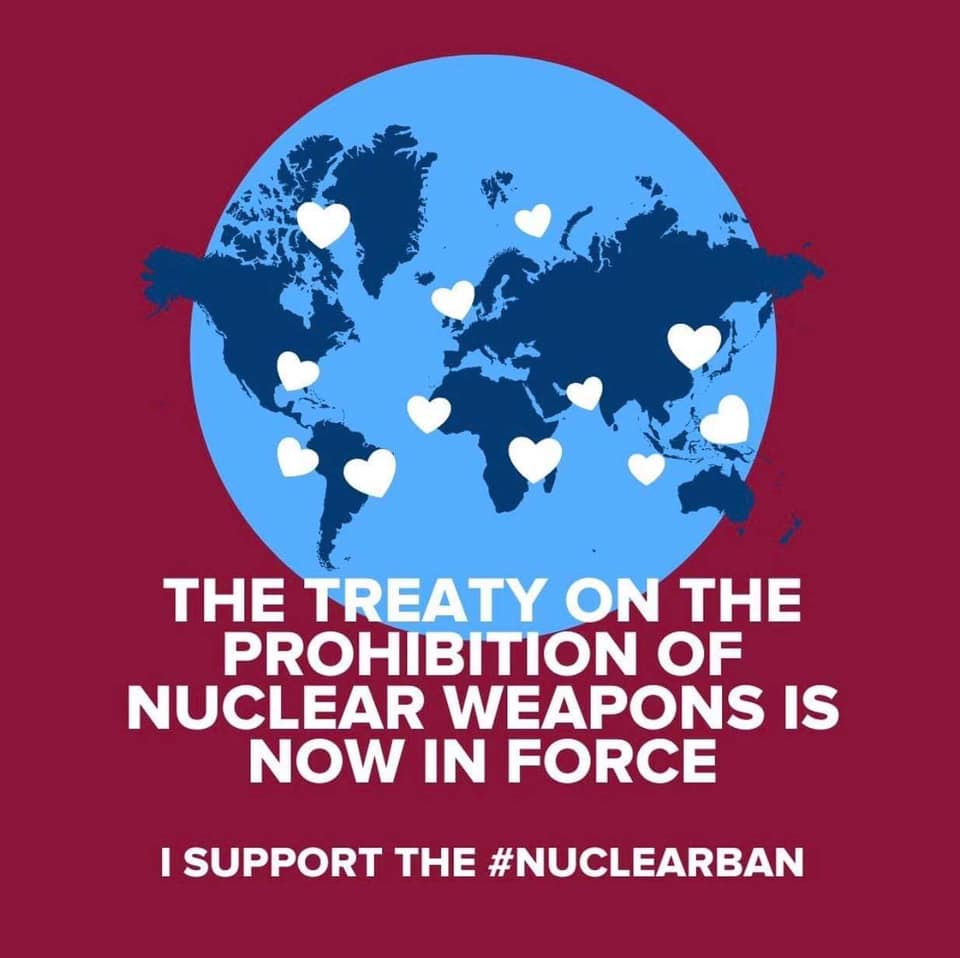
There are now 58 countries who have ratified the UN Treaty. Boston, New York City and Minneapolis have joined the ICAN Cities Appeal, along with Ballina, Byron Bay and Lismore.
New York City have begun divesting public pension funds from nuclear weapons companies, as have a major Australian superannuation fund and the first Finnish pension fund. The Financial Times wrote a story about how weapons companies are starting to be impacted by this growing pressure from investors.
The first meeting of State Parties to the UN Treaty on the Prohibition of Nuclear Weapons (TPNW) will take place at the United Nations in Vienna, 22–24 March, 2022.
Sweden, Finland, Switzerland, Germany and Norway are not yet ready to join the TPNW, but they have already announced they will attend the meeting as observers. So, it is up to us to put pressure on our government (whoever they may be) to do likewise.
Check out: www.ICANW.org. Here’s to a safe nuclear weapons free future.
We froze’: What was this 1.3-metre missile doing at an Aboriginal heritage site?
We froze’: What was this 1.3-metre missile doing at an Aboriginal heritage site?
EXCLUSIVE: An unexploded high-tech missile was discovered at a culturally significant Aboriginal heritage site in remote South Australia. Neither the company that is believed to have made it – nor the Department of Defence – have explained how it got there.
SBS, Tuesday 21 December 2021By Steven Trask, Sarah Collard A group of Aboriginal Traditional Owners was inspecting a culturally significant site in remote South Australia when they discovered a high-tech anti-aircraft missile, a joint investigation by SBS News and NITV can reveal.
The 1.32-metre missile is believed to have been built by a subsidiary of Swedish weapons maker Saab and was found at a registered heritage site called Lake Hart West, about 40 kilometres from the small town of Woomera, in January this year.
Woomera is home to one of the largest weapons ranges in the world and the missile appears to be a similar model to those tested by Australia’s Department of Defence near the town in 2019.
Lake Hart West is important to the Kokatha people of the Western Desert region of South Australia; it is scattered with artefacts, historic shelters and tool-making sites.
“It startled us. There were four of us and we froze about five metres away from it,” says Kokatha man Andrew Starkey, who registered Lake Hart West as a heritage site with the South Australian government in the early 2000s.
“We were worried that there could be other missiles covered by the sand and in the bushes.
“There are over 20 heritage features all within a one-kilometre radius. There are rock engravings only a couple of kilometres away – it’s only through luck that that was not destroyed.”
The conservation of Aboriginal heritage sites has been under intense scrutiny since mining company Rio Tinto blew up the 46,000-year-old Juukan Gorge caves in Western Australia in May 2020.
An inquiry into the disaster found that existing state and Commonwealth laws were failing to protect Aboriginal heritage areas.
The Defence Department maintains it does not test weapons at culturally significant Aboriginal sites. But neither the department nor Saab have addressed questions over why the missile was found at Lake Hart West………………………………………
Human rights lawyer John Podgorelec has been representing the Starkeys as they pursue a complaint under OECD guidelines that govern “responsible business conduct” by foreign companies operating in Australia.
The Australian National Contact Point, which runs the process, said a complaint had been received against an “Australian-based enterprise” in the “defence sector”.
SBS News and NITV have confirmed the complaint relates to Saab.
An entry on the OECD complaint database reads: “Specifically, the issues relate to the discovery of an unexploded ordinance in South Australia by the Starkey Traditional Owners, resulting in risk to personal safety and artefacts of cultural significance.”………… https://www.sbs.com.au/news/we-froze-what-was-this-1-3-metre-missile-doing-at-an-aboriginal-heritage-site/3c67ce10-15ed-442c-b735-cea3673e5caa
Protesters say no to AUKUS nuclear submarine deal
- Protesters say no to AUKUS nuclear submarine deal, Mandurah Mail, Claire Sadler 15 Dec 21,
Canning MP Andrew Hastie has hit back at the Greens party, calling members “nuts” following protests outside his Mandurah office this week.
The Greens, along with other community groups, say they are lobbying to stop the Liberal’s AUKUS deal – which would see Australia’s first nuclear-powered submarines in WA waters under a partnership with the United States and United Kingdom…………
On Friday, Greens MP Jordon Steele-John, former MP Jo Vallentine, and Conservation Council nuclear free campaigner KA Garlick presented a dossier of statements to Mr Hastie – who is also Assistant Defence Minister.
The dossier outlined anti-AUKUS statements from groups such as the Australian Conservation Foundation, the Medical Association for the Prevention of War, the International Campaign against Nuclear Weapons, and Amnesty International.
Mr Steele-John said the Liberal government was trying to implement the AUKUS deal for two reasons alone.
To be able to escalate tensions so they can use the threat of war to win an election and because their party takes money from the very weapons manufacturers that will profit from these projects,” he said.
“The Morrison government is engaged in war mongering with China and the Assistant Defence minister and the Defence minister are complicit in that war mongering.
“They’re using a faux threat of war for political purposes and it is a shameful thing to do.”
Mr Steele-John said the Liberals had proposed to base the nuclear submarines in WA with no community consultation, without mediating the danger, and without detailing how much money it would cost………..
An 18-month consultation period for the nuclear submarine deal would determine workforce and training requirements, production timelines and safeguards on nuclear non-proliferation agreements.
During this time, The Greens say they will continue to protest the AUKUS nuclear-powered submarine deal. https://www.mandurahmail.com.au/story/7547141/andrew-hastie-hits-back-at-greens-anti-nuclear-submarines-stance/
Australian taxpayers up for $170Billion, for American nuclear submarines. No problem?
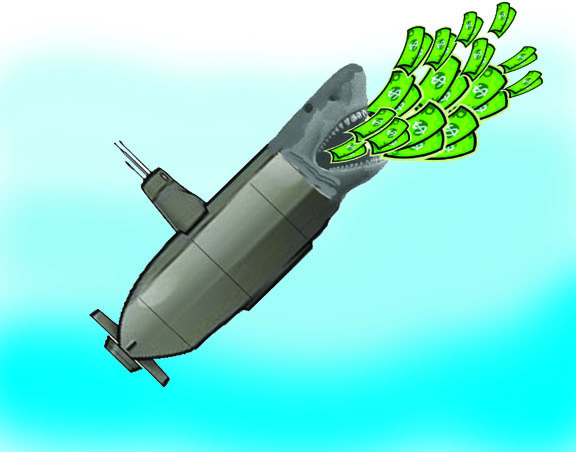
Australia’s Aukus nuclear submarines could cost as much as $171bn, report finds
Australian Strategic Policy Institute report calls project ‘most complex endeavour Australia has embarked upon’ Guardian, Tory Shepherd, Tue 14 Dec 2021
Australia’s eight planned nuclear submarines will cost $70bn at an “absolute minimum” and it’s “highly likely” to be more than that, defence analysts say.
With inflation, the cost could be as high as $171bn, according to a new report from the Australian Strategic Policy Institute.
The thinktank’s report contained a series of estimates ranging from low to high and conceded that estimating the final cost of the project is necessarily an “extremely assumption-rich activity”…………
The prime minister, Scott Morrison, has said the planned nuclear-powered submarines, part of the Aukus deal with the United States and the United Kingdom, would likely cost more than the scrapped plan for conventional submarines, which would have cost $90bn……..
Australia will partner with either the US or the UK to buy their boat designs, and a nuclear-powered submarine taskforce is working through the details
“We haven’t determined the specific vessel that we will be building, but that will be done through the rather significant and comprehensive program assessment that will be done with our partners over the next 12 to 18 months,” Morrison said in September.
“Now, that will also inform the costs that relate to this, and they are yet to be determined.”
The authors of the Aspi report, Implementing Australia’s Nuclear Submarine Program, wrote that while the Aukus deal has seemed to move fast, the enterprise would still be “a massive undertaking and probably the largest and most complex endeavour Australia has embarked upon”.
“The challenges, costs and risks will be enormous. It’s likely to be at least two decades and tens of billions of dollars in sunk costs before Australia has a useful nuclear-powered military capability…….
The Aspi report co-author Dr Marcus Hellyer told Guardian Australia the government needed to work out its priorities and would need to balance capability needs, scheduling and the Australian industry content. He emphasised that picking which submarine to build was “secondary” to picking a strategic partner.
The US is building submarines at a rate 10 times higher than the UK, he said……….
The report canvasses other issues that will need to be resolved.
There are likely to be legislative changes needed to allow nuclear reactors in Australia. The government should consider appointing an internal nuclear regulator, an inspector general of nuclear safety, and how it will responsibly dispose of radioactive waste once the reactors that power the submarines reach the end of their useful lives…….. https://www.theguardian.com/world/2021/dec/14/australias-aukus-nuclear-submarines-estimated-to-cost-at-least-70bn
 | ReplyForward |
Australia has been warned, even from the militaristic Australian Strategic Policy Institute, on the problems and astronomic costs of the nuclear submarines
The price tag will be eyewatering, with an eight-boat programme costing Aus$116 billion (US$83 billion) “at an absolute minimum”, almost a tenth of annual gross domestic product.
“It’s likely to be at least two decades and tens of billions of dollars in sunk costs before Australia has a useful nuclear-powered military capability.”
Australia warned bid for nuclear subs carries ‘enormous’ risks https://www.france24.com/en/live-news/20211213-australia-warned-bid-for-nuclear-subs-carries-enormous-risks 13/12/2021 Australia’s bid to develop a fleet of nuclear-powered submarines will cost more than US$80 billion and take decades in the “most complex” project the country has ever embarked on, a study released Monday warned.
The report from the Australian Strategic Policy Institute — an influential Canberra-based think tank — said ownership of the high-tech subs built with US or British know-how would offer a major advantage in deterring aggression from China or elsewhere. [Really?]
But it will also be a fiendishly difficult task requiring a step-change in Australia’s military and industrial capabilities.
It is “probably the largest and most complex endeavour Australia has embarked upon. The challenges, costs and risks will be enormous,” the think tank warned.
“It’s likely to be at least two decades and tens of billions of dollars in sunk costs before Australia has a useful nuclear-powered military capability.”
The project, announced last month, will make Australia the only non-nuclear weapons power to own nuclear-run submarines, which are capable of travelling quickly over long distances carrying long-range missiles and state-of-the-art underwater drones.
Canberra plans to equip them with conventional rather than nuclear weapons. It has yet to decide whether it will buy US or British technology, what class, size and capabilities the subs will have, where they will be built or how radioactive material will be handled.
Even under an optimistic schedule, the first submarines are unlikely to be operational before 2040, according to the report’s authors, who include former Australian defence department officials and an expert on nuclear physics.
The price tag will be eyewatering, with an eight-boat programme costing Aus$116 billion (US$83 billion) “at an absolute minimum”, almost a tenth of annual gross domestic product.
Among a litany of tasks ahead, the navy will have to triple the number of submariners it recruits, refurbish docks, and develop extensive nuclear safeguards.
On the diplomatic front, Australia will need to reassure neighbours and the International Atomic Energy Agency that the subs do not present a nuclear proliferation risk.
“Regardless of the Australian government’s declared intentions,” the report said, “once Australia possesses (weapons-grade enriched uranium), the breakout time to develop and construct nuclear weapons would be less than a year if a simple nuclear-weapon design were pursued.”
The submarine plan has already caused diplomatic headaches for Canberra, with nearest neighbour Indonesia expressing concern, and the decision to ditch a contract to buy French non-nuclear submarines causing fury in Paris.
Protesters say ‘No’ to AUKUS, nuclear submarines and war with China
Protesters say ‘No’ to AUKUS, nuclear submarines and war with China https://www.greenleft.org.au/content/protesters-say-no-aukus-nuclear-submarines-and-war-china Kerry Smith December 12, 2021Issue 1329Australia A national weekend of action against AUKUS was organised over December 10-12 with protests in Canberra, Perth, Sydney, Wollongong, Hobart, Brisbane and Adelaide.
Around 40 people attended an action by the newly-founded campaign group Stop AUKUS – WA action in Boorloo/Perth on December 10 as part of a national weekend of action. The group’s three objectives are: No nuclear subs; No US bases; and No war with China. Greens Senator Jordon Steele-John called for a reduction in defence spending, more funds to international aid and proper care for veterans.
Other speakers included: Christopher Crouch from the Independent and Peaceful Australia Network; anti-nuclear campaigner Jo Vallentine; Socialist Alliance WA convenor Sam Wainwright; Elizabeth Hulm from the Communist Party of Australia; Peter Shannon from the Medical Association for Prevention of War and Steve McCartney from the Australian Manufacturing Workers Union.
Around 200 people protested in Sydney on December 11. Speakers included Wongkangurru man Raymond Finn, an anti-nuclear campaigner, who acknowledged country; Greens Senator Mehreen Faruqi; a speaker from School Strike 4 Climate; Lachlan Good from Young Labor Left and Warren Smith, Assistant National Secretary of the Maritime Union of Australia.
The lively protest, which marched through the CBD to Belmore Park, was endorsed by the Retail and Fast Food Workers Union, Maritime Union of Australia – MUA, United Workers Union, NTEU-NSW, as well as many anti-war and peace organisations and environment groups.
1 This month

of the week – Australians for War Powers Reform (AWPR)
To see nuclear-related stories in greater depth and intensity
 Antinuclear