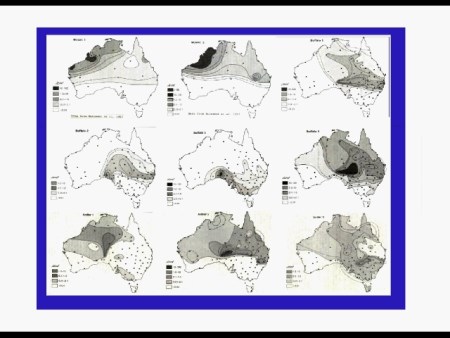
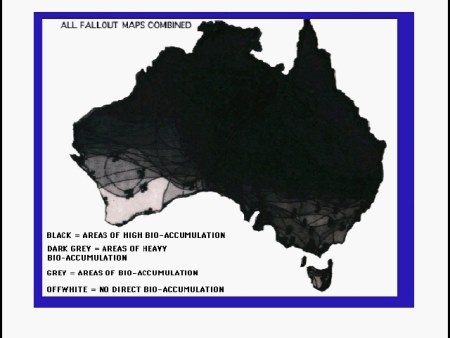
Australia was the guinea pig population for Britain’s nuclear weapons tests radiation fallout
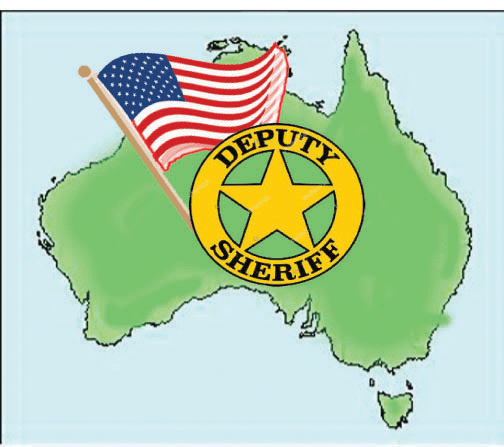
Australia: USA’s Deputy Sheriff goes for bloated military expenditure
 Defending Australia: The Deputy Sheriff Spending Spree https://theaimn.com/defending-australia-the-deputy-sheriff-spending-spree/?fbclid=IwAR0K25d1UTZX_0DTF_2JFQESQ3nBlXbvGjv3PihUHH3ib6Q9yW6mNUV6LBE,
  July 1, 2020, by: Dr Binoy Kampmark There are few sadder sights in international relations than a leadership in search of devils and hobgoblins. But such sights tend to make an appearance when specialists in threat inflation either get elected to office or bumped up the hierarchies of officialdom. The sagacious pondering types are edged out, leaving way for the drum beaters. As the Roman general Vegetius suggested with solemn gravity in the 4th century, “Igitur qui desiderat pacem, praeparet bellum,” an expression that has come to mean that those desiring peace best ready for war.
- Australia’s drum beating government has told its citizens rather pointedly that “we have moved into a new and less benign strategic era.” It is something that the federal government has never tired of stressing ever since the White Tribe of Asia developed fears of genetic and maternal abandonment, being thousands of miles from Britannia but uncomfortably close to the hordes of Asia. To the north lay the colours black, brown and yellow, tempered, for a time, by the powers of Europe. Henry Lawson, who had a fear or two tucked under his belt, reflected on this sentiment in his patchy Flag of the Southern Cross: “See how the yellow-men next to her lust for her, Sooner or later to battle we must for her.”
Instead of committing to an easing of that tension, Morrison is keen to throw Australia into an increasingly crowded theatre of participants in the Indo-Pacific on the mistaken premise that things have dramatically changed. “And so we have to be prepared and ready to frame the world in which we live as best as we can, and be prepared to respond and play our role to protect Australia, defend Australia.”
That defence is, invariably, linked to that of the United States, which sees Australia as an essential cog in the containment strategy of the PRC. The idea that this new round of spending will assist Australia’s own independence from this project is misleading in the extreme. For one, the continuing stress on interoperability between the Australian Defence Force and its US counterparts remains a feature of spending decisions. Deputy Sheriffs know where and from whom to take their cues and stock from. Such weapons as the United States Navy’s AGM-158C Long Range Anti-Ship Missile (LRASM) are on the list of future purchases. There is also the promise of underwater surveillance systems, and research and development in what promises to be another frontier of an international arms race: hypersonic weapons or, as US President Donald Trump prefers to call them “super duper missiles.” (Some $9.3 billion has been allocated for the latter.)
The prime minister also revisits a term that is impossible to quantify, largely because of its fictional quality. Deterrence, ever elastic and rubbery, only has meaning when the hypothetical opponent fears retaliation and loss. To undertake any attack would, to that end, be dangerous. For decades, this fictional deterrent was kept up by the vast umbrella of the US imperium.
The sense that this umbrella might be fraying is being used as an excuse to beat the war drum and stir the blood. Senator Jim Nolan is one, insisting that “we must share some of the blame [for the likelihood of regional conflict] because we have ignored our century-long history of national unpreparedness, and have relied blindly on an assumed level of US power which, since the end of the Cold War, exists at a much lower and dangerous level, and looks less likely to deter regional conflict.” Nolan nurses a fantasy that seems to be catching: that Australia aspire to “self-reliance” and have “confidence that we could adjust in time required to defend ourselves and so, with a bit of luck, deter conflict impacting directly on us. At present, we are severely deficient.”
Morrison similarly opines that, “The ADF now needs stronger deterrence capabilities. Capabilities that can hold potential adversaries’ forces and critical infrastructure at risk from a distance, thereby deterring an attack on Australia and helping to prevent war.” To imagine that Australia would be able to deter a power such as China, even with projected purchases, is daftly entertaining. The term simply does not come into play.
This incoherence is of little concern to the family of strategists that inhabit the isolated climes of Canberra. When money and weaponry is promised, champagne corks pop. Peter Jennings of the Australian Strategic Policy Institute is duly celebrating, given his fixation with that one power “with both the capacity and the desire to dominate the Indo-Pacific region in a way that works against Australia’s interest.” He even has a stab at humour: “We’re not talking about Canada.”
Broad policy commitments to bloated military expenditure are always to be seen with suspicion. They come with warnings with little substance, and only matter because people of like mind find themselves on opposite sides of the fence warning of the very same thing. If you do not spend now, you are leaving the country open to attack. That most important question “Why would they attack us in the first place?” is never asked. Even at the height of the furious battles of the Second World War, Imperial Japan debated the merits of invading an island continent which would have needlessly consumed resources. Australia, in short, has never been an inviting target for anyone.
The dangers of adding to the military industrial complex, then, are only too clear. Countries who prepare for war in the name of armed security can encourage the very thing they are meant to prevent. Purchased weapons are, after all, there to be used. The result is the expenditure of billions that would better be spent on health, education and, ever pressingly, on redressing environmental ruination.
We are then left with the desperate sense of a psychological defect: the need to feel wanted and relevant on the big stage. This was very much the case when Prime Minister Robert Menzies committed Australian troops in 1965 to stem the Red-Yellow Horde in the steaming jungles of Vietnam. The language being used then was much as it is now: to deter, to advance national security, to combat an authoritarian menace in a dangerous region. Little weight was given to the subtleties of a nationalist conflict that was not driven by Beijing. Half-baked and uncooked strategy was served in the messes.
In adding their bloody complement to a local conflict that would eventually see a US defeat, Labor’s Arthur Calwell, himself a self-styled white nationalist, made a sober speech in denunciation. Australia was committing resources to “the bottomless pit of jungle warfare, in a war in which we have not even defined our purpose honestly, or explained what we would accept as victory.” Doing so was “the very height of folly and the very depths of despair.” Australia now finds itself committed to a defence strategy against a mirage dressed in enemy’s clothes masked in language that resists meaning or quantification.
Agressive defence policy – Australian Strategic Policy Institute has too much influence on government and media
 The recent announcement about a fresh $270 billion to rev up the defence force – even one equipped with long range hypersonic missiles (an impossibility at this stage) – will tempt our Whitehall Warriors to overreach with their rhetoric and provoke a reaction from a much superior power that would be highly destabilising for us and for others. In the lead of this, stirring up the government, is the notorious Australian Strategic Policy Institute whose original purpose was to provide objective analysis of strategic issues but not to be a stentorian advocate of an aggressive foreign and defence policy. At its head is our very own ‘Secular Santamaria’, Peter Jennings, who gets disproportionate airplay on these matters by a susceptible government and media.
Militarism and Popularism, a dangerous mix https://johnmenadue.com/military-matters-and-popularism-by-andrew-farran/, By ANDREW FARRAN | On 2 July 2020
The recent announcement about a fresh $270 billion to rev up the defence force – even one equipped with long range hypersonic missiles (an impossibility at this stage) – will tempt our Whitehall Warriors to overreach with their rhetoric and provoke a reaction from a much superior power that would be highly destabilising for us and for others. In the lead of this, stirring up the government, is the notorious Australian Strategic Policy Institute whose original purpose was to provide objective analysis of strategic issues but not to be a stentorian advocate of an aggressive foreign and defence policy. At its head is our very own ‘Secular Santamaria’, Peter Jennings, who gets disproportionate airplay on these matters by a susceptible government and media.
As the government has become heavily focussed on China, it being the military threat, what the government says and does from now on must be seen in that light. Considering the huge imbalance between Chinese and Australian military capabilities – our GDP is about 5% of China’s; the military comparison is much the same – one must ask if we were to engage militarily against China what optimum outcome would/could we seek? At the least it would be our survival, but the probability is that even that would incur great cost, involving great destruction.
Were we to engage in conjunction with the US, the outcome would be similar or worse as our most effective or currently valued capabilities (e.g. Pine Gap) would be picked out for destruction. To engage with the US in any case would be a mistake as we can assume that any such conflict would be initially and ultimately one directly between China and the US. Indications are that the US would not be exercising ‘leadership’, or what goes for leadership, for any purpose other than its own. That is the foreseeable and inexorable trend now. Australia, it must be stressed, does not lie naturally in the sphere of influence of either China or the US, which gives it the option of dealing with both pragmatically and rationally on a case by case basis.
Over time Australia has been, and continues to be, obsessed by an overriding sense of insecurity about its place in the region, and the world generally, causing its strategic policy to be fixated on the inevitability of conflict, discounting its ability to sustain an effective role in an orderly and stable world. Since the 1970s we have been engaged in wars of little or no strategic relevance, at a disproportionate cost in lives and substance. The only military examples of constructive relevance was our unarmed intervention in 1999 in East Timor under INTERFET, and peacekeeping operations in the Southwest Pacific under RAMSI in 2003, both with the full acceptance of the affected parties.
The strategic implications of Covid-19 are that we may be expected to do more on these lines and not more of the over-reaching interventionism of the kind witnessed in recent decades in the Middle East. We should act as an independent power within our own capabilities and not harness ourselves to the interests of any foreign power which complicates our relationships with others, especially our neighbours. If we continue to be connected ‘at the hip’ with one unreliable and irrational major power we will again be the first casualty of any misconceived adventurism.
What might justify a heightened build up of military capabilities, though not on the lines now proposed? It is said that the post-COVID-19 world will be poorer and more hand-to-mouth in nature than before, when there was a sense of order under a rules-based system. Hopefully elements of the rules-based system will be retained in the region, though it may break down in some places because of the pressures of poverty and dissatisfaction. As the much earlier UN Secretary-General, the late Dag Hammarskjold, famously remarked, the UN multilateral system “was not created to take mankind to heaven, but to save humanity from hell”.
To have the ability to assist regional states threatened by poverty and disease within, and disorder from without, may be a good thing in which Australia could have an effective (essentially peacekeeping or stabilising) role.
For that role we should develop a force structure suitable for the purpose, not for extraneous long-range purposes as would now seem to be the case. We should also, militarily and otherwise, develop a top-class counter-cyber capability both for our own protection and the protection of others. With regard to supply lines, these are predominantly serviced by foreign owned planes and ships for whose protection others have responsibility. If picked on by unfriendly fire, that would elevate a conflict beyond the region.
Overall, in this less stable situation, Australia should work closely with Japan, Indonesia and Vietnam to shore up regional cohesion, and with New Zealand in specific projects for stability and development in the South Pacific. Punching above our weight could lead to brawls. Punching at our weight is the way to go.
Gabrielle Costigan- another one revolving from tax-paid jobs to weapons industry!
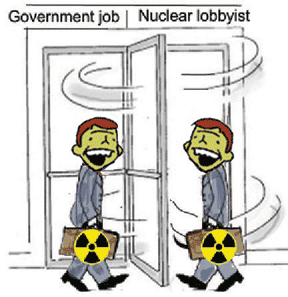 Gabrielle Costigan MBE https://www.michaelwest.com.au/gabrielle-costigan-mbe/
MILITARY INDUSTRY REVOLVING DOOR
A former Colonel in the Australian Army who led logistic operations for the Australian and US governments. Left the military to move into a US-based military industry company. Currently, CEO of BAE Systems Australia.
Current Positions
Corporate
CEO, BAE Systems Australia (1.1.18-present)
Publicly funded
Chair, Council for Women and Families United by Defence Service (term: 17.5.19–14.5.2021)
Previous Positions
Corporate positions
CEO (designate), BAE Systems Australia (2.10.17-31.12.17)
CEO, Linfox International Group (May 2014-June 2017)
Vice President, Military Programs and Business Development Commercial Aircraft, VAS Aero Services, LLC (USA) (July 2013-Mar 2014)
Vice President, Military Programs, VAS Aero Services, LLC (USA) (July 2012-June 2013)
Publicly funded positions
Board member, Australia-ASEAN Council [Joined board while at Linfox; no longer listed on board. Emailed DFAT-AAC for dates 15.2.20; no reply]
Military positions
Director, Multi-National Logistics Division, United States Central Command (Jan 2010-July 2012)
Military Assistant to the Chief of Joint Operations Command, Australian Defence Force (Jan 2008-Dec 2009)
Australian Command and Staff College, Australian Defence Force (Jan 2007-Dec 2007)
Australian Army, various positions (Jan 2002-Dec 2006)
Defence departmental positions
Project Manager–Simulation, Defence Department (1999-2002)
Related Items
June 2019: Awarded MBE by the United Kingdom, Queen’s Birthday honours list, “for services to UK/Australia relations.”
Former weapons chief executive now South Australian Premier’s top advisor

This could shed some light on the South Australian government’s silence on the Federal plan for a nuclear waste dump in South Australia. We can expect the South Australian government to now support the nuclear waste dump at Napandee, and to promote schemes to make south Australia a nuclear hub, especially with nuclear submarines production.
|
Weapons of Influence: BAE arms boss turns Premier’s right-hand man https://www.michaelwest.com.au/weapons-of-influence-bae-arms-boss-turns-premiers-right-hand-man/ Michael West Media, by Michelle Fahy | Jun 12, 2020 As part of her series of investigations into the close links between the military industry and politics, Michelle Fahy reports on former weapons chief executive for BAE, Jim McDowell, who is now at the centre of government in the Defence State, South Australia. Jim McDowell was employed in the weapons industry for 37 years. Born in Belfast, he studied law then spent 18 years with Northern Ireland firm Bombardier Shorts. After that, he joined British Aerospace (now BAE Systems) in Singapore and worked his way up through various positions in Asia. In 2001, McDowell was appointed CEO of BAE Systems Australia. During a decade in that role he oversaw BAE’s 2008 acquisition of Tenix Defence, a deal that doubled the size of the company and resulted in BAE becoming Australia’s largest weapons-maker at the time. It remains one of the largest today, mostly for building Australia’s warships, among other projects. In September 2011, Jim McDowell left Adelaide for Riyadh, where he ran BAE’s Saudi Arabian operation for a little over two years. Saudi Arabia is crucial to BAE’s business, its third largest market after the US and the UK (Australia is fourth). The company has been supplying combat aircraft to the Saudis since the 1960s. Several of its arms deals have been dogged by controversy (and continue to be due to the Saudi role in the humanitarian catastrophe in Yemen), and some by corruption. In the UK, a Serious Fraud Office investigation into BAE’s relationship with the Saudis was notoriously shut down in December 2006 following intense pressure from the Saudi government and the UK’s then prime minister Tony Blair, citing national security reasons. The capitulation of the Serious Fraud Office was later deemed “unlawful, an “abject surrender” and a “threat to the reputation of British justice” by the British High Court. By the time McDowell arrived, all that was in the past and it was back to business. In a media release describing a visit of the BAE Board to Saudi Arabia in March 2012, McDowell said, “Saudi Arabia is a key market for the company. We want to be considered as an industrial and a strategic partner for the Kingdom… The meeting was a wonderful way to strengthen relations.” Several multi-billion pound arms deals were concluded during the period McDowell was BAE’s chief executive in Saudi Arabia. Back to Australia with ANSTOIn December 2013, McDowell resigned from BAE and returned to Australia. He was immediately appointed to the board of the Australian Nuclear Science and Technology Organisation, as deputy chair. Then Industry Minister Ian Macfarlane said, “Mr McDowell’s business background coupled with his knowledge of international marketing and joint ventures will support the development of emerging business opportunities…” ANSTO’s chair, Dr Paul Greenfield, said, “This is a dynamic and exciting time for ANSTO and this is reflected in the overall contribution nuclear science and technology is now making across a range of key areas.” Earlier that year (in February 2013), ANSTO had signed a formal research cooperation agreement with the Defence Science and Technology (DST) Organisation. This was a period when DST, under Chief Defence Scientist Alex Zelinsky, signed a number of collaborative agreements with military industrial companies, including BAE in October 2013 and, as we have covered previously, Lockheed Martin in March 2014, among others. At the completion of Dr Greenfield’s term, in August 2014, McDowell was appointed chair of the ANSTO board, a position he held for the next four years. McDowell’s timely departure from the military industry created an influx of new opportunities for him from a government with a policy of recognising industry as a “fundamental input to capability”. Following his rapid appointment to the ANSTO board, over the next four years, McDowell was awarded lucrative contracts across six major areas by Defence (see table), which together totalled almost $1.5 million in consultancy fees. To supplement the government’s largesse, in the same four-year period, McDowell accepted appointments as Chancellor of the University of South Australia and to the Council of the Australian Strategic Policy Institute. He also joined the boards of eight public companies, most of which operate in the military industrial sector. In addition to those in the chart, McDowell was made chair of another two private companies, duMonde Group Pty Ltd and Total Construction Pty Ltd (dates of those appointments are not publicly available). In 2017, it appears McDowell was engaged simultaneously in at least 12 different roles. Continue reading |
60 years ago, Aborginal people’s land desecrated by nuclear bombs. Now a new desecration – nuclear wastes?
Even I know off by heart the supercilious tones of the Chief Scientist of the British nuclear tests, Ernest Titterton’s on-screen completely false declaration: ‘No Aboriginal people were harmed.’ The discovery of Edie Milpuddie and family as they camped on the edge of the Marcoo bomb crater was dramatic exposure of that cruel fiction. It is extraordinary to see the actual footage of this moment in the film; and so sobering to hear again the terrible repercussions among her descendants.
‘No Aboriginal people were harmed.’ Add into that mix, English and Australian servicemen and the various pastoral landholders; and from the strong desert winds including across the APY Lands, we will never know the results of the further fallout across the state and nation.
Wind forward another 30 years again and the well being of another almost neighbouring group of Aboriginal people is threatened with nuclear repercussions: this time by the plan for the nation’s nuclear waste ‘stored’ (dumped) on their Country. Again as Traditional Owners, the Barngarla denied a say on their own Country, while a few white ‘latecomers’ were given theirs.
The nuclear fight: then and now, Eureka Street Michele Madigan, 04 June 2020 heeded? https://www.eurekastreet.com.au/article/the-nuclear-fight–then-and-now?utm_medium=email&utm_campaign=Eureka%20Street%20Daily%20-%20Thursday%204%20June%202020&utm_content=Eureka%20Street%20Daily%20-%20Thursday%204%20June%202020+CID_d497ae8df79099faf8643a0a84a8536d&utm_source=Jescom%20Newsletters&utm_term=READ%20MORE On Sunday 24th May, the ABC showed the documentary Maralinga Tjarutja produced and directed by lawyer, academic, filmmaker and Eualeyai/Kamillaroi woman Larissa Berendt. It was wonderful to see the Traditional Owners including the women given a current national voice as survivors of the British nuclear tests on their lands. Mima Smart OAM former long-term chairperson of Yalata Community was co-presenter with the chair of Maralinga Tjarutja, Jeremy Lebois; Mima’s Maralinga art, painted in collaboration with other Yalata minyma tjuta — women artists, becoming an integral background story — sometimes even in animation.
Nuclear missile submarines in the Indo-Pacific
Increasing Indo-Pacific nuclear boats and the impact on strategic stability Defence Connect, Stephen Kuper, 5 June 20, As the Indo-Pacific continues to evolve economically and strategically, one of the traditional measures of great power status – nuclear attack and missile submarines – will become more prominent. For ASPI academic Stephan Fruehling, this will have a dramatic impact on the strategic stability and calculus Australia depends upon.
Much like the submarine competition between the US and Soviet Union, this new arms race is resulting in fleets of hunter-killers and strategic missile submarines stalking the depths, however the US and China are far from the only emerging and established Indo-Pacific nations seeking to leverage the power of nuclear submarines.
The growing proliferation of advanced nuclear weapons systems, including the relatively crude, yet still capable submarine launch ballistic missiles recently tested by North Korea, and the increasingly capable nuclear-powered submarine fleets introduced by China and Russia, South Korea has moved to address a tactical and strategic shortfall: a lack of nuclear-powered submarines.
While seemingly a shock move, the South Korean strategic policy institute, the Korea Defense Network (KDN), commissioned a research review into the feasibility of developing an indigenous nuclear-powered attack submarine.
It is reported that the results suggested that South Korea consider building a nuclear-powered attack submarine modelled after the French 5,300-tonne Barracuda Class submarine, the design model for Australia’s own fleet of $50 billion Attack Class submarines.
India also fields a growing array of domestic and foreign nuclear submarine designs in both the attack and ballistic missile variants providing an already tense regional balance of power with yet another platform to complicate the tactical and strategic decision making processes for many nations, including Australia……..
For Australia, this raises the question, can the nation depend on the nuclear umbrella provided by the US or, for that matter, the UK at a stretch? If not, what is the solution for Australia? ……..https://www.defenceconnect.com.au/maritime-antisub/6227-increasing-indo-pacific-nuclear-boats-and-the-impact-on-strategic-stability
COVID-19: US Military Pursues War Games Amid Contagion. Australia involved
The U.S. Army is also pursuing a 6,000-person war game in Poland, June 5-19, with a Polish airborne operation and a U.S.-Polish division-size river crossing.
If these weren’t too many military operations during an epidemic in which personnel on 40 U.S. Navy ships have come down with the hyper-contagious virus and during which military personnel and their families have been told not to travel, plans are also underway for a U.S. Army division-sized exercise in the Indo-Pacific region in less than a year. Known as Defender 2021, the U.S. Army has requested $364 million to conduct the war exercises throughout Asian and Pacific countries.
The pivot to the Pacific, begun under the Obama administration, and maintained by the Trump administration, is reflected in a U.S. National Defense Strategy (NDS) that sees the world as “a great power competition rather than counterterrorism and has formulated its strategy to confront China as a long-term, strategic competitor.”
Earlier in May, the U.S. Navy sent at least seven submarines, including all four Guam-based attack submarines, several Hawaii-based ships and the San Diego-based USS Alexandria to the western Pacific in what the Pacific Fleet Submarine Force announced as simultaneous “contingency response operations” for all of its forward-deployed subs. This was all in support of the Pentagon’s “free and open Indo-Pacific ” policy — aimed at countering China’s expansionism in the South China Sea — and as a show of force to counter ideas that the capabilities of U.S. Navy forces have been reduced by Covid-19…….
In May, 2020, the Australian government announced that a delayed six-month rotation of 2,500 U.S. Marines to a military base in Australia’s northern city of Darwin will go ahead based on strict adherence to Covid-19 measures including a 14-day quarantine. The Marines had been scheduled to arrive in April but their arrival was postponed in March because of the pandemic.
The remote Northern Territory, which had recorded just 30 Covid-19 cases, closed its borders to international and interstate visitors in March, and any arrivals must now undergo mandatory quarantine for 14 days. U.S. Marine deployments to Australia began in 2012 with 250 personnel and have grown to 2,500. The Joint U.S. Defense facility Pine Gap— the U.S. Department of Defense, Five Eyes and CIA surveillance facility that pinpoints airstrikes around the world and targets nuclear weapons, among other military and intelligence tasks — was also adapting its policy and procedures to comply with Australian government COVID restrictions.
As the U.S. military expands its presence in Asia and the Pacific, one place it will NOT be returning to is Wuhan, China. In October 2019, the Pentagon sent 17 teams with more than 280 athletes and other staff members to the Military World Games in Wuhan. Over 100 nations sent a total of 10,000 military personnel to the games in Wuhan last October.
The presence of a large U.S. military contingent in Wuhan just months before the outbreak of the Covid-19 in Wuhan in December 2019, fueled a theory by some Chinese officials that the U.S. military was somehow involved in the outbreak, which now has been used by the Trump administration and its allies in Congress and the media that the Chinese deliberately used the virus to infect the world and adding justification for the U.S. military build-up in the Pacific region.
Ann Wright served 29 years in the U.S. Army/Army Reserves and retired as a colonel. She was a U.S. diplomat for 16 years and served in U.S. Embassies in Nicaragua, Grenada, Somalia, Uzbekistan, Kyrgyzstan, Micronesia, Afghanistan and Mongolia. She resigned from the U.S. government in March 2003 in opposition to President George W. Bush’s war on Iraq. She is co-author of “Dissent: Voices of Conscience.” https://consortiumnews.com/2020/05/26/covid-19-military-pursues-war-exercises-amid-contagion/
Australia could address another global threat by supporting the UN the Treaty on the Prohibition of Nuclear Weapons.
|
As we wait for a vaccine, there is another global threat we could address today, https://www.canberratimes.com.au/story/6767846/as-we-wait-for-a-vaccine-there-is-another-global-threat-we-could-address-today/?cs=14246 Sue Wareham, 25 May 20
Calls by scientists and others have been made for climate action to play a key role in the post-COVID-lockdown world that is slowly coming into view. These calls are critically important; no responsible government can ignore them. After warnings in recent years about the risk of a global pandemic, we should have learnt that risks don’t go away simply by being ignored. However, there is another call to action on a profound risk to humanity that has received less attention – the need to get rid of the 14,000 nuclear weapons in existence. This risk has been highlighted again this month by President Trump’s discussions with senior officials of a possible resumption of US nuclear testing, a dangerous move that would break a nuclear test moratorium which has been honoured for over two decades by all nations except North Korea. In addition, an important high-level meeting, the five-yearly Review Conference of the Nuclear Non-Proliferation Treaty (NPT), which was scheduled to take place at the UN in New York from April 27 to May 22, has been postponed for the obvious reason until early 2021.
The NPT entered into force exactly half a century ago, in 1970, and has played a very significant role in preventing the rapid spread of nuclear weapons; currently there are just nine nuclear-armed states. At the quarter-century mark, in 1995, it was extended indefinitely, with member states reaffirming their commitment to the complete elimination of nuclear weapons, a goal that is central to the treaty and yet remains unfulfilled. That failure lies at the heart of growing tensions, between the countries with the weapons and those without, that have marked the five-yearly NPT Review Conferences since 1995. Far from disarming, the nuclear-armed states are updating their arsenals.
The US, followed by Russia, abandoned the Intermediate Nuclear Forces (INF) Treaty in February last year, with mutual accusations of violations. In 2018 Trump pulled out of the nuclear accord with Iran. The New START (Strategic Arms Reduction Treaty), the last remaining treaty limiting the world’s two largest nuclear arsenals (the US and Russia), is due to expire next February, with no renewal in sight.
The same rules apply to all nations, and the rule is zero tolerance of the world’s worst weapons. Australia boycotted the whole process, arguing that the security needs of the nuclear-armed states need special consideration – a bit like special pleading for those planning genocide. Entry into force of the TPNW was expected this year but, like everything else, is now delayed.
The driver for negotiating the TPNW was the overwhelming scientific evidence of the catastrophic harm that humanity would face with any use of nuclear weapons, and the knowledge that the risk is increasing. In January this year, the Bulletin of the Atomic Scientists advanced the hands of its Doomsday Clock to 100 seconds to midnight, closer to global catastrophe than at any other time, including during the Cold War.
|
|
A tribute to the Maralinga traditional owners
This is a critical and never-ending land management responsibility which the Maralinga people, who suffered the environmental and health effects of the nuclear tests, have shouldered on behalf of the Australian community.
He was able to relate to Aboriginal and non-Aboriginal people, cabinet ministers and homeless people alike. He treated everyone with candour and respect.
By word and deed he refused to accept that Aboriginal people were inferior
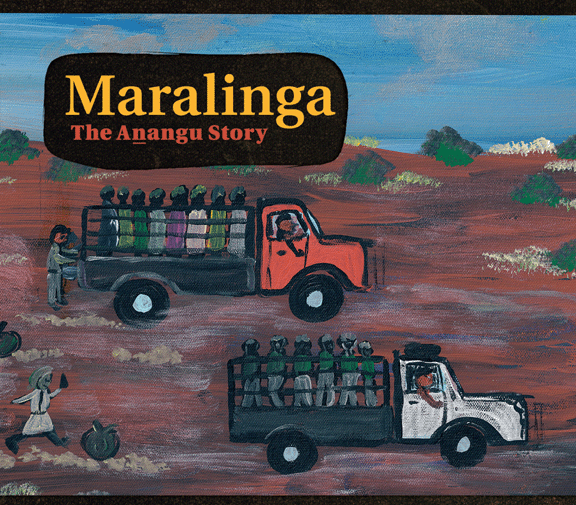 Why Archie Barton and the Maralinga traditional owners are the unsung heroes of the British nuclear test program in Australia https://www.abc.net.au/news/2020-05-25/andrew-collett-on-archie-barton-unsung-heroes-of-maralinga-tests/12272284 By Andrew Collett
Politicians, bureaucrats, scientists and advisers come and go. The traditional owners must plug on with the management and rehabilitation of their land — on behalf of us all.
Andrew Collett is an Adelaide barrister and one of the lawyers who has represented the Maralinga traditional owners since 1984. Find out more about the story of the people of Oak Valley and Yalata in a new ABC TV documentary, Maralinga Tjarutja, available to stream now on iview.
The traditional owners of the 100,000 square kilometre Maralinga Lands didn’t only shoulder the harsh legacy of the British nuclear testing while it was happening in the 1950s and 60s.
To this day, they are managing the still contaminated test sites in far-west South Australia on behalf of Australia and Britain.
For this they receive little recognition and inadequate financial assistance — despite having established extremely constructive and enduring relationships with Australian scientists and government representatives.
Aboriginal and Torres Strait Islander readers are advised that the following article contains names and images of people who have died.
The Maralinga people were kept away from their lands and from any knowledge about what happened in the nuclear tests from 1955 until they obtained land rights and finally returned to their lands in 1985 — an isolation of 30 years, or well over a generation in Aboriginal terms.
For that 30 years the Maralinga people were kept at the Lutheran Mission at Yalata, away from their traditional lands, isolated from their Pitjantjatjara and Yankunytjatjara communities over 400 kilometres to the north and from much of their vibrant Western Desert tradition and ceremony.
They fell prey to social and cultural isolation and deteriorating health outcomes.
When they returned to their traditional lands in 1985, having been granted land rights to all their lands apart from the test sites, a royal commission was sitting in London examining what had happened during the Maralinga nuclear tests and why.
A constructive partnership with governmen Continue reading
Another revolving door- Air Chief Marshal (ret’d) Mark Binskin AC straight into BAE warships maker
Air Chief Marshal (ret’d) Mark Binskin AC
MILITARY INDUSTRY REVOLVING DOOR. Michael West Media
In June 2018, Mark Binskin was Chief of the Defence Force when BAE Systems Australia was awarded the $35 billion Future Frigate contract, the largest surface warship program in Australia’s history. The following month Binskin retired. He has since been appointed in a non-executive director role with BAE Systems. The contract for the $1.2 billion upgrade of the Jindalee Operational Radar Network was also awarded to BAE in the final months of Binskin’s tenure…… https://www.michaelwest.com.au/air-chief-marshal-mark-binskin-ac-retd/
Australia’s political revolving door between military industry and government – Reynolds and Reith
Senator the Hon Linda Reynolds CSC
MILITARY INDUSTRY REVOLVING DOOR, MichaelWest.com 15 Apr 20
The “spruiker-in-chief” of defence industry has been involved with promoting military industry interests since the late 1980s when she co-founded the WA Defence Industry Council. Reynolds combined a career in the army reserves with political staffing roles for the Liberals, and a stint with industry giant Raytheon, before becoming a senator for WA in 2014. From 2 March 2019, she served as Minister for Defence Industry before being promoted to Defence Minister on 29 May 2019…….. https://www.michaelwest.com.au/linda-reynolds/
The Hon Peter Reith AM
MILITARY INDUSTRY REVOLVING DOOR
Former Howard government defence minister Peter Reith created a storm of protest when he quit politics and started work within a day or two for Tenix Defence (now BAE Systems Australia) as a consultant on government relations. Tenix Defence was Australia’s largest military industry corporation and a significant contractor to the department over which Reith had just had oversight. ……..more https://www.michaelwest.com.au/peter-reith/ …… https://www.michaelwest.com.au/linda-reynolds/
The lingering horror of the nuclear bomb tests at Maralinga
 The lesser known history of the Maralinga nuclear tests — and what it’s like to stand at ground zero https://www.abc.net.au/news/2020-03-24/maralinga-nuclear-tests-ground-zero-lesser-known-history/11882608, ABC Radio National By Mike Ladd for The History Listen I thought I knew all the details about Maralinga, and the nuclear bomb tests that took place there six decades ago.But when I set out to visit ground zero, I realised there were parts of this Cold War history I didn’t know — like Project Sunshine, which involved exhuming the bodies of babies. The lesser known history of the Maralinga nuclear tests — and what it’s like to stand at ground zero https://www.abc.net.au/news/2020-03-24/maralinga-nuclear-tests-ground-zero-lesser-known-history/11882608, ABC Radio National By Mike Ladd for The History Listen I thought I knew all the details about Maralinga, and the nuclear bomb tests that took place there six decades ago.But when I set out to visit ground zero, I realised there were parts of this Cold War history I didn’t know — like Project Sunshine, which involved exhuming the bodies of babies.
Maralinga is 54 kilometres north-west of Ooldea, in South Australia’s remote Great Victoria Desert. Between 1956 and 1963 the British detonated seven atomic bombs at the site; one was twice the size of the bomb dropped on Hiroshima. There were also the so-called “minor trials” where officials deliberately set fire to or blew up plutonium with TNT — just to see what would happen. One location called “Kuli” is still off-limits today, because it’s been impossible to clean up. I went out to the old bomb sites with a group of Maralinga Tjarutja people, who refer to the land around ground zero as “Mamu Pulka”, Pitjantjatjara for “Big Evil”. “My dad passed away with leukaemia. We don’t know if it was from here, but a lot of the time he worked around here,” says Jeremy Lebois, chairperson of the Maralinga Tjarutja council. Thirty per cent of the British and Australian servicemen exposed to the blasts also died of cancer — though the McClelland royal commission of 1984 was unable to conclude that each case was specifically caused by the tests. It’s not until you stand at ground zero that you fully realise the hideous power of these bombs. Even after more than 60 years, the vegetation is cleared in a perfect circle with a one kilometre radius. “The ground underneath is still sterile, so when the plants get down a certain distance, they die,” explains Robin Matthews, who guided me around the site. The steel and concrete towers used to explode the bombs were instantly vaporised. The red desert sand was melted into green glass that still litters the site. Years ago it would have been dangerous to visit the area, but now the radiation is only three times normal — no more than what you get flying in a plane. The Line of FireAustralia was not the first choice for the British, but they were knocked back by both the US and Canada. Robert Menzies, Australia’s prime minister at the time, said yes to the tests without even taking the decision to cabinet first. David Lowe, chair of contemporary history at Deakin University, thinks Australia was hoping to become a nuclear power itself by sharing British technology, or at least to station British nuclear weapons on Australian soil. “In that period many leaders in the Western world genuinely thought there was a real risk of a third world war, which would be nuclear,” he says. The bombs were tested on the Montebello Islands, at Emu Field and at Maralinga. At Woomera in the South Australian desert, they tested the missiles that could carry them. The Blue Streak rocket was developed and test-fired right across the middle of Australia, from Woomera all the way to the Indian Ocean, just south of Broome. This is known as “The Line of Fire” The Line of Fire from Woomera to Broome is, funnily enough, the same distance from London to Moscow,” Mr Matthews says. Just as the Maralinga Tjarutja people were pushed off their land for the bomb tests, the Yulparitja people were removed from their country in the landing zone south of Broome. Not all the Blue Streak rockets reached the sea. Some crashed into the West Australian desert. The McClelland royal commission showed that the British were cavalier about the weather conditions during the bomb tests and that fallout was carried much further than the 100-mile radius agreed to, reaching Townsville, Brisbane, Sydney and Adelaide. “The cavalier attitude towards Australia’s Indigenous populations was appalling and you’d have to say to some extent that extended towards both British and Australian service people,” Professor Lowe says. There are also questions over whether people at the test sites were deliberately exposed to radiation. “You can’t help but wonder the extent to which there was a deliberate interest in the medical results of radioactive materials entering the body,” Professor Lowe says. “Some of this stuff is still restricted; you can’t get your hands on all materials concerning the testing and it’s quite likely both [British and Australian] governments will try very hard to ensure that never happens.” Project SunshineWe do know that there was a concerted effort to examine the bones of deceased infants to test for levels of Strontium 90 (Sr-90), an isotope that is one of the by-products of nuclear bombs. These tests were part of Project Sunshine, a series of studies initiated in the US in 1953 by the Atomic Energy Commission. They sought to measure how Sr-90 had dispersed around the world by measuring its concentration in the bones of the dead. Young bones were chosen because they were particularly susceptible to accumulating the Sr-90 isotope. Around 1,500 exhumations took place, in both Britain and Australia — often without the knowledge or permission of the parents of the dead. Again, it was hard to prove conclusively that spikes in the levels of Strontium 90 during the test period caused bone cancers around the world. The Maralinga tests occurred during a period that Professor Lowe describes as “atomic utopian thinking”. “Remember at that time Australians were uncovering pretty significant discoveries of uranium and they hoped that this would unleash a vast new capacity for development through the power of the atom,” he says. Some of the schemes were absurdly optimistic. Project Ploughshare grew out of a US program which proposed using atomic explosions for industrial purposes such as canal-building. In 1969 Australia and the US signed a joint feasibility study to create an instant port at Cape Keraudren in the Kimberley using nuclear explosions. The plan was dropped, but it was for economic not environmental or social reasons. The dream (or was it a nightmare?) of sharing nuclear weapons technology with the British was never realised. All Australia got out of the deal was help building the Lucas Heights reactor. The British did two ineffectual clean-ups of Maralinga in the 1960s. The proper clean-up between 1995 and 2000 cost more than $100 million, of which Australia paid $75 million. It has left an artificial mesa in the desert containing 400,000 cubic metres of plutonium contaminated soil. The Maralinga Tjarutja people received only $13 million in compensation for loss of their land, which was finally returned to them in 1984. As we were leaving the radiation zone, the Maralinga Tjarutja people spotted some kangaroos in the distance. Over the years some of the wildlife has started to return. Mr Lebois takes it as a good sign. “Hopefully, hopefully everything will come back,” he says. |
|
Australian defence officials and politicians, like Christopher Pyne, rotate quickly between government and weapons industry jobs
|
Brothers-in-Arms: the high-rotation revolving door between the Australian government and arms merchants. Michael West Media by Michelle Fahy | Mar 11, 2020 | A disturbing number of Australia’s military personnel, senior defence and intelligence officials and politicians leave their public service jobs and walk through the ‘revolving door’ into roles with weapons-making and security-related corporations. Nowhere is government and industry more fused than in defence. Michelle Fahy reports.
The majority of transitions between politics and the Australian defence sector pass unremarked, with only an occasional high profile name making media headlines. It is a career pathway which has been normalised. This despite the sensitive nature of defence and the astronomical size of the nation’s defence spending. A recent example is the 21 February 2020 appointment to the Thales Australia board of one of the nation’s most senior intelligence chiefs, former ASIO boss Duncan Lewis, which barely rated a mention. Nine newspapers were an exception in noting the appointment, but there were no hard questions asked and no analysis by Nine as to the implications of this swift move into the private sector by such a powerful well-connected person: a move into an industry over which Lewis until recently had had oversight. Upon his appointment to the Thales board, Lewis had only been out of ASIO for five months, having spent five years as its Director-General. ASIO was his final public sector role in a long career that also spanned the military, the departments of the prime minister and cabinet and defence, as well as diplomatic roles. Thales is the world’s 10th largest weapons-making corporation; a French multinational that also encompasses cybersecurity and space projects. It also owns 35 per cent of Naval Group, the lead contractor of the $80 billion Future Submarines project. Thales Australia is a multi-billion-dollar contractor to the Australian government. When respected senior leaders such as Lewis leave public service for the weapons industry, they take with them extensive contacts, deep institutional knowledge, and rare and privileged access to the highest levels of government. Their presence in the private sector serves to affirm and entrench the influence of the weapons industry on government decision-making. The public interest risks becoming conflated with corporate interests. In addition to these issues, the well-trodden path from public service into such industry appointments raises the troubling possibility that some senior decision-makers on defence and national security matters, with an eye on possible future board appointments or consulting roles (whether consciously or not), might favour a certain proposal over another, or become hesitant to make decisions that could displease corporate interests. How would the public they serve ever know?
|
|

Australian govt rejects a report that recommends nuclear submarines
French submarine program ‘dangerously off track’ warns report urging Australia to consider nuclear alternative, ABC News, By defence correspondent Andrew Greene 11 Mar, 20 Australia’s $80 billion Future Submarine Program is “dangerously off track” according to a new report that urges the Government to ditch the controversial project and consider a nuclear option.
Key points:
- The report indicates there are fears the current project is at a high risk of failing
- The Defence Minister denies those fears and maintains the project remains on track
- Under a proposed “Plan B” scenario, the company that designed the Collins class submarines would prepare an updated design
Businessman Gary Johnston, who commissioned and funded the study, fears the current plan to build 12 attack class submarines designed by French company Naval Group is at “high risk” of failing.
His report, prepared by Insight Economics, suggests Australia should instead immediately begin work on a “Plan B” — an evolved version of the current Collins class fleet — before eventually acquiring nuclear-powered boats.
Earlier this year, a report from the auditor-general confirmed the Future Submarine Program was running nine months late and Defence was unable to show whether the $396 million spent so far had been “fully effective”.
“The Government’s own advisory body, including three American admirals, even recommended the Government should consider walking away from the project,” Mr Johnston said.
Under the proposed “Plan B”, Swedish company Saab Kockums, which designed the navy’s Collins class submarines, would be asked to prepare an updated design for the future submarine fleet.
In 2022-23, both Naval Group and Saab will present their competing preliminary design studies for building the first batch of three submarines in Adelaide — based on a fixed price, capability, delivery and local content.
Mr Johnston, along with former naval officers in the Submarines for Australia organisation, argue that over the long term the Government should begin preparing to acquire nuclear submarines……
Government rejects report, issues warning
The Submarines for Australia report will be formally launched by ANU Emeritus Professor Hugh White at the National Press Club today, but it is already drawing fire from the Morrison Government.
“I totally reject the premise that this project is ‘dangerously off track’, as stated in the new Submarines for Australia report”, Defence Minister Linda Reynolds said.
“The delivery of the attack class submarine remains on track, with construction set to commence in 2023.”
Senator Reynolds said the technical feasibility of delivering an evolved Collins class submarine was reviewed in 2013-14, but a review found it would be equivalent to a whole new design, involving similar costs and risks, without a commensurate gain in capability.
“This assessment by Submarines for Australia will only increase cost, delay the delivery, and put at risk our submarine capability.”
The Defence Minister also flatly rejected any suggestion of a nuclear-powered submarine in the future.
“As has been the policy of successive Australian Governments, a nuclear-powered submarine is not being considered as an option for the attack class submarine,” Senator Reynolds said.
https://www.abc.net.au/news/2020-03-11/australia-urged-to-embrace-nuclear-submarines/12043444
1 This month

of the week – Australians for War Powers Reform (AWPR)
To see nuclear-related stories in greater depth and intensity
 Antinuclear