Don’t Believe the Washington War Machine: Putin Is Not Going to Invade Another NATO Ally

May 06, 2024, By Rebekah Koffler, president of Doctrine & Strategy Consulting, former DIA intelligence officer. https://www.newsweek.com/dont-believe-washington-war-machine-putin-not-going-invade-another-nato-ally-opinion-1897533?utm_source=AM+Nukes+Roundup&utm_campaign=71082f760d-EMAIL_CAMPAIGN_2018_07_25_12_19_COPY_01&utm_medium=email&utm_term=0_547ee518ec-71082f760d-391880373
The primary reason for continuing to flow billions of dollars in cash and weaponry to Ukraine for what is clearly becoming another Afghanistan, is that if we don’t, Putin will march through Europe, invading a NATO country such as Poland or the Balkans. In this case, the U.S. would have to deploy armed forces to fight off the Russians to defend the Europeans. These are the talking points that the Washington Establishment politicians and their fellow commentariat members in the media have been using to convince the American people to continue parting with their hard-earned money. In fact, even Speaker Mike Johnson, who as a rank-and-file Right-wing Congressman opposed the funding of Ukraine’s war effort, recently signed off on another massive foreign aid package, $95 billion worth, the bulk of which is designated for Kyiv.
“I think that Vladimir Putin would continue to march through Europe if he were allowed,” said Johnson, justifying the spending of another $61 billion on a what serious analysts assess as a unwinnable war. “I think he might go to the Balkans next. I think he might have a showdown with Poland or one of our NATO allies,” asserted Johnson.
But is it true?
Evidence indicates that this justification for depleting U.S. treasury and weapons arsenal represents a lack of understanding of Putin’s thinking and Russia’s security strategy—and the incompetence of our national security apparatus. At worst, it is a lie fed to the American people for some other reason.
Here’s why Putin is highly unlikely to invade a NATO nation:
Many in the West view Putin as a reckless dictator with imperial ambitions. As someone who spent her intelligence career studying and analyzing Putin’s thinking and Russia’s war-fighting doctrine and security strategy, I’m here to tell that while Putin is a typical Russian dictator, he is entirely rational.
Putin invaded Ukraine to enforce his version of the Monroe Doctrine, to prevent Ukraine from joining NATO, and to restore the strategic buffer zone on which Russia relied for its security for centuries. No sane military commander would allow an adversarial alliance to situate itself along more than 1,000 miles of its border.
Putin never made it a secret what his goals were for Ukraine as well as other former Soviet states, such as Belarus, Moldova, and Georgia. In every public speech or official writing, the Russian strongman clearly declared that post-Soviet nations, including Ukraine, were off limits for Western influence; accepting them into NATO would be crossing Russia’s red line.
Moreover, every strategic planning document of the Russian Federation, such as its Foreign Policy Concept, National Security Strategy, Military Doctrine and the like, in every iteration since 2000 and in some cases since 1993, codify Moscow’s strategic goals of re-integrating the post-Soviet neighbors into a supranational alliance that Moscow calls The Eurasian Union.
By contrast, no plans to “integrate” or take by force a NATO member nation have been declared in any Russia’s official doctrinal documents or official speeches made by Putin or the Kremlin.
As a former Defense Intelligence Agency officer and one of top three analysts on Russian Doctrine & Strategy who worked with the CIA‘s National Clandestine Service, I had access to the most sensitive intelligence—including Top Secret intelligence, with code word sub-compartments and red stripes indicating for President’s Eyes Only. There was no intelligence revealing or suggesting that Putin had designs on Europe beyond the post-Soviet states. We’ve conducted multiple wargames simulating a Russia-US/NATO war and in all of the scenarios, a local conflict between Russia and its post-Soviet neighbor escalated into a war with the U.S. and NATO. No scenario included Russia attacking a NATO country that it did not consider as part of its strategic buffer zone.
In fact, none of the Intelligence Community’s annual threat assessments that are published at the unclassified level by the Office of the Director of National Intelligence, including the one for 2024, include analysis suggesting that Putin would invade a NATO member.
If such intelligence existed, you can be sure that it would be declassified immediately. Wouldn’t the powers that be want the American people to be on board with continuing to fund another forever war? The intelligence agencies, in the past several years, have routinely declassified even highly sensitive intelligence if it serves the purpose of the political class. They also routinely leak intelligence to left-leaning media, such as The Washington Post and the New York Times.
To the contrary, several U.S. intelligence assessments contradict the Washington Establishment’s narrative that Putin would invade a NATO member. An invasion of a NATO country would undoubtedly trigger Article 5 Collective Defense, which would require the deployment of NATO forces to defend the invaded NATO member. Claims that Putin would want a war with NATO on his hands is unequivocally disputed by the following statement from the 2024 Annual Threat assessment by the intelligence community, that “Russia almost certainly does not want a direct military conflict with U.S. and NATO forces and will continue asymmetric activity below what it calculates to be the threshold of military conflict globally.”
The following excerpts from the 2024 assessment entirely refute the idea that Russia has the military and economic capacity to invade a NATO country, triggering a war with NATO:
“Russia has suffered more military losses than at any time since World War II—roughly 300,000 casualties and thousands of tanks and armored combat vehicles.”
“Moscow’s military forces will face a multi-year recovery after suffering extensive equipment and personnel losses during the Ukraine conflict.”
“The Russian military has and will continue to face issues of attrition, personnel shortages, and morale challenges.”
“Russia’s GDP is on a trajectory for modest growth in 2024 but its longer-term competitiveness has diminished in comparison to its pre-war outlook.”
Finally, U.S. and NATO leaders knew as early as in 2013 and possibly earlier about Putin’s plans to restore Russia’s strategic security perimeter. As a former senior official in the U.S. intelligence community, I personally briefed President Obama’s White House national security staff on Putin’s plans and Russia’s war-fighting strategy multiple times. I also briefed countless top U.S. military commanders and Pentagon officials, as well as NATO ministers and military leaders, including just months prior to Putin’s invasion of Crimea in 2014.
As vice president at the time, the go-to person on Ukraine policy, and the architect of the failed Russia “reset” strategy, Joe Biden had to be made aware of those briefings. If anyone in the U.S. and NATO senior leadership thought that Putin would invade a NATO country, why didn’t they beef up there defense spending prior to Russia’s attack on Ukraine in 2022? To this day, the majority of NATO nations fail to spend the two percent of GDP guideline on defense.
Putin is clearly a typical Russian dictator and a bad dude. But he is not suicidal. Invading a NATO country is not part of his agenda.
If Washington elites are hell bent on continuing to fund another forever war, impoverishing ordinary Americans, as inflation is raging in our homeland, they should pick a more clever excuse.
TODAY. What is special about “Turning Point -The Bomb and Cold War”?

“This is the most important turning point of the human race.“
EPISODE 1 – The Sun Came Up Tremendous
This Netflix series is well researched, and visually brilliant. What makes it so different, and remarkable, is its study of the psychological aspect, especially the powerful effect of mass psychology.
Like all historical documentaries, it’s all about the men. However, Ironically, Lisa Meitner, discoverer of nuclear fission, does get a mention. But still they don’t mention that this illustrious nuclear physicist was invited to join the Manhatton Project, but refused – “would have nothing to do with a bomb”
By the way – this documentary uses authentic film and dialogue. I was impressed to see how accurately the ‘”fictionalised” version – the film “Oppenheimer”, had portrayed the people and the events – uncanny likenesses in several cases.
**********************************************
Cold war – it’s a state of conflict with a nuclear-armed opponent, functionally hostile to each other where you can’t get at each other. We’re in a new cold war with the Russians.
The Ukraine war brings the return of the cold war.
*************************************
Cold war at its peak, touched every country. The Cold War set off an arms race, for the first war that could destroy civilisation. The Bomb disrupted international relationships. It brought new scale of awfulness. There have been close shaves – we were lucky.
“once humans stop seeing each other as humans, the most horrific acts are possible”
This episode covers the history of the bomb, from the discovery of nuclear fission by Lisa Meitner and Otto Hahn 1938. That lead to Oppenheimer forming the idea of the bomb
With the rise of Hitler came the fear of a 1000 year Reich armed with atomic bombs? Einstein was alarmed and encouraged Roosevelt to develop the atomic bomb. Germany and Russia formed a non aggression pact. Then the Japan dictatorship joined them.
The 1941 Japanese attack on Pearl Harbour hastened the Manhattan Project in USA to build the bomb Russia joins Britain, France and USA – as Germany invades Russia. The USA sends weapons to Russia.
In 1942 control of Manhattan Project was turned over from the scientists to the military . General Groves picks Oppenheimer. Secrecy ++. Aim was to beat Hitler
Roosevelt dies April 1945. Truman knows nothing about the Manhattan Project. Henfy Stimson, Secretary of war warns President Truman in a ‘memo – “What is the world going to look like, after an atomic bomb is used?”
This is the most important turning point of the human race.
Truman’s next task :- the war against Japan could last for months, years, How to galvanise public opinion – the enormous task of making the Americans hate the Japanese enough. to fight them in a war. Germans were depicted as sinister enemies – but they were still seen as icy human beings- but the Japanese were portrayed as a sub-species.
Leading up to the bomb- USA fire-bombed Tokyo – 87000 killed -people burned like matchsticks. Then Battle of Okinawaa – 12000 US soldiers killed
Truman needed to find a way to end a war without an invasion – at the lowest cost to American lives. Already there’d been 65 million deaths in WW2. People thought of a quick ending as a deliverance. The hastily tested the atomic bomb in the Mexican desert -Trinity test. New Mexicans werecnot evacuated, At a girls’ dance camp 40 mikes away- white ash – “hot snow” – their health seriously affected;
There was general relief that the bomb worked.
Oppenheimer reacted – “We knew the world would never be the same – I am become death – the destroyer of worlds”.
The Potsdam conference brought up the idea of the arrangements for the end of the war in Japan. Following the division of Berlin., Truman didn’t want division of Japan, was keen to get the war over. Churchill said, on hearing of the atomic bomb – “Now we can tell the Russians where to get off”
Truman sought unconditional surrender from Japan. There was a prevailing hatred between the US and Japan.
We see and hear the tragic personal stories of Japanese-Americans – in concentration camps – the racial factor against Japan
Atomic bomb was aimed to convince the Japanese to surrender. Hiroshima was not a military site – 90% civilians.
Here again -compelling Personal stories. Excellent film footage of the bombing and its results. The fireball had a core temperature of several million degrees – ferocious heat unleashed on the city – survivors burnt – severe burns. Rivers littered with corpses. horrendous injuries due to black rain.
Nagasaki Fat Man was a plutonium bomb. Again – Fearful shots of injuries.
Truman initially was thrilled – but learning of reports from Hiroshima and Nagasaki, changed – ordered no further bombs with president’s authorisation.
The dispute over Truman’s choice to use the atomic bomb. Truman’s advisor Stimson wrote that Japan was effectively beaten. No need to use the atomic bomb.
It was dropped in non-military cities The atom bomb was the first strike in the cold war? When the Russians came in, that would end the war. It was not a question of ending the war. It’s a brutal question of ending the war without the Russians The USA desperately wanted to end the war before the Russians got to Japan.
That is certainly not the dominant point of view. There was overwhelming support, especially in the USA for the use of the bomb. A strong feeling of vengeance,
But then – from 1946, there were voices, including senior military voices, that the use of the bomb was not necessary
The wartime alliance with the Soviet Union broke down quickly
The Soviet Union now controlled half of Europe. In a strong position? The bomb introduces a whole new element of uncertainty into the balance of power. Stalin’s decree: 2 weeks after the Hiroshima bombing Stalin signs a decree “Build the bomb as soon as possible”
USA, Europe Russia lurch towards the cold war – A cold war, not a hot one, because these weapons could never be used
Now instead of direct war – there would be economic rivalry, and proxy wars across the world. The driving force became fear.
How long does it take to build a nuclear reactor? We ask France

Sophie Vorrath, May 8, 2024, https://reneweconomy.com.au/how-long-does-it-take-to-build-a-nuclear-reactor-we-ask-france/
A short answer to this question might be, it depends who you ask. Ask Opposition leader Peter Dutton, for instance, and he will tell you a federal Coalition government under his leadership could have a nuclear power plant up and running in Australia within a decade.
Ask the highly experienced French state-owned nuclear power giant EDF, which manages 56 reactors in the world’s most nuclear dependent country, and you would get rather a different answer.
Bloomberg reports that EDF this week got regulatory approval to start up its newest nuclear reactor, the 1.6GW Flamanville plant in France’s north west – a milestone that is 12 years behind schedule and more than four times over budget, thanks to a range of construction problems including concrete weakness and faulty pipe welds.
The green light allows EDF to load the fuel in the reactor, proceed with trials, then begin operations, the Autorite de Surete Nucleaire said in a statement on Tuesday. Further approvals will be needed upon reaching key milestones during the trial phase, the regulator said.
According to other reports, EDF said last month it hoped to connect the Flamanville pressurised reactor to the national grid by the European summer and reach full power by the end of the year.
But it will not be smooth sailing from there. A faulty vessel cover still needs replacing at the plant, with reports suggesting this has been pushed out to 2026, when the plant would be shut down for up to a year.
Meanwhile, EDF in March raised its cost estimate for the construction of six new nuclear reactors to €67.4 billion ($A102.5 billion), Reuters has reported, up from the company’s first estimated their cost of €51.7 billion.
So, how long does it take to build a nuclear reactor?
Kobad Bhavnagri, Bloomberg New Energy Finance’s energy expert and global head of strategy says the long delay and cost blowout at Flamanville 3 is not an isolated incident.
“Very similar delays and multifold cost blowouts have occurred with recent reactor builds in the UK, Finland and USA,” Bhavnagri writes on LinkedIn.
“Countries with well established nuclear industries.
“The lesson here? Don’t believe anyone who says they know how much it will cost and how long it will take to build a new nuclear plant (unless they are in China).”
Radiation Protection Agency to Decide on Facility Licence Soon
https://www.miragenews.com/agency-to-decide-on-facility-licence-soon-1231158/ 8 May 24
Australian Radiation Protection and Nuclear Safety Act 1998
Australian Radiation Protection and Nuclear Safety Regulations 2018
As required by subsection 48(2) of the Australian Radiation Protection and Nuclear Safety Regulations 2018, the CEO of ARPANSA gives notice that she intends to make a decision under section 32 of the Australian Radiation Protection and Nuclear Safety Act 1998 regarding the following application for a facility licence:
Application No A0346 by the Australian Submarine Agency to prepare a site for a prescribed radiation facility (namely a low level waste management and maintenance facility) to be known as the ‘Controlled Industrial Facility’ at the existing HMAS Stirling site, at Garden Island, Rockingham in Western Australia.
ARPANSA regulates Commonwealth entities that use or produce radiation and is responsible for regulation of relevant activities undertaken by the Australian Submarine Agency until a dedicated naval nuclear power safety regulator is established.
An overview of this licence application is now available for public comment through our Consultation Hub. Submissions close at 11:59pm on 7 June 2024.
Have your say by completing the online survey or visit the ARPANSA Consultation Hub
12 years behind schedule, France’s Flamanville 3 nuclear plant gets regulatory approval for trial period

Electricite de France SA got regulatory approval to start up its new
nuclear reactor 12 years behind schedule after the utility faced
construction problems ranging from concrete weakness to faulty pipe welds.
The green light for commissioning of the Flamanville 3 nuclear plant
located in Northwestern France allows EDF to load the fuel in the reactor,
proceed with trials, then begin operations, the Autorite de Surete
Nucleaire said in a statement on Tuesday.
Further approvals will be
required when reaching key milestones during the trial phase, the regulator
added said. Once connected to the grid, the 1.6-gigawatt plant called a
European Pressurized Reactor will join EDF’s fleet of 56 reactors in
France, which accounted for about two-thirds of the country’s power
production last year.
Bloomberg 7th May 2024
NATO escalation in Ukraine threatens nuclear war with Russia
Now, however, Macron says NATO aims not to seek a negotiated peace, but to force the Russian military to assume that NATO may adopt the most aggressive possible policy. This includes possibly launching not only a large-scale land invasion of Russia, but also—since France, Britain and the United States all refuse to rule out initiating the use of nuclear weapons in a war—a pre-emptive nuclear strike on Russian forces in Ukraine or on Russian cities.
It is high time for Biden and his NATO colleagues to tell the people that their pursuit of “victory in Ukraine” means risking nuclear war
Alex Lantier, 6 May 2024 https://www.wsws.org/en/articles/2024/05/07/qtgn-m07.html
There are growing indications that NATO’s war against Russia is entering a new stage of escalation that threatens to lead to the use of nuclear weapons. Top NATO officials are publicly talking about resorting to missile strikes and ground war against Russia, while Russian officials are warning they may launch counter-strikes on NATO countries.
Last week, 100 artillerymen and surveillance specialists of the French Foreign Legion were deployed to the front lines at Slavyansk in Ukraine, according to a report by former US Undersecretary for Defense Stephen Bryen in the Asia Times. Bryen said a further 1,500 French Foreign Legionnaires could soon deploy to Ukraine. He wrote that one consequence of this is “potentially triggering a pan-European war.”
While the French Foreign Ministry denied Bryen’s report, it is in line with President Emmanuel Macron’s previous calls for a ground war with Russia. Macron and other top NATO officials are now reasserting these comments in an aggressive press campaign. Last week, in The Economist, Macron again demanded that NATO be ready to send ground troops to Ukraine:
If the Russians were to break through the front lines, if there were a Ukrainian request—which is not the case today—we would legitimately have to ask ourselves this question.
This weekend, the Italian daily La Repubblica reported on further NATO war plans. It cited secret NATO agreements allegedly defining two “red lines,” Belarus’ entry into the war and a Russian “provocation” targeting Poland, Hungary or the Baltic States. If either of these “red lines” were crossed, NATO would mobilize 100,000 troops across Eastern Europe, from the Baltic states to Romania.
Also, last Thursday, UK Foreign Minister David Cameron went to Kiev, where he said Ukraine has the “absolute right” to use British long-range missiles to bomb Russia.
This weekend, Macron told the French financial newspaper La Tribune that NATO must create total uncertainty about its actions in Russia’s military command:
President Putin has constantly brandished the nuclear threat. Faced with such an adversary, it is such an act of weakness to give a priori limits on one’s own actions! We must on the contrary deny him any idea of what we might do. This is how we can deter him from taking action.
Macron’s statements illustrate the mood of utter recklessness prevailing in ruling circles. During the Cold War, US and Soviet officials installed an emergency hotline between the White House and the Kremlin, fearing that nuclear war could erupt accidentally if one side misread the intentions of the other and believed the opponent had launched a nuclear strike. On September 26, 1983, this nearly occurred, when Soviet early warning systems falsely indicated that US forces had launched nuclear missiles at the Soviet Union.
Now, however, Macron says NATO aims not to seek a negotiated peace, but to force the Russian military to assume that NATO may adopt the most aggressive possible policy. This includes possibly launching not only a large-scale land invasion of Russia, but also—since France, Britain and the United States all refuse to rule out initiating the use of nuclear weapons in a war—a pre-emptive nuclear strike on Russian forces in Ukraine or on Russian cities.
Whether or not French troops are already deployed in Ukraine, the Kremlin is clearly taking these reports seriously. The “strategic ambiguity” Macron said he wanted to build in NATO relations with Russia has been established. Increasingly convinced that NATO may catastrophically escalate the conflict, Russian officials are calling to prepare the most drastic measures in response, creating conditions for a disastrous escalatory spiral in the war.
Yesterday, the Kremlin announced that it would hold military exercises simulating the use of nuclear weapons. Kremlin spokesman Dmitri Peskov called the nuclear exercises a response to an “unprecedented stage in the escalation of tensions initiated by the French president and the British foreign secretary,” including “an intention to send armed contingents to Ukraine—that is, to actually put NATO soldiers in front of Russian troops.”
Extraordinary warnings emerged after the Russian foreign ministry summoned the British and French ambassadors yesterday to protest the statements of Cameron and Macron.
It warned UK Ambassador to Russia Nigel Casey that Cameron’s statements made Britain “a de facto party to the conflict” between Ukraine and Russia, the Guardian wrote. “Casey was told that in response to Ukrainian attacks on Russian territory with British weapons, any British military facilities and equipment on the territory of Ukraine and abroad could be targeted,” the Russian Foreign Ministry said.
Yesterday, on his Telegram channel, former Russian President Dmitri Medvedev bluntly stated that if NATO continues on its course, Russia could bomb Washington, Paris and London amid a “world catastrophe.” Medvedev wrote:
There is some kind of total degradation of the ruling class in the West. This class really does not want to logically connect elementary things. Sending your troops to the territory of Ukraine will entail the direct entry of their countries into the war, to which we will have to respond. And, alas, not only in the territory of Ukraine.
In this case, none of them will be able to hide either on Capitol Hill, or in the Elysée Palace, or in 10 Downing Street. A world catastrophe will come.
On May 4, introducing the International Committee of the Fourth International’s (ICFI) May Day online rally, David North warned of the danger that the NATO war against Russia in Ukraine could escalate into a nuclear world war. Citing US-UK pledges to arm NATO’s Ukrainian puppet regime with long-range missiles that can strike major Russian cities, North said:
But what if Putin, invoking the precedent set by President John F. Kennedy during the Cuban missile crisis in 1962, declares, paraphrasing Kennedy’s warning, that attacks on Russian territory by Ukraine with missiles supplied by NATO “will be regarded as an attack” by NATO upon Russia, “requiring a full retaliatory response” upon NATO countries?
It is high time for Biden and his NATO colleagues to tell the people that their pursuit of “victory in Ukraine” means risking nuclear war and describe in necessary detail what will happen to their countries and the world if the confrontation with Russia goes nuclear.
There was no trace of exaggeration in this warning, which has been confirmed in barely three days.
The strongest possible appeal must be made to workers and youth around the world: If the working class does not intervene against the capitalist governments to stop this escalation, one or another confrontation will ultimately escalate into nuclear war.
The greatest danger is that masses of workers and youth are not fully aware of the urgency of the risk of a catastrophic global war. They must be alerted and mobilized through an international movement of meetings, protests and strikes, aiming to build a mass, socialist anti-war movement in the international working class.
Fusion reactors could create ingredients for a nuclear weapon in weeks

Concern over the risks of enabling nuclear weapons development is usually focused on nuclear fission reactors, but the potential harm from more advanced fusion reactors has been underappreciated
By Alex Wilkins, 8 May 2024
Fusion reactors could allow a country to accelerate its development of nuclear weapons, producing the necessary radioactive ingredients in as little as a few weeks.
Nuclear weapons need specific radioactive isotopes, normally uranium-235 or plutonium-239, that can be easily split and start a chain reaction. This so-called fissile material is rare in nature, but can be produced artificially by a source that produces a lot of neutrons, such as a nuclear fission reactor of the kind in use today.… (Subscribers only) more https://www.newscientist.com/article/2430012-fusion-reactors-could-create-ingredients-for-a-nuclear-weapon-in-weeks/
Students Demanding Divestment: You’re on the Right Side of History
SCHEERPOST, By Marjorie Cohn, May 7, 2024
Note: The following are remarks I delivered on Saturday, May 4, 2024 at the 55-year reunion of the Stanford University antiwar movement, in which I participated. On April 3, 1969, an estimated 700 Stanford students voted to occupy the Applied Electronics Laboratory (AEL), where classified research on electronic warfare was being conducted at Stanford. That spawned the April Third Movement (A3M), which holds reunions every five to 10 years. The sit-in at AEL, supported by a majority of Stanford students, lasted nine days. Stanford moved the objectionable research off campus, but the A3M continued with sit-ins, teach-ins and confrontations with police in the Stanford Industrial Park.
his reunion comes at an auspicious time, with college campuses erupting all over the country in solidarity with the Palestinian people. Once again, 55 years later, Stanford students are rising up for peace and justice. They have established a “People’s University” encampment and they are demanding that Stanford: (1) explicitly condemn Israel’s genocide and apartheid; (2) call for an immediate ceasefire, and for Israel and Egypt to allow humanitarian aid into Gaza; (3) immediately divest from the consumer brands identified by the Palestinian BDS National Committee and all firms in Stanford’s investment portfolio that are complicit in Israeli war crimes, apartheid and genocide.
At this moment in history, there are two related military occupations occurring simultaneously – 5,675 miles apart. One is Israel’s ongoing 57-year occupation of Palestinian territory, which is now taking the form of a full-fledged genocide that has killed more than 34,000 Palestinians. The other is at Columbia University, where the administration has asked the New York Police Department to occupy the school until May 17. Both occupations are fueled by the Zionist power structure. Both have weaponized antisemitism to rationalize their brutality.
The students at Columbia are demanding that the university end its investments in companies and funds that are profiting from Israel’s war against the Palestinians. They want financial transparency and amnesty for students and faculty involved in the demonstration. Most protesters throughout the country are demanding an immediate ceasefire and divestment from companies with interests in Israel. More than 2,300 people have been arrested or detained on U.S. college campuses.
Israel has damaged or destroyed every university in Gaza. But no university president has denounced Israel’s genocide or supported the call for divestment.
The Boycott, Divestment and Sanctions movement was launched in 2005 by 170 Palestinian civil society organizations who described BDS as “non-violent punitive measures” to last until Israel fully complies with international law………………………………………………………………………………………………………………………………………………..
On April 3, 1969, 700 Stanford students voted to occupy the Applied Electronics Laboratory (AEL), where classified research on electronic warfare was being conducted at Stanford. That spawned the April Third Movement (A3M), which holds reunions every five to 10 years. The sit-in at AEL, supported by a majority of Stanford students, lasted nine days. Stanford moved the objectionable research off campus, but the A3M continued with sit-ins, teach-ins and confrontations with police in the Stanford Industrial Park. https://scheerpost.com/2024/05/07/students-demanding-divestment-youre-on-the-right-side-of-history/
TODAY. Time to rise above the tit-for-tat mentality – “Turning Point: the Bomb and the Cold War” (and this is not an ad)
This is a Netflix series. And I’m sorry to be looking as if I am advertising. But the thing is – life is too serious, too important – to worry about this.
To me, the important thing about this series is that it rises above political and national loyalties. Produced by Luminant Media and director Brian Knappenberger, this really is the definitive documentary on the Cold War and the Atomic Bomb.
I didn’t know that Americans were capable of creating an unbiased factual history of nuclear weapons – that didn’t justify all American actions, and demonise all Russian’s. But this is it.
I find this lengthy detailed comprehensive study quite gripping, and also believable – authentic. I’m actually now only halfway through it, but I feel so reassured – that there exists such a visual media – that sees all sides as made up of human beings, that respects our common humanity, – while it still sets out the stupidities and atrocities done , and makes no excuses for them.
In this era of short, snappy, unreliable media of all types, there is a desperate need for longer, thoughtful, thorough, properly researched studies on our troubled world situation. We need to be getting past those lofty myths of “honour” “patriotism” “loyalty” – to try to see clearly what is actually happening now, and how we got to the crises of today.
Federal election 2025: Peter Dutton’s nuclear plans worry voters in Nationals-held seat of Gippsland.
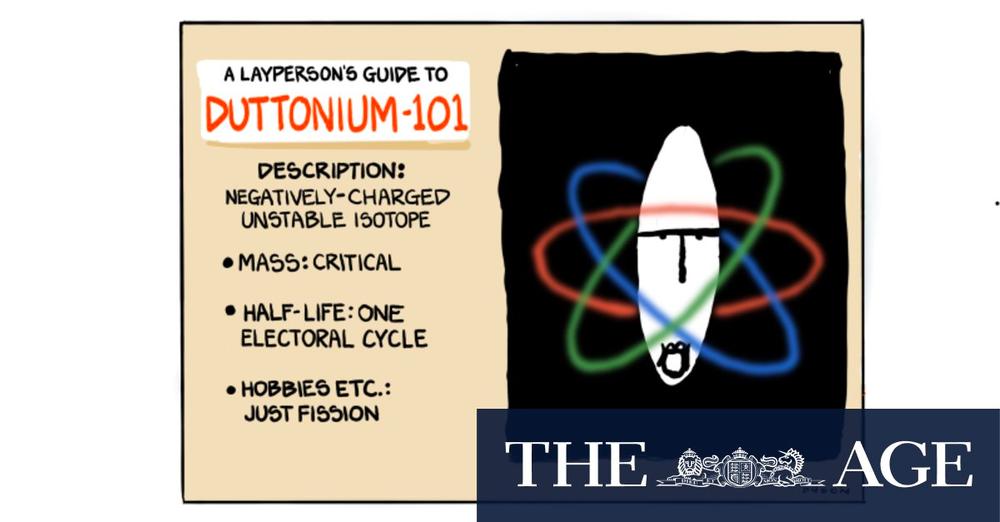
‘A big risk’: Voters wary of nuclear replacing coal-fired power Tom McIlroy Political correspondent, AFR 7 May 24
Voters in Victoria’s Latrobe Valley have raised the Chernobyl and Fukushima nuclear disasters when asked about Peter Dutton’s plan to build large-scale reactors near them, suggesting strong reservations about the energy plan.
As the Coalition finalises a policy for coal-fired power station sites to host nuclear energy – and for small modular reactor technology to be deployed in other places – focus group research in the federal electorate of Gippsland showed voters had safety concerns about living near a reactor.
Mr Dutton wants nuclear to provide baseload power to firm renewable energy and ensure Australia achieves net-zero emissions by 2050.
Communities near coal plants would be called on to host nuclear facilities, with at least six sites expected to be named before the next election.
Mr Dutton says nuclear must stack up on four key criteria: safety, waste disposal, location and cost.
But a focus group of Coalition-leaning voters questioned by polling firm Redbridge last week revealed doubts in the seat held by Nationals MP Darren Chester.
One male participant said he was opposed to nuclear replacing coal-fired power at sites like Loy Yang A, Loy Yang B and Yallourn.
“I know there’s a lot of safeguards with nuclear but it is still a very big risk if something does happen,” he said.
“It uses up a lot of resources and at the end of the day, once it has used up all its radioactiveness, we have to go bury it in the desert somewhere because we can’t do anything with it.”
A woman told the group she did not know much about the plan but had strong concerns.
“The thought of it makes me want to move. I’ve got kids. I don’t want them to be exposed to something that could affect them.”
Another woman said future generations would suffer if Australia lifted the ban on nuclear power.
“We’ve seen in the past with Chernobyl. Obviously, the situation has got better and people have learnt from things but mistakes happen and it’s a risk that you have to weigh up when considering putting something into an area with population.”
Another male participant cited the 2011 accident at Japan’s Fukushima power plant. He said Australia could face the risk of a similar disaster if nuclear was developed here. Another suggested that carp in local waters would “be huge” in the event of a nuclear spill………………………………………………………..
Fellow director Tony Barry said there was “intense” opposition in Gippsland.
“There is some limited opportunity for the Coalition to leverage a perception that a nuclear reactor in the region might produce local economic benefits.
“However, the problem for the Coalition is that to overcome these wide and deep concerns and to successfully leverage the perceived benefits they will need to spend millions of campaign dollars on messaging.”…………………………………… https://www.afr.com/politics/federal/a-big-risk-voters-wary-of-nuclear-replacing-coal-fired-power-20240506-p5fp9d
The End of the World as We Know It

and Democratic presidents, in particular, are often worried about appearing soft on defence—they are easily swayed by their military advisors.
Most of the US public thinks that America has renounced the optional first use of nuclear weapons. But while many presidential candidates have promised to do so, no one in office has ever made it an official policy.
Far from enhancing American national security, or the security of the world, nuclear weapons will lead us to the edge of destruction.
Lawrence M. Krauss 6 May 24, https://quillette.com/2024/05/06/the-end-of-the-world-nuclear-war-weapons-apocalypse

A review of Nuclear War: A Scenario by Annie Jacobsen; 400 pages; New York: Dutton (March 2024)
As Chair of the Board of Sponsors of the Bulletin of the Atomic Scientists from 2008–2018, I helped unveil the Doomsday Clock every year for a decade. That meant that each year, I sat down with my colleagues for several days and seriously contemplated how close we might be to the end of civilisation. But even that sombre preparation could not prepare me for the grim realities unveiled in the recent book, Nuclear War: A Scenario, by veteran national security journalist Annie Jacobsen
Jacobsen details the events that would take place, minute by minute, in the 72 minutes from the launch of a rogue intercontinental ballistic missile (ICBM) by North Korea to the destruction of modern civilization and the death of up to five billion people.
Jacobsen imagines the following scenario:
0 min) A lone ICBM is launched from North Korea.
(19 min) The US launches 50 ballistic missiles at targets in North Korea and instructs submarines to launch 32 additional missiles.
(21 min) Most of Southern California becomes uninhabitable due to a North Korean submarine-launched ballistic missile (SLBM) attack on the Diablo Canyon nuclear reactor.
(33 min) Washington DC, together with almost all its 6 million inhabitants, is vaporized by the impact and explosion of the North Korean ICBM.
(49 min) Fearing they are under attack from the US missiles heading toward North Korea, Russia launches 1,000 missiles at US targets. On detection of these, the US launches an ICBM and SLBM attack on 975 Russian targets.
(51 min) NATO pilots launch an aerial nuclear attack on the Russian targets.
(52 min) North Korea is effectively wiped off the map, following the impact of 32 SLBM and 50 ICBM missiles.
(57 min) All land-based US military bases are destroyed by Russian SLBMs.
(58 min) Much of Europe is destroyed by a Russian SLBM attack on NATO bases. (59 min) The US launches the remainder of its stock of SLBMs at Russia.
(72 min) 1,000 locations in the United States are hit by Soviet ICBMs. A large fraction of the US population is killed immediately and most of the rest have little or no means of survival. A similar fate befalls Russia several minutes later.
Meanwhile, 52 minutes into this apocalyptic exchange, a nuclear device explodes in space high above the US, producing an electromagnetic pulse that renders almost all communication systems in the continental US inoperative, destroying much of the country’s infrastructure and causing widespread floods and fires, thus further complicating life for the few remaining survivors.
Whether or not one finds the specific scenario Jacobsen outlines plausible, it is clear that any major nuclear confrontation would have apocalyptic consequences. As Soviet Chairman Nikita Khrushchev said shortly after the Cuban Missile Crisis, in such a situation, “the survivors would envy the dead.”
Military planners have been preparing for scenarios like this since at least 1960, when the first comprehensive nuclear war planning exercise was carried out in the US.
As Jacobsen describes, in 1949, experts estimated that as few as 200 fission-type weapons of the kind that destroyed Hiroshima and Nagasaki would have been sufficient to essentially wipe out the Soviet Union. But despite this, both the US and the Soviets continued to amass weapons. By 1967, the US and USSR had around 30,000 nuclear and thermonuclear warheads each. While their arsenal has since been reduced, the US still has over 1,700 warheads on hair-trigger, launch-on-warning alert. Russia has only slightly fewer. Both countries have over 3,000 additional nuclear weapons stockpiled and available for use.
For the past 79 years, we have been living under the Damoclean sword of mutually assured destruction (MAD), the basis of modern nuclear deterrence. It is argued that since any act of nuclear aggression would lead to the annihilation of most of the world, no rational leader would launch a first strike. What is less frequently stressed, however, is that for this to work, deterrence must never, ever fail. Because once it does, the world as we know it will end.
The madness of having almost 2,000 nuclear weapons on hair-trigger alert, capable of being irretrievably launched on their missions of destruction at the mere warning of an incoming nuclear attack—before a single nuclear explosion has even occurred—has not been lost on US presidential candidates from both parties. Both George W. Bush, and Barack Obama vowed to take us back from the razor’s edge while running for president, but neither made good on this promise while in the White House. I was on Obama’s science policy team during his first run for the presidency. I was gratified when he won because I thought he would fix this lunacy. I was profoundly disappointed when he didn’t.
Most of the US public thinks that America has renounced the optional first use of nuclear weapons. But while many presidential candidates have promised to do so, no one in office has ever made it an official policy.
I have often wondered why successful presidential candidates change their tune once they get into the Oval Office. I suspect that the generals who advise the President and the Secretary of Defence have lived with the idea of launch-on-warning throughout their whole careers and cannot even imagine that a US president might allow a nuclear weapon to explode on American soil without having already launched a response. Since most presidents have no experience with war game planning—and Democratic presidents, in particular, are often worried about appearing soft on defence—they are easily swayed by their military advisors.
The maddening ramping-up of nuclear arsenals is a real-world example of the well-known game theory scenario called The Prisoner’s Dilemma, in which two prisoners, who cannot communicate with either other, are motivated by mistrust to make choices that are in neither party’s best interests. Likewise, each of the superpowers assumes that its adversary will stockpile ever more nuclear weapons, so it seems logical to stockpile more themselves.
There is a simple way out of this dilemma. Unlike in the game theory example, the prisoners here can talk to each other and, through diplomacy, can jointly arrive at a win-win strategy. The problem is that there are currently almost no front-door communications between either Russia and the US or China and the US on strategic nuclear issues. The resulting perils are clear—especially at this time, with the continuing war in Ukraine, tensions between China and Taiwan, and the brewing catastrophe in the Middle East.
The American public has been misinformed about the gravity of this threat because of a false narrative regarding anti-ballistic missile (ABM) defence. Having witnessed Israel’s recent success in defending itself against conventional missiles launched from Iran, many people assume that the US has a working ABM system (a false claim first touted by George W. Bush in around 2004). We don’t—despite having spent almost 176 billion dollars trying to create such a system. As Jacobsen emphasizes in her book, we have only 44 ABM interceptors in place. Moreover, in carefully controlled tests that did not realistically reproduce the many uncertainties inherent in an actual nuclear exchange—including the possible use of decoys—the prototypes of those interceptors have failed more than 50 percent of the time. We have essentially no defences against nuclear weapons. All we can do is try to ensure that they are never used.
For the arms industry, however, nuclear weapons—as horrifying as they are—are the gift that keeps on giving. The Biden administration’s $850 billion defence budget for 2025 allocates $69 billion to nuclear weapons operations and modernisation. Plans for 400 new ICBMs, new nuclear submarines and bombers, and upgrades to existing warheads are currently in the works, at a projected cost of three quarters of a trillion dollars over the next decade. MAD isn’t mad enough, it seems. Defence contractors, lobbyists, and right wing think tanks are concerned that 1,700 nuclear weapons are not enough and that “America’s enemies will become even more emboldened… while facing a hobbled and undersized American nuclear deterrent.”
Almost all the nuclear war games that military strategists have engaged in have invariably escalated to the point of Armageddon. Spending further billions to produce weapons whose sole purpose is to lead to nuclear annihilation will not make us safer. Far from enhancing American national security, or the security of the world, nuclear weapons will lead us to the edge of destruction.
I was proud to take the helm of the group established in 1947 by Albert Einstein and Robert Oppenheimer to warn the world of the dangers of nuclear weapons, in part through the annual setting of the Doomsday Clock. But, sadly, that effort has been an abject failure. Perhaps Jacobsen’s new book, reportedly soon to be adapted for the big screen, may bring people to their senses. For the past 79 years, we have been lucky, but our luck may not hold forever. Even a single ICBM launch could lead to a war that abruptly ends over 400,000 years of modern hominid evolution, leaving little or no trace of human existence and of our other technological achievements—all in less time than it took me to write these words.
Lawrence M. Krauss
Lawrence M. Krauss, a theoretical physicist, is President of the Origins Project Foundation. His most recent book is “The Edge of Knowledge: Unsolved Mysteries of the Cosmos.”
Small reactors don’t add up as a viable energy source

By M.V. Ramana and Sophie Groll. 6 May 24, https://cosmosmagazine.com/science/engineering/small-reactors-dont-add-up/
The nuclear industry has been offering so-called Small Modular Reactors (SMRs) as an alternative to large reactors as a possible solution to climate change.
SMRs are defined as nuclear reactors with a power output of less than 300 megawatts of electricity, compared to the typically 1000 to 1,500 megawatts power capacity of larger reactors.
Proponents assert that SMRs would cost less to build and thus be more affordable.
However, when evaluated on the basis of cost per unit of power capacity, SMRs will actually be more expensive than large reactors.
This ‘diseconomy of scale’ was demonstrated by the now-terminated proposal to build six NuScale Power SMRs (77 megawatts each) in Idaho in the United States.
The final cost estimate of the project per megawatt was around 250 percent more than the initial per megawatt cost for the 2,200 megawatts Vogtle nuclear power plant being built in Georgia, US.
Previous small reactors built in various parts of America also shut down because they were uneconomical.
The high cost of constructing SMRs on a per megawatt basis translates into high electricity production costs.
According to the 2023 GenCost report from the Australian Commonwealth Scientific and Industrial Research Organisation (CSIRO) and the Australian Energy Market Operator, the estimated cost of generating each megawatt-hour of electricity from an SMR is around AUD$400 to AUD$600.
In comparison, the cost of each megawatt-hour of electricity from wind and solar photovoltaic plants is around AUD$100, even after accounting for the cost involved in balancing the variability of output from solar and wind plants.
Building SMRs has also been subject to delays. Russia’s KLT-40 took 13 years from when construction started to when it started generating electricity, instead of the expected three years.
Small reactors also raise all of the usual concerns associated with nuclear power, including the risk of severe accidents, the linkage to nuclear weapons proliferation, and the production of radioactive waste that has no demonstrated solution because of technical and social challenges.
One 2022 study calculated that various radioactive waste streams from SMRs would be larger than the corresponding waste streams from existing light water reactors.
The bottom line is that new reactor designs, such as SMRs, will not rescue nuclear power from its multiple problems. Any energy technology that is beset with such environmental problems and risks cannot be termed sustainable.
Nuclear energy itself has been declining in importance as a source of power: the fraction of the world’s electricity supplied by nuclear reactors has declined from a maximum of 17.5 percent in 1996 down to 9.2 percent in 2022. All indications suggest that the trend will continue if not accelerate.
The decline in the global share of nuclear power is driven by poor economics: generating power with nuclear reactors is costly compared to other low-carbon, renewable sources of energy and the difference between these costs is widening.
Nuclear reactors built during the last decade have all demonstrated a pattern of cost and time overruns in their construction.
The Vogtle nuclear power plant being built in Georgia, involving two reactors designed to generate around 1,100 megawatts of electricity each, is currently estimated to cost nearly USD$35 billion.
In 2011, when the utility company building the reactor sought permission from the American Nuclear Regulatory Commission, it projected a total cost of USD$14 billion, and ‘in-service dates of 2016 and 2017’ for the two units.
In France, the 1,630-megawatt European Pressurised Reactor being built in Flamanville was originally estimated to cost 3 billion euros and projected to start in 2012, but the cost has soared to an estimated 13.2 billion euros and is yet to start operating as of March 2024.
These cost increases and delays confirm the historical pattern identified in a study published in 2014: of the 180 nuclear power projects around the world it studied, 175 had exceeded their initial budgets, by an average of 117 percent, and took 64 percent longer than initially projected.
However, the recent projects are even more extreme in the magnitude of the disconnect between expectations and reality.
These reactor projects, and the Hinkley Point C project under construction in the United Kingdom, also confirm another historical pattern: costs of nuclear power plants go up with time, not down. This is unlike other energy technologies, such as solar and wind energy, where costs have declined rapidly with experience.
The climate crisis is urgent. The world has neither the financial resources nor the luxury of time to expand nuclear power. As physicist and energy analyst Amory Lovins argued: “… to protect the climate, we must save the most carbon at the least cost and in the least time.”
Expanding nuclear energy only makes the climate problem worse.
The money invested in nuclear energy would save far more carbon dioxide if it were instead invested in renewables.
And the reduction in emissions from investing in renewables would be far quicker.
M.V. Ramana is the Simons Chair in Disarmament, Global and Human Security and Professor at the School of Public Policy and Global Affairs, at the University of British Columbia in Vancouver, Canada. He is the author of The Power of Promise: Examining Nuclear Energy in India (Penguin Books, 2012) and Nuclear is not the Solution: The Folly of Atomic Power in the Age of Climate Change (forthcoming from Verso Books).
Sophie Groll is a master’s student at the School of Public Policy and Global Affairs, at the University of British Columbia in Vancouver, Canada studying public policy and global affairs. Her focus is on environmental policy, low-carbon energy sources, and net-zero transition discourses.
Originally published under Creative Commons by 360info™.
Canada’s federal budget -calls nuclear energy “clean” – the height of absurdity!

Nuclear energy never will be ‘clean,’ write Jones and Edwards
THE HILL TIMES | MONDAY, MAY 6, 2024
The 2024 federal budget contains many references to nuclear energy as
a “clean” source of electricity. In our view, referring to
nuclear electricity as “clean” is the height of absurdity.
The nuclear fuel chain begins with the mining of uranium from rock
underground where, without human intervention, it would remain safely
locked away from the biosphere. Uranium has many natural radioactive
byproducts, including radium, radon, and polonium-210 that are
discarded in voluminous sandlike “tailings” at uranium mine sites.
These materials are responsible for countless thousands of deaths in
North America alone. Canada has accumulated 220 million tonnes of
these indestructible radioactive mining wastes, easily dispersed by
wind and rain over the next 100,000 years.
Inside a nuclear reactor, uranium atoms are split to produce energy.
The atomic fragments are hundreds of newly created radioactive
poisons, most of them never found in nature before 1940. They make
used fuel millions of times more radioactive than the original
uranium. One used fuel bundle, freshly discharged, will deliver a
lethal dose of radiation in seconds to any unshielded human nearby.
There are hundreds of thousands of tonnes of waste irradiated fuel
bundles worldwide and the quantity grows larger each year. There is no
operating repository anywhere in the world for such wastes, but there
are several failed repositories.
Radioactive waste has the “reverse midas touch” turning everything
it touches into more radioactive waste. This includes the nuclear
vessel in which the waste is created, and everything that comes in
contact with the cooling water needed to prevent the waste from
melting down. Containers for radioactive waste become radioactive
waste themselves. All radioactive waste must be kept out of our food,
air and drinking water for countless millennia.
Radioactive atoms are unstable. They disintegrate, throwing off a kind
of subatomic shrapnel called “atomic radiation.” Emissions from
disintegrating atoms damage living cells. Chronic radiation exposure
can cause miscarriages, birth defects, and a host of degenerative
diseases including cancers of all kinds. Genetic damage to eggs or
sperm can transmit defective genes to successive generations.
Plutonium is one of the hundreds of radioactive byproducts created in
used nuclear fuel. It is of special concern because it is the primary
nuclear explosive in nuclear arsenals worldwide. “Reprocessing” of
nuclear fuel waste to extract plutonium is sometimes called
“recycling” but this is disinformation; the resulting waste is
more difficult to manage than the original fuel waste. Many serious
accidents have occurred around the world at reprocessing plants.
Places where extensive reprocessing has occurred are among the most
radioactively contaminated sites on Earth. Plutonium can be used as a
nuclear fuel, but extracting it is a nuclear weapons proliferation
risk.
Managing radioactive waste is difficult and very expensive. The
projected multi-billion-dollar cleanup cost for the legacy waste at
Chalk River, Ont., is the federal government’s biggest environmental
liability by far, exceeding the sum total of all other federal
environmental liabilities across Canada.
The multinational consortium running Canada’s federal nuclear
laboratories is receiving close to $1.5-billion annually, much of it
for managing legacy radioactive wastes. The consortium’s plans
include piling up one million tonnes of waste in a giant mound beside
the Ottawa River and entombing old reactors in concrete and grout
beside major drinking water sources. Many are of the view that the
plans fail to meet the fundamental requirement to isolate waste from
the biosphere and have been met with widespread concern, opposition
and legal challenges. Nuclear energy is not now, never has been, and
never will be “clean.”
The sooner our elected officials come to terms with this fact, the
better for Canada and Canadians. Honesty is the best policy.
This week’s news about the military-industrial-nuclear-communications ecosystem

Some bits of good news – The positive impact of conservation action. The ‘Green Nobel Prize’ announced its winners. Solar Balconies Are Booming in Germany and You Can Plug in and Install Them Yourself
TOP STORIES.
72 Minutes Until the End of the World? Is There Life Beyond Nuclear Armageddon?
Five Things the “Nuclear Bros” Don’t Want You to Know About Small Modular Reactors.
University Investments: Divesting from the Military-Industrial Complex.
Bill before Australian Parliament would allow UK and USA to dump decades of high-level nuclear waste in Australia.
Climate. ‘Inside an oven’: sweltering heat ravages crops and takes lives in south-east Asia. Brutal 48C heatwave takes its toll on east Asia. – ALSO AT https://nuclear-news.net/2024/05/06/1-b1-inside-an-oven-sweltering-heat-ravages-crops-and-takes-lives-in-south-east-asia/
Noel’s notes. The global nuclear industry – rotten to the core. Small modular reactors – yes -the nuclear lobby will keep hyping them – no matter what!
AUSTRALIA.
- Parliamentarians renew their support for the Treaty for the Prohibition of Nuclear Weapons. https://www.youtube.com/watch?v=7cvo1cOMpxE “History is Calling: Australia and the Treaty on the Prohibition of Nuclear Weapons” .
- Bill lets UK/US “dump nuclear submarine waste here” Critical worker shortage menaces nuclear-powered submarine workforce, Start thinking now about alternatives to AUKUS Pillar 1.
- Staggering rise of clean energy in China a wake-up call to Australia – including on nuclear.
- Nuclear power makes no sense for Australia – but it’s a useful diversion from real climate action.
- Murrumbidgee Council launches survey on establishing nuclear power generator near Coleambally, Darlington Point or Jerilderie. Bowen says Coalition’s nuclear push would put grid reliability at risk due to delays in coal plant closures.
- Off the Books: how the Army privatised SAS elite to dark ops outfit Omni
- Australia and the F-35 supply chain: in lockstep with Lockheed.
**************************************************************************
NUCLEAR ISSUES
| ARTS. UK/Ireland Nuclear Free Local Authorities to join new “Rock Solid2” art exhibition. | CIVIL LIBERTIES. Academic arrested for “statements against Zionism” as Israel intensifies anti-genocide crackdown.Enforcing Silence on Genocide. | CULTURE.Israel’s Defenders Talk So Much About Feelings Because They Can’t Talk About Facts |
| ECONOMICS.Industrial action by nuclear submarine workforce hits Rolls Royce.UK government pushing institutional investors to support Sizewell C nuclear project. A new nuclear energy law will likely mean higher utility bills. Georgia’s Vogtle 2 nuclear reactors cost over $30Billion, – but were meant to cost $14Billion | ENERGY.G7 Countries Task IRENA to Monitor Group’s Renewable Energy Progress.Germany records 50 hours of negative electricity prices for April, largely due to renewables.California hits stunning new solar and battery records in postcard from energy future. Huge success of renewable energy in California – over 100% of demand for many days |
| ETHICS and RELIGION. Israel ‘undoubtedly’ committing genocide says Holocaust scholar Amos Goldberg. | HEALTH. Dounreay & Scottish Nuclear Policy.. ALSO AT https://nuclear-news.net/2024/05/01/2-b1-dounreay-scottish-nuclear-policy/ | INDIGENOUS ISSUES. First Nations leaders voice opposition to nuclear power plants.Land Defence Alliance stands united against the burial of nuclear waste.Nuclear Waste Management Organization (NWMO) responds to Land Defence Alliance protest. | HUMAN RIGHTS. New US Antisemitism Law Turns Critics Against Israeli Genocide Into Criminals. |
| LEGAL. INTERNATIONAL DARK SKY ASSOCIATION vs. FCC AND SPACEX. How Israel violates International Law in Gaza: expert report. | MEDIA. The Vow from Hiroshima film is coming on PBS, this month. https://www.youtube.com/watch?v=3RcSCgUBrUc New Book – The Scientists Who Alerted Us to the Dangers of Radiation. Gaza Journalists Killed by Israel Honored on World Press Freedom Day. As Peace Protests Are Violently Suppressed, CNN Paints Them as Hate Rallies. https://www.youtube.com/watch?v=qOBEHXtWMRI |
| POLITICS. Inside story: Will Iran’s supreme leader revise his ‘nuclear fatwa’? US Presidential candidate arrested at anti-Israel protest. France’s Macron wants to build 14 new Nuclear reactors by 2050. 6 is more realistic. France Increases State Funding for Advanced Nuclear R&D Project. UK / Parliamentary Committee Chair Criticises Lack Of Clarity On SMR Plans. Why UK Government nuclear quango has ruled out Trawsfynydd from initial mini-nuke rollout. The breadth and depth of the nuclear lobby in Canada. | POLITICS INTERNATIONAL and DIPLOMACY. Why Iran may accelerate its nuclear program, and Israel may be tempted to attack it. US vs China, Israel vs Iran, India vs Pakistan: Asia plays with fire as nuclear war safety net frays. |
| SAFETY. Alarm over nuclear safety lapses on the Clyde. Fears raised over Wales accident risk involving aircraft carrying nuclear materials. IAEA’s top nuclear salesman-cum-watchdog, Rafael Grossi, to visit Iran | SPACE. EXPLORATION, WEAPONS.Dead satellites are filling space with trash. That could affect Earth’s magnetic field. Nukes in space: Why a very very stupid idea just became more likely. |
| TECHNOLOGY. A Closer Look at Two Operational Small Modular Reactor Designs. Can floating nuclear power plants help solve Northern Canada’s energy woes?. (ALSO AT https://nuclear-news.net/2024/05/05/2-b1-can-floating-nuclear-power-plants-help-solve-northern-canadas-energy-woes/) Small reactors don’t add up as a viable energy source. Small modular reactors aren’t the energy answer for remote communities and mines. ARC might need to redesign its SMR technology: former president + US bans import of enriched uranium + more to the story | URANIUM. US cutoff of Russian uranium imports viable but costly to replace. | WASTES. The undersea nuclear graveyard now more costly than HS2. Barrels Of Radioactive Waste Turn Up Off The Coast Of California. To find a place to store spent nuclear fuel, Congress needs to stop trying to revive Yucca Mountain. Toxic sewage discharged at Chalk River nuclear lab. Nuclear-waste compensation (?bribery) numbers raise eyebrows. |
| WAR and CONFLICT. The Israel-US game plan for Gaza is staring us in the face. Israel’s Finance Minister Smotrich calls for ‘total annihilation’ of Gaza. CodePink – Tell President Biden: WE WANT COOPERATION, NOT CONFLICT! NATO using war games to ‘prepare for conflict’ – Moscow. | WEAPONS and WEAPONS SALES.Zelensky wants ten more years of US funding. NATO state rejects €100 billion Ukraine war chest ‘madness’. US Air Force pays $13 billion for new ‘doomsday’ planes that protect president during a nuclear attack . The Fight Over THAAD in Korea. |
Bill lets UK/US “dump nuclear submarine waste here”

Ben Packam 6 May 24
The British company appointed to build Australia’s nuclear submarines says the government’s draft nuclear safety laws would allow the disposal in Australia of high -level radioactive wastes from UK submarines.
BAE Systems chief counsel made observation at committee hearing examining the government’s naval nuclear power safety bill, which is due to be pushed through Parliament after next week’s federal budget………….
Under questioing by Greens Senator David Shoebridge, BAE’s Peter Quinlivian agreed that the wording of the bill opened a pathway for the disposal of high-level British radioactive waste in Australia.
“The legislation as drafted is in language that would accommodate that scenario” he said.
Britain is yet to dispose of any of the nuclear submarines it has decommissioned since the 1980s. It estimates it won’t fully dispose of the boats, plus seven more dure to retire in coming years, until the late 2060s.
Mr Quinlivian said that BAE had not informed the British government of the prospects that Australia could legally dispose of its nuclear waste “because it didn’t immediately strike us”
The apparent loophole flies in the face of Australia’s reassurances that AUKUS won’t require us to become a dumping ground for other countries’ nuclear wastes.
Liberal Senator David Fawcett asked Defence officials in the April 22 committee hearing whether the bill could be amended to avoid unintended consequences, something that the government is understood to be open to.
In a written response, Defence conceded that a tightening of the bill’s language could be needed. It said specifying the “disposal” of only “Australian submarine” nuclear waste would be consistent with government policy, but the government would have to “carefully consider any amendment which excluded the possibility of regulatory control of the management of low level radioactive waste from UK or US submarines……………….
The Australian Radiation Protection and Nuclear Safety agency is poised to declare a site at the HMAS Stirling naval base off Perth as a low level radioactive waste management facility, but a decision on where to store high level waste from Australia’s planned nuclear submarines is years if not decades away

Defence Minister Richard Marles said that after the government announced its nuclear submarine plans in March 2023, Australia would not take nuclear waste from its AUKUS partners
“We’re not talking about establishing a civil nuclear industry, nor are we talking about opening Australia up as a repository for nuclear waste from other countries” he told the ABC.
Senator Shoebridge said that British bureaucrats were almost certainly “rubbing their hands together at the prospect of the Albanese government being foolish enough to pass this bill”
“Minister Marles has now been embarrassed by not only his own department but the very people he signed up to make the nuclear subs” he said.
The Senate standing committee on foreign affairs defence and trade is to release its report on the Australian Naval Nuclear Power Safety Bill 2023 on May 11.
1 This month


Help Aunty Sue Protect Her Land and Sacred Sites From Destructive Rocket Testing.
.

Australians deserve the truth
about
AUKUS – https://aukuspublicinquiry.com/

PETITION – To: Prime Minister Anthony Albanese and the Australian Labor Government

of the week – Australians for War Powers Reform (AWPR)
To see nuclear-related stories in greater depth and intensity

