‘Hugely expensive’ nuclear a ‘Trojan horse’ for coal, NSW Liberal says as energy policy rift exposed
Q & A By Jason Whittaker,14 May 24
- In short: NSW shadow minister Matt Kean told Q+A his assessment of nuclear energy didn’t “meet the threshold” on supply and affordability.
- He joins his leader, Mark Speakman, who says nuclear won’t deliver lower power prices in the short term.
- What’s next? The federal opposition is expected to unveil a new energy policy soon putting nuclear on the table.
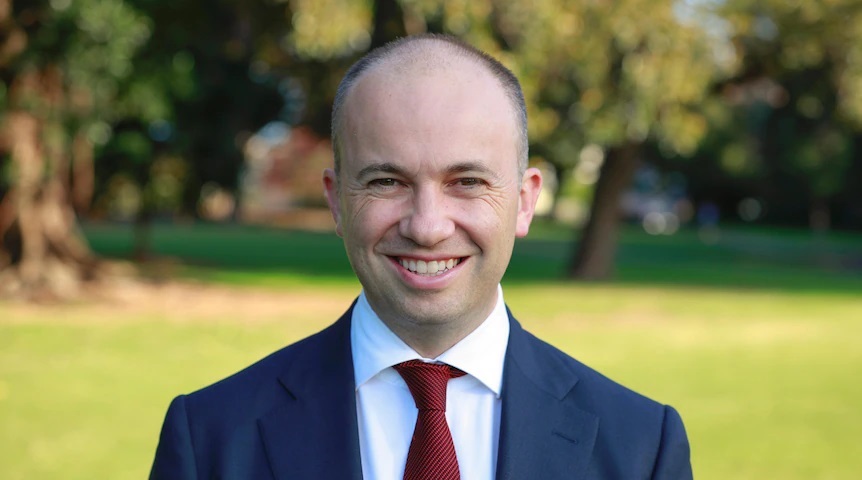
A senior NSW Liberal Party figure says nuclear power generation is too expensive and a “Trojan horse” for the coal industry in his state, prompting the former state government to reject it.
Matt Kean, a former NSW treasurer and energy minister, told the ABC’s Q+A on Monday that nuclear failed his assessment on cost and supply, comments which put him at odds with federal colleagues pushing the technology.
On the program, he asked: “Is it going to drive down electricity bills? Is it going to ensure the system remains reliable? Is it going to set us up for a more prosperous future?
“On all of those three questions, nuclear did not meet the threshold for us in New South Wales.”
The comments expose a rift in the party on the issue, with federal leader Peter Dutton signalling nuclear will be a central plank in the opposition’s energy policy.
On Sunday, shadow treasurer Angus Taylor told the ABC’s Insiders that nuclear energy production was capable of delivering a return on government investment.
But multiple state Liberal figures have argued against removing bans on nuclear mining and nuclear enrichment facilities.
A fortnight ago, NSW opposition leader Mark Speakman told Q+A that investing in nuclear energy was not a path to lowering costs or securing electricity supply in the short term.
“We can’t wait for nuclear,” he said.
“We should be going ahead with our electricity road map, which will have heavy reliance on renewables.”
‘Trojan horse for coal’
On Monday, Mr Kean described nuclear as “hugely costly” and a front for those against renewable energy.
“As we looked more into it, we found nuclear was a Trojan horse for the coal industry, wanting to keep coal going, and it denied transition to an industry that allowed lower bills,” he said.
Mr Kean, now serving as a shadow minister for health, says federal Liberal policy “is a matter for them”, but “I think they need to explain” the viability of nuclear power.
“In New South Wales, there were three tests we applied for our energy policy and nuclear did not meet those tests,” he said.
Mr Kean has long been a champion of renewable alternatives like solar and wind power, often putting him at odds with some in the party.
Last month, he quit Coalition for Conservation, a group he launched with other conservatives to promote action on climate change, when he says it became “singularly focused on nuclear energy”.

Labor divisions over gas
The Labor Party also exposed divisions last week over energy after the federal government launched a new gas policy backing domestic production until at least 2050………………………………………………………………………..
Australia risks being ‘world’s nuclear waste dump’ unless Aukus laws changed, critics say
Labor-chaired inquiry calls for legislation to rule out accepting high-level nuclear waste from US and UK submarines among other recommendations
Daniel Hurst Foreign affairs and defence correspondent, https://www.theguardian.com/world/article/2024/may/13/australia-aukus-deal-submarines-critics-nuclear-waste
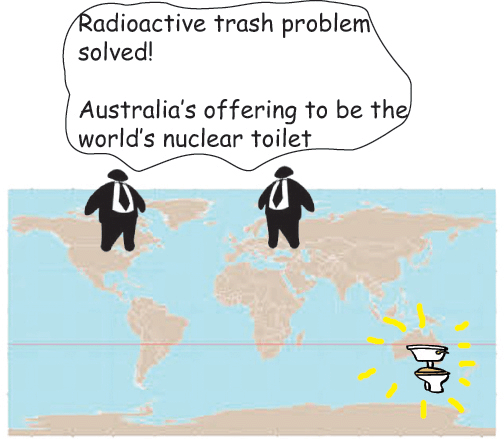
Australia risks becoming the “world’s nuclear waste dump” unless the Albanese government moves to rewrite its proposed Aukus laws, critics say.
A Labor-chaired inquiry has called for the legislative safeguard to specifically rule out accepting high-level nuclear waste from the US and the UK. One of the members of a Senate committee that reviewed the draft laws, independent senator Lidia Thorpe, said the legislation “should be setting off alarm bells” because “it could mean that Australia becomes the world’s nuclear waste dump”.
The government’s bill for regulating nuclear safety talks about “managing, storing or disposing of radioactive waste from an Aukus submarine”, which it defines broadly as Australia, UK or US submarines.
In a report published on Monday, the Senate’s foreign affairs, defence and trade legislation committee said this wording did not reflect the government’s promise not to accept high-level nuclear waste.
It recommended that the government consider “amending the bill so that a distinction is made between Australia’s acceptance of low-level nuclear waste from Aukus partners, but non-acceptance of high-level nuclear waste”.
The government has left the door open to accepting low-level waste from US and UK nuclear-powered submarines when they conduct rotational visits to Western Australia in the first phase of the Aukus plan. Low-level waste contains small amounts of radioactivity and include items such as personal protective equipment, gloves and wipes.
“According to the Australian Submarine Agency, nuclear-powered submarines only generate around a ‘small skip bin’ of low-level naval nuclear waste per submarine per year and that intermediate- and high-level waste will not become a concern until the first naval nuclear reactor requires disposal in the mid-2050s,” the Senate committee report said.
The government has yet to decide on the location for the disposal of radioactive waste from the submarines.
But infrastructure works proposed for HMAS Stirling – the naval base in Western Australia – to support the increased rotational visits are expected to include an operational waste storage facility for low-level radioactive waste.
The Department of Defence has argued any changes to the definitions should not prevent “regulatory control of the management of low-level radioactive waste from UK or US submarines” as part of those rotational visits.
Thorpe, an independent senator, said the call to prohibit high-level nuclear waste from being stored in Australia was “backed by experts in the field and was one of the major concerns raised during the inquiry into the bill”.
“The government claims it has no intention to take Aukus nuclear waste beyond that of Australian submarines, so they should have no reason not to close this loophole,” Thorpe said.
“They also need to stop future governments from deciding otherwise. We can’t risk our future generations with this.”
The government’s proposed legislation would set up an Australian naval nuclear power safety regulator to oversee the safety of the nuclear-powered submarines.
The committee made eight recommendations, including setting “a suitable minimum period of separation” to prevent a revolving door from the Australian Defence Force or Department of Defence to the new regulator.
The main committee report acknowledged concerns in the community that Australia might become a “dumping ground” for the Aukus countries, but it said the term was “not helpful in discussing the very serious question of national responsibility for nuclear waste”.
It also said the bill should be amended to ensure the regulator was transparent about “any accidents or incidents” with the soon-to-be-established parliamentary oversight committee on defence.
The Labor chair of the committee, Raff Ciccone, said the recommendations would “further strengthen the bill” and help “ensure Australia maintains the highest standards of nuclear safety”.
In a dissenting report, the Greens senator David Shoebridge said the legislation was “deeply flawed”, including because the regulator would report to the defence minister.
“The proposed regulator lacks genuine independence, the process for dealing with nuclear waste is recklessly indifferent to community or First Nations interests and the level of secrecy is a threat to both the environment and the public interest,” Shoebridge said.
The defence minister, Richard Marles, was contacted for comment.
Nuclear power and nuclear weapons – two sides of the same coin

In March 2024, Prime Minister Rishi Sunak explicitly linked nuclear weapons production capability with civil nuclear power generation development. This is because nuclear reactors are used to create tritium – the radioactive isotope of hydrogen – necessary for nuclear weapons.
The government has admitted its push for nuclear energy expansion is linked to its strategic military interests
by Peter Wilkinson, 12 May 2024, o https://eastangliabylines.co.uk/nuclear-power-and-nuclear-weapons-two-sides-of-the-same-coin/
The government’s apparent answer to climate change and Russia’s invasion of Ukraine is to triple the amount of nuclear generated electricity in the belief that it generates ‘low carbon’ electricity. But a recent admission by Prime Minister Rishi Sunak suggests there is a strong military component to what looks on the surface to be a civil matter.
The UK review of the energy sector, prompted by the invasion of Ukraine, offered a golden opportunity to address the need to drive down demand for electricity and energy more generally. This could be achieved by retrofitting insulation to the housing stock and buildings, mandating solar panel use for all new homes, investing heavily in renewables, in emerging battery technology and in decentralisation. Instead, the government has focused on a massive expansion of nuclear-generated electricity.
The dual nuclear agenda
Now the reason has finally been openly admitted. Maintaining and improving the supply chain and the knowledge and skills base in the workforce for the UK’s £100bn Trident nuclear weapons renewal programme relies on the civil nuclear sector.
While this claim has been regularly made by anti-nuclear campaigners – and just as regularly denied by minister after minister – it is now openly acknowledged. The Roadmap states quite clearly that it is important to align civil and military nuclear ambitions across government, to strengthen the interconnections between civil and military industries’ research and development, and thereby reduce costs for both the weapons and power sectors.
In March 2024, Prime Minister Rishi Sunak explicitly linked nuclear weapons production capability with civil nuclear power generation development. This is because nuclear reactors are used to create tritium – the radioactive isotope of hydrogen – necessary for nuclear weapons.
The cat which was so carefully and fraudulently hidden for decades is finally out of the bag: ministers now have to acknowledge that the civil nuclear programme owes more to maintaining weapons of mass destruction – weapons that were outlawed by the Treaty on the Prohibition of Nuclear Weapons which entered into force in January 2021 – than it has to do with salvation from the existential crisis that is climate change.
Debunking myths: the truth behind nuclear ambitions
Its brave new world aims for a nuclear sector generating upto 24 Gigawatts of electricity by 2050. That’s comparable to seven new 3.2 Gw capacity Hinkley Point Cs or Sizewell Cs or forty-eight Sizewell A-size reactors at around half a Megawatt output.
The locations for a proposed ‘mix’ of ‘gigawatt-sized reactors’ such as the European Pressurised Reactor (EPR) planned for Sizewell C, and ‘small modular’ and ‘advanced modular’ reactors (SMRs and AMRs respectively) is the subject of the government’s ‘Nuclear Road Map’.
It is, necessarily, largely a work of fiction laced with eulogies to nuclear power and liberally interspersed with admissions of hope over expectations. The truth is that Hinkley Point C is now expected to cost an eye-watering £40+bn from its original £20bn, and Sizewell C has already cost the taxpayer £2.4bn in sweeteners to the private sector.
Commercial SMRs don’t yet exist, and they are not small, unless you consider that Sizewell A falls into that category. AMRs have remained a fantasy for decades and are likely to remain so. Mention them to a nuclear regulator, and you’ll probably get a raised eyebrow in response.
Nuclear revival: promises vs reality
The Sizewell project has yet to be granted multiple construction and operating permits and licences and no final investment decision has been made. Other issues which make Sizewell C a terrible idea include:
- A multi-billion hole existing in its finances
- There is no reliable and guaranteed supply of potable water – of which an average of 2.2 million litres a day are required in the country’s most water-scarce area
- It is situated in a flood zone
- It is in an Area of Outstanding Natural Beauty
- It sits on the fastest-eroding coastline in northern Europe
- An estimated 46 hectares of woodland have already been flattened
- The Environment Agency (EA) has authorised the dumping of 1,590 tonnes of dead and dying fish back into the North Sea each year as a consequence of the Sizewell C cooling water intake (not to mention the 100s of millions of fish, fish larvae and other marine biota)
- In addition, there will be an estimated 171 million sacrificial sand goby, none of which are acknowledged by the EA.
- Radiological discharges from Sizewell C to the sea and air have contested health impacts
EDF ploughs on
The Supreme Court is still considering the merits of a judicial review appeal against the original planning approval. None of these uncertainties and deficiencies have stopped EDF devastating the areas around the development with the sanction of the local planning authority.
The tragedy is that nuclear is now a redundant technology which takes too long to come to our climate-change rescue and is not fit to be in the front-line of defence against climate change. It does not represent a plan of great urgency to meet the accelerating existential threats of climate change.
It has a rapidly narrowing window in which to contribute its electricity to the job of reducing climate change risks. When compared to renewables and conservation measures, nuclear is slow, costly and unreliable in terms of the new technology embodied in the EPR design. The Flamanville project in France, using a Sizewell EPR-type reactor, is still offline, is twelve years late and will cost four times the original budget.
The government has been in thrall to nuclear power for a long time. Perhaps with the admission of its connection to its strategic miliary goals, we can now better understand why that is. But the knowledge only deepens and entrenches the divide between the hawks and the doves.
Amidst genocide and war, anti-Zionism protesters are demonised as ‘extremists’
Independent Australia, By Martin Hirst | 13 May 2024
As human rights experts warn of an ongoing genocide in Gaza, any opposition to Zionism is being egregiously labelled as extremism, Dr Martin Hirst writes.
STUDENT PROTESTERS around the world are being demonised by politicians, bureaucrats and the news media for taking a stand against genocide.
This is just an updated version of the moral panic playbook that conservatives use to demonise young people who don’t toe the establishment line.
In the last six weeks, student protests have exploded around the world on a scale not seen since the Vietnam Moratorium almost 60 years ago. These students are protesting against what human rights experts are not hesitating to call a genocide in Gaza.
This reporter knows some of the Australian leaders of these protests quite well, organising politically with them as a long-term member of Left-wing group Socialist Alternative and a writer for its newspaper, Red Flag.
We know that none of these outstanding young activists are antisemitic. We know they are better educated about Palestine from a contemporary and historical perspective than our Prime Minister and most politicians…………………………………………………
We know that these young people are on the right side of history.
We also know that attempts by political leaders, intelligence agencies, Zionist hacks, the police and some university administrators to brand these brave students as violent, dangerous and antisemitic is a bald lie.
It is the lie itself that is dangerous because it actually emboldens Zionist thugs to launch ever-more violent attacks on student encampments, causing injury and mayhem.
It is also dangerous because it is a serious attempt – carried out with planning and intent – to criminalise anti-genocide activists and to criminalise their right to political speech.
What is happening in Australia, across Europe and in the United States is the creation of a state of emergency based on these dangerous lies. Right in front of our eyes, pro-Israel elements of the ruling class are establishing the conditions for a new wave of moral panic.
Students are being demonised as the 21st-Century version of the “folk devil“. The protests are being compared to 1930s Germany – which most people who make this comparison know absolutely fuck-all about – and they are being used to launch a McCarthyite witch hunt against students and academics who stand up for Palestine.
There’s nothing new about moral panics — the phrase was coined by British sociologist Stanley Cohen in the 1970s to describe the clamour for the state to take action against “Mods” and “Rockers” — two rival youth subcultures that enjoyed different types of music.
Interestingly, the Pogroms against Jews that swept Europe in the 1920s were a form of moral panic…………………………………………………………………………………………………
A moral panic only works when those in power – who feel threatened by resistance from below – can enlist loyal handmaidens in the media to prosecute their case and amplify their fear-mongering. Now, these tactics of intimidation are aimed at silencing dissent and any vocal opposition to the Israeli slaughter in Gaza.
Make no mistake, it is happening. Take it seriously because the Zionists and the political establishment are taking it seriously……………………………………………………
Failed Liberal Minister Josh Frydenberg helped to produce a “documentary” helpfully explaining to Sky News audiences how Australia is sliding into Nazi-era pogroms because of the threat to civil order posed by the student encampments and the wider anti-genocide movement.
In the last week alone, there has been a slew of opinion columns and news pieces in The Australian slandering student encampments while ignoring the attacks mounted on them by Zionist thugs.
Andrew Bolt and the usual list of suspects are apoplectic with rage that university administrators haven’t (yet) moved to shut down the protests.
However, the universities are beginning to move. The administration at Monash University in Melbourne is demanding students remove ‘Zionists not welcome’ signs from around their encampment because of some spurious “legal advice” that it is vilification.
Police have been allowed to install surveillance cameras overlooking the Monash encampment. Vice Chancellors from the Group of Eight — Australia’s richest universities — have asked Attorney-General Mark Dreyfus to advise them if the slogans used in the encampments are “hate speech”.
This is particularly egregious because Dreyfus himself is a Zionist. Dreyfus declined to provide legal advice but urged people who feel offended to lodge complaints under Section 18a of the Racial Discrimination Act. …………………………………………………..
It is too early to tell where all of this will end, but we can confidently predict that the Labor Party will support Sarah Henderson’s call for a Senate inquiry.
Anthony Albanese is fuelling the moral panic with apparent joy. He is reported to have told a room full of senior Zionist elders and student leaders that he believes the campus protests are led by outside agitators.
Helpfully, he was able to name them too. It’s all “the Trots‘ fault”.
This is deeply ironic for two reasons:
Russian revolutionary leader Leon Trotsky was a Jew and when he fell foul of the Stalinist regime, his Jewish heritage was used against him to launch a moral panic that even spread to Australia and poisoned the minds of many good Communist Party members, including the artist Noel Counihan who famously called Trotsky a “fascist gangster”.
Albanese has also been demonised as a Trotskyist by Murdoch hacks and (former Liberal MP Bronwyn Bishop) “Kerosene Bronny“…………….. https://independentaustralia.net/politics/politics-display/amidst-genocide-and-war-anti-zionism-protesters-are-demonised-as-extremists,18594
This week’s Climate Military-Industrial-nuclear-media -complex news

Some bits of good news. Opposing The War Machine Is Cool Again – https://www.youtube.com/watch?v=Us1r9Wsvjts Hake Fisheries’ Remarkable Recovery Is a Sign of Hope for Our Oceans.
TOP STORIES. `
We’ve barely scratched the surface of how energy efficiency can help the energy transition.
The End of the World as We Know It. United States nuclear weapons, 2024 – (long) extracts at- https://nuclear-news.net/2024/05/10/2-a-united-states-nuclear-weapons-2024/ Don’t Believe the Washington War Machine: Putin Is Not Going to Invade Another NATO Ally.
China and the U.S. Are Numb to the Real Risk of War – ALSO AT https://nuclear-news.net/2024/05/12/1a-china-and-the-u-s-are-numb-to-the-real-risk-of-war/ Fusion reactor could create ingredients for a nuclear weapon in weeks.
Climate. ‘The stakes could not be higher’: world is on edge of climate abyss, UN warns. Floods in Brazil, Kenya, and Texas USA. Venezuela loses its last glacier as it shrinks down to an ice field. World’s oceans suffer from record-breaking year of heat. Afghanistan flash floods kill more than 300 as torrents of water and mud crash through villages.
Ghent students occupy university building in climate and Gaza protest.
Noel’s notes. Time to rise above the tit-for-tat mentality – “Turning Point: the Bomb and the Cold War” (and this is not an ad) https://www.youtube.com/watch?v=qHuuLo-CSRo&t=4s. What is special about “Turning Point -The Bomb and Cold War”?. “The empire” – an exaggerated, emotive, term?
**********************************************************
AUSTRALIA.
- Federal election 2025: Peter Dutton’s nuclear plans worry voters in Nationals-held seat of Gippsland. Australia doesn’t need nukes: International Energy Agency boss. Coalition MPs dismiss International Energy Agency advice to ditch nuclear plans.
- Radiation Protection Agency to Decide on Nuclear Waste Facility Licence Soon.
- Were Australian weapons used in mass killings by Saudi Arabia?
- Australia votes ‘yes’ at United Nations as Palestinian push for full membership gathers momentum.
- Bungled design blamed for cracks in the lining of ANSTO’s new nuclear waste plant – ALSO AT https://antinuclear.net/2024/05/12/bungled-design-blamed-for-cracks-in-the-lining-of-anstos-new-nuclear-waste-plant/
- Koonibba looks to the future as a rocket launch site, but one elder is concerned about impact on sacred sites.
NUCLEAR ISSUES.
CLIMATE. Fixation on UK nuclear power may not help to solve climate crisis.
ECONOMICS
How long does it take to build a nuclear reactor? We ask France. NuScale, maker of small nuclear reactors, reported revenue of $1.4 million and net loss of $48.1 million for the three-month period ended March 31, 2024. Sizewell C nuclear station ‘absolutely not inevitable‘ says campaigner – Can investors be found?
Sam Altman’s nuclear energy company Oklo plunges 54% in New York Stock Exchange debut. Sam Altman-backed nuclear start-up crashes after Wall Street debut. NuScale Power Corporation (SMR) Reports Q1 Loss, Misses Revenue Estimates.
| EDUCATION. Nuclear lobby infiltrates West Lakes Academy and the Energy Coast University Technical College . | ENERGY. Energy Revolutions – time for a change. Constellation Energy looks to small nuclear reactors for the gross, ever-increasing, energy needs of great steel data containers. | ENVIRONMENT. Hinkley Point C: New public inquiry planned over environmental impact. UK Environment Agency ponders on its concerns over Hinkley Point C nuclear effects on fish and the marine habitat.Inside abandoned ghost town at Fukushima after nuclear power plant meltdown. |
| ETHICS and RELIGION. Let Israel’s Leaders Get Arrested for War Crimes. | LEGAL. The mad waste of public money by UK’s leading nuclear giants to pursue costs against a whistleblower at your expense. Forces of Impunity: The US Threatens the International Criminal Court. | MEDIA. Biden’s war on Gaza is now a war on truth and the right to protest. Israel Bans Al Jazeera Journalists, Network, Joining Syria and Iran as Repressive Regime.New Lines: How Washington is Weaponizing Media. |
| POLITICS.USA politicians threaten to invade International Criminal Court if Israel faces war crimes charges. The Summer of Student Activist Protests.UK’s Nuclear roadmap is a massive detour. UK Taxpayers to fund fast-tracked nuclear fusion reactors.Kremlin says nuclear weapon drills are Russia’s response to West’s statements.Polish industry minister announces massive delay in nuclear power plant project. Canada: Nuclear Waste Petition Tabled in Parliament. | POLITICS INTERNATIONAL AND DIPLOMACYIran warns it will change nuclear doctrine if ‘existence threatened’.France’s mini nuclear reactor plan – Nuward, gets another financial handout from the European Commission.Nuclear Energy: The New Geopolitical Battleground.South Korean state energy monopoly in talks to build new UK nuclear plant– ALSO AT https://nuclear-news.net/2024/05/12/1-b1-south-korean-state-energy-monopoly-in-talks-to-build-new-uk-nuclear-plant/Biden’s Shifting ‘Red Line’ Lets Israel Get Away With Murder. |
| RADIATION. Canada’s federal budget -calls nuclear energy “clean” – the height of absurdity! | SAFETY. Sizewell C in Suffolk granted nuclear site licence. |
| SPACE. EXPLORATION, WEAPONS. The detonation of even a single nuclear weapon in space could destroy a significant proportion of satellites in orbit around Earth: UK statement at the UN General Assembly.Astronomers in court against Federal Communications Commission and SpaceX. Russia, China plan nuclear power plant on Moon. | TECHNOLOGY. Warren Buffett compares AI to nuclear weapons in stark warning. The UK makes licensing for nuclear fusion easier: developers can lead site selection. Nano Nuclear wants to reinvent the nuclear power business—but it could take a while. Microsoft reportedly planning “Stargate”, a $100billion supercomputer to be powered by several nuclear plants |
| URANIUM. US Congress Restricts Russian Uranium Imports, Unlocks $2.7 Billion for Domestic Fuel.US nuclear industry clamors for waiver process details as Russian uranium ban looms. | WASTES. Nuclear waste at center of testy Nevada Senate race. Japan’s government asks Genkai mayor to accept site survey to host nuclear waste. |
| WAR and CONFLICT. Israeli Invasion of Rafah Appears Imminent After Evacuation Order. Ending the Logic of War. Rafah residents call on the world to act. NATO escalation in Ukraine threatens nuclear war with Russia. Moscow threatens to strike British military facilities following Cameron’s remarks. Medvedev says aim of nuclear exercises is to work out response to attacks on Russian soil. Exactly what happens in the seconds after a nuclear bomb is launched – https://www.youtube.com/watch?v=–dDjjOkY9A | WEAPONS and WEAPONS SALES.France wants to extend its nuclear umbrella to Europe.US Defenseless Against Russian Hypersonic Missiles and Iranian Drones – Explosive Defence Department Testimony.Military interests are pushing new nuclear power.Students Demanding Divestment: You’re on the Right Side of History.Token gesture: Biden puts hold on approved shipments of ammo to Israel. Hamas will not be defeated for another two to three years: Israeli military sources.Putin orders tactical nuclear weapons drills. Pentagon sees no change in Russia’s strategic nuclear force posture.The Great Ukraine Robbery Is Not Over Yet. The United States Is Expected to Announce a New $400 Million Package of Weapons for Ukraine. |
Koonibba looks to the future as a rocket launch site, but one elder is concerned about impact on sacred sites
ABC Eyre Peninsula / By Jodie Hamilton and Amelia Costigan, Sat 11 May 2024
When an 11.5 metre German rocket was launched from the tiny South Australian former mission town of Koonibba last Friday, it lit the candle for self-determination and the future of local Indigenous youth.
But one elder says the project risks damaging sacred women’s sites and the next generation’s connection to country.
Kokotha elder Sue Coleman-Haseldine was camped out in the firing line on the rocket range with a handful of supporters to protest the space venture.
However, the majority of the 125 residents of Koonibba — down from a population of 145 in 2016 — supported the launch.
The community negotiated and developed the venture in partnership with Adelaide company Southern Launch over six years.
The partnership is already delivering educational benefits for town’s small school and nearby Ceduna schools, with plans for a space observatory to attract tourists.
Connection to country
But Ms Coleman-Haseldine has vowed to continue protesting against the site.
She is worried it could help develop weapons technology, the scars of which still plague the lands to the north of Koonibba at Maralinga and Emu Fields, where the Australian and British governments tested nuclear weapons from 1952 to 1963.
Ms Coleman Haseldine was born at the Koonibba Mission in 1951 and said she was no stranger to battles, having addressed the United Nations in 2017 about the impact of those weapons tests at Maralinga.
Walking across a large granite rock outcrop, she points out symbols and talks about the stories of the land.
With family and friends, she has been maintaining and cleaning sacred deep waterholes and clearing dirt and soil washed into shallow surface rock pools, to provide safer drinking holes for emus, kangaroos, birds and reptiles.
She set up camp in the Yumbarra Conservation Park, part of the 41,000 square kilometre rocket launch range, which allows for rocket re-entry and retrievals.
The Yellabinna Wilderness Protection Area to the north is also in the rocket launch range
“That rocket launching, I think it could start fires, it could just hit one of these rocks and smash it, starting to break the storylines,” Ms Coleman-Haseldine said.
A Department for Environment and Water spokesperson said the department ensured Southern Launch had consulted appropriately with the Far West Coast Aboriginal Corporation and the Yumbarra Conservation Park Co-management Board…………………………..
Ms Coleman-Haseldine said she had been going to the area from childhood and had a custodial role to protect the land, animals and stories.
“This area is all part of the Seven Sisters dreaming,” she said.
“Country gives us bush med, food, teaches the kids out here how to survive.
“And it teaches them respect for the country and each other, and the animals………………………………………….. https://www.abc.net.au/news/2024-05-11/koonibba-rocket-launch-aboriginal-community-protest-kokotha-sa/103808598
Bungled design blamed for cracks in the lining of ANSTO’s new nuclear waste plant

A bitter clash has erupted over who is to blame for cracks appearing in the lining of the “hot cells” of a brand new radioactive waste plant.
Linda Silmalis, Chief Reporter, May 12, 2024, The Sunday Telegraph https://www.dailytelegraph.com.au/news/nsw/bungled-design-blamed-for-cracks-in-the-lining-of-anstos-new-nuclear-waste-plant/news-story/07b3fc1e633cd769bbecb9da90e4932a
The lining within the “hot cells” of the new radioactive waste treatment plant at Lucas Heights has literally been peeling off, with secret details about the defect in the ANSTO-designed facility unveiled during a legal dispute.
The construction of the $27 million plant has been at the centre of a protracted legal battle between ANSTO and the contractor, with each blaming the other for the bungle.
The plant – which will become operation in the late 2020s – has been built to treat waste from the production of a special radioisotope called Mo-99 to be used in medicine.
Contractors were invited in 2017 to build the plant with ANSTO and Icon SI (Aust) – comprising Cockram Construction – awarded a contract for $27 million for the construction of the building.
However, Icon SI has since taken ANSTO to court with the two parties in dispute over the works, including the withholding of payments and who is responsible for the so-called “epoxy defect”.
A technology and construction list statement filed in the NSW Supreme Court late last year by lawyers for Icon IS revealed how ANSTO had noted a “subsisting defect in the epoxy coating”.
However, Icon SI’s lawyers claimed it was ANSTO which had caused the problem – now rectified – as it was its design.
“The defendant’s design at the junctions of steel and concrete failed to take into account the different thermal expansion of the two materials,” the statement said.
“The different thermal expansion of the two materials causes the epoxy coating at the junctions to crack.”
An Icon spokeswoman said the choice of lining within the hot cells had been found to be inadequate, resulting in the delamination and “peeling”.
While ANSTO was trying to “blame the builder”, it had only engaged Cockram under a “construct-only” contract, she said. She also claimed Cockram had been engaged before ANSTO had completed the design, drawings and broader contract documentation for the project.
“ANSTO has consistently tried to blame what are in fact design defects on the builder,” she said.
“One such issue is the lining chosen inside of the hot cell, which contains the nuclear waste. This specification has been found to be inadequate, resulting in delamination/peeling. The design of the hot cell remains unsuitable for its intended purpose.”
The Sunday Telegraph has been told the epoxy coating was applied to the internal floors and walls in the facility, and to the front and back of the hot cells.
The hot cells have yet to receive nuclear waste – which occurs during the “hot commissioning” phase – with the defect detected as it was undergoing cold commissioning. The plant has now been returned to “fit out” stage with defect being rectified by ANSTO.
An ANSTO spokeswoman said it was inappropriate to comment on the matter given the ongoing legal proceedings.
NSW Supreme Court Justice Michael Ball last month sent the matter to arbitration.
Coalition MPs dismiss International Energy Agency advice to ditch nuclear plans

IEA chief urges Australia to prioritise ‘untapped potential in solar and wind’ as opposition pushes on with its nuclear policy
Guardian Sarah Basford Canales, Fri 10 May 2024
Coalition MPs have dismissed advice from the world’s international energy body urging Australia to ditch any nuclear plans in favour of the “untapped potential” of solar and wind power.
After the Albanese government’s announcement on Thursday that gas will remain key to the country’s energy and export sectors to “2050 and beyond”, the opposition has doubled down on its plans to unveil a nuclear energy policy before the next federal election.
While details of the plan, including the location of up to six possible sites for nuclear plants, have yet to be announced, the Nationals leader, David Littleproud, said the Coalition’s goal was to plan for a “gradual transition from coal to nuclear, gas and renewables built in the right place and in the right concentration”.
In an interview with the Australian Financial Review, the International Energy Agency (IEA) executive director, Dr Fatih Birol, said politicians in Australia should be prioritising the country’s renewable energy sources over investing in new nuclear projects…………..
Birol told Nine newspapers nuclear was not an avenue Australia should be looking at.
Birol said he hoped discussions around nuclear “can be made more factual, less emotional and political”, stressing Australia should prioritise the “untapped potential in solar and wind”…………………………………………………….
O’Brien’s Nationals colleague, Keith Pitt, similarly dismissed Birol’s advice as coming from a “Paris-based” commentator, saying the IEA has had “more positions on energy advice to Australia than the Kama Sutra”.
It is understood the Coalition will propose locating nuclear power plants on the site of retiring coal power plants, claiming the use of existing transmission infrastructure would bring down costs.
Figures released by the federal energy department last September revealed the plan could cost as much as $387bn. The analysis showed a minimum of 71 small modular reactors – providing 300MW each – would be needed if the policy were to fully replace the 21.3GW output of Australia’s retiring coal fleet.
CSIRO’s GenCost report showed that once up and running, a theoretical small modular reactor built in 2030 – which is unlikely to exist – is estimated to cost $382 to $636 per MWh while solar and wind would cost between $91 and $130 per MWh once integration costs are included.
Outside the Coalition, political support for a domestic nuclear power industry is limited.
The climate change minister, Chris Bowen, has previously accused advocates for an Australian nuclear industry as “peddling hot air”, saying Labor’s plan backs the IEA chief’s comments.
The Fremantle MP, Josh Wilson, a loud nuclear critic within Labor, questioned the Coalition’s “obsession” with the “most expensive and slowest form” of energy generation.
The independent ACT senator David Pocock, a vocal advocate for renewable energy, said nuclear power “makes no sense in this country”.
The senator’s lower house independent colleagues Monique Ryan and Kate Chaney agreed but added that Labor’s future gas strategy was also the wrong path forward.
Chaney said it was a “no-brainer” that IEA would steer Australia towards its obvious solar and wind advantages, noting it was “driven by data rather than politics”.
Ryan said Australia was once again being seen as a pariah internationally on climate policy.
The Greens leader, Adam Bandt, said the federal government should deliver “massive investment” in public solar and wind, instead of opening up more gas mines. https://www.theguardian.com/australia-news/article/2024/may/10/coalition-mps-dismiss-international-energy-agency-advice-to-ditch-nuclear-plans
Fixation on UK nuclear power may not help to solve climate crisis

Waste and cost among drawbacks, as researchers say renewables could power UK entirely
Paul Brown 10 May 24, https://www.theguardian.com/environment/article/2024/may/10/fixation-on-nuclear-power-in-uk-may-not-help-to-solve-climate-crisis
In the battle to prevent the climate overheating, wind and solar are making impressive inroads into the once dominant market share of coal. Even investors in gas plants are increasingly seen as taking a gamble.
With researchers at Oxford and elsewhere agreeing that the UK could easily become entirely powered by wind and solar – with no fossil fuels required – it seems an anomaly that nuclear power is still getting the lion’s share of taxpayer subsidies to keep the ailing industry alive.
Politicians on both sides of the Atlantic are backing as yet unproven small modular reactors (SMRs) as an indispensable part of the answer to the climate crisis and are running competitions to get this industry started. These reactors, from tiny ones of the type that power nuclear submarines, to scaled-up versions that can, in theory, be factory produced and built in relays to provide steady power, are all still in the design stage.
As the Union of Concerned Scientists in the United States points out, whichever model is chosen they have all the drawbacks of existing nuclear power stations; expensive, even without cost overruns, and the still unsolved waste problem. The biggest disadvantage, the group says, is that even if the technology worked it would be too little, too late, to keep the climate safe.
Biden’s war on Gaza is now a war on truth and the right to protest

media has carefully refocused attention, dealing exclusively with the nature of the protests – and a supposed threat they pose to “order” – not addressing what the protests are actually about.
As ever, establishment journalists have been essential to distracting from these horrendous realities.
The student protest movement has been remarkably peaceful
The media’s role is to draw attention away from what the students are protesting – complicity in genocide – and engineer a moral panic to leave the genocide undisturbed
JONATHAN COOK, MAY 10, 2024, First published by Middle East Eye
As mass student protests quickly spread to campuses across the United States last week, and others took hold in Britain and elsewhere in Europe, the western media gave centre stage to one man to arbitrate on whether the demonstrations should be allowed to continue: US President Joe Biden.
The establishment media reverentially relayed the president’s message that the protests were violent and dangerous, treating his assessment as if it had been handed down on a tablet of stone.
Biden declared the protesters had no “right to cause chaos”, giving the green light for police to go in with even greater force to clear the encampments.
This week, Biden raised the stakes further by suggesting the protests were evidence of a “ferocious surge” of antisemitism in the US.
According to reports, more than 2,000 protesters have been arrested after some university administrators – under growing pressure from the White House and their own wealthy donors – called in local police.
In approving the crushing of dissent, Biden contradicted himself: “We are not an authoritarian nation where we silence people or squash dissent. But order must prevail.”
One small problem went unmentioned: Biden was not a disinterested party. In fact, his conflict of interest was so gigantic it could, like the damage to Gaza, be seen from outer space.
The students were calling on their universities to pull all investments from companies that are assisting Israel in carrying out what the World Court has called a “plausible” genocide in Gaza. Those weapons are being supplied in huge quantities largely thanks to the decisions of one man.
Yes, Joe Biden.
Law-breaking Biden
The “order” the US president wants to prevail is one in which his decisions to block any ceasefire and arm the slaughter, maiming and orphaning of many tens of thousands of Palestinian children go unchallenged.
Biden has been so indulgent of Israel’s destruction of Gaza that Benjamin Netanyahu’s government crossed the president’s supposed “red line” this week. Israel launched the initial stages of its long-threatened final assault on Rafah in southern Gaza. Some 1.3 million Palestinians have been huddling in makeshift tents there.
Biden could easily have forced Israel to change course at any point over the past seven months, but chose not to, even as he feigned concern about the ever-rising death toll among Palestinian civilians. Only under growing popular pressure, fuelled by the protests, has he finally appeared to pause arms shipments as the attack on Rafah intensifies.
The White House has authorised vast shipments of arms to Israel, including 2,000lb bombs that have levelled whole neighbourhoods, killing men, women and children outright or leaving them trapped under rubble to slowly suffocate or starve to death.
Late last month Biden signed a further $26bn of US taxpayers’ money to Israel, the majority military aid – just as mass graves of Palestinians killed by Israel were coming to light. He has been able to do so only by flagrantly ignoring the requirement in US law that any weapons supplied not be used in ways likely to constitute war crimes.
Human rights groups have warned his administration repeatedly that Israel is routinely breaking international law.
At least 20 of Biden administration’s own lawyers are reported to have signed off on a letter that Israel’s actions violate a host of US statutes, including the Arms Export Control Act and Leahy Laws, as well as the Geneva Conventions.
Meanwhile, the State Department’s investigations show that, even before Israel’s destruction of Gaza began seven months ago, five Israeli military units were committing gross violations of the human rights of Palestinians in the separate enclave of the Occupied West Bank.
There, Israel doesn’t even have the one-size-fits-all excuse that the abuse and killing of Palestinian civilians are unfortunate “collateral damage” in an operation to “eradicate Hamas”. The West Bank is under the control of the Palestinian Authority of Mahmoud Abbas, not Hamas.
Nonetheless, no action has been taken to stop the arms transfers. US laws, it seems, don’t apply to the Biden administration, any more than international law does to Israel.
Protest quicksand
In denying students the right to protest at the US arming of Israel’s plausible genocide, Biden is also denying them the right to protest the most consequential policy of his four-year term – and of at least the last two decades of US foreign policy, since the US invasion of Iraq.
And it is all happening in a presidential election year.
The students’ immediate aim is to stop their universities’ complicity in the slaughter of tens of thousands of Palestinians in Gaza. But there are two obvious wider goals.
The first is to bring attention back to the endless suffering of Palestinians in the tiny, besieged enclave. Until this week’s attack on Rafah, the plight of Gaza had increasingly dropped off front pages, even as Israeli-induced famine and disease tightened their grip over the past month.
When Gaza has made the news, it is invariably through a lens unrelated to the slaughter and starvation. It is details of the interminable negotiations, or political tensions over Israel’s Rafah “invasion”, or plans for the “day after” in Gaza, or the plight of the Israeli hostages, or their families’ agonies, or where to draw the line on free speech in criticising Israel.
The students’ second goal is to make it politically uncomfortable for Biden to continue providing the weapons and diplomatic cover that have permitted Israel’s actions – from slaughter to starvation, and now the imminent destruction of Rafah.
The students have been trying to change the national conversation in ways that will pressure Biden to stop his all-too-visible law-breaking.
But they have run up against the usual problem: the national conversation is largely dictated by the political and media class in their own interests. And they are all for the genocide continuing, it seems, whatever the law says.
Which means the media has carefully refocused attention, dealing exclusively with the nature of the protests – and a supposed threat they pose to “order” – not addressing what the protests are actually about.
Last Sunday, the head of the UN Food Aid Programme, Cindy McCain, warned that northern Gaza was in the grip of “full-blown famine” and that the south was not far behind. Dozens of children were reported to have died of dehydration and malnutrition. “It’s horror,” she said.
The head of Unicef pointed out last week, a few days before Israel ordered the evacuation of eastern Rafah: “Nearly all of the some 600,000 children now crammed into Rafah are either injured, sick, malnourished, traumatized, or living with disabilities.”
A separate UN report recently revealed it will take 80 years to rebuild Gaza, based on the historic levels of materials allowed in by Israel. On a highly unlikey, best-case scenario, it will take 16 years.
As ever, establishment journalists have been essential to distracting from these horrendous realities.
The students are caught in a protest equivalent of quicksand: the more they struggle to draw attention to the Gaza genocide, the more the Gaza genocide sinks from view. The media have seized on their struggle as a pretext to ignore Gaza and turn the spotlight on to their protests instead.
Feeling ‘unsafe’
The student protest movement has been remarkably peaceful – a fact that is all the more obvious when compared to the Black Lives Matter protests that swept the US in 2020, with Biden’s approval.
Four years ago there were many episodes of property damage, but that has been all but unheard of in the student protests, which are mostly confined to encampments on university campus lawns………………………………………………………………………………………………………………………………… more https://jonathancook.substack.com/p/bidens-war-on-gaza-is-now-a-war-on?utm_source=post-email-title&publication_id=476450&post_id=144499809&utm_campaign=email-post-title&isFreemail=true&r=ln98x&triedRedirect=true&utm_medium=email
TODAY. “The empire” – an exaggerated, emotive, term?

Well, I always thought that “Empire” was a dramatic, over-stated, term. And it annoyed me that writers kept using it, in relation to the USA. I thought that criticism of America was warranted – but don’t weaken your case by using such an emotive word.
“Empire” brings up thoughts of the murderous regimes of history – the murderous Mongol Empire, the quite punishing Roman Empire, the cruel Empire of Japan, the rapacious British Empire
Oh no – America’s not like that!
Yes, it is.
And in today’s world, the USA government has access to weapons undreamt of in earlier regimes. Not just its smorgasbord of every possible kind of killing tool, but also its economic weaponry, and its media weaponry.
Not that I think that Americans are bad people. They are good, kind people, who value their families highly. So highly that hanging on to their income – their lucrative weapons-company shares, or their jobs, in deceptive and even killer industries is their top priority. And if they have any doubts – well – the magic term “our national security” justifies all government action.
Americans have bought the idea of American exceptionalism. America is good and always right, and can justly interfere in any country, because they know best. So – they’ve got military bases worldwide:

If you didn’t notice America’s interference – South Vietnam, Laos, and Cambodia – in Chile, Nicaragua, – Libya, wars in Afghanstan, Iraq, – you’d have to be noticing what’s going on now in Ukraine, and in Israel’s massacres in Gaza.
The military bases in increase, the belligerent propaganda increases, and the ‘Western world steels itself to faithfully be the patsies for USA’s next big intervention – Taiwan.
Ukraine, Taiwan , Gaza – all wonderful laboratories for testing the bestest American weapons, enriching American corporations, and no risks to American lives.
When you see articles by Caitlin Johnstone , Chris Hedges, Ralph Nader, Robert Kennedy Jr, Patterson Deppen, and more – talking about “The Empire” – don’t be too hasty to brush them off as way-out radicals.
Australia doesn’t need nukes: International Energy Agency boss
AFR, Hans van Leeuwen, Europe correspondent, 10 May 24
Paris | Australia does not need to join the global nuclear energy renaissance, and should focus on its advantages in renewable energy, the head of the International Energy Agency says.
In an interview with AFR Weekend in Paris, Fatih Birol, one of the world’s most influential energy officials, challenged the Coalition’s plan to make nuclear power a centrepiece of Australian energy policy.
“When I look around the world, nuclear is making a strong comeback. I have been a proponent of nuclear for many years,” he said.
“But if there is a country that has a lot of resources from other sources, such as solar and wind, I wouldn’t see nuclear as a priority option. I’m talking about Australia now.”
The IEA supported France, Britain and Japan making a renewed push on nuclear, Dr Birol said. But the time frame for starting a nuclear industry from scratch, as Australia would have to, was too long. “For Australia, we have other priorities to push,” he said.
He said this also applied to small modular reactors, which are less costly to build but are not yet commercially proven.
“If we get these small, modular reactors technologically and economically competitive by the mid-2030s, it would be good news,” he said.
But for Australia, “you’ve seen a lot of untapped potential in solar and wind – in Australia I would put the priority on those technologies”.
Dr Birol said he was aware that energy security and the clean-energy transition was a hotly contested issue in Australia.
“In Australia you have a lot of discussions on those things. I hope the discussions can be made more factual, less emotional and political,” he said.
Dr Birol, who has led the IEA since 2015, has turned the Paris-based agency into a major champion of the energy transition and the net zero agenda…………………………………………………………………….. more https://www.afr.com/policy/energy-and-climate/australia-doesn-t-need-nukes-international-energy-agency-boss-20240510-p5jcge
Australia votes ‘yes’ at United Nations as Palestinian push for full membership gathers momentum

It’s not all that often, these days, that I can feel proud of my government’s foreign policy, or international statements.
But on this occasion, I can at last feel proud.
ABC News 11 May 24
- In short: A Palestinian bid for full membership of the United Nations gathered momentum on Friday, after a resolution passed through the organisation’s General Assembly recognising it was qualified to join.
- A total of 143 nations — including Australia — voted in favour, while nine were against and 25 abstained.
- What’s next? The vote doesn’t grant the Palestinians full membership, but they have been given extra “rights and privileges”.
Australia voted “yes” and the United Nations General Assembly emphatically supported a Palestinian bid to become a full member of the organisation by recognising it as qualified to join.
The vote, held at the UN’s New York headquarters on Friday, local time, passed with 143 nations in favour and nine against — including the United States and Israel — while 25 countries abstained.
The resolution was seen as a de facto step towards future Palestinian statehood.
The Palestinian push for full UN membership comes seven months into a war between Israel and Hamas in Gaza.
While there is a Palestinian ambassador to the UN, they are considered an “observer”.
Australia, which had previously abstained from voting on a call for an immediate humanitarian truce in the war, voted “yes” on Friday.
It does not give the Palestinians full UN membership, but simply recognises them as qualified to join, and gives them more “rights and privileges”.
“We value this decision. And we thank Australia for this position,” said Omar Awadalla, the assistant minister for the United Nations from the Palestinian Liberation Organisation (PLO) that governs the West Bank.
“And this is an action and actionable step by Australia toward recognising the rights of the Palestinian people to self-determination, and to their membership to the United Nations,” Mr Awadalla told the ABC.
He said Australia was supporting with its actions the two-state solution.
“And we think that those states who want to support the peace and justice and stability in the Middle East should take the same decision like Australia did, by accepting Palestine in having their membership to the United Nations as a step toward achieving their independence … and having the two-state solution based on international law and very well-known differences and the Arab Peace Initiative.”
Full membership unlikely……………………………………………………… more https://www.abc.net.au/news/2024-05-11/australia-votes-yes-at-un-for-more-palestinian-rights/103833838
Were Australian weapons used in mass killings by Saudi Arabia?
A report by Human Rights Watch on the mass killing of hundreds, possibly thousands, of defenceless migrants and asylum seekers on the Saudi-Yemen border raises disturbing questions.
MICHELLE FAHY, Undue Influence, MAY 10, 2024. Joint report with Suzanne James (Green Left)
Yemen has been mired in a nine-year civil war between the Saudis and the Houthis which has left the country’s socioeconomic systems teetering on the edge of total collapse. Some 9.8 million children require humanitarian assistance, says Unicef.
The dominant reason for the war given in media reports is that Yemen risks becoming a satellite of Saudi Arabia’s rival, Iran. However, the conflict in Yemen is more complex.
The country is also important globally because of its proximity to the Gulf of Aden, a busy global shipping lane that carries an estimated US$1 trillion in goods annually.
Yemen has also been in the news recently because the Houthi government has launched drones and missiles against ships supplying Israel with weapons. The United States and Britain, with Australian government support, have conducted retaliatory attacks on Yemen.
Given these multi-layered conflicts, Yemen has proved to be an arms traders’ paradise, with the multitrillion-dollar global arms industry the biggest gunrunners of all. Australian arms exports to Saudi Arabia and the United Arab Emirates (UAE) form a small part of this mix.
Australia’s Defence Department has approved 131 export permits to Saudi Arabia and 257 to the UAE in the 8½ years to January 29, according to Freedom of Information figures obtained by the author. No export applications for the UAE were denied in that period, while the five denied for Saudi Arabia were back in 2019–20 and 2020–21.
The ethics of Australian companies supplying arms to Saudi Arabia is again in the spotlight after Human Rights Watch (HRW) uncovered evidence that at least hundreds, possibly thousands, of unarmed migrants and asylum-seekers have been killed at the Yemen-Saudi border, allegedly by Saudi officers.
Human Rights Watch demands investigation…………………………………………………………
Have Australian weapons been used?
The report contains satellite images of a Saudi border guard post with what HRW says may be a Mine-Resistant Ambush Protected vehicle parked nearby. The vehicle was seen in satellite imagery from 10 October 2021 to 31 December 2022.
The report notes the vehicle ‘appeared to have a heavy machine gun mounted in a turret on its roof’. This description matches military equipment that Australia sold to Saudi Arabia a couple of years earlier.
Have Australian weapons been used?
The report contains satellite images of a Saudi border guard post with what HRW says may be a Mine-Resistant Ambush Protected vehicle parked nearby. The vehicle was seen in satellite imagery from 10 October 2021 to 31 December 2022.
The report notes the vehicle ‘appeared to have a heavy machine gun mounted in a turret on its roof’. This description matches military equipment that Australia sold to Saudi Arabia a couple of years earlier. ………………………………………………………………………………………………
EOS started exporting its weapons systems to Saudi Arabia in mid-2019. According to Dr Ben Greene, then chief executive of EOS, the equipment was being supplied for US programs to support the Saudi Ministry of Interior for its border operations (emphasis added).
…………………………………………………………….The delivery of 500 EOS weapons systems into this location at this time raises serious questions about whether any of this Australian-made equipment has been used in the atrocities documented by Human Rights Watch.
The Department of Defence did not respond to questions. Dr Andreas Schwer, chief executive of EOS, also failed to respond.
A spokesperson from the Department of Foreign Affairs and Trade said:
The Australian Government is concerned by the reports of violence against Ethiopian migrants crossing the Saudi-Yemen border in a HRW report released in August 2023.
Australian officials raised this report directly with the Saudi Government and with the Saudi Human Rights Commission, emphasising Australia’s commitment to international humanitarian law.
Human Rights Watch has called for a UN investigation into the Yemen-Saudi borderland atrocities.
As concerns grow about Australia’s weapons exports, an urgent and transparent investigation would be appropriate, with results reported to parliament. https://undueinfluence.substack.com/p/were-australian-weapons-used-in-mass?utm_source=post-email-title&publication_id=297295&post_id=144491858&utm_campaign=email-post-title&isFreemail=true&r=1ise1&triedRedirect=true&utm_medium=email
‘The stakes could not be higher’: world is on edge of climate abyss, UN warns.

Top climate figures respond to Guardian survey of scientists who expect temperatures to soar, saying leaders must act radically
Damian Carrington Environment editorFri 10 May 2024 00.00 AESTShare
The world is on the verge of a climate abyss, the UN has warned, in response to a Guardian survey that found that hundreds of the world’s foremost climate experts expect global heating to soar past the international target of 1.5C.
A series of leading climate figures have reacted to the findings, saying the deep despair voiced by the scientists must be a renewed wake-up call for urgent and radical action to stop burning fossil fuels and save millions of lives and livelihoods. Some said the 1.5C target was hanging by a thread, but it was not yet inevitable that it would be passed, if an extraordinary change in the pace of climate action could be achieved.
The Guardian got the views of almost 400 senior authors of reports by the authoritative Intergovernmental Panel on Climate Change. Almost 80% expected a rise of at least 2.5C above preindustrial levels, a catastrophic level of heating, while only 6% thought it would stay within the 1.5C limit. Many expressed their personal anguish at the lack of climate action.
“The goal of limiting global warming to 1.5C is hanging by a thread,” said the official spokesperson for António Guterres, the UN secretary general. “The battle to keep 1.5C alive will be won or lost in the 2020s – under the watch of political and industry leaders today. They need to realise we are on the verge of the abyss. The science is clear and so are the world’s scientists: the stakes for all humanity could not be higher.”…………………………………………………………………………………………………………………………………………. more https://www.theguardian.com/environment/article/2024/may/09/world-is-on-verge-of-climate-abyss-un-warns
1 This month


Help Aunty Sue Protect Her Land and Sacred Sites From Destructive Rocket Testing.
.

Australians deserve the truth
about
AUKUS – https://aukuspublicinquiry.com/

PETITION – To: Prime Minister Anthony Albanese and the Australian Labor Government

of the week – Australians for War Powers Reform (AWPR)
To see nuclear-related stories in greater depth and intensity

