Expect weapons-grade NIMBYism as leaders fight over where to store AUKUS nuclear waste.
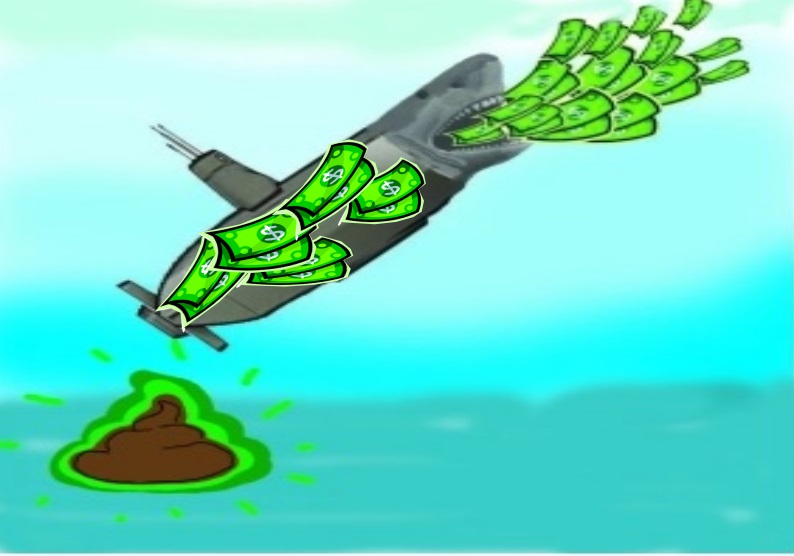
Given that proposals for even low-level nuclear waste sites have been rejected by communities, who is going to take on the radioactive waste created by our new military pact?
ANTON NILSSON, FEB 01, 2024, Crikey,
here should Australia store the waste created by its investment in nuclear-driven submarines? It’s a question no-one knows the answer to yet — although we do know a couple of places where the radioactive waste won’t be stored. As the search for a solution continues, expect politicians to try to kick the radioactive can further down the road — and expect some weapons-grade NIMBYism from state and territory leaders if they’re asked to help out.
In August last year, plans to build a new nuclear waste storage facility in Kimba in South Australia were scrapped. As Griffith University emeritus professor and nuclear expert Ian Lowe put it in a Conversation piece, “the plan was doomed from the start” — because the government didn’t do adequate community consultation before deciding on the spot.
Resources Minister Madeleine King acknowledged as much when she told Parliament the government wouldn’t challenge a court decision that sided with traditional owners in Kimba, who opposed the dump: “We have said all along that a National Radioactive Waste Facility requires broad community support … which includes the whole community, including the traditional owners of the land. This is not the case at Kimba.”
Kimba wasn’t even supposed to store the high-level waste that will be created by AUKUS submarines — it was meant to store low-level and intermediate-level waste, the kind generated from nuclear medicine, scientific research, and industrial technologies. As King told Parliament, Australia already has enough low-level waste to fill five Olympic swimming pools, and enough intermediate-level waste for two more pools.
Where the waste from AUKUS will go is a question without answer. Deputy Prime Minister Richard Marles said in March last year the first reactor from a nuclear-powered submarine won’t have to be disposed of until the 2050s. He added the government will set out its process for finding dump sites within a year — which means Marles has until March this year to spill the details.
“The final storage site of high-level waste resulting from AUKUS remains a mystery,” ANU environmental historian Jessica Urwin told Crikey. “Considering the historical controversies wrought by low- and intermediate-level waste disposal in Australia over many decades, it is hard to see how any Australian government, current or future, will get a high-level waste disposal facility off the ground.”
In his comments last year, Marles gave a hint as to the government’s intentions: he said it would search for sites “on the current or future Defence estate”.
One such Defence estate site that’s been the focus of some speculation is Woomera in South Australia. “A federal government decision to scrap plans for a nuclear waste dump outside the South Australian town of Kimba has increased speculation it will instead build a bigger facility on Defence land at Woomera that could also accommodate high-level waste from the AUKUS submarines,” the Australian Financial Review reported last year.
Urwin said such a proposal could trigger local opposition as well.
Due to Woomera’s proximity to the former Maralinga and Emu Field nuclear testing sites, and therefore its connections to some of the darkest episodes in Australia’s nuclear history, communities impacted by the tests and other nuclear impositions (such as uranium mining) have historically pushed back against the siting of nuclear waste at Woomera,” she said.
Australian Submarine Agency documents released under freedom of information laws in December last year show there is little appetite among state leaders to help solve the conundrum.
A briefing note to Defence secretary Greg Moriarty informed him that “state premiers (Victoria, Western Australia, Queensland, and South Australia) [have sought] to distance their states from being considered as potential locations”. ………………………………………………….. more https://www.crikey.com.au/2024/02/01/aukus-nuclear-waste-storage-australia/
TODAY. What’s the connection between the UK Post Office scandal and Soviet Lt. Col. Stanislav Petrov?

Well, nothing really. But we need to remember what Stanislav Petrov did. On September 26, 1983, Petrov, in charge of the Soviet Union’s nuclear missile system, received the computer screen order to “Launch”. The system reported that a total of five Minuteman ICBMs had been launched by the USA. Soviet nuclear doctrine called for a full nuclear retaliation. Petrov had to make an instant decision. But he feared that it was a false alarm. He disobeyed the order.
The outcome proved that Petrov was correct, and nuclear armageddon was avoided.
So, faulty technology caused a terrible danger – and one man had the integrity to doubt the digital message, and to act on his doubt.
Contrast this with the actions of Post Office and Fujitsu authorities who covered up and lied about the faulty Horizon IT system. That resulted in 900 false convictions, 4 suicides, and hundreds, perhaps thousands, of lives ruined.
In both cases, it was a failure of digital technology.
Now, as we plunge in to the Age of Artificial Intelligence, there is the frightening potential for more digital failures, – and worse, for human error, or even malevolence, in setting up AI programmes.
We need, as never before, people like Stanislav Petrov – people with the scepticism and the integrity - to not blindly comply with technocratic wizardry. The very recent, and still ongoing British Post Office scandal is a worrying reminder of the prevailing view about “not rocking the boat”. The boat may be sinking.
A Radically Different World Since Assange’s Indictment
Biden would have hell to pay from the DNC and the C.I.A. if he dropped the case.
Still, he’s probably not so foolish to want a shackled journalist showing up on U.S. shores to stand trial in the midst of his re-election campaign.
Leniency towards Assange would win back some respect the United States has lost, which would mean it couldn’t suffer another blow and had finally woken to the new world it inhabits. Crushing him would be yet another step towards its demise.
The Assange case is a centerpiece of an emerging, global challenge to U.S. dominance that did not exist in 2010 when the U.S. began its legal pursuit of the publisher, says Joe Lauria.
By Joe Lauria, Consortium News, 29 Jan 24
The world has changed dramatically since the United States began its legal pursuit of WikiLeaks publisher Julian Assange, bringing new risks to the U.S. if it persists in pursuing him to the end.
The geo-strategic situation and the state of the media are today nearly unrecognizable from 2010, when the U.S. empaneled a grand jury to indict Assange. Conditions have changed significantly since even 2019, when he was dragged from the embassy and the indictment was unveiled.
The United States is in the midst of suffering its third major, strategic defeat since the process against Assange began, bringing potentially significant consequences for the U.S., the world and possibly Assange.
In just the past three years, the United States has experienced humiliating defeats in Afghanistan, Ukraine, and now Gaza.
Afghanistan hurt Americans’ sensitivities about their precious “prestige,” which American elites care so much about. The rest of the world takes it into its geo-strategic calculations.
The U.S. instigation of war in Ukraine, intended to weaken Russia and bring down its government, has instead turned into a debacle for the United States and Europe of world historical proportions.
A new commercial, financial and diplomatic system has emerged in opposition to the U.S.-dominated West. This had been slowly developing but was accelerated by Washington’s provocation in Ukraine. It is a way more serious problem for the United States than the mere loss of “prestige.”
Add to this the worldwide disapproval and condemnation the U.S. is facing for its blatant complicity in Israel’s ongoing genocide in Gaza during a war the U.S. and Israel are not winning. The result is U.S. legitimacy has significantly weakened around the world. And at home.
Is this the moment to bring a journalist to the United States in chains to stand trial for publishing truthful material that exposed earlier crimes by the United States?
The risks of doing so at this moment — a very different moment from 2010 — are serious for the U.S, at home and abroad. Domestically the Bill of Rights is at risk. Internationally the bully is losing credibility.
This is seen in the forthrightness of some world leaders, particularly in Latin America, who in the spirit of this new, non-U.S. world, have confronted the United States on its treatment of Assange and have demanded his release.
The established media, which by definition runs cover for the U.S. to commit crimes and abuses wherever its interests are challenged, is suffering its own precipitous loss of legitimacy. The spectacular growth of both social and independent media’s influence since 2010 has helped create a worldwide movement in defense of Assange and the basic principle of a free press.
The question is how aware is the Biden administration of this new world and how will it react?
At a certain point U.S. hubris and intransigence would seem to be headed for collapse. But until then, Washington will no doubt double down in denial and in vengeance. It’s not giving up in Ukraine nor in Gaza — the neocon grip on power in Washington over the realists remains. Will the extremists remain ascendant on Assange too?
In December 2010, Vice President Joe Biden told the television news show Meet the Press that the Obama administration could only indict Assange if they caught him red-handed stealing government secrets and not receiving them passively as a journalist. The Obama administration concluded he was acting as a journalist, even if they refused to call him one, and didn’t indict him.
So what changed for Biden? Why does he persist in this prosecution begun by his mortal enemy Donald Trump and Trump’s C.I.A. director, Mike Pompeo?
The indictment until today still only deals with events in 2010. Nothing has changed legally. But everything changed politically for President Biden, the head of the Democratic Party, with the 2016 DNC leaks, and the C.I.A. Vault 7 releases the following year.
Biden would have hell to pay from the DNC and the C.I.A. if he dropped the case.
Still, he’s probably not so foolish to want a shackled journalist showing up on U.S. shores to stand trial in the midst of his re-election campaign. The High Court here in London has been good at dragging things out and could easily do so until after November.
The Assange case is a centerpiece of this global challenge to U.S. dominance that did not exist in 2010.
To the extent that U.S. leaders are aware of what is happening to U.S. standing in the world, their propensity is to lash out with the only argument they have left – lethal force. In Assange’s case it is legal force, with lethal consequences.
Leniency towards Assange would win back some respect the United States has lost, which would mean it couldn’t suffer another blow and had finally woken to the new world it inhabits. Crushing him would be yet another step towards its demise.
The U.S. does not really need him. It has enough blood on its hands.
This is the text of an address Joe Lauria made by video on Monday to a conference in Sydney, Australia.
Joe Lauria is editor-in-chief of Consortium News and a former U.N. correspondent for The Wall Street Journal, Boston Globe, and other newspapers, including The Montreal Gazette, the London Daily Mail and The Star of Johannesburg. He was an investigative reporter for the Sunday Times of London, a financial reporter for Bloomberg News and began his professional work as a 19-year old stringer for The New York Times. He is the author of two books, A Political Odyssey, with Sen. Mike Gravel, foreword by Daniel Ellsberg; and How I Lost By Hillary Clinton, foreword by Julian Assange. He can be reached at joelauria@consortiumnews.com and followed on Twitter @unjoe
Military-Intelligence Corruption Information Center.

WANT TO KNOW INFO, 31 Jan 24
Over the last 20+ years, WantToKnow.info has summarized over a thousand news articles on deep corruption within our military and intelligence systems. Going deeper, we have gathered a comprehensive collection of verifiable resources, videos, books, and declassified government documents. In this information center, we’ll present a sobering investigation into the US war machine: what it is, who benefits, and who pays the price. The true impacts of US military-intelligence activities in countries all over the world are examined, from World War II to our present moment in time.
Conflict, war, and perceived national security threats provide a common focus for military and CIA partnership. Military activity is heavily informed by CIA intelligence, and public support for this activity is secured by pro-war narratives and voices flooding our media system. What is really going on behind closed doors and on the battlefields is rarely covered in the news, if only for a brief glimpse.
The mainstream press often downplays how ineffective, harmful, and wasteful our current national security strategy is. Over the past century, the CIA’s covert actions have led to countless deaths, human rights abuses, and the undemocratic toppling of numerous foreign governments. While entrenched bureaucracy may be responsible for some of these government agency failings, deeper covert actions within our government have led to chaos and suffering in America and all over the world. Major cover-ups and horrific crimes within the military-intelligence complex continue to remain largely hidden from public awareness.
What is presented in this information center will likely be challenging, sad, and shocking for those who want to know. Yet real information can be empowering. It helps us understand the root causes of human and environmental suffering: the money, players, and belief systems that drive the machine. It invites us to question authority in healthy ways, across political differences. Yet most importantly, challenging information can paradoxically remind us of the greater good. It is the courage of the people and the love for the common good that bring these injustices to light—fueling open dialogue and constructive action.
Unaccountable Military Spending
The military keeps a lot of little things secret. Most people know the phrase “follow the money.” Unfortunately, following the money is impossible when it comes to keeping track of the flow of US taxpayer dollars at the Pentagon. The US military has consistently failed to keep track of the money it spends. As the defense budget speeds towards $1 trillion, the Pentagon failed an independent audit of its accounting systems for the sixth consecutive year in 2023.
In 2022, the Pentagon couldn’t properly account for 61% of its $3.5 trillion in assets. That figure increased in 2023, with the department insufficiently documenting 63% of its now $3.8 trillion in assets. We’ve covered the shocking extent of military waste and trillions missing from US DoD accounts since 2003, as documented here.
In 2021, President Joe Biden declared that the United States was “not at war” for the first time in 20 years. However, this is far from the case. Even members of Congress are uninformed about the presence of US military forces in countries all over the world. This is partly due to the post-9/11 Authorization for Use of Military Force enacted in 2001, which allows for secret operations primarily conducted by the CIA. Investigations have indicated that the United States has pumped millions into fighting more than a dozen “secret wars” over the last two decades. Since 2008, the US has supported at least nine coups in African countries, with a vast network of military bases scattered across the continent.
Going deeper, military black budgets are even more challenging to calculate. Military black budgets fund classified government programs, psychological operations, special forces operations, occult shoulder patches created for top secret programs, and other clandestine military activities. Former intelligence contractor and NSA whistleblower Edward Snowden revealed a vast network of over a dozen spy agencies that make up the U.S. intelligence community, funded by a $52.6 billion “black budget” for fiscal 2013. When the US Space Force was created in 2019, an investigation by Forbes revealed how much of the US Air Force budget was shrouded in secrecy, where “literally hundreds of line items in the proposed budget” were classified.
Arms Industry Corruption
Once weapons were manufactured to fight wars. Now wars are manufactured to sell weapons.
— Arundhati Roy
The US dominates the global arms sales industry. Data released in 2023 indicates that the U.S. sold weapons to nearly 60 percent of the world’s authoritarian nations in 2022. Year after year, half of the Pentagon budget doesn’t go to those fighting on the battlegrounds. It goes to corporate weapons contractors who profit lavishly from war. As one defense executive flat-out told Reuters at Europe’s biggest arms fair, “war is good for business.”
From the Middle East, Ukraine, China, Saudi Arabia, and to Nigeria, US arms sales have done little to promote stability and democracy in geopolitically impacted regions. Read an incredibly comprehensive report by The Quincy Institute for Responsible Statecraft, which illustrates how US arms sales have only fueled unnecessary conflict and war.
Powerful banks like JP Morgan Chase and asset management firms like Blackrock and Vanguard have emerged as major players in the business of war. Some of the world’s biggest banks fund the deadly cluster bomb trade, even as more than 100 countries have banned the unethical use of cluster bombs.
These powerful financial entities are top shareholders of weapons manufacturers like Lockheed Martin and Boeing. Together, the arms industry and the elite financial sector receive more federal money than most federal agencies. In 2022, Lockheed Martin received $106 from the average taxpayer, which is four times more than what taxpayers spent on primary and secondary education. Few Americans would support these war profiteers if they knew where their tax money was going.
Roughly two-thirds of current conflicts — 34 out of 46 — involve one or more parties armed by the United States. In some cases U.S. arms sales to combatants in these wars are modest, while in others they play a major role in fueling and sustaining the conflict. Of the U.S.-supplied nations at war, 15 received $50 million or more worth of U.S. arms between 2017 and 2021. This contradicts the longstanding argument that U.S. arms routinely promote stability and deter conflict. ………………………………………………………………………………………………………..more https://www.wanttoknow.info/military-intelligence-corruption-information
Cost of UK’s flagship nuclear project blows out to more than $A92 billion

But it also has implications for Australia, because one its main political groupings, the right-wing Liberal and National Party coalition, has decided that Australia should abandon its current plan to dump coal for renewables and storage, and wait for nuclear instead.
Australia currently has a target of 82 per cent renewables by 2030, and AEMO’s latest Integrated System Plan suggests it could be close to 100 per cent renewables within half a decade after that.
Giles Parkinson, Jan 29, 2024, https://reneweconomy.com.au/cost-of-uks-flagship-nuclear-project-blows-out-to-more-than-a92-billion/
The cost of the flagship nuclear project in the United Kingdom has blown out again, this time to a potential $A92.6 billion as a result of yet more problems and delays at the Hinkley C project.
The latest cost blowout was revealed last week by the French-government owned EdF, whose former CEO had originally promised in 2007 that the Hinkley project would be “cooking Christmas turkeys” in England by 2017, at a cost of just £9 billion.
But like virtually every major nuclear project built in western economies, that ambitious deadline was never going to be met. The new start-up date is now for 2030, but more likely 2031 – and that is only for one of the two units.
The budget has leaped from the original promise of £9 billion, to £18 billion, and has since blown out multiple times to now reach £31 billion and £34 billion, and it could be more than £35 billion “in 2015 values,” according to EdF. This translates into current day prices, according to Michael Liebreich, the former head of Bloomberg New Energy Finance, of £48 billion, or $A92.6 billion.
“The cost of civil engineering and the longer duration of the electromechanical phase (and its impact on other work) are the two main reasons for this cost revision,” EdF said in its statement. It has also experienced massive cost over-runs and delays at other similar projects in Flammanville in Fance and Olkiluoto in Finland.
It is yet another crippling blow to the UK plans to make nuclear a centrepiece of its green energy transition. EdF has already had to be bailed out by its own government, and ultimately nationalised, because of the cost blowouts and the huge costs of buying replacement power when half its French nuclear fleet went offline in 2023.
China’s CGN had to be brought in to fund one third of the Hinckley project, but is refusing to contribute more funds because China has been frozen out of other UK projects.
Alison Downes of Stop Sizewell C, a campaign group opposed to the planned Suffolk nuclear plant, told the Financial Times that EDF and the Hinkley project was an “unmitigated disaster”.
She added the UK government should cancel Sizewell C, saying state funding for the project could be better spent on “renewables, energy efficiency or, in this election year, schools and hospitals”.
But it also has implications for Australia, because one its main political groupings, the right-wing Liberal and National Party coalition, has decided that Australia should abandon its current plan to dump coal for renewables and storage, and wait for nuclear instead.
The Coalition had been pushing so-called small modular reactors, but after the failure of the leading technology developer in the US last year, and confirmation by the CSIRO and the Australian Energy Market Operator that SMR costs would be three times more expensive than renewables, several key Coalition members pointed to large scale nuclear such as Hinckley.
Australia currently has a target of 82 per cent renewables by 2030, and AEMO’s latest Integrated System Plan suggests it could be close to 100 per cent renewables within half a decade after that.
This switch to low carbon electricity is critical for Australia’s emissions targets, and for emission cuts in other parts of the economy. Any delay in the roll-out of renewables, in the expectation that nuclear would fill its place, will push that timeline out by at least another decade, if not, and blow out the costs of the energy transition.
“It is not like cost over-runs in nuclear projects are a big secret,” Liebreich writes on his Sub-stack blog.
He cites the world’s leading academic expert on project management, Danish Professor Bent Flyvbjerg, author of How Big Things Get Done, who shows that nuclear plants are worse only than Olympic Games in terms of cost over-runs.
“On average they go 120% over the budget, with 58% of them going a whopping 204% over budget,” Liebreich writes.
The Coalition energy spokesman Ted O’Brien complained in December that the CSIRO/AEMO report focused only on the “investment” cost, and not the “consumer cost.”
It’s not clear what he means by that. But as Liebreich notes, while Hinkley’s construction costs are in the £42 to £48 billion range, its first 35 years of electricity at £87.50 or £92.50/MW in 2012 money, adjusted for inflation, will cost UK energy users a gargantuan £111 or £116 billion, or up to $A223 billion.
Are the French going cold on UK nuclear?

‘It would be madness to give Sizewell C the final go-ahead while the questions of whether Hinkley C can be finished, and who pays, are not resolved. Sizewell C is bound to take longer and cost more, but this time it would be we consumers who would bear the risk and pay the price through the “nuclear tax” on our energy bills.’
The French government, which was previously relaxed about EDF’s forays into UK nuclear, now wants its energy company to work on projects back home in France.
So far, Britain has put £2.5billion into the project in total and taxpayers are the biggest shareholders. Campaigners who vehemently oppose the project are alarmed by the recent comments from Paris, pointing out that if the French back off from Sizewell, taxpayers could be on the hook for huge extra amounts of cash via their bills.
By FRANCESCA WASHTELL , 28 January 2024, https://www.thisismoney.co.uk/money/markets/article-13015713/Are-French-going-cold-UK-nuclear.html
Our nuclear industry is reawakening,’ energy secretary Claire Coutinho
declared in a Government strategy document published earlier this month. In
between invoking Winston Churchill’s enthusiasm for nuclear power and its
ability to help the UK reach net zero, Coutinho added that setting up new
plants would ensure our energy security ‘so we’re never dependent on the
likes of [Vladimir] Putin again’. Fighting talk. But in the space of a
fortnight, Coutinho’s gung-ho attitude has already been dented as a
diplomatic row brews over who should pay for the controversial power
stations.
French state-owned energy company EDF last week lit the blue
touchpaper with the revelation the UK’s flagship Hinkley Point C nuclear
plant in Somerset would be delayed until 2029 at the earliest. The cost, it
added, could spiral to as much as £46billion, from initial estimates of
£18billion.
Few in the industry will have been surprised, particularly as EDF has experienced delays on similar projects in Finland and France. But what was a shock were some incendiary remarks from the French government.
The Elysee Palace began pressing the UK to help plug a funding gap at Hinkley and for good measure cast doubt over its commitment to Sizewell C, the next nuclear power station in the pipeline.
A French Treasury official suggested the Government was trying to leave EDF in the lurch on Hinkley.
The official added that it cannot, at the same time, abandon the French firm to ‘figure it out alone’ on Hinkley and also expect it to plough money into Sizewell. It is, the official said, ‘a Franco- British matter,’ and not one for the French to resolve single-handedly.
This is a bad moment for two critical new nuclear plants – and our broader energy security – to be dragged into a cross-Channel tussle.
The French government, which was previously relaxed about EDF’s forays into UK nuclear, now wants its energy company to work on projects back home in France.
Well-placed UK sources deny the French claims that EDF has been left to shoulder the financing burden alone at Hinkley, or that it has been jettisoned by the British state.
They point to the fact EDF has all along had contractual obligations to shoulder the costs at this stage of the project. The early stages of developing Hinkley were undertaken by EDF along with China General Nuclear.
The Chinese firm has fulfilled its part of the bargain, leaving the onus on the French. ‘It’s all down to the French state,’ a senior industry source told The Mail on Sunday. ‘It’s tough, but they’ve not managed it at all well.’
A Department for Energy Security and Net Zero spokesman said: ‘The Government plays no part in the financing or operation of Hinkley Point C. The financing of the project is a matter for EDF and its shareholders.’
As well as backing Hinkley, EDF several years ago began serious talks with the Government over Sizewell C in Suffolk. Each could power an estimated 6 million homes for 60 years, meaning the two projects are linchpins for meeting future energy demand.
The French group is due to take a 20 per cent stake in Sizewell. The Government has previously indicated it will take 20 per cent. It was hoped the rest would be funded through money from the private sector, such as pension funds and sovereign wealth funds.
So far, Britain has put £2.5billion into the project in total and taxpayers are the biggest shareholders. Campaigners who vehemently oppose the project are alarmed by the recent comments from Paris, pointing out that if the French back off from Sizewell, taxpayers could be on the hook for huge extra amounts of cash via their bills.
The new type of funding structure for Sizewell C means consumers will already face an added tax to help pay for the plant.
Alison Downes of the Stop Sizewell C campaign group said: ‘It would be madness to give Sizewell C the final go-ahead while the questions of whether Hinkley C can be finished, and who pays, are not resolved. Sizewell C is bound to take longer and cost more, but this time it would be we consumers who would bear the risk and pay the price through the “nuclear tax” on our energy bills.’
And another area of the industry is watching the fracas with mounting frustration.
Companies vying to build ‘mini’ stations known as small modular reactors (SMRs) hope this prompts the Government to commit instead to their projects, which are quicker to build and cheaper [?]
The firms include Rolls-Royce SMR, which has already received significant funding from the Government. New nuclear plants of whatever size will almost certainly be part of the UK’s energy mix in the years to come.
The sector had already been championed by Boris Johnson before soaring oil and gas prices in the wake of Russia’s invasion of Ukraine highlighted Britain’s dependence on overseas energy.
Any fisticuffs with France over Hinkley and Sizewell would strain the sector and could fatally damage the level of public. Industry figures are urging ministers to resist stumping up cash the French had agreed to pay.
One senior source said: ‘I hope the Government doesn’t lose its nerve, though there’s no sign of that at the moment. It would be a terrible precedent.’
.
Nuclear news – week to 29 January

A bit of good news. Pre-Pesticides, Pro-Farmer: The Rise of Agroecology
One part ancient practices, one part worker justice, a new-old way of farming is adapting agriculture for an uncertain world.
TOP STORIES.
NOWHERE TO HIDE – How a nuclear war would kill you — and almost everyone else.
Nuclear lobby “kills” nomination of regulator who cares too much about safety . also at https://nuclear-news.net/2024/01/23/3-a-nuclear-lobby-kills-nomination-of-regulator-who-cares-too-much-about-safety/
Nuclear hype in meltdown.
International Court of Justice Rules That Israel Must Stop Killing Palestinians.
Growing mountain of wasted money is a radioactive prospect. also at https://nuclear-news.net/2024/01/28/2-a-growing-mountain-of-wasted-money-is-a-radioactive-prospect/
Hinkley Point C woes threaten to break UK and France’s nuclear fusion.
Climate: Towards an unliveable planet: Climate’s 2023 annus horribilis
Nuclear. Lots about UK’s nuclear mess
Noel’s notes. A new Waterloo defeat for France – a nuclear economic one.
AUSTRALIA. The Politics of Nuclear Waste Disposal: Lessons from Australia. As earth records hottest year, Coalition digs in against climate action and renewables. Cost of UK’s flagship nuclear project blows out to more than $A92 billion. Race of the Century: Australia is in the box seat on climate and finance, here is the blueprint for victory.
NUCLEAR ISSUES
| CLIMATE. Small modular reactors may have climate benefits, but they can also be climate-vulnerable EMPLOYMENT. Berkshire nuclear defence workers strike. | CIVIL LIBERTIES. In Assange’s Darkest Hour, Committee To Protect Journalists Yet Again Excludes Him From Jailed Journalist Index ENERGY. Microsoft Looks to Nuclear to Fuel AI Plans. | ECONOMICS. EDF a total basket case, weighed down by its 50 Billion pound nuclear turkey at Hinkley Point. Sorry, France, you’re on the hook at Hinkley Point. Hinkley Point is glowing on my doorstep, but that won’t help us get a bus into town. France to push UK government for additional support for faltering nuclear projects. US nuclear agency isn’t consistent in tracking costs for some construction projects, report says. NuScale / Countries Likely To ‘Double Down On Scrutiny’ Following SMR Project Cancellation. |
LEGAL. The ICJ’s Provisional Orders: The Genocide Convention Applies to Gaza.
Two Men Sentenced for Falsifying Documents Related to Testing of Equipment at Nuclear Power Plants.
MEDIA. The War On Journalism In Belmarsh, The War On Journalism In Gaza.As ‘Oppenheimer’ leads Oscar nominees, Sentor Hawley wants spotlight on nuclear testing victims. URANIUM FILM FESTIVAL MARATHON ACROSS THE USA.
OPPOSITION to NUCLEAR . Fijian youths condemn Japan’s discharge of radioactive water.
CAMPAIGNERS opposing the development of nuclear power inBradwell-on-Sea say they believe ‘new nuclear’ in the area “remains dead in the water”. UK government pours good money after bad, into failing Hinkley Point C nuclear boondoggle .
| SPINBUSTER. Tripling nuclear power: public relations fairy dust . What is wrong with UK nuclear power? Too much “Hopium”? Detailed response to a barrage of nuclear nonsense from Zion Lights.. | WASTES. Plutonium NNSA Issues Final Surplus Plutonium Environmental Impact Statement. Japan’s Fukushima nuclear plant: further delays for removal of melted fuel debris. Still no end in sight for Fukushima nuke plant decommissioning work. Plan to store nuclear waste under Holderness for 175 years. MP wants public vote on nuclear waste disposal |
| WAR and CONFLICT. ”Doomsday Clock” Kept at 90 Seconds to Midnight for 2024. Doomsday clock stays at 90 seconds to midnight: What we know. The Doomsday Clock is still at 90 seconds to midnight. But what does that mean? Israel minister renews call for striking Gaza with ‘nuclear bomb’. It May be Genocide, But it Won’t Be Stopped | WEAPONS and WEAPONS SALES. Nuclear-armed Israel is at war: What might this mean? Italy’s FM reveals country ceased arms shipments to Israel starting October 7 over ‘war crime’ concerns As Trump looms, top EU politician calls for European nuclear deterrent. Finland is a focal point of Nato’s largest exercise since the Cold War, and looks to siting nuclear weapons. US plans to store nuclear weapons in UK: report. US will station nukes in Britain for the first time in 15 years, as West escalates conflicts on multiple fronts. https://www.youtube.com/watch?v=cZcg409HYIc Ukraine uncovers another $40 Million in weapons fraud. |
Giving Mastodon another go. They approved my appeal
Now, to add to my confusion – Mastodon sent me a message “My appeal has been approved. My account is back again” . My appeal was just “I don’t understand why my account has been suspended. No reason was given” . So, now I am going to give Mastodon another go
Bitterly disappointed in Mastodon
Like many others, I left Twitter- X, because of Elon Musk and the whole weird setup developing there.
Today, on Mastodon, I find “Suspension of account from Jan 27, 2024”.
No warning, no notice, nothing.
My posts are almost always references to: my opposition to the nuclear industry, and to my condemnation of the genocide that Israel is perpetrating in Gaza.
Not personal attacks, not criminal accusations, not sexual content. No reason given for my suspension.
WHAT IS GOING ON WITH MASTODON?
I have done a little research, on Reddit. It turns out that many others have had the same experience. Apparently you can appeal, but your Mastodon account will be permanently deleted. Hard to know how to appeal, as you have no idea what prompted them to cut you off. It seems that all that is need is for one person to make an objection to you – and you’re out! But of course, not knowing what their objection was, it’s hard to answer it. My lame appeal was:
I don’t understand why my account is suspended. I think that I deserve an explanation.”
Where to, from here?
I have a Facebook account. It doesn’t get anything like the same volume of traffic that Mastodon does. With Facebook, I feel that we enthusiasts for a particular cause (a nuclear-free world) are just talking to each other.
And by the way, the nuclear industry has a huge presence on Mastodon.
Is there any open-source, non-profit, alternative to Twitter?
Can anyone help me?
The War On Journalism In Belmarsh, The War On Journalism In Gaza

CAITLIN JOHNSTONE, JAN 26, 2024, https://www.caitlinjohnst.one/p/the-war-on-journalism-in-belmarsh?utm_source=post-email-title&publication_id=82124&post_id=141058691&utm_campaign=email-post-title&isFreemail=true&r=1ise1&utm_medium=email—
I haven’t written much about Julian Assange lately because I’ve been so fixated on what’s been happening in Gaza, but we should all be acutely aware that the 20th and 21st of February may be the WikiLeaks founder’s final chance to avoid extradition to the United States to face persecution for the crime of good journalism.
Assange and his legal team will face two High Court judges during the two-day hearing in London, who will then determine whether or not the UK will allow the Australian journalist to be dragged to the US in chains for a crooked show trial and cast into one of the world’s most draconian prison systems for exposing the war crimes of the world’s most powerful government.
Some US lawmakers are attempting to block the extradition from the other end with House Resolution 934, which asserts that “regular journalistic activities are protected under the First Amendment, and that the United States ought to drop all charges against and attempts to extradite Julian Assange.” If charges were dropped it would not only prevent the extradition but allow for Assange to be freed from the Belmarsh maximum security prison, where he has been jailed by the British government since 2019.
The fight to free Assange is a fight to protect press freedoms around the world, since the US is using the case in an attempt to set a legal precedent for extraditing and imprisoning any journalist or publisher anywhere in the world who shares information with the public that the US doesn’t want shared.
And it’s worth mentioning that this fight is not actually separate from the fight against Israel’s efforts to keep journalism out of Gaza by assassinating reporters and blocking the press from entering the enclave. It’s also not separate from humanity’s overall struggle to build a truth-based civilization, nor ultimately from our greater struggle to become a conscious species.
All throughout humanity there are pushes toward truth and seeing and pushes toward secrecy and darkness. In the press we see both: the authentic journalists like Assange who want all that is hidden to be made transparent, and the propagandists of the mainstream media who work to obfuscate and distort the truth. Those who seek the emergence of a harmonious and truth-based society want as much visibility into what’s really happening as possible, while tyrannical power structures like the US empire and Israel are constantly working to dim the lights.
Wherever you see domination and abuse, you see efforts to limit perception and keep human minds from seeing and understanding what’s going on. It’s true of empires, it’s true of governments, it’s true of cult leaders, it’s true of abusive spouses, and it’s true of the unpleasant dynamics within our own psyches that we would rather not look at. The less seeing there is, the more abusiveness is possible; the more seen things become, the closer we get to freedom.
I’m no prophet, but I strongly suspect that our future as a species will be determined by the outcome of this struggle. If the impulse toward truth and seeing wins out, we are probably headed toward a world of health and harmony. If the impulse to keep everything confused and hidden and unconscious wins, we are probably headed for dystopia and extinction.
In any case, all we can do is fight to make things more visible so that health and harmony become possible. Fight to make things conscious within ourselves. Fight to keep journalism legal in the shadow of the empire. Fight to spotlight Israel’s atrocities in Gaza. Fight to make the unseen seen. Fight to bring humanity into the light of consciousness.
International Court of Justice Rules That Israel Must Stop Killing Palestinians

By David Swanson, World BEYOND War, January 26, 2024
The International Court of Justice has ruled that Israel must cease its warmaking in Gaza — cease committing and inciting genocidal acts — and that the case charging Israel with genocide must proceed.
DETAILS OF THE RULING:
- By 15-2: Israel shall take all measures within its power to prevent all acts within the scope of Genocide Convention article 2
- 15-2: Israel must immediately ensure that its military does not commit acts within the scope of GC.2
- 16-1: Direct and punish all members of the public who engage in the incitement of genocide against Palestinians
- 16-1: Ensure provision of urgently needed basic services, humanitarian aid
- 15-2: Prevent the destruction of and ensure the preservation of evidence to allegation of acts of GC.2
- 15-2: Israel will submit report as to how they’re adhering to these orders to the ICJ within 1 month
This is Article 2 of the Genocide Convention:
In the present Convention, genocide means any of the following acts committed with intent to destroy, in whole or in part, a national, ethnical, racial or religious group, as such:
(a) Killing members of the group;
(b) Causing serious bodily or mental harm to members of the group;
(c) Deliberately inflicting on the group conditions of life calculated to bring about its physical destruction in whole or in part;
(d) Imposing measures intended to prevent births within the group;
(e) Forcibly transferring children of the group to another group.
Therefore, Israel must cease killing Palestinians.
This was a make or break moment for international law, or rather a break or make-a-first-step moment. There is hope for the idea and reality of international law, but this is only a beginning.
The president of the International Court of Justice, who read the ruling, is Judge Joan Donoghue, former top legal advisor under Hillary Clinton at the U.S. State Department during the Obama Administration. She previously was the lawyer for the United States in its unsuccessful defense before the ICJ against charges by Nicaragua of minining its harbor.
The court voted for portions of this decision by 15-2 and 16-1. The “No” votes came from Judge Julia Sebutinde of Uganda and Ad Hoc Judge Aharon Barak of Israel.
The case presented by South Africa was overwhelming (read it or watch a key part of it), and Israel’s defense paper-thin. And the case just grew more overwhelming during the bizarre delay (yes, courts are slow, but this genocide is swift).
People all over the world built the pressure to move South Africa to act and other nations to add their support. Over 1,500 organizations signed a statement. Individuals signed a petition by CODEPINK, and sent almost 500,000 emails to key governments’ United Nations consulates through World BEYOND War and RootsAction.org. Click those links because more emails are needed now. While several nations have made public statements in support of South Africa’s case, we need them to file papers officially with the International Court of Justice. To reach out to additional national governments, go here.
Governments that have made statement in support of the case against genocide include Malaysia, Turkey, Jordan, Bolivia, the 57 nations of the Organization of Islamic Countries, Nicaragua, Venezuela, Maldives, Namibia, and Pakistan, Colombia, Brazil, and Cuba.
Germany has backed Israel’s defense against the charge of genocide, which has been denounced by Namibia, victimn of a German genocide. Prominent Jews have denounced Germany’s shameful action.
Mass demonstrations in the streets of the world have continued in support of peace and justice, and to a far greater extent than major media outlets have reported.
Here’s a discussion of this campaign for justice with Sam Husseini on Talk World Radio.
Prior to today’s ruling from the International Court of Justice, the U.S. government pointedly refused to say whether it would comply with ruling, despite insisting that other nations comply with rulings by the ICJ.
Hamas said that it would cease fire if Israel does, and release all prisoners if Israel does
Germany, to its credit, reportedly said that it would comply……………………………………………………………………………………………………………………………….. https://worldbeyondwar.org/international-court-of-justice-rules-that-israel-must-cease-fire/
Growing mountain of wasted money is a radioactive prospect.

Alistair Osborne: Growing mountain of wasted money is a radioactive
prospect. Rishi Sunak’s apparent determination to press ahead with
mammoth investment in new nuclear reactors, whatever the cost, might not
prove to be the best solution.
It’s only a week since he set off — again — with his uncosted “nuclear road map”: a plan to have 24 gigawatts of new reactors by 2050, or seven more Hinkley Point Cs. On
Monday, the government sank another £1.3 billion into Sizewell C, so it
could “steam ahead” with that project, too, as Andrew Bowie, the
minister for nukes, put it.
Listen to him and investors are queueing up. So
what better news to encourage them than this jaw-dropper from EDF, the
state-backed French outfit behind both schemes? Hinkley Point’s costs
have shot up by as much as £10 billion to a top-end £35 billion, in 2015
prices.
And, instead of firing up in 2027, the first of the Somerset
nuke’s twin reactors could in an “unfavourable scenario” (the likely
outcome) be delayed until 2031. This is what comes with Hinkley’s
European pressurised reactor tech, as EDF has also proved at France’s
Flamanville, Finland’s Olkiluoto and China’s Taishan.
Indeed, two years after the Chinese nuke became operational, one unit had to be taken offline for a year’s repairs. So why is the government hellbent on a re-run with
Sizewell in Suffolk? Alison Downes from the Stop Sizewell C campaign is no
neutral voice. But she’s right to say the project “epitomises the
definition of insanity: doing the same thing over and over and expecting a
different result”. With Sizewell, though, things would be far pricier.
Under the contracts-for-difference regime, EDF is on the hook for
Hinkley’s costs. Repeat the trick at Sizewell and, under the new
regulated asset base model, consumers would find £10 billion added to
their bills — before the nuke’s even operational.
Times 25th Jan 2024
TODAY. A new Waterloo defeat for France – a nuclear economic one.

Almost 200 years before Electricite de France (EDF) signed a nuclear contract with Britain, France got decisively beaten by England, in the battle of Waterloo. That defeat ended France’s attempts to dominate Europe.
Now in 2024, France is suffering a humiliating blow, because of that 2016 contract. In essence, EDF agreed to be solely responsible for cost overruns during construction of Britain’s Hinkley Point C nuclear power station.
To make matters worse, in 2022, the debt-laden EDF was fully nationalised by the French government, – which paid 9.7 billion euros to take on this burden. Back in 2016, the plant was meant to cost £18bn; it’s now headed to cost. £46bn .
Sacre bleu indeed!
France’s President Macron aims to make the nation the dominating nuclear industry power. Delusions of grandeur indeed. Apart from his grandiose plans for new fleets of big and little reactors, - around his neck is – as The Guardian puts it – a financial albatross that has only become heavier.

Electricite de France (EDF) DF a total basket case, weighed down by its 50 Billion pound nuclear turkey at Hinkley point

Jonathon Porritt, https://www.jonathonporritt.com/edf-a-total-basket-case-weighed-down-by-its-50-billion-nuclear-turkey-at-hinkley-point/ 25 Jan 24
EdF’s bosses must be thanking their lucky stars that President Macron decided to take complete control of EdF back in 2022. Otherwise, its latest announcements about further delays and cost increases for its new reactors at Hinkley Point would have sent any remaining investors running for the hills.
The scale of those announcements is staggering:
- The price tag for Hinkley Point C has now been reset at £31-34 billion (in 2015 prices), twice the original £18 billion.
- In today’s money, that’s around £46 billion – with further delays and cost hikes (rising to at least £50 billion) all but inevitable.
- EdF’s shortfall in completing Hinkley Point has risen substantially, and could now be as high as £25 billion on its balance sheet.
- EdF has admitted that 2029 is now the earliest Hinkley Point will come online. Fat chance of that.
Which makes Hinkley Point C even more of a bust than EdF’s current worst reactor construction nightmare at Flamanville in France. And significantly worse than its plant at Olkiluoto in Finland, which it just managed to get over the line last year.
So, watch out for the fallout.
Hinkley Point C was meant to be coming online in 2027. All neutral commentators now reckon 2031 (EdF’s so-called ”unfavourable scenario”) is the earliest that will happen. That’s a further four-year delay before its low-carbon electrons (providing 7% of the UK’s electricity) will be available to help the UK meet its various decarbonisation targets.
Add to that the knock-on impact of this on the Government’s/Labour’s hopes for a Hinkley Point look-alike (really!) at Sizewell C. The sales pitch to investors for that has now become even trickier than it was before: “Just look at this beautiful £50 billion turkey: another one just like it could be all yours at a bargain-basement price of, say, £40 billion”.
Which leads to the following conclusions:
EdF is even more screwed than it was before, deeper in debt, with further delays for rolling out its look-alike plant at Sizewell C now inevitable.- The Tory Government is screwed, with no chance of Hinkley Point C (let alone Sizewell C) making any serious short-term contribution to its decarbonisation strategy.
- Labour is screwed – for exactly the same reasons.
- The UK’s Net Zero strategy by 2050 looks less and less viable. And that will soon be tested, again, in the courts.
- All this because of the nuclear obsessions of the UK’s entire political establishment – Labour just as much as the Tories.
Happily, there’s no need to panic: the case for the “renewables + efficiency + storage + smart grids” option just got a whole lot stronger, both economically and politically. We just need the donkeys in Whitehall to give up on their nuclear turkeys. Finally!
It May be Genocide, But it Won’t Be Stopped

The ruling by the International Court of Justice was a legal victory for South Africa and the Palestinians, but it will not halt the slaughter.
SCHEERPOST, By Chris Hedges 26 Jan 24
The International Court of Justice (ICJ) refused to implement the most crucial demand made by South African jurists: “the State of Israel shall immediately suspend its military operations in and against Gaza.” But at the same time, it delivered a devastating blow to the foundational myth of Israel. Israel, which paints itself as eternally persecuted, has been credibly accused of committing genocide against Palestinians in Gaza. Palestinians are the victims, not the perpetrators, of the “crime of crimes.” A people, once in need of protection from genocide, are now potentially committing it. The court’s ruling questions the very raison d’être of the “Jewish State” and challenges the impunity Israel has enjoyed since its founding 75 years ago.
The ICJ ordered Israel to take six provisional measures to prevent acts of genocide, measures that will be very difficult if not impossible to fulfill if Israel continues its saturation bombing of Gaza and wholesale targeting of vital infrastructure.
The court called on Israel “to prevent and punish the direct and public incitement to commit genocide.” It demanded Israel “take immediate and effective measures to enable the provision of urgently needed basic services and humanitarian assistance.” It ordered Israel to protect Palestinian civilians. It called on Israel to protect the some 50,000 women giving birth in Gaza. It ordered Israel to take “effective measures to prevent the destruction and ensure the preservation of evidence related to allegations of acts within the scope of Article II and Article III of the Convention on the Prevention and Punishment of the Crime of Genocide against members of the Palestinian group in the Gaza Strip.”
The court ordered Israel to “take all measures within its power” to prevent the crimes which amount to genocide such as “killing, causing serious bodily and mental harm, inflicting on the group conditions of life calculated to bring about its physical destruction in whole or in part, and imposing measures intended to prevent births within the group.”
Israel was ordered to report back in one month to explain what it had done to implement the provisional measures.
Gaza was pounded with bombs, missiles and artillery shells as the ruling was read in The Hague — at least 183 Palestinians have been killed in the last 24 hours. Since Oct. 7, more than 26,000 Palestinians have been killed. Almost 65,000 have been wounded, according to the Palestinian Ministry of Health. Thousands more are missing. The carnage continues. This is the cold reality.
Translated into the vernacular, the court is saying Israel must feed and provide medical care for the victims, cease public statements advocating genocide, preserve evidence of genocide and stop killing Palestinian civilians. Come back and report in a month.
It is hard to see how these provisional measures can be achieved if the carnage in Gaza continues.
“Without a ceasefire, the order doesn’t actually work,” Naledi Pandor, South Africa’s minister of international relations, stated bluntly after the ruling.
Time is not on the side of the Palestinians. Thousands of Palestinians will die within a month. Palestinians in Gaza make up 80 percent of all the people facing famine or catastrophic hunger worldwide, according to the United Nations. The entire population of Gaza by early February is projected to lack sufficient food, with half a million people suffering from starvation, according to the Integrated Food Security Phase Classification, drawing on data from U.N. agencies and NGOs. The famine is engineered by Israel.
At best, the court — while it will not rule for a few years on whether Israel is
committing genocide — has given legal license to use the word “genocide” to describe what Israel is doing in Gaza. This is very significant, but it is not enough, given the humanitarian catastrophe in Gaza.
Israel has dropped almost 30,000 bombs and shells on Gaza — eight times more bombs than the U.S. dropped on Iraq during six years of war. It has used hundreds of 2,000-pound bombs to obliterate densely populated areas, including refugee camps. These “bunker buster” bombs have a kill radius of a thousand feet. The Israeli aerial assault is unlike anything seen since Vietnam. Gaza, only 20 miles long and five miles wide, is rapidly becoming, by design, uninhabitable.
Israel will no doubt continue its assault arguing that it is not in violation of the court’s directives. In addition, the Biden administration will undoubtedly veto the resolution at the Security Council demanding Israel implement the provisional measures. The General Assembly, if the Security Council does not endorse the measures, can vote again calling for a ceasefire, but has no power to enforce it.
Defense for Children International – Palestine v. Biden was filed in November by the Center for Constitutional Rights against President Joe Biden, Secretary of State Antony Blinken and Secretary of Defense Lloyd Austin. The case challenges the U.S. government’s failure to prevent complicity in Israel’s unfolding genocide of the Palestinian people. It asks the court to order the Biden administration to cease diplomatic and military support and comply with its legal obligations under international and federal law.
The only active resistance to halt the Gaza genocide is provided by Yemen’s Red Sea blockade. ………………………………………………………………….
The ICJ was founded in 1945 following the Nazi Holocaust. The first case it heard was submitted to the court in 1947.
“Decisions that endanger the continued existence of the State of Israel must not be listened to,” Ben-Gvir added. “We must continue defeating the enemy until complete victory.”……………………………………………………
It is clear from the ruling that the court is fully aware of the magnitude of Israel’s crimes. This makes the decision not to call for the immediate suspension of Israeli military activity in and against Gaza all the more distressing.
But the court did deliver a devastating blow to the mystique Israel has used since its founding to carry out its settler colonial project against the indigenous inhabitants of historic Palestine. It made the word genocide, when applied to Israel, credible. https://scheerpost.com/2024/01/26/chris-hedges-it-may-be-genocide-but-it-wont-be-stopped/
1 This month


Help Aunty Sue Protect Her Land and Sacred Sites From Destructive Rocket Testing.
.

Australians deserve the truth
about
AUKUS – https://aukuspublicinquiry.com/

PETITION – To: Prime Minister Anthony Albanese and the Australian Labor Government

of the week – Australians for War Powers Reform (AWPR)
To see nuclear-related stories in greater depth and intensity

