In Assange’s Darkest Hour, Committee To Protect Journalists Yet Again Excludes Him From Jailed Journalist Index

for another year, CPJ excluded the imprisoned former WikiLeaks editor-in-chief from their database of jailed journalists.
Assange is a member of the International Federation of Journalists, which is the world’s largest federation of journalists.
if Assange was brought to trial that it would “effectively criminalize journalists everywhere.”
Assange is and will always be a detained journalist so long as the Justice Department pushes onward with this political case. It is too bad CPJ staff cannot get past their professional hangups and include him in their annual index. It would strengthen their opposition to the prosecution in a way that would give their advocacy even more clarity.
Kevin Gosztola, 20 Jan 24, https://thedissenter.org/assange-darkest-hour-cpj-yet-again-excludes-jailed-journalist-index/
The Committee to Protect Journalists (CPJ) released its census report for 2023. Three hundred and twenty detained or imprisoned journalists were counted by the press freedom organization, as of December 1, 2023.
As indicated, that number is not far from the record high of 360 jailed journalists that was set in 2022.
The 2023 census takes on greater significance given the Israeli government’s war on Gaza and the military attacks and crackdown on Palestinian journalists. Seventeen journalists were jailed by Israel, the “highest number of arrests” since CPJ began tracking arrests in 1992. It is the first time that Israel has “ranked among the top six offenders.”
But at this moment, WikiLeaks founder Julian Assange and his legal team are preparing for a major hearing on February 20 before the High Court of the Justice in the United Kingdom. They view the hearing as a final opportunity to save him from extradition to the United States, where he was charged with violating the Espionage Act in 2019.
Assange needs press freedom organizations, especially those with U.S. headquarters, to strengthen their stand against the charges from the Justice Department. However, for another year, CPJ excluded the imprisoned former WikiLeaks editor-in-chief from their database of jailed journalists.
I emailed CPJ a request for comment and asked why Assange remains excluded from the organization’s annual jailed journalist census, especially given CPJ’s methodology. The response that a CPJ communications person sent me was disappointing.
“After extensive research and consideration, CPJ chose not to list Assange as a journalist, in part because his role has just as often been as a source and because WikiLeaks does not generally perform as a news outlet with an editorial process,” CPJ answered.
The statement was copied-and-pasted from a 2019 post that then-CPJ executive editor Robert Mahoney authored, where he defended the exclusion of Assange.
I pointed out to CPJ that this “extensive research and consideration” was completed in 2019, and I did so because perhaps it is time for CPJ to reassess their determination. To that, CPJ replied, “Yes, there have been many articles about our position on Assange. While you’re free to disagree, our position has been clear, transparent, and consistent for years.”
Indeed, CPJ’s position has been clear. The organization has been consistent in their exclusion of Assange from the press freedom organization’s annual census.
It is debatable whether the organization has been transparent. To my knowledge, the “extensive research and consideration” that they did to decide that Assange is not a journalist has never been shared with the public.
Also, it remains puzzling how a press freedom organization led primarily by journalists with experience in newsgathering can insist that Assange is a source. He has never held a security clearance or a position in the U.S. government that would give him access to classified documents.
The source of the documents at issue in the Espionage Act prosecution against Assange was a U.S. Army intelligence analyst known as Chelsea Manning. She had access to the classified military and government documents, submitted over 700,000 files to WikiLeaks, and Assange published them in 2010 and 2011.
My request for comment mentioned CPJ’s own methodology for labeling someone a journalist, however, CPJ ignored this part of my question.
According to CPJ, a journalist is someone who covers the news or comments on public affairs through any media—including in print, in photographs, on radio, on television, and online.”
Between 2010 and 2017, Assange appeared numerous times on news networks, such as CNN and Al Jazeera English, to comment on WikiLeaks publications as well as public affairs, like National Security Agency (NSA) whistleblower Edward Snowden, NSA surveillance, and internet freedom. He frequently appeared on the independent news program “Democracy Now!” to discuss Google, corruption within U.S. security agencies, and even the Catalonia independence movement in Spain.
Assange is a member of the International Federation of Journalists, which is the world’s largest federation of journalists. Twenty affiliates of the European Federation of Journalists (EFJ), including France, Germany, Italy, Spain, and the United Kingdom, granted Assange honorary membership.
Since 2010, Assange has also been a member of the Media, Entertainment, and Arts Alliance, a trade union in Australia.
CPJ partnered with various civil liberties, human rights, and press freedom organizations in December 2022 to send a letter to Attorney General Merrick Garland demanding that the Justice Department drop all charges against Assange.
On World Press Freedom Day in 2023, CPJ CEO Jodie Ginsberg spoke at an event hosted by the United Nations Educational, Scientific, and Cultural Organization (UNESCO) at the UN headquarters in New York.
Ginsberg called out lawfare targeting journalists and clearly stated, “One thing that the United States could concretely do is drop the charges against Julian Assange.” She noted if Assange was brought to trial that it would “effectively criminalize journalists everywhere.”
So, why the refusal to label Assange a journalist?
I asked CPJ if they have come under pressure from officials within the U.S. government and that is why they will not acknowledge Assange is a jailed journalist. After all, if the Chinese or Russian governments detained someone like Assange, that person would almost certainly be included in CPJ’s index.
The press freedom organization disregarded this portion of my request for comment.
Continue readingTODAY. Time that Israel stopped being a religious dictatorship

What is so badly needed right now ? The truth. Facts. A bit of logic.
Israel has no official religion. Yet the declaration of independence in 1948 made it clear that Israel is “The Jewish State”.
And now – all the Western powers seem to agree with Benjamin Netanyahu - yes Israel IS the Jewish State.
And why does that matter?
Well, look at the past , and the present. What does a theocracy mean for its people?
Well, for hundreds of years up to around the 500 BC time, the Israel lands, especially Judah, were controlled by a state ideology of “Zion theology,” the idea that Yahweh, the god of Israel, had chosen Jerusalem for his dwelling-place and that the Davidic dynasty would reign there forever. Then the Babylonian conquest happened, and the Hebrew Bible developed in the exiled community. The exiles saw themselves as a people distinct from other peoples.
Oppressed by the Romans, the Jews later became persecuted for centuries by the Christians. In theocratic Europe, the Inquisition developed, culminating in the horrors of the Spanish Inquisition, torturing and killing non-Christians.
So, we see what religiously controlled States did to people, in the past.
And today.
Iran’s Islamic Republic says it all – enforcement of sharia law, oppression of women, oppression of religious minorities, the Supreme Leader exerts ideological and political control over a system dominated by clerics who shadow every major function of the state.
Saudi Arabia is an Islamic theocracy and the government has declared the Qur’an and the Sunnah (tradition) of Muhammad to be the country’s Constitution. Laws are enforced against religious minorities. It has the Committee for Promoting Virtue and Preventing Vice, which carries out religious policing, including control over women’s clothing and their lives. There are severe punishments for blasphemy. Education is dominated by a religious focus.
How does Israel get away with pretending not to be a theocracy?
There’s a worldwide pretence that Jews are an ethnic minority. But Jews are all over the world, and do not have distinctive physical traits or genetic markers.
From the Balfour Declaration of 1917, to the Declaration of Independence in 1948, the world powers seemed to agree that the Palestine communities didn’t matter, and the land could be claimed by Jews who had previously bought properties there, and by the European Jews who survived the Holocaust.
This was grossly unfair to the Palestinians, – and to the Jews, who had little other choice.
But they’re there now. And can’t realistically be moved elsewhere. And Palestinians exist too.
So – everybody has to live with this. It would be a good start if everybody, especially Israeli citizens, recognised the humanity of all people, stopped banging on about “God’s chosen people”, and clearly stated Israel as a secular state.
Nuclear hype in meltdown

The latest nuclear power ‘renaissance’ is going in reverse.
Dr Jim Green , 23rd January 2024, https://theecologist.org/2024/jan/23/nuclear-hype-meltdown
Nuclear power went backwards last year and shrunk to below 10 percent of global electricity generation despite all the hype about a new nuclear ‘renaissance’. Meanwhile, renewables enjoyed record growth for the 22nd consecutive year and now accounts for more than 30 percent.
The nuclear renaissance of the late-2000s was a bust due to the Fukushima disaster and catastrophic cost overruns with reactor projects. The latest renaissance is heading the same way – nowhere.
There were five reactor start-ups and five permanent closures in 2023 with a net loss of 1.7 gigawatts (GW) of capacity. There were just six reactor construction starts in 2023, five of them in China.
Hype

Due to the ageing of the reactor fleet, the International Atomic Energy Agency (IAEA) anticipates the closure of 10 reactors (10 GW) per year from 2018 to 2050.
Therefore the industry needs an annual average of 10 reactor construction starts, and 10 reactor startups (grid connections), just to maintain its current output. Over the past decade (2014-23), construction starts have averaged 6.1 per year and reactor startups have averaged 6.7.
The number of operable power reactors is 407 to 413 depending on the definition of operability, well down from the 2002 peak of 438.
Nuclear power’s share of global electricity generation has fallen to 9.2 percent, its lowest share in four decades and little more than half of its peak of 17.5 percent in 1996.
Over the two decades 2004-2023, there were 102 power reactor startups and 104 closures worldwide: 49 startups in China with no closures; and a net decline of 51 reactors in the rest of the world.
In China, there were five reactor construction starts in 2023 and just one reactor startup. Put another way, there was just one reactor construction start outside China in 2023. One. So much for the hype about a new nuclear ‘renaissance’.
Deployment

Small modular reactors (SMRs) are the subject of endless hype but there were no SMR construction starts or startups last year.
Indeed, the biggest SMR news in 2023 was NuScale Power’s decision to abandon its flagship project in Idaho despite securing astronomical subsidies amounting to around US$4 billion from the US Government. The company is far more likely to go bankrupt than to break ground on its first reactor.
The pro-nuclear Breakthrough Institute noted in a November 2023 article that efforts to commercialise a new generation of ‘advanced’ nuclear reactors “are simply not on track” and it warned nuclear advocates not to “whistle past this graveyard”.
The Institute said: “The NuScale announcement follows several other setbacks for advanced reactors. Last month, X-Energy, another promising SMR company, announced that it was canceling plans to go public. This week, it was forced to lay off about 100 staff.
“In early 2022, Oklo’s first license application was summarily rejected by the Nuclear Regulatory Commission before the agency had even commenced a technical review of Oklo’s Aurora reactor.
“Meanwhile, forthcoming new cost estimates from TerraPower and XEnergy as part of the Department of Energy’s Advanced Reactor Deployment Program are likely to reveal substantially higher cost estimates for the deployment of those new reactor technologies as well.”
Installed

The International Energy Agency (IEA) has just released its ‘Renewables 2023’ report and it makes for a striking contrast with the nuclear industry’s malaise.
Nuclear power suffered a net loss of 1.7 GW capacity in 2023, whereas renewable capacity additions amounted to a record 507 GW, almost 50 percent higher than 2022. This is the 22nd year in a row that renewable capacity additions set a new record, the IEA states.
Nuclear power accounts for a declining share of global electricity generation (currently 9.2 percent) whereas renewables have grown to 30.2 percent.
The IEA expects renewables to reach 42 percent by 2028 thanks to a projected 3,700 GW of new capacity over the next five years in the IEA’s ‘main case’.
The IEA states that the world is on course to add more renewable capacity in the next five years than has been installed since the first commercial renewable energy power plant was built more than 100 years ago.
Milestones
Solar and wind combined have already surpassed nuclear power generation and the IEA notes that several other milestones are in sight:
‒ In 2025, renewables surpass coal-fired electricity generation to become the largest source of electricity generation
‒ In 2025, wind surpasses nuclear electricity generation
‒ In 2026, solar PV surpasses nuclear electricity generation
‒ In 2028, renewable energy sources account for over 42 percent of global electricity generation, with the share of wind and solar PV doubling to 25 percent.
An estimated 96 percent of newly installed, utility-scale solar PV and onshore wind capacity had lower generation costs than new coal and natural gas plants in 2023, the IEA states.
Tripling
The IEA states in its ‘Renewables 2023’ report that: “Prior to the COP28 climate change conference in Dubai, the International Energy Agency (IEA) urged governments to support five pillars for action by 2030, among them the goal of tripling global renewable power capacity.
“Several of the IEA priorities were reflected in the Global Stocktake text agreed by the 198 governments at COP28, including the goals of tripling renewables and doubling the annual rate of energy efficiency improvements every year to 2030.
“Tripling global renewable capacity in the power sector from 2022 levels by 2030 would take it above 11 000 GW, in line with IEA’s Net Zero Emissions by 2050 (NZE) Scenario.”
It adds: “Under existing policies and market conditions, global renewable capacity is forecast to reach 7300 GW by 2028. This growth trajectory would see global capacity increase to 2.5 times its current level by 2030, falling short of the tripling goal.”
In the IEA’s ‘accelerated case’, 4,500 GW of new renewable capacity will be added over the next five years (compared to 3,700 GW in the ‘main case’), nearing the tripling goal. The goal of tripling renewables by 2030 is a stretch but it is not impossible. Conversely, the ‘pledge’ signed by just 22 nations at COP28 to triple nuclear power by 2050 is absurd.
Military-strategic
China’s nuclear program added only 1.2 GW capacity in 2023 while wind and solar combined added 278 GW. Michael Barnard noted in CleanTechnica that allowing for capacity factors, the nuclear additions amount to about seven terrawatt-hours (TWh) of new low carbon generation per year, while wind and solar between them will contribute about 427 TWh annually, over 60 times more than nuclear.
Barnard commented: “One of the things that western nuclear proponents claim is that governments have over-regulated nuclear compared to wind and solar, and China’s regulatory regime for nuclear is clearly not the USA’s or the UK’s.
“They claim that fears of radiation have created massive and unfair headwinds, and China has a very different balancing act on public health and public health perceptions than the west. They claim that environmentalists have stopped nuclear development in the west, and while there are vastly more protests in China than most westerners realise, governmental strategic programs are much less susceptible to public hostility.
“And finally, western nuclear proponents complain that NIMBYs block nuclear expansion, and public sentiment and NIMBYism is much less powerful in China with its Confucian, much more top down governance system.
“China’s central government has a 30-year track record of building massive infrastructure programs, so it’s not like it is missing any skills there. China has a nuclear weapons programme, so the alignment of commercial nuclear generation with military strategic aims is in hand too. China has a strong willingness to finance strategic infrastructure with long-running state debt, so there are no headwinds there either.
“Yet China can’t scale its nuclear program at all. It peaked in 2018 with seven reactors with a capacity of 8.2 GW. For the five years since then then it’s been averaging 2.3 GW of new nuclear capacity, and last year only added 1.2 GW…”
This Author
Dr Jim Green is the national nuclear campaigner with Friends of the Earth Australia and a member of the Nuclear Consulting Group.
Israel minister renews call for striking Gaza with ‘nuclear bomb’

Israel’s far-right Heritage Minister Amichai Eliyahu today renewed his call for striking the Gaza Strip with a “nuclear bomb.”
“Even in The Hague they know my position,” the Times of Israel newspaper quoted Eliyahu as saying during a tour of the occupied West Bank city of Hebron, in reference to his previous call for using nuclear weapons in the Gaza Strip.
In November, Eliyahu said dropping a “nuclear bomb” on the Gaza Strip is “an option.”
The hardline minister also called for encouraging Gaza’s population to leave the enclave.
During the two-day public hearing at the International Court of Justice (ICJ) on 11-12 January, South Africa quoted extremist Israeli politicians, including Prime Minister Benjamin Netanyahu, who have time and again called for erraticating Palestinians, resettling Gaza and blocking the establishment of a Palestinian state, as evidence that Tel Aviv is committing genocide in the Gaza Strip.
France presses UK to help fill multibillion-pound hole in nuclear projects

Call comes day after EDF flagged more delays of construction of power plant at Hinkley Point
Sarah White in Paris and Jim Pickard and Rachel Millard in London, 25 Jan 24, https://www.ft.com/content/3320c06e-7ce3-4a6b-ab22-4b8201a4cfca
The French government is pressing the UK to help plug a multibillion-pound hole in the budget of nuclear power projects being built in Britain by France’s electricity operator EDF. The call for a contribution from the UK is likely to cause tensions between Paris and London, a day after state-owned EDF admitted its construction of a new nuclear power station at Hinkley Point in Somerset would suffer further costly delays, taking the bill to as much as £46bn. The UK has said it will not put cash into the project, which counts EDF as a majority shareholder, and is already backed by a government guarantee on its revenues once it is up and running.
But Paris is pushing for a “global solution” that would also encompass funding issues at another planned UK plant, Sizewell C, said a French economy ministry official and another person close to the talks. “It’s a Franco-British matter,” the French economy ministry official said. “The British government cannot at the same time say EDF has to figure it out alone on Hinkley Point and at the same time ask EDF to put money into Sizewell. We’re determined to find a global solution to see these projects through.”
Sizewell in Suffolk has a different financial set-up to Hinkley. The UK this week said it would inject another £800mn of state funds, bringing its total contribution to £2.5bn at the £20bn plant, where it is the top shareholder. Its partner EDF has no obligation to put more money in. French officials said discussions on various options had begun several months ago with British counterparts, although they acknowledged London had flagged budgetary constraints that would have to be taken into account. In the UK, a government official played down the talks, adding that on Hinkley Point: “Costs will be the responsibility of EDF.”
An EDF executive told the BBC on Wednesday that the French company picks up “the tab for the cost overruns”. EDF on Tuesday warned Hinkley Point would not now be completed until 2029 at the earliest, four years later than its original start date, while the two reactors could cost up to £46bn to build at today’s prices, compared with a £18bn budget in 2016.
Other factors might play into the discussions, however. Under Prime Minister Rishi Sunak, Britain took the political initiative to eject Chinese group CGN as an investor in Sizewell — leaving that project in need of fresh private capital, but also prompting CGN to pull back from Hinkley, where it is a 33.5 per cent shareholder. The Chinese group has fulfilled its contracted payments on Hinkley but has no obligation to fund over-costs and stopped doing so a few months ago.
“The French don’t have many levers here but the CGN issue is a very real one,” a third person close to the talks said. Finding private investors to make up the Hinkley shortfall may be tough, several people close to the group said, although formulas such as state guarantees could be discussed. EDF is only just coming out of a period of financial turmoil, and has big investments to make at home, too, in the coming decades. It was fully renationalised last year
“Our goal here . . . is for what’s happening at Hinkley Point, with the delays and the issue with the Chinese partner’s decision, not to impact EDF’s financial trajectory excessively,” the French economy ministry official said. However, one UK nuclear industry figure said that EDF’s plight at Hinkley was the consequence of signing up to a deal with the UK government a decade ago, which at the time was criticised for being too generous to the French group. Under a so-called contract for difference signed with the state, construction costs are not covered but future electricity production is backed up by subsidies in case power prices fall below a certain threshold.
UK nuclear plant hit by new multiyear delay and could cost up to £46bn.

Britain’s flagship Hinkley Point C nuclear plant has been delayed until
2029 at the earliest, with the cost spiralling to as much as £46bn, in the
latest blow to a project at the heart of the country’s long-term energy
plans.
The surging bill and slipping schedule, announced on Tuesday by the
French state-owned operator and constructor EDF, will put pressure on the
UK government to provide extra financial support for the project.
EDF, which has also experienced long delays on recent parallel projects in
Finland and France that use the same reactor technology, blamed the latest
problems at Hinkley in Somerset on the complexity of installing
electromechanical systems and intricate piping. Hinkley was previously
delayed due to construction disruption during Covid pandemic.
Under EDF’s latest scenario, one of the two planned reactors at Hinkley Point C could
be ready in 2029, a two-year hold-up compared with the company’s previous
estimate of 2027. But it could be further delayed to 2031 in adverse
conditions, EDF said. It did not give an estimate for the second reactor.
EDF said the cost would now be between £31bn-£35bn based on 2015 prices,
depending on when Hinkley Point C was completed.
In today’s prices, the cost would balloon to as much as £46bn. The initial budget was £18bn, with a scheduled completion date of 2025. Alison Downes of Stop Sizewell C, a
campaign group opposed to the planned Suffolk nuclear plant, said EDF was
an “unmitigated disaster”. She added the UK government should cancel
Sizewell C, saying state funding for the project could be better spent on
“renewables, energy efficiency or, in this election year, schools and
hospitals”.
FT 23rd Jan 2024
https://www.ft.com/content/1157591c-d514-4520-aa17-158349203abd
TODAY. If you care about safety, you don’t get a job on the Nuclear Regulatory Commission!

Yes, the nuclear lobby ‘killed’ the job of Jeff Baran, because his prime concern is safety, rather than promoting the nuclear industry !
What really got me about this – is that Jeff Baran is actually a very pro nuclear person! He wants the new nuclear renaissance to thrive. wants the new advanced reactors to go ahead.
It’s just unfortunate that Jeff Baran shows a bit of concern for environmental justice, for indigenous communities impacted by nuclear matters, and, biggest mistake of all “he prioritises safety”.
Ya can’t have a nuclear regular with that attitude!
Now in the past, the nuclear industry was held back by dreadful people, now thoroughly discredited, of course.

Greg Jaczko, the former Chair of the Nuclear Regulatory Commission, published an explosive new book: Confessions of a Rogue Nuclear Regulator. In it, he gets honest with the American people about the dangers of nuclear technology, which he labels “failed,” “dangerous,” “not reliable.” He particularly comes down against nuclear as having any part in mitigating the problems of climate change/global warming.

Allison Macfarlane, former chairman of the United States Nuclear Regulatory Commission (NRC). “I encourage countries that are just embarking on nuclear power to make sure that they have a plan for disposal, before they turn on the reactor.”
‘Earthquakes are just one of many natural hazards nuclear plants must
be prepared for’, she said. ‘Others include tornadoes, flooding, drought
and tsunamis.’
she says ‘one of the reasons SMRs will cost more has to do with fuel costs’ with some designs requiring ‘high-assay low enriched uranium fuel (HALEU), in other words, fuel enriched in the isotope uranium-235 between 10-19.99%, just below the level of what is termed “highly enriched uranium,” suitable for nuclear bombs. ………… an enrichment company wants assurance from reactor vendors to invest in developing HALEU production. But since commercial-scale SMRs are likely decades away, if they are at all viable, there is risk to doing so.’
At least we know where we are, people! If you had any idea that the USA government was in charge of nuclear safety, well you can put that idea to bed.
When Ted Norhaus and the Breakthrough Institute can finish off the job of a pro- nuclear regulator, because he has the temerity to prioritise safety, well, you really know that the nuclear lobby controls the USA government.

The Politics of Nuclear Waste Disposal: Lessons from Australia

22 Jan 2024 | Jim Green and Dimity Hawkins, https://www.apln.network/projects/voices-from-pacific-island-countries/the-politics-of-nuclear-waste-disposal-lessons-from-australia
Click here to download the full report.
In this report, Jim Green and Dimity Hawkins explore Australia’s long and complex engagement with nuclear waste issues. With the failure to remediate atomic bomb test sites, and repeated failures to establish a national nuclear waste repository, the approaches of successive Australian governments to radioactive waste management deserve close scrutiny.
A recurring theme is the violation of the rights of Aboriginal First Nations Peoples and their successful efforts to resist the imposition of nuclear waste facilities on their traditional lands through effective community campaigning and legal challenges. Green and Hawkins argue for the incorporation of the UN Declaration on the Rights of Indigenous Peoples into Australian law, and amendments to the National Radioactive Waste Management Act to remove clauses which weaken or override Indigenous cultural heritage protections and land rights.
In addition, they highlight the need for studies, clean-up and monitoring of all British nuclear weapons test sites in Australia in line with the positive obligations in the Treaty on the Prohibition of Nuclear Weapons (TPNW). In light of the failure to manage existing radioactive waste management challenges, it must be questioned whether the Australian government can successfully manage the challenges of high-level nuclear waste management posed by the AUKUS defence pact and the plan to purchase and build nuclear-powered submarines.
This report was produced as part of a project on Nuclear Disarmament and the Anthropocene: Voices from Pacific Island Countries, sponsored by Ploughshares Fund.
Race of the Century: Australia is in the box seat on climate and finance, here is the blueprint for victory

Michael West Media, by Tim Buckley | Jan 23, 2024
The global energy transition is the race of this century. The rewards are enormous. The risks too. This is an edited version of the submission by Tim Buckley and the Climate Capital Forum on how Australia can tackle the race to electrification and a clean economy.
The world is currently in a technology, trade and finance race as the global energy transition takes hold and we grapple with the growing impacts of climate change and climate risk.
For Australia, this is one of the biggest investment, employment and net export opportunities this century, but only if we proactively build a strategic national response proportional to the investment opportunity.
With China’s huge technology leadership and the US Inflation Reduction Act (IRA) providing upwards of a trillion dollars of incentives, “free global markets” are being heavily and rapidly disrupted. To avoid remaining a zero value-add “dig and ship” country servicing China and greater Asia, Australia must pivot quickly to investing in our own development, in partnership with global technology leaders.
This would require a major similar public policy shift at scale, the likes of which has not been seen in decades. It would not only set the right market signals but also strategically leverage the national balance sheet, and selectively provide public budget support to unlock and crowd-in private capital to enable large-scale investment to meet the challenge.
It is already possible to see the impacts and benefits of the IRA in the US: it is driving the energy transition across the country using a mix of policy initiatives – grants, loans, rebates, incentives, and other investments. Central are tax provisions with the dual function of saving families money on their energy bills while also building demand that accelerates the roll out of clean energy, clean vehicles, clean buildings, and clean manufacturing – all opportunities available to Australia with the right investment.
Petro-state Australia: risks of inaction
We know the growing risks associated with inaction. As one the three largest petro-states globally, Australia’s existing, outdated industry profile means failure to overcome the inertia of relying on fossil-fuels will undermine our economic security and sustainable growth.
Two likely consecutive budget surpluses have demonstrated this government’s financial credentials, accompanied by the rolling out of innovative and strategic building blocks, such as: the Safeguard Mechanism; the $20bn Rewiring the Nation fund; the $15bn National Reconstruction Fund (NRF); $4bn into the Critical Minerals facility; establishing the Net Zero Authority and the Climate Act 2023; and the 32GW Capacity Investment Scheme (CIS). And with the fossil-fuel hyper commodity price rises of 2022 slowly fading, general inflation in Australia is starting to moderate, as is the cost of living crisis.
The time is right for the government to broaden its focus to the electrification of everything across the economy and to strategically stimulate onshore value-adding of our resources; to process and build domestically and then export products with embodied decarbonisation to a growing global market. Australia has world leading and affordable renewable energy, and this creates a massive global competitive advantage, if we can harness this cost advantage to build out our capacity and help diversify global supply chains in zero emissions industries of the future.
The global competitors
Globally, multiple economies have released substantial government-backed fiscal packages to shore up their own industries. The US has laid out a massive trillion dollar subsidy through the Inflation Reduction Act (IRA) resulting in the crowding-in of up to US$3 trillion in private investment, the EU has a immense subsidy program in its Net Zero Industry Act (NZIA) and policies such as its Carbon Border Adjustment Mechanism (CBAM) to build domestic EU supply chains, Korea has its massive battery and EV public-private partnership program, Japan has its GX Roadmap and India has its Production Linked Incentive (PLI) funding.
This is all taking place alongside China’s finely-honed strategy to fund R&D and investment at an unprecedented pace and scale with a lack of regard for near term profitability at the individual sector level; this on top of it being the biggest buyer in the world of lithium, rare earths, iron ore, copper and nickel. And at the same time, it is in China’s national interest to flood in new global supply and push down imported commodities prices – those same commodities that Australia produces.
Decarbonising is also an energy security necessity. With next to zero domestic stockpiles of diesel and oil and increasing global supply chain challenges, Australia’s national security is best served by building local supply chains and renewable energy and non-fossil fuelled transport as well as to ensure decarbonised products have the right price signal in both local and international markets.
Profound economic reform and modernisation in Australia is needed, as is international collaboration.
Doing so will ensure that Australia is not just in the race, but that we are a front runner, leveraging our global competitive advantage of the rich natural resources, low population density and world-class renewables, the smarts of our people, the power of our world leading A$3.5 trillion superannuation base, the stability of our political system and our position as a trusted supplier of commodities at global scale.
CCF submission
The Federal budget position today is in rude financial health. After a decade of deficits under previous governments, careful and prudent management – and some good luck on international markets – the Australian government has delivered a very welcome massive fiscal surplus in 2022/23, which is set to be repeated again in 2023/24.
Building on the policy initiatives announced in 2023, we encourage the government to continue to develop programs such as the Capacity Investment Scheme – a clever and innovative low risk response that underwrites cash flows that will crowd-in A$40-50bn of private investment and leverage many state government programs already in place.
This submission builds upon previous recommendations in Climate Capital Forum’s September 2023 Discussion Paper – An Australian Response to the US IRA.
We provide recommendations for the May 2024 Budget by arguing for a strategic public interest response to the global economic changes commensurate with the massive opportunities in front of Australia; one that outlines how we can leverage our own decarbonising actions, illustrate the growing capacity across the economy, and help drive the global move to renewable energy and energy storage, consistent with the COP26 pledge to triple renewables and double energy efficiency by 2030 and the massive uplift in momentum the IEA Renewables 2023 details, noting China’s growing dominance in all these measures.
By making available an additional A$100bn investment of public capital and budget support over the coming decade well over A$200-300bn of private capital can be crowded in – through debt, infrastructure and equity, both domestic and via collaborative partnerships with strategic international technology and industry leaders. We need a “uniquely Australian” response to “complement not copy the priorities and plans” of the US IRA and other nations, as Treasurer Jim Chalmers said.
Provide capital funding that supports the public interest
Focus strategic investment through the development of a package of funding that builds an Australian renewable energy industry – including a value-adding critical minerals industry development package…………………………………………………………………………………………………………………………………………………………………………………………………………………………………….
About Capital Climate Forum
The Climate Capital Forum was established in December 2022. It brings together the investment, decarbonising, and philanthropy sectors as well as climate finance experts and NGOs to work with government, industry and stakeholders to advocate for ambition in Australia’s drive to become a renewable energy superpower. https://michaelwest.com.au/australia-climate-finance-race/
As earth records hottest year, Coalition digs in against climate action and renewables
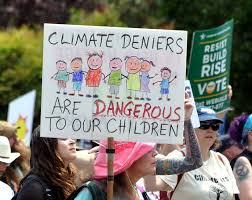
Pearls and Irritations, By Sophie Vorrath, Jan 23, 2024
The science is in. The European Union’s Copernicus Climate Change Service has overnight confirmed that 2023 was the earth’s warmest year on record: 0.16°C warmer than the previous record year (2016); 0.6°C warmer than the 1991-2020 average; 1.48°C warmer than the pre-industrial period.
The report from Copernicus notes that each month from June to December in 2023 was warmer than the corresponding month in any previous year, with July and August the warmest two months on record.
“2023 marks the first time on record that every day within a year has exceeded 1°C above the 1850-1900 pre-industrial level for that time of year,” the report says.
“Close to 50% of days were more than 1.5°C warmer than the 1850-1900 level, and two days in November were, for the first time, more than 2°C warmer.”
Furthermore, it is likely that a 12-month period ending in January or February 2024 will exceed 1.5°C above the pre-industrial level – the threshold climate scientists had hoped to limit global warming to through the sort of emissions reduction policies and actions they have been calling for for decades.
Around the world, the changing climate manifested itself in extreme heat waves in southern Europe, North America and China, devastating wildfires in Canada and Hawaii, record-breaking sea surface temperatures and record low sea ice extent around Antarctica.
Australia, remarkably, was the only continent that did not see large areas register record temperatures. But the impacts of global warming are no less evident.
Far North Queensland is picking up the pieces following a devastating cyclone and floods, while large parts of Victoria remain on flood watch after some regions experienced rainfall “higher than their 100-year rates” over 48 hours, according to the BOM. In Western Australia, a searing heatwave is on the cards.
“It’s not surprising, unfortunately,” prime minister Anthony Albanese said on Wednesday from Queensland, where he announced a $50 million federal support package for people affected by the state’s most recent extreme weather events.
“All of this is a reminder that the science told us that climate change would mean there would be more extreme weather events and they would be more intense. And unfortunately, we’re seeing that play out with the number of events that we’re having to deal with right around Australia.”
Climate Council research director Simon Bradshaw says the most alarming thing about the news from Copernicus is that 2023 broke heat records by such a considerable margin, with 2024 projected to be even hotter.
“We’re seeing how much more extreme our climate becomes as we approach the 1.5°C warming threshold,” he said on Wednesday.
“This is why we must limit future warming as much as possible by getting our emissions down fast by rapidly phasing out the burning of fossil fuels such as coal, oil and gas. We can’t keep stoking the fire if we want the room to cool down.”
But as the reality sinks in that 2023 shattered annual heat records and that the world looks like sailing past the safe climate zone hoped for by scientists, the federal Coalition has set to work walking back national emissions targets, railing against renewables and still – still! – banging on about nuclear.
On Wednesday, reports emerged that a majority of Liberal and National Party MPs will oppose taking a 2035 emissions reduction target to the 2025 election, arguing it will worsen the cost-of-living crisis for regional and vulnerable Australians.
“This is why we must limit future warming as much as possible by getting our emissions down fast by rapidly phasing out the burning of fossil fuels such as coal, oil and gas. We can’t keep stoking the fire if we want the room to cool down.”
But as the reality sinks in that 2023 shattered annual heat records and that the world looks like sailing past the safe climate zone hoped for by scientists, the federal Coalition has set to work walking back national emissions targets, railing against renewables and still – still! – banging on about nuclear.
On Wednesday, reports emerged that a majority of Liberal and National Party MPs will oppose taking a 2035 emissions reduction target to the 2025 election, arguing it will worsen the cost-of-living crisis for regional and vulnerable Australians
A survey by The Australian has found most Liberal MPs are privately opposed to any sort of 2035 target and didn’t see any point in putting a number to the Australian people.
Nationals MPs were more forthcoming with their views on the matter, with Barnaby Joyce, Colin Boyce, Keith Pitt, Matt Canavan and Bridget McKenzie on the record as rejecting “any target” or expressing serious reservations about adopting one, the Australian reports.
“There is also a smaller rump within the Nationals, including Senator Canavan and Mr Boyce, who want the Coalition to drop the current policy of net zero emissions by 2050,” the paper says
The context to this is that the latest climate science says 2050 net zero targets are now not enough to rein in global warming at the rate required to keep the planet safe and liveable. It has also been argued that such a distant target allows governments to take their time on policy – time they do not have.
Recent modelling by Monash University’s Climateworks Centre found Australia must move its net-zero emissions target forward by a decade to 2040 and cut national emissions by 68 per cent below 2005 levels by 2030 in order to have any hope of limiting warming to 1.5°C.
Federal Labor – which wants to get to 82 per cent renewables by 2030 – is under pressure to adopt a 2035 emissions target of more than 70 per cent, and is in consultation on the size of the interim target it has promised to bring to the 2025 election.
But the LNP is having none of it, preferring to believe that its constituents are unable to make the mental leap that “cost of living” might be intrinsically linked with the social, environmental and economic costs of ever increasing extreme weather events.
“I’m not confident the Labor Party’s current targets, let alone anything more ambitious, can be achieved without significant social and economic detriment to the nine million of us that don’t live in capital cities,” said McKenzie…………………………………………………………………
A National Rally Against Reckless Renewables is on the calendar for February 6 – federal parliament’s first sitting day for 2024 – with the Facebook page for the event promising “lots of great speakers,” including Joyce, Senator Jacinta Nampijinpa Price, David Gillespie MP, Senator Gerard Rennick, Senator Malcolm Roberts, and old mate Matt Canavan……………………………………..
But not all of the Coalition’s “people,” as Pitt claims regional Australians to be, are drinking this particular brand of Kool Aid.
“The impact of climate change on our communities is immediate and devastating,” said Major General Peter Dunn, a member of Emergency Leaders for Climate Action and former Commissioner for the ACT’s Emergency Services Authority on Wednesday.
“The urgency to stop relying on fossil fuels such as coal, oil and gas, which only worsen this crisis, has never been greater. The time has come for Australia to decisively move away from these harmful pollutants.”
Peter Lake, a northern NSW farmer and member of Farmers for Climate Action says the ongoing drought his farm is experiencing shows how climate change is continuing to make farming “unpredictable.”
“The sooner we get serious about reducing our burning of fossil fuels and start to reduce the amount of carbon dioxide going into our atmosphere the better,” he said on Wednesday.
For federal Labor’s part, it is now imperative that they move faster and with more ambition in the opposite direction to the Coalition and hold their nerve against what is bound to be a ramping up of anti-renewables propaganda……………… more https://johnmenadue.com/as-earth-records-hottest-year-coalition-digs-in-against-climate-action-and-renewables/
Top Nuclear Regulator Faces Tough Reconfirmation Battle In The Senate
Biden wants to keep Jeff Baran on the Nuclear Regulatory Commission, but the GOP and pro-nuclear activists say he’s holding back an atomic renaissance.
Huff Post, By Alexander C. Kaufman, Jun 27, 2023
When President Barack Obama first named Jeff Baran to the Nuclear Regulatory Commission in 2014, the Democratic majority in the Senate confirmed the former congressional staffer in a 52-40 vote. When President Donald Trump renominated the Democrat for another five-year term in 2018, the GOP-led Senate approved Baran by a simple voice tally.
But President Joe Biden’s plan to give Baran a third stint on the federal body responsible for the world’s largest fleet of commercial reactors has already hit the rocks, as Republicans move to block a commissioner critics paint as an “obstructionist” with a record of voting for policies nuclear advocates say make it harder to keep existing plants open and more expensive, if not impossible, to deploy advanced next-generation atomic technologies.
Last Friday, the Senate went on break for the next two weeks, all but guaranteeing that Baran’s current term ends on June 30 without a decision on whether he will rejoin the five-member board, creating a vacancy that could cause gridlock on some decisions and mark a return to the partisan feuds of a decade ago…………
The White House and the Democrats who control the Senate hope to reinstate Baran in a vote next month, casting the regulator as a sober-minded professional with an ear to the woes of those living in polluted or impoverished communities. The battle highlights growing tensions over nuclear energy in the United States, the country that built the world’s first full-scale fission power plant nearly seven decades ago but all but ceased expanding atomic energy in the 30 years since the Cold War ended…………………………………………………………….
“His voting record shows he’s been a consistent obstructionist, a defender of a regulatory system that has basically presided over the long-term decline of the nuclear sector in the U.S.,” said Ted Nordhaus, executive director of the Breakthrough Institute, a California-based environmental think tank that advocates for nuclear energy. “There’s a broad view at a pretty bipartisan level that we need nuclear energy. If Democrats are serious about it, they have to stop putting a guy like Jeff Baran at the Nuclear Regulatory Commission.”
The Breakthrough Institute was among five pro-nuclear groups that signed on to a June 12 letter urging the Senate Committee on Environment and Public Works to reject the White House’s nomination of Baran for a third term.
The NRC declined HuffPost’s request to interview Baran…………………………………………………
The Case Against Baran
Baran came to power right as the last attempt at a “nuclear renaissance” fizzled…………………
As governments scrambled to keep operating reactors from going out of business, Baran voted last July to increase the frequency of federal safety inspections on existing nuclear plants, arguing that it would allow for “more focused inspections” that would “provide the staff flexibility to take a deeper dive into different areas of high safety importance” as the reactor fleet ages.
Baran also came out against measures that supporters of new reactor designs say would have helped tailor the regulatory process to the specific needs of novel technologies…………………
Baran issued the NRC’s sole vote against three recent proposals to make it easier to build an SMR at a former coal- or gas-fired plant, to tailor the size of the emergency preparedness zone to the size of the reactor, and to update the environmental permitting requirements for new reactors to account for the dramatic difference in water use between traditional and new designs…………..
While outnumbered by the other four commissioners, Baran’s hard-line view against easing regulations mirrors the Fukushima era in which he came to power, when Democrats Gregory Jaczko and Allison Macfarlane chaired the NRC and delivered on Reid’s efforts to block key nuclear projects. Nordhaus described Baran as a holdover from that period…………………..
The Case For Baran
Baran is not without his defenders among atomic energy advocates.
“It’s not as though he’s anti-nuclear,” said Jackie Toth, the Washington-based deputy director of the Good Energy Collective, a progressive pro-nuclear group headquartered in California. She noted that Baran’s critics often paint him as having the same views as Jaczko and Macfarlane. “To pool them together without looking at the full breadth of his record and what he’s done is unfair.”
“He prioritizes safety and not simply taking industry at its word,” Toth said. “It’s critical to have on the commission someone who understands both the need for increased nuclear capacity on our grid for climate, communities and energy security, but still wants to make sure the industry is putting its best foot forward.”
In particular, she said, Baran has been a crucial supporter of efforts to make it easier for poor and polluted communities — which, thanks to the U.S. history of racist legal and cultural norms, tend to be populated by Black, Latino or Native Americans — to participate in the public regulatory process. While she said she “did not have concerns regarding” the other commissioners’ dedication to environmental justice, Baran’s focus on the issue served to “complement” the other four regulators.
“We feel it’s an asset to have someone like him at the NRC who gets the climate imperative for new reactors but also upholds the agency’s mission to be a trusted regulator that prioritizes public health and safety,” Toth said.
‘Rolling The Dice’
But as Congress presses ahead with legislation to boost nuclear power, Baran’s opponents see him as a potential hurdle to implementing the laws.
In 2018, Congress passed the Nuclear Energy Innovation and Modernization Act, which directed the NRC to establish a novel regulatory framework for new technologies that takes into account the differences between advanced reactors and traditional ones. Baran consistently voted against adjusting the size of a new nuclear plant’s emergency planning zone to align with the size of the reactor, or insisted that the Federal Emergency Management Agency should decide even though the NRC is the regulator with the technical expertise to make the final call.
Over the past two years, Congress earmarked billions of dollars for new reactors in the landmark infrastructure laws Biden signed. And the same Senate committee that narrowly voted along party lines to confirm Baran’s renomination for another term overwhelmingly passed a new bill known as the ADVANCE Act to speed up deployment of new reactor technologies earlier this month………………………..
Shock Horror! They’re letting some WOMEN into the Cop29 climate summit committee

Women added to Cop29 climate summit committee after backlash. Panel was
originally composed of 28 men, a move condemned as ‘regressive’ and
‘shocking’. The president of Azerbaijan has added 12 women to the
previously all-male organising committee for the Cop29 global climate
summit, which the country will host in December.
Guardian 19th Jan 2024
https://www.theguardian.com/environment/2024/jan/19/women-cop29-climate-summit-committee-backlash
Nuclear goes backwards, again, as wind and solar enjoy another year of record growth

Jim Green 21 January 2024, https://reneweconomy.com.au/nuclear-goes-backwards-again-as-wind-and-solar-enjoy-another-year-of-record-growth/
The nuclear renaissance of the late-2000s was a bust due to the Fukushima disaster and catastrophic cost overruns with reactor projects. The latest renaissance is heading the same way, i.e. nowhere. Nuclear power went backwards last year.
There were five reactor start-ups and five permanent closures in 2023 with a net loss of 1.7 gigawatts (GW) of capacity. There were just six reactor construction starts in 2023, five of them in China.
Due to the ageing of the reactor fleet, the International Atomic Energy Agency (IAEA) anticipates the closure of 10 reactors (10 GW) per year from 2018 to 2050.
Thus the industry needs an annual average of 10 reactor construction starts, and 10 reactor startups (grid connections), just to maintain its current output. Over the past decade (2014-23), construction starts have averaged 6.1 and reactor startups have averaged 6.7.
The number of operable power reactors is 407 to 413 depending on the definition of operability, well down from the 2002 peak of 438.
Nuclear power’s share of global electricity generation has fallen to 9.2 percent, its lowest share in four decades and little more than half of its peak of 17.5 percent in 1996.
Over the two decades 2004-2023, there were 102 power reactor startups and 104 closures worldwide: 49 startups in China with no closures; and a net decline of 51 reactors in the rest of the world.
In China, there were five reactor construction starts in 2023 and just one reactor startup. Put another way, there was just one reactor construction start outside China in 2023. So much for the hype about a new nuclear renaissance.
Small modular reactors and ‘advanced’ nuclear power
Small modular reactors (SMRs) are the subject of endless hype but there were no SMR construction starts or startups last year. The biggest SMR news in 2023 was NuScale Power’s decision to abandon its flagship project in Idaho despite securing astronomical subsidies amounting to around US$4 billion (A$6.1 billion) from the US government.
The pro-nuclear Breakthrough Institute noted in a November 2023 article that efforts to commercialise a new generation of ‘advanced’ nuclear reactors “are simply not on track” and it warned nuclear advocates not to “whistle past this graveyard”:
It wrote:
“The NuScale announcement follows several other setbacks for advanced reactors. Last month, X-Energy, another promising SMR company, announced that it was canceling plans to go public. This week, it was forced to lay off about 100 staff.
“In early 2022, Oklo’s first license application was summarily rejected by the Nuclear Regulatory Commission before the agency had even commenced a technical review of Oklo’s Aurora reactor.
The nuclear renaissance of the late-2000s was a bust due to the Fukushima disaster and catastrophic cost overruns with reactor projects. The latest renaissance is heading the same way, i.e. nowhere. Nuclear power went backwards last year.
There were five reactor start-ups and five permanent closures in 2023 with a net loss of 1.7 gigawatts (GW) of capacity. There were just six reactor construction starts in 2023, five of them in China.
Due to the ageing of the reactor fleet, the International Atomic Energy Agency (IAEA) anticipates the closure of 10 reactors (10 GW) per year from 2018 to 2050.
Thus the industry needs an annual average of 10 reactor construction starts, and 10 reactor startups (grid connections), just to maintain its current output. Over the past decade (2014-23), construction starts have averaged 6.1 and reactor startups have averaged 6.7.
The number of operable power reactors is 407 to 413 depending on the definition of operability, well down from the 2002 peak of 438.
Nuclear power’s share of global electricity generation has fallen to 9.2 percent, its lowest share in four decades and little more than half of its peak of 17.5 percent in 1996.
Over the two decades 2004-2023, there were 102 power reactor startups and 104 closures worldwide: 49 startups in China with no closures; and a net decline of 51 reactors in the rest of the world.
In China, there were five reactor construction starts in 2023 and just one reactor startup. Put another way, there was just one reactor construction start outside China in 2023. So much for the hype about a new nuclear renaissance.
Nuclear decline vs. record renewables growth
The International Energy Agency (IEA) has just released its ‘Renewables 2023’ report and it makes for a striking contrast with the nuclear industry’s malaise.
Nuclear power suffered a net loss of 1.7 GW capacity in 2023, whereas renewable capacity additions amounted to a record 507 GW, almost 50 percent higher than 2022. This is the 22nd year in a row that renewable capacity additions set a new record, the IEA states. Solar PV alone accounted for three-quarters of renewable capacity additions worldwide in 2023.
Nuclear power accounts for a declining share of share of global electricity generation (currently 9.2 percent) whereas renewables have grown to 30.2 percent. The IEA expects renewables to reach 42 percent by 2028 thanks to a projected 3,700 GW of new capacity over the next five years in the IEA’s ‘main case’.
The IEA states that the world is on course to add more renewable capacity in the next five years than has been installed since the first commercial renewable energy power plant was built more than 100 years ago.
Solar and wind combined have already surpassed nuclear power generation and the IEA notes that over the next five years, several other milestones will likely be achieved:
— In 2025, renewables surpass coal-fired electricity generation to become the largest source of electricity generation
— In 2025, wind surpasses nuclear electricity generation
— In 2026, solar PV surpasses nuclear electricity generation
— In 2028, renewable energy sources account for over 42 percent of global electricity generation, with the share of wind and solar PV doubling to 25 percent
Tripling renewables
The IEA states in its ‘Renewables 2023’ report that:
“Prior to the COP28 climate change conference in Dubai, the International Energy Agency (IEA) urged governments to support five pillars for action by 2030, among them the goal of tripling global renewable power capacity. Several of the IEA priorities were reflected in the Global Stocktake text agreed by the 198 governments at COP28, including the goals of tripling renewables and doubling the annual rate of energy efficiency improvements every year to 2030. Tripling global renewable capacity in the power sector from 2022 levels by 2030 would take it above 11 000 GW, in line with IEA’s Net Zero Emissions by 2050 (NZE) Scenario.
“Under existing policies and market conditions, global renewable capacity is forecast to reach 7300 GW by 2028. This growth trajectory would see global capacity increase to 2.5 times its current level by 2030, falling short of the tripling goal.”
In the IEA’s ‘accelerated case’, 4,500 GW of new renewable capacity will be added over the next five years (compared to 3,700 GW in the ‘main case’), nearing the tripling goal.
Tripling nuclear?
The goal of tripling renewables by 2030 is a stretch but it is not impossible. Conversely, the ‘pledge’ signed by just 22 nations at COP28 to triple nuclear power by 2050 appears absurd.
The Labor federal government signed Australia up to the renewables pledge but not the nuclear pledge. The Coalition wants to do the opposite, and also opposes the Labor government’s target of 82 per cent renewable power supply by 2030.
One of the lies being peddled by the Coalition is that nuclear power capacity could increase by 80 percent over the next 30 years. That is based on a ‘high case’ scenario from the IAEA. However the IAEA’s ‘low case’ scenario — ignored by the Coalition — is for another 30 years of stagnation.
So should we go with the IAEA’s high or low scenarios, or split the difference perhaps?
According to a report by the IAEA itself, the Agency’s ‘high’ forecasts have consistently proven to be ridiculous and even its ‘low’ forecasts are too high — by 13 percent on average.
Nuclear power won’t increase by 80 percent by 2050 and it certainly won’t triple; indeed it will struggle to maintain current output given the ageing of the reactor fleet and recent experience with construction projects.
Comparing nuclear and renewables in China
China’s nuclear program added only 1.2 GW capacity in 2023 while wind and solar combined added 278 GW. Michael Barnard noted in CleanTechnica that allowing for capacity factors, the nuclear additions amount to about 7 terrawatt-hours (TWh) of new low carbon generation per year, while wind and solar between them will contribute about 427 TWh annually, over 60 times more than nuclear.
Barnard commented:
“One of the things that western nuclear proponents claim is that governments have over-regulated nuclear compared to wind and solar, and China’s regulatory regime for nuclear is clearly not the USA’s or the UK’s. They claim that fears of radiation have created massive and unfair headwinds, and China has a very different balancing act on public health and public health perceptions than the west. They claim that environmentalists have stopped nuclear development in the west, and while there are vastly more protests in China than most westerners realize, governmental strategic programs are much less susceptible to public hostility.
“And finally, western nuclear proponents complain that NIMBYs block nuclear expansion, and public sentiment and NIMBYism is much less powerful in China with its Confucian, much more top down governance system.
“China’s central government has a 30 year track record of building massive infrastructure programs, so it’s not like it is missing any skills there. China has a nuclear weapons program, so the alignment of commercial nuclear generation with military strategic aims is in hand too. China has a strong willingness to finance strategic infrastructure with long-running state debt, so there are no headwinds there either.
“Yet China can’t scale its nuclear program at all. It peaked in 2018 with 7 reactors with a capacity of 8.2 GW. For the five years since then then it’s been averaging 2.3 GW of new nuclear capacity, and last year only added 1.2 GW …”
Dr. Jim Green is the national nuclear campaigner with Friends of the Earth Australia and a member of the Nuclear Consulting Group.
Big costs sink flagship nuclear project and they’ll sink future small modular reactor projects too

By Susan O’Donnell and M.V. Ramana, 024, https://beyondnuclearinternational.org/2024/01/21/big-costs-sink-flagship-nuclear-project/
The major news in the world of nuclear energy last November was the collapse of the Carbon Free Power Project in the United States. The project was to build six NuScale small modular nuclear reactors (SMRs). Given NuScale’s status as the flagship SMR design not just in the U.S. but even globally, the project’s cancellation should ring alarm bells in Canada. Yet SMRs are touted as a climate action strategy although it is becoming clearer by the day that they will delay a possible transition to net-zero energy and render it more expensive.
The NuScale project failed because there were not enough customers for its expensive electricity. Construction cost estimates for the project had been steadily rising—from USD 4.2 billion for 600 megawatts in 2018 to a staggering USD 9.3 billion (CAD 12.8 billion) for 462 megawatts. Using a combination of government subsidies, potentially up to USD 4.2 billion, and an opaque calculation method, NuScale claimed that it would produce electricity at USD 89 per megawatt-hour. When standard U.S. government subsidies are included, electricity from wind and solar energy projects, including battery storage, could be as cheap as USD 12 to USD 31 per megawatt-hour.
A precursor to the failed NuScale project was mPower, which also received massive funding from the U.S. Department of Energy. Described by The New York Times as the leader in the SMR race, mPower could not find investors or customers. By 2017, the project was essentially dead. Likewise, a small reactor in South Korea proved to be “not practical or economic”.
Ignoring this dire economic reality, provincial governments planning for SMRs – Ontario, New Brunswick, Saskatchewan and Alberta – published a “strategic plan” seemingly designed to convince the federal government to open its funding floodgates. Offering no evidence about the costs of these technologies, the report asserts: “The power companies assessed that SMRs have the potential to be an economically competitive source of energy.”
For its part, the federal government has coughed up grants totalling more than $175 million to five different SMR projects in Ontario, New Brunswick, and Saskatchewan. The Canada Infrastructure Bank loaned $970 million to Ontario Power Generation to develop its Darlington New Nuclear project. And the Canada Energy Regulator’s 2023 Canada’s Energy Future report envisioned a big expansion of nuclear energy based on wishful thinking and unrealistic assumptions about SMRs.
Canada’s support is puzzling when considering other official statements about nuclear energy. In 2021, Environment Minister Steven Guilbeault said that nuclear power must compete with renewable energy in the market. The previous year, then Environment Minister and current Energy and Natural Resources Minister Jonathan Wilkinson also emphasized competition with other sources of energy, concluding “the winner will be the one that can provide electrical energy at the lowest cost.” Given the evidence about high costs, nuclear power cannot compete with renewable energy, let alone provide electricity at the lowest cost.
Investing huge amounts of taxpayer money in technologies that are uncompetitive is bad enough, but an equally serious problem is wasting time. The primary justification for this government largesse is dealing with climate change. But the urgency of that crisis requires action now, not in two decades.
All the SMR designs planned in Canada’s provinces are still on the drawing board. The design furthest along in the regulatory process – the BWRX-300 slated for Ontario’s Darlington site – does not yet have a licence to begin construction. New Brunswick’s choices – a sodium cooled fast reactor and a molten salt reactor – are demonstrably problematic and will take longer to build.
Recently built nuclear plants have taken, on average, 9.8 years from start of construction to producing electricity. The requisite planning, regulatory evaluations of new designs, raising the necessary finances, and finding customers who want to pay higher electricity bills might add another decade.
SMR vendors have to raise not only the billions needed to build the reactor but also the funding to complete their designs. NuScale spent around USD 1.8 billion (CAD 2.5 billion), and the reactor was still left with many unresolved safety problems. ARC-100 and Moltex proponents in New Brunswick have each asked for at least $500 million to further develop their designs. Moltex has been unable to obtain the required funding to match the $50.5 million federal grant it received in 2021.
Adverse economics killed the flagship NuScale SMR project. There is no reason to believe the costs of SMR designs proposed in Canada will be any lower. Are government officials attentive enough to hear the clanging alarm bells?
Susan O’Donnell is adjunct research professor and primary investigator of the CEDAR project at St. Thomas University in Fredericton. M.V. Ramana is the Simons Chair in Disarmament, Global and Human Security and professor at the School of Public Policy and Global Affairs, University of British Columbia.
Nuclear power: molten salt reactors and sodium-cooled fast reactors make the radioactive waste problem WORSE


 reactors https://www.tandfonline.com/doi/full/10.1080/00963402.2018.1507791, Lindsay Krall &Allison Macfarlane, 31 Aug 18
ABSTRACT
Nuclear energy-producing nations are almost universally experiencing delays in the commissioning of the geologic repositories needed for the long-term isolation of spent fuel and other high-level wastes from the human environment. Despite these problems, expert panels have repeatedly determined that geologic disposal is necessary, regardless of whether advanced reactors to support a “closed” nuclear fuel cycle become available. Still, advanced reactor developers are receiving substantial funding on the pretense that extraordinary waste management benefits can be reaped through adoption of these technologies.
Here, the authors describe why molten salt reactors and sodium-cooled fast reactors – due to the unusual chemical compositions of their fuels – will actually exacerbate spent fuel storage and disposal issues. Before these reactors are licensed, policymakers must determine the implications of metal- and salt-based fuels vis a vis the Nuclear Waste Policy Act and the Continued Storage Rule.
1 This month


Help Aunty Sue Protect Her Land and Sacred Sites From Destructive Rocket Testing.
.

Australians deserve the truth
about
AUKUS – https://aukuspublicinquiry.com/

PETITION – To: Prime Minister Anthony Albanese and the Australian Labor Government

of the week – Australians for War Powers Reform (AWPR)
To see nuclear-related stories in greater depth and intensity

