Scott Morrison issues blanket denial on nuclear submarine questions

The former PM answered with an emphatic ‘No’ when asked if he knew of links between powerful lobbyists and the AUKUS deal.
DAVID HARDAKER Crikey, 31 May 23 |
| “Former prime minister Scott Morrison has denied knowing of links between conservative lobbyists the Crosby Textor group (C|T Group) and the giant US company General Dynamics, which builds nuclear-powered submarines.“He has also denied knowing that General Dynamics was the lead constructor for the US Navy’s fleet of nuclear-powered submarines as he pondered cancelling Australia’s contract for conventional submarines in favour of nuclear-powered submarines. And he denied speaking about the nuclear-powered submarine option with his principal private secretary Yaron Finkelstein , who left C|T’s Australian operations to join Morrison’s staff in 2018.”………… https://www.crikey.com.au/2023/05/31/scott-morrison-denial-nuclear-submarine-questions-aukus/?utm_campaign=crikeyworm&utm_medium=email&utm_source=newsletter |
Extreme heat events have now become the new normal

global cooperation is needed to bolster society’s resilience to extreme heat and enhance its capacity to overcome climate challenges.
By Wei Ke | CHINA DAILY 2023-05-29 https://www.chinadaily.com.cn/a/202305/29/WS6473dd60a310b6054fad5766.html
Since the first day of 2023, extreme heat events have increased the threat to human health and the environment. Europe experienced the warmest New Year in history, with temperatures in some places reaching early summer levels. The highest temperature, of 25.1 Celsius, was recorded in Bilbao, Spain. In Glucholazy, Poland, the temperature at 4 am on Jan 1 was as high as 18.7 C, more than the local average minimum summer temperature. And while at least eight European countries experienced their hottest New Year’s Day, more than 100 weather stations in France reported record-breaking temperatures.
Unlike gradual global warming which many people expect, extreme heat events have raised temperatures to historical highs in many places. On Jan 1 this year, temperatures in many places in France, Germany, Denmark and Latvia were exceptionally high. For example, the temperature in Berlin, Germany, was 16 C — normally, it hovers around 0 C during New Year.
According to the State of the Global Climate 2022 of the World Meteorological Organization, which was released on April 21, global temperatures in 2022 were 1.15 C higher compared with the pre-industrial levels from 1850 to 1900. Global warming is not a gradual and uniform process anymore; instead, it manifests through a succession of extreme heat events, continuously breaking high-temperature records worldwide.
There has been a significant increase in both the frequency and intensity of extreme heat events. According to the UN Office for Disaster Risk Reduction’s report, Human Cost of Disasters 2000-19, there were 432 instances of extreme heat events globally between 2000 and 2019 compared with just 130 instances between 1980 and 1999, an increase of a whopping 232 percent.
As the northern hemisphere enters the summer season, extreme heat events have become the norm, rather than the exception. On April 14, Tak province in northwestern Thailand recorded a scorching 45.4 C, breaking Thailand’s highest temperature record of 44.6 C set in Mae Hong Son province in 2016.
Record-breaking heat-waves have swept across Southeast Asia, South Asia and Central Asia, with temperatures crossing 42 C. And severe air pollution has further compounded the situation in many parts of Southeast Asia, and thus increased the risk of respiratory and cardiovascular diseases.
The impacts of high temperatures are far-reaching, not only affecting human life and health but also posing a threat to the environment and ecosystems. In 2020, more than 330 elephants in the southern region of Botswana died of cyanotoxin poisoning, as prolonged heat and drought led to a bloom of cyanobacteria in ponds and other water bodies. These cyanobacteria released a significant amount of cyanotoxins in the water bodies, which resulted in the poisoning and subsequent deaths of the elephants that consumed the toxic water.
Extreme heat and drought also contribute to wildfires. In 2019-20, Australia experienced severe heat waves that contributed to the devastating wildfires which lasted for a staggering nine months. While the wildfires caused an economic loss of about 10.3 billion Australian dollars ($6.73 billion), they also claimed the lives of or displaced nearly 3 billion animals — mammals including marsupials, birds, reptiles and amphibians.
Worse, the wildfires emitted about 715 million tons of carbon dioxide, more than Australia’s total annual greenhouse gas emissions from fossil fuel combustion.
One of the worst effects of global warming is the “wet gets wetter, dry gets drier” phenomenon, where humid regions experience increased rainfall and arid regions become drier — with the rainy season marked by more severe flooding and the dry season by intense drought.
According to the Human Cost of Disasters 2000-19 report, over the past 20 years, there has been a 134 percent increase in flood-related disasters, 97 percent increase in storms, 46 percent increase in wildfires, and 29 percent increase in droughts or drought-like conditions.
In addition, as the oceans warm, heat-waves emanating from the oceans and seas have become more common. The increasing warming of the ocean surface inhibits the absorption of oxygen by the water, which exacerbates the problem of oxygen depletion in the marine environment, posing a threat to the survival of marine animals and plants. Warmer ocean temperatures also contribute to the increasing frequency and severity of typhoons and hurricanes. And since such storms have a wider range extending to northern latitudes, regions like northeastern China could experience typhoons in the future.
In summer, extreme heat conditions in the northern hemisphere are becoming the norm, prompting the WMO to urge countries to issue early warnings and take early action. But while it is essential for governments and management agencies at all levels to issue weather alerts and forecasts, they should also pay greater attention to the rights of vulnerable groups, including people who work outdoors during hot weather.
Building public heat shelters to protect people during orange and red heat alerts is essential. Especially, public activity centers, libraries and other government facilities allow outdoor workers to avoid working during the hottest hours of the day. As for people in general, they should closely follow weather forecasts and warnings so they can avoid the risk of heatstroke by not venturing out during extreme heat events.
Yet global temperatures will continue to rise as greenhouse gas emissions are unlikely to reduce drastically in the next 20-30 years. Therefore, economies around the world, especially the major economies, should intensify efforts to reduce emissions. The public, on its part, can contribute to the global efforts to mitigate climate change by adopting simple habits including switching off lights when not in use, recycling products, reducing the use of cars, changing the food habit, and refraining from compulsive shopping. These slight changes in habits can help lower individuals’ carbon footprint and thus reduce emissions.
But global cooperation is needed to bolster society’s resilience to extreme heat and enhance its capacity to overcome climate challenges.
Australian submariners test positive for drugs
Andrew Tillett, 29 May 23, https://www.afr.com/politics/federal/high-seas-submariners-test-positive-for-drugs-20230528-p5dbvb
The rumours of drug use saw officials take hair samples and conduct 24 tests of crew members to try to get to the bottom of the claims. A Collins class submarine carries a minimum of 48 officers and sailors, plus additional trainees.
The drug investigation offers a rare window into Australia’s submarine fleet, traditionally known as the “silent service” because of the secrecy attached to operations and deployment.
The revelations also come as the navy’s submarine operations head towards an eventual transformation from the ageing Collins class submarines to nuclear-powered submarines under AUKUS.
Submariners traditionally are among the highest paid of Australia’s military personnel in recognition of the demands of the job, including being isolated at sea and cut off from contact with family for weeks, and the specialist skills required to keep a submarine safe while operating in an inherently risky environment hundreds of metres below the ocean’s surface.
The Defence Department did not answer a series of detailed questions about the incident, but said in a statement a “small number” of navy personnel returned positive tests for prohibited substances in July 2022.
Administrative action
“Defence takes all incidents of this nature very seriously and has a zero-tolerance policy regarding the use of prohibited substances,” the statement said.
“The personnel were provided access to, and informed of, the full range of support services available to all Australian Defence Force personnel.
“Administrative action has been taken against the personnel involved. Broader investigations ruled out wider use of prohibited substances.”
The FOI documents do not reveal what submarine, ports or drugs were involved, and Defence did not provide those answers. The Financial Review has been told the submarine was HMAS Collins.
The documents show that several crew members were alleged to have used drugs during port visits in April and May last year. Commanders learnt of the claims on May 29 and initiated a fact-finding mission.
“The informant indicated that they became aware of this information during conversations with somebody, who heard it from somebody else, who heard it from somebody else and so on. In other words it was potentially 5th hand information,” a Defence Incident Report of the allegations said.
“The informant went on to imply that the officer in the submarine who was the potential source of this information, had been identified by the unknown parties involved in the alleged illicit drug taking, and told that [redacted] had better not report what [redacted] saw (or similar words to that effect), or else!”
The three submariners at the centre of the claims were issued a show cause notice and ordered back to Australia where they were tested for drugs on July 19 last year. Two people tested positive while the results of the third test were inconclusive. As well as the drug use, the fact finding process examined whether the sailors had behaved dishonestly.
Following the positive drug test results, military police drug tested another 13 sailors on August 4. Eight members on board the submarine were tested three days later. Those tests were negative.
Of the sailors who used drugs, one told the navy he did not plan to contest his positive drug test and “wishes to separate from the navy as soon as possible”, the documents said.
While the submariners were put on leave without pay, commanders concluded there was insufficient evidence to launch criminal action against them.
China halts floating nuclear power plan over security fears
Global Construction Review, David Rogers, 31.05.23
China’s plan to build a fleet of nuclear power reactors that would provide electrical power to islands on the South China Sea have been suspended over security concerns, the South China Morning Post reports.
As construction of the first units was about to begin, regulators announced that they were withholding approval.
The decision came as a surprise for the project’s scientists, who believed the technology was mature and that floating reactors were generally safer than those on land, since the ocean acts as a natural heat sink and is immune to seismic activity.
Writing in the journal Nuclear Power Engineering, Wang Donghui, a scientist at the National Energy Offshore Nuclear Power Platform Technology Research Centre, said safety and feasibility were the main concerns of authorities.
He said the decision was made in spite of a 10-year research project into floating plants, and the fact that China has advanced ship design capabilities, as well as domestic design and manufacturing units capable of building floating platforms.
It had been hoped that a floating nuclear power plant would provide power to support military and civilian activities on remote islands in the South China Sea, and China was envisaging the construction of a fleet of such vessels (see further reading)………………
n
One of the major safety concerns is that floating power plants could face attacks from sea and air, but also from underwater attacks, according to Wang.
An enemy submarine, for example, could attempt to sabotage the facility by planting explosives on its hull or damaging its cooling systems. Unmanned aerial vehicles could also fly over the plant and drop bombs or other projectiles on it.
According to Wang, protecting a floating nuclear power plant from “underwater divers, vessels, floating objects or airborne objects”, would require a comprehensive ship security system. https://www.globalconstructionreview.com/china-halts-floating-nuclear-power-plan-over-security-fears/
Call for International Action against Fukushima Radioactive Water Dumping in the Pacific
The Korean coalition, Peoples’ Action to Stop Dumping of Fukushima
Radioactive Water, would like to ask you to join international joint action
on World Ocean Day, June 8, to stop the dumping of Fukushima Radioactive
water into the Pacific Ocean.
Peoples’ Action to Stop Dumping of Fukushima Radioactive Water 30th May
2023
https://docs.google.com/forms/d/e/1FAIpQLSdU3pcoNvYHpN2zXcCy9TLN2sIrzX2eRNOcvi72CeAkxznhvQ/viewform
Civil Society faces imposition of an AUKUS military High Level nuclear waste dump.


Briefing by David Noonan, Independent Environment Campaigner 23 May 2023 https://nuclear.foe.org.au/wp-content/uploads/Noonan-AUKUS-high-level-nuclear-waste-May-2023.pdf
The Federal ALP belatedly disclosed a pre-condition to AUKUS and to Australia’s purchase of existing US nuclear submarines is for Australia to keep the US subs military High Level nuclear waste forever.
This was kept secret in the federal election and only revealed to the public after an 18-month study.
The ALP is seeking to ‘normalise’ military High Level nuclear waste in Australia with simplistic claims
of ‘nuclear stewardship’ in taking on the liabilities in buying US nuclear subs & retaining the wastes.
Disposal of High Level nuclear waste is unprecedented at a global scale, with the US and UK having
proven unable to do so in over 60 years since first putting nuclear powered submarines to sea.
Minister for Defence Richard Marles MP has stated there will be ‘an announcement’ within a year on the management of High Level nuclear waste with a process to site a disposal facility, saying
“obviously that facility will be remote from populations” (ABC News 15 March 2023).

Defence is reported to be working with the Australian Radioactive Waste Agency to conduct a review
to identify potential nuclear waste disposal sites. The public have a right to know who’s targeted.
WA, Queensland and Victoria immediately rejected a High Level nuclear waste disposal site in their
States. The SA Premier said it should go to a safe ‘remote’ location in the national interest.
New Agencies are to be set up and at least three sets of federal legislation are to go to Parliament
that relate to facilitating the disposal of military High Level nuclear waste in Australia.
An Australian Submarine Agency (ASA) is to be set up by 1 July 2023, to absorb the current NuclearPowered Submarine Taskforce and manage nuclear submarines and supporting infrastructure and
facilities from acquisition through to disposal. Defence says the ASA is to: “enable the necessary
policy, legal, non-proliferation, workforce, security and safety arrangements”.
A new military nuclear regulator, the statutory Australian Nuclear-Powered Submarine Safety
Regulator is to be established. Both Agencies will report directly to the Defence Minister.
The current Reforming Defence Legislation Review proposes to take on Defence Act powers to
override State & Territory legislation to ‘provide certainty’ to Defence roles, operations and facilities.
In public input to that Defence Review I made these Recommendations (April 2023, p.7 & Rec 6-7):
Defence should become transparent over proposed Navy High Level nuclear waste disposal,
policy, siting process, rights and legal issues.
Defence should commit to respect and to
comply with the United Nations Declaration on the Rights of Indigenous Peoples Article 29
provision of Indigenous People’s rights to “Free, Prior and Informed Consent” over storage or
disposal of hazardous materials on their lands.
Defence must declare whether the SA Nuclear Waste Storage (Prohibition) Act 2000 will be
respected or is intended to be over-ridden to impose a Navy High Level nuclear waste
storage or disposal site on ‘remote’ lands and unwilling community in South Australia.
Integrity, transparency and accountability are key to any public confidence in government process.
However, this nuclear dump is likely to be imposed on community in SA or in NT, with override of
State legislation, compulsory land acquisition, and disregard for Indigenous Peoples right to Say No.
Both the AUKUS military nuclear dump and ANSTO’s dump imposition at Kimba are
untenable affronts to democratic rights and to Indigenous People’s rights in SA
Defence should now disclose associated policy plans for ANSTO nuclear fuel wastes and long-lived
Intermediate Level Radioactive Wastes (ILW) to also be disposed at a proposed military High Level
nuclear waste disposal site, along side Navy nuclear wastes arising from buying US nuclear subs.
SA already faces federal imposition of a so called National Radioactive Waste Management Facility to
store ANSTO nuclear fuel wastes and ILW on agricultural land near Kimba, on Barngarla People’s
country in defiance of Barngarla clearly Saying No, and dividing community on Eyre Peninsula.
A suite of public interests are already at risk, see input to the Federal Environment Department on
Guidelines for an Environmental Impact process on the nuclear facility at Kimba (DN 23 March 2023).
For instance, see “Nuclear Waste Store siting at Kimba also targets the Port of Whyalla” (Feb 2020).
ANSTO is the predominant waste holder and future producer of both ILW and Low Level Waste, see a
Briefing: “National Inventory of Radioactive Waste shows the Kimba dump is ANSTO’s dump”.
There are alternatives: ANSTO can securely retain their nuclear wastes on site at Lucas Heights,
rather than impose double handling transport into indefinite above ground storage at Kimba.
Both nuclear waste dump plans trigger the United Nations Declaration on the Rights of Indigenous
Peoples (adopted by United Nations, Sept 2007) in Indigenous People’s rights to “Free, Prior and
Informed Consent” over storage or disposal of hazardous materials on their lands.
Traditional owners must have a right to Say No to nuclear wastes. See “AUKUS nuclear waste dump
must be subject to Indigenous veto” (By Michelle Fahy May 2023): “Bipartisan secrecy and Defence’s
poor record with Indigenous groups at Woomera are red flags for consultations over an AUKUS
nuclear waste dump. Human rights experts say government must establish an Indigenous veto right.”
The “Woomera Protected Area” (WPA) a large Defence weapon testing range in SA has already been
flagged by other State Premiers as a site for a military High Level nuclear waste disposal facility.
Most of the WPA is State owned Crown land and not Commonwealth owned Defence lands. Siting a
nuclear waste dump would be imposed through compulsory land acquisition & over-ride of SA laws.
Storage and disposal of nuclear wastes compromises the safety and welfare of the people of South
Australia, that is why it is prohibited by the SA Nuclear Waste Storage (Prohibition) Act 2000.
The Objects of this Act cover public interest issues at stake, to protect our health, safety and welfare:
“The Objects of this Act are to protect the health, safety and welfare of the people of South
Australia and to protect the environment in which they live by prohibiting the establishment
of certain nuclear waste storage facilities in this State.”
Defence are already ignoring Aboriginal Heritage law and contravening protections in SA, see
“Defence bombing Indigenous site in Woomera” (20 May 2023). Defence is now further ‘angling for
exemption from State laws it admits serve important public purposes’
The SA Premier is yet to say if he will support an Indigenous right to Say No to an AUKUS dump in SA.
Both the proposed AUKUS military High Level nuclear waste dump and ANSTO’s dump at Kimba are
illegal under SA Law. Both nuclear dumps are an untenable affront to democratic rights in SA.
Aukus ‘expensive’ and not ‘easy to replicate’, Australian officials told foreign diplomats
Exclusive: Documents obtained by Guardian Australia show Australia attempted to reassure countries amid nuclear proliferation concerns
Daniel Hurst, Guardian 29 May 23
Australian officials have told foreign diplomats that the Aukus submarine plan is “expensive” and not “easy to replicate”, as part of an effort to play down concerns about the risks of other countries racing to do the same, a newly released tranche of documents reveals…..
Briefing notes obtained by Guardian Australia under freedom of information laws lay bare the arguments the government is using to defend and explain Aukus to foreign diplomats posted to Canberra………………………………………
China’s mission to the UN said in March that “two nuclear weapons states who claim to uphold the highest nuclear non-proliferation standard” – the US and the UK – “are transferring tons of weapons-grade enriched uranium to a non-nuclear-weapon state”.
The new documents show that many of the answers given by Australian officials at the Aukus briefings aimed to reassure countries about nuclear non-proliferation issues.
The first assistant secretary of Dfat’s Aukus taskforce, Sarah deZoeten, told those in attendance that Australia would retain control of operational waste and spent fuel.
…………………………. Aukus is novel because it will be the first time a provision of the Nuclear Non-Proliferation Treaty regime has been used to transfer naval nuclear propulsion technology from a nuclear weapons state to a non-weapons state……………………………. https://www.theguardian.com/world/2023/may/30/aukus-expensive-and-not-easy-to-replicate-australian-officials-told-foreign-diplomats
China firmly opposes Japan’s discharge of Fukushima nuclear-contaminated water into sea

Source: Xinhua, Editor: huaxia, 2023-05-30 https://english.news.cn/20230530/5bdd921cc81744ffbcfd0eb7b76dd09b/c.html
GENEVA, May 28 (Xinhua) — A Chinese delegate on Saturday expressed firm opposition to Japan’s unilateral decision to discharge the nuclear-contaminated water from Fukushima into the sea, when attending related discussions at the 76th World Health Assembly (WHA) held here.
Given the strong currents along Fukushima’s coast, the radionuclides will spread to waters worldwide in 10 years after a discharge, the delegate said, adding that this move is to shift the risks to all mankind, and is not Japan’s private matter, but a crucial issue affecting global public health.
Noting many countries and stakeholders have expressed serious concerns, the delegate urged Japan not to unilaterally discharge the nuclear-contaminated water before reaching an agreement with all parties.
In response to a Japanese delegate’s defense, the Chinese side said that the defense can be summed up as “the water quality is non-toxic and the discharge is reasonable,” but what the Japanese side said is completely untenable and they must give convincing answers to a series of questions.
The Chinese delegate raised three questions: First, if the nuclear-contaminated water is safe, why doesn’t Japan itself use the water? Why not use the water for domestic agriculture and manufacturing, or discharge it into domestic lakes? Second, is discharging the nuclear-contaminated water into the sea the only feasible solution? Third, what kind of long-term impact will such a discharge have on the world?
When it comes to the disposal of the nuclear-contaminated water, the Chinese delegate pointed out that Japan’s Ministry of Economy, Trade and Industry has proposed five plans. The Japanese government’s expert committee has admitted that compared to such options as emitting the water into the atmosphere through vaporization, building new storage tanks and solidifying the water with cement, a discharge into the sea is the cheapest option with minimum risk of pollution to Japan itself.
Japan’s current choice is to save itself trouble and money by pushing the world to suffer consequences, the delegate said, emphasizing that such actions, which only serve the short-term interests of Japan but harm the common interests of all mankind, must be severely condemned and resolutely resisted, and that the Pacific Ocean is not a sewer into which Japan can dump nuclear-contaminated water.
In April 2021, Japan announced that it would discharge the polluted water from the Fukushima nuclear accident into the ocean. Many countries, including China, have expressed firm opposition, and Russia also expressed serious concerns at this WHA. However, Japan has disregarded the reasonable appeals and demands of the international community.
Sea level rise will “disappear” California’s famed beaches
California is known for golden sands and endless waves, but much of the
state’s famous shoreline could vanish in the future. That’s according
to a new study, which found that between 25% and 70% of California beaches
might be washed away by the end of the century, leaving only cliffs or
coastal infrastructure in their wake.
Guardian 27th May 2023
https://www.theguardian.com/us-news/2023/may/27/california-beaches-erosion-2100-study
Pacific islanders are not convinced that the release of Fukushima wastewater is safe
“………………………………………..Selling the water release plan to the Pacific
Nuclear experts from South Korea, which has been hostile to the planned discharge, have this week been given an unprecedented six-day personalised tour of the Fukushima plant.
The prime minister of the Cook Islands and chair of the Pacific Islands Forum, Mark Brown, said there had been an increase in “more intense dialogue” with Japan, and he was presently happy with the level of transparency………………..
Dozens rally against water release
However, a series of public relations disasters by TEPCO have fuelled public distrust in the plan.
There have been numerous cases where TEPCO failed to reveal that tainted water had leaked into the sea.
Local media also exposed that most water storage tanks did contain water still contaminated with dangerous radioactive elements, such as the cancer-causing strontium-90, despite TECPO’s assurances this was not the case.
TEPCO now says about a third of the tanks are ready for release, and water not up to standards will be reprocessed until it is.
“They don’t provide true information,” said Gen Hirai, a protester who gathered outside the company’s headquarters in May.
“It’s a company that blocks information to citizens.”
What do surrounding countries think of the plan?
Earlier in May, the Solomon Islands reportedly rebuked an offer from Japan to step up maritime cooperation, citing the planned Fukushima discharge.
“Japan keeps emphasising the significance of maritime security, they still decided to dump the radioactive wastewater into the ocean,” the Solomon Star reported from a government source.
Whereas Papua New Guinea (PNG) is reportedly softening its stance to accept Japan’s position.
But PNG Prime Minister James Marape couldn’t be drawn on whether the country would support Japan’s plan, saying it was “another conversation.”………….. https://www.abc.net.au/news/2023-05-26/treated-fukushima-water-to-flow-into-pacific-oaten/102380592
Thawing glaciers around Everest show critical need to stop greenhouse emissions
Helen Clark – former prime minister of New Zealand: Global temperature
rises mean that Everest, in common with mountains across the Himalayas, is
undergoing unprecedented and irreversible change. The 79 glaciers that
surround Everest have thinned by more than 100 metres (328ft) in just six
decades, and the rate of thinning has nearly doubled since 2009.
Communities at the top of the world are crying out to world leaders for
help. Humanity has a mountain to climb in reaching the aspirations of the
Paris Agreement. The only hope is for concerted global action to reduce
greenhouse gas emissions dramatically to save the world’s snow and ice
before it is too late.
Times 29th May 2023
https://www.thetimes.co.uk/article/as-everest-shows-action-on-climate-change-is-critical-lswbmvlps
The week in nuclear news (but climate news is Big)

Some bits of good news: What went right this week? The good news you should know about – It was a good week for green energy – money deserting fossil fuels – An English city prepared to host a refugee festival.
Climate. Insurance giant halts sale of new home policies in California due to wildfires. Sea level rise will “disappear” California’s famed beaches . Thawing glaciers around Everest show critical need to stop greenhouse emissions . More than 1,500 arrested at Extinction Rebellion protest in The Hague.
Christina notes: It’s the CLIMATE, stupid!
Nuclear. News on climate is so genuinely awesome – to use the proper meaning of the word – that it really does dwarf nuclear news. But the nuclear lying goes on – the pretense that small reactors will be economic and will solve global heating. THat’s such a distraction from real action.
TOP STORIES
Slowing ocean current caused by melting Antarctic ice could have drastic climate impact, study says. https://www.youtube.com/watch?v=-KlpKq3YEdM
America’s Wars and the US Debt Crisis.
G7 Leaders Falter Over Nuclear Disarmament in Hiroshima.
Sending F-16 planes to Ukraine will create a new Cuban Missile -style nuclear crisis .
Ukraine’s neighbors push for Zelensky to pursue peace as millions of displaced people flow into Europe. ‘Independent’ Ukrainian ‘kill list’ actually run by Kiev, backed by Washington.
Ukraine: Power loss at nuclear plant underscores ‘highly vulnerable’ safety situation.
Atmospheric Testing of Nuclear Weapons in the 1950s and 1960s
AUSTRALIA.
- Australian Prime Minister Albanese refuses to meet with Assange’s wife.
- ‘Cold feet’: Big problems emerge in controversial US-Australia submarine deal. Civil Society faces imposition of an AUKUS military High Level nuclear waste dump.
- An Open Letter to the Australian Government from concerned scholars regarding the AUKUS Agreement. AUKUS nuclear submarine bases in Western Australia will seriously weaken current safeguards against nuclear weapons proliferation . Transferring US nuclear subs to Australia far from smooth sailing. Aukus ‘expensive’ and not ‘easy to replicate’, Australian officials told foreign diplomats. Has AUKUS evolved beyond nuclear-powered submarines? Government introduces Bill to exempt nuclear submarines from crucial environmental protection acts.
- Opposition Leader Peter Dutton touts AUKUS as gateway to nuclear energy industry.
- Property values in Kimba? Not so good, since the town agreed to host a nuclear waste dump. Hundreds rally against South Australia’s state government’s proposed increases to penalties for protesting. Honest Government Ad – South Australia Protest Law https://www.youtube.com/watch?v=kecnSHmznic
CLIMATE. Hinkley Point C – Why nuclear power accelerates carbon emissions. A clean energy transition means moving away from nuclear power.
CULTURE and ARTS. Everything’s Getting Way More Dangerous And Way More Stupid.
ECONOMICS.
- Director General Grossi Highlights China as Indispensable IAEA Partner, Leader in Nuclear Energy.
- Nuclear power won’t help Maine reach its clean-energy goals,
- French defense minister opposes American takeover of nuclear firm.
- Point Lepreau nuclear power station – too many expensive shutdowns.
- Damning critique of Rolls Royce Rolls Royce to cut thousands of jobs. .
- Marketing: USA pours $billions into Poland, in effort to market USA’s small and large nuclear reactors to Europe. Romania to be a guinea pig for NuScam’s small nuclear reactor folly. Putin bribes ‘friendly nations’ with use of 24-hour ‘floating nuclear power stations’.
ENERGY. US Electricity From Renewable Energy Beat Electricity From Coal Or Nuclear In 2022. Taiwan Considers Keeping Nuclear Reactors on Emergency Standby.
ENVIRONMENT. China firmly opposes Japan’s discharge of Fukushima nuclear-contaminated water into sea. South Korean experts to continue analysis of Fukushima water discharge. South Korean nuclear experts to tour Fukushima plant amid water concerns. Pacific islanders are not convinced that the release of Fukushima wastewater is safe . Nuclear & Toxic Chemicals.
HEALTH. Public health expert says Fukushima waste water release a retrograde step, https://www.youtube.com/watch?v=L_WcZZq9JTU
LEGAL.Court rejects case opposing restart of Miyagi Prefecture nuclear plant.
MEDIA. 60 Minutes Australia Keeps Churning Out War-With-China Propaganda. Review | Netflix drama review: The Days – Netflix Fukushima nuclear disaster series starring Koji Yakusho is an enthralling account of the 2011 event, with strong hints of HBO’s Chernobyl.https://www.youtube.com/watch?v=ZQkb7fCr2bQ
NUCLEAR TECHNOLOGY. Canadian reactors that “recycle” plutonium would create more problems than they solve. Nuke Power’s “Renaissance 4.0” Has Already Melted. No, There Won’t Be Nuclear-Powered Commercial Shipping This Time Either.
POLITICS.
- New Zealand won’t give up its nuclear-free stance, says Prime Minister Chris Hipkins.
- While Sullivan and Wang build ‘guardrails’: where is Mr Blinken?
- Rishi Sunak ‘turns his back’ on UK’s nuclear test veterans a year after pledging support.
- Israel’s New Minister for Nuclear Absurdity.
- Nuclear power is neither reliable nor ‘green’ and is not suitable for South Africa’s just transition.
- Taiwan Government’s nuclear-free policy remains unchanged: Cabinet
POLITICS INTERNATIONAL and DIPLOMACY.
- Ukraine: Why Negotiations Are the Only Rational Option in the Face of Climate Chaos and Nuclear Dangers.
- Hiroshima Survivor Slams G7 Leaders for Embracing War & Rejecting Nuclear Disarmament. https://www.youtube.com/watch?v=66tf6Ki7sdM. Elders say – Nuclear states must now act following G7 statement – Mary Robinson. G7 has descended into an ‘anti-China workshop’. Visiting a park is not paying respects:the appalling failure of the G7 to act on nuclear disarmament.
- France holds up EU energy agreement over nuclear power.
- After AP report, Iran’s nuclear chief says Tehran to cooperate with inspectors on ‘new activities’.
- Irony Or What! India “Sidelines” Russia For US Nuclear Tech, But US Remains ‘Critically Dependent’ On Russian Nuke Fuel.
PROTESTS. A Mothers Day protest: Activists blockaded the entrance to the US 2 Navy’s west-coast nuclear submarine base.
RADIATION. Trident: Ministry of Defence confirms more than 50 radiation leaks this year.
SAFETY. Fukushima reactor 1 found to have damaged pedestal supporting nuclear core. Japan Nuclear Watchdog Asks Fukushima Plant Operator to Assess Reactor Risk. World’s Biggest Nuclear Plant Kashiwazaki-Kariwa May Stay Closed Due to Papers Left on Car Roof. Groups Warn Biden that Ukraine War Shows Attacks on Nuclear Plants ‘Could Happen Here’. Nuclear Security: Department Of Energy Should Take Actions to Fully Implement Insider Threat Program.
SECRETS and LIES. Ukraine admits to murdering “quite a few” Russian civilians. Ukraine claims Russia is plotting ‘a provocation’ at nuclear plant, offers no evidence.
SPINBUSTER. Clean energy transition sparks nuclear reaction. Nuclear Turns Fashionable.
URANIUM. U.S. planning test reactor to run on weapons-grade uranium.
WASTES. IAEA team in Japan for final review before planned discharge of Fukushima nuclear plant water. What we know about the federal government’s ongoing nuclear waste plans in New Mexico. Gordon Edwards explains, and comments on. Canada’s policy on radioactive waste and nuclear decommissioning.
Since Cold War. Russia Issues Dire Warning After US Approves Ukrainian Strikes On Crimea. Russia moves ahead with deployment of tactical nuclear weapons in Belarus. Russia Claims Group Crossed Border From Ukraine In Attack. Russia evacuates nuclear munitions due to incursion from Ukraine into Belgorodoblast-Ukraine’s Intel. Belgorod Attacks | Russia Removes Nuclear Warheads From Grayvoron Amid Attacks
Russian vessel attacked by Ukrainian sea drones off Bosporus. Ex-Pentagon Analyst: Biden Faces Shrinking Options on Ukraine. A grim vision of nuclear warfare in Ukraine. Russia warns about nuclear power war risk.
WEAPONS and WEAPONS SALES.
- US sends largest warship ever constructed to Norway.
- Russia to move newest nuclear sub to Pacific in August.
- Iran Builds an Underground and Possibly Unreachable Nuclear Facility.
- Nuclear umbrella to protect Taiwan could be globally catastrophic.
- A Nuclear Collision Course in South Asia. Can the Pakistan-India nuclear deterrence hold – in the nuclearisation of South Asia in the New Nuclear Age.
- Belarusian president offers nuclear weapons to those willing to join his alliance.
Transferring US nuclear subs to Australia far from smooth sailing
26 May 2023 | Andrew McLaughlin Riotact,
A report prepared for Congress on the US Navy’s Virginia Class nuclear-powered attack submarine (SSN) procurement program has highlighted what issues need to be considered and overcome to allow the transfer of US submarines to Australia.
Under Pillar 1 of the AUKUS construct with the US and UK which was announced by the leaders of all three countries in March, Australia is slated to receive between three and five Virginia class nuclear-powered submarines to begin replacing its own Collins Class conventional submarines from 2032.
After this, Australia plans to switch submarine classes and acquire eight SSN-AUKUS submarines under a cooperative program with the UK from 2041……………………………….
The report says Congress needs to consider several factors relating to the legislation, including whether the legislation needs to be considered under the 2024 National Defense Authorization Act (NDAA) or can be deferred, whether the authorisation should be provided for just the first two boats or can be expanded to up-to five SSNs, and when the SSNs would be removed from US Navy service to prepare for the transfer.
While this seems to confirm Australia will receive former US Navy SSNs instead of new-build boats, the report also asks Congress to consider whether that would be the case, whether new-build boats could be made available, or a combination of the two.
It says Congress should also decide, apart from the cost of the submarines, how much of a “proportionate financial investment” Australia will be required to make into US shipyards to expand the US’s submarine industrial base. Despite a plan for two Virginia boats to have been built per year since 2011, this has not been achieved due to ongoing workforce and materials issues, made worse in recent times by the COVID-19 pandemic………………..
The ability of the US shipyards to ramp up sufficiently to cover the sale of Australian boats appears to be somewhat questionable. ……………………………
The report further asks Congress to consider what will be “the net impact on collective allied deterrence and warfighting capabilities of transferring Virginia Class boats to Australia while pursuing the construction of replacement SSNs for the US Navy”.
It points out that supporters of transferring SSNs to Australia rather than keeping them in US Navy service might argue that “the deterrent value of introducing SSNs to Australia’s navy would be greater than the deterrent value of keeping those SSNs in US Navy service because a newly created force of Australian SSNs would present China with a second allied decision-making centre for SSN operations in the Indo-Pacific, which would complicate Chinese military planning”.
Conversely, it says opponents of the proposed transfer might argue that “it could weaken deterrence if China were to find a reason to believe, correctly or not, that Australia might use [its] Virginia-class boats less effectively than the US Navy would have, or that Australia might not involve its military … in a US-China crises or conflicts that Australia viewed as not engaging important Australian interests”.
As if to support this viewpoint, it points out that “Australian Defence Minister Richard Marles in March 2023 reportedly confirmed that, in exchange for the Virginia-class boats, Australia’s government made no promises to the United States that Australia would support the United States in a future conflict over Taiwan”. https://the-riotact.com/transferring-us-nuclear-subs-to-australia-far-from-smooth-sailing/664701
Slowing ocean current caused by melting Antarctic ice could have drastic climate impact, study says
The Southern Ocean overturning circulation has ebbed 30% since the 90s, CSIRO scientist claims, leading to higher sea levels and changing weather
Donna Lu, Guardian, 26 May 23
A major global deep ocean current has slowed down by approximately 30% since the 1990s as a result of melting Antarctic ice, which could have critical consequences for Earth’s climate patterns and sea levels, new research suggests.
Known as the Southern Ocean overturning circulation, the global circulation system plays a key role in influencing the Earth’s climate, including rainfall and warming patterns. It also determines how much heat and carbon dioxide the oceans store.
Scientists warn that its slowdown could have drastic impacts, including increasing sea levels, altering weather patterns and depriving marine ecosystems of vital nutrients.
“Changes in the overturning circulation are a big deal,” said the study’s co-author, Dr Steve Rintoul, an oceanographer and expert on the Southern Ocean at the Australian government’s Commonwealth Scientific and Industrial Research Organisation (CSIRO)
It’s something that is a concern because it touches on so many aspects of the Earth, including climate, sea level, and marine life.”
The finding comes months after modelling, which Rintoul was involved in, that predicted a 40% slowdown in the circulation by 2050.
“The model projections of rapid change in the deep ocean circulation in response to melting of Antarctic ice might, if anything, have been conservative,” Rintoul said. “We’re seeing changes have already happened in the ocean that were not projected to happen until a few decades from now.”
………………………………………….. The study looked specifically at changes in overturning circulation in the Australian Antarctic basin, but the researchers believe a “circumpolar slowdown” is occurring.
………………………..
“We expect in the longer term that while there will be ups and downs related to sea ice formation, the overall trend is that Antarctica is losing more ice, is melting more, and that will gradually slow down this overturning circulation.
“Unless we act soon we will commit ourselves to changes that we’d really rather avoid,” he said. “We need to act to reduce emissions and we need to do everything we can as fast as we can.”
The study, whose first author is Kathryn Gunn of the CSIRO and the University of Southampton, was published in the journal Nature Climate Change. https://www.theguardian.com/science/2023/may/25/slowing-ocean-current-caused-by-melting-antarctic-ice-could-have-drastic-climate-impact-study-says
1 This month.
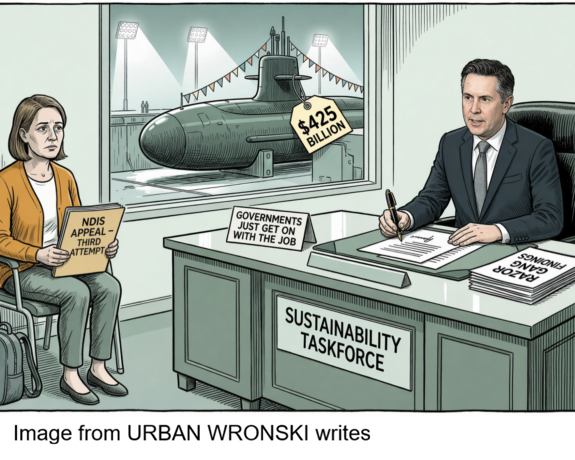

PETITION – To: Prime Minister Anthony Albanese and the Australian Labor Government
Chernobyl: The Lost Tapes – A good documentary on Chernobyl on SBS available On Demand for the next 3 weeks– https://www.sbs.com.au/ondemand/tv-program/chernobyl-the-lost-tapes/235274195556
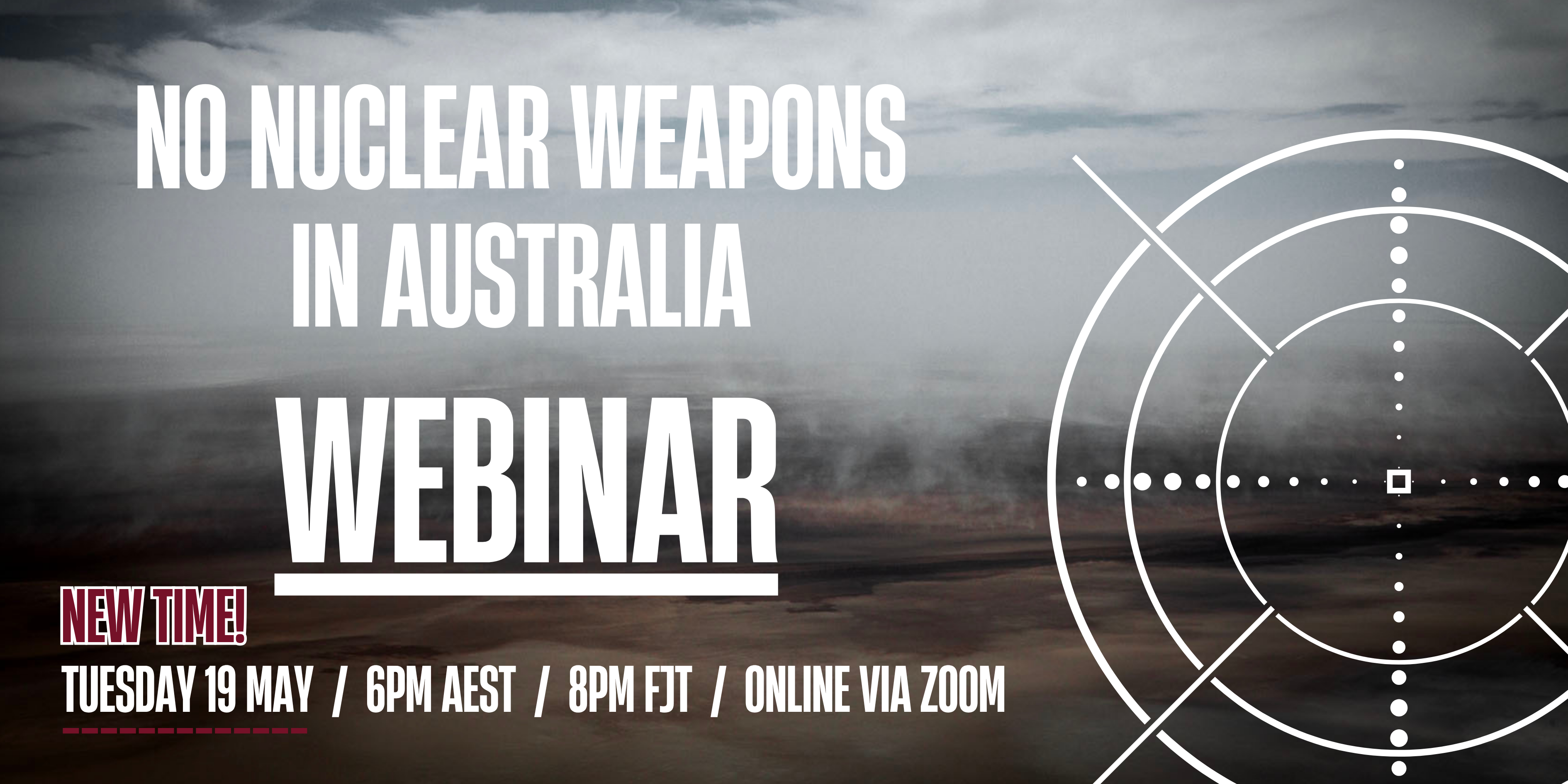
19 May – Webinar- Webinar: No Nuclear Weapons in Australia
Start: 2026-05-19 18:00:00 UTC Canberra, Melbourne, Sydney (GMT+10:00)
End: 2026-05-19 19:30:00 UTC Canberra, Melbourne, Sydney (GMT+10:00)
20 May – Webinar – The dangerous world of AUKUS, US, military occupation and suppression of dissent

National Webinar, 20th May, 2026, 6.30pm AEST. Confronting laws restricting/suppressing protest speech and action
Speakers: Former Sen. Rex Patrick, Lawyer Nick Hanna ,Arthur Rorris ,Jorgen Doyle, Sen David Shoebbridge,
Facilitator Kelley Tranter.

of the week – Australians for War Powers Reform (AWPR)
To see nuclear-related stories in greater depth and intensity
 Antinuclear