AUKUS: Mirage or reality?

So far, all this remains hypothetical.
Less hypothetical are the immediate benefits to flow to UK and US shipyards. In the absence of its own facilities to build such submarines, the Australian taxpayer is funding the naval industries of both countries.
It was little wonder that British Prime Minister Rishi Sunak was reported to be ‘buzzing about it when he told ministers, smiling and bouncing on the balls of his feet.’
Eureka Street Binoy Kampmark, 28 March 2023
In his March 15 address to a Canberra press gallery, former Labor Prime Minister Paul Keating was unsparing about those ‘seriously unwise ministers in government’ – notably Foreign Minister Penny Wong and Defence Minister Richard Marles, unimpressed by their uncritical embrace of the US war machine. ‘The Albanese Government’s complicity in joining with Britain and the United States in a tripartite build of a nuclear submarine for Australia under the AUKUS arrangements represents the worst international decision by an Australian Labor government since the former Labor leader, Billy Hughes, sought to introduce conscription to augment Australian forces in World War One.’
The bipartisanship extended to a meeting between Marles and Wong with their Coalition counterparts on September 15, 2021 just prior to the announcement of the security pact. Since then, questions loomed about acquisition, construction and delivery of the nuclear-propelled submarines. This month, the picture was made clearer, if troublingly so.
The scale of this project is staggering in cost projections, envisaging an outlay of $368 billion for up to eight vessels over three decades, with possibly more in the offing. Canberra will initially purchase at least three US-manufactured nuclear submarines while contributing ‘significant additional resources’ to US shipyards. Two more vessels are also being thrown in as a possibility, should the ‘need’ arise.
During this time, design and construction will take place on a new submarine dubbed the SSN-AUKUS, building on existing work undertaken by the UK on replacing the Astute-class submarines. It will be, according to the White House, ‘based upon the United Kingdom’s next generation SSN design while incorporating cutting edge US submarine technologies, and will be built and deployed by both Australia and the United Kingdom.’
The White House statement also promises visits by US nuclear submarines to Australia this year, with Australian personnel joining US crews for ‘training and development’. The UK will take its turn at the start of 2026. In 2027, a UK-US ‘Submarine Rotational Force-West’ (SRF-West) will be established at HMAS Stirling near Perth. It follows that Australia will be further militarised as a forward base in future US operations in the Indo-Pacific…………………………………………………………
So far, all this remains hypothetical. Less hypothetical are the immediate benefits to flow to UK and US shipyards. In the absence of its own facilities to build such submarines, the Australian taxpayer is funding the naval industries of both countries. It was little wonder that British Prime Minister Rishi Sunak was reported to be ‘buzzing about it when he told ministers, smiling and bouncing on the balls of his feet.’
,,,,,,,,,,,,,,,,,,,,,,,,,,,,,,,,,,,,, West Australian Labor backbencher Josh Wilson, echoing the concerns of regional powers such as Indonesia and Malaysia, has also raised the issue of how ‘we can adequately deal with the non-proliferation risks involved in what is a novel arrangement, by which a non-nuclear weapons state under the NPT (Non-proliferation of Nuclear Weapons Treaty) comes to acquire weapons-grade material.
To this can be added the problem of how to dispose of nuclear waste; for decades the Australian government has failed to identify and build a deep storage facility for low- to intermediate-level waste. Currently, the controversial selection of the Kimba site in South Australia is being litigated in the Federal Court by the Barngarla Determination Aboriginal Corporation (BDAC). The proposed facility does not cover the issues surrounding high-level waste typical from such submarines, which are bound to be even more contentious.
A gaggle of former senior Labor ministers have also emerged with questions and criticisms. unanswered questions. …………………………………………
For all the salutes, flag waving and celebrations, the AUKUS balance sheet is looking increasingly bleak for the peacemakers, even as Australia enmeshes itself further within the US military apparatus and its lines of command and control. Tubagus Hasanuddin, a senior member of Indonesia’s ruling Democratic Party of Struggle (PDI-P) has made the pertinent observation: ‘AUKUS is created for fighting.’ more https://www.eurekastreet.com.au/aukus-mirage-or-reality?utm_medium=email&utm_campaign=Eureka%20Street%20-%20Thursday%2030%20March%202023&utm_content=Eureka%20Street%20-%20Thursday%2030%20March%202023+CID_4e2ec283f8d3ec87304b26f5363c5818&utm_source=Jescom%20Newsletters&utm_term=READ%20MORE
Community trust requires public discussion and transparency.

David Noonan 30 Mar 23

According to the Department of Defence, the process for selecting a site for high-level nuclear waste will include engaging with community and First Nations groups.
Community engagement expert, Professor Sara Bice from the Australian National University, says best practice consultation for something as controversial as nuclear submarines or high-level radioactive waste would ideally begin early, be transparent and involve public discussion about whether the technology is desired in the first place.
“We’re beyond the point where communities can have genuine consultation on this issue. Because the decision has already been made for them. The government has decided that this is a type of weaponry and defence mechanism that is going to occur within Australia. So, things like the nuclear waste sites […] will have to occur in order for AUKUS to proceed.”
The option of a site in outback South Australia has been floated by the Premiers of Victoria and Western Australia.
But Bice says there are implications of proposing a waste site in outback South Australia, given that state already went through a robust process – with a Royal Commission, public engagement and a Citizen Jury – to consider high-level waste in 2015 and 2016. That process concluded with 27 Native Title groups and the majority of the Citizen Jury rejecting the idea.
Re-opening the discussion of nuclear waste in South Australia suggests the expectation you might get a different outcome, she says.
“I think that’s a bit disingenuous, and it undermines the thing that we look for most when we talk about a social licence, which is trust.”
She says when large, controversial decisions are made without public discussion or consultation, it creates fear and conditions ripe for opposition and protest.
Australia finally has a climate policy after lost decade, but not everyone is making progress — RenewEconomy

After lost decade, Australia has a climate policy. It feels right to enjoy the moment – at least for the remainder of the week. Another small, baby step for mankind. The post Australia finally has a climate policy after lost decade, but not everyone is making progress appeared first on RenewEconomy.
Australia finally has a climate policy after lost decade, but not everyone is making progress — RenewEconomy
Fire on Trident nuclear submarine at Scots navy base prompts safety concern for nearby locals.
Fire on Trident nuclear submarine at Scots navy base prompts safety
concern for nearby locals. The fire on-board HMS Victorious last year
raised concerns from local councillors about what was being done to keep
residents safe in the event of a nuclear incident.
Daily Record 30th March 2023
https://www.dailyrecord.co.uk/news/scottish-news/fire-trident-nuclear-submarine-scots-29592800
Glasgow Live 30th March 2023
https://www.glasgowlive.co.uk/news/fire-trident-nuclear-submarine-prompts-26592968
China’s new warning to Australia over nuclear submarine deal
China has fired off another dire warning to Australia, amid growing tension over the nuclear submarine deal with the US and Britain.
Carla Mascarenhas, 1 Apr 23
Global superpowers unite against US
‘Anytime, anywhere’: Kim’s nuke threat
Dan appears on Chinese TV
China has fired off a frightening warning to Australia over its nuclear submarines deal with the US and the UK, declaring it may trigger an unpredictable global arms race.
The Chinese foreign ministry said on Thursday that once a Pandora’s box is opened, the “regional strategic balance will be disrupted and regional security will be seriously threatened”.
The United States, Australia and UK this month unveiled details of a plan to provide Australia with nuclear-powered attack submarines from the early 2030s to counter China’s ambitions in the Indo-Pacific.
“China firmly opposes the establishment of the so-called ‘trilateral security partnership’ between the United States, the United Kingdom and Australia,” said Tan Kefei, a spokesman at the Chinese defence ministry, during a regular press briefing.
“This small circle dominated by Cold War mentality is useless and extremely harmful.”
Mr Tan added such co-operation was an extension of the nuclear deterrence policy of individual countries, a game tool for building an “Asia-Pacific version of NATO” and seriously affected peace and stability in the Asia-Pacific region………………………………………………………….
Richard Dunley, a naval and diplomatic historian, said the deal “looks best from Washington – they get major wins in terms of basing, maintenance support and recapitalisation in their yards”.
He noted the Australian perspective was “less clear”.
“The cost is astronomical,” he wrote on Twitter.
Huge but still unknown amounts will be paid to the US in subsidies and then to buy the Virginias. This capability will only realise materialise mid-next decade, and is only a stopgap.”
carla.mascarenhas@news.com.au https://www.news.com.au/world/asia/chinas-new-warning-to-australia-over-nuclear-submarine-deal/news-story/16904f97d0a534af20dd69815f9c1986
Has the USA captured Australia’s media?
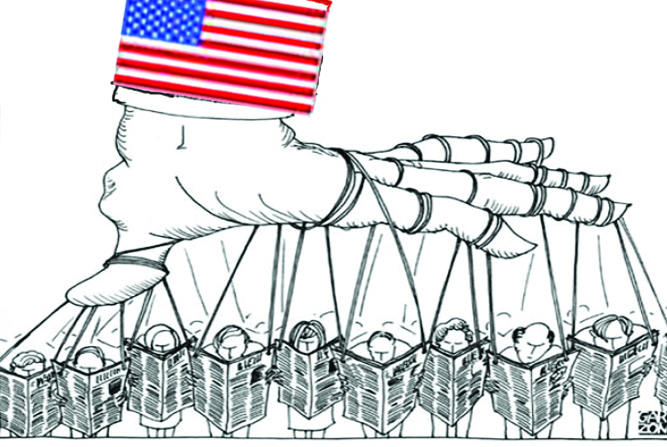
Australia is now on a strategic risk escalator controlled by Washington. Yet our media presents Beijing as the protagonist.
By Mike Gilligan, Mar 29, 2023, https://johnmenadue.com/has-the-usa-captured-australias-fourth-estate/
The uniformly negative reaction of the national press gallery to former PM Paul Keating’s views on Australia’s security raises questions not just of its intellectual adequacy but of whether the media has been captured by and is knowingly serving the United States at Australia’s expense.
How might one distinguish commentary which knowingly favours US objectives which increase risk and cost for Australia from incompetence having the same result? Perhaps case studies of commentators’ past writings could reveal patterns to help readers judge.
Let’s take a prominent journalist. Peter Hartcher, political and international editor for the Sydney Morning Herald, is richly experienced. A long-standing opinion writer at the national level who has spent years in the US. One assumes such a figure would inform Australians authentically and perceptively of developments in the United States which affect Australia as a major security partner, from an Australian perspective. Not only should we expect insightful knowledge to reside in such a figure but that this be evident in published work.
Undoubtedly, since the signing of the ANZUS treaty in 1951 the decisive shift affecting our security relationship has been the influence on US foreign policy of “neo-conservativism”.
Spawned in Chicago academia and arriving in Washington following the Soviet invasion of Afghanistan in 1979, “neocons” contrived the unfounded invasion of Iraq in 2003. Their ethos prevails to this day. In a nutshell, the neocon ethos espouses pre-emptive action to prevent any nation becoming a challenge to US hegemony, by identifying potential rivals early and countering with force as necessary. Anything goes, including truth. That allies should bear the burden for US dominance is axiomatic.
It is in this context that China has been declared by the US to be the principal threat to its global domination. Based on the neocon algorithm, China is deemed to be the priority political and economic competitor, to be diminished to insignificance, employing military force as necessary.
The neocon policy mindset in America is profoundly different from that which Australia experienced in San Francisco seventy years ago when negotiating ANZUS. One would expect a half-competent Australian international editor to pick up on that shift. And embed this new reality in writing on US/China security matters. To thus shape the tone of the issues and conclusions. Assessing Hartcher’s writing for even a hint of this quality goes to the competence of the correspondent. Readers can judge whether such an attribute resides in Hartcher’s commentary. Which says nothing necessarily of motive, however.
Closer to home and more recently, Australia’s security architecture has been destroyed by America pursuing domination of China. The destruction has passed unnoticed, without debate. Here media incompetence generally is so sustained and glaring that questions of motive automatically arise.
Who would know that the ANZUS treaty has been buried in practice? Whilst it failed to offer Australia a binding security guarantee it did support us in valuable ways to build our own self- reliant defence, using our own money for our own priorities. Now that self-reliance is done. America has insinuated its forces onto Australian territory and into our defence resources and our foreign and defence policy – for its own objectives against China.
How? The takeover was formalised through a document known as the Force Posture Agreement, compliments of former US Secretary of State John Kerry visiting us in 2014. Embraced by the Abbot government and fertilised by every government since. Therein, Australia agrees to provide the real estate and support for American military operations against China, under American control and command, at America’s pleasure. It is expandable, again at America’s pleasure, without limits.
Hereby, Australia has taken on acutely elevated geostrategic risk – with no end in sight, willingly. Australia is now on a strategic risk escalator controlled by Washington. Yet our media presents Beijing as the protagonist.
Worse, as with ANZUS, America has not provided any guarantee of armed response when Australia is attacked. The Australian government is now subsidising the US to attack China from our sovereign territory whenever the US chooses, with no insurance.
Overturning of Australia’s security superstructure should have been serious grist to a foreign correspondent’s mill. Yet Hartcher has not even scratched that surface in commentary. Really, could mere incompetence explain this void, not just in Hartcher’s coverage but across the entire fourth estate? Ignorance is an unlikely explanator given Hatcher’s deep, relevant background. Clearly it is to America’s benefit that Australians remain uninformed of the hazards being imposed, and our extra costs, with our governments’ encouragement.
Australians are forced to entertain purposeful manipulation of their right to know, to America’s advantage.
All the while, some earnest Australians have been working for change so that Parliament has the say on Australia going to war. What good is that when America has free rein to wage war from Australia whenever it suits Washington? American operations mounted from here against China will automatically render us at war in China’s eyes. What any Australian parliament or government might say would be of no practical consequence to a China under attack from B52 bombers based at Tindal.
Then there was Hartcher’s “red alert” series on war with China, recently run by the Herald. That paper’s editorial advised readers that “fighting with China could come as early as 2026”. A professional editor would have demanded authoritative evidence. It’s easy enough to come by, publicly. The US Secretary of Defence intelligence report to Congress for 2022 advises that China’s military plan is to be able to restrain US forces on its periphery by 2027. That is, China is focussed on dealing with American military pressure on its sea and air surrounds. And Australian forces are involved now in that pressure on China. So the fact is that China is trying to deal with attack on its territory by forces which include Australia’s. That destroys the foundation of Hartcher’s “red alert” construct.
In short, Hartcher has a habit of misleading Australians on their security, and the enormous risk being dumped on Australia by our friend America. Not by China. Both by commission and omission this commentator’s work exhibits a pattern of serving US interests while denying Australian readers. Whether this is purposeful servitude to American interests at Australian’s expense is for readers to decide.
More surely, from one who surely knows, Henry Kissinger once said: “To be an enemy of the United States is dangerous, but to be a friend is fatal”. No Australian government has had the ticker to look for other ground.
ACTU digs in on nuclear-free policy in headache for Labor over Aukus subs
Coalition seizes on Michele O’Neil’s comments, claiming they send a ‘confusing signal’ on $368bn nuclear submarine acquisition
Paul Karp Guardian, 28 Mar 23
Australian unions have restated their position in favour of a “nuclear-free defence policy”, creating a headache for the Albanese government over the $368bn Aukus nuclear submarine acquisition.
The position, restated by Australian Council of Trade Unions president, Michele O’Neil, on Tuesday, was seized on by the Coalition, which claimed it sent a “confusing signal” for Labor and its industrial wing to be divided on nuclear submarines.
Since the deal was announced earlier in March, the Albanese government has faced criticism from former prime ministers Paul Keating and Malcolm Turnbull, and former Labor ministers Doug Cameron, Gareth Evans, Kim Carr and Bob Carr.
The Labor caucus has united behind the government’s position, with only MP Josh Wilson expressing public concerns, despite many unions opposing the nuclear submarine acquisition.
Asked if she would have preferred the purchase of conventional submarines, O’Neil told the National Press Club that the ACTU had “a longstanding policy of opposition to nuclear power, nuclear waste and proliferation”.
“We also have a longstanding policy position that supports a nuclear-free defence policy.
“These are not positions that have been developed in the last weeks and months. They are decades long and our position hasn’t changed.”………………………………………….. https://www.theguardian.com/world/2023/mar/28/actu-digs-in-on-nuclear-free-policy-in-headache-for-labor-over-aukus-subs
The Road to War: latest film by David Bradbury
By Sandi KeaneMar 28, 2023, https://johnmenadue.com/the-road-to-war-latest-film-by-david-bradbury/?fbclid=IwAR3lvD8het8Z3qvYDpluqiSqJSvMP8KfDvzJZ26FS6xlMQ54bPTslzldOfA
As international tensions rise to a new level, with the Ukraine war passing its first anniversary and the Albanese Government set to announce its commitment of hundreds of billions of dollars to new weaponry, nuclear propelled subs, stealth bombers etc, The Road to War brings into sharp focus why it is not in Australia’s best interests to be dragged into an American-led war with China.
The Road to War is directed by one of Australia’s most respected political documentary filmmakers, David Bradbury. Bradbury has more than four decades of journalistic and filmmaking experience behind him having covered many of the world’s trouble spots since the end of the Vietnam war — SE Asia, Iraq, East Timor, revolutions and civil war in Central and South America, India, China, Nepal and West Papua.
“I was driven to make this film because of the urgency of the situation. I fear we will be sucked into a nuclear war with China and/or Russia from which we will never recover, were some of us to survive the first salvo of nuclear warheads,” says the twice Oscar-nominated filmmaker.
“We must put a hard brake on Australia joining in the current arms race as the international situation deteriorates. We owe it to our children and future generations of Australians who already face the gravest existential danger of their young lives from Climate Change,” says Bradbury.
There is general concern among the defence analysts Bradbury interviews in the film that Australia is being set up to be the US proxy in its coming war with China. And that neither the Labor nor LNP governments have learnt anything from being dragged into America’s wars of folly since World War II — Korea, Vietnam, two disastrous wars in Iraq and America’s failed 20 year war in Afghanistan which ripped that country apart, only to see the Taliban warlords return the country and its female population to feudal times.
“Basing US B52 and Stealth bombers in Australia is all part of preparing Australia to be the protagonist on behalf of the United States in a war against China. If the US can’t get Taiwan to be the proxy or its patsy, it will be Australia,” says former Australian ambassador to China and Iran, John Lander.
Military analyst, Dr Richard Tanter, fears the US military’s spy base at Pine Gap near Alice Springs, will be the first target of any direct confrontation between the US and Russia or China.
“The US military base at Pine Gap is critical to the US military’s global strategy, especially nuclear missile threats in the region. The generals in Moscow and Beijing would have it as a top priority on their nuclear Hit List,” says Dr Tanter whose 40 years of ground-breaking research on Pine Gap with colleague, Dr Des Ball, has provided us with the clearest insight to the unique role Pine Gap plays for the US. Everything from programming US drone attacks to detecting the first critical seconds of nuclear ICBM’s lifting off from their deep underground silos in China or Russia, to directing crippling nuclear retaliation on its enemy.
“Should Russia or China want to send a signal to Washington that it means business and ‘don’t push us any further’, a one-off nuclear strike on Pine Gap would do that very effectively, without triggering retaliation from the US since it doesn’t take out a US mainland installation or city,” says Dr Tanter.
“It’s horrible to talk about part of Australia in these terms but one has to be a realist with what comes to us by aligning ourselves with the US,” Tanter says.
“Studies show in the event of even a very limited nuclear exchange between any of the nuclear powers, up to two billion people would starve to death from nuclear winter,” says Dr Sue Wareham of the Medical Association for the Prevention of War.
“The Australian Government, Prime Minister, Anthony Albanese, and Minister for Defence, Richard Marles, have a serious responsibility to look after all Australians. Not just those living in cities. Were Pine Gap to be hit with even one nuclear missile, Health Minister Mark Butler would be hard pressed to find any volunteer nurses and doctors willing to risk their lives to help survivors in Alice Springs, Darwin and surrounding communities from even one nuclear missile hitting this critical US target,” says Dr Wareham.
Further information or interviews with David Bradbury: david@frontlinefilms.com.au
Media enquiries:
Sandi Keane: 0427 260 319 keanesandi@gmail.com, Twitter: @jarrapin
Omigawd! Nuclear zealot Jonathon Mead is to get his own little government department nuclear supergroup
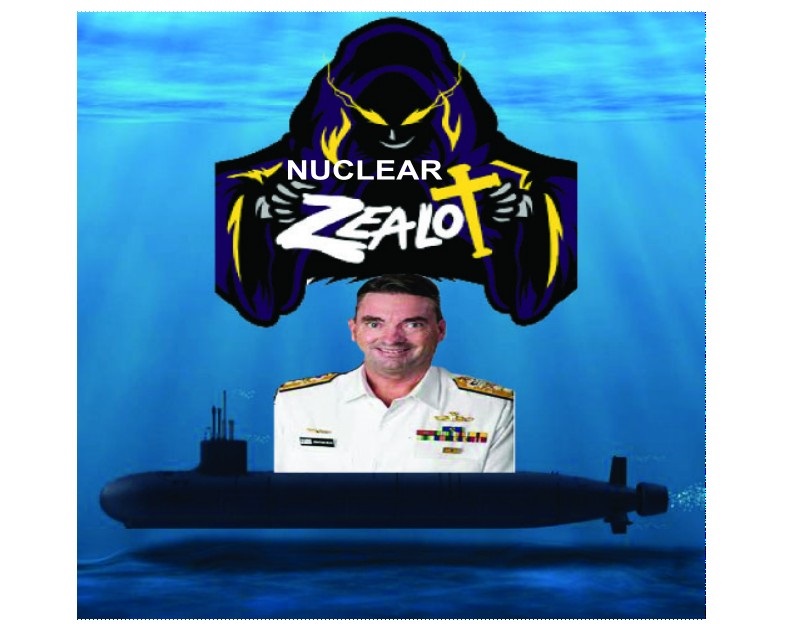
While the exact contours, structure and mandate of the group are yet to take shape, the role of this new organisational arrangement bears examination. Driven by the complexities of nuclear technology, the group’s remit reaches outside conventional defence policy domains into areas such as education and industrial policy that are usually led by domestic policy agencies at the federal and state level.
Planning for Australia’s nuclear submarine ‘supergroup’ , 30 Mar 2023, |Hugh Piper, The Strategist,
“………. With the nuclear-powered submarines to be acquired under the AUKUS partnership, Australia has set itself perhaps the most ambitious public-procurement undertaking in its history. To match the scale of this venture, according to a report in The Australian, the submarine taskforce led by Vice Admiral Jonathan Mead will evolve and grow into a new ‘a stand-alone group inside Defence that will draw personnel from across the government’.
In public-service speak, a ‘group’ is usually the largest organisational unit in a federal government department, headed by a deputy-secretary-level public servant or a three-star military officer. That the submarine acquisition is being elevated to this level reflects the magnitude of the enterprise and the fact that it will become a permanent and dominant feature of the Australian defence organisation for decades to come.
Equally interesting, though, is the scope of this new group in Defence. The Australian described it as a multiagency group ‘responsible for all elements of the program, including safety, non-proliferation and regulatory measures, international engagement, education and training, industry development and project management’. Its head will have ‘a direct reporting line to Defence Minister Richard Marles’.
While the exact contours, structure and mandate of the group are yet to take shape, the role of this new organisational arrangement bears examination. Driven by the complexities of nuclear technology, the group’s remit reaches outside conventional defence policy domains into areas such as education and industrial policy that are usually led by domestic policy agencies at the federal and state level.
Defence will have to acquire new policy capabilities to tackle these issues—but also develop networks and institutional relationships with a much wider range of domestic stakeholders. Moreover, the government will need to decide the exact limits of Defence’s policy leadership. Education and industrial policy are, for instance, intrinsically linked to labour and innovation policy.
The reported scope of the group also includes policy domains and functions that the Department of Foreign Affairs and Trade would conventionally lead, namely international engagement and non-proliferation. For Defence instead to take leadership of these areas would mark a fundamental shift in the division of labour in Australian foreign policy.
………………………… There needs to be room for proper consideration of broader foreign policy equities within a structure that is unapologetically mission-focused on delivering defence capability. As the mixed reaction in the Indo-Pacific to AUKUS has demonstrated, Australia can’t assume an overall permissive environment for its strategic policy, so diplomacy is as vital to manifesting the submarines as building a nuclear industrial base. These risks are, however, manageable through effective governance.
…………..There’s also speculation that it could have its own budget line separate from the rest of Defence https://www.aspistrategist.org.au/planning-for-australias-nuclear-submarine-supergroup/
Aukus subs deal firms China support for Asean nuclear weapon-free zone
Beijing ‘willing’ to become first nuclear-armed state to sign treaty pledging to keep the weapons out of Southeast Asia
China’s efforts to woo its neighbours is a counter to US alliance building in the region, which now includes nuclear-powered submarines for Australia
Laura Zhou SCMP, 28 Mar 23
China is willing to sign a treaty making Southeast Asia a nuclear weapons-free zone, in Beijing’s latest effort to woo its neighbours and counter Washington’s decision to speed the sale of nuclear-powered submarines and technology to Australia.
Chinese Foreign Minister Qin Gang made the pledge at a meeting with Kao Kim Hourn, secretary general of the Association of Southeast Asian Nations, in Beijing on Monday. It would make China the first major nuclear power to commit to the zone.
Asean secretary general Kao Kim Hourn (left) and Chinese foreign minister Qin Gang in Beijing on Monday. Photo: Xinhua
China is willing to sign a treaty making Southeast Asia a nuclear weapons-free zone, in Beijing’s latest effort to woo its neighbours and counter Washington’s decision to speed the sale of nuclear-powered submarines and technology to Australia.
Chinese Foreign Minister Qin Gang made the pledge at a meeting with Kao Kim Hourn, secretary general of the Association of Southeast Asian Nations, in Beijing on Monday. It would make China the first major nuclear power to commit to the zone.
“China is willing to take the lead in signing the protocol to the Southeast Asia Nuclear Weapon Free Zone treaty and advocate with Asean for solidarity and win-win cooperation to safeguard regional security and stability,” he said.
The treaty has been in force since 1997 and obliges the 10 Asean member states “not to develop, manufacture or otherwise acquire, possess or have control over nuclear weapons; station or transport nuclear weapons by any means; or test or use nuclear weapons”.
None of the five recognised nuclear-armed states – China, France, Russia, Britain and the US – has acceded to the treaty’s protocol, which implies a commitment not to use nuclear weapons within the zone or against any contracting state.
Chinese President Xi Jinping said in 2021 that Beijing was ready to sign the protocol – also known as the Bangkok Treaty – “at the earliest possible date”, just months after the US-led Aukus alliance with Australia and Britain was unveiled.
The latest pledge comes at a time when China is increasingly vigilant towards Aukus, which two weeks ago announced a pathway for Australia to acquire three, possibly five, US nuclear-powered submarines by the early 2030s.
In his meeting with Kao, Qin said China’s domestic and foreign policies had maintained “a high degree of stability and continuity”, according to a Chinese foreign ministry readout.
Qin said China’s policies would “inject more stability into regional peace and tranquillity, while providing more strong momentum for regional development and prosperity”………………….
Beijing is strongly opposed to Aukus and the Quad – a US-led partnership with Japan, India and Australia – which together form the centrepiece of Washington’s strategy of building alliances to contain China, in its view.
The Aukus announcement – which may pave the way for Canberra to eventually build its own attack submersibles – was described by Chinese foreign ministry spokesman Wang Wenbin as “nothing but selfish”. The US, Australia and Britain “had gone further down a wrong and dangerous road”, he said.
The deal also intensified regional concerns in Southeast Asia. Hours after the announcement, Malaysia said it was important for all countries to refrain “from any provocation that could potentially trigger an arms race or affect peace and security in the region”.
Indonesia, another major power in Southeast Asia, urged Australia to comply with its non-proliferation treaty obligations, saying that it was the responsibility of all countries to maintain peace and stability in the region………………………….. https://www.scmp.com/news/china/diplomacy/article/3215103/aukus-subs-deal-firms-china-support-asean-nuclear-weapon-free-zone
Russia Calls Out ‘Nuclear Weapons Hypocrisy’: US Has Tactical Nukes In 5 Non-Nuclear Weapon States

“For the last 60 years Washington has been playing a key role in NATO’s nuclear sharing missions by supporting deployment of its tactical nuclear weapons in five non-nuclear weapon states – Belgium, Germany, Italy, Netherlands, and Turkey,“
BY TYLER DURDEN, ZERO HEDGE, WEDNESDAY, MAR 29, 2023
The Kremlin has blasted what a Russian official called the United States’ “vivid example of hypocrisy” as part of the latest war of words in the wake of President Putin’s announcing he has stationed tactical nuclear weapons in neighboring Belarus.
Russian Ambassador to the United States Anatoly Antonov on Tuesday called out Washington’s “extremely short memory” – given it “has long been systematically destroying the legal basis of bilateral relations in strategic sphere,” which is a reference to the collapse of multiple nuclear treaties of late, including ‘Open Skies’ and the INF Treaty in 2019. New START is also looking to come to an end at the rate things are going.
CBS recounts of what Putin said:
Russia has ratcheted up tensions with the West amid its ongoing war against Ukraine, with President Vladimir Putin saying Moscow will deploy “tactical nuclear weapons” in Belarus. The Russian leader said 10 fighter jets capable of carrying tactical nuclear weapons — generally a reference to smaller weapons used for limited battlefield attacks, rather than larger, long-range “strategic” nuclear weapons — were already deployed in Belarus. ………..
In response, the US State Department condemned the Russian leader’s “irresponsible nuclear rhetoric,” and said that “no other country is inflicting such damage on arms control, nor seeking to undermine strategic stability in Europe.”
The scathing denunciation had been issued by US State Department representative Vedant Patel………………
Antonov underscored that the US has long stationed nuclear weapons not far from Russia: “For the last 60 years Washington has been playing a key role in NATO’s nuclear sharing missions by supporting deployment of its tactical nuclear weapons in five non-nuclear weapon states – Belgium, Germany, Italy, Netherlands, and Turkey,” he said. Putin had days ago voiced a similar rationale… https://www.zerohedge.com/geopolitical/russia-calls-out-nuclear-weapons-hypocrisy-us-has-tactical-nukes-5-non-nuclear-weapon5-non-nuclear-weapon
US-NATO proxy war in Ukraine utilises space technology
The Global Network monthly space video this time reviews how space satellites are used by the US-NATO to target Russian-ethnic regions of the Donbass in eastern Ukraine and Russian military forces.
Elon Musk’s Space X company is deploying tens of thousands of Starlink satellites in Lower Earth Orbit (LEO). The parking lots in LEO are getting dangerously crowded. Scientists fear cascading collisions as a result.
| The Pentagon is using Musk’s Starlink satellites to provide surveillance and targeting information to the Ukrainian army. Whichever nation(s) control LEO enables them to have considerable advantage on the battlefield. China is responding by announcing it will launch 13,000 satellites into LEO in order to prevent the US-NATO from totally filling up the scarce orbital parking spaces.Danger exists as major powers compete for access and/or domination in space. A new United Nations space weapons ban treaty is needed now more than ever. |
|---|
Diana Rickard Submission – Australia’s nuclear bans reflect public rejection of the nuclear industry, and support for clean renewables.
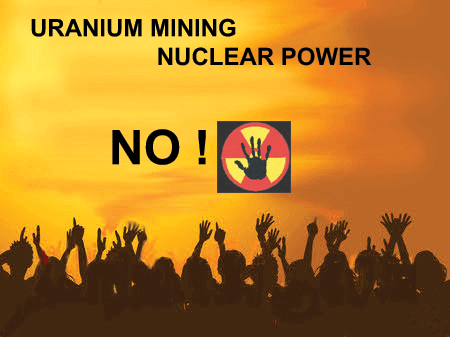
Submission No 74. against Environment and Other Legislation Amendment (Removing Nuclear
Energy Prohibitions) Bill 2022
Nuclear Power is not needed in Australia. Germany is decommissioning its last two nuclear reactors.
There is enough science and technology to provide reliable and sustainable renewable energy for
industrial and residential needs in Germany and in Australia, we have more than enough sunlight,
wind and water to provide clean and sustainable energy for our needs.
- Our legislative prohibitions reflect public and community concern over and rejection of
nuclear power and nuclear waste storage in Australia. - Australia does not need reactor meltdowns, fires and explosions as happened at
Chernobyl and the Fukushima Daiichi nuclear power site. We have inherited colonial
nuclear bomb testing sites and uranium processing sites that still need rehabilitating
costing billions of dollars and these weapon testing sites have caused sickness and
permanent disability to people caught up in their poisonis a disgrace that should not be
repeated. - There is still no permanent nuclear waste disposal facility operating anywhere in the
world for high-level nuclear waste generated by nuclear power reactors. - Uranium mined in Australia is used for failed nuclear reactors and weapons proliferation
overseas and the international safeguards system has not been funded anywhere near
what it would take to avoid or even monitor this. We should avoid further
contamination from dirty and dangerous nuclear power plants in Australia adding to this
problem. - Talk of AUKUS nuclear powered submarines and B52s carrying nuclear weapons while on
Australian soil makes me very uneasy that we could become a military target. The risk of
reactors becoming military targets (as has been the case with research reactors in the
Middle East on multiple occasions) remains a serious concern. - Many countries do not have clear and unambiguous rules governing nuclear power and
nuclear waste. This is despite the fact that inadequate regulation is widely accepted as a
main cause of the Fukushima disaster. In a country like Australia where a national motto
in the 1980s was ‘ Near enough is good enough’ followed by ‘Where the bloody hell are
you?’ hardly shows our commitment to clear, accountable and sustainable rules-based
governance on vital issues, does it? - If we remove prohibitions to nuclear power, we would then need significant reforms in
existing legislation not designed to deal with nuclear power. We would then need a
massive increase in government resources as well as recruiting an appropriately skilled
and capable workforce. - With resources concentrating on getting nuclear power right, essential resources to help
us tackle human-induced climate change, secure a national renewable energy policy and
deliver modern environmental protection legislation would be lost.
Australia is suffering massive infrastructure, livelihood and life loss due to climate change floods that
should be once in a hundred years but are happening regularly. Our environment is suffering
through massive landclearing by other than small, family farmers or miners.
We cannot trust our future to greedy people and foreign corporations with no care except to make
short-term profit even when it destroys our national interest and iconic environment.
Nuclear power plants are unsustainable, corporately owned and dirty. Renewable energy can
operate independently of large, asset-greedy business interest and can be installed on homes and in
small paddocks. Renewable energy belongs to the people and does not harm the environment as
surely as nuclear energy does. https://www.aph.gov.au/Parliamentary_Business/Committees/Senate/Environment_and_Communications/Nuclearprohibitions/Submission
Jean M Christie -Submission – nuclear power is expensive, polluting, and too slow to be of any use to Australians.

Environment and Other Legislation Amendment (Removing Nuclear Energy Prohibitions) Bill 2022 Submission 78
For several reasons, nuclear power is inappropriate for Australia. These are as follows.
Since 2010, nuclear power has actually become more expensive, rising in cost by 33%.
Nuclear power reactors produce waste, and Australia does not have a deep underground repository for
nuclear waste. At present, the residents of Kimba, South Australia, are engaged in a legal battle with the
Commonwealth of Australia, as they fight to protect their home from becoming a dumping ground for
nuclear waste generated in New South Wales.
The development of nuclear power is very time-consuming, and Australia lacks a workforce with the
necessary skills to do this.
Thus nuclear power is expensive, polluting, and too slow to be of any use to Australians.
Furthermore, nuclear power plants are rendered unsafe by the effects of climate change. These effects
include warming water sources, sea-level rise, storm damage, and drought. In military and terrorist events,
nuclear power plants are obvious targets, as malicious forces seek to cut off electricity supplies. In addition,
the electricity necessary to cool such reactors is also disrupted, and the risk of nuclear core meltdowns
increased. We are seeing this now in Ukraine, as Russia directs missile strikes at Ukrainian nuclear power
plants. Even in peacetime, risks are present, as demonstrated by the tragic nuclear meltdown and waste spill
in Fukushima, Japan, which has rendered surrounding areas uninhabitable.
Thus nuclear power is expensive, polluting, slow in availability, and very risky with regard to national
security. I urge politicians to support renewable energy, in order to protect the environment, and prevent
further climate disruption. . https://www.aph.gov.au/Parliamentary_Business/Committees/Senate/Environment_and_Communications/Nuclearprohibitions/Submission
The three big questions Australia’s leaders must answer about the Aukus deal

Gareth Evans, Guardian, 21 Mar 23,
The public has a right to know why we are making such a drastic shift in our defence strategy and spending, writes Australia’s former foreign minister
Love Paul Keating or loathe him, admire or abhor his invective, he has raised questions about the Aukus deal which are hugely important for Australia’s future and demand much more compelling answers than we have so far received from government ministers past or present.
The big three for me are whether, for all the hype, the submarines we are buying are really fit for purpose; whether an Australian flag on them really means we retain full sovereign agency in their use; and if it does not, whether that loss of agency is a price worth paying for the US security insurance we think we might be buying……………
is the Aukus fleet – on the brave assumption the vastly complicated acquisition program does not become the “goat rodeo” (fiasco) predicted by some respected US-based analysts – really our best buy? If the purpose of our new boats is to be a useful, albeit numerically marginal, add-on to US underwater capability in the South China Sea and around Taiwan, they can play that role well. But if their primary purpose is to prevent continental Australia – and our Indo-Pacific sea-lanes – from possible attack, it remains entirely legitimate to demand a detailed explanation as to how that task could be better performed by the Aukus fleet than the 20 or more sons-of-Collins we could buy for the same price, given that only three nuclear-propelled boats are likely to be on station at any given time.
The core issue is how comfortable we should be in so obviously shifting the whole decades-long focus of our defence posture away from the defence of Australia – which has always included a strong presence in our archipelagic north and, within a very considerable radius, the sea-lanes so crucial to our trade – toward a posture of distant forward defence. The case must be made, not just asserted.
The second big unanswered – or less than persuasively answered – question is whether, by so comprehensively further yoking ourselves to such extraordinarily sophisticated and sensitive US military technology, Australia has for all practical purposes abandoned our capacity for independent sovereign judgment. Not only as to how we use this new capability, but in how we respond to future US calls for military support.
There were assurances at the time of the first Aukus announcement by the US secretaries of state and defense that “there will be no follow on reciprocal requirements of any kind” and “no quid pro quo”. But in my own experience that is not quite the way the world – and American pressure – works………………..
When it comes to decisions to go to war, we have too often in the past, most notably in Vietnam and the Iraq war of 2003, joined the US in fighting wars that were justified neither by international law nor morality, but because the Americans wanted us to, or we thought they wanted us to, or because we wanted them to want us to…………………………
My last big question may be unanswerable for now, but should be getting far more attention. Just how much security has our devotion to the US and our ever-increasing enmeshment with its military machine, really bought us, should we ever actually come under serious attack?
While the Anzus treaty requires the US “to act” in these circumstances, it certainly does not require that action to be military. I am afraid that we should be under no illusion whatever that, for all the insurance we might think we have bought with all those past down-payments in blood and treasure and our “century of mateship”, the US – whoever is president – will be there for us militarily in any circumstance where it does not also see its own immediate interests under threat……………… https://www.theguardian.com/commentisfree/2023/mar/21/gareth-evans-the-three-big-questions-australias-leaders-must-answer-about-the-aukus-deal?CMP=Share_iOSApp_Other
1 This month


Help Aunty Sue Protect Her Land and Sacred Sites From Destructive Rocket Testing.
.

Australians deserve the truth
about
AUKUS – https://aukuspublicinquiry.com/

PETITION – To: Prime Minister Anthony Albanese and the Australian Labor Government

of the week – Australians for War Powers Reform (AWPR)
To see nuclear-related stories in greater depth and intensity

