Thousands of dead and dying frogs found across Australia
Thousands of dead and dying frogs found across Australia
Researchers are trying to decipher the mystery and prevent long-term damage to amphibian populations, an indicator of ecosystem health.
What the bald eagle and a tiny bat can tell us about Australia’s broken system for protecting nature
What the bald eagle and a tiny bat can tell us about Australia’s broken system for protecting nature
We are still killing off our unique fauna at a horrifying rate.
State of the Environment report shows our growing cities are under pressure – but we’re seeing positive signs too
Gabriela Quintana Vigiol
Urban areas are often thought of as concrete jungles, but they encompass much more than that. Nature, people and built structures are interconnected. Together they comprise the urban environment of the cities and towns in which we live.
The Age of Women.

Pearls and Irritations, By Julian Cribb, Jul 22, 2022
Leadership by wise women is indispensable if we are to escape the catastrophe that male leadership is presently building for humanity.
If humanity is to survive the vast and growing threats it faces, women must assume the leadership of government, business, religion and social institutions around the world. Female leadership is a required solution to the ten catastrophic risks which now confront the whole of our civilisation.
As a rule, women don’t start wars, mine coal or oil, destroy landscapes and forests, pollute air and oceans or poison their children – though they may benefit from those male actions. They tend to think more about the longer term than do men, and to consider the future needs of their children and grandchildren more fully. They tend to seek peaceful and constructive solutions to problems rather than warring over differences in values and beliefs, or over resources.
Since the time our species first differentiated its gender roles, over a million years ago, pragmatic male thought has largely driven our remarkable ascent, our great technological achievements up to the start of the present century. But men are also risk takers – and often ignore or make light of the risks created by the use, misuse or overuse of these technologies. Furthermore, in the hot, overcrowded, resource-depleted, poisoned world of the present and immediate future, competitive male attitudes are also our potential downfall, especially if they lead to wars and mass destruction.
In a world beset by catastrophic risks such as global ecological collapse, nuclear weapons, climate change, universal chemical poisoning, resource scarcity, food insecurity, overpopulation, pandemic disease, deadly new technologies and self-delusion, a fresh human perspective is needed – one which accentuates peaceful co-operation, caring, repair, healing and restoration. One which values food above weapons, health above chemicals, re-use and thrift above wastage, nature above profit, thought for the next generations above immediate self-gratification – and wisdom over mere intelligence or technical skill.
The most striking example of global female leadership is the decision by women everywhere to have far fewer babies. This has brought the birth rate down from 5 babies per woman in the mid-1960s to 2.4 babies in the early 2020s – and it is still falling, in every continent and in almost every country, albeit more slowly. Moreover many women have taken the decision to control their fertility without seeking male approval. They just did it. It is a responsibility the female of our species has undertaken because she instinctually understands the dangers and costs inherent in uncontrolled family and population growth. Women have, on their own initiative, tackled one of the thorniest and most controversial issues affecting the human future – and with demonstrable success. Unswayed by the selfish arguments of economics, nationalism, religion, paternalism or social pressure, they have willingly had fewer children in order that those whom they do bear may live better – or even live at all.
Women are also peacemakers. History offers few, if any, examples of wars of aggression waged by female leaders. Although perfectly capable of responding to military attack, female rulers from Elizabeth I, Maria Theresa and Catherine the Great to Golda Meir, Indira Ghandi and Margaret Thatcher defended their countries against attack by others or else ended wars which they had inherited from their male antecedents. Typically, they pursued their aims through diplomacy. All of the great wars of recent centuries, on the other hand, were started either by male monarchs, dictators or by male-dominated governments.
……….. Women are also peacemakers. History offers few, if any, examples of wars of aggression waged by female leaders. Although perfectly capable of responding to military attack, female rulers from Elizabeth I, Maria Theresa and Catherine the Great to Golda Meir, Indira Ghandi and Margaret Thatcher defended their countries against attack by others or else ended wars which they had inherited from their male antecedents. Typically, they pursued their aims through diplomacy. All of the great wars of recent centuries, on the other hand, were started either by male monarchs, dictators or by male-dominated governments.
In a world where conflict over declining resources of land, water, food, minerals, timber, fish and other vital necessities of life is increasingly probable, male leadership is far more likely to result in mass destruction and death than female leadership. Males in most societies are taught from youth to compete for what they want, and if competition doesn’t work, then to fight for it, often to the death. Sporting role models, gang behaviour, worship of military virtues and imposed patriarchal values cement the process. This masculine ideal is so firmly imprinted on society and on young males as to make questioning it tantamount to heresy – and most men fear to do so. Indeed, the dawning realisation that traditional male values are redundant in a world where humans can eliminate themselves has given rise to anxiety and confusion in many males over the likely loss of their ‘traditional’ roles of warrior and protector.
However, there is nothing compulsory about these traditional roles, ………………….. These stereotypes have endured centuries after the biological necessity for them has passed away. The preservation of these stone age roles in a 21st Century civilisation on the brink of catastrophe is an absurdity. Indeed, they will only hasten it.
Females learn or are taught to achieve their goals by other means, generally peaceful, diplomatic, negotiatory and co-operative. It follows that female leadership is better suited to the conditions of the C21st than it perhaps was to previous centuries – and male leadership less so. Thus, majority female rule can reduce the chances of civilisational collapse, or even human extinction, by war……………
It is noteworthy that women already tend to lead international organisations concerned with human health and wellbeing, with peace, with children and their future – whereas men tend to dominate organisations that pollute, manufacture poisons or weapons, plough up landscapes, pillage the oceans and destroy the climate. There are very few female leaders of the $7 trillion fossil fuels / petrochemicals sector, for example, and the male groupthink in that industry plainly values short-term profit above the safety and survival of humanity (including their own). This is classic male risk-taking behaviour ……….
Petrochemicals kill 12 million people every year and the toll is rising with climate change and the universal spread of poisons. In this case, a male-led industry prizes profit above human life on the largest scale ever to occur in history. But it is by no means unique. Other male-dominated sectors including agriculture, mining, forestry, corporate food and pharmaceuticals, electronics, advertising, armaments and the military, cause similar havoc among humanity, the natural world or both. For the sake of human survival, it is time their leadership underwent a radical repositioning in values, ethics and common sense.
The issue of whether women should lead humanity in the 21st century is thus not a question of gender equality or politics. It is not about ‘feminism’.
It is, quite simply, a foundational rule for human survival at the very time we face a major threat to our existence, arising from our own behaviours.
It is now a matter of choosing the kind of leadership which can best get us through the most dangerous era in all of human history.
Female thinking and leadership can protect a habitable planet and save humanity – or at least, some of it. And this means female thinking by enlightened men as well as by women. To influence global society towards more sustainable, healthy and peaceable solutions to our risks, we need many wise women in positions of power. This is indispensable, if we are escape the fate which male-led competition, aggression, overconsumption and pollution are building for us. https://johnmenadue.com/the-age-of-women-2/
The bright spots in the State of the Environment report
The bright spots in the State of the Environment report
Indigenous ranger programs and privately run conservation reserves are the shining lights in the country’s environmental report card.
Nuclear Power Plants Are Struggling to Stay Cool

Wired, 22 July 22”……………………………. Amidst a slow-burning heat wave that has killed hundreds and sparked intense wildfires across Western Europe, and combined with already low water levels due to drought, the Rhône’s water has gotten too hot for the job. It’s no longer possible to cool reactors without expelling water downstream that’s so hot as to extinguish aquatic life. So a few weeks ago, Électricité de France (EDF) began powering down some reactors along the Rhône and a second major river in the south, the Garonne. That’s by now a familiar story: Similar shutdowns due to drought and heat occurred in 2018 and 2019. This summer’s cuts, combined with malfunctions and maintenance on other reactors, have helped reduce France’s nuclear power output by nearly 50 percent…………………
Nuclear technicians are known to refer to their craft as a very complicated way of boiling water, producing steam that spins turbines. But much more is usually required to keep the reactor cool. That’s why so many facilities are located by the sea and along big rivers like the Rhône.
Plenty of other industries are affected by hotter rivers, including big factories and power plants that run on coal and gas. But nuclear plants are unique because of their immense size and the central role they play in keeping energy grids online in places like France. And warming and dwindling rivers are not the only climate challenges they face. On the coasts, a combination of sea level rise and more frequent and intense storms means heightened flooding risks. Scientists have also pointed to other, more unusual challenges, like more frequent algal blooms and exploding jellyfish populations, which can clog up the water pipes.
……………………… The nuclear industry and environmental groups continue to disagree on whether existing regulations capture the latest science, particularly on the topic of sea level rise.
……………….. . In 2019, the NRC began approving 20-year extensions to some reactors—starting with the Turkey Point power plant in South Florida. Environmental groups filed interventions to halt the plan, arguing that a combination of more intense hurricanes and sea level rise would threaten the low-lying plant in ways that regulators had not adequately considered. In February, the NRC reversed the extension for Turkey Point and other plants pending a more extensive environmental review.
So far, most production cuts are due to warming waters—not just in the Rhône and Garonne, but in places like the Tennessee River in the US, and in the coastal seas where many more plants are sited. In recent years, nuclear plants across Northern Europe have been forced to shut down or reduce output because seawater became too warm to safely cool the reactor cores. Over the past decade, the Millstone power plant in Connecticut saw a series of shutdowns on hot summer days until regulators raised the temperature limit of its cooling waters by 5 degrees Fahrenheit.
………………………. the impact is growing as temperatures continue to rise. In an analysis published in Nature Energy last summer, a Stanford researcher found that there had been eight times the number of heat-related outages in the 2010s compared with the 1990s. In a 2011 study on the impact of warming on nuclear cooling systems, EDF scientists projected a 3 degree Celsius increase in the Rhône’s temperature by 2050, spelling more potential for shutdowns during heat waves.
,,,,,,,,,,,,,,,,,,,,,,, “The key issue is when we start building new plants, how can we take into account the impact of climate change for the full lifespan of the plant to 2080 or 2100,” Laconde says, noting that France’s new generation of reactors, recently announced by President Emmanuel Macron, are mostly being built by the coasts.
,,,,,,,,,,,,,,,,,,,,,,,,,, in France, regulators are expecting a long summer ahead. While the heat may pass, low water levels can persist, resulting in cutbacks that last for weeks or months. EDF recently told reporters that it expects more cuts in the coming months as water levels continue to fall—leaving the country hoping for the relief of cold, hard rains. https://www.wired.com/story/nuclear-power-plants-struggling-to-stay-cool/
US Military Analyst: West Can’t Afford Ukraine Spending, Will Run Out of Ammo to Send to Kiev

Sputnik News 22 July 22…………………….What goals are the US and EU pursuing by pouring more money into the Ukrainian military?
Scott Ritter: The hope is to transform the conflict that is ongoing in Ukraine as a result of the Russian special military operation into a protracted conflict that can lead to a stalemate that would result in significant Russian costs, both in terms of manpower and military equipment, but also financial costs, and thereby weaken Russia. Ultimately what they are visualizing would be a Ukraine strong enough to evict Russia from its borders.
It’s not possible, this is fantasy in the extreme, but it’s politically inspired fantasy, meaning that the United States and its European allies have invested so much political capital into propping up the Ukrainian military and the Ukrainian government and the Ukrainian economy that even though most sound analysts understand that not only is Ukraine losing the conflict, but they can never win the conflict. Politically, Western politicians cannot divorce themselves from these policies. So in order to maintain a public perception at home of the chance of a Ukrainian victory, they will continue to squander the wealth of their respective nations.
Why are Western states prolonging the hostilities despite the growing discontent of their populations with economic problems?
Scott Ritter: There’s an old saying in the United States that I believe translates into most politics: “when you’re explaining, you’re losing.” And right now, these politicians would have to explain to their constituents why they were wrong about Ukraine, why they were wrong about Russia. And especially here in the United States, we’re dealing with the lead-up to very critical midterm elections. No politician wants to be explaining anything to anybody. They want to be shaping perceptions that build upon past performances. This is all about domestic politics. This has nothing to do with reality.
Why are Western states prolonging the hostilities despite the growing discontent of their populations with economic problems?
Scott Ritter: There’s an old saying in the United States that I believe translates into most politics: “when you’re explaining, you’re losing.” And right now, these politicians would have to explain to their constituents why they were wrong about Ukraine, why they were wrong about Russia. And especially here in the United States, we’re dealing with the lead-up to very critical midterm elections. No politician wants to be explaining anything to anybody. They want to be shaping perceptions that build upon past performances. This is all about domestic politics. This has nothing to do with reality. So it sounds good for a politician to be telling his or her constituents that we are providing the Ukrainians with the best equipment possible to include the top of the line fighter aircraft. What they really should be saying is we are guaranteeing that every Ukrainian pilot we train will die at the hands of the Russian Air Force, because that’s what the ultimate outcome will be.
The thing about, especially American, generals is that they are political animals. They didn’t get that fourth star necessarily because of their military competence. They got it because they impressed a politician with their political acumen. And so what we have is a general playing politics, a general who is saying what the politicians want to hear. And that’s not what his role is. His role is to provide sound military assessment, military advice to the politicians.
But if an American military officer did that today, they couldn’t agree with anything that the Biden administration or the US Congress was seeking to do in Ukraine, and therefore they would never get promoted. They would never get a good job. I don’t like to denigrate serving military officers, but this is a political decision, not a military decision, even though the man making it wears a military uniform.
Can the West collectively really afford such spending now, at a time of harsh polarization and soaring prices?
Scott Ritter: No, they can’t afford it. And we have some nations that are starting to realize this. The German defense minister, who is very hawkish against Russia, has acknowledged that Germany simply has no more weapons to give and they’re not in a position to build new weapons. They’re worrying about other economic realities. The same holds true with the United States.
At some point time in time, we are going to run out of materiel to give to Ukraine. I read somewhere that with all the HIMARS multiple launch rocket systems we’re providing to Ukraine, we’re also providing Ukraine with one third of the ammunition stockpiles for the HIMARS, meaning that we, the United States, only have two thirds of our ammunition stores available if we had to go to war, which means we will run out of ammunition.
This is insane, literally insane to be sacrificing the national security of the United States or of a European nation so that politicians can look and sound good for the next couple of weeks. But it will not change the equation on the battlefield in Ukraine. The Ukrainian Army is in an impossible situation. They literally cannot recover from the debacle that has befallen them.
The sad thing is that Ukrainian leaders are buying into the fiction provided by the West of if they just get more weapons, they can successfully defend against Russia. This means that more Ukrainian soldiers are going to die, more Russian soldiers are going to die, and tragically, more Ukrainian civilians are going to suffer.
Leaders of the Group of Seven recently pledged to stand with Ukraine “for as long as it takes.” How feasible is this pledge?
Scott Ritter: When the Group of Seven made that, one of the leaders was a guy named Boris Johnson. He’s not the leader anymore. The other guy was a gentleman whose last name was Draghi. He’s not the leader anymore. I think as the summer and the winter come along, more and more of these leaders are going to be removed from office because it’s an unsustainable policy. Politicians have a proclivity for saying things that have no basis in reality. It’s very inexpensive for a politician to say “we are going to support you forever.”
Forever in what sense? Boris Johnson is not supporting them forever – he’s out of power. Draghi is not supporting them forever – he’s out of power. And just about everybody who was on that stage at the G7 meeting will be out of power. Suddenly, we have a whole new definition of what “forever” means. It means “not now, not anymore.” https://sputniknews.com/20220721/us-military-analyst-west-cant-afford-ukraine-spending-will-run-out-of-ammo-to-send-to-kiev-1097671398.html
NRA approval for Fukushima Daiichi radioactive pollution of the Pacific Ocean – no justification, no scientific basis and illegal – Greenpeace condemns decision
Greenpeace Japan
2022-07-22
Tokyo, Japan – The final approval by Japan’s Nuclear Regulation Authority (NRA) of Tokyo Electric Power Company Holding (TEPCO) plans to discharge radioactive waste water into the Pacific Ocean has no justification, is based on incomplete and limited data and flawed analysis and violates international law, according to Greenpeace East Asia.

Shaun Burnie, a senior nuclear specialist from Greenpeace East Asia, said:
“The decision by Japan’s regulator to deliberately pollute the Pacific Ocean with radioactive waste water is as bad as it sounds. The NRA approval of the TEPCO contaminated water discharge plan is scientifically and technically flawed. It is a decision intended to support the false narrative that decommissioning the destroyed reactors at Fukushima Daiichi is making real progress. In reality the contaminated water plan is a symptom of the wider crisis that the current decommissioning plan is doomed. The discharges into the Pacific will not solve any problems but create many more. The NRA knows that a fundamental reassessment of the decommissioning plan is inevitable, and that will also mean choosing the least environmentally damaging option which is long term storage and processing.”
“The NRA has failed to assess many important issues that are fundamental to any environmental assessment. Further, it disregards the human rights of those most impacted by the 2011 disaster – the citizens of Fukushima prefecture, including fishing communities, as well as neighboring prefectures. It ignores the wider environmental marine impact and the rights of the peoples of the Asia Pacific region who are opposed to the deliberate pollution of the Pacific with radioactive waste,” said Burnie.
Japan is legally required under the UN Convention for the Law of the Sea to conduct a comprehensive Environmental Impact Assessment (EIA). No such assessment has been made or is planned either by Japan’s regulator or the International Atomic Energy Agency (IAEA). There are many legal issues that the NRA has just completely failed to consider.
The opposition to radioactive discharges continues to grow, including the efforts by the 18 nations of the Pacific Island Forum (PIF) to challenge the false scientific rationale for the radioactive pollution plans.
Greenpeace analysis on the Fukushima water crisis includes submissions to the NRA, IAEA, as well as two reports on the technical issues and problems with the management of contaminated water at the site and discharge plans.
ENDS
Notes:
See “TEPCO WATER CRISIS”, Greenpeace Germany, January 2019
And, “Stemming the tide 2020: The reality of the Fukushima radioactive water crisis”, Greenpeace East Asia, October 2020
Statement: Protest the Nuclear Regulatory Commission’s Approval of TEPCO’s Plan for the Oceanic Discharge of Contaminated Water from the Fukushima Daiichi Nuclear Power Plant

July 22, 2022
International Environmental NGO FoE Japan
Today, the Nuclear Regulation Authority (NRA) approved an application for modification of the implementation plan for the installation of an offshore discharge facility for treated contaminated water from the TEPCO-Fukushima Daiichi Nuclear Power Plant. We believe that the following points should be taken into consideration: 1) radioactive materials should be centrally controlled and should not be released into the environment, 2) effective alternatives such as mortar solidification have been proposed, 3) there are strong objections from fishermen and citizens, and 4) there are many problems in the consensus building process as no public hearing or explanation meetings have been held since the decision on the ocean discharge policy. The company has long opposed the discharge of treated contaminated water into the ocean for a number of reasons.
The approval is problematic mainly in the following respects. The Nuclear Regulatory Commission is not fulfilling its role as a regulatory agency.
1. It is unclear what and how much will be released
Currently, approximately 1.26 million m3 (as of March 2022) of treated contaminated water is stored in tanks. In addition to tritium, strontium-90 and iodine-129 remain in this water, and nearly 70% of this water exceeds the sum of the notified concentration ratio of 1 (exceeding the standard). The total amount of these radioactive materials is not indicated. TEPCO has measured 64 radioactive materials (62 nuclides targeted for ALPS removal, tritium, and carbon-14) only for three tank groups, but not for many other tank groups at this stage. TEPCO has stated that the water exceeding the standards will be treated sequentially and measured before being discharged. However, the total amount will not be known until the discharge is completed, which is expected to take more than 30 years.
Also, tritium has been shown to be present in the tanks at 780 trillion becquerels (as of May 2021), but there is still a large amount of tritium in the debris and in the buildings. The total amount of tritium released is unknown because the amount of contaminated water will continue to increase as long as the inflow of groundwater is not stopped.
The review was conducted without providing crucial data on what and how much will be discharged.
2. Verification of radioactive materials other than the 64 nuclides and selection of nuclides to be measured before release were postponed.
TEPCO had identified 64 nuclides (62 nuclides to be removed from the ALPS, tritium, and carbon-14) as those to be monitored, but the Nuclear Regulation Authority had requested an explanation of the basis for the absence of residuals of other nuclides. In the end, however, TEPCO’s explanation remained the same and no new verification was conducted. TEPCO has explained that it will verify this point in the future and, based on this verification, will also indicate the radioactive materials to be measured prior to the release. In other words, the Regulatory Commission has approved the plan before TEPCO has even begun to specify the “verification” that it will conduct and the radioactive materials that will be measured prior to the release of radioactive materials.
The measurements of radionuclides and their concentrations in the three tank groups that TEPCO now indicates as source terms in its radiation impact assessment were not measured after the tanks were agitated. In other words, it should be noted that there is a possibility that they may have failed to capture materials that have settled at the bottom of the tanks.
3. No indication that ocean discharge is “for risk reduction and optimization”
As a result of the review, the Regulatory Commission stated that “future risk reduction and optimization of the specific nuclear facilities as a whole are being pursued.
However, risk reduction and optimization should not be achieved only within the Fukushima Daiichi Nuclear Power Plant site, but should be evaluated including the marine environment.
In addition, other alternatives must be considered in order to demonstrate that “ocean discharge is the way to reduce and optimize the overall risk.
TEPCO has not adequately considered the storage in large, robust tanks and the mortar solidification disposal proposal proposed by the Citizens Commission on Atomic Energy and other groups.
Although TEPCO cites the risk of leakage in the large tank proposal, large tanks have a long track record in oil storage, and sufficient countermeasures have already been established technically, including the installation of dikes to prevent leakage. Rather, the current storage in tanks is vulnerable, and the risk of leakage is high considering the planned offshore release period of more than 30 years. Regarding the mortar solidification disposal proposal, the proposer points out that water evaporates due to the heat of hydration, which can also be addressed.
It is inappropriate to conduct a review based solely on TEPCO’s views without obtaining the opinions of the proponents of these alternative proposals.
4. Priority should be given to drastic water sealing measures
The major source of contaminated water is the inflow of groundwater into the buildings. The frozen soil wall, which was constructed at great expense, has not been able to sufficiently stop the inflow of groundwater and is only a temporary facility. It has also been pointed out that it has not reached the bottom of the geological stratum, which allows water to pass through easily. Geological experts have proposed the construction of a wide-area impervious wall using existing technology, and TEPCO and the government should seriously consider these proposals and give priority to drastic measures to stop the inflow of water.
https://foejapan.org/issue/20220722/8675/?fbclid=IwAR2czi0QX4uA89blKdKWxdQgSJqHQEDNQsRniPBazKVunyR_ECEiEKigzng
Time for the UK government to tell the truth about nuclear power

Targeting scarce public resources at ailing nuclear initiatives flies in the face of all known data, says Prof Andy Stirling
The UK is sadly becoming habituated to an officially sponsored attrition of truth about nuclear power. Despite intensifying propaganda, even government data shows this military-backed technology to be, in reality, an expensive, slow, unreliable, risky and unpopular way to deliver affordable, secure, zero-carbon energy.
The gap in efficacy and competitiveness between nuclear and other options is continually growing. Supporting nuclear, rather than energy efficiency, wind and solar, slows down climate action, bleeds taxpayers, forgoes jobs and forces unnecessarily large and regressive burdens on consumers.
BEIS says: “Nuclear is the only form of reliable, low-carbon generation
which has been deployed at scale to date.”
The] manifest falsity of this starkly unqualified statement is extraordinary. As the government’s own
data also shows, the costs of managing variable supply are rapidly diminishing and are already far smaller than the competitiveness gap between nuclear and renewables.
Current renewable contributions to UK electricity far surpass the peak achieved by nuclear. When did it become acceptable in British public life that a supposedly democratic government should so seriously misrepresent reality in a formal policy document?
In a period when stakes are unprecedentedly high for climate, economy, energy security and hard-pressed households, it is time to renew reasoned scientific and democratic debate in this field and prevent this national self-harm by unaccountable special interests.
Guardian 21st July 2022
Shinzo Abe Failed to Rearm Japan. Let’s Keep It That Way

Houston Chronicle July 20, 2022, Koichi Nakano,
Japan had barely begun processing the shock of the former Japanese prime minister Shinzo Abe’s assassination by a gunman on July 8 before attention turned to whether his quest to remilitarize Japan, including the revision of its pacifist Constitution, would survive him.
Japan’s longest-serving prime minister, Mr. Abe was a towering presence at home and an influential statesman abroad. He advocated a more globally engaged Japan, was a driving force in the Quad alliance between the United States, Australia, India and Japan and is credited by some with initiating the very idea of the wider Indo-Pacific region.
He also envisioned a more militarily robust Japan, centered on his unfulfilled dream of revising its postwar Constitution, which prohibits his country from maintaining an offensive armed forces capability. His supporters have vowed to make these dreams — driven largely by fear of a more powerful China — a reality.
Yet it’s time for Japan to bid farewell not only to Mr. Abe but also to his nationalist rearmament agenda. Japan’s political and economic resources should be focused not on revising the Constitution and increasing defense spending but on maintaining peace through diplomacy and shoring up an economy left shaky by years of Mr. Abe’s trickle-down policies.
Critically, at a time when the United States is focused on confronting China, a humbler, more pacifist Japan could have an important role to play by re-engaging with Beijing to help decrease tensions between China and the United States.
Mr. Abe was shot while campaigning on behalf of his Liberal Democratic Party for parliamentary elections that were to be held just two days later. He leaves behind a personal legacy far more controversial and checkered than is warranted by the simplistic, fawning tributes that followed his demise.
………………………………… few aspects of Mr. Abe’s career threatened to alter Japan’s national character and role in the region as much as his crusade against Article 9, which renounces war as a means of solving international disputes and limits Japan’s military to a self-defense role. Mr. Abe unnerved millions of Japanese who see no reason to depart from a commitment to peace that kept Japan out of any direct involvement in war since 1945, allowing it to focus on becoming an economic power.
Mr. Abe failed to change the article despite two stints in power, from 2006 to ’07 and from 2012 to ’20. He settled instead for a reinterpretation that allows Japan to help close allies militarily under certain conditions but has been criticized as unconstitutional.
Japan looks no closer to revising Article 9 today, especially with the L.D.P.’s right wing now deprived of its uncontested standard-bearer. A commitment to peace runs deep in a country that was taken to war by a military government, causing huge suffering in Asia and ending in Japan’s total defeat and the distinction of being the only country attacked with nuclear weapons.
……………….. Attention now turns to Prime Minister Fumio Kishida, but it’s a measure of just how smothering Mr. Abe’s presence was — he forbade open dissent among party leaders — that the Japanese don’t really know what to expect from Mr. Kishida, who represents L.D.P. moderates who have opposed constitutional revision. After the election, Mr. Kishida promised greater defense spending and pledged renewed attention on Article 9 but gave no hint that this was more than a courteous nod to the departed Mr. Abe.
But there is no doubt that Mr. Kishida’s hand is strengthened. Mr. Abe left no clear right-wing successor, and his death throws the faction into disarray, allowing Mr. Kishida an opportunity to assert more control over the national agenda.
……………………… Stripping away the safeguards of Article 9 and remilitarizing Japan would only further inflame tensions with China and risk an arms race with potentially devastating consequences for Japan and the region. On the contrary, a reaffirmed commitment to peace would allow domestic resources to be focused on the economy and open the door for better relations with Japan’s neighbors founded on peace through diplomacy.
It’s time to beat Mr. Abe’s swords into plowshares. https://www.houstonchronicle.com/opinion/outlook/article/Opinion-Shinzo-Abe-failed-to-rearm-Japan-17320399.php
July 22 Energy News — geoharvey

Opinion: ¶ “The Solution To Grid Reliability? Go Bigger And Bolder On Renewables And Energy Storage” • Power generation based on fossil fuels is vulnerable to extreme weather. Doubling down on old technologies is a mistake when we have renewables, storage, and flexible demand that can help ensure reliability while they address climate change. [CleanTechnica] […]
July 22 Energy News — geoharvey
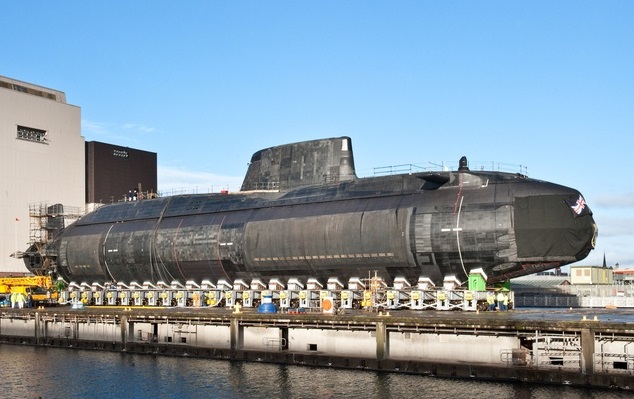
Military chiefs to hold talks on basing UK nuclear submarines in Perth
AFR Andrew Tillett, Political correspondent, Jul 20, 2022
The prospect of British submarines being based out of Perth with Australian sailors on board to undergo nuclear training will be advanced, with the head of the UK military to hold top-level talks with Australian officials next week.
The visit to Sydney and Canberra by UK Chief of the Defence Staff Tony Radakin comes as China sends fresh signals about a desire to improve ties with Australia. There have been further hints a ban on coal exports could soon end, although miners are yet to see any indications of that.
China’s foreign ministry also lauded Foreign Minister Penny Wong for advancing “positive elements” in her recent remarks on China.
A ministry spokesman welcomed Senator Wong downplaying the interpretation that her counterpart Wang Yi had issued four “demands” of Australia on how to improve relations at their groundbreaking meeting in Bali earlier this month.
While China has seized on Labor’s election as an opportunity to repair relations and the Albanese government has dialled down the rhetoric on Beijing, Canberra is still proceeding on the acquisition of nuclear-powered submarines from the UK and US under the AUKUS framework.
Admiral Radakin will meet a number of Australian officials, including recently reappointed Chief of the Defence Force Angus Campbell. In Sydney, he will attend the Indo-Pacific Chiefs of Defence conference and meet counterparts from South-East Asia and the south-west Pacific.
Plug for capability gap
Despite the war in Ukraine, sources said Admiral Radakin was “ambitious” about expanding the UK’s military presence in the Indo-Pacific and his visit was the first in a series by UK security officials and ministers to the region.
A key topic of talks with General Campbell and others will be how Britain can help Australia plug a potential capability gap between the retirement of the ageing Collins class submarines and arrival of the nuclear-powered boats, which Defence Minister Richard Marles says may not be delivered until the 2040s.
The Australian Financial Review understands this could involve the UK deploying its nuclear-powered submarines to Perth for operations in the region…………………………………………. https://www.afr.com/politics/federal/military-chiefs-to-hold-talks-on-basing-uk-nuclear-submarines-in-perth-20220720-p5b36w
AUKUS – contrived to foster the unrealistic and unattainable aims of American foreign policy

The wounded bison is thrashing about with its sole survival plan to wreck the China shop and it doesn’t care if it takes us with it. In fact, it is better to set Australia up as a primary target than Hawaii and the west coast of the US.

Anthony Albanese has not attempted to get his head around foreign relations, in particular China. He is stupidly relying on the people who advised Morrison. People like the head of ONI, the LNP favoured, Shearer and the US arms funded, ASPI. Neither should be allowed near a Labor government. They continue to push the LNP/AUKUS agenda.
https://johnmenadue.com/aukus-contrived-to-foster-the-unrealistic-and-unattainable-aims-of-american-foreign-policy/ By Bruce Haigh, Jul 20, 2022 ,
In all of my experience, AUKUS is the worst example of abuse within the so-called American alliance.
It is a prescription for failure and considerable loss of face for Australia amongst its neighbours, friends in the region and more widely spread friends and trading partners. In fact, the region has shown no support for the proposal and indicated disquiet.
Involvement with the US in the disastrous Vietnam, Iraq and Afghanistan wars should have given cause for thought, but no, a supine media, lack of debate within academic institutions and amongst what remains of an intellectual class has seen the AUKUS proposal gain ‘acceptance’ by politicians without so much as question or query. And this in the complete absence of planning detail and cost analysis.
There has been a lot of poppycock about acquiring nuclear submarines and of having them built in Australia with a lead time to delivery of 20 to 30 years. Only child politicians and their puerile advisers would be prepared to swallow such rubbish. The submarine deal was always a smokescreen to get US nuclear armed submarines based in Australia. The so-called deal was a sop to public opinion and for the moment it has worked with a China hating, US loving, Murdoch led MSM. Where is the sense in spending over $200 billion in the face of a one Trillion-dollar debt? The money would be far better spent on health, education and infrastructure.
AUKUS is nothing more than a US takeover of northern Australia as an operational base against China. Australia has rolled over and the new Minister for Defence, Marles, has gone so far as to offer full integration of the ADF into US force structures.
The most appalling defence acquisition program over 20 years has left Australia without a viable fighting force. Whose decision was it to buy the upgraded version of the Abrams tank? As an ex-tank man, I can say the decision is entirely without merit and smacks of lining US pockets at Australian taxpayer’s expense. The US has a history of foisting rubbish on the ADF, such as the F35, and Australia under leaders such as the toadying and incompetent, John Howard, of rolling over and accepting them.
Instead of weeks, which the US proposed, Labor was given just 24 hours to consider the AUKUS ‘proposal’ by the devious Morrison; it agreed in order to avoid a wedge in the face of the election. Anthony Albanese agreed to something that he knows nothing about. And to prove it he continues to grind on about nuclear submarines.
The Americans thought they were very clever in dragging the British in on the deal. Anyone but the arrant, arrogant and colonial Johnson would have demurred. The UK in AUKUS is unlikely to survive the departure of the incompetent Johnson. The British east of the Suez is the material for jokes. After Brexit they are much reduced and once the Queen dies their prestige will be on sale in second hand shops. The US made a mistake in dragging the UK in. They probably thought it would add some weight to their containment of China.
AUKUS is all about the US and its rivalry and competition with China. It wants to use what Australia has on offer, a base to confront, and when the time comes, to attack China. There is nothing in it for Australia. We are not threatened by China. It is and should remain a major trading partner.
The wounded bison is thrashing about with its sole survival plan to wreck the China shop and it doesn’t care if it takes us with it. In fact, it is better to set Australia up as a primary target than Hawaii and the west coast of the US.
Darwin will become the centre of a US centre monitoring (controlling) all sea and air movements in a wide zone embracing much of the north of Australia with what will be termed a joint operations command. Tindal is being expanded along with Stirling in order to take US arms and delivery vehicles.
The QUAD is a quad in name only. India with its strong ties to Russia was never in it beyond the extent of Modi’s ego. South Korea and Japan will always play their own game depending on who is in power in Washington and Beijing. NATO moving into the so-called Indo-Pacific is little more than a US induced wet dream on the part of Stoltenberg who has absorbed nothing of Nordic notions of social justice and dialogue. No doubt the US is pleased with the NATO announcement seeing further China containment as having been achieved.

Anthony Albanese fans the fires of AUKUS with incomprehensible talk of submarines and staying in step with allies but much more so with his inflammatory statements about China. Penny Wong has outdistanced her Coalition predecessor by leagues. She took on the very difficult task of rebuilding the relationship with China after the oafishness of Morrison and Payne over Wuhan and Covid. She is succeeding. She has deployed a nuance which is a pleasure to watch She has brought her considerable intelligence to bear. She has been subtle and tough minded. She is the person of the moment. Australia got what it needed.
Not so with Anthony Albanese. He has done his best to wreck Wong’s good work. He talks of the continuing danger posed by China, forgetting the AUKUS takeover. He says China has changed and we haven’t? What does he think Morrison did? He trashed twenty years of relationship building, including a most successful visit to Australia by Xi Jinping in November 2014. And he and Dutton banged the drums of war as an election ploy.
Anthony Albanese has not attempted to get his head around foreign relations, in particular China. He is stupidly relying on the people who advised Morrison. People like the head of ONI, the LNP favoured, Shearer and the US arms funded, ASPI. Neither should be allowed near a Labor government. They continue to push the LNP/AUKUS agenda.
Penny Wong is not in that camp, which is lucky for the rest of the country. Albanese must learn to do his own thinking and to find the courage to sack and distance himself from the pernicious influence of Morrison’s dangerous and undermining advisers.
“It’s about time we acted like we’re in a crisis”: Greens to push Labor ‘further and faster’
“It’s about time we acted like we’re in a crisis”: Greens to push Labor ‘further and faster’
Greens leader Adam Bandt questions whether Albanese government really wants to end the climate wars. “We’re in a crisis and we need to act like it.”
1 This month
17 October, Free Public Talk on Nuclear Issues in South Australia
David Noonan will speak on public interest concerns over the new Roxby Downs Indenture Act 2026 on BHP copper-uranium mining and ore processing in SA, and on how AUKUS may face SA with a High-Level nuclear waste agenda.
Dr Jim Green will discuss international developments in the field of nuclear power including ‘small modular reactors’ and Generation 4 ‘advanced’ nuclear reactor concepts.


Help Aunty Sue Protect Her Land and Sacred Sites From Destructive Rocket Testing.
.

Australians deserve the truth
about
AUKUS – https://aukuspublicinquiry.com/

PETITION – To: Prime Minister Anthony Albanese and the Australian Labor Government

of the week – Australians for War Powers Reform (AWPR)
To see nuclear-related stories in greater depth and intensity

