Caitlin Johnson, rogue journalist, on corporate control of the media

The report says that toward this end the US government has deliberately circulated false or poorly evidenced claims about impending chemical weapons attacks, about Russian plans to orchestrate a false flag attack in the Donbass…………………. So they lied. They may hold that they lied for a noble reason, but they lied. They knowingly circulated information they had no reason to believe was true, and that lie was amplified by all the most influential media outlets in the western world.
Nowadays the CIA collaboration happens right out in the open, and people are too propagandized to even recognize this as scandalous. Immensely influential outlets like The New York Times uncritically pass on CIA disinfo which is then spun as fact by cable news pundits. The Washington Post has consistently refused to disclose the fact that its sole owner has been a CIA contractor when reporting on US intelligence agencies as per standard journalistic protocol.
Ten Times Empire Managers Showed Us That They Want To Control Our Thoughts
https://caitlinjohnstone.com/2022/05/29/ten-times-empire-managers-showed-us-that-they-want-to-control-our-thoughts/ Caitlin Johnstone, 30 May 22,
The single most overlooked and under-appreciated aspect of our society is the fact that immensely powerful people are continuously working to manipulate the thoughts we think about the world. Whether you call it propaganda, psyops, perception management or public relations, it’s a real thing that happens constantly, and it happens to all of us.
And its consequences shape our entire world.
This should be at the forefront of our attention when examining news, trends and ideas, but it hardly ever gets mentioned. This is because the mass-scale psychological manipulation is succeeding. Propaganda only works if you don’t know it’s happening.
To be clear, I am not talking about some kind of wacky unsubstantiated conspiracy theory here. I am talking about a conspiracy fact. That we are propagandized by people with authority over us is not seriously in dispute by any well-informed good faith actor and has been extensively described and documented for many years.
More than this, the managers of the US-centralized empire which dominates the west and so much of the rest of the world have straightforwardly shown us that they propagandize us and want to propagandize us more. They have shown us with their actions, and they have at times come right out and told us with their words.
Here are just a few of those times.
1. Operation Mockingbird
Let’s start with maybe the best-known example. In 1977 Carl Bernstein published an article titled “The CIA and the Media” reporting that the CIA had covertly infiltrated America’s most influential news outlets and had over 400 reporters who it considered assets in a program known as Operation Mockingbird.
It was a major scandal, and rightly so. The news media are meant to report truthfully about what happens in the world, not manipulate public perception to suit the agendas of spooks and warmongers.
But it only got worse from there.
2. Intelligence operatives now just openly working in the media
Continue readingCancer patients forced to testify anonymously in Fukushima nuclear disaster case
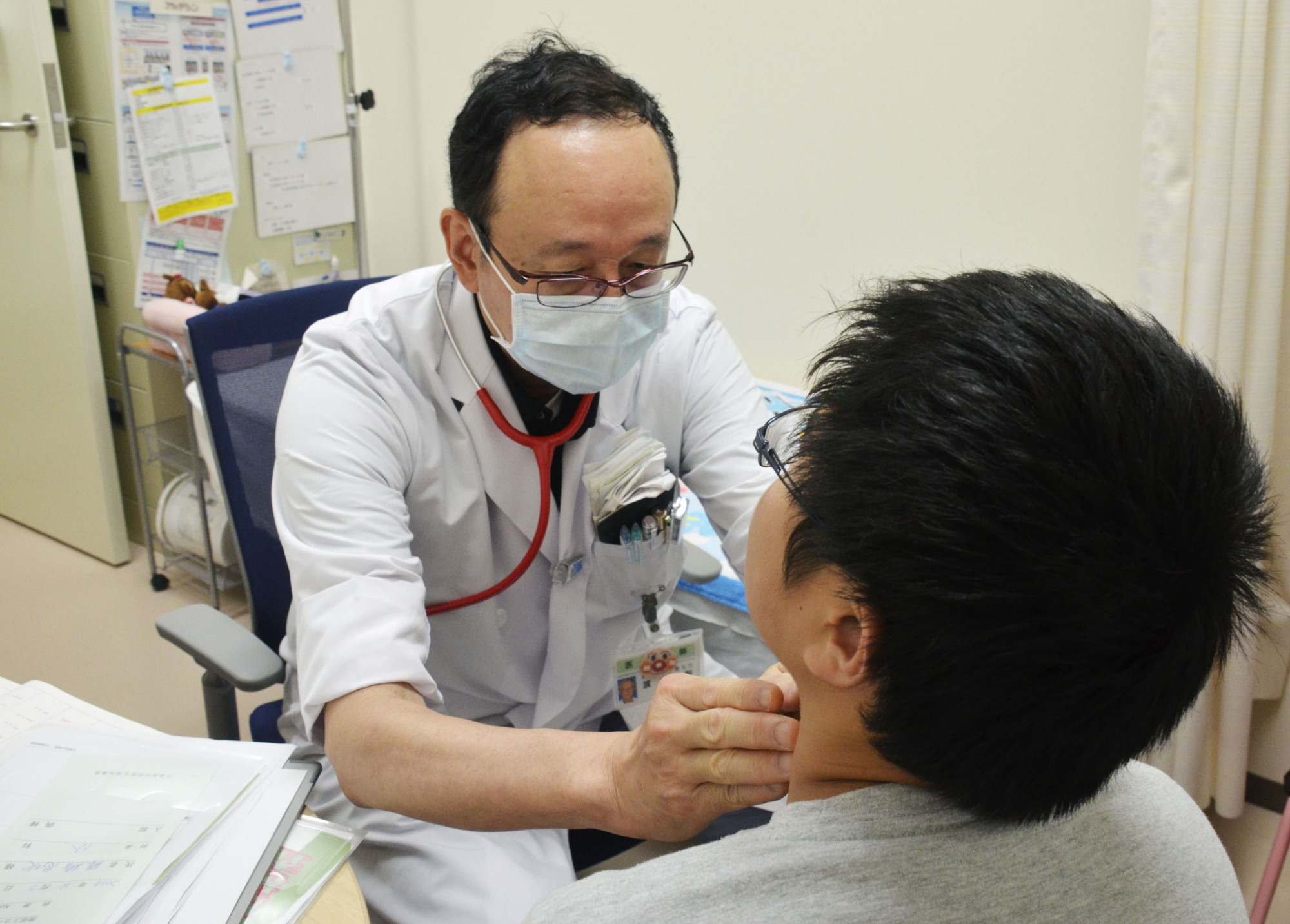
Cancer patients forced to testify anonymously in Fukushima nuclear
disaster case. The plaintiffs are facing a backlash as they argue that the
2011 disaster is the cause of their ill health. A court in Japan this week
began hearings against the operator of a Fukushima power plant over cases
of thyroid cancer in children allegedly linked to the 2011 nuclear
disaster.
Six people are seeking Y616 million (£3.8 million) in damages
from Tokyo Electric Power Co (TEPCO), claiming they were exposed to
radiation after a massive tsunami destroyed the plant’s cooling systems and
caused three of the six reactors to suffer meltdowns.
The people – all aged between 6 and 16 at the time – have been living with the effects of that
day ever since. Four had their thyroid removed entirely and will need to
take hormone medication for the rest of their lives. The other two had
portions of their thyroids removed. One of the plaintiffs said the cancer
has spread to their lungs.
Telegraph 29th May 2022
Debris in sediment, bottom of Fukushima Unit 1 Neutron radiation detected at high levels

By Mari Yamaguchi Associated Press
May 26, 2022
A Tokyo court has begun hearings in a lawsuit seeking nearly $5 million in damages for six people who were children in Fukushima at the time of its 2011 nuclear power plant disaster and later developed thyroid cancer
TOKYO — A Tokyo court began hearings Thursday in a lawsuit seeking nearly $5 million in damages for six people who were children in Fukushima at the time of its 2011 nuclear power plant disaster and later developed thyroid cancer.
The plaintiffs are suing the operator of the nuclear plant, saying radiation released in the accident caused their illnesses.
It is the first group lawsuit filed by Fukushima residents over health problems allegedly linked to the disaster, their lawyers say.
One plaintiff, identified only as a woman in her 20s, testified from behind a screen that she had to give up plans to attend university because of repeated operations and treatments.
“Because of the treatments, I could not attend university, or continue my studies for my future job, or go to a concert. I had to give up everything,” she said. “I want to regain my healthy body, but that’s impossible no matter how hard I wish.”
She and the five other plaintiffs are seeking a total of 616 million yen ($4.9 million) in damages from Tokyo Electric Power Company Holdings for allegedly causing their cancers.
On March 11, 2011, a magnitude 9.0 earthquake and massive tsunami destroyed the Fukushima plant’s cooling systems, causing three reactor cores to melt and release large amounts of radiation. Critics say the plant operator should have known that a large tsunami was possible at the site.
The plaintiffs, who were 6 to 16 years old at the time of the accident and lived in different parts of Fukushima, were diagnosed with thyroid cancer between 2012 and 2018, their lawyers said.
The plant operator told the court that they were not exposed to enough radiation to cause cancer, citing tests of 1,080 children from three cities around the plant that showed about 55% were not exposed and none received more than 50 millisieverts, the annual limit for nuclear workers.
An increase in thyroid cancer was found among children following the 1986 Chernobyl nuclear disaster in Ukraine.
The Fukushima prefectural government tested 380,000 residents aged 18 or younger at the time of the accident for thyroid cancer. About 300 were diagnosed with cancer or suspected cancer.
That occurrence rate, about 77 per 100,000, is significantly higher than the usual 1-2 per million and can only be linked to radiation from the accident, the plaintiffs’ lawyers said.
Prefectural officials and experts have said the high level of thyroid cancer found in Fukushima is due to an overdiagnosis, which might have led to unnecessary treatment.
Kenichi Ido, one of the lawyers, said none of the cases involve an overdiagnosis and that the plant operator should be held accountable for radiation exposure unless it can prove otherwise.
The plaintiff who testified Thursday said she walked from home to her high school five days after the tsunami, just as the reactors were undergoing meltdowns.
Three other plaintiffs who attended the hearing were also behind a partition to protect their privacy because of criticism on social media accusing them of fabricating their illnesses and hurting the image of Fukushima, the lawyers said.
Ido said many people with health problems feel intimidated to speak out in Fukushima and that he hopes the lawsuit will prove a correlation between radiation and the plaintiffs’ cancers “so that we can have a society in which people can talk freely about their difficulties.”
The government was slow in responding to the crisis, and evacuations in many places were delayed due to a lack of disclosure of what was happening at the nuclear plant. Residents who fled in their cars clogged roads and were stranded for hours outside while radiation spread from the damaged reactors. Some residents headed to evacuation centers in the direction of the radiation flow.
https://www.claimsjournal.com/news/international/2022/05/27/310693.htm
If a major earthquake were to occur… “Will it be safe?” concerns the chairman of the regulatory committee after the damage to the foundation of the pressure vessel at the Fukushima Daiichi Unit 1 reactor is discovered

May 25, 2022
At a press conference on May 25, Chairman Toyoshi Sarada of the Nuclear Regulation Authority of Japan (NRAJ) said, in response to an investigation that found rebar exposed in part of the reinforced concrete foundation supporting the Unit 1 reactor pressure vessel at TEPCO’s Fukushima Daiichi Nuclear Power Plant (Okuma and Futaba, Fukushima Prefecture), “I have concerns about whether it will be safe when a major earthquake occurs. I have concerns about whether it will be safe in the event of a major earthquake. If we could reinforce it, we would.
Sarada pointed out that “it is possible to speculate” about the possibility that nuclear fuel (debris) melted down during the accidental meltdown (core meltdown) and broke through the pressure vessel, melting the concrete (1.2 meters thick) of the foundation. He expressed a sense of crisis, saying, “It is necessary to consider what would happen if the foundation collapsed.
He also recognized that it would be difficult to reinforce the foundation in a nuclear reactor with extremely high radiation levels, and said, “We cannot take too long when considering earthquake resistance, and we should remove the debris as soon as possible, even if it is just an earpick, and analyze its condition.
TEPCO placed an underwater robot into the containment vessel from March 17 to 21 to investigate its interior. Near the base of the bottom of the containment vessel, several lumpy deposits were found that appeared to be debris. Although the accident caused the meltdown of Units 1-3, this was the first time that the exposure of rebar inside the concrete was confirmed. (Kenta Onozawa)
https://www.tokyo-np.co.jp/article/179502?fbclid=IwAR1Oq1_rEddpUnUyTDUjJXd494WNQk3_XfAyPMVz3zFFWVqZGcsV3X10qSY
Plaintiff diagnosed with thyroid cancer after the Fukushima nuclear accident: “I have suffered without telling anyone

May 25, 2022
In January 2022, children who suffered from thyroid cancer and were living in Fukushima Prefecture at the time of the accident at TEPCO’s Fukushima Daiichi Nuclear Power Plant, aged between 6 and 16, became plaintiffs and filed a lawsuit against TEPCO, claiming that their thyroid cancer was caused by the nuclear accident and demanding that the company clarify the causal relationship.
This is the first class action lawsuit filed against TEPCO 11 years after the accident, claiming the effects of radiation exposure.
All of the plaintiffs have had their thyroid glands removed, and four of the six have relapsed; the four who have undergone two or more surgeries and had their entire thyroid glands removed must continue to take hormone medication for the rest of their lives. Another child has been diagnosed with distant metastasis to the lungs.
We interviewed one of the plaintiffs, who said, “I have suffered for the past 11 years without being able to tell anyone. (Writer: Chia Yoshida)
Announcement of acceptance with the possibility of exposure to radiation
Sawa Mukai (15 years old at the time of the accident, pseudonym) was an athletic child who was affected by the disaster on March 11, 2011, the day of her junior high school graduation ceremony. She recalls how eerie it was to see a blizzard immediately after the earthquake, followed by a sky that suddenly cleared up.
The next day, she helped clean up a relative’s house that had been completely destroyed by the earthquake. The road in front of the relative’s house was jammed with cars heading in a westerly direction.
It was strange because there is not usually a lot of traffic on this road, but when I thought about it later, I realized that they were cars evacuating from the nuclear power plant,” Mukai said.
On March 12, Fukushima Daiichi Nuclear Power Plant Unit 1 exploded, Unit 3 exploded on March 14, Unit 2 was in a critical condition, and Unit 4 exploded on March 15.
The next day, March 16, was the announcement of acceptance to high schools in Fukushima. Many junior high school students in the prefecture went out to the high schools they had applied to in order to check their numbers.
Although many teachers and staff members were opposed to the announcement of acceptance in the midst of the possibility of children being exposed to radiation, the prefecture decided to go ahead with the announcement. Mr. Mukai was one of those who had no choice but to go to the acceptance announcement.
Kenichi Ido, a lawyer representing the plaintiffs, points out that “elementary and junior high school students who were unprotected at the time of the accident were exposed to radiation, which may have led to their illnesses.
“We often hear stories of students who were engaged in club activities as usual, or who went to the March 16th prefectural high school acceptance announcement,” he said. The government has assumed that there are no health hazards caused by the nuclear accident, but this is not the case,” said Ido.
Even if the radiation dose rate is above the standard value, “Oh, well…
The risk of radiation exposure lurked even in high school.
Although Ms. Mukai was fond of sports, she gave up her outdoor sports club, which she had planned to join. His mother was concerned that he should not be exposed to radiation as much as possible.
Although warning poles were placed at hot spots (areas with locally elevated radiation levels) on campus to alert people to the danger, once they became accustomed to the area, everyone began to pass by them.
Gradually, no one would wear masks to avoid internal exposure. Mr. Mukai wore a mask until the end, but in the summer of 2011, he began to remove it because it was too hot.
At the time, the Ministry of Education, Culture, Sports, Science and Technology (MEXT) had a standard for school grounds that they could only be used if the air dose rate was “less than 3.8 μSv per hour,” but “It’s over. But I once heard a teacher say, “Well, that’s OK.
The radiation level at home was also high. In some places, the radiation levels were 100 times higher than before the accident. Even indoors, the levels were 60 times higher than before the accident. The family decontaminated the area with a high-pressure washer, but the levels did not go down that much.
Mr. Mukai was unable to join an athletic team, so he focused on his schoolwork, aiming to attend a university in Tokyo. Thanks to his efforts, he was accepted with a recommendation. She was so happy that she started living in Tokyo in early March (before entering university),” she smiles.
I will never forget the doctor’s words: “There is no cause-and-effect relationship between the nuclear accident and my life.
There were many places to play in Tokyo, I started a part-time job, and my new life was enjoyable.
However, around that time, she began to experience some physical problems. Her body swelled, her menstrual periods became irregular, she gained weight, and her skin became rough. And when she swallowed water or saliva, she felt discomfort in her throat.
When she consulted her mother, she was told that it might be a thyroid-related condition and that she should get checked out as soon as possible. Mr. Mukai was busy with university classes and other obligations, so he missed the second thyroid checkup conducted by the Fukushima prefectural government.
Soon after, Ms. Mukai took the test along with other children at a large-scale thyroid screening site in Fukushima Prefecture. The test took only a minute or so for the others, but the process stopped at Mr. Mukai’s spot.
While applying the echo, Ms. Mukai saw the doctor nod his head and wondered if something was wrong.
Later, the results arrived at his parents’ home, and his mother contacted Mr. Mukai in Tokyo to inform him of the “reexamination. Fukushima Medical University called her twice and asked her to retest immediately. Ms. Mukai said that by that time she had a dim feeling that she might have thyroid cancer.
In the fall of 2015, he was told at the hospital that he had thyroid cancer. Mukai will never forget being told by the doctor that there was no causal relationship between the nuclear accident and the cancer, even though he had not asked any questions at the time.
I wondered how they could possibly know that,” Mukai said.
She then underwent surgery to remove the left half of her thyroid gland at the age of 20.
He was 20 years old. “I hope that other sufferers will be in a situation where they can raise their voices,” he said.
In consideration of his health condition, he quit the part-time job he had enjoyed.
After graduating from university, he found a job, but his health deteriorated due to the hard work. She quit the job she had longed for, and now works at a job that is less demanding on her body.
If her numbers worsen, she has to resume taking her medication, and she lives her life constantly worrying about her health.
I gave up a lot of things myself, but there are many more people younger than me who had to make the choice to give up,” Mukai said.
People who dropped out of college. Some have dropped out of college, others have been unable to find work. Some confided in me that they had given up on love and marriage and could not even think about falling in love with someone. I was shocked by all of them.
As she recounted her own experiences, Ms. Mukai was considerate of the other plaintiffs and those who had contracted thyroid cancer but were not plaintiffs.
There is a situation where other small children cannot speak up,” she said. I hope that by raising our voices this time, other sufferers will be able to speak out,” said Mukai.
The incidence of childhood thyroid cancer is generally said to be “1 to 2 per million children.
However, in Fukushima Prefecture, according to a prefectural survey, 273 children were diagnosed with suspected malignant (cancerous) thyroid cancer through cytological puncture diagnosis, and 226 children have already undergone surgery. When national cancer registries and regional cancer registries are combined, more than 300 people have been diagnosed with thyroid cancer.
The aforementioned lawyer Ido also commented, “In Fukushima Prefecture today, people cannot talk about the fact that they have thyroid cancer because it is a sensitive issue, and they are isolated from the rest of the community.
Ms. Mukai, too, had only been able to talk about her thyroid cancer to those close to her. However, this changed when she decided to file the lawsuit. As a result of calling for support for the trial through crowdfunding, he raised approximately 17.62 million yen, far exceeding his goal of 10 million yen.
I was very happy that 1,966 people donated to the trial and sent messages of support. The other plaintiffs were also happy,” said Mukai.
My fears that I would be discriminated against or that I would not be understood were slightly allayed.
On the other hand, however, on the same day that the lawsuit was filed, five former prime ministers, including Junichiro Koizumi and Naoto Kan, sent a letter to the European Commission, the executive body of the European Union, stating that “many children are suffering from thyroid cancer,” to which incumbent Diet members and Fukushima Prefecture Governor Masao Uchibori protested, calling the information “false,” “inappropriate,” and “regrettable. The letter was sent to the European Commission, the executive body of the European Union (EU).
They said, “We are surprised and indignant that you would make such a statement even though you know that there are children who have developed thyroid cancer. Because I have seen other plaintiffs who are truly suffering, that statement was unforgivable,” said Mukai.
Mukai, who felt that this trial would not be an easy one, has continued to consider the causal relationship between the nuclear accident and thyroid cancer by attending study sessions with experts and reading the complaint.
Among the plaintiffs, there were some who were so mentally distressed that they could not eat rice, and this made me feel more strongly that something had to be done.
I believe that there is a causal relationship between the accident and thyroid cancer, and although I cannot do it alone, I would like to fight the trial in cooperation with the plaintiffs and the defense team,” said Mukai.
The first oral argument will be held at the Tokyo District Court on May 26 at 14:00. Plaintiffs are scheduled to make statements.
The plaintiffs and their lawyers in the thyroid cancer trial are seeking continued support for the trial through the crowdfunding service “READYFOR.
Chia Yoshida: Freelance writer. After the Fukushima Daiichi nuclear power plant accident, she has continued to cover victims and evacuees. She is the author of “Reporto: Mother and Child Evacuation” (Iwanami Shinsho), “Sotoko no Fukushima: Nukei no Koto o Koto wo Ikiru Hitobito” (After Fukushima: People Living After the Nuclear Accident) (Jinbunshoin), “Korunin: Futaba-gun Firefighters’ 3/11” (Iwanami Shoten), and co-author of “Nukei Hakusho” (White Paper on Nuclear Evacuation) (Jinbunshoin).
https://www.bengo4.com/c_18/n_14499/?fbclid=IwAR3_UvXqIe0qKimhfOjjsd4cx4PD48RIaSElF8EjAVvOJDxjorxy7JYE2QM
Putin Ready For “Serious Negotiations” With Zelensky, But Says Western Arms ‘Destabilizing’ Situation
https://www.zerohedge.com/geopolitical/russia-ready-serious-negotiations-zelensky-western-arms-are-destabilizing-situation. BY TYLER DURDEN, SUNDAY, MAY 29, 2022 –
Russian President Vladimir Putin in a Saturday phone call with his French and German counterparts Emmanuel Macron and Chancellor Olaf Scholz said Moscow stands “ready” to re-engage in peace talks with the Ukrainian government. The phone call came as some Western officials have belatedly admitted that Russian forces are making steady gains in the Donbas, also as the Luhansk is about to come under total Russian control.
The focus of the call included Macron and Scholz urging the Russian leader to immediately hold “serious negotiations” with President Zelensky; however the European leaders reportedly requested that captured Azov battalion members from Mariupol must be released, which the Kremlin balked at, also given the group’s neo-Nazi identity.
A follow-up Kremlin statement said of the call that “Special attention was given to the state of affairs on the negotiating track, which is frozen because of Kiev. Vladimir Putin confirmed Russia is open to resuming the dialogue.”
But neither side as yet appears willing to make serious concessions. For example, while Zelensky has in past days admitted an increasingly “difficult” situation for Ukrainian forces fighting in Donbas, he’s still pledging that he’ll never recognize Russian authority over any Ukrainian territory, even including Crimea.
In his latest statements in a Friday night speech, he vowed that Donbas will be “Ukrainian again”…
“That’s why we have to increase our defense, increase our resistance, and Donbas will be Ukrainian again. Even if Russia will bring all suffering and ruination to Donbas, we will rebuild every town, every community. There’s no real alternative,” Zelensky stressed.
Putin, for his part, appears unwilling to get serious about negotiations so long as huge quantities of Western weapons are pouring into the Ukrainian side. He warned Macron and Scholz in the Saturday call that continuing the arms flow is “dangerous”, saying the situation “risks of further destabilization of the situation and aggravation of the humanitarian crisis,” according to a Kremlin statement.
The Russian leader condemned the dangerous “ongoing pumping of Ukraine with Western weapons…” as the conflict continues to slide into a full-blown proxy war between Russia and NATO.
This as the Biden administration is widely reported to be readying authorization of long-range missiles for Ukraine, also as it appears Stinger anti-air rockets are being transported to Kiev in larger numbers.
Putin also discussed with Macron and Scholz the growing global food and wheat supply crisis due to Black Sea port blockages… “Based on specific data, Vladimir Putin explained the real reasons for the difficulties with food supplies, which were the result of the misguided economic and financial policies of Western countries, as well as the anti-Russian sanctions they imposed,” the Kremlin readout said. Russian officials have also laid central blame on Ukrainian forces mining their own ports as well.
The Kremlin statement emphasized, “Russia is ready to help find options for unhampered exports of grain, including exports of Ukrainian grain from the Black Sea ports”. And further: “Increasing supplies of Russian fertilizers and agricultural products will also help reduce tension on the global food market, which, of course, would require removing the relevant restrictions.”
A warning from France, about nuclear delusions of grandeur,
Nuclear: ” Industrialists are in denial, politicians know nothing about it “
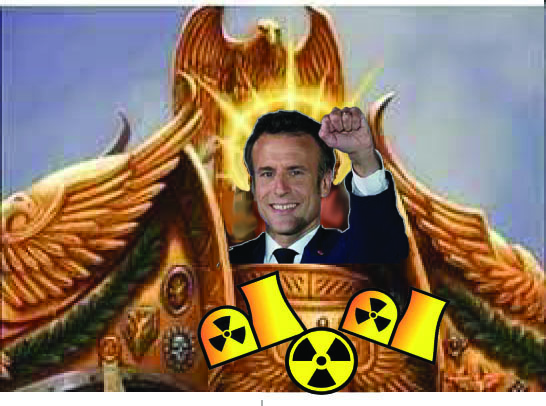
France had the madness of grandeur in wanting to build more and more powerful reactors.
Gaspard d’Allens and Émilie Massemin (Reporterre) Reporterre 28th May 2022
Nuclear ” unacceptable “, ” industrial disaster ” of the EPR , France and its ” delusions of grandeur “… Pillar of the fight against the atom, the engineer Bernard Laponche warns of the dangers of this technology.
You are reading Bernard Laponche’s great interview. The first part is here .
Reporterre — How do you analyze the return to grace of the nuclear industry by Emmanuel Macron, with the construction of six EPR2s and the study of eight additional ones ?
Bernard Laponche — It’s communication ! This operation is part of the mythology that goes back to General de Gaulle, and that Emmanuel Macron has taken over, according to which civil and military nuclear power is the basis of France’s independence.
EDF ‘s nuclear fleet is going through its worst crisis since its birth. The stalemate of the Flamanville EPR site , the chain shutdowns of reactors due to problems of corrosion and cracks, the problems at the Orano reprocessing plants in La Hague and the manufacture of Mox [1] in Marcoule, EDF on the verge of bankruptcy … This is unheard of. Between 2010 and 2020, nearly a hundred incidents occurred throughout the park. Bernard Doroszczuk, president of the Nuclear Safety Authority ( ASN ), recognized this on April 7, 2021 during a hearing in the Senate : “ A nuclear accident is possible in France. »
In this situation, it seems very difficult to hold a triumphant speech on nuclear power. But the industrialists are in denial, the politicians who promote it know nothing about it. All are surfing on the argument of the fight against climate change to promote the sector.
Why nuclear won’t save the climate ?
Greenhouse gas emissions are far from negligible. Nuclear fissions in an operating reactor, the source of the energy produced, do not effectively emit CO₂ . But all nuclear activities in a plant in operation – 800 employees on average – or during shutdowns for maintenance work, yes. These activities also very often cause leaks of gases that are very active in global warming, such as refrigerants (1,000 times warmer than CO₂) and especially sulfur hexafluoride (23,500 times more warming). The extraction of uranium from the mines of Canada, Niger and Kazakhstan, the construction of nuclear plants and power stations, the manufacture of nuclear fuels, the transport and storage of radioactive materials and waste also emit considerable quantities of CO ₂ and other greenhouse gases. For example, the work for each fourth ten-year inspection of a 900 megawatt ( MW ) reactor — there are thirty-two of them — mobilizes 5,000 workers, between six months and a year.
………………………………….. Take the case of the Flamanville EPR : very high CO₂ emissions during construction — several thousand cubic meters of concrete, hundreds of tons of steel and thousands of workers since 2007 — and we do not know still not sure if it will start one day, or when.
Today, nuclear represents only 10 % of the world’s electricity production and only makes it possible to avoid 2.5 % of the world’s greenhouse gas emissions. For it to contribute significantly to the fight against climate change, its share in the global electricity mix would have to be multiplied by at least five. Which, given the duration of construction of a plant, is absolutely technically impossible, even in fifty years.
Finally, due to accelerating global warming, power stations on the banks of the river will increasingly be confronted with warming waters and the reduction of this resource, and those on the seashore with rising ocean waters, caused by melting ice.
But above all, the nuclear issue cannot be reduced to greenhouse gas emissions. Other factors must be taken into account when choosing the electricity mix: the risk of a serious or major accident , the radioactive waste which accumulates for thousands of years, the proliferation of nuclear weapons through the enrichment uranium and the production of plutonium, via the reprocessing of irradiated fuel. This technique is unacceptable for the threat it poses to humanity.
As you remember, the setbacks accumulate for the sector. Which do you think is the most serious ?
The management of radioactive waste is very problematic. In the other nuclear-powered countries, irradiated fuel is considered waste as soon as it leaves the reactors. France, on the other hand, reprocesses its irradiated fuel to produce plutonium, initially for the atomic bomb. Nearly 70 tons of this radioactive material are currently stored at La Hague. The plutonium produced is now used to manufacture Mox fuel. Used in about twenty 900 MW reactors , it is more radioactive and more dangerous than ordinary enriched uranium fuel and is not reprocessed once it is irradiated.
The La Hague plant is one of the most dangerous installations in the world. It stores in its pools, unprotected against external attacks, the equivalent of 100 reactor cores in irradiated fuel. And she is aging. Some evaporators are down, preventing the site from operating at full capacity. The risk of bottling the fuels to be reprocessed and saturation of the storage pools is increasing.

It is urgent to stop reprocessing. The Nuclear Safety Authority recently mentioned the difficulties that are accumulating in the management of irradiated fuels. But the sector is stubborn, and prefers to mitigate the risk of saturation by asking to build a new large storage pool .
Even if we stopped reprocessing, the question of waste would still arise. What do you think of the only seriously studied project in France to bury them 500 meters underground in Bure (Meuse) ?
………………….. There are many criticisms and questions about this project, in particular from the Environmental Authority , independent experts, environmental organizations and local populations: on the legacy to future generations of hazardous waste for hundreds of thousands of years, on the risks during the 150-year period of construction and operation, on the choice of clay, on the risks of fire, hydrogen production, water pollution, etc. Such experiences abroad of deep burial of chemical or nuclear waste have proven to be catastrophic: Stocamine in France , Asse in Germany , WIPP in the United States. In addition, the cost of Cigéo, not yet estimated [4] , would be considerable, not to mention the CO ₂ emissions of such a project………………………………..
The number of reactors currently shut down is historically high. How do you assess the state of the park ?
France had the madness of grandeur in wanting to build more and more powerful reactors.
After the French natural uranium graphite gas ( UNGG ) model was abandoned in 1969, France bought the American Westinghouse license for pressurized water reactors. Framatome [5] was tasked with implementing the 1974 Messmer plan and delivered the first 900 MW reactors under Westinghouse license. EDF has thus built 34 reactors in less than ten years, which is a performance.
Framatome then developed a 1,300 MW model , then achieved a further power jump of around 1,450 MW . This latest model presented design problems from the start. The Civaux and Chooz plants were delivered two years late.
The difficulties continued with the EPR , of 1,650 MW , a veritable industrial disaster. The Flamanville EPR began construction in 2007 and was due to start in 2012. It has accumulated failures: concrete of its platform, welds to be redone several times, refusal of control command, falsification of equipment certificates, delivery of a non-compliant tank… The cost of the EPR , initially established at 3 billion euros, is now estimated at 19 billion euros by the Court of Auditors . The two Taishan reactors in China, built faster and commissioned in 2018 and 2019, are shut downsince the discovery of radioactive leaks from damaged fuel sheaths – without the cause of this phenomenon being understood yet.
……….. Every time you increase the power of a reactor, you have to redesign everything. The calculations to be performed are extremely complex. But if these leaks turned out to be linked to a design problem, it would be catastrophic for EDF , because all the EPRs would be affected.
Finally, for several months, EDF has been faced with a problem of corrosion and cracks on the emergency cooling circuits connected to the primary circuit of several reactors in the fleet, primarily its most powerful reactors (1,450 megawatts) at Civaux and Chooz, but also those of 1,300 MW and probably those of 900 MW . The Civaux, Chooz and Penly reactors have been shut down for several months and will perhaps remain so for years, for inspections after cutting and examination of the parts concerned in the safety cooling circuits ( RIS ) and the cooling circuits at the stop ( RRA), for repair. All reactors must be checked by the end of 2023. The cause of these faults is still poorly explained [6] and would be multifactorial: quality of the steel of the parts, method of welding, layout of the circuits…
Currently, between a third and a half of EDF ‘s reactors are shut down due to these difficulties and almost daily incidents on such and such a reactor.
During the war in Ukraine, civilian nuclear power became a military target with the seizure of the Chernobyl and Zaporijia power plants. How do you view this new risk ?
In Ukraine, the Chernobyl power plant, located on the northern border with Belarus, was equipped with four Soviet RBMK reactors commissioned between 1974 and 1983. After the 1986 disaster on reactor 4, the other three were definitively stopped between 1991 and 2000. There now remains on the site the destroyed reactor containing the molten core protected by a sarcophagus, a new arch intended to confine the radioactivity, but not at all designed to withstand strikes ; three reactors to be dismantled ; as well as storage facilities for irradiated fuel and radioactive waste. Many workers remain on site. The entry of Russian tanks into the prohibited fenced area of 2,600 km 2produced significant resuspension of radioactive aerosols and air contamination. Russian soldiers who dug trenches were irradiated. On March 30, the Russian army began to evacuate the Chernobyl site.
( Zaporizhia)…………………………………..The reactors, even shut down, and the storage facilities for irradiated fuels, must be supplied with cooling water and therefore constantly supplied with electricity. They are therefore extremely fragile vis-à-vis any external aggression in a situation of armed conflict or terrorist attack. Even if the reactor itself is not targeted, any bombardment, missile or shell can lead to a loss of water, by the piercing of a pipe for example, or of electricity by loss of the network or lack of fuel for emergency diesels. With the key to a risk of serious accident as in Three Mile Island (United States), even major as in Fukushima and Chernobyl. This intrinsic fragility is a warning for all nuclear plants and power stations in the world.
Reporterre 28th May 2022 https://reporterre.net/Nucleaire-Les-industriels-sont-dans-le-deni-les-politiques-n-y-connaissent-rien
Cancer patients seek damages from Fukushima nuclear plant — Fukushima 311 Watchdogs

Lawyer Kenichi Ido, second left, sitting among other lawyers representing plaintiffs who were children in Fukushima at the time of the 2011 nuclear disaster and later developed thyroid cancer, speaks during a news conference after a trial in Tokyo, Thursday, May 26, 2022. A Tokyo court began hearing a case Thursday seeking nearly $5 million […]
Cancer patients seek damages from Fukushima nuclear plant — Fukushima 311 Watchdogs
May 29 Energy News — geoharvey

Science and Technology: ¶ “OpenOA Software Improvements Illuminate Wind Plant Performance” • The US National Renewable Energy Laboratory upgraded its Open Operational Assessment software, which helps demystify wind plant operations for operators. One new feature of version 2.3 is a wind plant layout visualization for interactive maps of wind farms. [CleanTechnica] Wind plant (Dennis Schroeder, […]
May 29 Energy News — geoharvey
Labor urged to act to prevent Julian Assange extradition
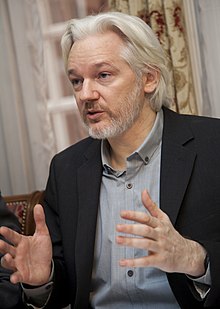
https://www.thesaturdaypaper.com.au/news/politics/2022/05/28/labor-urged-act-prevent-julian-assange-extradition#mtr, 28 May 22, The legal case against Julian Assange is a game of luck and whim. Any day now, the British home secretary, Priti Patel, is expected to rubber stamp his extradition to the United States. What will happen to him there is uncertain.
The Westminster Magistrates’ Court formally approved his extradition on April 20 and Patel has until May 31 to announce whether it will happen. If convicted of espionage in the US, Assange could be sentenced to 175 years in prison. His legal team argue he would likely kill himself.
There is one glimmer of hope for the WikiLeaks founder, however, bound up in last weekend’s Australian election result. The victory of Anthony Albanese, a supporter of the journalist, has reignited calls to halt the extradition.
Albanese has said that while he didn’t sympathise with Assange for some of his actions, he could not see any purpose to keeping him in jail.“Assange’s appeal is like a game of extradition snakes and ladders. He managed to take his argument about US prison conditions all the way to the door of the Supreme Court, but they rejected it, so he slid back down to the magistrates’ court where he started.”
“The prime minister, Mr Albanese, has previously said ‘enough is enough’. [Then shadow] Attorney-General Mark Dreyfus issued a statement last year confirming that Labor wanted the matter ‘brought to an end’,” says lawyer and human rights activist Kellie Tranter, who is a former WikiLeaks Party senate candidate. “So it remains to be seen whether such statements will result in the new government requesting that the US drop the case.”
She was “cautiously optimistic” about the case of Assange, who faces 17 charges under the US Espionage Act relating to the publication of classified documents and information related to US war crimes.
“It is helpful that the Greens – who have been calling for the Australian government to take action in the Assange case for some time – may hold the balance of power in the senate,” Tranter added.
Earlier this week, Albanese travelled to Japan for a meeting of the Quad leaders – from India, Japan, the US and Australia – to deliver a message about Australia’s policy changes.
Supporters including Tranter had urged the Department of Foreign Affairs and Trade (DFAT) and the Department of the Prime Minister and Cabinet to include the whistleblower on the agenda, and not just as a sideline issue.
The meeting was the “ideal opportunity” for Albanese to speak with US President Joe Biden and British Prime Minister Boris Johnson to request that Assange be allowed to come home, said Greg Barns SC, an adviser to the Australian Assange campaign.
A spokesperson for the Department of the Prime Minister and Cabinet said they were unable to provide comment on Quad agenda items. Comment was being sought from DFAT.
Stella Assange, who married the WikiLeaks founder in Belmarsh prison this year and is the mother of their two children, told The Saturday Paper the case had become political. She insisted the government had a duty to protect its citizens.
“By failing to act, it’s not just negligent; it shows that whoever is in office that isn’t acting is not fit for office,” the human rights lawyer said. “This can end today if the Australian government decides to do something about it.”
Every human rights organisation in the world had said the extradition of the Townsville-born computer hacker, editor and publisher should be stopped, she said. The latest to speak out is the Council of Europe.
Earlier this month, then Foreign Affairs minister Marise Payne and her Labor shadow, Penny Wong, claimed Australia couldn’t intervene, as the matter was before the courts.
But former British Labour Party leader Jeremy Corbyn, speaking to The Saturday Paper, rubbished the claim. The MP pleaded to Australia to “speak up for your own”.
“Whilst in Britain there are – for good reason – constraints about raising [it] in parliament because it’s a sub judice matter, that does not apply in Australia,” Corbyn said.
“There is no legal case in Australia. So there’s nothing to stop every Australian politician speaking up with Julian Assange, and I think they should. Please do, because it will help the freedom for journalists everywhere.”
Barns said there was “plenty of political support” for Albanese to ensure the whistleblower does not face an effective death penalty in the US. He pointed out that the Bring Julian Assange Home Parliamentary Group had 30 members from every party before the election. This is expected to increase, Assange’s brother, Gabriel Shipton, said.
“Ultimately I don’t think Albo wants to become another Australian prime minister who is complicit in Julian’s persecution and more broadly the Western descent into barbarity that has been taking place ever since the Iraq invasion,” he said. “Whether he has the power to resist that is up to us.”
A spokesperson for DFAT said the government had “consistently raised the situation of Mr Assange with the United States and the United Kingdom”. The spokesperson said the government “conveyed our expectations that Mr Assange is entitled to due process, humane and fair treatment, access to proper medical and other care, and access to his legal team”. However, “The extradition case regarding Julian Assange is between the United States and the United Kingdom; Australia is not a party to this case.”
US–Australian relations are one of many matters that will test Albanese’s leadership. According to Tranter, freedom of information requests show “that consecutive governments have long held the view that the Assange case has strategic implications for the alliance”. She says this is why no Australian government had spoken out in support of his human rights or provided diplomatic assistance to him.
“Mr Albanese should take a stand consistent with his stated ethos of protecting the persecuted and not forsake any Australian citizen to personal abuse for political purposes,” Tranter said.
As he awaits his fate, Assange is incarcerated in London’s maximum security Belmarsh prison. He was taken there after seven years in the Ecuador embassy in London, where he sought asylum to prevent extradition to Sweden over now-abandoned sexual assault charges.
“Assange’s appeal is like a game of extradition snakes and ladders,” says Nick Vamos, the former head of extradition at Britain’s Crown Prosecution Service. “He managed to take his argument about US prison conditions all the way to the door of the Supreme Court, but they rejected it, so he slid back down to the magistrates’ court where he started.”
Assange “can’t climb that particular ladder again”, Vamos says. “But he can still appeal on the other grounds that he lost originally, so there are likely to be a few more ups and downs before this process is finally over.”
The partner and head of business crime at London firm Peters & Peters said the attempts to persuade Home Secretary Patel not to order the extradition would not be successful – “not in a million years”.
Vamos says that if there is another appeal in Britain it could take another six months to be heard. If it is denied, another avenue is the European Court of Human Rights, in Strasbourg, France, which could issue an order directing Britain not to extradite Assange until its case is heard.
Jennifer Robinson, part of Assange’s legal team, has confirmed this is a path being considered.
“This case is too important from a free speech point of view, but also from a humanitarian point of view,” she said.
“We know what the medical evidence is about Julian’s mental health, and that he will find a way to commit suicide if he’s extradited.”
In all, Vamos says, these appeals could take another two years. But once Assange’s extradition has been signed off, he says, US Marshals are free to fly to Britain to arrest Assange: “It will normally happen within a couple of weeks of Patel making the order.”
At an EU Free Assange rally in Brussels, on April 23, Assange’s wife wiped away tears as she spoke to the crowd. The event was aimed at targeting European leaders, with speeches by politicians from various countries. “In the end this will end up in Europe,” Stella Assange said. “Europe can free Julian. Europe must free Julian.”
She recalled that 15 years into his 27-year imprisonment, people thought Nelson Mandela would never be liberated. “But he was, because decent people in that case came out and they shouted for his freedom, even if they were the only person in the square to shout,” she said.
“The fact is, it takes a few decent people to show the way and what we stand for, because we create the reality around us.”
Activists were defending “not just decency and the memory” of all the tens of thousands of victims of the Iraq and Afghan war, caught up in the crimes that WikiLeaks exposed; they were also standing up for the right to a free future.
“What has been done to Julian is a crime,” Stella Assange said. “The law is being abused in order to keep him incarcerated, year after year, for doing the right thing … When will it end? Will it end?”
When Henry Kissinger gives advice on ending the Ukraine conflict, the West should listen

The sooner those who are feeding the current chaos can clue into Kissinger’s advice, the better off we’ll all be in mitigating the inevitable subsequent diplomatic, economic, and political hangover
The realpolitik veteran schools today’s ideologues, but they won’t like the lesson
https://www.rt.com/op-ed/authors/rachel-marsden/ Rachel Marsden is a columnist, political strategist, and host of independently produced talk-shows in French and English. rachelmarsden.com 27 May 11, The ideologues who dominate today’s Western foreign policy establishment are largely responsible for escalating tensions with Russia to the point of military conflict in Ukraine. And now the grandmaster of realpolitik — that is, foreign relations shaped by pragmatism and on-the-ground truth rather than wishful thinking — has just delivered a rhetorical blow to NATO’s ambitions over Ukraine.
Henry Kissinger, the Nixon-era US secretary of state and a living legend of international politics, celebrates his 99th birthday this week. On Monday, he took to the stage via videoconference at the annual World Economic Forum in Davos, Switzerland, to offer his advice for resolving the Ukraine conflict.
“Parties should be brought to peace talks within the next two months. Ukraine should’ve been a bridge between Europe and Russia, but now, as the relationships are reshaped, we may enter a space where the dividing line is redrawn and Russia is entirely isolated,” Kissinger said in a conversation with WEF founder and executive chairman Klaus Schwab.
Isolating Russia from Europe seems to be the goal of engaging Moscow in a war of attrition by arming and backing Ukrainian fighters to effectively serve as NATO proxies. This would also explain why Washington is so highly invested in the conflict, both financially and ideologically.
An EU-Ukraine-Russia axis would be competitive with Beijing and Washington on the global playing field. But the Atlantist leaders in Brussels and their assorted Russophobic allies have privileged dated Cold War ideology over the long-term political and economic interests of their own citizens, who would be best served by a normalization of relations and increased cooperation right across the European continent.
“We are facing a situation now where Russia could alienate itself completely from Europe and seek a permanent alliance elsewhere,” Kissinger said. “This may lead to Cold War-like diplomatic distances, which will set us back decades. We should strive for long-term peace.” By far, the most likely scenario is even greater Russian rapprochement with China.
The end result could be a stronger military-industrial bloc in competition with the US for economic and political influence worldwide and a loss of clout for the EU, which would simply be reduced to a less influential partner of Washington’s, with less autonomy than it would have enjoyed had it not subordinated all of its interests to Washington and had instead maintained a more independent and balanced position.
Kissinger’s decades of experience in global affairs at the highest level as an advisor to heads of state, governments, and multinational corporations, and as an advocate of pragmatic solutions to sticky global problems, all give weight to his advice for any global crisis.
Recipient of the Nobel Peace Prize for his role in negotiating an end to the bloody Vietnam War with the North Vietnamese during the administration of Republican President Richard Nixon, Kissinger served as both secretary of state and national security advisor to the former US leader. Prior to that, he served as an advisor to Democratic President John F. Kennedy. If he’s urging a rapid resolution to the conflict in Ukraine, it’s informed by his professional experience. Perhaps he sees shades of Vietnam in Ukraine?
Kissinger’s solution for ending the territorial disputes between Russia and Ukraine is unlikely to please the current American foreign policy establishment. “Ideally, the dividing line should be a return to the status quo ante. Pursuing the war beyond that point will not be about the freedom of Ukraine, but a new war against Russia itself,” Kissinger said, with the “status quo ante” referring to leaving Crimea, Lugansk, and Donetsk under Russia’s control.
Once the “most admired man in America”, according to Gallup polls from 1973, 1974, and 1975, in the wake of peace in Vietnam, Kissinger has often wandered off Washington’s beaten foreign policy path. He laid out the first blueprint for cooperation between the US and China. He also opposed NATO’s bombing of Yugoslavia under former President Bill Clinton. “The rejection of long-range strategy explains how it was possible to slide into the Kosovo conflict without adequate consideration of all its implications—especially the visceral reaction of almost all nations of the world against the new NATO doctrine of humanitarian intervention,” Kissinger wrote in a Newsweek article in 1999.
Kissinger’s remarks accurately foreshadowed the military interventions of NATO member nations elsewhere under humanitarian pretexts — such as Syria, Libya, and now against Russia via Ukraine — for the ultimate purpose of regime change. He equally predicted why, despite rampant promotion and spinning of these Western wars, so much opposition to them nonetheless exists. Although attention spans and news cycles may have shortened since Kissinger’s diplomatic heyday, some people can still grasp that ideologically driven conflicts can engender long-term negative systemic repercussions that more than outweigh whatever short-term satisfaction may be derived from sparking an ideologically driven conflict.
The sooner those who are feeding the current chaos can clue into Kissinger’s advice, the better off we’ll all be in mitigating the inevitable subsequent diplomatic, economic, and political hangover.
Col. Richard Black — U.S. Leading World to Nuclear War
Video: Col. Richard Black — U.S. Leading World to Nuclear War, The International Schiller Institute, 27 May 22, Mike Billington with Executive Intelligence Review interviews Col. Richard Black (ret.).
(Ed. First a lengthy discussion on ColBlack’s military background, and his analysis of the history of the First –war in Syria)
”……………………… BLACK: …… the United States has a strategic policy of using proxies to engage in war. ………
a highly secretive CIA special activities center—these are kind of the James Bond guys of the Central Intelligence Agency, total Machiavellian; they will do anything, there’s no it’s no holds barred with these guys.
…………throughout you see this Machiavellian approach, where we use unlimited force and violence. And at the same time, we control the global media, to where we erase all discussions of what’s truly happening. So, to the man or the woman in the street, they think things are fine. Everything is being done for altruistic reasons, but it’s not……………………
BILLINGTON: Part of your military service was as a JAG officer, and for a period of time, you were the Army’s head of the criminal law division at the Pentagon. And in that light, what do you see as of how these Caesar sanctions—how would you look at those from the perspective of international law and military law?
BLACK: Well, now, I was not the international law expert. I was the criminal law expert. But I would say that making war on a civilian population is a crime of grave significance in the law of war.
………………… When we fight these wars, we have no limits on the cruelty and the inhumanity that we’re prepared to impose on the people, making them suffer, so that somehow that will translate into overthrowing the government, and perhaps taking their oil, taking their resources.
BILLINGTON: Clearly, the policy against Russia today, by the current administration.
BLACK: Yes. Yes. You know, Russia is, perhaps more blessed with natural resources than any other nation on Earth. They are a major producer of grain, of oil, of aluminum, of fertilizers, of an immense number of things that tie into the whole global economy. And no doubt there are people who look at this and say, “if we could somehow break up Russia itself, there will be fortunes made, to where trillionaires will be made by the dozens.” And there’s some attraction to that. Certainly you’ve seen some of this taking place already, with foreign interests taking over Ukraine, and taking their vast resources.
But, we began a drive towards Russia, almost immediately after the Soviet Union dissolved in 1991. The Soviet Union dissolved, the Warsaw Pact dissolved. And unfortunately, one of the great tragedies of history is that we failed to dissolve NATO. The sole purpose of NATO was to defend against the Soviet Union. The Soviet Union no longer existed. NATO went toe toe with the Warsaw Pact. The Warsaw Pact was gone; it no longer existed. There was no purpose in NATO’s continuing to exist. However, we retained it, and it could not exist unless it had an enemy. Russia was desperate to become part of the West.
BILLINGTON: So, the U.S. and U.K. position on the war in Ukraine, just over these last few weeks has now become not only supporting the war, but victory at all costs. This has been declared by Defense Secretary Austin and others. And they are pumping in huge quantities of not only defensive but offensive military weaponry to the Kyiv regime. What do you see as the consequence of this policy?
BLACK: I think one thing that it will do is it will ensure that a tremendous number of innocent Ukrainian soldiers will die needlessly. A lot of Russian soldiers will die needlessly. These are kids. You know, kids go off to war. I went off to war as a kid. You think your country, right or wrong, everything they’re doing is fine. It just it breaks my heart, when I look at the faces of young Russian boys, who have been who have been gunned down—in some cases very criminally by Ukrainian forces. And likewise, I see Ukrainian young men, who are being slaughtered on the battlefield.
We don’t care! The United States and NATO, we do not care how many Ukrainians die. Not civilians, not women, not children, not soldiers. We do not care. It’s become a great football game. You know, we’ve got our team. They’ve got their team, rah rah. We want to get the biggest score and run it up. And, you know, we don’t care how many how many of our players get crippled on the playing field, as long as we win.
Now, we are shipping fantastic quantities of weapons, and it’s caused the stock of Raytheon, which creates missiles, and Northrop Grumman, which creates aircraft and missiles, all of these defense industries have become tremendously bloated with tax dollars. I don’t think it’s ultimately going to change the outcome. I think that Russia will prevail. The Ukrainians are in a very awkward strategic position in the East.
But if you look at the way that this unfolded, President Putin made a desperate effort to stop the march towards war back in December of 2021. He went so far as to put specific written proposals on the table with NATO, peace proposals to defuse what was coming about. Because at this point, Ukraine was massing troops to attack the Donbas. And so, he was trying to head this off. He didn’t want war. And NATO just blew it off, just dismissed it; never took it seriously, never went into serious negotiations.
At that point, Putin seeing that armed Ukrainians, with weapons to kill Russian troops were literally on their borders, decided he had to strike first. Now, you could see, that this was not this was not some preplanned attack. This was not like Hitler’s attack into Poland, where the standard rule of thumb, is that you always have a 3-to-1 advantage when you are the attacker. You have to mass three times as many tanks and artillery and planes and men, as the other side has. In fact, when Russia went in, they went in with what they had, what they could cobble together on short notice. And they were outnumbered by the Ukrainian forces. The Ukrainian forces had about 250,000. The Russians had perhaps 160,000. So instead of having three times as many, they actually had fewer troops than the Ukrainians. But they were forced to attack, to try to preempt the battle that was looming, where the Ukrainians had massed these forces against the Donbas.
Now, the Donbas is adjacent to Russia. It is a portion of Ukraine that did not join with the revolutionary government that conducted the coup in 2014 and overthrew the government of Ukraine. They refused to become a part of the new revolutionary government of Ukraine. And so they declared their independence. And Ukraine had massed this enormous army to attack against the Donbas. And so Russia was forced to go in to preempt that planned attack by Ukraine. And you could see that Russia very much hoped that they could conduct this special operation without unduly causing casualties for the Ukrainians, because they think of the Ukrainians, or at least they did think of the Ukrainians as brother Slavs; that they wanted to have good relations. But there is a famous picture with a Russian tank, that had been stopped by a gathering of maybe 40 civilians who just walked out in the road and blocked the road and the tank stopped. I can tell you, in Vietnam, if we had had a bunch of people who stood in the way of an American tank, going through, that tank would not have slowed down, in the slightest! It wouldn’t honk the horn, it wouldn’t have done anything; wouldn’t have fired a warning shot. It would have just gone on. And I think that’s more typical—I’m not I’m not criticizing the Americans. I was there and I was fighting, and I probably would have would have driven the tank straight through myself.
But what I’m saying is that the rules of engagement for the Russians were very, very cautious. They didn’t want to create a great deal of hatred and animosity. The Russians did not go in—they did not bomb the electrical system, the media systems, the water systems, the bridges and so forth. They tried to retain the infrastructure of Ukraine in good shape because they wanted it to get back. They just wanted this to be over with and get back to normal. It didn’t work. The Ukrainians, the resistance was unexpectedly hard. The Ukrainian soldiers fought with great, great valor, great heroism. And. And so now the game has been upped and it’s become much more serious.
But it is amazing to look and to see that Russia dominates the air. They haven’t knocked out the train systems. They haven’t knocked out power plants. They haven’t knocked out so many things. They’ve never bombed the buildings in the center of Kyiv, the capital of Ukraine; they haven’t bombed the buildings where the parliament meets. They’ve been incredibly reserved about these things, hoping against hope that peace could be achieved.
But I don’t think I don’t think Ukraine has anything to do with the decision about peace or war. I think the decision about peace or war is made in Washington, D.C. As long as we want the war to continue, we will fight that war, using Ukrainians as proxies, and we will fight it to the last Ukrainian death.
BILLINGTON: How do you project the potential of a war breaking out directly between the United States and Russia? And what would that be like?
……………………. We need to recognize the risk of playing these games of chicken. Where, for example, the Turkish media just published an article saying that at Mariupol, where there was a great siege, that the Russians ultimately won. The one area they haven’t taken over is this tremendous steel plant. There are a lot of Ukrainian soldiers who are holed up there. And now it has come to light that apparently there are 50 French senior officers, who are trapped in that steel plant along with the Ukrainians. The French soldiers have been on the ground fighting, directing the battle. And this was kept under wraps, ultra-secret, because of the French elections that just occurred. Had the French people known that there were a large number of French officers trapped and probably going to die in that steel plant, the elections would have gone the other way: Marine Le Pen would have won. And so it was very important that for the entire deep state, that it not come to light that these French officers were there.
……………… And you can see we’re taking these very reckless actions, and each time we sort of up the ante—I happen to be a Republican—but we have two Republican U.S. senators who have said that, “well, we might just need to use nuclear weapons against Russia.” That is insane. I think it’s important that people begin to discuss what a thermonuclear war would mean.
Now, we need to understand, we think, “oh, we’re big, and we’re bad, and we have all this stuff.” Russia is roughly comparable to the United States in nuclear power. They have hypersonic missiles, that we do not have. They can absolutely evade any timely detection, and they can fire missiles from Russia and reach San Francisco, Los Angeles, Chicago, Detroit, Baltimore, Washington, D.C., New York City.
And if you think about just Virginia, where I happen to live, if there were a nuclear war—and keep in mind, they also have a very large and effective fleet of nuclear submarines that lie off the coast of the United States. They have a great number of nuclear-tipped missiles, and they can evade any defenses we have. So just in Virginia, if you look at it, all of Northern Virginia would be essentially annihilated. There would hardly be any human life remaining in Loudoun County, Prince William County, Fairfax County, Arlington, Alexandria. The Pentagon lies in in Arlington County: The Pentagon would simply be a glowing mass of molten sand. There would be no human life there. And there would be no human life for many miles around it. Just across the Potomac, the nation’s capital, there would be no life remaining in the nation’s capital. The Capitol building would disappear forever. All of the monuments, all of these glorious things—nothing would remain.
If you go to the coast of Virginia, you have the Norfolk Naval Shipyard, you have the Port of Norfolk. You have you have the greatest accumulation of naval power on the face of the Earth. This is where we park all of our aircraft carriers, our nuclear submarines, all of those things. There would be nothing remaining. There would be nothing remaining of any of those shipping industries there.
And you can carry this on. You talk about New York City, probably New York City itself, not only would everybody be killed, but it would probably be impossible for people to inhabit New York City for hundreds of years afterwards. But not only would it cease to be a place of vibrant human life, but probably going out for maybe half a millennium, it would not recover any sort of civilization.
We need to understand the gravity of what we’re doing. Perhaps if it were a matter of life and death for the United States, what happens in Ukraine, that would be one thing. Certainly when the Soviet Union put missiles in Cuba, that targeted the United States, that was worth taking the risk, because it was right on our border and it threatened us. And it was it was a battle worth fighting for and a risk worth taking. The Russians are in this in exactly the mirror image of that situation, because for them, the life of Russia depends on stopping NATO from advancing further right into Ukraine, right to their borders. They cannot afford not to fight this war. They cannot afford not to win this war.
So I think, toying with this constant escalation in a war that, really, in a place that has no significance to Americans—Ukraine is meaningless to Americans; it has no impact on our day-to-day lives. And yet we’re playing this reckless game that risks the lives of all people in the United States and Western Europe for nothing! Just absolutely for nothing! …………………………………………………….. https://schillerinstitute.com/blog/2022/04/26/video-col-richard-black-u-s-leading-world-to-nuclear-war/
Stop Deep Yellow: No uranium mining on Upurli Upurli Nguratja country

https://www.ccwa.org.au/mulga_rock The Mulga Rock uranium project is the only uranium proposal being advanced in WA. The project is uneconomic, unwanted and unnecessary.
Mulga Rock is on Upurli Upurli Nguratja country in the Yellow Sandplain Priority Ecological community in the Great Victoria Desert (GVD) and home to the endangered Sandhill Dunnart – one of three remaining areas where the species is found in Australia. The area is also home to the endangered Southern Marsupial Mole the vulnerable Crest Tailed Mulgara and Desert Skink, the migratory Rainbow Bee-Eater and many other priority species.
Vimy Resources are seeking to merge with uranium miner Deep Yellow. Deep Yellow’s leadership is a cause for Deep concern. Their Chairperson Chris Salisbury was the Iron Ore boss at Rio Tinto during the Juukan Gorge destruction. Deep Yellow’s Managing Director John Borshoff was the Director of uranium company Paladin. During his leadership there were ongoing reports of industrial disputes worker fatalities and environmental concerns.
“I worry about that country and what effect uranium mining would have on it, there is no other area like it. Once that’s destroyed and poisoned well how can you replace all that. It’ll be gone forever.” Janice Scott – Nangaanya-ku
There is a registered Native Title Claim over the area – Upurli Upurli Nguratja. Vimy have routinely undermined Native Title interests in the area and have failed to meet the claim group. The Spinifex people who are descendants of some of Australia’s first environmental refugees who fled South Australia during the British atomic weapons tests between 1956 and 1963 and settled near Mulga Rock first at Cundallee then Coonana and then Tjutjuntjarra. There are strong connections to the area and a strong history of impact and resistance to the nuclear industry.
“We don’t want uranium mining. We’ve written to government to let them know we the Traditional Owners have not been consulted. The current clearing at the site is disrespectful and shows a total lack of social value, moral and ethical leadership.” Debbie Carmody – Upurli Upurli Nguratja
The Proposal:
- Four open pits, strip mined and backfilled
- Licensed to take 15 million litres of water per day
- Would produce 32 million tonnes of radioactive mine waste
- Would clear 3,709 ha of native vegetation
- Located in the Yellow Sandplain Priority Ecological Community, known as one of the most pristine areas in the Great Victoria Desert.
- Home to the endangered Sandhill Dunnart
- Upstream from the Queen Victoria A Class Nature Reserve
Julian Assange’s family says federal election result brings renewed hope for WikiLeaks founder’s release
https://www.abc.net.au/news/2022-05-27/julian-assange-release-family-election-result-brings-hope/101100860, By Brendan Mounter and Adam Stephen, 27 May 22,
Key points:
- The family and supporters of Julian Assange are hopeful of securing his release following a change of government
- Prime Minister Anthony Albanese has previously expressed support for efforts to secure the WikiLeaks founder’s return to Australia
- Mr Assange has spent the past three years in the UK’s Belmarsh Prison
The family of Julian Assange is hopeful the election of a federal Labor government will pave the way for the WikiLeaks founder’s eventual release and a return to Australia.
It has been almost a decade since Mr Assange, who originally hails from Townsville in north Queensland, has been a free man.
For the past three years, he has been in high security detention at Belmarsh Prison in the United Kingdom, after seven years of asylum within London’s Ecuadorian embassy in a bid to avoid arrest.
United States authorities have sought Mr Assange’s extradition from the UK so he can stand trial on charges of espionage and computer misuse relating to hundreds of thousands of leaked cables from the wars in Iraq and Afghanistan.
His brother, film producer Gabriel Shipton, said Mr Assange had been persecuted for publishing the ugly truths of war.
“Julian is accused of what investigative journalists do all the time, which is sourcing and publishing materials from a source, Chelsea Manning,” Mr Shipton said.
“Those releases exposed war crimes in Iraq, undocumented civilian deaths in Iraq, corruption, government malfeasance … all sorts of things.”
American prosecutors allege Mr Assange unlawfully helped US Army intelligence analyst Chelsea Manning steal classified diplomatic cables and military files that WikiLeaks later published, putting lives at risk.
Family urges incoming government to act
Lawyers for Mr Assange fear he could face up to 175 years in jail if he is extradited to the US and convicted.
But the weekend’s election result has buoyed his supporters, with the hope that the new Labor government will intervene and help secure his release.
While in Opposition, newly elected Prime Minister Anthony Albanese is reported to have told a February 2021 caucus meeting that “enough was enough” and he “can’t see what’s served by keeping [Assange] incarcerated”.
Mr Albanese is also a signatory to the Bring Julian Assange Home Campaign petition.
Senior Labor MP Mark Dreyfus, who is expected to be appointed Attorney-General, has also expressed a need to “bring the matter to a close”.
Mr Shipton is calling on the new government to turn those words into action.
“That was the Labor position before the election so we’re very hopeful when there’s a new administration, a new government coming in there’s always a lot of hope that they will live up to their promises,” he said.
Cancer Patients Seek Damages from Fukushima Nuclear Plant
Claims Journal , By Mari Yamaguchi | May 27, 2022 TOKYO (AP) — A Tokyo court began hearings Thursday in a lawsuit seeking nearly $5 million in damages for six people who were children in Fukushima at the time of its 2011 nuclear power plant disaster and later developed thyroid cancer.
The plaintiffs are suing the operator of the nuclear plant, saying radiation released in the accident caused their illnesses.
It is the first group lawsuit filed by Fukushima residents over health problems allegedly linked to the disaster, their lawyers say.
One plaintiff, identified only as a woman in her 20s, testified from behind a screen that she had to give up plans to attend university because of repeated operations and treatments.
“Because of the treatments, I could not attend university, or continue my studies for my future job, or go to a concert. I had to give up everything,” she said. “I want to regain my healthy body, but that’s impossible no matter how hard I wish.”
She and the five other plaintiffs are seeking a total of 616 million yen ($4.9 million) in damages from Tokyo Electric Power Company Holdings for allegedly causing their cancers.
On March 11, 2011, a magnitude 9.0 earthquake and massive tsunami destroyed the Fukushima plant’s cooling systems, causing three reactor cores to melt and release large amounts of radiation. Critics say the plant operator should have known that a large tsunami was possible at the site.
The plaintiffs, who were 6 to 16 years old at the time of the accident and lived in different parts of Fukushima, were diagnosed with thyroid cancer between 2012 and 2018, their lawyers said……………..
The Fukushima prefectural government tested 380,000 residents aged 18 or younger at the time of the accident for thyroid cancer. About 300 were diagnosed with cancer or suspected cancer.
That occurrence rate, about 77 per 100,000, is significantly higher than the usual 1-2 per million and can only be linked to radiation from the accident, the plaintiffs’ lawyers said.
………… Three other plaintiffs who attended the hearing were also behind a partition to protect their privacy because of criticism on social media accusing them of fabricating their illnesses and hurting the image of Fukushima, the lawyers said.
Ido said many people with health problems feel intimidated to speak out in Fukushima and that he hopes the lawsuit will prove a correlation between radiation and the plaintiffs’ cancers “so that we can have a society in which people can talk freely about their difficulties.”…………… https://www.claimsjournal.com/news/international/2022/05/27/310693.htm
1 This month.


PETITION – To: Prime Minister Anthony Albanese and the Australian Labor Government
Chernobyl: The Lost Tapes – A good documentary on Chernobyl on SBS available On Demand for the next 3 weeks– https://www.sbs.com.au/ondemand/tv-program/chernobyl-the-lost-tapes/235274195556

19 May – Webinar- Webinar: No Nuclear Weapons in Australia
Start: 2026-05-19 18:00:00 UTC Canberra, Melbourne, Sydney (GMT+10:00)
End: 2026-05-19 19:30:00 UTC Canberra, Melbourne, Sydney (GMT+10:00)
20 May – Webinar – The dangerous world of AUKUS, US, military occupation and suppression of dissent

National Webinar, 20th May, 2026, 6.30pm AEST. Confronting laws restricting/suppressing protest speech and action
Speakers: Former Sen. Rex Patrick, Lawyer Nick Hanna ,Arthur Rorris ,Jorgen Doyle, Sen David Shoebbridge,
Facilitator Kelley Tranter.

of the week – Australians for War Powers Reform (AWPR)
To see nuclear-related stories in greater depth and intensity
 Antinuclear