[Book review] Documenting the tragic aftermath of the Fukushima nuclear disaster
Natsuko Katayama kept fastidious notes on what she saw – and the people she spoke to – on the grounds of the Fukushima nuclear site.
Peopleon the Front Lines: A Record of Nine Years of Disaster Relief by Workers at the Fukushima Nuclear Plant”Written by Natsuko Katayama, translated by Lee Eon-suk, published by Prunsoop, sold for 23,000 won.
We have already forgotten about Fukushima. Hardly anyone remembers what happened there 11 years ago.People seemed apathetic when the incoming administration’s transition team announced that it will be extending the operational life of 18 nuclear reactors. There’s little sign of public pushback or opposition. Short-term profit is regarded as more important and precious than human lives and the environment, as greed erodes fear.I try to imagine the 179 notebooks that reporter Natsuko Katayama kept over nine years at Fukushima. Those tattered notebooks must contain not only the blood, sweat and tears of those years, but also pain, anger and sadness. Disaster, sacrifice, suffering, frustration, tenacity, hope and sadness arise amid unfamiliar words such as Fukushima, nuclear power, workers, contaminated water, nuclear meltdown, protective equipment, radiation exposure, risk, and subcontractors and then grow dim amid imaginary shouts and groans.
Katayama, a reporter on the city desk at the Tokyo Shimbun newspaper, went undercover at Fukushima after the Tohoku earthquake in March 2011 and continued digging for the truth there through 2019. She recorded her struggle in 179 notebooks which serve as the basis for “People on the Front Lines.” The “people on the front lines” that she met at Fukushima during those nine years can be seen as “minor characters.”According to Osamu Aoki, a freelance journalist whose commentary appears at the end of the book, this book represents “reportage that insists on covering minor characters.”“There are too many major characters in the world of journalism, including newspapers. [. . .] But there are many voices that are omitted in that process. Unknown people have feelings that contain facts we need to savor, ponder, contemplate and ruminate over,” Aoki wrote in the essay.
In reality, this book is a treasure trove of those minor characters. Katayama’s reporting is raw and intimate precisely because it is so plain and unadorned. Nine years of reporting is divided into nine chapters, which are summarized in a table of contents that runs for six pages.Randomly sampling the table of contents feels as if you’ve already read the whole book.“Fighting with sweat under the masks.” “Home before winter?” “Please tell them what’s happening here.” “Heading into the reactor with a son’s encouragement.” “Drilling into the containment vessel despite the radiation.” “Families scattered to the winds.” “Let’s live here.” “They do want to work until the reactor is decommissioned.” “Enough with these pointless inspections.” “Nothing has changed since the accident.” “How long will the contaminated water keep leaking?” “The scariest thing is being forgotten.” “A colleague died, but the work resumes.” “Are they just going to throw it away in the end?” “Someone’s got to do the work.” “We face the radiation, but the company keeps the money.” And so on.
Sei (55, a pseudonym) had been working with nuclear reactors since getting a part-time job at one in high school, at the age of 16. He fled Fukushima with his family three days after the nuclear accident, but came back four months later.Sei firmly believed in the safety of the reactor. That was partly because he’d been working at nuclear reactors for four decades. His confidence in the five-fold barrier that was supposed to keep the radiation out was shattered into pieces.
This is what he told Katayama: “We didn’t take any precautions after the accidents at Chernobyl and Three Mile Island in the US because we saw those as being other countries’ problems. There was too much arrogance in the government and the power company. I felt betrayed because I’d believed it was absolutely safe.”Sei was the technician who “drilled into the containment vessel despite the radiation.” He knew it was risky but thought that someone had to do it.Compensation from the government made things harder for the victims. They had to deal with resentment from those around them, who thought they didn’t have to work anymore.
Katayama recorded what she was told about the suffering of scattered families who were shuffled from one shelter to another, suffering that they were reluctant to talk about. The victims were shunned in other areas, and their children were treated as refugees and “contaminants” at nurseries and schools.Parents felt they had to dress their children in plain clothes to keep a low profile. Family breakdowns were common, including separations and divorces. With so many people separated from their families, some were even driven to suicide.Workers went about their duties in the wrecked reactor despite radiation so heavy that not even robots could operate. That raises many questions. For example, why did they work there? Was it because of the money?
The only way to learn how those workers truly felt was to rub shoulders with them in the field. The stories that Katayama tells so plainly present us with the complex interiority of people facing an unheard-of disaster.Do people carry the genes of hope that allow them to overcome extreme discouragement when they are pushed to the brink? Their desire to return home and remake it into a place where children can live in peace through their own strength could be seen as foolish bravado. But that conceals their heavy responsibility as members of society — the notion of “if not us, then who?”In July 2011, a 56-year-old worker was diagnosed with cancer of the bladder, large intestine and stomach after just four months at the Fukushima nuclear plant. The cancer hadn’t metastasized, but had occurred separately in those organs.
But the government didn’t recognize the cancers as being job-related. Too little time had elapsed between the radiation exposure and the occurrence of cancer for a causal relationship to be established, the government said.That worker had gone to Fukushima not because he wanted to, but because he didn’t want to lose his job. He had been more afraid of being terminated than being exposed to radiation, but now he regrets that decision.The workers who combated the disaster at Fukushima were given unreasonable duties without receiving decent pay in a network of subcontractors that were often seven or eight times removed from the prime contractor.
Any incident, no matter how horrific, is forgotten with time. But Katayama had been meticulously investigating, listening, and recording what had happened at the Fukushima nuclear plant with the conviction that it must not be forgotten. In the eighth year after the accident, she started coughing up blood and was diagnosed with cancer of the throat.The workers that Katayama had gotten to know during her long reportage were worried about her. “How did you come down with cancer before we did?”One worker who was already racked with illness offered her comfort. “When one door closes, another opens.”Katayama maintains her journalistic interest in Fukushima. She’s now in her 11th year reporting there, and on her 220th notebook.By Kim Jin-cheol, staff reporterPlease direct questions or comments to [english@hani.co.kr]
Militarism in the USA on the rise, with the Ukraine war.

The U.S. public largely endorses these policies, with a majority approving of or wishing to increase weaponry shipments. (Further, a remarkable 35 percent favor direct military action — “even if it risks nuclear conflict with Russia,”
Antiwar Groups Protest Defense Industry Profiteering in Ukraine, Tyler Walicek, Truthout, 3 May 22, The war of aggression that Russia has perpetrated in Ukraine has rightly generated widespread condemnation, both among Russia’s Western critics and the world at large. On the war’s obvious heinousness, almost all of the U.S. political spectrum is in agreement. However, opinions as to the appropriate Western response proceed from vastly different premises.
The predominant left position is, on the whole, resolutely antiwar. U.S. activists of all stripes have been rolling out ambitious organizing efforts in the hopes of nudging the conflict towards diplomacy and an eventual ceasefire. Given the considerable death toll and the millions of refugees the war has produced — to say nothing of the threat of conventional or nuclear escalation — the matter is an urgent one.
In the process of organizing opposition, there has, of course, been much in the way of internal debate among various left factions. More contentious dimensions include the question of arming Ukrainians, the comparative moral weighting of nonviolence and self-defense, and the degree of culpability that should be attributed to NATO for its demonstrable role in decades of ratcheting tensions.
Whatever their perspective on the circumstances, organizers from left-liberals to communists are calling upon the means of protest at their disposal, from media initiatives to global rallies to demonstrations at the thresholds of the military-industrial complex. To mount an effective confrontation with the U.S. empire and defense industry and influence a far-flung conflict is a daunting prospect. Yet despite the historic scale of the challenge, coalitions of antiwar activists are striving to realize their vision of the end of imperial aggression — perpetrated by Russia and the U.S. alike.
Defaulting to Militarism
Antiwar organizers generally share a conviction that diplomacy should take precedence in resolving the Russia-Ukraine conflict. The vast majority are vehemently opposed to any form of active U.S. military intervention — a prudent stance for those who wish to avoid a hot war with a nuclear power. Unsurprisingly, the same cannot be said for the U.S. political establishment, which has seized upon the opportunity to vilify Russia, seemingly eager to court a clash between the two deteriorating superpowers. Right-wing war fervor, always simmering below the surface, has boiled over; Republican jingoists (and a number of foolhardy op-eds in major media) espoused everything from a no-fly zone to refusing to rule out the deployment of U.S. ground troops.
These lawmakers’ martial fantasies are more than a little cavalier about the potential for Great Power conflict. Comparatively less reckless centrists, for their part, mostly favor a two-pronged approach: the imposition of devastating punitive sanctions on Russia and the delivery of vast amounts of weaponry to Ukrainian forces — stopping short of outright U.S. military intervention.
Democrats have leaped to snipe at the right by demonstrating who can demand the larger flood of weaponry, while leveraging the conflict for all manner of political purposes. By any measure, it has been a field day for fawning, ham-fisted propagandists like noted stenographer Bret Stephens. (“The U.S. stands up to bullies!”) Both parties are unequivocal in their shared support for an overflowing bounty of war materiel and other assistance. As of this writing, the White House is requesting a stunning $33 billion for Ukraine. The number keeps climbing.
The U.S. public largely endorses these policies, with a majority approving of or wishing to increase weaponry shipments. (Further, a remarkable 35 percent favor direct military action — “even if it risks nuclear conflict with Russia,” speaking poorly of their aptitude in risk assessment.) NATO has held out against calls to impose a no-fly zone; at least the military alliance sees the wisdom in avoiding a shooting war with Russian forces.
The shooting will instead be done by Ukrainian hands with plentiful Western arms — very much to the benefit of the U.S. defense industry. It is no coincidence that we see such an eagerness to fortify Ukraine among the government and media. Not only is the state keen to see Russia battered and chastened, but conflict and arms deals, as ever, mean profit.
Antiwar activists perceive the inundation of Ukraine with armaments as yet another round of war profiteering — one that risks precluding diplomatic solutions. As Ukrainian President Volodymyr Zelenskyy petitions the world to arm Ukraine and intervene militarily, antiwar groups, in contrast, have spoken out in strident opposition to the staggering influx of Western arms, as well as the Cold-War style bellicosity that U.S. power has again taken up with gusto.
Antiwar Coalitions in Action
In the meantime, large-scale real-world protests against the war have erupted on numerous fronts — both within Russia and Ukraine and across the globe. Progressive, pacifist and anti-imperialist groups in the U.S. are no exception, having mobilized their considerable institutional resources to voice their own opposition. Given the unlikelihood of influencing the actions of the Russian government, they’ve targeted the realm in which they are mostly likely to have an impact — namely, U.S. policy. Because of its deep entanglements in the war, the U.S. response could easily be a critical determining factor on the outcome: either negotiation, drawdown and eventual peace, or escalation and sustained bloodshed………………….. https://truthout.org/articles/antiwar-groups-protest-defense-industry-profiteering-in-ukraine/?eType=EmailBlastContent&eId=77e07376-4f26-4746-9b6e-12d42fb0f129
Ukraine seeks Russia’s total defeat – top officials
Kiev insists the only document it will sign with Moscow is Russia’s “capitulation”, https://www.rt.com/russia/554887-ukraine-treaty-russia-capitulation/ 3 May 22,
Ukraine’s top security official has said that, instead of a peace treaty, Kiev is only prepared to sign a document with Moscow that would finalize Russia’s defeat. The announcement comes as the conflict between the two countries continues to rage.
During an TV interview on Monday, Alexey Danilov, the head of Ukraine’s National Security and Defense Council (NSDC), was asked about international security assurances for Kiev and possible peace with Russia.
Danilov replied: “With Russia we can only sign an act of its capitulation. The sooner they do it, the better it will be for their country.”
The official noted earlier in the interview that President Volodymyr Zelensky’s office handles the talks and not the NSDC. “We have our own views. The president knows my stance on the issue,” he said. He added that he believes Zelensky will not violate Ukraine’s constitution, which guarantees the country’s territorial integrity and aspirations to join NATO.
Later on Monday, Zelensky’s adviser Alexey Arestovich brought up Danilov’s remarks during a chat with activist and YouTuber Mark Feygin. “The statement is very simple: there will be no peace treaty with Russia. There will only be the capitulation of the Russian Federation,” Arestovich said.
Asked whether Danilov had been authorized to make such statements, Arestovich said: “He doesn’t just make statements like that. He’s an official of the highest rank. It’s a completely new reality.”
Moscow wants Ukraine to renounce its bid to join NATO, as well as recognize Crimea as part of Russia, and the independence of the Donbass republics. Moscow also seeks the “demilitarization” and “denazification” of Ukraine.
Peace negotiations stalled after a meeting in Istanbul, Turkey, in late March. Russian Foreign Minister Sergey Lavrov accused Kiev on Sunday of frequently changing positions and “sabotaging” the talks.
Russia attacked neighboring Ukraine in late February, following Kiev’s failure to implement the terms of the Minsk agreements, first signed in 2014, and Moscow’s eventual recognition of the Donbass republics of Donetsk and Lugansk. The German and French brokered protocol was designed to give the breakaway regions special status within the Ukrainian state.
Kiev insists the Russian offensive was completely unprovoked and has denied claims it was planning to retake the two republics by force.
It’s time Russia and NATO stop playing games with nuclear war
Throughout most of human history, having more powerful weapons than potential adversaries did make people feel stronger and more secure. But the destructive power of nuclear weapons is so great, that increased strength no longer translates into increased security. We may be able to destroy our enemy, but it can destroy us, too. We have armed ourselves with suicide bombs.
Opinion by Dr. Ira Helfand and Michael Christ, CNN, May 3, 2022,
Michael Christ is executive director of the International Physicians for the Prevention of Nuclear War, the recipient of the 1985 Nobel Peace Prize. Dr. Ira Helfand is the immediate past president of the organization. The opinions expressed in this commentary are their own. View more opinion at CNN.
(CNN)After Russian President Vladimir Putin put his country’s nuclear forces on high alert on February 27, UN Secretary-General António Guterres said, “The prospect of nuclear conflict, once unthinkable, is now back within the realm of possibility.” Recent statements by government officials and pundits, both in Russia and the United States, have made it clear that while nuclear war should be unthinkable, they are indeed thinking about it … a lot.
French Foreign Minister Jean-Yves Le Drian countered with a threat of his own, saying, “Putin must also understand that the Atlantic alliance is a nuclear alliance.”
Last week, Putin issued the latest in a series of nuclear threats when he warned of a “lightning-fast” response if any nation intervened in Ukraine.
While the United States hasn’t put its forces on higher alert, the Biden administration has adopted a more confrontational stance toward Russia in recent weeks.
The Pentagon response appears to be an “extra urgency in developing a new generation of doomsday weapons that could maintain deterrence,” according to David Ignatius in The Washington Post. And a headline for a Wall Street Journal column argued, “The US Should Show It Can Win a Nuclear War.”
What are they thinking? If there’s one thing we know about such a conflict, it is as President Ronald Reagan and Soviet leader Mikhail Gorbachev said in a joint statement in 1985, “(A) nuclear war cannot be won and must never be fought.”
The US and Russia currently have some 3,000 strategic nuclear warheads pointed at each other, according to the Federation of American Scientists. A 2002 study showed that if only 300 Russian warheads got through to cities in the United States, 77 million to 105 million people would be killed in the first afternoon.
In addition, the economic infrastructure of the United States would be gone. There would be no electric grid, internet, food distribution system, banking or public health system, or transportation network. In the months following, most of those who survived the initial attack would also die — from starvation, exposure, disease and radiation poisoning, the same study found. A US attack on Russia would produce the same destruction there, it said.
And the fires caused by these combined attacks would put millions of tons of soot into the upper atmosphere, blocking out the sun and dropping temperatures across the globe to levels not seen since the last ice age. Food production would crash, triggering a global famine that would destroy modern civilization, according to a study published in the journal Science Advances.
It is hard to understand by what definition anyone could win such a war.
Throughout most of human history, having more powerful weapons than potential adversaries did make people feel stronger and more secure. But the destructive power of nuclear weapons is so great, that increased strength no longer translates into increased security. We may be able to destroy our enemy, but it can destroy us, too. We have armed ourselves with suicide bombs…………………………………………………….
And all the nuclear armed states need to understand that nuclear weapons, far from being instruments of national security, are the greatest threat to security. The nine nuclear nations must no longer hold their own people and all of humanity hostage. If we are to survive, they must come together and negotiate a verifiable, enforceable timetable to eliminate their nuclear arsenals so they can all join the UN Treaty on the Prohibition of Nuclear Weapons. Sooner or later, our luck will run out.
In the 1983 movie “WarGames,” the supercomputer Joshua tries to win a simulation of a nuclear war and comes to a startling conclusion: “A strange game. The only winning move is not to play.” Joshua was right. Let’s stop playing games with human survival and get rid of these weapons before they get rid of us. https://edition.cnn.com/2022/05/03/opinions/nuclear-war-talk-russia-helfand-christ/index.html
“Coal fired power stations will close, regardless of who’s in office:” Bowen
“Coal fired power stations will close, regardless of who’s in office:” Bowen
Labor’s Chris Bowen says what Angus Taylor won’t – that Australia’s coal power stations are going to close.
Australia’s biggest climate polluter AGL,and Accel set to breach Paris-aligned climate targets
Documents released today by AGL, Australia’s biggest climate polluter, outlining the details of its proposed demerger cement the company’s environmentally and financially ruinous path, revealing that both entities will breach Paris-aligned climate targets and slow the global energy transition, Greenpeace Australia Pacific says.
Pentagon deploys airborne, special operations troops for exercises “from Arctic to Balkans” — Anti-bellum
Stars and StripesMay 4, 2022 US Army airborne units, special ops troops launch large drills in Europe U.S. Army paratroopers in the days ahead will conduct airborne operations stretching from the Arctic to the Balkans while American special operators launch simultaneous large-scale drills, as allied forces maneuver across swaths of Europe. U.S. Army Europe and […]
Pentagon deploys airborne, special operations troops for exercises “from Arctic to Balkans” — Anti-bellum
Asia-Pacific Four: Japan, South Korea, Australia, New Zealand may attend NATO summit — Anti-bellum
NATO’s Asia-Pacific Four were formerly NATO’s Contact Countries until they were absorbed into Partners Across the Globe along with Afghanistan, Colombia, Iraq, Mongolia and Pakistan. Several more nations in Latin America and Africa are being groomed for that program as well. ==== HankyorehApril 28, 2022 Blinken alludes to S. Korea, Japan’s attendance at June NATO […]
Asia-Pacific Four: Japan, South Korea, Australia, New Zealand may attend NATO summit — Anti-bellum
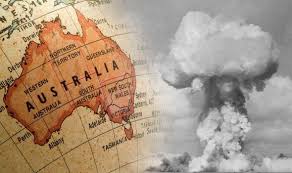
This black smoke rolling through the mulga’: almost 70 years on, it’s time to remember the atomic tests at Emu Field
The Convesation, Liz Tynan, Associate professor and co-ordinator of professional development GRS, James Cook University: May 4, 2022
The name Emu Field does not have the same resonance as Maralinga in Australian history. It is usually a footnote to the much larger atomic test site in South Australia. However, the weapons testing that took place in October 1953 at Emu Field, part of SA’s Woomera Prohibited Area, was at least as damaging as what came three years later at Maralinga.
The Emu Field tests, known as Operation Totem, were an uncontrolled experiment on human populations unleashing a particularly mysterious and dangerous phenomenon – known as “black mist” – which is still being debated.
Operation Totem involved two “mushroom cloud” tests, held 12 days apart, which sought to compare the differences in performance between varying proportions of isotopes of plutonium. The tests were not safe, despite assurances given at the time.
Between 1952 and 1957, Britain used three Australian sites to test 12 “mushroom cloud” bombs: the uninhabited Monte Bello Islands off the Western Australian coast and the two South Australian sites. (An associated program of tests of various weapons components and safety measures continued at Maralinga until 1963.)
The British government, with loyal but uncomprehending support from Australia under Liberal prime minister Robert Menzies, proceeded despite incomplete knowledge of atomic weapons effects or the sites’ meteorological and geographical conditions.
The British government, with loyal but uncomprehending support from Australia under Liberal prime minister Robert Menzies, proceeded despite incomplete knowledge of atomic weapons effects or the sites’ meteorological and geographical conditions.
The first British atomic test, Operation Hurricane, held in 1952, was a maritime test of a 25 kiloton atomic device detonated below the waterline in a ship anchored off part of the Monte Bello Islands.
Operation Totem was designed to test two much smaller devices – 9.1 and 7.1 kilotons respectively – by detonating them on steel towers in the desert.
At the time, Britain was in the process of commissioning a new reactor at Calder Hall in Cumbria (designed to make plutonium for both military and civilian uses) that would produce nuclear fuel containing more plutonium-240 than a previous reactor.
Totem was intended to test “austerity” weapons made from nuclear fuel eked out of this reactor. (Plutonium-240 can potentially make nuclear weapons unstable, in contrast to the fuel of choice for fission weapons, plutonium-239, which is more controllable.)
Totem was a “comparative” test. Its innermost technicalities are still kept secret by the British government.
A greasy black mist
The two tests at Emu Field were fired at 7am, on 15 October and 27 October.
The first test, Totem I, produced a mysterious, greasy “black mist” that rolled over Aboriginal communities around Wallatinna and Mintabie, 170 kilometres to the northeast of Emu Field. The black mist directly harmed Aṉangu people. Because no data was collected at the time, it is impossible to quantify precisely, however, the anecdotal evidence suggests death and sickness occured.
The British meteorologist, Ray Acaster, gave an account of the phenomenon, and its possible causes, in 2002:
The Black Mist was a process of mist or fog formation at or near the ground at various distances from the explosion point … Radioactive particles from the unusually high concentration in the explosion cloud falling into the mist or fog contributed to the condensation process … The radioactive particles in the mist or fog became moist and deposited as a black, sticky, and radioactive dust, particularly dangerous if taken into the body by ingestion or breathing.
The black mist was an horrific experience for all in its path. Survivors gathered at Wallatinna and Marla Bore in 1985 testified to the Royal Commission into the British Atomic Tests in Australia on its effect on individuals and communities.
Among those who testified was Lallie Lennon, who lived at Mintabie with her husband and children in 1953. After breakfast on 15 October they heard a deep rumble, followed by weird smoke that smelt of gunpowder and stuck to the trees. Lallie, her children and the others with her all got sick with diarrhoea, flu-like symptoms, rashes and sore eyes. Lallie’s skin problems were so severe, it looked like she had rolled in fire.
Another witness, the later tireless advocate for the survivors of the British atomic tests, Yami Lester, was a child at the time of Totem and lost his vision after the tests.
He recalled his experiences in testimony to the royal commission, and elsewhere. Interviewed by two London Observer journalists in a story republished in the Bulletin under the title “Forgotten victims of the ‘rolling black mist’”, he said:
I looked up south and saw this black smoke rolling through the mulga. It just came at us through the trees like a big, black mist. The old people started shouting ‘It’s a mamu’ (an evil spirit) … they dug holes in the sand dune and said ‘Get in here, you kids’. We got in and it rolled over and around us and went away.
Contaminated planes
The second test, Totem II, took place on October 27 in completely different meteorological conditions and did not produce a black mist. Its cloud rose quickly into the atmosphere and broke up soon after. However, radioactivity from both Totem I and Totem II travelled east across the continent, crossing the coast near Townsville.
Air force crews from both Britain and Australia flew into the atomic clouds. A British Canberra aircraft with three crew aboard entered the Totem I cloud just six minutes after detonation, far earlier than any of the other cloud sampling aircraft.
For a brief period the radioactivity to which they were exposed was off the scale. The aircraft was flown back to the UK, where it was found to carry extensive residual radioactive dust despite having been cleaned in Australia.
While air crew were exposed to contamination in flight, RAAF ground crew were worse affected, since they were largely unprotected and worked for hours on the contaminated planes. The risk to both air and ground crew was extensively examined by the Royal Commission.
One account by Group Captain David Colquhoun, head of RAAF operations at Emu Field, mentioned a gathering of crew in a hangar at Woomera, where a doctor ran a Geiger counter over those present.
As it reached the hip of one man, “the Geiger gave a very strong number of counts”. The young man then said he had a rag in his hip pocket he had used to wipe grease “off the union between the wing and the fuselage”. This rag was heavily contaminated.
Abrogating responsibility
After America’s McMahon Act of 1946 made it illegal for the US to work with other countries on atomic weaponry, a secret British Cabinet committee made the decision to conduct tests of a British bomb – but not on its own territory.
Britain explicitly abrogated all responsibility for those who lived near the Emu Fields site. Britain maintained through to the royal commission – and in years beyond – that it was not responsible for Aboriginal welfare in the face of atomic weapons tests.
The extent of the huge British atomic weapons testing program here is still largely unknown by Australians. The Australian government forced the British government to contribute to the cost of remediation of Maralinga in the mid-1990s, although Monte Bello and Emu Field were largely left untouched.
The story of Emu Field has been forgotten for nearly 70 years. Bringing it back into our national consciousness reminds us the costs of harmful political decisions are often not borne by the decision-makers but by the most powerless.

The author would like to thank Maralinga Tjarutja Council for allowing access to the Maralinga lands, including Emu Field.
The Secret of Emu Field: Britain’s forgotten atomic tests in Australia, by Elizabeth Tynan, has just been published by NewSouth
Needs of nuclear submarine project are what is driving UK’s whole ”peaceful” nuclear power push .
Beyond and beneath megaprojects: exploring submerged drivers of nuclear infrastructures, Taylor and francis Online, Phil Johnstone & Andy Stirling, Received 15 Mar 2021, Accepted 19 Oct 2021, Published online: 28 Apr 2022
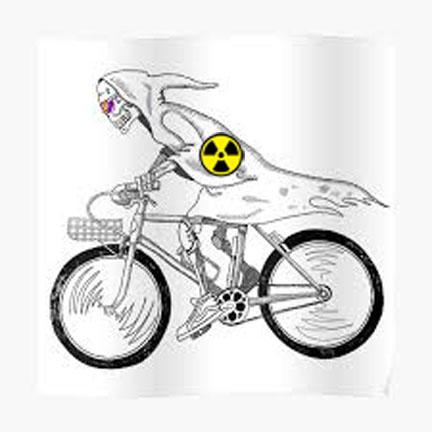
Bernard Levy of EDF said:
”we must continue to build nuclear power plants in France and in Europe – if I had to use one image to describe our situation, it would be that of a cyclist who, in order not to fall, must not stop pedalling.”
Ed. note. Sadly, I have mutilated this remarkable story – chopping so much outof it. The original is written at times in dense language, and with some sections that seem very technical.
I just feared that people might miss the huge significance of this story – the way that the nuclear weapons industry, in particular, nuclear submarines, is cunningly being developed and maintained -hidden through the confidence trick of the unnecessary ”commercial” nuclear power industry.
Abstract
Nuclear power has long offered an iconic context for addressing risk and controversy surrounding megaprojects – including trends towards cost overruns, management failures, governance challenges, and accountability breaches. Less attention has focused on reasons why countries continue new nuclear construction despite these well-documented problems.
Whilst other analysis tends to frame associated issues in terms of energy provision, this paper will explore how civil nuclear infrastructures subsist within wider ‘infrastructure ecologies’ – encompassing ostensibly discrete megaprojects across both civil and military nuclear sectors. Attending closely to the UK case, we show how understandings of megaprojects can move beyond bounded sectoral and time horizons to include infrastructure patterns and rhythms that transcend the usual academic and policy silos.
By illuminating strong military-related drivers modulating civil nuclear ‘infrastructure rhythms’ in the UK, key issues arise concerning bounded notions of a ‘megaproject’ in this context – for instance in how costs are calculated around what seems a far more deeply and broadly integrated ‘nuclear complex’. Major undeclared interdependencies between civilian and military nuclear activities raise significant implications for policymaking and wider democracy.
1. Introduction: nuclear megaprojects in a changing energy system
The global nuclear power industry is facing unprecedented challenges. Despite the clamour since the early 2000s, the long-promised UK and US ‘nuclear renaissance’ has not materialised in these or any other countries (Milne 2011). In the USA, only one new nuclear power station is being constructed – well behind schedule and over budget (Mycle 2020). At the time of writing, European Pressurized Reactor (EPR) construction faces delays of over ten years in Finland and France (Vakarelska 2020) – with significant delays also in the UK (World Nuclear News 2021). Between 2010-2020, global nuclear costs increased by 23% (Dunai and De Clercq 2019). Several major nuclear suppliers went bankrupt; or decided not to invest in the technology on grounds that it is not ‘economically rational’ (BBC News 2019).
why it is that nuclear enthusiasms remain so unabated in a few countries?…………………… In this paper we seek to build an understanding of the dynamics that give momentum to the UK’s persistent enthusiasm for nuclear technology.
…………………………… What emerges in practice from this unusual spanning of attention across infrastructure silos, are some novel empirical findings concerning previously under-researched interdependencies between nuclear energy and submarine-building megaprojects……………………. In short, without a wider national ‘nuclear industrial base’ for maintaining and renewal of large scale nuclear energy infrastructures, it becomes effectively impossible to sustain national capacities to build and operate the nuclear-propelled submarines that lie at the heart of contemporary strategic military nuclear capabilities (Stirling and Johnstone 2018)……………… A clear picture emerges that something beyond energy policy commitments is driving UK nuclear enthusiasm.
………………………………This picture chimes with explicit high-level policy statements in France and the USA, where senior figures have recently begun to acknowledge very directly, how hitherto notionally separate civil and military sectors actually amount to a single complex…………………………………………..
2. Methods
……………………………….. Unlike other nuclear weapons states, UK military nuclear capabilities are entirely dependent on nuclear powered submarines (Ritchie 2012). The UK thus presents an ideal case for interrogating possible cross-sectoral interdependencies between these respectively largest forms of megaproject in the civil and military sectors. ………………. at its core is the practical question: why is a country with such an internationally poor history of nuclear performance and such abundant alternatives, remaining so persistently committed to new nuclear construction?
………………………………This picture chimes with explicit high-level policy statements in France and the USA, where senior figures have recently begun to acknowledge very directly, how hitherto notionally separate civil and military sectors actually amount to a single complex…………………………………………..
2. Methods
……………………………….. Unlike other nuclear weapons states, UK military nuclear capabilities are entirely dependent on nuclear powered submarines (Ritchie 2012). The UK thus presents an ideal case for interrogating possible cross-sectoral interdependencies between these respectively largest forms of megaproject in the civil and military sectors. ………………. at its core is the practical question: why is a country with such an internationally poor history of nuclear performance and such abundant alternatives, remaining so persistently committed to new nuclear construction?
……………………………… it is worth considering the ……… evidently deep and pervasive strategy of deliberate concealment on the part of the central actor in these policy dynamics: the UK Government………………….
3. Nuclear power in the UK: a history of disappointment
……………………………. The long history of internationally poor performance by the British nuclear industry (Birmingham Policy Comission 2012), is clear. …………………………… The British nuclear industry hit an especially low point at the turn of the 21st century, with the bankruptcy of British Energy and its subsequent bailing out by the tax payer in 2002 (Taylor 2016)…………………………. the UK’s ‘nuclear renaissance’ is performing arguably even worse than the 1979 programme………….. The government’s aim to build several new reactors ‘significantly before 2025’ is simply not happening. This time there is no ‘public inquiry’ nor ‘public opposition’ to blame.
……………….the UK Government – as signalled by the recent Energy White Paper (HM Government 2020) – evidently remains desperate to construct new nuclear plant. In the absence of clear economic, technological, resource or policy rationales, there are big questions over what is driving this deep infrastructural entrenchment? Why does the UK remain so wedded to nuclear megaprojects?
4. Beyond energy megaprojects: civil-military nuclear interdependencies
4.1. Beyond energy policy: the UK ‘nuclear defence enterprise’
………………………………. Relevant here, is that the UK’s leading independent scrutiny body, the National Audit Office (NAO) emphasised in a highly critical report on the Hinkley C project, that factors beyond the ‘energy trilemma’ were evidently influencing these decisions…………………….. With the Hinkley C deal seeing consumers paying higher energy bills for 35 years and transferring tens of billions of pounds from consumers to nuclear supply chains, the consumer rights organisation Citizens Advice Bureau likewise raised major questions over why the nuclear path is pursued at all (Hall 2017). The UK Government has yet to respond to these recommendations………….. Sustaining extremely expensive military nuclear capabilities is one of the most cherished ambitions of successive British Governments.
Arguably itself comprising ballistic missile submarine, attack submarine and nuclear warhead renewal ‘megaprojects’, current renewal of UK nuclear military infrastructures may confidently be recognised as this nation’s largest megaproject. ………………………… The delays, mismanagement and cost overruns that are common in these submarine-building megaprojects are so severe as to jeopardise the entire national defence budget (Bond and Pfiefer 2019)…………………………………..
4.2. Interlinked civil and military nuclear pressures
………………………………. this section will show that a crucial factor in driving these otherwise inexplicably persistent attachments are military pressures to sustain overlapping infrastructures, supply chains, skills, expertise and industrial capabilities around nuclear submarine propulsion.
………………………….. detailed reports by the RAND Corporation highlighted the problem of sustaining the national ‘submarine industrial base’ at a time of civil nuclear contraction.
………………………… Subsequent military policy documentation is replete with confirmations that civil nuclear power and naval nuclear propulsion are inseparably entangled ………… With declared submarine programme costs already on the edge of being insupportable, it was crucial to associated interests, that the bulk of this wider expense be covered by parallel commitment to new civil nuclear power.
With this civil nuclear megaproject more fundable in anticipation of decades of electricity revenues, the trickle-down to shared supply chains would allow associated costs to stay outside the defence budget, off the public books and entirely invisible to critical scrutiny.
……………………………… Permanent Secretary of the MoD confirmed the aim of ensuring that civil nuclear would benefit the nuclear submarine industry: ………….the Nuclear Industry Council (NIC), placed emphasis on ‘…increasing the opportunities for transferability between civil and defence industries’ (Nuclear Industry Council 2017, 37) with ‘greater alignment of the civil and defence sectors with increased proactive two-way transfer of people and knowledge’
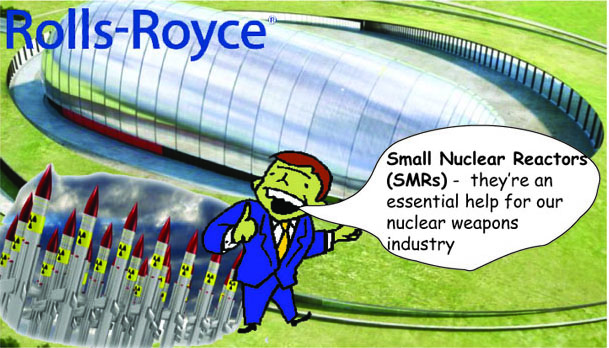
………….. maintaining and renewing UK military nuclear capabilities are underwritten by support for an otherwise untenable civil nuclear programme. This is directly conceded by the submarine nuclear reactor manufacturer, Rolls Royce who state clearly that support for notionally civil Small Modular Reactors will ‘…relieve the Ministry of Defence of the burden of developing and retaining skills and capability.
………….. Spending on new civil nuclear projects (at costs much higher than competing zero carbon options) channels funds into a combined civil/military nuclear supply chain that constitutes a de facto hidden subsidy for sustaining the UK’s submarine industrial base.
5. From nuclear megaprojects to a nuclear infrastructure complex
5.1. The nuclear infrastructure complex beyond the UK
…………….. Around the world, it is the leading military powers who are generally and proportionally most committed to large scale new nuclear build. ……………..
The state-owned Russian company Rosatom is responsible for 76% of nuclear reactor exports (Astrasheuskaya 2021). So it is significant that this organisation openly declares that ‘[r]eliable provision of Russia’s defense capability is the main priority of the nuclear industry’ (Rosatom 2017). Another nuclear weapons state that is also vigorously pursuing a nuclear reactor export agenda, China, makes no attempt to conceal that leading firms involved are centrally positioned in the nations nuclear weapons programme (Hayunga 2020).
……………………. under-documented military motivations are responsible for more of the momentum in favour of civil nuclear power than is openly acknowledged.
……………….. ‘without civilian nuclear, no military nuclear, without military nuclear, no civilian nuclear’ (French President Macron 2020).
,,,,,,,,,,,,,,,,,,,,,,,, Bernard Levy of EDF said:
”we must continue to build nuclear power plants in France and in Europe – if I had to use one image to describe our situation, it would be that of a cyclist who, in order not to fall, must not stop pedalling.”
The same dynamics are even more clear in the USA. Here multiple high-level reports highlight that industrial capabilities necessary for a ‘nuclear navy’ are ‘tied to the fate of the commercial nuclear industryThe same dynamics are even more clear in the USA. Here multiple high-level reports highlight that industrial capabilities necessary for a ‘nuclear navy’ are ‘tied to the fate of the commercial nuclear industry……………………………..
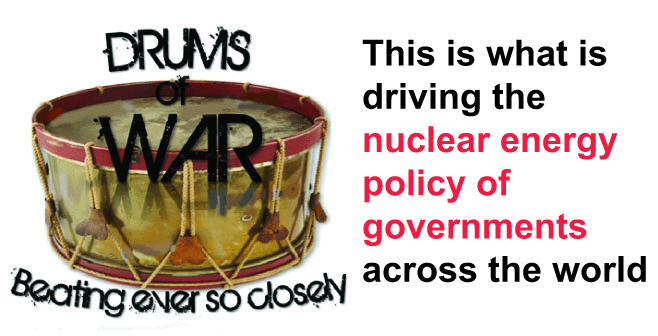
5.2. The ‘drumbeats’ of the ‘nuclear infrastructure complex’
……………………………………… this distinctive terminology of the ‘drumbeat’ …. oriiginated in this country ……….– around the intractable industrial challenges associated with constructing nuclear-powered submarines…………….. it seems to signal a policy intimacy that is otherwise effectively concealed.
6. Discussion and conclusion
…………………………………… our findings – that nuclear military and energy policies (and so their associated megaprojects) are intimately entangled………………..
Interdependencies across civil and military nuclear megaprojects
Using extensive evidence from the UK, as well as France and the USA, we have highlighted tight industrial interdependencies between civil nuclear activities and political commitments and industrial capacities in the ostensibly disparate field of nuclear submarine propulsion……….
Economic and policy evaluation of megaprojects
……………. Hinkley Point C in particular has been identified as the most expensive power station on Earth, with leading insurers describing it as a ‘£25 billion waste of money’ (Cockburn 2021). The National Audit Office has pointed out that the subsidy from consumers to the nuclear industry over the next few decades will amount to tens of billions of pounds……………………. nowhere either in UK energy or defence policy debates – let alone in wider political discourse – is there any focus whatsoever on the dynamic at the centre of these manifestly serious problems. ……… this absence of reasoned discussion constitutes a quite shocking failing in official processes, media institutions and academic disciplines alike.
Climate efficacy, policy rigour and democratic accountability
With the slow pace and high cost of power reactors undermining the stated climate policy rationale, it is clear that UK civil nuclear commitments are actually driven to a large extent by military nuclear interests that are almost entirely concealed in energy policy. ………………… The national industrial base is being steered away from the benefits of alternative (more export-viable and jobs-intensive) energy industries. Military-driven national lock-in to nuclear power also means excessive economic burdens are falling on taxpayers and – more regressively – on electricity consumers………. That such large scale political irreversibilities are unfolding with so little attention raises grave queries about the health of British democracy in the widest sense…………………… https://www.tandfonline.com/doi/full/10.1080/24724718.2021.2012351
A Secret Australia Revealed by the WikiLeaks Exposés
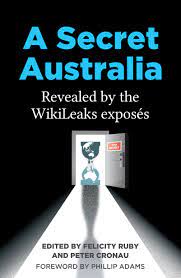
https://publishing.monash.edu/product/a-secret-australia/?fbclid=IwAR3n6_ljrq7LHcdyeKwyeex78AJrDfKE0llSnjEvPEt0HfZFa_rnXdAK-TI Edited by Felicity Ruby and Peter Cronau Also available as an ebook from your favourite retailer.
In A Secret Australia, eighteen prominent Australians discuss what Australia has learnt about itself from the WikiLeaks revelations – revelations about a secret Australia of hidden rules and loyalty to hidden agendas. However Australians may perceive their nation’s place in the world – as battling sports stars, dependable ally or good international citizen – WikiLeaks has shown us a startlingly different story.
This is an Australia that officials do not want us to see, where the Australian Defence Force’s ‘information operations’ are deployed to maintain public support for our foreign war contributions, where media-wide super injunctions are issued by the government to keep politicians’ and major corporations’ corruption scandals secret, where the US Embassy prepares profiles of Australian politicians to fine-tune its lobbying and ensure support for the ‘right’ policies.
The revelations flowing from the releases of millions of secret and confidential official documents by WikiLeaks have helped Australians to better understand why the world is not at peace, why corruption continues to flourish, and why democracy is faltering. This greatest ever leaking of hidden government documents in world history yields knowledge that is essential if Australia, and the rest of the world, is to grapple with the consequences of covert, unaccountable and unfettered power.
The contributors include author Scott Ludlam, former defence secretary Paul Barratt, lawyers Julian Burnside and Jennifer Robinson, academics Richard Tanter, Benedetta Brevini, John Keane, Suelette Dreyfus, Gerard Goggin and Clinton Fernandes, as well as writers and journalists Andrew Fowler, Quentin Dempster, Antony Loewenstein, Guy Rundle, George Gittoes, and Helen Razer, and psychologist Lissa Johnsson.
How much are you willing to pay to help reduce carbon emissions? Vote Compass has the answer
 | |||
How much are you willing to pay to help reduce carbon emissions? Vote Compass has the answer
How much would Liberal, Labor and Green voters be prepared to spend each year to help prevent climate change? Vote Compass has the answer.
Sydney University fined for carelessness with a radioactive device
The fallout of the University’s radiation case, by Bella Gerardi, May 2, 2022,
Last week, the University of Sydney was fined $61,000 for failing to properly dispose of a radioactive source belonging to a decommissioned medical imaging machine. For an institution that claims to have a strong commitment to the environment, conviction of a criminal environmental offence appears at odds with its sustainability strategy.
The source, which contained a sealed radioactive isotope, was found when a truck delivering scrap metals to a recycling yard set off alarms during a routine radiation check.
Identified as belonging to a PET scanner owned by the University, the Environmental Protection Agency (EPA) charged the University with four individual breaches of the Radiation Control Act. The case didn’t go to court as the University pled guilty, and in exchange the EPA dropped two of the four charges.
So, how did this happen?
By accident, the court ruled.
…………… the court noted that if the source had not been detected before entry to the second metal recycling yard, environmental contamination would have been “very likely”. In this scenario, the source would have gone on to be reprocessed, a procedure that would involve breaking the seal of the source and dispersing the material into usable metal. It would have ultimately ended up in consumer material, which the court noted has occurred overseas.
………… It is disappointing, but not surprising, that it took a criminal conviction to reach the safeguards imposed today. Unfortunately, the University’s prior lack of clear procedure is indicative of the broader attitude institutions and corporations hold toward environmental crimes. Environmental crimes are often entangled with accidents, negligence, or oversight, and are often not viewed as holding the same gravity as other offences.
Corporations and institutions are responsible for the majority of environmental harm, yet complex corporate hierarchies make it uncommon for individuals to face repercussions for offences, which in turn promotes a lax attitude toward environmental damage. ………………………………….. more https://honisoit.com/2022/05/the-fallout-of-the-universitys-radiation-case/
Reducing Tensions, Building Trust, De-escalating
The public policy of readiness to initiate attack with nuclear weapons — not as a deterrent against being attacked with nuclear weapons, but its exact opposite — is at the heart of both U.S. and NATO “nuclear posture.”
CounterPunch, BY JOHN LAFORGE, 29 Apr 22,
The United States could immediately take direct actions that would de-escalate the over-arching nuclear threat that haunts Russia’s war of aggression in Ukraine. A few such actions would demonstrate good will and indicate a real intention to reduce tensions in the crisis which seems every day to grow more dangerous.
1. U.S. hydrogen bombs stationed in Europe could be withdrawn and their planned replacement cancelled.
The United States and Germany are formal states parties to the Treaty on the Nonproliferation of Nuclear Weapons (NPT). Articles I and II of the NPT flatly prohibit the transfer of nuclear weapons from one states party to another. Any fourth grader can understand that the NATO practice of “nuclear sharing” with Germany, Italy, Belgium, The Netherlands, and Turkey — which together have over 100 U.S. nuclear weapons — is an open violation of the clear, unambiguous, unequivocal and binding prohibitions of the NPT.
The United States stations an estimated 20 of its B61-3 and B61-4 thermonuclear gravity bombs at the German Air Force Base Büchel, 80 miles southeast of Cologne. These B61 H-bombs at Büchel are identified as “intermediate-yield strategic and tactical thermonuclear” bombs, and “the primary thermonuclear gravity bomb in the U.S.” according to the NuclearWeaponArchive.org.
Calling these weapons “intermediate” or “tactical” is shocking disinformation. The maximum yield of the B61-3 is 170 kilotons, and the maximum B61-4 yield is 50 kilotons, as reported by the Bulletin of the atomic Scientists. These H-bombs respectively produce over 11 times and 3 times the explosive blast, mass fire, and radiation of the 15-kiloton Hiroshima bomb that killed 140,000 people. (For background, see Lynn Eden’s “Whole World on Fire,” or Howard Zinn’s “The Bomb.”
The effects of detonating B61-3 or B61-4 bombs would inevitably be catastrophic mass destruction involving disproportionate, indiscriminate and long-lasting devastation. Plans to replace the current B61 with a new “model 12” could be cancelled now, and constitute a real ratcheting down of tensions in Europe.
2. The U.S. can discontinue its nuclear attack courses underway at Ramstein Air Base in Germany.
The U.S. studies and plans nuclear weapon attacks at classrooms of its Defense Nuclear Weapons School (DNWS), and the one branch school outside the U.S. is at Ramstein in Germany, the largest U.S. military base outside the country, headquarters of the U.S. Air Forces in Europe, and NATO Allied Air Command. Outlines of nuclear attack coursework can be read on the DNWS website, which boldly declares the school: “is responsible for delivering, sustaining and supporting air-delivered nuclear weapon systems for our warfighters …every day.”
…………… Dispensing with this nuclear attack planning school would reduce tensions and help eliminate Russia’s dread of the U.S./NATO nuclear posture.
3. NATO can suspend its provocative military exercises.
Attacks with U.S. nuclear weapons in Europe are regularly simulated or “rehearsed,” as is often reported. Recent headlines noted: “German Air Force training for nuclear war as part of NATO” (Kazakh Telegraph Agency 2020), “Secret nuclear weapons exercise ‘Steadfast Noon” (German Armed Forces Journal 2019), “NATO nuclear weapons exercise unusually open” (2017), and “NATO nuclear weapons exercise Steadfast Noon in Büchel” (2015).
Giant NATO war games routinely zero in on Russia. In 2018, there was “Trident Juncture” with 50,000 troops in Norway, and “Atlantic Resolve” was conducted in Eastern Europe. In 2016, some 16,000 troops gathered in Norway for “Cold Response,” and in “Anaconda 2016” another 31,000 troops from 24 countries were again in motion across Poland, Lithuania, Estonia and Latvia. In 2015, there was “Atlantic Resolve,” “Dragoon Ride,” and “Spring Storm,” all conducted across Poland, Lithuania, Estonia and Latvia. In 2014, the routine “Cold Response” game in Norway involved 16,000 troops, and “Atlantic Resolve” took place in Estonia, Lithuania, Latvia and Poland.
Beyond the annual “Steadfast Noon” simulations, complex, multinational NATO exercises in Eastern European countries just recently ballooned in number. In 2019, there was a single big exercise called “Atlantic Resolve.” In 2020 there were five. In 2021 the number leaped to eleven, and NATO that year made plans for a total of 95 exercises. Individual NATO states had plans for another 220 of their own war games. Nothing justifies Putin’s naked aggression, but the marked increase in NATO war practices would even make the Dali Lama defensive.
4. The U.S. and NATO could end their nuclear weapon “first-use” policy.
The public policy of readiness to initiate attack with nuclear weapons — not as a deterrent against being attacked with nuclear weapons, but its exact opposite — is at the heart of both U.S. and NATO “nuclear posture.” This perpetual threat to start nuclear attacks during a conventional conflict, especially in the context of routine NATO nuclear war exercises, is unnecessarily destabilizing and reckless. In view of the enormously overwhelming power of U.S. and NATO conventional military forces, the nuclear option is grossly redundant and militarily useless.
After he retired, Paul Nitze, a former Navy Secretary and personal advisor to President Ron Reagan, wrote “A Threat Mostly to Ourselves” where he observed: “In view of the fact that we can achieve our objectives with conventional weapons, there is no purpose to be gained through the use of our nuclear arsenal.”
Now that the U.S. public as a whole has been transformed into one big anti-war group, it should recognize that it can influence our own government but not Russia’s. Our demands for negotiation, cease-fire, de-escalation and a peace agreement need to be directed in a way that has some chance of success. https://www.counterpunch.org/2022/04/29/reducing-tensions-building-trust-de-escalating/
1 This month.
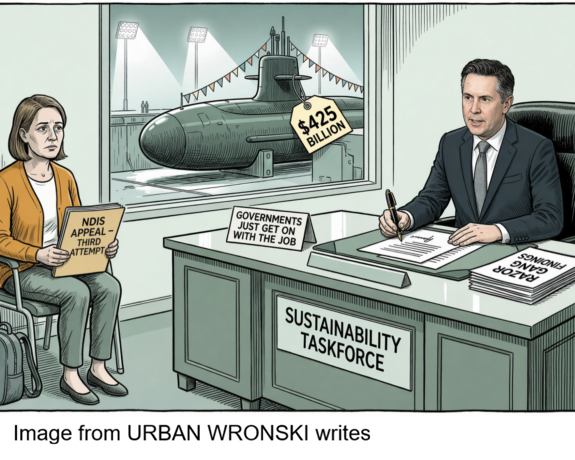

PETITION – To: Prime Minister Anthony Albanese and the Australian Labor Government
Chernobyl: The Lost Tapes – A good documentary on Chernobyl on SBS available On Demand for the next 3 weeks– https://www.sbs.com.au/ondemand/tv-program/chernobyl-the-lost-tapes/235274195556
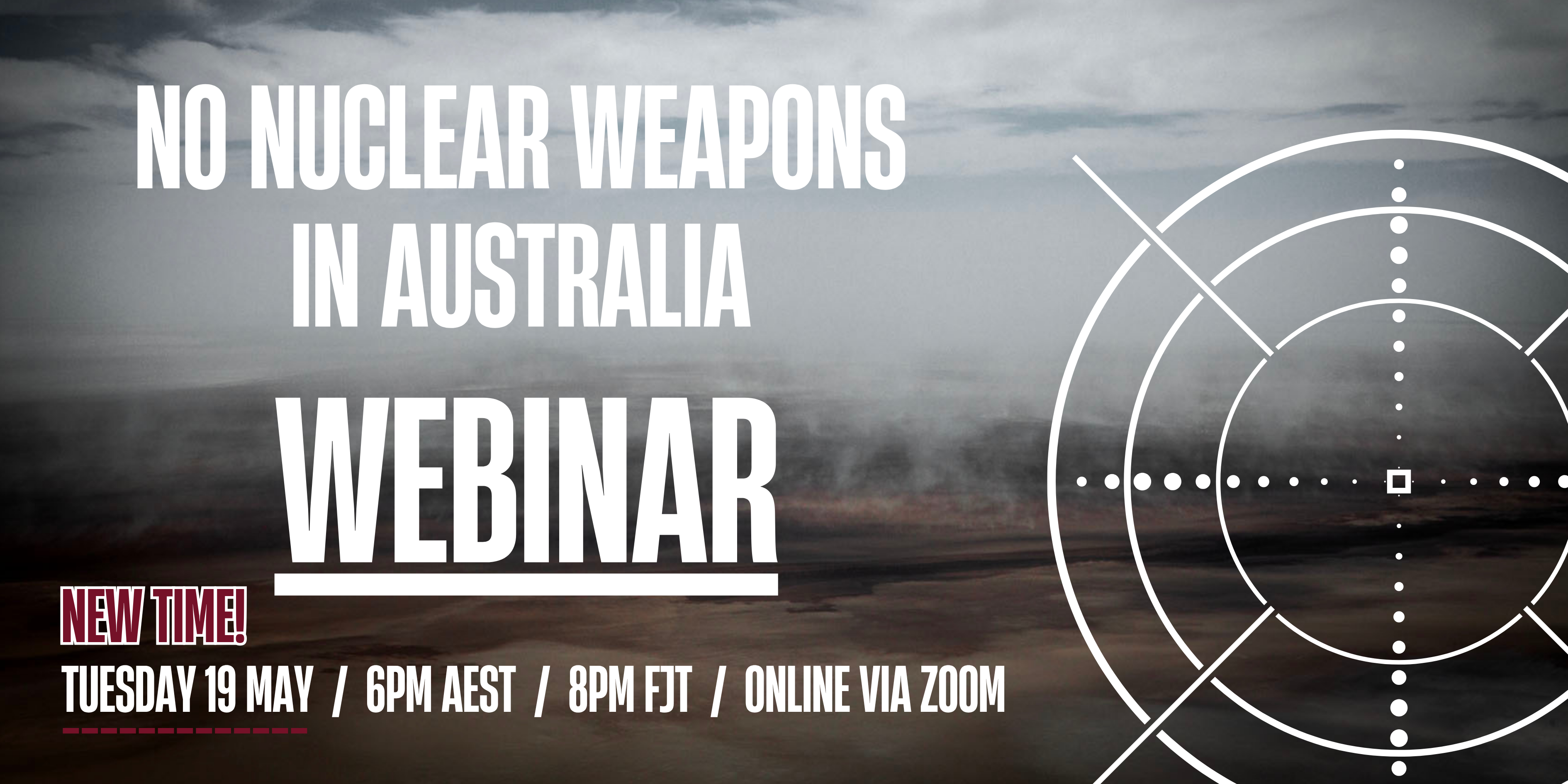
19 May – Webinar- Webinar: No Nuclear Weapons in Australia
Start: 2026-05-19 18:00:00 UTC Canberra, Melbourne, Sydney (GMT+10:00)
End: 2026-05-19 19:30:00 UTC Canberra, Melbourne, Sydney (GMT+10:00)
20 May – Webinar – The dangerous world of AUKUS, US, military occupation and suppression of dissent

National Webinar, 20th May, 2026, 6.30pm AEST. Confronting laws restricting/suppressing protest speech and action
Speakers: Former Sen. Rex Patrick, Lawyer Nick Hanna ,Arthur Rorris ,Jorgen Doyle, Sen David Shoebbridge,
Facilitator Kelley Tranter.

of the week – Australians for War Powers Reform (AWPR)
To see nuclear-related stories in greater depth and intensity
 Antinuclear