NASA Is Sending Artificial Female Bodies to the Moon to Study Radiation Risks.

Gizmodo, Passant Rabie, May 3, 22, Helga and Zohar are headed for a trip around the Moon on an important mission, measuring radiation risks for female astronauts for the first time.
The inanimate pair are manikins modelled after the body of an adult woman. For the Artemis 1 mission, in which an uncrewed Orion capsule will travel to the Moon and back, one of the manikins will be outfitted with a newly developed radiation protection vest. Helga and Zohar, as they’re called, won’t be alone, as they’ll be joined by a third manikin that will collect data about flight accelerations and vibrations. Artemis 1 is scheduled to blast off later this year.
The Artemis program aims to return humans to the Moon for the first time in over 50 years, but this time the space agency has vowed to land the first woman on the dusty lunar surface. Women appear to be at a greater risk of suffering from the harmful effects of space radiation, so they have different radiation boundary levels than their male colleagues. Studies of radiation exposure for men and women indicate a higher chance of women developing cancer, while other research has found that space radiation is likely to affect female reproductive health…………………………………. https://www.gizmodo.com.au/2022/05/nasa-is-sending-artificial-female-bodies-to-the-moon-to-study-radiation-risks/
Ask me about … the 1986 Chernobyl nuclear disaster and its lingering effects
PATRICIA SABATINI, Pittsburgh Post-Gazette, psabatini@post-gazette.com 2 May 22,
Olga Klimova-Magnotta is a lecturer and director of the Russian program at the University of Pittsburgh who teaches a humanities course on the 1986 Chernobyl nuclear disaster.
A native of Belarus, she was 7 years old when a massive explosion at the No. 4 reactor at the Chernobyl nuclear power plant in northern Ukraine (then part of the Soviet Union) resulted in a fire and the uncontrolled release of radioactive contamination. Ms. Klimova — who moved to the U.S. in her early 20s ,was living in the Belarus capital of Minsk at the time of the accident, about 200 miles north of the explosion — or about the distance from Pittsburgh to Harrisburg.
She believes her heart problems stem from radiation exposure. “Many children born or growing up during this time had heart diseases,” she said.
“We all had different health issues. … The doctors connected it to the radiation.”
Talk about the course you teach on Chernobyl. What is the goal?
2021 marked the 35th anniversary of Chernobyl. That’s when I decided to develop the course and draw attention to the Chernobyl tragedy. I wanted students to be aware of the disaster and specifically about its continued effects on the ecosystem and the social, economic, political and cultural lives of people in the area.
Many in the United States didn’t know much about the explosion of the Chernobyl plant before the popular 2019 HBO miniseries [“Chernobyl”]. At least half of my students registered because they watched the miniseries and wanted to learn more.
What stands out in your mind about the catastrophe?
I think it’s the fact that none of us who were living in this area knew the real impact of the disaster. Because radiation is invisible … many of us didn’t know. We were not informed by the government about the negative effects of radiation. There was a lack of information.
When I was growing up after 1986 and in the early 1990s, the disaster affected a lot of people in terms of health. A lot of people started to suffer from [cancer and other health issues]. The numbers of these diseases grew dramatically. Doctors would explain it was because you were a child of Chernobyl.
What are some things about the Chernobyl disaster that you think people would be surprised to know?
I think people would be surprised that the government refused to acknowledge that radiation had a big impact on people’s health.
A lot of volunteers went to Ukraine to do cleanup. It was the Soviet Union. A lot of people in Belarus [also formerly part of the Soviet Union] and Russia and also Ukrainians were sent there. People didn’t get disability or special help with their health issues.
People living in the area were severely affected. Many had long battles with the government trying to get support and get treatment at the hospital. The government denied that the health issues people were having were directly connected to the nuclear disaster.
………….. The radiation hasn’t disappeared. It has a constant effect on people’s health……………………………….. https://www.post-gazette.com/business/powersource/2022/05/02/1986-chernobyl-nuclear-disaster-ukraine-olga-kilmova-magnotta-university-of-pittsburgh/stories/202205010040.
They suck your electricity while you sleep. What you need to know about vampire appliances
They suck your electricity while you sleep. What you need to know about vampire appliances
Working behind the scenes while you’re sleeping, vampire appliances are consuming energy even when they’re turned off. So what exactly are they and will turning them off at the wall make any difference to your power bills? Let’s find out.
Nuclear weapons pose the greatest immediate threat to human health and welfare — IPPNW peace and health blog

Joint International Health Statement for the 1st Meeting of States Parties of the Treaty on the Prohibition of Nuclear Weapons Representing physicians, nurses, public health professionals, and medical students worldwide, we speak with a united voice on the urgent need to eliminate nuclear weapons as a matter of global health and survival. Updated evidence on the catastrophic […]
Nuclear weapons pose the greatest immediate threat to human health and welfare — IPPNW peace and health blog
The week in nuclear news

A bit of good news – We can restore the climate – getting past climate despair. Tasmania has become one of the first parts of the world to become not just carbon neutral but carbon negative .
Coronavirus. Global, new cases and deaths are declining, but still increasing in some countries.
AUSTRALIA.
Change of government would present ‘great opportunity’ in fight to free Julian Assange. https://www.youtube.com/watch?v=V8zYQp3rrG8
After 43-nation war council, Australia to send howitzers, ammunition to Ukraine. Anzac Day and the conflict-loving neocons. Hysteria over the Solomon Islands-China security pact.
Nuclear submarines in an Adelaide shipyard – sitting ducks for a disastrous terrorist attack: conventional submarines – cheaper, safer. Unions NSW opposes nuclear powered submarines and the AUKUS treaty. Various groups oppose plan for nuclear submarine base – ”a military target” at Port Kembla, New South Wales.
Teals and Greens are the only political groups focused on the main issue . Ratings agency says Morrison climate policies “obscure, unclear and confusing”.
Greens propose levy on coal exports to drive coal phase-out within a decade .
New Murray-Darling Basin Authority boss fails to mention environment in all-staff memo
Low emissions, lower prices: South Australia’s remarkable shift to wind and solar .
Renewables to be “the new baseload” by 2030, says McKinsey 2022 Global Energy Perspective/
INTERNATIONAL
Russia and the West are closer to nuclear war than they were during the Cuban Missile Crisis, warns Nikita Khrushchev’s daughter – 60 years after her father backed down from Armageddon.
NATO allies marching in lockstep: U.S., Canadian defense chiefs meet twice in a week.
NATO’s national armaments directors discuss Ukraine bonanza
The 1983 Military Drill That Nearly Sparked Nuclear War With the Soviets. U.S. sees no threat of Russia using nuclear weapons despite rhetoric- official. Huge solar storm once almost triggered nuclear war between USA and Russia.
Climate change ‘already’ raising risk of virus spread between mammals.
Climate change is increasing the likelihood of another pandemic, researchers warn.
Solar beats nuclear at many potential settlement sites on Mars. Photovoltaics vs. nuclear power on Mars.
Renewables to be “the new baseload” by 2030, says McKinsey 2022 Global Energy Perspective.
UKRAINE. International Atomic Energy Agency very concerned at dangers at Ukraine’s Zaporizhzhia nuclear complex. Despite deteriorating situation, Ukrainian parliament still insisting on NATO accession. IAEA probing Ukraine report that a missile flew over a nuclear power plant. The USA has not been able to confirm the allegations that Russia used chemical weapons in Ukraine.
Unions NSW opposes nuclear powered submarines and the AUKUS treaty.
Paul Keating ,Branch Secretary, Maritime Union of Australia, Sydney Branch, 26 Apr 22,
Unions NSW declares its total opposition to the reckless announcement by Scott Morrison that Australia would be developing nuclear-powered submarines as part of a military alliance with the US and UK.
At a time when Morrison should have been pursuing vaccination supplies and providing maximum support to our health system and millions of people in lockdown, he has been pursuing secret military deals. The deal will continue to escalate unnecessary conflict with China. Workers have already been impacted with seafarers stranded on coal ships and some trades shut down.
Extraordinary sums of money have been wasted with the previous submarine contract scrapped only five years after it was signed. That contract was worth $90 billion – nuclear submarines will cost much more.
Only six countries in the world have nuclear submarines, and they all have nuclear power stations. Advocates for nuclear power and nuclear weapons have been emboldened. The submarines will use highly enriched uranium ideal for nuclear weapons.
The Australian government has repeatedly tried to set up nuclear waste dumps on First Nations land. This will intensify that pressure.
The billions wasted on submarines should be spent on:
Building an Australian strategic shipping fleet in Adelaide that could operate in cabotage and international trades;
· Building renewable energy and offshore wind turbines to ensure we prevent global heating from exceeding 1.5°C;
· Raising Jobseeker payments to well above poverty levels;
· Pay increases for health workers and investments in our health systems;
· Pay increases for teachers and investments in public schools to make them covid-safe;
· Investing in firefighting capacity and ensuring we are ready for the next bushfire season.
Workers have no interest in war with China or any other country. Every effort should be made to pursue peaceful relations.
Unions NSW stands in solidarity with workers in all countries in opposing war and wasteful environmentally harmful military spending.
We pledge our opposition to oppose the development of nuclear submarines in Australia, and the development of any other nuclear industry.
Various groups oppose plan for nuclear submarine base – ”a military target” at Port Kembla, New South Wales
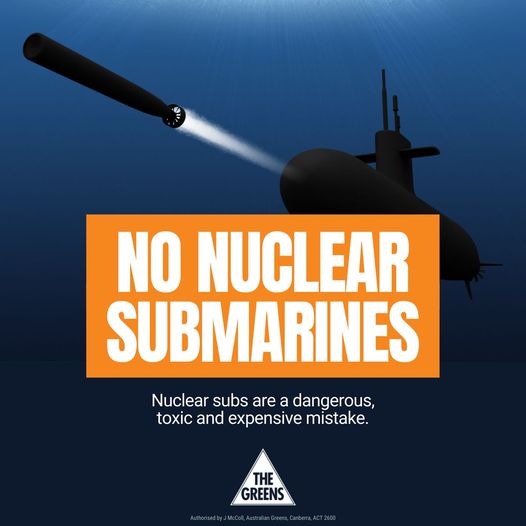
Planes, trains, automobiles … and nuclear subs: the local issues at play in the federal election
Guardian Stephanie Tran and Khaled Al Khawaldeh, Mon 2 May 2022
………….Submarine base in Port Kembla
Max, 26, works for a non-profit and lives in the electorate of Cunningham, held by retiring Labor MP Sharon Bird. He is worried about the prospect of a base being built in Port Kembla to house the future nuclear-powered submarines to be built under the Aukus agreement.
“This announcement was made with no consultation with the community, no proposal for consultation moving forward and a potential for my home to have a giant target on its back,” he said.
The Wollongong suburb, 100km south of Sydney, was flagged by the Coalition as the potential home of its new nuclear-powered submarine base. However, experts have raised concerns that the base could endanger the community by making it a military target, and some in the community are wary over the safety of the submarines’ nuclear reactors.
Alison Byrnes, the Labor candidate for Cunningham, said that if elected she would ensure that the community was consulted on the decision.
“I will make it a priority to seek a detailed briefing from the minister for defence on this plan, as well as Defence’s proposed assessment process,” she said.
The Liberal party emphasised the economic benefits of the project, but did not address the community concerns……..
Greens candidate Dylan Green said he did not want to see his community “getting caught up in a nuclear arms race”.
“Our government should be strengthening diplomatic ties with neighbouring states, not inviting conflict by investing in warships with primarily offensive capabilities,” he said.
Alexis Garnaut-Miller, from the Australian Citizens party, was “absolutely and resolutely opposed to this nonsensical proposal of building nuclear submarines or any development of nuclear submarine presence in Port Kembla”…… https://www.theguardian.com/australia-news/2022/may/02/planes-trains-automobiles-and-nuclear-subs-the-local-issues-at-play-in-the-federal-election
Australia is No1 on Transparency’s list of countries with developing public sector corruption

9 COUNTRIES TO WATCH ON THE 2021 CORRUPTION PERCEPTIONS INDEX , Transparency International 1 May 22
Troubling signs and key opportunities that can make – or break – the fight against corruption
What is a ‘country to watch’ on the CPI?
In this annual watch-list published alongside the CPI, Transparency International flags countries that need closer monitoring and attention in the coming year………
1 AUSTRALIA
Australia (CPI score: 73) is one of the world’s most significant decliners, having dropped 12 points since 2012 to hit a record low this year. Its deteriorating score indicates systemic failings in tackling public sector corruption. Despite public calls and previous promises, last year Australia missed a landmark opportunity to establish a national anti-corruption agency with broad powers to investigate corruption………………………………… https://www.transparency.org/en/blog/cpi-2021-corruption-watch-list-australia-austria-el-salvador-kazakhstan
Albo finds his mojo in push for green metals and EV batteries — RenewEconomy

Albanese pitches vision of a green resources sector and revitalised manufacturing to contrast Morrison’s embrace of fossil fuels. The post Albo finds his mojo in push for green metals and EV batteries appeared first on RenewEconomy.
Albo finds his mojo in push for green metals and EV batteries — RenewEconomy
Where will Connecticut’s nuclear waste go? Nuclear submarines’ waste is a particular problem (Australia take note)
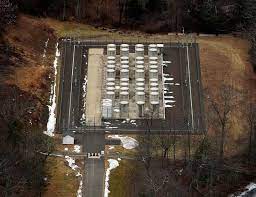
Connecticut has been living more than half a century with what was supposed to have been temporary spent fuel storage.
On any day since the mid 1950s, there might be multiple reactors in or around the Thames River, welded into the nuclear powered submarines stationed at the U.S. Naval Submarine Base in Groton
The Navy won’t discuss how it disposes of its spent nuclear waste.
It’s in question as the state pushes toward a green future, By Edmund H. Mahony, Hartford Courant, May 01, 2022, The federal government is jump-starting its long-stalled search for a place to store the tons of spent nuclear fuel piling up in Connecticut and other states.
…… The U.S. Department of Energy is reviewing responses to a request for information it issued to nuclear industry stakeholders late last year as a first step in another attempt to resolve one of the thorniest challenges of the nuclear age: how and where to store the highly-radioactive, spent uranium that is the waste product of nuclear energy production.
The state legislature this session approved a bill requiring all electric power consumed in Connecticut to be produced from carbon free sources by 2040. Another bill, written with smaller, better reactors in mind, is pending. It would lift a state moratorium on new nuclear power production — a moratorium enacted decades ago over the same concerns about the state’s spent fuel stockpiles — but limit new production to the Millstone nuclear complex in Waterford, where Dominion Energy has what was intended to be a temporary nuclear waste storage facility.
The country’s inability to figure out what to do with waste stockpiles has become an impediment for nuclear-generating states like Connecticut…… That has power industry and private capital looking toward the development of a new generation of smaller [really?] safer, more efficient [really?] nuclear reactors — reactors that will continue to produce waste that needs to be disposed of someplace safe.
……………………….. “Disposal is absolutely an issue,” State Sen. Norm Needleman said. “That is why this is limited to a site that is a going plant today where they already are dealing with that problem. I would not at this moment support any expansion until the Department of Energy finds someplace. If you are going to build nuclear power plants and you are going to be siting 200 piles of nuclear waste, it is better to have it buried 2,000 feet below ground someplace, rather than having it spread all over.”
……………………… Connecticut has been living more than half a century with what was supposed to have been temporary spent fuel storage.
On any day since the mid 1950s, there might be multiple reactors in or around the Thames River, welded into the nuclear powered submarines stationed at the U.S. Naval Submarine Base in Groton, or just down river at the Electric Boat Division of General Dynamics where the ships are built. For years the Navy operated an experimental reactor in Windsor.
Beginning in the late 1960s, four commercial reactors produced power in Connecticut — one at the Connecticut Yankee plant on Haddam Neck, a peninsula stretching into the lower Connecticut River, and three on Millstone Point at the east end of Long Island Sound.
Two of the three Millstone reactors remain operational. Connecticut Yankee has been closed and decommissioned.
The Navy won’t discuss how it disposes of its spent nuclear waste. Because the federal government has not been able to find a politically acceptable commercial disposal solution, every bit of radioactive uranium expended in the production of commercial power in Connecticut remains under guard in what are designed as impregnable — but temporary — storage containers at the Millstone and Connecticut Yankee sites……………………………………
as much as 90,000 metric tons of spent fuel continues to pile up and remain stranded at what were supposed to be temporary sites around the country.
On Haddam Neck, there are 43 enormous concrete and steel storage casks containing radioactive material on the site of the decommissioned Connecticut Yankee plant. At the Millstone site in Waterford, waste is divided between a storage pool and 47 storage modules. Plant operator Dominion Energy says it has the capacity to store a total of 135 modules.
The storage costs, which involve protecting the spent fuel from hazards running from terrorist attacks to natural disasters, is enormous. The cost at Connecticut Yankee is about $10 million a year — at a plant that shut down in 1996 because it was no longer cost effective after 28 years of operation.
The federal government and, ultimately, taxpayers are picking up the cost. The law that was to make Yucca Mountain a national repository carried a provision obligating the Department of Energy to remove and store spent fuel from commercial reactors beginning in 1998. Without a repository, the department cannot meet its obligation. Plant operators sued, and the government has been held responsible for incurred storage costs.
There are intangible costs to temporary storage, too…………………………….
Loy Yang A coal plant outage expected to cost AGL at least $73 million — RenewEconomy

AGL says it will take a big hit to profits due to latest Loy Yang A coal outage, while market grapples with failing reliability and higher costs. The post Loy Yang A coal plant outage expected to cost AGL at least $73 million appeared first on RenewEconomy.
Loy Yang A coal plant outage expected to cost AGL at least $73 million — RenewEconomy
Massive big battery and solar farm proposed for NSW coal country — RenewEconomy

Australian renewables developer Maoneng unveils plans for a massive four-hour battery and solar farm in the New South Wales Upper Hunter region. The post Massive big battery and solar farm proposed for NSW coal country appeared first on RenewEconomy.
Massive big battery and solar farm proposed for NSW coal country — RenewEconomy
Fortescue urges joint “Green Pilbara” vision of giga-scale wind, solar and hydrogen — RenewEconomy

Fortescue Future Industries hints at joining forces with other parties to create a single vision for giga-scale renewable energy projects. The post Fortescue urges joint “Green Pilbara” vision of giga-scale wind, solar and hydrogen appeared first on RenewEconomy.
Fortescue urges joint “Green Pilbara” vision of giga-scale wind, solar and hydrogen — RenewEconomy
Morrison inaction, Ukraine conflict weigh on clean energy investment — RenewEconomy

Clean energy investors say ongoing frustrations with Australian policy compounded by impacts of Russia invasion of Ukraine. The post Morrison inaction, Ukraine conflict weigh on clean energy investment appeared first on RenewEconomy.
Morrison inaction, Ukraine conflict weigh on clean energy investment — RenewEconomy
“God doesn’t think he’s Angus Taylor:” Forrest fires new salvo — RenewEconomy

Andrew Forrest fires another salvo at energy minister Angus Taylor as he and Mike Cannon-Brookes push the case for green energy. The post “God doesn’t think he’s Angus Taylor:” Forrest fires new salvo appeared first on RenewEconomy.
“God doesn’t think he’s Angus Taylor:” Forrest fires new salvo — RenewEconomy
1 This month.
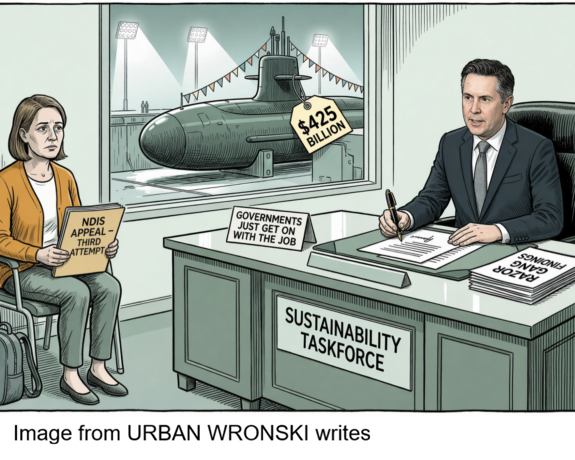

PETITION – To: Prime Minister Anthony Albanese and the Australian Labor Government
Chernobyl: The Lost Tapes – A good documentary on Chernobyl on SBS available On Demand for the next 3 weeks– https://www.sbs.com.au/ondemand/tv-program/chernobyl-the-lost-tapes/235274195556
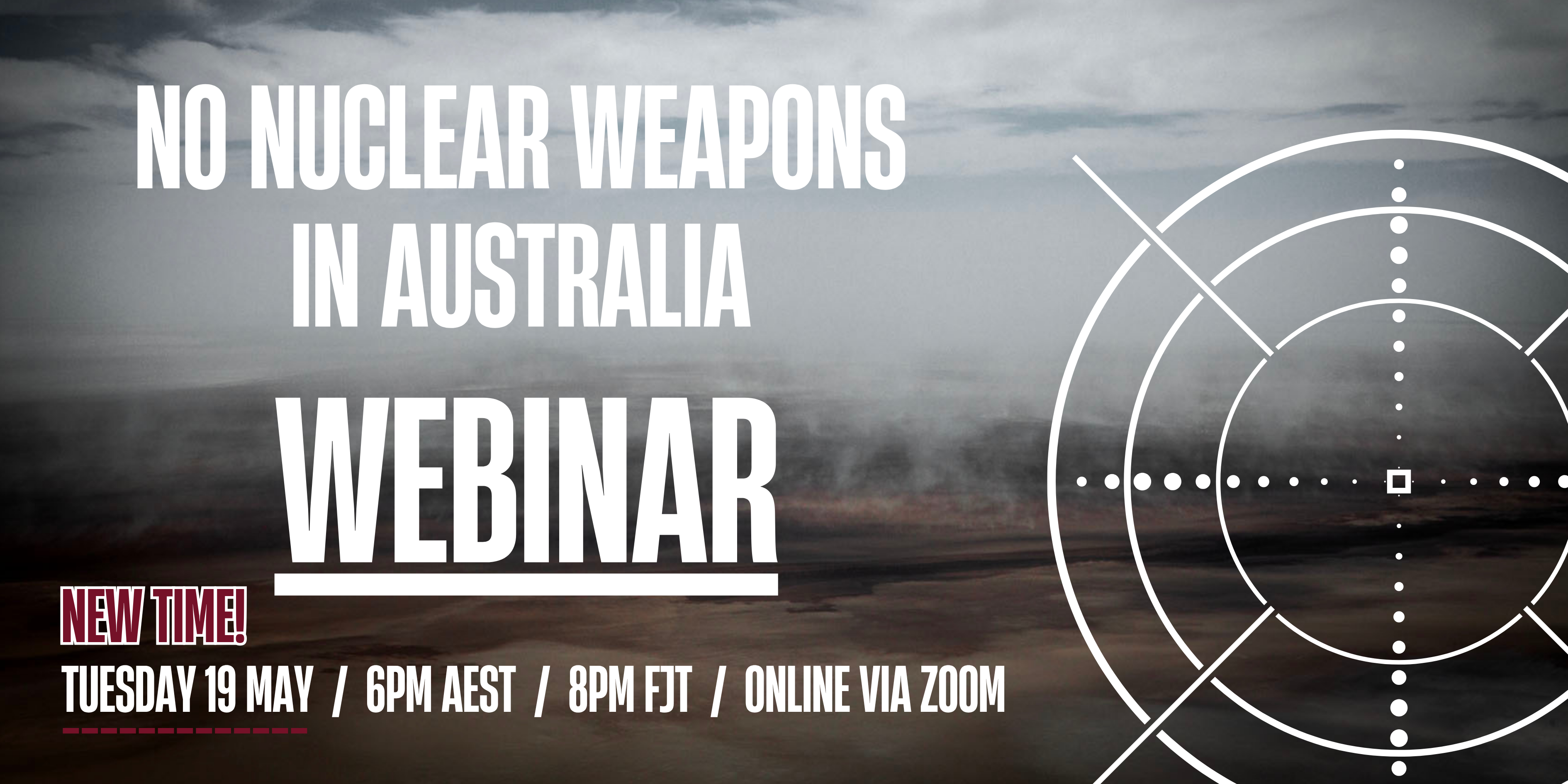
19 May – Webinar- Webinar: No Nuclear Weapons in Australia
Start: 2026-05-19 18:00:00 UTC Canberra, Melbourne, Sydney (GMT+10:00)
End: 2026-05-19 19:30:00 UTC Canberra, Melbourne, Sydney (GMT+10:00)
20 May – Webinar – The dangerous world of AUKUS, US, military occupation and suppression of dissent

National Webinar, 20th May, 2026, 6.30pm AEST. Confronting laws restricting/suppressing protest speech and action
Speakers: Former Sen. Rex Patrick, Lawyer Nick Hanna ,Arthur Rorris ,Jorgen Doyle, Sen David Shoebbridge,
Facilitator Kelley Tranter.

of the week – Australians for War Powers Reform (AWPR)
To see nuclear-related stories in greater depth and intensity
 Antinuclear