April 25 Energy News — geoharvey

Opinion: ¶ “John Kerry Is Trying To Convince The World To Act On Climate Change. Russia’s War Made It That Much Harder” • John Kerry has a mission. It is To convince the rest of the world to embrace renewable energy and reduce their planet-warming emissions as much as possible. The US Climate Envoy’s job […]
April 25 Energy News — geoharvey
Greens pledge billions in loans and grants to boost battery uptake and get off gas — RenewEconomy

Greens outline grants and loans scheme to boost uptake of rooftop solar and battery storage and encourage customers to get off gas. The post Greens pledge billions in loans and grants to boost battery uptake and get off gas appeared first on RenewEconomy.
Greens pledge billions in loans and grants to boost battery uptake and get off gas — RenewEconomy
Now we know the flaws of carbon offsets, it’s time to get real about climate change — RenewEconomy

We have to move past the magical thinking that carbon offsetting alone will lead to the technology shifts that will save us. The post Now we know the flaws of carbon offsets, it’s time to get real about climate change appeared first on RenewEconomy.
Now we know the flaws of carbon offsets, it’s time to get real about climate change — RenewEconomy
April 24 Energy News — geoharvey

Opinion: ¶ “A 100% Renewable Energy Future Is Possible, And We Need It” • We’re living in a time of high volatility in the price of gas that has hit close to all sectors of our economy. We’re also living in a time plagued with costly ”this is not normal” weather events. But how feasible […]
April 24 Energy News — geoharvey
Playing with fire at Chornobyl — Beyond Nuclear International

Will we avoid a deadly sequel?
Playing with fire at Chornobyl — Beyond Nuclear International
After 36 years the nuclear site is again in danger https://beyondnuclearinternational.org/2022/04/24/playing-with-fire-at-chornobyl/
By Linda Pentz Gunter
For 36 years things had been quiet at Chornobyl. Not uneventful. Not safe. But no one was warning of “another Chornobyl” until Russian forces took over the site on February 24 of this year.
Russia’s invasion of Ukraine first took their troops through the Chornobyl Exclusion Zone, where they rolled armored vehicles across radioactive terrain, also trampled by foot soldiers who kicked up radioactive dust, raising the radiation levels in the area.
As the Russians arrived at the Chornobyl nuclear site, it quickly became apparent that their troops were unprotected against radiation exposure and indeed many were even unaware of where they were or what Chornobyl represented. We later learned that they had dug trenches in the highly radioactive Red Forest, and even camped there.
After just over a month, the Russians pulled out. Was this to re-direct troops to now more strategically desirable — or possibly more reasonably achievable — targets? Or was it because, as press reports suggested, their troops were falling ill in significant numbers, showing signs of radiation sickness? Those troops were whisked away to Belarus and the Russians aren’t talking. But rumors persist that at least one soldier has already succumbed to his exposure.
Plant workers at the nuclear site, despite working as virtual hostages during the Russian occupation and in a state of perpetual anxiety, where shocked that even the Russian radiation experts subsequently sent in, were, like the young soldiers, using no protective equipment. It was, said one, a kind of suicide mission.
What could have happened at Chornobyl — and still could, given the war is by no means over and the outcome still uncertain — could have seen history repeat itself, almost 36 years to the day of that first April 26, 1986 disaster.
Yet, Chornobyl has no operating reactors. So why is it still a risk? Doesn’t the so-called New Safe Confinement (NSC) structure protect the site?
The $2.3 billion NSC was built to cover over the original and crumbling old sarcophagus that had encased the lethal cargo left behind after the April 26, 1986 explosion of Unit 4.
Supposed to last just 100 years, that still inadequate timeframe was thrown into jeopardy as a reported firefight broke out prior to the Russian takeover. Fears arose that the shocks and vibrations of repeated shelling and artillery fire could cause the NSC to crack or crumble.
Housed inside the NSC is the destroyed Unit 4 as well as 200 metric tonnes of uranium, plutonium, irradiated dust, solid and liquid fuel, and a molten slurry of uranium fuel rods, zirconium cladding, graphite control rods, and melted sand.
The fuel lump from Unit 4, sitting inaccessible on a basement floor, remains unstable. In May 2021, there was a sudden and baffling escalation of activity there and a rise in neutrons, evoking fears of a chain reaction or even another explosion.
All of these volatile fuels and waste inventories still depend on cooling pumps to keep them cool. And those cooling pumps depend on power.
However, not everything at the site is within the NSC.
Units 1, 2 and 3 are not yet fully decommissioned and likely won’t be until at least 2064. Even though their fuel has been cooling for 20 years, it cannot go indefinitely without power. And managing it necessitates skilled, and unharried, personnel.
Loss of power threatens the ISF-1 spent nuclear fuel pool where much of the waste fuel is still stored. As nuclear engineer, Dave Lochbaum, described it in an email, “If forced cooling is lost, the decay heat will warm the water until it boils or until the heat dissipated by convective and conduction allows equilibrium to be established at a higher, but not boiling, point.
“If the pool boils, the spent fuel remains sufficiently cooled until the water level drops below the top of the fuel assemblies.”
At that point, however, adds Union of Concerned Scientists physicist, Ed Lyman, “a serious condition in the ISF-1 spent nuclear fuel pool” could occur. “However, because the spent fuel has cooled for a couple of decades there would be many days to intervene before the spent fuel was exposed.”
At the time of the invasion, workers at the site had been engaged in moving the full radioactive waste inventory from all 4 of the Chornobyl reactors, from the common fuel pool to the ISF-2 facility where it will be dismantled and put into long-term storage casks. It is unclear whether this operation was halted, but likely so.
Fire also remains a significant risk at the site. The massive 2020 wildfire that reached the perimeter of the Chornobyl plant site, occurred in April, well before the dry season. Military combat clearly invites the risk of igniting a lethal fire.
Indeed, the entire region, known as the Chornobyl Exclusion Zone, is a tinderbox. As Dr. Tim Mousseau and his research team discovered, dead wood and leaf litter on the forest floors is not decaying properly, likely because the microbes and other organisms that drive the process of decay are reduced or gone due to their own prolonged exposure to radiation.
As leaf litter and organic matter build up, the risk of ignition increases. There have been several hundred fires in the Zone already, sometimes, incomprehensibly, deliberately started. The explosions of war fighting could spark another. Indeed, stories did emerge about fires during the Russian occupation, their origin unclear.
But even without military attacks or destruction of the site, it was still at risk, especially when offsite power was lost, twice, raising fears of a potential catastrophe if emergency on-site power — consisting of diesel generators — did not work or ran out of fuel. Later reports revealed that plant workers had taken to stealing Russian fuel to keep those generators running.
Meanwhile, the State Nuclear Regulatory Inspectorate of Ukraine (SNRIU) had lost complete contact with its Chornobyl workforce. As days dragged into weeks, the SNRIU legitimately worried that an exhausted workforce, going without shift changes and operating under duress and potentially fear, could lead to mistakes that could prove deadly.
It was, after all, human error that had contributed to the first Chornobyl catastrophe.
On March 17, the SNRIU reported, “There is no information on the real situation at the Chornobyl NPP site, as there is no contact with the NPP personnel present directly at the site for the 22nd day in a row without rotation.”
Radiation monitors had remained off since the Russian occupation, leaving authorities and the public in the dark should there be any significant release of radioactivity as a result of damage at the site inflicted by military conflict or other causes.
Repeating a warning that had become a daily one on the SNRIU website, the agency concluded: “Given the psychological, moral, and physical fatigue of the personnel, as well as the absence of day-time and repair staff, maintenance and repair activities of equipment important to the safety of the facilities at the Chornobyl NPP site are not carried out, which may lead to the reduction of its reliability, which in turn can lead to equipment failures, emergencies, and accidents.”
Finally, a month into the occupation, a partial shift change was allowed. Workers could go home and rest. But almost immediately, the Russians attacked the nearby worker town of Slavutych, terrorizing the workforce and leaving at least three dead according to press reports.
Some personnel, including security guards, chose to stay on at the site. With good reason, they perhaps feared that the Russian occupying force would behave irresponsibly at a site that houses lethal cargos.
Sure enough, on March 24 stories emerged that Russian forces at Chornobyl may have “looted and destroyed a laboratory near the abandoned Chernobyl nuclear power plant that was used to monitor radioactive waste,” according to CNN and other news sources.
The laboratory, which conducts research into radioactive waste management, houses radioactive materials that may then have fallen into Russian hands.
The State Agency of Ukraine for Exclusion Zone Management, which announced the attack, went further in wishing “the enemy today…will harm himself, not the civilized world.”
And now here we are, just days away from the 36th commemoration of that terrible day in 1986. Still watching. Still waiting. Still holding our breath. The war is neither over, nor won by either side. The Chornobyl site, possibly now more radioactive than in the immediate past, sits like a ticking time bomb. Along with too many unanswered — and unanswerable — questions.
Who will protect it? Will it be spared further assault? And will the word Chornobyl come to mark a new nuclear catastrophe 36 years after the first?
How dangerous is the Fukushima nuke plant today? — Fukushima 311 Watchdogs

By MARI YAMAGUCHI March 12, 2021 OKUMA, Japan (AP) — A decade ago, a massive tsunami crashed into the Fukushima Daiichi nuclear power plant. Three of its reactors melted down, leaving it looking like a bombed-out factory. Emergency workers risked their lives trying to keep one of history’s worst nuclear crises from spiraling out of […]
How dangerous is the Fukushima nuke plant today? — Fukushima 311 Watchdogs
Fear of broken contaminated pipes being fixed with wire ropes, which may break and sag due to earthquakes, TEPCO Fukushima Daiichi Nuclear Power Plant. — Fukushima 311 Watchdogs

April 20, 2022On April 20, Tokyo Electric Power Company (TEPCO) announced that it will fix a pipe contaminated with highly radioactive materials between Units 1 and 2 of the Fukushima Daiichi Nuclear Power Plant (Okuma and Futaba, Fukushima Prefecture) to another nearby pipe with a wire rope because the pipe has become brittle due to […]
Fear of broken contaminated pipes being fixed with wire ropes, which may break and sag due to earthquakes, TEPCO Fukushima Daiichi Nuclear Power Plant. — Fukushima 311 Watchdogs
Yoshinobu Segawa of Koriyama City, who voluntarily evacuated his wife and children to Saitama City, says the accident “has not been resolved — Fukushima 311 Watchdogs

Mr. Yoshinobu Segawa, who has voluntarily evacuated his wife and child to Saitama City, talks about his desire to continue the evacuation in an online interview. April 17, 2022Residents who evacuated from Fukushima Prefecture to Saitama and other prefectures following the March 2011 accident at TEPCO’s Fukushima Daiichi Nuclear Power Plant have filed a lawsuit […]
Yoshinobu Segawa of Koriyama City, who voluntarily evacuated his wife and children to Saitama City, says the accident “has not been resolved — Fukushima 311 Watchdogs
No more nuclear power plants, no more war! 〜4.16 “Sayonara Nuke Plant Metropolitan Area Rally” was held. — Fukushima 311 Watchdogs

On April 16, at 1:30 p.m., a “Sayonara Nuclear Power Plant Metropolitan Area Rally” was held at Kameido Chuo Park in Tokyo. Eleven years have passed since the Fukushima nuclear power plant accident, and the decommissioning of the plant, a gigantic accident unparalleled in the world, is still not in sight. The government and TEPCO […]
No more nuclear power plants, no more war! 〜4.16 “Sayonara Nuke Plant Metropolitan Area Rally” was held. — Fukushima 311 Watchdogs
Today. About Julian Assange: Australian government, snivelling cringing sycophantic to USA. And the Labor Opposition is just as bad
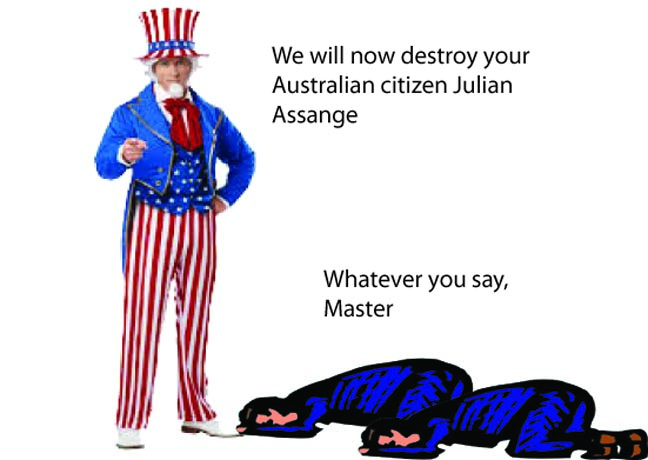
Will Australia ever get any integrity in it’s leaders?
In the clearest denialof justice in British history, the UK kow-tows to American militarism in its court now agreeing to send Juian Assange to be ”disappeared” in the USA’s penal system. And, worse than the UK, Australia’s leaders stand by, and pretty much applaud this evil event.
Liberal Morrison mouthpiece Simon Birmingham – ” we have confidence in the process”
And Labor’s Penny Wong carefully keeping her nose clean as she sucks up to the UK-USA ”legal” fakery – ”We also expect the government to keep seeking assurances from both the UK and US that he’s treated fairly and humanely.” What does she mean? – ” ïf they don’t treat Assange fairly, well, that’s not our problem”
I actually think that the Liberals are better – they don’t even pretend to care!
Paradoxically – we all love to hate Barnaby Joyce, but he stuck up for Julian Assange – and good on him!
And the Greens – a voice of intelligence and reason, in Australian political mental desert – the Greens spelled out the reasons for their opposition to this terrible injustice to Assange and to journalism.
Australian government will not intervene as Australian citizen Julian Assange is extradited from UK to USA
Australia won’t interfere in Assange case https://www.aapnews.com.au/news/australia-won-t-interfere-in-assange-case?share=PPzPIGP&fbclid=IwAR2z0saMHCLbT3dc-VMgelywE7ND1eEa4TahOq9wCQ2Ai7IG2CKRyzKmWVE, By Dominic Giannini, April 21, 2022 The Australian government will not make any representations to the British home secretary after a UK court approved the extradition of whistleblower Julian Assange to the US.
A British court has sent Mr Assange’s extradition order to Home Secretary Priti Patel, but the whistleblower can try to challenge the decision by judicial review if signed.
Finance Minister Simon Birmingham said the government maintained confidence in the UK’s justice system.
“We trust the independence and integrity of the UK justice system. Our expectation is that, as always, it operates in the proper and transparent and independent way,” he told the ABC.
“It, of course, has appeal processes built into it as well. This is the legal system upon which our own has been built on and established and we have confidence in the process.”
Labor foreign affairs spokeswoman Penny Wong said it was ultimately a decision for the UK home secretary.
“I do understand why not only Mr Assange’s personal supporters but many Australians more generally are worried about this. It has dragged on a long time,” she told the ABC.
“As an Australian citizen, he is entitled to consular assistance. We also expect the government to keep seeking assurances from both the UK and US that he’s treated fairly and humanely.”
But Senator Wong stopped short of saying a Labor government would make specific representations about the case.
“Consular matters are regularly raised with counterparts, they are regularly raised and this one would be no different,” she said.
The development comes 10 days after Mr Assange surpassed the three-year anniversary of his arrest.
The 50-year-old Australian was dragged from London’s Ecuador embassy on April 11 in 2019 to face extradition to the United States on espionage charges over WikiLeaks’ release of confidential US military records and diplomatic cables.
Deputy Prime Minister Barnaby Joyce has previously called for an end to Mr Assange’s extradition.
Mr Joyce said Mr Assange didn’t steal secret US files but only published them, which did not breach any Australian laws at the time, and he was not in the US when leaks were put online.
The Greens have criticised the extradition of Mr Assange, with senator Peter Whish-Wilson saying the US Espionage Act wasn’t intended to be used against publishers.
“We must support press freedoms and those who hold the powerful to account,” he said.
“Julian Assange’s prosecution has always been political. It needs political intervention of the highest order from our government to get justice for him.”
Assange Australia campaign adviser Greg Barnes says it’s important the matter has moved back into the political realm.
“Previously the Australian government has said we can’t even intervene because the matter is before the courts. It is no longer before the courts in that sense,” he told Sky News.
This is a political decision that will be made by Priti Patel and it’s a decision which the Australian government, and of course in this context the opposition, could influence.”
The Greens, crossbenchers such as Andrew Wilkie, and Liberal and Labor backbenchers had expressed support for Mr Assange, which could potentially influence a hung parliament in May, Mr Barnes said.
“That’s also an interesting factor as to what pressure is going to come on whoever gets elected in May to bring this Australian home.”
with Reuters
UNEXPLAINED ORDNANCE: A MISSILE ON ABORIGINAL LAND AND A BREAKTHROUGH LEGAL COMPLAINT
ARENA ONLINE, MICHELLE FAHY, 21 APR 2022
A ground-breaking legal complaint has arisen after First Nation’s elders Andrew and Robert Starkey discovered an unexploded missile on their country. The brothers discovered the missile, manufactured by arms multinational Saab, in Lake Hart West, a registered Indigenous heritage site within the vast Woomera Prohibited Area. The Starkeys are Kokatha Badu (respected senior figures, or lore men) from the Western Desert region of South Australia who have devoted decades to protecting heritage sites on their land.
In a complaint to the OECD, the Starkeys alleged that Saab had breached OECD guidelines by failing to undertake or maintain ‘adequate human rights due diligence which could prevent their product from being used in human rights violations’, and which also resulted in a failure to ‘protect and preserve the integrity of [those] heritage sites’ for which the Starkeys have custodial responsibilities
Michelle Fahy, 4 Feb 2022
Australia hasn’t seen anything like this case before. In fact, in the world of OECD complaints, it’s a first.
The Starkey complaint has resulted in a precedent-setting initial assessment from the OECD that could have ramifications for multinational weapons companies. The OECD’s Australian contact point has decided that arms export permits granted by national governments do not provide weapons companies with immunity from responsibility for human rights violations resulting from the use of their products or services.
This decision overturns earlier OECD precedents set by other countries, including the United Kingdom and the United States, which allowed weapons companies to shelter behind arms export permits. The initial assessment in the Starkey complaint says that government-issued arms export permits on their own are insufficient protection, and that the OECD guidelines require global arms manufacturers to conduct ongoing due diligence on human rights issues. Manufacturers of weaponry used to commit war crimes against civilians in Yemen, for example, could now be exposed to similar complaints.
The Defence Department, which has long fobbed off the Starkeys’ heritage concerns, took a year to remove the missile. Andrew says they next tried to approach Saab—whose marketing tagline is ‘It’s a human right to feel safe’—but were again brushed off and referred back to Defence. The Starkeys then lodged their complaint with the OECD’s Australian National Contact Point (AusNCP) in September 2021.
The OECD Guidelines for Multinational Enterprises are a comprehensive code of responsible business conduct that governments have committed to promoting. Each country that chooses to adhere to the guidelines must establish a national contact point to promote and implement the guidelines. The complaints procedure is intended to provide a non-adversarial ‘forum for discussion’ to examine and resolve complaints against multinationals.
The OECD covers most of the world’s weapons makers— 80 of the top 100 arms corporations, according to an analysis of data compiled by the Stockholm International Peace Research Institute. These companies represented 80 per cent (US$425 billion) of the US$531 billion in sales by the top 100 in 2020. Saab, ranked thirty-sixth, had US$3.4 billion in sales in 2020.
Saab responded to the Starkeys’ complaint saying, amongst other things, that its supply of weaponry to Defence was subject to ‘strict export control laws’ aimed at preventing their use in harmful ways and that Swedish export controls ‘require human rights issues to be considered’. This rote argument is parroted across the arms industry and is one that Australia’s Defence Exports Controls Office relies on to justify its continued arms exports to nations engaged in serial human rights abuses, including Saudi Arabia, the United Arab Emirates, Israel and Indonesia.
‘No nation gets to pick and choose which laws to comply with, nor do they get to choose who will or will not be held accountable’, says the Starkeys’ international human rights lawyer John Podgorelec. ‘The international law has to be applied as evenly to the Saudi Yemen conflict as it would to the Russia Ukraine conflict.’
Weapons companies have long benefited from a myopic reliance on one-off export permit approvals. However, the extensive evidence of war crimes and the resultant catastrophe still unfolding in Yemen, fuelled in large part by US– and UK supplied weaponry, shows that the so-called strict permit approval system is an abject failure in protecting human rights.
The AusNCP’s initial assessment sounds a warning to the arms industry worldwide. The AusNCP has now offered its ‘good offices’ to facilitate a negotiated resolution between the Starkeys and Saab. The Starkeys are ready to negotiate. Whether the ‘good offices’ phase proceeds depends on Saab, which has so far said it will ‘review the findings, and continue to engage with the AusNCP, to determine any further required actions’.
Andrew Starkey is pleased with the result so far, but his relief is tempered with discontent. ‘The situation is so bad in Australia. The legislation is so weak that we needed to rely on international law to get justice.’
Dr John Pace, who is also advising the Starkeys, is a globally recognised expert in human rights law with more than fifty years’ experience, including at the United Nations. Pace says that the obligation for due diligence on human rights grounds never abandons the equipment. ‘It is an ongoing, responsive and changing process, not a one-off rubber stamp.’
Amnesty International has noted, in Human rights policies in the defence sector, that, ‘There is now a clear global consensus that companies have a responsibility to respect all human rights wherever they operate’. There is also increasing acceptance that good business practices in one area do not offset harm in another. Corporate behaviour must be globally consistent.
A significant factor influencing the handling of the Starkeys’ complaint is the web of conflicting interests in which Saab features strongly. Such conflicts were not disclosed to the Starkeys during the complaint process. It is this inconsistency in its corporate behaviour that has brought Saab undone. As Andrew says, ‘Defence seems more interested in protecting a Swedish company than in protecting Australian culture’………………………………………………………………
The due diligence guidelines are clear about avoiding adverse impacts on human rights and, in particular, the importance of engaging with Indigenous peoples who might be affected by the activities of the business. One adverse impact noted by the OECD in relation to human rights is ‘Failing to identify and appropriately engage with indigenous peoples where they are present and potentially impacted by the enterprise’s activities’.
The Starkeys are concerned that similar problems will recur. Says Andrew, ‘For us this is the same as the British atomic tests. We are the ones left to deal with the mess. They are erasing us one site at a time up there’.
| Christina Macpherson <christinamacpherson@gmail.com> | Apr 22, 2022, 9:02 PM (11 hours ago) |  | |
| to me |
Major parties suffer from a climate credibility gap: new health election scorecard
Major parties suffer from a climate credibility gap: new health election scorecard
Recent floods in Queensland and New South Wales have put the spotlight on the damaging health impacts from climate change including risks to food security, mental health and trauma from widespread devastation.
Are we in West being manipulated on a grand scale with deceptive propaganda about the war in Ukraine?

Today I’m posting two videos from Regis Tremblay. I’m sure that Western viewers will hate these, and call the ”Russian propaganda”. And I wish that I could believe that, too,
But I do have an awful fear. Swamped as I am by the tsunami of TV, radio, news, barrage of hyper-emotional depiction of the Ukrainian war, – I cannot help my fearful thought that Regis Tremblay’s speakers are telling the truth.
It’s a painful thought – but I think that the anglophone world, and NATO – the European countries are pulling a giant confidence trick on us all, as we all are led into this frenzy of endless weapons-buying to further the destruction of Ukraine. We are standing by, cheering, as Zelensky and the Ukrainian people are used as pawns, sacrificed, in the cause of the USA discrediting and disrupting Russia
1 This month.


PETITION – To: Prime Minister Anthony Albanese and the Australian Labor Government
Chernobyl: The Lost Tapes – A good documentary on Chernobyl on SBS available On Demand for the next 3 weeks– https://www.sbs.com.au/ondemand/tv-program/chernobyl-the-lost-tapes/235274195556
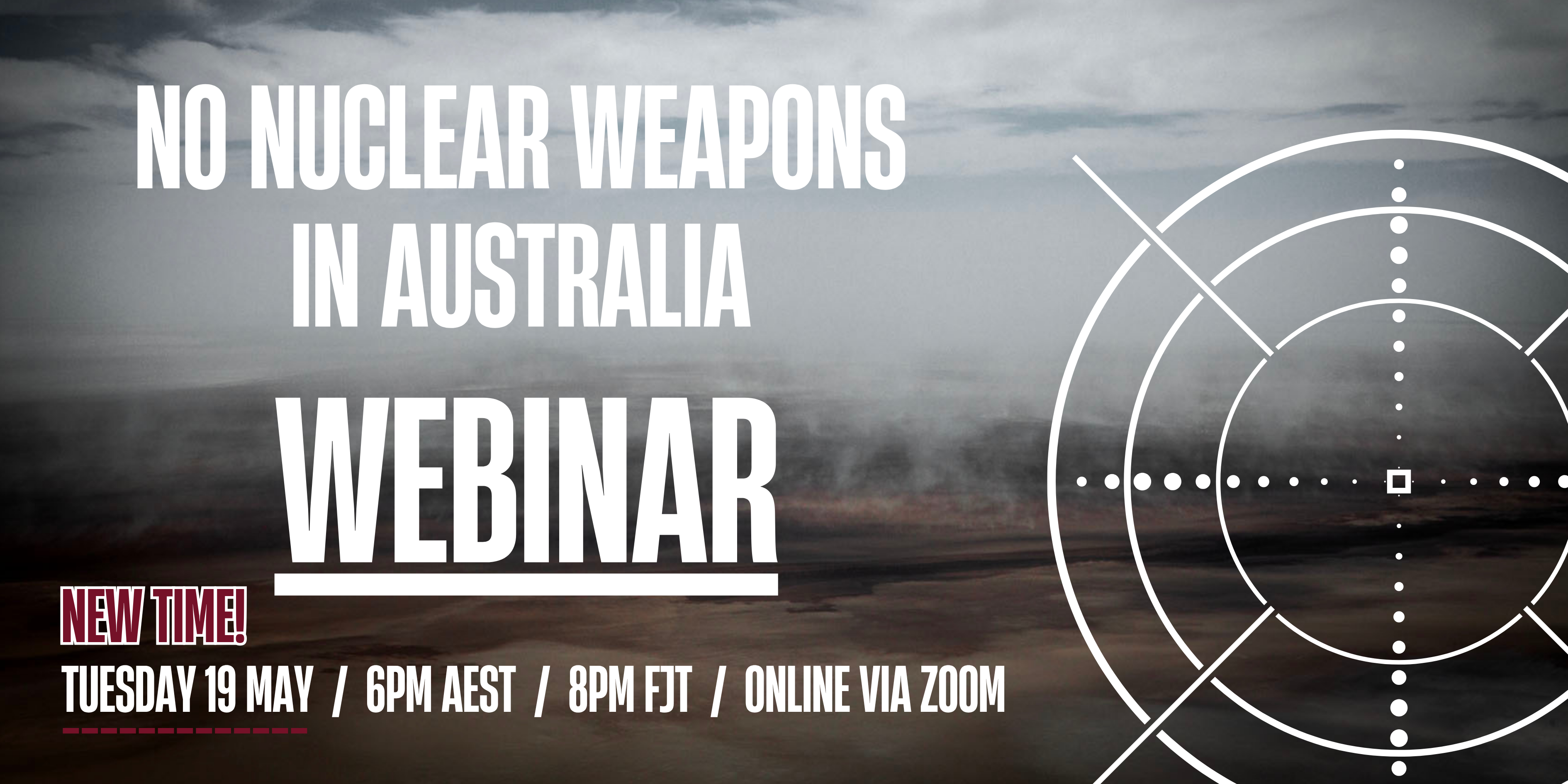
19 May – Webinar- Webinar: No Nuclear Weapons in Australia
Start: 2026-05-19 18:00:00 UTC Canberra, Melbourne, Sydney (GMT+10:00)
End: 2026-05-19 19:30:00 UTC Canberra, Melbourne, Sydney (GMT+10:00)
20 May – Webinar – The dangerous world of AUKUS, US, military occupation and suppression of dissent

National Webinar, 20th May, 2026, 6.30pm AEST. Confronting laws restricting/suppressing protest speech and action
Speakers: Former Sen. Rex Patrick, Lawyer Nick Hanna ,Arthur Rorris ,Jorgen Doyle, Sen David Shoebbridge,
Facilitator Kelley Tranter.

of the week – Australians for War Powers Reform (AWPR)
To see nuclear-related stories in greater depth and intensity
 Antinuclear