Election Diary: Taylor’s “implausible” claims, Morrison loves coal, Albanese backs EVs — RenewEconomy

Albanese visits Tritium, Morrison visits Woodside, and Taylor’s scare campaign about rising electricity prices labelled ‘implausible’. The post Election Diary: Taylor’s “implausible” claims, Morrison loves coal, Albanese backs EVs appeared first on RenewEconomy.
Election Diary: Taylor’s “implausible” claims, Morrison loves coal, Albanese backs EVs — RenewEconomy
Australia’s election debate on energy ignores the miracle of rooftop solar
Australia’s election debate on energy ignores the miracle of rooftop solar
Saul Griffith
Power harvested from our roofs and stored locally could smash carbon emissions and obliterate household energy bills
Why are nature-based solutions on climate being overlooked?
Why are nature-based solutions on climate being overlooked?
Nature-based initiatives have proven effective in making communities more resilient to climate change. But international funding has shortchanged such solutions in favor of more costly and less efficient engineering projects.
‘Climate change isolationism’ puts Australia on par with Saudi Arabia
‘Climate change isolationism’ puts Australia on par with Saudi Arabia
Australia’s “climate change isolationism” has driven a fall from 35th to 52nd in a global ranking of how different nations are responding to the global warming crisis, one rank behind the oil giant Saudi Arabia in a group of nations described as “climate laggards”
Future of Antarctica’s Larsen C ice-shelf will have consequences for sea level rise world-wide
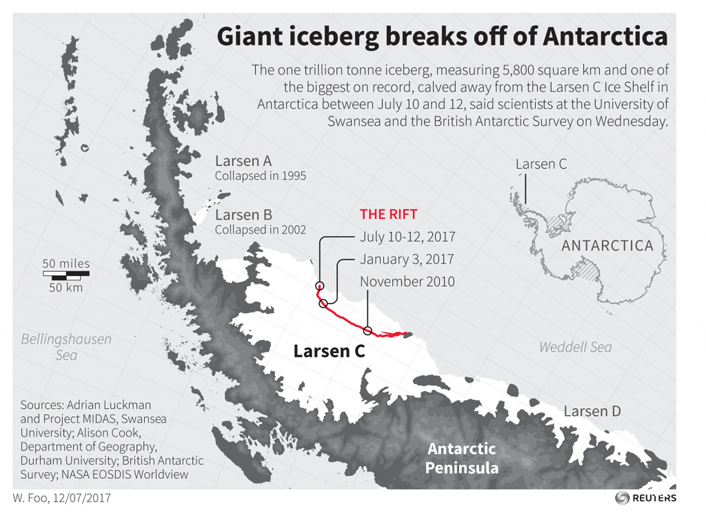
| Scientists know the surface of the Larsen C ice shelf in Antarctica is melting, making it vulnerable to collapse. For the first time, we can rank the most important causes of melting over the recent past. In a new two-part paper in Journal of Geophysical Research: Atmospheres, we show how the amount of energy reaching the ice from the sun is the dominant factor, followed by warm winds, clouds and weather patterns. These drivers of melting can interact and overlap to reinforce or counteract each other, so it is a complex picture. Understanding what is causing melting over Larsen C is vital as it will help predict the future of the ice shelf, which will have knock-on consequences for sea levels worldwide. In 2002, Larsen C’s neighbouring ice shelf, Larsen B, experienced melting so severe that it eventually caused the shelf to collapse completely. Larsen C restrains glaciers that contain enough ice to raise global sea levels by around 22mm. Carbon Brief 14th April 2022 https://www.carbonbrief.org/guest-post-ranking-the-reasons-why-the-larsen-c-ice-shelf-is-melting |
An increased 2 degree Celsius world will not be liveable for vast swathes of humanity – but that’s the latest semi-optimistic research result

| Christiana Figueres: Should we feel joy or despair that we’re on track to keep global heating to 2C? The atmosphere does not react to pledges for the future or reports about past achievements. It only reacts to real emission reductions. The research published in Nature last week showing that the pledges by countries to reduce emissions made since the Paris agreement could keep warming within 2C, if met on time, has therefore understandably sparked a series of conflicting reactions. Outrage that even if the promises are met, they don’t come close to 1.5C; and optimism that 2C is such a huge improvement on where we’d be headed without the Paris agreement. On the one hand, we have to acknowledge this looks very much like failure. A 2C world will not be liveable for vast swathes of humanity, and half of the world’s children are already at extremely high risk from the impacts now, including hunger-inducing floods and droughts. Guardian 19th April 2022 https://www.theguardian.com/commentisfree/2022/apr/19/global-heating-2c-climate-paris-agreement |
Queensland blows hot with another 900MW wind farm and big battery — RenewEconomy

Green light given to another 900MW wind farm in north Queensland, possibly with a four hour 400MWh big battery. The post Queensland blows hot with another 900MW wind farm and big battery appeared first on RenewEconomy.
Queensland blows hot with another 900MW wind farm and big battery — RenewEconomy
Australia gets new player in auto-bidding renewables and storage market — RenewEconomy

The rise and rise of energy market optimisation technologies in Australia continues with the launch of UK-founded GridBeyond. The post Australia gets new player in auto-bidding renewables and storage market appeared first on RenewEconomy.
Australia gets new player in auto-bidding renewables and storage market — RenewEconomy
Loy Yang A coal generator unit offline for second time in three years — RenewEconomy

AGL says a unit at Loy Yang A has been sent offline, perhaps until August, its second major fault in just three years. The post Loy Yang A coal generator unit offline for second time in three years appeared first on RenewEconomy.
Loy Yang A coal generator unit offline for second time in three years — RenewEconomy
April 20 Energy News — geoharvey

Opinion: ¶ “How Cars Can Help Us Undermine Putin’s Power” • But there is something that we can all do to weaken Putin’s very ability to wage war: Cut the quarter of a billion dollars that we send him daily for oil (at least twice the amount we send for gas even at current prices). […]
April 20 Energy News — geoharvey
Coalition spending on fossil fuel subsidies tops $1.3 billion in first week of campaign
Coalition spending on fossil fuel subsidies tops $1.3 billion in first week of campaign
Just a week into the federal election campaign and the Morrison-led Coalition has already spent nearly $1.3 billion on fossil fuel subsidies.
Big Tech monopolies — Facebook, Google, and Amazon control media in the interests of American militarism
Former Intelligence Officials, Citing Russia, Say Big Tech Monopoly Power is Vital to National Security, Glenn Greenwald, Substack 20 Apr 22,
When the U.S. security state announces that Big Tech’s centralized censorship power must be preserved, we should ask what this reveals about whom this regime serves.
A group of former intelligence and national security officials on Monday issued a jointly signed letter warning that pending legislative attempts to restrict or break up the power of Big Tech monopolies — Facebook, Google, and Amazon — would jeopardize national security because, they argue, their centralized censorship power is crucial to advancing U.S. foreign policy.
The majority of this letter is devoted to repeatedly invoking the grave threat allegedly posed to the U.S. by Russia as illustrated by the invasion of Ukraine, and it repeatedly points to the dangers of Putin and the Kremlin to justify the need to preserve Big Tech’s power in its maximalist form. Any attempts to restrict Big Tech’s monopolistic power would therefore undermine the U.S. fight against Moscow.
While one of their central claims is that Big Tech monopoly power is necessary to combat (i.e., censor) “foreign disinformation,” several of these officials are themselves leading disinformation agents: many were the same former intelligence officials who signed the now-infamous-and-debunked pre-election letter fraudulently claiming that the authentic Hunter Biden emails had the “hallmarks” of Russia disinformation (former Obama Director of National Intelligence James Clapper, former Obama CIA Director Michael Morrell, former Obama CIA/Pentagon chief Leon Panetta). Others who signed this new letter have strong financial ties to the Big Tech corporations whose power they are defending in the name of national security (Morrell, Panetta, former Bush National Security Adviser Fran Townsend)………………….
Why would these former national security and intelligence officials be so devoted to preserving the unfettered power of Big Tech to control and censor the internet? One obvious explanation is the standard one that always runs Washington: several of them have a financial interest in serving Big Tech’s agenda.
Unsurprisingly, Apple CEO Tim Cook has himself pushed the claim that undermining Big Tech’s power in any way would threaten U.S national security. And there is now an army of well-compensated-by-Silicon-Valley former national security officials echoing his message. A well-researched Politico article from September — headlined: “12 former security officials who warned against antitrust crackdown have tech ties” — detailed how many of these former officials who invoke national security claims to protect Big Tech are on the take from the key tech monopolies:………………………………….
Big Tech censorship of political speech is not random. Domestically, it is virtually always devoted to silencing any meaningful dissent from liberal orthodoxy or official pieties on key political controversies. But in terms of foreign policy, the censorship patterns of tech monopolies virtually always align with U.S. foreign policy, and for understandable reasons: Big Tech and the U.S. security state are in a virtually complete union, with all sorts of overlapping, mutual financial interests:
Note that this censorship regime is completely one-sided and, as usual, entirely aligned with U.S. foreign policy. Western news outlets and social media platforms have been flooded with pro-Ukrainian propaganda and outright lies from the start of the war. A New York Times article from early March put it very delicately in its headline: “Fact and Mythmaking Blend in Ukraine’s Information War.” Axios was similarly understated in recognizing this fact: “Ukraine misinformation is spreading — and not just from Russia.”…………….
there is little to no censorship — either by Western states or by Silicon Valley monopolies — of pro-Ukrainian disinformation, propaganda and lies. The censorship goes only in one direction: to silence any voices deemed “pro-Russian,” regardless of whether they spread disinformation….Their crime, like the crime of so many other banished accounts, was not disinformation but skepticism about the US/NATO propaganda campaign………………
It is unsurprising that Silicon Valley monopolies exercise their censorship power in full alignment with the foreign policy interests of the U.S. Government. Many of the key tech monopolies — such as Google and Amazon — routinely seek and obtain highly lucrative contracts with the U.S. security state, including both the CIA and NSA. Their top executives enjoy very close relationships with top Democratic Party officials. And Congressional Democrats have repeatedly hauled tech executives before their various Committees to explicitly threaten them with legal and regulatory reprisals if they do not censor more in accordance with the policy goals and political interests of that party.
Needless to say, the U.S. security state wants to maintain a stranglehold on political discourse in the U.S. and the world more broadly. They want to be able to impose propagandistic narratives without challenge and advocate for militarism without dissent. To accomplish that, they need a small handful of corporations which are subservient to them to hold in their hands as much concentrated power over the internet as possible.
If a free and fair competitive market were to arise whereby social media platforms more devoted to free speech could fairly compete with Google and Facebook— as the various pending bills in Congress are partially designed to foster — then that new diversity of influence, that diffusion of power, would genuinely threaten the ability of the CIA and the Pentagon and the White House to police political discourse and suppress dissent from their policies and assertions. By contrast, by maintaining all power in the hands of the small coterie of tech monopolies which control the internet and which have long proven their loyalty to the U.S. security state, the ability of the U.S. national security state to maintain a closed propaganda system around questions of war and militarism is guaranteed………………………….
France’s nuclear energy output falling, as signs of corrosion halt several nuclear reactors

Electricite de France SA has found corrosion on key piping on four nuclear
reactors during recent checks, taking the number of affected units at its
French fleet of atomic generators to nine.
Corrosion issues have forced the French energy giant to halt some of its 56 reactors for lengthy checks and repairs, just as Europe faces its worst energy crisis in half a century.
The state-controlled utility previously said its nuclear output will fall
to the lowest in more than three decades this year and hardly rebound next
year due to the reactor works.
Signs of corrosion were found in pipings of
the Chinon-3, Cattenom-3 and Flamanville-2 reactors, three of the six units
that EDF had decided to check in February, EDF said in a statement posted
on its website last week. Indications of corrosion have also been found at
the Golfech-1 unit during a planned maintenance halt, and deeper checks
will be carried out, the utility said.
Bloomberg 19th April 2022
Constant cheap renewable power to Britain – the Sahara wind and solar cables
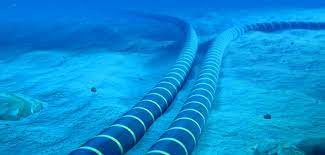
Within five years, the world’s longest undersea cable will link Devon to
a vast territory of solar panels in the Sahara Desert, supplying
electricity directly into Britain’s grid at a fraction of today’s power
prices. A second cable will land two years later in 2029.
Together they will provide 3.6 gigawatts (GW) of constant baseload power, equivalent to
two Hinkley-sized nuclear reactors. The difference is that we will be able
to afford it.
That, at least, is the plan. The £16bn Xlinks Morocco-UK
Power Project – chaired by former Tesco chief Sir Dave Lewis – has an
elegant feature. It combines wind and solar in perfect geographic
circumstances to make near-constant power for 20 hours a day.
Trade winds on the coast of North Africa raise the average “capacity factor” of
onshore wind turbines to 54pc. A desert convection effect creates a regular
wind current in the early evenings and smooths the handover from solar to
wind. “It picks up every afternoon just as the sun is setting,” said
Simon Morrish, the project’s chief executive.
This overcomes the curse of intermittency, with lithium batteries in the desert to cover the remaining
gaps. Xlinks will be a park of 580 square miles at Guelmim Oued Noun on the
28th parallel south of Agadir, picked because it is at the top of the
global horizontal irradiance index. The yield is three times higher than in
the UK. The sun shines for 10 hours a day in winter. “The space is
unlimited. We could in theory put up 500 of these projects in Morocco,”
he said. The consortium is already planning a second hub to power Benelux.
It could multiply the scale several times over for the UK, constrained only
by the safe limits of energy security.
Telegraph 20th April 2022
The life and slow death of nuclear power plants

The UK government and EDF have pledged 20% of the cost each, but the additional 60% is yet to be found. Some of that is a levy on our electricity bills for a decade before Sizewell generates a single Kwh.
once planning permission is given, construction of a small-scale wind farm, 10MW or less, could take less than two months.
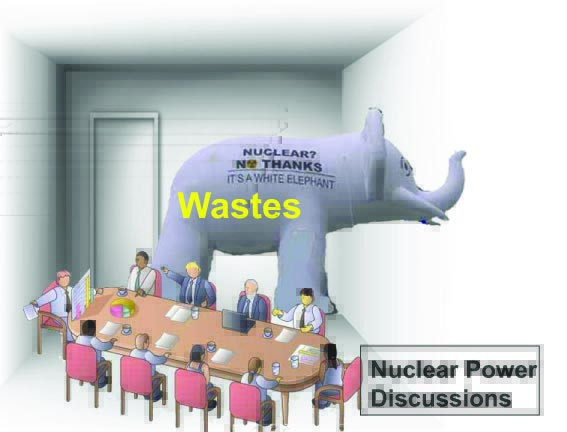
A further elephant in the room is that the costs of new nuclear are highly “back loaded”, i.e., that by building them you commit to high levels of expenditure at the end of their working life, to remove the fuel rods, decommission, remove and store nuclear waste.
The Life and Death of nuclear power plants By NEWSROOM, Apr 18, 2022, By Peter Rowberry with additional reporting by Newsroom
It seems that the policy [in the UK] to build new nuclear power stations has caused some friction at the heart of the cabinet, with the Prime Minister trying to get the agreement of the Chancellor to spend at least £100 billion on eight new nuclear power stations. This didn’t stop the government issuing its energy security strategy last week.
Such a huge commitment merits careful scrutiny. Hinkley Point C was one of eight announced by the British government in 2010 with a nuclear site licence granted in November 2012. EDF’s board approved the project in July 2016 and on 15 September 2016 the UK government approved the project in principle. Construction work on-site began by late September 2016. Completion of the reactor bases was completed in June 2019 for reactor 1 and June 2020 for reactor 2. The two bases required a total of 633,700 cubic feet of concrete.
Hinkley C is the only one of the 2010 eight designated sites to have commenced construction. The UK government strategy paper calls for 8 further new nuclear plants but does not name locations. This is similar to the Brown government’s announcement in 2008 which the coalition government pinned down in 2010. With only 1 of 8 since 2010 actually under construction the conclusion is the new 8 suggested could be decades from coming online.
Earlier costs for Hinkley C were estimated at around £18 billion. The current cost estimate is around £22 to £23 billion, and the first reactor will not be complete until June 2026 at the earliest, and the second at least six months later.
This timetable is currently being reviewed, with a fault found in similar nuclear reactors in China meaning the design may need to be changed. EDF have not commented on whether this will affect the timescale for completing the project. These delays, and the consequent impact on other nuclear projects, such as Sizewell C and Wylfa, have resulted in serious failures to meet the government obligations to move to low carbon generation and taken up time, time which we are now desperately short of if we are to meet our target of reducing carbon emissions by 50% by 2030 and to net zero by 2050.
The building of the two reactors that form the Sizewell C project is still not fully financed. Nor has the planning process been completed. All the work in progress so far is on vast quantities of paper and construction cannot commence until Sizewell C plant receives planning permission.
There remains considerable opposition to Sizewell C over the high cost of nuclear energy and environmental issues. The cost of a plant that is over 10 years away from generating power will start hitting electricity bills sometime soon. The BBC reported “Legislation allowing construction and financing costs to be added to customer bills, as Sizewell C is built over the next decade, is due for a second reading in the House of Commons next month.”
The UK government and EDF have pledged 20% of the cost each, but the additional 60% is yet to be found. Some of that is a levy on our electricity bills for a decade before Sizewell generates a single Kwh. The government’s plans to have eight nuclear reactors up and running by 2030 seem naively optimistic. New nuclear is not a quick fix, as our near neighbours will attest. The Finnish reactor, Olkiluoto 3, was started in 2005, but only went onto the grid seventeen years later, on 15 March this year.
Of the eight nuclear power plants announced back in 2010, Hinkley Point C might be generating by 2026 (16 years) and Sizewell C by 2032, subject to planning permission (22 years) None of the other 6 proposed nuclear plants are anywhere near getting off the ground.
France, a country which historically generates a large percentage of its electricity from nuclear, is in the process of building only one new reactor, a third at the Flamanville site. EDF, the state-owned energy giant, began work in December 2007 and the cost was estimated to be €3.3 billion. It is now expected to cost more than €12.7 billion and it is yet to generate a single kilowatt of power.
Continue reading1 This month.
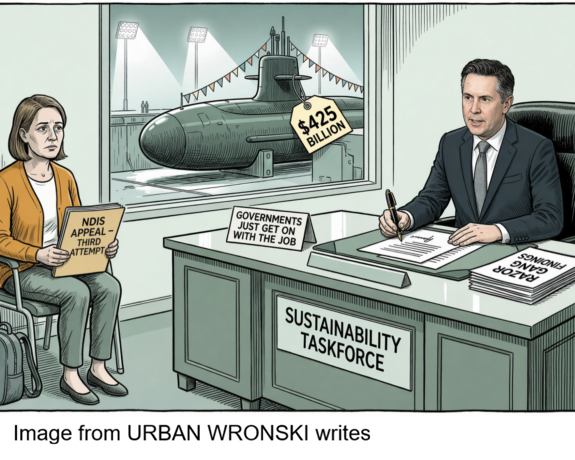

PETITION – To: Prime Minister Anthony Albanese and the Australian Labor Government
Chernobyl: The Lost Tapes – A good documentary on Chernobyl on SBS available On Demand for the next 3 weeks– https://www.sbs.com.au/ondemand/tv-program/chernobyl-the-lost-tapes/235274195556
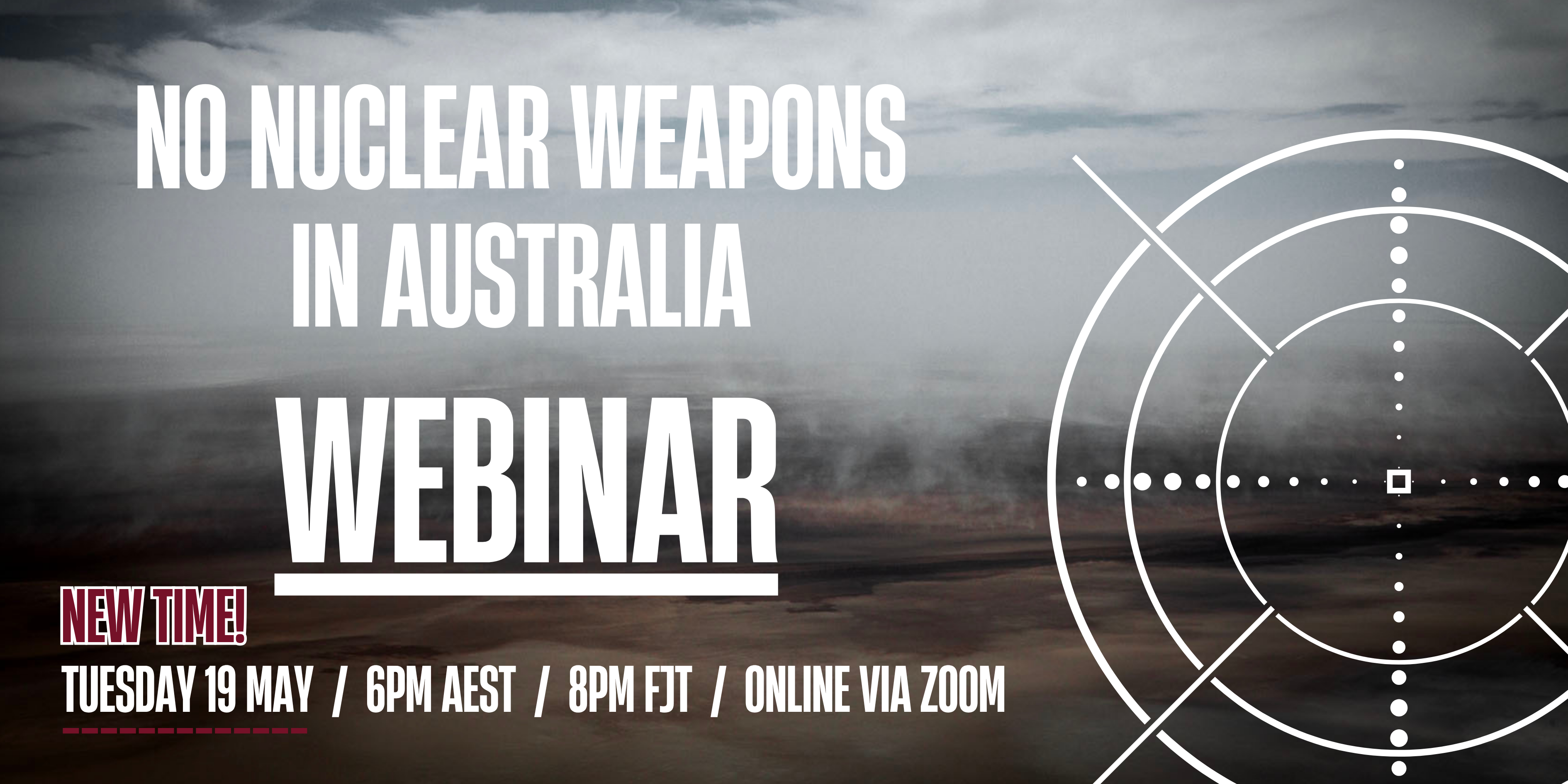
19 May – Webinar- Webinar: No Nuclear Weapons in Australia
Start: 2026-05-19 18:00:00 UTC Canberra, Melbourne, Sydney (GMT+10:00)
End: 2026-05-19 19:30:00 UTC Canberra, Melbourne, Sydney (GMT+10:00)
20 May – Webinar – The dangerous world of AUKUS, US, military occupation and suppression of dissent

National Webinar, 20th May, 2026, 6.30pm AEST. Confronting laws restricting/suppressing protest speech and action
Speakers: Former Sen. Rex Patrick, Lawyer Nick Hanna ,Arthur Rorris ,Jorgen Doyle, Sen David Shoebbridge,
Facilitator Kelley Tranter.

of the week – Australians for War Powers Reform (AWPR)
To see nuclear-related stories in greater depth and intensity
 Antinuclear