How the Narcotic of Defense Spending Undermines a Sensible Grand Strategy,
MARCH 2, 2022, How the Narcotic of Defense Spending Undermines a Sensible Grand Strategy, CounterPunch, BY FRANKLIN SPINNEY The Military-Industrial-Congressional-Complex’s (MICC) grand-strategic chickens are coming home to roost big time. While war is bad, the Russo-Ukrainian War has the champagne corks quietly popping in the Pentagon, on K Street, in the defense industry, and throughout the halls of Congress. Taxpayers are going to be paying for their party for a long time.
It is no accident that the United States is on the cusp of the Second Cold War.
Future historians may well view the last 30 years as a case study in the institutional survival of the American Military – Industrial – Congressional Complex (MICC), together with its supporting blob now saturating the media, think tanks, academia, and the intelligence community. Perhaps, these future historians will come also to view the Global War on Terror (GWOT) as the bridging operation that greased the transition to Cold War II by keeping defense budgets at Cold War levels after Cold War I ended. Also, 9-11 may have re-acclimated the American people to the climate of fear now needed to sustain Cold War II for the remainder of the 21st Century.
The First Cold War’s 40-year climate of fear was something Mikhail Gorbachev tried to end. But Presidents Clinton and Bush (the 2nd) were busy planting the seed money for a new generation of cold-war inspired weapons. These weapons required massive future defense budgets that would require a climate of fear to sustain (especially for the across-the-board nuclear modernization program). President Obama then locked in these programs, and won a Nobel Peace Prize to boot. President Trump and the Dems in Congress worked overtime to ice the Pentagon’s budget cake by incestuously amplifying the growing Russophobia
No one wants war, but rising tension and the politics of fear … and their bedfellow: demonization … had to be magnified to justify the huge bow wave of defense spending looming in the budgetary offing, particularly the trillion+ dollars to pay for the nuclear modernization program. This “chicken” takes us back to the “egg” laid in the 1990s.
As it gradually sank in that the First Cold War had indeed ended when the Soviet threat evaporated in 1991, the titans in the defense industry understood their comfortable market for new hi-tech, high-cost weapons could dry up.
At the same time, the defense industrialists recognized that market diversification was necessary. So, it was no accident that a lobbying operation named the Committee to Expand NATO emerged in the early 1990s and was headed by a vice president of Lockheed Martin — see also Why is US Foreign Policy a Shambles?. At the very least, in the mid-1990s, it seemed that expanding NATO implied dramatically increased requirements for what is known in NATO jargon as weapons interoperability……………..
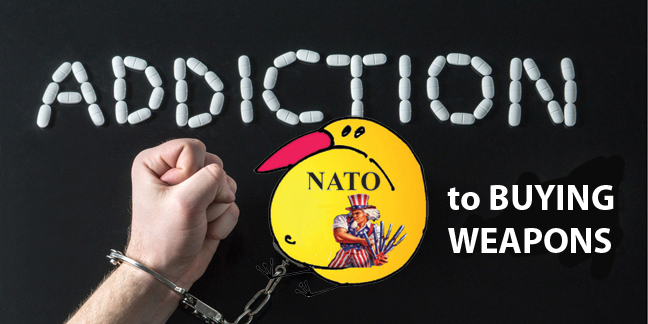
the Pentagon’s strategy of maximizing its budget has created a growing dependency on defense spending in the American political economy. This grotesque distortion was first recognized by President Eisenhower in 1961. In 1987, George Kennan, forty years after he fathered the dominant US policy of “Containment” for the entire First Cold War, summed up the narcotic of defense spending, saying prophetically:
“Were the Soviet Union to sink tomorrow under the waters of the ocean, the American military-industrial complex would have to remain, substantially unchanged, until some other adversary could be invented. Anything else would be an unacceptable shock to the American economy,” …………..
Understanding the internal political-economic causes of the American addiction to the narcotic of defense spending is at the heart of the problem. This understanding is essential to reforming the foreign policy mess exacerbated by NATO expansion. …….
Franklin “Chuck” Spinney is a former military analyst for the Pentagon and a contributor to Hopeless: Barack Obama and the Politics of Illusion, published by AK Press. He be reached at chuck_spinney@mac.com https://www.counterpunch.org/2022/03/02/how-the-narcotic-of-defense-spending-undermines-a-sensible-grand-strategy/
Caitlin Johnstone: Freedom & Democracy Via Censorship. Australian government and media join in

You’d think a free society would have no objection to people trying to learn about the other side of a war in which NATO powers very plainly had a hand in starting. By Caitlin Johnstone 4 Mar 22, Consortium News
CaitlinJohnstone.com Kremlin-backed media outlets have been banned throughout the European Union, both on television and on apps and online platforms. RT has lost its Sky TV slot in the U.K., where the outlet is also blocked on YouTube.
Australian TV providers SBS and Foxtel have dropped RT, and the federal government is putting pressure on social media platforms to block Russian media in Australia.
In the Czech Republic, Slovakia and Latvia, speaking in support of the Russian invasion of Ukraine will get you years in prison.
Twitter, historically the last of the major online platforms to jump on any new internet censorship escalation, is now actively minimizing the number of people who see Russian media content, saying that it is “reducing the content’s visibility” and “taking steps to significantly reduce the circulation of this content on Twitter.” This is exactly what I speculated might emerge after former Twitter CEO Jack Dorsey resigned in November, due to previous comments supporting the tactic of censorship-by-algorithm by his successor Parag Agrawal.
Twitter is also placing warnings labels on all Russia-backed media and delivering a pop-up message informing you that you are committing wrongthink if you try to share or even “like” a post linking to such outlets on the platform. It has also placed the label “Russia state-affiliated media” on every tweet made by the personal accounts of employees of those platforms, baselessly giving the impression that the dissident opinions tweeted by those accounts are paid Kremlin content and not simply their own legitimate perspectives. Some are complaining that this new label has led to online harassment amid the post-9/11-like anti-Russia hysteria that’s currently turning western brains into clam chowder
(Many Tweets quoted here)
This is all on top of all the other drastic escalations in censorship which came roaring in at the beginning of the Ukraine war, and I personally find it a bit scary how fast it’s all happening, how fine people are with it, and how much worse it seems likely to get.
Others agree.
“The purge of RT and other Russian media outlets in the US and Europe is 100% censorship,” tweets journalist Michael Tracey. “Go ahead and argue it’s justified, but at least don’t be a coward and admit you are advocating censorship.”
“The western world believes that it has a monopoly on what constitutes ‘political truth’ and that their ideological worldview is the only correct, valid and authoritative one,” writer and analyst Tom Fowdy observed. “They preach freedom of speech and the press to other countries, but exempt themselves from it.”
And I can’t help but find it odd that the fight for freedom and democracy should require such copious amounts of censorship. You’d think a free society would have no objection to people trying to learn the other side of the debate about a war which NATO powers very plainly had a hand in starting, rather than being forced to consume only Western mass media narratives which tell us this is happening exclusively because Russian President Vladimir Putin is evil and Hitlery and hates freedom…………..
It makes you wonder if we have foolishly consented to a reality where the most powerful people in the world get to control the information people consume in order to shut down dissent against a murderous and oppressive globe-spanning oligarchic empire.
And it kind of makes you wonder, as we watch the same empire that just destroyed Iraq, Libya, Syria and Yemen being entrusted to carefully navigate extremely delicate nuclear brinkmanship escalations without ending the world, if we might perhaps be better off with a lot more dissent, rather than a lot less. https://consortiumnews.com/2022/03/03/caitlin-johnstone-freedom-democracy-via-censorship/
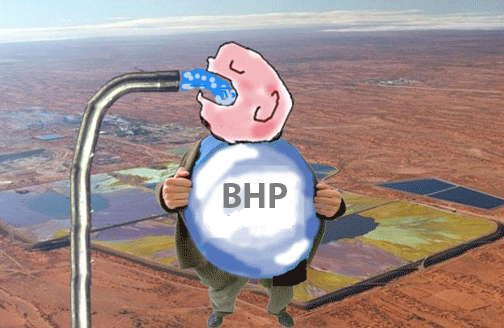
Uranium miner BHP under criticism for guzzling precious artesian water, and for not keeping its word to Aboriginal native title holders
Environment campaigner and consultant David Noonan, who provided submissions to the Juukan Inquiry, is sceptical of the desalination plant announcement.
Mr Noonan says even if it was built, BHP could be taking GAB water until the end of the decade. He wants to hear a formal commitment about alternative water sources.
Why BHP is facing a minefield, CHRIS MITCHELL, Adelaide Now, 4 Mar 22,
AUSTRALIA’S biggest company and the world’s secondbiggest miner, BHP, may disappoint conservationists and Aboriginal native title holders who had hoped for commitments to reform of heritage issues and underground water use at its Olympic Dam mine before the March 19 state election BHP, the Big Australian, with market capitalisation of $230bn, paid the state government royalties of $136m last year. Its Olympic Dam project 560km north of Adelaide is South Australia’s largest mining venture and the world’s biggest uranium mine, a global top-four copper mine and producer of gold and lead. BHP is powerful in SA.
Premier Steven Marshall is Aboriginal Affairs Minister but it would be fair to say native title holders do not wield the sort of power in Adelaide that big miners do.
Yet BHP has flagged some changes to the way it operates that could reduce its own power over its own asset.
Under the 1982 Roxby Downs (Indenture Ratification) Act signed with former mine owner Western Mining, BHP, which bought the mine in 2005, has almost unprecedented powers over resources and water within its 12,000sq km Stuart Shelf exploration lease.
BHP has been criticised by conservation groups and Aboriginal interests in last year’s report into rival Rio Tinto’s destruction of Juukan Gorge in Western Australia. The report includes criticism from the Arabana tribe of the mine’s heavy reliance on water from the Great Artesian Basin (GAB), and particularly from the so-called “Mound Springs” Aboriginal heritage sites north of the mine.
On February 15, The Advertiser revealed BHP would back a new $15m study, partly funded by state and federal governments, into a Spencer Gulf desalination plant to pump water to SA’s northern mines. But BHP is still far short of publicly committing to end its use of GAB water.
Conservationists say BHP is trying to control the water agenda, to maintain its privileges under the Indenture Act. But some hope it will be pragmatic enough to cut water demand from the GAB if it eventually decides to proceed with its Oak Dam copper-gold-uranium mine 65km southeast of Olympic.
Asked last week if BHP was formally committed to ending GAB water use, a spokesman said: “We continuously monitor and publicly report our water draw under a program approved by the SA government.”
BHP is not just under pressure for environmental reasons.
It is in discussion with three native title groups about the Olympic Dam Agreement it settled in 2008 with the Kokatha, Barngarla and Kuyani.
Of these, only the Kokatha have been granted formal native title over parts of BHP’s Stuart Shelf.
BHP’s problem now is how to balance the very valuable 40-year-old legal rights it has under the indenture with rights found in a native title determination in favour of the Kokatha in 2014……….
The Kokatha fought a long, 18-year battle to win their native title in 2014. Kokatha directors say dealing with BHP on the ODA before and after their native title court win has been challenging.
At this point, they are not receiving mining royalties and are unhappy with employment opportunities for Kokatha people.
Michael Turner, a former Kokatha director and current adviser on the Kokatha Native Title Compensation Settlement and Kokatha Charitable trusts, says he has been dealing with BHP for much of his adult life.
At this point, they are not receiving mining royalties and are unhappy with employment opportunities for Kokatha people………
negotiations on BHP’s Olympic Dam Agreement had been disappointing.
“We have been calling for a review of the ODA for many years and it has constantly been deferred,” he said.
“They’re refusing to move forward. It would be great if BHP could keep to its word and respect the wishes of the Kokatha people and review the ODA for the benefit of generations to come.”…………….
The final report into the May 24, 2020 destruction by Australia’s second-biggest miner, Rio Tinto, of the Juukan Caves in Western Australia’s Pilbara was released in October. In it, Arabana chair Brenda Underwood says: “Unfortunately, our springs are disappearing. The cause … is water taken from the GAB by BHP’s mine at Roxby Downs.”
BHP and the state government believe the springs remain healthy but environmentalists fear a possible expansion to the Oak Dam could take daily GAB water use well beyond 50 million litres a day. BHP says it is averaging 34 million litres a day.
Environment campaigner and consultant David Noonan, who provided submissions to the Juukan Inquiry, is sceptical of the desalination plant announcement.
Mr Noonan says even if it was built, BHP could be taking GAB water until the end of the decade. He wants to hear a formal commitment about alternative water sources.
BHP’s Aboriginal engagement team is mindful expectations have changed across the industry since Juukan and BHP will need to be seen to be engaging seriously with traditional owners. Some believe an ODA negotiated before the Kokatha achieved native title should be written off and a new agreement established………………………………………
 | |||
‘Dishonest’: Morrison government wanted IPCC to say Great Barrier Reef ‘not yet in crisis’
‘Dishonest’: Morrison government wanted IPCC to say Great Barrier Reef ‘not yet in crisis’
Australian officials attempted to water down language around health of world’s largest coral reef in latest climate change report
The vast majority of us are uninsured’: Australia’s insurance crisis set to worsen
The vast majority of us are uninsured’: Australia’s insurance crisis set to worsen
Disaster-prone areas of Australia, frequently hit by extreme weather events like floods and fires, could soon become uninsurable unless governments invest in mitigation measures to protect communities, insurers and experts are warning.
Wind and solar production exceeded demand every second day in South Australia in 2021 — RenewEconomy

South Australia wind and solar production exceeded demand every second day in 2021, according to market operator. The post Wind and solar production exceeded demand every second day in South Australia in 2021 appeared first on RenewEconomy.
Wind and solar production exceeded demand every second day in South Australia in 2021 — RenewEconomy
Taylor walks away from Emissions Reduction Fund, carbon prices to plunge — RenewEconomy

Taylor unwinds another Coalition climate policy, conceding government may not receive carbon offsets it contracted under the Emissions Reduction Fund. The post Taylor walks away from Emissions Reduction Fund, carbon prices to plunge appeared first on RenewEconomy.
Taylor walks away from Emissions Reduction Fund, carbon prices to plunge — RenewEconomy
Victoria sets “game changing” offshore wind target of 9GW to replace coal — RenewEconomy

Victoria Premier announces ambitious new renewable energy target that aims to fast-track the rollout of offshore wind projects for the state and establish an industry around them. The post Victoria sets “game changing” offshore wind target of 9GW to replace coal appeared first on RenewEconomy.
Victoria sets “game changing” offshore wind target of 9GW to replace coal — RenewEconomy
Vena gets ready to double size of South Australia’s second solar farm — RenewEconomy

Vena appoints solar tracking firm for second stage of Tailem Bend solar farm in South Australia. The post Vena gets ready to double size of South Australia’s second solar farm appeared first on RenewEconomy.
Vena gets ready to double size of South Australia’s second solar farm — RenewEconomy
Radiation: Does iodine help?
Radiation: Does iodine help? https://www.dw.com/en/radiation-does-iodine-help/a-61020889 4 Mar 22,
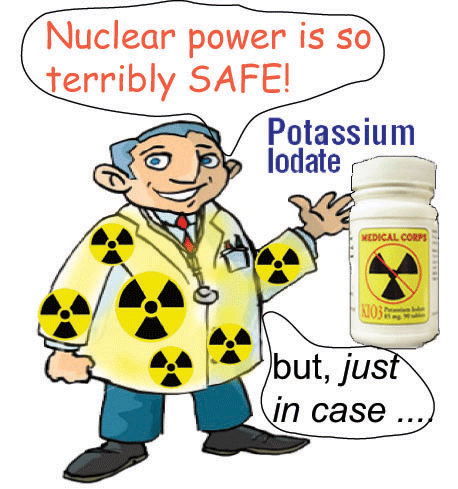
Fears have grown about radiation exposure since Russia’s attack on a Ukrainian nuclear facility. But taking iodine won’t always help. It can, in fact, be dangerous.
When there is an accident at a nuclear power plant — if there’s an explosion or a leak or it’s damaged in some way in war — radioactive iodine is one of the first substances that’s released into the atmosphere.
If that radioactive iodine gets into the body, it can damage cells in the thyroid and result in cancer.
You can inhale radiation, or it can get into your body via the skin. But you can’t see, smell or taste it in the air. It’s an invisible threat.
Some of the worst effects of an overexposure to radiation are thyroid cancer, tumors, acute leukemia, eye diseases and psychological or mental disorders. Radiation can even damage your genes for generations to come.
In the most extreme cases, a high dose of radiation over a short period of time will cause death within days or even hours.
Is it worth taking iodine against radiation?
Our bodies do not produce iodine themselves. But we do need it, so we consume iodine through food or supplements.
You can purchase iodine in the form of a tablet. When consumed, the iodine is collected or stored in the thyroid gland, where it is used to produce hormones. They help various bodily functions and even support the development of the brain.
The thyroid can, however, become saturated with iodine. And when that happens it can’t store anymore.
So, the theory is that if you take enough “good” iodine, there will be no room left in the thyroid for any “bad” or radioactive iodine. That radioactive iodine should then simply pass through the body and get excreted via the kidneys.
But don’t take iodine as a precaution
There is no point in taking iodine as a precautionary measure to prevent against radiation exposure after a leak or attack on a nuclear power plant.
The thyroid only stores iodine for a limited amount of time.
And taking too much iodine — even the good stuff — can be dangerous.
Many people in Germany, for instance, suffer from an overactive thyroid. And health experts advise against taking any iodine supplements unless there is an acute medical reason to do so.
Germany’s Federal Ministry for the Environment, Nature Conservation, Nuclear Safety and Consumer Protection (BMUV) says iodine supplements can help after a nuclear power plant accident in a radius of up to 100 kilometers (62 miles).
But the iodine is still only effective if taken when it is needed. Experts say an iodine “block” only has a chance of helping if the good iodine is taken just before or during contact with radioactive iodine.
Cesium, strontium absorbed by the body
The radioactive isotopes iodine 131 and iodine 133 cause thyroid cancer. They are also the isotopes most associated with radiation exposure caused by a leak or explosion at a nuclear power plant.
The radioactive isotopes strontium 90 and cesium 137 are also part of the mix. They settle in bone tissue and likewise increase the risk of cancer.

The radioactive isotopes strontium 90 and cesium 137 are also part of the mix. They settle in bone tissue and likewise increase the risk of cancer.
Our body mistakes these isotopes for calcium. It can absorb and use them in the physiological processes of our muscles and bones. If that happens, the bone marrow can spin out of control.
Bone marrow is responsible for producing new blood cells. And when it fails, it can lead to a blood cancer known as leukemia, which is often fatal.
Damage to genetic material
Radioactive exposure can also damage genetic material in the body.
That is known to have happened after atomic bombs were dropped on the Japanese cities of Nagasaki and Hiroshima at the end of World War II — children were born with deformities after the war.
Long-term effects were also observed after an accident at the Chernobyl nuclear facility in Ukraine in April 1986.
Twenty years after the catastrophe, cancer rates in most of the affected regions had risen by 40%. An estimated 25,000 people in Russia died as a result of having helped clean up the reactor site.
Almost no treatment for radiation exposure
There is hardly any treatment for radiation exposure. What’s decisive is whether a person has been “contaminated” or whether the radiation has been “incorporated” into the body.
In the case of a contamination, radioactive waste settles on the surface of the body.
It may sound ridiculous, but the first thing people should do in those cases is wash off the radioactive waste with normal soap and water.
A “radioactive incorporation” is far more dangerous. Once radioactive waste has made its way into the body, it’s almost impossible to flush it out again.
There is hardly any treatment for radiation exposure. What’s decisive is whether a person has been “contaminated” or whether the radiation has been “incorporated” into the body.
In the case of a contamination, radioactive waste settles on the surface of the body.
It may sound ridiculous, but the first thing people should do in those cases is wash off the radioactive waste with normal soap and water.
A “radioactive incorporation” is far more dangerous. Once radioactive waste has made its way into the body, it’s almost impossible to flush it out again.
Intensity and time
Radioactivity is measured in millisieverts.
Exposure with 250 millisieverts (or 0.25 sievert), over a short period of time, is enough to cause radiation sickness.
To put that in context, Germany’s Federal Office for Radiation Protection (BfS) tends to measure an average of 2.1 millisievert in the environment. That’s over a whole year.
At a measure of 4,000 millisievert (or 4 sievert), acute radiation sickness starts quickly. The risk of death increases significantly. At 6 sievert, the risk of death is 100% — there is no chance of survival. Death is almost immediate.
How many more lives does Europe want to sacrifice to extend NATO’s borders?
| |||
| to me |
| |||
How many more lives does Europe want to sacrifice to extend NATO’s borders? https://www.pressenza.com/2022/03/how-many-more-lives-does-europe-want-to-sacrifice-to-extend-natos-borders/
04.03.22 – Gerardo Femina
This post is also available in: Spanish, French, Italian, Catalan It is urgent to stop the war and put an end to the pain of the Ukrainian people. Russia must immediately withdraw its troops and stop the aggression against Ukraine.
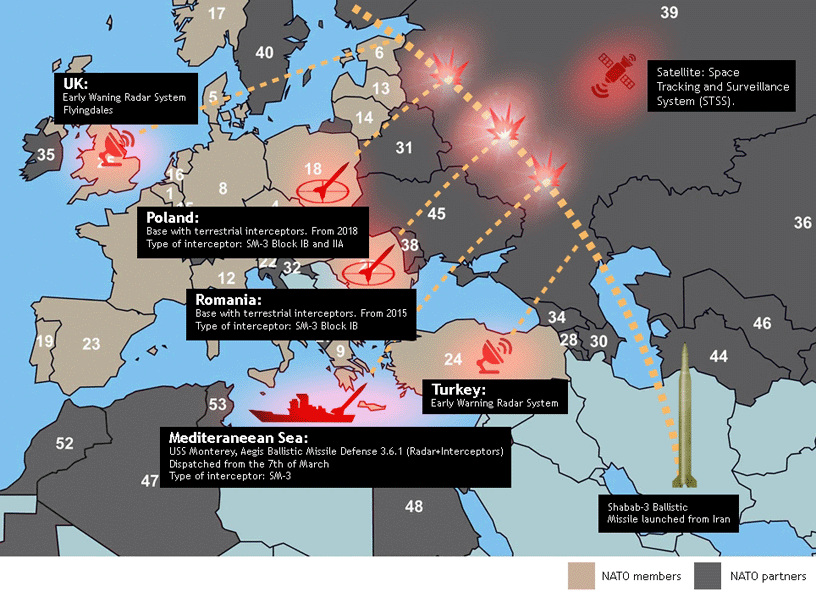
But how many more lives is Europe willing to sacrifice to extend NATO’s borders? The armed conflict could stop immediately and put an end to enormous suffering if Russia’s demands were seriously considered: a militarily neutral Ukraine, like Austria and Finland.
A reasonable proposal, a state buffer policy that has already been adopted in the past. Instead, Europe is choosing the path of arms and violence.
Sending arms to Ukraine means pursuing a goal that is contrary to peace. It is to put geopolitical goals above human life and risk dragging us all into a nightmare with no way out.
Sending arms is not the way to stop the war. On the contrary, all efforts must be directed towards dialogue.
Europe for Peace
Europe for Peace
Read the declaration
Gerardo Femina
Former president of the Community for Human Development in Italy, engaged in social, political and cultural activity. For 20 years he has lived in Prague, where he was among the promoters of the campaign “Europe for Peace” and the protest against the so-called Missile Shield, that the United States wanted to install in the Czech Republic. He writes about politics and social matters. In recent years he has dedicated himself to the construction of the Park of Study and Reflection in the Czech Republic.
Calling Russia’s Attack ‘Unprovoked’ Lets USA Off the Hook

FAIR, BRYCE GREENE, MARCH 4, 2022, Many governments and media figures are rightly condemning Russian President Vladimir Putin’s attack on Ukraine as an act of aggression and a violation of international law. But in his first speech about the invasion, on February 24, US President Joe Biden also called the invasion “unprovoked.”
It’s a word that has been echoed repeatedly across the media ecosystem. “Putin’s forces entered Ukraine’s second-largest city on the fourth day of the unprovoked invasion,” Axios (2/27/22) reported; “Russia’s unprovoked invasion of Ukraine entered its second week Friday,” said CNBC (3/4/22). Vox (3/1/22) wrote of “Putin’s decision to launch an unprovoked and unnecessary war with the second-largest country in Europe.”
The “unprovoked” descriptor obscures a long history of provocative behavior from the United States in regards to Ukraine. This history is important to understanding how we got here, and what degree of responsibility the US bears for the current attack on Ukraine.
Ignoring expert advice
The story starts at the end of the Cold War, when the US was the only global hegemon. As part of the deal that finalized the reunification of Germany, the US promised Russia that NATO would not expand “one inch eastward.” Despite this, it wasn’t long before talk of expansion began to circulate among policy makers…………
Despite these warnings, Poland, Hungary and the Czech Republic were added to NATO in 1999, with Bulgaria, Estonia, Latvia, Lithuania, Romania, Slovakia and Slovenia following in 2004.
US planners were warned again in 2008 by US Ambassador to Moscow William Burns (now director of the CIA under Joe Biden). WikiLeaks leaked a cable from Burns titled “Nyet Means Nyet: Russia’s NATO Enlargement Redlines” that included another prophetic warning worth quoting in full (emphasis added):
Ukraine and Georgia’s NATO aspirations not only touch a raw nerve in Russia, they engender serious concerns about the consequences for stability in the region. Not only does Russia perceive encirclement, and efforts to undermine Russia’s influence in the region, but it also fears unpredictable and uncontrolled consequences which would seriously affect Russian security interests.
Experts tell us that Russia is particularly worried that the strong divisions in Ukraine over NATO membership, with much of the ethnic Russian community against membership, could lead to a major split, involving violence or at worst, civil war. In that eventuality, Russia would have to decide whether to intervene; a decision Russia does not want to have to face.
A de facto NATO ally
But the US has pushed Russia to make such a decision. Though European countries are divided about whether or not Ukraine should join, many in the NATO camp have been adamant about maintaining the alliance’s “open door policy.”
Even without officially being in NATO, Ukraine has become a de facto NATO ally—and Russia has paid close attention to these developments. In a December 2021 speech to his top military officials, Putin expressed his concerns:…………………………
The Maidan Coup of 2014
A major turning point in the US/Ukraine/Russia relationship was the 2014 violent and unconstitutional ouster of President Viktor Yanukovych, elected in 2010 in a vote heavily split between eastern and western Ukraine. His ouster came after months of protests led in part by far-right extremists (FAIR.org, 3/7/14). Weeks before his ouster, an unknown party leaked a phone call between US officials discussing who should and shouldn’t be part of the new government, and finding ways to “seal the deal.” After the ouster, a politician the officials designated as “the guy” even became prime minister.
The US involvement was part of a campaign aimed at exploiting the divisions in Ukrainian society to push the country into the US sphere of influence, pulling it out of the Russian sphere (FAIR.org, 1/28/22). In the aftermath of the overthrow, Russia illegally annexed Crimea from Ukraine, in part to secure a major naval base from the new Ukrainian government.
The New York Times (2/24/22) and Washington Post (2/28/22) both omitted the role the US played in these events. In US media, this critical moment in history is completely cleansed of US influence, erasing a critical step on the road to the current war.
Keeping civil war alive
In another response to the overthrow, an uprising in Ukraine’s Donbas region grew into a rebel movement that declared independence from Ukraine and announced the formation of their own republics. The resulting civil war claimed thousands of lives, but was largely paused in 2015 with a ceasefire agreement known as the Minsk II accords.
The deal, agreed to by Ukraine, Russia and other European countries, was designed to grant some form of autonomy to the breakaway regions in exchange for reintegrating them into the Ukrainian state. Unfortunately, the Ukrainian government refused to implement the autonomy provision of the accords
Anatol Lieven, a researcher with the Quincy Institute for Responsible Statecraft, wrote in The Nation (11/15/21):
The main reason for this refusal, apart from a general commitment to retain centralized power in Kiev, has been the belief that permanent autonomy for the Donbas would prevent Ukraine from joining NATO and the European Union, as the region could use its constitutional position within Ukraine to block membership.
Refusal to de-escalate…………
By December 2021, US intelligence agencies were sounding the alarm that Russia was amassing troops at the Ukrainian border and planning to attack. Yet Putin was very clear about a path to deescalation: He called on the West to halt NATO expansion, negotiate Ukrainian neutrality in the East/West rivalry, remove US nuclear weapons from non proliferating countries, and remove missiles, troops and bases near Russia. These are demands the US would surely have made were it in Russia’s position.
Unfortunately, the US refused to negotiate on Russia’s core concerns…………..
Instead of addressing Russian concerns about Ukraine’s NATO relationship, the US instead chose to pour hundreds of millions of dollars of weapons into Ukraine, exacerbating Putin’s expressed concerns. Ukrainian President Volodymyr Zelenskyy didn’t help matters by suggesting that Ukraine might begin a nuclear weapons program at the height of the tensions.
After Putin announced his recognition of the breakaway republics, Secretary of State Antony Blinken canceled talks with Putin, and began the process of implementing sanctions on Russia—all before Russian soldiers had set foot into Ukraine.
Had the US been genuinely interested in avoiding war, it would have taken every opportunity to de-escalate the situation. Instead, it did the opposite nearly every step of the way……………
None of this is to say that Putin’s invasion is justified—FAIR resolutely condemns the invasion as illegal and ruinous—but calling it “unprovoked” distracts attention from the US’s own contribution to this disastrous outcome. The US ignored warnings from both Russian and US officials that a major conflagration could erupt if the US continued its path, and it shouldn’t be surprising that one eventually did.
Now, as the world once again inches toward the brink of nuclear omnicide, it is more important than ever for Western audiences to understand and challenge their own government’s role in dragging us all to this point.
https://fair.org/home/calling-russias-attack-unprovoked-lets-us-off-the-hook/—
Fukushima Daiichi Nuclear Power Plant Decommissioning: “It is Impossible to Foresee the End Date” says the Nuclear Regulation Commission — Fukushima 311 Watchdogs
March 2, 2022 Nuclear Regulatory Commission Chairman Toyoshi Sarada said he believes it is impossible to predict when the decommissioning of the Fukushima Daiichi Nuclear Power Plant will be completed. Nuclear Regulation Authority Chairman Toyoshi Sarada: “I think it is technically impossible to determine a realistic number of years that we can promise to various […]
Fukushima Daiichi Nuclear Power Plant Decommissioning: “It is Impossible to Foresee the End Date” says the Nuclear Regulation Commission — Fukushima 311 Watchdogs
Radioactive waste stuck at 830 sites with nowhere to go — Fukushima 311 Watchdogs

A temporary storage site for contaminated soil resulting from the 2011 Fukushima nuclear disaster. The bags of radioactive waste are due to be shipped to an interim storage facility. The photo was taken in February. March 3, 2022 Vast quantities of topsoil collected during decontamination work after the 2011 Fukushima nuclear disaster are stuck in limbo […]
Radioactive waste stuck at 830 sites with nowhere to go — Fukushima 311 Watchdogs
March 4 Energy News — geoharvey

Opinion: ¶ “Big Auto Had The Ultimate Barriers To Entry – Then Tesla Broke Through” • Conventional wisdom once held that it would be practically impossible for a startup company to challenge the Big Auto behemoths. When economics professors explained the concept of barriers to entry, the auto industry was usually example #1. Then Tesla […]
March 4 Energy News — geoharvey
1 This month.


PETITION – To: Prime Minister Anthony Albanese and the Australian Labor Government
Chernobyl: The Lost Tapes – A good documentary on Chernobyl on SBS available On Demand for the next 3 weeks– https://www.sbs.com.au/ondemand/tv-program/chernobyl-the-lost-tapes/235274195556
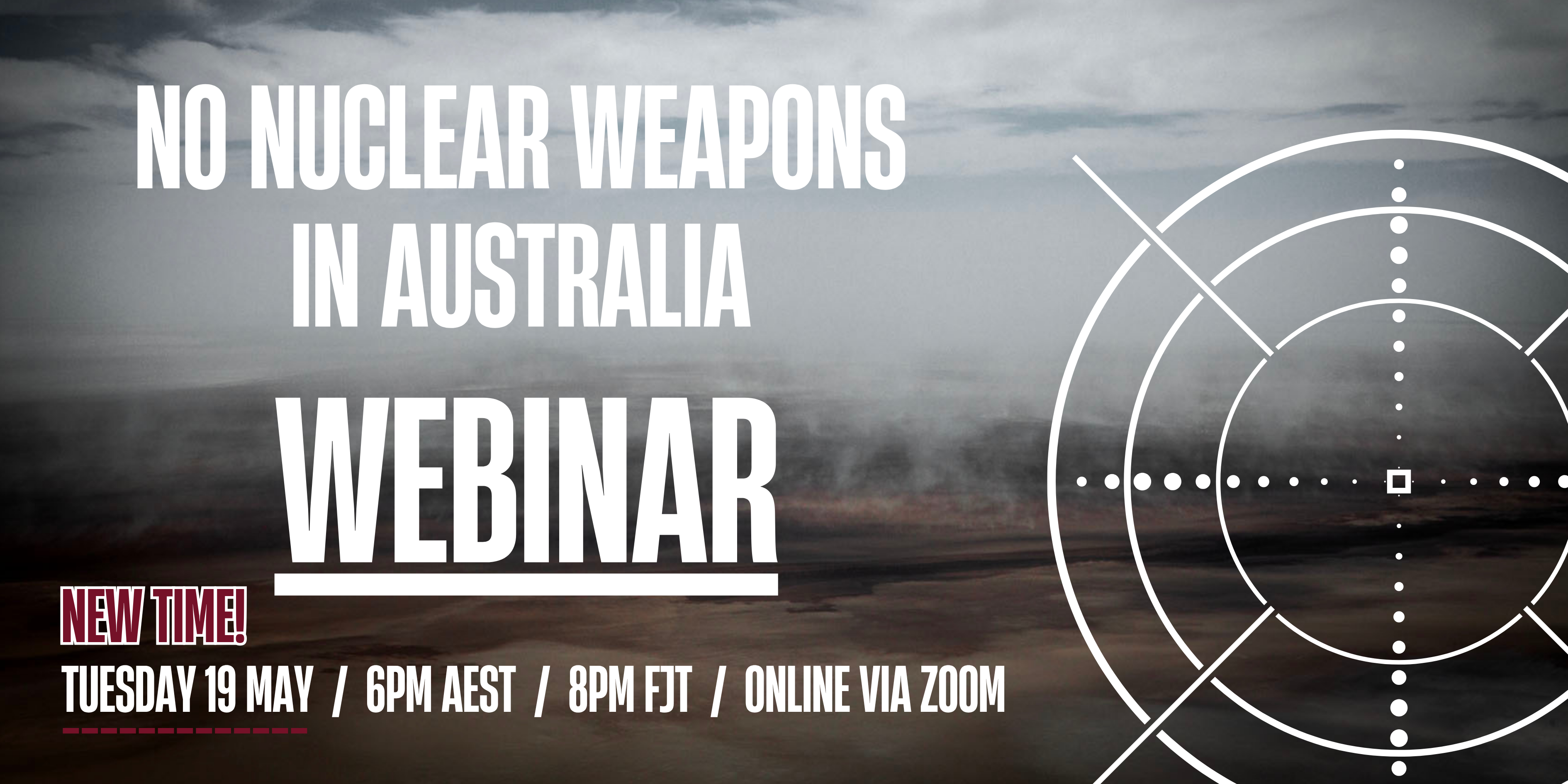
19 May – Webinar- Webinar: No Nuclear Weapons in Australia
Start: 2026-05-19 18:00:00 UTC Canberra, Melbourne, Sydney (GMT+10:00)
End: 2026-05-19 19:30:00 UTC Canberra, Melbourne, Sydney (GMT+10:00)
20 May – Webinar – The dangerous world of AUKUS, US, military occupation and suppression of dissent

National Webinar, 20th May, 2026, 6.30pm AEST. Confronting laws restricting/suppressing protest speech and action
Speakers: Former Sen. Rex Patrick, Lawyer Nick Hanna ,Arthur Rorris ,Jorgen Doyle, Sen David Shoebbridge,
Facilitator Kelley Tranter.

of the week – Australians for War Powers Reform (AWPR)
To see nuclear-related stories in greater depth and intensity
 Antinuclear