Chloe Munro Scholarship to honour “enormous legacy” of leader in renewables — RenewEconomy

Scholarship to support emerging female leaders in renewables, energy management and carbon abatement established in honour of Chloe Munro. The post Chloe Munro Scholarship to honour “enormous legacy” of leader in renewables appeared first on RenewEconomy.
Chloe Munro Scholarship to honour “enormous legacy” of leader in renewables — RenewEconomy
Biggest wind farm in NSW reaches financial close, to feature Australia’s biggest turbines — RenewEconomy

Biggest wind farm in NSW reaches financial close, to be built in electorate of federal energy minister Angus Taylor. The post Biggest wind farm in NSW reaches financial close, to feature Australia’s biggest turbines appeared first on RenewEconomy.
Biggest wind farm in NSW reaches financial close, to feature Australia’s biggest turbines — RenewEconomy
Morrison will take catastrophic climate policy failure to COP26 — RenewEconomy

The last emissions data before COP26 is out, adding to the long list of failures Morrison will be taking to Glasgow’s climate meeting in November. The post Morrison will take catastrophic climate policy failure to COP26 appeared first on RenewEconomy.
Morrison will take catastrophic climate policy failure to COP26 — RenewEconomy
A positive outlook for Australia’s clean climate, nuclear-free, future- theme for September 21
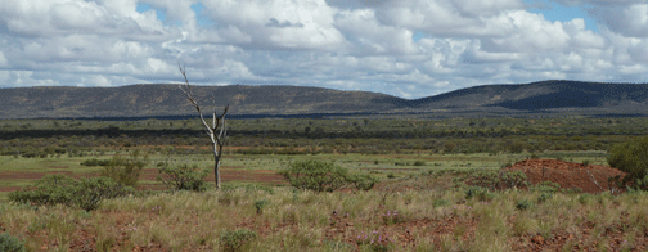
As we head towards the Climate Summit, COP26 in Glascow, Australia ought to have a pivotal role to play in discussions on climate action. Unfortunately we have a federal government, and mass media, in the thrall of the polluting industries. Australians who care about their children’s future might well be ashamed.
However, there is cause for optimism. The Australian public is aware and wants action on climate change. A national poll, reported on August 30, shows that in every single electorate across the land, voters want more government action on climate change. Whoever is sent by the government to COP26 to muddy the waters on climate action, will not be representing Australians asa whole.
Meanwhile, Australians are taking up clean reneweable energy with enthusiasm. Reports on 31 August show the rapid growth in rooftop solar, ”AEMO forecasts rooftop solar would continue its boom and by 2026 would on its own supply 77 per cent of the demand in the National Electricity Market during the day.” ”Australia’s energy transition really does continue at pace and now our base case forecast by 2025 is the national electricity market can be supplied by 100 per cent renewable energy,”
Australians have a proud history of environmental action. Particularly in relation to nuclear issues. We have, as Professor Ian Lowe puts it ”dodged a bullet” in rejecting nuclear power. Australians have been foremost in the nuclear disarmament movement, more recently in initiating The International Campaign to Abolish Nuclear Weapons (ICAN) , which brought about the UN Treaty on the Prohibition of Nuclear Weapons.
Both in small local groups, and in organisations, (Friends of the Earth, Australian Conservation Foundation, ICAN, Extinction Rebellion, and more) there’s a wellspring of enthusiasm for saving the environment, and bringing about a nuclear-free world.
We now know that ”peaceful” nuclear power is absolutely connected to nuclear weapons (indeed, the nuclear industry now boasts of that). We also know that the nuclear industry is flat out publicising itself as ”clean and green”. A global task is to keep that dirty and dangerous industry out of the climate action policies to be decided on at COP26.
Australians have a role in local action to keep this country clean and nuclear-free, and also in joining with international non-government organisations in the global environmental movement.
20 reasons why the Lucas Heights unviable production of medical isotopes is a sham and a dud.

The claim by Australian Nuclear Science and Technology Organisation (ANSTO) that it requires additional storage
capacity for intermediate level nuclear or radioactive waste at its Lucas Heights operations is completely false and consequently unjustified in all respects.
REASONS
- The present storage capacity at Lucas Heights is more than adequate for many years and even decades – this is the view of the Australian Radiation Protection and Nuclear Safety Agency (ARPANA) as the regulator and licensing authority
- The main undertaking representing 80% of its total operations and activity by ANSTO at Lucas Heights is the
production of nuclear medicineThe main undertaking representing 80% of its total operations and activity by ANSTO at Lucas Heights is theproduction of nuclear medicine - Only some 10% of this production annually is for local use in Australia
- The remainder is sold overseas but it is a very limited market
- The predominant purchasers of this production of nuclear medicine are third world countries
- These countries cannot afford to pay ANSTO for this nuclear medicine and hence it is treated as additional foreign aid by Australia
- The manufacture of nuclear medicine even in fully and proper commercial circumstances is a large loss making proposition
- It is estimated from authoritative overseas research that revenue from isotope production for nuclear medicine would likely offset only approximately 10% to 15% of the costs of the reactor used for the production and this does not include all the other costs associated with the production
9. Added to this ANSTO is regarded by world standards as an extremely high cost manufacturer of nuclear medicine
- ANSTO is fully funded as to its existence and operations by the federal government
11. On top of this ANSTO has proved to be a less than efficient producer of nuclear medicine due to the instances of shutting down of its reactor at Lucas Heights
- When this has occurred ANSTO purchased the nuclear medicine isotopes from overseas which has proved to be more efficient and cheaper than local production
- It was reported that ANSTO received $238 million last year as its annual funding from the federal government
- ANSTO because of this funding has no incentive or need to achieve profitability particularly in its production of nuclear medicine which represents its major undertaking and operational activity
- In any case there is a strong move in medicine throughout the world away from using nuclear medicine in all diagnosis and treatment due to its harmful nature
- Some countries are virtually banning nuclear medicine both in its manufacture and its use locally and for export because of its inherent dangerous nature
- An alternative permanent disposal would be better.
- The indisputable conclusion internationally is that the use of nuclear medicine generated by reactors is rapidly declining to a level where its future production will no longer be viable
- In view of the foregoing there are no justifiable or valid reasons or pretext for :
(a) the continued production by ANSTO of nuclear medicine by using a nuclear reactor for whatever reasons at Lucas Heights or elsewhere in Australia;
(b) the continuing loss making production of nuclear medicine by ANSTO at Lucas Heights for export overseas;
(c) the need to increase the storage capacity at Lucas Heights for intermediate level waste generated by the production of nuclear medicine; and
20 No pretext for the establishment whatsoever of the nuclear waste management facility by the federal government at Napandee
Australia’s national energy market can be supplied by 100% renewable energy by 2025
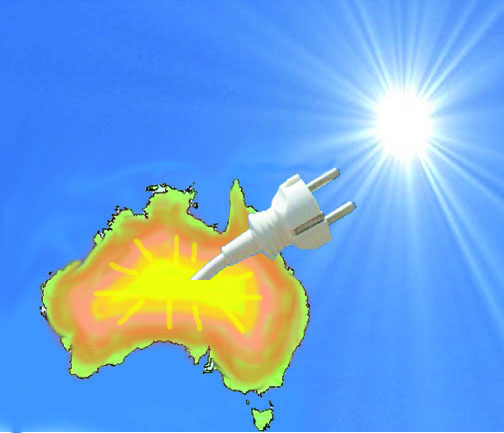
AEMO forecasts rooftop solar would continue its boom and by 2026 would on its own supply 77 per cent of the demand in the National Electricity Market during the day.
Australia’s energy transition really does continue at pace and now our base case forecast by 2025 is the national electricity market can be supplied by 100 per cent renewable energy,
Electricity grid powers on despite demise of coal as renewables surge, https://www.theage.com.au/politics/federal/electricity-grid-powers-on-despite-demise-of-coal-as-renewables-surge-20210830-p58n6i.html, By Mike Foley and Nick Toscano, August 31, 2021 Australia’s power grid is set up to cope with coal’s continued decline over the next decade, the market operator has declared, even as a flood of cheap electricity from solar and wind farms undercuts traditional power plants’ profits.
Fossil fuel-based generators have been under financial pressure over the past year as renewables drive down daytime power prices to levels where coal and gas struggle to compete. South Australia’s Torrens Island B gas plant is set to mothball one unit next month, Victoria’s Yallourn Power Station is set to shut four years early in 2028, and one unit at NSW’s Eraring Power Station will shut in 2030.
State and federal governments are working on plans to cope with the danger of more early power plant closures amid concerns sudden exits could disrupt electricity supply.
However, the influx of wind and solar power, coupled with the boom in rooftop solar and investment in new transmission lines, is expected to fill the void because it will be backed by investment in dispatchable power projects – providing on-demand energy from new gas, batteries or pumped hydropower
Over the next five years we’ve got sufficient supply to meet the required reliability standards,” the Australian Energy Market Operator’s (AEMO) chief executive Daniel Westerman said, noting that power projects in the pipeline were progressing well. “In the subsequent five years we are confident about the anticipated generation and storage projects as well.”
AEMO forecasts rooftop solar would continue its boom and by 2026 would on its own supply 77 per cent of the demand in the National Electricity Market during the day.
However, rooftop solar is drastically reducing daytime demand, and its cheap cost of supply is eating into the business cases for traditional power plants.
That means large-scale power generation, which is still essential to satisfy peak demand when the sun isn’t high in the sky, has less money-making potential.
“Australia’s love of rooftop solar is going as strong as ever, so the minimum operational demand is likely to cause us the biggest challenges by 2025,” Mr Westerman said.
“Without additional operational tools, we may no longer be able to operate the (electricity market) securely in all periods from 2025 due to a lack of security services when demand from the grid is so low.”
A reform being investigated by state and federal governments may help address this, Mr Westerman said. Under the proposal for a “capacity mechanism”, retailers would pay generators to guarantee future supply by remaining in the grid or investing in new assets.
Green Energy Markets analyst Tristan Edis said state and federal governments “have funded the construction or made very firm promises to construct a huge pipeline of thousands of megawatts of dispatchable capacity as well as transmission projects that should mean we will have plentiful supplies of dispatchable capacity to maintain reliability as coal generators exit”.
AEMO’s latest upgrade has also lifted its expectations for renewables penetration into the grid. In June Mr Westerman said it was a “goal” for the grid, usually powered by about 70 per cent coal, to be able to handle an influx of 100 per cent renewable power at certain times.
Australia’s energy transition really does continue at pace and now our base case forecast by 2025 is the national electricity market can be supplied by 100 per cent renewable energy,” he said.
Rooftop solar could meet up to three quarters of total grid demand by 2025 — RenewEconomy

Rooftop solar is going to fundamentally change the grid, AEMO says, and push operational demand down to lows never contemplated before. The post Rooftop solar could meet up to three quarters of total grid demand by 2025 appeared first on RenewEconomy.
Rooftop solar could meet up to three quarters of total grid demand by 2025 — RenewEconomy
Solar keeps on getting better: Cheaper, more efficient and bigger returns on energy
Solar keeps on getting better: Cheaper, more efficient and bigger returns on energy
Fereidoon SioshansiThe energy payback time for solar PV can be less than a year, meaning it will produce 20 times the energy needed to produce it over a 20 year lifespan.
August 30 Energy News — geoharvey

Opinion: ¶ “How To Save $40,000 Over Next 10 Years By Selling Your Car Now!” • I want to say that this won’t work for everyone, but I hope thousands of you will be able to take the ideas in this article and sell a car or truck now, while the used car market is […]
August 30 Energy News — geoharvey
The week in nuclear news – to 31 August
The tragic situation in Afghanistan dominated the news.
In the USA, Hurricane Ida reminds of the effects of global heating – increasing the intensity of extreme weather.
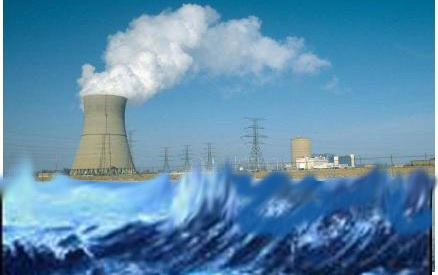
The mainstream media carefully avoids discussion of the dangers to Louisiana’s nuclear power stations.
Coronavirus. For most of the world, the pandemic is not over – devastation in countries such as Uganda, Indonesia, India, Nepal, Peru and Brazil.
Climate. Even 1.5C warming will still leave world’s coasts exposed to extremes. Radio Ecoshock re-examines the facts on the new megafires.
Hard to find good news – mostly very individualistic stories, like these ones about bees: A friend bumblebee. Saving the bees. A bit of good news (sort of) University of Michigan reports that CO2 can be stored away in concrete,
AUSTRALIA.
Federal nuclear waste dump plan. Australia’s nuclear waste is best managed in interim storage at Lucas Heights, with an independent review on permanent disposal. The status of two current federal processes related to radioactive waste and the Kimba plan. Farmer Jeff Baldock is excited at prospect of nuclear waste dump on his land. Other nearby farmers not impressed, (Stock Journal).. Also, Stock Journal inaccurate on Baldock’s land area. Kimba nuclear waste dump consultation? WHAT CONSULTATION?
Need to investigate ANSTO’s tax-payer funded, loss-making, unnecessary nuclear medicine production
Climate activists raided by anti-terrorist police. Their crime? chalking a sign on pavement. Canberra Extinction Rebellion members convicted by ACT Magistrates Court for crimes during protests.
Australia’s biggest climate poll shows support for action in every seat
Tasmania Liberals vote down Greens climate emergency motion with Premier claiming it ‘frightens’ children. Political bribes beat the planet as gas fracking gets public hand-outs.
White Man’s Media: Rupert Murdoch and the US Imperium– Australia is its tool.
Development of ‘zombie’ gasfield areas would create waste, water issues: opponents
Nationals v CSIRO: why a party of government attacks its own scientific agency
Australian Labor Party backs bills to de-register most political parties.
INTERNATIONAL.
29 August 2021 International Day Against Nuclear Tests https://www.youtube.com/watch?v=C5PRZh_C0e4 Reaffirm commitment to ban nuclear tests, UN chief says in message for International Day.
How to remember Hiroshima and Nagasaki – Sign the nuclear weapons treaty. Humanitarian Impacts of Nuclear Weapons. Shadow World reveals the shocking realities of the global arms trade – the only business that counts its profits in billions and its losses in human lives
Weaponising space -the high road to World War 3, but profitable for weapons and space companies. Exposure to radiation can affect DNA: Astronauts on long-duration missions in space at risk . Rocket launches may be damaging the ozone layer
Military Contractor CACI Says Afghanistan Withdrawal Is Hurting Its Profits. It’s Funding a Pro-War Think Tank.
Nuclear energy is anything but clean, despite the media hype.
Inaccuracy on the land area for Napandee nuclear waste dump
After a somewhat shaky attempt by the Editor to recant the very convincing result in the Stock Journal last week, another Stock Journal article has just been released supposedly showing both sides of the argument regarding the proposed nuclear dump. Seems Mr Baldock doesn’t actually know how much land is involved- 158 hectares is NOT the size according to OFFICIAL DOCUMENTS – so what ELSE is being said which is considered being “flexible with the truth” do you think, putting it nicely? Good interview again however by Peter Woolford.
Farmer Jeff Baldock excited at prospect of nuclear waste dump on his land. Other nearby farmers not impressed

Lobbyists get ready to fight site approval, Stock Journal , Vanessa Binks, 28 Aug 2020 AFTER more than six years of deliberation, a regional radioactive waste storage site is less than 60 days away from potential approval and the site’s owner believes the long road has been “worth it”. The site at Napandee, near Kimba, was selected for final approval by federal Resources Minister Keith Pitt earlier this month.Landowner and mixed farmer Jeff Baldock said the approval of the site could save the town, and found the announcement of further consultation “frustrating”. The 158-hectare property is less than 2 per cent of Mr Baldock’s arable farming land [this figure is disputed] and the development is expected to provide a $8.5-million benefit to the community.”There is nothing else to consult about. The proposal has already survived two Senate inquiries and been scrutinised by a Parliamentary Committee and through a court process,” he said.”There has already been multiple rounds of consultation and another one will just cause delays.” Mr Baldock said offering his land to store radioactive waste was “not about money”…….. “Country towns are diminishing and Kimba has an opportunity to invest in its future and keep families or attract more residents,” Mr Baldock said. Site construction could begin by 2024. Lobbyists get ready to fight site approval A DIVISION within the Kimba community about whether or not a local radioactive waste site should be approved has spearheaded a response from the No Radioactive Waste on Agricultural Land in Kimba group to challenge the final approval in a judicial review process. The committee will be meeting in the coming weeks to discuss the next stages after the recently announced further 60-day consultation period has lapsed. Lobby group president Peter Woolford said all options would be examined going forward.”We are another step closer to SA becoming a dumping ground and one step closer to another court case,” he said. Mr Woolford was pleased about the announcement of further consultation and hoped those who disapproved of the site would voice their concerns.”I hope that people outside of the Kimba District Council are allowed to have their say this time – particularly neighbouring councils at Cleve and Wudinna who are also affected,” he said. Mr Woolford also said agriculture’s economic benefit to the region far exceeded the benefit from the development.”About $60 million worth of income is generated from agriculture in the district each year – this development will not even come close to that and it could impact agriculture’s future in the area as well,” he said.”The risk is too unknown. |
Hurricane Ida threatens 2 nuclear power stations in Louisiana
Two Nuclear Plants In Ida’s Path As Storm Expected At Cat 4, Simply Info, [excellent pictures and maps]

Hurricane Ida is expected to hit the US as a category 4 storm. The Weather Channel projects Sunday night landfall and a direct hit on Louisiana. Storm surges in the area range from the Texas border to Mobile Alabama.
Two nuclear power plants are in the direct storm path. River Bend and Waterford. Waterford sits near the mouth of the Mississippi and in the zone of the highest expected storm surge. Current estimates have a 10-15 foot surge expected for that area. This could be potentially more severe as the storm pushes water up the Mississippi River. Waterford sits about 24 miles from the mouth of the river and is next to Lake Pontchartrain……………..more http://www.simplyinfo.org/?p=19660
Reaffirm commitment to ban nuclear tests, UN chief says in message for International Day,

Reaffirm commitment to ban nuclear tests, UN chief says in message for International Day, UN News 29 Aug 21 Countries which have not yet ratified the Comprehensive Nuclear-Test-Ban Treaty (CTBT) are urged by UN Secretary-General António Guterres to do so without delay.
The UN chief made the appeal in his message for the International Day Against Nuclear Tests, observed on Sunday, 29 AugustThe UN chief made the appeal in his message for the International Day Against Nuclear Tests, observed on Sunday, 29 August
The date marks the 30th anniversary of the closure of the Semipalatinsk nuclear test site in Kazakhstan, the largest of its kind in the former Soviet Union, where more than 450 nuclear devices were exploded over four decades.
Terrible consequences
Mr. Guterres said nuclear tests caused enormous human suffering and environmental damage.
They had terrible consequences on the health of people living in affected areas. Many were relocated from their ancestral lands, disrupting their lives and livelihoods. Pristine environments and ecosystems were destroyed, which will take decades, if not centuries, to heal.”
The closure of the Semipalatinsk test site signaled the end of the era of unrestrained nuclear testing, said Mr. Guterres. Soon afterwards, countries began negotiating the CTBT.
The treaty bans all explosive nuclear weapons tests anywhere, by any country, he added, effectively “putting a brake on the nuclear arms race and providing a powerful barrier to the development of new nuclear weapons.”
No excuse
The CTBT was adopted in 1996 and has been signed by 185 countries, and ratified by 170, including three nuclear weapon States. However, it must be signed and ratified by 44 specific nuclear technology holder countries before it can enter into force……………….
Threat still real: Kazakhstan Ambassador
The threat that nuclear weapons pose to the world remains “as realistic as ever”, said Kazakhstan’s Ambassador to the UN, Magzhan Ilyassov, speaking to UN News ahead of the International Day (interview here and at right).
“For us, the 29th of August is not a day in the calendar. It is a reminder about how traumatic nuclear tests can be for humankind because in Kazakhstan alone, 1.5 million people still suffer, and will unfortunately suffer for future generations, from genetic diseases, cancer, leukaemia, which were caused by exposure to nuclear tests.”
Mr. Ilyassov said the total impact of the nuclear explosions carried out at the Semipalatinsk site was “1,200 times more” than the atomic bomb dropped on Hiroshima, Japan, during the Second World War.
“The test site itself is of the size of Israel, so it’s a big chunk of the territory of Kazakhstan and that cannot be used for any other purpose like agriculture for many, many decades now,” he said, adding “so with that, we can also project what was the damage caused by other nuclear test sites around the world which were eventually closed.” https://news.un.org/en/story/2021/08/1098682
1 This month.

Australians deserve the truth
about
AUKUS – https://aukuspublicinquiry.com/


PETITION – To: Prime Minister Anthony Albanese and the Australian Labor Government

of the week – Australians for War Powers Reform (AWPR)
To see nuclear-related stories in greater depth and intensity
 Antinuclear