Bad faith: Morrison blaming Global South for climate change is beyond belief — RenewEconomy

Scott Morrison and Angus Taylor are blaming the developing world for the world’s climate problem. That approach is both ignorant and cruel. The post Bad faith: Morrison blaming Global South for climate change is beyond belief appeared first on RenewEconomy.
Bad faith: Morrison blaming Global South for climate change is beyond belief — RenewEconomy
Setsuko Thurlow Rose honors the legacy of a Hiroshima survivor and abolition campaigner — IPPNW peace and health blog

The Setsuko Thurlow rose In the year that the Treaty on the Prohibition of Nuclear Weapons enters in force, a new variety of rose will be planted in Spain. The Setsuko Thurlow Rose, a rose of hope, will be planted on the International Day for the Total Elimination of Nuclear Weapons, September 26, 2021, in […]
Setsuko Thurlow Rose honors the legacy of a Hiroshima survivor and abolition campaigner — IPPNW peace and health blog
August 11 Energy News — geoharvey

Opinion: ¶ “Frightening New Climate Report Also Holds The Seeds Of Hope” • The latest report that just arrived from the IPCC isn’t pretty. But in a year defined by searing heat waves, torrential floods, and raging fires, it is encouraging that the same report that is so frightening also suggests a strategy to alleviate […]
August 11 Energy News — geoharvey
From Hiroshima to climate apocalypse – the consummate NUCLEAR LIES- theme for August 2021
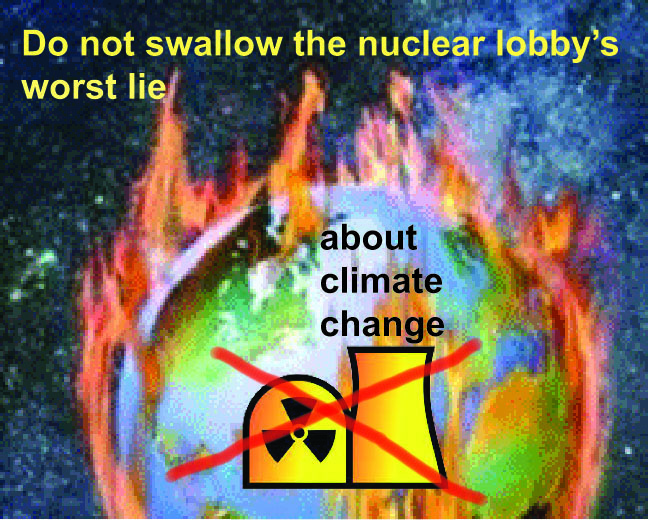

It began with the atrocity of Hiroshima, which continued the lie that it’s OK to massacre children, women and men. Then the specific nuclear lies about the reason for this particular bombing , then the lie about ”peaceful nukes” and on until today’s big lie – that ”nuclear is essential to save the climate”.
IF this nuclear lie is allowed to prevail, especially at the Glasgow Climate Change Conference in November, the official climate action movement will have no credibility.
Money, time, effort put into nuclear energy development is money, time and effort taken away from genuine action to combat and to adapt to global heating- energy conservation, and renewable energy technologies.
It is also money put into nuclear weaponry – because so-called ”commercial” nuclear power is economically unviable, is really just a mask for nuclear weaponry, – – on land, sea, in sky, and space
But – LET’S PRETEND THAT NUCLEAR ENERGY REALLY CAN COMBAT GLOBAL HEATING. But oh, what a pity! – the most recent research predicts that climate change will become irreversible by 2027 – 2042.
That means that we have only, at best, 20 years to switch from coal, and gas to carbon-free electricity.
The world would need 1000s of ‘conventional’ nuclear reactors to provide even a partially effective solution, and many 1000s of small nuclear reactors. There is no possibility of achieving that with 50 years, let alone 20. Renewables can be set up within months to a few years. (Nuclear development would be a costly and wasteful distraction).
NUCLEAR POWER INCREASES GLOBAL HEATING. The entire nuclear fuel chain, from uranium mining through to wastes burial, is highly carbon emitting.
Meanwile, the nuclear industry, so called ”emissions-free” emits ionising radiation, harmful to health and environment.
The industry’s dangers and role in creasing weapons and the danger of apocalyptic nuclear war, make it totally unsuitable and indeed counter-productive , for inclusion in any climate change action strategy.
”Long Half-Life” – Professor Ian Lowe on Australia’s nuclear dilemma

AUSTRALIA’S NUCLEAR DILEMMA – PROF. IAN LOWE https://westender.com.au/australias-nuclear-dilemma-prof-ian-lowe/ by Kerrod Trott Aug 9, 2021 This book is a clarion call for sanity at a time when we can finally get the nuclear monkey off our back – highly recommended.’
Peter Garrett
Ian Lowe’s new book – Long Half-life – The Nuclear Industry in Australia – is a timely and riveting account of the political, social and scientific complexities of the nuclear industry, revealing the power of vested interests, the subjectivities of scientists and the transformative force of community passion.
In describing the book, Ian Lowe said:
The discovery of large uranium deposits in the Northern Territory suggested that Australia could become a major exporter of radioactive minerals. The Fox Report, commissioned by the Whitlam government to study the environmental impacts of the proposed Ranger uranium mine, broadened into an inquiry into the social and political issues of producing uranium.
The report concluded that exporting uranium would be quite profitable for the mining company but would have limited overall economic impact and provide modest employment. It also recommended that any decision to export uranium should recognise the inherent problems of nuclear energy, radioactive waste and weapons proliferation, so limits on expansion of production should be set and the policy “should be the subject of regular review”.
It noted that the 1976 UK Royal commission had argued that using nuclear power should be limited until it was convincingly demonstrated that the highly radioactive waste could be safely contained “for the indefinite future”. Deciding to approve export of uranium from Ranger, the Fraser government assured the public that the waste problem had been solved and that exports would be subject to the strictest safeguards. The waste problem had
not been solved, and still hasn’t, while the safeguards have been systematically watered down every time they looked like impeding sales.
The economic benefits turned out to be even more modest than the Fox report projected. Instead of exports from Ranger expanding to 30,000 tonnes a year, they amounted to 120,000 tonnes over 40 years, 3,000 tonnes a year. Similarly, when the Olympic Dam mine in SA was being developed in 1982, it was claimed it would employ nearly 3000 people and pay $100 million a year in royalties to government. By 1997 it employed about 950 people, while royalties for the first twenty years of operation totalled $60 million.
The 2016 SA Royal Commission concluded that there could be a significant economic opportunity in managing the waste from nuclear power stations in Japan, South Korea and Taiwan. The Commission warned such a major investment would require clear public support, so the government established a citizens’ jury to consider the issues; to the surprise of the elected politicians, the citizens strongly recommended against the proposal, which was subsequently dropped. The issue raised important questions about trust in experts and trust in governments to manage complex long-term issues.
Malcolm Fraser, the Liberal Prime minister who had in 1977 approved Australia becoming a major exporter of uranium, in later life realised the problems this was creating. Large volumes of high-level waste are still being stored near nuclear power stations, with most of the countries involved still having no clear plan to manage those materials for the unimaginably long periods required. The Nuclear Non-Proliferation Treaty has not led to the weapons-holding nations disarming, so predictably others have joined the nuclear club, with the real risk that tensions in the Korean peninsula, the Indian sub-continent or the Middle East could lead to the catastrophic consequences of nuclear weapons being used against cities.
Concern about the moral responsibility for the uses of Australian uranium raises the question of the social licence to continue exporting. Writing an opinion piece in 2014, Fraser warned that we have “the elements of a perfect storm for nuclear calamity” and urged Australia to become a global leader in the campaign to abolish nuclear weapons. Unless they are banned, he said, ‘the risks of nuclear weapons being used will grow towards inevitable use”. That warning should at least provoke a review of uranium exports, as recommended 45 years ago by the Fox Report.
ABOUT THE BOOK:
Long Half-life: The Nuclear Industry in Australia, Ian Lowe
Published August 2021 by Monash University Publishing
ABOUT THE AUTHOR:Professor Ian Lowe AO is emeritus professor of science, technology and society at Griffith University in Brisbane, as well as being an adjunct professor at Sunshine Coast University and Flinders University. His previous books include A Big Fix and Living in the Hothouse.
NO SUPPORT for NUCLEAR in the new report from Intergovernmental Panel on Climate Change (IPPC).

10 Aug 21, The report is comprehensive on the present and future impacts of global heating, and on what needs to be done. But nuclear power as a method for action is not included.
Indeed, nuclear power is barely mentioned, and when it is, its negative effects on climate and environment are mentioned.
Page 236 line 39 – “Radioactive fallout from atmospheric nuclear weapons testing (1940s–1950s) and urban smog (1950s– 1960s) first provoked widespread attention to anthropogenic aerosols and ozone in the troposphere”
Page 261 – reference to nuclear war and volcanic eruptions
Page 309 – another reference to impacts of nuclear weapons
Page 971 – line 23 – reference to a nuclear holocaust – in reference to future uncertainties
Page 1380 – line 33 discussion on 14C released from nuclear weapons uptake into the ocean
Page 3161 – line 15 – 17 “Thermal and nuclear electricity plants may be challenged when using warmer river waters for cooling or when mixing waste waters back into waterways without causing ecosystem impacts (Kopytko and Perkins, 2011; van Vliet et al., 2016; Tobin et al., 2018)
Climate change has already hit Australia.
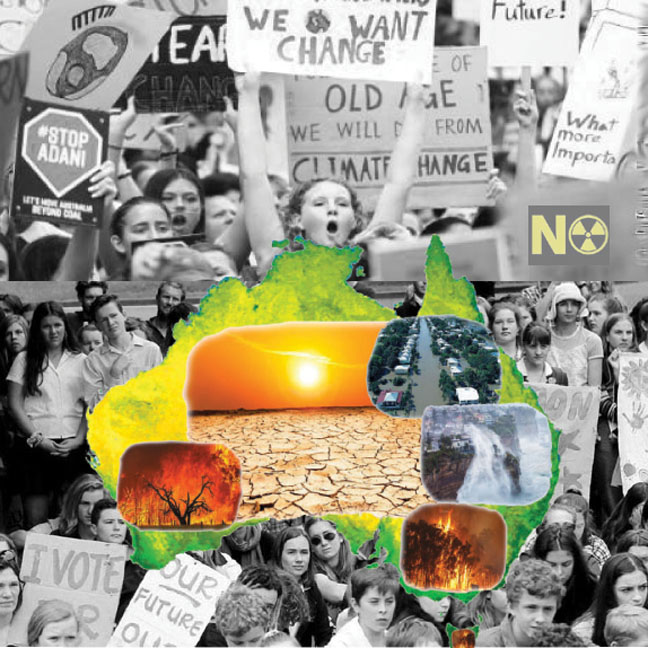
Climate change has already hit Australia. Unless we act now, a hotter, drier and more dangerous future awaits, IPCC warns https://theconversation.com/climate-change-has-already-hit-australia-unless-we-act-now-a-hotter-drier-and-more-dangerous-future-awaits-ipcc-warns-165396?utm_medium=email&utm_campaign=Latest%20from%20The%20Conversation%20for%20August%2010%202021%20-%202026619923&utm_content=Latest%20from%20The%20Conversation%20for%20August%2010%202021%20-%202026619923+CID_a4c10fc2998953c0ef465aaf49de1468&utm_source=campaign_monitor&utm_term=Climate%20change%20has%20already%20hit%20Australia%20Unless%20we%20act%20now%20a%20hotter%20drier%20and%20more%20dangerous%20future%20awaits%20IPCC%20warns
Michael Grose Climate projections scientist, CSIRO, Joelle GergisSenior Lecturer in Climate Science, Australian National University, Pep Canadell, Chief research scientist, Climate Science Centre, CSIRO Oceans and Atmosphere; and Executive Director, Global Carbon Project, CSIRO, Roshanka Ranasinghe, Professor of Climate Change impacts and Coastal Risk, 9 Aug 21,
Australia is experiencing widespread, rapid climate change not seen for thousands of years and may warm by 4℃ or more this century, according to a highly anticipated report by the Intergovernmental Panel on Climate Change (IPCC).
The assessment, released on Monday, also warns of unprecedented increases in climate extremes such as bushfires, floods and drought. But it says deep, rapid emissions cuts could spare Australia, and the world, from the most severe warming and associated harms.
The report is the sixth produced by the IPCC since it was founded in 1988 and provides more regional information than any previous version. This gives us a clearer picture of how climate change will play out in Australia specifically.
It confirms the effects of human-caused climate change have well and truly arrived in Australia. This includes in the region of the East Australia Current, where the ocean is warming at a rate more than four times the global average.
We are climate scientists with expertise across historical climate change, climate projections, climate impacts and the carbon budget. We have been part of the international effort to produce the IPCC report over the past three years.
The report finds even under a moderate emissions scenario, the global effects of climate change will worsen significantly over the coming years and decades. Every fraction of a degree of global warming increases the likelihood and severity of many extremes. That means every effort to reduce greenhouse gas emissions matters.
Australia is, without question, warming
Australia has warmed by about 1.4℃ since 1910. The IPCC assessment concludes the extent of warming in both Australia and globally are impossible to explain without accounting for the extra greenhouse gases in the atmosphere from human activities.
The report introduces the concept of Climate Impact-Drivers (CIDs): 30 climate averages, extremes and events that create climate impacts. These include heat, cold, drought and flood.
The report confirms global warming is driving a significant increase in the intensity and frequency of extremely hot temperatures in Australia, as well as a decrease in almost all cold extremes. The IPCC noted with high confidence that recent extreme heat events in Australia were made more likely or more severe due to human influence.
These events include:
the Australian summer of 2012–13, also known as the Angry Summer, when more than 70% of Australia experienced extreme temperatures- the Brisbane heatwave in 2014
- extreme heat preceding the 2018 Queensland fires
- the heat leading into the Black Summer bushfires of 2019-20.
The IPCC report notes very high confidence in further warming and heat extremes through the 21st century – the extent of which depends on global efforts to reduce greenhouse gas emissions.
If global average warming is limited to 1.5℃ this century, Australia would warm to between 1.4℃ to 1.8℃. If global average warming reaches 4℃ this century, Australia would warm to between 3.9℃ and 4.8℃ .
The IPCC says as the planet warms, future heatwaves in Australia – and globally – will be hotter and last longer. Conversely, cold extremes will be both less intense and frequent.
Hotter temperatures, combined with reduced rainfall, will make parts of Australia more arid. A drying climate can lead to reduced river flows, drier soils, mass tree deaths, crop damage, bushfires and drought.
The southwest of Western Australia remains a globally notable hotspot for drying attributable to human influence. The IPCC says this drying is projected to continue as emissions rise and the climate warms. In southern and eastern Australia, drying in winter and spring is also likely to continue. This phenomenon is depicted in the graphic below.[on original]
Climate extremes on the rise
Heat and drying are not the only climate extremes set to hit Australia in the coming decades. The report also notes:
- observed and projected increases in Australia’s dangerous fire weather
- a projected increase in heavy and extreme rainfall in most places in Australia, particularly in the north
- a projected increase in river flood risk almost everywhere in Australia.
Under a warmer climate, extreme rainfall in a single hour or day can become more intense or more frequent, even in areas where the average rainfall declines.
For the first time, the IPCC report provides regional projections of coastal hazards due to sea level rise, changing coastal storms and coastal erosion – changes highly relevant to beach-loving Australia.
This century, for example, sandy shorelines in places such as eastern Australia are projected to retreat by more than 100 metres, under moderate or high emissions pathways.
Hotter, more acidic oceans
The IPCC report says globally, climate change means oceans are becoming more acidic and losing oxygen. Ocean currents are becoming more variable and salinity patterns – the parts of the ocean that are saltiest and less salty – are changing.
It also means sea levels are rising and the oceans are becoming warmer. This is leading to an increase in marine heatwaves such as those which have contributed to mass coral bleaching on the Great Barrier Reef in recent decades.
Notably, the region of the East Australia Current which runs south along the continent’s east coast is warming at a rate more than four times the global average.
The phenomenon is playing out in all regions with so-called “western boundary currents” – fast, narrow ocean currents found in all major ocean gyres. This pronounced warming is affecting marine ecosystems and aquaculture and is projected to continue.
Where to from here?
Like all regions of the world, Australia is already feeling the effects of a changing climate.
The IPCC confirms there is no going back from some changes in the climate system. However, the consequences can be slowed, and some effects stopped, through strong, rapid and sustained reductions in global greenhouse gas emissions.
And now is the time to start adapting to climate change at a large scale, through serious planning and on-ground action.
UN pledges full support to Nagasaki voices fuelling ‘powerful global movement’ against nuclear arms
UN pledges full support to Nagasaki voices fuelling ‘powerful global movement’ against nuclear arms. https://news.un.org/en/story/2021/08/1097372 António Guterres has reaffirmed the full support of the United Nations to amplifying the powerful testimony of the survivors of the atomic bomb that was dropped on the Japanese city of Nagasaki, 76 years ago, which has helped build a “powerful global movement against nuclear arms”.
In his message to the Nagasaki Peace Memorial on the 9 August anniversary, the UN Secretary-General said he continued to be humbled by the “selfless acts of the hibakusha, the name given to those who survived and continue to bear witness.
“Your courage in the face of immense human tragedy, is a beacon of hope for humanity”, he said in his address, delivered on his behalf at the ceremony by the UN High Representative for Disarmament Affairs, Izumi Nakamitsu.
“I reaffirm the full support of the United Nations to ensuring that your voices are heard by the world’s people, and especially by younger generations.”
Out of the ashes
The UN chief told the people of the city that was devastated in 1945, just days after the first bomb was dropped by the United States on Hiroshima during the final days of World War Two, that they had built a “cultural metropolis” out of the ashes.
“Your dynamic city exemplifies modernity and progress, while you work diligently to prevent devastation from ever befalling another city”, he said, warning however that the prospect of another nuclear weapon being used, were as dangerous now, as any time since the height of the Cold War between the US and former USSR.
“States are racing to create more powerful weapons, and broadening the potential scenarios for their use. Warlike rhetoric is turned up to maximum volume, while dialogue is on mute”, said the Secretary-General.
Grounds for hope
But two developments this year provide grounds for hope, in the form of the reaffirmation from the US and Russia, “that a nuclear war cannot be won and must never be fought”, together with a commitment to engage in arms control talks.
Secondly, said Mr. Guterres in his message, the Treaty on the Prohibition of Nuclear Weapons has now come into force, representing “the legitimate fears of many States, about the existential danger posed by nuclear weapons.”
And for the parties to the Nuclear Non-Proliferation Treaty, the UN chief said they all parties now need to reinforce “the norm against nuclear weapons” at the upcoming Tenth Review Conference, and take real steps towards elimination.
It is incumbent on all Member States of the UN, “to seek the abolition of the most deadly weapons ever made”, said Mr. Guterres, and together, we must prevent the tragedy of Nagasaki’s nuclear destruction, “from ever occurring again.”
Back of the pack: Australia trails world on energy transition and emissions — RenewEconomy

Australia will get no medals for its performance on energy and emissions, with a new report showing it ranks among the worst performing countries on 10 key indicators. The post Back of the pack: Australia trails world on energy transition and emissions appeared first on RenewEconomy.
Back of the pack: Australia trails world on energy transition and emissions — RenewEconomy
Scientists issue desperate climate warning: Australia already at 1.4°C — RenewEconomy

IPCC says average temperatures in Australia have already risen 1.4°C, warns that each fraction of a degree of warming will take its toll. The post Scientists issue desperate climate warning: Australia already at 1.4°C appeared first on RenewEconomy.
Scientists issue desperate climate warning: Australia already at 1.4°C — RenewEconomy
Nagasaki remembers the atomic bomb, Olympic officials refuse to allow a minute’s silence.
Nagasaki nuclear attack remembered https://www.taipeitimes.com/News/world/archives/2021/08/10/2003762363
ATOMIC BOMB ANNIVERSARY: Small turnout due to COVID-19 did not lessen the observance, also marking the first year of a mostly symbolic nuclear ban treaty
The Japanese city of Nagasaki yesterday commemorated the 76th anniversary of the detonation of a US atomic bomb over the city, with the mayor calling for the global community to build on a new nuclear ban treaty.
Nagasaki was hit by an atomic inferno that killed 74,000 people, three days after the nuclear bomb that hit Hiroshima.
The twin attacks brought forth the nuclear age and gave Japan the bleak distinction of being the only country to be struck by foreign atomic weapons.
Survivors and a handful of foreign dignitaries offered a silent prayer at 11:02am local time, the exact time the second — and last — nuclear weapon used in wartime was dropped. For a second year, the number of people attending was much smaller due to COVID-19 restrictions. The ceremony is the first since an international treaty banning nuclear weapons came into force last year.
“World leaders must commit to nuclear arms reductions and build trust through dialogue, and civil society must push them in this direction,” Nagasaki Mayor Tomihisa Taue said.
The treaty has not been signed by countries with nuclear arsenals, but activists believe it will have a gradual deterrent effect.
Japan has not signed it either, saying the accord carries no weight without being accepted by nuclear-armed states.
The country is also in a delicate position, as it is under the US nuclear umbrella, with US forces responsible for its defence.
As the only country that has suffered atomic bombings during the war, it is our unchanging mission to steadily advance the efforts of the international community, step by step, towards realization of a world free of nuclear weapons,” Japanese Prime Minister Yoshihide Suga said at the ceremony.
On Friday, Japan marked 76 years since the US dropped an atomic bomb on Hiroshima, killing around 140,000 people.
Barack Obama in 2016 became the first sitting US president to visit Hiroshima, but Washington has never acceded to demands for an apology for the bombings.
International Olympic Committee president Thomas Bach traveled to Hiroshima in July, before the start of the Tokyo Games, to mark the start of an Olympic truce — a tradition that calls for a halt to global conflict to allow the safe passage of athletes.
However, city officials were disappointed after the IOC refused a request to stage a minute of silence at the Games to mark Friday’s anniversary.
Why China is increasing its nuclear deterrence capacity
China needs to increase nuclear capacity to maintain minimum deterrence against rising US coercion, By Hu Xijin Global Times, Aug 07, 2021 On Friday, US Secretary of State Antony Blinken expressed his “deep concern” about the “rapid growth” of China’s nuclear arsenal with Southeast Asian foreign ministers. He accused Beijing of “sharply deviating from its decades-old nuclear strategy based on minimum deterrence.” This is the US’ official response from the highest level after various US think tanks over the past few months have claimed that China is building a great number of “new missile silos” in Yumen of Northwest China’s Gansu Province and in the Hami region in Northwest China’s Xinjiang Uygur Autonomous Region.
Chinese officials have not directly responded to these allegations made by US think tanks. They have neither confirmed nor denied them.It is important to note that China has never abandoned its minimum deterrence nuclear strategy. However, due to the comprehensive strategic threat that the US keeps posing to China, the nuclear capabilities Beijing needs to achieve “minimum deterrence” are now different from the past. As the potential risk stemming from US nuclear coercion against China is clearly increasing, China needs to have sufficient nuclear forces to contain such a risk
Even many ordinary Chinese people feel the urgency of strengthening China’s nuclear deterrent is common sense. We don’t know if those structures shown in the satellite photos in Yumen and Hami are silos or the foundations of wind power plants as some scholars have speculated. But if it does turn out that they really are silos, Chinese public opinion will definitely support the construction of them unconditionally.
Washington is in no moral position to accuse China of this. China has only a fraction of the number of nuclear warheads that the US has. China is also the only nuclear power that has pledged not to be the first to use nuclear weapons. The US has never indicated that it would consider making the same commitment.
There is no information from Beijing on whether it is strengthening its nuclear buildup in the face of a realistic threat from Washington. But even if we were doing that, it would have nothing to do with Southeast Asian countries, or even with Japan and Australia, because China’s nuclear policy also includes another firm commitment of not using or threatening to use nuclear weapons against any non-nuclear-weapon state.
Once China substantially strengthens its nuclear forces, its only purpose will be to deter the US. Since there is already no mutual trust between China and the US, Chinese society is fully convinced that the US’ ultimate strategic goal is to bring China down. While not giving up on maintaining peace between the two countries, we must be prepared for the possibility that a war could eventually occur in the Taiwan Straits or the South China Sea. One of China’s major strategic missions today is to make the most complete layout for that day…………….https://www.globaltimes.cn/page/202108/1230817.shtml
This is the most sobering report card yet on climate change and Earth’s future. What you need to know — RenewEconomy

Climate change is now affecting every continent, region and ocean on Earth, and every facet of the weather. Here are the key takeaway’s from the latest IPCC climate report. The post This is the most sobering report card yet on climate change and Earth’s future. What you need to know appeared first on RenewEconomy.
This is the most sobering report card yet on climate change and Earth’s future. What you need to know — RenewEconomy
“Unequivocal:” The nine most important climate messages from IPCC report — RenewEconomy

The IPCC’s new assessment report is a detailed and comprehensive statement of climate science. Here are nine key takeaways. The post “Unequivocal:” The nine most important climate messages from IPCC report appeared first on RenewEconomy.
“Unequivocal:” The nine most important climate messages from IPCC report — RenewEconomy
“Clear and loud alarm bell”: IPCC puts pressure on leaders to act on climate — RenewEconomy

“If this report makes you feel angry, sad and afraid, that is because it is angering, saddening and frightening.” The post “Clear and loud alarm bell”: IPCC puts pressure on leaders to act on climate appeared first on RenewEconomy.
“Clear and loud alarm bell”: IPCC puts pressure on leaders to act on climate — RenewEconomy
1 This month.
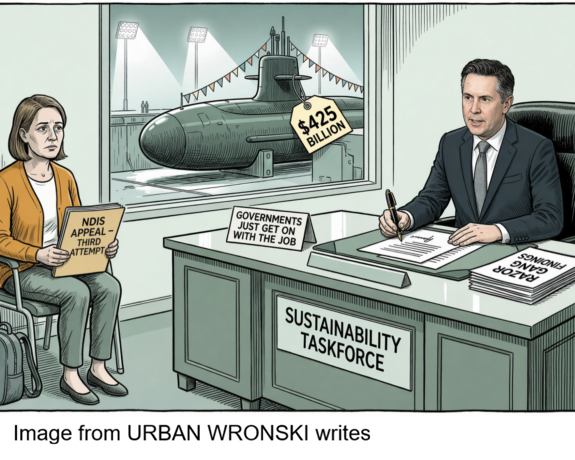

PETITION – To: Prime Minister Anthony Albanese and the Australian Labor Government
Chernobyl: The Lost Tapes – A good documentary on Chernobyl on SBS available On Demand for the next 3 weeks– https://www.sbs.com.au/ondemand/tv-program/chernobyl-the-lost-tapes/235274195556
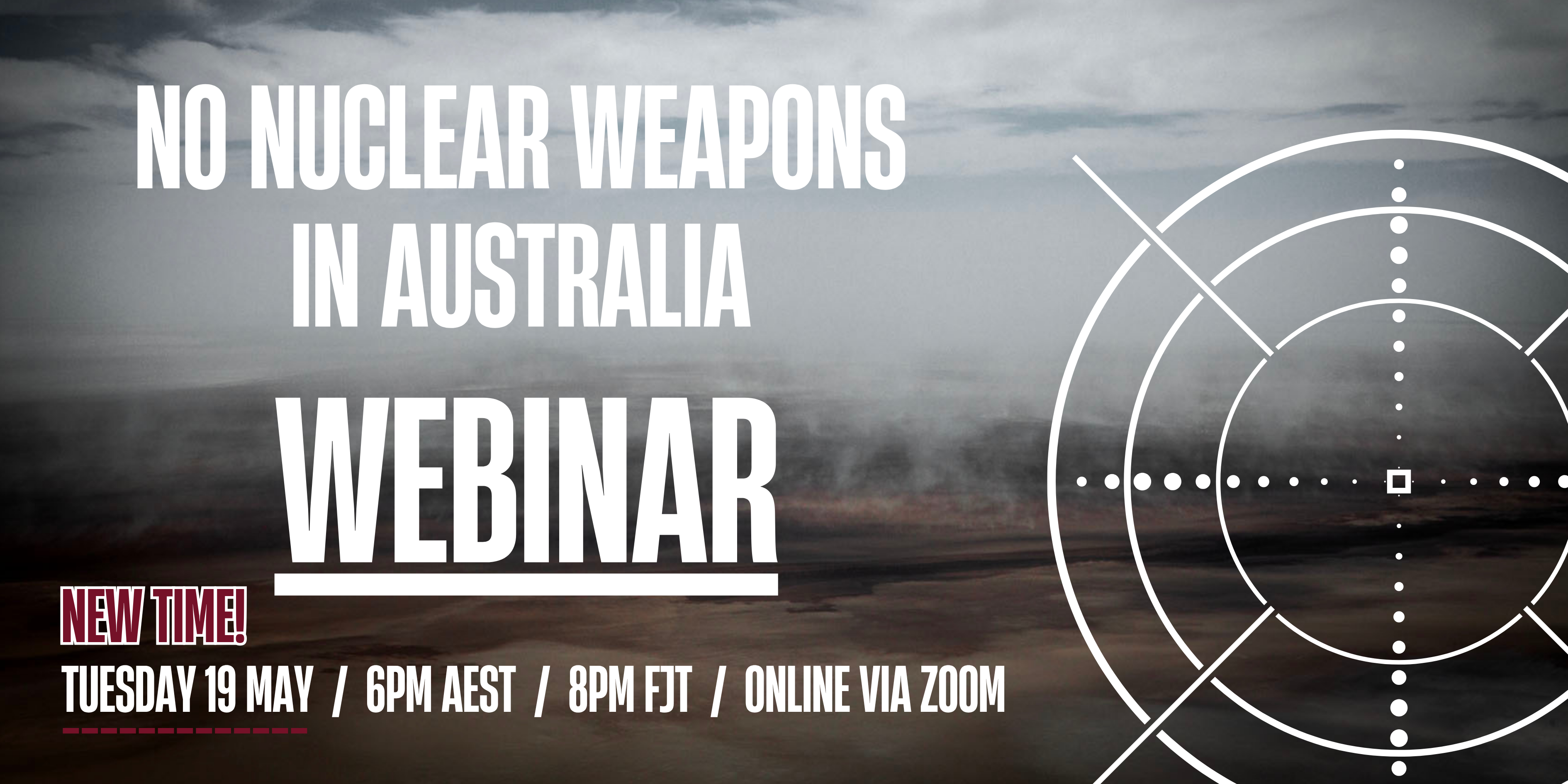
19 May – Webinar- Webinar: No Nuclear Weapons in Australia
Start: 2026-05-19 18:00:00 UTC Canberra, Melbourne, Sydney (GMT+10:00)
End: 2026-05-19 19:30:00 UTC Canberra, Melbourne, Sydney (GMT+10:00)
20 May – Webinar – The dangerous world of AUKUS, US, military occupation and suppression of dissent

National Webinar, 20th May, 2026, 6.30pm AEST. Confronting laws restricting/suppressing protest speech and action
Speakers: Former Sen. Rex Patrick, Lawyer Nick Hanna ,Arthur Rorris ,Jorgen Doyle, Sen David Shoebbridge,
Facilitator Kelley Tranter.

of the week – Australians for War Powers Reform (AWPR)
To see nuclear-related stories in greater depth and intensity
 Antinuclear