National Party rallies around for the nuclear industry

We need to make nuclear case: Littleproud, Manning River Times, Georgie Moore , 10 Aug 21,
Australians might not be ready for nuclear power, but deputy Nationals leader David Littleproud thinks it’s a good idea.
Nationals senator Sam McMahon is trying to overturn Australia’s nuclear power ban through changes to a bill aimed at simplify environmental hoops projects need to jump through…….
He said politicians needed to make the case for change to instil public confidence.
“At this juncture, I don’t think we can give them that confidence,” Mr Littleproud said.
………. “The only realistic way to bring down carbon emissions in our nation is to use our natural resources and move down a nuclear path.”
As it stands, the government is a vote short of getting its environmental approvals bill through the Senate.
It had been due for debate on Wednesday before being taken off the final draft of the Senate program.
Resources Minister Keith Pitt told parliament the environment reforms would help combat “green lawfare” against coal and gas projects.
One Nation leader Pauline Hanson flagged her party would give the government two of the three votes it needed.
Centre Alliance senator Stirling Griff, and independents Rex Patrick and Jacqui Lambie, are all understood to remain opposed to the bill.
They argue an independent watchdog and tougher environment standards are required before other changes could be considered.
Senator Lambie has questioned why Australia didn’t replace coal-fired power with nuclear to achieve emissions reduction goals. https://www.manningrivertimes.com.au/story/7380924/we-need-to-make-nuclear-case-littleproud/
Trumped up: IPCC confirms Morrison is fiddling while the country burns — RenewEconomy

Australia should be a global leader in clean technology solutions – but it does not have clear national energy policy, or clear targets. The post Trumped up: IPCC confirms Morrison is fiddling while the country burns appeared first on RenewEconomy.
Trumped up: IPCC confirms Morrison is fiddling while the country burns — RenewEconomy
Utah Taxpayers Association is very wary of Small Nuclear Reactors
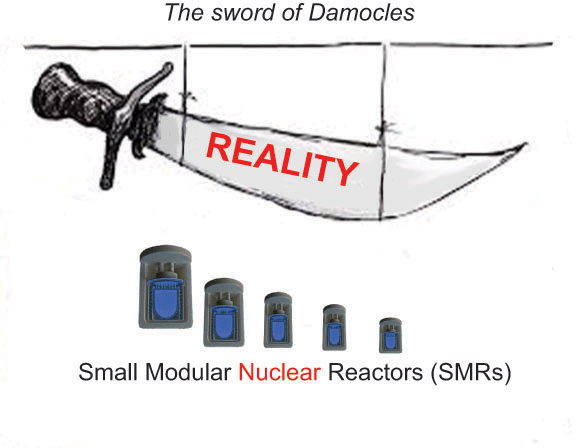
Imagine you picked up a gallon of milk that was labeled at $4, but by the time you made it to the cash register the price had gone up. Worse still, there was an automatic agreement that forced you to buy with no guarantee that the lid would ever open or that the price wouldn’t increase again by the time you had to pay. That’s essentially the situation in which UAMPS is putting municipalities.
Imagine you picked up a gallon of milk that was labeled at $4, but by the time you made it to the cash register the price had gone up. Worse still, there was an automatic agreement that forced you to buy with no guarantee that the lid would ever open or that the price wouldn’t increase again by the time you had to pay. That’s essentially the situation in which UAMPS is putting municipalities.
Utah cities shouldn’t gamble on nuclear power https://www.deseret.com/opinion/2021/8/11/22620772/utah-cities-shouldnt-gamble-with-taxpayer-funds-on-modular-nuclear-power-plant
An Idaho project is a financial risk that is best borne by the private sector. By Rusty Cannon Aug 11, 2021, ”………….. one of our critical missions is to protect taxpayers when it comes to the use of public funds, and we believe strongly that the taxpayers and communities of Utah should not act as venture capitalists for risky bets.
The bet that’s on the table now for Utah municipalities is nuclear. Specifically, it’s a type of nuclear called “small modular,” and the Utah Associated Municipal Power Systems (UAMPS) is recruiting towns and communities around the West to pay for it. The project, if it happens, would be located in Idaho.
Last fall, seven Utah cities from Logan to Lehi wisely withdrew their support for the UAMPS nuclear project due to financial risks that their residents should not be asked to accept. But many municipalities, such as Brigham City, Hyrum, Hurricane, and Washington City, are still gambling with their taxpayers’ dollars.
If modular nuclear power is ready for market, let the private sector show it by putting up its money. Governments ought to stay out of it, particularly when risking public funds.
The participation commitments UAMPS has been getting from Utah communities to buy the power come with required upfront payments from residents for a product that is full of uncertainty. The developer — Oregon-based NuScale — hasn’t built a plant like this before, its design keeps changing, and it’s nearly a decade away from even being potentially operational.
While we still believe the project is risky and that municipalities should withdraw, any investment of public dollars must be done in the open with public scrutiny. Sadly, the information exchange between UAMPS and its potential payers has been opaque. The public receives only a trickle of information, and it’s vague at best.
When we do see information, it’s troubling. For example, the project’s budget has ballooned from an initial $3.1 billion to a more recent estimate of $6.1 billion. It was only recently uncovered that the company that was going to operate the plant, Energy Northwest, backed out in March.
The financial sand is shifting in other ways, as well. In late June, UAMPS suddenly decided to reduce the number of modules at the power plant by half because they’ve struggled to get more communities to commit. That led to a hike in the power price that UAMPS had been promising, putting still-participating municipalities in a bind.
Imagine you picked up a gallon of milk that was labeled at $4, but by the time you made it to the cash register the price had gone up. Worse still, there was an automatic agreement that forced you to buy with no guarantee that the lid would ever open or that the price wouldn’t increase again by the time you had to pay. That’s essentially the situation in which UAMPS is putting municipalities.
Plenty of Utah city council members have listened to their constituents and said “thanks but no thanks.” Bountiful, Kaysville, Murray, Lehi and Heber were some of the largest subscribers to the modular nuclear proposal, but have since bowed out.
However, other communities remain officially interested in this particular power project, and are keeping it in their shopping cart so far. If you reside in these communities, pay attention and watch your wallet. There may still be time to withdraw from the project.
Utah municipalities should remain conservative watchdogs of tax dollars. Say yes to prudent and transparent use of public money. Say no to unproven technology and murky promises that keep shifting. At this point modular nuclear power is a venture, not a product. So let private venture capital come in and pay for it, not Utah taxpayers.
Rusty Cannon is President of the Utah Taxpayers Association
National Party renews its push for nuclear energy, wants to change the Environment Protection Act
Nationals stir up uranium debate: ‘We need to move down a nuclear path’ Stockhead Eddy Sunarto 10 Aug 21,” …….. Speaking on the Sky News channel, deputy Nationals leader David Littleproud has called for a revival of Australia’s nuclear industry, saying that politicians need to make the case for an eventual nuclear energy use in the country.
Littleproud, who’s also the Minister of Agriculture, told Sky that politicians need to have a mature, broad conversation to convince the public of the need to lift the ban on nuclear energy.
His comments were backed by Nationals senator Sam McMahon, who wants the nuclear ban to be overturned through a bill aimed at streamlining environmental approvals.
The bill in question is the Environment Protection and Biodiversity Conservation Act of 1999, which currently restricts uranium mining to some degree but prohibits nuclear plants altogether.
“The only realistic way to bring down carbon emissions in our nation is to use our natural resources and move down a nuclear path,” McMahon said………. https://stockhead.com.au/energy/nationals-stir-up-uranium-debate-we-need-to-move-down-a-nuclear-path/
Why Are We Still Building Nuclear Weapons? Follow the Money

Why Are We Still Building Nuclear Weapons? Follow the Money, Forbes, William Hartung, 11 Aug 21,

The FY 2022 Pentagon budget proposal includes billions of dollars for new nuclear delivery vehicles, with a handful of prime contractors as the primary beneficiaries. For example, Northrop Grumman’s NOC+0.9% twelve largest subcontractors for its new ICBM include some of the nation’s largest defense companies, including Lockheed Martin LMT+0.3%, General Dynamics GD+0.8%, L3Harris, Aerojet Rocketdyne AJRD+0.2%, Honeywell, Bechtel, and the Collins Aerospace division of Raytheon RTX+1.1% Technologies. Other beneficiaries of the funding of new nuclear delivery vehicles include Raytheon (a nuclear-armed cruise missile), General Dynamics (ballistic missile submarines), Lockheed Martin (submarine-launched ballistic missiles), and Northrop Grumman – again – for the new nuclear-armed bombers.
This month marks the 76th anniversary of the bombings of Hiroshima and Nagasaki, events that resulted in the immediate deaths of well over 100,000 people and underscored the devastating consequences of building, deploying, and using nuclear weapons. Those attacks should have served as a wake-up call on the need to control and eliminate these potential world-ending weapons, but determined efforts by scientists, political leaders, policy advocates, and grassroots advocates around the world have yet to abolish them……………
the international community, under the leadership of the International Campaign to Abolish Nuclear Weapons (ICAN), has created and brought into force the Treaty on the Prohibition of Nuclear Weapons, which has been signed by 86 nations and ratified by 55 of them. This is an historic accomplishment, but the real culprits – the major nuclear weapons states that possess the vast bulk of the world’s nuclear weapons – have yet to sign onto the measure.
The United States maintains an active nuclear stockpile of roughly 4,000 nuclear weapons, including over 1,500 deployed warheads. Russia’s stockpile is comparable, at roughly 4,400, while China follows with roughly 300 strategic nuclear warheads. Despite its considerably smaller arsenal, recent revelations regarding China’s construction of new silos for long-range nuclear missiles are cause for real concern as they raise the risk of accelerating the nuclear arms race at great risk to the future of the planet. These developments demand dialogue to roll back the production of new nuclear weapons systems, leading to reductions in the size of global arsenals and the ultimate elimination of this existential threat.
The continued development and deployment of intercontinental ballistic missiles (ICBMs) is of particular concern. As former Secretary of Defense William Perry has noted, ICBMs are “some of the most dangerous weapons in the world” because a president would have only a matter of minutes to decide whether to launch them upon warning of a nuclear attack, increasing the possibility of an accidental nuclear war based on a false alarm.
Given all of the above, why is the United States still building nuclear weapons, more than seven decades after the devastation of Hiroshima and Nagasaki? The U.S. is not alone in building a new generation of nuclear weapons – Russia and China are doing so as well. But the Pentagon’s 30-year plan to build new nuclear-armed bombers, missiles, and submarines – along with new nuclear warheads to go with them at a cost of up to $2 trillion – is the height of folly and an unnecessary, grave risk to the lives of current and future generations. A major reason for this misguided policy can be summed up in a phrase – there is money to be made in perpetuating the nuclear arms race.
The FY 2022 Pentagon budget proposal includes billions of dollars for new nuclear delivery vehicles, with a handful of prime contractors as the primary beneficiaries. For example, Northrop Grumman’s NOC+0.9% twelve largest subcontractors for its new ICBM include some of the nation’s largest defense companies, including Lockheed Martin LMT+0.3%, General Dynamics GD+0.8%, L3Harris, Aerojet Rocketdyne AJRD+0.2%, Honeywell, Bechtel, and the Collins Aerospace division of Raytheon RTX+1.1% Technologies. Other beneficiaries of the funding of new nuclear delivery vehicles include Raytheon (a nuclear-armed cruise missile), General Dynamics (ballistic missile submarines), Lockheed Martin (submarine-launched ballistic missiles), and Northrop Grumman – again – for the new nuclear-armed bomber.
Additional recipients of nuclear weapons-related funding are the firms that run the nuclear warhead complex. Major contractors include Honeywell and Bechtel, which run key facilities for the development and production of nuclear warheads.
Nuclear weapons contractors spend millions of dollars on campaign contributions and lobbying efforts every year in their efforts to shape nuclear weapons policy and spending. While not all of this spending is devoted to lobbying on nuclear weapons programs, these expenditures are indicative of the political clout they can bring to bear on Congress as needed to sustain and expand the budgets for their nuclear-related programs.
The major nuclear weapons contractors made a total of over $119 million in campaign contributions from 2012 to 2020, including over $31 million in 2020 alone. The companies spent $57.9 million on lobbying in 2020 and employed 380 lobbyists among them.
The only way to be truly safe from nuclear weapons is to eliminate them altogether, as called for in the United Nations Treaty on the Prohibition of Nuclear Weapons. As noted above, the major nuclear powers have yet to sign onto the treaty but pressing them to do so should be a central component of efforts to rein in nuclear dangers.
It’s time that we stopped allowing special interest lobbying and corporate profits to stand in the way of a more sensible nuclear policy. The future of humanity depends on it. https://www.forbes.com/sites/williamhartung/2021/08/10/why-are-we-still-building-nuclear-weapons—-follow-the-money/?sh=442b7ad15888
New ”Natrium” nuclear reactors – a very risky gamble.

A July 2021 Foreign Affairs article reports that in the past sixty years eight countries have spent $100 billion to produce sodium cooled fast reactors such as the one proposed for Wyoming. All have failed. The money’s spent and the lights are out.
While the Natrium design posits less risk of a meltdown, the sodium coolant is under high pressure and is explosive in the event of any breach in the containment area. And while Natrium plants produce less radioactive waste than traditional nuclear plants, there’s still the necessity to safely and permanently store this waste. How much will it cost? World Nuclear Industry Status Report’s editor Mycle Schneider says, “No one knows…because there is no functioning permanent storage facility.” Nowhere.
How much power are we talking about anyway? Writing for Canary Media, Eric Wesoff reported that in 2020, 2.4 gigawatts of new nuclear power plants were installed worldwide while there were 100 gigawatts of new solar and 60 gigawatts of new wind power generators. Meanwhile, old nuclear plants close—Indian Power in New York, Diablo Canyon in California, Exelon’s Byron and Dresden plants in Illinois. What do we do with decommissioned nuclear plants? A cooling tower in Germany has become a climbing wall.
Romtvedt: Proposal for nuclear power calls for caution https://trib.com/opinion/columns/romtvedt-proposal-for-nuclear-power-calls-for-caution/article_ecb135f0-1378-5728-9992-abd11b681ba4.html, David Romtvedt, Aug 10, 2021
In conjunction with PacifiCorp, Rocky Mountain Power’s parent company, owned by Berkshire Hathaway Energy, a subsidiary of Warren Buffett’s Berkshire Hathaway, Inc; and TerraPower, a nuclear reactor design company founded by Bill Gates, Wyoming Governor Mark Gordon has announced his support for the construction of a nuclear reactor demonstration plant in Wyoming. According to Berkshire Hathaway, the project is intended to “validate the design, construction and operational features” of TerraPower’s Natrium nuclear plant design which uses liquid sodium as a coolant rather than water.
Governor Gordon believes that Natrium offers a safe, reliable solution to Wyoming’s economic woes, saying, “I am thrilled to see Wyoming selected for this demonstration pilot project as our great state is the perfect place for this type of innovative utility facility and our experienced workforce is looking forward to the jobs this project will provide.”
So the benefits of the nuclear plant are said to be increased economic security and diminished environmental risk than with other forms of nuclear power plants. But it’s not so clear. Both in construction and operation, Natrium nuclear plants require uniquely skilled workers employing specialized materials and building techniques. Other economic issues include the temporary nature of construction work, long lead times for safety and licensing reviews (Natrium is not licensed by the Nuclear Regulatory Commission), and diminished severance tax revenues as a result of the shift from coal to nuclear.
There’s also the fuel—Natrium uses high-assay low-enriched uranium (HALEU). Power Magazine reports that there is no current supply of HALEU and that it will take at least seven years with sufficient demand to develop a fuel cycle infrastructure. Edwin Lyman of the Union of Concerned Scientist cautions that Russia is currently the only source of suitable fuel. In whatever quantity, the fuel is not likely to come from Wyoming uranium mines.
After construction there’s generation. World Nuclear Industry Status Report has recorded the changing costs of electric generation per kilowatt hour (in US cents) between 2009 and 2020. They are: solar—35.9 to 3.7, down 90%; wind—13.5 to 4.0, down 70%; gas—8.3 to 5.9, down 29%; coal—11.1 to 11.2, up 1%; and nuclear 12.3 to 16.3, up 33%. Nuclear is the most expensive way to generate electricity.
And time—the Wyoming proposal projects seven years to completion. Since no new nuclear power plant with a license application submitted since 1975 has yet begun operation, we may question the Wyoming timeline. More time equals more cost. Georgia Power’s Vogtle nuclear plants are years behind schedule with costs having risen from $14 billion to over $25 billion. But it may not matter as Georgia Power can charge cost overruns to its customers—the more the project is over budget, the more the company profits. In Florida, Duke Power, after seeing a cost increase from $5 billion to $22 billion, abandoned a Natrium nuclear project after passing $800 million dollars in excess costs to ratepayers.
A July 2021 Foreign Affairs article reports that in the past sixty years eight countries have spent $100 billion to produce sodium cooled fast reactors such as the one proposed for Wyoming. All have failed. The money’s spent and the lights are out.
While the Natrium design posits less risk of a meltdown, the sodium coolant is under high pressure and is explosive in the event of any breach in the containment area. And while Natrium plants produce less radioactive waste than traditional nuclear plants, there’s still the necessity to safely and permanently store this waste. How much will it cost? World Nuclear Industry Status Report’s editor Mycle Schneider says, “No one knows…because there is no functioning permanent storage facility.” Nowhere.
I’m guessing that Governor Gordon’s decision was driven in part by his hope to protect the lives and livelihoods of Wyoming workers. But generating radioactive waste without a procedure for safe permanent storage of that waste will protect no one—not unemployed coal miners, not me, not the governor.
How much power are we talking about anyway? Writing for Canary Media, Eric Wesoff reported that in 2020, 2.4 gigawatts of new nuclear power plants were installed worldwide while there were 100 gigawatts of new solar and 60 gigawatts of new wind power generators. Meanwhile, old nuclear plants close—Indian Power in New York, Diablo Canyon in California, Exelon’s Byron and Dresden plants in Illinois. What do we do with decommissioned nuclear plants? A cooling tower in Germany has become a climbing wall.
The questions loom. If I were a betting man, given initial costs, cost overruns, lost tax revenue, the increasing viability of renewables, the history of nuclear failure, and the health and safety hazards surrounding nuclear waste, I’d pause before I put my money on nuclear power. Not being a betting man, I wouldn’t consider it.
David Romtvedt is a writer and musician from Buffalo, Wyoming. A former activist with the Ground Zero Center for Nonviolent Action, he serves as a board member for the Powder River Basin Resource Council.
Joe Biden’s Infrastructure Bill gives $50 billion to bail out the nuclear industry

Nuclear Power Bailout In The Infrastructure Bill https://www.wortfm.org/nuclear-power-bailout-in-the-infrastructure-bill/
AUGUST 11, 2021 BY 8 O’CLOCK BUZZ The bi-partisan infrastructure bill just passed by the U.S. Senate has allotted $50 billion over the next 10 years to bolster the dying nuclear power industry, according to Hannah Smay, Digital Organizer of the Nuclear Information and Resource Service. And the $3.5 trillion reconciliation bill promises even more, fails to create jobs, reduce carbon, and the Band-Aid approach interferes with the transition to clean energy.
“Solar tax” optional as networks told to make grid solar and battery friendly — RenewEconomy

New rules mean solar homes will need to pay to access the best feed-in-tariffs and avoid curtailment. The post “Solar tax” optional as networks told to make grid solar and battery friendly appeared first on RenewEconomy.
“Solar tax” optional as networks told to make grid solar and battery friendly — RenewEconomy
Bad faith: Morrison blaming Global South for climate change is beyond belief — RenewEconomy

Scott Morrison and Angus Taylor are blaming the developing world for the world’s climate problem. That approach is both ignorant and cruel. The post Bad faith: Morrison blaming Global South for climate change is beyond belief appeared first on RenewEconomy.
Bad faith: Morrison blaming Global South for climate change is beyond belief — RenewEconomy
Setsuko Thurlow Rose honors the legacy of a Hiroshima survivor and abolition campaigner — IPPNW peace and health blog

The Setsuko Thurlow rose In the year that the Treaty on the Prohibition of Nuclear Weapons enters in force, a new variety of rose will be planted in Spain. The Setsuko Thurlow Rose, a rose of hope, will be planted on the International Day for the Total Elimination of Nuclear Weapons, September 26, 2021, in […]
Setsuko Thurlow Rose honors the legacy of a Hiroshima survivor and abolition campaigner — IPPNW peace and health blog
August 11 Energy News — geoharvey

Opinion: ¶ “Frightening New Climate Report Also Holds The Seeds Of Hope” • The latest report that just arrived from the IPCC isn’t pretty. But in a year defined by searing heat waves, torrential floods, and raging fires, it is encouraging that the same report that is so frightening also suggests a strategy to alleviate […]
August 11 Energy News — geoharvey
From Hiroshima to climate apocalypse – the consummate NUCLEAR LIES- theme for August 2021
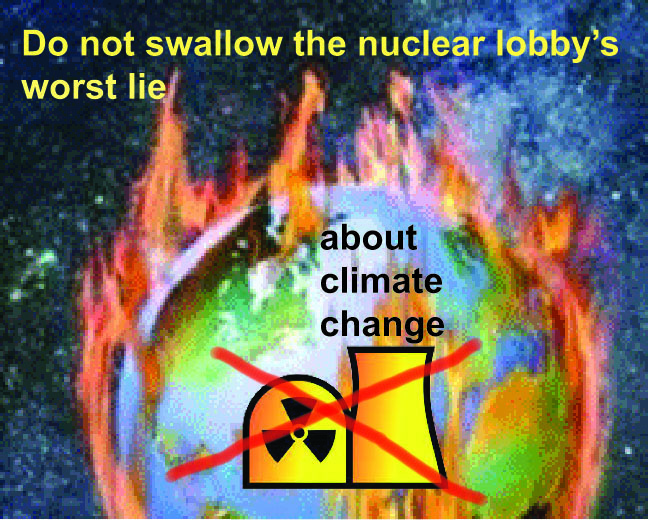

It began with the atrocity of Hiroshima, which continued the lie that it’s OK to massacre children, women and men. Then the specific nuclear lies about the reason for this particular bombing , then the lie about ”peaceful nukes” and on until today’s big lie – that ”nuclear is essential to save the climate”.
IF this nuclear lie is allowed to prevail, especially at the Glasgow Climate Change Conference in November, the official climate action movement will have no credibility.
Money, time, effort put into nuclear energy development is money, time and effort taken away from genuine action to combat and to adapt to global heating- energy conservation, and renewable energy technologies.
It is also money put into nuclear weaponry – because so-called ”commercial” nuclear power is economically unviable, is really just a mask for nuclear weaponry, – – on land, sea, in sky, and space
But – LET’S PRETEND THAT NUCLEAR ENERGY REALLY CAN COMBAT GLOBAL HEATING. But oh, what a pity! – the most recent research predicts that climate change will become irreversible by 2027 – 2042.
That means that we have only, at best, 20 years to switch from coal, and gas to carbon-free electricity.
The world would need 1000s of ‘conventional’ nuclear reactors to provide even a partially effective solution, and many 1000s of small nuclear reactors. There is no possibility of achieving that with 50 years, let alone 20. Renewables can be set up within months to a few years. (Nuclear development would be a costly and wasteful distraction).
NUCLEAR POWER INCREASES GLOBAL HEATING. The entire nuclear fuel chain, from uranium mining through to wastes burial, is highly carbon emitting.
Meanwile, the nuclear industry, so called ”emissions-free” emits ionising radiation, harmful to health and environment.
The industry’s dangers and role in creasing weapons and the danger of apocalyptic nuclear war, make it totally unsuitable and indeed counter-productive , for inclusion in any climate change action strategy.
”Long Half-Life” – Professor Ian Lowe on Australia’s nuclear dilemma

AUSTRALIA’S NUCLEAR DILEMMA – PROF. IAN LOWE https://westender.com.au/australias-nuclear-dilemma-prof-ian-lowe/ by Kerrod Trott Aug 9, 2021 This book is a clarion call for sanity at a time when we can finally get the nuclear monkey off our back – highly recommended.’
Peter Garrett
Ian Lowe’s new book – Long Half-life – The Nuclear Industry in Australia – is a timely and riveting account of the political, social and scientific complexities of the nuclear industry, revealing the power of vested interests, the subjectivities of scientists and the transformative force of community passion.
In describing the book, Ian Lowe said:
The discovery of large uranium deposits in the Northern Territory suggested that Australia could become a major exporter of radioactive minerals. The Fox Report, commissioned by the Whitlam government to study the environmental impacts of the proposed Ranger uranium mine, broadened into an inquiry into the social and political issues of producing uranium.
The report concluded that exporting uranium would be quite profitable for the mining company but would have limited overall economic impact and provide modest employment. It also recommended that any decision to export uranium should recognise the inherent problems of nuclear energy, radioactive waste and weapons proliferation, so limits on expansion of production should be set and the policy “should be the subject of regular review”.
It noted that the 1976 UK Royal commission had argued that using nuclear power should be limited until it was convincingly demonstrated that the highly radioactive waste could be safely contained “for the indefinite future”. Deciding to approve export of uranium from Ranger, the Fraser government assured the public that the waste problem had been solved and that exports would be subject to the strictest safeguards. The waste problem had
not been solved, and still hasn’t, while the safeguards have been systematically watered down every time they looked like impeding sales.
The economic benefits turned out to be even more modest than the Fox report projected. Instead of exports from Ranger expanding to 30,000 tonnes a year, they amounted to 120,000 tonnes over 40 years, 3,000 tonnes a year. Similarly, when the Olympic Dam mine in SA was being developed in 1982, it was claimed it would employ nearly 3000 people and pay $100 million a year in royalties to government. By 1997 it employed about 950 people, while royalties for the first twenty years of operation totalled $60 million.
The 2016 SA Royal Commission concluded that there could be a significant economic opportunity in managing the waste from nuclear power stations in Japan, South Korea and Taiwan. The Commission warned such a major investment would require clear public support, so the government established a citizens’ jury to consider the issues; to the surprise of the elected politicians, the citizens strongly recommended against the proposal, which was subsequently dropped. The issue raised important questions about trust in experts and trust in governments to manage complex long-term issues.
Malcolm Fraser, the Liberal Prime minister who had in 1977 approved Australia becoming a major exporter of uranium, in later life realised the problems this was creating. Large volumes of high-level waste are still being stored near nuclear power stations, with most of the countries involved still having no clear plan to manage those materials for the unimaginably long periods required. The Nuclear Non-Proliferation Treaty has not led to the weapons-holding nations disarming, so predictably others have joined the nuclear club, with the real risk that tensions in the Korean peninsula, the Indian sub-continent or the Middle East could lead to the catastrophic consequences of nuclear weapons being used against cities.
Concern about the moral responsibility for the uses of Australian uranium raises the question of the social licence to continue exporting. Writing an opinion piece in 2014, Fraser warned that we have “the elements of a perfect storm for nuclear calamity” and urged Australia to become a global leader in the campaign to abolish nuclear weapons. Unless they are banned, he said, ‘the risks of nuclear weapons being used will grow towards inevitable use”. That warning should at least provoke a review of uranium exports, as recommended 45 years ago by the Fox Report.
ABOUT THE BOOK:
Long Half-life: The Nuclear Industry in Australia, Ian Lowe
Published August 2021 by Monash University Publishing
ABOUT THE AUTHOR:Professor Ian Lowe AO is emeritus professor of science, technology and society at Griffith University in Brisbane, as well as being an adjunct professor at Sunshine Coast University and Flinders University. His previous books include A Big Fix and Living in the Hothouse.
NO SUPPORT for NUCLEAR in the new report from Intergovernmental Panel on Climate Change (IPPC).

10 Aug 21, The report is comprehensive on the present and future impacts of global heating, and on what needs to be done. But nuclear power as a method for action is not included.
Indeed, nuclear power is barely mentioned, and when it is, its negative effects on climate and environment are mentioned.
Page 236 line 39 – “Radioactive fallout from atmospheric nuclear weapons testing (1940s–1950s) and urban smog (1950s– 1960s) first provoked widespread attention to anthropogenic aerosols and ozone in the troposphere”
Page 261 – reference to nuclear war and volcanic eruptions
Page 309 – another reference to impacts of nuclear weapons
Page 971 – line 23 – reference to a nuclear holocaust – in reference to future uncertainties
Page 1380 – line 33 discussion on 14C released from nuclear weapons uptake into the ocean
Page 3161 – line 15 – 17 “Thermal and nuclear electricity plants may be challenged when using warmer river waters for cooling or when mixing waste waters back into waterways without causing ecosystem impacts (Kopytko and Perkins, 2011; van Vliet et al., 2016; Tobin et al., 2018)
Climate change has already hit Australia.

Climate change has already hit Australia. Unless we act now, a hotter, drier and more dangerous future awaits, IPCC warns https://theconversation.com/climate-change-has-already-hit-australia-unless-we-act-now-a-hotter-drier-and-more-dangerous-future-awaits-ipcc-warns-165396?utm_medium=email&utm_campaign=Latest%20from%20The%20Conversation%20for%20August%2010%202021%20-%202026619923&utm_content=Latest%20from%20The%20Conversation%20for%20August%2010%202021%20-%202026619923+CID_a4c10fc2998953c0ef465aaf49de1468&utm_source=campaign_monitor&utm_term=Climate%20change%20has%20already%20hit%20Australia%20Unless%20we%20act%20now%20a%20hotter%20drier%20and%20more%20dangerous%20future%20awaits%20IPCC%20warns
Michael Grose Climate projections scientist, CSIRO, Joelle GergisSenior Lecturer in Climate Science, Australian National University, Pep Canadell, Chief research scientist, Climate Science Centre, CSIRO Oceans and Atmosphere; and Executive Director, Global Carbon Project, CSIRO, Roshanka Ranasinghe, Professor of Climate Change impacts and Coastal Risk, 9 Aug 21,
Australia is experiencing widespread, rapid climate change not seen for thousands of years and may warm by 4℃ or more this century, according to a highly anticipated report by the Intergovernmental Panel on Climate Change (IPCC).
The assessment, released on Monday, also warns of unprecedented increases in climate extremes such as bushfires, floods and drought. But it says deep, rapid emissions cuts could spare Australia, and the world, from the most severe warming and associated harms.
The report is the sixth produced by the IPCC since it was founded in 1988 and provides more regional information than any previous version. This gives us a clearer picture of how climate change will play out in Australia specifically.
It confirms the effects of human-caused climate change have well and truly arrived in Australia. This includes in the region of the East Australia Current, where the ocean is warming at a rate more than four times the global average.
We are climate scientists with expertise across historical climate change, climate projections, climate impacts and the carbon budget. We have been part of the international effort to produce the IPCC report over the past three years.
The report finds even under a moderate emissions scenario, the global effects of climate change will worsen significantly over the coming years and decades. Every fraction of a degree of global warming increases the likelihood and severity of many extremes. That means every effort to reduce greenhouse gas emissions matters.
Australia is, without question, warming
Australia has warmed by about 1.4℃ since 1910. The IPCC assessment concludes the extent of warming in both Australia and globally are impossible to explain without accounting for the extra greenhouse gases in the atmosphere from human activities.
The report introduces the concept of Climate Impact-Drivers (CIDs): 30 climate averages, extremes and events that create climate impacts. These include heat, cold, drought and flood.
The report confirms global warming is driving a significant increase in the intensity and frequency of extremely hot temperatures in Australia, as well as a decrease in almost all cold extremes. The IPCC noted with high confidence that recent extreme heat events in Australia were made more likely or more severe due to human influence.
These events include:
the Australian summer of 2012–13, also known as the Angry Summer, when more than 70% of Australia experienced extreme temperatures- the Brisbane heatwave in 2014
- extreme heat preceding the 2018 Queensland fires
- the heat leading into the Black Summer bushfires of 2019-20.
The IPCC report notes very high confidence in further warming and heat extremes through the 21st century – the extent of which depends on global efforts to reduce greenhouse gas emissions.
If global average warming is limited to 1.5℃ this century, Australia would warm to between 1.4℃ to 1.8℃. If global average warming reaches 4℃ this century, Australia would warm to between 3.9℃ and 4.8℃ .
The IPCC says as the planet warms, future heatwaves in Australia – and globally – will be hotter and last longer. Conversely, cold extremes will be both less intense and frequent.
Hotter temperatures, combined with reduced rainfall, will make parts of Australia more arid. A drying climate can lead to reduced river flows, drier soils, mass tree deaths, crop damage, bushfires and drought.
The southwest of Western Australia remains a globally notable hotspot for drying attributable to human influence. The IPCC says this drying is projected to continue as emissions rise and the climate warms. In southern and eastern Australia, drying in winter and spring is also likely to continue. This phenomenon is depicted in the graphic below.[on original]
Climate extremes on the rise
Heat and drying are not the only climate extremes set to hit Australia in the coming decades. The report also notes:
- observed and projected increases in Australia’s dangerous fire weather
- a projected increase in heavy and extreme rainfall in most places in Australia, particularly in the north
- a projected increase in river flood risk almost everywhere in Australia.
Under a warmer climate, extreme rainfall in a single hour or day can become more intense or more frequent, even in areas where the average rainfall declines.
For the first time, the IPCC report provides regional projections of coastal hazards due to sea level rise, changing coastal storms and coastal erosion – changes highly relevant to beach-loving Australia.
This century, for example, sandy shorelines in places such as eastern Australia are projected to retreat by more than 100 metres, under moderate or high emissions pathways.
Hotter, more acidic oceans
The IPCC report says globally, climate change means oceans are becoming more acidic and losing oxygen. Ocean currents are becoming more variable and salinity patterns – the parts of the ocean that are saltiest and less salty – are changing.
It also means sea levels are rising and the oceans are becoming warmer. This is leading to an increase in marine heatwaves such as those which have contributed to mass coral bleaching on the Great Barrier Reef in recent decades.
Notably, the region of the East Australia Current which runs south along the continent’s east coast is warming at a rate more than four times the global average.
The phenomenon is playing out in all regions with so-called “western boundary currents” – fast, narrow ocean currents found in all major ocean gyres. This pronounced warming is affecting marine ecosystems and aquaculture and is projected to continue.
Where to from here?
Like all regions of the world, Australia is already feeling the effects of a changing climate.
The IPCC confirms there is no going back from some changes in the climate system. However, the consequences can be slowed, and some effects stopped, through strong, rapid and sustained reductions in global greenhouse gas emissions.
And now is the time to start adapting to climate change at a large scale, through serious planning and on-ground action.
1 This month.

Australians deserve the truth
about
AUKUS – https://aukuspublicinquiry.com/

PETITION – To: Prime Minister Anthony Albanese and the Australian Labor Government

of the week – Australians for War Powers Reform (AWPR)
To see nuclear-related stories in greater depth and intensity
 Antinuclear