New Mexico leaders oppose Holtec nuclear waste site proposal
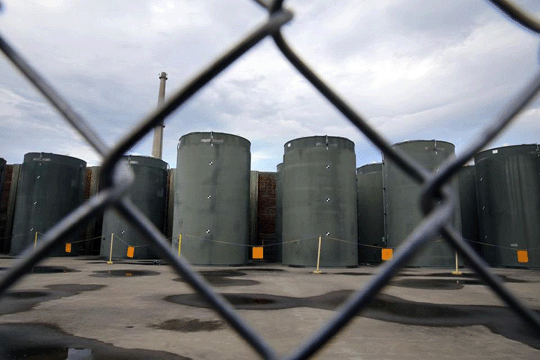
The opposition contended the project posed too much risk and could upend other major industries in the region like agriculture …
”This leaves us extremely concerned that ‘interim’ storage sites …. will become the country’s de facto permanent nuclear waste storage facilities. We cannot accept that result.”
New Mexico leaders oppose Holtec International nuclear waste site proposed near Carlsbad, Adrian HeddenCarlsbad Current-Argus 6 Jul 21, New Mexico’s top Democrat political leaders voiced their opposition to a proposed storage facility for nuclear waste to be built near Carlsbad and Hobbs, warning the U.S. Department of Energy that the site could become a perpetual dumping ground as a permanent repository does not exist.
Holtec International applied for a 40-year license to build a consolidated interim storage facility (CISF) at a remote location near the Eddy-Lea county line, through the federal Nuclear Regulatory Commissions (NRC) in 2017.
The company signaled it planned to file for subsequent licenses to continue to operate the facility during 20 phases which would total more than 100,000 metric tons of waste when complete.
The site would be designed to hold spent nuclear fuel rods, brought in via rail from nuclear power plants around the country, on a temporary basis while a permanent repository is built….
The opposition contended the project posed too much risk and could upend other major industries in the region like agriculture and fossil fuels.
In the July 2 letter, New Mexico Democrat U.S. Sens. Martin Heinrich and Ben Ray Lujan, U.S. Rep. Melanie Stansbury (D-NM) and New Mexico Gov. Michelle Lujan Grisham said Holtec’s proposal contained no plan for permanent disposal of the waste and thus risked leaving it in New Mexico forever.
Lujan Grisham was a frequent critic of the project since its inception, calling the proposal “economic malpractice” for the risk she said it posed to other industries.
The lawmakers also opposed a similar proposal to expand a facility owned by Waste Control Specialists in Andrews, Texas along that state’s western border with New Mexico, to also hold the spent fuel.
“We are strongly opposed to the interim storage of spent nuclear fuel (SNF) and high-level waste (HLW) in New Mexico. There is currently no permanent disposal strategy for SNF and HLW in place at the Department of Energy,” the letter read.
“This leaves us extremely concerned that ‘interim’ storage sites with initial 40-year leases, like one proposed for (the NRC) licensing in New Mexico, will become the country’s de facto permanent nuclear waste storage facilities. We cannot accept that result.”
New Mexico had already seen the impacts of radiation exposure, the letter read, resulting from uranium mining and other activities in the state………….. https://www.currentargus.com/story/news/local/2021/07/06/new-mexico-leaders-oppose-holtec-nuclear-waste-site-near-carlsbad/7872429002/
As wind power becomes half the price of nuclear, nuclear power may not be an election winner.
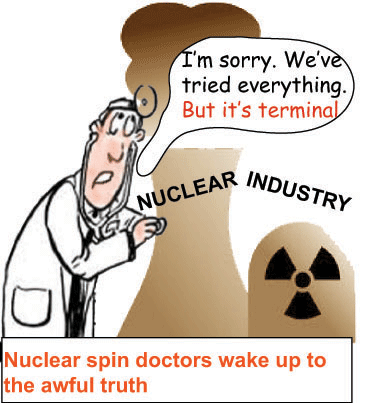
this is not a time to invest in nuclear technology, but offshore wind looks increasingly attractive.
The problem seems to be that getting the Hinkley Point C reactors off the ground brought out into the open how expensive and delay-prone building a new nuclear plant has become.
Nuclear Resurgence Fades In The UK; Huge Expectations For Offshore Wind, Seeking Alpha 4th July 2021
Approximately, 16% of UK power comes from nuclear reactors, which are almost all due to close soon. The UK Government has gone quiet about nuclear renewal.
In late June, the UK All-Party Parliamentary Group (APPG) on Nuclear Energy has called for urgent action to revitalise the industry, a call which seems too late to be viable.
New UK report suggests massive expansion of offshore wind to 108 GW; this will drive new power needs in the UK. Investors might consider the risks of investing in nuclear technology now and instead consider the rise of companies involved with offshore wind. Four years ago, I wrote about the struggling global nuclear industry and specifically nuclear power in the UK.
I updated the UK situation earlier this year. Very recent developments suggest that a further update is timely because what happens in the UK will impact the global nuclear industry.
Here I suggest that this is not a time to invest in nuclear technology, but that offshore wind looks increasingly
attractive. It takes a long time to get nuclear permitting sorted out and construction commissioned. The clock is ticking for the renewal of the UK nuclear fleet which currently provides ~16% of UK power requirements, but all but one of the existing fleet of 15 reactors plans to close by 2030.
The problem seems to be that getting the Hinkley Point C reactors off the ground brought out into the open how expensive and delay-prone building a new nuclear plant has become.
Probably focusing the Government’s mind is the fact that financing Hinkley Point C has left the public with a “strike price” of 92 pounds/MWh and 35 year inflation adjusted bill, which is already more than double the cost of a major wind farm (e.g. Dogger Bank wind farm has a strike price of 40 pounds/MWh, IRR of 5.6% and payback time 17 years).
No doubt the recently updated 100+ year program to decontaminate the UK’s 17 old nuclear facilities is another confronting fact that may not be an election winner.
https://seekingalpha.com/article/4437798-nuclear-resurgence-fades-in-the-uk-huge-expectations-for-offshore-wind
Both UK and European Commission want nuclear energy excluded from clean energy investments -”otherwise clean energy finances would not be credible”.
Nuclear energy has been excluded from the UK government’s Green Financing Framework, while several EU Member States have written to the European Commission to oppose nuclear’s inclusion in the bloc’s green taxonomy.
Nuclear energy faces hurdles to be included in clean energy investments, WNN02 July 2021,
The UK’s Green Financing Framework describes how the government plans to finance expenditures through the issuance of green gilts and the retail Green Savings Bonds that it says will be critical in tackling climate change and other environmental challenges. The framework, which was produced and published yesterday by the Treasury, sets out the basis for identification, selection, verification and reporting of the green projects that are eligible for such financing.
Under ‘exclusions’, the document says: “Recognising that many sustainable investors have exclusionary criteria in place around nuclear energy, the UK government will not finance any nuclear energy-related expenditures under the Framework.”…………
The letter – signed by the environment or energy ministers of Austria, Denmark, Germany, Luxembourg and Spain – points to “shortcomings” in the JRC report, which was published in April.
The ministers said the JRC’s conclusion was “a misconception” and based on “two grave methodological shortcomings”.
The JRC “neglects to address the residual nuclear risk, assessing only the normal operation of nuclear power plants” and “disregards the life-cycle approach”, according to the ministers.
“We recognise the sovereign right of Member States to decide for or against nuclear power as part of their national energy systems. However, we are concerned that including nuclear power in the Taxonomy would permanently damage its integrity, credibility and therefore its usefulness,” they wrote………….. https://world-nuclear-news.org/Articles/UK-excludes-nuclear-from-green-taxonomy
Grid concerns and “unhelpful” government killing confidence in clean energy — RenewEconomy

Grid connections and an unhelpful federal government cited as major reasons for plunge in investor confidence in clean energy to a big low. The post Grid concerns and “unhelpful” government killing confidence in clean energy appeared first on RenewEconomy.
Grid concerns and “unhelpful” government killing confidence in clean energy — RenewEconomy
Pitt slammed for $21m handout to Liberal Party linked Beetaloo gas projects — RenewEconomy

Keith Pitt slammed for $21m handout to Liberal party aligned gas company, to fund accelerated drilling in the Beetaloo Basin. The post Pitt slammed for $21m handout to Liberal Party linked Beetaloo gas projects appeared first on RenewEconomy.
Pitt slammed for $21m handout to Liberal Party linked Beetaloo gas projects — RenewEconomy
Australia’s electricity oligopoly is being slowly broken down by wind and solar — RenewEconomy

Australia’s fossil fuel-based electricity oligopoly is being slowly broken down by the influx of wind and solar, regulator says. The post Australia’s electricity oligopoly is being slowly broken down by wind and solar appeared first on RenewEconomy.
Australia’s electricity oligopoly is being slowly broken down by wind and solar — RenewEconomy
Antarctic base could be powered by wind and batteries alone — RenewEconomy

Remote renewables specialist says plan to power an Antarctic research station on Ross Island with 100% wind and battery storage “looks feasible.” The post Antarctic base could be powered by wind and batteries alone appeared first on RenewEconomy.
Antarctic base could be powered by wind and batteries alone — RenewEconomy
Japan giant signs deal for 30 Australian solar farms with battery and hydrogen storage — RenewEconomy

Deal signed for network of 30 solar farms in Victoria which will feature world-first technology combining battery and hydrogen storage. The post Japan giant signs deal for 30 Australian solar farms with battery and hydrogen storage appeared first on RenewEconomy.
Japan giant signs deal for 30 Australian solar farms with battery and hydrogen storage — RenewEconomy
July 7 Energy News — geoharvey

Opinion: ¶ “Why North America’s Killer Heat Scares Me” • When he saw North America’s killer heat dome, BBC environment analyst Roger Harrabin felt a “gut-tightening sense of foreboding.” It was not because new heat records were set in north-western US and Canada. That happens from time to time. It was because the old records […]
July 7 Energy News — geoharvey
The week in nuclear news – to 6 July

Today I found an article which, although it’s about America, expressed a dilemma for the whole world. Tom Engelhardt of Tom Dispatch discussed the 3 global horrors of – the pandemic, climate change, and nuclear weapons. I recommend his article, lucidly explaining how vast sums of money now goes into nuclear weapons, and not into defeating the pandemic, nor saving the world from the slow apocalypse of global heating.
Coronavirus: What’s happening in Canada and around the world.
Climate Change Disaster Isn’t a Future Threat — It’s Already Here.
Good news? I’m sure there is some, but it’s hard to find. News is, by its nature, bad – because most people behave fairly reasonably – and therefore, reasonable behaviour and normal life are not newsworthy.
AUSTRALIA.
Maralinga nuclear bomb tests – British and Australian governments’ callous cruelty to First Nations people.- Premier Marshall should stand up for South Australia and reject the federal Liberal’s unlawful, unfair, unsafe and unnecessary nuclear waste dump plan.
- Keith Pitt MP, Minister for Resources, enthuses about nuclear power. Barnaby Joyce is back as Deputy PM – pushing for nuclear and coal. Bob Hawke – his allegiance to USA was greater than to the union movement.
- Australian government’s unnecessary crackdown on charities and on peaceful protest.
- THE AUSTRALIAN newspaper sinks to a new low in pro nuclear propaganda. (A reminder to Australians – Even nuclear executives must be embarrassed at the pro nuke propaganda aimed at young women. and – Exposed! Extinction Rebellion fact checks pro nuclear front, and Zion Lights.)
Wittenoom – largest contaminated area in the southern hemisphere.
INTERNATIONAL
Even this conservative journal recognises renewables as the only meaningful future energy source – nuclear is irrelevant.
The world is bequeathing to our descendants the costly nightmare of unsolved nuclear waste disposal,
Canada is a warning: more and more of the world will soon be too hot for humans.
Maralinga nuclear bomb tests – British and Australian governments’ callous cruelty to First Nations people.

Australia’s Chernobyl: The British carried out nuclear tests on Indigenous land. It will never heal. https://www.mamamia.com.au/maralinga-nuclear-testing/ CHELSEA MCLAUGHLIN, JULY 5, 2021 For tens of thousands of years, the Aṉangu people lived on the warm, red earth of their country.
The land provided them with food, water and shelter as they travelled around an area we now know as outback Far North South Australia.

But after colonisation, they were moved off their land: forcibly removed, sent into missions across the region and displaced by train lines linking Australia’s east and west that impacted their water supply.
Much of the information around the tests was highly classified, and some information remains so.
For tens of thousands of years, the Aṉangu people lived on the warm, red earth of their country.
The land provided them with food, water and shelter as they travelled around an area we now know as outback Far North South Australia.
But after colonisation, they were moved off their land: forcibly removed, sent into missions across the region and displaced by train lines linking Australia’s east and west that impacted their water supply.
Much of the information around the tests was highly classified, and some information remains so.
Thirty per cent of the British and Australian servicemen who were exposed during these tests died of cancer, though a Royal Commission in 1984 was not able to reach a conclusion linking their health issues directly to the blasts.
Similarly, many locals died prematurely, went blind and suffered from illness that may have been linked to radiation.
British nuclear scientists, wanting to determine the long-term effects of the tests on Australia and its citizens, ordered the testing of dead Australian infants and children for radiation contamination.
Between 1957 and 1978 in hospitals around Australia, bones were secretly removed from 21,830 bodies. They were reduced to ash and sent away to be analysed for the presence of Strontium 90, a radioactive isotope produced by nuclear fission.
Unsurprisingly, none of the First Nations people of the region were told about the tests and many of the bones were taken without permission.
Associate professor Liz Tynan, the author of Atomic Thunder: The Maralinga Story, told Mamamia‘s The Quicky First Nations people were still in the area during the periods of testing, and this led to disastrous consequences.
Tynan said the Milpuddie family – Charlie, Edie, two kids and their dogs – were found by British service personnel in 1957, camped on the crater left by the bomb Marcoo soon after it had been detonated.
They were rounded up and most of the family, not Edie, but most of them, were given showers. Edie didn’t wish to have a shower,” Tynan explained.
“They were tested for radioactivity and the geiger counters did detect radioactivity, particularly on the young boy Henry. Anyway, there were rather insensitively treated I suppose, given showers, had clothes put on them and then take off down south to a mission.”
Their dogs were shot in front of them. Edie was pregnant at the time, and she later lost her child.
“It was a tragic story and indicative of the callous approach to Indigenous people that was displayed by both the British government and their officials that were conducting the tests, and by the Australian government as well,” Tynan said.
Following the testing, many Aṉangu people returned to the area, but the lands that had previously sustained and protected them were now poison.
We still don’t know the truth impact of the bombs at Maralinga, as well as nearby Emu Fields and the Montebello Islands off the coast of Western Australia.
“The South Australian Department of Health commissioned a fairly extensive study, [but] that study was hampered by the fact there was no base-line data from which to understand the general health of the population before the tests,” Tynan said.
The study did show an increase in various cancers, but most of the findings were inconclusive due to a lack of information. Indigenous Australians were not counted in the census at the time and there was very little known about the health of the populations.
In 1964, a limited cleanup of the Maralinga site, named ‘Operation Hercules’, took place.
A year after a 1966 survey into the level of contamination at the site, a second clean-up titled ‘Operation Brumby’ filled 21 pits with contaminated equipment and covered them with 650 tonnes of concrete.
Tynan said it was later found the survey data was drastically wrong, and the contamination was 10 times worse than thought.
It wasn’t until decades later, with the help whistleblowers and scientists, that the government began to realise the true, horrifying extent of the damage done to the land at Maralinga.
Under an agreement between the governments of the United Kingdom and Australia in 1995, another clean-up took place. And while this was more thorough than the previous, it still came with issues.
Whistleblower Alan Parkinson, who wrote the 2007 book Maralinga: Australia’s Nuclear Waste Cover-up, exposed the unsatisfactory methods.
The plan had been to treat several thousand tonnes of debris contaminated with plutonium by a process called situ vitrification. Against the advice of Parkinson, the government extended the contract of the project manager, even though that company had no knowledge of the complex process of vitrification.
Parkinson was let go from the project.
The government and the project manager then embarked on a hybrid scheme in which some pits would be exhumed and others treated by vitrification. After successfully treating 12 pits, the 13th exploded and severely damaged the equipment. The government then cancelled the vitrification and simply exhumed the remaining pits, placed the debris in a shallow pit and covered it with clean soil.
Parkinson told The Quicky another, complete clean-up of Maralinga could take place, but it was unlikely because of the cost and the courage it would take to admit the previous attempts were insufficient.
Around the same time as the 90s clean up was the Australian government push for a nuclear waste dump to be located nearby.
Fearing even further poisoning of their country, First Nations woman Eileen Wani Wingfield co-founded the Coober Pedy Women’s Council to campaign against the proposal.
The plan was eventually abandoned, but has popped up again in many forms over the decades. Currently, the Coalition is amending a bill that could see a site set up near Kimba.
Glen Wingfield, Eileen’s son, has spent his life working and learning from his parents’ tireless campaign for protection of their country.
The theme of NAIDOC Week 2021 is Heal Country! but as Wingfield told The Quicky, much of the Aṉangu lands in and around Maralinga are beyond healing.
“A lot of the Aboriginal communities that live in and around that area, they just will not and do not go back near that country. I think that’s a word, healing, that we can’t use in the same sentence with that area.”
Tynan agreed, saying there are parts of the area that will be uninhabitable for a quarter of a million years.
“There are parts of the site that you can’t go to, that are still very dangerous,” she said.
“The real problem at Maralinga was the plutonium which was detonated in a series of trials… The particular type of plutonium they used, plutonium 239, has a half-life of 21,400 years which takes hundreds of thousands of years for that radioactivity to diminish.”
Wingfield said the broken connection between these people and their lands is “just downright disgraceful and horrible”.
“No amount of conversation will ever cover what’s been done for people in and around. The lasting effects of health issues on people have been passed through people who were there to generational abnormalities… I think when you talk compensation and stuff, I don’t think we’ll ever get close.”
Keith Pitt, Minister for Resources, enthuses about nuclear power.
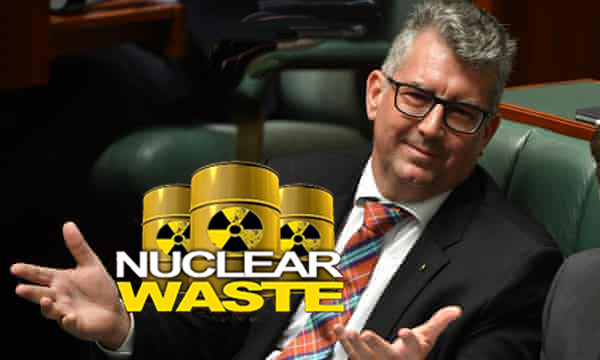
Keith Pitt MP, Minister for Resources, Water and Northern Australia / LNP member for Hinkler, wants Australia to follow Poland, with a plan to developi nuclear power.
Mr Pitt is one of the Morrison government’s most outspoken advocates for nuclear power who previously quit the frontbench over his opposition to the Paris Agreement. https://www.4bc.com.au/podcast/will-poland-transitioning-to-nuclear-be-a-blueprint-for-australia/
Need for a USA”no first use” of nuclear weapons policy – the concern of regional U.S. allies

In our lead article this week, Van Jackson makes a compelling case for the United States to establish a no-first use policy on nuclear weapons. This would entail a pledge from Washington that its nuclear arsenal would not be used as a means of warfare except in the event that it was first subject to a nuclear attack by an adversary. While there is already some momentum behind such a policy amongst Democrats, Biden has taken no concrete steps towards implementing it and it has yet to be legislated by Congress.
No-first use nuclear policy. https://www.eastasiaforum.org/2021/07/05/no-first-use-nuclear-policy/ Author: Editorial Board, ANU, 5 July 21,
Since the election of Joe Biden in 2020, much of the world has breathed a collective sigh of relief as we have witnessed what appears to be a return to ‘pre-Trump normalcy’ in the United States. One of the greatest foreign policy challenges that faces the Biden administration, however, is recovering US credibility in Asia, which was severely undermined by his predecessor Donald Trump.
From the standpoint of US allies in the region, a concerning aspect of Trump’s rise to the presidency was his loose talk about nuclear weapons and apparent openness to utilising them against adversaries. While most allies have long emphasised the immense benefits of the US security guarantee and its attendant nuclear umbrella, Trump’s rise to power rendered alliance relationships potential liabilities.
These concerns among allies in the region were significantly elevated in 2017, when Trump began to entertain the prospect of launching a pre-emptive — albeit non-nuclear — strike against North Korea. He supposedly even went so far as to order an evacuation of US servicemen and their families from Seoul — an injunction that was ultimately not carried out by US officials in South Korea. His apparent willingness to engage in conflict with a nuclear-armed North Korea was reinforced rhetorically as he threatened ‘fire and fury’ against Kim Jong-un’s regime.
These developments had US allies (and non-allies alike) in the region beleaguered by the prospect of nuclear war in the region. Their concerns were reinforced by Trump’s predilection to appoint family members — with little to no foreign policy expertise — as official advisors. The notion that a US-initiated conflict with North Korea, entailing probable commitment by American allies, might be informed in part by the likes of Ivanka Trump and Jared Kushner was a severe indictment of alliance management.
The election of Joe Biden allayed some of the concerns of US allies. But the fact that Trump received over 70 million votes in the election and may run again for president in 2024 means that his tenure cannot be easily viewed as an unfortunate aberration.
What can Biden do during his presidency to restore confidence among American allies in the region, and restore US credibility in the aftermath of the Trump administration?
In our lead article this week, Van Jackson makes a compelling case for the United States to establish a no-first use policy on nuclear weapons. This would entail a pledge from Washington that its nuclear arsenal would not be used as a means of warfare except in the event that it was first subject to a nuclear attack by an adversary. While there is already some momentum behind such a policy amongst Democrats, Biden has taken no concrete steps towards implementing it and it has yet to be legislated by Congress.
Jackson outlines three common arguments that are cited against a non-first use nuclear policy: China, Russia and North Korea would never believe in the veracity of no-first use declarations; it would encourage uncertainty among adversaries as to whether the United States could use nuclear weapons against them; and there would also be concerns among American allies about the implications of a no-first use policy for US extended nuclear deterrence and Washington’s ability to deter threats on their behalf.
Yet Jackson argues that, ‘ … the world is no longer unipolar. The old bargain — Washington does arms-racing so allies don’t — makes no sense in a world where US politics is depressingly awry. Allied nuclear proliferation poses its own risks, but it may be a better alternative to US nuclear preponderance and presidential first-use launch authority’.
As the region becomes increasingly volatile, a policy of US restraint on the use of nuclear weapons has acquired new urgency. The advent of the Biden administration has done little to alleviate US–China tensions; Biden’s China policy so far appears to be a continuation of that of the Trump administration. Meanwhile, prospects of a cross-Strait crisis continue to rise and progress on the denuclearisation of North Korea remains elusive. These political tensions have been aggravated by economic destabilisation in the region that has been fuelled by the COVID-19 crisis.
These developments have spawned new concerns about conflict and the role of US alliances in the region. Some analysts believe that such conflict would have potential to evolve into nuclear war. Given that the US-led alliance network is premised on the maintenance of regional peace and security, it behoves Washington to clarify that it will not employ first use of nuclear weapons.
This is important for the Biden government. It is also important for the future US administrations that could see the likes of Trump with a finger back on the nuclear button.
The EAF Editorial Board is located in the Crawford School of Public Policy, College of Asia and the Pacific, The Australian National University.
Several European States urge that nuclear energy be excluded from the EU’s green finance taxonomy.
EU anti-nuclear states urge excluding nuclear from green taxonomy, Nuclear Engineering, 5 July 2021 A group of five EU member states led by Germany have sent a letter to the European Commission (EC) asking for nuclear energy to be kept out of the EU’s green finance taxonomy.
“Many savers and investors would lose faith in financial products marketed as ‘sustainable’ if they had to fear that by buying these products they would be financing activities in the area of nuclear power.”
the JRC report also “disregards the life-cycle approach” to environmental risk assessment when it comes to geological storage of nuclear waste. ”
The letter, which was signed by the environment or energy ministers from Austria, Denmark, Germany, Luxembourg, and Spain, notes “shortcomings” in a report by the European Commission’s Joint Research Centre (JRC).
Although the letter is undated, Euractiv said it understands it was sent to the EC on 30 June. Signatories include: Svenja Schulze (Germany), Leonore Gewessler (Austria), Dan Jørgensen and Simon Kollerup (Denmark), Carole Dieschbourg (Luxembourg), Teresa Ribera Rodríguez and Nadia Calviño Santamaría (Spain).
“Nuclear power is incompatible with the Taxonomy Regulation’s ‘do no significant harm’ principle,” the ministers wrote, urging the Commission to keep nuclear out of the EU’s green finance rules. “We are concerned that including nuclear power in the Taxonomy would permanently damage its integrity, credibility and therefore its usefulness,” they warned.
The letter says the EC’s assessment of the safety of nuclear power installations is flawed. “We were disconcerted to learn that in the opinion of the Joint Research Centre (JRC), there were no indications that the high-risk technology that is nuclear power is more damaging to human health and to the environment than other forms of energy generation, such as wind and solar energy.” The ministers add: “Nuclear power, however, is a high-risk technology – wind energy is not. This essential difference must be taken into account.” They say the JRC report deliberately ignored the possibility of a serious incident.
The Ministers argue: “Many savers and investors would lose faith in financial products marketed as ‘sustainable’ if they had to fear that by buying these products they would be financing activities in the area of nuclear power.” They allege that the JRC report also “disregards the life-cycle approach” to environmental risk assessment when it comes to geological storage of nuclear waste.,,,,,,,,,,,
The letter says the EC’s assessment of the safety of nuclear power installations is flawed. “We were disconcerted to learn that in the opinion of the Joint Research Centre (JRC), there were no indications that the high-risk technology that is nuclear power is more damaging to human health and to the environment than other forms of energy generation, such as wind and solar energy.” The ministers add: “Nuclear power, however, is a high-risk technology – wind energy is not. This essential difference must be taken into account.” They say the JRC report deliberately ignored the possibility of a serious incident.
The Ministers argue: “Many savers and investors would lose faith in financial products marketed as ‘sustainable’ if they had to fear that by buying these products they would be financing activities in the area of nuclear power.” They allege that the JRC report also “disregards the life-cycle approach” to environmental risk assessment when it comes to geological storage of nuclear waste.https://www.neimagazine.com/news/newseu-anti-nuclear-states-urge-excluding-nuclear-from-green-taxonomy-8869307
Miners versus farmers: Nationals split over Barnaby’s climate and coal strategy — RenewEconomy

With Joyce and Canavan steering Nationals federally away from farmers and towards fossil fuels, parts of the party are already looking for the exit. The post Miners versus farmers: Nationals split over Barnaby’s climate and coal strategy appeared first on RenewEconomy.
Miners versus farmers: Nationals split over Barnaby’s climate and coal strategy — RenewEconomy
1 This month.

Australians deserve the truth
about
AUKUS – https://aukuspublicinquiry.com/


PETITION – To: Prime Minister Anthony Albanese and the Australian Labor Government

of the week – Australians for War Powers Reform (AWPR)
To see nuclear-related stories in greater depth and intensity
 Antinuclear