Indigenous rights issues in Kimba nuclear waste dump proposal
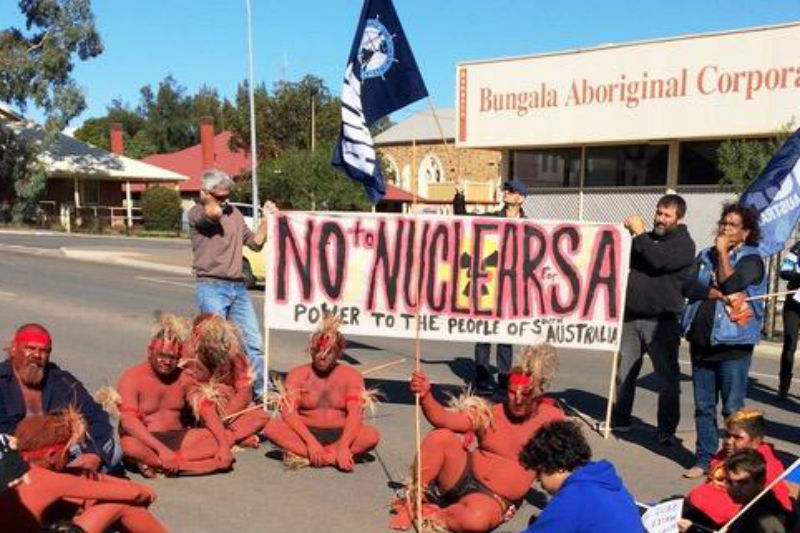
Looking back to the 2016 shonky South Australian Nuclear Fuel Cycle Royal Commission, – the same problems apply to the present Federal Government plan . Friends of the Earth Australia examined these- in Arguments against turning SA into the world’s nuclear waste dump.
”Aboriginal Traditional Owners
Our organisations hold serious concerns over past and continuing nuclear industry practices and impacts and the following comments highlight the often poor treatment of Aboriginal people by the nuclear/uranium industries in Australia and by governments pursuing or facilitating nuclear/uranium projects.
”The SA Government’s handling of the Royal Commission process systematically disenfranchised Aboriginal people. The truncated timeline for providing feedback on draft Terms of Reference disadvantaged people in remote regions, people with little or no access to email and internet and people for whom English is a second language. This was compounded when the Commission was formulated as there was no translation of the draft Terms of Reference, and a regional communications and engagement strategy was not developed or implemented. Subsequent efforts by the Royal Commission to provide translators and to translate written material were highly selective, partial and simply inadequate. Aboriginal people repeatedly expressed frustrations with the Royal Commission process.
The federal government tried but failed to impose a national nuclear waste dump on Aboriginal land in SA from 1998‒2004, then tried but failed to impose a dump on Aboriginal land in the NT from 2005‒14, and now the federal government appears to again be seeking to impose a dump on Aboriginal land in SA against the near-unanimous opposition of Traditional Owners.
At the federal level Labor and the Coalition both supported the National Radioactive Waste Management Act, which permits the imposition of a dump on Aboriginal land without any consultation with or consent from Aboriginal Traditional Owners (to be precise, the nomination of a site is not invalidated by a failure to consult or secure consent).
In SA, there is bipartisan support for the South Australian Roxby Downs Indenture Act. The Act was amended in 2011 but it retains indefensible exemptions from the SA Aboriginal Heritage Act. Traditional Owners were not even consulted about the amendments. The SA government’s spokesperson in Parliament said: “BHP were satisfied with the current arrangements and insisted on the continuation of these arrangements, and the government did not consult further than that.” Arguments against turning SA into the world’s nuclear waste dump https://nuclear.foe.org.au/waste-import-arguments/?fbclid=IwAR1yajKABFYLvMp3gFjM_DuYJFFMu4nnuc3LXxLFEBLpI7Da9-OjSv0IHrk#_ftnref4
“Advanced” isn’t the answer — New reactors as an answer to climate change are an illusion

The study’s conclusion is that pursuing “advanced” nuclear reactors is too slow, too resource-intensive and too dangerous and won’t result in improvements over light-water reactors.
The costs of these “advanced” reactors are too high to justify their flimsy promises of improvement over traditional light-water reactors, especially given that the time needed urgently to address climate change is extremely short.
New reactors as an answer to climate change are an illusion
“Advanced” isn’t the answer — Beyond Nuclear International more https://wordpress.com/read/feeds/72759838/posts/3354864782 23 May 21, Next in Talking Points series showcases USC takedown of non-light-water reactor delusions While we support efforts to guarantee better public safety protections for the public from the current fleet of light-water reactors, the position of Beyond Nuclear is that no further development of LWRs should happen, but rather that the country must expeditiously move to a 100% nuclear power phaseout.
Nevertheless, the specter of “advanced” reactors continues to loom, and many governments remain intent on squandering precious resources on attempts to develop these under the misleading guise of climate mitigation. Therefore, we believe that this comprehensive takedown of the futility of such endeavors is a valuable addition to our Talking Points series.
The full UCS report can be read here. And watch for new installments in our Talking Points series in the coming weeks.
Linda Pentz Gunter is the international specialist at Beyond Nuclear and writes for and edits Beyond Nuclear International.
By Linda Pentz Gunter
In the second in the Beyond Nuclear Talking Points series, we bring you Dr. Edwin Lyman’s definitive examination of so-called advanced reactors, or non-light-water reactors (NLWRs).
In a groundbreaking report, Lyman who is Director of Nuclear Power Safety at the Union of Concerned Scientists, debunks almost all of the industry claims for NLWRs, predominantly on the grounds of safety and security risks, but also touching on costs, time, regulations and waste.
The report — “Advanced” Isn’t Always Better. Assessing the Safety, Security, and Environmental Impacts of Non- Light-Water Nuclear Reactors — can be found in full here on the UCS website. We appreciated the opportunity to condense it into our second Talking Points, all of which are free to download, print and distribute widely.
As Lyman writes in the executive summary of the report, nuclear power in general is replete with flaws: “. . . the technology has fundamental safety and security disadvantages compared with other low-carbon sources. Nuclear reactors and their associated facilities for fuel production and waste handling are vulnerable to catastrophic accidents and sabotage, and they can be misused to produce materials for nuclear weapons.”
The study’s conclusion is that pursuing “advanced” nuclear reactors is too slow, too resource-intensive and too dangerous and won’t result in improvements over light-water reactors.
The report, and our Talking Points, lay out a number of the key arguments.
The current designs, still on paper, all present considerable safety risks. Sodium-cooled reactors could explode like a small nuclear bomb under severe accident conditions. High-temperature gas-cooled reactors use fuel that, contrary to claims, is not “meltdown proof”. Molten-salt-fueled reactors are also not meltdown-proof and, under some circumstances, the hot liquid fuel they use could heat up and destroy the reactor in minutes.
The costs of these “advanced” reactors are too high to justify their flimsy promises of improvement over traditional light-water reactors, especially given that the time needed urgently to address climate change is extremely short. Building the expensive new facilities and infrastructure NLWRs would need to manufacture, manage and eventually store their different kinds of fuels consumes resources better used elsewhere.
As with any new nuclear construction projects, the time and quantity needed to bring these to fruition in order to have any meaningful impact on carbon emissions reductions is unrealistic. At least 25,000 MWe of NLWR capacity would have to come on line globally each year between now and 2050 to reach such goals — five times the recent global rate of LWR construction — a target in which there is no basis to have any confidence whatsoever.
Given the risks and uncertainties of the NLWR designs, a strong regulator is essential. The US Nuclear Regulatory Commission is a weak one. Where extra levels of safety would be needed for NLWRs, for which there is little or no operating experience, the NRC is instead showing signs of leaning toward licensing designs chosen by the U.S. Department of Energy without requiring prototype testing first, running the risk of unanticipated reliability problems and serious accidents.
Promoters of NLWRs have made claims that these could “consume” or “burn” nuclear waste. Lyman’s paper calls this “misleading.” Such reactors, he writes, can only use a fraction of irradiated fuel as new fuel, and separating that fraction — through the necessary prior process of reprocessing — increases proliferation and terrorism risks.
Indeed, it is this necessity for reprocessing that is central to a major downside of NLWRs. Fast reactors such as the sodium-fueled reactor, typically require plutonium or highly enriched uranium-based fuels that are readily nuclear weapon-usable and therefore entail unacceptable proliferation and terrorism risks.
High-temperature gas-cooled reactors, using high-assay low enriched uranium fuel, are more proliferation-prone than light-water reactors due, in part, to the additional monitoring challenges presented by their fuel fabrication system.
Some molten salt reactor designs require on-site, continuously operating fuel reprocessing plants — pathways for diverting or stealing nuclear weapons-usable material.
The position of UCS, unlike that of Beyond Nuclear, is not openly to oppose nuclear power in principal but to ensure its safety. This is a tall order. Lyman concludes his report by saying: “. . . the bulk of nuclear energy-related research and development funding, both public and private, should be focused on improving the overall safety, security, efficiency, and cost-effectiveness of LWRs and the once-through fuel cycle.”
While we support efforts to guarantee better public safety protections for the public from the current fleet of light-water reactors, the position of Beyond Nuclear is that no further development of LWRs should happen, but rather that the country must expeditiously move to a 100% nuclear power phaseout.
Nevertheless, the specter of “advanced” reactors continues to loom, and many governments remain intent on squandering precious resources on attempts to develop these under the misleading guise of climate mitigation. Therefore, we believe that this comprehensive takedown of the futility of such endeavors is a valuable addition to our Talking Points series.
The full UCS report can be read here. And watch for new installments in our Talking Points series in the coming weeks.
Linda Pentz Gunter is the international specialist at Beyond Nuclear and writes for and edits Beyond Nuclear International.
Thyroid cancer in Fukushima children increased 20-fold — Beyond Nuclear International

In addition to thyroid cancer, other types of malignancies and other diseases triggered or adversely affected by ionized radiation are expected to increase. The FMU thyroid studies represent the only scientific study that can provide any relevant information at all about the health consequences of the Fukushima nuclear disaster. And they are currently in danger of being undermined by the proponents of nuclear energy such as IAEA, which has entered a cooperation with FMU and by the Japanese government, which is trying to dispel any concerns about the meltdowns and nuclear energy as a whole.
Increases are real and can’t be attributed to “screening effect”
Thyroid cancer in Fukushima children increased 20-fold — Beyond Nuclear International
Latest results of the Fukushima thyroid screenings confirm worrying trend https://wordpress.com/read/feeds/72759838/posts/3354864780 By Dr. Alex Rosen, 23 May 21,
In 2011, people in Japan were exposed to radioactive fallout. Some still live in contaminated regions where they are exposed to elevated levels of radiation on a daily basis: radioactive hot-spots on the side of the road, in rice paddies or in sandboxes, contaminated mushrooms or algae, contaminated groundwater, and recontamination from forest fires or flooding.
One of the most dreaded effects of radioactive exposure is the development of cancer through mutation of the DNA. Thyroid cancer in children is certainly not the most dangerous form of radiation-induced cancer, but it is probably the easiest to detect. For one thing, the latency periods before a cancer develops are relatively short, while at the same time, thyroid cancer in children is an extremely rare disease, so that even a slight absolute increase can be statistically detected.
Accordingly, in 2011, there was great pressure on Japanese authorities to investigate the development of thyroid cancer in children and adolescents in Fukushima by conducting long-term screening examinations.
For almost 10 years now, Fukushima Medical University has been regularly examining the thyroid glands of people who lived in Fukushima Prefecture at the time of the meltdowns and were under 18 years of age. Initially, this group consisted of about 368,000 individuals. Of these, 300,000 (about 82%) were successfully screened in the first few years. After the initial screening (2011-2014), follow-up examinations of these children took place every two years. The second examination has already been completed, the third examination is in its final stage, the fourth series of examinations has been running since 2018, and the fifth since 2020.
In the initial investigation in Fukushima, 116 abnormal biopsies were found. Amongst these, 101 cases of cancers were found that were so aggressive that they required surgery. The patients with abnormal biopsies were 6 to 18 years old (average of 14.9 years) at the time of the nuclear disaster. This unexpectedly high number was explained by Fukushima Medical University as a screening effect, the phenomenon of identifying more cases of disease in large-scale screening than would be expected. While the exact magnitude of this screening effect in the first round is unknown, it can be ruled out that the increased cancer rates in subsequent screenings are consequences of a screening effect, because all of these children had already been examined and found to be cancer-free in previous screenings. They must therefore have developed the cancer between the screening examinations.
In the 2nd screening round, 54 cancer cases were found in 71 abnormal biopsies (age at the time of the nuclear disaster 5-18, average of 12.6 years), in the 3rd screening round, another 27 cases were found in 31 abnormal biopsies (age at the time of the nuclear disaster 5-16, average of 9.6 years), and in the current 4th round, 16 new diagnoses have been made in 27 abnormal biopsies (age at the time of the nuclear disaster 0-12, average of 8.0 years). A total of 46 children with suspicious fine-needle biopsies are still under observation and have not yet undergone surgery. The steadily decreasing average age in the screenings is striking: with time, more and more cancer cases are becoming apparent in patients who were still very young at the time of the nuclear disaster, even under 5 years of age.
Incidentally, adolescents in the study cohort who turn 25 are excluded from the main study and transferred to a newly created cohort, the “Age 25 Milestone” group. In this group, 4 additional cases of thyroid cancer have been registered, with 7 conspicuous biopsies so far. The number of unreported cases is likely to be much higher: the participation rate in this study is just 8%. The creation of a new study cohort is generally seen as a measure by FMU to further reduce the number of diagnosed cancer cases.
In addition, there are 11 thyroid cancer cases diagnosed in children from the study cohort, but not during the official screenings. These patients were seen and diagnosed at Fukushima University Hospital. These 11 cases are not reported in the official results, although they show identical tumor entities and occurred in patients who are in the actual study cohort. The 11 cases came to light in June 2017. How many more cases have been diagnosed but not reported since then is unknown. In addition, data from other hospitals in Japan are not available, and patients from contaminated areas outside Fukushima Prefecture are not examined at all, so the unreported number of thyroid cancer cases among patients who were children in the contaminated areas at the time of the meltdowns is likely to be much higher. Nevertheless, the total number of thyroid cancer cases in Fukushima currently stands at 213 (198 official cases from the serial examinations, 4 cases from the Age 25 Milestone cohort and 11 cases from the Fukushima University Hospital).
It is interesting to compare these figures with the overall Japanese incidence rate. The official incidence rate of thyroid cancer in children under 25 in Japan is about 0.59 per 100,000 per year, which means that in the cohort of about 218,000 children, about 1.3 new thyroid cancer cases per year would be expected. Today, 10 years after the beginning of the nuclear disaster, just under 13 thyroid cancer cases would thus have been expected in the study population.
However, the actual number of thyroid cancer cases in Fukushima of 213 is higher by a factor of 16. If we consider only the 112 cases diagnosed after the initial screening and thus not suspected to be caused by a screening effect of any kind, the number of confirmed cases is 20 times higher than the number of expected thyroid cancer cases (5.5 new cases after the end of the initial 1st screening in 2014)
In the following graph, [on original] the officially confirmed thyroid cancer cases (in blue) are compared to the cases expected mathematically in the screening cohort (in orange). It can be seen that the number of cases increased steadily over the course of the initial screening, and continue to increase beyond that, in the years 2014-2020 – an effect that cannot be explained by any kind of screening effect. [Graph on original explains this]
In addition, the geographic distribution of thyroid cancer rates corresponds to the level of radioactive contamination. A significantly higher incidence of thyroid cancer in children was recorded in the 13 most severely contaminated municipalities in eastern Fukushima than in the less contaminated areas in the north, south and central parts of the prefecture. The incidence was lowest in the western part of the prefecture, where the radioactive fallout was also least pronounced.
In the following graph, [on original] the officially confirmed thyroid cancer cases (in blue) are compared to the cases expected mathematically in the screening cohort (in orange). It can be seen that the number of cases increased steadily over the course of the initial screening, and continue to increase beyond that, in the years 2014-2020 – an effect that cannot be explained by any kind of screening effect.
There seems to be a system behind this trend: Fukushima Medical University, which is in charge of the study, has been sending staff to schools in the prefecture for years to educate children about their “right not to participate” and the “right not to know”. On the study forms, there is now a prominent “opt-out” option for people who wish to be removed from the screening. FMU seems to encourage people to opt out of the study. The drop in participation can also be explained by the removal of people over 25 years from the main study. Are FMU staff concerned that the disturbing trend of increasing numbers of thyroid cancer cases will continue? Are they uncomfortable with data that contradicts the thesis, propagated since the beginning of the nuclear disaster, that the multiple meltdowns would not lead to additional cancers?
In addition to thyroid cancer, other types of malignancies and other diseases triggered or adversely affected by ionized radiation are expected to increase. The FMU thyroid studies represent the only scientific study that can provide any relevant information at all about the health consequences of the Fukushima nuclear disaster. And they are currently in danger of being undermined by the proponents of nuclear energy such as IAEA, which has entered a cooperation with FMU and by the Japanese government, which is trying to dispel any concerns about the meltdowns and nuclear energy as a whole.
The people of Japan have an inalienable right to health and to life in a healthy environment. The examination of children’s thyroid glands benefits not only the patients themselves, whose cancers can be detected and treated at an early stage, but also the entire population, which is affected by irradiation from radioactive fallout.
The correct continuation and scientific monitoring of thyroid examinations are therefore in the public interest and must not be thwarted by political or economic motives. It is important to continue to critically accompany these developments from the outside.
Dr. Alex Rosen is a pediatrician and Co-Chair of the German affiliate of IPPNW
Note: this article was first published in IPPNW Germany’s member magazine ippnw forum in 03/21
Headline photo showing thyroid cancer by National Human Genome Research Institute (NHGRI) from Bethesda, MD, USA/Wikimedia Commons
Safety issues in nuclear waste dump proposal

Looking back to the 2016 shonky South Australian Nuclear Fuel Cycle Royal Commission, – the same problems apply to the present Federal Government plan . Friends of the Earth Australia examined these- in Arguments against turning SA into the world’s nuclear waste dump.
” The so-called ‘Interim Storage Facility’ is proposed to accumulate 50,000 tonnes of high level nuclear waste before a repository begins accepting waste. There is a significant risk that high level waste will be imported and will have to remain in ‘interim’ storage ad infinitum due to i) the lack of a repository, ii) the lack of a return-to-sender clause in contracts and iii) the inability to send the waste on to a third country.”
” the fundamental lesson from the WIPP fiasco – initially high safety and regulatory standards gave way to complacency, cost-cutting and corner-cutting in the space of just 10–15 years. The Royal Commission correctly notes that high level waste “requires isolation from the environment for many hundreds of thousands of years”. How can we be confident that high safety and regulatory standards in SA would be maintained over centuries and millennia when WIPP shows that the half-life of human complacency, cost-cutting and corner-cutting is measured in years or at most decades?”
”South Australia has a track record of mismanaging radioactive waste (Radium Hill, Maralinga, Port Pirie, Arkaroola, etc.) and no experience managing high-level nuclear waste.
If there were clear recognition of the mismanagement of radioactive waste in SA, coupled with remediation of contaminated sites, we might have some confidence that lessons have been learnt and that radioactive waste would be managed more responsibly in future. But there is no such recognition in the Royal Commission’s report or from state or federal governments, and there are no plans to remediate contaminated sites. ” Arguments against turning SA into the world’s nuclear waste dump https://nuclear.foe.org.au/waste-import-arguments/?fbclid=IwAR1yajKABFYLvMp3gFjM_DuYJFFMu4nnuc3LXxLFEBLpI7Da9-OjSv0IHrk#_ftnref4
The effects of radioactive waste water released into the ocean
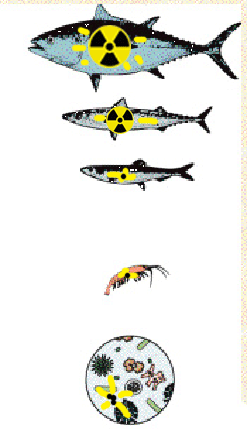
when radionuclides are present in seawater alongside commonly-occurring metals like copper, the DNA damage caused by radionuclides to the mussels was increased.
the need for transparency when it comes to nuclear technology has never been greater
After all, we are what we eat: our health as a global community depends on the health of the environment, and a contaminated ocean knows no geographical or political borders.
Nuclear power: how might radioactive waste water affect the environment? https://theconversation.com/nuclear-power-how-might-radioactive-waste-water-affect-the-environment-159483 Awadhesh Jha
Professor of Genetic Toxicology and Ecotoxicology, University of Plymouth April 30, 2021 It’s been just over a decade since the fourth most powerful earthquake of the modern era triggered a tsunami that struck Fukushima on the eastern coastline of Japan, causing thousands of deaths and leaving hundreds of thousands unable to return home. That tsunami was also responsible for the world’s worst nuclear accident since the Chernobyl disaster.
When the 14-metre wave flooded the Fukushima Daiichi plant, it shut down emergency generators, triggering a series of heat-induced meltdowns.Now, the Japanese government’s decision to allow the release of more than one million tonnes of radioactive water from the plant into the ocean has dividedopinion.
Water is a vital tool for all nuclear power stations: it’s used to cool their heat-generating radioactive cores. During the cooling process, the water becomes contaminated with radionuclides – unstable atoms with excess energy – and must be filtered to remove as many radionuclides as possible.
The filtered water is then stored in huge steel tanks or released into nearby bodies of water. As huge amounts of water are required by every plant, most nuclear facilities are built on coastlines – or, in the case of Chernobyl, surrounded by huge lakes. That way, filtered waste water can be discharged into the ocean or lake once it’s been assessed and confirmed safe by authorities.
This is how workers at Fukushima dealt with waste water while the plant was operating. But since the tsunami hit in 2011, authorities have used more than a million tonnes of water to try and cool the plant’s disabled reactors, which are still hot thanks to the long-term release of energy from the nuclear power source. All that radioactive water – which is more contaminated than standard waste water – has to go somewhere. The decision to release it into the oceans is – some would argue – the most pragmatic long-term solution.
What could the impacts be?
The process of filtering and diluting the huge amounts of water to meet safety standards will take a few years to complete. Then, we’d usually expect the water to be released gradually in small volumes through coastal pipelines. That way, any potential effects of releasing the radioactive waste will be minimised. However, the fact is that we don’t know exactly what those effects will be on marine – or human – life, given the sheer volume of water set to be released from the Fukushima plant.
Our own research has shown that a number of marine species could have their DNA damaged through extended exposure to radionuclides in seawater. It’s important to note that our conclusions are mostly drawn from studies in the lab, rather than in the real world; when a nuclear accident takes place, human safety takes priority and biological assessment often takes place decades after the original event.
That being said, our experiments with both marine and freshwater mussels found that when radionuclides are present in seawater alongside commonly-occurring metals like copper, the DNA damage caused by radionuclides to the mussels was increased. Much, much more research is needed to understand the effects of exposure to different types of radionuclides on different species.
In the meantime, anger towards Japan’s decision from fishing communities is understandable. In a world where global dependence on fisheries for food is increasing – and at least 10% of the world’s population depend on fisheries for their livelihood – a potentially contaminated environment could result in a contaminated food chain, raising consumer concerns.
We also know that around 95% of cancers in humans are triggered by exposure to toxic substances present in the environment, food included. If these substances damage genetic material within our cells, that damage must be repaired. Otherwise, the damaged cell either dies or divides. And when the latter happens, the damage – which can cause genetic mutations – is passed on to dividing cells in a process that may lead to diseases like cancer.
If that genetic damage happens to egg or sperm cells, it may be passed down from parent to child, triggering new diseases in future generations. To neutralise these complex threats, it’s key to ensure that only safe levels of nuclear waste are being released into the ocean.
Where do we go from here?
As new nuclear plants emerge in the effort to tackle climate change, the need for transparency when it comes to nuclear technology has never been greater: especially if we are to build public confidence in the benefits of nuclear energy.
When nuclear reactors are mentioned, it’s disasters which tend to spring to mind. Yet considering the long history of nuclear power generation, serious accidents – involving loss of life and severe damage to the environment – are extraordinarily rare. The huge amounts of data gathered from each disaster site have enabled powerful advances in nuclear security, making future accidents even less likely. Meanwhile, waste from the world’s nuclear reactors is being managed safely every day, although long-term solutions to waste disposal still pose a challenge.
Rapidly developing technology like nuclear fusion – mimicking the Sun’s way of generating energy by fusing hydrogen atoms to form helium, and converting that helium into energy – may eventually slash generation of nuclear waste. There’s also room for improvement of our existing nuclear facilities to help minimise waste generation: for example, by forcing radioactive byproducts to decay faster.
But while we still rely on nuclear power, the most urgent priority is to set internationally accepted regulations for radiation exposure levels across different species. After all, we are what we eat: our health as a global community depends on the health of the environment, and a contaminated ocean knows no geographical or political borders.
May 23 Energy News — geoharvey

Opinion: ¶ “How Wolves And Other Wildlife Help Us Fight For The Climate” • Amid the buzz over better stewardship of our planet’s greenery, a growing body of scientific research is examining another piece of the carbon puzzle: wildlife. It is increasingly clear that biodiversity is not an optional luxury, but integral to natural life […]
May 23 Energy News — geoharvey
Time to question the authorities on the nuclear waste dump mess, the incompetence of ANSTO, and the ?inactive role of Kimba nuclear waste staff .

The decision in South Australia authorising the full disclosure of government papers was made on the application of Rex Patrick by the South Australian Civil and Administrative Tribunal by its president who is a Supreme Court judge and not by the Supreme Court as I wrongly stated.
The practical outcome of the decision is that interested parties should now ask various federal and state governments and district councils for full disclosure of all papers relating to the nuclear waste facility at Kimba .
It has been suggested that the federal government is proceeding with the facility and related aspects WITHOUT AUTHORITY in the hope that the composition of the Senate will change in its favour after the federal election but this seems to me a forlorn expectation particularly if the preceding state election in South Australia were to see a change in government to the Labor Party.
However the actions and conduct of the federal government as to the facility are still badly prepared by persons who are ignorant and inexperienced in this area – this is the view of many overseas experts who consider that Australia does not know or understand what is involved with regard to nuclear waste engineering .
The incompetency of ANSTO is best exemplified by lengthy and now somewhat outdated development of the SYNROC process and the continued technical difficulties and breakdowns with the nuclear medicine facility at Lucas Heights
Interested parties should also be questioning what work is actually being done by the government’s personnel located at Kimba since there appears to be no new outcomes through their presence
Plutonium ”hot particles” are not as stable as we assumed. Research on contaminated landscape around Maralinga in outback South Australia

We sliced open radioactive particles from soil in South Australia and found they may be leaking plutonium https://theconversation.com/we-sliced-open-radioactive-particles-from-soil-in-south-australia-and-found-they-may-be-leaking-plutonium-161277
Barbara Etschmann, Research officer, Monash University
Joel Brugger, Professor of Synchrotron Geosciences, Monash University
Vanessa Wong, Associate Professor, Monash University
May 21, 2021 Almost 60 years after British nuclear tests ended, radioactive particles containing plutonium and uranium still contaminate the landscape around Maralinga in outback South Australia.
These “hot particles” are not as stable as we once assumed. Our research shows they are likely releasing tiny chunks of plutonium and uranium which can be easily transported in dust and water, inhaled by humans and wildlife and taken up by plants.
A British nuclear playground
After the US atomic bombings of Hiroshima and Nagasaki in 1945, other nations raced to build their own nuclear weapons. Britain was looking for locations to conduct its tests. When it approached the Australian government in the early 1950s, Australia was only too eager to agree.
Between 1952 and 1963, Britain detonated 12 nuclear bombs in Australia. There were three in the Montebello Islands off Western Australia, but most were in outback South Australia: two at Emu Field and seven at Maralinga.
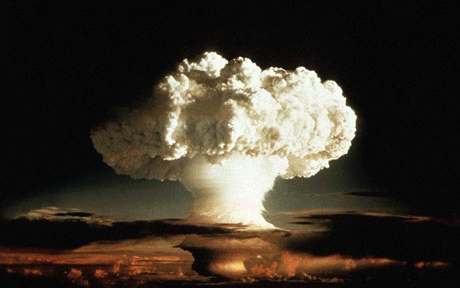
Besides the full-scale nuclear detonations, there were hundreds of “subcritical” trials designed to test the performance and safety of nuclear weapons and their components. These trials usually involved blowing up nuclear devices with conventional explosives, or setting them on fire.
The subcritical tests released radioactive materials. The Vixen B trials alone (at the Taranaki test site at Maralinga) spread 22.2 kilograms of plutonium and more than 40 kilograms of uranium across the arid landscape. For comparison, the nuclear bomb dropped on Nagasaki contained 6.4 kilograms of plutonium, while the one dropped on Hiroshima held 64 kilograms of uranium.
These tests resulted in long-lasting radioactive contamination of the environment. The full extent of the contamination was only realised in 1984, before the land was returned to its traditional owners, the Maralinga Tjarutja people.
Hot potatoes
Despite numerous cleanup efforts, residual plutonium and uranium remains at Maralinga. Most is present in the form of “hot particles”. These are tiny radioactive grains (much smaller than a millimetre) dispersed in the soil.
Plutonium is a radioactive element mostly made by humans, and the weapons-grade plutonium used in the British nuclear tests has a half life of 24,100 years. This means even 24,100 years after the Vixen B trials that ended in 1963, there will still be almost two Nagasaki bombs worth of plutonium spread around the Taranaki test site.
Plutonium emits alpha radiation that can damage DNA if it enters a body through eating, drinking or breathing.
In their original state, the plutonium and uranium particles are rather inactive. However, over time, when exposed to atmosphere, water, or microbes, they may weather and release plutonium and uranium in dust or rainstorms.
Until recently, we knew little about the internal makeup of these hot particles. This makes it very hard to accurately assess the environmental and health risks they pose.
Monash PhD student Megan Cook (the lead author on our new paper) took on this challenge. Her research aimed to identify how plutonium was deposited as it was carried by atmospheric currents following the nuclear tests (some of it travelled as far as Queensland!), the characteristics of the plutonium hot particles when they landed, and potential movement within the soil.
Nanotechnology to the rescue
Previous studies used the super intense X-rays generated by synchrotron light sources to map the distribution and oxidation state of plutonium inside the hot particles at the micrometre scale.
To get more detail, we used X-rays from the Diamond synchrotron near Oxford in the UK, a huge machine more than half a kilometre in circumference that produces light ten billion times brighter than the Sun in a particle accelerator.
Studying how the particles absorbed X-rays revealed they contained plutonium and uranium in several different states of oxidation – which affects how reactive and toxic they are. However, when we looked at the shadows the particles cast in X-ray light (or “X-ray diffraction”), we couldn’t interpret the results without knowing more about the different chemicals inside the particles.
To find out more, we used a machine at Monash University that can slice open tiny samples with a nanometre-wide beam of high-energy ions, then analyse the elements inside and make images of the interior. This is a bit like using a lightsaber to cut a rock, only at the tiniest of scales. This revealed in exquisite detail the complex array of materials and textures inside the particles.
Much of the plutonium and uranium is distributed in tiny particles sized between a few micrometres and a few nanometres, or dissolved in iron-aluminium alloys. We also discovered a plutonium-uranium-carbon compound that would be destroyed quickly in the presence of air, but which was held stable by the metallic alloy.
This complex physical and chemical structure of the particles suggests the particles formed by the cooling of droplets of molten metal from the explosion cloud.
In the end, it took a multidisciplinary team across three continents — including soil scientists, mineralogists, physicists, mineral engineers, synchrotron scientists, microscopists, and radiochemists — to reveal the nature of the Maralinga hot particles.
From fire to dust
Our results suggest natural chemical and physical processes in the outback environment may cause the slow release of plutonium from the hot particles over the long term. This release of plutonium is likely to be contributing to ongoing uptake of plutonium by wildlife at Maralinga.
Even under the semi-arid conditions of Maralinga, the hot particles slowly break down, liberating their deadly cargo. The lessons from the Maralinga particles are not limited to outback Australia. They are also useful in understanding particles generated from dirty bombs or released during subcritical nuclear incidents.
There have been a few documented instances of such incidents. These include the B-52 accidents that resulted in the conventional detonation of thermonuclear weapons near Palomares in Spain in 1966, and Thule in Greenland in 1968, and the explosion of an armed nuclear missile and subsequent fire at the McGuire Air Force Base in the USA in 1960.
Thousands of active nuclear weapons are still held by nations around the world today. The Maralinga legacy shows the world can ill afford incidents involving nuclear particles.
Australia’s mining lobby exaggerates by $45 billion the taxes and royalties they pay
Mining lobby exaggerates taxes and royalties paid by $45 billion, Michaelo West Media, by Callum Foote | May 21, 2021,
The mining industry has exaggerated its contribution in taxes and royalties to Australian governments by an estimated $45 billion over the past 10 years. Callum Foote reports on the findings of an independent research project by Michael West Media.
The mining lobby and its “independent experts” from Deloitte Access Economics have routinely overcooked the contribution that mining companies make to Australia.
Michael West Media was commissioned to undertake an investigation into Australia’s mining royalty regime by the Neroli Colvin Foundation.
The report, A Fair Share?, found the mining lobby exaggerated by 19% its contribution to Australian government revenues through royalties and taxes for the period where government data has been made available, or an estimated $45 billion over the past decade.
The mining industry sold $2.1 trillion worth of Australian resources overseas in the past decade but Australian governments received less than a 10% return. The actual rate – 9.1% – covers royalty payments and taxes paid. If we consider only royalties, then the rate drops to 5.6% of the value of exported resources.
The mining industry regularly combines royalties and taxes but this is misleading when talking about its contribution to Australia.
Less than 10% of $2.1 trillion worth of Australian resources is perhaps not the “staggering” contribution as described by Resources Minister Keith Pitt earlier this week on the release of the latest Minerals Council report.
This is particularly the case given that the large mining houses are owned by foreign shareholders, so are the largest beneficiaries of Australia’s mineral wealth.
Michael West Media has found that, on average, mining companies make a 1654% revenue mark-up on Australian commodities………..
In Australia, all mineral commodities below the earth are owned by the Australian people. It is up to State and Federal governments to sell these commodities to mining companies that wish to extract and process them for selling. In accounting terms, royalties are deemed to be a “cost of goods sold”.
Just as a baker must buy raw flour from a mill and process it into bread to sell, royalties are the payment made by miners to the Australian people for the raw commodities that they then sell internationally.
Deloitte’s most recent report is more accurate than previous estimates of mining taxes and royalty payments. Michael West Media had contacted the firm for comment before it published this report because it was found that royalty and taxation figures were previously exaggerated by 33%, or $78 billion, for the period between 2010 and 2017………
The total export value of Australian commodities over the period, which is indicative of the revenue these companies have made from selling Australian resources overseas, is $2.1 trillion. This means that only 9.1% of the export revenue made by these companies has been paid to state and federal governments. ……………. https://www.michaelwest.com.au/mining-lobby-exaggerates-taxes-and-royalties-paid-45-billion/
Senator Rex Patrick challenges Scott Morrison’s special arrangement to protect his government from public scrutiny

Senator challenges cabinet secrecy, The Saturday Paper 33 May 21, Scott Morrison is using a special arrangement to keep the workings of his government secret, but independent senator Rex Patrick has launched a challenge to its legality. By Karen Middleton. Karen Middleton is The Saturday Paper’s chief political correspondent.
A special policy committee the prime minister uses to keep the workings of his government secret is being called into legal question as part of a challenge to the confidential status of national cabinet.
Independent senator Rex Patrick launched the challenge after the Department of the Prime Minister and Cabinet refused two freedom of information requests for access to national cabinet documents.
Appearing before the Administrative Appeals Tribunal (AAT) this week, the Commonwealth argued that national cabinet’s workings must be secret because it is an offshoot of federal cabinet, which is governed by a confidentiality convention.
It argued that deciding how cabinet committees are formed and who joins them is in the prime minister’s “gift” alone.
The national cabinet arrangement relies on the controversial cabinet office policy committee that Morrison created upon becoming prime minister. He is its only permanent member. The one-man construct allows the prime minister to declare almost any gathering he attends to be a cabinet committee meeting, protecting it from public scrutiny.
When the tribunal’s Justice Richard White queried the mechanism purporting to give national cabinet confidential status, the government could provide no information.
“Is there anything else that tells me anything about the cabinet office policy committee?” Justice White asked counsel for the Commonwealth, Andrew Berger, QC, on Wednesday. “I’m not sure there is, Your Honour,” Berger replied.
Last year, Labor’s senate leader, Penny Wong, condemned the one-man committee as “an abuse” of process used to “cover up blatant political decision-making”.
Senator Patrick’s AAT challenge could also have implications for accessing information from other designated cabinet subcommittees and groups advising them.
The one-man construct allows the prime minister to declare almost any gathering he attends to be a cabinet committee meeting, protecting it from public scrutiny…………..
…………………………. After the hearing, Rex Patrick described national cabinet as “a last-minute idea dealt with at short notice, without its implementation or consequences being properly considered”.
“That’s apparent when looking back at the various media statements, the cobbling together of a new cabinet handbook and the evidence before the AAT,” he told The Saturday Paper.
Patrick said the legislated right to access information on intergovernmental communication had existed in Australia for almost 40 years, “subject only to a test of public harm”.
“Last year, Prime Minister Morrison took that right away,” he said. “He did not ask the parliament to change the law.”
Patrick said he was in a fight for transparency and responsible government. “And I’m in a fight to stop a prime minister unilaterally taking away a right that was given to me and all Australians, by the parliament.”
Whether Justice White agrees will be clear soon. He reserved his judgement and promised a quick decision.
This article was first published in the print edition of The Saturday Paper on May 22, 2021 as “Cabinet of one”. https://www.thesaturdaypaper.com.au/news/politics/2021/05/22/senator-challenges-cabinet-secrecy/162160560011709
How Australia’s government is trying to create fossil funding agencies — RenewEconomy

Why is Australia’s government trying to transform clean energy agencies into fossil funding bodies? It marks a major global power shift. The post How Australia’s government is trying to create fossil funding agencies appeared first on RenewEconomy.
How Australia’s government is trying to create fossil funding agencies — RenewEconomy
Australia’s “father of PV” says your next rooftop solar system might be tens of kilowatts — RenewEconomy

UNSW’s Martin Green says the average Australian solar household will soon be installing “tens of kilowatts” on their rooftops, as costs continue to fall. The post Australia’s “father of PV” says your next rooftop solar system might be tens of kilowatts appeared first on RenewEconomy.
Australia’s “father of PV” says your next rooftop solar system might be tens of kilowatts — RenewEconomy
Morrison’s ‘unconstitutional’ crackdown on charities
Morrison’s ‘unconstitutional’ crackdown on charities
Mike Seccombe, 21 May 21,
Sweeping new laws that could strip charities of their non-profit status for minor offences are intended to stifle protest, the sector warns……. (subscribers only)
Scientists turn a blind eye to the fraud that is the ITER nuclear fusion project
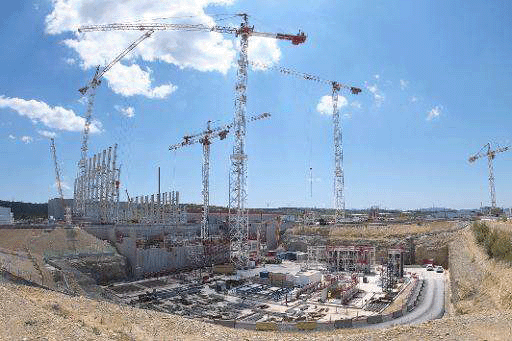
ITER Is a Suicidal Plan That Would Discredit Nuclear Fusion, Scientist Says, Again, New Energy Times, By Steven B. Krivit, Dec. 5, 2020 A retired plasma physicist has given New Energy Times permission to republish critical letters he wrote about the ITER fusion reactor project many years ago. He has done this despite risks associated with publicly criticizing the international project.
Ernesto Mazzucato spent his entire career — from 1965 to 2014 — working at the Princeton Plasma Physics Laboratory, a U.S. Department of Energy national laboratory. Mazzucato continues to work on his own fusion concepts.He told us about pressure from some of his peers from 1996 to 2006 when he openly criticized the ITER project, but he asked us to withhold those details for fear that it would interfere with his present access to resources and the ability to publish in peer-reviewed journals.
Mazzucato is the second retired fusion physicist from the Princeton laboratory with whom New Energy Times has spoken who is critical of ITER. The first was Mazzucato’s colleague, Daniel Jassby, who has been publishing critical articles about ITER on the Bulletin of Atomic Scientists Web site.Jassby was the first scientist to provide New Energy Times with clear values for the ITER reactor power requirements, following our attempts to obtain this information directly from the ITER organization.
Mazzucato told New Energy Times that he “suffered dearly” shortly after Science magazine published his first critical comments in 1996.
I knew that speaking out was risky, but I had to say what was on my mind,” Mazzucato said. “I thought that ITER would ruin fusion, and I had spent all my life working on fusion. ITER was the wrong track.”Mazzucato told New Energy Times that, decades earlier, at the beginning of the discussions about the ITER concept, the conversation was purely about physics. The conversation soon shifted to the bait-and-switch scheme, as Nobel laureate Masatoshi Koshiba called it.
“The scientists were not talking about power production,” Mazzucato said, “but then slowly, the bureaucrats were put in charge of this project, and they started talking about a power gain, that ITER would produce 10 times more power than it would use.“But none of the scientists said anything. We all knew that the power values only applied to the particles, not the overall reactor.”These are the three letters Mazzucato provided.
1996 Mazzucato Letter to Science
In his first letter, Mazzucato responded to an article published in Science magazine by Andrew Lawler about the ITER projec
For the United States to concentrate its efforts on the construction of ITER, which by my estimates would require at least twice the $8 billion cited by Lawler, [Andrew Lawler, “U.S. Power Outage Won’t Dim ITER,” Science, Jan. 19, 1996, p. 282] would halt significant progress in domestic thermonuclear research.It is tantamount to a suicidal plan that would discredit nuclear fusion as an economically viable form of energy production………….
The construction of ITER, by absorbing all the available funds, would inevitably prevent development in these critical areas. From Lawler’s article, it appears that ITER finds its strongest support in a “wealthy and influential association of major corporations…..” This sounds like an ominous repetition of history, as our problems today with nuclear fission power plants originated when the nuclear industry decided to bring to prominence the first fission reactor concept that appeared to work. Similarly, the adoption of this probably faulty device would have catastrophic consequences for the development of nuclear fusion energy……………..
Turning a Blind Eye
Mazzucato is the first fusion scientist I know who a) noticed the discrepancy between ITER’s planned power values and the publicized power values and b) openly objected to the false claims its promoters were making about the promised power gain of the reactor. Nobel Prize winner Masatoshi Koshiba had also sounded the alarm sometime between 2001 and 2004, calling the ITER project a bait-and-switch trick.
Mazzucato told me that all of his colleagues knew that the bureaucrats in charge of the project were tricking the public. Assuming he’s right, then there are thousands of fusion experts who saw what was going on and did and said nothing about it. It’s not the first time in history that something terrible was happening in a community and was known as an open secret within that community. But it is the first time in modern history that something like this, on this scale, has happened in science.
By 2003, the deception was firmly established, as evident by Robert Stern’s statement in the New York Times on Jan. 31, 2003: “ITER would provide a record 500 megawatts of fusion power for at least 500 seconds, a little more than eight minutes, during each experiment. That would meet the power needs of about 140,000 homes.”
In reality, a fusion reactor designed with the parameters of ITER, if configured to convert its thermal output to electricity, wouldn’t be able to power a single light bulb.
Public statements like Stern’s, published without the authors’ knowledge that they were false, were the norm for more than two decades. Either no fusion scientists except Mazzucato and Koshiba read news accounts about ITER and realized what was happening, or the majority of fusion scientists saw that the “mistakes” significantly favored their field, and they turned — and continue to turn — a blind eye to what has now developed into the largest science fraud in modern history.
By 2003, the deception was firmly established, as evident by Robert Stern’s statement in the New York Times on Jan. 31, 2003: “ITER would provide a record 500 megawatts of fusion power for at least 500 seconds, a little more than eight minutes, during each experiment. That would meet the power needs of about 140,000 homes.”
Public statements like Stern’s, published without the authors’ knowledge that they were false, were the norm for more than two decades. Either no fusion scientists except Mazzucato and Koshiba read news accounts about ITER and realized what was happening, or the majority of fusion scientists saw that the “mistakes” significantly favored their field, and they turned — and continue to turn — a blind eye to what has now developed into the largest science fraud in modern history. https://news.newenergytimes.net/2020/12/05/iter-is-a-suicidal-plan-that-would-discredit-nuclear-fusion/?fbclid=IwAR3p1jpgpyN7_un8Y7OrnCUTzC9p1lOIVFA5MyMKS67lUBEIlC2g4DeIY-0
We already have 95% of the technologies and know how to slash emissions, remove air pollution and provide energy security and jobs
No, we don’t need ‘miracle technologies’ to slash emissions — we already have 95 percent, The Hill 20th May 2021, Mark Jacobson: We have 95 percent of the technologies we need today and the know-how to get the rest to address both energy and non-energy emissions.
As such, no miracle technology, particularly carbon capture, direct air capture, modern bioenergy or modern nuclear power, is needed. By implementing only clean, renewable WWS energy and storage and implementing non-energy strategies, we will address not only climate, but also the 7 million annual air pollution deaths worldwide and energy insecurity.
None of the “miracle technologies” addresses all three. We and 17 other research groups have shown that we can do it with renewables alone worldwide and in the 50 United States. Such a transition reduces energy costs, and land requirements while creating jobs.
The key is to deploy, deploy, deploy existing clean, renewable, safe technologies as fast as possible.
U.S. Climate Envoy John Kerry recently stated, “I am told by scientists that 50 percent of the reductions we have to make to get to net zero are going to come from technologies that we don’t yet have.” This comment echoes recent statements by Bill Gates that solar, wind and batteries are not enough, so we need “miracle technologies” to decarbonize our global economy. They also mimic statements in a 2021 International Energy Agency report that, “in 2050, almost half the reductions come from technologies that are currently at the demonstration or prototype phase.” One might argue that, in all three cases, “new technologies” means improved existing technologies, such as improved
batteries, solar panels, wind turbines, electric vehicles, etc.
However, hidden in the recent U.S. economic revitalization proposal is a call to fund CO2 capture and storage, CO2 direct air capture and small modular nuclear reactors. Similarly, Gates has funded and argued for these technologies plus modern bioenergy, and the IEA report explicitly proposes the use of all four technologies for a decarbonized world. Ironically, the IEA acknowledges, “all the technologies needed to achieve the necessary deep cuts in global emissions by 2030 already exist.” But astonishingly, they then say that those technologies and their improvements are not enough to reach 2050 goals.

1 This month.

PETITION – To: Prime Minister Anthony Albanese and the Australian Labor Government
Chernobyl: The Lost Tapes – A good documentary on Chernobyl on SBS available On Demand for the next 3 weeks– https://www.sbs.com.au/ondemand/tv-program/chernobyl-the-lost-tapes/235274195556

19 May – Webinar- Webinar: No Nuclear Weapons in Australia
Start: 2026-05-19 18:00:00 UTC Canberra, Melbourne, Sydney (GMT+10:00)
End: 2026-05-19 19:30:00 UTC Canberra, Melbourne, Sydney (GMT+10:00)
20 May – Webinar – The dangerous world of AUKUS, US, military occupation and suppression of dissent

National Webinar, 20th May, 2026, 6.30pm AEST. Confronting laws restricting/suppressing protest speech and action
Speakers: Former Sen. Rex Patrick, Lawyer Nick Hanna ,Arthur Rorris ,Jorgen Doyle, Sen David Shoebbridge,
Facilitator Kelley Tranter.

of the week – Australians for War Powers Reform (AWPR)
To see nuclear-related stories in greater depth and intensity
 Antinuclear