China delivers a surprise 2020 renewable boom, but it may not last — RenewEconomy

New data suggest a mind-boggling installation rate for wind power in China in 2020, but must be maintained for many more years to cut coal. The post China delivers a surprise 2020 renewable boom, but it may not last appeared first on RenewEconomy.
China delivers a surprise 2020 renewable boom, but it may not last — RenewEconomy
Nuclear weapons ban treaty: more than a symbolic victory
Nuclear weapons ban treaty: more than a symbolic victory, https://www.croakey.org/nuclear-weapons-ban-treaty-more-than-a-symbolic-victory/ Editor: Nicole MacKeeAuthor: Sue Warehamon: January 18, 2021
As the Treaty on the Prohibition of Nuclear Weapons (TPNW) comes into force later this week, Dr Sue Wareham of the Medical Association for Prevention of War outlines the local and global implications. And, she calls on the Federal Government to make an explicit declaration that nuclear weapons must never be used again under any circumstances.
Sue Wareham writes:
Here’s a good news story about health to kick off 2021. It’s not about vaccines (despite their critical importance), but about the only weapons that threaten all of us and the environment we depend on: nuclear weapons.
On Friday 22 January, the Treaty on the Prohibition of Nuclear Weapons (TPNW), or nuclear weapons ban treaty, will legally come into effect. From that date, nuclear weapons – and every aspect of their existence including their development, testing, production, transfer, use and even possession – will be illegal under international law.
This is a huge achievement, and celebrations will be held around the globe, including in Australia.
Health professionals push
The legal prohibition stemmed from the health and humanitarian impacts of the weapons. They incinerate cities, kill, maim, burn and irradiate humans by the million, and destroy just about everything that health professionals need in the event of disaster. Their use could well trigger a nuclear winter that reduces food crops to starvation levels. By any measure, that’s an unconscionable affront to the healing professions.
Similarly, the momentum that led to the ban treaty was driven by health and humanitarian organisations and practitioners, in collaboration with progressive governments.
The message of prevention, especially of catastrophes for which there would be little that health professionals could do in response, was key, and remains so.
 The ban treaty is an especially proud achievement for health professionals in Australia, where in 2007 the Medical Association for Prevention of War (MAPW) initiated the International Campaign to Abolish Nuclear Weapons (ICAN), which played a leading role in the achievement of the Treaty.
The ban treaty is far from a symbolic victory; the  are huge, even without all nations – including those with the weapons – yet coming on board.
Associated with illegality
Nuclear weapons and those nations that possess or promote them will now be associated with illegality, which provides strong political leverage with which to press for abolition of the weapons.
This has certainly been the experience with the prohibition by treaty of other unacceptable weapons systems such as chemical and biological weapons, landmines, and cluster bombs.
Pressure will be brought to bear on financial, academic and other institutions that receive funding from, or invest in, the companies that make the weapons, to dissociate themselves from the purveyors of illegal goods; this has already begun (see, for example, here, here, and here) and will increase.
This is not only morally and medically repugnant, but such implicit threats of nuclear terror will now be, as of 22 January, illegal under international law.
The ban treaty comes none too soon. The Bulletin of the Atomic Scientists warned in January 2020 of the undermining of “cooperative, science- and law-based approaches to managing the most urgent threats to humanity”, and that “civilisation-ending nuclear war – whether started by design, blunder, or simple miscommunication – is a genuine possibility”.
The risk of nuclear war was assessed as higher than it’s ever been. If any further evidence were needed of the perilous state in which humanity exists, we were reminded recently that the US nuclear arsenal can be launched by one person, the president, regardless of whether that person happens to be an unhinged narcissist.
Call for change
Australia’s policy must change. There must be an explicit declaration that nuclear weapons must never be used again under any circumstances. And there must be a commitment to the urgent abolition of these weapons as the only way to ensure this.
Preventive health demands nothing less, and the Treaty on the Prohibition of Nuclear Weapons is the only global initiative that is leading us towards these goals. Australia must sign and ratify it.
The nuclear weapons ban treaty is supported by peak Australian and global health bodies, including the Australian Medical Association, the World Medical Association, the Australian Nursing and Midwifery Federation, the International Council of Nurses, the Public Health Association of Australia, and the World Federation of Public Health Associations.
MAPW is calling on the Health Minister Greg Hunt to declare that:
- Nuclear weapons must never be used, under any circumstances; and
- It is a medical and public health imperative to prohibit and eliminate nuclear weapons.
Readers are encouraged to join the call; you can do so here. It will be delivered to the Minister on 22 January, the day the TPNW comes into force. It will also be sent to the Shadow Health Minister Chris Bowen. Pleasingly, ALP policy is to support the TPNW when in government; that commitment must remain solid.
Since the first – and, thus far, the only – use of nuclear weapons in war in 1945, health professionals have played leading roles in the quest for their elimination. This critically important role continues. We have the weight of medical authority, moral authority and now unequivocal legal authority with which to exert political pressure.
Dr Sue Wareham OAM is President of the Medical Association for Prevention of War, and board member, ICAN (the International Campaign to Abolish Nuclear Weapons) Australia.
Get nukes out of our Super funds!

|
Contact these funds direct to tell them what you think of investing in illegal, inhuman and indiscriminate weapons – Care Super, CBUS, Uni Super, Future Fund. If you are a member of any of these funds, consider switching to a Super fund that supports the abolition of nuclear weapons – there is a list here: https://quitnukes.org/honour-roll/ Nuclear weapons are now illegal under International Law, but Australia is following the lead of nuclear armed states and not signed on yet. Support ICAN’s push to get our politicians to sign on – check if your local MP has signed the pledge here and make sure your local council has endorsed the ICAN Cities Appeal. Friends of the Earth Australia is a proud Partner Organisation of the International Campaign to Abolish Nuclear Weapons (ICAN) Coalition |
|

USA has influential Committee to Defend our citizen, Julian Assange
|
A project of the Courage Foundation, the Assange Defense Committee is a national coalition fighting to free WikiLeaks founder Julian Assange. Comprising human rights defenders, press freedom advocates, civil liberties lawyers, and supporters across the United States, the Committee organizes public rallies, provides essential resources, and raises awareness about the unprecedented prosecution against Julian Assange and the threat it poses to the freedom of the press around the world. In supporting journalists’ right to publish, the Assange Defense Committee is upholding the public’s right to know what its government is doing in its name. Co-chairsThe Committee calls for Julian Assange’s immediate release, charges to be dropped, safe passage to the secure location of his choosing, and compensation for the psychological torture and arbitrary detention he has endured. Noam Chomsky Alice Walker Daniel Ellsberg Advisory BoardLeading journalists, lawyers, whistleblowers, and human rights defenders advising the Assange Defense Committee. See our supporters page for high-profile individuals and organizations who are standing up for Assange’s right to publish and your right to know………https://assangedefense.org/about/?fbclid=IwAR06__azOpLuMwwwNxlVcH2I3u7ZThlGnLHiVkhGmuX_HO-d4EDCo0N_fb0 |
|

Gas companies rank among largest funders of Australian political parties — RenewEconomy

Australia’s mining and gas companies named as by far the largest backers of Australia’s political parties, buying “deeply problematic” influence, new analysis shows. The post Gas companies rank among largest funders of Australian political parties appeared first on RenewEconomy.
Gas companies rank among largest funders of Australian political parties — RenewEconomy
Solar hydrogen plant to power Queensland college, golf course, buses — RenewEconomy

Energy Estate to develop “campus-scale” renewable hydrogen plant at Hills International College – a Queensland school specialising in vocational training and golf instruction. The post Solar hydrogen plant to power Queensland college, golf course, buses appeared first on RenewEconomy.
Solar hydrogen plant to power Queensland college, golf course, buses — RenewEconomy
Wave energy researchers test waters off Albany as renewable sweet spot — RenewEconomy

University of Western Australia researchers deploy second monitoring device off Albany coast, a region that could be an important showroom for wave energy technology. The post Wave energy researchers test waters off Albany as renewable sweet spot appeared first on RenewEconomy.
Wave energy researchers test waters off Albany as renewable sweet spot — RenewEconomy
Industrial hub to host big battery in the heart of NSW coal country — RenewEconomy

The Steel River Eco Estate, in the heart of the New South Wales Hunter Region, has unveiled plans to host a 28MW big battery system. The post Industrial hub to host big battery in the heart of NSW coal country appeared first on RenewEconomy.
Industrial hub to host big battery in the heart of NSW coal country — RenewEconomy
January 18 Energy News — geoharvey

Science and Tecnology: ¶ “Weird Asymmetry: Nights Warming Faster Than Days Across Much Of The Planet” • University of Exeter scientists studied warming from 1983 to 2017 and found that days and nights have not warmed at the same rate. Areas where night-time warming is greater are about twice as large as those where days […]
January 18 Energy News — geoharvey
Celebrate Nuke-free World, Jan. 22 — limitless life
Dear all, beatrice fihn of ICAN has noted there will only ever be one Treaty on the Prohibition of Nuclear Weapons, and that Treaty will only enter into force one time. that one time is friday, january 22, 2021. that’s the day the international community declares nuclear weapons illegal. the US and other nuclear powers have […]
Celebrate Nuke-free World, Jan. 22 — limitless life
An important week in nuclear news
 An eventful week coming up. And from the point of view of nuclear issues, a good week!
On 22nd January the U.N. Treaty on the Prohibition of Nuclear Weapons will come into force. Yes, nuclear weapons will still be there, but no longer respectable, acceptable, and no longer an attractive investment option. The humanitarian cause for ending nuclear weaponry is made clear and legal.
This week is good news, too, for the immediately more pressing problems, coronavirus and climate. The inauguration of President Joe Biden on 20th January means that the American government will suddenly take the pandemic seriously and take action. Equally important, it will take action on climate change, and will rejoin the world in the Paris climate treaty.
The new administration under Biden will not play nuclear war brinkmanship, as Donald Trump did – (remember ”fire and fury”). There is hope for some rational negotiations internationally on arms control.
However, as Obama was, Biden will be firmly in the grip of the nuclear lobby. You don’t get to be President of the United States unless you have the backing of the nuclear industry.
Some other bits of good news – Stories of change from children in the Asia-Pacific .
AUSTRALIA.
How will Entry Into Force of the Nuclear Weapons Ban Treaty impact non weapons states parties, including Australia?
Why did ANSTO shut down National Medical Cyclotron, that made medical isotopes without nuclear waste? ANSTO gets a blank cheque for its nuclear waste production at Lucas Heights? Because ANSTO shut down cyclotron, Australia has the problem of importing a short-lived medical isotope.
Australia’s environmental scientists intimidated, silenced by threats of job loss.
INTERNATIONAL
Catholics welcome Treaty on Prohibition of Nuclear Weapons coming into force.
Global nuclear policy is stuck in colonialist thinking. The weapons ban treaty offers a way out.
Scientists must tell the truth on our consumerist, ecology-killing Ponzi culture.
Nuclear power, too inflexible, is in conflict with sustainable development goals.
Investigative journalism – ‘Mini-Nukes, Big Bucks: The Interests Behind the SMR Push.
Hydrogen from wind and solar systems could be the ultimate solution to the planet’s pollution problem..
Australia’s environmental scientists intimidated, silenced by threats of job loss
 Australia’s environmental scientists intimidated, silenced by threats of job loss, Michael West Media, by Elizabeth Minter | Jan 17, 2021 The silencing of environmental scientists, as revealed in a study late last year, profoundly damages our democracy, wastes taxpayers’ money, takes a huge personal toll, allows fake news to proliferate and short-changes the public. Elizabeth Minter reports. Australia’s environmental scientists intimidated, silenced by threats of job loss, Michael West Media, by Elizabeth Minter | Jan 17, 2021 The silencing of environmental scientists, as revealed in a study late last year, profoundly damages our democracy, wastes taxpayers’ money, takes a huge personal toll, allows fake news to proliferate and short-changes the public. Elizabeth Minter reports.
“I declared the (action) unsafe. I was overruled and … was told to be silent or never have a job again.” “We are often forbidden (from) talking about the true impacts of, say, a threatening process […] especially if the government is doing little to mitigate the threat.” “I was directly intimidated by phone and Twitter by (a senior public servant).” “… governments allow (industry) to treat data collected as commercial in confidence. This means experts most able to comment on the details of big mining and construction projects are hopelessly conflicted and legally gagged from discussing these projects in public.” “(Government) staff are rewarded or penalized on the basis of complying with opinions of senior staff regardless of evidence.” “I proposed an article in The Conversation about the impacts of mining […] The uni I worked at didn’t like the idea as they received funding from (the mining company).” All in a day’s workAll these comments, straight from the mouths of some of Australia’s most esteemed scientists, highlight the threats faced by ecologists, conservation scientists, conservation policy makers and environmental consultants, whether they are working in government, industry or universities. The scientists were responding to an online survey as part of a study conducted by academics Don Driscoll, Georgia Garrard, Alexander Kusmanoff, Stephen Dovers, Martine Maron, Noel Preece, Robert Pressey and Euan Ritchie. In an ironic twist, one of the research team’s initial members declined to contribute to the project for fear of losing funding and therefore their job. As the study’s authors note, scientists self-censor information for fear of damaging their careers, losing funding or being misrepresented in the media. In others, senior managers or ministers’ officers prevented researchers from speaking truthfully on scientific matters. This means important scientific information about environmental threats often does not reach the public or decision-makers, including government ministers. This information blackout, termed “science suppression”, can hide environmentally damaging practices and policies from public scrutiny. Survey methodology……….Ministers not receiving full informationSome 75% of the scientists surveyed reported having refrained from contributing to public discussion when given the opportunity – most commonly in traditional or social media. A small number self-censored conference presentations (9%) and peer-reviewed papers (7%). For scientists working in government, the main reasons they didn’t comment was because of attitudes of senior management (82%), workplace policy (72%), a minister’s office (63%) and middle management (62%). Fear of what would happen to their career prospects (49%) and concern about media misrepresentation (49%) also discouraged those working in government from speaking publicly. Almost 60% of scientists working in government and 36% of scientists in industry reported that internal communications were modified………… Critical conservation issues suppressedThe most common issue on which information was suppressed was threatened species. About half of industry and government scientists, and 28% of academics, said their commentary was constrained. Scientists working in government also reported not being able to comment on logging and climate change………….. The system is brokenOf those scientists who had spoken publicly about their research, 42% had been harassed or criticised for doing so. Of those, 83% believed the harassers were motivated by political or economic interests……. Change is neededAs witnessed by the past four years of Donald Trump’s presidency, it has never been more important to ensure that the public are exposed to facts and information from trusted sources……. The study was published late last year in Conservation Letters, a journal of the Society for Conversation Biology. https://www.michaelwest.com.au/australias-environmental-scientists-intimidated-silenced-by-threats-of-job-loss/ |
|
How the Treaty on the Prohibition of Nuclear Weapons Impacts the United States
 How the Treaty on the Prohibition of Nuclear Weapons Impacts the
  United States, and Why the United States Must Embrace its Entry into Force, Columbia SIPA Journal of International Affairs, ALICIA SANDERS-ZAKRE AND SETH SHELDEN, JAN 15, 2021 The United Nations Treaty on the Prohibition of Nuclear Weapons (TPNW) will enter into force on January 22, 2021, two days following the inauguration of Joseph Biden as the 46th president of the United States. Despite the TPNW’s widespread support throughout the world, the United States has attempted to thwart the treaty’s progress at every step, boycotting the negotiations from the start and urging other countries to withdraw as the treaty neared its entry into force. These efforts have proven unsuccessful. This article explores the implications of the entry into force of the TPNW, with special attention to the United States and how the new Biden administration can play a more constructive role in the international treaty regime.
With the TPNW, nuclear weapons will be subject to a global ban treaty for the first time, at last aligning nuclear weapons with other weapons of mass destruction, all already the subject of treaty-based prohibitions. The TPNW provides a framework to verifiably eliminate nuclear weapons and requires its States Parties, i.e., states that have ratified or acceded to the treaty, to assist victims and remediate environments affected by nuclear weapons use and testing. The treaty was negotiated in recognition of the increasing likelihood of use of nuclear weapons, whether intentionally or accidentally, and the catastrophic humanitarian consequences that would result from any such use.
The United States has aggressively attempted to thwart the TPNW despite support for the treaty from more than two-thirds of the world’s states. These efforts have been unsuccessful. If President-elect Biden truly intends “to prove to the world that the United States is prepared to lead again—not just with the example of our power but also with the power of our example,” his administration must reverse the U.S. position on the TPNW.
Past United States Approach to TPNW
Before treaty negotiations had begun, in a 2016 nonpaper the United States urged NATO members to vote against proceeding with the initiative, claiming that such a treaty would “undermine…long-standing strategic stability.” Despite U.S. urging, the resolution to proceed with negotiations was adopted in December 2016 with clear global support. After Donald Trump assumed the presidency, the United States intensified its opposition, publicly dismissing and ridiculing the TPNW while privately pressuring countries not to support it. On the first day of treaty negotiations, U.S. Ambassador to the UN, Nikki Haley, hosted a press conference outside the room where negotiations were to take place, criticizing the pursuit of a prohibition treaty and questioning if nations participating were “looking out for their people.”
In October 2020, as the treaty approached the threshold of 50 ratifications for its entry into force, the United States sent a letter to countries that had joined the TPNW, restating its “opposition to the potential repercussions” of the treaty and encouraging states to withdraw their instruments of ratification. Once the treaty reached 50 States Parties, U.S. Assistant Secretary of State Christopher Ford retweeted his remarks from 2018 in which he had called the treaty “harmful to international peace and security.” China, France, Russia, the United Kingdom, and the United States have consistently issued joint statements disparaging the treaty at various international fora, including the International Atomic Energy Agency (IAEA) General Conference, the United Nations General Assembly, and Nuclear Non-Proliferation Treaty (NPT) meetings.
U.S. opposition to the TPNW is predicated on the falsehood that nuclear weapons provide security, as well as mischaracterizations about the treaty itself. Despite legal obligations and decades of commitments to bring about a world without nuclear weapons, in truth the United States relies steadfastly upon deterrence doctrines that are incompatible with these obligations and commitments, and it views any threat to the legitimacy of nuclear weapons as a threat to its national security. In clutching to deterrence doctrines, despite recognition—even from conservatives and libertarians—that nuclear weapons offer no military or practical value, U.S. policymakers undoubtedly are influenced also by the trillion dollar industry supporting its nuclear weapon arsenal. They thus have advanced spurious claims about the TPNW’s failings, arguing that the treaty will undermine the NPT, weaken IAEA safeguards, and only impact democracies, all of which are untrue.
These false assertions have been debunked in numerous more thorough examinations, so it suffices to say that the majority of countries do not share U.S. and like-minded states’ concerns about the TPNW
…………Nuclear-armed states aggressively denouncing an initiative with global support impairs unity in other international fora needed to advance other nuclear disarmament, nonproliferation, and risk reduction measures.
Implications of Entry Into Force
U.S. denouncements of the TPNW also ignore the significant impact of this treaty internationally, and on the United States itself. When the TPNW enters into force, States Parties will immediately need to adhere to the treaty’s Article 1 prohibitions, prohibiting them from developing, testing, producing, manufacturing, acquiring, transferring, possessing, stockpiling, using, or threatening to use nuclear weapons, or allowing nuclear weapons to be stationed in their territories. It also prohibits States Parties from assisting, encouraging, or inducing anyone to engage in these activities.
Under Articles 6 and 7 of the TPNW, States Parties also are obligated to assist victims of and remediate environments contaminated by nuclear weapon use and testing. These “positive obligations” break new ground in international nuclear weapons law. States with affected victims and contaminated lands under their jurisdiction have the primary responsibility for providing assistance, in a nod to state sovereignty and practical facilitation. However, Article 7 requires all States Parties to cooperate in implementing the treaty and, particularly for those in a position to do so, to assist affected states. ………..more https://jia.sipa.columbia.edu/online-articles/how-treaty-prohibition-nuclear-weapons-impacts-united-states-and-why-united-states
Environmental dangers of nuclear waste Cumbria, and Kimba, too?
The Terrifying History of Russia’s Nuclear Submarine Graveyard,

|
The Terrifying History of Russia’s Nuclear Submarine Graveyard, Popular Mechanics The equivalent of six-and-a-half Hiroshimas lies just beneath the ocean’s surface. Cory Graff , 17 Jan 2021, In the icy waters north of Russia, discarded submarine nuclear reactors lie deteriorating on the ocean floor—some still fully fueled. It’s only a matter of time before sustained corrosion allows seawater to eat its way to the abandoned uranium, causing an uncontrolled release of radioactivity into the Arctic.
For decades, the Soviet Union used the desolate Kara Sea as their dumping grounds for nuclear waste. Thousands of tons of nuclear material, equal to nearly six and a half times the radiation released at Hiroshima, went into the ocean. The underwater nuclear junkyard includes at least 14 unwanted reactors and an entire crippled submarine that the Soviets deemed proper decommissioning too dangerous and expensive. Today, this corner-cutting haunts the Russians. A rotting submarine reactor fed by an endless supply of ocean water might re-achieve criticality, belching out a boiling cloud of radioactivity that could infect local seafood populations, spoil bountiful fishing grounds, and contaminate a local oil-exploration frontier. “Breach of protective barriers and the detection and spread of radionuclides in seawater could lead to fishing restrictions,” says Andrey Zolotkov, director of Bellona-Murmansk, an international non-profit environmental organization based in Norway. “In addition, this could seriously damage plans for the development of the Northern Sea Route—ship owners will refuse to sail along it.” News outlets have found more dire terms to interpret the issue. The BBC raised concerns of a “nuclear chain reaction” in 2013, while The Guardian described the situation as “an environmental disaster waiting to happen.” Nearly everyone agrees that the Kara is on the verge of an uncontrolled nuclear event, but retrieving a string of long-lost nuclear time bombs is proving to be a daunting challenge. Nuclear submarines have a short lifespan considering their sheer expense and complexity. After roughly 20-30 years, degradation coupled with leaps in technology render old nuclear subs obsolete. First, decades of accumulated corrosion and stress limit the safe-dive depth of veteran boats. Sound-isolation mounts degrade, bearings wear down, and rotating components of machinery fall out of balance, leading to a louder noise signature that can be more easily tracked by the enemy. ……. The Soviet Union and Russia built the world’s largest nuclear-powered navy in the second half of the 20th century, crafting more atom-powered subs than all other nations combined. At its military height in the mid-1990s, Russia boasted 245 nuclear-powered subs, 180 of which were equipped with dual reactors and 91 of which sailed with a dozen or more long-range ballistic missiles tipped with nuclear warheads……… A majority of the Soviet’s nuclear submarine classes operated from the Arctic-based Northern Fleet, headquartered in the northwestern port city of Murmansk. The Northern Fleet bases are roughly 900 kilometers west of the Kara Sea dumping grounds. A second, slightly smaller hub of Soviet submarine power was the Pacific Fleet, based in and around Vladivostok on Russia’s east coast above North Korea. Additional Soviet-era submarines sailed from bases in the Baltic and Black Seas. …….. the disposal of these submarines posed more problems than previous conventional vessels. Before crews could chop the vessels apart, the subs’ reactors and associated radioactive materials had to be removed, and the Soviets didn’t always do this properly. Mothballed nuclear submarines pose the potential for disaster even before scrapping begins. In October of 1995, 12 decommissioned Soviet subs awaited disposal in Murmansk, each with fuel cells, reactors, and nuclear waste still aboard. When the cash-strapped Russian military didn’t pay the base’s electric bills for months, the local power company shut off power to the base, leaving the line of submarines at risk of meltdown. Military staffers had to persuade plant workers to restore power by threatening them at gunpoint. The scrapping process starts with extracting the vessel’s spent nuclear fuel from the reactor core. The danger is immediate: In 1985, an explosion during the defueling of a Victor class submarine killed 10 workers and spewed radioactive material into the air and sea. Specially trained teams must separate the reactor fuel rods from the sub’s reactor core, then seal the rods in steel casks for transport and storage (at least, they seal the rods when adequate transport and storage is available—the Soviets had just five rail cars capable of safely transporting radioactive cargo, and their storage locations varied widely in size and suitability). Workers at the shipyard then remove salvageable equipment from the submarine and disassemble the vessel’s conventional and nuclear weapons systems. Crews must extract and isolate the nuclear warheads from the weapons before digging deeper into the launch compartment to scrap the missiles’ fuel systems and engines. When it is time to dispose of the vessel’s reactors, crews cut vertical slices into the hull of the submarine and chop out the single or double reactor compartment along with an additional compartment fore and aft in a single huge cylinder-shaped chunk. Once sealed, the cylinder can float on its own for several months, even years, before it is lifted onto a barge and sent to a long-term storage facility. But during the Cold War, nuclear storage in Soviet Russia usually meant a deep-sea dump job. At least 14 reactors from bygone vessels of the Northern Fleet were discarded into the Kara Sea. Sometimes, the Soviets skipped the de-fueling step beforehand, ditching the reactors with their highly radioactive fuel rods still intact. According to the Bellona, the Northern Fleet also jettisoned 17,000 containers of hazardous nuclear material and deliberately sunk 19 vessels packed with radioactive waste, along with 735 contaminated pieces of heavy machinery. More low-level liquid waste was poured directly into the icy waters. But during the Cold War, nuclear storage in Soviet Russia usually meant a deep-sea dump job. At least 14 reactors from bygone vessels of the Northern Fleet were discarded into the Kara Sea. Sometimes, the Soviets skipped the de-fueling step beforehand, ditching the reactors with their highly radioactive fuel rods still intact. According to the Bellona, the Northern Fleet also jettisoned 17,000 containers of hazardous nuclear material and deliberately sunk 19 vessels packed with radioactive waste, along with 735 contaminated pieces of heavy machinery. More low-level liquid waste was poured directly into the icy waters. Another submarine is perhaps a bigger risk for a radioactive leak. K-159, a November class, suffered a radioactive discharge accident in 1965 but served until 1989. After languishing in storage for 14 years, a 2003 storm ripped K-159 from its pontoons during a transport operation, and the battered hulk plunged to the floor of the Barents Sea, killing nine crewmen. The wreck lies at a depth of around 250 meters, most likely with its fueled and unsealed reactors open to the elements. Russia has announced plans to raise the K-27, the K-159, and four other dangerous reactor compartments discarded in the Arctic. As of March 2020, Russian authorities estimate the cost of the recovery effort will be approximately $330 million. The first target is K-159. But lifting the sunken sub back to the surface will take a specially built recovery vessel, one that does not yet exist. Design and construction of that ship is slated to begin in 2021, to be finished by the end of 2026. Now, in order to avoid an underwater Chernobyl, the Russians are beginning a terrifying race against the relentless progression of decay. https://www.popularmechanics.com/military/navy-ships/a34976195/russias-nuclear-submarine-graveyard/ |
|
1 This month.


PETITION – To: Prime Minister Anthony Albanese and the Australian Labor Government
Chernobyl: The Lost Tapes – A good documentary on Chernobyl on SBS available On Demand for the next 3 weeks– https://www.sbs.com.au/ondemand/tv-program/chernobyl-the-lost-tapes/235274195556
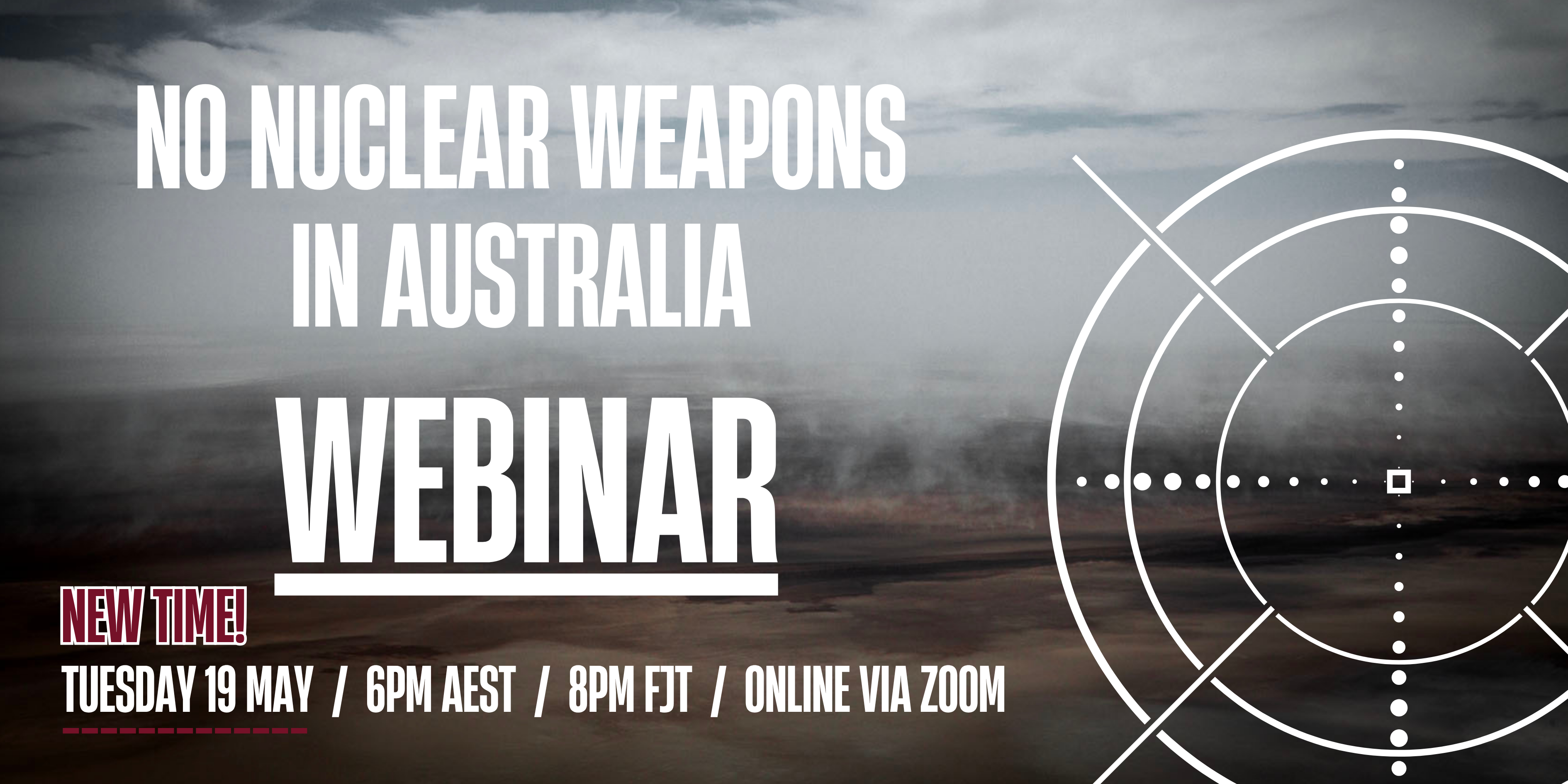
19 May – Webinar- Webinar: No Nuclear Weapons in Australia
Start: 2026-05-19 18:00:00 UTC Canberra, Melbourne, Sydney (GMT+10:00)
End: 2026-05-19 19:30:00 UTC Canberra, Melbourne, Sydney (GMT+10:00)
20 May – Webinar – The dangerous world of AUKUS, US, military occupation and suppression of dissent

National Webinar, 20th May, 2026, 6.30pm AEST. Confronting laws restricting/suppressing protest speech and action
Speakers: Former Sen. Rex Patrick, Lawyer Nick Hanna ,Arthur Rorris ,Jorgen Doyle, Sen David Shoebbridge,
Facilitator Kelley Tranter.

of the week – Australians for War Powers Reform (AWPR)
To see nuclear-related stories in greater depth and intensity
 Antinuclear