Japan puts off decision to release treated Fukushima water into sea — Fukushima 311 Watchdogs

is it actually possible they are actually listening ??? Japan has put off a decision to release treated radioactive water from the crippled Fukushima nuclear plant into the sea, government sources said Friday, after reports of a formal decision later this month triggered strong opposition from fishermen. Oct 23, 2020 Economy, Trade and Industry Minister […]
Japan puts off decision to release treated Fukushima water into sea — Fukushima 311 Watchdogs
Half of Japanese against releasing radioactive water from Fukushima plant; Seoul, Beijing also concerned — Fukushima 311 Watchdogs

October 20, 2020 A recent survey conducted by the Japanese daily Yomiuri Shimbun shows about 50 percent of citizens in Japan are against their government’s plan to discharge radioactive water from the tsunami-wrecked Fukushima nuclear plant into the sea.The survey was conducted on over one-thousand eligible voters from across Japan.Media reports say the fishing industry […]
Half of Japanese against releasing radioactive water from Fukushima plant; Seoul, Beijing also concerned — Fukushima 311 Watchdogs
Jeju Governor Vows to Take Legal Action against Japan’s Fukushima Water Release — Fukushima 311 Watchdogs
October 20, 2020 Jeju Province Governor Won Hee-ryong says he will launch both domestic and international lawsuits against Japan should it release radioactive water from its disabled Fukushima nuclear plant into the ocean. At a press conference on Tuesday, Won urged Tokyo to halt preparations for the release, be transparent in providing all relevant information […]
Jeju Governor Vows to Take Legal Action against Japan’s Fukushima Water Release — Fukushima 311 Watchdogs
S. Korean demonstrators ramp up protests against Japan’s plans to dump radioactive water into the ocean — Fukushima 311 Watchdogs

October 19, 2020 On Oct. 16, Japanese media outlets reported that the Japanese government will decide on whether or not to dump radioactive water from the Fukushima Daiichi Nuclear Power Plant into the Pacific Ocean. On Oct. 19, demonstrators organized in front of the former Japanese Embassy in Seoul to voice their vehement opposition to […]
S. Korean demonstrators ramp up protests against Japan’s plans to dump radioactive water into the ocean — Fukushima 311 Watchdogs
Why AEMO wants the power to cut off your rooftop solar — RenewEconomy

AEMO defends and explains its decision to impose new controls over rooftop solar PV, including having the power to switch off household solar when needed. The post Why AEMO wants the power to cut off your rooftop solar appeared first on RenewEconomy.
Why AEMO wants the power to cut off your rooftop solar — RenewEconomy
The UN Nuclear Weapons Ban Treaty and other news this week
Even the generally pro nuclear mainstream media could not ignore the UN Treaty on the Prohibition of Nuclear Weapons as it reached the required 50 ratifications to become law. Nuclear weapons – always inhumane and unacceptable, now illegal — IPPNW peace and health blog. The ethical and moral case grew stronger, for the U.N. nuclear ban treaty.
One important article this week links the otherwise irrational push for small nuclear reactors (SMRs) to their connection with the nuclear weapons industry.
Second COVID-19 wave swells across US and Europe as winter looms.
‘Back to the future of climate” –– research on the Eocene period, some 55 million years ago, when atmospheric levels of carbon dioxide were over 1,400 ppm, indicate what the Earth’s future climate might be. Then the temperatures on Earth must have resembled those of a sauna. It was hot and humid, and the ice on the polar caps had completely disappeared. That situation deeloped over millions of years. Now, industrialisation is bringing it about by soon after 2100.
AUSTRALIA.
After Victoria’s long and difficult coronavirus lockdown, it’s now the envy of the world. As coronavirus cases plummet, it’s time to ask: Is Australia ready for the third wave?
New government Bill could target journalists, environmental and human rights groups.
NUCLEAR.
Uranium: the mineral that never made sense now doesn’t even make dollars. BHP dumps its plan to expand Olympic Dam uranium mine. The Olympic Dam silver bullet is forever tarnished – BHP abandons plan to expand Olympic Dam uranium mine – a sign foe the future.
Australia has nuclear waste problems. Kimba residents have been sold a lemon – dubious financial gain from nuclear waste dump. How ANSTO’s Synroc nuclear waste solution turned out to be a dud.
CLIMATE. Kevin Rudd’s vision for a green recovery out of the pandemic.
RENEWABLE ENERGY. Twin peaks: South Australia reaches 100 pct solar, and then 100 pct wind power in same week.
INTERNATIONAL.
Global Covid-19 cases top 42.5mn: Johns Hopkins Oct 25, 2020.
The passing of the UN nuclear weapons ban treaty – an embarrassment and a problem for the USA, and the other nuclear weapons nations. . Difficulties in the membership of countries in the Comprehensive Test Ban Treaty.
Why nuclear power Is unsustainable. Climate change a big threat to nuclear reactors – as water supplies at risk. Every dollar wasted on nuclear power is a dollar not invested in clean energy. The very genuine promise of cheap electricity – solar power.
Study finds that bees are harmed by quite low levels of ionising radiation.
The Guardian was grossly unfair to Julian Assange. They could still make up for this.
Geological disposal of nuclear waste – a focus of interest in the coming months.
PACIFIC ISLANDS. Pacific islands demand truth on the decades of nuclear testing, now that nuclear weapons are becoming illegal
As coronavirus cases plummet, it’s time to ask: Is Australia ready for the third wave?


“They are so beaten up by the lockdowns and by the fear messages that they are saying “I don’t want to do anything”.”
Yet notwithstanding the testing, the tracing, the social distancing, masking, mathematical modelling, quarantining and investment in public health, Australians will continue to live with COVID-19 for the foreseeable future.
As coronavirus cases plummet, it’s time to ask: Is Australia ready for the third wave? https://www.abc.net.au/news/2020-10-25/coronavirus-preparing-for-the-third-wave/12802070 By Catherine Taylor
An uncomfortable question looms over Australia’s steady exit from its second major outbreak of coronavirus: are we ready for the third wave?
Health experts say it’s a question with an equally uncomfortable answer: a third wave remains a real threat and without a tested vaccine all we have is our self-control, and luck, standing between us and a fresh outbreak.
“We should not expect that we can beat this wave, and then it’s done. It’s the beginning of the next phase,” says Professor Jodie McVernon, an expert in epidemiology, vaccinology and public health at the Doherty Institute, who has been working in isolation for months “like a princess in a castle” from the front room of her Melbourne home.
Professor Raina MacIntyre — head of the Kirby Institute’s biosecurity program — goes further: “The only really feasible exit strategy at this stage is vaccination otherwise we’ll continue to face the risk of third, fourth, fifth and sixth waves.
There is a recipe for reducing risk
October 25 Energy News — geoharvey

Opinion: ¶ “Biden Argues For Move To Renewable Energy; AM Stands At The Ready” • Joe Biden has endorsed renewable energy, arguing for a move away from fossil fuels while adopting wind and solar power. Such a policy would mean renewable energy companies will ramp up production. And that would mean more work in additive […]
October 25 Energy News — geoharvey
Neoen completes finance for Australia’s biggest solar farm in Queensland — RenewEconomy

Neoen lands debt financing with banking syndicate for what will be Australia’s biggest solar farm. The post Neoen completes finance for Australia’s biggest solar farm in Queensland appeared first on RenewEconomy.
Neoen completes finance for Australia’s biggest solar farm in Queensland — RenewEconomy
UN Treaty on the Prohibition of Nuclear Weapons reaches the required 50 ratifications to become law

Historic milestone: UN Treaty on the Prohibition of Nuclear Weapons reaches 50 ratifications needed for entry into force https://www.icanw.org/historic_milestone_un_treaty_on_the_prohibition_of_nuclear_weapons_reaches_50_ratifications_needed_for_entry_into_force 25 Oct 20,
On October 24, 2020, the UN Treaty on the Prohibition of Nuclear Weapons reached the required 50 states parties for its entry into force, after Honduras ratified just one day after Jamaica and Nauru submitted their ratifications. In 90 days, the treaty will enter into force, cementing a categorical ban on nuclear weapons, 75 years after their first use.
This is a historic milestone for this landmark treaty. Prior to the TPNW’s adoption, nuclear weapons were the only weapons of mass destruction not banned under international law, despite their catastrophic humanitarian consequences. Now, with the treaty’s entry into force, we can call nuclear weapons what they are: prohibited weapons of mass destruction, just like chemical weapons and biological weapons.
ICAN’s Executive Director Beatrice Fihn welcomed the historic moment. “This is a new chapter for nuclear disarmament. Decades of activism have achieved what many said was impossible: nuclear weapons are banned,” she said.
Setsuko Thurlow, survivor of the atomic bombing of Hiroshima, said “I have committed my life to the abolition of nuclear weapons. I have nothing but gratitude for all who have worked for the success of our treaty.” As a long-time and iconic ICAN activist who has spent decades sharing the story of the horrors she faced to raise awareness on the humanitarian consequences of nuclear weapons this moment held particular significance: “This is the first time in international law that we have been so recognized. We share this recognition with other hibakusha across the world, those who have suffered radioactive harm from nuclear testing, from uranium mining, from secret experimentation.” Survivors of atomic use and testing all over the world have joined Setsuko in celebrating this milestone.
The three latest states to ratify were proud to be part of such a historic moment. All 50 states have shown true leadership to achieve a world without nuclear weapons, all while facing unprecedented levels of pressure from the nuclear armed states not to do so. A recent letter, obtained by AP only days before the ceremony, demonstrates that the Trump administration has been directly pressuring states that have ratified the treaty to withdraw from it and abstain from encouraging others to join it, in direct contradiction to their obligations under the treaty. Beatrice Fihn said: “Real leadership has been shown by the countries that have joined this historical instrument to bring it to full legal effect. Desperate attempts to weaken these leaders’ commitment to nuclear disarmament demonstrate only the fear of nuclear armed states of the change this treaty will bring.”
This is just the beginning. Once the treaty is in force, all states parties will need to implement all of their positive obligations under the treaty and abide by its prohibitions. States that haven’t joined the treaty will feel its power too – we can expect companies to stop producing nuclear weapons and financial institutions to stop investing in nuclear weapon producing companies.
How do we know? Because we have nearly 600 partner organisations in over 100 countries committed to advancing this treaty and the norm against nuclear weapons. People, companies, universities and governments everywhere will know this weapon has been prohibited and that now is the moment for them to stand on the right side of history
Australia’s submarine deal with a corrupt French company

 Meanwhile, in Australia, the submarine deal continues. In February last year, after two years of negotiations, the government signed a ‘strategic partnership agreement’ with Naval Group. The signing took place despite the emergence of two more investigations into Naval, including alleged corruption on a 2009 submarine deal with Brazil and a significant security breach where complete plans of the new Scorpène submarines Naval had provided to India were apparently leaked from within Naval.
Strong anti-corruption measures essential
Vast amounts of Australian taxpayers’ money are being handed to military industrial companies, including Naval Group, in contracts. Yet the perennial lack of transparency in defence procurement, blanket secrecy surrounding Australian weapons exports, and a pervasive “culture of cosiness” between government and industry all continue.
|
Murder, corruption, bombings – the company at centre of Australia’s submarine deal, Michael West Media by Michelle Fahy | Oct 24, 2020 The arms company at the centre of a deadly criminal saga and numerous global corruption scandals, Naval Group, was selected by the Australian government to build our new fleet of submarines – a deal heralded as ‘one of the world’s most lucrative defence contracts‘. How did this happen? In this special investigation Michelle Fahy discovers significant gaps in anti-bribery and corruption measures on this massive procurement project. The message communicated far and wide is that our standards are lax; grey areas are tolerated; and we’ll bend the rules and look the other way.
|
Small nuclear reactors – just a convenient ‘cover’ for the nuclear weapons industry

so-called “small nuclear reactors”
Downing Street told the Financial Times, which it faithfully reported, that it was “considering” £2 billion of taxpayers’ money to support “small nuclear reactors”
They are not small
The first thing to know about these beasts is that they are not small. 440MW? The plant at Wylfa (Anglesey, north Wales) was 460MW (it’s closed now). 440MW is bigger than all the Magnox type reactors except Wylfa and comparable to an Advanced Gas-cooled Reactor.
Only if military needs are driving this decision is it explicable.
”Clearly, the military need to maintain both reactor construction and operation skills and access to fissile materials will remain. I can well see the temptation for Defence Ministers to try to transfer this cost to civilian budgets,”
Any nation’s defence budget in this day and age cannot afford a new generation of nuclear weapons. So it needs to pass the costs onto the energy sector.
How the UK’s secret defence policy is driving energy policy – with the public kept in the dark. https://www.thefifthestate.com.au/energy-lead/how-the-uks-secret-defence-policy-is-driving-energy-policy-with-the-public-kept-in-the-dark/ BY DAVID THORPE / 13 OCTOBER 2020
The UK government has for 15 years persistently backed the need for new nuclear power. Given its many problems, most informed observers can’t understand why. The answer lies in its commitment to being a nuclear military force. Continue reading
Nuclear waste storage in Australia
Japan plans to dump a million tonnes of radioactive water into the Pacific. But Australia has nuclear waste problems, too The Conversation,October 23, 2020 Tilman Ruff. Associate Professor, Education and Learning Unit, Nossal Institute for Global Health, School of Population and Global Health, University of Melbourne, Margaret Beavis, Tutor Principles of Clinical Practice Melbourne Medical School .
|
Nuclear waste storage in Australia This is what happens at our national nuclear facility at Lucas Heights in Sydney. The vast majority of Australia’s nuclear waste is stored on-site in a dedicated facility, managed by those with the best expertise, and monitored 24/7 by the Australian Federal Police. But the Australian government plans to change this. It wants to transport and temporarily store nuclear waste at a facility at Kimba, in regional South Australia, for an indeterminate period. We believe the Kimba plan involves unnecessary multiple handling, and shifts the nuclear waste problem onto future generations. The proposed storage facilities in Kimba are less safe than disposal, and this plan is well below world’s best practice. The infrastructure, staff and expertise to manage and monitor radioactive materials in Lucas Heights were developed over decades, with all the resources and emergency services of Australia’s largest city. These capacities cannot be quickly or easily replicated in the remote rural location of Kimba. What’s more, transporting the waste raises the risk of theft and accident. And in recent months, the CEO of regulator ARPANSA told a senate inquiry there is capacity to store nuclear waste at Lucas Heights for several more decades. This means there’s ample time to properly plan final disposal of the waste. The legislation before the Senate will deny interested parties the right to judicial review. The plan also disregards unanimous opposition by Barngarla Traditional Owners. The Conversation contacted Resources Minister Keith Pitt who insisted the Kimba site will consolidate waste from more than 100 places into a “safe, purpose-built, state-of-the-art facility”. He said a separate, permanent disposal facility will be established for intermediate level waste in a few decades’ time. Pitt said the government continues to seek involvement of Traditional Owners. He also said the Kimba community voted in favour of the plan. However, the voting process was criticised on a number of grounds, including that it excluded landowners living relatively close to the site, and entirely excluded Barngarla people. Kicking the can down the road Both Australia and Japan should look to nations such as Finland, which deals with nuclear waste more responsibly and has studied potential sites for decades. It plans to spend 3.5 billion euros (A$5.8 billion) on a deep geological disposal site.https://theconversation.com/japan-plans-to-dump-a-million-tonnes-of-radioactive-water-into-the-pacific-but-australia-has-nuclear-waste-problems-too-148337
|
|
|
Freakishly warm weather delays development of Arctic sea ice

|
Alarm as Arctic sea ice not yet freezing at latest date on record
Delayed freeze in Laptev Sea could have knock-on effects across polar region, scientists say, Guardian, jonathan Watts Global environment editor @jonathanwatts, Thu 22 Oct 2020 For the first time since records began, the main nursery of Arctic sea ice in Siberia has yet to start freezing in late October. The delayed annual freeze in the Laptev Sea has been caused by freakishly protracted warmth in northern Russia and the intrusion of Atlantic waters, say climate scientists who warn of possible knock-on effects across the polar region. Ocean temperatures in the area recently climbed to more than 5C above average, following a record breaking heatwave and the unusually early decline of last winter’s sea ice. The trapped heat takes a long time to dissipate into the atmosphere, even at this time of the year when the sun creeps above the horizon for little more than an hour or two each day. Graphs of sea-ice extent in the Laptev Sea, which usually show a healthy seasonal pulse, appear to have flat-lined. As a result, there is a record amount of open sea in the Arctic. “The lack of freeze-up so far this fall is unprecedented in the Siberian Arctic region,” said Zachary Labe, a postdoctoral researcher at Colorado State University. He says this is in line with the expected impact of human-driven climate change. 2020 is another year that is consistent with a rapidly changing Arctic. Without a systematic reduction in greenhouse gases, the likelihood of our first ‘ice-free’ summer will continue to increase by the mid-21st century,’ he wrote in an email to the Guardian. This year’s Siberian heatwave was made at least 600 times more likely by industrial and agricultural emissions, according to an earlier study. The warmer air temperature is not the only factor slowing the formation of ice. Climate change is also pushing more balmy Atlantic currents into the Arctic and breaking up the usual stratification between warm deep waters and the cool surface. This also makes it difficult for ice to form……… https://www.theguardian.com/world/2020/oct/22/alarm-as-arctic-sea-ice-not-yet-freezing-at-latest-date-on-record?CMP=twt_a-environment_b-gdneco&fbclid=IwAR1qZzerjnAanadMi942h7N8XdCf6Drz_-UIO5mECgAzvXqgiIYjuh6BETc |
|
Global heating is bringing huge water stress to nuclear and coal-fired power stations
 Climate change poses big water risks for nuclear, fossil-fueled plants, S and P Global, Esther Whieldon Taylor Kuykendall, 23 Oct 20,
Climate change-exacerbated water shortage issues pose a near-term and longer-term performance risk to power plants, such as hydropower and nuclear, around the world. And in the Lower 48, more than half of the fossil-fueled and nuclear fleet is located in areas forecast to face climate-related water stress by the end of this decade under a business-as-usual scenario, according to an analysis by S&P Global Market Intelligence.
But electric utilities’ overall exposure to power plant water stress risks could diminish as they pursue decarbonization strategies and replace water-dependent plants with wind and solar generation that require little to no water. Some companies are also implementing water management and related investment strategies to reduce their exposure. ……..
According to projections from the World Resources Institute’s Aqueduct Water Risk Atlas, water stress — when humanity’s competition for water exceeds the rate at which nature can replenish its stocks — could grow materially by 2030 in the drought-prone Western U.S., as well as the upper Midwest and portions of the Northeast and Florida, due to climate change.
About 61.8% of existing fossil-fueled and nuclear power plants in the Lower 48, or a combined 535 GW of operating capacity, is in areas that could face medium-high to extremely high water stress in 2030, based on an analysis of Market Intelligence’s power plant data paired with the Aqueduct water stress projections.
Moreover, 68.6% of the Lower 48’s natural gas-fired fleet, 73.3% of its oil-fueled fleet, 61.0% of its nuclear fleet, and 44.6% of its coal-fired fleet are in areas expected to face medium-high to extremely-high water stress that year.
“As we’re seeing snowpack decline — a natural mountainous reservoir of water — and as we’re getting lower amounts of total precipitation and available water in the U.S. West, this is going to be a really serious issue for the power sector,” said Betsy Otto, director of the Global Water Program at the World Resource Institute, or WRI. Moreover, scientists have said the West is entering a megadrought that could last more than 20 years.
Otto also noted that several other U.S. regions not normally thought of as facing water supply issues are already experiencing chronic water challenges that, if left unchecked, could become a problem if extended droughts, heatwaves, and other major extreme weather events should occur.
A number of utilities use WRI’s Aqueduct tool to assess their water risks in their annual reports to the CDP, formerly known as the Carbon Disclosure Project, and other organizations. But those reports typically focus on the WRI’s current water stress models and not the tool’s future climate projections.
WRI’s current water stress models show a number of regions that are facing water stress will be in the same situation, or worse, at the end of the decade.
Along those lines, Moody’s Investors Service in August reported that about 48 GW of nuclear capacity across the U.S. face elevated exposure to combined heat and water stress, including plants owned by Exelon Corp., Vistra Corp., Entergy Corp., and the Arizona Public Service Co.
In hot water
A plant’s location is not the only factor that will determine its vulnerability to water stress. A plant’s water source, cooling technology and the temperature of the water when it is withdrawn are also key factors, according to scientific reports. The Market Intelligence analysis using the WRI tool does not account for those three factors.
In addition, rising ambient air and water temperatures can also create operational and legal issues for plants. Because plants primarily use water to cool their systems, “if that water is hot or warmer to start with, that’s not so good. That makes the power plant less efficient” and it also means the plant risks violating federal restrictions on how hot water can be when it is discharged, said Auroop Ganguly, director of the Northeastern University College of Engineering Sustainability and Data Sciences Laboratory.
Ganguly co-authored a study that found that by the 2030s, climate-induced water stress in the form of increased water temperatures and limited freshwater supplies will hurt the power production of thermoelectric plants in the South, Southwest, West and West North Central regions of the U.S. According to the 2017 study, U.S. nuclear and fossil-fueled plants at that time used about 161 billion gallons per day, or 45% of the nation’s daily freshwater usage, 90% of which was for cooling.
The technologies used by a power plant can also make a big difference in how much water it needs. Dry-cooling technology uses very little water but is costlier and less efficient than alternatives. And while once-through cooling systems withdraw more water than recirculating systems, once-through cooling returns nearly all of the water to the source while recirculating systems consume more water due to evaporation………. https://www.spglobal.com/marketintelligence/en/news-insights/blog/street-talk-episode-69-banks-left-with-pockets-full-of-cash-and-few-places-to-go
1 This month.
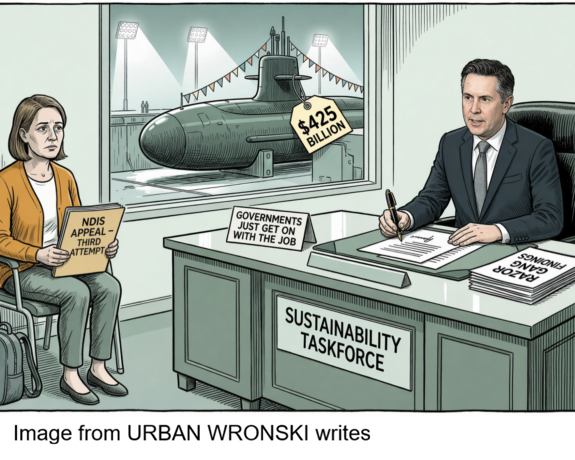

PETITION – To: Prime Minister Anthony Albanese and the Australian Labor Government
Chernobyl: The Lost Tapes – A good documentary on Chernobyl on SBS available On Demand for the next 3 weeks– https://www.sbs.com.au/ondemand/tv-program/chernobyl-the-lost-tapes/235274195556
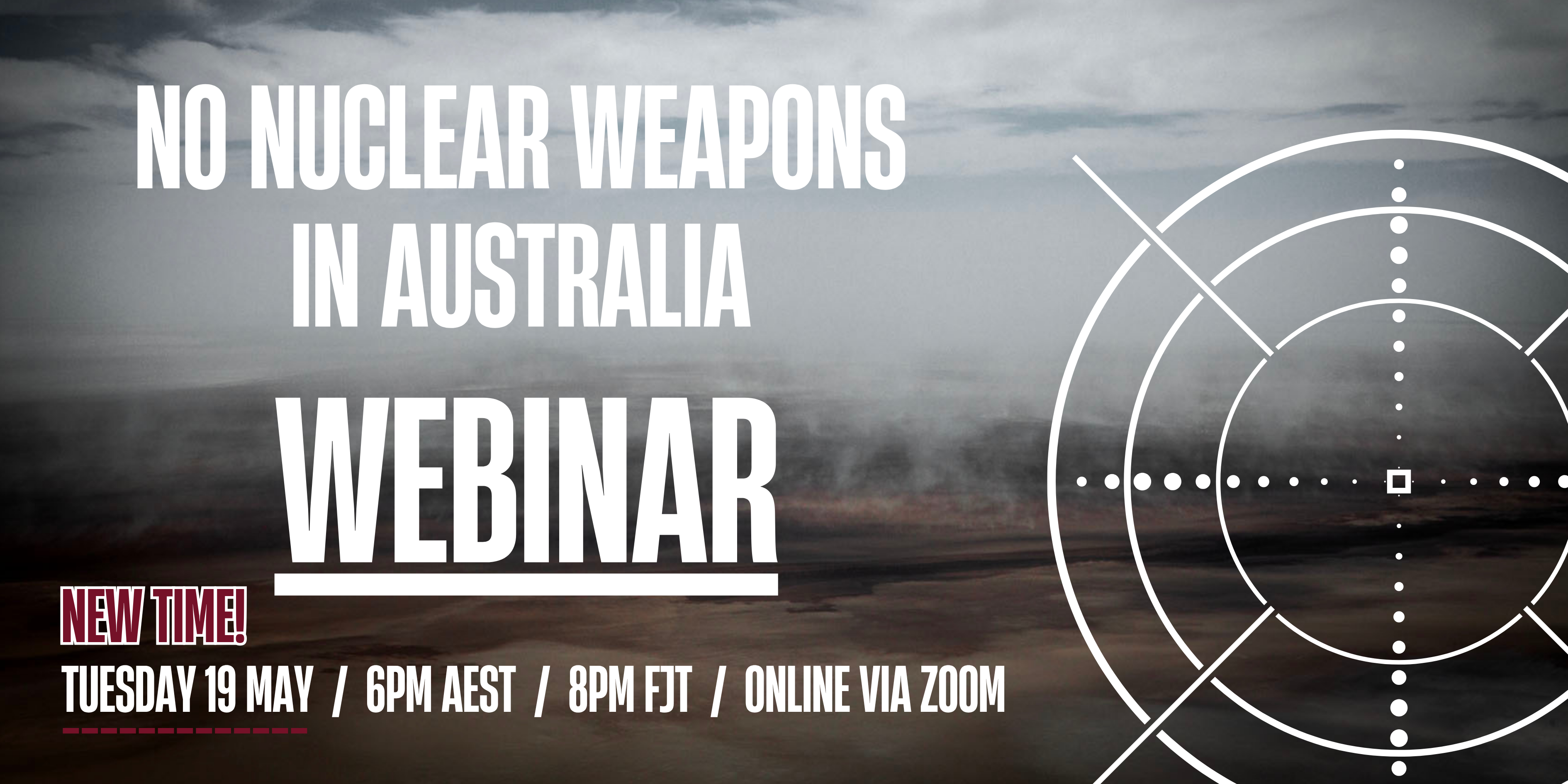
19 May – Webinar- Webinar: No Nuclear Weapons in Australia
Start: 2026-05-19 18:00:00 UTC Canberra, Melbourne, Sydney (GMT+10:00)
End: 2026-05-19 19:30:00 UTC Canberra, Melbourne, Sydney (GMT+10:00)
20 May – Webinar – The dangerous world of AUKUS, US, military occupation and suppression of dissent

National Webinar, 20th May, 2026, 6.30pm AEST. Confronting laws restricting/suppressing protest speech and action
Speakers: Former Sen. Rex Patrick, Lawyer Nick Hanna ,Arthur Rorris ,Jorgen Doyle, Sen David Shoebbridge,
Facilitator Kelley Tranter.

of the week – Australians for War Powers Reform (AWPR)
To see nuclear-related stories in greater depth and intensity
 Antinuclear