Film Maralinga Tjarutja premieres on ABC Sunday 24 May
 Maralinga Tjarutja premieres on ABC, South Australian Film Corporation 29 April 2020 ABC has today announced that the inspiring SAFC supported documentary Maralinga Tjarutja will premiere on Sunday 24 May at 7.40pm on ABC and iview.Maralinga Tjarutja shines a spotlight on the people who have lived on their lands for over 60,000 years. While it’s a story of deep tragedy, it also celebrates their incredible resilience. Maralinga Tjarutja premieres on ABC, South Australian Film Corporation 29 April 2020 ABC has today announced that the inspiring SAFC supported documentary Maralinga Tjarutja will premiere on Sunday 24 May at 7.40pm on ABC and iview.Maralinga Tjarutja shines a spotlight on the people who have lived on their lands for over 60,000 years. While it’s a story of deep tragedy, it also celebrates their incredible resilience.
Many Australians would be unaware that the Maralinga Tjarutja land in regional South Australia was the location for the British Nuclear Test Program between 1953 and 1963. The Maralinga Tjarutja people have fought for the clean-up of contamination, for compensation and in 2009, for the handback of the Maralinga Village and test sites. They have gone on to rebuild traditional communities into vibrant, creative cultural communities that will ensure Maralinga Tjarutja custodianship of their lands into the future. Jeremy LeBois, the Chair of the Maralinga Tjarutja Trust says “This documentary is important to the Maralinga people because it gives us a voice to tell the real story of what really happened to the people who walked, lived and hunted on this land for thousands of years.” Writer and director Larissa Behrendt says “This is an extraordinary story and it is a privilege to bring it to the screen. The red earthed country that stretches under blue skies provides a cinematic backdrop to the story of a community that has rebuilt itself to be vibrant, strong and proud of its culture. It is a story that deserves to be told through the voices and art of the people who lived it.” Maralinga Tjarutja celebrates the people, their tenacious spirit and cultural strength through which they fight to retain their country………. https://www.safilm.com.au/latest-news/maralinga-tjarutja-premieres-on-abc/?fbclid=IwAR2N2Q6mWcRdE4MNgrGWe0mkxQOpbRtKsJoVXeVs0JkVCP7ZE9XarQsF0R4 |
|
|
Can Covid-19 response be a model for climate action?

Some governments are already flagging the need to alter environmental standards to boost economic activity. But business groups are suggesting that the rebuilding of virus-rattled economies can be done hand-in-hand with the transition to net-zero emissions. Perhaps climate policy – historically relegated to the “too-hard” basket – stands a chance in the new world.
|
Can Covid-19 response be a NOAH YIM NATASHA KASSAM Mass behaviour change, policies guided by science, acting In 2020, the world will see the largest annual drop in carbon dioxide emissions in history. The havoc wreaked by the coronavirus and its accompanying lockdowns has seen fleets of planes grounded and factories shudder to a halt. Levels of mobility in the world’s largest cities have fallen below 10% of usual traffic. The International Energy Agency predicts that Covid-19 could wipe out international demand for coal, oil, and gas, with only renewable energy showing resilience. The preliminary data from some of the world’s biggest economies shows that global emissions are in for a sharp, if temporary, decline. Early numbers from Europe suggest that the continent could see a 24% drop in EU Emissions Trading Scheme (ETS) emissions for the whole year. Global emissions will likely only fall by 5% – a reminder that most of the world’s emissions do not come from transportation. But economies around the world are lifting their lockdowns. China, the world’s largest carbon emitter, saw a 25% decrease in emissions over its four-week lockdown. Factories in China are back online, and as in previous economic disruptions, stimulus packages and increased targets could outweigh the short-term impacts on energy and emissions. Publics recognise the challenge ahead. In China, 87% say that climate change is as serious a crisis as Covid-19 in the long term. While the number in Australia is much lower, the majority – 59% – agree. Given the significant personal and economic sacrifices many publics have made to combat Covid-19, will these concerns finally translate into real progress in addressing climate change, once the current crisis has subsided? The prospects look good. Covid-19 has put science front and centre. Continue reading |
‘under cover of coronavirus’ New South Wales govt approves US company to mine coal beneath a Sydney drinking water dam
|
Woronora reservoir, an hour’s drive south of the CBD, is part of a system which supplies water to more than 3.4 million people in Greater Sydney. The approval will allow Peabody Energy to send long wall mining machines 450 metres below the earth’s surface to crawl along coal seams directly below the dam. Dr Kerryn Phelps says the fact the decision was made “under the cover of coronavirus” is “unfathomable”. NSW has spent 12 of the last 20 years in drought, with record low rainfall plunging much of the state into severe water shortage last year. “We know about the potential for catastrophe,” Dr Phelps told 9News.com.au. “We just cannot let this [decision] go unchallenged.” The former president of the Australian Medical Association may seem an odd figure to lead opposition to a mining project, but Dr Phelps takes what she calls a broad view on health. She grew up on Sydney’s North Shore when koalas still lived in family backyards and has witnessed firsthand the affects human populations have on the natural world. She has also seen, as a doctor, how the degradation of the nature impacts human health. In her role as City of Sydney councillor, Dr Phelps introduced a motion to the council calling on the NSW Minister for Planning and Public Spaces, Rob Stokes, to reverse the approval. “We can’t simply risk the water supply in one part of Sydney, without considering the repercussions for the rest of the state and country,” Dr Phelps said. “We have to make a stand now. If not now, then when?” Chain reactionOn the evening of April 6 this year, the City of Sydney council almost unanimously passed Dr Phelp’s motion calling for the approval to be reversed, prompting mayor Clover Moore to send Mr Stokes a strongly worded internal letter. In it, she described the minister’s decision as “scandalous”. Sutherland Labour Party councillor Ray Plibersek says the move also led Sutherland Shire Council to pass a similar motion urging the decision be reconsidered. “We’re very concerned,” Cr Plibersek told 9News.com.au. “There’s been evidence of damage to the water table… and despite assurances from mining companies, there is a threat to a crucial resource – water.” Sutherland Shire and Wollongong, which both have more than 200,000 residents, share the Woronora special catchment area, the rivers and rivulets passing from one jurisdiction to the next. They share the water within it too – the reservoir supplies 100 per cent of the drinking water……….. https://www.9news.com.au/national/coal-mine-under-greater-sydneys-woronora-drinking-water-reservoir-approved-during-coronavirus-pandemic/d3e51de8-f370-4fcf-b4f8-7f62be1c24c7
|
|

Wet bulb (TW) temperature – a measure of heat+humidity – means that some parts of the world already too hot for humans
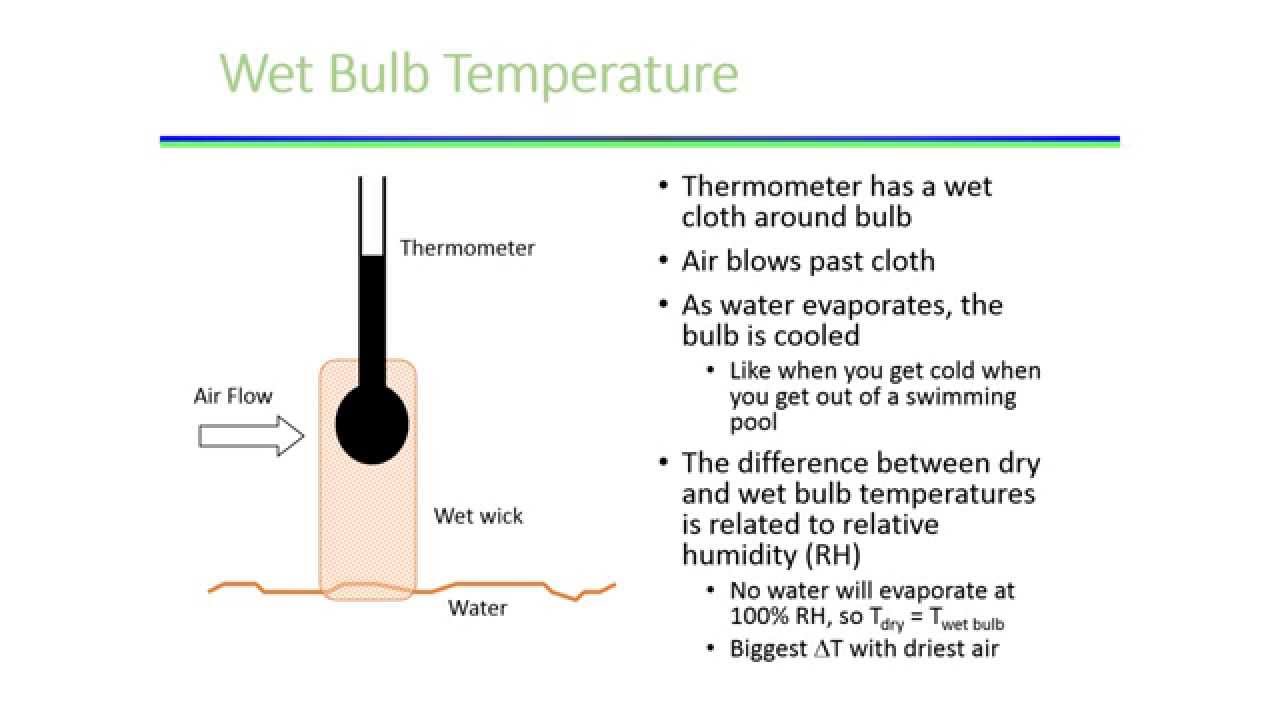
Climate change has already made parts of the world too hot for humans, New Scientist 8 May 2020, By Adam Vaughan Global warming has already made parts of the world hotter than the human body can withstand, decades earlier than climate models expected this to happen.
Jacobabad in Pakistan and Ras al Khaimah in the United Arab Emirates have both repeatedly crossed a deadly threshold for one or two hours at a time, an analysis of weather station data found.
Wet bulb temperature (TW) is a measure of heat and humidity, taken from a thermometer covered in a water-soaked cloth. Beyond a threshold of 35°C TW the body is unable to cool itself by sweating, but lower levels can still be deadly, as was seen in the 2003 European heatwave that killed thousands without passing 28°C TW.
A US-UK team analysed weather station data across the world, and found that the frequency of wet bulb temperatures exceeding temperatures between 27°C TW and 35°C TW had all doubled since 1979. Though 35°C TW is thought of as a key threshold, harm and even death is possible at lower temperatures, so the team included these in their analysis.
Most of the frequency increases were in the Persian gulf, India, Pakistan and south-west North America. But at Jacobabad and Ras al Khaimah, 35°C TW appears to have been passed, the first time the breach has been reported in scientific literature.
“The crossings of all of these thresholds imply greater risk to human health – we can say we are universally creeping close to this magic threshold of 35°C. The tantalising conclusion is it looks like, in some cases for a brief period of the day, we have exceeded this value,” says Tom Matthews at Loughborough University in the UK……….: https://www.newscientist.com/article/2242855-climate-change-has-already-made-parts-of-the-world-too-hot-for-humans/#ixzz6M5ow6Dlr
Record growth in rooftop solar pushing coal out of Australia market — RenewEconomy
Rooftop solar continues to drive coal out of the electricity market, as renewables surge to new record levels in Australia. The post Record growth in rooftop solar pushing coal out of Australia market appeared first on RenewEconomy.
via Record growth in rooftop solar pushing coal out of Australia market — RenewEconomy
Another world is possible — Beyond Nuclear International
Rick Wayman’s “shameless idealism” and quest for peace
via Another world is possible — Beyond Nuclear International
May 10 Energy News — geoharvey

Opinion: ¶ “Clean Trucks Like The Tesla Semi Are More Important Than Ever” • According to Popular Mechanics, there were at least 2.8 million semi trucks registered in the US in 2016. These trucks are heavy polluters, and research shows that almost 80% of those who died of Covid-19 across four countries were in heavily […]
Daniel Berrigan: The Hole in the Ground, A Parable for Peacemakers — Rise Up Times

“Nothing can be done!” How often we had heard that gasp: the last of the human, of soul, of freedom. Indeed, something could be done, and was. And would be. Daniel Berrigan
via Daniel Berrigan: The Hole in the Ground, A Parable for Peacemakers — Rise Up Times
How “green steel” could replace Australia’s coal industry – and end climate wars — RenewEconomy
Grattan Institute says Australian green steel manufacture and export industry could generate around $65bn a year in today’s dollars, and resolve nation’s great climate conundrum. The post How “green steel” could replace Australia’s coal industry – and end climate wars appeared first on RenewEconomy.
via How “green steel” could replace Australia’s coal industry – and end climate wars — RenewEconomy
Lithium Australia assessing the use of recycled battery components as fertiliser micro-nutrients — RenewEconomy

Glasshouse testing of mixed metal dust recovered from recycled alkaline batteries successfully completed. The post Lithium Australia assessing the use of recycled battery components as fertiliser micro-nutrients appeared first on RenewEconomy.
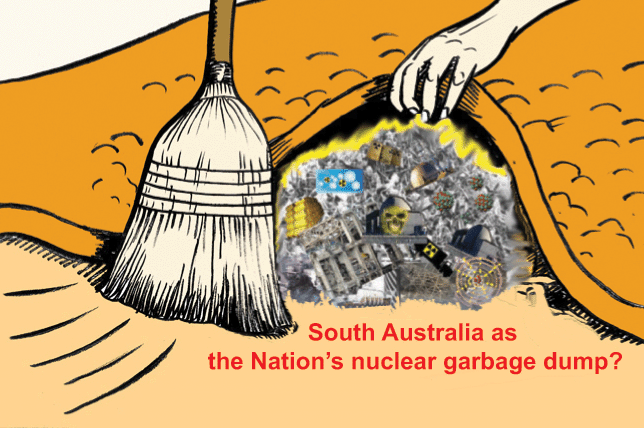
Colleen Grantham spells it out on Kimba nuclear waste dump- NO Broad Community Consent, NO Transparency
I am appalled to learn that the Native Title awarded to the Bungarla People of this District has been
dissolved on the property in question, thus providing an “out” for the Government to need to
consider their views on this issue.
we need to protect our country’s HEALTH and our
ECONOMY and I struggle to see how this facility in this location will do anything but destroy both.
Colleen Grantham Submission 89 to Committee Secretariat, Senate Standing Committees on Economics
Re – Proposed National Radioactive Waste Management Facility
Dear Committee
Thank you for taking the time to consider this submission of opposition to the establishment of a
National Radioactive Waste Management Facility on FARMING land known as ‘Napandee’ in the
District Council of Kimba.
I grew up the daughter of a farmer in the District Council of Wudinna which is a neighbouring council
precinct to Kimba. No one in this council district has had an opportunity to be heard or to influence
the outcome of the CLOSED voting on this facility, yet some of its farming residents live much closer
to the proposed site than those people residing in the township of Kimba. PLEASE PROVIDE AN
EXPLANATION HOW THIS OUTCOME CAN POSSIBLY BE CONSIDERED FAIR OR REASONABLE given the
potential direct NEGATIVE impacts such a facility could have on their future livelihoods and those of
the generations to come.
The Government and its Agencies have continued to widely publish via all mediums that the facility
in question has received “Broad Community Support” for its establishment at the Napandee site,
HOWEVER, not one of the FIVE Ministers who have held this portfolio during the FIVE years of
consideration of this project has EVER been able to publicly quantify or provide a decent description
of what BROAD COMMUNITY SUPPORT would entail. Instead it appears that those in power are just
making up a number as it suits their purpose, thus FORCING this project ahead DESPITE a huge
number of people both inside and outside the District Council of Kimba being OPPOSED to its
establishment.
The process to date has already, metaphorically speaking, exploded a nuclear bomb in the town and
wider district. A once tight knit, cohesive community is now so far divided that people are not
shopping locally or supporting other community activities because they feel unsafe in their own
town.
Given the far reaching implications that such a facility would have on the whole of Eyre Peninsula, I
would have thought it PRUDENT that any Government consider the thoughts and impacts on the
WHOLE OF EYRE PENINSULA and not just one single Council district consisting of approximately 800-
900 people. This is a NATIONAL issue, bringing with it serious potential risks which should absolutely
NOT be decided on the thoughts of one small community of this size.
FARMING land in South Australia represents 4.5% of the state’s total land mass. I CANNOT
understand how any responsible Government would willingly sacrifice and put at risk productive
agricultural land that makes a huge contribution to the economy of this state and therefore this
nation! Continue reading
Shirley Inglis – 5th generation Kimba resident – on hasty nuclear waste legislation – this plan has really hurt people
Shirl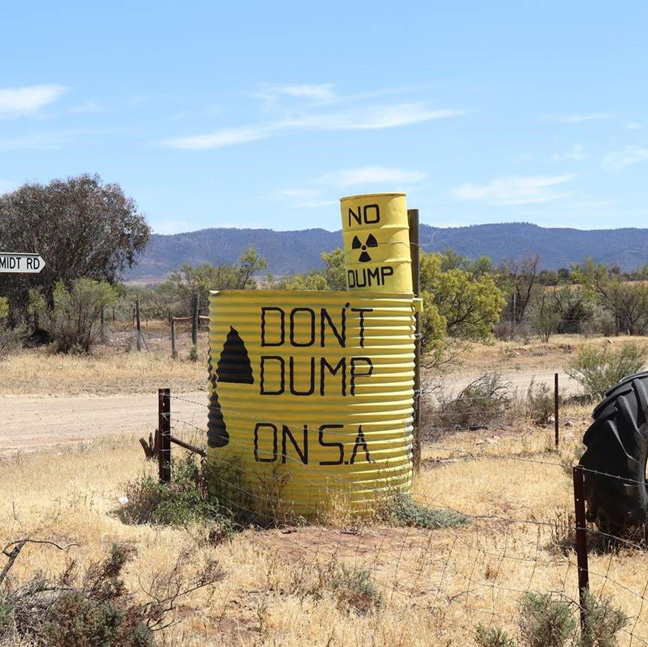 ey Inglis – Submission to Sentae Committee re National Radioactive Waste Management Amendment (Site Specification, Community Fund and Other Measures) Bill 2020 [Provisions] Submission 88
I have found it difficult to understand why a radioactive waste facility needs to be placed amongst farmlands in Kimba. The community I grew up in has seen many changes, growth and struggles over time, but has survived. Much smaller communities than ours continue to soldier on despite hardships and adapted to these circumstances.
Only Kimba has been chosen to host a facility after Rowan Ramsey thought it was a good idea back in 2015 to nominate his land. What has happened since is continued stance that this must be accepted at all cost. I have a lack of trust in what the government proposes and how this has continually changed just like this amended Bill.
As I see out my twilight years that has seen five generations of family live in this community, it is saddening to think of how this has really hurt people.
People must be comfortable with such a proposal, and the best possible solution for Australia’s radioactive waste must be the government’s priority to take the time to get it right..
I hope that your Committee can recommend a better process to be found that respects all Australians to find the right outcome, and not this one.
Assange unwell, stuck in solitary confinement while court hearing delayed till September
In his fight against extradition to the US, where he faces 175 years in prison and being subjected to harsh conditions under “Special Administrative Measures”, Assange is rendered defenseless. He is in effective solitary confinement, being psychologically tortured inside London’s maximum-security prison. With the British government’s refusal to release him temporarily into home detention, despite his deteriorating health and weak lung condition developed as consequences of long detention, Assange is now put at risk of contracting coronavirus. This threatens his life.
Now, as the world stands still and becomes silent in our collective self-quarantine, Assange’s words spoken years ago in defense of a free internet call for our attention from behind the walls of Belmarsh prison:
“Nuclear war, climate change or global pandemics are existential threats that we can work through with discussion and thought. Discourse is humanity’s immune system for existential threats. Diseases that infect the immune system are usually fatal. In this case, at a planetary scale.”
 Assange’s US extradition, Threat to Future of Internet and Democracy, CounterPunch by NOZOMI HAYASE 8 May 20 On Monday May 4, the British Court decided that the extradition hearing for WikiLeaks publisher Julian Assange, scheduled for May 18, would be moved to September. This four month delay was made after Assange’s defense lawyer argued the difficulty of his receiving a fair hearing due to restrictions posed by the Covid-19 lockdown. Monday’s hearing at Westminster Magistrates’ Court proceeded without enabling the phone link for press and observers waiting on the line, and without Assange who was not well enough to appear via videolink.
Sunday May 3rd marked World Press Freedom Day. As people around the globe celebrated with online debates and workshops, Assange was being held on remand in London’s Belmarsh prison for publishing classified documents which exposed US war crimes in Iraq and Afghanistan. On this day, annually observed by the United Nations to remind the governments of the importance of free press, Amnesty International renewed its call for the US to drop the charges against this imprisoned journalist.
The US case to extradite Assange is one of the most important press freedom cases of this century. The indictment against him under the Espionage Act is an unprecedented attack on journalism. This is a war on free speech that has escalated in recent years turning the Internet into a battleground.
Privatized censorship Continue reading
Small agricultural communities target in USA, and now in Australia, for toxic radioactive nuclear wastes
Paul Waldon Fight To Stop A Nuclear Waste Dump In South Australia, 7 May 20
Here in South Australia we have the small agriculture community of Kimba destined to run the same parallels, fueled by the same environmentally blind visions of a few community and socially impudent locals.
So with the WHO’s loss of economic gratuity, no permission to report, a nuclear coterie that is not forthcoming when there are accidents, a media that is nobbled by government interests and the U.S.NRC events notification reporting no less than 1,100 accidents per year, how can anyone lay claim this is a safe industry? https://www.facebook.com/groups/941313402573199/
Global heating: intolerable bouts of extreme humidity and heat already coming to pass across the world
 Potentially fatal bouts of heat and humidity on the rise, study finds Potentially fatal bouts of heat and humidity on the rise, study finds
Scientists identify thousands of extreme events, suggesting stark warnings about global heating are already coming to pass, Guardian, Nina Lakhani 9 May 2020 Intolerable bouts of extreme humidity and heat which could threaten human survival are on the rise across the world, suggesting that worst-case scenario warnings about the consequences of global heating are already occurring, a new study has revealed.Scientists have identified thousands of previously undetected outbreaks of the deadly weather combination in parts of Asia, Africa, Australia, South America and North America, including several hotspots along the US Gulf coast. Humidity is more dangerous than dry heat alone because it impairs sweating – the body’s life-saving natural cooling system. The number of potentially fatal humidity and heat events doubled between 1979 and 2017, and are increasing in both frequency and intensity, according to the study published in Science Advances.…… The ominous findings come as something of a surprise to scientists, as previous studies had projected such extreme weather events would occur later in the century, mostly in parts of the tropics and subtropics where humidity is already a problem. ….. https://www.theguardian.com/environment/2020/may/08/climate-change-global-heating-extreme-heat-humidity |
|
1 This month.
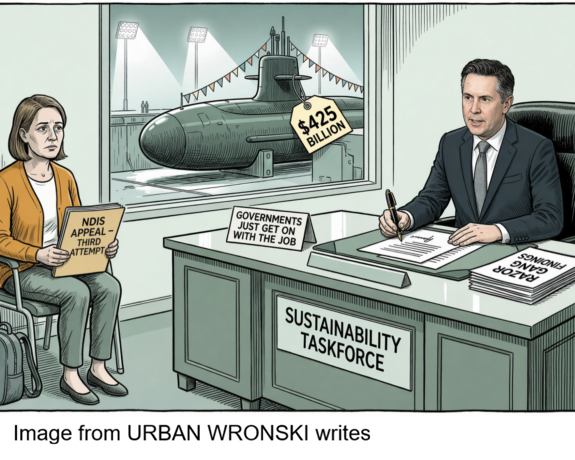

PETITION – To: Prime Minister Anthony Albanese and the Australian Labor Government
Chernobyl: The Lost Tapes – A good documentary on Chernobyl on SBS available On Demand for the next 3 weeks– https://www.sbs.com.au/ondemand/tv-program/chernobyl-the-lost-tapes/235274195556
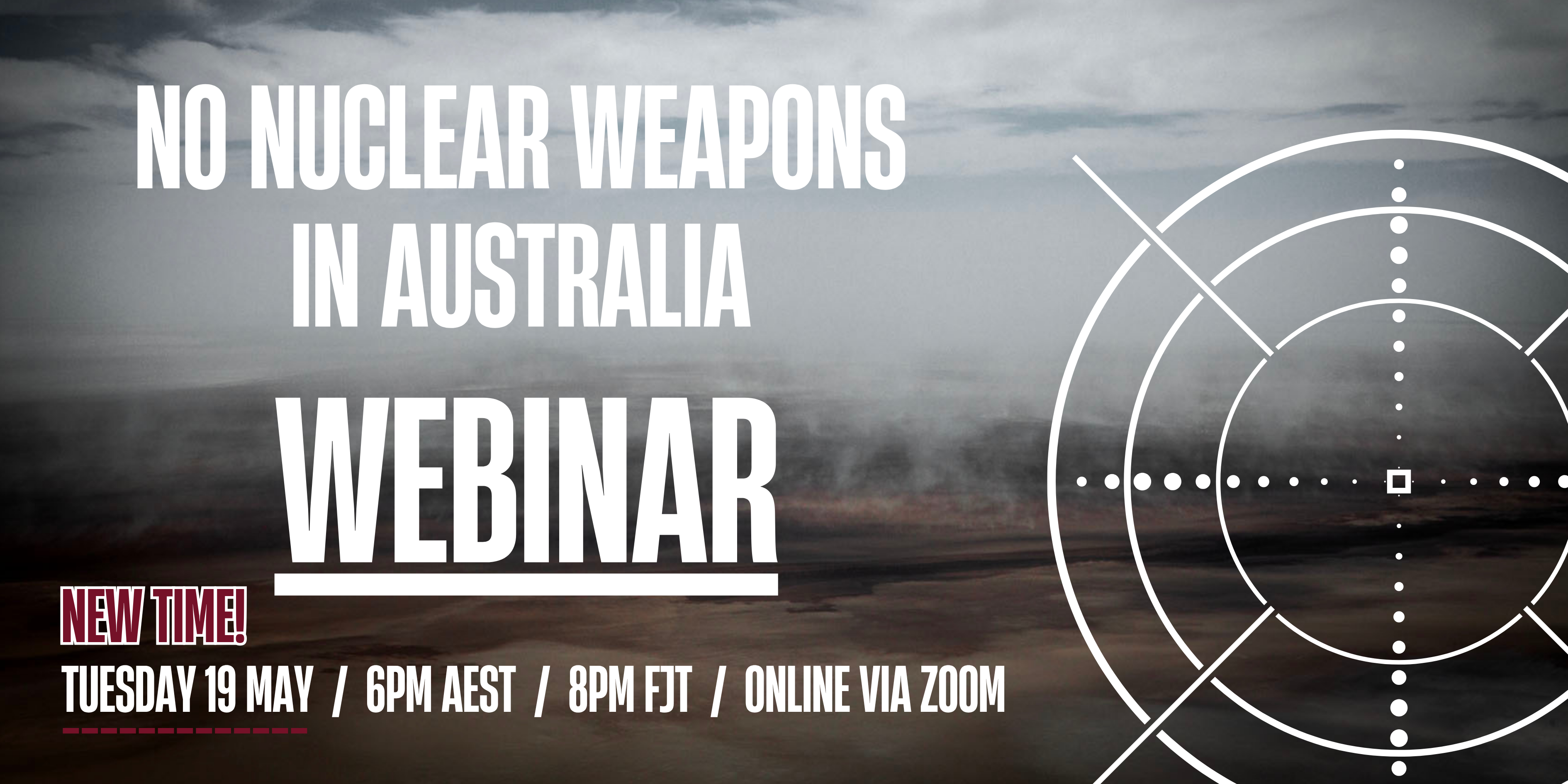
19 May – Webinar- Webinar: No Nuclear Weapons in Australia
Start: 2026-05-19 18:00:00 UTC Canberra, Melbourne, Sydney (GMT+10:00)
End: 2026-05-19 19:30:00 UTC Canberra, Melbourne, Sydney (GMT+10:00)
20 May – Webinar – The dangerous world of AUKUS, US, military occupation and suppression of dissent

National Webinar, 20th May, 2026, 6.30pm AEST. Confronting laws restricting/suppressing protest speech and action
Speakers: Former Sen. Rex Patrick, Lawyer Nick Hanna ,Arthur Rorris ,Jorgen Doyle, Sen David Shoebbridge,
Facilitator Kelley Tranter.

of the week – Australians for War Powers Reform (AWPR)
To see nuclear-related stories in greater depth and intensity
 Antinuclear