How the Murdoch press defended fossil fuel industry while Australia burned — RenewEconomy

Greenpeace investigation highlights how Murdoch press used misinformation to protect the fossil fuel industry from blame for climate fuelled bushfires. The post How the Murdoch press defended fossil fuel industry while Australia burned appeared first on RenewEconomy.
via How the Murdoch press defended fossil fuel industry while Australia burned — RenewEconomy
Tasmania unveils action plan to reach 200 per cent renewables — RenewEconomy

Tasmania Liberal government unveils action plan for 200 per cent renewables goal, including interim target to unlock $7 billion of renewables investment in next decade. The post Tasmania unveils action plan to reach 200 per cent renewables appeared first on RenewEconomy.
via Tasmania unveils action plan to reach 200 per cent renewables — RenewEconomy
13 top Australian non government organisations say that the Kimba nuclear waste dump plan is illogical
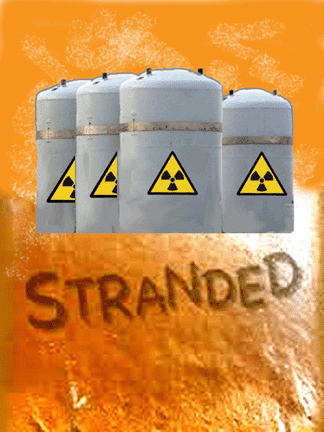
There is no logic behind the proposal to move intermediate-level waste from interim above-ground storage at Lucas Heights to interim above-ground storage at the Kimba site. The proposed double-handling is illogical, it exposes communities to unnecessary risk, and ARPANSA’s Nuclear Safety Committee has indicated that it is not consistent with international best practice.
[ The group makes 10 excellent RECOMMENDATOINS to the Senate Committee]
Joint NGO Submission to the Senate Economics Legislation Committee Inquiry into National Radioactive Waste Management Amendment (Site Specification, Community Fund and Other Measures) Bill 2020 Submission 101
The National Radioactive Waste Management Amendment Bill amends the National Radioactive Waste Management Act to specify a site near Kimba in South Australia for a nuclear waste ‘facility’ ‒ a repository for low-level waste and an above-ground ‘interim’ (indefinite) store for long-lived intermediate-level waste.
The Bill is deeply flawed and should be rejected. Further, the existing Act is deeply flawed and should be repealed Continue reading
Catholic Religious Australia (CRA) question government’s plan for nuclear waste dump near Kimba, South Australia
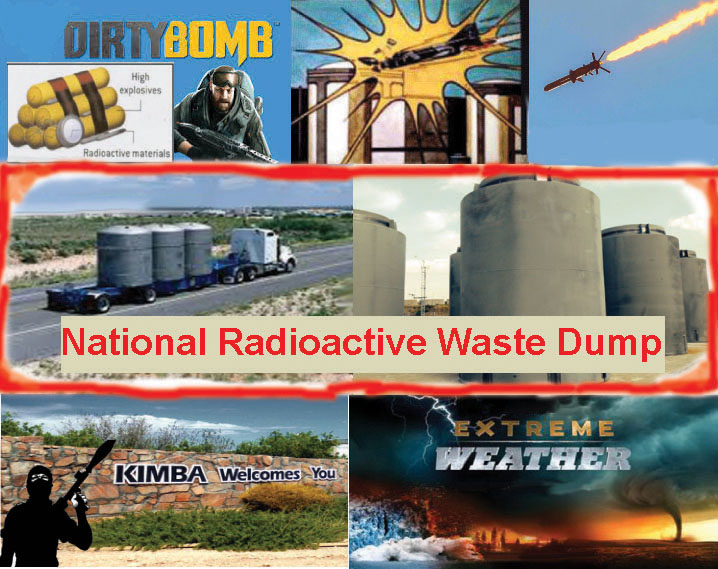
Time for action over proposed nuclear dump, https://thesoutherncross.org.au/opinion/2020/04/24/time-for-action-over-proposed-nuclear-dump/ Michele Madigan April 24, 2020
The reality is that over 90 per cent of the waste, measured by radioactivity, is intermediate long-lived waste including the nuclear spent fuel rods and also the parts of the previous nuclear reactor.
The Barngala initiated a legal action protesting their exclusion. Sadly their appeal has recently been denied. As Barngarla Traditional Owner Jeanne Miller laments, Aboriginal people with no voting power are put back 50 years, ‘again classed as flora and fauna’.
With Pope Francis’s designation of practical Care for Earth as the 8th Beatitude, a wonderful Lenten/post-Lenten penance might be a concerned letter to alert an Opposition or cross bench SA senator at Parliament House, Canberra 5600. The Senate vote is likely at the end of June.
Australia listened to the science on coronavirus. Imagine if we did the same for coal mining
 Australia listened to the science on coronavirus. Imagine if we did the same for coal mining The Conversation, Matthew Currell Associate Professor in Environmental Engineering, School of Engineering, RMIT University, Adrian Werner, Professor of Hydrogeology, Flinders University, Chris McGrath, Associate Professor in Environmental and Planning Regulation and Policy, The University of Queensland, Dylan Irvine, Senior lecturer in hydrogeology, Flinders University -12 May 20,
We interrogated scientific evidence available to governments and Adani over almost a decade. Our analysis shows governments failed to compel Adani to fully investigate the environmental risks posed by its water plans, despite concerns raised by scientists.
There is also evidence the government approval decisions were influenced by the political climate and pressure exerted by members of government.
Our findings come as the Morrison government conducts a ten-yearly review of the Environmental Protection and Biodiversity Conservation (EPBC) Act. It is critical these laws – Australia’s most important environmental legislation – are reformed to put rigorous, independent science at the core.
Advice ignored
In mid-2019, the federal and Queensland governments approved groundwater management plans for Adani’s Carmichael coal mine. It granted the company unlimited access to groundwater in central Queensland’s Galilee Basin.
We and other experts warned the mine threatens to damage aquifers, rivers and ecosystems – in particular, the Doongmabulla Springs Complex. This system contains more than 150 wetlands which support rare plant communities found nowhere else on earth.
The springs are of major cultural significance to the Wangan and Jagalingou people.
We analysed the full suite of evidence on the groundwater plans from agencies and scientists with expertise in hydro-geology. The evidence, provided to state and federal environment ministers, spanned almost a decade and included at least six independent scientific reviews.
The evidence highlighted major shortcomings, and gaps in knowledge and data. For example – ………
Once-in-a-decade chance
Our analysis exposes flaws in how evidence informs major government decisions. It also shows why reform of the Environmental Protection and Biodiversity Conservation Act is so urgent.
The laws are currently under review. Many reputable organisations and scholars have proposed ways the legislation can better protect the environment, increase its independence from government and put science at the core.
Independent scientific committees, such as the federal IESC, are commissioned by governments to advise on mining proposals. We suggest such committees be granted greater powers to request specific data and studies from mining companies to address knowledge gaps before advice is issued.
Alternatively – or in addition – a new independent national commission should be established to oversee environmental impact assessments conducted by mining and other development proponents.
This commission should be empowered to interrogate and resolve key scientific uncertainties, free from political interference. Its recommendations to government should take into account a wide range of expert advice and public feedback.
This would not only improve the evidence base for decisions, but may also speed up assessments – ensuring more effective resolution of uncertainties that often lead to protracted conflict and debate about a mine’s impacts.
Such reform is urgently needed. Australia is suffering unprecedented water stress, environmental harm and declining trust in government.
Australian governments listened to the science when it needed to flatten the curve of COVID-19. The same approach is needed if we’re to preserve the places we love and the ecosystems we depend on. https://theconversation.com/australia-listened-to-the-science-on-coronavirus-imagine-if-we-did-the-same-for-coal-mining-138212
Queensland urged to unlock $36bn renewable investment boom in lead-up to election — RenewEconomy
Solar Citizens calls on Queensland government to embrace wind and solar to unlock more than 50,000 new jobs and take the state past 90% renewables. The post Queensland urged to unlock $36bn renewable investment boom in lead-up to election appeared first on RenewEconomy.
via Queensland urged to unlock $36bn renewable investment boom in lead-up to election — RenewEconomy
Water loss in northern peatlands threatens to intensify fires, global warming

 https://www.eurekalert.org/pub_releases/2020-05/mu-wli050820.php Boreal climate change study features 59 authors, MCMASTER UNIVERSITY HAMILTON, ON, MAY 11, 2020 – A group of 59 international scientists, led by researchers at Canada’s McMaster University, has uncovered new information about the distinct effects of climate change on boreal forests and peatlands, which threaten to worsen wildfires and accelerate global warming.
Manuel Helbig and Mike Waddington from McMaster’s School of Geography and Earth Sciences gathered observational data from collaborators in countries across the boreal biome. Their study of how ecosystems lose water to the atmosphere appears today in the journal Nature Climate Change.
The unprecedented detail of their work has highlighted dramatic differences in the ways forests and peatlands regulate water loss to the atmosphere in a warming climate, and how those differences could in turn accelerate the pace of warming.
Most current global climate models assume the biome is all forest, an omission that could seriously compromise their projections, Helbig says.
“We need to account for the specific behavior of peatlands if we want to understand the boreal climate, precipitation, water availability and the whole carbon cycle,” he says.
“Peatlands are so important for storing carbon, and they are so vulnerable.”
Until now, Helbig says, it had not been possible to capture such a comprehensive view of these water-cycle dynamics, but with the support of the Global Water Futures Initiative and participation from so many research partners in Canada, Russia, the US, Germany and Scandinavia, new understanding is emerging.
As the climate warms, air gets drier and can take up more water. In response to the drying of the air, forest ecosystems – which make up most of the world’s natural boreal regions – retain more water. Their trees, shrubs and grasses are vascular plants that typically take up carbon dioxide and release water and oxygen through microscopic pores in their leaves. In warmer, dryer weather, though, those pores close, slowing the exchange to conserve water.
Together with lakes, the spongy bogs and fens called peatlands make up the remainder of the boreal landscape. Peatlands store vast amounts of water and carbon in layers of living and dead moss. They serve as natural firebreaks between sections of forest, as long as they remain wet.
Peatland mosses are not vascular plants, so as warming continues, they are more prone to drying out. Unlike forests, they have no active mechanism to protect themselves from losing water to the atmosphere. Dehydration exposes their dense carbon stores to accelerated decomposition, and turns them from firebreaks into fire propagators, as shown in previous research from Waddington’s ecohydrology lab.
Drier peatlands mean bigger, more intense fires that can release vast amounts of carbon into the atmosphere, accelerating global warming, Helbig says.
“It’s crucial to consider the accelerated water loss of peatlands in a warming climate as we project what will happen to the boreal landscape in the next 100 to 200 years,” he says.
Australia is uniquely placed to be able to reinvigorate manufacturing through renewable energy
 Powering onwards: Australia’s opportunity to reinvigorate manufacturing through renewable energy https://apo.org.au/node/303735 8 MAY 2020 Dan Nahum Centre for Future Work
Not only are we able to power an expanded manufacturing sector using renewables, but it is cheaper to do so than to continue down the path of an energy grid that favours and subsidises coal and gas. These economic advantages in turn can expedite a broader economic rebalancing, away from extraction towards production, in which value-added manufactures increasingly supplant the export of raw materials in our economic mix. This will be good for Australia’s economy—and for the world’s emissions.
This paper compiles evidence to demonstrate that Australia can achieve the continuation and resurgence of a vibrant, competitive manufacturing sector based on the even faster development of renewable power. To do this, the paper:
- reviews the strategic importance of, and opportunities presented by, manufacturing
-
- discusses Australia’s competitive advantage in renewable energy
- shows that, based on the government’s own figures, renewables are already cheaper than coal—and quickly getting cheaper
- debunks claims about the unreliability of renewables relative to more traditional energy sources
- identifies examples where renewable power is already in use, or could be put to use, in manufacturing and industrial processes, and instances where we can use our natural and manufactured inputs to add further value to these renewables
- examines international evidence showing that there is no connection between reliance on fossil fuels and success in global manufacturing trade
- presents a range of recommendations for government action to capitalise on the opportunity of renewable energy for revitalising Australian manufacturing.
Quick action from governments can drive energy efficiency jobs boom — RenewEconomy

The Energy Efficiency Council and the Property Council of Australia are calling on state and federal governments to prioritise energy efficiency measures in the effort to restart Australia’s economy. The post Quick action from governments can drive energy efficiency jobs boom appeared first on RenewEconomy.
via Quick action from governments can drive energy efficiency jobs boom — RenewEconomy
Angus Taylor’s stalled UNGI program placed on audit hit list — RenewEconomy

Federal expenditure watch dog adds Morrison government’s stalled UNGI scheme to its audit hit list, as concerns are raised over lack of transparency and legal basis. The post Angus Taylor’s stalled UNGI program placed on audit hit list appeared first on RenewEconomy.
via Angus Taylor’s stalled UNGI program placed on audit hit list — RenewEconomy
The week in climate, nuclear, (and coronavirus) news

The movement is on, in many countries, to return things to”normal” as the infection “curve” is reported to be “flattening”. But as lockdown rules are eased, in Germany and South Korea, infection rates go up again. With 4 million confirmed cases globally, there is no slowdown in the rate of infection. USA’s death toll is 80,000, while Russia’s and Brazil’s are thought to be soaring. COVID-19 is such a strange disease. Like climate denialism, – is a form of coronavirus denial going on?
AUSTRALIA
The Liberal coalition government killing the ABC by 1000 cuts – but a possible way exists to save it.
Australian government stops listing major threats to species under environment laws. New environment laws must address main cause of the biodiversity crisis – climate change.
Investigative journalism – ‘Under cover of coronavirus’ New South Wales govt approves US company to mine coal beneath a Sydney drinking water dam.
NUCLEAR. Minerals Council of Australia wants radiation risks to be discounted in Environmental Protection and Biodiversity Conservation Act. Film Maralinga Tjarutja premieres on ABC Sunday 24 May.
Kimba National Nuclear Waste Dump Plan Bogus claims and dodgy Fed govt nuclear waste dumps process. Submissions to government:
- Tilman Ruff: the Australian government has not made the case for Kimba nuclear waste site: a transparent public review is needed.
- Time for an independent Inquiry into the true effects of a nuclear waste facility on an agricultural community.
- Colleen Grantham spells it out on Kimba nuclear waste dump– NO Broad Community Consent, NO Transparency.
- Shirley Inglis – 5th generation Kimba resident – on hasty nuclear waste legislation – this plan has really hurt people.
- Kerri-Ann Garlick – Lucas Heights is the correct place for Australia’s nuclear waste: the Kimba dump plan is unfair, undemocratic and dangerous.
- Katrina Bohr – an undemocratic farce – the National Radioactive Waste Management “community consultations”.Radioactive Waste Management Taskforce pitching an old Community Benefit Program as something new.
Western Australian uranium projects floundering, as Cameco’s Kintyre environmental approval lapses.
CLIMATE. States so far ahead of Australia government, it’s as if they are in a different industrial era. Canberra is a model for using climate action to drive economic recovery, minister says. Covid-19 co-operation lays out pathway for climate ambition, CMI says. How “green steel” could replace Australia’s coal industry – and end climate wars.
RENEWABLE ENERGY States so far ahead of Australia government, it’s as if they are in a different industrial era. Helen Haines launches renewable energy plan for regional Australia. Record growth in rooftop solar pushing coal out of Australia market. Switching to renewables could cut industry energy costs by almost a quarter.
ARENA funds study into smarter solution for system strength issues plaguing solar, wind projects. Australian Renewable Energy Agency funds end in 2022 – a major blow for solar research.
Queensland’s Yurika to install 15MW of solar on shopping centres. Lithium Australia assessing the use of recycled battery components as fertiliser micro-nutrients. South Australia minister aiming for 100 per cent renewables before 2030 . Victoria calls on feds to “put aside ideology” and pave way for offshore wind.
INTERNATIONAL
A potential US extradition of Julian Assange poses existential threats to democracy..
Tiny killer agents – Cornaviruses, and also, Nuclear Radiation. As with viruses, containment of atomic weapons may be good, but eradication is best. .
International co-operation – essential for Coronavirus action, and for Climate action . Can Covid-19 response be a model for climate action?. Climate change – a bigger still challenge follows coronavirus. A small window of opportunity to stave off rapid global heating.
2020 hurtles toward the warmest year milestone –Heat+ humidity – global heating has already made parts of the world too hot for humans.
Trilateral Track 2 Nuclear Dialogues Consensus Statement.
May 11 Energy News — geoharvey
Opinion: ¶ “Covid-19 Will Not Slow Southeast Asia’s Shift From Coal To Renewables” • From oil price shocks to billion-dollar bailouts, Covid-19 has caused mayhem. Early signs are that fossil fuel sector volatility is further driving the case for Asia to embrace the security of domestic renewable energy and, if anything, hasten the clean transition. […]
Fossil fuel incumbents push to delay another crucial energy market reform — RenewEconomy
Crucial National Electricity Market reforms face delays under pressure from large incumbent fossil fuel generators using Covid-19 as a cover to stymie progress. The post Fossil fuel incumbents push to delay another crucial energy market reform appeared first on RenewEconomy.
via Fossil fuel incumbents push to delay another crucial energy market reform — RenewEconomy
Debunking Michael Moore’s myth about life cycle energy needs of wind and solar — RenewEconomy
Contrary to claims made in Michael Moore film Planet of the Humans about life cycle energy for renewables, wind and solar are likely to breed even better returns. The post Debunking Michael Moore’s myth about life cycle energy needs of wind and solar appeared first on RenewEconomy.
via Debunking Michael Moore’s myth about life cycle energy needs of wind and solar — RenewEconomy
Minerals Council of Australia wants radiation risks to be discounted in Environmental Protection and Biodiversity Conservation Act
 Coronavirus: cut green tape delay on projects, miners say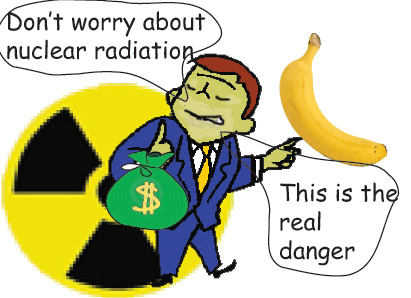
Australia’s six peak mining and resources groups are pushing for a major overhaul of environmental laws, calling for the removal of “unnecessary duplication and complexity” to provide greater certainty for businesses.
In a joint submission to the independent review of the Environment Protection and Biodiversity Conservation Act, led by former Australian Competition & Consumer Commission chair Graeme Samuel, the mining sector warns companies are facing delay costs of up to $1m a day.
Minerals Council of Australia chief executive Tania Constable said Australia was facing an unprecedented economic and social threat from the COVID-19 pandemic, arguing reforms of the EPBC Act would help reduce delays in project approvals and fast-track projects.
Environment Minister Sussan Ley last month flagged reforms to the EPBC and the government’s commitment to cut green tape to “get rid of unnecessary delays”.
Professor Samuel will deliver an interim report by June and a final report by October. “We are getting congestion out of the system and we will continue to do so as the economy comes through the COVID-19 crisis,” Ms Ley said.
The MCA submission, co-signed by the NSW Minerals Council, Queensland Resources Council, the Chamber of Minerals and Energy of Western Australia, South Australian Chamber of Mines and Energy and the Tasmanian Minerals, Manufacturing and Energy Council, suggest four key points to improve the EPBC.
These include eliminating or reducing duplication and ensuring consistency between federal and state-territory processes, reducing delays in assessment and approval processes, improving certainty for businesses and ensuring better “fit-for-purpose regulation”.
Assessing regulatory duplication and uncertainty, the ’ submission ranks NSW and Victoria lower than less mature mining jurisdictions, including PNG and the Democratic Republic of Congo.
Ms Constable said “pragmatic and considered policy reform can build a stronger minerals industry for a faster and more durable post-COVID-19 recovery”.
“When mining projects can take more than a decade to deliver, it’s clear better regulation can help deliver Australia’s economic recovery without compromising our precious environment,” she said.
“Reform to the act is long overdue to address unnecessary duplication and complexity.”
Ms Constable said a one-year delay to a project can reduce its net present value by 10 to 13 per cent per year. “For large mining projects (with a value from $3bn to $4bn), delay costs can be up to $1m per day,” she said. “Significant growth in regulation across all levels of government including the EPBC Act has not led to better environmental outcomes.”
The groups want uranium mining, milling decommissioning and rehabilitation removed from the definition of nuclear actions under the act, to help unlock the mineral sands industry. The EPBC trigger has captured non-uranium projects, including mineral sands, rare earths and base metals, where naturally occurring radioactive material may be present.
Ms Constable said Australia had the world’s largest mineral sands deposits, offering significant “opportunities for growth and jobs”. “Heavy mineral sands such as rutile, ilmenite (titanium) and zircon are essential inputs to everyday life including paint, medical implants and ceramics.”
“Many of Australia’s mineral sands deposits also contain monazite and xenotime, which are sources of the rare earth elements used in smart phones and computers, as well as medical devices.’’
1 This month.
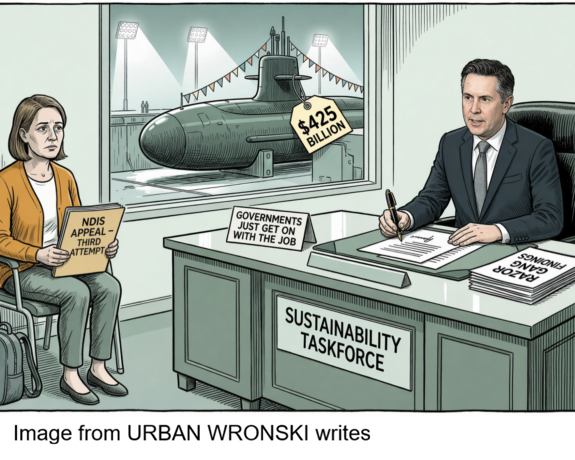

PETITION – To: Prime Minister Anthony Albanese and the Australian Labor Government
Chernobyl: The Lost Tapes – A good documentary on Chernobyl on SBS available On Demand for the next 3 weeks– https://www.sbs.com.au/ondemand/tv-program/chernobyl-the-lost-tapes/235274195556

19 May – Webinar- Webinar: No Nuclear Weapons in Australia
Start: 2026-05-19 18:00:00 UTC Canberra, Melbourne, Sydney (GMT+10:00)
End: 2026-05-19 19:30:00 UTC Canberra, Melbourne, Sydney (GMT+10:00)
20 May – Webinar – The dangerous world of AUKUS, US, military occupation and suppression of dissent

National Webinar, 20th May, 2026, 6.30pm AEST. Confronting laws restricting/suppressing protest speech and action
Speakers: Former Sen. Rex Patrick, Lawyer Nick Hanna ,Arthur Rorris ,Jorgen Doyle, Sen David Shoebbridge,
Facilitator Kelley Tranter.

of the week – Australians for War Powers Reform (AWPR)
To see nuclear-related stories in greater depth and intensity
 Antinuclear