Uniting Church, South Australia, rejects National Radioactive Waste Bill as discriminatory against Aboriginal people
|
Uniting Church of Australia
Synod of South Australia Submission No.11
Submission to the Senate Economics Legislation Committee – RE: Inquiry into National Radioactive
Waste Management Amendment (Site Specification, Community Fund and Other Measures) Bill On behalf of the Uniting Church in South Australia, we make this submission to express our views
regarding the National Radioactive Waste Management Amendment Bill. The Uniting Church in South Australia stands proudly in covenantal relationship with the Uniting Aboriginal Islander Christian Congress (UAICC). The UAICC have expressed distress for the National Radioactive Waste Management Act to specify a site near Kimba for a nuclear waste facility. Our paramount concern is the lack of consultation by the federal government with the Barngarla people, the Traditional Owners of the site. ***
The explanatory memorandum of the Bill states, “The Commonwealth engaged extensively with
communities and undertook an evidence-based approach to gathering and analysing the available information about each of the shortlisted sites to consider various aspects of site suitability and identify key risks.” The notion that the Commonwealth engaged extensively with the community regarding the facility in Kimba is not adequate truth telling. The federal government excluded Barngarla Traditional Owners from a ‘community ballot’ in 2019. The Barngarla Determination Aboriginal Corporation initiated a separate, confidential postal survey of Traditional Owners, conducted by Australian Election Company. This resulted in 100% of respondents voting ‘no’ to the proposed nuclear facility. The Uniting Church in South Australia stands against the oppression of First People. We urge the Commonwealth to truly engage with the Barngarla people and hear their voices. ***
The longstanding relationship between the Uniting Church in South Australia and the UAICC has been
life giving. Uniting Church personnel have learnt to see beyond earthly possessions. Likewise, to truly respect the relationship between First People and their Country. We lament the historical wrongs done to First People such as the dispossession of land. We stand in solidarity with First People against stopping such inequalities. We urge the Commonwealth to empower First People by listening to their voices. ***
We recommend that:
1. The Senate Economics Legislation Committee should recommend the withdrawal or rejection of the
National Radioactive Waste Management Amendment Bill 2020 (in which case a number of following recommendations are redundant) and repeal of the National Radioactive Waste Management Amendment Act. ***
2. The Committee should recommend repeal of the NRWM Act 2012 Section 12(1)(c) & 13(1), and of the Bill’s sections 34GA(1)(c) and 34GB(1), as unacceptable draconian overrides of existing State and Commonwealth legal protections for Indigenous people’s heritage and traditions. ***
3. The Committee should undertake a review of the potential impact of the existing Act, the proposed
amendments and the proposed nuclear waste facility on Aboriginal rights, interests and traditions …..
***
4. The Committee should assess the compatibility of the Act, the Bill with the UN Declaration on the Rights
of Indigenous People, in particular the right of free, prior and informed consent..
***
5 The Committee should recommend that the federal government adopt the proposal from the then
South Australian Premier Jay Weatherell, in 2017, that traditional owners should have a right of veto
over any proposed nuclear waste facility on their lands…….
***
6. The Committee should recommend withdrawal or rejection of the Bill on the grounds that the
government’s own benchmark for broad community support has not been met (43.8% support
among eligible voters in the combined ballots)
***
7. The Committee should recommend that the Bill is withdrawn, and the federal government’s nuclear
waste agenda put on hold, until such time as public opinion among other relevant stakeholders is
determined (including state-wide opinion in South Australia, and opinion along potential transport corridors
|
|
Wildfires getting close to Chernobyl nuclear station, radiation rises in smoke
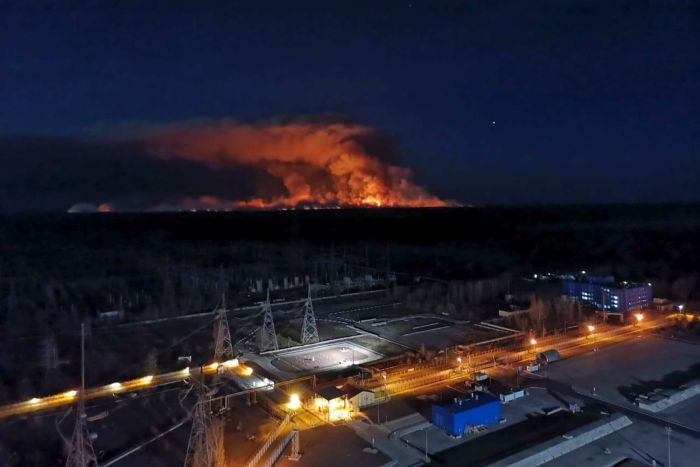
Radiation levels rise as fires burn near Chernobyl’s former nuclear power plant https://www.abc.net.au/news/2020-04-13/chernobyl-fires-crews-battle-contain-blaze-nuclear-power-plant/12144956?utm_medium=spredfast&utm_content=sf232669694&utm_campaign=abc_news&utm_source=m.facebook.com&sf232669694=1 13 Apr 20 A photo taken from the roof of Chernobyl’s old nuclear power plant has revealed how close the bushfires raging through Ukraine’s forests are from the site of the 1986 nuclear disaster.
Key points:
- Crews are working to contain the forest fires burning through the territory surrounding the Chernobyl nuclear power plant
- Radiation levels near the fires have been elevated, with the blazes producing swirling smoke
- Winds are blowing smoke towards Kiev though authorities say radiation levels in the city remain normal
Firefighters are working to control the blazes burning through the irradiated forests in the territory surrounding the former nuclear plant.
Radiation levels near the wildfires have risen, and the blazes have produced swirling smoke which is being blown towards neighbouring regions.
Winds had blown the smoke towards rural areas of Russia and nearby Belarus, but they shifted in the direction of Ukrainian capital Kiev over the weekend.
Authorities in Kiev, which has a population of about 3 million people, say radiation levels in the city remain normal.
Its citizens are already in lockdown due to the coronavirus pandemic.
The winds are more of a significant headache for the site of Chernobyl’s closed nuclear power plant. Strong gusts could spread the fires towards what is left of the facility as well as the abandoned equipment used to clean up the disaster.
“At the moment we cannot say the fire is contained,” acting head of the State Agency of Ukraine on Exclusion Zone Management Kateryna Pavlova said.
What stands in the fire’s path?
Fires are common inside the “Zone of Alienation”, a circle with a 30-kilometre radius that surrounds the old nuclear plant and is fenced in barbed wire. But the current blazes are larger than normal and are stirring up radiation as they burn grass and forests.
Winds could spread fires to remnants of the nuclear plant and authorities are trying to protect the critical infrastructure in the exclusion zone.
This includes the plant itself (and its radiation-containing sarcophagus), as well as the so-called “graves” — parking lots of abandoned, contaminated trucks and vehicles left behind from the original disaster.
“We have been working all night, digging firebreaks around the plant to protect it from fire,” Ms Pavlova said. Access to the 2,600 square kilometre area is limited to workers and tourists on guided excursions.
What happens when an irradiated tree burns down?
In the 34 years since the disaster, radiation has settled into the exclusion zone’s soil and been absorbed by the roots of trees and vegetation. While many plants in the immediate vicinity of the plant died when the nuclear reactor exploded, the plant life within the exclusion zone adapted over the decades to come.
However, the radioactive particles are brought back to the surface of the soil and released in smoke when the plants burn in fires.
The exclusion zone was established after the April 1986 disaster which saw a reactor explosion send a cloud of fallout over the European continent. The Zone of Alienation is largely unpopulated, save for about 200 people who have remained in the area despite government orders to leave.
The Chernobyl Exclusion Zone was established after the April 1986 disaster at the plant sent a cloud of radioactive fallout over much of Europe.
People are not allowed to live within 30 kilometres of the old power station, where a giant protective dome was put over the fourth reactor in 2016.
The dome, called the New Safe Confinement, enclosed the temporary “sarcophagus” built around the reactor immediately after the disaster.
Chernobyl’s three other nuclear reactors continued to generate electricity until the plant finally closed in 2000.
The Coronavirus and Climate Action: We must advocate now for immediate and significant investments in green infrastructure


The major impact of coronavirus on the trajectory of climate change must not be a temporary reduction in emissions from cars, trucks and airplanes. It must be a collective recognition that rapid and significant voluntary changes in our behavior are possible. For individual climate action to be sustained, people must find honor and joy in it. And that action must also be supported by government leadership and coordination. We must advocate now, as vocally as we can, for immediate and significant investments in green infrastructure. To avert disaster, we must change how we live.
The Coronavirus and Climate Action https://blogs.scientificamerican.com/observations/the-coronavirus-and-climate-action/ Confronting global warming will take a completely different approach from confronting the pandemic, By Laura J. Martin on April 10, 2020
In recent weeks, many Americans have voluntarily and radically altered their behavior in order to protect others from the novel coronavirus. Those who are less vulnerable are making sacrifices in order to protect those who are more vulnerable: the elderly, the immunocompromised, and—in our country, with its broken social safety net—the uninsured and the poor.
Climate scientists have been quick to draw parallels between the need to “flatten the curve” of coronavirus spread and the need to flatten the carbon emissions curve. The Intergovernmental Panel on Climate Change states that we must reduce emissions by about 45 percent from 2010 levels by 2030 in order to lessen the severity of future emergency; to reduce, but not eliminate, the probability of catastrophic changes in sea level, ocean acidity, extreme weather, food security and biodiversity.
But confronting climate change will require a completely different generational politics than confronting coronavirus. Rather than young people changing their lifestyles to protect the elderly, the large and growing proportion of older citizens in industrialized countries will have to change their lifestyles in order to protect children and those not yet born. Those with power and resources today will have to change their lifestyles dramatically in order to protect the world’s poorest and most marginalized, those who will not be able to move away from climate hazards. This is the message that youth activists like Zero Hour, Isra Hirsi and Greta Thunberg implore us to heed. It is also the premise of DearTomorrow, a storytelling project where people write climate messages to loved ones living in the future.
Who is right? Continue reading
What is needed is a green recovery, but will governments promote that?
 The Guardian view on the climate and coronavirus: global warnings, https://www.theguardian.com/commentisfree/2020/apr/12/the-guardian-view-on-the-climate-and-coronavirus-global-warnings 13 Apr 20, Editorial Steep falls in emissions have been the pandemic’s immediate effect. But what’s needed is a green recovery. So far, discussions of a coronavirus exit strategy have mainly focused on the steps that could bring an end to the lockdown. In the short term, both in the UK and elsewhere, there is nothing more desirable than letting people resume their lives, once it is safe to do so. The Guardian view on the climate and coronavirus: global warnings, https://www.theguardian.com/commentisfree/2020/apr/12/the-guardian-view-on-the-climate-and-coronavirus-global-warnings 13 Apr 20, Editorial Steep falls in emissions have been the pandemic’s immediate effect. But what’s needed is a green recovery. So far, discussions of a coronavirus exit strategy have mainly focused on the steps that could bring an end to the lockdown. In the short term, both in the UK and elsewhere, there is nothing more desirable than letting people resume their lives, once it is safe to do so.But the speed of the “return to normal” is not the only thing that matters. The manner in which the world’s leaders manage the colossal economic and political shocks caused by the virus is also of the utmost importance. And at the top of their list of priorities, alongside human welfare, must be the biosphere and its future. It’s too soon to say with any confidence what impact coronavirus will have on the climate emergency. The brakes placed on economic activities of many kinds, worldwide, have led to carbon emission cuts that would previously have been unthinkable: 18% in China between February and March; between 40% and 60% over recent weeks in Europe. Habits and behaviours once regarded as sacrosanct have been turned on their heads: road traffic in the UK has fallen by 70%. Global air traffic has halved. Meanwhile, a much-needed spotlight has been thrown on humans’ troubling relationship to wildlife, with some experts arguing that the degradation of the natural world and exploitation of other species is among the pandemic’s causes. In human terms, the economic contraction precipitated by the virus – and predicted by the World Bank to lead to a severe depression – is sure to be brutal. No one, and least of all an elected government, would have chosen to limit emissions in this way. But if further savage waves of destruction to people’s livelihoods are to be avoided, rather than simply stored up or ignored until they become unignorable, just as coronavirus was, every possible effort must now be made to ensure that the recovery, when it comes, is as green as possible; that any and every stimulus package is directed towards renewable energy and zero- or low-carbon infrastructure and transport. The urgency and desperation surrounding all such efforts are likely to militate against progressive measures. Already, governments are coming under huge pressure to bail out oil and gas companies (in the US and Canada this has already begun). But while in the short term the low oil price, which is also the result of a price war being waged by Saudi Arabia and Russia, could have the damaging effect of making oil more competitive against renewables, plunging demand and turmoil in the industry provide an opportunity that must be seized by all who oppose the continued dominance of fossil fuels. There are other questions besides the future of oil that the crisis has opened up in unexpected ways. Huge political shifts are under way, with fiscally conservative governments such as Boris Johnson’s intervening in economies to an unprecedented extent. What was once impossible (socialist, reckless) now turns out not to be, at all. Could the renewed shock of human vulnerability in the face of Covid-19 make way for an increased willingness to face other perils, climate chaos among them? Impossible to say at this stage, perhaps. Certainly not without a fight against all those who will promote a return to business (and emissions) as usual. But with the postponement of crucial UN biodiversity and climate conferences, it has never been more important to keep up the pressure. There is no exit strategy from our planet. |
|
Coronavirus set to cause largest ever annual fall in CO2 emissions — RenewEconomy
Covid-19 could trigger largest ever annual fall in CO2 emissions in 2020 – but even this would not come close to bringing the 1.5°C global temperature limit within reach. The post Coronavirus set to cause largest ever annual fall in CO2 emissions appeared first on RenewEconomy.
via Coronavirus set to cause largest ever annual fall in CO2 emissions — RenewEconomy
To 13 April – climate and nuclear news
With the whole world in the grip of anxiety about coronavirus, and preoccupied with responding to the pandemic, climate scientists and activists ponder the opportunity to develop a green economy when it is over. And indeed, the global climate, and the world’s biodiversity are right now benefiting from the lockdown response. But, alas, the signs are already there, that, in recovering from the health crisis, governments are more likely to promote polluting industries and consumer spending, and to relax environmental safeguards. https://www.youtube.com/watch?v=0XhzBSMBpuY It’s too early to tell.
As for the nuclear lobby, it continues to battle bravely on, with propaganda about nuclear’s role in diagnosing COVID 19, and with promoting small nuclear reactors. Despite the nuclear industry’s present urgent problem with Coronavirus and staffing– or perhaps because of this, it is heavily promoting “clean”, “safe”, “cheap” nuclear power to Africa.
A bit of good news – Reports Find Social Restrictions Are Working to Curb New COVID-19 Cases From Italy to Seattle
AUSTRALIA
NUCLEAR. Josephite South Australia Reconciliation Circle’s advice to the Senate Inquiry on Radioactive Waste Bill. A flawed process- National Radioactive Waste Management- Submission from David Noonan. Bob Phelps’ submission: There is no valid case for the planned national nuclear waste facility at Kimba. Conservation Council of Western Australia stresses importance of submissions to strengthen environmental protection – especially to keep anti nuclear provisions.
CLIMATE. Coronavirus action: Australia’s moment to change course for a clean environment, slowing global heating. Calls for Morrison to end fossil fuel stimulus, redirect funds to clean tech. Big win for fossil fuels as regulators seek 12 month delay on 5-minute rule change.
RENEWABLE ENERGY. Australia renewables hit 50% of main grid’s net demand on Easter Saturday. Why Australia needs to aim for at least 75% renewables by 2030. Cleantech startups get a boost with ARENA funding for EnergyLab. W.A. to lead way in transition to distributed, renewable and equitable grid. New wind farm begins generating in Victoria. Australia’s clean energy transition delayed due to outdated electricity market design. AEMO declares system strength shortfall in Queensland after wind, solar curtailed.
INTERNATIONAL
The coronavirus pandemic, like other global catastrophes, reveals the limitations of nationalism.
Climate change could cause sudden biodiversity losses worldwide.
Ordinary people can beat the nuclear establishment: it’s been done before.
New START treaty must be extended, a U.S. – Russia nuclear arms race an intolerable threat to the whole world.
Nuclear Non-Proliferation in a Deadlock.
Nuclear fusion, too hot, too costly? And not ready before 2050.
UKRAINE. Chernobyl wildfires now ‘close’ to exploded nuclear reactor.
A flawed process- National Radioactive Waste Management- Submission from David Noonan
 The Bill entrenches proposed untenable indefinite above ground storage and unnecessary double /
dual handling of ANSTO nuclear fuel wastes and Intermediate Level Wastes (ILW).
against the express will of the Barngarla People, compromising their Indigenous rights and interests
nuclear waste storage compromises Safety & Security and Rights & Interests in SA.
Dear Committee Chairperson
failures of best practice and shortcomings of the Federal gov. process on these issues to date.
nuclear waste state and Napandee near Kimba as an above-ground interim Nuclear Waste Store.
dual handling of ANSTO nuclear fuel wastes and Intermediate Level Wastes (ILW). The nuclear
regulator ARPANSA states these wastes require radiation shielding, safe handling and security, and
require isolation from people and from the environment for over 10,000 years.
(NSC) to the regulator ARPANSA and arguably compromises safety and security in South Australia.
granted to the proposed Nuclear Store, leaving an amended Act stranded with a specified failed site.
thereby intended to be imposed onto the community of SA contrary to our Parliament’s express will.
community on core plans to ship nuclear fuel waste to a Port in SA and to transport ILW across SA.
The Bill’s proposed specification of Napandee as a Nuclear Store effectively targets the Whyalla Port.
***
named Whyalla Port to take shipments of nuclear fuel wastes, in the event Napandee is specified.
thereby intended to be imposed onto the community of SA contrary to our Parliament’s express will.
casks, within the first two years of operations of a Nuclear Waste Store at Napandee (p.152).
Some 100 x B-double 50 tonne loads of Intermediate Level Wastes (ILW) are also intended in the
first four years of Nuclear Store operations at Napandee (p.152). The Report (p.157-158) states:
“It may be possible to have these containers shipped from Port Kembla to ports such as Whyalla”
these Federal plans and now face potential serious reputational risks and material impacts.
Whyalla is targeted for nuclear waste shipments and should have a right to refuse untenable plans.
letter to APRANSA CEO Dr Carl-Magnus Larsson (Nov 2016), NSC Chair Dr Tamie Weaver stressed the
“ongoing requirement to clearly and effectively engage all stakeholders, including those along
transport routes”, with the NSC stating such engagement “is essential”.
International Best Practice” and “also has implications for security” and for safety.
against the express will of the Barngarla People, compromising their Indigenous rights and interests.
in Bill. Then Premier of SA Jay Weatherill (Oct 2017) argued for recognition of an Aboriginal People’s
‘right of veto’ over proposed nuclear waste storage and disposal on their traditional lands.
and presents a reputational and material impact risk to their livelihood and community cohesion
Co-location of an above ground Nuclear Store alongside a Low-Level Waste Disposal Facility may fail.
***
Nuclear Store and for the Low-Level Waste Disposal Facility. The Federal gov. must not pre-empt nor
take for granted the outcome of this separate ARPANSA Licensing process for a Nuclear Store in SA.
The Nuclear Store in SA is unnecessary given ANSTO capacity for Extended Storage at Lucas Heights.
based in Adelaide over 1996 to 2011, including 5 years on the prior Federal attempt to impose a nuclear waste facility in SA (over 1998 to 2004) – another flawed process that had to be abandoned.
Committee Inquiry on the Findings of the Nuclear Royal Commission, held in 2016.
Nov 2018), provided a range of Briefing materials (see Attach’s 1 & 2), and given media comments.
Please feel free to contact regarding any aspect of this public submission, by Mobile, Text or E-Mail.
Yours sincerely
Mr David J Noonan B.Sc., M.Env.St.
Independent Environment Campaigner
Coronavirus action: Australia’s moment to change course for a clean environment, slowing global heating
Climate scientists say coronavirus could be Australia’s golden opportunity, https://www.sbs.com.au/news/climate-scientists-say-coronavirus-could-be-australia-s-golden-opportunity Climate experts say the way Australia chooses to rebuild its economy after the COVID-19 pandemic will seal its climate change fate. BY CLAUDIA FARHART, 10 Apr 20,
Australian climate scientists are urging the government to recognise the similarities between the COVID-19 pandemic and climate change, arguing they could be the key to stopping global warming.
Professor Matthew England from the University of New South Wales’ Climate Change Research Centre said acting early, listening to expert advice and adaptation were the keys to solving both crises.
While the coronavirus is posing a serious risk to millions of lives right now, Mr England said climate change will threaten even more lives over the next five decades.
“We’ve seen all around the world that the nations ignoring the best advice of their scientists are suffering the most, and climate change is no different,” he told SBS News.
“We have expert reports that have been tabled for the last three or four decades, but many nations are ignoring those, so I think that COVID-19 provides a wake up call for what happens if you do ignore the best scientific advice.”
Revealing the possibilities
Emissions around the globe are already dropping significantly as the world stays home and production grinds to a halt, with China already recording a 25 per cent drop in emissions in the first quarter of 2020.
Photographs of smog-free Los Angeles skies, crystal clean canals in Venice and clear views of the snow-capped Himalayas from India have circulated online, showing visible improvements.
While these significant improvements in air and water quality are showing people around the globe what is possible when emissions are reduced, Mr England said it is not time to celebrate yet.
Instead, he says Australia needs to recognise the opportunity COVID-19 presents to rebuild in a more environmentally friendly way.
“This is going to be a major stall in the global economy, but out of this pandemic we’re certainly going to see a huge economic boom and it’s going to be a real chance to make that boom a low-carbon boom,” he said.
“To solve climate change, we actually need large scale innovation and the huge economic boom that is poised to happen out of this pandemic.”
‘Fight or flight’
While COVID-19 has already killed at least 90,000 people, the World Health Organisation has warned that climate change will kill as many as 250,000 people per year by 2030.
Professor Mark Howden of the Climate Change Institute said governments’ differing approaches to the two crises was as simple as how our brains are wired.
“The coronavirus is appealing to our hindbrain, our fight or flight responses, rather than our forebrain, our planning and strategic responses,” he told SBS News.
“Humans are much more attuned to responding to the short-term rather than the long-term.”
While Mr Howden is expecting to see a drop in Australian carbon emissions of roughly five per cent due to COVID-19, he said this will not be the first time such a drop has occurred.
Australia’s emissions saw a similar drop during the global financial crisis of 2009, but were back to their normal levels within two years.
“This is simply because we’re much less active economically, and emissions are fairly closely tied to GDP, so the big challenge will be what happens after the coronavirus,” he said.
However, unlike during the GFC, Mr Howden said coronavirus has now given governments the proof that a health crisis can be halted by an all-in effort.
“Coronavirus has meant that governments have ditched often long-held ideologies and been forced into very pragmatic responses,” he said.
“I think climate change actually needs that – it needs to move away from ideological positions into responses which are informed by the evidence, the science.”
SBS News contacted the Department of Industry, Innovation and Science for comment but did not receive a response.
Ionising radiation risk in smoke from re-ignited fires in Chernobyl area

The main risk from the fires comes from inhaling, via the smoke, small radioactive particles thrown years ago from the open core of the Chernobyl reactor
Chernobyl Wildfires Reignite, Stirring Up Radiation
https://www.msn.com/en-us/news/world/chernobyl-wildfires-reignite-stirring-up-radiation/ar-BB12ueLl?ocid=st2 Maria Varenikova, 13 Apr 20, VINNYTSIA, Ukraine — Firefighters have struggled to control wildfires burning through radioactive forest in the abandoned territory around the Chernobyl nuclear plant, where radiation levels are considerably lower than they were immediately after the 1986 accident but still pose risks.
Radiation readings near the wildfires, where smoke is swirling about, have been elevated, with the wind blowing toward rural areas of Russia and Belarus for most of the past week. The wind shifted Friday toward Kyiv, the Ukrainian capital, but authorities say the radiation level is still normal in the city, whose population is about three million.
But Saturday’s strong winds could spread the fires to the remnants of the nuclear plant and the equipment that was used to clean up the disaster, said Kateryna Pavlova, the acting head of the agency that oversees the area, in a telephone interview. “At the moment, we cannot say the fire is contained,” Ms. Pavlova said.
After the 1986 Chernobyl disaster, authorities created an area around the plant known as the Zone of Alienation, a rough circle with a nearly 18-mile radius, fenced off with barbed wire. Access to the zone is limited to workers who manage the site and tourists who take guided excursions.
Over time, radiation has settled into the soil, where its half-life ticks away mostly harmlessly. But the roots of moss, trees and other vegetation have absorbed some radiation, bringing it to the surface and spreading radioactive particles in smoke when it burns.
Already in lockdown because of the coronavirus, Ukraine is now also contending with fires in the post-apocalyptic landscape of the Chernobyl zone.
Wildfires break out there often but the blazes burning through dry grass and pine forests this spring, after a warm and dry winter, are far larger than the typical brush fires in the Chernobyl zone.
The Exclusion Zone Management Agency, the government office that manages the site, said the fires have burned through more than 8,600 acres over the past week. By Saturday, about 400 firefighters, 100 fire engines and several helicopters had been deployed to the exclusion zone.
According to the state center of radiation and nuclear safety, contaminated smoke is expected to reach Kyiv this weekend. However, the radiation level in the air, once smoke has disbursed far from the fires, is considered safe. It is expected to be about a hundredth of the level deemed an emergency.
The Exclusion Zone Management Agency is trying to protect critical infrastructure in the Chernobyl zone, such as the plant itself and the so-called “graves,” or parking lots of abandoned, highly contaminated trucks and tracked vehicles that were left from the original disaster, officials said.
“We have been working all night digging firebreaks around the plant to protect it from fire,” Ms. Pavlova said.
The cause has not been determined. One possibility is that a fire started intentionally by farmers to clear stubble from nearby fields had spread into the zone.
The Zone of Alienation is an eerie landscape of abandoned villages, equipment “graves,” empty fields and dense pine and birch forests, set aside in perpetuity as an experiment in mitigating nuclear disaster. The idea was to limit, through isolation, the lethality of radiation.
The danger is minimal today. Scientists say the average radiation level in the zone is about a quarter as harmful to human health as it was in the immediate aftermath of the explosion and fire.
Radioactive elements degrade at predictable intervals, called half-lives, that can vary enormously. The average particle half-life at Chernobyl is about 30 years.
The main risk from the fires comes from inhaling, via the smoke, small radioactive particles thrown years ago from the open core of the Chernobyl reactor, said Olena Miskun, an air pollution expert with Ecodiya, an environmental advocacy group.
“Wind can raise hot particles in the air together with the ash and blow it toward populated areas,” Ms. Miskun says. Also, radioactive particles can land on gardens or fields and later be consumed in food.
“We are lucky to have quarantine measures in place now,” she said. “People stay at home, walk less and wear masks,” anyway, because of the coronavirus threat. Andrew E. Kramer contributed reporting from Moscow.
Australia renewables hit 50% of main grid’s net demand on Easter Saturday — RenewEconomy

Australia reaches more than 50% renewables on a low-demand Easter Saturday. Within a decade, this will be the country’s average share of renewables. The post Australia renewables hit 50% of main grid’s net demand on Easter Saturday appeared first on RenewEconomy.
via Australia renewables hit 50% of main grid’s net demand on Easter Saturday — RenewEconomy
If we can tackle corona, why not climate? — Beyond Nuclear International
We changed course fast on Covid-19. Now we must do the same for climate
via If we can tackle corona, why not climate? — Beyond Nuclear International
April 12 Energy News — geoharvey

Science and Technology: ¶ “Coronavirus Puts Arctic Climate Change Research On Ice” • Every year, 150 climate scientists of the EastGRIP project fly to Greenland to bore deep into its largest glacier and measure ice streams beneath it. The ice streams empty into the ocean, rising sea levels. This year the ice streams will go […]
Nuclear industry in the time of pandemic – theme for April 2020
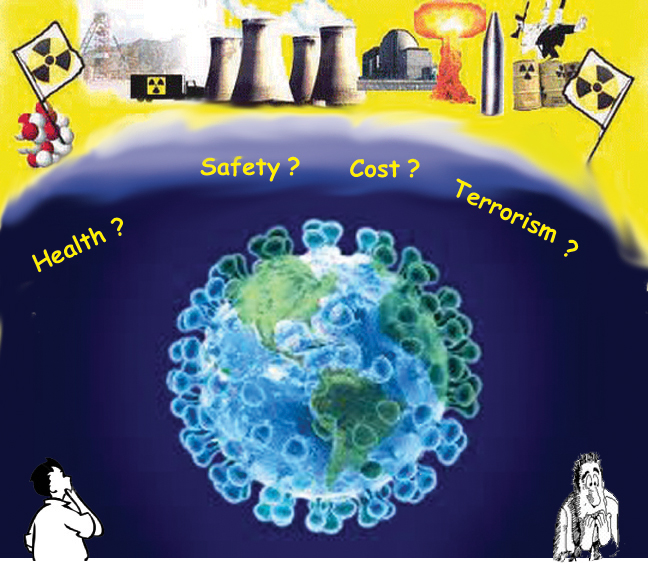
Nuclear power may soon be irrelevant to our energy needs. With the pandemic and social distancing, nuclear reactors are likely to be cutting back on output, or even going offline. And there are still the risks of extreme weather. Irrelevant, but still dangerous. Similarly, other nuclear facilities, like waste management, and nuclear weapons sites are also threatened. New nuclear development possibly stopped in its tracks, and certainly adding to its already astronomic costs.
The nuclear lobby, desperate to keep its industry alive, is claiming that “essential work” is the construction of the UK’s boondoggle –Hinkley C project, and USA’s boondoggle Nuclear Plant Vogtle.
The “Small Nuclear Reactors” industry development is looking sillier – carrying its huge financial risk, but no safety risk yet, seeing that it does not physically exist.
Calls for Morrison to end fossil fuel stimulus, redirect funds to clean tech — RenewEconomy
Calls for Morrison to end the ‘fossil fuel stimulus’ as economic crisis creates opportunity to make long term investment in clean technologies. The post Calls for Morrison to end fossil fuel stimulus, redirect funds to clean tech appeared first on RenewEconomy.
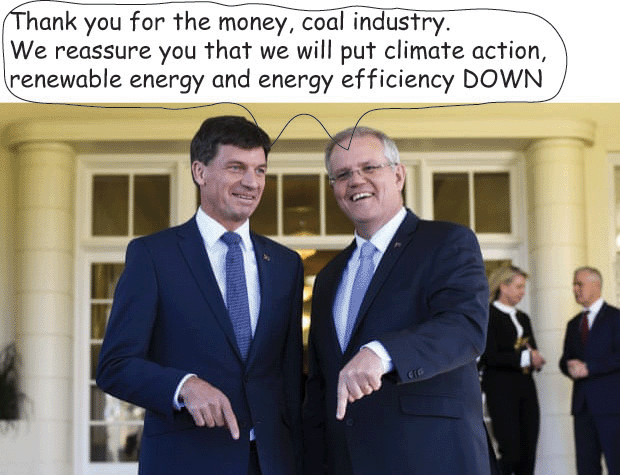
via Calls for Morrison to end fossil fuel stimulus, redirect funds to clean tech — RenewEconomy
The COVID Pandemic has thrown America’s atomic reactor industry into lethal chaos


Terrified Atomic Workers Warn That the COVID-19 Pandemic May Threaten Nuclear Reactor Disaster https://www.commondreams.org/views/2020/04/10/terrified-atomic-workers-warn-covid-19-pandemic-may-threaten-nuclear-reactor
Nuclear safety cannot be shortchanged—especially in the midst of an outbreak like what the nation is now experiencing, by Harvey Wasserman 10 Apr 20,
Nationwide, with falling demand and soaring prices for nuke-generated electricity, the pandemic casts a dark shadow over reactor operations and whether frightened neighbors will allow them to be refueled and repaired.
America’s 96 remaining atomic reactors are run by a coveted pool of skilled technicians who manage the control rooms, conduct repairs, load/unload nuclear fuel. Because few young students have been entering the field, the corps of about 100,000 licensed technicians has been—like the reactors themselves—rapidly aging while declining in numbers. Work has stopped at the last two US reactors under construction (at Vogtle, Georgia) due to the pandemic’s impact, which includes a shrinking supply of healthy workers.
Every reactor control room requires five operators at all times. But the physical space is limited there and in plant hot spots that need frequent, often demanding repairs. Social distancing is virtually impossible. Long shifts in confined spaces undermine operator safety and performance.
Of critical importance: every 18-24 months each reactor must shut for refueling and repairs. Itinerant crews of 1000 to 1500 technicians travel to 58 sites in 29 states, usually staying 30-60 days. They often board with local families, or in RVs, hotels, or Air B&Bs.
Some 54 reactors have been scheduled for refuel/repairs in 2020. But there is no official, organized program to test the workers for the Coronavirus as they move around the country.
As the pandemic thins the workforce, older operators are being called out of retirement. The Trump-run Nuclear Regulatory Commission recently certified 16-hour work days, 86-hour work weeks, and up to 14 consecutive days with 12-hour shifts.
Long-time nuclear engineer Arnie Gundersen warns of fatigued operators falling asleep on the job. He recalls at least one exhausted worker falling into the highly radioactive pool surrounding the high-level fuel rods. Operator fatigue also helped cause the 1979 melt-down that destroyed Pennsylvania’s Three Mile Island Unit Two.
The industry is now using the coronavirus pandemic to rush through a wide range of deregulation demands. Among them is a move to allow radioactive waste to be dumped into municipal landfills.
The NRC may also certify skipping vital repairs, escalating the likelihood of major breakdowns and melt-downs. Nearly all US reactors were designed and built in the pre-digital age, more than 30 years ago. Most are in advanced decay. Atomic expert David Lochbaum, formerly with the NRC, warns that failure risks from longer work hours and deferred repairs could be extremely significant, and could vary from reactor to reactor depending on their age and condition.
The industry has also been required to maintain credible public health response plans should those reactors blow. But pandemic-stricken U.S. hospitals now have zero spare capacity, multiplying the possible human fallout from an increasingly likely disaster.
Industry-wide the pandemic has brought working conditions to the brink of collapse. At Pennsylvania’s Limerick Generating Station, workers say they are “terrified” that the plant has become a “breeding ground…a complete cesspool” for the coronavirus. “I’m in a constant state of paranoia,” one technician told Carl Hessler, Jr., of MontcoCourtNews.
Others say social distancing is non-existent, with “no less than 100 people in the training room” and “people literally sitting on top of each other…sitting at every computer elbow to elbow.” Shift change rooms, Hessler was told, can be “standing room only.” At least two Limerick workers are confirmed to have carried the virus. COVID rates in the county are soaring.
Gundersen, a nuclear engineer, warns that limited control room floorspace and cramped conditions for maintenance can make social distancing impossible. “Some component repairs can involve five workers working right next to each other,” he says.
Because reactor-driven electricity is not vital amidst this pandemic downturn, the demand for atomic workers to “stay home” is certain to escalate. “I am concerned with Exelon & Limerick Nuclear Generating Station’s handling of the scheduled refueling—which has required bringing in workers from across the country during this pandemic,” says US Rep. Madeleine Dean in a statement likely to be repeated at reactor sites around the country.
“The potential increase of COVID-19 cases from 1,400 new workers not observing social distancing is staggering,” says epidemiologist Joseph Mangano of the Radiation and Health Project. “The Limerick plant should be shut until the COVID-19 pandemic is over.”
Indian Point Unit One, north of New York City, will shut permanently on April 28. Iowa’s Duane Arnold will close in December.
But Ground Zero may be Pacific Gas & Electric’s two 35-year-old reactors at Diablo Canyon. PG&E is bankrupt for the second time in two decades, and recently pleaded guilty to 85 felonies from the fires its faulty wires sent raging through northern California, killing 84 people. In 2010 a faulty PG&E gas line exploded in San Bruno, killing eight people.
Surrounded by earthquake faults, Diablo’s construction prompted more than 10,000 civil disobedience arrests, the most at any US reactor. PG&E now admits its two Diablo nukes will lose more than $1.2 billion this year, more than $3.4 million per day.
Amidst its bitterly contested bankruptcy, PG&E may be taken over by the state. But more than a thousand workers are slated in early October to refuel and repair Unit One, which the NRC says is dangerously embrittled.
Whether local residents concerned about both a nuclear accident and the spread of the coronavirus will let them into the county remains to be seen. So is whether they’ll be still operating by then.
With the future of the nuclear industry at stake—along with the possibility of more reactor mishaps—the whole world will be watching.
1 This month.

PETITION – To: Prime Minister Anthony Albanese and the Australian Labor Government
Chernobyl: The Lost Tapes – A good documentary on Chernobyl on SBS available On Demand for the next 3 weeks– https://www.sbs.com.au/ondemand/tv-program/chernobyl-the-lost-tapes/235274195556

19 May – Webinar- Webinar: No Nuclear Weapons in Australia
Start: 2026-05-19 18:00:00 UTC Canberra, Melbourne, Sydney (GMT+10:00)
End: 2026-05-19 19:30:00 UTC Canberra, Melbourne, Sydney (GMT+10:00)
20 May – Webinar – The dangerous world of AUKUS, US, military occupation and suppression of dissent

National Webinar, 20th May, 2026, 6.30pm AEST. Confronting laws restricting/suppressing protest speech and action
Speakers: Former Sen. Rex Patrick, Lawyer Nick Hanna ,Arthur Rorris ,Jorgen Doyle, Sen David Shoebbridge,
Facilitator Kelley Tranter.

of the week – Australians for War Powers Reform (AWPR)
To see nuclear-related stories in greater depth and intensity
 Antinuclear