W.A. to lead way in transition to distributed, renewable and equitable grid — RenewEconomy
W.A. switches from laggard to national leader as it plots out a path to embrace rooftop solar, batteries and EVs so that distributed energy can help displace big fossil fuel plants. The post W.A. to lead way in transition to distributed, renewable and equitable grid appeared first on RenewEconomy.
via W.A. to lead way in transition to distributed, renewable and equitable grid — RenewEconomy
New wind farm begins generating in Victoria — RenewEconomy
Second part of Lal Lal wind complex in Victoria connects to the grid and begins generating. The post New wind farm begins generating in Victoria appeared first on RenewEconomy.
via New wind farm begins generating in Victoria — RenewEconomy
UK local authorities call for reducing construction at Hinkley C nuclear site, in view of coronavirus risks
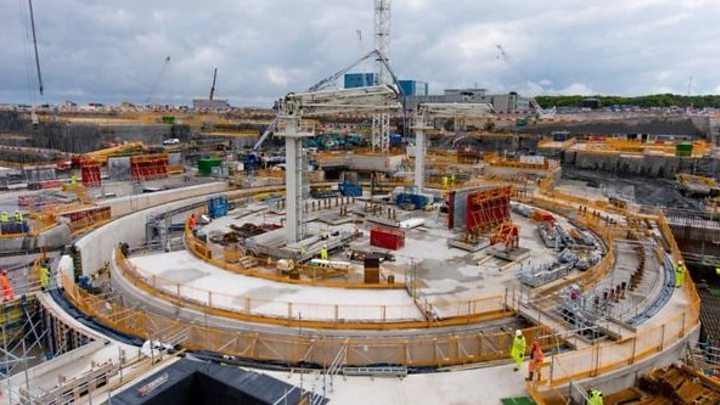
until the Covid-19 public health emergency is under full control. This repeated call comes from the NGOs and NFLA following intensive lobbying of the UK Government, the Office for Nuclear Regulation (ONR) and the Somerset local authorities responsible for the Hinkley Point C site by many of these groups, including the local Stop Hinkley group.
There have been improved efforts as well to enforce social distancing, though it remains to be seen if earlier poor practice in this area on and around the site could lead to increased infection rates in North Somerset and areas where the workforce originate from, such as South Wales and the Bristol area.
Fukushima mothers become radiation scientists, to help future generations

“If the risks of nuclear power had been thoroughly verified by the previous generations, I think the disaster would not have happened,” Kaori Suzuki, 54, an executive of Mothers’ Radiation Lab Fukushima, based in Iwaki, said in a recent interview.
“But since it did occur, what we must do now is record our measurements and changes in the environment so we won’t make the same mistake,” said Suzuki, one of the founding members. “Passing down something that will be useful when major decisions must be made is the only thing we can do.”
The laboratory of 18 staff members, many of them mothers who mostly had no prior experience in measuring radiation, have trained themselves with support from scientists, and they now gauge levels of cesium 134, cesium 137, tritium and strontium 90 with five types of machines.
Samples they have measured include dust in vacuum cleaners, vegetables grown in home gardens, seasonal mushrooms picked in mountains and soil gathered in parks.
They have occasionally detected radiation above safety levels, and reports the lab releases every month on its website have specified which machine is used and other details for each outcome to make their activities as transparent as possible.
Their efforts have made academic contributions as well, with their measuring methods and results published in scientific journals such as Applied Radiation and Isotopes in 2016.
Suzuki said they started the initiative out of desperation to protect their children.
“We had to measure and eat. It was a matter of life and death,” the mother of two said. ….
As time goes by, Tanaka has found that fewer people are discussing radiation effects.
The number of samples brought in by citizens last year was 1,573, up 131 from the year before, but it is showing a decreasing trend overall compared to years before, according to the lab.
“The Olympic Games are coming, and there are fewer media reports on radiation levels than before,” she said.
Officials have dubbed the Tokyo Summer Games the “Reconstruction Olympics,” with the hope of showcasing the country’s recovery from the 2011 catastrophe.
Because of that concept, the starting point of the Japan leg of the torch relay for the Olympics, which were recently put off for a year to the summer of 2021 due to the global coronavirus pandemic, was a soccer training center in Fukushima Prefecture that served as a front-line base in the battle against the nuclear disaster.
Tanaka said logging accurate data and keeping them publicly available are all the more important. “To protect children, having information is essential in deciding what to eat or where to go,” she said, adding that judgments based on correct data will also prevent any discrimination…….
Kimura said she feels that the fears people have toward the new coronavirus are similar to those toward radiation, as they are both invisible.
“Everyone forgets about (radiation) because its effects in 10 or 20 years are uncertain, unlike the new coronavirus that shows pneumonia-like symptoms in a couple of weeks,” she said. “I realized again that people in affected areas like us have been living every day with the same feelings toward the coronavirus pandemic.”
“It’s exhausting,” she said, adding her daughters must have had a hard time as she made them do things differently from their friends, such as wearing masks. “But I felt I was not wrong when my daughter said to me recently, ‘I was being protected by you, mom.’”
In addition to conducting surveys on radiation readings in the environment and food items, the lab in May 2017 opened a clinic with a full-time doctor to provide free medical checkups on internal exposure.
“I think it’s necessary to keep checking children’s health as they grow up, rather than drawing a conclusion saying there won’t be any problem with this level of radiation exposure,” said Misao Fujita, 58, a doctor who is a native of Tochigi Prefecture.
Fujita said the amount of radiation exposure dosage and risks of health damage differ among children even if they live in the same area, depending on such factors as their location and behavior in the days after the nuclear disaster, whether they evacuated and what they eat now.
Those who underwent Fujita’s medical checkups when they were children include a woman who now takes her own child to the clinic, in addition to a number of young decontamination workers.
“The nuclear disaster is something that’s carried on to coming generations. That’s what we have left,” Fujita said. “We must also not forget that about 30,000 people are still unable to return to their hometowns in the prefecture. The disaster isn’t over yet.” https://www.japantimes.co.jp/news/2020/04/10/national/social-issues/fukushima-mothers-record-radiation/#.XpESi_gzbIU
Australia’s clean energy transition delayed due to outdated electricity market design — RenewEconomy

Australia’s electricity market design is old and no longer fit for purpose, and it’s holding back the clean energy transition. The post Australia’s clean energy transition delayed due to outdated electricity market design appeared first on RenewEconomy.
via Australia’s clean energy transition delayed due to outdated electricity market design — RenewEconomy
AEMO declares system strength shortfall in Queensland after wind, solar curtailed — RenewEconomy

AEMO has called for action on North QLD system strength issues, making formal declaration of shortfall that has impacted solar and wind projects. The post AEMO declares system strength shortfall in Queensland after wind, solar curtailed appeared first on RenewEconomy.
via AEMO declares system strength shortfall in Queensland after wind, solar curtailed — RenewEconomy
April 10 Energy News — geoharvey

Opinion: ¶ “Staying On Course: Renewable Energy In The Time Of COVID-19” • Decisions on addressing the social and economic impacts of the pandemic come at a time of profound uncertainty about long-term effects of the crisis on the world’s societies. The response must accomplish more than just to bail out the existing socio-economic structures. […]
Conservation Council of Western Australia stresses importance of submissions to strengthen environmental protection


K-A Garlick Nuclear Free WA Campaigner, 10 Apr 20, The webinar, Yeelirrie – A Case for Environmental Law Reform was a great success, with a wealth of information from our four stellar speakers, on the urgent need for improved environmental laws using Yeelirrie as a case study for environmental law reform. We reviewed the Yelirrie uranium mine assessment process and how we can improve the agility in the Commonwealth environment department to identify and classify threatened and endangered species.
If you missed the webinar or would like to see the highlights again ~ click here for some great information to help you form your submission to the EPBC Act review.
Keynotes from the webinar, include;
- The importance of retaining the prohibition of nuclear power and the retention of uranium exploration and mining and the inclusion of nuclear actions as a matter of national environmental significance (MNES) under the EPBC Act,
- Environmental protection laws should protect against the extinction of species,
- Opportunity to introduce a merits review in a reformed EPBC Act as an independent, expert court or tribunal to ensure worlds best practice for community participation, accountability and environmental protection,
- We need an independent authority to administer the EPBC Act,
- We need increased open and transparent assessment processes, and
- We need a national EPA as there is no equivalent body at the federal level. A national EPA could undertake independent and technically expert assessments of projects, ensuring that the scientific evidence is put into focus.
The push for the nuclear industry and the Minerals Council of Australia to remove the prohibition on nuclear power and to remove the trigger for uranium mining is a serious push and real threat.
To retain these parts of the EPBC Act we encourage you to write a submission.
The new dont-nuke-the-climate website is a great tool to help you understand the nuclear issues and threat. There is a really useful nuclear ban page, to support your submission writing.
Submissions are due 17 April 2020.
Make a submission to the The Independent Review of the Environment Protection and Biodiversity Conservation Act 1999
- Via the Department: make a submission using the online form here.
- Via email: epbcreview@environment.gov.au
- Via post: EPBC Act Review Secretariat, Department of the Environment and Energy. GPO Box 787, CANBERRA ACT 2601
The committee ask that you complete and submit this cover page with any submission via e-mail or post. All submissions that include this cover sheet will be considered by the review.
Bob Phelps’ submission: There is no valid case for the planned national nuclear waste facility at Kimba
 Bob Phelps, 9 Apr, 20 The federal government’s proposed changes to the National Radioactive Waste Management Act are unfair, undemocratic and dangerous.
There is no valid case on safety or security grounds for the planned national nuclear waste facility at Kimba. The necessary infrastructure, resources and expertise for nuclear operations and waste management are all located at Lucas Heights and transferring the waste component of the system to a remote location at Kimba is a recipe for disaster in the medium and long term – up to 10,000 years from now, in the case of intermediate waste. Synroc failed and there is no credible alternative disposal proposal.
The traditional owners of the land were also disrespected and excluded from the purportedly public and democratic approval process. All citizens of Australia have a stake in the successful resolution of our national nuclear waste problems yet we were not consulted either.
My objections to the proposed Bill and its proposed changes to the Act specifically include that it would:
o compromise judicial review of the government’s site selection plans currently available
o enable unfair and undemocratic ‘consultations’ that reduce the rights and options of Barngarla Traditional Owners’ and other directly impacted parties
o render key environmental, cultural and heritage protection laws irrelevant to the decisions
o make no clear or compelling case for transferring long-lived intermediate level waste (ILW) from secure to insecure storage, at substantial additional public expense
o provide far less certainty about the final fate and long-term management of Australia’s radioactive waste
o be inconsistent with international best practice for containment, siting, transport, and temporary storage of radioactive wastes
o ignores long-standing South Australian laws that prohibit a federal radioactive waste facility
Nuclear waste containment continues to fail globally and there are no safe, secure or permanent repositories for nuclear waste anywhere. There is no justification at all for taking such wastes out of Lucas Heights, where they continue to be produced. It is also the best repository for lower level created in hospitals and other facilities nationally.
The Kimba nuclear waste dump and temporary storage, with no future plan, is a short term and fatally flawed proposal that does not serve the public interest.
I ask the Committee to reject the proposed changes to the current Act and to recommend a complete review of all nuclear waste and related operations, to best achieve robust and sustainable radioactive waste management for Australia, for the long-term future.
University boffins discuss the eternal problem of nuclear wastes
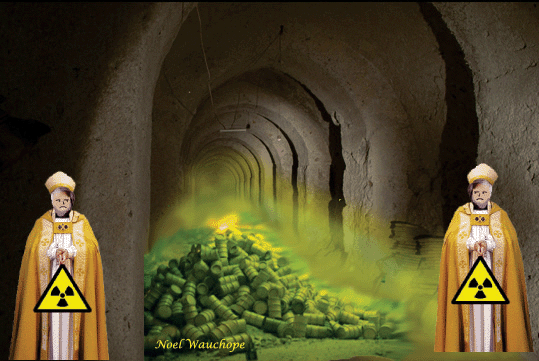
 Amazing – still none of these scientists suggests stopping making this radioactive trash!
Part of the show The Rise of Radioactivity
Chris – So what you’re saying is, if we’ve got say something that looks like glass, because it’s spitting out all these energetic particles of radiation all the time, it’s slowly going to shatter the glass. It’s almost like shaking the glass very, very hard for hundreds of thousands of years; it’s eventually going to fall to pieces and it will no longer be any good at retaining and constraining the radioactive products inside.
Adam – How do we design something in the future so that this stuff stays where it is, and isn’t archeologist bait, and they suddenly dig up a radioactive cube of glass?
Why Australia needs to aim for at least 75% renewables by 2030 — RenewEconomy

A high renewables grid is essential for Australia to meet its share of climate goals, and help reductions in other sectors. But it needs to happen fast. The post Why Australia needs to aim for at least 75% renewables by 2030 appeared first on RenewEconomy.
via Why Australia needs to aim for at least 75% renewables by 2030 — RenewEconomy
COVID-19 First Outbreak — Viral Glass-Like Nodules in Lungs — robertscribbler
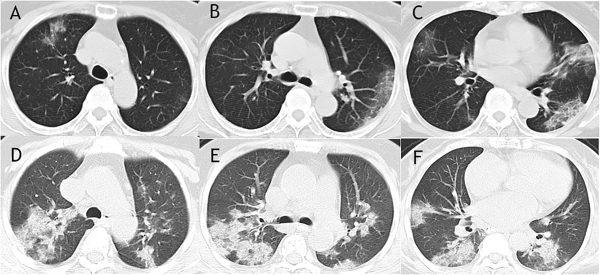
Comparison of lungs of a Wuhan patient who survived COVID-19 — image A-C — to those of a patient who suffered death from the illness — image D-F. Both image sets show the tell-tale ground glass like opacities of COVID-19 in lungs. Image source: Association of Radiologic Findings.
“The chances of a global pandemic are growing and we are all dangerously underprepared.” — World Health Organization in a September 18, 2019 statement mere months before the COVID-19 outbreak. “There’s a glaring hole in President Trump’s budget proposal for 2019, global health researchers say. A U.S. program to help other countries beef up their […]
via COVID-19 First Outbreak — Viral Glass-Like Nodules in Lungs — robertscribbler
April 8 Energy News — geoharvey

Opinion: ¶ “Rock Bottom: How COVID-19 Has Shattered The Oil Industry” • The spread of Covid-19 poses a significant threat to the global oil and gas industry. The increasingly drastic action taken to reduce the spread of the virus interferes with many of the sector’s key processes, and the uncertainty of the pandemic only worsens […]
Cleantech startups get a boost with ARENA funding for EnergyLab — RenewEconomy

ARENA tips in $480,000 into new EnergyLab start-up fund that will support new innovative clean tech businesses enter the Australian market. The post Cleantech startups get a boost with ARENA funding for EnergyLab appeared first on RenewEconomy.
via Cleantech startups get a boost with ARENA funding for EnergyLab — RenewEconomy
Big win for fossil fuels as regulators seek 12 month delay on 5-minute rule change — RenewEconomy

Big win for incumbent fossil fuel generators as regulators argue that Covid-19 pandemic requires 12-month delay to crucial market reform that would encourage more competition from batteries. The post Big win for fossil fuels as regulators seek 12 month delay on 5-minute rule change appeared first on RenewEconomy.
via Big win for fossil fuels as regulators seek 12 month delay on 5-minute rule change — RenewEconomy
1 This month.
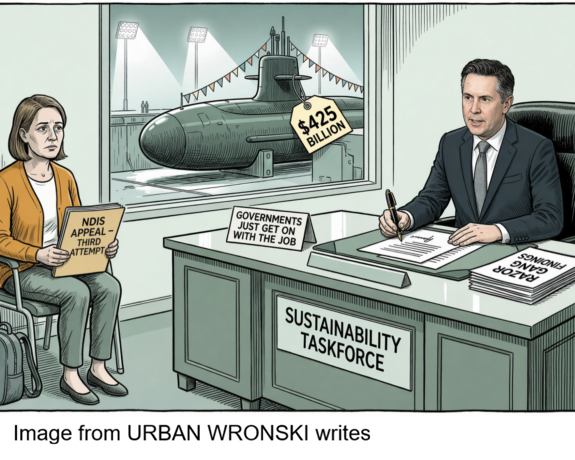

PETITION – To: Prime Minister Anthony Albanese and the Australian Labor Government
Chernobyl: The Lost Tapes – A good documentary on Chernobyl on SBS available On Demand for the next 3 weeks– https://www.sbs.com.au/ondemand/tv-program/chernobyl-the-lost-tapes/235274195556
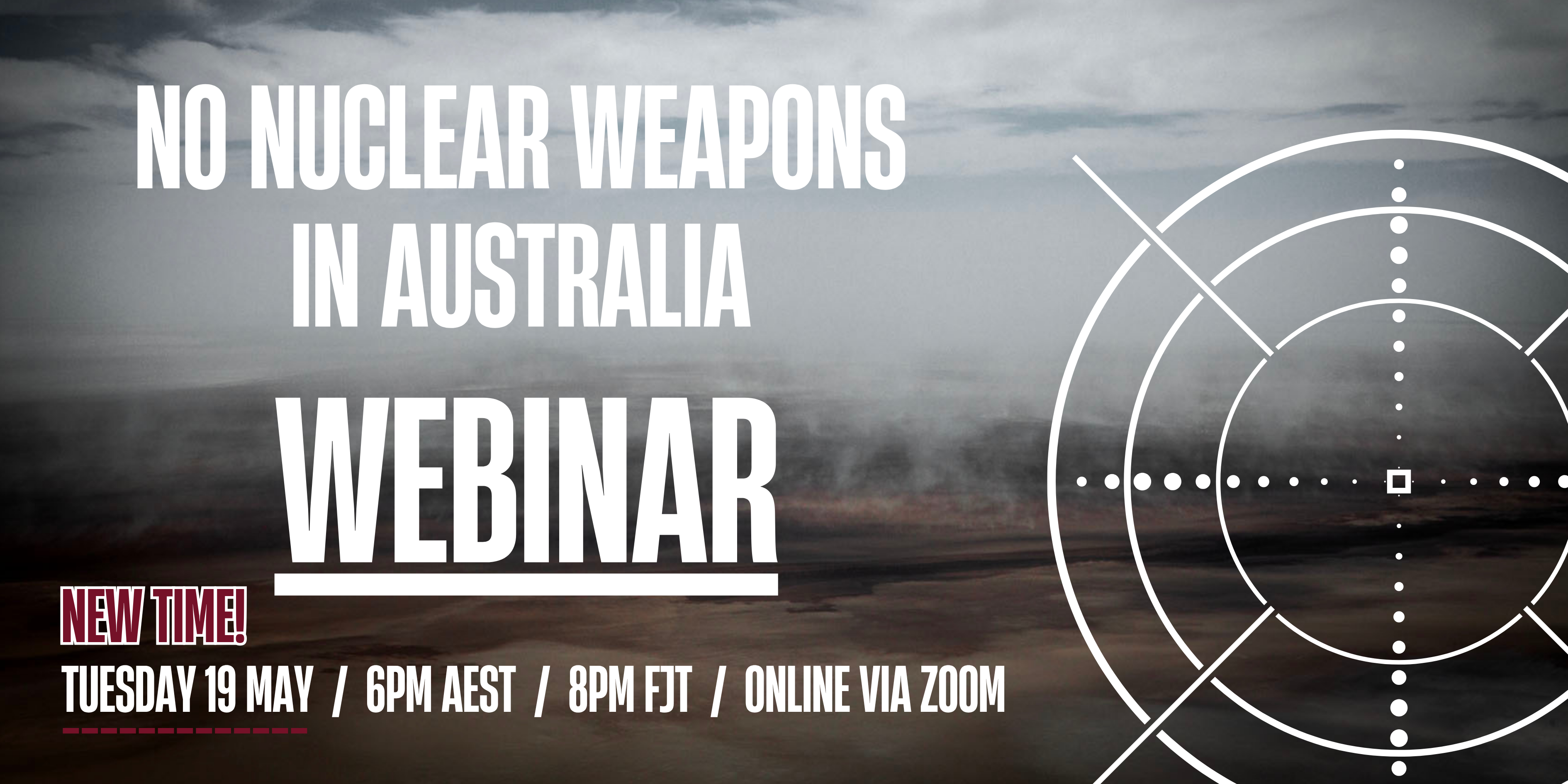
19 May – Webinar- Webinar: No Nuclear Weapons in Australia
Start: 2026-05-19 18:00:00 UTC Canberra, Melbourne, Sydney (GMT+10:00)
End: 2026-05-19 19:30:00 UTC Canberra, Melbourne, Sydney (GMT+10:00)
20 May – Webinar – The dangerous world of AUKUS, US, military occupation and suppression of dissent

National Webinar, 20th May, 2026, 6.30pm AEST. Confronting laws restricting/suppressing protest speech and action
Speakers: Former Sen. Rex Patrick, Lawyer Nick Hanna ,Arthur Rorris ,Jorgen Doyle, Sen David Shoebbridge,
Facilitator Kelley Tranter.

of the week – Australians for War Powers Reform (AWPR)
To see nuclear-related stories in greater depth and intensity
 Antinuclear