The importance of strengthening the Environment Protection and Biodiversity Conservation Act (EPBC)
 On April 2, environmentalists across Australia met online, in a webinar focussed on the EPBC Act. The federal government is holding a Review of the Environment Protection and Biodiversity Conservation Act , with Submissions due 17 April The Conservation Council of Western Australia, and Nuclear Free WA hosted the webinar. The case of the Yeelirrie uranium project was discussed, as a case especially relevant to the EPBC Act. As it turns out, the EPBC is weak, in relation to having power over this project. It relies on the Western Australian EPA for the relevant decision. Extraordinarily, in this case, the EPA advised against the project. However, the Environment Minister at the time, overrode this advice, and approved the project anyway.
Piers Verstagen, of CCWA, outlined the history of CCWA’s work in holding the Wester Australian EPA’s assessments to account. The Yeelirrie uranium project would threaten the extinction of up to 11 stygofauna, which are tiny groundwater species. The EPA therefore did not recommend the project. However, in approving the project , the Minister also inserted a clause into the legislation, which now will allow the extinction of any species. CCWA has challenged that approval. The project has not proceeded.
But – this Yeelirrie case is a fine example of the reasons why the EPBC Act needs to be strengthened, not weakened. Weakening the Act is the goal of the Mining Council and others, who seek unfettered development of mining and other polluting projects.
Ruby Hamilton pointed out the need for Australia’s Environmental Protection Act to relate to international treaties on environment.
ACF’s Environmental Investigator described ways in which the Act should be strengthened, emphasising that:
- We need to keep the right for 3rd parties to challenge bad decisions.
- We need an independent authority to administer the EPBC Act.
- WE need way more transparency in the way that the Act is used
Captain of nuclear-powered aircraft carrier fired for his plea for sailors endangered by Covid 19
 The USA government and military/naval big-wigs are very reluctant to allow any information about their nuclear-powered ships to get out. And even when such news does get out, the word “NUCLEAR” is dropped from the media coverage.
The Navy Fired the Captain of the Theodore Roosevelt. See How the Crew Responded. The rousing show of support provided another gripping scene to emerge from the coronavirus pandemic: the rank and file cheering a boss they viewed as putting their safety ahead of his career. By Helene Cooper, Thomas Gibbons-Neff and Eric Schmitt
- April 3, 2020 WASHINGTON — It was a send-off for the ages, with hundreds of sailors aboard the aircraft carrier Theodore Roosevelt cheering Capt. Brett E. Crozier, the commander who sacrificed his naval career by writing a letter to his superiors demanding more help as the novel coronavirus spread through the ship.
- The rousing show of support provided the latest gripping scene to emerge from the coronavirus pandemic: the rank and file shouting their admiration for a boss they viewed as putting their safety ahead of his career.
…….. in removing Captain Crozier from command, senior Navy officials said they were protecting the historic practice that complaints and requests have to go up a formal chain of command. They argued that by sending his concerns to 20 or 30 people in a message that eventually leaked to news organizations, Captain Crozier showed he was no longer fit to lead the fast-moving effort to treat the crew and clean the ship.
Don’t let’s forget – Climate Change is an even greater catastrophe than Coronavirus

While we fixate on coronavirus, Earth is hurtling towards a catastrophe worse than the dinosaur extinction, The Conversation, Andrew Glikson
Earth and paleo-climate scientist, 3 Apr 20, At several points in the history of our planet, increasing amounts of carbon dioxide in the atmosphere have caused extreme global warming, prompting the majority of species on Earth to die out.
In the past, these events were triggered by a huge volcanic eruption or asteroid impact. Now, Earth is heading for another mass extinction – and human activity is to blame.
I am an Earth and Paleo-climate scientist and have researched the relationships between asteroid impacts, volcanism, climate changes and mass extinctions of species.
My research suggests the current growth rate of carbon dioxide emissions is faster than those which triggered two previous mass extinctions, including the event that wiped out the dinosaurs.
The world’s gaze may be focused on COVID-19 right now. But the risks to nature from human-made global warming – and the imperative to act – remain clear………
My research suggests the current growth rate of carbon dioxide emissions is faster than those which triggered two previous mass extinctions, including the event that wiped out the dinosaurs.
The world’s gaze may be focused on COVID-19 right now. But the risks to nature from human-made global warming – and the imperative to act – remain clear……
The next mass extinction has begun
Current atmospheric concentrations of carbon dioxide are not yet at the levels seen 55 million and 65 million years ago. But the massive influx of carbon dioxide means the climate is changing faster than many plant and animal species can adapt.
A major United Nations report released last year warned around one million animal and plant species were threatened with extinction. Climate change was listed as one of five key drivers.
The report said the distributions of 47% of land-based flightless mammals, and almost 25% of threatened birds, may already have been negatively affected by climate change.
Many researchers fear the climate system is approaching a tipping point – a threshold beyond which rapid and irreversible changes will occur. This will create a cascade of devastating effects.
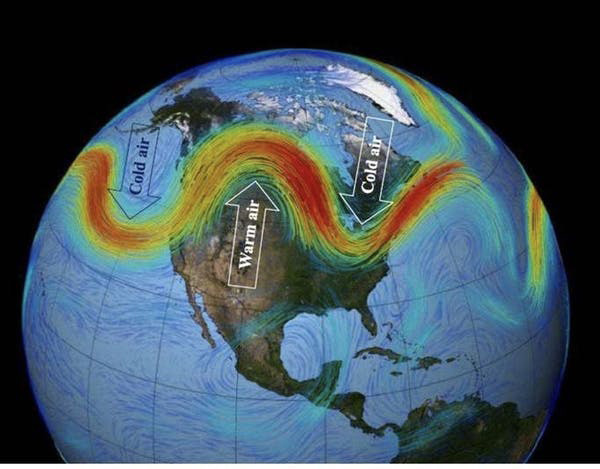
There are already signs tipping points have been reached. For example, rising Arctic temperatures have led to major ice melt, and weakened the Arctic jet stream – a powerful band of westerly winds.
While we fixate on coronavirus, Earth is hurtling towards a catastrophe worse than the dinosaur extinction, The Conversation, Andrew Glikson
Earth and paleo-climate scientist, 3 Apr 20, At several points in the history of our planet, increasing amounts of carbon dioxide in the atmosphere have caused extreme global warming, prompting the majority of species on Earth to die out.
In the past, these events were triggered by a huge volcanic eruption or asteroid impact. Now, Earth is heading for another mass extinction – and human activity is to blame.
I am an Earth and Paleo-climate scientist and have researched the relationships between asteroid impacts, volcanism, climate changes and mass extinctions of species.
My research suggests the current growth rate of carbon dioxide emissions is faster than those which triggered two previous mass extinctions, including the event that wiped out the dinosaurs.
The world’s gaze may be focused on COVID-19 right now. But the risks to nature from human-made global warming – and the imperative to act – remain clear………
My research suggests the current growth rate of carbon dioxide emissions is faster than those which triggered two previous mass extinctions, including the event that wiped out the dinosaurs.
The world’s gaze may be focused on COVID-19 right now. But the risks to nature from human-made global warming – and the imperative to act – remain clear……
The next mass extinction has begun
Current atmospheric concentrations of carbon dioxide are not yet at the levels seen 55 million and 65 million years ago. But the massive influx of carbon dioxide means the climate is changing faster than many plant and animal species can adapt.
A major United Nations report released last year warned around one million animal and plant species were threatened with extinction. Climate change was listed as one of five key drivers.
The report said the distributions of 47% of land-based flightless mammals, and almost 25% of threatened birds, may already have been negatively affected by climate change.
Many researchers fear the climate system is approaching a tipping point – a threshold beyond which rapid and irreversible changes will occur. This will create a cascade of devastating effects.
There are already signs tipping points have been reached. For example, rising Arctic temperatures have led to major ice melt, and weakened the Arctic jet stream – a powerful band of westerly winds.
Australia has what it needs to go “all in” and reach zero emissions by 2035 — RenewEconomy
Climateworks study says Australia has what it needs for economy-wide decarbonisation in line with 1.5°C target. The only missing ingredient is a Coronavirus-style response from government. The post Australia has what it needs to go “all in” and reach zero emissions by 2035 appeared first on RenewEconomy.
via Australia has what it needs to go “all in” and reach zero emissions by 2035 — RenewEconomy
April 3 Energy News — geoharvey
Opinion: ¶ “COVID-19 Is The Catalyst We Need To Push Renewable Energy Forward” • Business is far from usual in America or around the world as the COVID-19 pandemic decimates industry after industry. We are at a crossroads. We can choose to pedal backward furiously or we can choose to boldly go where human civilization […]
Final Government approvals for core lithium to move on first lithium production in the NT — RenewEconomy

Core Lithium has received approval of its Mine Management Plan from the Northern Territory Government The post Final Government approvals for core lithium to move on first lithium production in the NT appeared first on RenewEconomy.
France solar auction success delivered at nuclear’s expense — RenewEconomy

France announces winners of latest renewables auctions, including 12 solar projects totalling nearly 100MW commissioned to replace a decommissioned nuclear plant. The post France solar auction success delivered at nuclear’s expense appeared first on RenewEconomy.
via France solar auction success delivered at nuclear’s expense — RenewEconomy
Solar constraints could be relaxed before end of April, clearing path for new projects — RenewEconomy

Tuning solution for solar inverters to be tested next week, raising hopes that constraints on solar farms, and connection delays to more than a dozen large scale projects, can be relaxed. The post Solar constraints could be relaxed before end of April, clearing path for new projects appeared first on RenewEconomy.
Rooftop solar charts another big month, but Covid-19 clouds future — RenewEconomy

Rooftop solar installs enjoy another record month in March, but delay in registrations may hide the impact of Covid-19 as pandemic clouds future. The post Rooftop solar charts another big month, but Covid-19 clouds future appeared first on RenewEconomy.
via Rooftop solar charts another big month, but Covid-19 clouds future — RenewEconomy
How your home battery can help keep the grid stable and prices down — RenewEconomy

Tesla data shows how household batteries orchestrated through “virtual power plants” provide critical system security services and push down costs for all consumers. The post How your home battery can help keep the grid stable and prices down appeared first on RenewEconomy.
via How your home battery can help keep the grid stable and prices down — RenewEconomy
Outlandish claims made by Byron Shire Councillors, (Greens!!) promoting mobile Small Nuclear Reactors

What a strange article! The claims made about these “mobile small nuclear reactors” are completely fanciful. These reactors do not exist, are just in the planning stage for use by U.S. military. Even more fanciful , the article’s claim – “the pilot scheme, which will attract multi-million dollar grants.”. Just where are these grants to come from? The cash-strapped Australian government? The Russians? The Americans? The Chinese? This entire magical unicorn the Small Nuclear Reactor business is quite unable to attract investors. It’s only hope is to be funded by the tax-payer. I note these unnamed Green proponents talk about “spreading the risk fairly among the population” – and still think it’s just fine. So they understand that there’s a risk of dangerous radiation – a very strange attitude for a supposedly environmental group.
What could go wrong? https://www.echo.net.au/2020/04/what-could-go-wrong/ April 1, 2020 | by Echonetdaily, Mobile 100MW nuclear power plants have been proposed by the NSW National Party.
The latest miniaturisation technology that has seen electronic circuitry reduced from physical nodes to nanoscale impulses in quantum space has had astounding impacts on the relatively macroscale equipment needed to generate nuclear power. Such equipment has become so small it is now possible to build bus-sized nuclear reactors that can be deployed, as needed, to address gaps in the power grid.
Byron’s Greens councillors have indicated support for the proposal, and hope to involve the Shire in the early stages of the pilot scheme, which will attract multi-million dollar grants. A spokesperson for the local Greens said nuclear plants are not only less polluting than coal fired power stations, but being mobile means they spread the risk fairly among the population.
State and federal Greens later issued a statement disassociating themselves, ‘as always’, from Byron Shire councillors.
Doctors warn on coronavirus danger for Julian Assange, imprisoned without conviction, in a coronavirus incubator
 ASSANGE EXTRADITION: Doctors Warning on Assange in a Covid-19 Breeding Ground, Consortium News,April 1, 2020 • In a prison cited for failing to curb infections, Doctors4Assange warn that Julian Assange is at high risk of contracting the deadly coronavirus.According to a report Wednesday in The Daily Maverick, imprisoned WikiLeaks publisher Julian Assange is one of only two prisoners of 797 inmates in Belmarsh Prison who are being held for skipping bail. The majority are violent criminals, including 20 percent for murder and 16 inmates on terrorism offenses. The facility was also repeatedly criticized by prison inspectors for a lapse in preventing infections to inmates. Following Judge Vanessa Baraitser’s decision to deny Assange bail last week, Doctors4 Assange released the following statement:
Doctors4Assange Statement on Assange
Bail Hearing over Coronavirus Risk, March 27, 2020 Doctors4Assange strongly condemns last Wednesday’s decision by UK District Judge Vanessa Baraitser to deny bail to Julian Assange. Despite our prior unequivocal statement[1] that Mr Assange is at increased risk of serious illness and death were he to contract coronavirus, and the evidence of medical experts, Baraitser dismissed the risk, citing UK guidelines for prisons in responding to the global pandemic: “I have no reason not to trust this advice as both evidence-based and reliable and appropriate.”[2]
Notably, however, Baraitser did not address the increased risk to Mr Assange relative to the general UK prison population, let alone prisoners at HMP Belmarsh where Assange is incarcerated. Nor did she address the rapidly emerging medical and legal consensus that vulnerable and low-risk prisoners should be released, immediately.
As the court heard, Mr Assange is at increased risk of contracting and dying from the novel disease coronavirus (COVID-19), a development which has led the World Health Organization to declare a public health emergency of international concern[3] and a global pandemic.[4] The reasons for Mr Assange’s increased risk include his ongoing psychological torture, his history of medical neglect and fragile health, and chronic lung disease.
Edward Fitzgerald, QC, representing Mr Assange, said, “These [medical] experts consider that he is particularly at risk of developing coronavirus and, if he does, that it develops into very severe complications for him… If he does develop critical symptoms it would be very doubtful that Belmarsh would be able to cope with his condition.”[5]
Baraitser’s casual dismissal of Mr Assange’s dire situation in the face of the COVID-19 emergency stood in stark contrast not only to the expert medical evidence, but the proceedings themselves. The hearing took place on the third day of the UK’s coronavirus lock-down. Of the two counsels representing Mr Assange, Edward Fitzgerald QC wore a facemask and Mark Summers QC participated via audiolink. US attorneys joined the proceedings by phone.
Mr Assange himself appeared by videolink, which was terminated after around an hour, rendering him unable to follow the remainder of his own hearing, including the defence summation and the District Judge’s ruling. Mr Assange’s supporters attending in person observed social distancing measures. Overall only 15 people were in attendance, including judge, counsel, and observers……..
Adding their legal voices to these medical and human rights authorities, the day after Mr Assange’s bail hearing, three professors in law and criminology recommended “granting bail to unsentenced prisoners to stop the spread of coronavirus”.[12]
Julian Assange is just such an unsentenced prisoner with significant health vulnerability. He is being held on remand, with no custodial sentence or UK charge in place, let alone conviction.
Doctors4Assange are additionally concerned that keeping Assange in Belmarsh not only increases his risk of contracting coronavirus, it will increase his isolation and his inability to prepare his defence for his upcoming extradition hearing, in violation of his human right to prepare a defence…… https://consortiumnews.com/2020/04/01/assange-extradition-doctors-warning-on-assange-in-a-covid-19-breeding-ground/
Coronavirus: Thousands of sailors to leave nuclear-powered aircraft carrier, heading for isolation

|
US Sailors Pour Off Aircraft Carrier and Into Coronavirus Isolation on Guam, Defense One , BY BRADLEY PENISTON, DEPUTY EDITOR, 2 Apr. 20 NAVY LEADERS PRAISE SHIP’S CAPTAIN FOR URGENT EVACUATION REQUEST; 3,700 WILL LEAVE THE SHIP WITHIN DAYS.
About one-fifth of the USS Theodore Roosevelt’s 4,865 sailors are off the COVID-stricken aircraft carrier and into isolation on Guam, with about 2,700 more expected to evacuate in the next few days, Acting Navy Secretary Thomas Modly said Wednesday. Modly’s update comes two days after the ship’s captain sent a stark letter up the chain of command — made public on Tuesday by the San Francisco Chronicle — warning that fully 90 percent of the crew needed to evacuate and isolate for two weeks for their own safety. The secretary’s comments clarify that the Navy was indeed evacuating most sailors from the ship, after Defense Secretary Mark Esper said in a CBS News interview aired late Tuesday that said an evacuation was not yet necessary. Modly praised the captain for the prodding, and said that evacuation efforts already were in the works but not with the right urgency. ….. https://www.defenseone.com/threats/2020/04/us-sailors-pour-aircraft-carrier-and-isolation-guam/164287/?oref=d-topstory |
|
U.S. Navy’s change of heart: sailors will evacuate from coronavirus-afflicted nucvlear powered aircraft carrier
|
“We are not at war,” Caprain Brett Crozier wrote in a four-page letter to bosses detailing how the ship did not have enough quarantine facilities. “Sailors do not need to die. If we do not act now, we are failing to properly take care of our most trusted asset – our sailors.” Now, his demand to get crew ashore appears to have been met with Acting Navy Secretary Thomas Modly confirming sailors were being taken off board in stages, with 1,000 people already evacuated and placed in isolation on land. It is thought around 100 people on the nuclear-powered vessel have tested positive for Covid-19, although this remains unconfirmed by the navy itself. Modly said the force had been working for several days to get the majority of crew off the ship but that, because Guam was dealing with its own outbreak of Covid-19, there were not currently enough isolated beds. He said he was in talks with officials there to use hotels and set up tents. “It’s not the same as a cruise ship, it has armaments on it, it has aircraft on it, we have to be able to fight fires if there is a fire on there,” he said……..
|

Nuclear-powered aircraft carrier Roosevelt – Captain pleas for evacuation of sailors, amid coronavirus infection
|
April 1, 2020, ‘We are not at war. Sailors do not need to die’: Captain
|
|
1 This month.
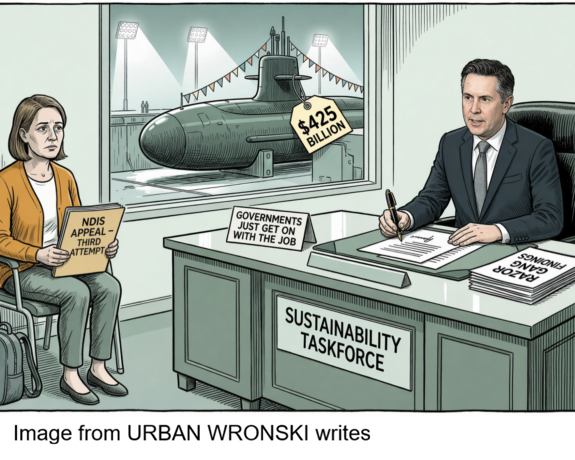

PETITION – To: Prime Minister Anthony Albanese and the Australian Labor Government
Chernobyl: The Lost Tapes – A good documentary on Chernobyl on SBS available On Demand for the next 3 weeks– https://www.sbs.com.au/ondemand/tv-program/chernobyl-the-lost-tapes/235274195556
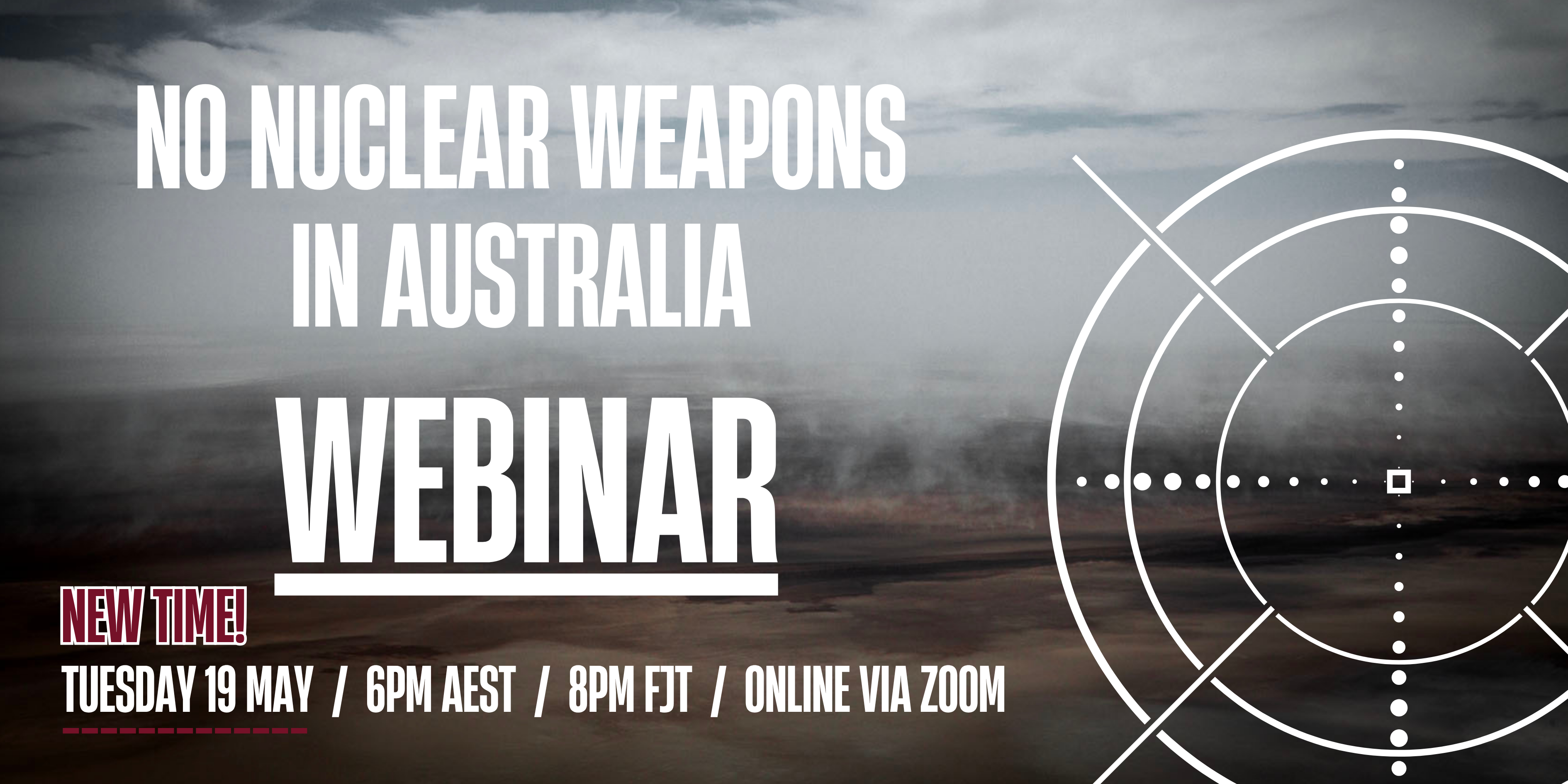
19 May – Webinar- Webinar: No Nuclear Weapons in Australia
Start: 2026-05-19 18:00:00 UTC Canberra, Melbourne, Sydney (GMT+10:00)
End: 2026-05-19 19:30:00 UTC Canberra, Melbourne, Sydney (GMT+10:00)
20 May – Webinar – The dangerous world of AUKUS, US, military occupation and suppression of dissent

National Webinar, 20th May, 2026, 6.30pm AEST. Confronting laws restricting/suppressing protest speech and action
Speakers: Former Sen. Rex Patrick, Lawyer Nick Hanna ,Arthur Rorris ,Jorgen Doyle, Sen David Shoebbridge,
Facilitator Kelley Tranter.

of the week – Australians for War Powers Reform (AWPR)
To see nuclear-related stories in greater depth and intensity
 Antinuclear