So-called ‘Ethical’ super funds invest in coal, oil, gas
 ‘Ethical’ super funds invest in coal, oil, gas, SMH, Charlotte Grieve, March 3, 2020 Sustainable investment options offered by two major industry superannuation groups and wealth giant AMP have millions invested in the fossil fuel industry, despite pledging to apply strict screening based on environmental, social and governance standards.
AustralianSuper’s “socially aware investment option” claims it does not invest in Australian or international companies that directly own fossil fuels while disclosures of its portfolio holdings show it has at least $39 million invested in more than 20 global coal, oil and gas projects. These include Marathon Petroleum Corp, Indian thermal coal plant Adhunik Power and Natural Resources and oil, gas and chemicals company, WorleyParsons.
Latest figures show the fund has more than $2.4 billion invested on behalf of 38,000 members, less than 2 per cent of the $172 billion superannuation giant’s total membership pool.
After conducting a survey of members’ interests, the top investment concern for those wanting an ethical alternative was exposure to coal and other fossil fuels. The socially aware option pledges to screen out companies that own reserves of fossil fuels or uranium, regardless of the size of its ownership.
This screen is not applied to private equity, which makes up 4 per cent of total investments and the fund’s fact-sheet explains it can still invest in companies that provide services to, buy, process or sell products from or invest in the excluded companies.
The fund has a stake in 24 companies that either produce fossil fuels or rely on their production. These include: thermal coal producer Westmoreland Mining that in December announced a six-year coal supply agreement in middle America; $9.6 million in Halliburton, one of the world’s largest providers of drilling and production services for oil, gas and coal companies; and $9.6 million in Marathon Petroleum, the largest refining company in America that produces more than 3 million barrels of crude oil per day.
Other oil and gas companies AustralianSuper’s sustainable fund bankrolls include Fieldwood Energy, a company that claims to be one of the largest producers of oil and gas in the Gulf of Mexico, Perth-based Northern Oil and Gas and Ajax Resources, recently acquired by Texas oil and gas company, Diamondback.
AustralianSuper declined to answer questions about its screening process or if it had plans to create a fund that applies a hard screen to the fossil fuel industry.
Similarly, the 2019 portfolio holdings for $54 billion Hostplus’s sustainable investment option launched in March 2017 includes at least eight oil and gas companies, including Oil Search, Santos and Woodside Petroleum.
Hostplus was contacted for comment.
However, AMP invests in at least nine oil and gas companies, including Oil Search, Woodside Petroleum and Santos……. https://www.smh.com.au/business/banking-and-finance/ethical-super-funds-invest-in-coal-oil-gas-20200228-p545ja.html
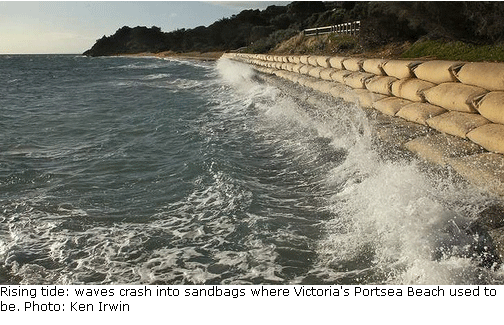
Australia’s disappearing beaches, as global heating causes sea level rise
|
Thousands of kilometres of Australia’s beaches at risk from rising seas, SMH, By Peter Hannam, March 3, 2020 More than 12,000 kilometres of Australia’s sandy beaches are threatened by coastal erosion by the end of the century, with greater losses predicted if greenhouse gas emissions remain high.The projections, made by European researchers and published in Nature Climate Change on Tuesday, used satellite data that tracked shoreline change from 1984 to 2015. They found a “substantial proportion” of the world’s sandy coastline is already eroded, a trend that could worsen as climate change pushes up sea levels.
Under a “moderate” effort to curb emissions – with carbon pollution peaking at 2040 and then declining – at least 12,324 kilometres of Australia’s sandy coast will be threatened with erosion by 2100. That tally is the most of any nation, and would amount to about 40 per cent of the country’s sandy beaches. Should greenhouse gas emissions continue to rise through the century – the so-called 8.5 Representative Concentration Pathway – Australia’s sandy coastline at risk increases to 15,439 kilometres, the paper said. “You have a long coastline and part of the coast is very mildly sloping” and is therefore susceptible to erosion, said Michalis Vousdoukas, a coastal oceanographer at the European Commission and the paper’s lead author. “Melbourne is worse than Sydney,” Dr Vousdoukas told the Herald and The Age, adding Brisbane and Adelaide’s beaches fell between the two in terms of vulnerability to erosion. The researchers said global sea levels had been increasing “at an accelerated rate during the past 25 years and will continue to do so with climate change”. So far, most of the increase had come from the thermal expansion of warmer water but, by mid-century or so, the increase in sea levels would likely come more from melting ice sheets, Dr Vousdoukas said……..https://www.smh.com.au/environment/climate-change/thousands-of-kilometres-of-australia-s-beaches-at-risk-from-rising-seas-20200302-p5463p.html |
|
|
Nuclear testing left a signature of radioactive carbon all around the world
Even after childhood, bomb radiocarbon chronicles the history of our body.
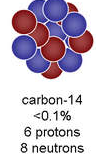 Your Inner H-Bomb Nuclear testing left a signature of radioactive carbon all around the world—in trees and sharks, in oceans and human bodies. Even as that signal disappears, it’s revealing new secrets to scientists. The Atlantic, Story by Carl Zimmer, 2 Mar 20,
 March 2 Energy News — geoharvey

Opinion: ¶ “California’s Primary Comes Amid A Dramatic Battle Over Nuclear Energy” • The California March 3 primary comes amid an atomic struggle whose outcome will hugely impact the nation and world, including the global climate crisis, the Green New Deal, and the outcome of the 2020 election. Ground Zero is the Diablo Canyon nuclear […]
How to run the National Electricity Market on 96 per cent renewables — RenewEconomy

Windlab simulation of 96% renewable NEM shows very high renewables penetration is possible with boosted wind and solar, firmed by existing hydro and readily achievable levels of storage. The post How to run the National Electricity Market on 96 per cent renewables appeared first on RenewEconomy.
via How to run the National Electricity Market on 96 per cent renewables — RenewEconomy
Victoria energy efficiency market rides wave of optimism, NSW hopes to follow — RenewEconomy

After an eye-watering rally, VEEC market settles in mid $30s awaiting government’s response. Meanwhile, a waiting game of sorts is also playing out north of the border. The post Victoria energy efficiency market rides wave of optimism, NSW hopes to follow appeared first on RenewEconomy.
via Victoria energy efficiency market rides wave of optimism, NSW hopes to follow — RenewEconomy
As If Nothing Had Occurred: Anti-Tokyo Olympics Protests and Concern Over Radiation Exposure — Fukushima 311 Watchdogs

March 1, 2020 Akihiro Ogawa Abstract: This paper argues the 2020 Tokyo Olympics has raised people’s awareness of concerns over radiation exposure as a form of social movement. One example is the Shinjuku demonstration, organized by the Network to Evacuate People from Radiation, which constantly advocates for protecting children from continuing radiation exposure. The group raised the issue that […]
The Fukushima Nuclear Disaster and the Tokyo Olympics — Fukushima 311 Watchdogs

March 1, 2020 Koide Hiroaki Translation, with notes and references, by Norma Field Abstract: The Olympic games have always been used to display national might. In recent years, they have become tools for businesses, especially construction companies, which create, and then destroy, large public structures, leading to a colossally wasteful society from which they derive […]
via The Fukushima Nuclear Disaster and the Tokyo Olympics — Fukushima 311 Watchdogs
An Olympic-Sized Disaster Is Brewing in Japan — Fukushima 311 Watchdogs

Tokyo Electric Power Company demonstrates how to measure radiation of water processed in ALPS II (Multi-nuclide retrieval equipment) at the tsunami-devastated nuclear power plant, Fukushima, January 22, 2020. February 24, 2020 The 2020 Summer Olympics are coming to Japan — despite two major health scares: radiation from the nuclear meltdown at Fukushima and, more recently, […]
via An Olympic-Sized Disaster Is Brewing in Japan — Fukushima 311 Watchdogs
Poll: 57% oppose dumping water into ocean from Fukushima plant — Fukushima 311 Watchdogs

Tanks storing contaminated water occupy the site of the Fukushima No. 1 nuclear power plant in Okuma, Fukushima Prefecture, in August 2019. February 28, 2020 Fifty-seven percent of respondents to a poll in Fukushima Prefecture say they oppose the government’s plan to release tons of contaminated water from the Fukushima No. 1 nuclear power plant […]
via Poll: 57% oppose dumping water into ocean from Fukushima plant — Fukushima 311 Watchdogs
South Australia separates from NEM, again, as interconnector troubles return — RenewEconomy

South Australia again disconnected from the rest of the National Electricity Market, as another issue hits the Heywood interconnector. The post South Australia separates from NEM, again, as interconnector troubles return appeared first on RenewEconomy.
via South Australia separates from NEM, again, as interconnector troubles return — RenewEconomy
Germany hits record 61 per cent renewables for month of February — RenewEconomy

Throughout February German renewables regularly provided around 60% or more of the country’s electricity production – including more than a dozen days around or above 70%. The post Germany hits record 61 per cent renewables for month of February appeared first on RenewEconomy.
via Germany hits record 61 per cent renewables for month of February — RenewEconomy
Carnegie looks to boost CETO 6 wave power efficiency, reliability and smarts — RenewEconomy

A sparsely-worded half-year results statement says Carnegie is continuing to progress its CETO 6 wave energy technology, with “innovation opportunities” and smart controls. The post Carnegie looks to boost CETO 6 wave power efficiency, reliability and smarts appeared first on RenewEconomy.
via Carnegie looks to boost CETO 6 wave power efficiency, reliability and smarts — RenewEconomy
Tasmania boosts renewable hydrogen aspirations with $50m “action plan” — RenewEconomy

Tasmania eyes renewable hydrogen exports within a decade with $50 million, 10-year renewable hydrogen action plan. The post Tasmania boosts renewable hydrogen aspirations with $50m “action plan” appeared first on RenewEconomy.
via Tasmania boosts renewable hydrogen aspirations with $50m “action plan” — RenewEconomy
Australia’s early nuclear history – a scandalously crooked co-operation with Britain
The British also deliberately spread plutonium dust over the outback in so called safety tests. Although a number of Australians had knowledge they desperately wanted to share with the Australian people, the Australian government threatened these people with many years jail if they spoke out.
Australian service personnel and their health status records were treated and kept at the Maralinga Hospital. John Hutton was the only involved person to ever see his Maralinga file and actually get to retain a page from it. (He nicked it).
Australia and Britain perfected a medical regime in which medical responses to radiation induced syndromes were solved without documenting the actual diagnosis. The afflicted personnel, with the exception of Mr. Hutton, never got to read their own medical records, all of which disappeared when the British Bombardiers left Australia in the 1960s. And some say they took the Maralinga medical records with them. That’s very close collaboration, isn’t it?
|
Part 1 of A Study of the “Report of the inquiry into the prerequisites for nuclear energy in Australia” Australian Parliamentary Committee 2020. Nuclear History, 29 Feb 2020 “………..Australia cooperated with the United Kingdom in that nations’ successful attempt to duplicate the Manhattan’s Project plutonium bomb. Prime Minister Menzies, without the approval of ordinary Australians, agreed to the British request to detonate atomic bombs over and on Australia. This involved excluding the Australian Sir Mark Oliphant from participating in the Atomic Weapons Safety Committee (AWTSC). Instead following British desires, Australia appointed the Englishman Professor Titterton, a radar and timing expert, to that committee. Even though the Committee was not a British Committee, but one which was paid for by Australians, and which reported to, and was subordinate to, the Australian government. Titterton rose quickly to head the committee. Justice Jim McClelland, during the Royal Commission into the British Nuclear Bombing of Australia, concluded that Titterton deliberately with held important safety information from the safety committee, the Australian government and the Australian people. Justice McClelland found that Titterton was acting under security protocols imposed by Britain and the United States. And that this was counter to Australian interests and to the safety and security of Australians. The results of this deception against Australia continue to resonant in Australia today. Continue reading
|


1 This month.


PETITION – To: Prime Minister Anthony Albanese and the Australian Labor Government
Chernobyl: The Lost Tapes – A good documentary on Chernobyl on SBS available On Demand for the next 3 weeks– https://www.sbs.com.au/ondemand/tv-program/chernobyl-the-lost-tapes/235274195556

19 May – Webinar- Webinar: No Nuclear Weapons in Australia
Start: 2026-05-19 18:00:00 UTC Canberra, Melbourne, Sydney (GMT+10:00)
End: 2026-05-19 19:30:00 UTC Canberra, Melbourne, Sydney (GMT+10:00)
20 May – Webinar – The dangerous world of AUKUS, US, military occupation and suppression of dissent

National Webinar, 20th May, 2026, 6.30pm AEST. Confronting laws restricting/suppressing protest speech and action
Speakers: Former Sen. Rex Patrick, Lawyer Nick Hanna ,Arthur Rorris ,Jorgen Doyle, Sen David Shoebbridge,
Facilitator Kelley Tranter.

of the week – Australians for War Powers Reform (AWPR)
To see nuclear-related stories in greater depth and intensity
 Antinuclear