Western Australia has waited far too long for renewable energy — RenewEconomy

W.A. has fallen behind in the renewable energy transition but there are encouraging signs it may be ready to make up for lost time and ditch the “Wait Awhile” mentality. The post Western Australia has waited far too long for renewable energy appeared first on RenewEconomy.
via Western Australia has waited far too long for renewable energy — RenewEconomy
January 22 Energy News — geoharvey

Opinion: ¶ “Agrovoltaics Could Help Calm Fears About Renewables For Iowa Farmers” • Iowa utility companies want to install more solar power, and they insist that prime farm land will not be used. Farmers are afraid of that, but they should see the advantages of getting paid for land that is not used. And they […]
23 solar farms added to grid in 2019 as PV costs fall to record lows — RenewEconomy

2019 was a tough year for large-scale solar, but still managed to deliver a range of ground-breaking projects. Meanwhile, rooftop solar is “as cheap as it has ever been.” The post 23 solar farms added to grid in 2019 as PV costs fall to record lows appeared first on RenewEconomy.
via 23 solar farms added to grid in 2019 as PV costs fall to record lows — RenewEconomy
Boost for Canberra’s growing renewable sector — RenewEconomy

Canberra’s growing renewable sector will receive a boost with the second round of Renewable Energy Innovation Fund (REIF) Direct Grants and a new REIF co-funding scheme for clean tech, announced by the Minister for Climate Change and Sustainability Shane Rattenbury. The post Boost for Canberra’s growing renewable sector appeared first on RenewEconomy.
via Boost for Canberra’s growing renewable sector — RenewEconomy
Experts slam Morrison’s false equivalence between emissions targets and hazard reduction — RenewEconomy

Experts slam Morrison’s comments on hazard reduction, showing the PM still does not understand the link between climate change and fire. The post Experts slam Morrison’s false equivalence between emissions targets and hazard reduction appeared first on RenewEconomy.
$5 trillion? For a business daily, the AFR has a lousy grip on energy numbers — RenewEconomy

What chance is there of a sensible debate when the AFR and The Australian can’t get the numbers right? The post $5 trillion? For a business daily, the AFR has a lousy grip on energy numbers appeared first on RenewEconomy.
via $5 trillion? For a business daily, the AFR has a lousy grip on energy numbers — RenewEconomy
Australia has a credible path to a low carbon grid. Why won’t the Coalition embrace it? — RenewEconomy

Australia has been presented with a credible plan to reach 90 per cent renewables and slash emissions. Why won’t it embrace it? The post Australia has a credible path to a low carbon grid. Why won’t the Coalition embrace it? appeared first on RenewEconomy.
Climate/nuclear news Australia – week to 21 January
 With apologies to Samuel Johnson and “MadMen” – “Nothing concentrates the mind like the prospect of the economy going bust ” Now, at the 50th anniversary meeting of the World Economic Forum in Davos, Switzerland, climate change is the top subject. While poorer countries for a decade or more have suffered extreme droughts, floods -the impacts of global heating, it has taken the extreme wildfires of a rich country, Australia, to make the world’s big business people now sit up and take notice.
The case of Australia is remarkable also, in that the wildfires’ consequences have affected an entire continent.
While the news media is now more awake up to the global heating crisis, thing are pretty quiet on the nuclear scene. The world continues to teeter on the nuclear war brink, and the millennials are apprehensive about this. On January 23rd, the Bulletin of the Atomic Scientists will announce the 2020 time of the Doomsday Clock.
A bit of good news – Dutch Guy Famous for Cleaning Up Pacific Garbage Patch is Now Clearing the World’s Rivers Too
AUSTRALIA
CLIMATE.
- Much of Australia might simply become too hot and dry for human habitation. Bureau of Meteorology chart shows how temperatures have soared in Australia over the past century.
- Australia’s billion of animal deaths – conservationists must not give up. Australia can have zero emissions and still profit from minerals, says Ross Garnaut.
- Bangladesh and Australia- both vulnerable to climate change – but will that stop the coal lobby? Australia has a carbon industrial complex uniting government and greenhouse emitters. James Murdoch slams family’s media empire for serving as platform for climate denial.
- Liberal Party misinformation on climate change. Refuting Coalition claims on their climate policies – a guide.
- Morrison says NSW minister [climate action advocate] “doesn’t know what he’s talking about.” Does Morrison? Scott Morrison probably intransigent on climate policy. Fire fighter’s anger at Scott Morrison, over climate change.
- Australia led the world in climate action, in 2012 with the Gillard Labor government. Australia reMade – a primer for our climate action future. Criminal case against Adani over a coal transaction.
NUCLEAR.
Australian Nuclear Technology and Science Organisation, (ANSTO), jumps on the bushfire propaganda bandwagon. Independent MP Bob Katter nominates two small rural towns as desirable sites for nuclear power stations. Experienced physicist doubts the value of small modular nuclear reactors for Australia.
It would be wise to cancel the plan for dumping Lucas Heights’ nuclear waste in South Australia. New short films show the shocking impact of nuclear waste plan on the Kimba community. Scandalous that the Australian government plans a nuclear waste dump on our precious, scarce, agricultural land.
RENEWABLE ENERGY
- Australia’s future as a renewable energy superpower. Environmentalists must stress issues of employment in renewables, and the need for energy conservation.
- Investors slam hard-line stance by rule-maker that could stop wind and solar projects. Victoria slashes grid outage risk with record demand response uptake.
- South Australia’s biggest wind solar hybrid project gets financial green light. MPower starts work on two more 5MW solar farms for South Australia.
- Federation Asset Management makes big offer to acquire wind farm developer Windlab. NSW flags imminent release of EV strategy, as feds ignore electric in auto transition report.
The prosecution of Julian Assange – a travesty of justice.
INTERNATIONAL
Climate change afflicting the health of the world’s children. New review confirms that global heating increases the risk of wildfires. The oceans are getting hot.
Debunking James Hansen’s claims in favour of nuclear power.
Low dose radiation causes cell mutations – new research.
Nuclear industry in terminal decline – over to solar and wind. Nuclear’s swansong?
Bob Katter hails remote spots as safe for nuclear reactors
 KATTER HAILS REMOTE SPOTS AS SAFE FOR NUCLEAR REACTORS
A nuclear reactor could be built in north west Queensland because the uranium deposits are there, the terrorists have multiple different ways to carry out mass killings, and barely anyone lives out there, maverick Federal MP Bob Katter has said…. (subscribers only) Townsville Bulletin, 20 Jan 2020
Australia’s billion of animal deaths – conservationists must not give up

|
Conservation scientists are grieving after the bushfires – but we must
not give up, The Conversation, January 21, 2020 Stephen Garnett,
Professor of Conservation and Sustainable Livelihoods, Charles Darwin
John Woinarski, Professor (conservation biology), Charles Darwin University,
Sarah Legge, Professor, Australian National University
That a billion animals may die as a result of this summer’s fires has horrified the world. For many conservation biologists and managers, however, the unprecedented extent and ferocity of the fires has incinerated much more than koalas and their kin.The scale of the destruction has challenged what is fundamentally an optimistic worldview held by conservationists: that with sufficient time, love and money, every species threatened by Australia’s 250 years of colonial transformation cannot just be saved from extinction, but can flourish once again. The nation’s silent, apocalyptic firescapes have left many conservation biologists grieving – for the animals, the species, their optimism, and for some, lifetimes of diligent work. So many of us are wondering: have lives spent furthering conservation been wasted? Should we give up on conservation work, when destructioncan be wrought on the environment at such unprecedented scales? The answer is, simply, no. Acknowledge the grief Federal government figures released on Monday showed more than half of the area occupied by about 115 threatened species has been affected by fire. Some of these species will now be at significantly greater threat of extinction. They include the long-footed potoroo, Kangaroo Island’s glossy black-cockatoo and the East Lynne midge orchid………. 1.action is an effective therapy for grief. There is plenty to do: assess the extent of damage, find and nurture the unburned fragments, and feed the survivors. The official recovery response has been swift. Victoria, New South Wales and now the Commonwealth have all issued clear statements about what’s happened and how they’re responding. The determination and unity among government agencies, researchers and conservation groups has been remarkable……. |
|
Climate change already harming the health of the world’s children
 Warning: Climate change will bring major new health risks for kids https://thebulletin.org/2020/01/warning-climate-change-will-bring-major-new-health-risks-for-kids/?utm_source=Newsletter&utm_medium=Email&utm_campaign=MondayNewsletter01202020&utm_content=ClimateChange_HealthRisks_01172020#
By Kathleen E. Bachynski, January 17, 2020 As we enter a new decade, headlines from across the world make all too clear that the effects of climate change are not just looming. They’re here, they’re now, and they’re devastating communities on every continent. For example, in Australia, unprecedented fires have emitted roughly 400 million tons of carbon, killed at least 25 people, and destroyed 2,000 homes. In Indonesia, terrible flooding has killed at least 67 people and caused 400,000 to abandon their homes. The loss of sea ice in the Arctic is shrinking access to food resources that numerous indigenous communities have depended on for generations.
But the health effects of climate change go beyond even the most immediate and obvious consequences of fires, floods, and melting ice. In November 2019, the medical journal The Lancet published a detailed report examining the effects that climate change will have on human health under two scenarios: one in which the world reins in emissions according to commitments laid out in the Paris agreement, and one in which the world does not. In both cases, children will be most vulnerable to the numerous health harms resulting from decisions made by their parents and grandparents. Children are particularly likely to suffer the effects of climate change for numerous reasons: Their immune and organ systems are still developing, they drink relatively more water and breathe in more air than do adults relative to their body weight, and they tend to spend more time outdoors. Understanding the full scope of the public health consequences of a changing climate, then, involves examining how the risks will affect the bodies of the youngest people.
According to the Lancet report, air pollution—specifically, exposure to fine particulate matter known as PM 2.5—represents the largest environmental risk factor for premature deaths across the globe. When people think of the public health effects of air pollution, they often imagine the worst-case scenarios. For example, the smoke from the fires in Australia is currently so severe that a day spent inhaling the air in east Sydney represents the equivalent of smoking 19 cigarettes.
But air pollution need not reach such extreme levels to cause serious harm. Far more commonly, people are unaware of the daily pollution that they are breathing in due to the burning of fossil fuels, such as coal and gas. In fact, more than 90 percent of children are exposed to concentrations of PM 2.5 higher than the World Health Organization’s guidelines on outdoor air pollution. Over a lifetime, unhealthy air damages lungs and increases risks for a host of diseases, from asthma to pneumonia. And due to their small body size and the factors cited above, children absorb more of this pollution than do adults.
Similarly, The Lancet report notes that children are particularly vulnerable to the effects of heat. Specifically, young children are at greater risk for experiencing electrolyte imbalance, fever, respiratory disease, and kidney disease during periods of extreme heat. Rates of heat-related deaths are four times higher among children younger than one year old as compared to people aged 1-to-44. Changing temperature and precipitation patterns are also influencing the transmission of disease from insects to humans. In particular, malaria and dengue are spread by mosquitoes, and climate suitability for transmission of these diseases is increasing in numerous parts of the world. Because children tend to spend more time outdoors, they are more likely to contract these diseases. In 2017, children accounted for 61 percent of all malaria deaths worldwide, and climate change is putting more children at even greater risk.
Changing climate patterns, droughts, and fires also threaten to reduce crop yields and increase food insecurity. Moreover, rising carbon dioxide appears to diminish the nutrient quality of crucial staple foods such as wheat and rice. Combined, these trends are likely to exacerbate the already serious global health problem of malnutrition, which currently accounts for nearly one-fifth of premature deaths and poor health globally. The consequences of malnutrition are particularly severe among children. In 2018, 22 percent of children under five years of age were stunted, meaning they experienced impaired growth and development. Stunting is largely irreversible and includes serious consequences, from poorer cognition to increased risk of nutrition-related chronic diseases later in life.
Finally, The Lancet report observes that climate change has other health implications that are more challenging to quantify but crucial to address, such as mental health effects. Researchers have found that children are at high risk of mental health problems following the types of natural disasters that are likely to increase due to climate change. For example, one study found that 31 percent of a group of children who were evacuated during Hurricane Katrina reported clinically significant symptoms associated with depression and Post Traumatic Stress Disorder. According to the Centers for Disease Control, children are at particular risk for stress after a disaster because they often understand less about what is occurring, feel less able to control events, and have less experience coping with difficult situations.
Protecting children from air pollution, heat-related deaths, infectious diseases, malnutrition, and mental health effects associated with climate change will involve the mobilization of all sectors of society to drastically reduce emissions and invest in health systems and infrastructure. The Lancet report notes a few promising signs, such as increased public and political engagement, and increasing health adaptation spending to improve communities’ resilience to a changing climate. Unfortunately, however, current efforts are falling far short of what is needed to meaningfully reduce carbon emissions on the scale needed to address the threat posed to human health. According to a 2019 United Nations report, greenhouse gas emissions must begin falling by 7.6 percent this year in order to meet the most ambitious goals laid out in the 2015 Paris climate accord. But the world is nowhere near this goal, and many countries are heading in the opposite direction. Notably, in 2018, energy-related carbon dioxide emissions rose by 2.7 percent in the United States. The United Nations has warned that every year of delay “brings a need for faster cuts, which become increasingly expensive, unlikely, and impractical.”
Waiting until action becomes more difficult, or perhaps even impossible, has appalling moral consequences. The longer we fail to act to address the risks of climate change, the more human lives we place on the line. And the majority of those lives will belong to the most vulnerable among us. It is no wonder, then, that children across the world have taken the lead in advocating for urgent, necessary action. The public health stakes for them—and for all people—grow higher with each passing year. Our health is fundamentally tied to our planet’s health. We must all consider, then, what actions we need to take to protect our planet—and thereby our communities, our children, and our selves.
Watch the 2020 Doomsday Clock Announcement on January 23
 Watch the 2020 Doomsday Clock Announcement on January 23By Gayle Spinazze, January 8, 2020 The Bulletin of the Atomic Scientists will host a live international news conference at 10 a.m. EST/1500 GMT on Thursday, January 23, 2020, to announce the 2020 time of the Doomsday Clock. The news conference will take place at the National Press Club in Washington, D.C. Watch the announcement live on our website or on our Facebook page………. https://thebulletin.org/2020/01/watch-the-2020-doomsday-clock-announcement/?utm_source=Newsletter&utm_medium=Email&utm_campaign=ThursdayNewsletter01092020&utm_content=DoomsdayClock_ClockEvent_01082020
Vast locust swarm in Africa destroying livelihoods, climate change partly to blame
Locust swarm 37 miles long and 25 miles wide threatens crops across swathes of east Africa, ITV News, 17 Jan 2020, A swarm of locusts measured at 37 miles long and 25 miles wide has been tracked in Kenya – and the insects are now threatening to decimate crops across swatches of east Africa.
The most serious outbreak of desert locusts in 25 years is posing an unprecedented threat to food security in some of the world’s most vulnerable countries, authorities say.
Unusual climate conditions are partly to blame.
Kenya’s Intergovernmental Authority on Development said: “A typical desert locust swarm can contain up to 150 million locusts per square kilometre.
“Swarms migrate with the wind and can cover 100 to 150 kilometres in a day. An average swarm can destroy as much food crops in a day as is sufficient to feed 2,500 people.”
Roughly the length of a finger, the insects fly together by the millions and are devouring crops and forcing people in some areas to bodily wade through them.
The outbreak of desert locusts, considered the most dangerous locust species, also has affected parts of Somalia, Ethiopia, Sudan, Djibouti and Eritrea and IGAD warns that parts of South Sudan and Uganda could be next.
The “extremely dangerous” outbreak is making the region’s bad food security situation worse, the United Nations’ Food and Agriculture Organisation has warned.
Hundreds of thousands of acres of crops have been destroyed……. https://www.itv.com/news/2020-01-17/locust-swarm-37-miles-long-and-25-miles-wide-threatens-crops-across-swathes-of-east-africa/?fbclid=IwAR1cn3AzYPruUHLGk_0dgXtQvDvh9bjrehBk7AeCTXeru2AjLKdlmmrYz_g
Refuting the claims of Jim Hansen about nuclear power
Bangladesh and Australia- both vulnerable to climate change – but will that stop the coal lobby?
 Despite climate impact, Bangladesh wants Australian coal to fire 29 new power stations, https://www.theage.com.au/politics/federal/rba-told-to-mobilise-all-forces-to-save-the-economy-from-climate-change-20200120-p53szi.html Bangladesh has been criticised for its ambitious plans to build 29 new coal-fired power stations, but its high commissioner to Australia believes the new projects could be an opportunity for greater trade between the two nations. 20 Jan 2020 , BY BRETT MASON SBS chief political correspondent Brett Mason reports from Dhaka, Bangladesh Despite climate impact, Bangladesh wants Australian coal to fire 29 new power stations, https://www.theage.com.au/politics/federal/rba-told-to-mobilise-all-forces-to-save-the-economy-from-climate-change-20200120-p53szi.html Bangladesh has been criticised for its ambitious plans to build 29 new coal-fired power stations, but its high commissioner to Australia believes the new projects could be an opportunity for greater trade between the two nations. 20 Jan 2020 , BY BRETT MASON SBS chief political correspondent Brett Mason reports from Dhaka, Bangladesh
Bangladesh’s high commissioner to Australia has urged the Australian government to consider new trade opportunities with the country, including the potential to supply it with 80 million tonnes of coal over the next five years. SBS News is currently in Bangladesh as part of a parliamentary learning tour organised by Save the Children. Speaking to SBS News ahead of the trip, Mohammad Sufiur Rahman said Bangladesh’s controversial plans to construct 29 new power stations over the next two decades would require a “huge quantum” of coal to power them. “We’ll have to source it from places, either Indonesia, or Australia, or maybe South Africa,” he said. Mr Rahman began spruiking the “enormous” export opportunity to the Australian media last year and doubled down on it in his interview with SBS News. “The quality and calorific value of Australian coal is much better in comparison to other sources,” he said. Climate impactBangladesh has the sixth-highest number of current and proposed coal-powered projects compared to the rest of the world, according to environmental advocacy group Market Forces. But the nation is also particularly vulnerable to climate change, with fears a projected half a metre sea-level rise by 2050 could leave 11 per cent of the country’s landmass underwater and 15 million people displaced. Continue reading |
1 This month.


PETITION – To: Prime Minister Anthony Albanese and the Australian Labor Government
Chernobyl: The Lost Tapes – A good documentary on Chernobyl on SBS available On Demand for the next 3 weeks– https://www.sbs.com.au/ondemand/tv-program/chernobyl-the-lost-tapes/235274195556
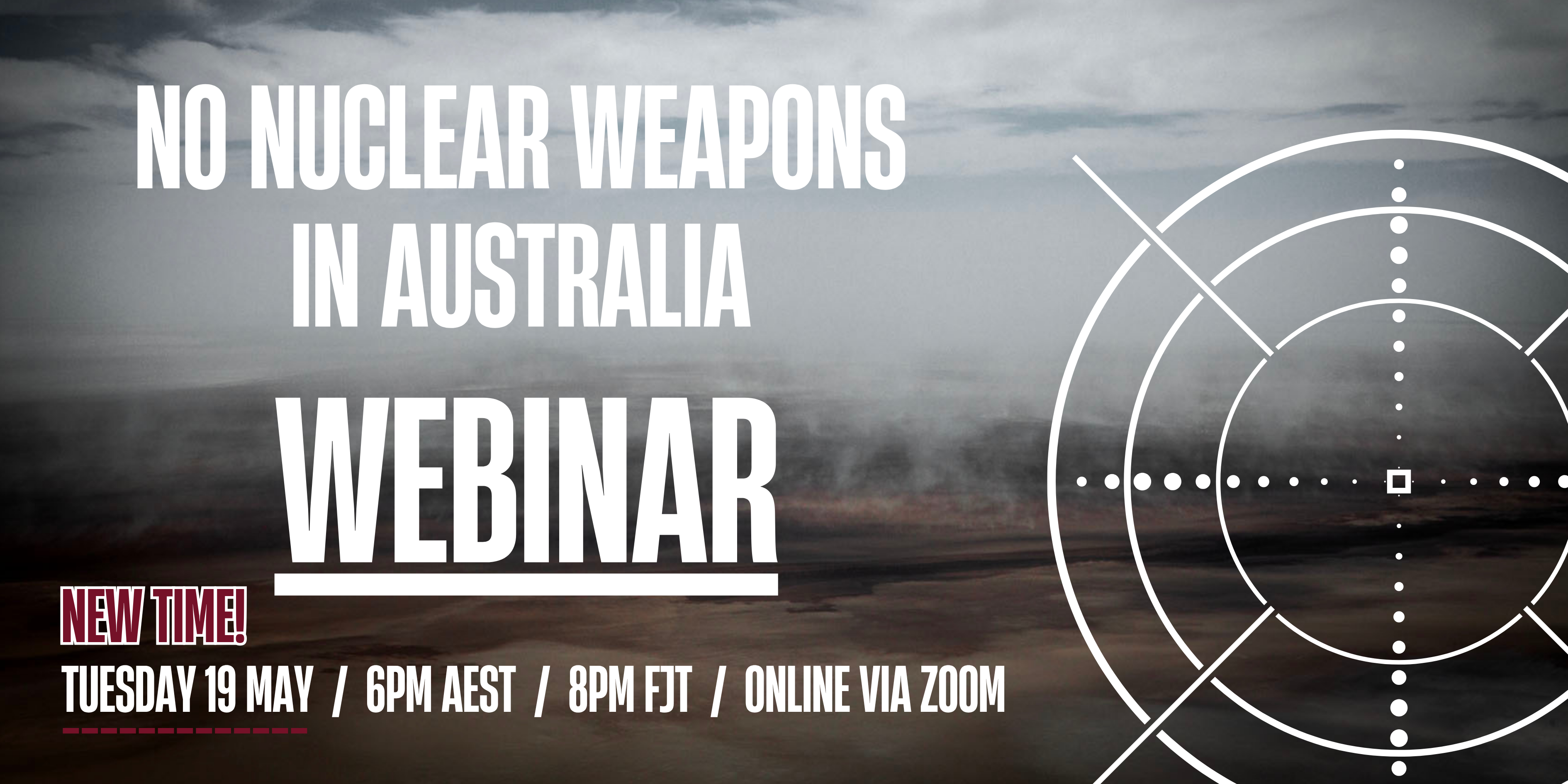
19 May – Webinar- Webinar: No Nuclear Weapons in Australia
Start: 2026-05-19 18:00:00 UTC Canberra, Melbourne, Sydney (GMT+10:00)
End: 2026-05-19 19:30:00 UTC Canberra, Melbourne, Sydney (GMT+10:00)
20 May – Webinar – The dangerous world of AUKUS, US, military occupation and suppression of dissent

National Webinar, 20th May, 2026, 6.30pm AEST. Confronting laws restricting/suppressing protest speech and action
Speakers: Former Sen. Rex Patrick, Lawyer Nick Hanna ,Arthur Rorris ,Jorgen Doyle, Sen David Shoebbridge,
Facilitator Kelley Tranter.

of the week – Australians for War Powers Reform (AWPR)
To see nuclear-related stories in greater depth and intensity
 Antinuclear