Trump is setting up a massive nuclear crisis with Iran
 Trump is setting up a massive nuclear crisis with Iran, The Week,
First, the fog of war created by the president’s decision to assassinate Soleimani led to tragedy, as Iran seems to have accidentally shot down a planeload of innocent civilians. While most of the blame goes to whichever incompetent Iranian operator pulled the trigger, the reality is that all 176 of those people, including 63 Canadians, would be alive today if the U.S. had not carried out its hit on Soleimani. For another, we should remember that a month passed between the assassination of Archduke Ferdinand and the outbreak of WWI.
More importantly, just because both the Trump administration and senior Iranian leadership seem to share an aversion to full-scale war and pulled back from the brink this time doesn’t mean that the Soleimani killing was costless for the U.S.
The day after the Iranian response, the seldom-seen Teleprompter Trump showed up to deliver a short, sober speech. “As long as I’m president of the United States, Iran will never be allowed to have a nuclear weapon,” President Trump said on Wednesday. He said this before saying “good morning” to the assembled crowd. The specter of an Iranian nuke is still, ostensibly, the overriding goal of American policy vis-à-vis Iran. Yet everything that Trump has done since the day he took office has made an Iranian nuclear breakout more likely.
https://theweek.com/articles/888687/trump-setting-massive-nuclear-crisis-iran
Fukushima Japan Vows to Achieve 100% Renewable Energy Use in 20 Years
Impelled by Reactor Meltdown, Fukushima Japan Vows to Achieve 100% Renewable Energy Use in 20 Years, https://www.goodnewsnetwork.org/fukushima-moves-towards-100-percent-renewable-energy-production/ By Andy Corbley –
Jan 11, 2020
Nine years ago, an earthquake and tsunami off the coast of Japan
caused one of the most significant nuclear disasters in human history in the area around the Fukushima Daiichi nuclear power plant, where the resulting reactor meltdown led to the evacuation of 150,000 individuals.
Now, the local government has vowed to restructure the grid of the north western prefecture to use entirely renewable energy sources by 2040. Fukushima is the third largest administrative district in the country, and uniquely includes a variety of energy resources like prime spots for solar and wind farms, and also opportunities for geothermal power as well.
Working to achieve these ambitious goals, Fukushima Prefecture signed a memorandum of understanding in the field of renewables with the Ministry of Environment for the German state of North-Rhine Westphalia, the largest energy-producing state in Germany—and Europe as well—in August of 2017.
North-Rhine Westphalia has doubled their renewable energy infrastructure over the last 15 years—growing it to deliver 9% of total energy production.
Since 2012, however, Fukushima has tripled its renewable energy production, with solar, wind, water, thermal, and biofuel resources totaling 1,500 megawatts of electricity, delivering a contribution of nearly 18% of Japan’s total yearly energy consumption.
Additionally, 300 billion yen ($2.75 billion) for the project has already been fronted by sponsors such as the state-owned Japan Development Bank and Mizuho Bank. The funding will be used to construct 11 solar farms and 10 wind farms over the next 4 years. The new projects also include biomass plants, geothermal stations, even fleets of sea-going windmills.
The proposed new grid, spanning 80 kilometers, would reach the Tokyo metropolitan area and contribute 600 megawatts of electricity, replacing much of the power which, up until recently, the city had received from the pair of Fukushima atomic energy plants.
Beyond moving away from its robust infrastructure and dependence on atomic energy, Japan is also the third largest importer of coal and natural gas, and a massive change in energy independence would help Japan reach its ambitious goals set forth in the recent UN climate change panel in Madrid last month.
The country’s Prime Minister, Shinzo Abe, irrespective of the Fukushima Prefecture’s own energy objectives, is targeting 24% total energy from renewables nationally by 2030.
‘Error of judgement’: UK police recall guide which listed Extinction Rebellion among extremist groups
|
‘Error of judgement’: UK police recall guide which listed Extinction Rebellion among extremist groups https://www.sbs.com.au/news/error-of-judgement-uk-police-recall-guide-which-listed-extinction-rebellion-among-extremist-groups
Climate justice group Extinction Rebellion was listed as an extremist ideology by counter-terrorism police in England, in a document officers have since recalled. BY ANTOINETTE RADFORD, 12 Jan 2020
Counter-terrorism police in South-East England say they made an ‘error of judgement’ in adding climate Justice group Extinction Rebellion to a list of extremist ideologies. The Guardian revealed the group was included in a 12-page guide named ‘Safeguarding young people and adults from ideological extremism’. The document was designed to help educate people working with youth to “recognise when young people or adults may be vulnerable to extreme or violent ideologies”, The guide advises people to look out for young people who “neglect to attend school” or “participate in planned school walkouts” – an apparent reference to the global School Strike for climate movement started by Greta Thunberg this year. It also suggests that young people who engage in non-violent direct action such as writing environmentally-themed graffiti, sit-down protests or banner drops are potentially at risk of radicalisation. The environmental group featured alongside Neo-Nazi terror operations and a pro-terrorist Islam outfit. In a statement to The Guardian, Counter Terrorism Policing South East boss Kath Barnes said the guide is being recalled. “The document was designed for a very specific audience who understand the complexities of the safeguarding environment we work within and who have statutory duties under Prevent. We are in the process of confirming who it has been shared with and recalling it.” Extinction Rebellion was founded in October 2018 and the group maintains a welcoming, non-violent culture is at the core of its beliefs. A spokesperson for Extinction Rebellion’s Sydney arm, AJ Tennant, says it was a shock to hear the international movement had made it onto the list in the first place. “It’s very distressing that a peaceful, environmental organisation that’s trying to advocate for the protection of humanity would be treated with such disdain.” He says he understands that people may find the extinction rebellion movement confronting, and even frustrating at times, but argues the movement has always been focused on non-violent methods of drawing attention to the climate debate. “The first word that applies to everything that XR does is non-violent. We talk about being peaceful, we talk about having love in the movement, we talk about apologising to people for any inconvenience we caused, so while we are disruptive, we are always, always peaceful. London-based human rights lawyer and media commentator Shoaib Khan has taken to Twitter to condemn the actions of British authorities. Tens of thousands of Australians took to the streets on Friday to demand stronger action on climate, with some in the large crowds carrying the Extinction Rebellion network’s recognisable logo and flag. |
|
Siemens sticks with Adani contract after intervention from Canavan — RenewEconomy

Siemens decides to honour contract with controversial Adani coal mine, after resources minister Canavan claims 2019 election was referendum on mine. The post Siemens sticks with Adani contract after intervention from Canavan appeared first on RenewEconomy.
via Siemens sticks with Adani contract after intervention from Canavan — RenewEconomy
January 12 Energy News — geoharvey

Opinion: ¶ “Scott Morrison Can’t Afford To Waste The Bushfire Crisis When Australia Urgently Needs Its Own Green New Deal” • The lies of the climate deniers have to be rejected. This is a time for truth telling, not obfuscation and gaslighting, writes former Australian prime minister Malcolm Turnbull. He calls for a Green New […]
‘Korea should take leading role in stopping Japan from discharging radioactive water’ — Fukushima 311 Watchdogs

Chang Mari, a Climate and Energy Campaigner at the Greenpeace East Asia Seoul Office, poses for a picture during the inspection in Fukushima, Japan, in October 2019 January 4, 2020 By Kim Jae-heun “Korea should take a leading role in stopping Japan from discharging radioactive water into the Pacific Ocean,” said Chang Mari, a […]
Wind, solar and batteries to slash emissions and costs in W.A.’s Esperance — RenewEconomy

Wind, solar and battery storage to power nearly half of W.A. town of Esperance, slashing emissions by half and electricity costs by nearly that much. The post Wind, solar and batteries to slash emissions and costs in W.A.’s Esperance appeared first on RenewEconomy.
via Wind, solar and batteries to slash emissions and costs in W.A.’s Esperance — RenewEconomy
The climate science deniers spreading misinformation about Australian bushfires — RenewEconomy

Scott Morrison’s refusal to act on climate is bolstered by a group of fringe climate science deniers pushing conspiracy theories and misinformation. The post The climate science deniers spreading misinformation about Australian bushfires appeared first on RenewEconomy.
via The climate science deniers spreading misinformation about Australian bushfires — RenewEconomy
Things just got worse, again — Beyond Nuclear International

Trump blows up nuclear stepping stone in Iran
via Things just got worse, again — Beyond Nuclear International
Terrorism police listed Extinction Rebellion as extremist ideology
Terrorism police list Extinction Rebellion as extremist ideology.
Vikram Dodd and Jamie Grierson, 11 Jan 2020 Police scramble to recall guide issued to teachers putting climate activists alongside far-right groups.
Counter-terrorism police placed the non-violent group Extinction Rebellion (XR) on a list of extremist ideologies that should be reported to the authorities running the Prevent programme, which aims to catch those at risk of committing atrocities, the Guardian has learned.
The climate emergency campaign group was included in a 12-page guide produced by counter-terrorism police in the south-east titled Safeguarding young people and adults from ideological extremism, which is marked as “official”.
XR featured alongside threats to national security such as neo-Nazi terrorism and a pro-terrorist Islamist group. The guide, aimed at police officers, government organisations and teachers who by law have to report concerns about radicalisation, was dated last November.
It says that issues to look out for include people who speak in “strong or emotive terms about environmental issues like climate change, ecology, species extinction, fracking, airport expansion or pollution”.
In the guide, people are advised to listen and look out for young people who “neglect to attend school” or “participate in planned school walkouts” – an allusion to the school strikes for the climate, a global movement of which the activist Greta Thunberg is a lead proponent. Thousands of UK pupils, and millions worldwide, walked out of school last year in protest at government inaction on the climate crisis.
The document also flags young people taking part in non-violent direct action, such as sit-down protests, banner drops or “writing environmentally themed graffiti”.
The disclosure that XR has been listed alongside proscribed groups such as National Action and Al-Muhajiroun is likely to be deeply embarrassing for counter-terror chiefs. They have for years faced claims that Prevent can cross the line to stifle legitimate free speech, thought and dissent.
When the Guardian first asked police about the document, officials said they would review the guidance to clarify their position on Extinction Rebellion. But following further questions, counter-terrorism police confirmed it had been circulated to “statutory partners” and had now been recalled. They said they now accepted that the protest group was not extremist……..
DCS Kath Barnes, head of CTPSE, said: “I would like to make it quite clear that we do not classify Extinction Rebellion as an extremist organisation. The inclusion of Extinction Rebellion in this document was an error of judgment and we will now be reviewing all of the contents as a result.
“It was produced by CTPSE to assist our statutory partners – including police forces and government organisations – in identifying people who may be vulnerable as a result of their links to some organisations.
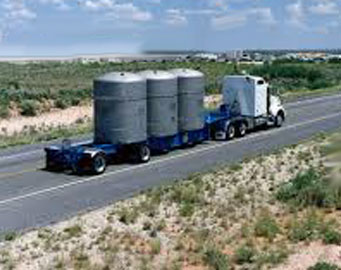
The risk of road closures, nuclear waste transport accidents
Massive fires merge across the New South Wales – Victoria border
Dry heat, shifting winds and powerful gusts fanned more than 100 blazes devouring drought-parched bushland throughout southern NSW overnight, as the East Ournie Creek and the Dunns Road fire zones came together north of Mount Kosciuszko on Friday evening, near the village of Tooma.
Meantime, the Morton fire in the Southern Highlands near Bundanoon was upgraded to emergency warning level about 1am on Saturday as north and north-westerly winds gave way to a strong southerly change. ……
North and north-westerly winds gave way to a southerly change overnight, which combined with merging fires, provided additional challenges from multiple entry points. Mr Clark said they were “expecting fires to potentially spread in two directions overnight”.
“What we’re really seeing with a number of these fires merging is a number of small fires started by lightning strikes, across the landscape. And as they grow, we see fires merging,” RFS spokesman Anthony Clark said.
“It provides a challenge for firefighters as when they merge, it increases the size and opens up more uncontained perimeter.”
Early on Saturday, more than 2500 firefighters were battling 147 blazes in NSW, as the bushfires crisis escalated across four states. More than 60 of those NSW fires were uncontained.
Residents were also fleeing fire fronts tearing through parts of eastern Victoria and Kangaroo Island off South Australia, where crews faced rising winds, bone-dry bushland and blistering temperatures. Also homes in Perth were under threat…….
Winds gusting up to 90km/h swept through the state later in the evening. Temperatures soared past 40 degrees in inland areas, while the RFS warned large blazes in the south-east could spread under worsening conditions, or shoot off embers that might create spot fires.
The blustery conditions were expected to bring mixed fortunes for firefighters overnight – dropping temperatures on the ground while making blazes more unpredictable after dark…… https://www.smh.com.au/national/nsw/fires-on-the-nsw-and-victorian-border-likely-to-merge-as-winds-worsen-20200110-p53qby.html
The impact of bushfires on drinking water, rivers and fish
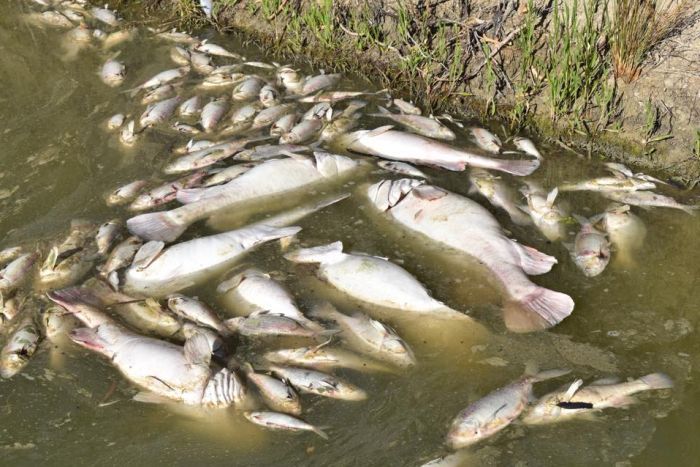 Our drinking water, rivers and fish will all feel the impact of bushfires, experts warn, ABC Science, By Jo Khan, 9 Jan 2020, Our drinking water, rivers and fish will all feel the impact of bushfires, experts warn, ABC Science, By Jo Khan, 9 Jan 2020,
When it rains after bushfires, the consequences stretch way beyond temporary relief for those on the front line — and scientists are warning of potentially dire impacts on our waterways.
They say the aftermath of the current fires could bring devastation to freshwater animals and plants, as well as drinking water catchments. This is because, while it may or may not help firefighters themselves, rain inevitably washes the ash and eroded soil from burnt forests into rivers and streams, shifting the bushfire impact to our crucial freshwater ecosystems. Waterways can also suffer immediately in a fire just from the temperature increase, according to Ross Thompson from the University of Canberra. “In one of the streams we worked on in Victoria, the Black Saturday fire got so hot that the stream boiled,” Professor Thompson said. Even if water doesn’t boil (which effectively sterilises it), many animals can’t withstand the sudden increase in temperature, and die. But it’s the longer term effects that have scientists really worried. Rain washes ash into waterwaysRain events after bushfires can transfer huge amounts of ash, burnt material, soil and dead animals into our rivers and lakes. There will be an increase in nutrients because there’s lots of phosphorous and nitrogen in ash,” said Professor Thompson, a freshwater ecologist who has studied water catchments after the 2003 fires in the ACT and the 2009 Black Saturday fires in Victoria. “You also see more sediment because trees are falling down and the river banks are getting knocked around.” As the water fills up with fine sediment and foreign, nutrient-rich material, the water quality can drop very quickly — and stay that way for a long time. “We’re still seeing higher sediment loads coming out of the Cotter River catchment and those fires were more than a decade ago,” Professor Thompson said. Freshwater animals lose oxygenAs soon as a fire has passed and the ash settles on rivers and lakes, bacteria in the water will start consuming the carbon in that ash. In the process of breaking down the carbon, the bacteria will also consume the dissolved oxygen in the water. The more carbon, the more oxygen will be taken out of the system. And most animals and plants can’t survive in such a low-oxygen environment, as was seen in the Murray Darling Basin last summer. “The the risk is we will see big fish kill events even in some of the larger rivers,” Professor Thompson said. “Even if the fires didn’t burn immediately adjacent to the river.” Changes in the turbidity, or amount of sediment in the water, is another factor that can threaten aquatic species. “We see a loss of a lot of invertebrates that rely on really stony streams, because the sediment and ash smothers the rocks and it changes the habitat.” Rescuing fish from ‘water like licorice’………..Drinking water quality affectedChanges to the insects and other invertebrates in an ecosystem, along with the influx of nutrients from the ash, can result in the growth of cyanobacteria — commonly known as blue-green algae (but it’s not actually algae). Cyanobacteria produce chemicals which may cause a range of water quality problems, starting with poor taste and odour, according to Stuart Khan, an urban water management expert at the University of New South Wales………. “Of more concern is that cyanobacteria can produce chemicals that are really quite toxic,” Professor Khan said. https://www.abc.net.au/news/science/2020-01-09/freshwater-ecosystems-water-catchment-bushfire-impact/11850826?pfmredir=ms |
|
|
The vastly different way that bushfires are experienced by Aboriginal people
The fact is, the experience of Aboriginal peoples in the fire crisis engulfing much of Australia is vastly different to non-Indigenous peoples.
Colonial legacies of eradication, dispossession, assimilation and racism continue to impact the lived realities of Aboriginal peoples. Added to this is the widespread exclusion of our peoples from accessing and managing traditional homelands. These factors compound the trauma of these unprecedented fires.
As Australia picks up the pieces from these fires, it’s more important than ever to understand the unique grief Aboriginal peoples experience. Only through this understanding can effective strategies be put in place to support our communities to recover.
Perpetual grief
Aboriginal peoples live with a sense of perpetual grief. It stems from the as-yet-unresolved matter of the invasion and subsequent colonisation of our homelands…….
Aboriginal people have watched on and been ignored as homelands have been mismanaged and neglected.
Oliver Costello is chief executive of Firesticks Alliance, an Indigenous-led network that aims to re-invigorate cultural burning. As he puts it:
Since colonisation, many Indigenous people have been removed from their land, and their cultural fire management practices have been constrained by authorities, informed by Western views of fire and land management……
Aboriginal peoples’ cultural identity comes from the land.
As such, Aboriginal cultural lives and livelihoods continue to be tied to the land, including landscape features such as waterholes, valleys and mountains, as well as native animals and plants.
The decimation caused by the fires deeply impacts the existence of Aboriginal peoples and in the most severe hit areas, threatens Aboriginal groups as distinct cultural beings attached to the land. As The Guardian’s Indigenous affairs editor Lorena Allam recently wrote:
Like you, I’ve watched in anguish and horror as fire lays waste to precious Yuin land, taking everything with it – lives, homes, animals, trees – but for First Nations people it is also burning up our memories, our sacred places, all the things which make us who we are………
Resilience in the face of ongoing trauma
The long-term effects of colonisation has meant Aboriginal communities are (for better or worse) accustomed to living with catastrophic changes to their societies and lands, adjusting and adapting to keep functioning.
Experts consider these resilience traits as integral for communities to survive and recover from natural disasters……..
If agencies and non-government organisations responsible for leading the recovery from these fires aren’t well-prepared, they risk inflicting new trauma on Aboriginal communities.
The National Disability Insurance Agency offers an example of how to engage with Aboriginal people in culturally sensitive ways. This includes thinking about Country, culture and community, and working with each community’s values and customs to establish respectful, trusting relationships.
The new bushfire recovery agency must use a similar strategy. This would acknowledge both the historical experiences of Aboriginal peoples and our inherent strengths as communities that have not only survived, but remain connected to our homelands.
In this way, perhaps the bushfire crisis might have some positive longer-term outcomes, opening new doors to collaboration with Aboriginal people, drawing on our strengths and values and prioritising our unique interests. https://theconversation.com/strength-from-perpetual-grief-how-aboriginal-people-experience-the-bushfire-crisis-129448?utm_medium=email&utm_campaign=The%20Weekend%20Conversation%20-%201504914324&utm_content=The%20Weekend%20Conversation%20-%201504914324+CID_6dc5e263c454601de4049d9ca867c3a7&utm_source=campaign_monitor&utm_term=Strength%20from%20perpetual%20grief%20how%20Aboriginal%20people%20experience%20the%20bushfire%20crisis
Thousands protest in Sydney and other cities, against govt inaction on climate change
Protesters chanted, “Hey hey, ho ho ScoMo has got to go” as speakers climbed Town Hall’s side steps, and later moved on to “The liar from the shire, the country is on fire”.
She was given a move-on order by police while protesting outside Kirribilli House last September. Her hope is that Friday’s protest will create change……….
Protests also took place in other Australian capital cities. https://www.smh.com.au/environment/climate-change/sydney-cbd-climate-protest-attracts-thousands-20200110-p53qhq.html?promote_channel=edmail&mbnr=MTM2NDAwMjM&eid=email:nnn-13omn655-ret_newsl-membereng:nnn-04%2F11%2F2013-news_pm-dom-news-nnn-smh-u&campaign_code=13INO009&et_bid=292
1 This month.
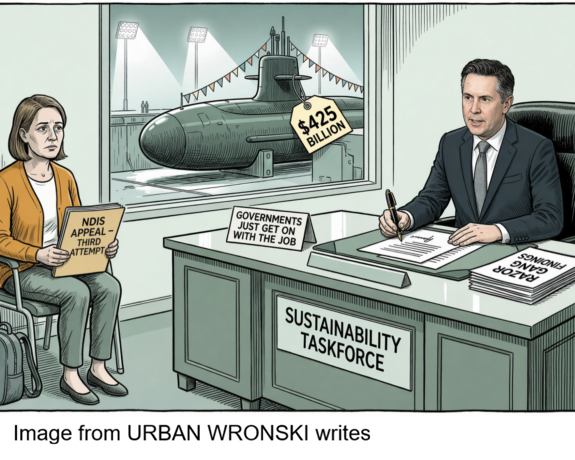

PETITION – To: Prime Minister Anthony Albanese and the Australian Labor Government
Chernobyl: The Lost Tapes – A good documentary on Chernobyl on SBS available On Demand for the next 3 weeks– https://www.sbs.com.au/ondemand/tv-program/chernobyl-the-lost-tapes/235274195556

19 May – Webinar- Webinar: No Nuclear Weapons in Australia
Start: 2026-05-19 18:00:00 UTC Canberra, Melbourne, Sydney (GMT+10:00)
End: 2026-05-19 19:30:00 UTC Canberra, Melbourne, Sydney (GMT+10:00)
20 May – Webinar – The dangerous world of AUKUS, US, military occupation and suppression of dissent

National Webinar, 20th May, 2026, 6.30pm AEST. Confronting laws restricting/suppressing protest speech and action
Speakers: Former Sen. Rex Patrick, Lawyer Nick Hanna ,Arthur Rorris ,Jorgen Doyle, Sen David Shoebbridge,
Facilitator Kelley Tranter.

of the week – Australians for War Powers Reform (AWPR)
To see nuclear-related stories in greater depth and intensity
 Antinuclear