‘Stop-Adani’ protest to go global: Brown, https://www.sbs.com.au/news/stop-adani-protest-to-go-global-brownSOURCE AAP, 16 June 19, Despite the Carmichael mine being given its final approvals, anti-Adani protesters are continuing to highlight their concerns with the coal project.
Protesters will gather outside the Indian high commission in Canberra on Saturday as the campaign to stop Adani’s Carmichael mine continues.
Queensland’s environment department on Thursday signed off on the company’s plan to manage groundwater on and around its Galilee Basin mine site – the final approval the company needs to begin construction.
Former Australian Greens leader Bob Brown is expected to join the peaceful demonstration to “highlight the Adani company’s appalling record of environmental destruction and corruption overseas”. A vigil is also expected to be held outside India’s consulate general in Sydney.
Adani is not about jobs, and never really was, https://www.smh.com.au/national/adani-is-not-about-jobs-and-never-really-was-20190614-p51xu0.html, By Matt Holden June 16, 2019So Adani gets its final environmental approval from the Queensland government, and central Queensland gets the jobs it voted for in the federal election: “an enormous win for regional jobs”, according to Queensland LNP Opposition Leader Deb Frecklington.What that amounts to is about 1500 jobs in the construction phase – which at two years won’t even get us to the next federal election – and maybe 100 when the mine is operating, at least according to University of Queensland economist Professor John Quiggin.
It feels like you can believe whatever you want about Adani, or at least whatever suits your world view.
But Adani was never really about jobs. “Adani” is a litmus test in Australian politics: you are either for Adani, which means you are for economic prosperity and development of Australia’s regions, or you are against Adani, in which case you are against prosperity, against people who need jobs, even against central Queensland itself.
The simplistic dualism suits politicians whose business it is to squabble over political power and to mediate that squabble through culture wars (this one over coal, the next one over religious freedom, who knows what after that) rather than the work of making real policy.
It also suits the interests that will benefit from Adani – mining companies, fossil-fuel investors, construction and mining unions.
Adani has become more than a coal mine (although it’s not even that yet, and maybe never will be). It’s part of a narrative in Australian politics that poses a false choice between jobs and the environment, framed as the difference between living in the real world and living in the inner-city bubble, Continue reading →
Several articles are posted here. Click on the each title or video to read/see the full article. +++ On Contact: Chris Hedges interviews Kristinn Hrafnsson, Editor-in-Chief of WikiLeaks Assange charges and extradition: A political question and an attack on the foundation of democracy Chris Hedges discusses the US extradition request for Julian Assange with WikiLeaks […]
South Australia Liberal government says it expects state will be “net” 100 per cent renewables by 2030, heralding the most dramatic shift towards wind and solar and storage technologies of any major grid in the world. The post South Australia’s stunning aim to be “net” 100 per cent renewables by 2030 appeared first on RenewEconomy.
Opinion: ¶ “Renewable Energy Is Now The Cheapest Option – Even Without Subsidies” • New data from the International Renewable Energy Agency (IRENA) demonstrate that using renewable energy is increasingly cost-effective compared to other sources, even when it must compete with the heavily-subsidized fossil fuel industry. [Forbes] ¶ “When Will Renewable Energy Prices Stop Dropping?” […]
Australian contractor secures deal with Total Eren that protects its capital, if not its margins, on potential cost blow outs at the Cohuna solar farm in Victoria. The post Enel and contractor strike deal over cost over-runs at Victoria solar farm appeared first on RenewEconomy.
Fukushima Not Even Close To Being Under Control, Oil Price, By ZeroHedge Sun, 28 June 2015 “……..As an example of how media fails to deal with disaster blowback, here are some Chernobyl facts that have not received enough widespread news coverage: Over one million (1,000,000) people have already died from Chernobyl’s fallout.
Additionally, the Rechitsa Orphanage in Belarus has been caring for a very large population of deathly sick and deformed children. Children are 10 to 20 times more sensitive to radiation than adults.
Zhuravichi Children’s Home is another institution, among many, for the Chernobyl-stricken: “The home is hidden deep in the countryside and, even today, the majority of people in Belarus are not aware of the existence of such institutions” (Source: Chernobyl Children’s Project-UK).
One million (1,000,000) is a lot of dead people. But, how many more will die? Approximately seven million (7,000,000) people in the Chernobyl vicinity were hit with one of the most potent exposures to radiation in the history of the Atomic Age.
The exclusion zone around Chernobyl is known as “Death Valley.” It has been increased from 30 to 70 square kilometres. No humans will ever be able to live in the zone again. It is a permanent “dead zone.”
The miniseries follows the power plant workers, first responders, Soviet Union officials, scientists, soldiers and the locals of Pripyat, Ukraine (formerly the Soviet Union) in the wake of the Chernobyl nuclear reactor exploding.
As with most historical dramas, the show has been critiqued for taking liberties with the truth in service of the story. And these departures are somewhat ironic for a show whose tagline is “the cost of lies”.
But the function of historical dramas isn’t pinpoint accuracy: the best ones work as allegories.
And as an allegory for our times, Chernobyl could not be more fitting.
Moscow has a long history of ‘fake news’
The lies start early on. While most of the town sleeps through the nuclear explosion, in the control room of the power plant, denial is in full swing.
The assistant chief engineer, Anatoly Dyatlov (Paul Ritter), tells his men to pump water to the core, insistent the problem can be fixed.
An engineer tells Dyatlov: “there is no core”.
Dyatlov insists the core is intact. From the earliest moments, the truth is in flux.
The radiation leak has already begun to kill these workers; we’re in the company of the living dead.
But despite the horror of watching these men slowly die, as if a needle is untethering the fabric of their DNA, it’s the words of a Soviet Union official (Donald Sumpter) that shock the most.
“When the people ask questions that are not in their own best interests,” he tells his men, “they should simply be told to keep their minds on their labour and leave matters of the state to the state.”
The next step is to seal the city and cut the phone lines to prevent the spread of misinformation.
The speech is met with applause.
Over the course of the series it becomes clear the Chernobyl disaster was caused by the cost-cutting measures of the Soviet Union, but the state was structured perfectly to work their way out of the problem and contain the truth.
Miners and soldiers are conscripted to clean-up the mess, despite the risk to their health. Scientists are told to do their job and not ask any questions.
All the while, Soviet officials work to compartmentalise the tragedy to hide the horrors of a nuclear meltdown.
For scientists Valery Legasov (Jared Harris) and Ulana Khomyuk (Emily Watson) to understand what caused the meltdown they must be critical of the Soviet Union.
The most intense moments are the conversations where characters weigh up the risk of telling the truth.
The war on the truth continues
Decades later, Moscow continues to tightly control the flow of information both at home and abroad — its “troll farms” set up to spread misinformation and propaganda are just the latest iterations.
But Australia is not immune to attempts by government to conceal and manipulate the truth.
Chernobyl focuses on what happens when government policy is put before human lives.
The scientists investigating Chernobyl repeatedly attempted to sound the alarm, warning Soviet Union officials that the problem was bigger than one reactor as poison spread across Eastern Europe (one study predicts by 2065 the disaster could cause 16,000 cases of thyroid cancer and 25,000 cases of other cancers).
Today, scientists are trying to warn us of an existential threat to our health and safety: climate change. Once again, government drags its feet.
If we take anything from Chernobyl, it should be this: put science before politics.
In 2019, we may have grasped the extreme dangers of radiation, but the war on the truth is ongoing — it’s eternal.
As we face another environmental catastrophe, the question will be: what is the cost of lies?
Apocalyptic mini-series Chernobyl is the year’s unlikely TV hit, SMH, By Craig Mathieson, June 11, 2019 “……Chernobyl, a grimly compelling series screening weekly on Foxtel with all five episodes streaming online, is particularly incisive. By using events in 1986, set under a totalitarian regime that subsequently collapsed into the dustbin of history, the show is able to comment on 2019…..
“I prefer my opinion to yours,” a local party boss dismissively tells Ulana Khomyuk (Emily Watson), a nuclear physicist who tries to raise the alarm about how serious the accident is. Chernobyl is an indictment on the official fictions of Russia’s one party communist state, a system of crippling shortcuts and absurd obeisance to power, but the blank and bureaucratic system has a familiar feel. One dissenter is threatened not with the bullet but professional obliteration, so that there’s no trace of their life’s work. That’s only more relevant now.
Written by Craig Mazin and directed by Johan Renck, the drama begins in the moments after the devastating eruption, unfolding as a ticking clock clean-up thriller, a mystery about the cause of the accident, and a study of individuals confronting the power that has nurtured them. Both nuclear scientist Valery Legasov (Jared Harris) and government minister Boris Shcherbina (Stellan Skarsgard) are insiders, lying about the risk to first responders or asking miners to risk life-threatening contamination to help prevent a complete nuclear meltdown.
Like all historic recreations it changes details and amalgamates characters into fictionalised representations such as Watson’s Khomyuk, but it succeeds through a dry tone that has the bitterest of aftertaste. It mostly doesn’t allow for sentimentality: when the mining crew foreman asks Shcherbina if his men will be looked after properly for their sacrifice, the political party boss replies “I don’t know” and the phlegmatic miner is actually satisfied. It’s a dreadful answer, but for once he’s been told the truth.
People are evacuated from an Exclusion Zone, animals are shot, and the very earth itself is dug up for 100 square kilometres to be buried elsewhere. The lessons are terrible but instructive: stemming the damage is not the same as fixing the problem. Chernobylhas been an unlikely success with viewers, growing its American audience with each episode and becoming the top-rated show on the website IMDb.com. Its appeal is readily apparent. It reflects our present and gives form to our inexplicable future.https://www.smh.com.au/entertainment/tv-and-radio/apocalyptic-mini-series-chernobyl-is-exploding-on-screens-20190610-p51w8v.html
Coal, Gas, Nuclear – What A Fracked Up Week In Australia https://www.solarquotes.com.au/blog/fracking-nuclear-adani-mb1095/ June 14, 2019 by Michael Bloch Adani’s coal mine another step closer, fracking to kick off in the NT (WA soon too?) and our energy minister hasn’t shut the door on nuclear power. Thank <insert choice of deity here> it’s Friday.Fossil fuel advocates will be punching the air and high-fiving each other with some recent news, while nuclear energy supporters in Australia may also see a glimmer of hope for their cause.
The Queensland Department of Environment and Science (DES) approved Adani’s Groundwater Dependent Ecosystem Management Plan (GDEMP) for its Carmichael coal mine in Queensland’s Galilee Basin yesterday. This means the company can now start some work on the mine.
Federal Employment Minister Michaelia Cash reportedly stated it was a great win for Queenslanders and that “we need to take a long, hard look at red and green tape in Australia”.
When I mentioned the approval to SQ’s Ronald, he said:
“The Great Artesian Basin is the only artesian basin in the world that is in good health. I didn’t realize we were keeping it pristine for the advantage of an Indian coal mining company.”
While the news will come as a major disappointment to many, the Greens say the fight sn’t over yet – not by a long shot.
“Adani still doesn’t have all its legal licences, and it’s never had a social licence,” saidSenator for Queensland and Greens spokesperson for mining and resources, Larissa Waters.
Before the first chunks of coal can be pulled from the ground, Adani will still need to gain other federal environmental approvals and a royalties agreement is yet to be finalised. Among the hurdles remaining is the little detail of getting the coal out of the area, with a shadow still looming over the Carmichael Rail Network; intended to link the Carmichael mine with Abbot Point Port near Bowen.
Questions also remain as to whether the mine is even financially viable, but Adani remains bullish on this.
The Greens say it will use whatever means are available in parliament, the courts and on the streets to try to prevent the mine going ahead; including continuing to push for a climate trigger in Australia’s environmental laws.
“It’s time for politicians like Annastacia Palaszczuk to come clean with coal communities, admit that there are no long term jobs in digging up and burning coal and work with the Greens on a plan to support these communities transition away from coal and towards sustainable, long-term jobs in the renewable energy sector,” said Greens leader Dr Richard Di Natale.
Referred to as a “carbon bomb”, the Carmichael mine has approvals to rip out up to 60 million tonnes of thermal coal annually, but Adani is reportedly planning to produce about 27.5 million tonnes.
More on the decision, the mine and some concerns aside from the massive amounts of carbon emissions and toxins that will be unleashed from burning what is pulled from it can be viewed here and here.
New Code Enables Fracking Up The NT To Begin
Earlier this week, the Northern Territory Labor Government finalised the Code of Practice for the NT’s onshore gas industry; i.e. fracking.
“Our Government has a clear plan to protect our environment, create local jobs and ensure the actions of Government and industry are transparent and accountable,” saidMinister for Primary Industry and Resources, Paul Kirby.
It’s now game on for fracking in the Territory. The fracking moratorium was lifted in April last year, but the Code needed to be completed before activities could begin – and it seems there’s a number of players not wanting to waste any time in getting started.
While 49% of the Territory will be “frack-free”, it means there’s around 688,000 square kilometres that could potentially host fracking activity.
An ABC report says exploration could begin in “days, if not weeks”.
On a related note, across the border in Western Australia work is reportedly under way on what could be WA’s first fracking gasfield says Lock The Gate Alliance. However, regulations governing fracking in WA are yet to released or legislated. The WA Government has been clever in selling fracking, last year lifting the state’s moratorium but committing to using fracking royalties for funding new renewable energy projects.
Angus Taylor On Nuclear Power – Willing To Consider It, But..
Australia’s pro-nuclear lobby have also been thrown a bone; albeit a small, brittle one with sharp edges and very little meat left on it. The type you wouldn’t give to a dog as it would probably choke.
Minister for Energy and Emissions Reduction Angus Taylor was quizzed by journalists in a doorstop interview on Wednesday about the potential for nuclear power in Australia. Here’s the relevant bits.
JOURNALIST: Are you now willing to start a conversation about nuclear energy?
ANGUS TAYLOR: The Prime Minister has made many comments on this in the lead up to the election. Right now, it is illegal to build a nuclear power station, and as he just said, when there’s a very clear business case that shows the economics of this can work, we’re more than willing to consider it.
There’s little hope of a viable business case being presented. While Minister Taylor may not have closed the door on nuclear power in Australia himself, he doesn’t need to as it’s pretty much already shut. This is just a distraction – nuclear power is horribly expensive; meanwhile the costs of renewables such as wind and solar energy (and energy storage) continue to plummet.
Minister Taylor also made some curious comments this week regarding LNG, stating Australia’s LNG boom is “ reducing our global carbon impact“.
She babbles on. You have to pause and try to figure out what she really means – the underlying messages. As Minister she wants “greater focus on INDIVIDUAL action” rather than government action. “I do want my approach to the portfolio to be about what YOU can do”. Wants ” approval times for major projects cut”. She doubts that ” land clearing is responsible for species loss”. Wants to simplify the EPBC Act, (too much green tape). She is “open to the review considering a removal of the nuclear ban”
Really, we were better off with Melissa Price. She was a straight out no nonsense advocate for coal. She was well informed in her subject (coal) , and we all knew where she stood. I forgot to mention this. I heard Sussan Ley on ABC radio, saying that on the subject of species extinctions in Australia “she knew better than the UN researchers, because she had lived in rural Australia” She said that “the UN had got it wrong”
I
Environment Minister floats ‘lending’ Murray Darling environmental water to farmers, Brisbane Times, By Nicole Hasham, June 15, 2019New Environment Minister Sussan Ley says farmers in the Murray Darling Basin should be allowed to “borrow” water reserved for maintaining the river’s health, and federal approval for major developments must be streamlined to “give proponents more assurances” and reduce delays.
In an interview with The Sydney Morning Herald and The Age, Ms Ley also identified invasive starfish as the “most imminent” threat to the Great Barrier Reef as she flagged potential changes to the way Australia’s natural assets are managed.
The Liberal MP was returned with a 7 per cent swing against her in the rural NSW seat of Farrer, where concern about water allocations to farmers featured heavily in the federal election campaign.
Ms Ley’s new portfolio captures the Commonwealth Environmental Water Office, which manages the majority of water for the environment recovered under the Murray Darling Basin Plan.
She cited the need for “flexibility” to allow water storages intended for environmental use to be “borrowed” by struggling farmers.
Sometimes the environment doesn’t need all its water but farmers desperately do need water,” she said……
The Australia Institute senior water researcher Maryanne Slattery, a former director at the Murray-Darling Basin Authority, described Ms Ley’s depiction of the problem as “not very accurate”…….
The environment portfolio includes protection of the Great Barrier Reef, which is under grave threat from climate change.
Ms Ley initially nominated the crown-of-thorns starfish, a pest that preys on live coral, as “the biggest, most imminent threat” to the reef…….
The federal government’s Great Barrier Reef Marine Park Authority says climate change “is the greatest threat to the Great Barrier Reef and coral reefs worldwide”. …..
Australia’s key piece of environment legislation, the Environment Protection and Biodiversity Conservation Act, is due to be reviewed this year.
Ms Ley said it provided “real opportunity to remove some of the green tape around environmental approvals”…..
it is deeply disturbing that BHP recently confirmed that three of the tailings dams at Olympic Dam are in the “extreme risk” category.
This is the highest risk status according to what is often regarded as the best global industry benchmark – the Canadian Dam Association’s safety standards – and relates less to the likelihood of collapse and more to the severity of the resulting human and environmental impacts if a failure did happen.
By Dave Sweeney 14 June 2019 BHP has applied to expand the Olympic Dam mine in SA, but with the recent failure of tailings dams, caution must be taken, writes Dave Sweeney.
AWAY FROM THE airbrushed corporate head offices, staged media events and slick communications products, the reality of the mining trade is pretty basic and very intrusive.
An orebody is identified, extracted, processed and removed and while the clothing might be high-visibility, many of the industry’s impacts tend to stay pretty low on the wider world’s radar.
This plan deserves serious attention and scrutiny for three key reasons: it involves the long-lived and multi-faceted threat of uranium, it proposes to use massive amounts of finite underground water and the company is in trouble globally over the management of mine wastes and residues currently stored in multiple leaking – and sometimes catastrophically failing – tailings dams.
BHP has recently commissioned a “tailings taskforce” to conduct a high-level review of the management of the company’s tailings dams or tailing storage facilities.
The move comes in the literal wake of the collapse of a tailings dam at the Samarco iron ore operation in Brazil in 2015 that saw 19 deaths along with widespread and continuing environmental damage.
The mine was a joint operation of BHP and Vale, a Brazilian mining multinational that is a major player in global iron and nickel production, promoting its mission as ‘transforming natural resources into prosperity’.
Or maybe not after an estimated 40 million cubic metres of toxic sludge from the collapsed dam poisoned the Doce River and utterly devasted the lives of the local Krenak people.
Nothing quite focuses the corporate mind as a high profile and high cost legal action and in May, BHP was served with a multi-party damages claim for over $7 billion on behalf of around 235,000 claimants.
The memory of Samarco and the dangers of large-scale tailings dam failure were tragically highlighted in January this year when another Vale tailings dam at the Brumadinho mine failed, resulting in terrible loss of life with a death toll of between two and three hundred people and massive environmental impact.
In this context, it is deeply disturbing that BHP recently confirmed that three of the tailings dams at Olympic Dam are in the “extreme risk” category.
This is the highest risk status according to what is often regarded as the best global industry benchmark – the Canadian Dam Association’s safety standards – and relates less to the likelihood of collapse and more to the severity of the resulting human and environmental impacts if a failure did happen.
In preparing to contest the new Olympic Dam expansion, environmental groups have commissioned a detailed analysis that clearly shows the tailings present a significant, near intractable, long-term risk to the environment.
However, there are serious concerns that BHP is seeking this major tailings expansion without a full Safety Risk Assessment — such an approach is inconsistent with modern environmental practice and community expectation.
Olympic Dam tailings contain around 80 per cent of the radioactivity associated with the original ore as well as around one-third of the uranium from the ore.
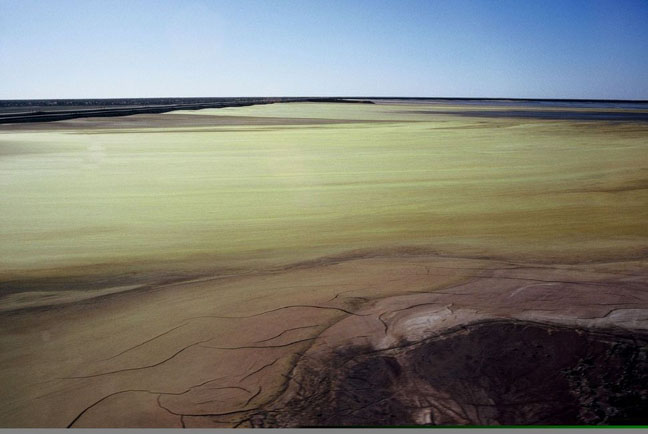
Since 1988, Olympic Dam has produced around 180 million tonnes (Mt) of radioactive tailings. These are intended to be left in extensive above-ground piles on-site forever.
BHP’s radioactive tailings at Olympic Dam are extensive and cover 960 ha or 9.6 km2, an area one-third larger than Melbourne’s CBD.
They have reached a height of 30 metres, roughly that of a ten-storey building, at the centre of tailings piles where water sprays are used to limit tailings dust release and potent radioactive radon gas is released to the atmosphere.
Critics of the planned expansion are calling for safety to be comprehensively and transparently assessed across all tailings at Olympic Dam, without any restrictions, exemptions or legal privileges to the company, before any decision on new storage facilities or more radioactive tailings production.
In the public interest, a full comprehensive tailings Safety Risk Assessment is required from BHP in the expansion Assessment Guidelines and this must be subject to public scrutiny in the EIS Assessment process.
Environment groups are demanding that the EIS Guidelines adopt the Federal Government’s Olympic Dam Approval Condition 32 Mine Closure (EPBC 2005/2270, Oct 2011) as a requirement on BHP for a full Comprehensive Safety Assessment, covering all radioactive tailings at Olympic Dam including that the tailings plan must:
‘…contain a comprehensive safety assessment to determine the long-term (from closure to in the order of 10,000 years) risk to the public and the environment from the tailings storage facility.’
In recognition that tailings risks are effectively perpetual, Condition 32 on Mine Closure requires environmental outcomes:
‘…that will be achieved indefinitely post mine closure.’
The SA Government’s Guidelines and the full comprehensive tailings Safety Risk Assessment must also incorporate the higher environmental standards set by the Federal Government in 1999 to regulate the Ranger Uranium Mine in Kakadu in the Northern Territory:
‘to ensure that:
The tailings are physically isolated from the environment for at least 10,000 years;
Any contaminants arising from the tailings will not result in any detrimental environmental impact for at least 10,000 years.’
BHP must demonstrate a plausible plan to isolate radioactive tailings mine waste from the environment for at least 10,000 years, in line with the Federal Government’s environmental requirements at the NT’s Ranger uranium mine.
And the South Australian and Federal Governments have a clear duty of care to make sure they do. After Brazil, no one in industry or government can ever say they didn’t know.
The Great Insect Dying: How to save insects and ourselves, MONGABAY, BY JEREMY HANCE 13 JUNE 2019
The entomologists interviewed for this Mongabay series agreed on three major causes for the ongoing and escalating collapse of global insect populations: habitat loss (especially due to agribusiness expansion), climate change and pesticide use. Some added a fourth cause: human overpopulation.
Solutions to these problems exist, most agreed, but political commitment, major institutional funding and a large-scale vision are lacking. To combat habitat loss, researchers urge preservation of biodiversity hotspots such as primary rainforest, regeneration of damaged ecosystems, and nature-friendly agriculture.
Combatting climate change, scientists agree, requires deep carbon emission cuts along with the establishment of secure, very large conserved areas and corridors encompassing a wide variety of temperate and tropical ecosystems, sometimes designed with preserving specific insect populations in mind.
Pesticide use solutions include bans of some toxins and pesticide seed coatings, the education of farmers by scientists rather than by pesticide companies, and importantly, a rethinking of agribusiness practices. The Netherlands’ Delta Plan for Biodiversity Recovery includes some of these elements……….. https://news.mongabay.com/2019/06/the-great-insect-dying-how-to-save-insects-and-ourselves/



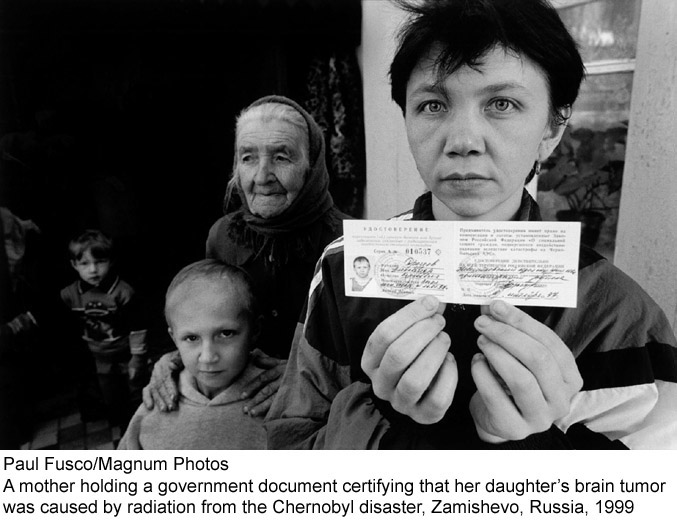
 Additionally, the Rechitsa Orphanage in Belarus has been caring for a very large population of deathly sick and deformed children. Children are 10 to 20 times more sensitive to radiation than adults.
 hit with one of the most potent exposures to radiation in the history of the Atomic Age.





 Antinuclear