In a poll of 26 countries, 13 considered the warming planet the number one concern. This was followed by the threat of Islamic State in Iraq and Syria (ISIS), which eight countries, including Russia, France, Indonesia and Nigeria, rated as the top threat. Four nations, including Japan and the U.S., cited cyberattacks as the most urgent issue………http://time.com/5526558/climate-change-top-threat-pew-poll/
Heated exchange at Adani media event
https://www.sbs.com.au/news/heated-exchange-at-adani-media-event A press conference to showcase the support of indigenous traditional owners for Adani’s Carmichael coal mine has served to show divided opinions on the project.
A fiery war of words has broken out at a press conference designed to highlight the support of Indigenous traditional owners for Adani’s controversial Carmichael coal mine.
Spokesman for the Wangan and Jagalingou people of central Queensland, Patrick Malone, spoke up about the benefits of the project, including a boost to local employment alongside Resources Minister Matt Canavan at Parliament House in Canberra on Tuesday.
He stressed that traditional owners voted 294-to-1 in favour of establishing a land use agreement with Adani in 2016.
They did that because there are long-term benefits for Wangan and Jagalingou people,” Mr Malone told reporters.
But he was soon interrupted by fellow Wangan and Jagalingou representative Murrawah Johnson.
“Not appropriate,” Ms Johnson declared upon arriving at the scene.
Ms Johnson accused Mr Malone of having no right to represent her people, because of a native title claim still in dispute.
But Mr Malone rejected the view, lamenting that “loud mouth people” were overshadowing the majority view of traditional owners.
“Look after country,” Ms Johnson urged Mr Malone.
I know all about that,” he replied.
With the exchange showing no signs of cooling down, Senator Canavan swiftly wrapped up the conference, with security arriving to usher away the interrupters. They did that because there are long-term benefits for Wangan and Jagalingou people,” Mr Malone told reporters.
But he was soon interrupted by fellow Wangan and Jagalingou representative Murrawah Johnson.
“Not appropriate,” Ms Johnson declared upon arriving at the scene.
Ms Johnson accused Mr Malone of having no right to represent her people, because of a native title claim still in dispute.
But Mr Malone rejected the view, lamenting that “loud mouth people” were overshadowing the majority view of traditional owners.
“Look after country,” Ms Johnson urged Mr Malone.
“I know all about that,” he replied.
With the exchange showing no signs of cooling down, Senator Canavan swiftly wrapped up the conference, with security arriving to usher away the interrupters.
Solar continues to re-shape the grid, AEMO report reveals — RenewEconomy

AEMO report highlights how solar continues to reshape the grid, adding more capacity than any other source, causing record low demands in South Australia and W.A. The post Solar continues to re-shape the grid, AEMO report reveals appeared first on RenewEconomy.
via Solar continues to re-shape the grid, AEMO report reveals — RenewEconomy
NEM Review 2018: More renewables, greater efficiency, less emissions — RenewEconomy

A detailed review of Australia’s main grid for 2018 shows a big increase in renewables, gains in efficiency, lower demand, and a substantial fall in emissions. The post NEM Review 2018: More renewables, greater efficiency, less emissions appeared first on RenewEconomy.
via NEM Review 2018: More renewables, greater efficiency, less emissions — RenewEconomy
February 13 Energy News — geoharvey

Opinion: ¶ “How Teenage Girls Defied Skeptics To Build A New Global Climate Movement” • Greta Thunberg’s climate activism got her invited from her native Sweden to Davos, Switzerland, where she excoriated a room full of executives, telling them they were to blame for the climate crisis. She is not alone. Young women are rising […]
“It’s time to go electric,” says leading Sydney car dealer — RenewEconomy

The inevitable shift to electric cars is being celebrated by one of Australia’s largest independent car dealer franchises, right in the heart of Tony Abbott’s Warringah electorate. The post “It’s time to go electric,” says leading Sydney car dealer appeared first on RenewEconomy.
via “It’s time to go electric,” says leading Sydney car dealer — RenewEconomy
A big year for big solar: Charting Australia’s solar farms of 2018 — RenewEconomy

2018 was a record-smashing year for solar farms. So where did all of that grid-scale solar power go in? The post A big year for big solar: Charting Australia’s solar farms of 2018 appeared first on RenewEconomy.
via A big year for big solar: Charting Australia’s solar farms of 2018 — RenewEconomy
to 13 February- Australia – climate and nuclear news
 The discussion on climate change is subtly switching from warnings, and debates on, climate change impacts, to adaptation, preparation for those impacts. What prevents us from thinking ‘meaningfully‘ about climate change.
While all seems quiet on the nuclear front, the nuclear arms race is now grimmer than ever. Meanwhile angst over nuclear waste continues on both sides of the Atlantic. And I really wish that there were news from secretive Russia and China, about their waste problems.
AUSTRALIA
CLIMATE
- Australia and water: the driest inhabited continent in the age of climate change. Climate change already having drastic effects on Torres Strait islands. Extreme weather in Australia – the economic effects : why we need to prepare for this. Cost of insurance becoming unmanageable in Australia, due to climate change?
- Australia is not on track to meet Paris emissions target – not without policy support. Morrison government not recognising the climate impacts already hitting Australia. How Australia has lost the plot on adapting to climate change.
- There is still no deal on royalties for Adani coal mine with Queensland government. Adani doesn’t want a “Mega-Mine” any more. Adani ramps up propaganda war, intimidation of activists. Resources Minister Matt Canavan takes cheap shots at the UN for Adani. Bob Brown to lead anti coal mine convoy from Hobart to Queensland’s Galilee Basin, and Canberra. Anti Adani protesters rally outside the Sydney Mining Club. Zali Steggall says Labor needs to commit to stopping Adani coalmine.
- This New South Wales court ruling will shake the coal industry to its core. NSW coal mine ruled out due to climate change, in landmark court decision .
NUCLEAR. Contrary to what ANSTO says, nuclear waste returning to Australia IS High Level Waste (HLW). Keeping South Australia nuclear-dump-free – a priority for Candace Champion, Greens candidate for Grey electorate Nuclear Engineering company Frazer Nash increasing its pro nuclear lobbying in Australia. The Department of Industry an Innovation now spending much time and resources in Hawker.Why?
RENEWABLE ENERGY. New South Wales Labor announces plan for 500,000 households to get rooftop solar. NSW under pressure to move quickly on renewables as coal clunkers fail .
Australia and water: the driest inhabited continent in the age of climate change
Australia is the canary, and the coalmine, for the world when it comes to water stress,  Guardian, R Keller Kopf , 11 Feb 19,
As extreme climate events happen around the world, Australian  communities are running out of water
“The skies are brass and the plains are bare,
Death and ruin are everywhere—
And all that is left of the last year’s flood
Is a sickly stream on the grey-black mud;
The salt-springs bubble and the quagmires quiver,
And this is the dirge of the Darling River.”
— Henry Lawson (1891)
The northern hemisphere faced a polar vortex, while Australia during December and January was the hottest on record. People and the environment are suffering at both ends of the planet because of the extreme events.
Australia’s heatwave has exposed cracks in our unsustainable water, land-use and climate policies.
Fish kills in the Darling River, followed by more in other waterways, are being blamed on drought. More than one million fish died following multiple events in December and January.
The public has been aghast. The catalyst for outrage has been viral videos of hundreds of Murray cod floating dead and being displayed by angry locals. Murray cod is an icon of Australian waterways and one of the world’s largest species of freshwater fish. The biggest Murray cod – allegedly 114kg – was caught in 1902, during the federation drought in a tributary of the Darling, near Walgett.
But extreme conditions and fish kills are natural here in the “land of drought and flooding rains”, right?
The Darling is the longest river on the driest inhabited continent – prone to harsh and variable conditions. Lawson’s 1891 poem, which followed one year after the largest flood, is used often to depict the naturally occurring extreme conditions of our rivers. Indeed, European explorers who set off to chart flows to the “great inland sea” were surprised instead to discover a drought-stricken river – the Darling. Though the water was too salty to drink, it abounded with pelicans, swans, ducks and leaping fish.
Heatwaves and drought have always occurred here but unsustainable levels of water extraction and climate change are much more recent. Vast quantities of water are now extracted and used, during drought and flood, to irrigate crops including rice and cotton.
The amount of water used for irrigated agriculture varies, but ranged from about 50% of all flows in the Murray during the 1980s and 90s, to more than 76% during the Millennium Drought. Standards for healthy rivers are debated, but extraction of more than 20% of flows typically results in adverse changes to biodiversity and the benefits people derive from clean water.
Worldwide the demand for fresh water is expected to increase by 55% by 2050.
Australia is experiencing this water stress now. We are thus a canary, and the coalmine, for the rest of the world………..
There is plenty of water to go around for people and the environment, but not enough to simultaneously sustain the current irrigation entitlements.
Banning cotton and rice and degrading farmers will not solve the problem.
What will solve it is reducing total water entitlements for irrigation and increasing flows for rivers and wetlands.
Environmental flows have expanded in many regions, but the Darling and northern-basin still seem to be a wild west of water extraction. Minimum environmental flow standards have either not been in place or have been insufficient to sustain dry-land rivers. Minimum flow standards and policies around land use and run-off must be sufficiently robust to prevent further large-scale blue-green algae events, which are the proximate causes of the current hypoxia and fish kills.
The best available science reviewed by the Wentworth Group of Concerned Scientists has recommend an increase in environmental flows, to a minimum of 3,200 GL per year to maintain healthy freshwater ecosystems.
So, what can the world learn from our experience on the driest inhabited continent?……….
Subsidies that perpetuate the – hydro-illogical – cycle of unsustainable irrigation around the world should stop being funded. Instead, funding for communities must be targeted at helping farmers adapt and growing industries that will be viable during water scarcity, climate change and extreme conditions. Regional communities and freshwater ecosystems are much more than irrigation ditches and will thrive if presented with new opportunities.
If global carbon emissions remain high, the 48.3C record temperature in Bourke, situated near the Darling River, a few weeks ago should be expected to become 50C or 51C by 2090. Temperatures in Death Valley are sometimes that hot, but then again no one is growing cotton or cod there.
This does not have to be the dirge of the Darling, regional communities or farming. But it is time for change.
- R Keller Kopf is a freshwater ecologist at Charles Sturt University. https://www.theguardian.com/commentisfree/2019/feb/11/australia-is-the-canary-and-the-coal-mine-for-the-world-when-it-comes-to-water-stress
Adani ramps up propaganda war, intimidation of activists
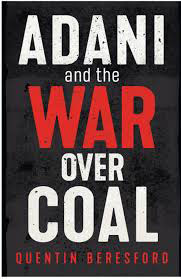
“Adani is continuing to run advertisements and opinion pieces in newspapers, along with paying for huge billboards in Brisbane, all talking up the supposed jobs that the proposed mine will create. …
Adani is also facing a legal challenge in the Federal Court by the Wangan and Jagalingou Traditional Owners Council (W&J TO), which is due to be heard in May. …
The Environmental Defenders Office Queensland (EDO Qld) criticised Adani’s latest management plan covering the black-throated finch on January 22. …
The nationwide movement against Adani is gearing up for a busy few months. A national mobilisation is being organised to coincide with the first sitting day of federal parliament in Canberra on February 12. …
The Stand Up 2 Aurizon group is planning an action directed at the rail and port aspects of the project in Bowen from February 23 to March 3.
The next major national mobilisation will be the School Strike 4 Climate on March 15. …
Grey Power Climate Protectors, among others, will be targeting the seats of Melbourne and Brisbane for 50 days leading up to the federal elections. In NSW, anti-coal activists are targeting a number of marginal seats in the lead-up to the March state election. … “
Global Warming: Temperatures To Rise By 1.5 Degrees Celsius In 5 Years; India To Get Knocked Out
https://www.skymetweather.com/content/global-news/global-warming-temperatures-to-rise-by-1-5-celsius-in-5-years-india-to-get-knocked-out/ 11 February 2019 – Global warming in the recent years has comparatively become a larger threat to the world. And the latest trends of extreme weather activities are a clear testimony to this fact. Though, there are certain sections of the society seriously thinking in this regard and trying their bit in bringing about awareness among people across the world, the vicious destruction of our planet continues.
According to meteorological reports, by 2023 global warming could temporarily hit 1.5˚C above pre-industrial levels. It will be the first time to ever happen and the results could be disastrous. There are also 10% chances of us experiencing a year where the average temperature will rise more than 1.5˚C.
So far, the hottest year on record was 2016, when Earth heated up to 1.11˚C above pre-industrial levels. Even though the heat has gone down in the past two years, it’s unfortunately only a small part of a long-term upward trend.
Due to certain natural factors, the heat we experience varies from year to year. However, scientists have estimated that we’re warming the planet about 0.2˚C in every 10 years.
Researches also state that, this rise in temperature would adversely affect regions prone to extreme weather conditions. This includes regions like South America, parts of Australia, Africa and India’s coastal areas.
Therefore, till the time we radically scale back our greenhouse gas emissions, the probability of each year creating some kind of a record cannot be ruled out.
Climate change ranks as the world’s most pressing security threat – Pew Poll
Climate Change, ISIS and Cyberattacks Are Seen as the World’s Top Threats in a New Pew Poll TIME, By CASEY QUACKENBUSH , 11 Feb 19
America’s much touted “Green New Deal@” may succumb to the nuclear lobby
This would be the end of the Green New Deal, as far as I’m concerned. Nuclear power is NOT GREEN, NOT CLEAN, as everybody knows. Once this hypocrisy is introduced into “green thinking” then the game is up. Might as well let Michael Shellenberger and his mates write the policy. And I bet I’m not the only one who thinks this way.Why the Green New Deal may include nuclear power
By Nathanael Johnson, February 10, 2019
Nuclear Engineering company Frazer Nash increasing its pro nuclear lobbying in Australia

Steve Dale, Nuclear Fuel Cycle Watch South Australia, 11 Feb 19
First we had UCL here lobbying for nuclear. Now we have an increased presence of “Frazer-Nash Consultancy”. Is this just another way of influencing a government from within? Is the ultimate art of lobbying when you get the target of the lobbying to pay you as a consultant? The page below is a bit of a concern – it mentions Ben Heard several times as “latest news”; it also involves the Premier and talks about the Federal “low level” nuclear dump –
“Since opening its first Australian office in 2010 Frazer-Nash has supported high-profile South Australian projects including ……. the Federal Government’s initiative to develop a low level radioactive waste disposal facility, …..”
https://www.fncaustralia.com.au/…/south-australia-premier-o…
Extreme weather in Australia – the economic effects : why we need to prepare for this
Storm-o-nomics: Why Australia should be more prepared for extreme weather, The Conversation, By Matt WadeFebruary 9, 2019 Another Australian summer has been marked by disasters triggered by extreme weather. Some came out of the blue, like the Townsville floods. Others unfolded gradually, like the droughtafflicting much of eastern Australia.
But there’s one characteristic our natural disasters have in common: their high price tag when compared with the rest of the world.
The World Disasters Report 2018, prepared by the Red Cross, found Australia was ranked 10th in the world for the cost of damage caused by disasters between 2008 and 2017. It estimated our disaster damage bill over that decade to be a hefty $US27 billion ($38 billion).
A separate study by London-based charity Christian Aid rated Australia’s lingering drought as the world’s seventh most costly weather-related disaster of 2018 (between US$5.8 and $9 billion).
We’re also located in world’s most disaster-prone region. The Asia Pacific was hit by two out of every five of the 335 disasters recorded worldwide in 2017 and suffered 58 per cent of disaster-related deaths, according to the Red Cross.
The headlines typically focus on the insurance losses caused by property damage following a calamity like the Townsville floods.
A recent report by consultancy SGS Economics and Planning for insurance company IAG tallied the insurance losses in Australia due to natural perils between 1970 and 2013.
During those decades storms caused the greatest losses (27 per cent of the total) followed by hail damage (21 per cent), floods (18 per cent), tropical cyclones (18 per cent) and bushfires (10 per cent).
But there’s a difference between insurance losses due to extreme weather and the broader economic cost. Insurance losses following natural disasters only capture the losses accruing to insured assets such as homes, motor vehicles and business premises. That’s only part of the story.
The disruption caused by disasters changes the way businesses and consumers behave, sometimes for an extended period, causing losses to production that never show up in insurance claims. ……….
Professor Frank Jotzo, director of the Centre for Climate Economics and Policy at the Australian National University, says climate science shows Australians should expect more frequent, and more intense, extreme weather events due to climate change. He warns the effects of climate change will drag on the economy in two ways.
First, the destruction caused by more frequent extreme weather events, especially to public infrastructure, will require capital and labour to be diverted to rebuilding things we already have rather than creating new productive assets.
“It means we have to invest resources in things that don’t give us an additional economic output,” says Professor Jotzo.
Second, climate change will take a toll on productivity. One obvious example is the impact higher average temperatures and shifting rainfall patterns will have on agricultural production.
The health of employees, especially in cities, will be affected by more frequent and long-lasting heatwaves and that means more work days lost to illness.
“Heatwaves mean people are under greater stress and more prone to ill-health,” says Jotzo. “That’s a direct hit on the economy.”………..
So what can be done?
Rawnsley’s analysis shows governments have focused too much on post-disaster reconstruction while investing too little in mitigation.
“Out of ever $100 spent on disasters about $97 is spent post the disaster,” he says.
The upshot? A disaster-prone nation like Australia should be doing more to mitigate the effects of extreme weather. https://www.brisbanetimes.com.au/business/the-economy/storm-o-nomics-why-australia-should-be-more-prepared-for-extreme-weather-20190208-p50wln.html
The Green New Deal goes to Washington — Beyond Nuclear International

But can its largely youthful supporters hold the nuclear lobby at bay?
via The Green New Deal goes to Washington — Beyond Nuclear International
1 This month.

Australians deserve the truth
about
AUKUS – https://aukuspublicinquiry.com/

PETITION – To: Prime Minister Anthony Albanese and the Australian Labor Government

of the week – Australians for War Powers Reform (AWPR)
To see nuclear-related stories in greater depth and intensity
 Antinuclear