Reducing radioactive waste in processes to dismantle nuclear facilities
 Reducing radioactive waste in processes to dismantle nuclear facilities https://www.eurekalert.org/pub_releases/2020-07/uotb-rrw070820.phpThe University of the Basque Country (UPV/EHU) has produced a methodological guide of in situ measurements for the purpose of optimizing waste management in nuclear dismantling processes UNIVERSITY OF THE BASQUE COUNTRY Recent years have seen a move into a phase to decommission and dismantle nuclear power stations and facilities, above all in Europe. By 2015, 156 reactors at nuclear facilities across the world had been shut down or were being decommissioned, and by 2050 over half of the current nuclear capacity of 400 GW across the world is programmed to be decommissioned so that it can be dismantled. “In Europe this will result in an increase in radioactive waste while current storage facilities have limited capacity. Optimizing this management is crucial,” said the UPV/EHU professor Margarita Herranz. The European H2020 INSIDER project –with funding of nearly five million euros over four years– is tackling the specification of the best strategy to optimize the production of radioactive waste during the dismantling of nuclear facilities; it is focussing on the characterization strategy and on improving the methodology, above all in constrained environments, by working to propose new and better solutions for dismantling nuclear and radioactive facilities, including power stations that produce electrical power, and for environment remediation, taking post-accident situations into consideration as well. Continue reading
|
European Union lawmakers ban nuclear from green transition fund
 EU lawmakers ban nuclear from green transition fund, leave loophole for gas https://www.reuters.com/article/us-climate-change-eu-transitionfund/eu-lawmakers-ban-nuclear-from-green-transition-fund-leave-loophole-for-gas-idUSKBN2472HN
By Kate Abnett and Marine Strauss, 8 July 20,
BRUSSELS (Reuters) – European Union leaders are split over which fuels deserve support from the bloc’s flagship green energy fund, after lawmakers on Monday called for rules that could allow the money to be spent on some fossil gas projects.
The European Commission wants to launch a 40 billion euro ($45 billion) Just Transition Fund using cash from the bloc’s coronavirus recovery fund and its budget for 2021-27, to help carbon-intensive regions launch green industries and retrain workers currently in polluting sectors.
All EU member states agreed last week that the new fund should exclude nuclear and fossil fuels projects, including natural gas projects – a position also shared by the EU Commission.
But on Monday a committee of lawmakers leading talks on the issue in the European Parliament broke ranks. They said that while nuclear energy projects should not be eligible, some fossil gas projects could get just transition funding.
The committee voted in favour of requiring green finance rules to be applied to funding of gas projects – which would effectively exclude such projects. But they also said the EU Commission could make exemptions to this rule and approve some gas projects that don’t meet the green criteria.
The full legislative assembly will vote in September on whether or not to approve the rules. Once the assembly has agreed its position, talks will start with the EU Commission and national governments in the EU Council on the final terms of the funding.
Gas emits roughly 50% less CO2 than coal when burned in power plants, but it is not a “zero-carbon” fuel and is associated with leaks of methane, a potent greenhouse gas.
Dubbo’s new renewables zone shows the path away from fossil fuels — RenewEconomy
Markets are telling us renewables are the best solution for a faster recovery. The post Dubbo’s new renewables zone shows the path away from fossil fuels appeared first on RenewEconomy.
via Dubbo’s new renewables zone shows the path away from fossil fuels — RenewEconomy
West Australia ready to seize ‘once-in-a-generation’ battery storage opportunity — RenewEconomy
New report finds that establishing a battery manufacturing base in Western Australia it is both commercially and technically feasible. The post West Australia ready to seize ‘once-in-a-generation’ battery storage opportunity appeared first on RenewEconomy.
via West Australia ready to seize ‘once-in-a-generation’ battery storage opportunity — RenewEconomy
July 8 Energy News — geoharvey

Science and Technology: ¶ “June Matched Historic Temperature High” • Globally last month was on a par with 2019 for the hottest June on record, with temperatures 0.53°C above the 1981 to 2010 average, and Europe saw its joint second warmest June on record. Arctic Siberia was exceptionally warm, C3S experts said, at 10°C (18°F) […]
Lynham keen on renewable energy zones, warns LNP will bring renewables to a halt — RenewEconomy

Queensland says its watching NSW REZ plans with interest, and remains committed to wind, solar and green hydrogen. The post Lynham keen on renewable energy zones, warns LNP will bring renewables to a halt appeared first on RenewEconomy.
via Lynham keen on renewable energy zones, warns LNP will bring renewables to a halt — RenewEconomy
“Five times size of Snowy 2.0” – V2G trial to tap potential of EVs as mass mobile storage — RenewEconomy

First large vehicle-to-grid trial in Australia will look to unlock potential of EVs as mobile batteries, and the potential to provide a resource five times the size of Snowy 2.0. The post “Five times size of Snowy 2.0” – V2G trial to tap potential of EVs as mass mobile storage appeared first on RenewEconomy.
Speculation grows that Israel may be behind spate of mystery blasts in Iran — intelNews.org

There is growing speculation that Israel’s intelligence services may be behind a spate of blasts that have damaged military and civilian industrial sites in Iran in recent days. Citing a “Middle Eastern intelligence official”, The New York Times reported on Sunday that Israel was behind at least one of the blasts, which struck an Iranian nuclear complex.
via Speculation grows that Israel may be behind spate of mystery blasts in Iran — intelNews.org
Rapid coal phase-out could drive European green recovery: Bloomberg — RenewEconomy

Decarbonising Europe’s remaining coal-reliant countries could pave the way for a vital green recovery from the global COVID-19 pandemic. The post Rapid coal phase-out could drive European green recovery: Bloomberg appeared first on RenewEconomy.
via Rapid coal phase-out could drive European green recovery: Bloomberg — RenewEconomy
webinar South Australia – too good to waste! – tonight!

webinar South Australia – too good to waste!
Please join us on Wednesday 8 July from 7.30 pm – 9.00 pm (AEST) to take a deep look at the current plans to both dump and store radioactive waste at Kimba on the Eyre Peninsula in South Australia.
Speakers:
Adnyamathanha Traditional Owner, Vivianne McKenzie
Barngarla Determination Aboriginal Corporation (BDAC) Chair, Jason Bilney
Kimba grain grower and a leader in the local anti-waste campaign, Peter Woolford
Australian Conservation Foundation nuclear-free campaigner, Dave Sweeney
Wednesday 8 July
NSW/VIC/ACT/QLD: 7.30 – 9pm
WA 5.30 pm – 7.00 pm
NT/SA: 7.00 – 8.30 pm
Zoom: https://us02web.zoom.us/j/89732027745
For many years the South Australian community has said no to plans for national and international radioactive waste facilities. Now the town of Kimba on the Eyre Peninsula is being targeted by the federal government as a site for both the disposal and extended storage of Australia’s radioactive waste.
This webinar will explore some of the community concerns and actions and outline what is needed to advance a new and responsible approach to radioactive management in Australia.
NUCLEAR’s WHOPPING CLIMATE LIE – theme for July 2020
 “If you tell a lie big enough and keep repeating it, people will eventually come to believe it. A lie told once remains a lie but a lie told a thousand times becomes the truth ”
Dr Goebbels would be delighted with the nuclear lobby’s lie that nuclear power is zero carbon and will fix climate change. He would be even more delighted with the current success of this lie.
“Think of the press as a great keyboard on which the government can play.”
The failing nuclear industry is fighting for its life. It now pitches its salvation on its claim to halt climate change. Even if
that were true (which it isn’t) the world would have to construct several thousand ‘conventional’ reactors, or 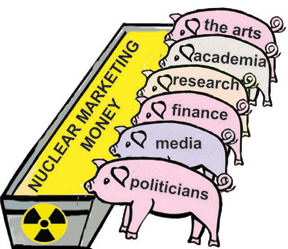 several millions of Small Modular Reactors (SMRs) very quickly, within a decade or two.
How is it that politicians , media, academics have swallowed this lie?

Climate, nuclear, coronavirus – news to 7 July
Well, I do leave the biggest news – coronavirus – to others, although Jane Goodall eloquently reminds us that the pandemic is utterly connected with our onslaught on the natural world and may well be a foretaste of worse to come, if the human species does not respect nature. https://www.youtube.com/watch?v=Z0SoLNdftHw&t=111s It’s time to get emotional about climate change.
But anyway, Covid 19 – climate change – global phenomena that don’t care about borders, are affecting above all, the world’s poorest and most vulnerable – what are we to do? Some media are rejoicing about hot weather in the Arctic, but the reality is that the persistent Arctic heatwave is wreaking havoc, with uncontrolled forest fires in Siberia, thawing permafrost destabilising buildings and industry, especially oil and gas, in Northern Russia and the Arctic North of America. https://www.youtube.com/watch?v=75IxMysh10E&t=8s Meanwhile, the South Pole is warming at triple the global average. Climate change will make world too hot for 60 per cent of fish species.
It’s hard to get concerted action on global heating, with powerful influencers like Facebook and the oil industry sabotaging efforts and information about climate change. Climate denialists are increasingly spreading misinformation on Facebook, while Facebook is actively discouraging fact-checking.
Meanwhile – don’t let’s forget, even a limited nuclear war, whether started by intent or by accident, would bring a rapid climate change, a nuclear winter, which the human species might not survive.
A bit of good news – Meet the Nuns Who Created Their Own Climate Solutions Fund.
AUSTRALIA
Julian Assange’s fight for freedom. Julian Assange’s father in tireless fight to free his son, calls on Scott Morrison to help Australian citizen Julian.
Australia – USA’s Deputy Sheriff goes for bloated military expenditure. Agressive defence policy – Australian Strategic Policy Institute has too much influence on government and media.
CLIMATE. Canberra unprepared for climate upheavals that will rock the nation. Australia seen as successful in Covid-19 response, deplorable in climate response. Australia ranks second worst in world on climate action, outside top 50 on clean energy. Independent MP Zali Steggall calls for conscience vote on zero carbon bill to kickstart Covid recovery. Former Socceroos captain wants Australia to show climate leadership as World Cup host. Australia claims Kyoto success, but three decades as a climate wrecker is all it can boast.
NUCLEAR.
Napandee nuclear waste Bill.
- Labor rejects National Radioactive Management Amendment Bill. 2020– Josh Wilson MP.
- In Australian Senate Inquiry uncertainty grows over whether Kimba nuclear dump site is really needed. Impressions of Senate hearings on nuclear waste dump Bill. AustralianGovtWatcher comments on Senate Committee Inquiry hearing on Tuesday 30 June 2020.
- Independent advice essential for Kimba community: they have received only pro nuclear dump propaganda. Busting Australian govt media spin about Napandee nuclear waste plan,. Napandee nuclear waste plan futile and unnecessary, as it lacks adequate knowledge of radionuclides involved. ANSTO has been completely disingenuous in communicating to Kimba community about radioactive waste levels.
- Australia must plan for permanent disposal of Lucas Heights nuclear waste, not hurriedly transfer it to Kimba “temporarily”. Oppose Kimba nuclear waste dump plan – Senator Sarah Hanson-Young.
Yellowcake Country- a new webinar series explores the local, national and international impacts of Australia’s uranium industry.
Murdoch press enthusiastic about nuclear propagandist Michael Shellenger. Michael Shellenberger mucked up the pro nuclear “climate action” propaganda.
Queensland splinter political party North Queensland First pushing for uranium mining in Queensland.
Western Australia: call for Mt Walton hazardous waste facility to accept toxic material from across Australia, (includes radioactive wastes.)
Australia was the guinea pig population for Britain’s nuclear weapons tests radiation fallout.
RENEWABLE ENERGY. Australia’s secretive defence operations HQ to get 1.9MW solar farm. Deakin’s new Hub for world-leading energy storage and conversion. Much more renewable news, but I am running out of time.
INTERNATIONAL
Rethinking security: Nuclear sharing in Europe in the time of the COVID-19 pandemic.
Nuclear power is incompatible with a Green New Deal.
Misinformation about Energy Economics, from nuclear companies and their propagandists
US, Russia nuclear arms talks end with plans for second round.
Covid-19, climate change – what are we to do?
|
Both also interact – shutting down swathes of the economy and causing life as we know it to a virtual standstill. But it led to huge cuts in worldwide GHG daily emissions estimated at 17% below what they were in the same first week of April, last year. Global industrial GHG emissions are now expected to be about 8% lower in 2020, the largest annual drop since WWII. Still, the world will have more than 90% of the necessary decarbonisation left to do in the face of a pandemic, in order to be on track to meet the Paris Agreement’s ambitious goal: of a climate only 1.5 degree Celcius warmer than it was before the Industrial Revolution. Carbon pricing The challenges ahead create a unique chance to enact government policies that steer the economy away from carbon at a lower financial, social and political cost than might otherwise have been the case. Today’s low energy prices will make it easier to cut subsidies for fossil fuels; and more importantly, to introduce a tax on carbon. Revenues from the tax over the next decade can help repair battered government finances. Getting economies back on their feet through investment in friendly infrastructure will boost growth and create new jobs. Low interest rates today make it much cheaper. Carbon pricing can ensure that the shift happens in the most efficient way possible. The timing is particularly propitious because the costs of wind and solar power have tumbled. A relatively small push from a carbon price can give renewables a decisive advantage – one which can become permanent as wider deployment made them cheaper still. True, carbon prices are not popular with politicians. Even so, Europe is planning an expansion of its carbon-pricing scheme; and China is instituting a brand new one. Proceeds from a carbon tax can be over 1% of gross domestic product (GDP); and this money can either be paid as a dividend to the public or, help lower government debts (which will reach 122% of GDP in advanced nations, and will rise even further if green investments are debt-financed). Negative emissions To be sure, carbon pricing by itself is unlikely to create a network of electric-vehicle charging-points; more nuclear power plants and programmes to retrofit inefficient buildings; and to develop technologies aimed at reducing emissions that cannot simply be electrified away (such as those from large aircrafts and farms). They could be counterbalanced by “negative emissions” that take carbon dioxide (CO2) out of the atmosphere at a similar rate, i.e. through developing negative emission technologies; more gentle emissions cut in the near future to be made up by negative emissions later on; farming in ways that make the soil richer in organic carbon; restoring degraded forests and planting new ones; growing plantation crops, burning them to generate electricity and sequestering the carbon dioxide given off underground; and bioenergy with carbon capture and storage. In these areas, subsidies and direct government investment are needed. Some governments have already put efforts into greening their Covid-19 bailouts. In other countries, the risk is of climate damaging policies: US has been relaxing its environment rules; whereas China continues to build new coal plants. The International Energy Agency (IEA) estimated that emissions of CO2 in 2019 had remained the same (33.3 billion tonnes) as the previous years. Energy-related emissions (which include those produced by electricity generation, heating and transport) account for more than 70% of the world’s industrial CO2 pollution. The stall seems to have been caused by a fall in coal and oil use, combined with a rise in the use of renewable power. Some governments have already put efforts into greening their Covid-19 bailouts. In other countries, the risk is of climate damaging policies: US has been relaxing its environment rules; whereas China continues to build new coal plants. The International Energy Agency (IEA) estimated that emissions of CO2 in 2019 had remained the same (33.3 billion tonnes) as the previous years. Energy-related emissions (which include those produced by electricity generation, heating and transport) account for more than 70% of the world’s industrial CO2 pollution. The stall seems to have been caused by a fall in coal and oil use, combined with a rise in the use of renewable power. Historically, it acted as an absorbing sponge for CO2 by removing it from the atmosphere through photosynthesis. Researchers at Brazil’s National Institute for Space Research indicated that about one-fifth of south-east Amazon has lost its ability to soak up the gas, and is now a net source of emissions instead. Most disappointing. Carpe Covid I should say the Covid-19 pause is not inherently climate-friendly. Nations need to make it so, the aim being to show that by 2021, they will have made sufficient progress to meet the Paris target commitments. The pandemic demonstrated that the foundations of prosperity are precarious. Disasters come without warning, shaking all that seemed stable. Indeed, the harm from climate change will be slower than the pandemic, but more massive and longer lasting. There is a lesson to be learnt. What then are we to do? Warming depends on the cumulative emissions to date; a fraction of one year’s toll makes no appreciable difference. But returning the world to the emission levels of 2010 – for a 7% drop – raises the tantalising prospect of crossing a psychologically significant boundary. I think the peak in CO2 emissions from fossil fuels may be a lot closer than many assume. That such emissions have to peak, and soon, is a central tenet of climate policy. Precisely when they might do so, though, is policy dependent. We know the idea of stripping carbon dioxide out of the atmosphere is fraught with problems. One is the scale to make a difference. Imagine that in 2060 the world manages to renounce 90% of its fossil fuel use. To offset the remaining recalcitrant 10% will still mean soaking up about one billion tonnes of carbon a year. Industrial systems currently operate at barely a thousandth of that scale. Creating such a flow through photosynthesis will require, I think, a plantation the size of Mexico. The second problem: imaginary backstops are dangerous. They deter nations in undertaking the huge efforts required to make the needed negative emissions a reality. And a third: the known unknowns – high likelihood of drought and crop failures; changes to regional climate that upset whole economies; storms more destructive in both their winds and their rains; seawater submerging beaches and infiltrating aquifers – all add to more anxiety. And in the spaces in between, are the unknown unknowns – as surprising, and deadly, as a thunderstorm that kills and the great ice-sheets that are doomed slowly to collapse. Above all, only the pathway embodying the strongest climate action (much stronger than what is promised so far) can allow the world to keep the temperature rise since the 18th century well below two degree Celcius in the 21st. This had led a new generation of climate activists to demand greater commitments at the next UN Framework Convention on Climate Change. There remain serious problems: how to get people and nations who do not share their passion and commitment, to do more – much more. If governments really want to limit climate change, they must do more. They do not have to do everything; but need to send out clear signals. Around the world, they currently provide US$400bil a year in direct support for fossil fuel consumption; more than twice what they spend subsidising renewable production. A price on carbon, which hastens the day when new renewables are sustainably cheaper than old fossil fuel plants, is a crucial step. So is research spending aimed at those emissions which are hard to electrify away. Governments have played a vital role in the development of solar panels, wind turbines and fracking. There is a lot more to do. However much they do, though, and however well they do it, they will not stop what’s on-going. On today’s policies, I think the rise by the end of the century looks closer to three degree Celcius. Besides trying to limit climate change, I am afraid the world also needs to learn how to adapt to it. |
|
Australia seen as successful in Covid-19 response, deplorable in climate response
 Global report gives Australia an A for coronavirus response but a D on climate https://theconversation.com/global-report-gives-australia-an-a-for-coronavirus-response-but-a-d-on-climate-  141982 John Thwaites Chair, Monash Sustainable Development Institute & ClimateWorks Australia, Monash University 6 July 20 The global Sustainable Development Report 2020, released this week in New York, ranks Australia third among OECD countries for the effectiveness of its response to the COVID-19 pandemic, beaten by only South Korea and Latvia.Yet Australia trundled in at 37th in the world on its overall progress in achieving the United Nations’ Sustainable Development Goals, which cover a range of economic, social and environmental challenges – many of which will be crucial considerations as we recover from the pandemic. Australia’s worst results are in climate action and the environment, where we rate well below most other OECD countries. South Korea tops the list of effective COVID-19 responses, whereas New Zealand (which declared the coronavirus eliminated on June 8, albeit with a few sporadic cases since) is ranked sixth. Meanwhile, the United States, United Kingdom and several other Western European countries rank at the bottom of the list. South Korea, Latvia and Australia did well because they not only kept infection and death rates low, but did so with less economic and social disruption than other nations. Rather than having to resort to severe lockdowns, they did this by testing and tracing, encouraging community behaviour change, and quarantining people arriving from overseas. Using smartphone data from Google, the report shows that during the severe lockdown in Spain and Italy between March and May this year, mobility within the community – including visits to shops and work – declined by 62% and 60%, respectively. This shows how much these countries were struggling to keep the virus at bay. In contrast, mobility declined by less than 25% in Australia and by only 10% in South Korea. Why has Australia performed well?There are several reasons why Australia’s COVID-19 response has been strong, although major challenges remain. National and state governments have followed expert scientific advice from early in the pandemic. The creation of the National Cabinet fostered relatively harmonious decision-making between the Commonwealth and the states. Australia has a strong public health system and the Australian public has a history of successfully embracing behaviour change. We have shown admirable adaptability and innovation, for example in the radical expansion of telehealth. We should learn from these successes. The Sustainable Development Goals provide a useful framework for planning to “build back better”. The Sustainable Development Goals, agreed by all countries in 2015, encompass a set of 17 goals and 169 targets to be met by 2030. Among the central aims are economic prosperity, social inclusion, and environmental sustainability. They are arguably even more important than before in considering how best to shape our post-pandemic world. As the report points out, the fallout from COVID-19 is likely to have a highly negative impact on achievement of many of the goals: increased poverty due to job losses (goal 1), disease, death and mental health risks (goal 3), disproportionate economic impacts on women and domestic violence (goal 5), loss of jobs and business closures (goal 8), growing inequality (goal 10), and reduction in use of public transport (goal 11). The impact on the environmental goals is still unclear: the short-term reduction in global greenhouse emissions is accompanied by pressure to reduce environmental safeguards in the name of economic recovery. How do we ‘build back better’?The SDGs already give us a roadmap, so really we just need to keep our sights set firmly on the targets agreed for 2030. Before COVID-19, the world was making progress towards achieving the goals. The percentage of people living in extreme poverty fell from 10% in 2015 to 8.6% in 2018. Access to basic transport infrastructure and broadband have been growing rapidly in most parts of the world. Australia’s story is less positive, however. On a composite index of performance on 115 indicators covering all 17 goals, the report puts Australia 37th in the world, but well behind most of the countries to which we like to compare ourselves. Sweden, Denmark and Finland top the overall rankings, followed by France and Germany. New Zealand is 16th. It is not surprising, in light of our performance during the pandemic, that Australia’s strongest performance is on goal 3: good health. The report rates Australia as on track to achieve all health targets. Australia also performs strongly on education (goal 4), and moderately well on goals relating to water, economic growth, infrastructure and sustainable cities. However, we perform extremely poorly in energy (goal 7), climate change (goal 13) and responsible consumption and production (goal 12), where our reliance on fossil fuels and wasteful business practices puts us near the bottom of the field. On clean energy (goal 7), the share of renewable energy in total primary energy supply (including electricity, transport and industry) is only 6.9%. In Germany it is 14.1%, and in Denmark an impressive 33.4%. Australia rates poorly on goal 12, responsible consumption and production, with 23.6kg of electronic waste per person and high sulfur dioxide and nitrogen emissions. Australia’s performance on goal 13, climate action, is a clear fail. Our annual energy-related carbon dioxide emissions are 14.8 tonnes per person – much higher than the 5.5 tonnes for the average Brit, and 4.3 tonnes for the typical Swede. And whereas in the Nordic countries the indicators for goal 15 — biodiversity and life on land — are generally improving, the Red List measuring species survival is getting worse in Australia. There are many countries that consider themselves world leaders but now wish they had taken earlier and stronger action against COVID-19. Australia listened to the experts, took prompt action, and can hopefully look back on the pandemic with few regrets. But on current form, there will be plenty to regret about our reluctance to follow scientific advice on climate change and environmental degradation, and our refusal to show anything like the necessary urgency. |
|
Independent advice essential for Kimba community: they have received only pro nuclear dump propaganda
 Having read the Hansard transcript of Tuesday’s Senate committee hearing it becomes even more imperative that the community at Kimba opposing the facility and others who are not completely convinced must get their own independent advice and assessment on the government’s proposals
The most concerning of the evidence was that on behalf of ARPANSA which contrary to expectations suggested that any community involvement or engagement in the licensing process would be rather perfunctory
The way I understand that evidence by Dr Larsson is that the extent of the consultations with the community will really be what and how the community decides – this would suggest that they will be in a far stronger position if they have proper technical information and knowledge to argue against the government’s proposals in the course of the consultations
In view of this evidence the chairman and members of the inquiry committee should be formally requested to provide the necessary funding for the independent advice and assessment and the right to bring the results into the evidence for the inquiry
The community at Kimba opposing the facility, and others must stress the disadvantage and unfairness in their being deprived of that advice and assessment, and that is it is also equitable for the Government to pay for the independent assessment having regard to the money already given to the community to bolster approval for the government’s choice of the facility location
After all how can ARPANSA expect them to be fully and properly involved in the community consultation process if they do not have the necessary information?
1 This month
25 October – Film –Britain’s Nuclear Bomb Scandal: Our Story – part of the Adelaide Film Festival,
Screening and Conversation
A screening of Britain’s Nuclear Bomb Scandal: Our Story (2024) followed by a talk with 2026 Bettison and James Awardee and Tradtional Owner Karina Lester in conversation with Simone Tur.
When: Sun 25 Oct, 12:00pm-Screening, 1:15pm-Talk
Where: The Mercury
Free admission, register below by clicking on BUY TICKETS and select free event tickets, at end of web page:
https://www.adelaidefilmfestival.org/program/2026/britains-nuclear-bomb-scandal-our-story
.
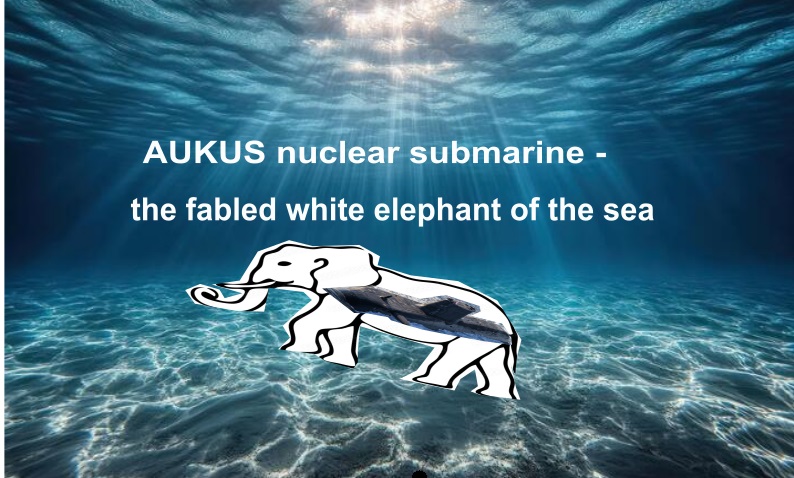
Australians deserve the truth
about
AUKUS – https://aukuspublicinquiry.com/

PETITION – To: Prime Minister Anthony Albanese and the Australian Labor Government

of the week – Australians for War Powers Reform (AWPR)
To see nuclear-related stories in greater depth and intensity


