Zali Steggall calls on Australia’s chief scientist to clarify position on net zero emissions by 2050
|
Zali Steggall calls on Australia’s chief scientist to clarify position on net zero emissions by 2050
More than 100 businesses and organisations have supported the independent MP’s climate change bill in ads in major newspapers, Guardian, Adam Morton Environment editor @adamlmorton, 6 Nov 20, The private member’s bill, which was announced in February but delayed due to Covid-19, is supported by Steggall’s fellow crossbenchers Rebekah Sharkie, Helen Haines, Andrew Wilkie and the Greens, and has been backed by climate scientists, economists and some business leaders, including the Business Council of Australia’s Jennifer Westacott, who described it as “sensible”. It is opposed by the government, which controls whether it will be debated in parliament and has rejected a 2050 net zero target……..https://www.theguardian.com/australia-news/2020/nov/07/zali-steggall-calls-on-australias-chief-scientist-to-clarify-position-on-net-zero-emissions-by-2050 |
|
Minister Keith Pitt reluctant to name property owner who sold land for nuclear dump
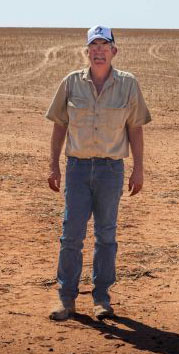
Australian government’s Nuclear Waste Bill – divisive, undemocratic and racist processes
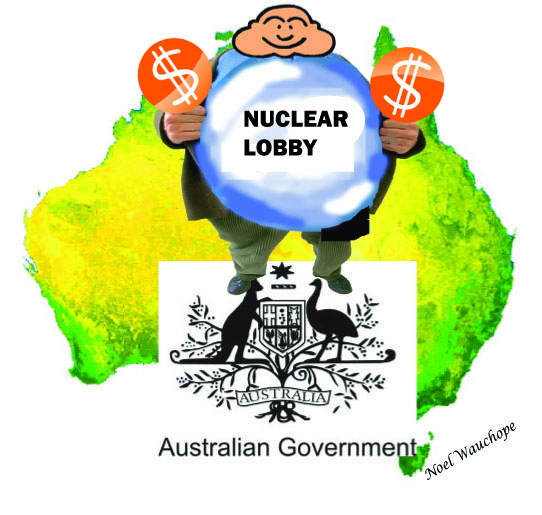
Divisive campaign on South Australian facility highlights urgent need for long term nuclear waste management plan, Croakey, 6 Nov 20,
Tilman Ruff writes: Radioactive waste production and management need a sound evidence-based plan, not shoddy and racist imposition based on misguided nuclear ambition.
On Tuesday 6 October, under the cover of the Federal Budget, the Government planned to introduce controversial amendments to laws on radioactive waste management in the Senate.
The amendments were dropped from the Senate list the following day, only to reappear the following day, the last sitting day for this parliamentary session. They were ultimately not tabled, for reasons unstated, but most likely because the government was concerned it did not have the numbers to pass them.
The National Radioactive Waste Management Amendment (Site Specification, Community Fund and Other Measures) Bill 2020 seeks to confirm the siting of a national radioactive waste facility near Kimba in regional South Australia. It would also remove any legal right to review this decision.
These laws were opposed by Labor, minor party and independent members when they passed in the lower house in June, and remain actively contested in Parliament and more so in the community.
Nonetheless $103.6 million was allocated in the budget over the next four years for the planned radioactive waste dump at Kimba, a clear sign the government remains committed to this flawed legislation, which is again scheduled to be debated in the Senate next week.
The radioactive waste management plans it would lock in deserve greater public scrutiny than they have received to date…………
Divisive, undemocratic and racist processes
The government campaign to persuade the residents of Kimba to accept a radioactive waste dump has been misleading and divisive, with much inaccurate information about risks and benefits, inflated employment promises, and very poor process to assess genuine community views.
The people selected to vote on this proposal (with shifting and nebulous goalposts) were town-based, excluding many farmers who actually live closer to the site than those in Kimba township. The local community has become divided.
Crucially, despite multiple requests, Barngarla Native Title holders were explicitly excluded from the government’s community ballot, and remain actively opposed to the planned waste facility. The Barngarla people unsuccessfully attempted to have their exclusion from the consultation process struck down in the Federal Court in March on the grounds that it contravened the Racial Discrimination Act.
When the Barngarla people commissioned a survey themselves, 100 percent of those surveyed were opposed. Nonetheless the process has proceeded, despite government promises that Aboriginal views would be taken into account.
Minister Pitt visited Kimba for the first time in months on 3 November. His media release thanking the Kimba community and chronicling his meetings with the mayor, proposed waste site landowner and various local organisations mentions Barngarla people not once.
Removing the right to legal review
The clear and unacceptable rationale of the proposed amendments are to remove the right of legal challenge to the choice of a national radioactive waste facility near Kimba.
Minister Pitt already has the power under the existing National Radioactive Waste Management Act (2012) to advance the planned Kimba facility, however this would be subject to legal review.
The right to independent legal recourse is a fundamental principle of our democracy and should not be jettisoned without compelling reasons – especially on an issue with such significant long-term implications and impacts as radioactive waste.
To remove the right to judicial review for affected people is unfair, unnecessary and unjustified. It violates the rights of Aboriginal people. ……….. https://www.croakey.org/divisive-campaign-on-sa-facility-highlights-urgent-need-for-long-term-nuclear-waste-management-plan/
Australian Nuclear Science and Technology Organisation (ANSTO) – disingenuous and inept promotion of Kimba nuclear waste dump

If anyone has viewed the Senate estimates hearing on Thursday 29 October 2020 with regard to ANSTO then I am sure they will be concerned at the ill-prepared and unconvincing explanations by its management which at times verged on being completely disingenuous. If this is the major federal government entity on which there is so much reliance for the establishment of the planned nuclear waste facility at Kimba in South Australia then the whole nation and not just the local community should be seriously worried about the capability of ANSTO which contrary to its self serving promotion and publicity is not held in high regard internationally
This extends to the Department of Industry Science Energy and Resources and the other agencies involved with the proposed nuclear waste facility at Kimba and demonstrates the ineptness and lack of competence on the part of the government in its various capacities in trying to establish the facility
Because of this it is very likely that the facility will not obtain the necessary licence for its establishment and operations and in any case the enabling legislation will be rejected by the Senate
It therefore defies logic for the government’s continued persistence with the Kimba proposal including the ministerial visit to Napandee farm yesterday which apparently failed to achieve anything as to a resolution of the inherent communityproblems – perhaps a political photo opportunity or confirmation at last that Napandee is a farm and not a community?
http://www.aph.gov.au Watch parliament Senate, Economics Legislation Committee
(Senate Estimates) Thu, 29 Oct 2020 Part 1 at 9.00 am EST
Why did Australia’s nuclear high priest Dr Adi Paterson leave so suddenly ?

Some very odd things happened in Senate Estimates last week. Seems NO-ONE knows why Adi Paterson resigned and officially took leave until the end of the year – nearing “the end of his term” we were told!!. Considering his term, it turns out, doesn’t end at the end of this year…or next year….but March 2022! Strange….
Then there is the David Tune Review into ANSTO…something about finances and administrative review…didn’t know there WAS a review….but there is no comment by ANSTO given at the Senate Estimates of EXACTLY what it was all about or what the recommendations were!Then some very strange comments about the ANM Facility. According to ANSTO’s website it says “The ANSTO Nuclear Medicine (ANM) project includes an export scale Mo-99 Manufacturing Facility and an innovative ANSTO Synroc waste treatment plant. Both of these new facilities will be owned and operated by ANSTO Nuclear Medicine (ANM) Pty Ltd, a majority subsidiary of ANSTO.”
It was completed construction in 2019 and after an accident occurred there mid-2019, it has been on amended and reamended licence by ARPANSA to produce Mo-99 at reduced amounts. The facility cost build was estimated to be approx. $169 million in 2016…but difficult to find the actual final cost. And yet it seems ANSTO is using the old facility currently which was retrofitted? How does that work?
So many questions!…. And no-one asking them!!
One thing which is important is that the acting CEO Mr Jenkinson did correct one of the Senators regarding the availability of isotopes from ANSTO which are used FOR DIAGNOSTIC IMAGING. They are NOT used for treatment! That is the PREDOMINATE USED OF ANSTO – TO PRODUCE Mo-90 which breaks down to Tc-99m which is used for DIAGNOSTIC IMAGING…
“Senator SHELDON: You had 12,000 normal doses that would go out. You said you imported some doses to cover that. What was the shortfall from 12,000 in comparison with the imports?
Biden as president would pursue climate ‘cheaters’, such as Morrison’s Australia
  Biden as president would pursue climate ‘cheaters’ – and Australia could be among them, Scott Morrison has resisted a call to action from the UK – but the US would be hard to ignore, Guardian, Richie Merzian 4 Nov 20, ”…….. If Joe Biden takes the Oval Office, on the day of his inauguration, 20 January 2021, he can formally ask to rejoin the Paris agreement. It takes one year to pull out but only 30 days to sign up. However, regaining membership to the agreement is just the beginning. The divergence on climate policy between the Democratic and Republican candidates is huge – possibly the widest divide between the two platforms – and while Trump questions global warming, Biden has the most ambitious climate policies of any presidential candidate (exceeding those of Barack Obama).First, Biden will lock the US into net zero emissions by 2050. Not an ill-defined target some time in the second half of the century, like the Australian government’s, but a 30-year target. A target that means putting coal, oil and gas on a downward trajectory, and bringing total global CO2 emissions under a net-zero target to over 60%, including major importers of Australian coal and gas – China, Japan and the Republic of Korea. Biden as president would pursue climate ‘cheaters’ – and Australia could be among them, Scott Morrison has resisted a call to action from the UK – but the US would be hard to ignore, Guardian, Richie Merzian 4 Nov 20, ”…….. If Joe Biden takes the Oval Office, on the day of his inauguration, 20 January 2021, he can formally ask to rejoin the Paris agreement. It takes one year to pull out but only 30 days to sign up. However, regaining membership to the agreement is just the beginning. The divergence on climate policy between the Democratic and Republican candidates is huge – possibly the widest divide between the two platforms – and while Trump questions global warming, Biden has the most ambitious climate policies of any presidential candidate (exceeding those of Barack Obama).First, Biden will lock the US into net zero emissions by 2050. Not an ill-defined target some time in the second half of the century, like the Australian government’s, but a 30-year target. A target that means putting coal, oil and gas on a downward trajectory, and bringing total global CO2 emissions under a net-zero target to over 60%, including major importers of Australian coal and gas – China, Japan and the Republic of Korea.
Within his first 100 days, Biden has committed to convene a climate world summit to directly engage the leaders of the major carbon-emitting nations of the world to persuade them to join the United States in making more ambitious national pledges, above and beyond the commitments they have already made. From the US, we could see a new, more ambitious emission reduction target than its underwhelming 26-28% by 2025 (if that sounds familiar, it’s because Australia has the exact same underwhelming target range but for 2030, and without the desire to improve it). Importantly, Biden will pursue countries seen as “cheating” on climate action, using “America’s economic leverage and power of example”. Given the Morrison government’s insistence on using leftover carbon credits to avoid any credible emission reductions over the next decade – dubbed by the former UN climate chief Christiana Figueres as “cheating” and by numerous Australian law professors as legally baseless – Australia may be a target of that pursuit. Australia and the US might also be at odds over financial support for climate action in developing countries. Biden’s campaign promises include meeting the US climate finance pledge, of which $2bn to the Green Climate Fund is still outstanding. Prime minister Scott Morrison pulled Australia out of the Green Climate Fund in 2018 during an interview with Alan Jones and has resisted calls since from our neighbours in the Pacific to rejoin. While presidential office is key, if Democrats take a majority of Senate seats their capabilities on climate would grow fast. The president, Senate and key states could see the US move quickly – even this year. And much like the climate leadership shown by states and territories in Australia that are all signed up to net-zero by 2050 targets, a number of US state governments have already banded together to take climate action under Trump. According to the America’s Pledge report, sub-national action makes it possible for the US to cut emissions by 37% by 2030. And despite Trump’s best efforts to revive the coal industry, more coal capacity (37GW) has been retired under his presidency than during Obama’s second term (33GW). The US consumed more energy from renewables than coal in 2019, for the first time in over a century, setting the stage for Biden’s promise of a carbon pollution-free power sector by 2035. This 12 December the Paris agreement turns five. The United Kingdom, which will host the next UN climate conference, will mark the occasion with an ambition summit. And while Scott Morrison has resisted calls from the UK to do more on climate, it may be harder to resist similar calls from the US. Morrison claims, “Our policies won’t be set in the United Kingdom, they won’t be set in Brussels, they won’t be set in any part of the world other than here.” I wouldn’t be so sure. When former president Obama pressured the Abbott government to do more on climate change in 2014, it had an impact. Let’s see what happens when Washington calls again. https://www.theguardian.com/commentisfree/2020/nov/04/biden-as-president-would-pursue-climate-cheaters-and-australia-could-be-among-them |
|
Rocket launches on the Eyre Peninsula wil damage the environment
Nature Conservation Society of SA fears Whalers Way rocket launch site will damage the environment
Worry rocket launch site will damage environment The Advertiser Clare Peddie, Science Reporter, The Advertiser, November 4, 2020
A proposed rocket launch facility at Whalers Way, on the tip of Eyre Peninsula, threatens vulnerable wildlife and coastal wilderness, conservationists say.
The Nature Conservation Society of South Australia is challenging the development, citing heightened fire danger, noise disturbance and land clearing, enabling the spread of feral predators and pests.
Society vice-president Rick Davies said the area was so special that it was protected under a legally binding heritage agreement, meaning it is be managed as a privately-owned conservation area in perpetuity. “We support a space industry in SA, but this is the wrong place for this development,” Dr Davies said.
With our country already seeing more large, uncontrolled fires, why would we allow a commercial firing range and all its propellant fuels in the middle of one of the best expanses of native coastal vegetation?”
The area is home to species at risk of extinction, including nationally vulnerable white-fronted whipbirds and the Eyre Peninsula southern emu-wren.
Dr Davies says these shy secretive birds require long unburnt vegetation and will be impacted both by both direct habitat destruction and associated industrial disturbance.
Coastal raptors such as vulnerable white-bellied sea eagles and rare osprey, which require vast hunting territories, will also be disturbed, he says.
The Eyre Peninsula Southern Emu-wren is endangered in South Australia. This male was briefly captured for research purposes and then released. Picture: Marcus Pickett
The State Government has given the Whalers Way Orbital Launch Complex major development status.
The company behind the development, Southern Launch, is now preparing a development application, including an environmental-impact statement.
Executive director Mike Damp expected those documents would be made available as part of the public consultation process early next year.
“Site selection took a long time and it was diligent; it wasn’t selected willy nilly or with disregard to the environment,” he said.
“Right from the outset, I want to dispel any inclination that you might have that we are prepared to ride roughshod over the environment.
“From the very beginning, we have been very mindful of the area that we are operating out of and we have, therefore, cemented into the bedrock of the company our biodiversity management strategy, so we intend to improve the conservation status of Whalers Way.”
The rugged coastline at Whalers Way, south of Port Lincoln on the Eyre Peninsula, including an osprey nest on a rocky outcrop. Picture: Marcus Pickett
A State Government spokesman said that the project would go through all required environmental-assessment processes.
“The sub-orbital launch facility will be one of two in the southern hemisphere – and presents enormous opportunity for growth in rapidly developing space sector,” he said.
“Projects like this will be critical in our state’s recovery from the global coronavirus pandemic,” he said.
But Shadow Environment Minister and deputy leader of the opposition Susan Close shares the conservationist’s concerns.
“I have serious concerns about the impact of this development on rare species and valuable habitat, and the risks it may pose for fire and damage to adjacent marine life,” she said.
“I urge the government to consider alternative locations which do not involve compromising environmental values and overriding existing protections.”
Frazer Nash and The South Australian Chamber of Mines and Energy (SACOME) want nuclear power – “good for the environment”!!
 SACOME pushes SA Government to back nuclear energy, Australian Mining
SACOME has also called for the state government to fund a nuclear energy forum, with South Australia holding 25 per cent of the world’s uranium resources and 80 per cent of Australia’s total uranium supply.
The chamber stated that the economic value of the nuclear fuel cycle needs to be re-examined due to the refinement and commercialisation of small modular reactors, which would be financially bolstered by South Australia’s renewable energy supply.
“SACOME supports the chief entrepreneur’s statements and calls upon the Marshall Government to establish a Nuclear Energy Forum to advance the conversation about development of a South Australian nuclear industry.”
According to Frazer Nash head of Australian business Jonathan Armstrong, the nuclear energy forum would reap positive results [??] for the environment………..https://www.australianmining.com.au/news/sacome-pushes-sa-government-to-back-nuclear-energy/
South Australia’s Jim Whalley provides nonsensical and misleading propaganda, spruiking small nuclear reactors

A military industry enterprise senior adviser to SA State gov is spruiking pro-International Nuclear Waste multi-decade–storage (not disposal), claiming ‘free’ nuclear energy in future, wanting to sell uranium processed into fuel rods with contracted high-level nuclear waste ‘return’ to SA, this is propaganda, non-sense and misleading.
And, by the way, The Advertiser, a pro nuclear right-wing paper, runs a poll on this – but only subscribers to this biased rag, are able to vote. Hardly suprsing that they get a pro nuclear result!
Chief entrepreneur Jim Whalley urges free nuclear power in South Australia, Nuclear energy would link up with renewable powerhouses and turn SA into a hi-tech Mecca, our chief entrepreneur says. Paul Starick, Chief Reporter, The Advertiser, Subscriber only, November 2, 2020
Chief entrepreneur, Jim Whalley, urges SA look at providing free energy through a combination of renewable and nuclear fuel, capitalising on technology advances to use small reactors to power towns across the state.
Premier Steven Marshall’s hand-picked chief entrepreneur is urging SA to consider providing free energy by coupling nuclear power with renewables to exploit a “real, natural advantage”.
Jim Whalley says hi-tech small modular nuclear reactors could be used to power places such as Adelaide, Whyalla, Port Lincoln and Mt Gambier.
Mr Whalley, who was appointed South Australia’s first chief entrepreneur in 2018 and is tasked with positioning the state as a destination for innovation, said embracing all aspects of the nuclear fuel cycle was a great opportunity that should be re-examined.
Mr Whalley, the chairman of defence firm Nova Systems and a former fighter jet pilot, told an Advertiser virtual roundtable of business leaders his “big idea” to kickstart the state from a coronavirus-induced recession was to examine free energy.
“I think energy is a real natural advantage we should have. I’d like to see us looking at providing free energy,” he said.
“We should be able to do it with renewables. We can definitely do it if we get smart about nuclear. We’ve got 42 per cent of the world’s mineable uranium. Even if we don’t start using nuclear energy, we can at least start supplying fuel rods, bring them all back, so they’re not used in weapons and bits and pieces like that. I think that does need to be looked at again.
“On the renewable side, we’ve got wind, we’ve got solar, we’ve got batteries – we should be the petri dish for future energy, and I’d like to see us take a real step forward there.”
Mr Whalley said this would make SA extremely attractive for energy-intensive industries, such as aluminium production.
“With the technology the way it’s evolving now, that stuff that we bring back and store now in another 20 years will actually be able to be used again,” said Mr Whalley, whose chief entrepreneur role is unpaid.
In November 2016, Mr Marshall withdrew support for further study of the case for a high-level nuclear waste repository, with the Liberals citing serious risks on both revenue and cost sides of the business case produced for the royal commission.
Energy and Mining Minister Dan van Holst Pellekaan said the 2016 royal commission made it clear large nuclear power generators were not economically viable.
“Small modular reactors have been proposed for several years now, but have not yet been proven up or available,” he said. “If small modular reactors become available in the future, we will assess whether they might be appropriate for our needs.”
He said SA was becoming a clean energy exporter, resulting in cheaper power. https://www.adelaidenow.com.au/news/south-australia/chief-entrepreneur-jim-whalley-urges-free-nuclear-power-in-south-australia/news-story/f0030d70b8c61535e0c79b090831a5be
315 nuclear bombs and ongoing suffering: the shameful history of nuclear testing in Australia and the Pacific
|
315 nuclear bombs and ongoing suffering: the shameful history of nuclear testing in Australia and the Pacific, https://theconversation.com/315-nuclear-bombs-and-ongoing-suffering-the-shameful-history-of-nuclear-testing-in-australia-and-the-pacific-148909, Tilman Ruff, Associate Professor, Education and Learning Unit, Nossal Institute for Global Health, School of Population and Global Health, University of Melbourne, Dimity Hawkins, PhD Candidate, Swinburne University of Technology
November 3, 2020 The Treaty on the Prohibition of Nuclear Weapons received its 50th ratification on October 24, and will therefore come into force in January 2021. A historic development, this new international law will ban the possession, development, testing, use and threat of use of nuclear weapons.Unfortunately the nuclear powers — the United Kingdom, France, the United States, Russia, China, Israel, India, Pakistan and North Korea — haven’t signed on to the treaty. As such, they are not immediately obliged to help victims and remediate contaminated environments, but others party to the treaty do have these obligations. The shifting norms around this will hopefully put ongoing pressure on nuclear testing countries to open records and to cooperate with accountability measures. For the people of the Pacific region, particularly those who bore the brunt of nuclear weapons testing during the 20th century, it will bring a new opportunity for their voices to be heard on the long-term costs of nuclear violence. The treaty is the first to enshrine enduring commitments to addressing their needs. From 1946, around 315 nuclear tests were carried out in the Pacific by the US, Britain and France. These nations’ largest ever nuclear tests took place on colonised lands and oceans, from Australia to the Marshall Islands, Kiribati to French Polynesia.
The impacts of these tests are still being felt today. All nuclear tests cause harm Studies of nuclear test workers and exposed nearby communities around the world consistently show adverse health effects, especially increased risks of cancer. The total number of global cancer deaths as a result of atmospheric nuclear test explosions has been estimated at between 2 million and 2.4 million, even though these studies used radiation risk estimates that are now dated and likely underestimated the risk. The number of additional non-fatal cancer cases caused by test explosions is similar. As confirmed in a large recent study of nuclear industry workers in France, the UK and US, the numbers of radiation-related deaths due to other diseases, such as heart attacks and strokes, is also likely to be similar. Britain conducted 12 nuclear test explosions in Australia between 1952 and 1957, and hundreds of minor trials of radioactive and toxic materials for bomb development up to 1963. These caused untold health problems for local Aboriginal people who were at the highest risk of radiation. Many of them were not properly evacuated, and some were not informed at all. We may never know the full impact of these explosions because in many cases, as the Royal Commission report on British Nuclear Tests in Australia found in 1985: “the resources allocated for Aboriginal welfare and safety were ludicrous, amounting to nothing more than a token gesture”. But we can listen to the survivors.
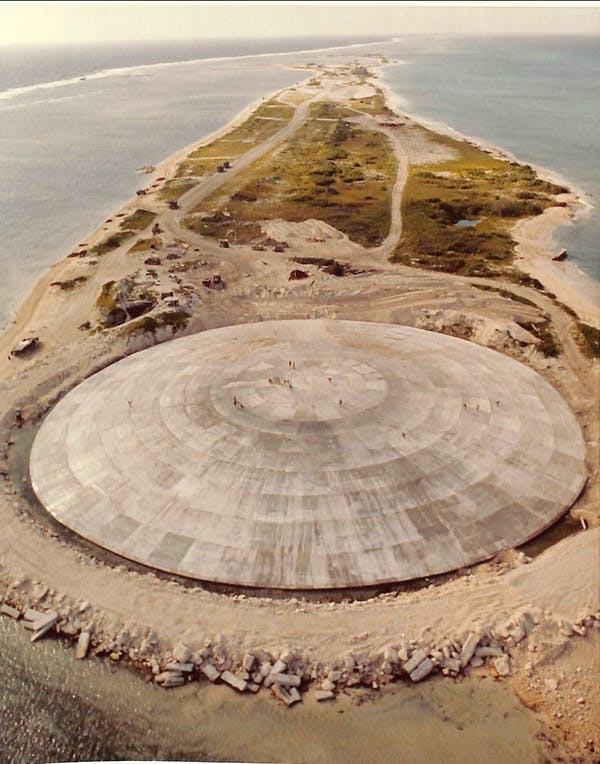
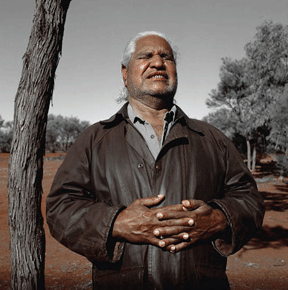
His daughter, Karina Lester, is an ambassador for the International Campaign to Abolish Nuclear Weapons in Australia, and continues to be driven by her family’s experience. She writes: For decades now my family have campaigned and spoken up against the harms of nuclear weapons because of their firsthand experience of the British nuclear tests […] Many Aboriginal people suffered from the British nuclear tests that took place in the 1950s and 1960s and many are still suffering from the impacts today. More than 16,000 Australian workers were also exposed. A key government-funded study belatedly followed these veterans over an 18-year period from 1982. Despite the difficulties of conducting a study decades later with incomplete data, it found they had 23% higher rates of cancer and 18% more deaths from cancers than the general population. An additional health impact in Pacific island countries is the toxic disease “ciguatera”, caused by certain microscopic plankton at the base of the marine food chain, which thrive on damaged coral. Their toxins concentrate up the food chain, especially in fish, and cause illness and occasional deaths in people who eat them. In the Marshall Islands, Kiritimati and French Polynesia, outbreaks of the disease among locals have been associated with coral damage caused by nuclear test explosions and the extensive military and shipping infrastructure supporting them. Pacific survivors of nuclear testing haven’t been focused solely on addressing their own considerable needs for justice and care; they’ve been powerful advocates that no one should suffer as they have ever again, and have worked tirelessly for the eradication of nuclear weapons. It’s no surprise independent Pacific island nations are strong supporters of the new treaty, accounting for ten of the first 50 ratifications. Negligence and little accountabilitySome nations that have undertaken nuclear tests have provided some care and compensation for their nuclear test workers; only the US has made some provisions for people exposed, though only for mainland US residents downwind of the Nevada Test Site. No testing nation has extended any such arrangement beyond its own shores to the colonised and minority peoples it put in harm’s way. Nor has any testing nation made fully publicly available its records of the history, conduct and effects of its nuclear tests on exposed populations and the environment. These nations have also been negligent by quickly abandoning former test sites. There has been inadequate clean-up and little or none of the long-term environmental monitoring needed to detect radioactive leakage from underground test sites into groundwater, soil and air. One example among many is the Runit concrete dome in the Marshall Islands, which holds nuclear waste from US testing in the 1940s and 50s. It’s increasingly inundated by rising sea levels, and is leaking radioactive material. The treaty provides a light in a dark time. It contains the only internationally agreed framework for all nations to verifiably eliminate nuclear weapons. It’s our fervent hope the treaty will mark the increasingly urgent beginning of the end of nuclear weapons. It is our determined expectation that our country will step up. Australia has not yet ratified the treaty, but the bitter legacy of nuclear testing across our country and region should spur us to join this new global effort. |
|
Rest super fund commits to net-zero emission investments after Brisbane man sues
|
Rest super fund commits to net-zero emission investments after Brisbane man sues, ABC, By national science, technology and environment reporter Michael Slezak, 2 Nov 20,
A 25-year-old man from Brisbane has successfully sued one of Australia’s biggest super funds over its handling of climate change, forcing it to commit to net-zero emissions for its investments by 2050.Key points:
In 2018, Mark McVeigh sued Rest, his superannuation fund, in the Federal Court after it failed to provide him with information on how it was managing the risks of climate change. Mr McVeigh alleged Rest had breached the Superannuation Industry Act and the Corporations Act by failing to manage those risks — which could include fossil fuel companies plummeting in value or infrastructure being damaged by extreme weather. The law requires trustees of super funds to act with care, skill and diligence to act in the best interest of members — including managing material risks to its investment portfolio. In an 11th-hour settlement reached on Monday while the case was adjourned, Rest agreed its trustees have a duty to manage the financial risks of climate change. Because the case was settled out of court, the outcome doesn’t carry the same weight as a legal precedent decided in court. But Mr McVeigh’s lawyer, David Barnden, head of Equity Generation Lawyers, said the case still sets an important precedent globally. “This outcome should represent a significant shift in the market’s willingness to tackle climate risk — a shift which should set a clear precedent for the industry in Australia, and also pension funds around the world,” Mr Barnden said……….. https://www.abc.net.au/news/2020-11-02/rest-super-commits-to-net-zero-emmissions/12840204 |
|
Australian doctors accuse government of failing on climate change
“We are also united by our concern about the climate crisis and the impact it is having on the safety and wellbeing of Australians and our neighbours. Public health is inextricably linked to climate health. Climate damage is here now – and it is killing people.”
The doctors accuse Mr Taylor of failing in his ministerial duties by directing public money to fossil fuel projects, failing to adequately reduce Australia’s emissions obligations and by not committing Australia to a 2050 net zero emissions target…….
In the letter the doctors said there is already a noticeable health impact from increased frequency and intensity of bushfires, floods, dust storms, drought and extreme heat in Australia.
“As a result, Australians are already seeing higher rates of respiratory illness, diarrhoea and morbidity requiring hospital admission during hot days, and higher rates of suicide in rural areas during drought years.
“The burning of fossil fuels such as coal and gas that drives global warming is also a major contributor to air pollution – this silent killer is linked to the premature deaths of 3000 Australians each year. Higher levels of air pollution are also associated with increasing illness and death related to ischaemic heart disease, chronic obstructive airways disease, lung cancer and asthma.” …..https://www.smh.com.au/environment/climate-change/australian-doctors-accuse-government-of-failing-on-climate-change-20201101-p56ajj.html
North of Australia is headed for a severe heatwave
 Severe heatwave could break record temperatures in the Top End, ABC By Chelsea Heaney and Amy Culpitt 2 Nov 20, Temperatures across the Top End are set to soar, with the Bureau of Meteorology predicting a severe heatwave is here to stay.Key points: Severe heatwave could break record temperatures in the Top End, ABC By Chelsea Heaney and Amy Culpitt 2 Nov 20, Temperatures across the Top End are set to soar, with the Bureau of Meteorology predicting a severe heatwave is here to stay.Key points:
After sticking out a sweaty weekend, with temperatures climbing up and over 40 degrees Celsius across various parts of the Top End, there appears to be no relief in sight and no concrete signs of any big wet season storms. Senior meteorologist Billy Lynch said the heat and sunny skies were “unusual” for this time of the year. “Darwin got up to 36.3C [on Sunday] and the rural area got up to about 39C. Then in inland parts, we saw Jabiru get to 40C and Katherine 41C,” he said. “Those temperatures are a few degrees above average, the November average for Darwin is 33C. “For Katherine the average is about 37C and we’re looking at 41C and 42C, so it’s nearly 5 degrees above average. “It is a little unusual to see temperatures getting this high at this time of year.
It’s these temperatures that have many outdoor workers worried………. Report reveals NT economically vulnerable to climate change The data comes as new research by Deloitte revealed that Queensland, the Northern Territory and Western Australia would be the most negatively affected economically because of climate change. In the NT, the services, mining and tourism industries would be hardest hit. By 2070, the Territory could see a drop in 12 per cent of its gross domestic product and 5 per cent fewer jobs because of the impacts of climate change, the report states. Heat expert Matt Brearley urged people to reconsider their plans during the current hot spell, especially those involving the outdoors. “Those producing heat, such as people exercising or working, out camping or having a fish in the boat, they’ll lose less heat and potentially cook themselves,” he said…….. https://www.abc.net.au/news/2020-11-03/severe-heatwave-record-breaking-temperatures-northern-territory/12840316 |
|
Superannuation funds are leaving investments on nuclear weapons
 Disarmament treaty drops bomb on super Disarmament treaty drops bomb on super funds investing in nuclear weapons, Michael West Media , by Margaret Beavis | Nov 2, 2020 Many superannuation funds exclude investment in “controversial weapons” but astoundingly this definition does not include nuclear weapons. However, this will change once the Nuclear Disarmament Treaty becomes international law, writes Dr Margaret Beavis. With two of the largest pension funds in the world already having divested, Australian funds are on notice. funds investing in nuclear weapons, Michael West Media , by Margaret Beavis | Nov 2, 2020 Many superannuation funds exclude investment in “controversial weapons” but astoundingly this definition does not include nuclear weapons. However, this will change once the Nuclear Disarmament Treaty becomes international law, writes Dr Margaret Beavis. With two of the largest pension funds in the world already having divested, Australian funds are on notice.
It would probably come as a surprise, and a disappointment, to most Australians to hear that some of their superannuation is invested in nuclear weapons. Especially given the strong community backing for nuclear disarmament, with two surveys in 2018 and 2020 (IPSOS) showing that between 71 and 79% of respondents supported Australia signing and ratifying the Treaty on the Prohibition of Nuclear Weapons. Yet the vast majority of superannuation funds have holdings in companies involved in the manufacture and maintenance of nuclear weapons. While many funds exclude investments in “controversial weapons”, astoundingly this definition often still allows nuclear weapons investment. But this is about to change. With the Treaty on the Prohibition of Nuclear Weapons (TPNW), which was endorsed by 122 countries at the United Nations in 2017, having just reached the milestone of 50 countries ratifying it, the treaty becomes international law in less than three months. Nuclear weapons, the worst of the weapons of mass destruction, will finally be on the same illegal footing as chemical and biological weapons. This means assistance of any sort, including financial assistance, towards nuclear weapons becomes illegal under international law. Only 26 companies support these weapons. Boeing, for example, the second largest weapons producer in the world, has contracts worth more than US$1.7 billion: building new nuclear weapons for the US, key components for the long-range nuclear Minuteman Intercontinental Ballistic Missiles system, sustaining the UK Trident II system and making tail-kit assemblies for the new B61 bombs. Divestment is accelerating. Globally, major investors are already ceasing their exposure to nuclear weapons activities. This includes two of the top five pension funds in the world, the Norwegian Government Pension Fund and ABP, which have divested from the 26 companies tied to nuclear weapons. Deutsche Bank and KBC are also divesting. In Japan, 16 banks (including three mega banks) have flagged ceasing investment in nuclear weapons companies. With accelerating divestment, the risks of holding nuclear weapons stocks increases. Superannuation funds in Australia are starting to consider the financial risks, reputational risks and ethical imperatives surrounding investments in nuclear weapons. Some, like Australian Ethical, Future Super and Bank Australia have already acted……… As with climate change, there is little point accumulating funds on behalf of the community if they contribute to the deaths of billions and a severely damaged future. Quit Nukes, an Australian-based campaign launched late last year, is working to get super fund portfolios out of the financing of nuclear weapons. The campaign members have met with senior executives at more than a dozen funds, the regulator APRA, several banks, index setters and a number of industry bodies. Blackrock, MSCI and other index setters have recognised the increasing demand from the public for ethical funds and have created products to suit. The full list of funds that have already acted is on the Quit Nukes website. Consumers are increasingly concerned about their funds being invested in destructive and unethical industries and super funds need to respond. https://www.michaelwest.com.au/disarmament-treaty-drops-bomb-on-super-funds-investing-in-nuclear-weapons/ |
|
|
Problems re the planned nuclear waste dump: Some tough questions for the Kimba Council

1. Based on overseas experience every place where some nuclear facility for waste storage and disposal has been established has seen a dramatic reduction in property values
2. Has the Kimba District Council considered this probable and economically debilitating situation
3. Is so how and what precautions have been taken by the Council to prevent it and what notification has it given to the community in that regard
4. If it has not been considered by the Council please explain why having regard to the duty of care that the Council owes to its community to ensure that they do not incur any financial loss
5. Has it ever been raised by the Council with the government and the responsible ministers and if so what responses has it received
6. Having now been given notice of this probable economic reversal what does the Council propose to do to prevent or at ameliorate the potential losses in property values for the Kimba community
7. Has or will the Council seek any financial assistance from the government towards the losses incurred by the community on their properties?
8. Has the Council sought any financial and legal advice with regard to this impending and major financial problem particularly as any economic advantages promoted by the government wold be only a pittance of the losses?
1 This month
17 October, Free Public Talk on Nuclear Issues in South Australia
David Noonan will speak on public interest concerns over the new Roxby Downs Indenture Act 2026 on BHP copper-uranium mining and ore processing in SA, and on how AUKUS may face SA with a High-Level nuclear waste agenda.
Dr Jim Green will discuss international developments in the field of nuclear power including ‘small modular reactors’ and Generation 4 ‘advanced’ nuclear reactor concepts.


Help Aunty Sue Protect Her Land and Sacred Sites From Destructive Rocket Testing.
.

Australians deserve the truth
about
AUKUS – https://aukuspublicinquiry.com/

PETITION – To: Prime Minister Anthony Albanese and the Australian Labor Government

of the week – Australians for War Powers Reform (AWPR)
To see nuclear-related stories in greater depth and intensity

