Chelsea Haywood sees nuclear waste dump as saving Hawker from a slow death
Chelsea Haywood. Submission to Senate Inquiry on Selection process for a national radioactive waste management facility in South Australia
My name is Chelsea Haywood and I purchased my house in Hawker 13 years ago. I lived in Waubra Victoria when the windfarm was in its proposal stage and was actively involved in the process of community education. I have 2 young children t1 that attends the school here, and the other just started pre entry at Kindy. Both my husband and myself work and devote a lot of our time to the community.
I am secretary of the Hawker Community Development Board, Chair of the Flindersfest Committee, Active on the Swimming Pool Committee while supporting my husband who is a volunteer ambo, on the EWG and BCC (both consulting committees for the project) how the need for ‘broad community support’ has played and will continue to play a part in the process, including:
the definition of ‘broad community support’ [she puts this in red]
broad community support should be kept to those that will be affected should this proposal move forward. By this I mean that there is no need to involve the entire state as it will not impact on them either way should the project go ahead or not. Those in the local area “Hawker” can already see the benefits such a facility can have for our area. Where as those from outside the area are concentrating on the stereo type the word nuclear brings to the state, while ignoring the broader picture, they do not care if Hawker dies a slow death due to lack of employment etc as it has no direct impact on themselves or their homes. The Government needs to talk more to those in Hawker and understand their support for the proposal as at the moment only the minority are being heard due to the yelling
how ‘broad community support’ has been or will be determined for each process advancement stage; [her red]
Remembering that I have children that may well have grandchildren here one day I wanted to make sure that it would be safe before even considering the idea Before moving onto round one I received a phone call asking for my thoughts on the said proposal. As I had spent the time to educate myself on the risks that such a site could pose I saw no need to oppose the proposal. Shall we continue to stage 3 and it is put to a formal vote I still will not be opposing as there are no risks to be found. I suggest that using a formal voting system such as what was used at Kimba would be more beneficial as people can vote without fear of repercussion
how any need for Indigenous support has played and will continue to play a part in the process, including how Indigenous support has been or will be determined for each process advancement stage; [her red]
Local Indigenous have been involved since the announcement of the proposal. I believe that if you want to take a stance on their behalf you need to talk to more than just a couple from the area and also check on what their response was a few months ago. I am more than happy to provide you with quite a few names of those that are for the project. Currently they are getting the best help possible from the Government to be able to collate their history with DNA and age testing, GPS marking of sacred sites so as to protect them for years to come with out this project this would never be documented for generations to come. Any problems found while surveying the sites geographically and historically which be taken into consideration when they decide on a final site.
whether and/or how the Government’s ‘community benefit program’ payments affect broad community and Indigenous community sentiment; [her red]
The benefit program was set up to help with the impact that the proposal has had on our district. So far we have people come from overseas to hold rallys against the proposal without a thought that maybe the district does want this. We have had state members visit the town and disregard any local problems (that have not stemmed from this) due to the minority yelling the loudest. Also people that are against the site have still applied for grant funds and succeeded without changing their stance on the proposal. The small injection of funds into the community has helped us to get things done that would otherwise take years of baking sales and fundraisers. This shows that the money other than assisting where required has not impacted on anyones thoughts on the proposal.
whether wider (Eyre Peninsular or state-wide) community views should be taken into consideration and, if so, how this is occurring or should be occurring [her red]
Why should the entire state be given the option to vote into something that will have absolutely no impact on if it is to not go ahead, where as it has a massive impact on my community. Broad community should be held to the current area that is being used and could probably even be made smaller. If this site is to go ahead Quorn will still keep their tourism and the travellers through the town, they also have a greater population that is more diverse than Hawker.
This has the possibility to save employment in the town which is currently on the down fall and bring with it more families, which in turn boosts our available services. If Barndioota is selected it will hold no impact whatsoever for Adelaide, the Limestone Coast or elsewhere. IF you wish to give the entire state a say in the project I believe that everything that is then put forward to occur anywhere in this state should go to a statewide vote and cannot occur with out majority rules
This inquiry is supposed to be about the ‘site selection’ process, yet not one term of reference reflects this. If the site selection is the issue, surely your terms should reflect this and not how everything is impacting the local indigenous and the federal government ‘buying’ support.
As it stands my view on the site selection process was well handled. There was no need to get 300+ communities hopeful by alerting all towns of the properties tendered. We received notification once it was dwindled to 5 properties and straight away the government had an open door policy when it comes to questions and learning more about the proposal. There are many in the community that are for the proposal but due to hearing what happens if you are vocal have remained quiet. Similar things happen in districts when it comes to other proposals as well eg. Windfarms, Big Batteries. You will always have people against the proposals that yell the loudest so they can be heard, but when people dig a little deeper in a community they find that there is a lot more support to be found, they just don’t feel the need to yell and Hawker is the same at the moment. I would like to invite any of the Inquiry committee members to come and spend some time in Hawker (not just with the against group) and see exactly how much support is out there
Jeff Baldock (volunteered his land) : the Kimba waste dump selection vote a matter for locals only.
Jeff Baldock Submission To : Committee Secretariat, Senate Standing Committee on Ecomomics Re-Proposed National Radioactive Waste Management Facility From :- (Submission No.39)
I am a 60yr old, 3rd generation farmer from Kimba. Along with my wife, two sons, our daughter and their families including 7 grandchildren, we run our properties which produce cereals, legumes, oilseeds, sheep, meat and wool.
TERMS OF REFERENCE
A ) FINANCIAL COMPENSATION The compensation offered to the landowner for this project is in line with any other land sale in our area, that involves the purchase of a small portion of someone’s land to be used for a specific purpose.
B) BROAD COMMUNITY SUPPORT (i) The definition of “Broad Community Support”. (ii) How “Broad Community Support” has been or will be determined for each process advancement stage.
I believe Broad Community Support is anything over 50% of the people, who reside in our district council area, along with Council support and clear direct neighbour support.
- INDIGENOUS SUPPORT I am unaware of any real interest being shown from the Barngarla group from our area, other than a small group visited the Kimba sites but declined an offer to meet with the landowners. You will need to refer to the dept. who have had contact with them.(D) COMMUNITY BENEFIT PROGRAM
Being a small rural community that relies heavily on farming along with our ever shrinking population, means it is getting harder for the community to raise funds for projects/upgrades that need to be done for the various sporting and service clubs. The community benefit program will be a very welcome relief to the financial strain we all feel at times, however I don’t believe it would affect the way people will vote on the facility.
(E) WIDENING COMMUNITY VIEWS
I don’t believe people outside of the Kimba area should be involved in any vote on the process moving forward, as I don’t believe there will be any negative affect from this facility being built in Kimba. All the information sessions have been aimed at the Kimba community therefore I think it would be unfair to invite people outside this area to give an informed view. There is nothing to stop people outside the Kimba District Council area sending their views to the Minister or the Department, but they should not expect to be able to vote on the issue.
(F) OTHER RELATED MATTERS
In summary, I believe Kimba Residents have had every opportunity to fully understand this proposal. We have had visits from all types of experts in the fields of Nuclear Medicine, Radiation Safety, Geoscience, Waste Management and also activists from Friends of the Earth, Conservation Council and Medical Association for the Prevention of War. I have attended every session available to us.
The department has consistently asked everyone for suggestions of speakers with relevant expertise that the community may want to hear from. Anyone who claims they have not been ‘ informed’ has not been willing to be engaged in the process, which in my view has been extremely thorough.
Kimba is the only community that has participated in a proper vote conducted by the AEC, which showed a resounding 57.4% in favour from 88% of the community voting. This along with Council support and strong direct neighbour support, including unanimous support at one of the nominated sites, resulted in Minister Canavan , accepting both new nominations into Phase 2. Jeff Baldock (Napandee site nominator)
Andrew Baldock (offered his land for nuclear waste dump) dismisses objections to the plan
Andrew Baldock Submission to Senate Standing Committees on Economics Re – Proposed National Radioactive Waste Management Facility (Submission no. 38)
I am a 4th generation farmer in the Kimba District with all 4 of my grandparents being from pioneering farming families of the district. I farm with my wife Dale and soon to be 4 children as well as my brother and his wife and children, my sister and her husband and children, along with our parents.
Our family has been involved in this process from the outset with our family nominating a parcel of land in the initial round of applications which failed to progress to the technical assessment stage due to a lack of neighbouring support. We have since offered up a number of parcels of land to the community renomination process of which one site “Napandee” was put forward to support the community in re-entering the NRWMF assessment process as a result of strong community and neighbouring support.
I am pleased to be able to provide information to the inquiry on the appropriateness and thoroughness of the National Radioactive Waste Management Facility (NRWMF) site selection process in Kimba SA. I give my permission for this submission to be made public and would be available to speak with the Senate committee to answer any further questions on the Kimba process with particular reference to:
a) the financial compensation offered to applicants for the acquisition of land under the Nominations of Land Guidelines;
The financial compensation being offered to applicants is a one-off land purchase at 4 times the market rate for a 100ha parcel of land. I see this as being very fair and equitable and very much in line with any agricultural land sales for alternative use such as residential or industrial developments.
As nominated landholders we understand the site will be positioned on the most suitable 100ha portion of the nominated land holding. This is likely to have a considerable impact on the efficiencies of our farming operations and as a result quickly eroding any economic gain from the land sale.
This level of financial compensation is unlikely to be a driving factor for any nominating landholder especially in low value landholdings such as Kimba and Hawker. The 100ha site nominated equates to less than 1.4% of our farm operation, the sale of this land makes very little difference to our financial position. We see the siting of this facility in the district making a huge difference to the host community.
b) how the need for ‘broad community support’ has played and will continue to play a part in the process, including: i) the definition of ‘broad community support’, and ii) how ‘broad community support’ has been or will be determined for each process advancement stage;
I can only speak for the process in the Kimba community of which the community has been at the heart of the discussion from the very start of this process.
The idea of the community putting nominations forward for consideration come about as a result of a community consultation meeting held by local MP for Grey, Rowan Ramsey, who at the time was considering nominating his own farm. Our family attended this meeting which resulted in an overwhelming majority of attendees supporting local nominations into the process to give the community the opportunity to investigate the proposal further.
As a result of this early support for the concept a number of nominations were put forward by local landholders with two of those making the shortlist enabling the community to enter the initial community consultation process. This consultation provided a high level of community engagement with many opportunities for all interested parties to have their say. An extensive phone poll survey was also undertaken which showed a majority support to progress to the technical assessment stage across the district; however neighbouring support was low for the two nominated sites and as a result neither nomination progressed.
Following this decision there was a high level of disappointment amongst community members and as a result of community discussion a local community group investigated alternate sites within the community which would be suitable for renomination. There were a number of sites which were made publicly known about the possibility of nomination including engagement with neighbouring landholders and the local council. As a result, two sites “Napandee” and “Lyndhurst” were put forward for consideration to nominate to enter the NRWMF assessment process.
Once nominations were lodged for these properties the community was fortunate to have further community consultation and opportunities to express their views on the possibility of the Minister accepting these nominations into the technical assessment stage. This culminated in the council facilitating a very unique Electoral Commission vote resulting in an overwhelming majority of 57.4% support in progressing the nominations.
This level of broad community support as well as consideration of the views of neighbouring landholders, council engagement, views of interested individuals and groups not included in the voting region resulted in the minister being satisfied there is adequate support to warrant the nominations to progress to the technical assessment stage.
The local community as well as the broader community has opportunities to express their views on the proposal by means of community engagement and submissions on the proposal as the process runs and the local community has been assured another vote will be undertaken prior to the minister making a decision as to whether either site will progress to the licence application phase.
I believe that broad community support has been displayed throughout the process. There are many views that need to be considered with various weighting when considering the definition of broad community support. In theory anything over 50% should be considered as broad community. But when considering the views of those outside the district boundaries, the added weight of the neighbouring views etc. I think it needs to be left to the minister’s discretion as to what determines “broad community support” as there are to many variables to attempt to impose a mandated figure.
What has become very clear to me throughout this process is that no matter how well consulted, how robust the science is or how clear the consent from the local community is, the well established anti-nuclear movement will attack the process from another angle with no accountability for their claims.
Broad support can be shown in Kimba. The District Council of Kimba has actively participated in the process and has openly supported the process through to phase 2. As requested by the people in Kimba they arranged an Australian Electoral Commission vote for registered voters in the Kimba electorate so that it was fair to all. They also invited other people who were not on the Kimba electoral role but had a vested interest in Kimba to apply for a vote.
As per the NRWMF guidelines, direct neighbours support was very important. Of the two sites in Kimba there is 90% ‘direct neighbour’ support.
An Electoral Commission vote held in June 2017, returned a clear majority 57.4% support in favour for Kimba moving to Phase 2 (the consultation stage) of the project. I have seen many indications that support has been maintained since that time.
- whether and/or how the Government’s ‘community benefit program’ payments affect broad community and Indigenous community sentiment;I believe the community benefit program is a fair way of compensating the community for the disruption the nomination process has caused the community. This fairly modest level of community funding will ensure the nominated communities will have some lasting legacy projects for the good of the community, whether they host the project or not. Allowing for positive outcomes for communities having undertaken this process.
This level of funding is certainly not likely to influence people to support the project alone, the safety and integration of the facility along with the opportunities the siting of the facility presents, are the driving factors in people’s decision making
. d) whether wider (Eyre Peninsula or state-wide) community views should be taken into consideration and, if so, how this is occurring or should be occurring;
I firmly believe that the main driving factor of any decision should be based on the outcome of a Kimba District Council boundary vote with extra consideration given to the sentiments of the immediate surrounding landholders.
This is the community which will be impacted by the siting of the facility and this is the community who has been thoroughly consulted on the facility. Those outside of the council boundary have had and should continue to have the opportunity to voice their opinions through means of consultation meetings with DISS as well as written correspondence. But to open the vote up beyond the council boundary would set a difficult precedence for any future development processes across the country.
It is very clear from the project brief and the science presented that this project will have no impact outside of the walls of the proposed facility apart from the economic and social benefit as a result of the construction works and ongoing employment and economic support.
a) any other related matters
I welcome the senate inquiry into this process as I hope it will provide assurity to all involved that the department and the minister’s office have gone above and beyond in their requirements to provide communities with information regarding the project and opportunities to voice their opinions regarding the proposal.
I can not imagine many other projects, government or privately run would have had the level of community engagement this has had. We have had a number of community votes so far including a full electoral commission vote just to consult as to weather the community is willing to discuss the project further. The process that has been run to date has been as thorough as I could imagine.
The reality is that you could run the process a hundred different ways and it will always be attacked by those opposed as a means to create division and distrust. I have the upmost confidence in the process that has been set out to measure community support.
I look forward to the findings on the enquiry
Jessica Morgan’s enthusiastic endorsement of ANSTO and the nuclear waste dump plan for Kimba

Jessica Morgan. Submission to Senate on Selection process for a national radioactive waste management facility in South Australia. (Submission no. 37)
My husband and I live and work in Hawker and are raising our three children here, our two oldest attend Hawker Area School and our youngest will be three this year. I have lived here for ten years and my husband over 20, we welcome this project. We believe it is a wonderful opportunity for our community and believe firmly in the benefits of increased employment. We also believe that this facility will ensure other essential services in our town, such as the hospital, police, and improved mobile phone coverage. We also hope that this project may assist in increasing student numbers at the school. In June 2016 when on a personal trip to Sydney I had the benefit of visiting ANSTO, I was taken on a tour which included going to level 13 and visiting the waste storage areas. I have stood next to and touched the canister containing the intermediate level waste with my 9 month old baby in a carrier on my chest, feeling totally confident of my own safety and that of my child. I left ANSTO very impressed not only in their contribution to our first class medical system, which Australia is so fortunate to have, but also the work in other areas of science and technology. Having seen the waste storage areas I saw first hand the need for the national waste facility to be located at another site. I also learnt the vast difference between the reactor at Lucas Heights and nuclear power reactors in other countries, with the main reactors coming to mind being Fukushima and Chernobyl. Nuclear electrical generation is a totally different undertaking to the ANSTO pursuits and we must distinguish between the two.
The financial compensation for the land is calculated at four times the land value of the area required, not the full property, is not a large windfall for the applicant. I question if the loss of productivity of the land area will be more than the compensation.
The definition of “broad community support” will differ between people, in my opinion 50% plus one is a majority and while I deem majority rules should apply I understand this will not be considered broad. Someone against the facility may say that broad community support is 65-70% in which case a minority may win. I have full confidence in the department deciding on the definition of broad community support.
The department has set up offices in the local communities, they are regularly here to answer questions, assist with grant applications and have organised tours to ANSTO. Heritage assessments are being carried out on the land and the project has both support and opposition from the Aboriginal community. I am most impressed with the level of community engagement and complement the department for their ongoing communication.
The first round of the community benefit program had applications from people who both support and oppose the proposed facility. The second round of applications closed in February and the successful grants will be announced in coming days. Once again there will probably be successful applications from people both opposed to and in support of the facility. Having almost $2 million dollars injected into our small community has seen some wonderful things happen.
The only people whose views should be taken into consideration are those living in the area and those actively involved with the community. Given the small population of our area, taking into the consideration the views of a wider area or the state would mean the decision would no longer be made by the local community. It must be remembered that there are almost 130 nuclear waste sitesall around Australia, someone living in Adelaide is already living near nuclear waste. The proposed land is not in a tourist area and cannot be seen from main roads. I estimate the nominated land is nearly 40km as the crow flies from Rawnsley Bluff, the city of Adelaide and most of its suburbs would fit in between.
Annie Clements happy to see nuclear waste dump powering Kimba community into the future
Annie Clements: Submission to Senate Standing Committee on Economics Subject: Proposed National Radioactive Waste Facility (Submission No 35)
I have lived in Kimba for sixty years and am an active member of the community including as a volunteer Ambulance Officer for the last 28 years. I am also a member of the Working for Kimba’s Future group. I am completely comfortable with the Low/Intermediate Nuclear Waste Facility in Kimba and believe that the process has been good.
We have two sites nominated in the Kimba district to host a Low/Intermediate Nuclear Waste Management facility. Both were put forward voluntarily and are 100 hectares each. The financial compensation offered was four times the value of the land. I think this is fair as it is just a small portion of the farm’s acreage. Both sites could hardly be described as prime farming land, more like marginal land.
In my opinion the process has been open and transparent from the beginning. Rowen Ramsey sent out a brochure announcing a town meeting in April 2015 to discuss the idea of nominating a site for a low/intermediate nuclear waste facility. When I attended the meeting I was surprised to see only around forty people there considering the very different subject. Those who did not attend cannot say that it was not advertised.
“Broad community support” probably means different things to different people. Looking at the meaning of broad in a dictionary includes – wide not narrow – generalised bold in effect or style – being tolerant in thought or opinion – need not be included or counted in a vote. In a state or federal election anyone who has 51% of votes would consider that they have been elected. The process here in Kimba deserves to be respected in the same way.
Minister Canavan announced that the two Kimba sites had been accepted to enter phase 2 after a postal vote that concluded on June 22 2017. This included everyone within the Kimba Council boundary. The post vote showed that 57% of those who chose to vote (which was 80 % of the whole district. 20 % chose not to vote) wanted to move forward for more consultation, assessment and information. Plus, the District Council is supportive and nearly all of the direct neighbours of the sites are supportive. I am very comfortable with this decision. There will be another vote later this year that will determine whether the facility can go to the next and final phase.
As far as indigenous involvement goes, I am aware that a few weeks ago a group of people I think from the Barngala tribe spent a few days in and around Kimba and met with the Department of Industry Innovation and Science staff. That’s good, since they are the right people to be involved.
Because the two Kimba sites have progressed to phase 2, we are eligible to receive the Community Benefit Program, just like the community near Hawker. Currently, 34 projects have been nominated and are being assessed. A broad range of groups, clubs and individuals have entered their projects and I’m sure all will be beneficial for the community.
The Kimba community has the advantage of receiving lots of information and education on the safety any risks and benefits of this facility. People outside our area could be influenced by anti nuclear scare campaigns and wild allegations that have no relevance to this facility. There will be no negative impact from this facility on land adjacent to it, let alone outside the district. I strongly believe that the boundary that was in place for the vote in April 2017 must be retained for the next vote i.e. the Kimba District Council boundary. Wudinna, a neighbouring town, is planning a large mine funded by a Chinese company. I see no reason why we in Kimba should have a vote on whether that goes ahead. The Kimba community should have the right to decide if we want this facility or not.
Some things that have happened during the process. Several town meetings – department of Industry Innovation and Science opened an office usually here, two days a week – appointment of a Community Liaison Officer – established the Kimba Consultative Committee – recently took nominations for a Kimba Economic working group – visits from experts in different fields including nuclear medicine – visit from Minister Canavan – also ARPANSA – a delegation of close neighbours to a nuclear waste facility in France – tours to the Lucas Heights nuclear facility open to anyone either for or against the facility. We really have had a good opportunity to learn, and this continues.
Australia needs a low/intermediate nuclear waste management facility. Some say why Kimba? Well I say why not Kimba? We need this facility to enable our small, struggling community to power into the future. Fifteen jobs and extra activity may not sound like much to city folk, but would make a huge difference to us, so we should be able to make that decision ourselves. If this economic committee wants to be helpful, it can at least give us that much respect, while we think about our economic future.
Margaret and Charlie Milton – excited at the prospect of Kimba nuclear waste dump
 Margaret & Charlie Milton Submission to Senate Standing Committee on Economics economics Subject: Proposed National Radioactive Waste Facility
I have been a resident of the Kimba for 43 years, and my husband has been a resident for 53 years. We are happy to provide the Committee with this submission relating to ‘the appropriateness and thoroughness of the site selection process for a national radioactive waste management facility at Kimba…’.Personally, We have no objection to the potential to host a national radioactive waste facility on the two sites that have been nominated for selection in our Kimba District.
More importantly we think the process has been fair, the information we have received has been good, and we are getting everything we need to make the right decision for our community.
The additional financial benefit to land owner is minimal. Four times the market value of such a small parcel of land is negligible in the overall scheme of things. It takes a huge effort to make a living out of farming in our district, with big costs and big risks every single year. If one of our farmers makes some additional money from this land, that’s great. But it’s not going to make them wealthy in its own right. Considering the government needs land for a national project, this seems more than fair to me.
Community support is interesting aspect of this proposed facility. I have seen and learned about many positive implications on the town from this project going ahead.
Our community has had ample opportunity to learn more about the proposed facility. Any time we need to know more, there is a shopfront that is staffed on main street in Kimba
Early meetings with Rowan Ramsey MP gave us a good insight
We have had several Town Meetings
A French delegation visited Kimba to give us some insight into living near nuclear facilities. It seems to be no problem at all.
We have had meetings with Departmental members Some in the community have been fortunate to meet with Minister Canavan
Trips have been organised and funded to visit ANSTO to learn more about waste storage
It will be a huge lift for the local businesses in the development of the site.
There is no apparent risk to land prices or the prices of grain that is grown in the area. That has been a big concern by some farmers but there won’t be any negative impact on our farming community.
It will have a huge impact for the local businesses in general, that will cater for the influx of people who will infiltrate our community in the building of this Waste Facility.
Huge impact on businesses with tourism set to soar with the building of this Facility
Overall, We are very comfortable in the knowledge that the community has had ample opportunity to learn about the potential Facility. There has been plenty of media coverage (newspaper, social media, radio, television) and through the Department of Industry, Innovation and Science which is in the community most weeks 2 days per week. They have a display which shows what it will look like if built here and personally can see no impact on the surrounding area. We don’t know what the community will decide, but the process has been fair and open with lots of opportunity to learn and ask questions. We were asked to vote on whether to get more assessment and information about the opportunity and we voted yes. So that’s what’s happening. It would be unfair for us to not have the chance to learn more.
We disagree that we need ‘broader community views’ and the need to stretch the boundaries outside of our District Council. What is happening in our Community is exactly that: our community. As residents of Kimba for the last 43 years, plus ++ We see no reason that the rest of SA has a right to tell us what we can and can’t have. It is our back yard, not theirs. We are the community. We are all allowed our own personal opinions and feelings on this matter but, when we have to, we pull together as a community and are always there for each other.
From everything we have learned, we can only see positive outcomes for our town
. New jobs. It might only be 15 to start with but forcibly there may be more than that. What a bonus to fill some of the many empty house in our community, and an influx of students to our school which has diminishing numbers every year.
We are more likely to received essential town services: hospital, doctor (which we are struggling to keep), dentist (which we do not have). We need to keep the services we have but that has been a huge struggle in recent years.
The need for a Doctor to be based permanently in Kimba as currently we do not have a Doctor and have to travel to see one.
It’s an opportunity to support existing businesses and try and encourage new local business, which brings economic benefits to the town.
Businesses have been seeing a decline in customers as land is sold it is been purchased by neighbours to make larger farms Very few farms are being bought by farmers from out of the district. We need new people here and this is an opportunity for new community member.
Improved phone and internet service would be an added bonus for our community.
: The $2,000,000 Benefit Fund. What a bonus for a small community!! That’s just a ‘thank you’ for taking part. I am so glad to see friends and organisation in the town applying for funding of their projects. We know how hard we all work as volunteers and this is a really great thing. We can see such a bonus for the community with the opportunity to put forward grants to obtain money for thing that would not be because of lack in funding. It’s a win for social clubs, sporting facilities and anyone else who think they are eligible to put in a submission for funding.
So, we can see the opportunity for a small country town such as ours to have such a facility. It could ultimately mean long term survival for our community. The whole town is struggling. The CFS, the SES, Ambulance Service, they are all struggling for numbers in a declining population. We might not choose to support it, and we might not even be offered it (there is another location in Hawker too). But we should be able to decide for ourselves. It’s a shame we have to have this inquiry. Everything so far has been fair and reasonable.
Federal nuclear waste dump siting process is slammed by traditional owners
Traditional owners slam selection process
Kathryn Bermingham, Australian Associated Press, July 6, 2018
https://www.news.com.au/national/breaking-news/traditional-owners-slam-selection-process/news-story/68414362e51f77c35333dc453574dccb
A traditional owner of land identified as a possible site for a radioactive waste facility says an Aboriginal consultation process has left her feeling ostracised within her own family.
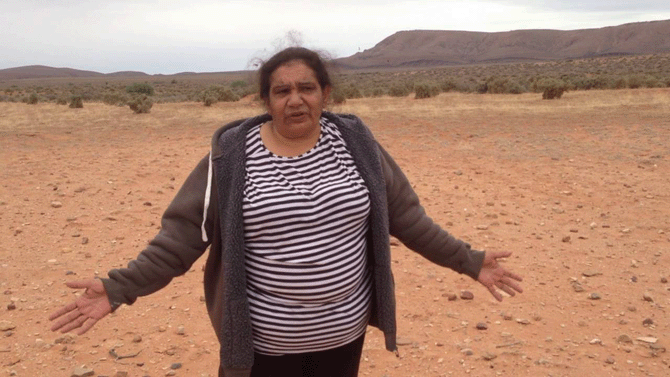 Regina McKenzie, an owner of Adnyamathanha country in South Australia’s Flinders Ranges, is calling on the government to abandon its “ineffective, inappropriate and incomplete” Aboriginal cultural heritage assessment.
The Senate’s Economics Reference Committee on Friday held a public hearing at Hawker, where Ms McKenzie is a resident, after a similar event on Thursday at Kimba, on the Eyre Peninsula.
Both towns have been earmarked as possible sites for the federal government’s National Radioactive Waste Management Project, which will initially store low and medium-level waste before a second centre is opened for medium-level material.
The Senate inquiry is focusing on the site selection process, which Ms McKenzie says has alienated culturally appropriate people from participation.
“(The process) has caused significant mental health issues within our broader Aboriginal community and continuing lateral violence within our immediate family,” her submission to the committee states. The process has left me feeling ostracised within my own family. I find myself constantly witnessing aggressive, misogynistic and culturally inappropriate behaviour from a select few who have been validated through the process.”
The committee on Friday heard from various community organisations, including the Hawker Community Development Board. In its submission, the group said the government’s benefit program, which provides business and community groups with funding, has given the town a boost. “Consensus among the community is that the community benefit program has assisted in the district getting some needed projects completed that may not otherwise occur,” the submission states. Our small country town that has been dwindling for years has the potential to harness this project and grow into the future.”
Labor Senator Alex Gallacher shows his pro nuclear colours at Hawker meeting on Nuclear Waste Dump Siting
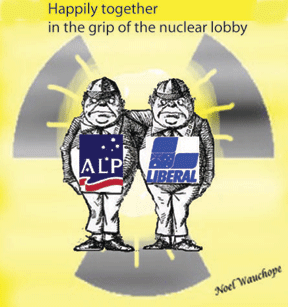 Katrina Bohr No Nuclear Waste Dump Anywhere in South Australia, 6 July 18
In a conversation, he declared there is no difference between transporting uranium or radioactive waste.
He condones the continued export of nuclear medicines, which will continue to feed the waste here.
I felt during the proceedings that he wasn’t showing impartiality.
He made disparaging remarks about certain evidence presented during the day.
I like to know who. ….. https://www.facebook.com/groups/1314655315214929
Senator Rex Patrick in Whyalla – concerned that nuclear waste facility in South Australia is already a ‘done deal’
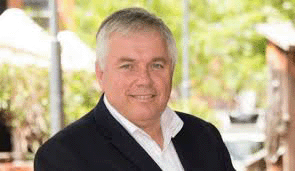 Senator talks nuclear, Whyalla News, Louis Mayfield , 6 July 18
Centre Alliance Senator Rex Patrick recently visited Whyalla ahead of two public hearings in Kimba and Hawker for the federal inquiry into the selection process for a national radioactive waste management facility.
Senator Patrick, who initiated the senate inquiry, said he was ‘very concerned’ how fair the selection process for the site had been so far.
“At these hearings we want to hear different perspectives from people in the community not so much on whether there should or shouldn’t be a facility, but on whether this process has been run fairly.”
Mr Patrick said there is a site in Western Australia which has ‘considerable support’ as a location for a nuclear waste facility, and believes it should be included in the nuclear discussion.
“We shouldn’t be holding back on that particular site. My worry is that even if we get across the line in Kimba or Hawker, we’ll have a bitterly divided community,” he said.
“It’s simply better to find a site with broad community support and recognise that as a very positive thing for such a facility That’s why I don’t want the Western Australia site ruled out.”
However Mr Patrick is concerned that the decision to establish a low-level nuclear waste facility in South Australia is already a ‘done deal’, given statements made by Resources Minister Matt Canavan……..https://www.whyallanewsonline.com.au/story/5511488/senator-talks-nuclear/
Sunshine Coast environment and population must not be put at risk by nuclear power stations
 OUR SAY: Nuclear move not for Coast, Sunshine Coast Daily by CRAIG WARHURST, 6th Jul 2018
Melanie Orman’s confidence in Nuclear Waste Management Facility Taskforce is misplaced ? – responses to her Submission
Dave Dehelpe No Nuclear Waste Dump Anywhere in South Australia 6 July 18 Unless Mz Orman has dicovered a method of transporting the waste without passing through other towns or properties in S.A. then it is essential that the rest of S.A. claims the same voting rights that she wishes to deny all South Australians.
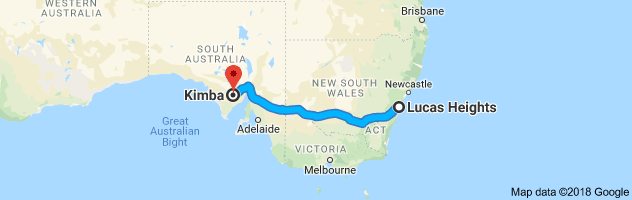
Steve Dale She says – “I do trust and believe that this facility will not have a negative impact of the community of Kimba” – too late, the sweaty desperation of the nuclear pushers has already caused a huge amount of damage to South Australians. “Trust” – I wouldn’t trust them as far as I could throw a container of High Level Waste (which they call “Intermediate” – trust blown already).
Picture below is from a UK radioactive waste management document – the UK call it High Level Waste (HLW) – our parliament (at the urging of ANSTO and nuclear lobbyists) passes a law to make us call it “Intermediate”. Oh what a tangled web they weave….. https://www.facebook.com/groups/1314655315214929/


Response to Katrina Koch’s pro nuclear submission on nuclear waste dump siting South Australia
Wendy Nicholls Fight To Stop Nuclear Waste Dump In Flinders Ranges SA 6 July 18, I get how the nuclear waste dump plan primarily affects Kimba and adjacent areas first but this will and does affect the whole of SA…
( is the waste going to magically appear in Kimba..no..it has to be transported thru SA…and has Koch even looked at or researched what has occurred overseas when nuclear waste has leaked?? If this goes ahead and it leaks…whose dollars will be cleaning it up? ANSTO, fed dollars, state dollars)
I’m proud of SA…proud of our environment and rural areas…this affects all of us…) And anti dump activists…they are providing information to allow for Informed choice… https://www.facebook.com/groups/344452605899556/?ref=bookmarks
Response to the pro nuclear submissions – an Aboriginal perspective
Jillian Marsh No Nuclear Waste Dump Anywhere in South Australia 6 July placing faith in ‘worlds best practice’ without fully understanding what this means or who peddles this propaganda seems such a naive thing in today’s world.
We as members of the public can easily locate information online that contradicts the spin doctors of the nuclear industry – not just on the basis of economic viability, but also on the grounds of lack of an adequate and thorough community engagement process, as well as on the failed track records of governments and the nuclear industry all over the world who consistently fail to contain toxic radioactive contamination.
So I suspect that the YES people are being seduced by the prospect of wealth, both personal and collective, and for the non-Aboriginal folk out there who say YES to a dump, if it ends up being a disaster and contaminates the land you can just pack up and move onto another farm, buy a house in another town, send your kids to another school and move interstate.
The reality for Aboriginal people, especially Traditional Owners is quite different. we are spiritually, culturally, economically connected to our country and have been for hundreds of generations. that’s what we mean when we say we belong to this land, a concept that is difficult if not impossible for 4th generation settlers who came from (and still identify with) a European heritage. https://www.facebook.com/groups/1314655315214929/
Earthquakes happen in the Kimba area – not a good place for a nuclear waste dump.

Michael Skeet Kilowsky Fight To Stop Nuclear Waste Dump In Flinders Ranges SAEyre Peninsula, SA, ML 4.5 1998 February 26, 14:13 UT
(Friday, February 27, 12:43 am CDST)
This earthquake occurred north of Cleve and south of Kimba on the Eyre Peninsula in South Australia, about 250km northwest of Adelaide. It was felt over northern Eyre Peninsula, and on Yorke Peninsula at a distance of about 110km from the epicentre. The maximum reported intensity was Modified Mercalli Intensity 4. Located by Sutton Earthquake Centre, PIRSA Adelaide. https://www.facebook.com/groups/344452605899556/?ref=bookmarks
Melanie Orman seems positively joyous about a nuclear waste dump for Kimba
Melanie Orman Submission to Committee Secretariat, Senate Standing Committees on Economics Re – Proposed National Radioactive Waste Management Facility From Melanie Orman – (Submission no. 77)
I originally grew up in Adelaide, South Australia, but have been coming to Kimba for the past five years and officially moved in 2017. My partner is the fourth generation in the process of taking over the family cropping farm in Kimba, that has been operational for the past one-hundred years. I work at Wudinna hospital as a Registered nurse commuting between Wudinna and Kimba. It is my pleasure to be able to provide my personal opinion and relevant information to the inquiry on the process of the National Radioactive Waste Management Facility (NRWMF) site selection process in Kimba, South Australia. I give permission for this submission to be made public and would be willing to speak with the Senate committee to answer any further questions they may have in conjunction with Kimba’s process through this nomination.
a) The financial compensation offered to applicants for the acquisition of land under the Nominations of Land Guidelines;
The financial compensation offered to the land owners of Kimba who put their land up for nomination is not an over-generous amount of money. It is only a small percentage of the money that cropping can bring into a business over many future years. The price offered is not going to impact the overall business, give the farmer an advantage or disadvantage or affect any surrounding neighbours.
In my opinion, I cannot see that the money offered was the main driving incentive for people to nominate their land. When the NRWMF approached people with the idea and compensation, it was in their best interests for their family, community and full belief that the facility would not cause any reason for concern.
b) How is the need for ‘broad community support’ played and will continue to play a part in the process, including: The definition of ‘broad community support’, and How ‘broad community support’ has been or will be determined for each process advancement stage;
Broad Community Support is defined as a gathering of expressions by a community. [??] There may be broad community support even if some individuals or groups object to the project. But by addressing the community’s majority opinion and accepting that they have their own opinion and not criticise another community members view. A community member is a person who; lives, shops, works, volunteers, or sees themselves as an accepted member of a town. Everyone who defines themselves as a member of the community should accept everyone else in that community and let them have a say.
At the end of 2016 two new voluntary land nominations were submitted from Kimba. Members from the Department of Innovation and Science and the Department of Industry visited to speak with the community of Kimba to see if there was a change in the community’s opinion since the first nomination was terminated. Minister Matt Canavan also travelled to Kimba to meet with people such as landowners, direct neighbours of the nominated sites, District Council members and everyone who either supported or were opposed to the idea. Minister Canavan accepted the two new land nominations and Kimba entered the process once more. I think this shows really clearly that there has been enough support for the community to participate in this next stage, no question. [??] We will all get more input into any decision to come
Evidence that supports broad support in Kimba:
- As wished by the community of Kimba, the Australian Electoral Commission vote for registered voters in the Kimba electorate was allowed, so that it was fair to all. The results showed after the June 2017 vote, that majority of the town ( 57.4% ) was in favour for Kimba moving to Phase two of the project, not to receive the site, but the consultation stage.
- 2) It was also raised to people who were not on the Kimba electoral role to apply to vote if they thought they had a strong interest in the decision.
- 3) The District Council of Kimba has openly supported the process through to phase two.
- 4) As per the NRWMF guidelines, the two Kimba nominated sites had 90% direct neighbour backing.
- 5) The traditional owners of the land have been informed of the assessment of the two Kimba sites for this facility. They have not expressed opposition to the facility being located in Kimba (to my knowledge) to date.
Like many rural community towns, Kimba is slowly declining in numbers, especially in low rainfall areas. Many people, including myself, want a way to ensure that this beautiful town will still stand for many more generations to come. Numerous people see that this project will ensure job opportunities, infrastructure and can make sure this part of Australia does not vanish from our maps.
- How any need for Indigenous support has played and will continue to play a part in the process, including how Indigenous support has been or will be determined for each process advancement stage;
To my knowledge, there are no traditional owners from this region living and active in the Kimba community. I am positive that the department are in contact with the Barngarla people, who are the traditional owners of the land. I am aware that the Barngarla owners visited the two nominated sites in March 2018. As far as I know they didn’t raise any issues or concerns with the proposed project. I believe that the elders will always be in the loop of the process that Kimba has entered. I am confident the department will engage them in decisions and ideas when it comes to a potential new project like this in Kimba. I think the best idea for this committee is probably to ask the department and those traditional owners directly about the process. They are going to know better than most people making these submissions.
- Whether and/or how the Government’s ‘community benefit program’ payments affect broad community and Indigenous community sentiment;
Kimba has been seen in the media a lot since entering this process, and a lot of the comments made about our town has mostly been negative. This really upsets me when people on social media, and even surrounding towns/ cities go out of their way to degrade my town and tell me “how could you do this to our country?”. It is not just once person’s decision, and I feel I am a part of this community enough to have an educated opinion about this matter. I am now a registered voter of the Kimba electoral role. I will continue to vote ‘Yes’ for this facility, so I can ensure that my future children have a town that exists, and they are happy and healthy in the town of Kimba.
It has been a bonus to find out that Kimba was eligible for a two-million-dollar community benefits fund to help the community thrive. This is a chance for us to better our town in lots of meaningful ways. It recognises that we have taken part in something other communities wouldn’t. I think that’s fair.
I hope that it is understood that the community of Kimba did not vote ‘Yes’ because of the money. I see that the majority of people in Kimba are following this journey because of the passion and end result we hope to get to, and that is to provide a safe place to dispose of and store radioactive material for Australia, at the same time as offering some long term social benefits to our community.
e) Whether wider (Eyre Peninsula or state-wide) community views should be taken into consideration and, if so, how this is occurring or should be occurring; and
I believe that the decision should be that of the community of Kimba only. It is the people of Kimba who have been through the past twelve months of meetings with various people from around Australia and the world, people who specialise in these industries. Many people have opinions on the matter, which is fine, but the community of Kimba will have the most educated evidence and findings to make the informed decision, whichever way it goes
I have been very happy, and comfortable with the process thus far. I have attended many community meetings and have heard from many professionals in the topic of radiation. I was lucky enough to be able to visit ANSTO with a group of people from Kimba to learn more about radioactive waste storage. I was amazed at what I learnt, and it cemented my opinion on the topic. The trip really opened my eyes as to the type of waste that would be stored in our facility, we were able to go up and enter the facility where the medical drums are kept and were even able to go up and touch the drums ourselves. I came away from that trip with a really cemented understanding on the specific products that will be potentially stored in Kimba, and I feel that I have enough knowledge to have an un-biased opinion.
I do trust and believe that this facility will not have a negative impact of the community of Kimba. I do not believe that it will have an adverse impact on grain sales, land prices for anyone in the district. As this facility would only affect people in the district of Kimba, I feel it is only up to the people in that district. Their opinions matter the most, and those people only should have the vote on whether this facility goes ahead.
The town of Kimba defiantly has some people who like to have their voices heard, whether it is negative or positive, between other community members! Since this process has started, the community has continued to work, and everyone socialises with everyone in the town. Some people make this matter cloud their opinion on others, but that is up to them. Everyone has a right to their opinion and it’s normal that a town from is made up of diverse opinions. I do not believe the town of Kimba has divided, just that some people chose to segregate themselves from normality. I believe if people wish their voices to be heard that they should do so and do it with respect and non judgment. As I have been brought up if you have nothing nice to say, do not say anything at all. I look forward to the findings on the enquiry.
1 This month
25 October – Film –Britain’s Nuclear Bomb Scandal: Our Story – part of the Adelaide Film Festival,
Screening and Conversation
A screening of Britain’s Nuclear Bomb Scandal: Our Story (2024) followed by a talk with 2026 Bettison and James Awardee and Tradtional Owner Karina Lester in conversation with Simone Tur.
When: Sun 25 Oct, 12:00pm-Screening, 1:15pm-Talk
Where: The Mercury
Free admission, register below by clicking on BUY TICKETS and select free event tickets, at end of web page:
https://www.adelaidefilmfestival.org/program/2026/britains-nuclear-bomb-scandal-our-story
.

Australians deserve the truth
about
AUKUS – https://aukuspublicinquiry.com/

PETITION – To: Prime Minister Anthony Albanese and the Australian Labor Government

of the week – Australians for War Powers Reform (AWPR)
To see nuclear-related stories in greater depth and intensity

