At Liberal National Party Convention, Turnbull will be urged to develop nuclear power, with popular Queensland coast sites recommended
 Seaside gems eyed for nuclear power plants
The Turnbull Government will be urged to consider developing a nuclear power industry under a plan to be debated at the LNP convention, with two of the potential locations being popular seaside areas in southeast Queensland.
https://www.couriermail.com.au/news/queensland/lnp-convention-to-debate-introduction-of-nuclear-power-plants-to-queensland/news-story/9d38d49acd7d6f6fb504f95e8183c311 July 5, 2018
THE Turnbull Government will be urged to consider developing a nuclear power industry under a plan to be debated at the LNP convention.
The controversial resolution, proposed by Fairfax MP Ted O’Brien’s branch, could lead to a plan for generators across the country if it is adopted by the party and then acted on by the government. The branch does not list possible sites for nuclear power plants in the resolution but urges the Federal Government to “consider the feasibility of nuclear powered energy generation in Australia”.
A 2007 Australia Institute study identified 17 suitable sites for nuclear power plants including six in Queensland — Townsville, Mackay, Rockhampton, Bundaberg, the Sunshine Coast and Bribie Island.
That study chose locations using key criteria including existing electricity infrastructure, centres of demand, transport infrastructure and access to large quantities of water for cooling and warned setting up a nuclear industry in Australia could prove unpopular.
“If the Federal Government decided to promote the establishment of a nuclear power industry in Australia, the siting of the power plants is likely to be one of the most politically contentious issues,” the report said.
“In Australia, approximately half of the population opposes nuclear energy and two thirds say they would oppose a nuclear power plant in their local area.”
The Fairfax LNP branch has proposed three separate resolutions on energy policy to be debated at the convention, which starts in Brisbane on Friday. Other resolutions from the branch call on the government to “reduce the high level of subsidy paid to the renewable energy industry” and “support the building of new Coal Fired Power Stations that have the capacity to produce reliable and economic power”.
Resolutions that are adopted by the LNP convention are not binding on the government. Mr O’Brien could not be reached for comment
Liberal National Party Queensland ‘s dead end pursuit of nuclear power for Australia
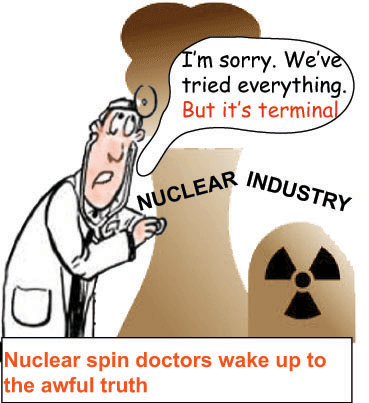 Stop flogging the dead horse of nuclear power
https://www.dailytelegraph.com.au/rendezview/stop-flogging-the-dead-horse-of-nuclear-power/news-story/5925d0dc48f1a7ff7d6a9f90ae07533a, Terry Sweetman 6, 2018
IN the eternal search for a headline, there are few things more predictable than political conventions.
They are places to air outlandish ideas that give the lower party ranks some illusion of influence and to float pet notions. They are also the place to flog dead horses. And there can be few horses more dead than the idea of nuclear power in Australia.
But undaunted by history, Ted O’Brien’s Fairfax branch of the Liberal National Party will urge the Federal Government to consider a nuclear power industry when it takes the floor at the LNP’s state convention beginning today.
Fortunately, the decisions of the convention are not binding on the Government and, I suspect, the suggestion will be allowed to die a natural death.
The problem for the proponents of nuclear power is that we’ve been down this track before and not all that long ago. In fact, we’ve been talking about nuclear power since 1952 when then South Australian premier Thomas Playford confidently proposed that one be built on the shores of Spencer Gulf. The next and probably most serious proposal was to build one on Commonwealth territory at Jervis Bay in 1969 but this idea went into meltdown when the locals got nervous and the unions got aggro.
Ted O’Brien’s Fairfax branch of the LNP will urge the Federal Government to consider nuclear power, despite the fact every party knows it could simply never happen.
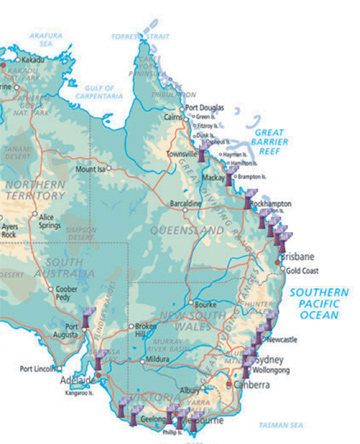 And so it went on over the decades, with the idea intermittently erupting like a dyspeptic belch and then subsiding. It got almost serious in 2006 when Prime Minister John Howard was starting to accept at the very least the idea of containing emissions even if climate change was a bridge too far. He launched what he called a “full-blooded debate” and commissioned a report by former Telstra chief Ziggy Switkowski who reckoned we could have the first nuclear reactor in Australia (he meant power stations as we already have a reactor) in as soon as 10 years. The headline was that we could have 25 nuclear stations producing a third of Australia’s electricity by 2050.
What took the fizz out of the fission was just where these 25 reactors would be built.
Opposition Leader Kim Beazley and Kevin Rudd taunted Howard to name the sites but he refused to be drawn on specifics, leaving others to draw their own conclusions.
The four main criteria for the siting of nuclear power plants in Australian had generally been accepted as proximity to appropriate existing electricity infrastructure; proximity to major load centres (i.e. large centres of demand); proximity to transport infrastructure to facilitate the movement of nuclear fuel, waste and other relevant materials; and access to large quantities of water for cooling.
The Australia Institute took these criteria (plus a few others) and pinpointed 17 places that seemed to fit the bill. Seven of the prospective sites were in Queensland: Townsville, Mackay, Rockhampton, Gladstone, Bundaberg, Sunshine Coast and Bribie Island. (The Sunshine Coast sites are in the seat of Fairfax and Bribie is in Longman, where a crucial by-election is being fought and the LNP quite possibly could do without this distraction.)
The Australian Institute is routinely disparaged as “left leaning” but I saw nothing then or since to challenge its conclusions on prospective nuclear sites.
The earthquake and tsunami in the Miyagi prefecture in Japan sparked a nuclear disaster in 2011.
In 2006 the Institute reckoned about half of the population opposed nuclear energy and “two thirds say they could opposed a nuclear power plant in their local area’’. If the nuclear industry was still looking at the same backyards, it is reasonable to presume it would come up against the same public sentiment.
The other problem was that Switkowski concluded nuclear power was likely to be between 20 and 50 per cent more costly to produce than power from a new coal-fired plant.
Unless they have been major advances in nuclear technology in the past 12 years, that same formula would apply.
In 2006, Switkowski was able to breezily report: “Since Three Mile Island in 1979 and Chernobyl in 1986, the nuclear industry has developed new reactor designs which are safer and more efficient.’’ Then along came Japan’s Fukushima disaster.
These are the sorts of things the old folk seeing out their days in the sun on Bribie have plenty of time to think about.
If the motion is debated seriously this weekend, proponents may be able to produce much in the way of supportive technical and financial evidence, even warming up the Switkowski report. But that will count for nothing when it comes to the Not In My Backyard syndrome and politicians of all shades know it.
Queensland’s nuclear medicine from cyclotron produced at the hospital, leaving no nuclear waste problem
Cancer care in Queensland relies on nuclear medicine made in this concrete bunker http://www.abc.net.au/news/2018-07-03/nuclear-medicine-concrete-bunker-central-to-states-cancer-care/9920624 ABC Radio Brisbane By Hailey Renault
Staff at the Royal Brisbane and Women’s Hospital’s nuclear medicine department get to work in the morning around the same time as a baker starts serving up hot bread.
But instead of kneading dough and priming ovens, the labcoat-clad workers manufacture medicines that diagnose and treat cancer.
It’s a delicate operation with rigorous quality control and testing protocols that start deep in the bowels of the hospital behind several layers of thick concrete.
A vault with walls more than a metre thick houses a particle accelerator called a cyclotron.
“It creates a proton beam which bombards oxygen-18 water and turns it into fluorine-18. That’s what we attach to those pharmaceuticals,” Dr Marissa Bartlett, manager of the Radiopharmaceutical Centre of Excellence, said.
The cyclotron is switched on at 4:00am every day to make a new batch of radiopharmaceuticals for lifesaving treatments and therapies.

“We make products that are taken up by cancer cells, so when a patient goes under the [PET] scanner the doctors can see pictures and images of where the cancer cells are,” Dr Bartlett told ABC Radio Brisbane’s Katherine Feeney.
“One of the therapies some patients who have cancer can have is a radionuclide therapy, which goes to the cancer cells and uses radiation to kill those cells.”
There’s no hazmat suits in sight — they’re not needed in a lab largely devoid of dangerous chemicals — but Dr Bartlett said lab workers were protected from radiation by a series of lead, lead-glass and concrete shields.
“When the cyclotron is on it generates very large amounts of radiation so it would be extremely dangerous to be anywhere near it when it’s on,” she said.
“In order to have it on campus we have it inside a concrete room. The walls of that room are thicker than I am tall.”
Medicines go direct to patients
Even though Dr Bartlett described the nuclear medicine department as an “obscure little branch” of hospital operations, many Queenslanders would come into contact with the radiopharmaceuticals it produced.
The Cancer Council of Queensland estimates nearly 27,000 people receive a cancer diagnosis each year.
“One of the things that makes this an amazing place to work is that you literally walk past the patients to get to the lab,” Dr Bartlett said.
“They might get news they really don’t want or maybe they’re coming back to see how their cancer is progressing or responding to treatment.
“We’re very aware of the patients who are lining up every day to get the products we make.”
And what happens to any radioactive materials that aren’t used?
“Everything we make has a very short half-life, so we basically store it until it decays away,” Dr Bartlett said.
“Then it’s completely cold and you wouldn’t know that it had been radioactive.”
Daryl Koch has “no concerns” about nuclear waste dump for Kimba or for anywhere else
 Daryl Koch Kimba SA Committee Secretariat, Submission to Senate standing committees on Economics Re – Selection process for a National Radioactive waste facility (Submission no. 75)
My name is Daryl Koch and I was born in and lived in Kimba all my life. I am a wheat and sheep farmer and three generations of my family have farmed in the Kimba district. I am on several committees in Kimba and volunteer with our local sporting clubs. I care deeply about my town and community remaining viable into the future for my children and grandchildren. I am pleased to be making a submission to the enquiry to address the terms of reference. I am comfortable with my submission to be made public.
To date the appropriateness and thoroughness of the site selection in search of a national radioactive waste management facility (NRWMF) has been thorough, transparent and fair. In February 2018 I visited ANSTO at Lucas Heights in NSW to see the nuclear medical reactor and to see firsthand the types of low and intermediate level waste that would be held at the NRWMF. I was very impressed by how professional and carefully the people of ANSTO operate this facility and how well-managed these radioactive waste streams are. I have actively taken part in the consultation process here in Kimba and I do not have any concerns for a radioactive waste facility being built either here in the Kimba district or elsewhere.
a) the financial compensation offered to applicants for the acquisition of land under the Nominations of Land Guidelines;
I actually don’t have a strong view as to whether the amount being paid for the land is too high in value. The compensation seems appropriate. Any land holder across Australia had the opportunity to nominate, so no one was excluded from the opportunity. Other parcels of land here in Kimba have been surveyed and sold for community benefit at well and truly above market value. ie The Viterra grain bunker site and the EP Hay site
b) How the need for ‘broad community support’ has played and will continue to play a part in the process, including: i) the definition of ‘broad community support’, ii) how ‘broad community support’ has been or will be determined for each process advancement stage;
Every person on the electoral roll in the District Council of Kimba was given the chance to vote to go to stage 2 (consultation stage) of the NRWMF. Also people who believed they had an interest in Kimba could apply to the council for a vote eg owning a business, owning land in Kimba, work and live in Kimba but not yet on electoral roll. This Australian Electoral commission voting process was fair and trustworthy to every adult who was invested in Kimba and its future.
In my opinion any percentage over 50% is a majority win and constitutes ‘broad community support’ for a project. The new Marshall Government in SA won the election with 37.9% of the electoral votes and is now in Government and that is ‘broad community’ of voters in South Australia. In addition to the AEC vote, all but one direct neighbor (to both the nominated sites) is in support of living and farming near a radioactive waste facility and that must also be added to support the term ‘broad community support’.
I believe a future AEC vote is the only fair way for advancement in the project (50% plus one vote is majority) and continued direct neighbor support is essential, I also think the opinion and vote of the District Council of Kimba should be taken into account for broad community support
- how any need for Indigenous support has played and will continue to play a part in the process, including how Indigenous support has been or will be determined for each process advancement stage; I am aware that the Indigenous groups (Barngarla people) have been acknowledged and consulted throughout the process. Any indigenous people living in our community have had access to the same information process as I have and will have the same opportunity to vote as I have.
d) whether and/or how the Government’s ‘community benefit program’ payments affect broad community and Indigenous community sentiment;
I don’t believe people voted yes to go to phase 2 for the promise of money. Only the cynics amongst us would believe this.
People have voted yes to get more information about the project and to ask questions of experts about the safety of radioactive waste, how it will be stored and how it will be transported. The community benefit program is an added bonus for being in the process and will benefit many community projects. People from both sides of the argument about the facility have applied for funding of a project. We are all smart enough not to vote yes to have the facility built in our district for the promise of money. I will vote yes when I am assured that the facility can be built to international best practice and that there will be no adverse effect to people, the environment and our livelihood.
e) whether wider (Eyre Peninsula or state-wide) community views should be taken into consideration and, if so, how this is occurring or should be occurring; f) any other related matters.
The people of Kimba are the only ones whose views should be considered when voting to advance in any stage of the Kimba nominations. I don’t believe this facility will have any negative impact for our Kimba community or any other community, so I don’t think we need the approval of a neighboring town, regional centre or the state.
Lobby groups and Nuclear activists have been questioning the ‘process’ and spread false information but they have no interest in Kimba or the people of Kimba or any idea of the level of participation in the process the people in Kimba have made.
Our community has had access to a 12 month consultation and information process that other towns on the Eyre Peninsula or the state have not had access to
The department have had a business space in Kimba for two days a week for nearly a year. I have been able to walk in and ask questions and request people I would like to speak to or hear from. They have also sent out frequent newsletters and information brochures. I have been to public information sessions at the town hall and at the Hotel. I have heard from specialists in radioactive waste treatment, radiation experts, General manager of Ansto nuclear medicine program, listen to and ask questions to speakers from France that have a similar facility in their community. I was also able to visit Ansto (fully funded trip) to ask further questions and to see for myself the types of waste and how it will be transported. I have also had access to newspaper articles, radio and tv interviews and access to the internet.
The people of Kimba are able to make an informed decision for ourselves about our town. Outsiders should not be able to make decisions for our town.
Changing the process in a search for a Radioactive waste facility in Kimba or for any future nominations would destroy the integrity, appropriateness and thoroughness of the site selection process to date.
Paul Waldon on the unreliability of manufactured news from the Department of Industry Innovation and Science (DIIS)
Paul Waldon Fight To Stop Nuclear Waste Dump In Flinders Ranges SA
 Where are all of these alleged proponents of a nuclear waste dump that the Department of Industry, Innovation and Science has claimed support the risk of contaminating their own environment of Hawker for a few jobs.
Only one, yes 1, that’s less than two, nearly zero, zip, squat, zilch, butt kiss, and it was only that one elderly local that got up and spoke in support of a risky program at the Hawker community meeting on the 6th of May 2016. A man with No conscience, and willing to burden the young with the contamination of Hawker and the Flinders,
the same meeting that had over 100 concerned people decrying the abandonment of radioactive waste, yet the DIIS claim this one man was the majority. The augury of the DIIS’s factoids needs to raised so people are adroit to the dangers of their manufactured figures. https://www.facebook.com/groups/344452605899556/
Senator Rex Patrick attended Kimba Senate Nuclear Waste meeting – concerned about problem of “community support”
 Senator Rex Patrick Nuclear Fuel Cycle Watch South Australia, 5 July 18
It was great to hear everyone’s perspective – the local council, land nominators, the Barngarla Determination Aboriginal Corporation and local groups from both sides of the fence. It’s too early in the inquiry process to pass judgement, but I must say I share concerns with some witnesses over the lack of consultation, the inconsistency of certain information, the lack of transparency and especially the lack of any apparent ‘formula’ to determine whether the Government has broad community support.
The Committee is spending the night in Port Augusta; Crossroads of Australia. We travel to Hawker tomorrow to hear more evidence.
Here’s a photo of me and my Senate colleagues, Chris Ketter (QLD) and Dean Smith (WA) standing in front of The Big Galah in Kimba. No jokes about politicians and galahs please.
Jodie Joyce – another true believer in the National Radioactive Waste Facility for Kimba
 Jodie Joyce Submision Committee Secretariat Senate Standing committees on Economics RE – Proposed National Radioactive Waste Management Facility Submission no. 33
I have lived in the Kimba District since my family moving here in 1982. I married a local born and bred farmer. Living on a farming property with a cropping programme incorporating cattle and sheep. My husband has been truck driving for 15 years living away from home, recently gaining employment with a local Transport business. For the past 6 years I am very fortunate to have full time employment in a family owned Kimba. My husband and myself have volunteered on many local committees. I am pleased to be able to provide information to the inquiry on the appropriateness and thoroughness of the National Radioactive Waste Management Facility site process in Kimba SA. I give my permission for this submission to be made public.
a) The financial compensation offered to applicants for the acquisition of land under the nominations of Land Guidelines;
I believe the financial compensation offered to the land owners (four times the value of the land) is a fair representation, it is not an exorbitant amount, you must take into consideration this land will not be farmed gaining income as previous. It will be deemed useless to the land holder, with land steadily on the increase, this is a fair price. It will not impact the running’s of their farming practises. I fail to see this money being used as an incentive for people to offer their land. Land holders would only offer their land if they were truly convinced there would be no health or safety issues that would impact them or their family’s health and wellbeing, and to benefit their community on a whole.
b) How the need for ‘broad community support’ has played and will continue to play in a part in the process, including: i) The definition of ‘broad community support’, and ii) How ‘broad community support’ has been or will be determined for each process advancement stage;
People who reside, work, support, volunteer and genuinely care for the future of the town, this is to define community.
Broad community support is fundamental to this process. The District Council have been activity involved in the process and has shared their views seeing this process into the next phase. Kimba community were despondent in the flawed phone poll and suggested a vote. District council organised an Electoral Commission vote for the registered voters in the Kimba electorate so that it was a fair and exact representation. 57.4% of voters in June 2017 concluded that they were in favour of Kimba moving into Phase 2, this is a very clear affirmative. There is a 90% ‘direct neighbour’support on the two selected sites.
This is how I determine Broad Community support in Kimba.
Indigenous groups have been informed of Kimba’s nominations and have had two years to voice any concerns they have and up till date they have not opposed. [???]
Direct neighbouring support has to be regarded a high priority, as with District council support in co junction with an Electoral commission vote is the only fair exact representation of what Kimba residents want for their community. In saying so any number above the 50% is an indication of support.
Kimba is struggling, population is declining, we are a farming community relying heavily on agriculture to survive. Farms are being bought out by their neighbours. Businesses are cutting back staff we are in need of a life line
and this is a glimmer of hope, without our nominations gaining momentum and advancing I have fears for our community and my lively hood. The possibilities this facility could provide a small failing community is endless with jobs, the infastructure and many beneficial health care related services.
- How any need for Indigenous support has played and will continue to play a part in the process, including how Indigenous support has been or will be determined for each process advancement stage;I believe the Department has been in contact and liaised with the Barngarla Tribe regarding any heritage titles. From my knowledge they have visited the proposed nominated sites and without any issues or concerns. I am without a doubt if there was a problem or concern these issues would have been addressed quickly and promptly.
d) Whether and /or how the Government’s ‘community benefit program’ payments affect broad community and Indigenous community sentiment;
Kimba residents have been pro active learning about this process and facility. There have been many experts in the field visiting Kimba offering their vast knowledge and time. The Governments Community Benefit Program will help many ailing clubs and facilities, raising money in a small community town with many sporting clubs and committees all vying for the same results is major hard work. Bake sales and raffle tickets can only scrape the surface. Local businesses are inundated with letters of help with sponsorship, there is only so much money people can give. This community benefit programme moves those parameters giving people insight what it would be like in a bigger community when raising funding for your club. In saying this do I think this government Community Benefit Money entice broad community support. No way. No one is going to exchange their beliefs for a may or may not financial gain for a committee they volunteer on. The media hasn’t helped this situation people are always willing to hear the sensualism [?] of the negative. We are mostly made up of mature reasonable intelligent community members, who can make their decisions regardless of financial gain.
e) Whether wider (Eyre Peninsula or state – wide) community views should be taken into consideration and, if so, how this is occurring or should be occurring; and
I have personally attend many information sessions, been fortunate enough to listen to many visiting nuclear and radiation experts. There are officials in Kimba two days a week setting up shop down our main street. Newsletters adorn our mail boxes, French residents highly regarded in their field held an information session. A session on nuclear medicine was offered. A 3D model is offered for visual representation of a proposed facility. Many trips have been scheduled to ANTSO and I am fortunate enough to be attending one in June. There has been an overwhelming opportunity of information assessable for all Kimba’s residents. This is why I believe this should be a Kimba Community decision only. We have had the resources to be able to make informed decisions. We all know the imagery Google can offer when searching radioactive and nuclear. This is not an exact representation. You cannot make an informed mature decision when you haven’t been given the true and correct facts.
f) Any other related matters
There have been many mis informed media representations portraying our small community as divided, this has continued to put us in the wrong light. We are a small community and until you are part of a small rural community there is no possible way you can understand one. You come across the same people week in week out, whether you both support the same cricket or tennis team or serve on the same committee. Small rural communities are hard work but can in turn provide an amazing support network. We all might not support the same AFL football team, attend the same church, vote for the same political party, when the town is in need we can get together and raise thousands of dollars for a struggling community member. This is the true essence of Kimba. Those of us who are Adults are entitled to vote however we decide this is our chosen right. There is a handful of residents whom behaviour is subpar and I personally hope that they will keep their negative thoughts to themselves and let Kimba’s residents make their own informed decisions.
Breathtaking hypocrisy of nuclear enthuisiasts Minister Josh Frydenberg, and Rowan Ramsey
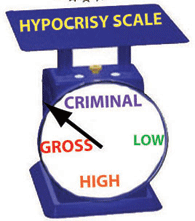 Paul Waldon Fight To Stop Nuclear Waste Dump In Flinders Ranges SA,
An excerpt from Rowan Ramsey’s news letter…
[“Minister Josh Frydenberg visit to Wilpena and Rawnsley Park.” Members of the SA Department for Environment and Water discussed their pursuit of a nomination for World Heritage for parts of the Flinders ranges with Federal Environment Minister Josh Frydenberg, Rowan and State Tourism Minister David Ridgeway in May.
The department is engaged in conversations with stakeholders to proceed. Both the Minister and Rowan also attended the 50 year celebration of tourism at Rawnsley Park. Congratulations to the Smith family on the world class experience they have created and their role in increasing the profile of tourism in the Flinders Ranges.] So I put it to everyone, what is Josh Frydenberg’s and his coterie’s sudden interest in World Heritage, Tourism or the environment of the Flinders, and politics.? https://www.facebook.com/groups/344452605899556/
Ecosystems across Australia are collapsing under climate change
 The Conversation 4 July 18 Climate Research Fellow, University of Tasmania, Professor, Environmental Change Biology, University of Tasmania, Senior Lecturer, Macquarie University,
To the chagrin of the tourist industry, the Great Barrier Reef has become a notorious victim of climate change. But it is not the only Australian ecosystem on the brink of collapse.
Our research, recently published in Nature Climate Change, describes a series of sudden and catastrophic ecosystem shifts that have occurred recently across Australia.
These changes, caused by the combined stress of gradual climate change and extreme weather events, are overwhelming ecosystems’ natural resilience.
Variable climate
Australia is one of the most climatically variable places in the world. It is filled with ecosystems adapted to this variability, whether that means living in scorching heat, bitter cold or a climate that cycles between the two.
Despite land clearing, mining and other activities that transform the natural landscape, Australia retains large tracts of near-pristine natural systems.
Many of these regions are iconic, sustaining tourism and outdoor activities and providing valuable ecological services – particularly fisheries and water resources. Yet even here, the combined stress of gradual climate change and extreme weather events is causing environmental changes. These changes are often abrupt and potentially irreversible.
They include wildlife and plant population collapses, the local extinction of native species, the loss of ancient, highly diverse ecosystems and the creation of previously unseen ecological communities invaded by new plants and animals.
Australia’s average temperature (both air and sea) has increased by about 1°C since the start of the 19th century. We are now experiencing longer, more frequent and more intense heatwaves, more extreme fire weather and longer fire seasons, changes to rainfall seasonality, and droughts that may be historically unusual.
The interval between these events has also shortened, which means even ecosystems adapted to extremes and high natural variability are struggling.
As climate change accelerates, the magnitude and frequency of extreme events is expected to continue increasing.
What is ecosystem collapse?
Gradual climate change can be thought of as an ongoing “press”, on which the “pulse” of extreme events are now superimposed. In combination, “presses” and “pulses” are more likely to push systems to collapse.
We identified ecosystems across Australia that have recently experienced catastrophic changes, including:
not all examples can be directly linked to a single weather event, or a series of events. These are most likely caused by multiple interactingclimate “presses” and “pulses”. It’s worth remembering that extreme biological responses do not always manifest as an impact on the dominant species. Cascading interactions can trigger ecosystem-wide responses to extreme events.
The cost of intervention
Once an ecosystem goes into steep decline – with key species dying out and crucial interactions no longer possible – there are important consequences.
Apart from their intrinsic worth, these areas can no longer supply fish, forest resources, or carbon storage. It may affect livestock and pasture quality, tourism, and water quality and supply.
Unfortunately, the sheer number of variables – between the species and terrain in each area, and the timing and severity of extreme weather events – makes predicting ecosystem collapses essentially impossible.
Targeted interventions, like the assisted recolonisation of plants and animals, reseeding an area that’s suffered forest loss, and actively protecting vulnerable ecosystems from destructive bushfires, may prevent a system from collapsing, but at considerable financial cost. And as the interval between extreme events shorten, the chance of a successful intervention falls.
Critically, intervention plans may need to be decided upon quickly, without full understanding of the ecological and evolutionary consequences.
How much are we willing to risk failure and any unintended consequences of active intervention? How much do we value “natural” and “pristine” ecosystems that will increasingly depend on protection from threats like invasive plants and more frequent fires?
We suspect the pervasive effects of the press and pulse of climate change means that, increasingly, the risks of doing nothing may outweigh the risks of acting.
The beginning of this century has seen an unprecedented number of widespread, catastrophic biological transformations in response to extreme weather events.
This constellation of unpredictable and sudden biological responses suggests that many seemingly healthy and undisturbed ecosystems are at a tipping point https://theconversation.com/ecosystems-across-australia-are-collapsing-under-climate-change-99367?utm_medium=email&utm_campaign=Latest%20from%20The%20Conversation%20for%20July%205%202018%20-%20105629347&utm_content=Latest%20from%20The%20Conversation%20for%20July%205%202018%20-%20105629347+CID_3caffe1f73b33
Earthquake rocks planned area for nuclear waste dump Eastern Eyre Peninsula

Earthquake rocks Eastern Eyre Peninsula https://www.eyretribune.com.au/story/5500632/earthquake-rocks-eastern-eyre-peninsula/?cs=1825 Kathrine Catanzariti Eyre Tribune, 2 July 18 Kathrine Catanzariti
Eastern Eyre Peninsula was rocked by a 3.7 magnitude earthquake on Sunday morning.
At 11.57am, an earthquake occurred north east of Cleve towards Mangalo, at a depth of 10 kilometres.
According to Geoscience Australia, the earthquake could have been felt by people up to 47 kilometres away.
Did you feel the shake? Did you receive any damage? Let us know!
Bev Baldock – another Submission completely happy with the Kimba nuclear waste project
Bev Baldock (Submission No. 72) Submission to Senate Inquiry on Selection process for a national radioactive waste management facility in South Australia. My name is Bev Baldock. I have lived and worked in the Kimba Community for many years, living and working on a farm for twenty years, small business for sixteen years. I personally have no issues with the site selection, which has been honest and open.
The financial compensation offered to the applicants for the acquisition of their land is minimal, but fair.
Overall, I am very comfortable that we have been given honest knowledge and feedback on this project. Our community has had ample opportunity to learn more about the proposed facility which has been advertised extensively. We have had several community meetings, the opportunities to meet departmental members and experts in many areas of Nuclear.
I consider myself informed now and able to share my knowledge. It will be great to create new jobs which will bring economic benefits to Kimba. It could help bring more numbers for our school and keep the services that we still have as numbers are diminishing each year. Whatever the community may decide the process has been fair and open with lots of opportunities to learn, and make the right decision for our district.
I disagree that we need broader community support and feel the rest of South Australia should not have a say in what happens in our town and district.
If the rules are changed for measuring the community support to include more of South Australia, how can this be compared? E.g.: community consultation, public meetings, local government election.
We do not get a direct say in what takes place in neighboring communities and our state. This would set a precedent for future projects in South Australia where local communities don’t actually get listened to.
We have had visits from indigenous leaders, and to my knowledge there are no native title claims on district lands. We can still take care in what we do and try to make this project welcoming and inclusive for everyone and to look after heritage if they find it.
The benefit fund is a great bonus for Kimba, without this funding projects that have been submitted would not be possible. I have been involved in lots of projects for many years and this takes a huge amount of time to raise the dollars and reach our target. It is a great a fund to the betterment of the whole community whether the facility goes ahead or not.
Overall, the site selection process has been open, honest and fair. The proposed payments to landholders are fair. It’s our community, we have done the work, we have had the information, and we should be able to make our decision. Yours Sincerely, Bev Baldock
Does the Australian Federal Govt have the power to impose a nuclear waste dump?
The Minister claims a need for this dump is generated by civilian radioisotope production & not from military use – therefore it cannot be legitimised under auspices of the S.51(vi) Defence umbrella.
there is no legal base for the Commonwealth to enforce State acceptance of radioactive waste.
 ENuFF-SA Examining
  Commonwealth Power to Enforce Nuke Dump – part 1, 4th July 2018
SOUTH AUSTRALIAN LAW
- The 2015-16 $10+ million South Australian Nuclear Fuel Cycle Royal Commission found that: “The construction or operation of a facility for storage and disposal of nuclear waste, along with the importation or transport of nuclear waste, is unlawful in South Australia”. The amendment or repeal of the Nuclear Waste Storage Facility (Prohibition) Act 2000 (SA) would therefore be required prior to any substantive progress being made in further developing any proposal.
- “ 1 The Nuclear Waste Storage Facility (Prohibition) Act 2000 (SA)2 must be amended or repealed PRIOR TO ANY SUBSTANTIVE PROGRESS towards developing a radioactive waste facility in this State. 2.
- Portions of The Act which prohibit the establishment of nuclear waste storage facilities include:
S.8 against the construction or operation of such;
• S.9 making it illegal to import or transport nuclear waste, &
• S.13 “No public money to be used to encourage or finance construction or operation of nuclear waste storage facility”
S.13.1 also provides such prohibition “Despite any Act or law to the contrary ….”
- The newly elected Liberal Premier Steven Marshall has previously categorically stated: “A Marshall Liberal Government will not support the building of a nuclear waste repository in South Australia.“ 4 : & in answer to a February 2018 Election Survey the South Australian Liberal Party responded: “The Liberal Party supports the current Nuclear Waste Storage Facility (Prohibition) Act 2000“ 5 .
- 4. To date (June 2018) the NRWMF-T has expended $40+ million of taxpayers PUBLIC MONEY towards: not only encouraging ‘local communities’ acceptance for a nuclear waste storage facility within South Australia; but also financing active on-site preliminary works deemed essential to constructing said facility. Clearly & brazenly contrary to State Law.
- 5. It would appear that the NRWMF-T has failed to investigate nor even consider any implications arising from the current prime facie unlawful nature of their actions. Numerous sham ‘community consultation’ medleys; Taskforce presence in the field, & radiopharma promotions. Myriad ANSTO propaganda tours of Lucas Heights; French des visiteurs; community grants; ORIMA & AECOM contracts, & etc.. costing tens of millions. All done without first establishing any legal foundation.
Legally; fiscally; morally, & administratively negligent
FEDERAL LAW “Commonwealth Legislative Powers”
The Constitution confers the power to make laws on the Commonwealth Parliament. However, the power of the Commonwealth Parliament to make laws is limited to particular subjects. Most of these subjects are listed in sections 51 and 52. They include defence; external affairs; interstate and international trade; taxation; foreign, trading and financial corporations; marriage and divorce; immigration; bankruptcy; and interstate industrial conciliation and arbitration.” 6
- Amongst other dubious claims, Minister Canavan would have us believe that Federal Legislation allows him to run roughshod over State Law. But does the Emperor actually wear any clothes?
- 7. The previous South Australian Premier Jay Weatherill in 30 January 2018: “ Asked if the state government would pursue a High Court case against the Turnbull government if a national facility were approved in South Australia, Mr Weatherill said: “We would have to explore our options to see what steps can be taken.” “ 7 .
- 8. One of those steps would be to query whether Federal Parliament had Constitutional Authority to impose radioactive waste upon a State which had specific laws prohibiting such. Section 51 of the Australian Constitution describes the various Powers of the Federal Parliament, & there are 39 such capacities – none of which relate to things radioactive8 : whilst Section 118 obligates the Commonwealth to recognise & respect the public Acts of the States.
- To make things perfectly clear, included as Appendix 1 is the whole Section 51 of the Australian Constitution: we challenge anyone to demonstrate how Canberra can legally impose Commonwealth owned radioactive waste upon any State whose Legislation prohibits such – S.51. (xxvi) actually says that Federal Parliament needs to respect State Legislation. Prime facie there is no legal base for the Commonwealth to enforce State acceptance of radioactive waste.
- 10. The knowledge that the Feds don’t have Constitutional Power to dump radioactive waste upon the States is not rocket science & is not a new revelation. Continue reading
Katrina Koch happy with the Kimba nuclear waste dump selection process
Katrina Koch (Submission No. 28)- Kimba SA Selection process for a national radioactive waste management facility in South Australia
a) the financial compensation offered to applicants for the acquisition of land under the Nominations of Land Guidelines .
Ms Koch is sure that the financial compensation is not extravagant, as indeed, agricultural use would bring in more. The waste dump will not affect the neighbours.
b) On community support.
“To define community – it is the people that live here in the Kimba district. “ the main thing about the current process to date in Kimba is that it is open, transparent and everyone gets to have a say “
She is happy with the processes, involving the District Council of Kimba, and the Australian Electoral Commission vote. As regards neighbours –
“Of the two sites in Kimba there is 90% ‘direct neighbour’ support.” “I truly believe that any number over 50% is an indication of support for the project “
She considers that indigenous leaders will support the project, though she is vague about this. The Bangarla people should be consulted in the same way as for any mining project.
“ Traditional owners have not expressed opposition to the project. “
A town vote unanimously decided to move into Phase 2 (the consultation stage) Ms Koch is very happy with the Community Benefit Fund.
“The nuclear waste facility will benefit the community and the country as a whole.”
Donna Johnson – enthusiastic about the Kimba Nuclear Waste Dump Selection Process
Donna Johnson Senate Standing Committees on Economics Subject: Submission on Selection process for a national radioactive waste management facility in South Australia (Submission No 27) Regarding a) the financial compensation offered to applicants for the acquisition of land under the Nominations of Land Guidelines; she believes that compensation offered is appropriate. She knows the people who nominated their land, and believes that their offers were made solely for the community benefit.
On (b) community support, She believes that a 50% plus 1 vote for a site is adequate, and that neighbour support should be ‘factored in’ for the ultimate decision. While the early surveys were inadequate, Ms Johnson believes that
‘Australian Electoral Commission poll provided surety, independence and an indisputable final result. I support the AEC vote and that process as a whole; it was beyond reproach. ‘
She is confident that the department has listened to our community and will help the community come to an informed decision.
On c) indigenous support, Ms Johnson believes that the process has been satisfactory –
“The Department should keep reaching out to the right spokespeople for the traditional owners to get this information.”
Ms Johnson is concerned for the economic future of the community’s children. She is enthusiastic about the plan ;
“The Community Benefits Program is breathing new life into our community and is an appropriate recognition for the journey and commitment that has been made by Kimba and its people in this search that is in the best interests for ALL Australians. We are incredibly fortunate to live in a country with facilities such as ANSTO’s Lucas Heights and its nuclear reactor providing life saving diagnosis and treatment options for vulnerable Australians. I understand more than one in two Australians will benefit from nuclear medicine in their lifetime. Make no mistake, this is a very noble cause with benefits for our entire nation.”
On e) whether wider (Eyre Peninsular or state-wide) community views should be taken into consideration and, if so, how this is occurring or should be occurring;
“I support the AEC vote and that process as a whole. A change of boundaries after an initial voting result would destroy the integrity of the process.
“The boundaries used for that vote were fair, and it is entirely appropriate that those living in our community should be those who get a vote on this. If this potential facility were to come to our District it would have nothing to do with a fisherman in Port Lincoln nor anyone behind a desk in Adelaide. It affects those living in the Kimba District and it is a decision for those people alone.”
Ms Johnson is proud that “Our community has made a significant investment in learning, researching and meeting experts to form considered and knowledgeable views” – and compares it to the rest of the State, which has not bothered to learn about the Nuclear Waste Management Facility plan.
“There is no grounds for them to now have influence over our choice to vote on an opportunity that can deliver higher sustained employment and important economic diversity for our community.”
- f) any other related matters
The result of the AEC vote is clear demonstration of the maturity of the Kimba community. The education and information that has been provided has increased as we all learned together of the intricacies of radioactive waste and its safe use, transport, storage and disposal. It must be noted the final result showed a 57.4% YES vote for our community to take another step in ths process and receive more information and closer consideration.
Uranium industry in Australia – stagnant at best – Department of Industry
 Dept of Industry, Energy Quarterly, June 2018
Predicts stagnant production/export of Australian uranium over the next few years.
Expects growth from Olympic Dam, no new mines, doesn’t even mention Ranger.
Uranium exploration almost non-existent: “Only $1.9 million was spent on uranium exploration in the March quarter 2018: a drop from an already-low level of $2.9 million spent in the December quarter. Uranium exploration is now largely confined to South Australia, tailing off in all other states.”
1 This month
25 October – Film –Britain’s Nuclear Bomb Scandal: Our Story – part of the Adelaide Film Festival,
Screening and Conversation
A screening of Britain’s Nuclear Bomb Scandal: Our Story (2024) followed by a talk with 2026 Bettison and James Awardee and Tradtional Owner Karina Lester in conversation with Simone Tur.
When: Sun 25 Oct, 12:00pm-Screening, 1:15pm-Talk
Where: The Mercury
Free admission, register below by clicking on BUY TICKETS and select free event tickets, at end of web page:
https://www.adelaidefilmfestival.org/program/2026/britains-nuclear-bomb-scandal-our-story
.

Australians deserve the truth
about
AUKUS – https://aukuspublicinquiry.com/

PETITION – To: Prime Minister Anthony Albanese and the Australian Labor Government

of the week – Australians for War Powers Reform (AWPR)
To see nuclear-related stories in greater depth and intensity

