A renewed push for climate change action in Australia
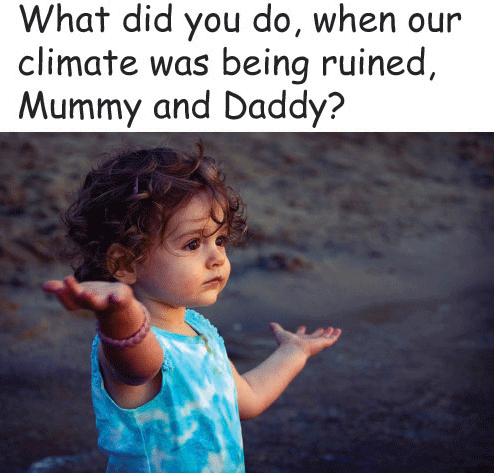 Climate forces consolidate as coal backers rush for government help http://www.theage.com.au/federal-politics/political-news/climate-forces-consolidate-as-coal-backers-rush-for-government-help-20170623-gwx3qy.html, Mark Kenny 22 June 17 Forces on the green-energy side are positioning for a renewed climate change debate in coming months, as the Turnbull government struggles to convince internal dissenters of the need for tougher carbon reduction measures.
The nation’s preeminent advocate of strong laws against carbon emissions, the Climate Institute, will close its doors on June 30 after a dozen years in operation, and transfer its assets and intellectual property to high-profile progressive think tank the Australia Institute.
The financial terms of the new arrangement have been kept confidential.
As the recipient body, the economically-oriented Australia Institute will in turn establish a dedicated “Climate and Energy Program” with the aim of stepping up the public pressure on lawmakers to meet Australia’s obligations under the Paris Accord.
It comes as some opponents of renewable-energy subsidies have called for the government to directly finance investment in coal-fired power.
“As capital increasingly seeks out clean-energy projects with a long and sustainable future, the lions of the free market have become lambs of largesse, so desperate to keep coal going they’d have taxpayers carry an unconscionable risk which is both financial and environmental” he said.
Climate Institute chairman Mark Wootton said the Australia Institute had been selected from a shortlist of strong candidates.
“Its expanded role in the climate change debate comes at a pivotal moment for policy development, economic transformation, and public expectations,” he said.
Chief Scientist Alan Finkel this week told the National Press Club that investors tended to favour new projects in wind and solar over coal because they could be started small and then scaled up as demand rises. His clean energy target proposal is now mired in internal government debate as conservative MPs push for the CET model to be skewed to allow for the subsidisation of new coal generators, or old generators retro-fitted with carbon capture and storage, to qualify for partial clean energy certificates.
Under pressure to reverse rising household electricity prices – driven largely by a scarcity value on local gas – the government has announced plans to mandate reserves for domestic access ahead of export sales – even where that gas is already contracted.
That has raised eyebrows with private capital markets wary of new sovereign risks caused by changing government policy.
The government has also left open the possibility of directly financing new generation coal-fired power, given the absence of private sector investors.
Australia’s peril: ignoring the climate ‘disaster alley’that we are already in
 Australia, deep in climate change’s ‘disaster alley’, shirks its moral responsibility http://www.smh.com.au/comment/australia-deep-in-climate-changes-disaster-alley-shirks-its-moral-responsibility-20170621-gwvhs6.html Ian Dunlop,
A government’s first responsibility is to safeguard the people and their future well-being. The ability to do this is threatened by human-induced climate change, the accelerating effects of which are driving political instability and conflict globally. Climate change poses an existential risk to humanity that, unless addressed as an emergency, will have catastrophic consequences.
In military terms, Australia and the adjacent Asia-Pacific region is considered to be “disaster alley”, where the most extreme effects are being experienced. Australia’s leaders either misunderstand or wilfully ignore these risks, which is a profound failure of imagination, far worse than that which triggered the global financial crisis in 2008. Existential risk cannot be managed with conventional, reactive, learn-from-failure techniques. We only play this game once, so we must get it right first time.
This should mean an honest, objective look at the real risks to which we are exposed, guarding especially against more extreme possibilities that would have consequences damaging beyond quantification, and which human civilisation as we know it would be lucky to survive.
Instead, the climate and energy policies that successive Australian governments adopted over the last 20 years, driven largely by ideology and corporate fossil-fuel interests, deliberately refused to acknowledge this existential threat, as the shouting match over the wholly inadequate reforms the Finkel review proposes demonstrates too well. There is overwhelming evidence that we have badly underestimated both the speed and extent of climate change’s effects. In such circumstances, to ignore this threat is a fundamental breach of the responsibility that the community entrusts to political, bureaucratic and corporate leaders. Continue reading
More renewable energy stories from Giles Parkinson and REneweconomy team

-
IPART bumps up benchmark range for NSW solar tariffsRegulator further lifts benchmark for NSW solar tariffs – well above AGL’s proposed tariff – but rejects notion rooftop solar and storage have network benefits.
-
$9 million to begin hydrogen roadmapThe South Australian Government is continuing to support the transition to a low- carbon economy through a $9 million commitment to begin hydrogen roadmap.
-
NSW follows Victoria, South Australia in major push to demand managementHouseholds and businesses in NSW will get paid for reducing loads during critical peaks, as governments and institutions decide to circumvent objections by fossil fuel lobby with smarter, cleaner and cheaper alternatives.$53.8 million will be invested for a series of major projects at Stanwell Power Station west of Rockhampton, over the next year.
-
Inertia in power system: We don’t actually need that muchWe don’t need as much inertia in the power system as many think, and with a few simple changes we won’t need to mandate inertia limits either. Here’s why.
Today’s renewable energy news: Queensland, S Australia, NT, WA
Birdsville geothermal plant to finally get major upgrade
Australia’s only geothermal power supply is to finally get its long awaited upgrade.
http://reneweconomy.com.au/birdsville-geothermal-plant-finally-get-major-upgrade-30440/
Fast-track to a low-carbon highway
ADELAIDE is set to become home to six hydrogen-fuelled buses as part of a $9 million commitment that the State Government hopes will achieve its goal of becoming the world’s first carbon-neutral city.
http://www.adelaidenow.com.au/business/fasttrack-to-a-lowcarbon-highway-as-state-government-announces-hydrogen-bus-trial/news-story/dfd9e5905c36a39209c29be422a0ae97
Battery storage “gigafactory” planned for Darwin for 2018
Energy Renaissance, backed by engineering group UGL, plans a gigawatt-scale battery storage factory in Darwin, that it says will begin production in late 2018.
http://reneweconomy.com.au/battery-storage-gigafactory-planned-darwin-2018/ Western Australia
‘Death spiral’ for power grid after price rise, critic warns
The West Australian Government’s decision to almost double the fixed supply charge for electricity in a bid to boost ailing state coffers could see households seek cheaper alternatives and send the state’s grid into a death spiral, a sustainability expert says.
http://www.abc.net.au/news/2017-06-23/electricity-fee-hike-could-send-power-grid-into-death-spiral/8644258
Kimba community divided over federal nuclear waste dump plan – fairly narrow “yes” vote
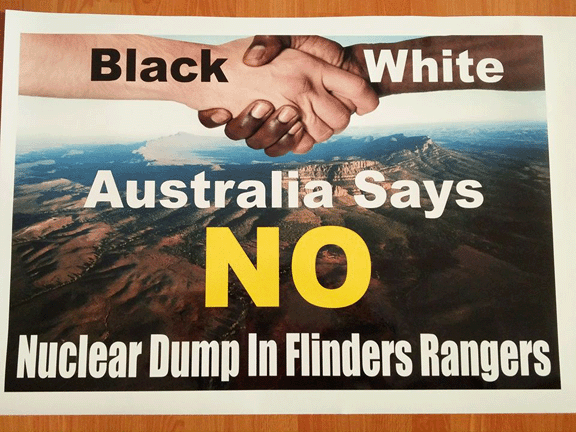 Kimba votes yes to radioactive waste dump in Eyre Peninsula http://www.adelaidenow.com.au/news/south-australia/kimba-votes-yes-to-radioactive-waste-dump-in-eyre-peninsula/news-story/96ca27ddaa0f67519b60a366584156bc, Polly Haynes, The Advertiser, June 22, 2017
RESIDENTS of Kimba have voted in favour of building a radioactive waste dump in their Eyre Peninsula district. Posted on the council’s website, the interim results for the postal ballot on the National Radioactive Waste Management Project show 698 ballot papers were received by the Australian Electoral Commission.
Of those, 396 voted for and 294 voted against, while eight ballot papers were informal votes.
The Federal Government is considering two properties near Kimba, in addition to a previously short-listed block of land at Barndioota, near Hawker in the Flinders Ranges.
In March, the Kimba Council called in the Australian Electoral Commission to run a postal vote of the 1100-strong community on the options. At the time, Mayor Dean Johnson said he believed there was strong support in the community for the two local sites to be formally considered. This morning he said: “The numbers are what they are… in the end the people have voted.”
However, a group opposing the dump — No Radioactive Waste on Agricultural Land in Kimba or SA — said the results of the vote showed the community was still divided.
“There has been no shift in community sentiment over the past two years,” a statement said. “Despite the Working for Kimba’s future group’s claims of a large swing toward support … results from three rounds of consultation and surveying show sentiments much the same as previously recorded.”
“This last consultation has resulted in a waste of government time, money and resources. Not to mention unnecessary pressure and stress on our already fractured community.”
The Federal Government is expected to make a decision early next year on the location for the centre, which will host radioactive waste currently held at sites around Australia.
 The centre will initially store low and medium-level waste before a second purpose-built centre is opened for the medium-level waste.
Opponents of the waste dump say Australia’s radioactive waste should be centrally stored at the Lucas Heights nuclear reactor campus in Sydney.
Conservation and anti-nuclear groups have petitioned the Federal Government to scrap any plans for a dump at Kimba.
The groups, including Conservation SA, Friends of the Earth and the Australian Conservation Foundation have lodged a submission with the federal Department of Industry, Innovation and Science calling on the government to abandon any plans for a dump at Kimba.
Friends of the Earth campaigner Jim Green says the process to find a dump site had been flawed and divisive.
“The Federal Government has consistently misled Kimba residents about its intentions. Residents have been repeatedly told that the above-ground store for long-lived intermediate-level waste (including spent nuclear fuel reprocessing waste) would hold waste for ‘several decades’ until a deep underground disposal facility is available,” Mr Green said.
“But in fact, several documents from the national regulator ARPANSA indicate long-term storage for 100 years or more. Moreover the Federal Government has no idea what sort of deep underground disposal facility might be built, where or when it might be built, and ‒ incredibly ‒ the Federal Government is doing next to nothing to progress the matter.”
“All Australians have a right to be involved to help make sure that this difficult issue is given the best possible consideration,” he said. “What is planned is a national radioactive waste facility so while local community consultation is useful, an evidence based, national conversation is essential.”
Strong union opposition to uranium mining in Western Australia
 Union ‘showdown’ looming over U-deal, West Australian , , 21 June 2017, One of WA Labor’s most influential unions is promising a “showdown” at the party’s State conference over Mark McGowan’s decision to allow a raft of uranium mining projects to go ahead.
Australian Manufacturing Workers’ Union State secretary Steve McCartney yesterday condemned as “weak” and “disappointing” the Government’s announcement it would not block four uranium mining proposals.
The projects — Cameco’s Yeelirrie and Kintyre, Toro Energy’s Wiluna extension and Vimy Resources’ Mulga Rock — were all granted environmental approval by the previous government.
Mr McCartney vowed the AMWU would draw up a motion against the decision for Labor’s State conference in August, the key policy-setting body for the party. He said it was unacceptable the Government would allow the exploitation of radioactive material and the union would be seeking to “support and stiffen” the party’s anti-uranium position.
“The last thing we want is to be the glowing State,” Mr McCartney said.
“We have the strongest policy in the country and we believe the general feedback and phone calls we’re getting is that there will be a showdown at conference about it.
“I know that people are very upset about the fact that we’re going to be out there saying ‘Hello, you can dig up uranium’.”
 The warning from the AMWU came as the Conservation Council of WA flagged a court challenge to the validity of the four projects’ environmental approvals.
Conservation Council nuclear campaigner Mia Pepper said the group was “looking at all legal avenues and options”…..https://thewest.com.au/politics/state-politics/union-showdown-looming-over-u-deal-ng-b88513503z
# uranium mining companies in Western Australia could lose their licences
 Uranium mining ultimatum in Western Australia sparks nuclear debate, Xinhua Song Lifang, SYDNEY, June 22) — A nuclear debate is heating up in Western Australia on Thursday, after the state government informed three uranium mining companies that their approval licenses will expire if their sites are not operational within five years.
The newly formed State Government’s clarification on its policy has followed on from an election promise to ban uranium mining in the State for environmental concerns.
But prior to their victory in the vote, under the former State Government, three companies at four separate sites were given the go ahead to develop projects.
Vulnerable to legal action from the operators, the Premier of Western Australia, Mark McGowan, on Wednesday told local media, “everyone knows our position is we are not very happy about these approvals, so the mining companies need to be aware that they have a potential deadline heading at them in five years from now.”
“Bear in mind five years is a long time, I mean they’ve already had eight years of getting a project approved and another five years to develop it, that’s a pretty reasonable length of time for them to get a project up,” McGowan said.
“If they can’t do that, then that’s not our problem, that’s their problem.”
In response to the ultimatum, chief executive of Vimy Resources, Mike Young, said, “We’re confident that we will start substantive works before 2021.” And Toro Energy general manager, Andrew Worland, stated, “Their policy statement is not surprising to us.”
The main reason for the delay in getting the mine-sites up and running has been due to the historically low trading price of the commodity……. http://news.xinhuanet.com/english/2017-06/22/c_136386192.htm
A Kimberley cattleman’s powerful argument for renewable energy
Arguments against renewable energy are rubbish, Harold Mitchell , The Age 23 June 17 “…….. More than 60 years later, I’m delighted to report that I have been free of power bills for some time at the cattle properties I’m involved with in the East Kimberley.
The three properties and the land controlled by our Aboriginal neighbours, whom we work with, cover 3.5 million acres. That’s an area almost half the size of Denmark.
Nine years ago, we installed a solar plant at a cost of $425,000, with the support of the Gillard government. This power generation system provides all the power for the homestead plus station hand accommodation. It also powers our sheds and workshops. It would cost just $90,000 to replace today. The new batteries are four times better than the original ones and give the property reliable supply 24/7.
The water is not hard to find in the East Kimberley. It’s no more than 20 metres underground. It’s one of the biggest groundwater supplies in Australia. But you need power to get it. In the old days we needed windmills augmented by diesel pumps. This entailed endless trips across a vast landscape to carry expensive fuel.
The case of our cattle properties proves we can live a modern life at a much lower cost and environmental impact.
Now it’s done by almost maintenance-free submersible pumps powered by solar panels. Five years ago, they cost $22,000; they now cost $7000.
And again, no electricity or fuel bill.
This modern approach to agriculture is made all the simpler because we don’t have to consult with a backbench to make things happen.
Our backbench is 45,000 head of cattle, which are happy with the current arrangements.
But in contrast, our hard-working Aboriginal neighbours are caught up in grossly out-of-date government policy. Their houses and farm operations get electrical power from huge diesel generators that cost the government $250,000 a year for fuel alone. If they had a solar system installed like ours, the government would get its money back in less than six months…….
The current gridlock of argument and political power plays is robbing our country of a sustainable future. We have to get beyond the election cycle and there are a few farmers in the East Kimberley who can show the way. http://www.theage.com.au/business/indigenous-australians-can-help-build-a-more-sustainable-future-20170622-gww3nj.html
Mark Parnell on South Australia’s budget
 Mark Parnell MLC, Parliamentary Leader, Greens, 22 June 17
 The Government is spending two thirds of their $550 million energy security fund on fossil fuels. This includes a $360 million gas fired power station and $48 million to gas companies for exploration, including in high value farm land in the South East. These priorities are all wrong. We need to phase out fossil fuels and move to a more reliable and affordable renewable energy future with battery storage, such as the proposed solar thermal plant at Port Augusta.
Every budget in the last decade has cut funding to the Environment Department. This budget is no exception, cutting 43 full-time jobs at a time when the urgency of climate change requires even more attention than ever.
Seven stories from REneweconomy today
-
IPART bumps up benchmark range for NSW solar tariffsRegulator further lifts benchmark for NSW solar tariffs – well above AGL’s proposed tariff – but rejects notion rooftop solar and storage have network benefits.
-
$9 million to begin hydrogen roadmapThe South Australian Government is continuing to support the transition to a low- carbon economy through a $9 million commitment to begin hydrogen roadmap.
-
Battery storage “gigafactory” planned for Darwin for 2018Energy Renaissance, backed by engineering group UGL, plans a gigawatt-scale battery storage factory in Darwin, that it says will begin production in late 2018.
-
NSW follows Victoria, South Australia in major push to demand managementHouseholds and businesses in NSW will get paid for reducing loads during critical peaks, as governments and institutions decide to circumvent objections by fossil fuel lobby with smarter, cleaner and cheaper alternatives.
-
Trump bashes wind energy in state that gets a third of its power from windTrump rants against wind energy, warning of lights going out and “birds falling to the ground”.
-
$53.8 million for Stanwell Power Station$53.8 million will be invested for a series of major projects at Stanwell Power Station west of Rockhampton, over the next year.
-
Inertia in power system: We don’t actually need that muchWe don’t need as much inertia in the power system as many think, and with a few simple changes we won’t need to mandate inertia limits either. Here’s why.
Kimba vote to investigate nuclear waste facility, but opposition to this is strong
Kimba votes to investigate nuclear waste facility on Eyre Peninsula, The Australian, June 23, 2017, MEREDITH BOOTH, Reporter, Adelaide, @MeredithBooth
The thought of having a nuclear waste dump in your backyard would be a step too far for many.
But for wheat farmer Andrew Baldock and the majority of his fellow residents in the shrinking rural South Australian town of Kimba, the promise of a $10 million community fund and better internet was enough to convince them that the positives outweighed the negatives.
Mr Baldock, a father of two, hopes Kimba’s “yes” vote for a nuclear waste dump on South Australia’s Eyre Peninsula will kickstart the town’s shrinking rural economy, which has seen a steady exit of businesses and people over the past two decades.
Kimba’s 700 residents have for years been divided on whether to allow a waste dump near the town, but this week voted 396 to 294 in favour of advancing consultation on building a low- and medium-level facility on the town’s edge.
Mr Baldock and his brother stand to inherit from their parents one of the two farms nominated to house the nuclear waste dump……..
A series of rejected sites was put forward between 1991 and 2004 and the Northern Land Council put forward Muckaty Station in the Northern Territory in 2005. But nine years of opposition, including a Federal Court challenge, saw the NLC withdraw its nomination in 2014 and a fresh search began.
The result of the Kimba vote, reported by the Australian Electoral Commission yesterday, is in line with the opinion polls that have pitted neighbour against neighbour in the rural service centre over the past two years.
Farmer Peter Woolford, part of opposition group No Radioactive Waste on Agricultural Land in Kimba or SA, said the vote had not changed anything and he expected continued railing against the project. “The opposition is still strong,” he said. “The results of the vote showed the community was still divided.”http://www.theaustralian.com.au/news/nation/kimba-votes-to-investigate-nuclear-waste-facility-on-eyre-peninsula/news-story/dab04e32a1be76f1e48ecb2f26fe37ae
Matt Canavan calls for taxpayers to fund corporate gas exploration
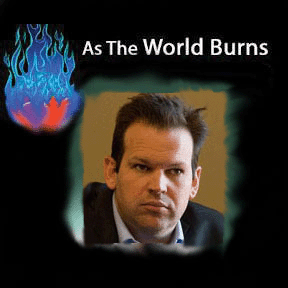 Matt Canavan now wants public money for gas exploration in South East Australia as well as $1 billion taxpayer leg-up for Adani.
https://independentaustralia.net/politics/politics-display/matt-canavan-calls-for-taxpayers-to-fund-corporate-gas-exploration,10428
Today’s Renewable Energy News
Get in on the ground floor: how apartments can join the solar boom
Bjorn Sturmberg
While there are now more solar panels in Australia than people, the many Australians who live in apartments have largely been locked out of this solar revolution by a minefield of red tape and potentially uninformed strata committees.
https://theconversation.com/get-in-on-the-ground-floor-how-apartments-can-join-the-solar-boom-79172
Giles Parkinson
Turnbull’s pursuit of “baseload dispatchable” power has all the hallmarks of the Trump administration’s campaign against renewables. But data shows that countries with lots of wind and solar have better energy security.
http://reneweconomy.com.au/turnbull-trump-demonising-renewables-no-reason-39272/
How apartments can join the solar boom
Do you live in an apartment and wish that you could join the solar power revolution? Here’s how one co-operative housing block in Sydney transformed their building and became one of the first apartment blocks to become equipped with solar and batteries.
http://www.abc.net.au/news/2017-06-21/how-apartments-can-join-the-solar-boom/8639306
Foley pledges to ‘increase’ rooftop solar if elected
http://www.smh.com.au/nsw/luke-foley-pledges-to-massively-increase-rooftop-solar-if-elected-20170621-gwvo3i.html
Idea for solar on dam left in dark
A FLOATING solar farm proposed for Copperlode Dam was shot down before ever being considered by Cairns Regional Council, and at least one city official is not impressed.
http://www.cairnspost.com.au/business/friction-in-council-over-rejected-copperlode-dam-solar-farm/news-story/def540cc85d26a41973686c3bb5a5f14
Uncertainty powers battery surge
Blackout fears in South Australia have led to a surge in interest in solar battery technology.
http://www.theaustralian.com.au/life/personal-technology/energy-uncertainty-powers-surge-in-solar-backup/news-story/9657d6efdb43f98da5bf8480ab36f3d4
Australian Parliamentary Treaties Committee nuclear fast-track cuts corners and lacks evidence
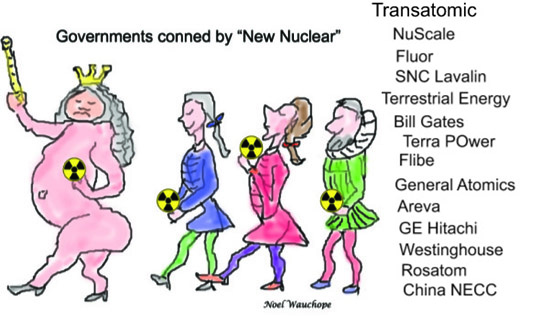
The federal parliament’s Joint Standing committee on Treaties (JSCOT) has today signed off on the use of public funds to support research into so-called Generation IV nuclear reactors.
“This reckless decision follows a rushed process with no public hearings. It lacks evidence and justification and flies in the face of a clear and sustained global trend away from nuclear energy options,” said Australian Conservation Foundation campaigner Dave Sweeney.
ACF joined Friends of the Earth Australia in making a detailed critique of the nuclear plan to JSCOT (attached).
The submission highlighted that the various Generation IV nuclear systems share many of the same risks and constraints as the wider nuclear industry, including prohibitive costs and safety, waste and proliferation concerns.
“Australia’s involvement with Generation IV promotion is a distraction from the real energy challenges and solutions,” said Dave Sweeney.
“Propping up nuclear research is not consistent with clear action to address nuclear non-proliferation, energy transition or climate change. It’s also inconsistent with both Australian prohibitions and community expectations on nuclear power.”
These concerns have been noted in both the Greens’ dissenting report and federal Labor’s additional comments, however they are not reflected in the final report.
“Committing public funds to a risky, divisive and under-performing industry deserves the highest scrutiny and justification, not an under the radar rubber-stamp,” Mr Sweeney said.
Further context or comment:
Dave Sweeney – ACF nuclear free campaigner – 0408 317 812
Dr Jim Green – Friends of the Earth Australia national nuclear campaigner – 0417 318 368
Committee Report: http://www.aph.gov.au/Parliamentary_Business/Committees/Joint/Treaties/CITES/Report_171
Labor’s broken uranium promise a kick in the guts for communities and the environment. Uranium mine plans will be challenged
Leading environment groups have said the fight to keep Western Australia nuclear free was not over despite a serious broken promise by the McGowan Government on the key environmental issue.
CCWA Director Piers Verstegen said the decision to allow WA uranium mines to proceed on Aboriginal lands was a clear broken promise and a kick in the guts for communities and the environment.
“Should these mines go ahead they would cause permanent damage to our environment and communities and also export WA uranium to countries where it will inevitably result in radioactive waste and risk.
“This terrible decision is a betrayal of the many people, communities, Traditional Owners, trade unions, churches and environment groups who placed their faith in Labor to keep WA uranium free.
“Environmental standards went out the window under the Barnett Government and the approvals that were granted for these uranium mines are some of the most compromised decisions that government made.
“The decision by the McGowan Government to allow those approvals to stand without so much as an inquiry to investigate them, and without even consulting the local communities, workers and Traditional Owners who voted for them in good faith, sends a very bad message about the Government’s commitment to protecting our environment.
“The McGowan Government may think it is OK to let some of the worst decisions in the state’s history stand, but communities, environment groups, workers and Traditional Owners certainly won’t be backing down in our fight to prevent this bad decision turning into a series of toxic and polluting uranium mines.
“We believe there are serious legal flaws in the way these approvals were granted by the Barnett Government and we will continue to contest them at every stage of the process, including through pursuing legal options to protect our communities and environment from this toxic and unwanted industry.
“There will be a lot of members of the Labor Party, a lot of Traditional Owners, and a lot of voters who will be extremely disappointed by this decision which is a direct breach of long-standing state Labor policy and the trust that Western Australians placed in the McGowan Labor Party when they were elected.
“We have worked closely with local communities and Traditional Owners who would be affected by each of these proposals and we certainly won’t be abandoning them in the same way that the McGowan Government appears to be doing.”
National environment group the Australian Conservation Foundation has called the move a retreat from responsibility and will increase its efforts to end plans for uranium mining in WA.
ACF’s Nuclear Free Campaigner Dave Sweeney said “Premier McGowan went to the election saying that uranium mines would not be allowed to proceed unless they had final approval or were in construction.
“None of the four uranium proposal has final approval, none has begun construction and none of the companies have even made a final investment decision.”
“This decision is far from a done deal for uranium mining in WA. No uranium was mined or exported under the pro-nuclear Barnett Government and we will continue to do what is necessary to keep WA’s uranium in the ground.”
1 This month
17 October, Free Public Talk on Nuclear Issues in South Australia
David Noonan will speak on public interest concerns over the new Roxby Downs Indenture Act 2026 on BHP copper-uranium mining and ore processing in SA, and on how AUKUS may face SA with a High-Level nuclear waste agenda.
Dr Jim Green will discuss international developments in the field of nuclear power including ‘small modular reactors’ and Generation 4 ‘advanced’ nuclear reactor concepts.


Help Aunty Sue Protect Her Land and Sacred Sites From Destructive Rocket Testing.
.

Australians deserve the truth
about
AUKUS – https://aukuspublicinquiry.com/

PETITION – To: Prime Minister Anthony Albanese and the Australian Labor Government

of the week – Australians for War Powers Reform (AWPR)
To see nuclear-related stories in greater depth and intensity

