Victoria’s Premier Napthine hypocritically toes the fossil fuel line on wind energy
I love them, but we can’t have them everywhere: Premier on wind farms, The Age, Tom Arup, 13 April 13, Premier Denis Napthine has declared his personal love for wind turbines, but says his government’s restrictions to where they can be built won’t change….. ”
“I think they are majestic, and I actually love them.”..…
A review by the National Health and Medical Research Council found in 2009 that there was no published scientific link between wind farms and adverse health impacts. The council is now updating its review to
be released later this year.
A report by Sydney University public health expert Professor Simon Chapman this year concluded heath impacts attributed to wind farmswere more likely the result of alarm caused by activists circulating health warning. http://www.theage.com.au/environment/energy-smart/i-love-them-but-we-cant-have-them-everywhere-premier-on-wind-farms-20130412-2hq81.html#ixzz2QNN2B3sA
Australia’s carbon emissions way down,as renewable energy rises
 Australian CO2 emissions hit 10-year low, Climate Spectator,
At the same time, the share of renewable energy in the National Electricity Market (NEM) has soared beyond 12 per cent and looks set to continue rising. Continue reading
The Lowy Institute’s nuclear revivalist meeting
 Two years after Fukushima: a tale of two symposiums, Noel Wauchope, Independent Australia 12 April 13, “….. Symposium Two: The Lowy Institute’s nuclear revivalist meeting

SOON AFTER Caldicott New York symposium, the Lowy Institute for International Policy put on a panel of its own to discuss nuclear power. Apparently, anything the USA can do, Australia can do better! Or perhaps worse.
The Lowy Institute’s March panel discussion topic was Asia’s nuclear future after Fukushima. The role of nuclear industry. The panel was composed of leaders of Australia’s nuclear industry — Michael Angwin, Chief Executive Officer, Australian Uranium Association, John Borshoff, CEO of Paladin Energy and Dr Selena Ng, Regional Director South East Asia and Oceanea, AREVA. The chairman was John Carlson, former Director General, Australian Safeguards and Non-Proliferation Office
I like enthusiasm and optimism, however, this panel went beyond enthusiasm. I tell you — it was like a religious revival meeting. And I think that’s just what it was. Just like a pastor exhorting a tiny remnant congregation, there seemed to be a more than a hint of underlying desperation, combined with that touching faith in the Second Coming.
There was unanimous agreement on the inevitable booming future of nuclear power, especially in South East Asia. Yet, between the lines, we heard from Michael Angwin that
“…public perceptions of nuclear industry are now less confident than before in the short term, but my expectation is that will return to confidence in the long term.”
He also admitted:
“We know that people take a negative view of nuclear industry — see it as remote from them, and as the creature of big government and big industry”…….
However, faith in the nuclear industry’s future being a given, all speakers moved on to three secondary themes, which were:
- the problem of the media
- the need for public education
- the safety of the nuclear industry…..
All said worthy things about the need for safety measures in nuclear reactors. But not a word about the cost issues involved. At the New York symposium, David Lochbaum estimated these as likely to be simply unaffordable.
Indeed, John Borshoff turned Fukusima into a positive:
“The Fukushima emergency demonstrates the resilience of nuclear technology”
The panel completely ignored the crisis in nuclear in the USA, UK and Japan over nuclear waste disposal — which has paralysed the nuclear industry there.
They demonstrated their lack of interest in, and probably complete ignorance of, radiation issues. Radiation was mentioned just once, by John Borshoff, speaking about Fukushima:
“No deaths have occurred. There were some releases of radioactivity. It is doubtful if this will be [sic] cause harm in the medium or long term.”
Angwin stressed that
“…what we know from studies done at Chernobyl — the major risk of psychological health risk [sic], caused by fear of radiation.”
The cause of the Fukushima meltdowns was ascribed to the tsunami — yet latest evidence indicates that in fact the earthquake was the initial cause, not the tsunami. But, anyway, nobody seemed particularly interested in Fukushima any more, as long as the media continues to put it on the back burner — that seems to be all that matters…. What struck me most of all was that the other speakers [except Dr Ng] showed no interest whatever in examining the after effects of Fukushima and questions about its future. I found their statements on this both puzzling and worrying…….
Dr Ng spoke of the nuclear industry’s previous attitude of complacency – now shaken up by Fukushima – towards more vigilance about safety.
Listening to Australia’s nuclear “expert panel”, it seems that complacency still reigns. What a contrast to the professionally organised, meticulously referenced symposium in New York! http://www.independentaustralia.net/2013/environment/two-years-after-fukushima-a-tale-of-two-symposiums/
Is John Howard lying about the reasons for going to war in Iraq?
 Howard ignored official advice on Iraq’s weapons and chose war SMH, April 12, 2013 Margaret Swieringa Former prime minister John Howard’s justification this week on why we went to war against Iraq in 2003 obfuscates some issues.
I was the secretary to the federal parliamentary intelligence committee from 2002 until 2007. It was then called the ASIO, ASIS and Defence Signals Directorate committee – which drafted the report Intelligence on Iraq’s Weapons of Mass Destruction. Howard refers to this committee in his speech justifying our involvement in the war.
The reason there was so much argument about the existence of such weapons before the war in Iraq 10 years ago was that to go to war on any other pretext would have been a breach of international law. As Howard said at the time: ”I couldn’t justify on its own a military invasion of Iraq to change the regime. I’ve never advocated that. Central to the threat is Iraq’s possession of chemical and biological weapons and its pursuit of nuclear capability.”
So the question is what the government knew or was told about that capability and whether the government ”lied” about the danger that Iraq posed. At the time, Howard and his ministers asserted that the threat to the world from Iraq’s weapons of mass destruction was both great and immediate. On February 4, 2003, he said Saddam Hussein had an ”arsenal” and a ”stockpile” and the ”illegal importation of proscribed goods ha[s] increased dramatically in the past few years”. ”Iraq had a massive program for developing offensive biological weapons – one of the largest and most advanced in the world.”……
None of the government’s arguments were supported by the intelligence presented to it by its own agencies. None of these arguments were true.
Howard this week quoted the findings of the parliamentary inquiry, but his quotation is selective to the point of being misleading.
What was the nature of the intelligence on Iraq’s weapons of mass destruction provided to the government? The parliamentary inquiry reported on the intelligence in detail. It gathered information from the Defence Intelligence Organisation and the Office of National Assessment. It said:
1. The scale of threat from Iraq’s weapons of mass destruction was less than it had been a decade earlier.
2. Under sanctions that prevailed at the time, Iraq’s military capability remained limited and the country’s infrastructure was still in decline.
3. The nuclear program was unlikely to be far advanced. Iraq was unlikely to have obtained fissile material.
4. Iraq had no ballistic missiles that could reach the US. Most if not all of the few SCUDS that were hidden away were likely to be in poor condition……
The committee concluded the ”case made by the government was that Iraq possessed WMD in large quantities and posed a grave and unacceptable threat to the region and the world, particularly as there was a danger that Iraq’s WMD might be passed to terrorist organisations.
”This is not the picture that emerges from an examination of all the assessments provided to the committee by Australia’s two analytical agencies.”
Howard would claim, no doubt, that he took his views from overseas dossiers. But all that intelligence was considered by Australian agencies when forming their views….. Read more: http://www.smh.com.au/comment/howard-ignored-official-advice-on-iraqs-weapons-and-chose-war-20130411-2hogn.html#ixzz2QIaBzFWL
Solar power in Tasmania is an endangered species!
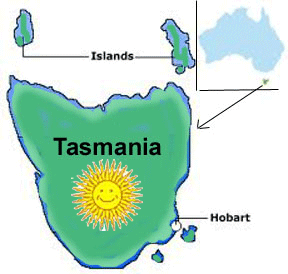 A Call To Save Solar In Tasmania http://www.energymatters.com.au/index.php?main_page=news_article&article_id=3683 11 April 13, An alliance of householders, community groups and businesses including Energy Matters have called on the Tasmanian government to safeguard the state’s renewable energy future.
“The government is rushing headlong into arrangements for the privatisation of Aurora’s retailing of electricity, including putting legislation to Parliament this week, but has been conspicuously non-committal on the future of feed in tariffs,” said Jack Gilding, spokesperson for the group.
Earlier this week we reported Tasmania’s feed in tariff is one of the most generous active programs in the nation – a 1 for 1 arrangement – but it’s a program without a set duration. This has led to growing concern the incentive could be slashed when Aurora Energy is replaced by private companies in 2014.
Such a change could affect 10,000 households in Tasmania that have already installed solar PV systems and have a dramatic impact on the state’s renewable energy sector.
“It’s not just about solar panels on houses,” said Mr Gilding. “Tasmania has the potential to be the renewable energy powerhouse of Australia. Changes to the electricity market could be an opportunity to harness the potential for many Tasmanians to be producers, not just consumers of electricity. Households, communities, farmers and businesses are keen to invest in these opportunities, but the government needs to provide a supportive policy environment.”
The group is calling for a public consultation and review process that sets a fair price for solar and other small renewable energy technologies; with “fair” being more than the wholesale price of electricity as it does not take into account the many additional benefits of distributed generation.
The group is also seeking guarantees existing tariff arrangements will continue for people who have already installed solar PV systems and those who order before new arrangements are finalised.
Further details can be viewed and a petition signed on the Save Solar Tasmania web site.
The Institute of Public Affairs has a radical plan for Australia
 So what, exactly, is on this think tank’s wish list?
- Public broadcasting – gone. The ABC to be broken up and sold off, SBS to be fully privatised.
- Corporations to be allowed to make secret payments to political parties.
- Medicare gone for most Australians.
- A return to WorkChoices, just by another name.
- The clean energy fund and the renewable energy target – scrapped.
- Funding for sport and arts – including the Australian Institute of Sport – axed. Same for science, with the CSIRO to be privatised.
GetUp! to date on the IPA’s radical plans for Australia http://www.independentaustralia.net/2013/politics/getup-to-date-on-the-ipas-radical-plans-for-australia/ 11 April 13, Tony Abbott has said ‘Yes’ to many of the IPA’s 75 radical policies to transform Australia — but which ones? Progressive thinktank GetUp! is concerned, writes Graham Jackson.
Not-for-profit community campaigner GetUp! is another independent group highlighting the stark contrast between the Institute of Public Affairs recent indulgent dinner and the austerity plans it has for Australia. With Margaret Thatcher’s death and legacy currently in the news, GetUp’s recent email to its members (reproduced in part below) provides a timely reminder that arrogant Thatcherism is still alive and well. Call it whatever name you like, but the IPA ‘vision’ for Australia is a dog eat dog world. The alternative vision embraces the idea of community. What kind of country do we want? September 14 will provide the answer. Continue reading
REHABILITATION: The only future for Ranger uranium mine
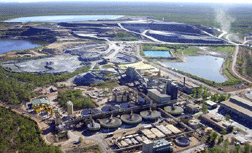 9 April 13, Kakadu uranium miner Energy Resources of Australia’s (ERA) is expected to announce a financial loss at its Annual General Meeting in Darwin tomorrow.
The AGM comes only months after open cut mining ended at the troubled Ranger site and only a month after the end of plans for uranium mining at the nearby Koongarra region.
“Now is the time to draw a line for uranium mining in Kakadu and to end plans for a new underground mine at Ranger – called the Ranger 3 Deeps project,” said Environment Centre NT spokeswoman Cat Beaton.
“The Ranger and Jabiluka leases need to go the way of Koongarra and the chapter closed on uranium mining in the Kakadu National Park region”.
The federal government has determined that ERA’s proposed 3 Deeps underground uranium mine plan requires a full Environmental Impact Statement and there is much scepticism about whether any underground mine could meet the mine lease closure date of 2021.
“Both the profitability and social license for uranium mining in Kakadu have faded and we are urging ERA to now clean up, rehabilitate and exit the Ranger lease.
There is no economic or environmental rationale for taking the Ranger operation underground and any move to do so will be actively contested,” concluded Ms Beaton.
Necessity for Australia to promote a nuclear free Middle East zone
How, then, are we to explain Australia’s relative inaction when it comes to supporting moves to denuclearise the Middle East? The only plausible explanation is the close relationship with the United States. Australia’s political leaders appear unwilling to say or do anything that might be construed in Washington as conflicting with US priorities and preferences.
What might a more independent Australia do to promote a Middle ……East WMD-free Zone? Four modest but important initiatives suggest themselves. The first would be a prime ministerial statement strongly supporting the establishment of such a zone and explaining how this objective is in line with Australia’s security and economic interests…….
11 April 2013 Joseph Camilleri and NAJ Taylor
Despite Australia’s obvious national interests in the Middle East, our leaders have been strangely silent about the alarming security threats in that region, write Joseph A Camilleri and NAJ Taylor.
Weapons of mass destruction – biological, chemical and nuclear – are once again buzz words in the international corridors of power. In Australia, North Korea has attracted media headlines, but the more disturbing and far less predictable situation unfolding in the Middle East has yet to receive the attention it deserves.
The unresolved Israeli-Palestinian conflict, the Iran nuclear dispute, Western-led interventions, popular uprisings, conflict in Syria, and actual and potential regime changes have combined to create a highly volatile and dangerous security environment in that region. Continue reading
Myth of “baseload power” – Renewable electricity IS reliable
Why 100 per cent renewables is possible… and affordable, Climate Spectator Mark Diesendorf 11 April 13, “…..In a previous article for The Conversation I reported on the initial results of computer simulations by a research team at the University of New South Wales that busted the myth that renewable energy cannot supply baseload demand. However at the time of the article I was still under the misconception that some baseload renewable energy supply may be needed to be part of the renewable energy mix.
Since then Ben Elliston, Iain MacGill and I have performed thousands of computer simulations of 100 per cent renewable electricity in the National Electricity Market, using actual hourly data on electricity demand, wind and solar power for 2010. Our latest research, available here and reported here, finds that generating systems comprising a mix of different commercially available renewable energy technologies, located on geographically dispersed sites, do not need baseload power stations to achieve the same reliability as fossil-fuelled systems.
The old myth was based on the incorrect assumption that baseload demand can only be supplied by baseload power stations; for example, coal in Australia and nuclear in France. However, the mix of renewable energy technologies in our computer model, which has no baseload power stations, easily supplies baseload demand.
Our optimal mix comprises wind 50-60 per cent; solar PV 15-20 per cent; concentrated solar thermal with 15 hours of thermal storage 15-20 per cent; and the small remainder supplied by existing hydro and gas turbines burning renewable gases or liquids. (Contrary to some claims, concentrated solar with thermal storage does not behave as baseload in winter; however, that doesn’t matter.)
The real challenge is to supply peaks in demand on calm winter evenings following overcast days. That’s when the peak-load power stations, that is, hydro and gas turbines, make vital contributions by filling gaps in wind and solar generation. http://www.businessspectator.com.au/article/2013/4/11/renewable-energy/why-100-cent-renewables-possible-and-affordable#ixzz2QC1tYRM9
Renewable electricity is affordable
 Our latest peer-reviewed paper, currently in press in Energy Policy journal, compares the economics of two new alternative hypothetical generation systems for 2030: 100 per cent renewable electricity versus an ‘efficient’ fossil-fuelled system. Both systems have commercially available technologies and both satisfy the NEM reliability criterion. However, the renewable energy system has zero greenhouse gas emissions while the efficient fossil scenario has high emissions and water use and so would be unacceptable in environmental terms.
Energy efficient buildings and appliances, solar hot water, onshore wind, solar photovoltaic modules, concentrated solar thermal power with thermal storage and gas turbines burning a wide range of renewable liquid and gaseous fuels are commercially available on a large scale. The costs of these technologies have declined substantially, especially those of solar PV. Continue reading
Exposing Sarah Laurie’s deceptive anti wind farm propaganda
 Sarah Laurie’s windfarm fearmongering enough to make you sick, Independent Australia, 9 Apr 13 In spite of 17 reviews and a new landmark study, Sarah Laurie defiantly continues her propaganda campaign against wind farms. Mike Barnard reports. A LANDMARK STUDY by Fiona Crichton at the University of Auckland recently showed that propaganda linking the low levels of noise from wind to sickness is a strong cause of anxiety related symptoms. The control group, which hadn’t watched the video of health fears from anti-wind campaigners, had no symptoms.
The findings backed up previous reports in Australia showing “unwarranted fear-mongering might cause greater health impacts than the presence of any actual ‘Wind Turbine Syndrome’”.
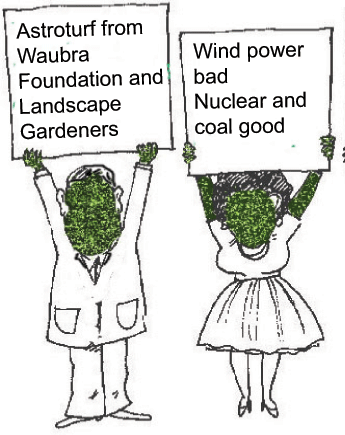 Sarah Laurie, head of the Waubra Foundation, an offshoot of the anti-wind, astroturfer, the Landscape Guardians, is the source of a great deal of the anti-wind propaganda which is harming people’s health.
To date, Sarah Laurie’s work has been largely constrained to south-eastern Australia, however she has begun to spread her wings. We can expect a related spread of so called ‘Wind Turbine Syndrome’, an illness that Professor Simon Chapman has famously dubbed a ‘communicated disease’. (Due to her active spreading of disinformation, she’s up for the Australian Skeptics’ annual Bent Spoon award for 2013.)….. Continue reading
Australia’s uranium industry seeks to weaken safeguards about radioactivity
 The group wants the commission to explicitly recommend the EPBC Act be amended to remove uranium mining and milling from the
  definition of “nuclear actions”……
uranium prices have fallen since Japan’s Fukushima disaster led many nations to rethink nuclear power programs.
Miners seek radioactive rethink, BY:ANNABEL HEPWORTH The Australian , April 08, 2013 URANIUM miners have demanded changes to laws so that the “mild” radioactivity that is unique to the sector is no longer a trigger for federal environmental assessments.
The Australian Uranium Association — whose members include BHP Billiton and the operator of the Ranger mine at Jabiluka in the Northern Territory, ERA — says that uranium mining and the milling that makes yellowcake should no longer be defined as a “nuclear action” under the federal law known as the Environment Protection and Biodiversity Conservation Act. Continue reading
Toro Energy faces a struggle to make Wiluna uranium project economic
 Raising the $A269 million to build Wiluna is the obvious challenge at a time of an ultra-cautious stock market and with banking conditions as tight as anyone has seen in decades.
the question of the real cost of uranium at Wiluna because if you add 10% for other charges the $37/lb becomes $40.70/lb and an extra 20% lifts the full cost to $44.40/lb.
Equity investors and the providers of debt finance to the Wiluna project will want to see something far more concrete than investment bank estimates before they provide the capital to develop Wiluna.
Dryblower on the obstacles awaiting Wiluna http://www.miningnews.net/StoryView.asp?StoryID=798350828, 8 April 2013 DIRECTORS and staff at Toro Energy had every reason to pop the corks on a few bottles of champagne last Tuesday when the Australian government provided environmental approval for its Wiluna uranium project in Western Australia, though Dryblower hopes it was just Jacob’s Creek and not Moet.
Keeping the good stuff on ice for a little longer is probably a good idea because even though one hurdle has been cleared Wiluna and Toro have a few more to clear before the serious celebrating can start. Continue reading
Australia’s 1 million solar systems, 8,000 solar jobs, and solar’s financial benefits
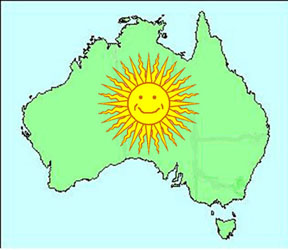 the recent national 1 million systems milestone being reached
Australia’s solar industry currently employs over 8,000 Australians.
a good quality 5kW solar power system can return a financial benefit of up to $2,540 each year, depending on installation location.
Australia’s Top Solar Postcodes – 2013 Update http://www.energymatters.com.au/index.php?main_page=news_article&article_id=3675 8 April 2013. Australia’s Clean Energy Council (CEC) has released updated data showing the nation’s top solar postcodes.
Top 10 postcodes in Australia (ranked by number of installed solar panel systems), current as of 10 March 2013: Continue reading
Larissa Waters busts the deceptions in the coal seam gas advertising
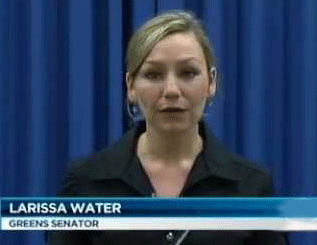
The old parties at both levels of government are so wedded to the mining industry that they are approving coal seam gas projects as quickly as possible with gaping holes of data left missing.
No state or federal government has ever knocked back a coal seam gas project.
What we need is a moratorium on coal seam gas mining until we fully understand its impacts on groundwater, the climate and food production. All indications are that those impacts will be unmanageable, and when we have clean energy alternatives that don’t threaten food production, it’s a no brainer.
Buying time, but not buying hearts http://www.abc.net.au/environment/articles/2013/04/05/3729905.htm LARISSA WATERS ABC t5 APR 2013 The risk to Australian farmland from CSG is not worth taking, says Larissa Waters.
Full-page advertisements by mining companies do nothing to persuade ordinary Australians that drilling for coal seam gas is completely safe. HAVE YOU COME ACROSS the full-page newspaper ads that Santos has taken out this week? They’re in response to the Four Corners expose of the dangers of the coal seam gas industry – that same program which Santos refused to speak to.
The advertising spree by the coal seam gas company is a desperate and obvious attempt to try and buy a social licence, which the community has so far refused because of the risks this industry poses to our water, farmland and climate.
But even with its massive advertising budget, Santos can’t get past the weight of serious public and scientific concern about this high-risk industry.
Three quarters of New South Wales voters oppose CSG exploration on agricultural land, as shown in a Fairfax surveythis week. As a Queensland senator and the Greens coal seam gas spokesperson, I constantly hear that same opposition loud and clear in my home state. And I hear it from our expert scientific bodies, who say we don’t understand the long term impacts of coal seam gas on our water resources, and could be doing damage to the water table which will take hundreds of years to fix, if it’s fixable at all.
Australians aren’t buying the big-mining spin because the facts are simply not on the industry’s side. Here are a few facts that were conveniently left out of Santos’ ad. Continue reading
1 This month
17 October, Free Public Talk on Nuclear Issues in South Australia
David Noonan will speak on public interest concerns over the new Roxby Downs Indenture Act 2026 on BHP copper-uranium mining and ore processing in SA, and on how AUKUS may face SA with a High-Level nuclear waste agenda.
Dr Jim Green will discuss international developments in the field of nuclear power including ‘small modular reactors’ and Generation 4 ‘advanced’ nuclear reactor concepts.


Help Aunty Sue Protect Her Land and Sacred Sites From Destructive Rocket Testing.
.

Australians deserve the truth
about
AUKUS – https://aukuspublicinquiry.com/

PETITION – To: Prime Minister Anthony Albanese and the Australian Labor Government

of the week – Australians for War Powers Reform (AWPR)
To see nuclear-related stories in greater depth and intensity

